Tackling football injuries is a lifelong challenge

by Evan Frank

The sun hasn’t reached the peak of the mountains yet, but a lone room in the University of Utah football coach’s offices is lit. A long hallway of experience and tradition leads to John Pease’s office. He sits in his chair, looking at different formations for the team’s upcoming game against the University of Wyoming. Fleetwood Mac quietly plays from the mini speakers on his desk.

John Pease coached at the professional and collegiate levels. During his playing days he suffered several injuries.

Pease was a junior college All-American halfback in 1961 and linebacker in 1962 at Fullerton Community College before playing at the University of Utah for two years. Now 66 years old, Pease is the assistant head coach at Utah and oversees the defensive line.

He reaches for his briefcase and searches for something.

“Where is it?” he asks. After a couple moments pass, he pulls a single sheet out of the bag; an X-ray of his lower back. A steel rod with six screws is shown in the X-ray. Pease credits running on cement for years, along with football, as the reasons why one of his lower disks has become nonexistent over the years. Even though Pease’s playing career after college was short lived, he still accumulated 11 concussions.

With football injuries getting more attention in the national spotlight, the debate has attracted the attention of lawmakers and medical experts.
Congress is currently investigating the long-term effects of head injuries with current and former professional football players. If there is a solution, members of Congress hope to find it soon to prevent further injuries.
The real question is if a solution exists. According to Pease, there is no prevention.

“Play soccer or baseball if you don’t want to take those chances,” Pease said.

Roy Jefferson, 66, played at Utah with Pease and was drafted in the second round of the National Football League draft by the Pittsburgh Steelers. Jefferson played for the Baltimore Colts alongside hall of fame quarterback, Johnny Unitas. During the 1970 season, his one season with the Colts, Jefferson and his team was on the winning side of Super Bowl V.

During the later years of his NFL career, Jefferson said he tore the cartilage in his knee while playing a game. Despite the fact that he was injured, Jefferson finished the rest of the season. The trainers would use needles to inject medicine into Jefferson’s knee to temporarily relieve the pain. One year later, Jefferson retired from the league and the game he had played for so long.

“I’d be a junkie if I kept playing,” Jefferson said. “Too many pills.”

Jefferson agrees with Pease with the lack of prevention on the playing field.

“There’s no way to prevent concussions,” Jefferson said. “The players are too big, too fast and too quick

Pease’s friend, former Pro Bowl player Hardy Nickerson, once said about playing in the NFL, “Get in your car, put on your seat belt, and run into a brick wall for twenty Sundays in a row.”

With no real prevention out there, it may be puzzling to people as to why these men put their bodies through such pain and trauma.
When playing football is your career, Pease says a player makes a lifetime decision.

Paul Silvestri, the head football trainer at Utah for the past two seasons, says football is a physical and brutal sport.

“It’s going to continue to affect athletes down the road,” Silvestri said.
The injuries can be severe, but Silvestri said he and his staff do as much as possible to prevent further damage. It is difficult to predict what the training staff does now will help the players once they are done with football, he adds.

“Give them plenty of time to heal and do the best you can,” Silvestri said about rehabbing a player.

Jefferson has a different take on injuries.
As Silvestri said, giving the body plenty of time to recover is essential. Jefferson does not believe the players have that chance.

“They train too much,” he said.
Jefferson stresses the small amount of time given to recover from serious injuries.

“I believe that’s why you see so many injuries,” he said.

Silvestri brought up the possibility of developing arthritis after having surgery on a joint. Arthritis in retired professional football players has become a topic of study. The American Journal of Sports Medicine conducted a study on 36 of the 41 members of the 1969 Super Bowl winning team. The study took place 35 years after the winning game. During the study, the players were tested for a number of medical conditions. Twenty-four out of 36 reported having painful inflammation and stiffness. The report concluded that the players who had arthritis still had a long and fulfilling career with no apparent long-term detrimental effects on physical or mental health.

During the 1987 NFL season, players were first tested for steroids. It wasn’t until 1989 that players received disciplinary action for using the drug. The ban on steroids occurred well after the playing days of both Pease and Jefferson.
Steroids can have fatal consequences for users. While death from steroids does not occur frequently, the side effects of using steroids range from elevated blood pressure, harmful changes in cholesterol and an increased risk of cardiovascular disease.

Pease said former teammates who took steroids during their playing days now have trouble doing normal activities such as jogging. Most of the players he knew of who used steroids are now crippled in their retirement years, Pease added.

While the physical and sometimes mental aspects of playing football can be harmful, there are upsides.
When Pease had prostate cancer, he credits receiving treatment from the John Hopkins Medical Institute to his football connections.

“You get the best care,” he said.

According to the NFL Players Association, 2.4 percent of college players become professionals in football. Out of 100,000 people who play high school football each year, only 215 will ever make an NFL roster. That is not to say the injuries will be less severe if a player does not play professional football. Another possibility is having a career-ending injury occur before the chance to even play in the NFL.

“Hopefully they have their degree and they can find something else in life,” Pease said.

Jefferson, whose left knee has been operated on three times, will have to have it replaced. His right hip will also need to be replaced.

“If I don’t take Vicodin here and there, oh God, they hurt like heck,” Jefferson said. “It’s the price you pay, I guess.”

The drug Vicodin that Jefferson mentions is used specifically to relieve pain. Vicodin, along with several other painkillers, are used excessively by NFL players. Most notably, in 1996, Green Bay Packers quarterback Brett Favre, admitted to being addicted to Vicodin and was in treatment for 46 days.
Pease stresses that players make the choice to play football and they accept the risks.

His wife, Chris Mickelson, has told her husband that football players have spent their whole career ruining their bodies, and should stop complaining.

Through all the injuries Pease has seen during his years of coaching, he still has strong feelings about the game he fell in love with long ago.

“I wouldn’t change anything,” he said. “Playing football is a wonderful occupation.”

Older adults should not fear violent crime

by Lee Horton

The older adults at the Tenth East Senior Center in Salt Lake City aren’t afraid of being targets of violent crime by strangers. They know the benefits of going to the center outweigh the potential of harm that might occur. Many of them don’t even think about the possibility of crime.

“I’ve never been afraid of that,” Josephine Chappell said.
Chappell, who goes by “Jo”, is 97 years old, and has been going to the Tenth Street Senior Center for over 40 years. The center has been operating for 46 years.

“They weren’t open very long when I started coming,” Chappell said.

Jerry Urlacher, center manager, is inclined to believe most of the people who come to the center feel like Chappell.
“I am confident that the majority of the people who come here do so without fear,” Urlacher said. “Maybe there are some who are afraid, but they are willing to risk it because of the advantages.”

Dean Allen Hall and his wife, Mary, understand the potential for crime. “I can see why, when you get to a certain age, you would worry about that,” Dean Hall said.

The Halls have seen the media coverage of crime. The front page of every newspaper, like the copy of the USA Today Mary is flipping through, highlights shootings, murders and home invasions. But beyond the gang activity he has read about, Dean Hall is not concerned. “I don’t scare too easily,” Hall said.

Scott Wright, director of the Gerontology Interdisciplinary Program at the University of Utah does worry, but not about senior safety.

“Older adults have the highest fear of crime,” Wright said, “but are one of the lowest victims of crime.” Wright wonders if bodies and minds that have weakened with age make people question their personal safety in the outside world. Wright doesn’t want these fears to prevent older adults from getting out and continuing to experience life. “Life is long, or could be,” Wright said. “There is great potential for the second half of life.”

Records show violent crimes against older adults to be rare. The Utah Department of Health’s Bureau of Criminal Identification classifies murder, kidnapping/abduction, forcible rape, forcible sodomy, sexual assault with an object, forcible fondling, aggravated assault, simple assault and intimidation as violent crimes. According to the BIC’s preliminary 2008 statistics, people ages 60-95 were victims of only 785 of the 5,840 of violent crimes in Salt Lake City. That is just over 7 percent of the total.

Sergeant Gary Trost investigates violent crimes for the Salt Lake City Police Department. He doesn’t see many crimes committed against older adults by strangers. “We don’t see a lot of elderly abuse that is non-family,” Trost said.

While confident that the people who come to the Tenth East Senior Center aren’t afraid, Urlacher worries about those who don’t come.
“What frustrates me is there might be many who would benefit, but they are afraid,” Urlacher said.

Tenth East offers much to older adults. Pool tables, exercise programs, a computer lab, plus harmonica, art and Spanish classes are among the services the center provides to older adults. Each individual has his or her own reason to come to the center.

Urlacher says it isn’t what they do, but that they are doing something. “I think the very, very best thing is people are indeed out of their houses,” Urlacher said. “They’re with other people. They’re able to participate in exercises or be stimulated by the classes.”

Wright agrees that getting out is important. “The fountain of youth is being mentally and physically active,” Wright said.

While he whistles along to the song accompanying the exercise class at the other end of the cafeteria, Heinz Winkerman folds forks, knives and spoons into napkins, one at a time.

Because getting the silverware ready is a crucial part of serving meals that not many people think about, Urlacher calls Winkerman the “unsung hero of the center.”

Winkerman has been coming to Tenth East for seven years. He says he has been helping with the utensils for about six. Without warning, Winkerman went blind four months ago. “I said ‘what’s going on? Are the lights on or off?’” Winkerman said.
Winkerman thinks having a place to go and things to do has helped him deal with being blind. He admits that it has been tough, but feels that adapting is important. “You have to,” Winkerman said. “Life goes on.”

Despite his blindness, Winkerman still doesn’t worry too much about being a victim of a violent crime. He says his children and the people he goes to church with take good care of him, and a van gives him a ride to and from the Tenth East Senior Center whenever he wants to go.
Winkerman, Chappell and the Halls say they go to Tenth East every day. As they leave their house, crime isn’t one of their worries. The lone precaution Chappell and the Halls make is not going out when it is dark.

The Halls are more worried about the lack of manners by the people of Salt Lake City than becoming a victim of crime. Chappell is more concerned with how she is going to get her groceries and run errands. She feels she has no reason to be afraid of being hurt.
“Everybody’s been royal to me,” Chappell said. “Everybody.”

Athlete for life: staying healthy and active in later life

by Paige Fieldsted

Looking at 70-year-old John Percival now you may not guess that he spent the majority of his life involved in athletics. He leans heavily on a cane, just three weeks removed from his second knee-replacement surgery this year. He had the other knee done 12 weeks ago.

John Percival in his home three weeks after having his second knee replacement surgery this year.

Percival’s smiling face turns sober and he chokes up when he’s asked about the surgeries on his knees.
“It’s been hard,” Percival said. “It’s really hard to not be able to do what you want to do. After we’ve been so active it’s hard not to be able to do.”
Percival’s attitude can be echoed by other seniors that aren’t ready to give up the active lifestyle they developed in their youth and as athletes.
Percival has been active for the majority of his life, playing sports from a young age. In high school he participated in football, wrestling and ran track occasionally.
Percival said he got involved in sports in high school because that was the cool thing to do.
“When you’re in high school it is the only thing to do,” Percival said laughing. “You’ve got to be in sports. You don’t get a girl if you not in sports.”
While Percival’s competitive football and wrestling career ended with graduation from high school, he continued his athletic ways by participating in horse racing and rodeo for years.
Percival said the activity level from his youth has carried over into his life now.
“I ran for a number of years until my knees when bad. Then we played with the horses,” Percival said. “It carries over to make a guy more active and it’s carried onto this day.”
Percival isn’t alone in carrying his active lifestyle into his later years. A study published by the “Journal of Aging Studies” showed that younger athletes expect to stay active as they age and that older adults who were athletes have been more active as they got older.
Percival said that up until August, two months before his first knee surgery, he walked four to five miles every day.
Being healthy and active throughout his life has paid off for Percival as he said his two knee surgeries have gone better because he took care of his health right up until the surgeries.
His two knee replacement surgeries were performed only nines week apart.
“I think that being active and in good shape helped with the knee operations,” Percival said. “I think I got along better because the good shape that I was in.”
At his most recent physical therapy appointment doctors told Percival that he is physically three to four week ahead of other patients that had knee surgery the same day as him.
Dr. Steve Aoki, an orthopedic surgeon in sports medicine at the University of Utah Orthopedics Center said that older people don’t heal as well as the younger athletes he works with but that being in better physical condition usually helps.
“Although probably true, that isn’t always the case,” he said. “They certainly don’t rush their rehab like a younger athlete is trying to push it and get back to their sport at a sooner time period. For a lot of our more recreational older athletes there is not that rush.”
Percival attributes the cause of his knees going bad to genetics, but that isn’t the case for all athletes that have to have surgery later in their life. Some older adults have to joint surgery because of participation in the sports they love so much.
Aoki said that athletes often pay later in life for the activities they did in their younger years.
“It becomes a combination of both, genetic factors cause breakdowns of joints and soft tissues and also your activity level plays in,” he said. “It’s pure biomechanics. It’s similar to a car, the more you use a care the more chance you have of that car breaking down in the future. If you subject your body to a lot of stress throughout the lifetime you have a higher risk of joint damage later on.”
Percival’s wife, Lonnie Kay Percival, said she has seen his active lifestyle benefit his health beyond his knee surgeries.
Lonnie Percival, who has never been an athlete, said she can see the differences in the way they have aged and been able to maintain their health.
“He is a lot healthier than I am,” she said. “My back always hurts and I have high blood pressure and cholesterol. He has never had any of those problems.”
A study published by the “American Journal of Sport Medicine” showed that many of the disabilities that plague older adults are modifiable with exercise. Losing muscle mass and bone mineral density can be prevented with low impact exercises.
Another study published by the “Journal of American Academy of Orthopedic Surgeons” supported that same data. The article suggested that 30 to 50 minutes of aerobic exercise a day performed three to five days a week and resistance exercises twice a week could produce significant health benefits.
“To prevent more catastrophic injuries staying well conditioned is important,” Aoki said. “Minimizing high impact activities, and allowing your body to not see the same the stresses over and over will help prevent injury.”
Percival’s involvement in athletics and sports has benefitted him well outside the realm of health, as he said he learned good sportsmanship and the importance of being competitive.
Percival said the biggest impact sports has had on his later life is the competitive nature he was first exposed to in high school. From the work force to family relationships competitiveness has been in every aspect of Percival’s life.
“It’s a competitive world so you need to learn to be competitive,” he said. “In my work life I’ve always tried to do better than someone else so I could get a better job. It’s paid off in terms of better jobs throughout the years.”
Percival has worked many jobs throughout his life from a police officer in his younger years to the plumber he was when he retired five years ago.
The competitive spirit hasn’t just benefited Percival in his work life but has also helped him build better relationships with many of his grandchildren.
“I’m a big BYU fan and not all of my grandchildren are,” Percival said. “It’s fun being around them and teasing each other.”
Lonnie Percival said she has seen his competitive spirit come through during his recovery from knee surgery as well.
“He gets up and does his exercises twice a day and walks and walks and walks because he can’t stand to stay down,” she said. “I would just take a pain pill and go back to bed.”
Percival said he has every intention of continuing his active ways once his knees have healed completely and is planning a trip with his wife to Guatemala in February.
“I think with the new knees I’ll be able to get back to being active,” Percival said. “I’ll get back to walking and riding and the things I want to do.”

Sharing pets changes lives

by Kelli Coomes

  • Click here to see pictures of people sharing their pets with senior citizens.

It’s 9:55 a.m. at the Murray Care Center. Seniors are in the recreation room listening to Christmas music being played on a piano. Heads nod on occasion; eyes are slightly glazed over as the seniors look at things beyond the walls.
At 10 o’clock, heads turn and smiles appear as the entertainment comes through the door. Dogs of different breeds, colors and sizes come walking in with their owners.
Gaylen Derr, the executive director of Therapy Animals of Utah, helps direct animals and owners around the room to different seniors, making sure everyone meets at least one dog today. Derr smiles at everyone and talks to people as they pet the dogs. Santa and Misses Claus walk around handing out stuffed dogs to everyone.
Therapy Animals of Utah is a program in Salt Lake City that helps register people and their pets for animal-assisted therapy and animal-assisted activities. They also help coordinate events like this at senior centers around Utah.
Deborah Carr and William, her sheltie, walk around visiting the seniors in the room. “There was a man just sitting off to the side, all alone,” Carr said. “William could tell he needed him. They just sat there and stared at each other for ten minutes, William just staring up at him and the man staring back. He talked to William in a low voice like they were old friends. It brought me to tears, how special that moment was for the two of them.”
William wanders the rows of seniors looking at everyone, stopping at each chair. The music is playing in the background and many reach down absent-mindedly and pet William. When they’re done, he moves to the next. He needs no prompting from Carr. William visits a senior center home at least once every other week; he seems to know what to do to help these people.
Lola, another sheltie, and her owner Susie, walk around socializing too. Susie has been a registered team member since 1999 and this is her third dog she’s registered. She also has two more shelties at home that are registered.
“I love it,” Susie said. “I should have done it sooner.”
For the seniors that cannot get to the recreation room, the animals are taken to them. A group of the dogs follow their owners from room to room.
Joanne has been working with Therapy Animals of Utah for a number of years with her Chihuahua, Bambi.
“It’s been so rewarding,” Joanne said with a smile as she hands Bambi off to Thomas Covert, a senior resident. Covert cannot get out of bed easily and lies there with Bambi on his lap.
Although Bambi is usually part of the reading program at elementary schools, she likes to visit seniors. Bambi has been registered for two years and has been active in visiting people that need her.
Liebe, a Leonberger, walks the halls with his owner. Requests come from seniors that want to see the huge dog that’s walking past their room. His head sits quietly on knees and the side of beds while he’s petted and talked to. Those that are a little frightened and surprised by his size are soon monopolizing him, his gentle nature winning them over.
There are other dogs and owners wandering around the recreation room and the halls. Liberty, a black poodle, is energetic as she meets new faces. Charlie, a golden retriever, and Callum, a Shetland sheepdog, bring smiles and laughter wherever they go.
All of these pets have been registered through either Therapy Animals of Utah or the Delta Society. The Delta Society was started in the mid-1970s in Portland, Ore., by a veterinarian and a psychologist. According to their Web site, they believed that animals help people and that there wasn’t enough research and information out there. They began one of the first credible researches that showed the positive impact animals have on humans.
Over the course of years, they have found multiple benefits to pet therapy and activities. In a compiled list of research benefits, they list lower blood pressure, a decrease in loneliness for those in long-term care facilities, lower cholesterol and many other benefits. Animals also help increase the perception to cope with illnesses and loss of loved ones.
Research done by the Delta Society showed that brightly-colored fish in tanks can help control behavior and increase the eating habits of people with Alzheimer’s.
Animal assisted therapy (AAT) and animal assisted activities (AAA) are different in a number of ways.
AAT is always under the supervision of a therapist, said JoAnn Turnbull, director of marketing at The Delta Society. A specific goal for the patient is established before the therapy animal visit takes place, and the results of the session are recorded in the patient’s records, Turnbull explained.
The interaction with the animal is personal. The elderly patient is the only one playing with the pet. The times and dates are set and constant. The length of the sessions is determined by the physician and what they think the patient can handle.
AAA is very different from AAT in that the visits are much more casual for the pets and the patients. They are usually held in homes, senior centers and other facilities. They have more of a meet-and-greet atmosphere. There can be many elderly people playing and interacting with an animal at one time. There is no set time for these visits and the visits can be as long or as short as the owner wants.
Susie and her three shelties are part of the workshops for training pets and owners to go out and participate in these activities.
There is a screening for the pet to make sure it is reliable, predictable and can be controlled by its owner or handler. Therapy Animals of Utah and the Delta Society look for animals that are people-oriented rather than animal-oriented. It won’t leave the people it is assisting to play or check out another animal nearby.
They look for animals that can remain calm around sudden or loud noises are easy for the elderly to handle. It is harder for them to respond quickly enough if the animal panics or bolts. Animals that enjoy being held, petted and hugged for long periods of time by people that are not the owners are another thing they look for, Derr said.
There are also training courses for pet owners. They make sure that the owners also have good social skills and can handle the pet effectively in different situations.
Therapy Animals of Utah are always inviting volunteers to come and join them. They can register any domestic animal, birds, dogs, cats, llamas, miniature horses, guinea pigs, pot-bellied pigs and many others.
For the people that have never heard of AAA and AAT or are interested in learning more, Deborah Carr suggests reading up on the subject and then coming out with a team to an event. People can contact Therapy Animals of Utah to see what they do and see it for themselves.
“Coming with us makes people want to do this,” Carr said. “It changes your life.”

She won’t let arthritis slow her down

by Jessica Calderwood

Berit E. Blomquist, 76, gestures with her crippled hands as she recounts her lifelong aspirations for independence in spite of her condition. Blomquist was diagnosed with rheumatoid arthritis about 30 years ago.

Rheumatoid arthritis (RA) is an autoimmune disease that leads to the inflammation of joints and other surrounding tissues. Inflammation is the body’s natural response to infection or other threats, but in rheumatoid arthritis, inflammation occurs inappropriately and for unknown reasons. This disease affects 1.3 million Americans, 70 percent of which are women. The symptoms include fatigue, flu-like symptoms, muscle pain and joint pain. The disease affects each person differently. In fact, some speculate that RA may be multiple diseases combined that share commonalities.
This is not an old person’s disease, said Mary Haynes, who has worked at the Arthritis Foundation in Salt Lake City for about 30 years. Haynes herself, now 72, was diagnosed with RA at age 26. The disease is typically diagnosed in the active years of life, age 30 to 50, Haynes said. So, to continue a productive lifestyle with RA, determination and hard work are important, according to the Arthritis Foundation Web site.

Although she didn’t begin showing signs of the disease until her 30s, Blomquist was no stranger to dealing with hardships at an early age. Hers has been a life of independence and perseverance from the very beginning. She grew up in northern Finland in a city called Vasa in the 1930s and ‘40s, during World War II. Blomquist’s eyes grow distant as she recounts what it was like to live while war was being waged on her own soil.

With their father sent off suddenly to fight on the Russian front and their mother forced to work, Blomquist and her sisters were on their own, even when the air raid sirens sounded. Blomquist is the middle of three daughters.
On one such occasion, Blomquist recalls running with her sisters to the bomb shelter, which was in the basement of the local police station. They had a kick sled that one or more of the sisters would ride on while someone kicked it along the ice and snow. This time, Blomquist’s younger sister had her dolls on the seat. Suddenly, the sled got stuck in the snow. So the older sisters moved to abandon the sled and continue running. Blomquist looked back to see her little sister yanking at the sled in the cold and wailing, “I’m not leaving my dollies!”

It would seem independence and bravery were ingrained in Blomquist from the beginning.

When she was 18, Blomquist began taking English classes from the Mormon missionaries and began investigating The Church of Jesus Christ of Latter-day Saints. Her father didn’t approve and when she was baptized, he kicked her out of his house. That’s when Blomquist decided to move to the United States.

“I didn’t even have a towel,” Blomquist said.

So, she moved out and began to save the money she would need to make the trip to America. After years of saving and waiting three years for a visa number, Blomquist was finally able to immigrate to the United States in 1955. She was 22 years old.

Upon arriving in America, Blomquist got a job at the Genealogical Society in Salt Lake City. She was surprised at some of the requirements implemented for women in the workplace. She was a little irked at the idea of mandatory resting time. “On every floor there were big rooms with cots. Women would have to go in there and lie down and rest for 20 minutes and then go back to work,” Blomquist said.

“It was really backwards. I was coming here to America, and it was supposed to be so forward thinking, and it was like taking two or three steps backwards,” Blomquist said. She points out that Finland was one of the first countries to give women the right to vote, in 1906. Blomquist comes from a family of independent women. Her grandmother owned her own business as well as her great-grandmother.

While working at the Genealogical Society, Blomquist met her husband, Richard, who was born and raised in Utah. He was in the veteran’s hospital with amoebic dysentery at the time. They met through mutual friends and he asked her to help him with some of his genealogy. She began visiting him and they hit it off and were married when she was 24.
As an independent woman, Blomquist was shocked to find that she needed her husband’s permission to get a checking account. When she arranged to travel back to Finland in 1965 for the first time since immigrating, she was surprised again when her husband had to sign for her to get a passport.

Blomquist had a strong desire to continue her education, so she and her husband decided to use their savings to put her through school. On top of working on her degree and starting a family, she began feeling symptoms of rheumatoid arthritis. She refused to let it slow her down. Blomquist was able to earn her bachelor’s degree in biology from the University of Utah, and went on to teach Biology at Kennedy Junior High for two years. When she was in her 30s, a friend recruited her to teach in the new biology department at Salt Lake Community College.

She eventually went back to school and got the equivalent of two master’s degrees or the same as a PhD. Blomquist taught at SLCC for 28 years. During her years there, she became the department head for Biology and taught anatomy, physiology, microbiology, nutrition, health, and pathophysiology in spite of her increasingly painful rheumatoid arthritis.

Blomquist retired at 69 in August of 2002 when her husband was diagnosed with cancer, and has lived alone in her home since her husband passed away. Living alone has challenged Blomquist’s determination to continue being independent. Her RA has made it increasingly difficult to do things for herself.

“You learn in your life certain things you have to do or else someone will put you in a nursing home,” Blomquist said. For her, a nursing home would be the end of her independence.

After 52 surgeries in her life, most of which have been related to her RA, Blomquist now has 14 artificial joints. Every movement is painful for someone with RA. So, she learns to cope, with the pain and with the loss of function.
“The trick is to maintain strength, stamina, and flexibility in joints,” Mary Haynes, of the Arthritis Foundation, said. Blomquist strives to do just that. No matter how much it hurts, you must keep moving, Blomquist says.

After a moment of consideration, Blomquist lists of some routine tasks she’s been forced to modify because she no longer has any grip in her hands. For instance, she’s learned to dry off after a shower by draping the towel over her back and gripping the towel between her knees to dry the hard to reach back. She uses fingernail clippers that you don’t need to grip, but just slip your finger through a loop instead. Blomquist also bought a car specifically for the ignition located on the floor, which is much easier for her to operate than one at the steering wheel.

“It’s amazing what she does,” Shauna Horn, Blomquist’s hair stylist and close friend, said. Horn sees Blomquist every week to wash and dry her hair. Horn has observed the innovative ways Blomquist has adapted her habits. She remembers a discussion the two had about planting bulbs in their flower beds and how Blomquist has devised a system by gripping sticks with her wrists to position the bulbs correctly. Horn notices everyday adaptations that Blomquist doesn’t even think about anymore, like pulling her coat on at the shoulders with her teeth.

“Every day, there are fewer things that I can do,” Blomquist said. “There comes a point when you have to learn to live with it.”

Blomquist is determined to maintain her independence as long as she can. She continues to press forward, continually adapting, because it’s not in her nature to quit.

Muriel Torrance loves her senior center

by James Williams

  • Hear Muriel Torrance describe some of her favorite activities offered at her senior center. (Slide show best viewed in full-screen mode.)

Seniors Dilice Marrell, Ethelyn Calober, Robert Cason and Lani Newhart play bridge at the senior center in Bountiful, Utah.

Many activities compete for a senior’s time. There are visits from grandchildren, appointments with doctors and for some seniors, employment responsibilities. With these, and several other commitments, and only 24 hours in a day, it can be difficult for seniors to decide what activities to participate in and what activities to skip. The Golden Years Senior Center in Bountiful, Utah is one place where seniors will find activities they do not want to skip.

“We have dancing, oil painting, wood carving, stained glass, exercise, and computer classes,” said Karen Henderson, director of the Bountiful center.
The center, which is located at 726 S. 100 East, is open Monday through Friday from 8 a.m. until 5 p.m. This senior center is for active people 60 and over looking to find friends, entertainment and have food, Henderson said. “The center is for active and healthy seniors,” she said. The center is becoming increasingly popular, and averages between 80 and 100 seniors every weekday.

Muriel Torrance is one senior who frequently attends the center. For her, the time she spends here is well worth it. While here, there are several activities she participates in, but the activity she looks forward to most is bingo.

“I come for bingo,” Torrance said. “We have bingo Monday and Wednesday.” She plays with about 18 other seniors for some interesting prizes, which add intrigue and variety to the common game. “On Monday, we get white elephants, you know, the stuff people have laying around their house that they don’t want any more,” Torrance said. On Wednesdays, each player pays $1 to play and receives a gift worth $1 for each bingo. “We’re not playing for money. We’re playing for goodies,” Torrance said. “We have fun doing that.”

Torrance, along with the other seniors, get excited for these prizes, but not as excited as they got when they were allowed to play for money. Participants used to receive used to receive 80 cents for each bingo, but the county forced the prize change when it was determined that the 80 cent prize violated the state’s gambling laws. Reluctantly, the center made the change. “They didn’t like that,” Henderson said.

One senior donated these books to the center's library after his wife passed away.

One reason Torrance loves bingo is that she used to be the bingo caller at the center.
For years, her voice echoed through the halls of the center, and was often followed by the shout of “bingo” by an excited senior, but she reluctantly gave up the position after a short stay in a local hospital. “I get too short of breath now,” Torrance said.

Although she doesn’t call bingo anymore, the ailment that has not kept her away from the activity she loves. She still plays bingo every Monday and Wednesday at the center, and she still gets excited when she gets bingo. “I love to win,” Torrance said.

While her days of calling bingo at the center are over, She does still call bingo once a month on a bus ride to Wendover, Nevada, which is a trip sponsored by the center. It is a trip that she looks forward to every month. “I go all the time,” She said.

While most of the activities offered at the center are free, the trip to Wendover does have a fee. “It costs $13 and you have to sign up early, because a lot of people like to go to Wendover,” Torrance said. The bus, which holds 44 people, is usually full every month. Playing bingo on the bus makes the drive more enjoyable, and gives seniors the opportunity to socialize with each other. “It gets us in the mood to gamble and gets us ready to win, I’m happy to call it,” Torrance said.

In addition to bingo, seniors on the bus receive a drink of either soda or water and some cookies. Once in Wendover, the fun begins. Everyone receives a free buffet at a Wendover casino, and $5, which Torrance says helps pay for the trip. “It’s a lot of fun,” she said.

Torrance’s other favorite activity at the center is the sing a long. “On Thursdays we have a sing a long,” she said. There is a band made up of seniors who play, while the other seniors sing songs. “We sing songs from way back. Not from this generation or the one before, but from World War II,” Torrance said. Those seniors who do not want to sing can dance to the music. “Some of our seniors really get into that,” Henderson said.

Torrance finds the dancing to physically grueling to participate in, but does love to watch those who dance. One group she watches is known around the center as the tapping grannies.

The tapping grannies are a group of eight senior women who tap dance every morning at the center. “They are fun to watch,” Torrance said. Torrance has never attempted to dance with them, but Henderson has. “I danced with them one day,” Henderson said. “I couldn’t even walk off the stage afterwards. I don’t know how they do it every day.”

Occasionally, Torrance expresses her creative side at the center during the silversmith and ceramics classes. “I don’t do it very often,” she said, but when she does, she has fun.

Her friends enjoy these classes too, and things they have all made some creative things in the past. “One senior made me earrings out of the trains on the Utah state quarter,” Henderson said. If a senior can think of it, making it is possible with the help of the instructors and the equipment. “All we have to do is provide our own material,” Torrance said. “The center provides the rest.”

Every day Torrance looks forward to lunch at the center with her friends. Because Torrance has diabetes, she frequently brings her own lunch from home, but that doesn’t stop her from enjoying herself. “I bring my own tea bag, and the they provide me with a cup of hot water, and I make my own tea,” she said.

Because this center receives money from the federal government, Torrance’s friends are asked to pay a $2.50 donation for their meal, which Torrance says most of them pay. “We talk and socialize as we eat, and have a good time,” she said. “It’s all voluntary, but if people don’t make donations, I don’t think this place would survive,” Torrance said.

Although most seniors donate money, some seniors donate more than that. One man who frequently attends the center donated a majority of the books in the center’s library. “His wife loved to read, and when she passed away he donated all of her books to us,” Henderson said.

Others, like Torrance, support the center by volunteering. “We have between 150 and 200 volunteers,” Henderson said. Torrance volunteers through bingo calling, while others, like Jim Hassett, volunteers through providing transportation. Although Jim is not a senior, he enjoys volunteering at the center. “My job is to pick people up, bring them here for lunch and bring them home afterwards,” he said. Hassett enjoys helping people, and has been volunteering at the center for a few years now. “We couldn’t function without our volunteers.” Henderson said.

Torrance is grateful for her senior center. “I try to come here every day,” she said.”I love the people here, I love being able to socialize, I love this place.” The few hours she spends are well worth her time. “We have a lot of fun here,” she said.

Seasonal flu still a priority for the elderly

Story and photos by Leigh Walsh

The H1N1 swine flu is making the headlines, but the seasonal flu is still the No. 1 concern among Utah’s aging population.

After months of media coverage and hype surrounding the H1N1 flu, the first batch of vaccinations has finally arrived in Utah.

Flu Sign

A flu shot advertisement stands outside a Smith's Pharmacy in Salt Lake City.

The Salt Lake Valley Health Department has announced this first shipment will be reserved for certain priority groups. However, a noticeable absentee from the high-risk group is the elderly population.

This age group is almost always a priority when the seasonal flu vaccines come out each year, so why not for the H1N1? According to the Centers for Disease Control and Prevention, people over the age of 65 are least likely to become sick from the H1N1 virus.

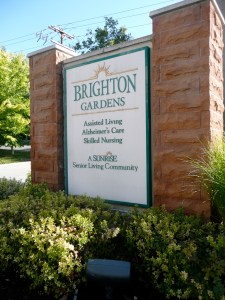
Linda McGraw, director of nursing at Brighton Gardens, a nursing care facility in Salt Lake, explains some of the theories behind why seniors may be less susceptible.

“There was a swine flu epidemic back in the 1970s when they did do some immunizations,” McGraw said. “Experts are thinking this particular group of the population probably got exposed to a certain degree, which built up their immune system. This may be why older people are not as susceptible to getting as sick with the H1N1 virus as the population in their 20s.”

The current media attention is being generated around H1N1, but the worry for the elderly should still be the annual seasonal flu. According to the CDC, 36,000 people die each year from flu-related causes; 200,000 more are hospitalized from flu-related complications. Ninety percent of flu-related deaths and more than half of flu-related hospitalizations occur in people age 65 and older.

The flu season usually runs from October through March, when the virus is at its most rampant. Different venues around the state are currently administering the seasonal flu vaccine. Smith’s Pharmacy on 455 S. 500 East began giving flu shots on Sept. 10.

Camille Sanders, a student pharmacist, said the majority of people they vaccinate at Smith’s are older adults.

“We are actually running out of our batches a bit quicker this year because many people are coming in to get their seasonal flu vaccine earlier,” Sanders said.

Some experts have recommended leaving some space between the H1N1 and seasonal flu vaccines. As of now only priority groups can be immunized against the H1N1. Therefore, older adults are coming in earlier for their seasonal flu shot.

“People want to be prepared for when the H1N1 vaccine is available to them,” Sanders said.

People who are immunized at Smith’s Pharmacy are educated on other preventative measures important to slow down the spread of disease.

“We explain to people the benefits of hand washing and other measures that are important in preventing people getting sick,” Sanders said. “We also hand out an information leaflet to people with any additional questions.”

Brighton Gardens

Residents at assisted living centers, like Brighton Gardens in Salt Lake City, are encouraged to get the seasonal flu vaccine.

The contagious nature of the flu makes it very important to thwart it early, especially in nursing-care facilities around the state. Just by looking around the walls at Brighton Gardens it is evident the flu season is upon us. There are warnings to visitors who may be ill to stay away and instructions about important preventative measures. This community is made up of people with compromised immune systems who are at high risk so it is important to have procedures in place in order to stop the spread of the flu.

McGraw said the epidemiological track system they have in place is to stop diseases spreading before they have a chance.

“We ask who is sick, when did they become symptomatic, what floor do they live on. We start washing and using Clorox to kill germs and extra housekeeping is brought in. We may even ask people not to come down to the dining area,” she said.

Statistics show the seasonal flu is still a major problem in society yet the H1N1 virus has caught the attention of the world. McGraw said this is because the H1N1 epidemic brought a level of panic upon the country because we knew so little about it.

“The sad thing about the H1N1 is that it kills young people who had a lovely quality of life,” McGraw said. “It was traumatic to see young people dying and this caused people to sit up and listen.”

Research shows 30 percent of all Americans over the age of 65 don’t get an annual flu vaccine. With the flu season upon us it is vital for people, particularly older adults, to get out and get immunized.

“People do die from seasonal flu, that is why we encourage everyone to be vaccinated,” McGraw said.

A sport for life

Story and photos by Leigh Walsh

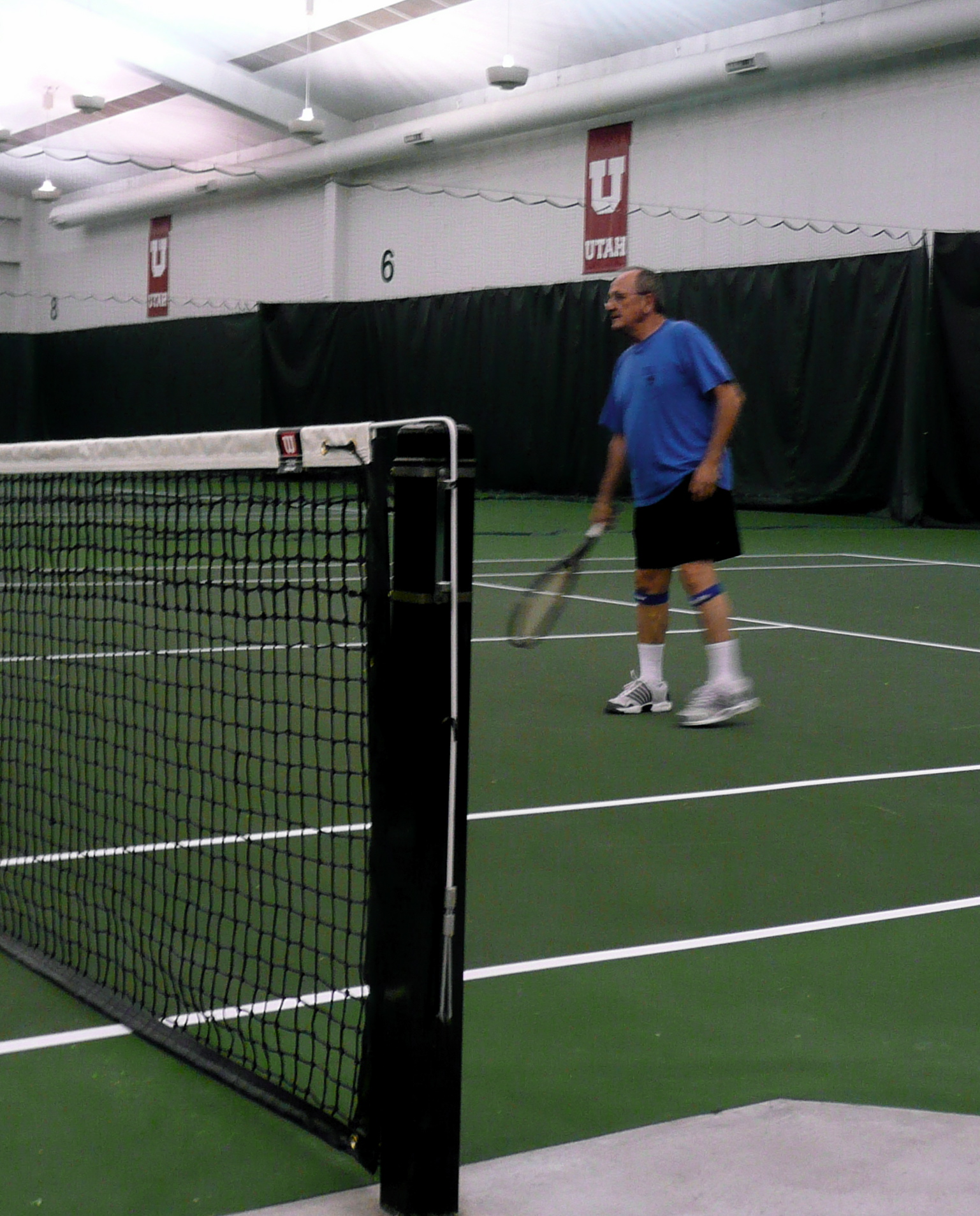
Raymond Haeckel, 73, is not one to sit back and let aging get the better of him. As he sits in the George S. Eccles Tennis Center in Salt Lake City, waiting for his practice partners to arrive, he reflects on the game of tennis and how it keeps him young.

“Tennis helps me age,” Haeckel said. “I feel my balance is better, I am more mobile and I can walk more briskly. Some people my age that don’t exercise have problems with simple tasks.”

Haeckel is determined to remain active and delay the inevitable aging process as long as possible. He credits his great quality of life and ability to be self-sufficient on his physically active lifestyle.

Raymond Haeckel, 73, prepares to return a shot during a tennis game at George S. Eccles Tennis Center.

Janet M. Shaw is an associate professor at the University of Utah who teaches courses specifically related to aging and exercise. Shaw said staying physically independent is an American ideal that we have as we get older.

“One of the goals of successful aging for most people is to be able to do things for themselves,” Shaw said.

Haeckel retired in 2002 from his job as the executive director of government, community and public relations at the University of Utah. At first he wasn’t too sure what he would do with all the hours in a day.

“I’m an anxious person. When I retired I didn’t have to deal with deadlines, and the fast tempo that I was used to had begun to slow down,” Haeckel said.

He knew he needed a plan, and one thing he was sure of was a portion of his time would be set aside to play some tennis.

Haeckel has made some lifelong friendships through the game of tennis. He meets with friends at least three times a week to play the sport they all share a common interest in. As Haeckel’s tennis buddies begin to stream in the door for today’s game, it is easy to see why he takes pleasure in these get-togethers.

Klaus Schmitt stands at the net during his doubles game at the George S. Eccles Tennis Center.

Klaus Schmitt has been playing tennis with Haeckel since the early 1960s. He shares Haeckel’s views on the role of tennis in his own life.

“Being physically active improves the quality of everything in my life,” he said.

Schmitt, a professor in mathematics, loves to travel but there is one catch: “I will travel everywhere as long as I can take my tennis racket with me,” Schmitt said with a smile.

Both men reflect on memories of playing on the old campus courts where the new biology building sits today.

“We used to play daily with our shirts off at high noon,” Haeckel recalled with a gleam in his eye.

Haeckel and Schmitt appear to be the exception and not the rule when it comes to older adults and exercise. Inactivity in the older adult population is a major problem today. According to the Centers for Disease Control and Prevention, the loss of strength and stamina attributed to aging is in part caused by reduced physical activity. By age 75, about one in three men and one in two women engage in no physical activity whatsoever.

Experts claim physical activity over the course of one’s life is of most benefit to an individual but it is never too late to start. Janet Shaw said physical activity is very important right now because there are lots of baby boomers in their early 60s who are still functional.

“Now is the time to capitalize on it and ask: How do I get into a routine of really helpful physical activity that I can continue as I get older?” Shaw said.

It can be difficult for older adults to begin exercise programs, especially when they haven’t been active for much of their lives. Recommendations can be made but the decision ultimately lies with the individual involved. Shaw emphasized the importance of enlisting help from a professional or a physically active friend for those people foreign to exercise.

“You have got to get people into it very slowly in a way that is very safe to them,” she said.

A major problem among the aging community is the increase in the number of fatalities due to falls. According to the CDC, in 2005, a total of 15,800 people aged 65 years and older died from injuries related to falls. An additional 1.8 million were treated in emergency departments for nonfatal injuries from falls.

According to the CDC, physical activity can be a good preventative measure to help limit the number of falls in older adults. Shaw recommends activities good for muscle strength and power in relation to helping balance.

“Catching oneself really requires that people be able to move quickly, and have a certain amount of strength to be able to hold up their own body weight,” Shaw said.

Haeckel and Schmitt are determined to postpone the aging process. “If I go two days without exercise I feel sluggish,” Haeckel said. “I enjoy having a good quality of life. I need one if I want to keep up with the grandkids,” he added.

The women they are playing tennis with find it funny Haeckel and Schmitt are being interviewed for an aging article. “You’re interviewing these two young guys?” they ask. Maybe they have a point. After all, you are only as old as you feel.

In search of a new life

Story and photos by Leigh Walsh

The transition into old age is an inevitable life experience that can be a daunting thought for many. However, the transition into a new life and culture presents Utah’s aging refugees with the most challenges.

As the American flag is raised outside Catholic Community Services in Salt Lake City, three Bhutanese refugees have begun their day’s work inside. Padma Dhungle, Tara Gautam and Krishne Adhikari, each over the age of 65, arrived in the U.S. in 2008 with little more than hope packed in their hearts.

The American flag stands outside Catholic Community Services in Salt Lake.

They had spent the last 17 years in a refugee camp in Nepal, hopeful they would be offered a second chance at life. Their prayers were answered when they were relocated through the United Nations High Commissioner for Refugees (UNHCR) resettlement program.

“We had the feeling of happiness when we heard we could come to the United States,” Dhungle said through an interpreter. “So far it has been good,” he added with a smile.

Catholic Community Services in Salt Lake brings in about 600 refugees each year. The organization does its utmost to make the transition as smooth as possible for each of the immigrants. Aden Batar, director of refugee resettlement and immigration at CCS, explained the main goal is to integrate refugees into the community and provide them with the tools necessary for them to become self-sufficient.

“We help them with case management, job placement, housing, health services and immigration,” Batar said.

Life can be tough for many of the refugees who are resettled in Utah. “Everything is foreign to them when they first arrive,” Batar said. “The weather, the people, the food. It is all different.”

Simple everyday tasks can present obstacles for the refugees. Refrigerators, toilets and ovens are basic concepts to many of us, but are unrecognizable to some immigrants.

These difficulties pose an even bigger challenge for older refugees. They have spent most of their lives surrounded by a culture they are both familiar and comfortable with.

“Country by country the religion and culture is different. It is important to adjust to the new life cultures and new traditions,” Dhungle said.

According to Batar, older refugees can feel isolated, particularly when family members go to work and school. “In the culture where they come from, every day they go to their neighborhood and everybody knows each other. They have people they can talk with,” he said. “I think they miss that socialization.”

Dhungle, Gautam and Adhikari have benefited from the fact they all embarked on this journey together. They have been united since they first entered the refugee camp in Nepal in the early 1990s.

Keshab Adhikari, a case manager at CCS, said it helped greatly that they arrived here with their families. This provided the refugees with some stability as the environment around them changed dramatically.

From left to right: Keshab Adhikari, Krishne Adhikari, Tara Gautam and Padma Dhungel.

The three older refugees are very appreciative of everything the CCS has done for them.

“Each day we learn new things,” Gautam said. “At first we were unsure where to go, who to talk to, how to travel. Day by day we are learning new things and adapting to life in the U.S.”

They each work with CCS and are responsible for various chores around the center. Keshab Adhikari explained they would be paid by the state because they are all part of Salt Lake County Aging Services.

Batar recognizes language as one of the biggest barriers to a successful transition into the community. Dhungle, Gautam and Adhikari speak Nepalese among themselves but they have not yet grasped English. “We take classes to learn English for one hour each night,” Adhikari said. The refugees are hoping to improve their English so everyday tasks, like going to the grocery store, become easier for them.

A smooth transition into a new community is integral to the success of CCS resettlement efforts. Batar said one of the keys to this is community acceptance. “The community here has been very receptive to the refugees,” he said. “We would not be able to bring as many refugees into the state otherwise.”

Many religious groups around Utah get involved with volunteer work and provide much-needed support to the older refugees when they first arrive. “The Salt Lake community has been excellent to us,” Dhungel said. “They are lovely people.”

Along with the voluntary effort from the community, CCS depends heavily on donations from local people.

“Donations are the main source of funding for our program,” Batar said. Monetary and in-kind donations are fundamental in giving the refugees the best help possible. “All the furniture, household items, clothing and children’s toys that are given to the refugees are donated by the community,” he added.

It is important for older refugees to have some stability around them as they adapt into a new culture. For many, their family is their rock, but others depend on their faith to get them through the hard times.

“We have a lot of diverse religious groups in the state of Utah so they easily find a place that they can worship freely,” Batar said. Many refugees have found comfort in practicing their beliefs without reprisal from other religious groups.

With the current wars in Iraq and Afghanistan, the civil unrest in Somalia and the human rights issues in Burma, many older people continue to be stranded in refugee camps around these areas. The community support for refugees is extremely important if the resettlement efforts are to continue.

The majority of refugees the CCS works with are younger children. However, Batar said many of the refugees coming from Bhutan are older adults. They are immigrating with their families and all their children are over the age of 18.

The UNHCR, a branch of the U.N. established in 1951, has assisted millions of refugees over the years, including Dhungle, Gautam and Adhikari. Camps were set up in Nepal in 1991 after the Bhutanese government attempted to implement a “one nation, one people” program. This campaign attempted to integrate the minority groups into mainstream society and it was met with backlash. Many people in Southern Bhutan were forced to flee as a result.

According to the UNHCR Web site, refugees have to move if they are to save their lives or preserve their freedom. “If other countries do not let them in, and do not help them once they are in, then they may be condemning them to death — or to an intolerable life in the shadows, without sustenance and without rights.”

The foundations of American culture are built on freedom and opportunity for all and the Salt Lake community has been very helpful to CCS in their resettlement efforts. There are numerous opportunities to help refugees who are living in overcrowded camps around the world. As Batar said, they are not just relocating for a better quality of life, they are fleeing their circumstances.

Dhungle, Gautam and Adhikari have reached a stage in their lives where stability is vital. They are not focusing on returning to Bhutan. In fact, they want to bring more family here. “We are trying to make Salt Lake our home. We will be living here for the rest of our lives,” Dhungel said.

The key to successful aging

by Leigh Walsh

Researchers say the social support network surrounding an older adult is a great predictor of their health status.

For many people, aging is seen as something that needs to be defeated. It is the enemy, and billions of dollars each year are spent on preventative measures to avoid it.

It may be hard to believe but the answers to successful aging may not lie in a bottle of anti-aging cream or in the hands of a plastic surgeon.

Many experts believe a simple companion you can confide in is a vital aspect of aging happily. Scott Wright, professor and director of gerontology at the University of Utah, echoes this opinion. “Social connections and the quality of relationships you can depend on are a key to aging,” Wright said.

Being physically active over the course of your life can also slow down the aging process. Wright said activities such as yoga and tai chi are very important for balance and coordination. Being physically active is a great preventative measure for certain illnesses and injuries.

Joseph Hansen, a 72-year-old retired accountant, credits his wife and his love of tennis for keeping him young.

“They both keep me on my toes,” said Hansen with a cheeky grin. “I found my soul-mate over 40 years ago and I am still as happy today as the day I met her.”

A recent study at the University of Rochester found that 7.6 million older adults feel the need for more social support in America. On hearing this statistic, which was published in the American Journal of Public Health, Hansen shook his head and sighed. He believes he is fortunate not to be one of these and he claims he would be lost without the support of those around him.

The researchers also examined the correlation between social support and health status in older adults. Their conclusion emphasized social support itself is an important feature of quality of life, and there is a need for social intervention among both healthy and ill older adult populations. Dependable relationships can make all the difference.

The ability to be independent is a value many Americans hold in very high regard. A common fear among the aging community is how their physical and mental well-being will change as they get older.

“I like to live in the present and not worry about the future,” Hansen said. “All I can do now is enjoy being healthy and being surrounded by fantastic support from family and friends. Who knows what can happen tomorrow?”

Why do almost 7.6 million older Americans feel they are lacking in social support? Is it our culture, or does the problem stem from multiple factors? Wright talked about areas of the world known as Blue Zones, where people live extraordinarily long and healthy lives.

Loma Linda, Calif., Sardinia, Italy, and Okinawa, Japan, are three of a handful of places that are considered Blue Zones. Researchers have not found one sole reason for the longevity of life in these regions of the world, but they have made some general observations.

The Blue Zones/AARP Vitality Project is sponsored by United Health Foundation. According to the Web site, there are six common factors among these places: no smoking, a plant-based diet, constant moderate physical activity, social engagement, legumes and at the top of their list: family. Blue Zone researchers claim family and a good social circle are great predictors of a healthy life.

Wright said 35,000 people reach the age of 65 every month in America and Utah has the fifth-largest population of elderly people. This “age tsunami” is causing major financial headaches for the government, which makes healthy aging as important now as it has ever been.

In the current economic climate, the generation of baby boomers is placing an extreme strain on Medicare and Social Security. If people are living a healthy lifestyle illness and injuries will be reduced, which will relieve the strain on government finances. The Social Security Administration recently stated that monthly Social Security and Supplemental Security Income benefits for more than 57 million Americans will not automatically increase in 2010. This will be the first year without an automatic Cost-of-Living Adjustment (COLA) since they went into effect in 1975.

This nation is getting older and statistics show the aging population will continue to rise. Researchers at the University of Richmond stated, “Our findings outline the benefits of future efforts to reduce social isolation and improve social health among this large and fastest-growing segment of the U.S. population.” The elderly community should not become society’s forgotten population.