Retired university professor looks past adversity

Story and photos by Jessica Gonzales

  • Meet Fred Buchanan, a retired University professor living with Parkinson’s disease.

In his soft yet prideful Scottish accent, Fred Buchanan recites a poem by memory written by his favorite poet, Robert Burns. As he tries to muster the simple words from his lips, he stops and pauses momentarily. He apologizes with a smile, says “Sorry, it’s my Parkinson’s,” as his hands moderately tremble from shaking. “You have your good days and you have your bad days sometimes.”

At 78, Buchanan is one of approximately one million Americans living with Parkinson’s disease, according to the Parkinson’s Disease Foundation. Sufferers of this neurological disease lack dopamine in the cortex section of their brains that affects basic motor skills. As a result, tremors, rigidness and slow movement are symptoms patients with Parkinson’s often experience. Currently, there is no cure for the disease, only medication or surgery to temporarily relieve and slow down the progression of symptoms.

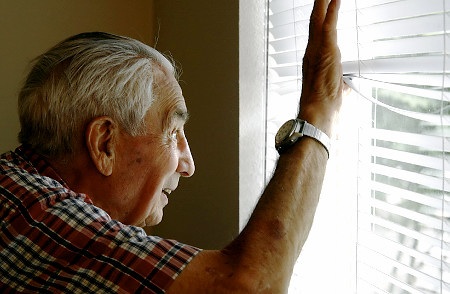
Retired university Professor Fred Buchanan reads poetry in his home in Salt Lake City.

Buchanan was diagnosed in 1992 after his son noticed tremors in his hand at a concert. He saw a doctor who later diagnosed him with Parkinson’s disease during the same year.

“I was surprised,” he said. “I’m very fortunate to be able to do anything.”

With the help of taking a total of 18 pills, he is able to have around 10 hours of good movement throughout the day. But he still experiences symptoms in his daily routine. Shaking and stiffness have inhibited his movement and he largely has to rely on his wife to help him with simple tasks such as buttoning his collar and sleeves.

“I was independent before but now I’m dependent,” he said. “I just miss the freedom I had.”

Rama Buchanan, his wife of 46 years, takes care of her husband makes sure to help him when he’s struggling and remind him to take his medication. After seeing two of her family members go through Parkinson’s disease, she credits her love and patience to find strength with her husband’s situation.

“Families are forever,” she said. “We do a lot of things together and we help each other. You just take it one day at a time.”

Buchanan, who was born in Steventson, Scotland, moved to Salt Lake City in 1949 with his parents to be closer to family and the Church of Jesus Christ of Latter-day Saints. After serving a Mormon mission for two years in his native country, Buchanan returned to Salt Lake and was encouraged to attend the University of Utah by a family friend who was a professor there. The inspiration to learn became a pursuit he valued and as he said in a proud voice, “Scratch a Scot and find a scholar.”

After graduating from the University of Utah with bachelor’s and master’s degrees in history, Buchanan went to Ohio State University where he received his doctorate in 1967. In 1977, he became an associate professor in education studies at the University of Utah. He retired in 2003.

A published scholar and writer, Buchanan has written several academic books and chapters about Scotland and the history of education in Utah. “A Good Time Coming: Mormon Letters to Scotland” and “A History of Education in Utah” feature his academic work from research as a university professor.

Buchanan’s small library in the basement of his home is filled with his academic work, Scottish literature and religious publications that symbolize his love and appreciation for learning.

“I’m so curious about many things,” he said. “I’d like to be remembered as someone who appreciated creativity.”

Buchanan is currently conducting two more projects before his Parkinson’s
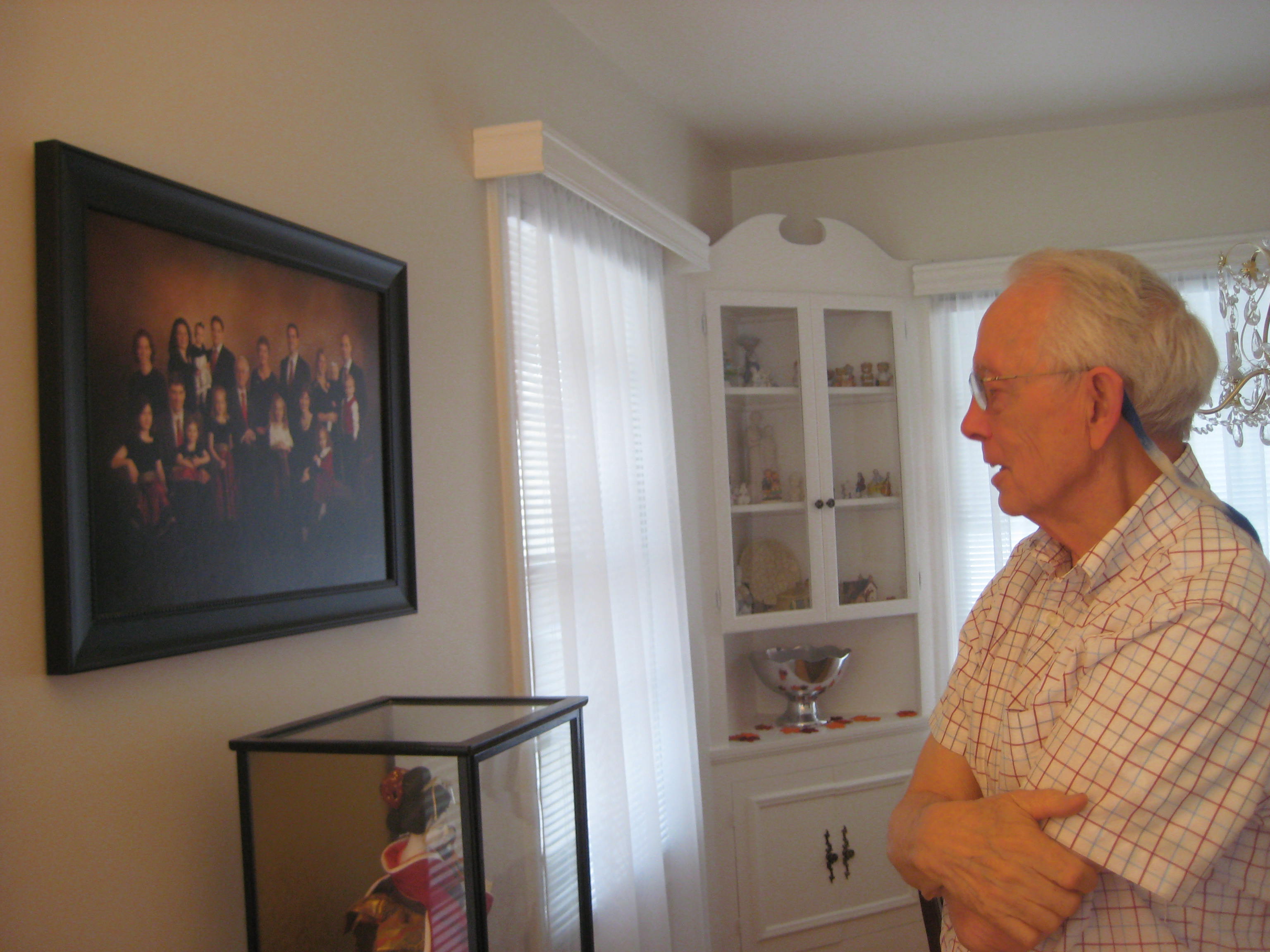
Fred Buchanan looks at a picture of his family, who he says has given him strength while suffering through Parkinson's disease.

begins to interfere more with his daily life. His first is to write a book about his wife’s family history that was central to Scottish immigration, primarily to Utah. His second project, with the help of his journal that he’s written in for the past 35 years, is an autobiography for his family and friends to remember him by.

“I like to think that something happens to you after you die,” he said.“But if not, this is what I will have left behind.”

Although his Parkinson’s is an obstacle, Buchanan said he wouldn’t let that get in the way of what he wants to do. With support of his family, friends and his faith, he says that he’ll be able to look past the complications the disease has given him.

“I don’t think God or nature gave it to me as a challenge,” Buchanan said. “But given that I have it, I look at it invariably, except for to take a nice nap in the afternoon.”

Seniors can take a chance on gambling

by Evan Frank

Donald Sindric has worked as a steam fitter for 32 years. Depending on the job, he works 12-hour days, six days a week. Sindric, 60, may be employed, but he also enjoys the thrill of gambling in the hope of hitting the big jackpot one day.

“It started with sports betting,” Sindric said.

Each football season, Sindric participates in several pools around work.
He also travels every year with his wife and in-laws from Wisconsin, where he has played in most of the casinos, to Minnesota and Iowa.

“We’ll go up along the Mississippi River and stop in Iowa to go river boat gambling,” Sindric said.

In total, Sindric believes they travel close to 900 miles for the entire trip.
When the state of Wisconsin did not allow lottery tickets, Sindric would travel to Illinois to purchase them.

“I do it for the enjoyment,” Sindric said. “I’m always hoping to hit it big.”

While he may not have won a six-figure jackpot, Sindric has won $10,000 on a $2 lottery ticket. He buys tickets five to seven days a week on average. Over the years, Sindric has lost track of how much money he has spent on lottery tickets and gambling games alike.

For older people like Sindric, gambling can be an enjoyable time. For others, it can be a dangerous habit that is uncontrollable.

In places such as Las Vegas and Atlantic City, gambling is the lifeblood of the community. In 2007, Nevada casinos earned $12.8 billion with slot machines and table games such as keno and bingo, with sports betting being prominent as well. According to the University of Las Vegas Center of Gaming Research, other games such as twenty-one, baccarat, craps, roulette and poker brought in more than $3 billion. Atlantic City is home to 11 casino resorts with three more currently under construction, and 33 million people on average visit each year.

According to the Arizona Office of Problem Gambling, researchers at Pennsylvania State College of Medicine and the University of Pennsylvania surveyed elderly people 65 years and older and found 70 percent had been involved with some kind of gambling in the past year.

Addiction comes in many forms from alcohol, drugs, food, to even gambling.
In 1980, the American Psychiatric Association accepted compulsive gambling as a disorder of impulse control.

The Council on Compulsive Gambling of New Jersey states compulsive gambling has three phases: winning, losing and desperation.

During the winning phase, the gambling wins help enhance a person’s ego and self-image. When a person loses, it is seen as bad luck.

As an older gambler begins to lose continually, they will borrow money to continue gambling in an attempt to break even. If the losing continues, they may go as far as selling their possessions or mortgaging their property.

“While the elderly gamble less than other age groups, the impact of gambling addiction may be more devastating as once savings are gone, that is it, they are not able to go back into the workforce,” said Keith Whyte, executive director of the National Council on Problem Gambling.

The National Council on Problem Gambling is a site dedicated to educating people about pathological gambling. The site has extensive information on the addiction itself and what a person can do to get better.

The Council on Compulsive Gambling states if an elderly person gets to the third stage, they may become obsessed with trying to cover their losses. Suicide can play a part if the addiction is not treated.

Bingo, according to Whyte, is the most popular game among seniors, with slots being a close second. Whyte said the amount of senior gamblers is not as much as other age groups, though.

Whyte said women tend to start gambling at an older age.

Phyllis Knudson, 74, has gambled since the casinos became prominent in Wisconsin during the late 1980s.

“I usually play the poker slot machines because you can make choices instead of just pushing a button,” Knudson said.

While casinos are a major attraction, they are not the only places to gamble. The track, which normally hosts dog and horse racing, has become a popular place for people to wager.

“Some of my friends asked me to come along on a gambling weekend,” Knudson said.

During the trip, she won $29 at the track, along with $79 at a casino they visited later on.

“Since then I have won some and lost some––enough to keep me coming back,” Knudson said. “But, it is strictly entertainment for me.”

Knudson said she knows when to stop. “If I am losing, I quit, and if I am winning, I still stop at a certain point so that I don’t lose what I have won,” she said.

Whyte said many seniors play for the social aspect of gambling, along with the exciting activity it may bring.

For a while, Sindric and his wife, along with their friends, would have a poker game once a month. He said the monthly games slowly stopped after the wives started talking more than playing.

“I don’t consider myself a gambler because I don’t do it for a living,” Sindric said.

Once he retires, he doesn’t see himself gambling any more than he does now. “I like to win,” Sindric said.

Wiis are for the young at heart

Story and photo by Kelli Coomes

Farrell Sorensen eagerly awaits the arrival of his great-granddaughters.

“What are we playing today?” the three girls ask in unison. Hallie, 8, Hannah, 6, and Hollie, 4, are spending the day with their great-grandparents.

“What do you want to play?” Farrell Sorensen asks.

“Baseball!”

“Tennis!”

“Bowling!”

“How about we play all three?” Farrell suggests. “We’ll take turns.”

His wife, Darla, comes in and sets up the only modern technology in the house that she’s figured out: the Nintendo Wii. Remotes get handed around and the games begin.

The four run around the room, squeals coming from the girls and laughter from Farrell. A whirlwind of motion continues for most of the day, stopping only long enough to change games and players. As more family come to visit, teenagers and adults take turns playing with the grandparents and the girls.

The children tire before the Sorensens are done playing.

“They used to be too shy to talk to us,” Darla said. “We’re too old, we make them nervous. But now they come over all the time and love to spend time with us.”

There is a computer in the house, but they have a hard time figuring out how to use it. Their grandson, Jason Sorensen, 29, has been over many times to teach and re-teach them how to use the Internet, e-mails and how to save the photos they take. They can work the TVs and the radio, but that’s about it. They’ve broken three karaoke machines so far.

“They’re fine until they press buttons or try to explore on their own,” Jason said. “It’s the joke in the family to not let them touch electronics.”

But Farrell, 86, and Darla, 84 have found a way to bridge the age differences in their family. The Wii has brought five generations together under their roof.

“Now they all come to us,” Farrell said with a smile. “Used to be we’d see everyone around family reunions and holidays. Now they don’t ever leave.”
They own family games like “Wii Sports,” “Mario Party 8,” “Mario Kart,” “Pokémon” and other games the younger kids can play. They also have games for the teenagers and adults who come to visit, such as “Zelda,” “SoulCalibur” and “Brunswick Bowling.”

When the grandkids first gave Farrell and Darla the Wii, it was Christmas and they couldn’t figure out what it was. Their grandsons, Jason and Casey Walker, 30, had to come show them what it was and how to hook it up.

“They were afraid to touch the Wii,” Casey said. “We went over a few times until we were sure they had it figured out.”

“It’s easier than most electronics,” Darla said. “There aren’t a lot of buttons to push and the words on the screen are big enough for us to see.”

Farrell grins as he catches his breath. “It’s easy to use and gives us a great time with the grandkids and great-grandkids. Best present the youngsters ever gave us.”

Farrell mostly only uses it for when his great-grandkids come to play with him. He enjoys the time they spend together. “Keeps me young at heart,” he said.

The adults enjoy watching the kids play with the grandkids. “It’s nice to have your kids begging to see their great-grandparents,” Sandy Sorensen said. “Plus, you get a free babysitter when you need one. The grandparents would love to take them for a day.”

Darla loves to play with the kids too, but she uses the Wii even when there are no kids around. Darla enjoys “Wii Fit,” a game that teaches yoga moves, improves balancing, strength and has aerobics exercises.

The Sorensens are part of a growing trend. Sports enthusiasts who are older and sedentary because of injuries or worn-out joints are now enjoying playing games again.

The Wii gives them the opportunity to play sports without the jarring impact the real sport would cause. Baseball no longer has the jarring on the arms that comes with hitting the ball. Bowling is no longer so hard on the knees and hands and tennis no longer requires so much running on a court.

Some senior centers have Wiis and are having tournaments. The Columbus Senior Center even had a competition where the seniors team beat the teenagers team in bowling. In October in Houston, there was a major Wii competition for seniors held with participants from all over the nation. The categories included sports games, intellectual games and the “Wii Fit.”

Darla enjoys her “Wii Fit” for the aerobics. She begins her stepping exercise and then turns on her favorite show. “I exercise while I watch my soaps,” Darla said. “It’s better than any other exercise tape I have; I actually have to watch those.”

Every day she does her stepping exercise. Sometimes when she’s feeling up to it, she tries the balance games, skiing is her favorite, and once in a while she does a yoga pose.

“It records what and when I do these things,” Darla said. “That way, when ‘grandpa’ teases me about sitting around and watching my soaps all day, I can show him that at least I wasn’t sitting.”

Bringing the family closer to them was one thing they had hoped for. Having it bring them closer to each other was something they never expected.

“Now we can spend more time together,” Farrell said. “She’s not one for sports so we’d spend time in different rooms watching TV. Now we’re playing games together.”

Darla added: “We now have a common interest that makes us laugh and play together. After 60 years of marriage, a little excitement is nice.”

Survival the solution for older homeless men

Story and photo by Lee Horton

The front door is open while a man sleeps in his new studio apartment. It isn’t an accident. After years of being homeless, the man finally gets a place he can call his own. He just isn’t ready to believe it, or to let go of the life he has become accustomed to.

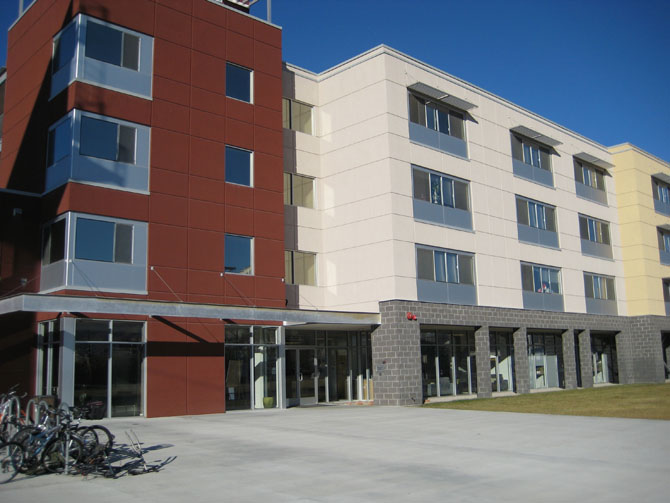
The Sunrise Metro Apartments, located at 580 S. 500 West in Salt Lake City, provide permanent shelter for chronically homeless men.

So, he purposely leaves the entrance open. He’s not the only one who does so.

“When you go into an apartment and close the door, you’re alone,” said Joyce Crockett, a case manager at The Road Home, a nonprofit service agency in Salt Lake City that helps shelter and feed the homeless. “As much as these guys want to get out of shelter, they hadn’t been alone alone for a long time.”

Crockett said one man continued to sleep outside for almost a month after he moved into his apartment.

“It is a surprisingly difficult adjustment,” Crockett said.

The Sunrise Metro Apartments, 580 S. 500 West in Salt Lake City, are a housing-first project opened by The Road Home in 2007. It provides apartments to men who have been chronically homeless.

A person needs to spend more than 700 nights in a shelter to be considered chronically homeless. Most clients of Sunrise Metro have been living on the streets for as long as seven to 10 years. Many of them are older adults.

The number of older adults who will be homeless and will need assistance from a shelter or other programs is only going to increase, said Alesia Wilson, a licensed clinical social worker at The Road Home.

“Because of the economy, the demographic is going to change,” Wilson said. “Society has always been able to take care of the elderly, but it is getting more difficult.”

She said a lot older adults are becoming homeless because their families are not able to afford to take care of them, or to put them nursing homes. Many others are ending up on the streets because they’ve lost their 401(k) money.

Wilson said homeless people live an average of 20 years less than people who have a consistent roof over their head.

Sunrise Metro takes some of the male older adults out of shelters and gives them their own apartment. Despite the difficult adjustment, having the responsibility of their own home is significant for chronically homeless older adults.

“There are a lot of self-esteem issues with being homeless,” Crockett said. “We see people accepting who they are and not being embarrassed of who they are. They feel comfortable in their own skin for the first time in a really long time. They have a nice apartment, and it’s pretty stable. They’re not on the street, they’re not in the shelter. They don’t feel like such a loser.”

The housing is permanent, but the residents still struggle to accept their good fortune. Crockett said many of the residents worry about the program leaving their lives as easily as it entered it. They also question why they are so lucky.
“A lot of people feel they don’t deserve it,” Crockett said.

The more the residents become accustomed to having their own apartment, the more confident they feel. The newfound self-esteem helps them take more risks.
One risk they take is being more social. Crockett has seen many people who never interacted with anyone at the shelter open up.

“When we see them, when we have an activity, having a conversation with a stranger or another tenant, it is very heart-warming,” Crockett said.

The best measure of success is the number of residents Sunrise Metro has been able help to reconnect with their family.

“There are a lot of people here who haven’t had any involvement with their family for a very long time,” Crockett said.

It often isn’t easy to get older homeless men to get in contact with their family. Case managers at Sunrise Metro ask residents about their family and if they want to talk to them. At first, the residents are uncomfortable with the thought and decline the invitation. Many of them feel guilty for causing their family to fall apart.

The residents will start to think about their family more and more after being asked. Eventually, they are ready to take action.

“Some families are very excited when they call,” Crockett said. “Sometimes, they just haven’t called their family. Their families want to know where they are and what they are doing.”

Crockett said the confidence to take the risk to get in touch with their family usually starts with having a suitable place to live.

“The fact that they have a place to live is probably the biggest drive to find their families because they have a nice apartment, and they’re not on the street, not in the shelter,” she said.

Residents also gain self-confidence from obtaining employment. Sunrise Metro has case managers who help the residents write up a resume. “They have more skills than they think,” Crockett said.

The struggling economy has made finding a job a more difficult task. The businesses usually willing to hire older homeless men don’t have any openings. Even the normally reliable Deseret Industries doesn’t have openings.

“When you can’t get them a job at the D.I.,” Crockett said, “you know things are bad.”

Older homeless adults also face age discrimination. Crockett believes these men are physically capable of doing most jobs. They just need an opportunity.

The case managers are on-site five days a week. Besides assisting the men with their job search, case managers also hook them up with resources and help them get out and functioning in the community. If the men are unable to find jobs, the case managers help the men through the Social Security process.
Case managers also help the residents put together a case plan. Crockett calls Sunrise Metro a “client-driven program.” This means the residents decide on their goals. Case managers make sure the residents are meeting their goals. If they are not, the case manager will refine the plan or revamp what isn’t working.

Case managers also get to know each resident’s specific situation so they don’t head back down the path they are trying to leave.

“The [purpose] of having on-site services is to be available when you see a problem that people fall in that leads them to be homeless,” Crockett said. “You would be here to interrupt that, whatever their cycle is.”

Residents also have therapy services available with Alesia Wilson through The Road Home. But they don’t often they take advantage of it.

“It’s not really their priority,” Wilson said. “They’re more in survival/crisis mode. Staying alive is all they need.”

Both Wilson and Crockett believe living through homelessness has made the residents resilient.

“These are strong people in a lot of ways,” Crockett said. “They’ve had to be in order to survive.”

Just getting a place to live after all the years of living in the streets and in shelters is enough to call Sunrise Metro a successful endeavor, Crockett said. “I think it allows them to die with some dignity.”

Volunteering at any age

Story and photo by Jessica Gonzales

Ann Mayne moved to Salt Lake City from Texas in 1991 to be closer to her son after her husband died. The change was difficult for her, and adjusting to a new community with no friends and little family made her feel helpless. At age 60, she was uncertain of what her future would be like now that she was alone.

“One morning I woke up and I said ‘What am I going to do with the rest of my life?’ I had no roots here, no sense of belonging,” she said.

Mayne’s life changed later that year after seeing a flyer for the Retired and Senior Volunteer Program (RSVP) at her local library. RSVP is part of one of the largest volunteer programs offered to those 55 years and older and is sponsored through the Salt Lake County Aging Services. After contacting the program, she was put in touch with the Utah Cancer Society, where she volunteered her time as a record taker and became actively involved working in other community partnerships.

Eighteen years later, Mayne continues to volunteer her time taking records in various projects, including the Healthy Aging program and RSVP at the Salt Lake County Aging Services. She spends most of her time volunteering when she can, tracking RSVP volunteer hours and collecting data from organizations involved in the program. “Volunteering has saved my life,” said Mayne, now 78. “When you help others, you help yourself.”

For seniors like Mayne, RSVP is an opportunity for them to donate their time to serving the needs of the community. Tutoring, providing meals for the elderly and involvement in environmental awareness programs are some of the many activities volunteers participate in through RSVP.

According to the Corporation for National and Community Service, RSVP significantly increases public support for organizations and increases the number of clients served in the organization. In return, volunteers benefit from the socialization with those whom they interact and gain a sense of belonging for contributing their time.

“They do like the involvement of what they’re doing and the fact that they are helping someone is very important to them,” said Vicki Hansen, program assistant for RSVP at Salt Lake County Aging Services. “Then they find out it makes a difference in their own lives as well.”

RSVP began in 1971 as part of a national network of community service programs called Senior Corps. Its mission is to provide volunteer opportunities for the aging community to use their talents and skills to help out their local community. RSVP has been a major success nationwide and in 2006, there were around 480,000 volunteers nationally who donated 66 million hours of their time in their local communities through the program.

Salt Lake County Aging Services has sponsored the program since 1974. There are currently 1,150 active volunteers whose ages range from 55 to 99. Last year alone, more than 200,000 hours of volunteer service were contributed to 70 community organizations, such as the University of Utah Hospital, local school districts and art museums. Collecting diverse agencies and programs is what Hansen aims to provide to guarantee volunteers are placed in an organization where they feel comfortable and confident to volunteer in.

“It’s all about matching the interests of the volunteer,” Hansen said. “Whenever someone is passionate about something and they’re enjoying what they’re doing, they feel better about what their involvement is.”

At the Kearns Food Pantry, most of the workers are RSVP volunteers. A total of 14 RSVP volunteers are active at the pantry, many who have been there for several years. Last month, the pantry fed about 2,900 needy people and volunteers donated 350 hours of their time.

“We wouldn’t have a food pantry if we didn’t have volunteers,” said Bobbie Mayberry, coordinator for the Kearns Food Pantry. “They love coming here.”

Loretta Mann, 77, became an RSVP volunteer for the pantry two years ago after she noticed an advertisement for the program at her local library. After retiring from her job at a local bank, she decided volunteering would be a great opportunity to spend her free time and engage with others in her community. Mann donates eight hours of her time each week at the Kearns Food Pantry with other volunteers whom she considers her family. She sorts and distributes food alongside with other RSVP volunteers, who have given meaning to her life .

“I really feel like I’m helping,” she said with a large grin on her face. “It will make you feel like you are needed.”

Loretta Mann, right, participates with other RSVP volunteers at the Kearns Food Pantry.

“The feedback I get from folks is amazing,” Vicki Hansen said. “The more involved they stay, the more healthy they seem to be.”

For the future of the RSVP program, Hansen hopes to see the amount of volunteers increase and become involved as the Baby Boomer generation retires. The benefits she says, will not only strengthen the community, but also strengthen the confidence of the volunteer and unlock the hidden talents they may have never discovered.

“We’re looking for people who want to initiate change,” Hansen said. “The more we have that, the better off our community will be as a whole.”

Will Social Security disappear?

Story and photo by Alexis Young

Social Security may be in jeopardy after the baby boomers, bigger than any generation before them, retire. There are about 78 million baby boomers in the U.S. The oldest will turn 62 next year, which is the age they qualify for Social Security benefits.

Rob Ence, the Utah state director of American Association of Retired Persons and an upcoming baby boomer himself reaching retirement age.

Social Security will be put to the test. Rob Ence, the state director of American Association of Retired Persons (AARP) in Utah, said without changes, Social Security faces a long-term economic shortfall.

“Payments of Social Security will rapidly exceed the baby boomer surplus. The system will only be able to pay out 70 percent of projected benefits after the year 2037, not the 100 percent current benefits,” Ence said.

According to the AARP Web site, Social Security is a public welfare program that started in January 1937. It is funded by taxes and administered by the federal government. Benefits are based on your year of birth, 35 of your highest years of earnings, and the age at which your benefits begin.

“It is not a retirement plan, and was never intended to meet all the needs in retirement, but rather a floor to protect against poverty in longevity,” Ence said. Social Security has always been designed to give a minimum level of support, and was designed to provide for sustenance needs.

Many baby boomers did not plan for retirement. “Consumption and debt accumulation have been the trend, and the self-indulgence will force dramatic reduction in lifestyle during retirement,” Ence said. “Because baby boomers haven’t saved, it is going to be quite difficult for them to rely exclusively on Social Security income. Those that do will have hardships in the cost of living expenses.”

Ence, an upcoming baby boomer himself reaching retirement age, is one of the few who is properly saving for retirement. “I am now 57, I have an excellent defined benefit plan with my employer, and I set aside 11 percent of my income monthly in a 401(k),” Ence said. “If my health is good, I plan to work full time until age 68-70.” Not having to depend entirely on Social Security, and planning on a sufficient monthly income after he retires, Ence intends to travel and participate in extensive service throughout Utah and perhaps abroad.

According to AARP’s November 2009 Social Security report, 49.9 million people throughout the country receive Social Security benefits (about 16 percent of the population). The Social Security Administration estimates 91 percent of Americans age 65 or older receive benefits. Among these people, Social Security is the major source of income for two-thirds and virtually the only source of income for the other one-third.

Rising unemployment, declining savings and an upcoming wave of baby boomers reaching retirement age has increased the number of people applying for Social Security benefits, which are available as early as age 62.

“It is unwise for a person to file for Social Security before age 66. People should work as long as they want to and are able,” Laura Polacheck, an attorney with AARP, said. Older adults, who take Social Security benefits before age 67, the established retirement age, get a reduced monthly amount. Polacheck said people need to think earnestly about the outcomes of taking early retirement benefits and consider their options.

Heather Spencer, an associate economics instructor for the University of Utah, points out taking a reduced benefit now may weaken one’s expectations of life later on. “Most Americans view Social Security as a retirement plan, and feel entitled to benefits when they are 65 or older,” Spencer said. “Be realistic, you want to plan on having the same standard of living both pre- and post-retirement.”

For an individual born after 1943, every year you delay the acceptance of benefits after your normal retirement age, you get a delayed retirement credit of 8 percent up to age 70, according to the Social Security Web site.

Spencer offered a list of suggestions that the government needs to do to keep Social Security viable for future generations:

• Make yearly adjustments that keep up with inflation.
• Change the cost of living from the average wage to the consumer price index.
• Increase the retirement age to 69.
• Raise the amount of income subject to Social Security taxes.
• Reduce benefits.
• Invest the trust fund money in reliable products.
• Make Social Security “means” tested, which suggest if a person does not need the extra income, they would not collect the benefits.
• Advance retirement assistance that meets the needs of American workers.

“Those things alone will more than account for any projected shortfalls, and will keep Social Security solvent for the unknown future,” Spencer said.

When asked if Social Security is going away or going to continue, Ence said he did not think it will go away, nor would he want it to. “It is the most successful social program ever created in our country, and a model for success internationally,” he said. “We need to recognize that Social Security needs to be modified to be sustainable, and not a burden for future generations.”

Home safety for the elderly

Story and photos by Jenna Cannon

  • Click here to learn more about home safety for the elderly.

A hint of lemon oil wafts through the air, giving the room a summery aroma. Sunlight sneaks in through the window, dancing across the face of the room’s occupant. Grace Pace, 86, moved into this room at her eldest daughter’s house for health reasons. Her condition has greatly improved, so she will soon be returning to her own home. But first, changes must be made to ensure her safety.

Grace Pace sitting in her room at her daughter's house in Sugarhouse.

“I am just thrilled to be able to go back home,” Pace said. “It wasn’t easy to leave, but my health just wasn’t good enough to stay there. That was our first house,” Pace said with closed eyes. She paused and seemed to be reminiscing about memories in her house. “That house is my home where we raised our six children,” she said with a smile.

Pace rented her house to her son and daughter-in-law while she was living with her daughter. During this one-year period, she underwent physical therapy. She said the results were more than she had ever hoped for.

Pace’s daughter, April Thompson, was amazed to see her mother’s recovery. “The improvement in my mom’s health is truly miraculous,” Thompson said. “She seems ten years younger. I can’t believe how much healthier she is.”

Pace is now able to return to her beloved home. To ensure her well-being, she has hired a private consultant to assist her with making her home safer. Some renovations must be made to reduce the risk of accidents related to old age.
Changing the home is a way for the elderly to stay in control of their lives.

“Aging declines the body, but people will adapt,” said Scott D. Wright, director of the Gerontology Interdisciplinary Program Center on Aging at the University of Utah.

Steve Davis is helping Pace with the renovations. He has been assisting elderly clients remodel or “elder-proof” their homes for more than 15 years. Davis said a number of changes can be made throughout the home to make it safer for the elderly.

Kitchen Safety
The kitchen can be a very dangerous area for the elderly. They may stand on a stool to try to reach items on high shelves and end up falling and getting seriously injured, Wright said.

“You need to move the most used items to lower shelves to prevent the person from climbing onto a chair or stool and falling,” Davis said.

Davis also said sinks can be difficult to adjust because of reduced motor abilities in the elderly. The sink needs to have a single-handle lever faucet so seniors can easily adjust the water and turn it on and off, he said.

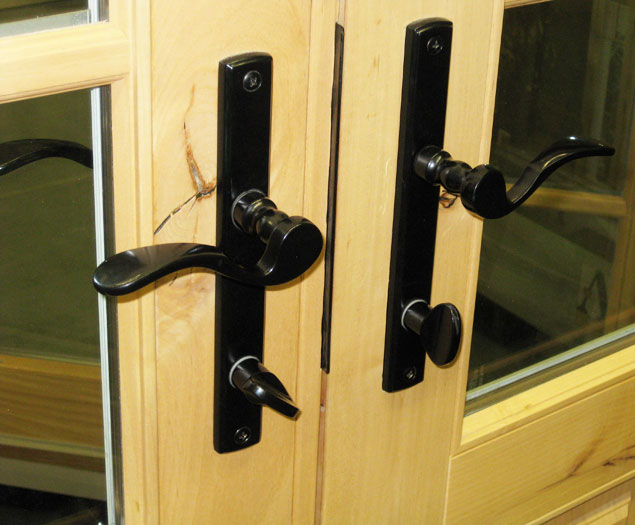
Lever handles on doorknobs assist the elderly with opening doors.

Lever handles on doors are also a helpful addition to the home.

Another kitchen renovation Davis considers is replacing cupboard handles. Cupboards with handles that a hand or finger can slip through work best because they are easier to grab onto. This is especially helpful for individuals with arthritis, he said.

Bathroom Safety
“One of the highest risk areas for not only the elderly, but for people in general, is the bathroom,” Davis said. “The surfaces are wet and slippery so people are more likely to slip and fall.”

To remedy the dangers that a bathroom holds for seniors, Davis suggests putting grab bars in the bathtub and around the toilet. These bars give the person additional support to get in and out of the tub.

“Non-slip floor mats are essential in the tub and on the floor outside the tub. These provide a secure surface so that slipping doesn’t occur,” Davis said.

Pace is having grab bars installed in her shower. She also uses a shower chair for additional support. “It’s easier to sit and wash myself because I don’t have the strength to stand for that long,” she said.

An elevated toilet seat assists elderly persons in regaining a standing position.

The level of the toilet can also be a problem for the elderly. Pace has a special seat attachment that goes over her toilet to raise it up to a comfortable level for use.

“Elevating the seat makes it easier for the person to regain a standing position,” said Stanley P. Wells. Wells, a physical therapist, treats many elderly patients at his clinic in Sandy. He said his experience with these patients has made him aware of little things that help individuals with mobility.

Flooring
Flooring is an important aspect of safety for older adults. Davis recommended replacing hardwood floors or tile with low-pile carpeting. This provides traction without creating an additional hazard. “Shag carpets can also be a tripping hazard because they are springy and a person can get a toe caught in the carpet,” Davis said.

If there are area rugs, it is essential to secure them down. Davis recommended using a floor mat under the rug or tacking the rug to the floor. It is important to use rugs without any fringe because the fringe is an additional tripping hazard.

Other things to watch out for are items on the floor that could be the cause of a fall. “Things such as brooms and wastebaskets need to be put in the closet so the person doesn’t trip and get injured,” Davis said. Tripping hazards can also include laundry baskets, newspapers, decorations and ottomans.

Stairs
According to the U.S. Department of Trade and Industry, stairs cause the most serious accidents involving seniors. For this reason, it is essential to utilize the stairs cautiously.

Pace has trouble going up and down stairs because of ankle and back problems. She plans on installing a stair lift so that she can ride up and down the stairs without any risk of falling.

If the cost of a stair lift is not within an elderly person’s budget, Davis suggests moving items that are on other floors to the main floor. This allows the occupant to have access to their belongings without the risk of falling down the stairs, he said.

Other Safety Measures

Davis mentioned that harm from external forces such as intruders or natural disasters are a fear that the elderly face. Pace said she is concerned she will not be able to do anything if there is an emergency in her home.

“It is necessary to have working smoke alarms and carbon monoxide detectors for safety,” Davis said.

Another safety measure is home security. Davis suggested installing some sort of alarm system or putting locks on all windows and doors.

Because the cost of home security systems can be daunting, seniors can consider other options. Sandy City Police officer Glen Williams offered some alternatives to installing a security system. He said putting bushes with thorns directly in front of windows could deter a criminal from entering. It also frightens potential intruders if there are motion-sensing lights around the house, he said.

Pace decided to install a security system. She said the cost of the system was in her budget and worth every dime. “You can’t put a price on feeling safe,” she said.

With all of the home improvements, Pace said she feels prepared to return home in safety. “My doctor thinks I’m in good enough health to live on my own,” she said. He recommended that she have a family member nearby in case of an emergency. He also said she should continue her physical therapy treatments.

Pace is thrilled with the prospect of moving back home. “I feel like I am young again and I’m starting an exciting new life,” she said.

A Utah farmer who never tires

Story and photo by Kelli Coomes

Dawn breaks over the trees. A man with a silver head of hair looks out over his herd of cattle, gazing toward the sun as the first rays of sunshine illuminate his gruff-looking silhouette. He’s already been up and working for a few hours.

Farmer


Dell Walker whistles as he grooms his horse Lou at his farm in Provo, Utah, last fall.

The sunlight slowly crawls across the land, like a veil being lifted from a piece of art. As the valley becomes lit, the farm comes to life. All that can be seen are acres of growing hay, a small herd of cattle, a few horses and chickens scratching the ground.

At 78, Dell Walker stands straight while surveying the work he has ahead of him. He has animals to feed, hay to haul and cattle to herd. He begins saddling his horse; his hands seem to be moving with a will of their own.

This is his family’s land. Held for generations. It borders the eastern edge of the Provo River, in the southern end of Provo, Utah. The house no longer sits on the farm. It was torn down when the farm became prosperous enough for the family to move into town. That was when Walker was only 10.

“We are a dying breed,” Walker said, his eyes sad. “Our children don’t work the land with us.”

Walker has three grown children. He has many grandkids and a few great grandchildren. None of them are interested in the land, except to sell it, Walker said. “Over my dead body.”

He’s no longer young enough to take care of all the land. A little more than a third of the farm property is now rented out. Horse owners can grow their own hay and house their horses for a monthly fee. The hay that Walker produces is used to feed his own three horses. The land is divided into multiple pastures, old-fashioned fences of chicken wire and log posts marking the boundaries.

Walker’s patch of farmland is one of the many farms that sit next to each other. Across from the paved road that runs as a border on the south edge of the farmland is a stream, and south of that, the homes of many of the farmers. A lot of the land has been sold for development projects.

“We pass on, and the kids left behind pass the land on,” said Glen Horton, who owns the land next to Walker’s. Horton is one of the lucky ones, according to many of the farmers around here. His children are farmers, too.

“It’s sad,” said Joann Walker, Dell’s wife. “We’re losing our culture as Utahns.”

Joann helps with the chickens on the farm and feeding the workers who come during haying season. She still collects fresh eggs for their meals at home, though they buy milk at the store. Milking cows are more expensive than cows for slaughter. They take their herds to auction and to the meat house.

In 78 years, Dell Walker has fought on foreign soil, worked at Geneva Steel, has fought cancer, has had two major heart surgeries and still continues working on his farm. At a young age, he lost his three middle fingers in an accident while working at Geneva Steel. “Finger and thumb are all I need,” he said with a smile.

More than five years ago, Dell Walker was diagnosed with Lymphoma cancer. “It was one of the worst days of my life,” Joann said, tears coming to her eyes at the memory. “He walked out and told me we’d be OK, and I believed him.” After two years of chemotherapy, he is in remission.

Three years before that, they found a heart murmur and he had heart surgery. It is normally something found at birth, but his had been missed. The doctors also missed it when he underwent heart surgery 15 years ago because of a major heart attack.

None of this has stopped his stride. Dell smiled and shared his secret: “Hard work and a reason for working.” He owns his house and the income from the farm is keeping him and his wife in the life they enjoy. “We’re happy,” Joann said.

The technological age

by Jessica Calderwood

Where do you aspire to be at age 75? Do you envision living in a nursing home, reliant on the care of others, or do you imagine your own familiar home where you are living independently?

Being independent and living in your own home is the biggest goal for aging people, said Scott Wright, director of the Gerontology Interdisciplinary Center at the University of Utah.

Gerontology is the study of the social, psychological and biological aspects of aging. There is now an emerging field of study called gerontechnology. It combines the field of gerontology and the field of technology. The goal and main focus of this field is to help older adults maintain their independence and quality of life throughout the aging process.

Many older adults, like Gayle Olson, 81, enjoy independence.

“I’m not up in the technology,” Olson said.

Although she feels she is not technologically savvy, Olson benefits from technological advances that make her home life easier and more fulfilling.
She enjoys staying in touch with her 11 children and their families over the phone. However, she doesn’t own a cell phone.

It gives her peace of mind to know that her Social Security check will be electronically deposited into her bank account each month. She knows it’s there, but doesn’t use a computer.

She relies on the weather report from the local news to plan her outings.

Such simple things may not seem technologically advanced. However, they are important in maintaining independence and happiness in Olson’s life.

“The fountain of youth is being active,” Wright said. Most importantly, if a person can stay physically and mentally active, they will have a higher quality of life at any age.

For those willing to learn, there are computer games that monitor and exercise cognitive ability.

There are now sensors that can be installed in the home to notify a caregiver if a person is potentially unsafe. For example, caregivers would know if a person has fallen down or has not turned off the stove.

Health technologies that monitor blood pressure, respiration and other conditions in real time while the person is at home reduce the need for frequent doctor visits.

Medication dispensers provide the correct medicines at the appropriate times, reminding a person to take them using flashing lights and sounds.

For people like Olson, utilizing technological advances to improve quality of life can be something as simple as listening to a book on CD when eyesight begins to deteriorate.

Gerontechnologists focus on these specific aspects of life that can be improved through technology: health, housing, mobility, communication, leisure and work.

The International Society for Gerontechnology (ISG), established in 1997, is a nonprofit organization in the Netherlands. It has branches and members throughout the world and organizes conferences every two to five years.

The seventh world conference of the ISG will occur in Vancouver, Canada, in May 2010. Experts in gerontechnology will share their knowledge and experience. The conference is a meeting of the minds of professionals who desire to apply their expertise and the latest technology to enhance the health, functional capacity and quality of life of older adults.

Another organization focusing on applying technology to the issue of aging is the Center for Aging Services Technologies (CAST), which was organized in 2002.

CAST is an international coalition of more than 400 technology companies, aging-services organizations, businesses, research universities and government representatives working together under the sponsorship of the American Association of Homes and Services for the Aging.

Both of these organizations involve the coming together of experts in their respective fields. They have the desire to apply technology in new and innovative ways to improve the lives of aging adults.

Wright believes within 20 years, technology will transform what it means to grow old. The technological advances and applications will not only improve the longevity and health of older adults, but will also help them adapt to the natural aging process.

Aging adults can look forward to many new and exciting advances in technology. One of those advances is the invention of future home assistant robots like the robulab10 being developed by ROBOSOFT of France. Different models of this particular robot will provide cognitive assistance or physical assistance in the home.

Utah seniors calling assisted-living facilities home

by Gillian King

Individuals who live in assisted-living facilities may very well be lost without them. According to Brett Burns, executive director of the Wellington Senior Residence, people most commonly enter an assisted-living facility when they are in need of more interaction, activities and care than they are otherwise receiving. At what age this occurs is different for everyone, but at the Wellington the average age of the residents is about 84 years old.

Senior citizens living in assisted-living facilities are able to engage in activities with friends who also live there. This gives them the much-needed interaction that can sometimes be lacking when seniors live alone, or with family members who may have other obligations to tend to.

“The fountain of youth is being active, both mentally and physically,” said Scott Wright, the director of the Gerontology Interdisciplinary Program at the University of Utah.

Assisted-living facilities can be seen as places that deter getting old, instead of places where people go once they are already old. According to Burns, keeping their bodies fit and their minds sharp with the available activities can keep the residents of assisted-living facilities feeling more youthful longer.

The care provided at an assisted-living facility goes beyond the bonds of friendship and delves into life’s necessities. Residents are helped with tasks such as medication monitoring, meal preparation and bathing.

“The bathroom is really just a bad place for older adults,” Wright said.

A decrease in mobility translates to an increased risk of slipping or falling. Fear of injury convinces many seniors to look at assisted-living facilities as an option. With the additional care that such a facility is able to provide, Burns said the risk of accidents is reduced considerably as compared to living at home.

Many facilities, such as the Wellington, provide the benefit of having balanced, nutritional meals made for residents three times a day. Burns said this gives them the essential nutrition they may otherwise be lacking due to inability to provide it for themselves.

As people age it may become increasingly difficult to care for the yard and home. Also, many seniors have reported feeling less safe in their homes as they age.

“Older adults have the highest fear of crime of any age group,” Wright said.

Taking this into consideration, it is understandable why more seniors are turning to options such as assisted-living facilities, even though Wright said the chance of a senior citizen actually being a victim of a crime is quite low.

Safety and peace of mind come with a price tag, however. Burns said cost is the No. 1 reason why people choose to not live in an assisted-living center.

“If your nest egg isn’t huge it can be difficult. On average it can cost $2,000 to $3,000 per month,” he said.

Wright said being able to live in your own home for as long as possible is what the aging community collectively aims for. However, there comes a point where it may no longer be an option. Even living with family members becomes less possible over time, because the care a person needs exceeds the abilities of the family and the time it can provide.

Individuals may also need more social interaction and activities than what they receive at the home of their family.

Putting a family member in an assisted-living facility may not always be the first route people choose, but it often ends up being worth considering.

Wright said people will generally care for an older adult longer than they will their own children.

But, there comes a time when they must make decisions about living arrangements. Burns said the Wellington sees anywhere from two to five new residents each month.