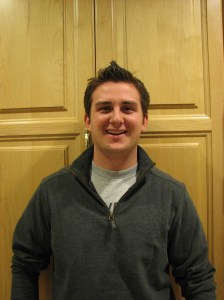
Brett Perfili

MY STORIES:


MY BLOG: Realizing Refugees

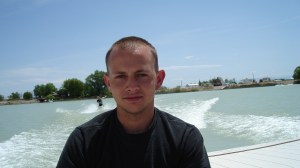
Brett Perfili, a journalism student at the University of Utah, riding in a boat at his favorite getaway spot in Delta, Utah.

Brett Perfili, a journalism student at the University of Utah, riding in a boat at his favorite getaway spot in Delta, Utah.

Before fall of 2008 I had no idea what a refugee was…really. I had heard the word and seen movies about them, but I would not have been able to explain exactly what a refugee is and what they are all about. Recently, I have learned. I now do know what a refugee is and the process it takes to resettle into the United States. I learned there are a variety of programs throughout the state of Utah that support refugees and assist them to start on the right path. A few of the organizations located in Salt Lake City that help include: The International Rescue Committee, The Catholic Community Services, The Department of Workforce Services, The Asian Association and the LDS church.

For people like I once was, who don’t know what a refugee is, these individuals are unlike an immigrant who is coming to the United States by choice to look for better opportunity. A refugee is forced to escape their country to get away from war or persecution because of race, religion or nationality. A refugee also must apply to get into the United States where they are issued an I-94 card, which proves a refugee’s legal status in the United States.

Many Americans don’t realize how rough people from other countries around the world can have it. Folks in the United States take so much for granted with what we have offered to us. There are people struggling all across the world trying to barely survive. Refugees I have spoken to have such different backgrounds than most people in the United States. How would you like to be forced to leave your country to escape beatings from authorities because you chose not to agree with a certain religion? This is just one example of the freedoms that exist in the Untied States that don’t in other countries. As hard as it would be to assimilate into American culture coming from third -world countries, the payoff can essentially be enormous for a refugee and also provide opportunity and success.


ABOUT ME:

Ever since I was younger writing was something that had always interested me. As I grew up through grade school I always attended different workshops I was invited to for creative writing. As I got older I soon transformed my interest of creative, fiction, writing into real stories about real things. This is what led me to go after a degree in mass communication. Rather than broadcasting or picture taking I wanted to tell stories through print, which then brought me to news/editorial.

I have written for a number of papers through my college career. Papers include: The Globe at Salt Lake Community College, The Daily Utah Chronicle at the University of Utah, The Valley Journals, which is a monthly newspaper that brings in-depth local news to certain communities and most currently stories for the voicesofutah.wordpress.com site.

I wanted to get involved with news writing to report on sports, and indeed, this is where I am most experienced. I am a big sports fan. I would not be able to cope with the daily stresses of life if it was not for the many sports I watch.

I have been in college since I graduated high school from Granger High located in West Valley City in 2002. I will finally be graduating from college in December of 2008. I am now 25 and the road to the end has been a long one because I have only gone to school at nights and the occasional early morning class because I work full-time at the Les Olson Company in South Salt Lake. Still, I feel courses I have taken and experience I have received have improved my writing skills and that it will only get better.

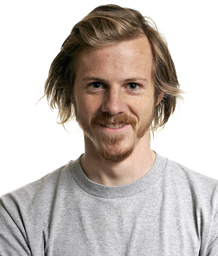
Michael Olson

Michael Olson, making journalism look good.

Michael Olson, making journalism look good.

MY STORIES:


MY BLOG:

I have interviewed many people since becoming a student of journalism. So believe me when I tell you that those who provide care for refugees in the Salt Lake Valley are among the most selfless people I’ve come in contact with.

The more I get to know these caregivers the more I realize what a big responsibility they have. Some refugees come here with virtually nothing. 

The men and women who work to help them adjust to life here are tireless. They work way too much for the meager salaries they are receiving. But ask them if they care. They aren’t in this for the money. If they were there are plenty of other, more lucrative professions they could switch to. 

Valentine Mukundente, a caseworker for the International Rescue Committee, told me that “this is not a job you do for money. You do it because you love it.”

To tell you the truth, I was not excited about spending an entire semester covering this subject. “How many stories could there possibly be about refugees?” I asked myself. 

But I was surprised after the first two stories were down. More ideas were coming to me. When I started those next two stories I had more information than I could fit in. At one point my 1200-word story had 1900 words. 

I was most excited to learn about the LDS church’s Humanitarian Center and the work experience they offer newly arrived refugees just getting started in America. 

This valley is filled with amazing people. They give until it hurts.


ABOUT ME:

Michael Olson, 22, is studying journalism at the University of Utah. After studying art for two semesters he decided that he enjoyed painting a picture with words more than brush strokes.

He is currently a news writer for the Daily Utah Chronicle at the University of Utah. Michael enjoys journalism because it gives him the chance to be an explorer and seek out interesting people and their stories.

After graduating from Bountiful High School, Michael served a full-time LDS mission in Tokyo, Japan, where he learned the language. And the food isn’t bad either.

Reed Nelson

MY STORIES:Reed Nelson


MY BLOG:

I was recently walking to school, to a class that I am in fact retaking (an apathetic outlook from my freshman year has put a slight damper on my academic prowess, as well as set me back at least a year), and I noticed a dime on the ground, shining, heads up, Franklin D. Roosevelt staring at me. Normally I would cruise right on by, or I would scoop it up, drop it in my pocket and henceforth neglect its presence. But this “Lost Boys” story has got me thinking again.

When I ventured to Africa two and a half years ago, I had heard very little of the continent as a whole, and seen even less. When I arrived in Ghana, which is on the west coast (the Gold Coast) I was astounded by the living conditions, or lack thereof. The residents of Accra, however, were the picture of respect, and the genuine order by which it was run was slightly unsettling, because at first glance it reeks of anarchy among other things even less appealing.

But the biggest culture shock that I had experienced was the cost of living. I was fortunate enough, not only to see the big cities, but also the rural towns. In those I visited, you can count the number of homes with running water without taking your left hand out of your pocket.

The homes run into each other’s plots of land, but the lack of ownership keeps neighbor to neighbor relationships friendly. Two sets of clothes were the standard for each child, one for school and one for church.

So when Susan Sarandon, or whoever the celebrity of the month happens to be, tells you that for 70 cents a week you can feed a child, listen. For once they might be right. In my temporary residence of New Akrade and South Senchi, a child eats a prepared lunch at school for 1000 cedi, which converts to just over 11 cents.

It is pocket change to us, literally, but to them it is the difference between going hungry and staying healthy. Eleven cents, that is all. I am not calling for a mass coinage donation to African countries, (although that might be effective, judging by the change jars of some of my supposedly broke college friends), rather a mass reality check, because life is an entirely separate entity over there.

There are 9,000 Cedi to a dollar, and that is in our current economic state. A pack of Rothman’s cigarettes came to 13,000 cedi, just north of $1.44. A beer? 8,000 cedi, or 89 cents. Soccer Jerseys? 70,000 cedi, or $7.78, for their star player, Michael Essien. Here that same jersey is 102.44 (and that is by best price search on Google. Nobody beats Google.).

In a town that is dotted with literal mud-huts, goats, chickens, trash, children, table tennis, soccer, and pride, the one thing that they all have in common is their lack of funds. There is no animosity, but there is also no cash flow.

Their public school runs a little bit differently than it does here, because without a regimented income for a good percentage of the population, taxes become irregular as well, which facilitates the need for the kids to pay for a public education — 119,000 cedi a year at the school where I helped. In U.S. dollars, that’s $13.22, that’s it, that’s all, and a child can receive a year-round education. But only if they have it. And beyond the $13.22, for literally 11 cents a day, a child, whether in school or not, can eat the best meal available.

So I am not telling you to start ‘adopting’ a child every time you see a celebrity with sunken eyes holding a baby. I am not asking you to start the Bill and Melinda Gates Foundation. I am merely hoping that if you have taken time to make it through this blog, that you will now at least appreciate the lowly dime on the sidewalk. That you might think of who is affected by your excess spending, and how you can help next time you feel slightly philanthropic.

And please, next time you feel sorry for yourself and your situation, remember that there is an entire continent that would give everything yet nothing to be in your situation.

Speaking of the society, I would often hear about the necessitation for an updated western culture while in Africa, but maybe it is the western culture that has placed it in such a precarious situation. The minimal time I spent in Accra was time spent in filth, chaos, poverty, and at least 10 daily repetitions of “Did you really just see that too?,” all with 2 million people (and it seemed like 500,000 homeless). But Akrade was more impoverished, more spread out, more rural, less western, and more civilized. The concept of land ownership was lost on the citizens, as well as personal property.

Head pans were municipal, so were the makeshift ping pong tables, so were the soccer balls, as well as the clothes off of their backs.

It is an entirely different culture, different way of life, more simple, yet more energized. Maybe for 11 cents we can take a step back and appreciate them, maybe envy them a little as well.


ABOUT ME:

I am a 20-year-old student majoring in communication and history. I would love to go into the field of journalism, preferably print. I have wanted to cover sports in particular since I could walk. Literally. My mom used the New York Times sports section to teach me to read when I was 4 years old.

I grew up in New York and Connecticut, and moved out to Utah as a freshman in high school. I am in my third year at the University of Utah. I have also been contributing on a regular, freelance basis to the Salt Lake Tribune’s sports section, dealing with mostly preps.

I am the incoming president of the Beta Theta Pi fraternity, a Sportscenter addict, a Major League Baseball trivia savant, a slight cinophile, and a music junkie. When I graduate (when being the operative word) I would love to go into the field of journalism, preferably sports.

Brady Leavitt

leavitt1

Brady and Melanie are just trying not to sell the farm


MY BLOG: Objectivity in reporting

As I began my beat, I pledged that I would be faithful to the venerated standards of objective reporting. Nothing is worse, I thought, than the sort of weak thinking that springs from bias and predisposition. I guess I didn’t want to be the journalist whom anyone could accuse of having axes to grind, except, of course, the pursuit of truth, fairness and objectivity. I was not prepared for the challenge that covering the refugee and immigrant community would pose to my impartiality.

Do many people struggle to overcome political ideologies, prejudices and intolerance when dealing with marginalized populations? I didn’t have this problem. Reaching a level of sympathy with the refugee population was easy. Instead, my problem was that I was becoming an advocate through my reporting.

Gerald Brown, director of the Refugee Services Office in the Department of Workforce Services, said in an in-class interview that the very best activists are those who have first-hand experience with diverse populations. I interviewed Catherine Findlay, the outreach coordinator for a new refugee-centered charter school in West Valley. Her entire job, she said, is to get people excited about what her organization is doing. She did: I was excited, to the point I felt I needed to apologize for my enthusiasm.

So I found myself faced with the question: “How do I report on the weaknesses of the system, when doing so could do so much harm?” It seems the refugee services community are either ignored in the press or are painted as beleaguered saviors. Are they untouchable? What is the ethical dilemma, if any, in exploring the mismanagement or poor judgment of organizations that many people rely so heavily on? Is it wrong to report on the prejudices and racism that a social worker may have? Or to explore rumors about a social worker who allegedly provides services only to families with young women? How do I uncover the truth when it seems all odds are stacked against the system to begin with?

I don’t have any easy answers. I have an obligation to the truth and an obligation to do no harm. I didn’t expect to struggle separating the objective from the objectivity.


ABOUT ME:

Brady and Melanie are registered at Target

Brady and Melanie are registered at Target

Brady Leavitt, 23, is a journalism student at the University of Utah, in Salt Lake City, Utah. He currently works at Basecamp Franchising, applying his writing skills in a business setting.

He is the third of seven children and has had broad international experience with his family. When Brady was 10, his family moved from Evansville, Ind., to Jakarta, Indonesia. He moved to Bangkok, Thailand, two years later then moved to Utah in 2001. Brady served a two-year LDS mission in Thailand. He worked in Thailand again as an intern for the King Prajadipok’s institute through the U’s Hinckley Institute of Politics.

Brady enjoys the reporting process because it allows him to meet people and to “get nosy.” He is an avid long-distance runner and swimmer. He plays guitar and sings and hopes to start a band some day. He takes great pride in his Geo Prizm with its peeling green paint and swears he will drive it until the wheels fall off. He is engaged to Melanie Martinez who is praying that the wheels fall off soon.

Matt Bergstrom

MY STORIES:bergstrom


MY BLOG: Independence redefined

When I first decided to attend a Bhutanese community gathering I had no idea what to expect. I had only recently been made aware that there was a community of Bhutanese refugees in Salt Lake, and I had only a rough idea of where Bhutan was on the map. I had a lot of questions.

Would I be welcome at this gathering?

What were they celebrating?

Was I going to need an interpreter? After all, none of the attendees had been in the U.S. longer than a few months. I wasn’t sure if any of them spoke English yet.

What I didn’t ask was, “Is going to this little party in Midvale going to change my outlook on life forever?”

As I sat in my car outside the little Indian restaurant that morning my stomach was in knots. There were already quite a few people there, and it felt as if I was about to crash a family reunion. I anticipated a scenario right out of a John Hughes film. The outsider wanders into a party to which he was not invited. A hush falls over the crowd as they stare, unsure how this alien ended up on their planet.

How would this scenario end? Would they be too polite to ask me to leave? Or would I be immediately outed and driven away in some elaborate humiliation like Mad Max from Barter Town? A bit dramatic perhaps, but nervous nonetheless.

Deep breath.

I opened the car door and took only a few steps toward the building before a short, mustachioed man in a denim dress shirt and pink backpack approached me. His smile was so wide it pushed his thin mustache right to the borders of his face. He took my hand and in broken English told me his name was Chandra.

This was the last time my hand would be my own that morning.

Without letting go, Chandra took me to a group of gentlemen standing just outside the entrance of the restaurant. He pulled a younger man, dressed in a drab gray suit, toward me and firmly placed my hand in his.

“Hello,” the young man said. “I am Biren Dulal.”

While still embraced in our friendly handshake I introduced myself to Biren and explained why I was there. His grip on my hand tightened as he led me into the day’s meetinghouse.

The air changed as soon as we stepped inside from crisp, fresh outdoor cool to warm, pungent spice and sweet, foreign perfume. My nerves dissipated as I was steered from one table to the next, introduced to every member of this large family. At each turn I was greeted by warm smells and warm smiles and a solemn, “Namaste.” Like shalom or salaam, the word literally means peace. But more like aloha, it is used as a greeting, a farewell, or an expression of love.

Eventually my new friend and I were able to sit down and chat. We talked about Biren’s strange new world as people came and went. Some came to serve us a meal of fruit, rice and yoghurt. Others were just curious onlookers. All of them arrived and departed with warm, friendly smiles.

By noon both the contents of our plates and our conversation had become sparse. Before we both moved on to enjoy the rest of the afternoon I threw out an old interview standby. When interviewing someone familiar with the American media, this question is akin to just saying, “Well, this conversation is about over.” I asked Biren what his favorite thing about America was so far.

Independence.

I thought I knew what that word meant. After all, we have a holiday named after it, our national holiday even. We have R&B stars who write songs about it. As teenagers we struggle to obtain it from oppressive parents who insist that doing algebra homework will someday matter.

But sitting across the table from this unassuming 26-year-old former middle school science teacher I learned what that word really means.

Biren talked to me about seeing pamphlets for national parks that I have driven through with little more zeal than I have when I try on a new pair of jeans. Someday he would like to visit these places, and now he can. Independence to Biren Dulal means being able to walk out the door and go any direction he wants without someone giving him permission, and without fear of harassment. It means that he can choose to do whatever he wants to with his life, that he can think, feel and love with no need to fear.

On this clear October morning I learned in spite of my anxiety that I was blessed with independence. I am free to feel nervous because I am free to choose to do new things. My fear stems from the unknown, from the great adventures upon which I have yet to embark, not from oppression or fear for my life.

Now that I have this new independence, this new outlook on life, what will I choose to do tomorrow?


ABOUT ME:

I’ve always been an information junkie. Any way I can keep as much information coming in as possible, I’m for it. Journalism has become an outlet for organizing and sharing that information with others. Since getting my associate’s degree from Salt Lake Community College in communication I have been working toward a degree in electronic journalism at the University of Utah. This takes a little extra time when you have a full-time job and two kids. But I wouldn’t trade my life for anything. I love my family, I love learning and I especially love writing. The only thing that competes is my love of cartoons. Man, I love cartoons.


Jamie A. Welch

MY STORIES:Jamie Welch


MY BLOG:

Rose Johnson-Tsosie / Thursday, Nov. 6, 2008

I consider myself a solo journalist. I love working by myself, being free to move in and out of a crowd, snapping my camera everywhere I go. There is something so liberating about sitting in a quiet corner scribbling notes all over a green steno pad or dodging strollers and spilled beer at a summer festival, all for the sake of getting the story.

So at 10 minutes to 7 p.m. I showed up at the Salt Lake City Library to hear author Rose Johnson-Tsosie speak. She is a Navajo writer who was adopted by a white couple at 9 months old along with her twin sister, Mary Annette.

Rose began by saying that her story is a happy one and that she was glad to share it with us that night. I settled in my seat and picked up a pencil.

For the next two hours or so (honestly I don’t know — the time flew!), Rose spoke about her life’s story. I would tell it all here because it is so full of miracles and blessings and crazy twists and turns that are more than fate but that would spoil her book, which, by the way, everybody should get a copy of.

This woman had me captivated. She was dressed in bright purple and turquoise with a necklace made of carved stone bears. She had on dark glasses to protect her lack of sight but many times that night I could have sworn she was looking straight into my own eyes. I laughed with her jokes. I smiled at her triumphs. And yes, I cried with her emotional discoveries about her own life.

I could not make my hand move quickly enough to catch every quote on paper but I got enough to be satisfied. The words of Tsosie reached through my soul and gripped my heart. I’m not sure if it was her voice that touched me so strongly or the soft smiles that tugged on her aged face every time she came to a happy part of her story. Either way, the beauty of this blind Navajo woman is priceless.

Tsosie is one amazing woman. After she spoke, the audience was told we could purchase her book outside the auditorium where she would be available to sign our copies.

Of course, I had to have the book. I love reading and although I have a very busy schedule, somehow I knew Tsosie’s book would be a very enjoyable breeze.

I waited in line rather impatiently with everyone else to get my copy signed. Suddenly it was my turn and finally I got to talk to her. Ms. Tsosie took my copy and opened it to the front cover. As she started to write, she got to the J-a-m-i- of my name and then stopped to talk to me. I had told her I was a student at the U and she was very interested in what I was studying, how far along I was in school, etc.

What touches my heart about this moment is that she couldn’t see well enough to realize she hadn’t finished spelling my name and so the book is left with “Dear Jami-.”

I couldn’t be happier about it.

Purchasing her book is rewarding. It gives me a chance to later reconnect with the same emotions I have had tonight. I encourage others to purchase this book as well.

“Finding Helen – A Navajo Miracle” by Rose Johnson-Tsosie.

This night was so good for me to branch out into the American Indian community. I felt connected to Rose’s history even though I wasn’t even remotely a part of it.

I suppose this is what being “on assignment” means. Testing the waters of another community that has been slowly integrated into my own. The Navajo culture, as well as the American Indian culture overall, is so precious. We mustn’t lose it. America, as the melting pot of the world, has a responsibility to keep Native traditions alive and to protect the rights and heritage of American Indians.

This is how I have come to feel concerning American Indians. With each new connection I make, each darker hand clasped in my own, I feel closer to appreciating the value of American Indians.

It is so good to feel like a writer again. News writing is great but I am an emotional person and I love to make connections from heart to heart. That’s my style. That’s my forte! I loved this experience and I am truly touched that hearing Rose speak meant so much to me. This was very worth missing the football game, even though it was supposedly incredible. That’s enough of that.

I’m a writer. Let’s kick it back into gear.

The 19th Annual Navajo Rug Show and Sale / Saturday, Nov. 8, 2008

“Click, click, click.”

A very old Navajo woman uses a comb made out of bone or wood to press down her weaving on a rug that is sure to be very large and very detailed. The yarn she is using is real, natural sheep’s wool. Her colors — a dark brown, sage green and merlot red — are also created naturally. The green and red are dyes made from vegetables.

I look at her hands and marvel at their visible age. How beautiful and how marvelous it must be to have hands like hers; hands that have probably led sheep through the Arizona desert sands, been the first to hold dozens of newborn babies, been chafed and cut through by harsh winds, and cradled a hundred children’s faces.

I envy these hands. They have been so well-used and worn but I know that each hand is unique to its owner and considered a connecting part of the spirit and heritage of the Navajo people.

Oh, to have hands like these.

The above experience was at the rug show. What an amazing thing to do on a Saturday morning. Well, morning that slipped silently late into the afternoon. When I decided to go I had no idea what a huge experience it would be.

The sights and sounds at the show were overwhelming. Children were darting in and out of display tables and rugs were tacked on to every available inch of wall space. I couldn’t look at all of it. I simply couldn’t take it all in. So many patterns were splashed throughout the lodge in Park City that I didn’t know where to start or which to describe or ask about first.

As I was led through the mass of people by a very kind and thoughtful volunteer, Mary Phillips, I wanted to take a picture of everything. Thankfully I contained myself long enough to be as respectful as I could be and to ask before taking pictures. I never got denied a picture even by Jay Tavare, a very well-known American Indian actor. He was gracious and animated about the whole event and I was flattered that he would take the time to talk to me.

In the middle of the day a rug weaving workshop took place. During this the process of the weaving was explained and we (the audience and I) heard from Linda Myers, Rose Johnson-Tsosie, several of the weaving elders, and others. Many of the rugs for sale were brought up to the center of the room to be shown and the stories and traditions behind each rug were talked about. It was really wonderful to see all the different patterns pointed out.

After being at the festival for 4-1/2 hours I was exhausted. My brain was on overload due to so many stimuli being presented to me at once! As I drove away from the lodge in Park City I was excited to explain to my friends and family everything that I saw and felt and captured on camera. I suppose this is how it should feel after every experience.

Sunday, Nov. 9, 2008

Yesterday I wrote about the rug show. Today I would like to follow-up with that.

I don’t mean to sound rosy and bright and shiny all over. I don’t mean to gush about every event I attend and every person I meet while working on this American Indian beat. However, there is nothing left to do but have excitement and wonderment and awe and inspiration spilling all over!

I have been lucky with this story because the places I’ve been and the people I’ve met have all had a wonderful effect on me. I’ve been impressed with everything going on that I have no room to be critical or disappointed. But since when does the world need more criticism or disappointment, anyway?

At the rug show I was treated with the utmost respect. I was given a press packet, a personal tour guide, allowed to take photographs and to get close to people who may have been reserved under normal circumstances. Maybe I was spoiled because the people of the Adopt-An-Elder Program were happy to give a student some real-world experience. In fact, I think I was. I think that those ridiculously friendly people were eager to help a student get a story, and get a good one. At any rate they were so open and friendly and eager to please me.

Well maybe in the real field things won’t be so easy. But this time they were and I recognize that I am blessed to have been given this treatment. I felt like a writer. I felt like a reporter. And I wanted to share my story again and again and again because of it. This is what I plan on my life being like. I know I am capable of writing a good piece and for as long as I can remember I desired the chance to have a voice in this big world. This must be the beginning.

I have participated in the Days of ’47 Royalty Pageant for two years. Before the actual pageant takes place, a preliminary judging is required in which a panel of judges asks you some questions based on the information provided on your application. Each time I have participated, the same question has been posed. It goes something like this, “You say you plan on entering the field of journalism. Do you feel that the media today portray a correct view on current issues? How do you feel about this?”

Each time I’ve answered the best I can and have said something like, I know that today’s media can hold bias, especially in its coverage of particular stories. But I also know that when it comes down to the fiber of it, journalists are people. People who hold individual values and beliefs and frequently portray these values/beliefs in various ways. However, I believe in a basic, good nature of man, and that what the world needs to get the stories straight is a few good journalists who listen to their inner voices and seek out the truth. There are more journalists like me who love to keep facts as facts. And we will do all we can to make this world a better place by being better informed.

Does it sound a little cheesy? Well I will admit it is a little cheesy but that’s how beauty pageants (er, scholarship programs) operate. We dramatize a little to get our point across. But it does have so much truth to it. I want to look for the true nature of any person, cause, or belief. I love to see ordinary people do extraordinary things.

This Adopt-An-Elder Program is an extraordinary thing! It was started by one impressed woman who thought that the idea of Navajo elders selling their work to maintain their independent life was inspiring and worthy of supporting.

This is the kind of story that stays with the reader for the rest of their lives. And even if it isn’t my words that spark action, I hope the people simply become more informed by what I have to say and later using that information. That’s good enough.


ABOUT ME:

I consider myself a multimedia journalist because I am most comfortable behind a camera. When I graduated from Woods Cross High School in 2006, my parents gave me a Canon Rebel XT and since then I’ve been snapping the shutter daily.

I am a student at the University of Utah working on my third year. When I graduate I hope to have an exciting career planned out for me.

My dreams include writing a series of children’s books or one really fantastic novel. Through studying news writing and creative writing, I am learning to be a better, stronger writer and I know good things lie ahead of me.

My life has always been entertaining so I feel I should share the laughter that echoes around me.

I love traveling, painting, photography, music and, of course, my two grown-up puppies Meg and Clare.

Rita Totten

MY STORIES:


MY BLOG:

This semester is my last active semester in my sorority, Kappa Kappa Gamma. I have been an active member since fall 2005. Being a part of such an incredible group of women has showed me that I deserve great things in my life. With hard work and support from my family and friends I have gone from a lost, confused freshman at the U to a successful, well-known, accomplished senior.

As a freshman I only cared about one thing: partying. I lived in the dorms so I was in a constant party environment. Joining a sorority was a way for me to make friends outside of the ones I knew from high school but it also introduced me to Greek Row and a whole new party scene. Five days I week I would alternate between partying at the dorms and partying on Greek Row. I truly believed I was invincible. I never went to class so I never worried about how my decisions the night before would affect me in the morning.

I moved out of the dorms and onto Greek Row my second semester. Being so close to the “fun” was exciting for me. I could walk across the street and not worry about finding a way home from the party. I’m not going to lie, I had fun my freshman year. But I also made a lot of personal, academic and social mistakes that I am still dealing with now. I’ve had to retake a few classes because I did so poorly my first year. I burned a lot of bridges with former friends because I felt partying and hanging out was more important.

When I moved back to Park City for the summer I tried to continue my same habits at home. I worked two jobs full time but any spare moment I had I would drive back down to Salt Lake and hang out with my friends. This behavior didn’t fly with my parents who soon put a stop to it and set ground rules for me. I had never had rules before in my life! Never a curfew, never not been allowed to do something or go somewhere. For the first time, I had to play by someone else’s rules, not just my own.

I made a decision after that first summer home from school. I decided that I didn’t want to be known as the “party girl.” I wanted more respect from my peers and to get that I had to earn it. I moved back into my sorority house but this time I took advantage of the scholarship and mentor programs it had to offer, not just the social aspect. Being so close to campus (literally a three-minute walk) I went to class every single day for an entire semester and got the best grades I have ever had, a 3.5 GPA. With the help of older girls in the house and a study plan I was able to become eligible to hold an office.

As a senior I am the event chair of Kappa and will host our annual Fall Date Night on Nov. 14, 2008, at La Caille, a French restaurant in Sandy. I am so proud that I have developed into a confident person and am now able to guide the younger girls who are making some of the same mistakes I did. Everyone will mess up in their lives but it’s how you deal with and learn from those mistakes that dictate what happens in the future. I am thankful for the women in my life that saw that I was more than just a lost freshman that loved to party.  They saw in me the potential for greatness and I owe my success to them.


ABOUT ME:

I grew up in the ski town of Park City, Utah, moving there when I was 9. Before Utah, I lived in Missouri in a fairly close-minded community. Thanks to my dad’s job, our family moved to Utah and into a better life. At first I was extremely upset about the move: I had to leave all my friends and I was sure I would never make any new ones. But looking back, moving to Park City was the best thing that could ever have happened to me. I quickly made friends with the kids in my neighborhood, some of whom I am still friends with today.

The schools in Park City are phenomenal and I was fortunate enough to receive the best education possible. Growing up I played a lot of sports and when I got to  high school I was able to letter in four varsity sports: soccer, track, basketball and softball. I was always active and also playing in the high school band, was year book editor and senior class president.

My family is very important to me and I have always been close with them. I am the oldest of three children. My sister, Grace, is 20 years old and a junior at the U. My brother, Sam, is 16 and a junior in high school. My parents, Joe and Morag, are both artists and have encouraged me to pursue what will make me happy in life. My dad is a writer and art director at an advertising firm downtown. He regularly contributes to Wasatch Journal. My mom is a glass and mixed media artist and has a studio in our home in Park City. She is featured in galleries across the country and continues to expand her client base.


Brynn Tolman

MY STORIES:Brynn Tolman


MY BLOG: Discovering a World of Difference

As I sat watching a diversity professor talk and expound on her history, her culture, her past, I realized that the little experience I have had in this world has opened up an endless opportunity of learning.

Many times we are born somewhere, grow up there, “experience” life there and die there, feeling that we have learned and discovered the world around us. Once we step outside of ourselves, however, we discover a world beyond our own front door. We discover difference.

In a recent interview with Nola Lodge, a professor at the University of Utah, I realized that the short time I have spent outside the state of Utah and outside the United States has made it possible for me to open my eyes and welcome diversity.

About three years ago I spent five weeks touring Europe with a study-abroad program through the U. One night in Venice, some friends and I went down to the Piazza San Marco (St. Mark’s Square) and danced to the live bands battling for the crowd’s attention. Within just a few short minutes a huge crowd had gathered around to watch, videotape and enjoy the entertainment. We had successfully stolen the show.

A few tourists approached us afterward and asked what company we were with and what we were raising money for. We laughed and explained that we were tourists like them. We just wanted to have a night in Venice that we would never forget.

As I toured and studied the different ways of life from the laid-back, biking culture of Amsterdam to the beauty and prestige of the ancient Romans, I realized that my life in Salt Lake City is fabulous and different than anywhere else.

This semester in my Intermediate Reporting class at the U, our beat has been American Indians. This is one subject that was completely foreign to me beyond Thanksgiving and Christopher Columbus. I have had the chance to, once again, leave my small little life and dance to the music of another culture.

The people I have interviewed, the cultures I have seen and experienced, the lessons I have stumbled upon, all create an appreciation for difference. This difference gives me life beyond myself. It gives me a new perspective on life, an ability to create what others see and to capture the joys and fears of another people. It opens my eyes to the world around me, the one just outside my front door.

These fabulous treasures of knowledge are out there waiting to be found and discovered. They have so much to offer and once they are adopted into someone else’s life, they begin to develop and grow within.


ABOUT ME:

I am a mass communication major at the University of Utah, with an emphasis in graphic design. I love to create and design. I am hoping to eventually work in print design, helping others discover the unknown world.

After graduation I am striving to get hired on at a design firm.

I love to be involved with those close to me. Currently I live in Sandy with my wonderful husband.

I also enjoy art, photography, athletics and the outdoors. We live in a beautiful place and one of my favorite things is to enjoy that beauty.

Cade Sorensen

MY STORIES:Cade Sorensen


MY BLOG: Understanding why

When I first heard about American Indian languages being endangered or extinct I didn’t understand how that could happen. Don’t American Indian parents teach their native language to their kids just like parents of other races? It’s not that simple.

First, some American Indian parents face the task of teaching their children two languages, their native and also English. They realize that it is important for their children to learn English to have better working and educational opportunities later in life. Plus, English is the primary language used in most schools, so the children must learn it to excel in school.

Second, the task of teaching children two languages is very difficult for some American Indians because they may not speak one of the languages well enough to feel comfortable teaching it. The dominant language spoken in the home is often the one passed on to the children and the other is sometimes never learned by the children.

I feel that some American Indian languages are becoming extinct because it is necessary for most American Indians to learn. I do not feel, however, that needing to learn English is a reason to not learn another language. American Indian languages are unique and beautiful and they mean so much to the people and culture.

More needs to be done to make sure that both English and American Indian languages are being taught in schools, both on and off the reservation. This may be a little more challenging for younger children, but in the long run they will be rewarded. Many studies have shown that students who speak more than one language often excel in analytical, social and literacy skills. Many junior high schools and high schools across the nation already require a second language study, giving American Indian children a head start.

The Multilingual Children’s Association has some great information about the pros and cons of raising a child in a multilingual environment. The pros greatly outweigh the cons, though.


ABOUT ME:

I am a journalism student at the University of Utah. I intend to graduate with a B.A. in journalism and a minor in Portuguese in the fall of 2009.

My interest in journalism began when I realized how much I love to debate, chat about and play sports. I am a huge sports fan. I love to play and watch basketball, golf and baseball. I have told myself that I will never be a reporter unless it is related to sports in some way. But, through reporting on other issues I have come to realize that I enjoy learning about people in general, their experiences and beliefs.

I do not consider myself to be an excellent writer. I’m still learning, but isn’t every writer? I feel I am able to bring a lot of fresh ideas to the news world in regards to sports. I have always tried to look beyond the obvious. It makes me sick to read an article about a game or sports issue where the writer has done nothing but state the obvious. I’m always looking for something deeper. What is the story behind the story? Who has been affected the most? Who was the unsung hero?

Aaron K. Schwendiman

MY STORIES:Aaron Schwendiman


MY BLOG:

Through my reporting of Native Americans I have learned much more than I have ever known and have gained so much more knowledge of the community. The people I have talked to along this reporting journey gave me some of the best information I could have asked for. Without great responses from the people I have interviewed, my stories would be boring. The people in the communities are what make the story come to light. They are creating the story and I’m just documenting it.

Doing so much reporting lately has made me realize that journalists nowadays have to train in so many different areas. I have considered myself a photographer for a while now and have been striving to be a photojournalist. I have always been on the one side of reporting and now that I am on the writing side it opens up a whole new area for me.  Journalists in the future will be reporters, writers, photographers, videographers and even web experts. The way reporting is going knowing these are a must. I have hope for myself that I can make a well-rounded journalist. I guess a few tips for the journalists of the future would be.

  1. Learn every aspect of multimedia journalism, even if it is a little bit here and there.
  2. Always have a still camera or a video camera with you. You never know when you will need it.
  3. Write around the images you see while you are reporting and make sure to take photos or record them.
  4. Always think of how photos, videos and audio will work with the written words in your story.
  5. And always think how all those elements can come together to create one well-rounded package for your audience.


ABOUT ME:

I am a photographer at heart, but love every aspect of the journalism world. I am seeking a degree in news editorial mass communication.

I graduated from Park City High School, which is where I started taking my first photography classes. After high school I attended Salt Lake Community College and took many courses for video production.

After SLCC I transferred to the University of Utah and went back to photography, which is what I have been doing ever since. 

My passions in life are photography and skateboarding and with a vast knowledge of both my favorite thing to photograph is skateboarding. With photography and skateboarding as art forms themselves, the photos that can be created can be out of this world and amazing.

Sports, action sports and lifestyle are my main areas of interest in photography, but I am always willing to photograph anything.

In the future I hope to join a newspaper or magazine staff as a photographer and also pursue freelance photography on the side.