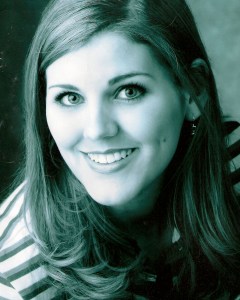
Anne Roper

MY STORIES:Anne Roper


MY BLOG:

It had been a hard week.

I’d knock out one deadline just to have another sneak-attack me. I was juggling sources and stories, feeling like a one-woman show, just to have one person after the other belittle me and my choice of career.

I wasn’t feeling like much of a journalist. When I read the newspaper, I couldn’t help but feel like a peon. I wanted to be a journalist to make a positive impact on the world, but apparently I wasn’t any good at it.

Then I met Beverly Fenton.

When I walked into the American Indian Resource Center, I was met by a husky and the smell of cooking tortillas. Bev, as she asked me to call her, hollered for me to come upstairs. As director of the AIRC, she’d been on the phone all morning with a T-shirt controversy.

I’d gone to ask her about tribal colleges, something she said she was probably too gushy about. We bounced around topics as she told me about her dog, becoming a young widow and myths about American Indians. She asked me to dispel the myth that American Indians can go to college for free. Without hesitating, I said I would.

There it was: the opportunity to give voice to the voiceless. I could make a difference.

I began seeing the world a little differently.

Late that night, while driving home, I saw what looked like a big fire. I drove toward it thinking, “This is great! I have my camera and my voice recorder. I can be the first on the scene.”

It turns out it was just steam from a factory. But it was the first time I felt like I could actually handle life as a reporter. No one can be perfect. Deadlines will always be hard. But I have an instinct and a passion for truth that will keep me going.


ABOUT ME:

Writing is my cheap therapy. Somewhere along the way, extracting words from my swirling thoughts makes them so much more manageable. And that is how I got into all this.

I credit Calvin Trillin, columnist for “The Nation” and frequent contributor to “The New Yorker,” for my draw to news writing. Needless to say, he is my favorite.

I currently write an opinion column for The Daily Utah Chronicle at the University of Utah and have written news in past semesters. I also write for Utah Trucking Association Magazine, and wrote for Salt Lake Community College’s student newspaper, The Globe.

Upon graduating with a bachelor’s degree in mass communication in December 2008, I hope to work my way up to being a columnist.

When taking a break from news writing, I enjoy writing and singing music, finding movie gems and grocery shopping.

Chris Mumford

MY STORIES:

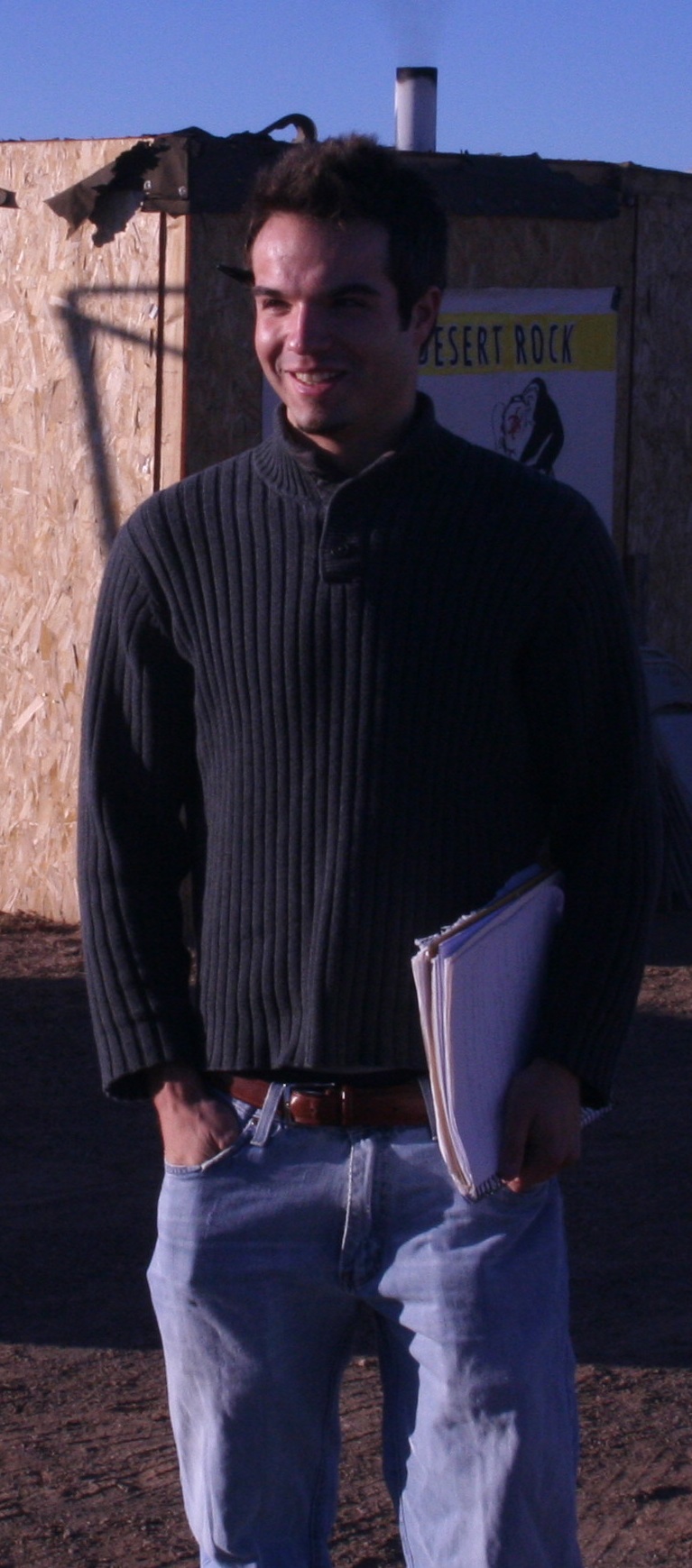
Taken at the Dooda Desert Rock protest Nov. 8, 2008. Photo by Keith Araneo

Taken at the Dooda Desert Rock protest Nov. 8, 2008. Photo by Keith Araneo


MY BLOG: Perspectives

Standing alongside Elouise Brown in the middle of the New Mexico desert, I felt a strong impulse to abandon any concern for objectivity and join Brown’s cause as a spokesperson. I hadn’t anticipated the challenges that I would face in trying to get information from Brown in her own environment, surrounded by her passionate supporters. At a certain point, concerns over objectivity started to become such a distraction that I had to pace around the camp for a while in order to regain my focus.

Ultimately, I was able to do what I needed to do and get the best information that I could for my story. But the experience has certainly left its mark on me. I won’t soon forget that the urge to make friends — and the even-stronger urge to avoid making enemies — is rooted so deeply in instinct that it should never be neglected.

And while I think that the story that I came away with gives some weight to both sides of an emotional debate, there’s no denying that Brown’s skill in staging her event comes through in my piece. The beautiful sweep of the New Mexico landscape became an imposing force in her plea for environmental harmony. Her statements, no matter how strongly worded, were no match for the beautiful panorama, which is why I began my story with a realization that came to me as she pointed out the site for the proposed plant. She had done for me what I strive to do to become a more compelling a writer: She didn’t just tell me why the landscape was precious to her, she showed me.  


ABOUT ME:

I’m a senior in mass communication at the University of Utah, where I plan to graduate next summer, 2009. My interest in journalism was sparked during my last year of high school when my English teacher encouraged me to pursue a career in writing. Ever since, I’ve had the opportunity to cover a range of interesting subjects and individuals. But my work in the Native American community this semester has been some of the most fulfilling and enjoyable that I’ve done thus far in my young career. This experience has taught me a great deal about the amount of work and determination that quality journalism requires. And above all, my work this semester has affirmed my passion for writing. 

Allison Johnson

MY STORIES:Allison Johnson


MY BLOG:

I really enjoyed writing about Native American issues this semester. My favorite article to write was the one about Native American adoption. It was really interesting to interview couples who have adopted Native children. I would like to do more research and learn about Native American women who have given their children up for adoption. I meant to include their perspective in this article, but did not have enough time or space. I think it would be really fun to do a follow-up article on Native American adoption.

This semester has helped me to solidify my future career goals. I have always been more interested in magazine writing than newspaper writing. I consider myself more of a creative writer and feel that I don’t work very well on a deadline. However, this semester has made me change my ideas about pursuing magazine writing in the future. I have really enjoyed learning more about newspaper writing this semester. I have learned how to write more succinctly and work on a deadline. Learning these skills this semester has made me consider going into newspaper writing instead of magazine writing.

Overall, I think taking this class has helped me to become more aware about what is happening in my community. I am more aware about minority groups in this area and some of the issues that affect them. I have become more sensitive to these issues and am considering them on a deeper level than ever before. 


ABOUT ME:

I was born and raised in Spanish Fork, Utah. After graduating from Spanish Fork High School in 2006, I enrolled at Brigham Young University. I transferred to the University of Utah after attending BYU for two years. I will graduate with a B.S. in mass communication in 2009. I hope to attend law school soon after graduation.

I enjoy reading, eating ethnic foods and live music. I also enjoy traveling and have spent extended periods of time in Europe, Africa and Asia. I would love to live abroad in the future. 

Lana Groves

MY STORIES:      

Breaking journalism down

Breaking journalism down


MY BLOG:

Consider your audience before even picking up a pen. Before you start interviewing a source for an article, consider the audience to whom you’re writing.

I have spent about three years now writing articles for school and local newspapers. I helped produce Northridge High School’s annual yearbook. Since I was 16 years old, I have been writing articles, term papers and more for others to read. Yet it wasn’t until this 2008 fall semester that I really considered how my audience would be affected by my work.

Last year I heard about a girl who went through difficult trials, and after years of raising her family when her father died and mother left, she was able to return to school and finish her education.

Her story was amazing and I was excited to write an article about her experience acting as a surrogate mother for her siblings. When I called her up, she plainly stated she didn’t want her story broadcast where others could read.

I talked to her a few more times and managed to convince her to grant me an interview and write a story. She gave me hundreds of details, including information about watching her father die, staying up late to grocery shop, how she taught her brothers how to drive and about going to parent/teacher conference meetings.

When I was looking over my notes, I decided that the story of how she held her dying father’s hand was a perfect lead. Considering it now, I wish I could take it back. Although the girl was happy with the story, leading with the trauma that experience left her with was not my most intelligent idea.

Despite the years that have passed, she probably still remembers watching that happen and feels the pain.

This semester in class, we have given a lot of consideration to how the audience will feel about the article we are writing. We focused on writing articles about Native Americans this semester, learning about their culture, lifestyle, work ethics and many more issues. We have also considered how other writers’ articles may have affected the people involved.

Although it is important to report the news, it is equally important to consider how the person/people we are writing about will feel. News should be accessible to the public but that is no reason to put every horrifying experience of someone’s life in an article.

An important issue can still be reported, but in a tasteful manner.


ABOUT ME:

I am a senior history and mass communication major at the University of Utah and the assistant news editor at the U’s school newspaper, The Daily Utah Chronicle.

I arrived at the U in 2005 with a plethora of history books and dreams of teaching history at a college level. When I started writing for the Chronicle, however, I slowly became hooked into the world of writing.

Three years since that fateful starting point, I have completed internships at the Standard Examiner and dream to be a science reporter. I love to gather interviews and rearrange my words in a unique and catchy lead. Watching the average person discuss my articles and knowing that I have impacted even one person, is one of the greatest joys, and one I hope to continue to experience.

Brandon Fausett

MY STORIES:

 
MY BLOG: What did I learn from my news beat?

I learned that the many stereotypes out there about Native Americans are false and that they are just like anybody else. I learned that they are successful business owners and leaders of the community who are trying to give voice to the Native American population in Utah through various organizations. The Utah Native American Chamber of Commerce, American Indian Resource Center and the Utah Division of Indian Affairs are all there to help give voice to Native Americans and to bring down these stereotypes that are associated with them.

I learned more about Native Americans covering this beat than I would have ever learned. I found out about culture, their strong beliefs, foods, and wrongs that have been committed against them. I have found out about their strong belief toward education and how they only strive to make it better for everyone.

I found out about Cal Nez and how he went through boarding school and how it became one of his most horrible memories. I learned how he was forced to stand in a line with other children just how you would see in the army. They would have to do this for hours sometimes before being allowed to go to school or even before going out and having fun.

I have even found that I have been stereotypical. But through this class I am able to see past those stereotypes now that I have the understanding and knowledge that I have not been given in the past.

Athea Sam told me about her time in school at one of the reservations and how it had disgusted her. She told me about teachers who did not care and a curriculum that was far below that of other schools that she had attended in the state. She talked about how kids would throw things around the classroom and just have a fun time instead of learning and how teacher would not show up for class or would sleep through them sometimes.

These things that I have learned have shown me things I never knew about Native Americans and with that new knowledge I have a better understanding of the community. I fear that without this beat I would have never understood or covered these types of stories and missed out on great information. I would also like to think that I have made new friends through the interviewing process and learned skills that I will be able to carry with me throughout my career as a journalist.

Jessica Dunn

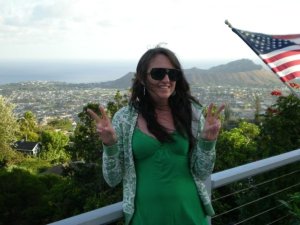
I lived in Honolulu, Hawaii, and spent the summer surfing, hiking and relaxing.

I lived in Honolulu, Hawaii, and spent the summer surfing, hiking and relaxing.

MY STORIES:


MY BLOG: Intimidation

I’ll admit, I was a little intimidated at the beginning of the semester. I was going to be responsible for covering a Native American beat in Utah. I’m not naïve about what our country has done to Natives. A small part of my heritage is Creek Indian from the South. I remember going to powwows as a child and my great-grandma buying us beaded headbands and necklaces. I still have many of those now.

But covering stories about Native Americans seemed overwhelming at first. I didn’t even know where to start and I don’t personally know anyone with a Native heritage in Utah. I’m used to covering beats like the outdoors and skiing/snowboarding. All things I am very comfortable and opinionated about.

I eased into the beat with the in-class interviews and eventually came out with some ideas and sources for other stories. I began to notice the Ute and Navajo influences around me. I discovered a place to eat, a radio station, an art exhibit and I learned about the reservations and boarding schools.

I think this stepping out of my comfort zone has helped me become a better writer. I’m not afraid to learn about something new. And trust me, writing an article that you know nothing about beforehand is extremely intimidating. It is up to me to tell those who don’t know and already know about a topic that I may only partially understand. It is my job to learn as much as I can and to convey that back in writing.

While, my career path (aka dream) involves my semi-comfort zone of outdoor and extreme sports, I know that at times I will be challenged to write about something I’ve never done or heard of before. Because of my Native American beat experience in this class, I feel that I will be ready to charge on and learn new things to share with my audiences regardless of my previous knowledge on the subject.

Navajo Tacos, Yum

I love food, and lots of it. I could blog all my life about what I eat, what I like, recipes, cooking disasters and favorite restaurants. So maybe you can imagine my happiness when I realized I could use my beat to try a new food.

While brainstorming about story ideas at a very random moment, I vaguely remembered driving by a sign that said Navajo on it. I knew it had been a restaurant. You could call it a sixth sense for me, I love so-called hole-in-the-wall places and I’m really good at finding them. And while I could picture the sign in my head, I wasn’t sure on its location. However, I knew it was near State Street and not too far from my house. My guesses were 27th, 33rd or 39th. so I decided to take a little drive and found it again with little effort, thankfully. I was starving (a common occurrence which can probably be blamed for a high metabolism).

I made my way in, noting the plain outside and simple sign, always a good indicator for delicious food. Inside wasn’t much fancier, with a few items hung on the walls and some old tables and chairs. Excellent, I thought, while my taste buds tingled. I had heard of Navajo tacos before but had never had the pleasure of enjoying one. I decided on the original taco. I talked with and interviewed the owner, Bill Espinoza, while I was there. He told me about the memorabilia and paintings inside and showed me some old magazine and newspaper articles about his restaurant.

I ate my taco in a state of pure bliss. The soft fry bread mixed with the beans and cheese and fresh vegetables, along with the spicy hint of salsa was perfection. It was like a hybrid taco salad in a soft shell, in other words, amazing. I would rank it in my top-10 foods and I’ve been craving it ever since. Mmmmmm.


ABOUT ME:

I’m a senior at the University of Utah in mass communication. I love writing but I enjoy all aspects of journalism and media. I love photography and editing photos and video. I have experience in web design, page layout and visual editing/design, as well.

I’ve written for The Daily Utah Chronicle’s outdoor section. Snowboarding and surfing are my passions, and I dream of working for an outdoor related magazine or publication. I would love to work in any aspect of the outdoor magazine.

Somewhere down the road I want to create a women’s magazine of my own that will cover either a specific or all extreme sports. Most magazines are more male dominated, but females are progressing in all levels of the sports. They need more publications of their own, and I would love to make that a reality.

Jaime Winston

MY STORIES:


MY BLOG:

Destroying the invaders in your life


I went to Point Reyes, California, with 12 other people to kill the plants that were conquering the endangered snowy plovers’ nesting area.

The trip was through Alternative Spring Break at the University of Utah. The plovers, birds that eat the creatures washed onto the beach by sea foam, now have space to build homes.

The beach grass that was invading the birds’ territory is non-native and insidious. The small bird never saw it coming. I think this situation can also apply to human lives. We are often blindsided by the invaders taking our territory.

After spending a week in the national park without a television or computer, I found out those items are encroaching on me, almost like the beach grass.      

How many times do you get sucked into myspace.com and avoid loved ones? How often do you channel surf and give up after three hours due to a lack of interesting programs? Frequently? These invaders must be stopped before they take control of our lives and someone needs to save us as well.

Of course these invaders can be useful, but when you use them out of boredom and become more bored because of them, it’s probably time to pick that weed and throw it away.

Invasive people need to be eliminated as well. Please do not take this literally. Mentally pick out the weedy people, those who have no other goal in life than discouraging you. When you deal with these people keep in mind that you have the power to dispose of their harsh criticisms anytime you want.

When we remove distractions from our lives and the harsh thoughts that plague our minds, we can focus on what is really important to us.

Other Invasive Species:

  • Not giving yourself a treat every once in a while
  • Worrying about the inevitable 
  • Obstacles that too often keep you from loved ones
  • A lousy self-image
  • Not achieving your goals
  • Never being productive

Make your own list of items that need to be weeded from your life and don’t let them overtake your habitat. The snowy plover may not have had the strength to pull the beach grass, but we do.


ABOUT ME:

News writing has been one of my passions for a while now and I’m excited to do it for this class. I have previously written for West Valley News, Magna Times, Chabad Times and The Daily Utah Chronicle.

I want to have a career in journalism upon graduation. I am in my third year at the University of Utah and majoring in mass communication with minors in Hebrew and art history.

I’m highly involved with my faith and I am currently president of Utah Student Hillel, a Jewish student group on campus. Currently, I reside in the O.C. Tanner Humanities House and act as house president.

I love art and music. I also enjoy reading, comedy and sneaking into places to get a free lunch.