Anthony Scoma

MY STORIES:

MY BLOG:

When we began coverage of a Pacific Islander beat, I was genuinely excited to learn more about a community that is rarely highlighted by Utah news sources. However, at the same time, I was also worried that my story ideas and reporting would be severely limited by my lack of expertise and knowledge of Pacific Island culture.

Over the course of interviewing, researching and writing I realized that my worry was based on an egotistical approach to journalism. Any journalist worth their word count doesn’t have to be a cultural expert to find a newsworthy story, listen to those involved and report useful information on a community. To achieve this, a journalist must only approach their beat with an open mind and a critical eye.

The importance of journalism doesn’t come from its difficulty but rather from the significance that sharing stories holds for how humans relate to the world around them and how communities share their culture. The role of the journalist is simply to see that this communication is accurate and fair.

During my own exercise in intercultural communication, I was drawn again and again to the topic of cultural norms, beliefs and customs within the Pacific Islander community. By learning about how others live, I was shown what I take for granted as “normal” from my perspective. By decentering my experiences, I gained greater insight into who I am, what I believe and how I relate to my own community.

I also realized how much connected me and those I interviewed. As the youngest of a family of 11 kids, I could relate to the Pacific Islander emphasis on the importance of family. As a former member of the LDS church, I felt a personal connection to my interviewees’ experience both inside and outside the religious culture of the Mormon church. But, even those experiences that I could not relate to still acted as a prism to view my own life, breaking them apart into the multifaceted aspects that color how I see the world.

All of the insight and enhanced perspective I gained through the process of writing for Voices of Utah was just an added benefit to the simple pleasure of a good conversation with someone new. The way stories connect us all also reminds me of something else I learned while covering our beat.

I was told by several of my interviewees about how important establishing connections between people is for Pacific Islander culture. When there is not a connection through genealogy —  which is often figured out upon first meeting — there is a connection through the shared history of the community and land around you.

This understanding of connection resonated with me as a journalist covering just one community among the many that can be found in Utah. Regardless of how similar or different communities may appear from a distance, by mere physical proximity we share so much. The scenery, weather, air quality, traffic, government, schools, seasons, news and dominant culture — whether you practice it or not — defines the shared experience of what it means to live in Utah. And whether you love or hate those experiences, it is still something that binds us all together.

ABOUT ME:

Me

Anthony is a journalism and political science student at the University of Utah. Specializing in audio journalism, Anthony has worked as the producer of podcasts at the U’s student media radio station, K-UTE, since Spring 2017. In addition to helping produce all of K-UTE’s podcasts, he also hosts the station’s interview podcast, The Rostrum, and has interviewed prominent alumni, professors, students and guests at the University of Utah.

In Fall 2017, Anthony worked as the intern for KUER’s flagship program, RadioWest. He has also worked at KCPW in Salt Lake City as an intern, assistant producer and on-air pledge drive pitcher since 2016. In the Summer of 2018, Anthony will intern with the Global Editors Network in Paris, France.

Anthony is from Mapleton, Utah, and is the youngest of 11 children. He enjoys camping and driving through southern Utah. Anthony hopes to continue to work in audio and print journalism and aspires to work for “This American Life” and eventually host his own radio program.

Alexandra Ogilvie

MY STORIES:

MY BLOG:

I had no idea what to expect when I started this class. I have some experience interviewing people, but before this class, it has usually been over email or by phone. After transcribing a lot of my own interviews, I’ve realized that people speak differently than they write, and it’s important to get the right kind of interview.

OgilvieI’ve realized that being a “nag” goes against every fiber of my being, but I’m learning to quash that. I think a lot of that is being socialized as a woman since I was a kid to be polite and quiet, and to not bother people. I’ve realized that not only do I have to get over that, but also that the catastrophizing I do in my head about people being mad at me is just that, in my head.

We live in an interesting time for community-based journalism. I think that many people, myself included, tend to think that politics are most important and one can only truly make any change on the federal level, not the local level. That’s not true, though. All politics start with local communities. I want to make a change and I want to help people, and I also have fallen into this trap. Learning about small charities and organizations this semester made me realize that change can only happen on a large level if a few committed, caring people are willing to engage on a local level.

There was a meeting I went to where there were only two white people in the room, me being one. The other person seemed extremely uncomfortable, and although it may have been for other reasons, it seemed to me that she wasn’t used to being in the racial minority. When I noticed this, I also felt mostly surprised, because I am very rarely in the minority. It made me realize how much privilege I have as a white girl in Utah.

ABOUT ME:

Alexandra Ogilvie is a science journalist who graduated from the University of Utah in May 2018. She started on her long path as an engineer, but after three years of studying and working in various labs she discovered that she liked talking about science more than actually doing it.

She made the switch in 2016, right in time for the presidential election. That outcome urged her to become meticulous about fact-checking and constantly be up-to-date with policy and governmental goings-on.

She has worked for Student Media during her entire tenure as a communication student, and among other things has:

  • produced a podcast where she interviewed STEM (science, technology, engineering, and math) grad students about their research;
  • written and published an article every week that explained scientific concepts to a lay audience;
  • dived into an investigative reporting piece that is still in progress about the possible exploitation of renewable tax credits in Utah;
  • written op-eds about the importance of science literacy among policymakers and average citizens.


Wesley Ryan

MY STORIES: 

MY BLOG:

I have always tried, to the best of my ability, to stay politically and socially aware. There is only so much you can take in before news fatigue sets in; for me, it was refugees. It wasn’t because I didn’t like refugees. I just didn’t know where to start and since there was so much going on I always felt overwhelmed.

Being clueless about almost everything involving refugees, I immediately became nervous. However, I quickly took the time to research refugees: what constitutes a refugee, how to become one, the problems they face, resources they can use and the most common countries refugees come from. From there I was able to get an idea of what kind of stories I would want to write.

My problem was remaining objective when I wrote. I am an incredibly vocal person, which doesn’t really work in journalism. I would constantly have to go back and erase sentences because my opinion was showing. To cope with this I tried to insert the quotes and facts before anything else. Then I would go in and add the rest of the article to make it flow.

Being an outsider to this community, I knew I wanted to hear personal experiences. But I didn’t know who to talk to or how to go about this, especially since it’s such a personal, and at times tragic, point in their life. Thankfully, the people I found were incredibly welcoming. As a matter of fact, I was always welcomed, which made the experience more enjoyable. It didn’t change the fact I had little information going into it, but the lack of knowledge only made this type of reporting more fun. I was able to learn about things I never knew was even a problem.

ABOUT ME:

Ever since I was a child I have always been a talkative and vocal person. It didn’t matter what the subject was, I wanted to be a part of it. Hearing stories brought me an immense amount of joy, but my true love was storytelling. However, constantly being told “you talk too much” can beat down a kid’s self-esteem. To release this pent-up energy out into the world I would write and think of jokes. As I got older, I started to see the importance of words and why you should use them carefully. This desire for the truth led me to journalism. Journalism was a way for me to tell actual stories, stories affecting real people.

Being born in Los Angeles County in California, you meet a variety of people, the most notable being people in entertainment. I was regularly surrounded by entertainers, but when I graduated from Canyon High School and entered college I had to figure out a career I enjoyed and would be viable. I knew, from the people I met, entertainment would be nearly impossible to jump into, so I thought of my next favorite thing, writing.

A year after I enrolled to the California State University, Northridge, I transferred to the University of Utah in Salt Lake City, Utah. Here, I was able to fully explore my love for writing. I have articles published for various companies from an advertising agency I worked for, freelance jobs I am offered, my blog and now Voices of Utah. I don’t plan on stopping this path I am going down. As a matter of fact, after I graduate in 2018 I plan on pursuing a career in writing, preferably something involving comedy or journalism.

Blake Hansen

MY STORIES:

MY BLOG: 

I had a lot of expectations going into this class that were shattered pretty quickly.

Included in those was my expectation of the beat when we first started researching for story topics. I’ve always been generally interested in large political topics including immigration and refugee issues.

Me6-smallHowever, I didn’t think I’d be interested enough or find enough information to make multiple stories and I was sorely mistaken. I’ve found myself very enthralled with the worldwide refugee situation and locally in Utah too. Integration for these people is a crucial issue that we haven’t found a solid system for yet and I think more stories about this topic can help move it forward.

I also realized that while I value studying journalism and having knowledge about all that it entails, I have no desire to be a journalist. This class has pushed me to the edge of my sanity on multiple occasions and while I love researching and trying to make a difference, I have learned in this class that the news system and “tightly deadlined” nature of conventional news writing is not for me. At least not the conventional kind. I hope to someday write stories and pitch documentary ideas to utilize my passion and skill in film and combine that with my learned skills and degree in journalism.

As a result of my reporting this semester, I have not only knocked a major career path off my list of possibilities, but I have also gained a greater love for telling stories visually. The class has helped me grasp those skills in a new way by forcing me to spend more time writing and learning how to use words to create a visual idea. These new skills will make me a better visual storyteller.

ABOUT ME: 

Freelance Cinematographer | Journalist | UofU Communication Journalism | Adventure Seeker

Blake Lancaster

MY STORIES:

MY BLOG: 

This course was rather interesting. I came in with the intentions of improving my journalism writing and writing skills as a whole, which certainly did happen, but I also explored and learned about a whole new piece of our community here in Utah.

Before I walked into the first day and heard the topic of our beat was to be refugees, I had slim to zero knowledge on refugees in Utah. This led to me being both nervous and interested in getting going with the course.

Now thanks to new reporting skills, not only have I gained an awareness of refugees within our community, but also a fascination. It was great to hear from people like Aden Batar from Catholic Community Services, Gerald Brown from the Refugee Services Office and everyone else I had the pleasure of interviewing. They were able to teach me about refugees within Utah, their journeys, show me what their organizations do for them, what us as individual members of the community can do to help and so much more.

Blake Lancaster getting his picture taken by his mom on his 21st birthday.

An interesting part of the interview process was how I in fact felt like an outsider when interviewing those who were well experienced with refugees. If I had any inside knowledge on the beat topic this semester, I feel as though the reporting would have gone smoother. Every interview, however, more or less told me that one of the hardest aspects of being a refugee is feeling like an outsider and a lack of friends in their new country. It made me want to be less of an outsider when it comes to refugees in Salt Lake City.

As a result of my reporting this semester, I feel levels ahead in regards to my journalistic skills, especially my interviewing ability. I feel like a better writer and I feel thankful I got to learn about fefugees in Salt Lake City, their integration process and about the local organizations that assist them with this process.

ABOUT ME:

Blake Lancaster, 21, is a senior at the University of Utah who currently works at a restaurant called Franck’s. He is focused on graduating in 2018 with a degree in communication (and an emphasis in strategic communications) and a minor in business minor. When he isn’t at school or work, he’s likely snowboarding in Big Cottonwood Canyon when it’s cold or playing video games with his friends and roommates at home.

Katie Undesser

Screen Shot 2017-11-28 at 9.39.53 AMMY STORIES: 

MY BLOG:

Throughout the Fall semester, the students in Voices of Utah were to focus on the beat of refugees. Some students chose the angle of the process to become a refugee while others chose an angle such as refugee farmers. All of us had the opportunity to discover our own angle within the beat and were able to report on that angle.

Over the course of my student journalism career I discovered that although writing may be fascinating and fast-paced, it is not for me. Journalism takes zero mistakes, which means that my writing would have to be damn-near perfect. I’m not saying that one day it might not be perfect if I kept practicing, but I am saying I am choosing not to continue to practice it.

Something about me is that I am a firm believer in strengthening your strong points. Writing is not one of my strong points. With that said, one of my strong points is communicating with one another. This was the aspect of journalism that I found extremely enjoyable.

Being able to interview someone I never met before and hear what they have to say really encouraged me to want to know more. For example, after interviewing the principal of Utah International and hearing how passionate she was about all the cultures it made me excited to learn more about the school, which in the long run helped my reporting.

First, I would like to say that this class turned out to be nothing like I thought it was. When I enrolled in the class, I was under the impression that it was a discussion about the many voices of Utah and how they were expressed in such a conservative state. I did not know what a community engaged learning class was and I was not prepared to be in a journalism class. However, I think I ended up surprising myself with my writing.

The best part of this class was it required me to go outside my normal realm of thinking and my knowledge of Salt Lake City. As a result of my reporting this semester, I was able to learn about Granite School District, which helped me out even further with volunteer opportunities within the schools. I was also able to get a bigger picture of what it is I would want to do with my career, which is not journalism.

To conclude, Voices of Utah was an excellent experience for the outside world of school and how you need to act. Professor Mangun gave us multiple openings to reach out for a career path as well as set us up for success with our LinkedIn profile and Lindsey Kass.

ABOUT ME:

Katie is currently a student at the University of Utah studying strategic communication with a minor in business. She expects to graduate in May 2018.

Katie has been an active member of the Utah Alpha Pi Beta Phi Fraternity on her campus since 2014 and currently serves as the policy and standards chairman for the 2017-2018 academic school year. She was recently inaugurated into Order of Omega, which is an undergraduate inter-fraternal society recognizing mean and women who have attained a high standard of leadership.

She is the program director at The Little Gym of Salt Lake City where she takes part in training the incoming staff as well as helping the gym director in her duties.

Katie has great time management skills, is very organized and works every day on advancing her communication skills. She enjoys working in a social environment that allows her to work in a team.

Kaya Danae

MY STORIES: 

MY BLOG:

I was initially completely stumped on where my beat would go. I was thrilled to be focusing on refugees as that closely relates to the profession I want to pursue, but wasn’t sure what stories I could come up with locally.

After reaching out to multiple LBGT activists in Salt Lake City, I was incredibly lucky to meet Connell, who put me in direct contact with an LGBT community living in a refugee camp in Kenya. This experience really showed me how important it is to be persistent and make contacts. I definitely went out of my comfort zone introducing myself to people, but it was good preparation and I have been pleasantly surprised with the community interest in this crisis that is happening across the world.

After getting over my self doubt (I had a really hard time establishing myself as a real journalist) and being very critical of my own writing, I think I am starting to find my voice. This is a topic I am very passionate about, so that definitely made it easier. I do want to improve painting a picture for my readers, but since I was just relaying information I heard, that was difficult for me to do in an honest way. I imagine that when I’m on the ground experiencing what I am covering, that will be more plausible.

There were two aspects to this beat that were discouraging that apply to any and all stories I will cover in the future. I had interviews fall through, pushed back, and I had a lot of my contacts never respond to me. I do enjoy the search and challenge of gathering information, but I know that I will be on a shorter timeline in the future and that’s something I’ll need to practice. The other aspect I found difficult was separating opinions and facts. All of the interviews I conducted were very emotional and I was tempted to pour my heart out onto the story. While I did have a call to action at the end of each story, I tried very hard to make objective pieces. I am looking forward to have the opportunity to work on opinion pieces, though.

ABOUT ME:

Kaya Danae is an aspiring international relations correspondent with a passion for human rights advocacy. Danae studies journalism at the University of Utah. As a contributor to Voices of Utah, Danae chose to focus her beat on the mistreatment of LGBTQI refugees, specifically in Kenya. Her passion for international human rights advocacy began during her gap year through Global Citizen Year, where she lived with a host family in Senegal and learned the importance of immersion for understanding and portraying an issue accurately. As Danae progresses in her career, she hopes to emphasize unheard voices and shed light on injustice.

Scott Funk

MY STORIES: 

MY BLOG: 

When I first started this semester, I didn’t know what to expect. I was returning to school after taking a semester off and had the fear that my writing would be sub-par because of my break. When I found out the topic for our beat for the class, that fear spiked through the roof as I knew it was topic I was uncomfortable with.

Throughout my whole life I have avoided politics and anything related to that. I have never understood the topics that get talked about, nor have I ever taken an interest. So, when I heard that our beat was on refugees, I feared that I wouldn’t make it through the class — I didn’t even know what the definition of a refugee was.

Profile PicAs I learned the definition, my fear was softened just a little bit, but was still there because of the lack of confidence. I didn’t know where to begin. It wasn’t a topic that I knew anything about, and frankly it wasn’t a topic that interested me. As I began my research, I wanted to find a topic that I could relate to or had at least some interest in.
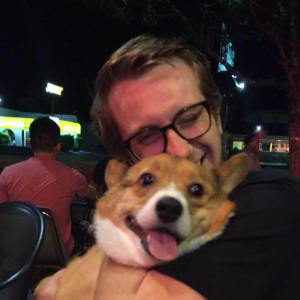
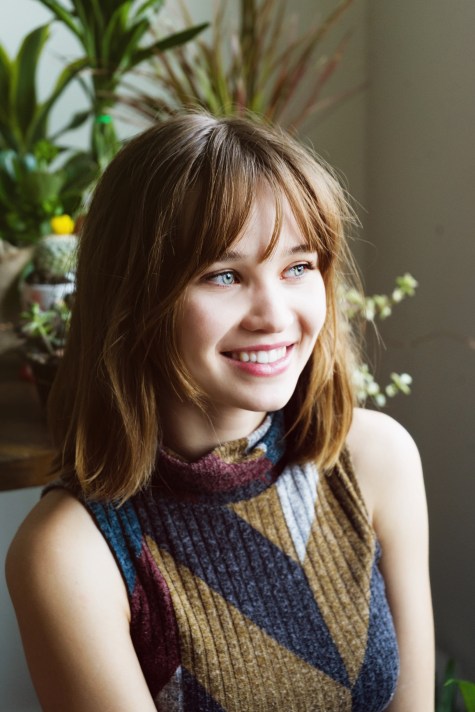
For my first story, I wrote on the New Roots program, which was centered around gardening and farming — which is something that I used to have an interest in so I figured it might be something I could relate to. And as I started learning about refugees and hearing their stories, I began to become more interested in their lives and their well-being.

As I grew in that interest, I centered my second story around Adjustment Groups, which are groups that are designed to help refugees from a mental standpoint become adjusted to the U.S. While doing this story, Gerald Brown told my class the significance that the involvement of interaction between Americans and refugees have on their lives. Because of that, it peaked my interest in becoming more involved.

I centered my enterprise and final story around a volunteer program called Know Your Neighbor. While writing this story, I had the most interaction with refugees and most eye-opening experiences. I’ll be honest — growing up I was one of those people who when I saw someone who was different than me, I wondered why they dressed, looked and acted differently than I did. I never once asked myself what their background or story might be. Today, every time I see someone who may, to me, fit the description of a refugee, I ask myself what their story might be and I’m curious to find out. I also learned a valuable lesson while attending a volunteer orientation meeting.

While at this orientation a volunteer told a story about a refugee whom she was working with. In this story, she described a conversation that she had with her refugee friend. Within this conversation, the refugee made the comment: “I have too much here.”

She was referencing her home, which was described by the volunteer as empty. But to the refugee, coming from the circumstances of facing death and persecution in her home country to now being in America, she thought she had everything – and in this case, too much. That was an eye-opening experience to me that made me appreciate the items and freedoms that I have in my life.

As a result of reporting on refugees this semester, I have found a new respect and understanding for the refugee community. I look at them differently. I understand them better. I don’t know everything about them, nor will I ever, but at least now I know something. I am no longer blind to circumstances within my own community. My plan is to continue to stay involved by becoming a volunteer, learning more and to hopefully  gain more eye-opening experiences that can change my life, for the better.

ABOUT ME: 

I am currently a student at the University of Utah pursuing a degree in communication in the journalism track and a minor in business. I am currently in line to graduate at the end of the Spring 2019 semester. Before attending The U, I graduated from Salt Lake Community College, where I hosted different sports radio talk shows, as well as wrote for The Globe.

I have interned at Cumulus Media, The Daily Utah Chronicle and ESPN700. Currently I am the beat writer for Utah Football as well as a producer for Utah Golf Weekly and Sports Saturday at ESPN700. I love sports, especially college football. I love being outside and spending time with my family. My career goal is to be a sports broadcaster/analyst and one day make it on ESPN.


Zach Carlson

13669692_1243929272314477_505220918381745459_n

MY STORIES: 

MY BLOG:

I did not have any expectations for this beat. I really didn’t know what to expect from this class, even. As the semester went on, I realized how much work this class really is. I learned quite a bit about how to prioritize my stories as I work on them. I also learned that it is incredibly hard to get people to email you back about interviews. I learned from this beat that there are many issues that refugees face once they get here to America. I didn’t know much about refugees before this class and this helped me learn a lot about a large group of people.

I had one huge epiphany during this class: I don’t want to be a journalist. This class, I imagine, is like a trial run of what it is like being a real journalist. I am not good at juggling deadlines and interviews and all the different things that are due. I learned that this is not for me, and that I need to find something else to do for the rest of my life. So, that’s great to learn before I get a real big-boy job.

I did not find it difficult to remain objective. For all my stories, it was just sharing facts and people’s own opinions on the work that they do. I didn’t think that it was too difficult to keep my beliefs out of my writing. All my stories were about people who work with refugees, so maybe I could have written about someone who doesn’t like refugees to make it a more un-objective set of stories.

ABOUT ME:

Hey. It’s me. Zach. I’m a student at the U, as you could probably guess. I assume you’re here because you want to know all about me. I love dogs. That’s the first thing you should know. Dogs are the greatest creatures in existence, tied with polar bears. I’m really into movies, video games and books. I work at a movie rental store. That’s pretty weird, considering it’s 2017. When I’m not crying from the stress of school, I like hanging out with my friends and playing with my puppies. They’re so cute. I love them. My friends are OK, I guess. My dogs are better than them.

Alaynia Winter

MY STORIES:

MY BLOG: 

Reporting and writing about refugees throughout this semester has been eye opening in many ways. It has been both challenging and rewarding to be made aware of perspectives different from the mainstream. 

Initially I expected this beat to be easier. I underestimated my resources and how much time it would take to really find sources and build relationships with interviewees. Doing an in-depth piece on an individual or family was effectively impossible because of policies within organizations regarding privacy and possible invasiveness.

I have learned an appreciable amount about my own personal ethics in my journalistic endeavors. I have found I don’t enjoy exploitation pieces and the practice of asking refugees fleeing war and violence to perform their trauma for readers, unless there’s some sort of call to action or way to be a part of the solution.

I did encounter an ethical problem when I had a member of a panel I attended speak to me in private about her experiences within her organization and personal life and I wanted to include it in my story, but ultimately decided to leave it out for respect for her privacy.

I better understand now the importance, and difficulty, of establishing trust when interviewing. I struggled to justify attempting to interview or photograph anyone but a representative of an organization because it felt disingenuous to only reach out to a refugee for their story as a reporter and not have any basis or relationship established.

I had the opportunity to interview many individuals, but the people at the Refugee Services Office were particularly impactful to me. Gerald Brown, Halima Hussein and Alexx Goeller are each particularly inspiring in their own respects. These are people who are passionate about their jobs and work very hard every day to accomplish their goals of empowering others. I was encouraged by them and their devotion as they spoke to me about struggles refugees face and their hopes and dreams for the future.

As a result of my reporting this semester, I did make a vow that when I graduate college I will enroll in a volunteer program and be more involved in the refugee community here in Utah.  This is an amazing class and I would recommend this beat and Voices of Utah to all students who want to pursue the field of investigative reporting.

This beat has been a connecting strand between civic responsibility and reporting for me. Through these interviews and research, I have discovered community programs and included links to resources and information in my stories and hopefully became a catalyst for others in our community to be involved as well.  

ABOUT ME: 

IMG_1910

Alaynia Winter ’18 is from Salt Lake City, Utah. Alaynia graduated from University of Utah with a B.A. in Communication. Alaynia currently holds an internship at KUED Channel 7 in the Department of Digital Media. She has written published stories as a staff writer for University of Utah’s Wasatch Magazine, as well as for Voices of Utah and KUED’s web series Modern Gardener.  She has worked as a freelance photographer since 2013 and currently takes photographs for KUED’s The Hinckley Report. After graduating, Alaynia plans to spend the summer in Spain completing a language immersion study abroad program.