Chris Samuels

MY STORIES:

MY BLOG:

As reporters, our primary obligation is to convey a story to the general public and understand the meaning behind an event or topic. I think as an “outsider,” it was an interesting challenge to try to immerse in the topic and understand it well enough to write about it. I was able to gain an understanding of how the state government works in terms of art and culture, and develop a better sense of community as I reported on it. I think in most stories that we do, we start as “outsiders” and move to become “insiders,” if we aren’t already.

But here’s my question: how do journalists find their stories in the first place? This ties into the previous question of being an “outsider” or “insider.” I have a hard time answering questions about journalistic integrity and being “objective.” To me, it’s one thing to have an unfair influence on promoting something, rather than reporting facts. Journalists have had this traditional look of being apathetic, unbiased and completely separated from the normal doings and happenings of the public. I had that outlook at the start of my career at the school newspaper, trying to separate being a journalist and doing all the other things I loved doing. I am very involved in school, and noticed it was a challenge for writers and editors who were not involved at all to find stories that were relevant to the student body. How can journalists understand an issue completely if they aren’t immersed in it to a degree? How can they appreciate a story or find empathy and understanding with their readers if they don’t have those experiences themselves? I think the rules of objectivity need to be tweaked, because in this day and age, we all are involved with something important to us, and maybe only we can tell the story about it.

ABOUT ME:

11263971_10152791271411717_26656473050689382_n

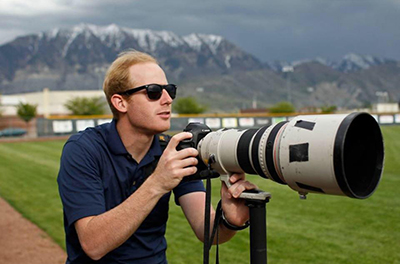
Photo by Sammy Jo Hester, Provo Daily Herald.

Originally from New Jersey, Chris is a student at the University of Utah studying communication and international studies. He loves attending the U, and has been involved with numerous activities on campus, including fraternity life, student government and community volunteering. Chris is the photo editor for the campus newspaper, the Daily Utah Chronicle. Chris enjoys skiing, tennis, golf, pulled pork sandwiches, bagels and milkshakes. Chris has been at the Deseret News since May 2015 as a member of the photojournalism staff. He wrote for Voices of Utah for the Spring 2016 semester.

Chelsie Casaus

MY STORIES:

MY BLOG:

ABOUT ME:


Malari Heusser

MY STORIES: 

MY BLOG: 

ABOUT ME: 


Tina Sissoko

MY STORIES:

A day in the life of a Police Officer
Coming to America 

MY BLOG: 

For my stories, I develop my ideas based off of what I may want to read when I pick a newspaper or a magazine. Before interviewing someone, I plan out how I want my story to flow and I arrange the questions according to that. This helps me keep track of what I need to include in my story. When I start the actual writing, I introduce the person or the subject to my readers to give them an idea of what the subject or the person is all about.

On my story about coming to America, I knew that people would be interested in knowing the person’s background and their journey in the United States. When interviewing Fatoumata Batourou, I started with getting to know her, asking personal questions to make it not so obvious that it was an interview but a conversation between friends. For my second source, I reached out to Batourou’s friend; he was the closest person to her when she first came to the USA, so his comments were very valuable.

While writing my stories, I have come to find out that I work a lot faster when I have a deadline. When I had an article due, let’s say Thursday, I can start it the same day and finish it hours before my deadline. I wouldn’t have any train of thought on the same article if I started it a week ago. This really surprised me because writing regular essays for my other classes were much easier to do if I started them ahead of time, but writing about the specific topics on my site were much easier if I started them later.Me

ABOUT ME: My name is Tina Sissoko, and I am a junior at the University of Utah. I have been writing about news since the August 2015. With my months in writing, I have discovered that profiles are my forte. I am currently working toward a bachelor’s degree in Strategic Communications; after obtaining my degree, I wish to work in the advertising field. I am also an employee at Ebay Inc. I reside in Salt Lake City, UT.

Michelle James

MY STORIES:

Ride Along With a Sandy Officer

Going Beyond Test Scores

Dedication to Dance


MY BLOG:

I develop story ideas by thinking about what I see every day. Whether it’s in one of my classes or just walking around campus, I like to see what’s going on. I also like to think about what stories will matter to other students. Then, once I do the research and interviews, I figure out a certain angle on the story and what the point of the story is.

I usually start by finding sources by looking online and then finding email addresses and phone numbers. The hard part is getting in contact with those people because I will often have to keep calling until I get a response. Sometimes if people are on campus, then I can just go to their office instead of calling. Talking to people in person versus over the phone is easier because I can ask them more questions and overall get more information.

For me, the best sources are always the people who are passionate about a subject. It could be something they are personally involved with, or something that has affected them. Those are the people that like sharing information because they care about what they are talking about. Talkative people in general will be the best sources because they give so much information. With less talkative people, I have to ask many more questions to get the details that I need

I recently interviewed a principal of an elementary school for one of my articles, and she loved talking about all the great things the school is doing, and it helped that she cared so much.

One of the biggest obstacles I’ve encountered in writing stories is people not getting back to me, whether it’s an email or a phone call. When it gets close to a deadline, it can be stressful to be waiting for someone to contact you back, and sometimes I have to try to find other sources.

One of the most challenging stories was the police ride-along story I did for the class. It was an intimidating story considering everything that could happen on a police ride-along, but it went well and it was interesting to write a story about it.

ABOUT ME:

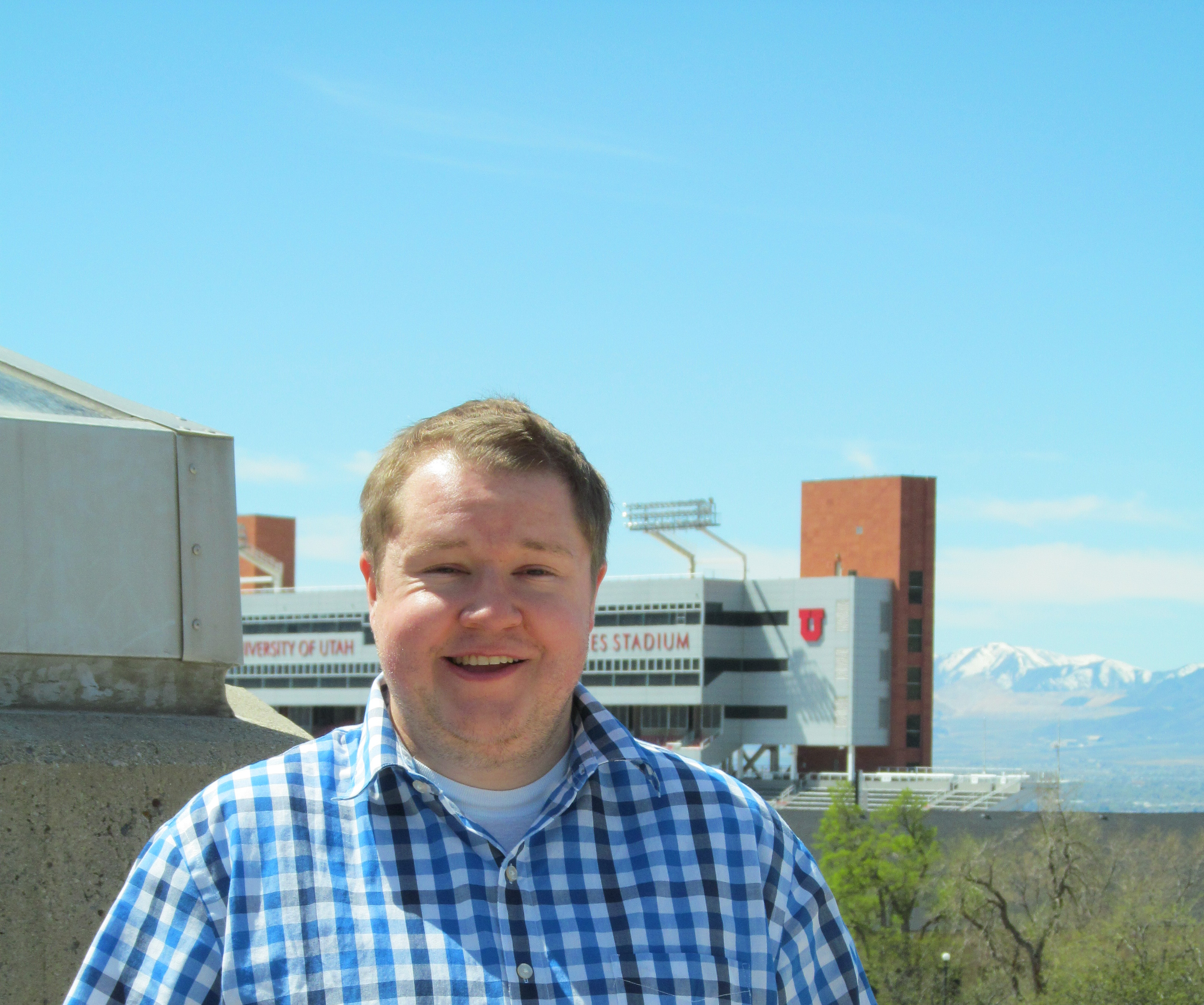
IMG_9663My name is Michelle James, and I am a freshman at the University of Utah. I am majoring in Communication and International Studies.

I was born in Germany and then lived in Florida, Maryland and now I have lived in Utah for four years. My favorite thing about living in Utah is being so close to the beautiful mountains, something I didn’t have in Maryland. My hobbies include skiing, hiking, swimming, playing tennis and photography. I also love traveling and I am planning on doing a study abroad or international internship during college.

I am interested in Communication because I enjoy writing and journalism. I am currently doing an internship at The Daily Utah Chronicle, where I write for the news desk.

International Studies has interested me because I love learning about other countries. I am currently studying French and plan on continuing to learn French.

David DeLoney

MY STORIES: David Deloney

  • Despite Distrust Nationwide, Sacramento Police attempt to Gain Trust of Community 
  • Godzilla El Nino, Savior or Bust?
  • Utah Basketball Preview

MY BLOG: I’m currently enrolled in a journalism class at the University of Utah and have learned a great deal about developing stories and writing correctly in AP style in the class. I would say the hardest part of any story is gaining access to good and credible sources, especially as a student with other responsibilities to take care of as well. It can sometimes take a little while to get the right sources. You first need to identify the objective within the story and then find sources and quotes that will back that up. Some sources are harder to talk to than others. In my Utah Basketball preview story, it was little difficult to get quotes from basketball players at the University of Utah. Fortunately, I have a friend on the team and was able to gain access that way. In contrast, it was easier for me to find sources for my El Nino story because I was collecting quotes from in-laws and other more general members of society and how the drought has effected them.

I have found it funny how people’s demeanors change when they are being interviewed. I have interviewed family and friends and know how they talk. When being interviewed, they speak more carefully and don’t use any slang.

I have enjoyed my journalism class so far and I have been pleasantly surprised by the course. Once you have quotes from people, it’s fun to write the stories because you are conveying your interviewees ideas to the reader.  So far, this class been a wonderful learning experience and I look forward to what’s next.

ABOUT ME: My name is David DeLoney and I’m a strategic communications major at the University of Utah in Salt Lake City. I’m originally from Sacramento, California and love the mountains here in Utah! I enjoy writing, snowboarding, basketball and great food.

Calli Peterson

MY STORIES: 

MY BLOG:

I came into this semester as a strategic communication major switching over to journalism. It was not a drastic change; I was still in the communication sequence. But that didn’t mean I wasn’t starting something new.

Right away, I knew there was something different.

Journalism looks more at the people, the culture and the various ways to describe surroundings. As journalists, we explore the unknown and bring light to the hidden wonders of the world. Those wonders, this semester, just happened to be the businesses I covered.

When I first started searching for topics, I was a little worried. I didn’t know if I was going to be able to write for a business beat. It was something I had never done before, and I needed to find a way to incorporate my style of writing into this beat.

My strategic communication background came in handy as I worked on the business beat. I was able to understand why and how owners try to become recognized in the community. By writing about the businesses, I was able to learn more about how they have advanced their appearance.

This semester I wrote stories about people who started businesses in Salt Lake City. The stories didn’t make me want to adopt a dog from an animal shelter or donate all I had to the homeless. They didn’t change my life. But they did show me how to be a better journalist. I needed to improve my reporting skills, advance my social media brand and uncover the hidden entrepreneur treasures in SLC. I needed that realization that I still have much to learn.

By writing for this beat, I gained a greater knowledge of small businesses in Salt Lake. I realized that there are great people who have started with nothing and created something much bigger than they could have expected. That would be my takeaway.

ABOUT ME:

You would think writing a biography about yourself would be the easy part, wouldn’t you? But that’s the thing: I don’t want to write about myself. I want to write about the people around me and about the people who remind me of myself but are not actually me. That’s what inspires me to write and especially what inspires me to take on this journalism major.

I grew up in a small town of a 143 people (last counted) in northeast South Dakota. The area where I lived consisted of the same people doing the same thing with the same friends. There’s not really room for branching out or, at least, it’s not really expected. That’s why I changed the status quo. I chose to be the only student in my high school graduating class to leave the state, attend a large university and start my life in a big (yes, it’s big) city.

OK, so the story of a small-town girl moving to a big city may get a bit old, but that’s my story. I’m a small-town girl who broke away from the conformity of small-town life. And I couldn’t be happier with how my life has turned out.

I came to the University of Utah in the fall of 2013. Currently, I hold a position in University Information Technology as a documentation writer for Unified Communications. I also write for the Arts and Entertainment desk for the Daily Utah Chronicle.

Recently, I changed my communication major sequence to journalism, and I’m happy with the decision I made. I have a lot more to learn and a lot more to improve on, but I’m ready to take on new challenges. Looking forward in life, I have no idea what I plan on doing. But I know that writing will be, in some way, a part of whatever it is.

Liz G. Rojas

MY STORIES:

MY BLOG:

When I was little I thought I was going to be a mathematician.

The numbers produced an insatiable curiosity and expanded my mind to all the endless possibilities — the numerical mysteries held within our own world.

While in high school I thought of possible careers I could pursue in the math field until one fateful day I took a political science class. I immediately and unknowingly fell in love with politics, news and storytelling. That same insatiable curiosity to understand the world around me shifted toward journalism.

Throughout the years I’d experienced writing a variety of different stories, most of which were political or of social awareness.

At the start of the semester. I had no idea what reporting on small business was about. My young, world-devouring 19-year-old mind just wanted to report on what I knew and felt comfortable doing. When the semester’s beat was initially announced I was disappointed and confused. Reporting on  business was going to be a roadblock to what I cared about most.

Shouldn’t business reporting be more for finance or business majors?

I couldn’t have been more wrong.

In previous classes I had developed a strong interest in learning about human communication and firmly believed those communication principles were solely constrained to humanities-related courses.

After these past months I have learned a valuable lesson and a personally saddening one on industry stereotyping.

Business isn’t constrained by finances or money. Every aspect of business affects you and me and most importantly, there are stories in the business industry that need to be shared. Stories that shouldn’t be confined to the walls of a business/finance classroom.

It was saddening to realize this because it’s a lesson I thought I already knew, but somehow seemed to have forgotten; it was valuable because I always want to strive for improvement even if it means tearing down current ideologies and building new ones.

Learning to report on a topic I wasn’t familiar with taught me to always pay attention and never underestimate. There’s a story within every industry, every business, every person. As a gatekeeper and storyteller it’s my responsibility to find those stories.

Being a journalist demands a lot. The road is a long one, and a low-paying one at that. However, after that day in my political science class it was evident to me why I wanted to pursue journalism.

My goal is to help people. Give the public factual information and they’ll have the power to make the best decisions for themselves. As Sir Francis stated,  knowledge is power.

ABOUT ME:

Liz Rojas is a journalism and international studies student at the University of Utah.

She attended the Utah County Academy of Sciences (UCAS), an early college STEM high school in Orem, Utah.

The UVU Review (Utah Valley University’s Independent Newspaper) published her first article at the age of 16. Throughout high school, she wrote for both college and high school newspapers.

In May 2014, Liz graduated from high school (UCAS) with an associate’s degree in University Studies.

Even though her secondary education was based around STEM she developed a passion for writing, politics and human rights issues.

Liz believes in the power of education. An educated/informed public is strong and intellectually free.

Her passion for politics and government prompted her to pursue a second major in International Studies with an emphasis in foreign relations and security.

She’s interned with Utah’s abc4utah and currently works as a finance manager for a Lending Company in Sandy, Utah.

When she’s not reading the news or working, she enjoys Latin dancing and watching Academy Award-winning films. Utah’s Real Salt Lake Club team and any Ute-related sport will always have a piece of her heart.

Nathan Astill

MY STORIES:

MY BLOG:

To be perfectly honest, at the beginning of the semester I was terrified of contacting people for my beat. I’m not sure exactly what I was worried about. Would they yell at me on the phone and hang up? Would it be impossible for me to find someone open to being interviewed? Would I show up to the interview and my subject would be rude and awkward to me? Well, not a single one of my worries happened.

One of the major things that I learned was that even though many people will not pick up the phone, most people will respond to a well written email. I think this is because people don’t like to pick up the phone if they don’t know who is on the other end. There is a bit of risk associated with that. But if they see an email explaining the situation, and the situation is comfortable, they are much more willing to respond since the risk is much less.

At points it was hard for me to remain objective simply because the people I chose to interview I really enjoyed talking to. As such, I wanted to write good stories about them.

As I was writing I challenged myself to remain as unbiased as possible. My first line of defense has always been to read my story to someone I trust. If they believe I’m being too biased, then we discuss what needs to be changed and I fix it.

Another good line of defense was having an editor, Professor Mangun, who helped me out to spot the places where I was being too generous. This has also helped me to be more critical of stories I read to see if there is a bias from the author. I believe that when most people partake of news, especially written news, they take it at its face value, they believe it without questioning. I know I have been guilty of this, but now I have become more aware that even though journalists are held to a higher standard, they are still humans whom are prone to bias.

And because I am aware of this bias, I am even harder on myself to remain as fair as I possibly can. I want my readers to know that I am a source they can trust to get the most unbiased story I can tell.

Lastly, the thing I have learned about my career in writing is that I love stories with strong human elements to them. I’m not concerned about covering breaking news stories. I would much rather write about peoples’ personal stories, what makes them tick. Why do they think the way they do? What actions have they made in their lives and how do they feel about them now? How did they get to where they are now? And most importantly, what can my readers learn from my subjects experiences?

Yes life happens fast, but I like to slow it down. See what I can learn. What can I enjoy? What awesome stories can I share with others? Other writers can speed down life’s highways chasing the big leads. But I prefer to find the unheard voices in the alleys and side roads.

ABOUT ME:Profile

A 23-year-old guy who has always fought, nay, despised, the conventional path, I feel like maybe I’ve finally stumbled into my own. From stand-up comedy to actor to filmmaker I’ve tried my hand at a lot of different things, but none of them stuck. The constant throughout all of my endeavors has been storytelling. I love a good story. In life I really only have two career goals, to be a successful hip-hop artist and also to become a successful author. Here is my story.

Finishing up my journalism degree at the University of Utah has become part of the path that I feel is going to get me to where I want to be.

But school has never been an easy thing for me to come to terms with. I graduated from high school a year early simply because I couldn’t stand the idea of being there another year. I had issues, with myself more than school, that I needed to work through. It would still be a few more years before I finally came to terms with them.

So onto college I went. Weber State University, one of the only schools who allowed early high school graduates at the time, became my next institution to wish to escape from.

But don’t get me wrong, I definitely had good times. Life happened. Love happened. Great mistakes happened. Even though it wasn’t perfect, life was good.

I simply felt caged up at school, I was aimless. Going to class simply to say and feel like I was doing something with my life. Every few semesters I would take one off to pursue some passion or another. But they never quite panned out. I eventually got my associate degree in, you guessed it, general studies.

After graduating I went on to self-publish my first novel, “Behind Mirrored Eyes.” Writing that book was a great way for me to work through a lot of my personal issues. Things were good for the moment.

But life has a funny way of turning a person on their head just when they feel like they have it all figured out. My book wasn’t the success I had dreamed it up to be. Nobody wanted to read a self-published novel from an author no one knew about. And then through my own stupidity, and more than a little bad luck, my relationship failed. I came back to the question that had plagued my last few years. “What was I doing with my life?”

Then for some reason I still don’t really understand, I applied, got accepted and began going to the University of Utah. I loved the atmosphere, this school was amazing. But still, I wasn’t quite sure what I was doing. It would take me switching majors three more times before I finally stumbled onto journalism as a last-ditch resort.

It finally clicked then. Is this what school was supposed to feel like? Like there was a purpose to going to class? Doing things that I not only felt I was actually good at but was also happy to learn more about?

So here I am. A nontraditional journalism student at the U who is getting ready to drop his first EP while continuing to work on my next novel that I hope to traditionally publish this time around. So why am I sticking with journalism? It’s not simply because I love writing, or that I enjoy a good story and feel like I can tell the stories that other people are missing, or even that I believe this can degree can help support me while I pursue my other passions in life. It’s because I made a promise to myself that I apply to all aspects of my life. I finish what I start.

~Nathan Astill


Ryan Carrillo

MY STORIES:

MY BLOG: IMG_0078_edited

This semester has really pushed me. Voices of Utah challenged me and helped me become a stronger writer, newsgatherer and reporter. The design of the class really benefited me. It simulated a newsroom with critical deadlines and a realistic editing process.

During this course I found it difficult to remain objective. Focusing on the local business beat was something I had never experienced before. This wasn’t hard hitting, breaking news. I wasn’t writing about controversial issues like I am used to. That means that there weren’t as many “sides” to each story. I found it hard to remove my own opinion from my writing more during these assignments than ever before. That struggle, however, helped me in the long run. I learned in the interviewing process to focus more on what the subject was trying to tell me. I stopped going into interviews with planned questions. Instead, I showed up ready to let the interview guide the story.

Obviously, perfect objectivity isn’t an achievable goal. It still is a standard I try to include as much as possible in my reporting. My first drafts of articles for Voices of Utah presented my opinion. I wasn’t transparent and I let my experience take center stage each time. Through my improved newsgathering skills I now have the ability to leave myself out of the story even if there aren’t necessarily different sides. I can still strive to be objective even when writing a feature. I also found that as I tried to be more transparent and accurate that naturally my objectivity or fairness improved. I learned how to fully disclose my newsgathering process in articles and as I did so I would leave my opinions out of my work.

The beat taught me so much. Prior to this class my writing had fallen into three categories primarily: political, social commentary and general news. I had never written business articles before. At first I had no idea what made a good business article. I found myself paying more attention to CNN Money and Forbes articles in an attempt to gain some background.

When we started the course I was skeptical about the beat, simply because I knew next to nothing about it. My experience, however, would be extremely positive. I got to write three exciting stories about businesses I chose. They all had important meaning to me in one way or another.

This course changed my understanding in the community. It really helped me see Salt Lake City in a new way. I was exposed to businesses that I never knew existed, like Zest Kitchen and Bar, which focuses on healthy, organic meals that are naturally gluten-free and vegan. I had no idea that there are business opportunities in Salt Lake City for refugees from other countries to open their own food businesses through Spice Kitchen Incubator.

I learned that Salt Lake is more diverse than I originally thought. I discovered so many unique things about this great metropolis while writing these articles.

I’m grateful for the opportunities I had during this class. I know it will be one of the highlights of my academic career. Now that I am wrapping up my final semester I can appreciate everything that this course has done for me.

ABOUT ME:

I graduated from the University of Utah with a BA in Communication with an emphasis in Journalism in May 2015. During my studies I was fortunate to have amazing professors who taught me so much about the field. Classes like Voices of Utah, Convergence Journalism, Opinion Writing, Media Law and Magazine Writing, among others, all had a profound impact on me and helped me develop a strong skill set to pursue the field I love.

I developed strong writing skills through my studies. I also gained great experience in Adobe creative programs, website design in Wix and WordPress and a strong understanding of Final Cut Pro.

Over the summer 2014 semester I was able to work as a newsroom intern at KTVX (ABC 4) in Salt Lake City. That was an incredible opportunity that gave me real life experience. I wrote a lot of online content for the station, helped pitch and develop stories, conducted interviews, assisted reporters and anchors regularly and did a lot of research on a variety of topics.

While at the University of Utah I also did a lot of freelance writing for a variety of organizations. I was a political reporter/writer for Utah Political Capitol, a social commentary writer for the Salt Lake City branch of Newscastic and a financial blog editor and writer for Deseret First Credit Union. I also launched my own website, glutenfreeslc.com, which is geared toward maintaining a gluten-free lifestyle in Salt Lake and the surrounding area.