Jorge Fierro accomplishes the American Dream with restaurant, Rico brand

Story and photos by CALLI PETERSON

“The fact that as an outsider coming to this country not speaking any English and not knowing anybody,” said Jorge Fierro, owner of Rico brand and Frida Bistro, “I have been able, with a lot of hard work and a lot of help from my employees and friends, to accomplish the American Dream.”
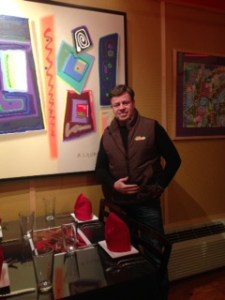
jorge

Fierro stands next to one of the paintings in Frida Bistro.

Fierro proved that dreams can truly become reality with deep passion and a lot of hard work. After growing up in Mexico, Fierro decided to leave his home and head to the U.S. hoping to learn English and make a name for himself.

“When I came to Utah in 1985, I didn’t know anybody,” Fierro said.

He said he did not have a place to live, so he ended up staying at a shelter for about a month.

Though his choice of living proved limited, he did not let that stop him from pushing to learn English and searching for a place to work.

“I went to a Catholic church, and they needed a volunteer to wash dishes,” Fierro said. “So, I said ‘Me! Me! I’m a dishwasher!'”

Fierro’s time at the men’s shelter gave him opportunities to see life in a new light. As he became more and more successful, Fierro searched for ways to give back to those around him.

“I was never hungry, so I promised to pay it forward,” he said, raising his sleeve and showing the words, “Pay It Forward,” tattooed on his arm.

And “Pay It Foward,” Fierro does.

In the early 1980s, he gained the friendship of a local couple, Larry and Gail Gerlach. Gail, who was teaching at Shriners Hospitals for Children, hoped to bring some authentic Mexican food to children from Mexico who were undergoing surgeries.

She called Fierro, knowing he would help her accomplish this dream.

“He came up one day and brought food for these kids, and they just exploded with joy,” Larry said in a phone interview. “Gail wrote him a check, and he said, ‘No. No, no, no. Señora, it’s on me, for my people.'”

By this action, Fierro supplied the children with something to look forward to and gained a permanent part in the hearts of the Gerlachs.

“He’s a special friend,” Larry said. “What he did for my wife at that hospital, I think, as much as anything, speaks of his character.”

Fierro actively works with the community by holding fundraisers for nonprofit organizations and initiating the Burrito Project.

The Burrito Project helps to feed the homeless with burritos and bottles of water in Salt Lake City. A large percentage of the homeless, Fierro found, are veterans. This discovery became a significant reason why he works so hard to feed them.

Fierro assembles a group of volunteers who come together to make bean and rice burritos. After the burritos are made, the volunteers hop on bicycles and ride around the city giving burritos to those in need.

This humanitarian effort attracted many volunteers, including University of Utah football players.

“Being able to feed the homeless is one thing, but actually seeing the ins and outs and seeing how these people in the shelter live, it’s very eye-opening,” said Matt Martinez, a former U football player and Burrito Project volunteer. “It’s very humbling to have them say ‘thank you.'”

In a phone interview, Martinez said he has become friends with Fierro and hopes to bring more publicity to this project.

Fierro’s philanthropy has been possible, in part, because one day he had an epiphany about the poor quality of Mexican food in America.

“One day I went to a supermarket, and I bought some flour tortillas and kinds of refined beans and some cheese,” Fierro said. “When I opened them, I was really disgusted with the beans. I thought, ‘What is this?’”

Fierro never dreamed of running his own food business, but after recognizing the lack of quality ingredients in Utah, he realized he needed to do something.

“I was thinking ‘What can I do?'” Fierro said.

He grew up with his mother running a small business. Fierro’s mother would make cooked beans, package them and sell them to markets in Mexico. Having watched her, Fierro had the thought that maybe he could do that too.

Not thinking once more about it, Fierro asked his mother for her cooked bean and creamy salsa recipes and started selling beans downtown at the farmer’s market.

Frida

Frida Bistro is designed with many bright colors and dim lighting. Even the waiting area is decorated to match the design.

Sales started to increase little by little and soon Fierro was approached by someone who represented a small line of farmer’s markets. They asked him if he would be interested in putting a label on his products and selling them.

Fierro jumped at this opportunity and thus was born the Rico brand.

Sales took off, so Fierro started searching for a larger place to prepare and distribute his products. As he was searching, he came across a large warehouse located on 545 W. 700 South.

He turned the warehouse into a place where he and his employees could make the food for the Rico brand.

Then, another opportunity presented itself.

“The front of [the warehouse] used to be my employees’ break room and my office,” Fierro said. “People would drive by and see my employees eating. They would come in and open the door and go ‘Oh, I’m so sorry. I thought it was a restaurant.’ So, OK, let’s start a restaurant.”

And so, Fierro converted the warehouse into a restaurant.

He chose the name Frida Bistro to honor the celebrated artist, Frida Kahlo. “Like Frida Kahlo’s passion for art, Frida Bistro represents Jorge’s passion for food,” according to ricobrand.com.

Bistro

Pictured is one of Fierro’s favorite spots in his restaurant.

Frida Kahlo became the overall theme of the restaurant as paintings of her embellish the walls. Bright colors and dim lighting also contribute to the decorative design of the restaurant which Fierro designed himself.

To add to the authentic feel of the restaurant, Fierro changes the menu every four months or so.

“I took the time to go to Mexico and learn about our gastronomy,” Fierro said. “We created our menu around that.”

In 2011, Frida Bistro was recognized as the best Mexican restaurant in Salt Lake City, according to the Salt Lake Magazine Dining Awards 2011.

Now, Fierro is the proud owner of Rico brand and Frida Bistro and also serves on the board of directors for Local First Utah. He actively works with the community by holding fundraisers for nonprofit organizations and initiating the Burrito Project, which helps to feed the homeless.

He adamantly believes in searching for a passion and is glad he found his calling.

“The most important thing: I love what I do for a living,” Fierro said. “I love what I do for a living.”

Roy pharmacy prescribes customer care

Lloyd Thomas stands at his pharmacy in Roy Winegars.

Lloyd Thomas stands at his pharmacy in the Roy Winegars.

Story and photos by BRITTNI STRICKLAND

Lloyd Thomas, a University of Utah alumnus who owns the pharmacy inside Roy Winegars, recently reminisced about his 46 years as a pharmacist during a phone interview with Voices of Utah.

Thomas first realized he wanted to be in the pharmacy industry at a career day as a sophomore in high school. Thomas grew up in South Ogden, Utah, and recalled going into the local pharmacy thinking it had “really neat smells.” Thomas also watched his uncle own a pharmacy and said he knew it was an opportunity for him to help people. So, he had to take it.

“There aren’t a lot of people who know what they want to do so young, I was lucky,” Thomas said, chuckling.

He opened the Winegars pharmacy in 1995 at 3444 W. 4800 South, in Roy. Winegars is one of the oldest family-owned supermarkets in the state of Utah and values the name of a “Home Town Grocer,” according to the website. Winegars is a convenient grocery store near the center of the city.

Thomas is specifically known in the Roy community for his unique customer care.

Sheri Tanner said her mother has been coming to the Roy Winegars pharmacy for 20 years, since it opened. Tanner still comes to the same pharmacy to pick up her mother’s prescriptions simply because of the quality care. “When I come get her medicine they always say ‘how’s your mom doing?’ and it’s very personal,” Tanner said.

Julie Arthur, a resident of Roy, has shopped at the local pharmacy for 15 years because of the personal service. “Every time I go in I feel like they genuinely care about your health, they’re not just doing their job,” Arthur said. She said she trusts the Roy pharmacy because she feels that the pharmacy staff is very knowledgeable and willing to answer her questions regarding prescriptions.

Thomas said he believes treating customers well is key. “People don’t care how much you know, it’s how much you care,” he said.

Being the owner of his own pharmacy, Thomas said he’s in control of the prices, where products are bought and whom he hires and fires. His pharmacy is independent, so he can focus more on customer care rather than being told to focus on money. He also said it’s more fun that way: “When you’re not intent on making money, it just comes.” Thomas said he prefers to shop where people love what they do, so he makes sure that that is clear in his pharmacy.

Customers head to the west side of the store, where the pharmacy is located. Even from a distance it is easy to sense the passion and camaraderie. Taped to the counter of the pharmacy are quotes, comics and obituaries of loyal customers. Behind the gray counter, two or three employees stand with smiles on their faces and a hello to give.

Nick Lucas has worked as an employee for Thomas for 20 years. Lucas quickly brought up Thomas’ heart for the customers. “He looks at it as extended family for some of these people,” Lucas said. “It’s a tough standard to live up to, he’s a great man.” Lucas learned the art of caring for customers simply by spending time around Thomas and watching him work with people. “He’s a great boss, but a better person,” Lucas said.

Roy Winegars is the home of Lloyd Thomas' pharmacy

Roy Winegars is the home of Lloyd Thomas’ pharmacy.

Location and loyal customers are what keeps the pharmacy up and running to this day. “It’s the only reason we have a job is because of them,” Thomas said. Having the pharmacy inside Winegars has been an ideal location because it is one of the more popular grocery stores in town where people can shop and pick up their prescription in a timely manner.

Thomas joked about how interesting it is that it is now a popular occurrence to have a pharmacy in a grocery store, compared to when he first began as a pharmacist. There wasn’t a single grocery store in the area that had a pharmacy. He said pharmacies are now more popular because people are living a lot longer and there is a lot of new medicine available.

Now that people are living longer, Thomas said convenience has become an issue in our society. “Everyone’s time is valuable,” Thomas said.

Customers such as Julie Arthur appreciate that consideration. “At other pharmacies I’ve noticed a longer wait time, and when you’re sick you don’t want to just stand around,” she said. The Roy Winegars pharmacy promises to have prescriptions out as quickly as possible, usually with a wait time no longer than five minutes.

Timely service is one thing Thomas has learned during his two decades as a pharmacist. With his years of experience also come numerous memories. “There are so many great memories, that I couldn’t come up with one,” he said. However, Thomas remembered winning the “Bowl of Hygeia” award in 2013. According to the website, the prestigious honor “recognized pharmacists who possess outstanding records of civic leadership in their community.” He said it truly was an honor to win that award.

Thomas made clear that the customers are why he stays in the pharmacy industry by saying, “I love people, I love to help people.”

Body Buddies, a Salt Lake City fitness company, changes lives

Story and photos by DAVID FISHER

Working at a desk in an investment firm office was the last thing Kristy Jo Hunt wanted to do for the rest of her life. She decided to take one of the biggest risks she has ever been faced with. Hunt, 28, created her own independently-run nutrition and fitness business known as Body Buddies, without any prior experience in the field of business.

In addition, Hunt was not always a fitness guru.

Three years ago, Hunt was overweight and a victim of binge eating. She also suffers from severe scoliosis. Orthopedic doctors had told her that by age 40 she could be in a wheel chair if she did not change her eating habits and stay active because of her deformed back.

Kristy Jo Hunt poses in the gym after working with a client.

Kristy Jo Hunt poses in the gym after working with a client.

However, she conquered her struggles, gained a newfound interest in the field of health and wellness and worked toward her goals of becoming a professional dancer and fitness instructor.

This new interest eventually motivated Hunt to become a certified personal trainer and fitness nutrition specialist through the National Academy of Sports Medicine. She made drastic changes to her lifestyle, and wanted to help others make lifestyle changes as well. Thus, Body Buddies was launched in January 2014.

Hunt put together a business plan through watching multiple business startup podcasts, attending start-up business conferences and seeking advice from friends and family. She had to make some personal sacrifices along the way, including quitting her full-time job and learning to live off of $20,000 a year.

Those sacrifices underscored her commitment to seeing the success of her clients and independent business.

“Body Buddies is first a people thing, then secondly a business,” Hunt says.

Education is an important aspect of her business model.

Hunt provides weekly coaching calls and meal plans for clients in Utah. The coaching includes a fat loss and muscle gaining workout regime that clients follow on a six-days-a-week basis for 12 weeks. Each workout plan is individualized based on a survey clients fill out at the beginning of this lifestyle change. Questions include food preferences, any kind of physical ailments and a daily schedule.

Clients who pay a base fee of $50 also have access to 250 power food recipes that are full of protein, replace unwanted fats and increase energy levels. Every recipe is taken from her own published cookbook, The Power Foods Lifestyle.

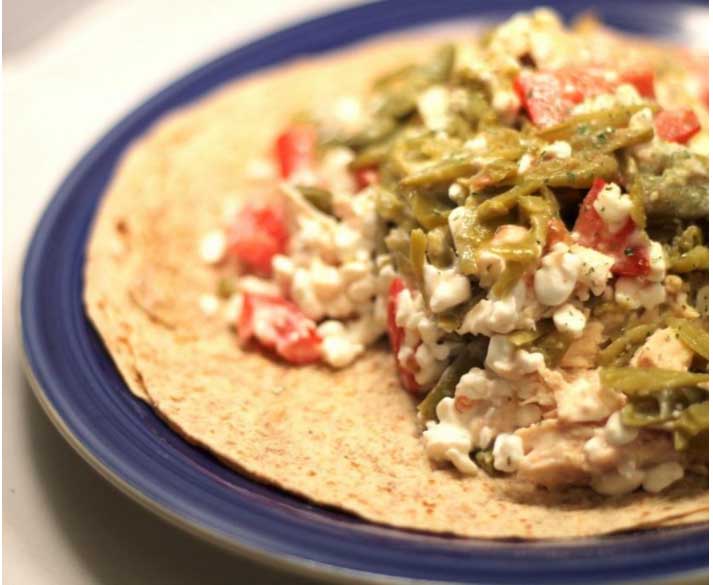
An example of a power foods recipe is Hunt’s chicken ranch slaw burritos. These are a healthy alternative to any kind of processed burrito that is often found in the grocery store. Many of her recipes are healthy replacements to microwaveable freezer meals.

Chicken ranch slaw burritos are one of the many available recipes Hunt provides in her cookbook

Chicken ranch slaw burritos are one of the many available recipes Hunt provides in her cookbook.

“You are the master of yourself,” Hunt explains. “I provide the base, and you create the results.”

Body Buddies originally started with only 50 clients. It now has more than 1,000 clients. Hunt manages multiple client binders, calendars and daily scheduled emails and lists. She even has clients from around the globe in places such as Africa and Europe.

Hunt provides daily coaching calls to her clients. This is where they truly open up about themselves and achieve the results they want to see. She speaks to the individual over the phone and finds out what is and isn’t keeping them motivated. If clients have any questions about their diet, workouts, or life in general. Hunt is available to provide answers.

Some of the best results Hunt has ever seen came from her client, Amy Bellamy, in Salt Lake City. Bellamy has been a client of Hunt’s for almost a year, and has stuck with the Power foods lifestyle the entire time. Hunt explains that Bellamy was constantly motivated to achieve her goals of having a bikini body.

Amy's amazing body transformation from following Hunt's coaching

Amy Bellamy was able to transform her body by following Hunt’s coaching. Photo courtesy of BodBuds Instagram.

Hunt filmed and produced 100 instructional workout videos for her Body Buddies YouTube channel. It was through this channel that many of her clients discovered her business. These videos create an easy and accessible way for clients to understand how to successfully utilize all of their muscles while working out in the gym. For example, clients learn how to successfully perform a seated row weight lift to activate muscles both in their back and in their arms.

Through Facebook, Instagram and Pinterest, Hunt has created a successful way to market to a wide audience of clients.  Hunt has more than 7,000 followers on social media.

Instagram is her main method of gaining followers. She posts workout videos, before-and-after result photos of her clients and motivational quotes every day. It is a quick way to instantly communicate to her followers. However, these posts are only previews of what can come from the full Body Buddies experience.

"The Power Foods Lifestyle" is available for purchase on Hunt's website.

“The Power Foods Lifestyle” is available for purchase on Hunt’s website. Image courtesy of Hunt.

By using hashtags such as #FitFan, #CleanEats and #WeightLossJourney, Hunt has gained public attention of her Instagram posts. These are hashtags that people wanting to start their own fitness journey investigate. Clients see her social media posts and then reach out to her to receive her coaching to start their own fitness journeys. She wants to be the person to help change clients’ lifestyles and make them love their bodies.

Instagram user Tyler Griffin, 23, a student at the University of Utah who uses the handle TGriff08, is a client and one of Hunt’s many followers. “Although I finished my 12-week program with Kristy back in September of 2014 as part of a reshaping of my body during the summer, I still follow her to seek constant new ways to work out, discover new recipes and see the success of many other of her clients who went through the same process that I did,” he says.
Griffin had lost more than 15 pounds during the 12-week process and gained a tremendous amount of muscle to his body. When grocery shopping, he is more aware of the foods that are beneficial to his lifestyle so he can maintain that muscle build that he worked for. 
“There were times when I felt like I wasn’t going to stick to this intense 12- week program,” Griffin says. “But Kristy provided a constant motivational push to keep working for my final goal — and I reached that goal, and I felt like a completely new person when I started my final fall semester.”
Griffin has referred multiple family members and friends to Body Buddies so they could achieve the same lifestyle changes that he accomplished with Hunt’s help.
One such friend was Brooke Legeman, 19, of Salt Lake City who started working with Hunt two weeks ago in hopes of removing the freshman 15 that she gained this past year.
“Being a part of the Body Buddies program is something that I want to commit myself towards to start a completely new health lifestyle,” Legeman said in a phone interview. “Kristy is helping me balance school, work and my fitness goals so that I can achieve the success that I want to achieve. I feel like I am in control of my body and making it back into the shape that I once had … or maybe in even better shape.”
Legeman finds herself going to the gym almost every day now, and avoiding all of the fast food that she was guilty of eating during her freshman year.

Hunt has started her own motivational seminars that she calls “Girls Night Out.” These empowering presentations are held at Salt Lake City gyms. Hunt wants to change the way clients think about themselves, and have their bodies reflect the changes that they can see.

“I’m not a feminist, I’m an empowerist,” Hunt says. “Integrity is the name of the game for people in life. Know where your integrity is at, and never let it crumble.”

Local singer-songwriter Emily Bea uncovers hidden talent after soccer injury

Story and photos by McCALL GRAY

Music can be defined as an art of sound that turns ideas and emotions into words. The elements of melody, cadence, harmony and voice are strung together with a conscious effort to create it. Music can inspire both the artist and the listener to something beyond the lyrics.

Local singer-songwriter Emily Bea, from Sandy, has demonstrated exactly this — and she’s only 20.

Bea comes from a musical family. Her parents and three siblings all played instruments and shared a love for playing soccer. Bea has been devoted to the sport since she was 3. Simultaneously she began to enjoy music, too. She began piano lessons, then taught herself the violin, ukulele and mandolin. By 8th grade, she had moved on to teach herself the guitar and experiment with song writing.

Bea cherishes her Martin guitar because she earned enough money from her performances to help pay for it.

“The first song I remember her writing and singing to me was about her twin sister who passed away when she was a baby,” said Brian, Bea’s father.

When she wrote it, Bea said she was experiencing a sorrowful moment of loss, missing her sister. She was looking for a way to gain comfort and peace and found that avenue through her guitar.

“I started singing words and they just kind of came out,” Bea said.

The song was called, “Wow, I Really Love You.”

“It completely floored me. … From that experience, I knew she had potential to do something great with her music,” Brian said.

Bea began to discover her way with music and her indie pop style of songwriting. But, it always came second to playing soccer. That is until on two separate occasions she sustained a serious injury. Her ACL tore twice, preventing her from playing on her Brighton High School soccer team. Bea pushed through therapy and worked hard to get back on the field. Meanwhile, the recovery period allowed her more time to focus on her music.

“Soccer was the thing I ultimately wanted to do, but when it [the ACL tear] happened again it made me question if soccer was what I was really supposed to be doing,” Bea said. To her surprise, it wasn’t. After she fully recovered the second time around, she met with a vocal coach.

“[The coach] heard her sing and told her, ‘I don’t care how good of a soccer player you are. God gave you a gift, and you need to sing,’” Brian said. “With that, she gave up soccer and focused on music.”

Bea’s music career progressed from there. She promoted her music independently, gaining a steady viewership on her YouTube channel, Facebook page, Twitter and Instagram accounts.

“I think her music is truly original, and that nobody can fully replicate her sound nor style. I appreciate other musicians who take ownership of their art like she does,” said Scott Hebertson, a fellow music artist and friend of the family.

Music turned out to be a natural talent even though Bea hand’t intended to strongly pursue it in the beginning. “Music was always my fallback,” she said. “It was really hard at first, but it’s really been a blessing. … I really enjoy it.”

Bea played her song "Bench For Two." It was the song that sparked her theme for her second album.

Bea played her song “Bench For Two.” That song sparked her theme for her second album.

When it came to performing in public, she started out at open mics and restaurants such as Winger’s in West Valley and Pat’s Barbecue in Salt Lake City. She did her first show in 2012, opening for the musical group, “A Great Big World” and Greg Holden, who wrote the song “Home,” made famous by “American Idol” winner Phillip Phillips.

“It is inspiring to see someone start from nowhere, begin to chase their dream, and then start seeing results,” Hebertson said.

Bea’s creation process for writing a new song stems from many sources. “Inspiration comes from everywhere,” Bea said. She discovers ideas for new songs by what people say as they pass her by, what she reads, sees in movies and from personal experiences.

Bea self-produced a quality list of original content where she sang and played an instrument in each song. In 2012 her first EP album, “Love A Fair,” launched. With its success came another and in 2014 she released her first full-length album, “Bench For Two.”

“When I got my first album I cried, a lot, just because it was really exciting,” Bea said. “It was tangible and had my name and picture on it.”

Bea’s producer, Trevor Price, assisted her in recording “Love A Fair” in his basement studio. Two years later, “Bench for Two” was recorded at Price’s new Salt Lake City location, Stone Angel Music Studios.

Once the recording process was complete, she manufactured her CDs through an independent CD and DVD manufacturer called Disc Makers. This allowed her the opportunity to sell them worldwide on CDBaby.com and have them available on Spotify, Amazon and iTunes. Bea also received 1,000 hard copies to sell on her own, which she does through email, emilybeamusic@gmail.com.

“I initially helped out financially to get her on her feet. But she has been able, through album sales and shows, to pay me back and make some money,” Brian said. “She books her own shows and spends a lot of time marketing her music. It is fun to see her learn and grow, both in music and business.”

Bea finds her favorite place to compose new songs is outside.

Bea finds being outside is her favorite place to compose new songs.

Since her latest album release in 2014, Bea aims to perform two to three shows per month. She has performed at the Utah State Fair, Kilby Court in Salt Lake City and many times at Velour Live Music Gallery in Provo.

She announced the news via social media that her newest single, “Angel Fly,” had been chosen for the “Songs For Life 2015” album. “Angel Fly” was written in memory of her high school classmate, Tyler Robinson, who lost his battle to cancer. The album was released March 6, 2015, two years and two days since his passing. All proceeds from the album and individual songs are donated to cancer research.

Whether it’s the interactions with fans after performances or the accomplishment of finishing the lyrics to a new song at 2 a.m., rewarding experiences surround Bea and make her journey worthwhile.

“I definitely didn’t expect myself to be this far, especially being independent and doing everything by myself,” Bea said.

She has managed her music career while attending Salt Lake Community College full time and working another job. Bea will graduate May 2015 with her general associate degree. She expects to release more albums in the future and continue her pursuit of a full-time career in the industry.

“I think it’s just a gift that I have that I want to share with people,” Bea said. “And I feel like if I just didn’t do it then I would just be wasting what my Heavenly Father gave me. Ultimately it is to bless other people and their lives as well as help me in mine.”

Roy coffee shop stays in business by focusing on customers

Story and photo by BRITTNI STRICKLAND

Anna Whitnack sits at a gray table listening to the whir of blenders, ringing timers and the laughter of customers. The smell of brewing coffee fills Jessie Jean’s Coffee Beans and Homestyle Café, the shop she owns in Roy, Utah. Whitnack recounts her journey as a local business owner.

Growing up in California, Whitnack and her friends would always go out to coffee shops rather than bars. But Whitnack didn’t think it was realistic to ever start her own business. “You think you have to have so much to put up and I never thought it would be a possibility because I thought it was beyond who I was,” she said. Then, after moving to Utah when she was 25, a friend encouraged her to go after what Whitnack thought of as a “pipe dream.” She gained the courage to bring her own recipes for pastries, burgers, sandwiches, smoothies and a variety of coffee flavors to the 37,000 people of Roy, Utah.

Whitnack opened Jessie Jean’s Coffee Beans on Nov. 1, 2000, but becoming an entrepreneur didn’t turn out to be so easy. Whitnack decided late in 2013 that times were just too tough and she and her partner were going to have to close the shop.

Anna Whitnack and Ron Ford stand in their coffee shop Jessie Jean's Coffee Beans Homestyle Café.

Anna Whitnack and Ron Ford stand in their coffee shop Jessie Jean’s Coffee Beans Homestyle Café.

They planned to tell employees the news at an early Christmas dinner. When the time came at the end of the meal, Whitnack just couldn’t find it in her to tell the employees that Jessie Jean’s Coffee Beans would soon be closed.

She told herself she would try to last as a local business for just one more month.

Each month she found herself saying the same thing. With increased support from local patrons, things began looking up and now, two years later, Whitnack is still serving customers.

Though there have been tough times, caring customers and the small, family-like group of employees have made it worthwhile for Whitnack. She looks at a wall covered with notes, photos, and obituaries from loyal customers. “This is our life, this is our family, our friends, our social network, our hearts,” she said, while wiping away her tears with a napkin from the table.

Phil Wagner, a Salt Lake City local who makes an hour-long drive north on his motorcycle to Roy simply to indulge in the food, said, “I think this is a great place. It kind of has that ‘ma and pa’ feel to it. Just down home and good food.”

Ron Ford, co-owner of Jessie Jean’s Homestyle Café, said the two became business partners after a unique experience. He and his son, Bryan, had been living in a neighborhood home behind the café. Whitnack said with a laugh that Bryan would play next door in the parking lot when he was 4 years old. Occasionally he would go into Jessie Jean’s and ask if there was any sort of service he could do to get a hot chocolate. He would always run around saying things like, “I’m going to work here someday.”

Right then Bryan, who is now 15, walked up to the table and said, “And guess what? I work here.” Bryan has worked at Jessie Jean’s for two years.

Unlike his son, Ford had never visited the café until he read a sign out front that caught his eye — “Bodacious Burgers.” Ford isn’t sure why he had never stopped in during the eight years of living nearby. But once he finally ate there, he continued to frequent the shop. Over time he developed a relationship with Whitnack, which later led to them co-owning the local coffee shop.

The two firmly believe in supporting other local businesses, because they know what it’s like to be one. If a business in the area does not have the supplies it needs, Whitnack and Ford encourage friends, family and customers to support the owners in the surrounding areas.

Ford and Whitnack said owning a local business and trying to survive from month to month is difficult. Ford advised people thinking of starting their own business, “Don’t take no for an answer, don’t let them get you down and if you have a dream, go get it.”

Whitnack added, “Fight as hard as you can fight and don’t ever go into business thinking you’re going to be rich. If you’re going into it to make money, you’re doing it for the wrong reasons.”

Several customers paused at the table, touched her shoulder and  said hello. Whitnack smiled and greeted them by name. Gazing around the room, she said, “It’s hard and stressful, but there are the moments in the kitchen and we’re super busy and we’re crazy and [Ford is] playing drums on the pans,” Whitnack said. “Those are the moments where you stop and you’re like, OK this is good.”


Salt Lake businesses build relationships with customers

Story and photos by CALLI PETERSON

Rachael Skidmore makes her way through her little basement shop welcoming and assisting customers. Vintage clothing adorns the walls and fills the shelves and round racks.

Skidmore leads one regular customer to the dressing room while chatting about different aspects that are happening in her life. Other customers wander into the shop and take in the friendly environment.

As Skidmore comes back to take her place behind the counter, she greets the new arrivals and begins establishing relationships with the customers once again.

Amid the tiresome franchise businesses in Salt Lake City, charming local businesses such as Skidmore’s Maeberry Vintage strive to claim their own name and brand by establishing strong ties with customers.

“Local businesses add a lot more flavor,” said Skidmore, whose business is located in downtown Salt Lake City. “They make the community more unique.”

Rachael

Rachael Skidmore opened Maeberry Vintage in the basement of a shop on 207 E Broadway.

Skidmore started her business as an online Etsy shop in 2010. But she noticed her desire to be closer to the community. She transformed her Etsy shop into a physical location in 2013,  and named it Maeberry Vintage.

“It happens little by little, and everything just falls into place,” Skidmore said.

Businesses like Skidmore’s generate their community engagement by communicating with customers and welcoming new guests. Many owners and employees of local businesses push to create relationships with their customers, which creates a connection between shop and customer.

“Local businesses are important,” said Travis Low, a bookseller at Ken Sanders Rare Books. “I think they are crucial.”

He said he believes “there is more personality in local businesses.”

Low understands the value of employee-consumer interaction first-hand. Before he became a bookseller, Low was just a regular customer interested in reading rare books.

He spent a lot of his time browsing and reading books in the store near where he was living. He developed a connection with Ken Sanders, the owner of the bookstore, and ended up receiving a job through this relationship.

“I asked for a job one day, and they needed someone to do shipping,” Low said. He enjoys working somewhere that has character.

KEN SANDERS

Ken Sanders Rare Books is located on 268 S. 200 East in Salt Lake City.

Low has been working at Ken Sanders Rare Books for about five to six years.

“I feel like there is more personality in local businesses,” Low said. “The staff cares.”

That is just what most businesses hope to show: that the staff really cares.

To help build that connection between employee and customer, Utah has its own nonprofit organization to educate and represent local businesses. Local First Utah, organized in 2005, works to provide assistance to local businesses including Mayberry Vintage and Ken Sanders Rare Books.

Kristen Lavelett, the executive director of Local First Utah, wants “buying locally to become the common norm.”

The mission of Local First Utah is “to empower a movement to recognize the value and vitality of locally owned, independent businesses to our communities and our economy,” according to Local First Utah’s website. This is achieved by “educating and engaging the public, the businesses and statewide community partners.”

Lavelett said, “Economic strength has a lot to do with the character of our communities. [Utah locals] would rather buy across the street than overseas.”

Lavelett, who speaks widely to groups about the local economic impact each consumer can have, said, “If every home in Utah shifted its spending just 10 percent, $1.3 billion would stay in the Utah economy.”

But that is just one way the economy can flourish. Local businesses owners can also contribute to the state’s financial health.

According to Local First Utah’s website, “Since local business owners live here, do their hiring here, operate their stores and offices here, buy most of their supplies and products here, pay all their taxes here, and spend their profits here, they obviously contribute far more to our local economies than do chains.”

As Mayberry Vintage owner Rachael Skidmore searches for more clothing and accessories to sell to her customers, she searches for those items from within the state.

“About 95 percent of my products are sourced locally,” Skidmore said.

By doing so, she continues to develop relationships not only with her customers, but also with her suppliers. This generates constant connections with buyers and sellers in Utah.

Whether it be starting a business like Skidmore, or working at a favorite store like Travis Low, local businesses find ways to develop deep connections with their customers.

“Local businesses are, in a real sense,” according to Local First Utah’s website, “the backbone of any community.”

Chili Beak, adding some spice to the community

Story and photos by DAVID FISHER

Sometimes food just needs an extra kick. Additional flavors and heat can make what was once bland, become a brand-new taste full of extra zing and spice.

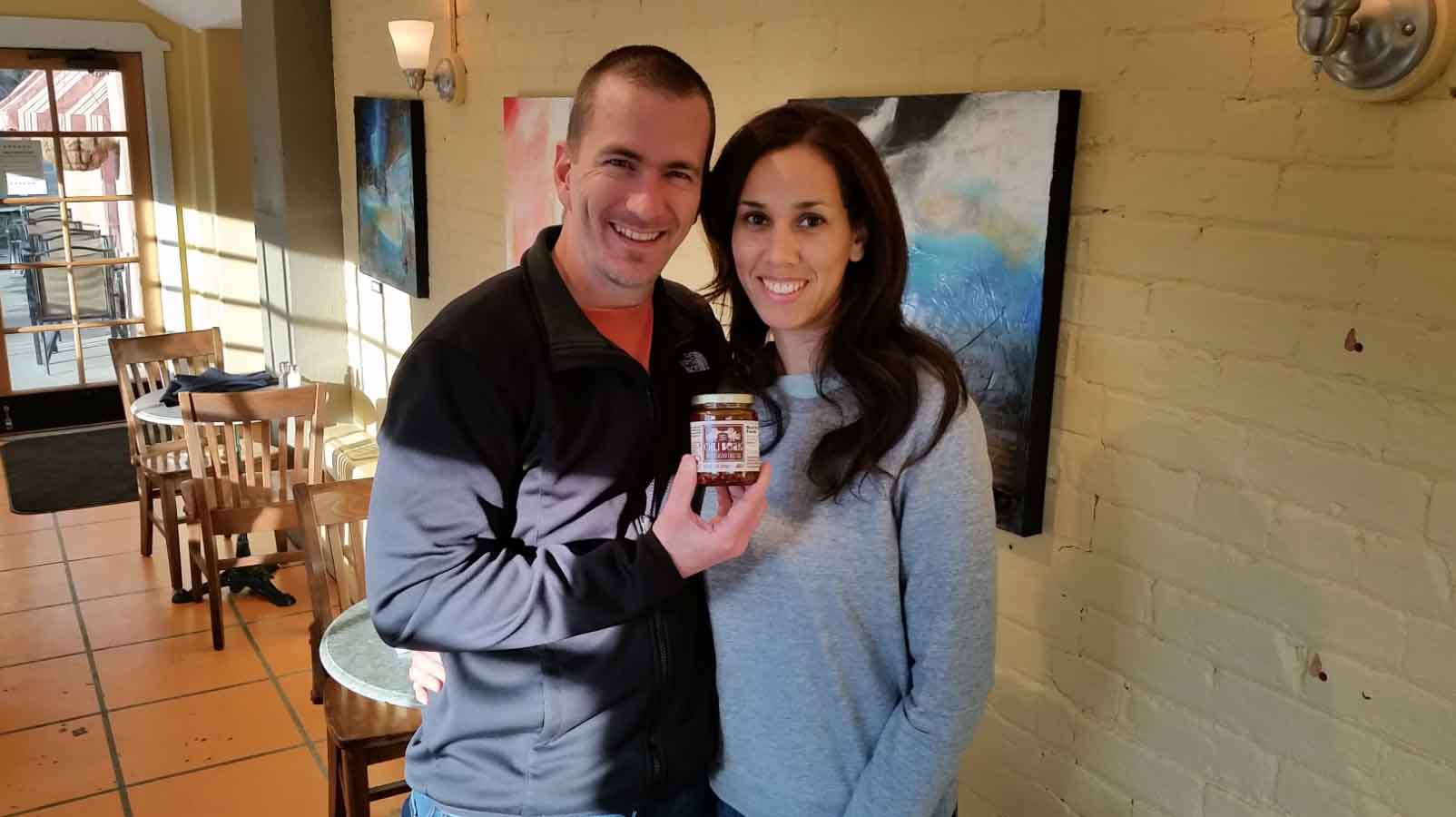
Giselle and Jason McClure of Salt Lake City have concocted an original flavor booster known as chili oil. The McClures create the chili oil in their own basement, only to later be distributed to 22 different locations in the Salt Lake Valley available for purchase. Their concoction prompted them to start their own business, Chili Beak.

Giselle and Jason McClure show off their latest flavor of Chili Beak.

Giselle and Jason McClure show off their latest flavor of Chili Beak.

Unlike hot sauces and salsas, tomato and vinegar is not added to create chili oil. It is a unique blend of a variety of chili peppers with oil and other spices. The main pepper that is used is called chile de arbol, which means bird’s beak chili. This is where the name Chili Beak came from. It is a completely unique product which the McClures ultimate long-term goal is to see on tables at many restaurants as a replacement to Sriracha.

Chili oil is the ultimate condiment. It can be added to everything from eggs, soups, brownies, and even popcorn. Simply just stir it with a spoon, and scoop it onto food. Its smooth consistency and natural ingredients create a unique flavor that does not upset the stomach. No preservatives are added, and all ingredients are all-natural. It can be used as a marinade, mix in, or even added into recipes to create original new flavors. The flavor of chili oil will be felt first, and then a subtle heat begins to creep into the taste buds.

While visiting Giselle’s family in Mexico years ago, the McClures discovered chili oil. They could not find any product like it in Salt Lake City, so they decided to make it themselves as amateur chefs. After seven months of constant trial and error, and a multitude of coughs and sneezes, they created the perfect mixture.

They considered it better than the recipe they tried in Mexico because of an added smoky flavor. The smokiness is created with a lack of sugar and ginger. This was something different that needed to be experienced by people of the United States. Even Giselle’s family in Mexico was requesting that they have their own to share with their friends and family.

“This would be more than just a food company,” Jason said. “This would be a people company. As a company it is about family and community. We want to bring people together and have fun with it.”

Chili oil is meant to be stirred and served with a spoon.

Chili oil is meant to be stirred and served with a spoon.

Food connects people, creates conversation and promotes new communities. Giselle explains, “If I can share food with somebody, I am happier.”

Only having started their business in August 2014, Chili Beak has expanded tremendously through word of mouth and social media. A Facebook, Twitter and even an Instagram page have been created to promote the business. The McClures wanted to create a responsive community in which people get involved with Chili Beak digitally. This is what began the creatively catchy “Let me Spoon You” campaign, which is named after the unique way to prepare chili oil.

Through social media, and using the hashtag SpoonYourFriends, families are showing how they are using and preparing Chili Beak in their foods. This creates an interactive experience in which creative ideas to use chili oil are shared on Twitter, Facebook and Instagram. It was through this that the ingenious idea of using chili oil on top of vanilla ice cream was discovered by a customer.

For Valentine’s Day, the #SpoonYourValentine campaign was created to share how people were preparing meals for their loved ones with Chili Beak. Chili Beak has created a community for all to get involved with, and has inspired the McClures to want to create a chili oil recipe book based on the inventive recipes customers have shared.

All ingredients that are used to make the chili oil that Chili Beak produces are bought from local businesses within Utah. For example, the salt used within the oil is bought from Utah’s Redmond Real Salt. Local businesses are their own community, and they do whatever it takes to help each other out.

People share their recipes online, such as this mango chutney made with Chili Beak.

People share their recipes online, such as this mango chutney made with Chili Beak.

Kristen Lavelett, executive director of Local First Utah, explains that “locally-owned business create personal stability because of the relationships we build with people. It’s another way to love your neighbors.”

While sampling Chili Beak at farmers markets in the area, the McClures use locally-produced chips and chocolate from Hatch Family Chocolates. The chili oil is added to things like hummus and ranch dressing for people to taste. It’s a challenge when people ask about the hummus and ranch, and not the chili oil itself. The chili oil is what creates the unique spicy flavor to the condiments. But, the McClures enjoy promoting a product that is different to a local community. It is a matter of experimentation to truly discover the one-of-a-kind flavor chili oil produces.

“We love doing this because we truly enjoy it,” Giselle said. “We committed ourselves to something different. We want to inspire people to do more with chili oil. If we can have fun with it and get the community involved, that is a plus.”

Retro Betty, a boutique that keeps vintage alive in Salt Lake City

Story and photos by McCALL GRAY

Vintage is often imagined as objects layered in dust, likely tucked away in an attic with a musty smell lingering about.

Behind the pink door of Retro Betty, vintage is anything but dusty. Lively music from the 1940s, ’50s and ’60s is humming on a record player. Clothing, furniture, accessories and gifts from those eras fill every corner of the local boutique, creating an eclectic maze of color.

Vintage is brought back to life.

Amanda Parrish, owner of Retro Betty, wears items you can find in her store.

Amanda Parrish, owner of Retro Betty, wears items you can find in her store.

Owner Amanda Parrish established Retro Betty in September 2012. Retro Betty opened just three months shy of her 30th birthday. Parrish said she had always dreamed of opening her own business and made it a goal to make it happen by that milestone.

“I’ve always loved vintage. I grew up around it,” Parrish said. “I had older grandparents who were born in 1906, so I knew the style.”

The boutique’s name expresses her love for the timeless style. Parrish said she sees the word retro as colorful, and the name Betty reminds her of a 1940s housewife.

“Back in the day people would always say, ‘Oh she’s a Betty,’ meaning she was pretty,” Parrish said. “So that’s what I wanted my store to be.”

Retro Betty, at 2821 S. 2300 East in Salt Lake City, offers a combination of genuine vintage and new items that mimic the vintage style. The boutique is filled with a vast variety, including women and men’s clothing, accessories, home and seasonal décor, and handmade greeting cards and banners made by Parrish’s mother, Kim Holmes. Parrish also taps into her creative side and refinishes furniture, giving it a new look with sometimes just a new coat of paint. The merchandise is priced anywhere between $1 and $150.

Holmes said, “I love creating one-of-a-kind paper goods for her store. It brings me joy to do that for her, and it gives me something to do.”

Other than the blend of new and old, Retro Betty is different from similar stores such as Now & Again and Maeberry Vintage in Salt Lake City. It does not run on consignment. Parrish personally scouts out the merchandise for her boutique at estate sales and flea markets, and often travels outside of Utah to cities such as Los Angeles and New York. She also attends two vintage trade shows every year.

Parrish features seasonal finds in the kitchen corner, such as cake stands, tea towels and bakeware.

Parrish features seasonal finds in the kitchen corner, such as cake stands, tea towels and bakeware.

Parrish said she can never choose just one favorite item in her store. “I love everything [in the boutique]! Everything in here is something I’ve picked out,” she said.

But, she said some of her most-liked pieces are those that seem to be the hardest to find. Vintage radios, cameras and typewriters in good condition are the pearls among the oysters.

Ashlie Roberts, a returning customer, said, “This is a great place to find unique gifts for others. It’s hard to describe, you just have to see it in person to get the full effect.”

Customers will always find Parrish at Retro Betty on Monday from 10 a.m to 6 p.m. and Tuesday through Saturday from 10 a.m. to 7 p.m.. With no employees, she enjoys running the shop alone and interacting with the customers who visit.

The proof is in the Facebook posts to her Retro Betty business page. Ashleigh McMahon posted that she was “beyond excited” to go meet Parrish. Parrish said her customers are happy when they walk in and see her, because it makes their experience more personal.

She is considering registering her business with Local First Utah, which promotes shopping at locally-owned businesses such as Retro Betty.

Kristen Lavelett, executive director of Local First Utah, said, “The difference between shopping at a big business and a small business is profound. By shopping locally, it increases our personal stability and increases relationships with the community and who we do business with.”

Since opening, the community and local businesses have supported Retro Betty. There is no competition with other vintage stores because Parrish said the owners like to help each other out. They frequently get together to coordinate vintage shows and Instagram product giveaways to their followers.

“If someone walks in looking for something specific and I don’t have it, I’ll send them to the people that do. They do the same for me,” Parrish said.

She said her business allows her to continually give donations to the community. The Toys for Tots Foundation, cancer fundraisers and local schools are among the recipients.

“I like to help out the local schools. A lot are independent and not funded by the government, so I find those are the ones that need it the most,” Parrish said.

One of those private schools is Canyon Rim Academy. Parrish has contributed Retro Betty gift certificates for school fundraisers. Parrish has also supported Skyline and Olympus high schools by donating costumes for their school plays.

Apart from giving back to the schools near Retro Betty, Parrish also assists churches, such as the Christ United Methodist Church on 2375 E. 3300 South, and recently supplied gift certificates to its Wesley Bell Ringers for the group’s 2015 Valentine’s Day Dinner Dance.

Lavelett, with Local First Utah, said, “When you walk into a locally-owned business you know they’re not there to make money, they’re there to give back to the community.”

Parrish is delighted that her small business allows her to give back to the community. Seeing her customers’ reactions when they walk into Retro Betty is also fulfilling to her, and is what keeps her going.

“What I have here is unlike what they’ve seen before,” Parrish said. “It’s the moments when a woman comes out of the dressing room twirling in one of the dresses that show me I am making people happy.”

Social media makes or breaks small businesses

Story and photo by ALEX HARRINGTON

Small-business owners struggle to find the time in their lives to simply start a business, let alone worry about the smaller tasks like establishing a presence in social media. But, having a solid presence on social media like Facebook, Twitter, or Instagram is critical.

Kristen Lavelett, executive director for Local First Utah, knows from her own work with the educational group how important social media influence can be. Local First Utah has more than 20,000 followers on Facebook, through which it informs its audience about various campaigns and services it offers. Local First Utah can quickly and effectively distribute information about its mission.

However, social media are not all rainbows and sunshine. There are difficulties with social media that aspiring business owners must grapple with as well.

One artist, Talin Tanielian, experienced these difficulties firsthand. She had been creating art from a very young age, dabbling in everything from watercolors to animation. She even traveled to France to take art courses at “Gobelins,” a prestigious art school where she received training from animators who worked with Walt Disney Studios and Pixar. After she graduated from the University of Utah, she started thinking about turning this passion into a career.

She began selling her art out of her home in Sandy, Utah, via online websites like “Deviantart.” In January 2014, she turned this process into a new business, “TabbyToons.” To start to advertise her newly built business to a wider audience, she branched out from Deviantart and posted various drawings she had done on Facebook and Instagram.

Though she could now more easily distribute her art and show off her talents, Tanielian found the change from doing art as a hobby to doing it for a living was much more daunting than she expected. Before creating her business, she received nothing but positive feedback for her many art pieces. Hardly anyone outside her friends and family had access to her drawings, paintings, and animations. However, when she started using Facebook and Instagram as a medium to advertise her various creations, she experienced an unexpected and disheartening result.

Her newfound viewers began critiquing her art, posting comments from the constructive to the downright cruel. Tanielian said it was difficult to receive “harsh feedback from others.”

But she realized these critiques didn’t have to have a negative impact on her or the artistic reputation she created. She strove to use the criticism as another positive aspect of social media, rather than retreating from the judgments people have made about her art. “Feedback is inspirational and pushes me to keep going forward,” she said.

So Tanielian embraced social media. She put her art out on Facebook and Instagram and prepared for the judgments that would inevitably come from complete strangers. “[TabbyToons] adds to who I am and what I do,” she said.

Her business has grown from a small group of admirers to dozens of fans and buyers, due largely to social media. She said she still has a long way to go to get “TabbyToons” where she wants it. But her goal is to have multiple websites devoted solely to selling her art.

Ann Marie Thompson said the Women's Business Center is available to help all small-business owners, both women and men.

Ann Marie Thompson said the Women’s Business Center is available to help all small-business owners, both women and men.

This growth may have occurred in a small business like Tanielian’s, but can a larger, locally-owned business expect the same success?

Ann Marie Thompson, program director of the Women’s Business Center, works with small businesses ranging from a one-woman operation like Tanielian’s to larger ones. She swears by the importance of this online presence. “[The] Women’s Business Center utilizes social media every day,” she said. “Business appears to be driven more by social media than traffic.”


Locally owned boutique, Unhinged, is unique

Story and photos by NATHAN ASTILL

Store

Unhinged storefront at the Sugar House location.

Unhinged is the oddity, the outside-of-the-box store, the artistic Neverland. It is one of Pan’s lost boys that never quite grew up.

“Purveyors of the oddly beautiful,” says Amy Taggart, manager of Unhinged at 2165 S. Highland Drive. Her friendly, welcoming smile reflects the store’s atmosphere. She is holding a cup of coffee, sitting on an old wooden chest. The chest is for sale. The lights hanging from the ceiling all around her are as well.

Then again, that’s not unusual here. Everything in the store is for sale — from the clothing, to the artwork, to the organic soaps. Even the enormous wooden canoe hanging high up on the wall is for sale. If a person sees something they like, they can buy it. It’s a fairly new idea that makes the experience of shopping at Unhinged unique. “It is much more of a destination location,” Taggart says.

Owner Corey Folster, 45, grins as he says that’s exactly what he was aiming for. “I wanted to bring something different to Salt Lake. It’s so easy to get lost in the brick and mortar experience when shopping online, so I knew when I created this business that I wanted to provide a fun atmosphere,” he said. “I hated when I would go into shops and I couldn’t buy certain things that caught my eye.”

Folster used to manage other stores, such as Urban Outfitters and Forever 21, before he founded Unhinged. He opened the business in the Sugar House neighborhood in 2011, and in 2014 relocated a couple blocks south to a bigger and better location.

Folster opened another Unhinged in Provo in 2013. He plans to open a third shop, called Rewind Exchange, in Provo on Friday, April 3, 2015.

While Folster hadn’t initially planned to carry a lot of local merchandise, that began to change over time as he started to meet fun local artists and designers. “It’s really neat when you can add a local element to it,” he says.

Unhinged carries products made by more than 25 local designers, from Cardi Allyson, who created hellbent, a clothing brand with a Gothic twist, to Mieke Okamura, owner of Purring Buddha, a company specializing in the creation of organic soaps, lotions and lip balms.

Wallets

Handmade leather wallets created from old cowboy boots, by Salvage West.

Forty percent of the merchandise Unhinged carries is created by local artists through upcycling. Upcycling is the process of reusing old materials that may seem like trash to some people, in order to create new products with significantly higher quality and value. Take Salvage West, for instance. The owner crafts slickly designed wallets from the leather of old cowboy boots.

But while the value of these products may be higher, Unhinged prides itself on its competitive, more affordable prices. And while some of the art the store carries may not be everyone’s cup of tea, its purpose is making something out of nothing. Folster likes his artists to be one of a kind and more often than not, exclusive to the store. Most importantly, he wants to be able to sell things that are of high quality.

While selling quality merchandise is not much of a challenge, getting the word out about the store is. Advertising is expensive and Folster believes that “getting people out of their normal shopping modes and into their neighborhoods” is one of the hardest things about owning a local store.

Folster has been taking a different route to traditional advertising as he tries to support his company and its local artists through online media exposure. Unhinged has a strong online social media presence through its Facebook, Tumblr, Pinterest and Instagram pages. It also participates in the Sugar House Art Walk, a nonprofit organization whose mission is to promote local art and music in the Sugar House community.

“People need to realize that we have a lot of the same stuff as the big department stores,” Folster says.

But while they may have the same items as the bigger stores, the shopping experience is different. Unlike the bigger department stores, Unhinged carries local brands that have not been made on an industrial level. And because of this, customers are able to purchase clothing and art, among other things, that is one-of-a-kind.

Bathproducts

Organic bath products, by Purring Buddha, are on display at Unhinged Sugar House.

Not only does Unhinged offer the same things in a more unusual way, but buying local is much better for the community.

Kristen Lavelett, executive director of Local First Utah, has a goal for buying local. “Our vision for buying local is for it to become as common as recycling is now,” she said. “The difference between big business and small business is profound. Small local businesses can help to enhance our local community.”

Now moving forward, one thing is certain for Folster — change. “One thing I love is changing things up,” he says. “It’s not about being crazy, it’s about thinking differently about things. I would love to eventually have our own Unhinged line.”

Folster plans to grow Unhinged, aiming on getting bigger in home décor offerings, particularly once Rewind Exchange opens in April 2015.

When asked over email about the feel of this new store, Folster said, “The vintage and preowned modern clothing will be carefully chosen to reflect a current well thought look that matches our customers[‘] tastes. It won’t be like a thrift store or resale shop that has a big assortment of random items. It will feel ‘collected.’”

Collected, like the artwork Taggart walks by hanging next to the stairs of the Sugar House store she manages. “Art is a creative outlet,” she explains, “a means of communicating something. Corey [Folster] was born for retail, and as the company continues to grow he will keep on reinventing the wheel.”