Two Salt Lake City artists contemplate expansion

Slideshow and story by MEGAN DOLLE

Get a behind-the-scenes look at the creative process of two Salt Lake City artists.

Stacey Foster has a gift for creating curious pieces of art.

Foster worked as a piecework manager in Los Angeles for two years until moving to Utah in 2009. She quickly capitalized on her professional and creative talents in her new home by crafting a particularly unique style of home décor: decorative arrows.

“I saw some vintage ones in an umbrella stand in a magazine and I thought they looked really cool,” Foster said. “But I couldn’t find any to buy.”

In 2010, Foster tried to make her own. After months of experimenting with birch wood, paint, glue and real turkey feathers, she was able to create a product she was proud of. Encouraged by her success, she craved expansion.

But, not all creative minds think alike about expanding. Some may act conservatively and cherish their art as a modest hobby. Others, like Foster, actively chase opportunities to grow professionally.

Foster’s husband found an article introducing General Electric Company’s Banking on Women while looking through the newspaper one afternoon. He learned that this three-month program was being offered in Utah and urged his wife to apply.

The program partners with the Utah Microenterprise Loan Fund (UMLF) and the Center for Entrepreneurship at Westminster College to provide training, mentoring and microloans for female entrepreneurs. Foster jumped at the opportunity and was accepted into the program in fall 2012.

Creating a business plan was the final key component of the Banking on Women program. Foster initially hoped to open a physical location. But the research involved in creating a business plan helped her deliberate realistic goals as well as think creatively and resourcefully about how she wanted to expand.

After developing a robust plan, Foster searched for funding to bring her ideas to life. She chose to present to the UMLF panel for a $25,000 loan.

Foster was awarded the loan in 2013 and used it to open a mobile fashion truck called Mineral and Matter.

“I had seen them [fashion trucks], not in person but online and in magazines, and just thought that would be perfect,” Foster said.

She spent months searching for and preparing her truck, adding a vinyl wrap, drywall, extra storage and laminate wood floor. Foster also painted the interior and had shelving installed.

“The theme of the truck is a natural history museum meeting a space observatory,” Foster added in an email interview.

Her truck is certainly a novel addition to Salt Lake City’s market. It’s also incredibly practical. “It’s like a moving billboard for our store,” Foster said.

Although her fashion truck continues to be successful, additional studio space was still necessary. In August 2014, she opened a brick-and-mortar store located at 353 Pierpont Ave., where she has continued creating her decorative arrows and featuring a wide selection of work from different designers.

One of those designers is Amanda Antunez, whose jewelry line is OliveDeer.

Antunez also has a mind full of creative ideas. She quickly realized the need to set her pieces of jewelry apart while still having the ability to work in the comfort of her own home.

She utilizes various sizes of raw gemstones such as quartz, amethyst and kyanite to create necklaces and rings using a process called electroforming. The beginning phases of this method include forming and sanding the clay around gemstones, painting them with graphite and waiting for the jewelry to dry overnight.

Antunez purposefully couples her raw gemstones with copper in the electroforming process to create an uncommon organic style.

“I want people to be like, ‘Oh hey! That’s an OliveDeer necklace!’” Antunez said in a phone interview.

Foster was also attracted to this earthy approach. She found Antunez among the list of vendors featured at Provo’s Bijou Market and asked if she would be interested in selling her pieces at Mineral and Matter’s new location.

The OliveDeer pieces seem to be generating interest. But, Antunez says she is having trouble keeping Foster stocked with inventory.

“The process that I use takes a really really long time, and with my full-time job I don’t really have much time to dedicate to this,” Antunez said.

After waiting for the jewelry to dry overnight, Antunez places the pieces into a copper sulfate bath for 12 to 24 hours. This permanently bonds the cooper to her pieces when passed through an electrical current.

While Antunez would appreciate the extra time to work on expanding her own busines, she’s not ready to quit her stable job quite yet.

Ann Marie Thompson, program director at Salt Lake Chamber Women’s Business Center (WBC), would agree with that decision.

The WBC is a nonprofit entrepreneurial center for aspiring women business owners. Thompson specializes in business plan writing, cash flow projection and government procurement. She meets one-on-one with clients for consultations and mentoring, but cringes when she hears of ambitious entrepreneurs quitting their full-time job.

“When I hear somebody say ‘I quit my job to start a business,’ I’m like, ‘Don’t do that! Go get another job,’ because you need cash flow for your life,” Thompson said. “I always tell our people, don’t quit your job. … But do it on the side until [your business] can replace it.”

Whether an artist follows Thompson’s advice, such as Antunez, or decides to pursue expansion more actively, like Foster, the goal is to create unique pieces of art.

“I feel like I still have a lot of growing to do,” Antunez said. “I need to be able to get myself out there more in order to do this full-time.”

Take a chance and dance

Story and video by SHANNON O’CONNOR

Watch why people of all ages love to dance.

What does dance mean? Dance is a form of fitness that is fun, physical, mental, and social. Everyone should experience the local dance community because it is tight-knit and welcomes people of all ages, genders, races and body types.

“I started dancing in Utah because people are more open and nonjudgmental,” Myles Ozo said.

Ozo moved to Utah from Virginia. He thought the dance community there was intimidating and the people were snobby. But Ozo felt welcomed with open arms in Utah, and now enjoys the expression of dance.

Elite Dance Studio, located at 4026 S. 2700 East in Holladay, offers classes in jazz, hip-hop, ballet, silks, clogging and choreography. Lesley Smith is the founder and owner of Elite. Her fun-loving personality is shown through her purple, blue, and pink highlights in her hair. Smith is extremely hands-on and goes to the studio almost every day to make sure everything runs smoothly.

Due to Smith’s high involvement in the studio, her amount of family time suffers. “It has impacted my family’s life for the good and bad. I have missed out on a lot of my kids’ childhood … and I’m not home to help with homework or go to games or just hang out.” Even though Smith and her family have made a lot of sacrifices, she believes it has been worthwhile. “It has been a good place for my girls to call home and get to be a part of something special,” she said.

Elite is a special studio that is set apart by the relationship between the students and teachers. The unity at the studio is appealing for those wanting to dance and grow physically while having fun.

“We are a more reasonable dance studio so we have a large number of students,” Smith said. “The teachers care about the kids like their own and it is well known in this community that we are like a family.” The family factor is why Elite celebrated its 25th anniversary in 2014. Everyone at the studio has gained relationships over the years that will last a lifetime.

A local studio that emphasizes fitness more than technique is Baile Dance Fitness Studio at 2030 S. 900 East.

“Get an infusion of fun in your fitness routine,” said owner Joni Chapa.

Baile opened in August 2013Chapa and her instructors infuse fitness into a variety of dance styles such as pop, rock, ballet, hip-hop, Latin, Jamaican and samba.

“I see bodies changing and people getting better at moving,” Chapa said. She believes people are more inclined to exercise when they take a class where they are having fun while getting fit. Chapa has seen it with her own eyes. People evolve from being reserved to letting loose and enjoying dance.

Dancing is not for a specific type of person. Participants don’t have to be extremely flexible, have great musicality, or even have experience. Individuals can start at any age and level and have fun discovering new possibilities of movement.

Pam Ziebell started dancing when she was 50 and she feels better than ever. “It’s exhilarating and I don’t feel like I’m too old,” she said. “Everybody just goes in there and has a blast!”

Molly Buonforte, 25, started dancing when she was 19 and participates in local dance battles, shows and classes.

“I love to dance because I love getting to be someone I’m not,” she said. “I love getting to be a diva or feel like I own the world, when in reality I’m a huge nerd.” Buonforte said for her and almost every dancer, dancing is more than a physical sport. Dancing is about committing and being mentally in tune with your emotions.

Another form of dance that transforms individuals into someone else is pole fitness. It’s a way to gain strength, a solid core and confidence.

“Pole fitness will give you that hourglass shape that everyone wants,” said Kelley Mountford, owner of La Bombe Pole Fitness.

Mountford opened the studio on Feb. 2, 2012, at 1850 S. 300 West in Salt Lake City. Pole fitness is a form of dance that requires a partner. But instead of that partner being another person, it’s a pole. It “challenges you mentally and physically,” she said.

When thinking of someone pole dancing, it’s natural to picture a physically fit beautiful person. Mountford has been a teacher and a student for many years and says that’s not the case. “I’ve watched people come and go to the studio,” she said, “and their mentality changes to, ‘This is my body and I know what it can do whether it’s big or small!’” La Bombe Pole Fitness is a diverse place where people can let go and progress.

There are local dance studios in Utah for every type of person. Elite, Baile and La Bombe Pole Fitness offer different forms of dance fitness that could be the right fit for you.

“For [first-timers] there is a learning curve and they need to have a positive mentality and just have fun,” Baile owner Joni Chapa said in a phone interview.

Step outside of your house or gym and into a dance studio. Get physically fit by dancing and take a chance and dance!

Roy coffee shop stays in business by focusing on customers

Story and photo by BRITTNI STRICKLAND

Anna Whitnack sits at a gray table listening to the whir of blenders, ringing timers and the laughter of customers. The smell of brewing coffee fills Jessie Jean’s Coffee Beans and Homestyle Café, the shop she owns in Roy, Utah. Whitnack recounts her journey as a local business owner.

Growing up in California, Whitnack and her friends would always go out to coffee shops rather than bars. But Whitnack didn’t think it was realistic to ever start her own business. “You think you have to have so much to put up and I never thought it would be a possibility because I thought it was beyond who I was,” she said. Then, after moving to Utah when she was 25, a friend encouraged her to go after what Whitnack thought of as a “pipe dream.” She gained the courage to bring her own recipes for pastries, burgers, sandwiches, smoothies and a variety of coffee flavors to the 37,000 people of Roy, Utah.

Whitnack opened Jessie Jean’s Coffee Beans on Nov. 1, 2000, but becoming an entrepreneur didn’t turn out to be so easy. Whitnack decided late in 2013 that times were just too tough and she and her partner were going to have to close the shop.

Anna Whitnack and Ron Ford stand in their coffee shop Jessie Jean's Coffee Beans Homestyle Café.

Anna Whitnack and Ron Ford stand in their coffee shop Jessie Jean’s Coffee Beans Homestyle Café.

They planned to tell employees the news at an early Christmas dinner. When the time came at the end of the meal, Whitnack just couldn’t find it in her to tell the employees that Jessie Jean’s Coffee Beans would soon be closed.

She told herself she would try to last as a local business for just one more month.

Each month she found herself saying the same thing. With increased support from local patrons, things began looking up and now, two years later, Whitnack is still serving customers.

Though there have been tough times, caring customers and the small, family-like group of employees have made it worthwhile for Whitnack. She looks at a wall covered with notes, photos, and obituaries from loyal customers. “This is our life, this is our family, our friends, our social network, our hearts,” she said, while wiping away her tears with a napkin from the table.

Phil Wagner, a Salt Lake City local who makes an hour-long drive north on his motorcycle to Roy simply to indulge in the food, said, “I think this is a great place. It kind of has that ‘ma and pa’ feel to it. Just down home and good food.”

Ron Ford, co-owner of Jessie Jean’s Homestyle Café, said the two became business partners after a unique experience. He and his son, Bryan, had been living in a neighborhood home behind the café. Whitnack said with a laugh that Bryan would play next door in the parking lot when he was 4 years old. Occasionally he would go into Jessie Jean’s and ask if there was any sort of service he could do to get a hot chocolate. He would always run around saying things like, “I’m going to work here someday.”

Right then Bryan, who is now 15, walked up to the table and said, “And guess what? I work here.” Bryan has worked at Jessie Jean’s for two years.

Unlike his son, Ford had never visited the café until he read a sign out front that caught his eye — “Bodacious Burgers.” Ford isn’t sure why he had never stopped in during the eight years of living nearby. But once he finally ate there, he continued to frequent the shop. Over time he developed a relationship with Whitnack, which later led to them co-owning the local coffee shop.

The two firmly believe in supporting other local businesses, because they know what it’s like to be one. If a business in the area does not have the supplies it needs, Whitnack and Ford encourage friends, family and customers to support the owners in the surrounding areas.

Ford and Whitnack said owning a local business and trying to survive from month to month is difficult. Ford advised people thinking of starting their own business, “Don’t take no for an answer, don’t let them get you down and if you have a dream, go get it.”

Whitnack added, “Fight as hard as you can fight and don’t ever go into business thinking you’re going to be rich. If you’re going into it to make money, you’re doing it for the wrong reasons.”

Several customers paused at the table, touched her shoulder and  said hello. Whitnack smiled and greeted them by name. Gazing around the room, she said, “It’s hard and stressful, but there are the moments in the kitchen and we’re super busy and we’re crazy and [Ford is] playing drums on the pans,” Whitnack said. “Those are the moments where you stop and you’re like, OK this is good.”


Salt Lake businesses build relationships with customers

Story and photos by CALLI PETERSON

Rachael Skidmore makes her way through her little basement shop welcoming and assisting customers. Vintage clothing adorns the walls and fills the shelves and round racks.

Skidmore leads one regular customer to the dressing room while chatting about different aspects that are happening in her life. Other customers wander into the shop and take in the friendly environment.

As Skidmore comes back to take her place behind the counter, she greets the new arrivals and begins establishing relationships with the customers once again.

Amid the tiresome franchise businesses in Salt Lake City, charming local businesses such as Skidmore’s Maeberry Vintage strive to claim their own name and brand by establishing strong ties with customers.

“Local businesses add a lot more flavor,” said Skidmore, whose business is located in downtown Salt Lake City. “They make the community more unique.”

Rachael

Rachael Skidmore opened Maeberry Vintage in the basement of a shop on 207 E Broadway.

Skidmore started her business as an online Etsy shop in 2010. But she noticed her desire to be closer to the community. She transformed her Etsy shop into a physical location in 2013,  and named it Maeberry Vintage.

“It happens little by little, and everything just falls into place,” Skidmore said.

Businesses like Skidmore’s generate their community engagement by communicating with customers and welcoming new guests. Many owners and employees of local businesses push to create relationships with their customers, which creates a connection between shop and customer.

“Local businesses are important,” said Travis Low, a bookseller at Ken Sanders Rare Books. “I think they are crucial.”

He said he believes “there is more personality in local businesses.”

Low understands the value of employee-consumer interaction first-hand. Before he became a bookseller, Low was just a regular customer interested in reading rare books.

He spent a lot of his time browsing and reading books in the store near where he was living. He developed a connection with Ken Sanders, the owner of the bookstore, and ended up receiving a job through this relationship.

“I asked for a job one day, and they needed someone to do shipping,” Low said. He enjoys working somewhere that has character.

KEN SANDERS

Ken Sanders Rare Books is located on 268 S. 200 East in Salt Lake City.

Low has been working at Ken Sanders Rare Books for about five to six years.

“I feel like there is more personality in local businesses,” Low said. “The staff cares.”

That is just what most businesses hope to show: that the staff really cares.

To help build that connection between employee and customer, Utah has its own nonprofit organization to educate and represent local businesses. Local First Utah, organized in 2005, works to provide assistance to local businesses including Mayberry Vintage and Ken Sanders Rare Books.

Kristen Lavelett, the executive director of Local First Utah, wants “buying locally to become the common norm.”

The mission of Local First Utah is “to empower a movement to recognize the value and vitality of locally owned, independent businesses to our communities and our economy,” according to Local First Utah’s website. This is achieved by “educating and engaging the public, the businesses and statewide community partners.”

Lavelett said, “Economic strength has a lot to do with the character of our communities. [Utah locals] would rather buy across the street than overseas.”

Lavelett, who speaks widely to groups about the local economic impact each consumer can have, said, “If every home in Utah shifted its spending just 10 percent, $1.3 billion would stay in the Utah economy.”

But that is just one way the economy can flourish. Local businesses owners can also contribute to the state’s financial health.

According to Local First Utah’s website, “Since local business owners live here, do their hiring here, operate their stores and offices here, buy most of their supplies and products here, pay all their taxes here, and spend their profits here, they obviously contribute far more to our local economies than do chains.”

As Mayberry Vintage owner Rachael Skidmore searches for more clothing and accessories to sell to her customers, she searches for those items from within the state.

“About 95 percent of my products are sourced locally,” Skidmore said.

By doing so, she continues to develop relationships not only with her customers, but also with her suppliers. This generates constant connections with buyers and sellers in Utah.

Whether it be starting a business like Skidmore, or working at a favorite store like Travis Low, local businesses find ways to develop deep connections with their customers.

“Local businesses are, in a real sense,” according to Local First Utah’s website, “the backbone of any community.”

Ugurt, a delicacy designed for U

Story and photos by SYDNEY BULL

Sam Webster, a University of Utah graduate in Information Systems, wasn’t planning on opening a frozen yogurt business the day of his graduation.

The idea of Ugurt was inspired by the lack of dessert joints around the U. Brothers Sam and Adam Webster wanted to celebrate Sam’s graduation with their family, but were unable to find a place that served desserts.

While driving past The Pie Pizzeria at the bottom of campus, the Webster brothers saw the old Utah Textbook Exchange building was vacant and available for a new lease. That moment, the two rookie business owners came up with the name, “UGURT.” The Websters didn’t want to open a franchise yogurt shop because they wanted to market their brand freely. Since the location is so close to the U, it offers a closer association with the university and the students.

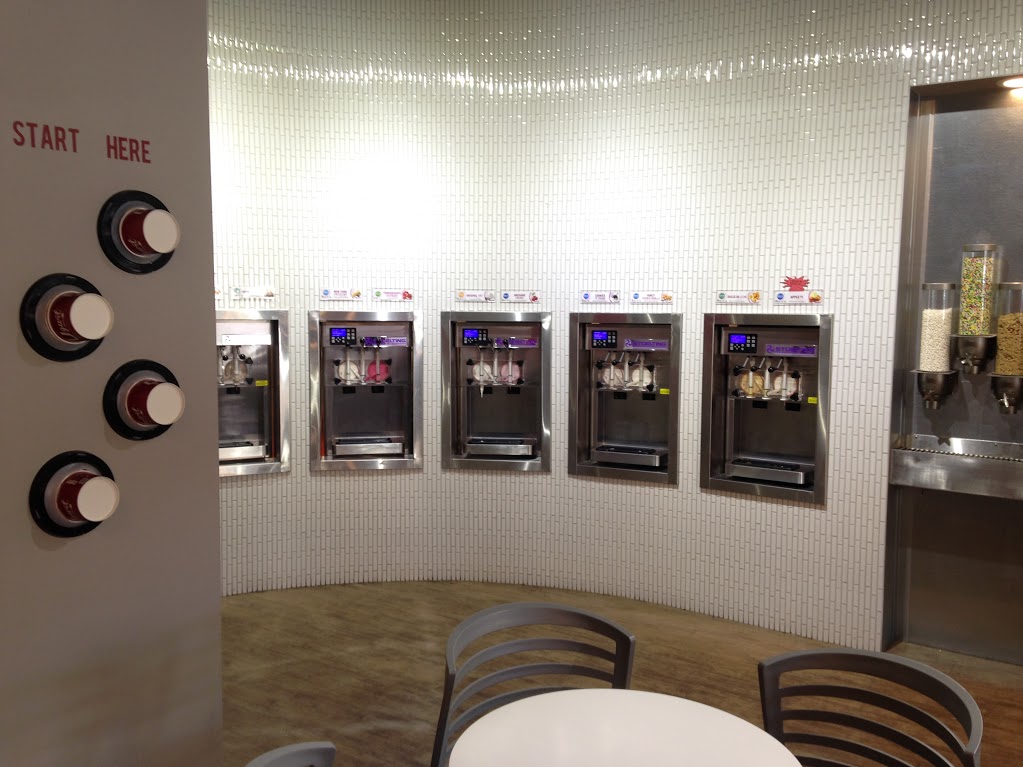
Customers take their cup and begin filling it with yogurts and toppings as they make their way through the line.

Customers take their cup and begin filling it with yogurts and toppings as they make their way through the line.

“We can market directly to campus, with the fraternities and sororities,” Adam Webster said, while accompanied by his wife Paola. “This month and next month we’re going to be doing a lot of philanthropy nights. So they will be coming over here and 20 percent of what they purchase will be given straight to whatever cause they are working for at the time.”

Neither of the brothers had previous experience in running a business. In fact, Adam is a student at the U, working toward his masters in International Studies. Being new to the small-business world didn’t deter them from opening Ugurt in October 2013. The entire family pitched in to help get the business up and running.

The Websters work hard to create a great environment for their customers and employees alike. While providing flexible work hours and a solid payroll, they aim to hire students because they want to cater to all aspects of the college life. The Websters understand what it’s like to be a working college student, so providing a job that is located on campus is quite convenient.

Kassidy Samuels, an employee at Ugurt, agrees that it is a great business to be involved in.

“I love working for Ugurt. It’s so fun and I love that we’re super associated with the U,” she said. “I’m on the dance team, so I get to really see how they cater to athletics, the spirit squad and marketing and all that. They really try to support the U as much as possible and vice versa. It’s such a great atmosphere and that’s why I have been here since they opened.”

Most of Ugurt’s success originates from the owners’ passion to provide the best experience possible for their customers. Ugurt can easily cater to students’ needs because it is open until midnight and offers free Wi-Fi. This gives plenty of options for students, whether it is a place to host late-night study sessions, socialize with friends or satisfy those late-night munchies.

Ugurt's menu lists many different options other than frozen yogurt treats.

Ugurt’s menu lists many different options other than frozen yogurt treats.

Compared to franchises, local businesses do not have that automatic public awareness of the new products, which can make starting a brand-new business really difficult. Marketing wise, the Websters believed it would be a good idea to incorporate as many local events into their business as possible, such as weddings, banquets and school and sporting events. Social media’s role in advertising and promoting has led to improved interaction with their customers and the University of Utah student body as well.

“We’ve worked (catered) at Crimson rally and Crimson Night,” Samuels said. “We have posters set up around campus all the time. We really try to keep a super open environment and make it feel like everyone’s welcome.”

The environment of Ugurt alone has brought in a lot of customers, but their new promotions continue to bring in new people every week. All thanks to the Websters’ new promotion of “Light the U.”  This season, customers get buy-one-get-one-free on cups of frozen yogurt every time the Utes basketball and gymnastics teams win. It has benefitted Ugurt because it encourages customers to come in and buy their product even during the wintertime when frozen desserts aren’t as appealing.

“This last week there was a home game and a lot of people came over and took advantage of the buy-one-get-one-free promotion,” Adam Webster said. “Not to mention it has brought us a ton more business.”

Ugurt attracts its customers with a wide range of yogurt flavors, toppings and gourmet hot beverages. The frozen yogurt flavors rarely change, which is why cookies ‘n’ cream, raspberry/pomegranate, peanut butter and cake batter tend to be the most popular. With the variety of flavors and toppings, Ugurt gives customers freedom to choose. At 49 cents an ounce, chocolate addicts and fruit fanatics can fill their cup however they want.

The display of toppings allows customers to choose however much they want and whatever they want.

The display of toppings allows customers to choose however much they want and whatever they want.

The owners purchase their frozen yogurt and most of their toppings from U.S. Foods and their fresh fruit from local markets. The hot chocolate is bought locally from Stephen’s Gourmet Hot Cocoa. Their hot chocolate bar adds a nice twist to the Ugurt menu, and is a clever way to keep business steady during the winter.

The Webster family hopes to expand their company to other areas in the near future. Even without business degrees, Adam and Sam Webster are successfully running Ugurt and just took over management of the Hokulia Hawaiian Shaved Ice franchise in Utah.

“It’s basically the best shaved ice,” Paola Webster said. “They just have such a following because it’s so different; it’s like the thinnest, lightest shaved ice with ice cream in the middle. We were super fans way before we even knew it would be a possibility to acquire them. So Hokulia Hawaiian shaved ice will be another thing Ugurt, as a company, will work on this summer.”

Chili Beak, adding some spice to the community

Story and photos by DAVID FISHER

Sometimes food just needs an extra kick. Additional flavors and heat can make what was once bland, become a brand-new taste full of extra zing and spice.

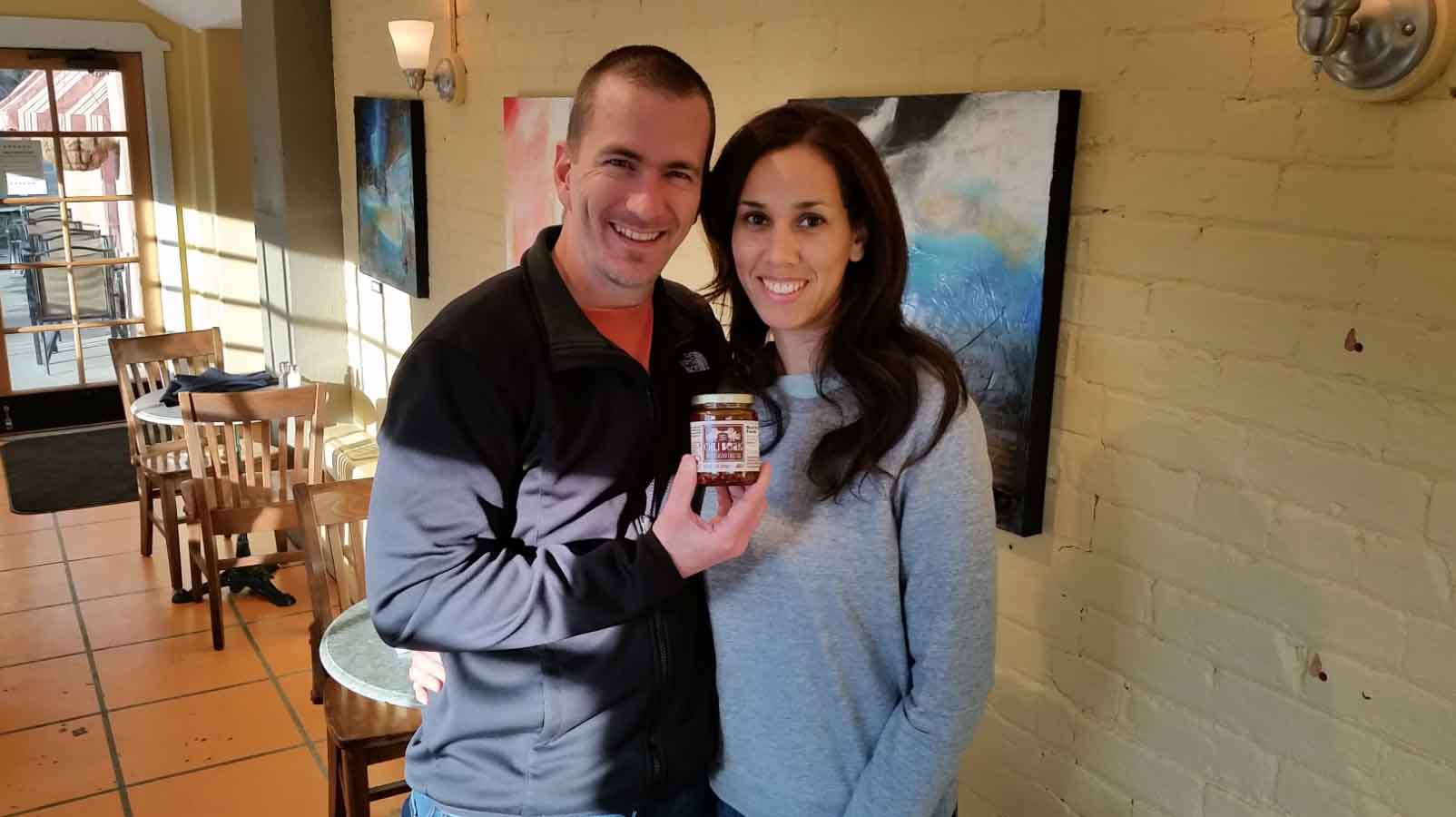
Giselle and Jason McClure of Salt Lake City have concocted an original flavor booster known as chili oil. The McClures create the chili oil in their own basement, only to later be distributed to 22 different locations in the Salt Lake Valley available for purchase. Their concoction prompted them to start their own business, Chili Beak.

Giselle and Jason McClure show off their latest flavor of Chili Beak.

Giselle and Jason McClure show off their latest flavor of Chili Beak.

Unlike hot sauces and salsas, tomato and vinegar is not added to create chili oil. It is a unique blend of a variety of chili peppers with oil and other spices. The main pepper that is used is called chile de arbol, which means bird’s beak chili. This is where the name Chili Beak came from. It is a completely unique product which the McClures ultimate long-term goal is to see on tables at many restaurants as a replacement to Sriracha.

Chili oil is the ultimate condiment. It can be added to everything from eggs, soups, brownies, and even popcorn. Simply just stir it with a spoon, and scoop it onto food. Its smooth consistency and natural ingredients create a unique flavor that does not upset the stomach. No preservatives are added, and all ingredients are all-natural. It can be used as a marinade, mix in, or even added into recipes to create original new flavors. The flavor of chili oil will be felt first, and then a subtle heat begins to creep into the taste buds.

While visiting Giselle’s family in Mexico years ago, the McClures discovered chili oil. They could not find any product like it in Salt Lake City, so they decided to make it themselves as amateur chefs. After seven months of constant trial and error, and a multitude of coughs and sneezes, they created the perfect mixture.

They considered it better than the recipe they tried in Mexico because of an added smoky flavor. The smokiness is created with a lack of sugar and ginger. This was something different that needed to be experienced by people of the United States. Even Giselle’s family in Mexico was requesting that they have their own to share with their friends and family.

“This would be more than just a food company,” Jason said. “This would be a people company. As a company it is about family and community. We want to bring people together and have fun with it.”

Chili oil is meant to be stirred and served with a spoon.

Chili oil is meant to be stirred and served with a spoon.

Food connects people, creates conversation and promotes new communities. Giselle explains, “If I can share food with somebody, I am happier.”

Only having started their business in August 2014, Chili Beak has expanded tremendously through word of mouth and social media. A Facebook, Twitter and even an Instagram page have been created to promote the business. The McClures wanted to create a responsive community in which people get involved with Chili Beak digitally. This is what began the creatively catchy “Let me Spoon You” campaign, which is named after the unique way to prepare chili oil.

Through social media, and using the hashtag SpoonYourFriends, families are showing how they are using and preparing Chili Beak in their foods. This creates an interactive experience in which creative ideas to use chili oil are shared on Twitter, Facebook and Instagram. It was through this that the ingenious idea of using chili oil on top of vanilla ice cream was discovered by a customer.

For Valentine’s Day, the #SpoonYourValentine campaign was created to share how people were preparing meals for their loved ones with Chili Beak. Chili Beak has created a community for all to get involved with, and has inspired the McClures to want to create a chili oil recipe book based on the inventive recipes customers have shared.

All ingredients that are used to make the chili oil that Chili Beak produces are bought from local businesses within Utah. For example, the salt used within the oil is bought from Utah’s Redmond Real Salt. Local businesses are their own community, and they do whatever it takes to help each other out.

People share their recipes online, such as this mango chutney made with Chili Beak.

People share their recipes online, such as this mango chutney made with Chili Beak.

Kristen Lavelett, executive director of Local First Utah, explains that “locally-owned business create personal stability because of the relationships we build with people. It’s another way to love your neighbors.”

While sampling Chili Beak at farmers markets in the area, the McClures use locally-produced chips and chocolate from Hatch Family Chocolates. The chili oil is added to things like hummus and ranch dressing for people to taste. It’s a challenge when people ask about the hummus and ranch, and not the chili oil itself. The chili oil is what creates the unique spicy flavor to the condiments. But, the McClures enjoy promoting a product that is different to a local community. It is a matter of experimentation to truly discover the one-of-a-kind flavor chili oil produces.

“We love doing this because we truly enjoy it,” Giselle said. “We committed ourselves to something different. We want to inspire people to do more with chili oil. If we can have fun with it and get the community involved, that is a plus.”

Unique, local restaurants bring cultural value to Utah

Story and slideshow by William Phifer III

This slideshow requires JavaScript.

In Layton, Utah, there is a strip of real-estate running along the east side of Interstate 15 that the locals call “restaurant row.” Littered with a copious amount of national chains, the area also has a few unique, local restaurants that bring an irreplaceable cultural value to the community.

Corbin’s Grille is one of those restaurants. Located at 748 W. Heritage Park Blvd., Corbin’s is a family-owned business that is operated by Jake Garn, whose father is the landlord of the location. Since its opening in 2006, Garn has learned a lot about running a small local restaurant.

“I’ve learned that appreciating the local food, instead of chains, isn’t something that comes automatically to most Utahns,” he said in a phone interview.

However, as time has progressed and people have learned about Corbin’s Grille, Garn said, “I’d like to think everyone is starting to appreciate the value of local flavor a little bit more.”

Garn said his favorite way to make the restaurant a unique place for patrons is by “bringing something that’s a local creation – something people out of town can try and look forward to.”

To help him consistently achieve this goal, Garn appointed Jimbo Snarr the executive chef in 2014. Snarr understands that the owners of Corbin’s Grille are looking to provide a unique experience for their customers.

“Our goal is to take good classic dishes that people really like and make them classy and higher-end,” Snarr said.”[To do] this we use a lot of fresh ingredients and we make everything in house.”

One example of a popular dish that is made at Corbin’s Grille is the spinach artichoke dip. While almost every restaurant has its own variation of this common appetizer, Snarr said most receive it pre-made and frozen from other vendors. Unsatisfied with any of those inexpensive variations, Snarr said that Corbin’s Grille preps its spinach artichoke dip in-house using fresh ingredients.

Another popular dish at Corbin’s Grille is the lemon asparagus salmon, created at the restaurant during a cooking competition among the cooks. The fresh sushi-grade king salmon is pan-seared in a sauce consisting of white wine, lemon juice, fresh tomatoes, asparagus and other ingredients. This particular salmon dish is one of three offered at Corbin’s Grille and it is the only one that is not cooked over a wood fire grill.

Chefs utilize a white almond wood fire to grill everything from steak, seafood, chicken and burgers, to asparagus and lemon wedges, which are used on seafood dishes. Snarr said the intense heat sears the edges of the steak and really locks in the flavors and juices.

While the food itself is a unique part of Corbin’s Grille, Snarr says that is just part of what makes eating there a distinctive dining experience. Snarr believes the open kitchen and experienced staff also create an inviting atmosphere for the clientele.

“We’re an open book, come on in. We have an open kitchen. Anybody can walk up,” Snarr said, “and watch my guys cook. We do it proper, we do it right … and everybody can see it and know it. I think that’s what makes us popular.”

In the spirit of transparency, Corbin’s Grille does cooking demonstrations where restaurant management share their recipes and techniques. Snarr said some people don’t understand why they are divulging “restaurant secrets” and giving people the tools to make their dishes at home.

In his experience, Snarr said, “People are still going to come to us when they don’t want to cook, because they still like to come out” and have a fine dining experience.

Anthony Lella also recognizes the value of unique restaurants, which is why he is entertaining the idea of opening his own Italian restaurant in the Ogden area.

Lella, formerly the general manager of Iggy’s Sports Grill in Layton, is from a family with strong Italian roots.

He has identified a lack of quality Italian restaurants in the northern Utah area. He also has recognized an increasing trend toward homemade food and cultural culinary diversity.

Recalling a visit to Utah years before he moved to Ogden, Lella said he went out to eat with someone who had never eaten prosciutto, which is an Italian cured ham.

“I was so shocked that this grown woman had no idea what this was, that I’d been eating all my life,” Lella said. “So I think things like that, specialty markets, are just emerging in Utah.”

Lella has considerable experience working in restaurant management, both in and out of state, and knows that location is a key factor in making a restaurant unique.

“If there’s anything I’ve learned about running a restaurant the last 13 years – location is key,” Lella said. “Think about where you’re at now [and] what has the opportunity to be there in five years.” If someone else builds a similar, competitive restaurant right across the street, he said both restaurants can lose their unique quality.

Lella has been searching for an ideal restaurant location in the Davis County area to bring authentic Italian food and culture to the beehive state.

He already has a clear vision of what the menu will include: four different risotto dishes, homemade fettuccine and gnocchi. He has also considered making his own sausage, meatballs, mozzarella and ricotta.

Like management at Corbin’s Grille, Lella is eager to provide a unique venue where patrons can enjoy fresh food made in-house.

Retro Betty, a boutique that keeps vintage alive in Salt Lake City

Story and photos by McCALL GRAY

Vintage is often imagined as objects layered in dust, likely tucked away in an attic with a musty smell lingering about.

Behind the pink door of Retro Betty, vintage is anything but dusty. Lively music from the 1940s, ’50s and ’60s is humming on a record player. Clothing, furniture, accessories and gifts from those eras fill every corner of the local boutique, creating an eclectic maze of color.

Vintage is brought back to life.

Amanda Parrish, owner of Retro Betty, wears items you can find in her store.

Amanda Parrish, owner of Retro Betty, wears items you can find in her store.

Owner Amanda Parrish established Retro Betty in September 2012. Retro Betty opened just three months shy of her 30th birthday. Parrish said she had always dreamed of opening her own business and made it a goal to make it happen by that milestone.

“I’ve always loved vintage. I grew up around it,” Parrish said. “I had older grandparents who were born in 1906, so I knew the style.”

The boutique’s name expresses her love for the timeless style. Parrish said she sees the word retro as colorful, and the name Betty reminds her of a 1940s housewife.

“Back in the day people would always say, ‘Oh she’s a Betty,’ meaning she was pretty,” Parrish said. “So that’s what I wanted my store to be.”

Retro Betty, at 2821 S. 2300 East in Salt Lake City, offers a combination of genuine vintage and new items that mimic the vintage style. The boutique is filled with a vast variety, including women and men’s clothing, accessories, home and seasonal décor, and handmade greeting cards and banners made by Parrish’s mother, Kim Holmes. Parrish also taps into her creative side and refinishes furniture, giving it a new look with sometimes just a new coat of paint. The merchandise is priced anywhere between $1 and $150.

Holmes said, “I love creating one-of-a-kind paper goods for her store. It brings me joy to do that for her, and it gives me something to do.”

Other than the blend of new and old, Retro Betty is different from similar stores such as Now & Again and Maeberry Vintage in Salt Lake City. It does not run on consignment. Parrish personally scouts out the merchandise for her boutique at estate sales and flea markets, and often travels outside of Utah to cities such as Los Angeles and New York. She also attends two vintage trade shows every year.

Parrish features seasonal finds in the kitchen corner, such as cake stands, tea towels and bakeware.

Parrish features seasonal finds in the kitchen corner, such as cake stands, tea towels and bakeware.

Parrish said she can never choose just one favorite item in her store. “I love everything [in the boutique]! Everything in here is something I’ve picked out,” she said.

But, she said some of her most-liked pieces are those that seem to be the hardest to find. Vintage radios, cameras and typewriters in good condition are the pearls among the oysters.

Ashlie Roberts, a returning customer, said, “This is a great place to find unique gifts for others. It’s hard to describe, you just have to see it in person to get the full effect.”

Customers will always find Parrish at Retro Betty on Monday from 10 a.m to 6 p.m. and Tuesday through Saturday from 10 a.m. to 7 p.m.. With no employees, she enjoys running the shop alone and interacting with the customers who visit.

The proof is in the Facebook posts to her Retro Betty business page. Ashleigh McMahon posted that she was “beyond excited” to go meet Parrish. Parrish said her customers are happy when they walk in and see her, because it makes their experience more personal.

She is considering registering her business with Local First Utah, which promotes shopping at locally-owned businesses such as Retro Betty.

Kristen Lavelett, executive director of Local First Utah, said, “The difference between shopping at a big business and a small business is profound. By shopping locally, it increases our personal stability and increases relationships with the community and who we do business with.”

Since opening, the community and local businesses have supported Retro Betty. There is no competition with other vintage stores because Parrish said the owners like to help each other out. They frequently get together to coordinate vintage shows and Instagram product giveaways to their followers.

“If someone walks in looking for something specific and I don’t have it, I’ll send them to the people that do. They do the same for me,” Parrish said.

She said her business allows her to continually give donations to the community. The Toys for Tots Foundation, cancer fundraisers and local schools are among the recipients.

“I like to help out the local schools. A lot are independent and not funded by the government, so I find those are the ones that need it the most,” Parrish said.

One of those private schools is Canyon Rim Academy. Parrish has contributed Retro Betty gift certificates for school fundraisers. Parrish has also supported Skyline and Olympus high schools by donating costumes for their school plays.

Apart from giving back to the schools near Retro Betty, Parrish also assists churches, such as the Christ United Methodist Church on 2375 E. 3300 South, and recently supplied gift certificates to its Wesley Bell Ringers for the group’s 2015 Valentine’s Day Dinner Dance.

Lavelett, with Local First Utah, said, “When you walk into a locally-owned business you know they’re not there to make money, they’re there to give back to the community.”

Parrish is delighted that her small business allows her to give back to the community. Seeing her customers’ reactions when they walk into Retro Betty is also fulfilling to her, and is what keeps her going.

“What I have here is unlike what they’ve seen before,” Parrish said. “It’s the moments when a woman comes out of the dressing room twirling in one of the dresses that show me I am making people happy.”

Social media makes or breaks small businesses

Story and photo by ALEX HARRINGTON

Small-business owners struggle to find the time in their lives to simply start a business, let alone worry about the smaller tasks like establishing a presence in social media. But, having a solid presence on social media like Facebook, Twitter, or Instagram is critical.

Kristen Lavelett, executive director for Local First Utah, knows from her own work with the educational group how important social media influence can be. Local First Utah has more than 20,000 followers on Facebook, through which it informs its audience about various campaigns and services it offers. Local First Utah can quickly and effectively distribute information about its mission.

However, social media are not all rainbows and sunshine. There are difficulties with social media that aspiring business owners must grapple with as well.

One artist, Talin Tanielian, experienced these difficulties firsthand. She had been creating art from a very young age, dabbling in everything from watercolors to animation. She even traveled to France to take art courses at “Gobelins,” a prestigious art school where she received training from animators who worked with Walt Disney Studios and Pixar. After she graduated from the University of Utah, she started thinking about turning this passion into a career.

She began selling her art out of her home in Sandy, Utah, via online websites like “Deviantart.” In January 2014, she turned this process into a new business, “TabbyToons.” To start to advertise her newly built business to a wider audience, she branched out from Deviantart and posted various drawings she had done on Facebook and Instagram.

Though she could now more easily distribute her art and show off her talents, Tanielian found the change from doing art as a hobby to doing it for a living was much more daunting than she expected. Before creating her business, she received nothing but positive feedback for her many art pieces. Hardly anyone outside her friends and family had access to her drawings, paintings, and animations. However, when she started using Facebook and Instagram as a medium to advertise her various creations, she experienced an unexpected and disheartening result.

Her newfound viewers began critiquing her art, posting comments from the constructive to the downright cruel. Tanielian said it was difficult to receive “harsh feedback from others.”

But she realized these critiques didn’t have to have a negative impact on her or the artistic reputation she created. She strove to use the criticism as another positive aspect of social media, rather than retreating from the judgments people have made about her art. “Feedback is inspirational and pushes me to keep going forward,” she said.

So Tanielian embraced social media. She put her art out on Facebook and Instagram and prepared for the judgments that would inevitably come from complete strangers. “[TabbyToons] adds to who I am and what I do,” she said.

Her business has grown from a small group of admirers to dozens of fans and buyers, due largely to social media. She said she still has a long way to go to get “TabbyToons” where she wants it. But her goal is to have multiple websites devoted solely to selling her art.

Ann Marie Thompson said the Women's Business Center is available to help all small-business owners, both women and men.

Ann Marie Thompson said the Women’s Business Center is available to help all small-business owners, both women and men.

This growth may have occurred in a small business like Tanielian’s, but can a larger, locally-owned business expect the same success?

Ann Marie Thompson, program director of the Women’s Business Center, works with small businesses ranging from a one-woman operation like Tanielian’s to larger ones. She swears by the importance of this online presence. “[The] Women’s Business Center utilizes social media every day,” she said. “Business appears to be driven more by social media than traffic.”


Locally owned boutique, Unhinged, is unique

Story and photos by NATHAN ASTILL

Store

Unhinged storefront at the Sugar House location.

Unhinged is the oddity, the outside-of-the-box store, the artistic Neverland. It is one of Pan’s lost boys that never quite grew up.

“Purveyors of the oddly beautiful,” says Amy Taggart, manager of Unhinged at 2165 S. Highland Drive. Her friendly, welcoming smile reflects the store’s atmosphere. She is holding a cup of coffee, sitting on an old wooden chest. The chest is for sale. The lights hanging from the ceiling all around her are as well.

Then again, that’s not unusual here. Everything in the store is for sale — from the clothing, to the artwork, to the organic soaps. Even the enormous wooden canoe hanging high up on the wall is for sale. If a person sees something they like, they can buy it. It’s a fairly new idea that makes the experience of shopping at Unhinged unique. “It is much more of a destination location,” Taggart says.

Owner Corey Folster, 45, grins as he says that’s exactly what he was aiming for. “I wanted to bring something different to Salt Lake. It’s so easy to get lost in the brick and mortar experience when shopping online, so I knew when I created this business that I wanted to provide a fun atmosphere,” he said. “I hated when I would go into shops and I couldn’t buy certain things that caught my eye.”

Folster used to manage other stores, such as Urban Outfitters and Forever 21, before he founded Unhinged. He opened the business in the Sugar House neighborhood in 2011, and in 2014 relocated a couple blocks south to a bigger and better location.

Folster opened another Unhinged in Provo in 2013. He plans to open a third shop, called Rewind Exchange, in Provo on Friday, April 3, 2015.

While Folster hadn’t initially planned to carry a lot of local merchandise, that began to change over time as he started to meet fun local artists and designers. “It’s really neat when you can add a local element to it,” he says.

Unhinged carries products made by more than 25 local designers, from Cardi Allyson, who created hellbent, a clothing brand with a Gothic twist, to Mieke Okamura, owner of Purring Buddha, a company specializing in the creation of organic soaps, lotions and lip balms.

Wallets

Handmade leather wallets created from old cowboy boots, by Salvage West.

Forty percent of the merchandise Unhinged carries is created by local artists through upcycling. Upcycling is the process of reusing old materials that may seem like trash to some people, in order to create new products with significantly higher quality and value. Take Salvage West, for instance. The owner crafts slickly designed wallets from the leather of old cowboy boots.

But while the value of these products may be higher, Unhinged prides itself on its competitive, more affordable prices. And while some of the art the store carries may not be everyone’s cup of tea, its purpose is making something out of nothing. Folster likes his artists to be one of a kind and more often than not, exclusive to the store. Most importantly, he wants to be able to sell things that are of high quality.

While selling quality merchandise is not much of a challenge, getting the word out about the store is. Advertising is expensive and Folster believes that “getting people out of their normal shopping modes and into their neighborhoods” is one of the hardest things about owning a local store.

Folster has been taking a different route to traditional advertising as he tries to support his company and its local artists through online media exposure. Unhinged has a strong online social media presence through its Facebook, Tumblr, Pinterest and Instagram pages. It also participates in the Sugar House Art Walk, a nonprofit organization whose mission is to promote local art and music in the Sugar House community.

“People need to realize that we have a lot of the same stuff as the big department stores,” Folster says.

But while they may have the same items as the bigger stores, the shopping experience is different. Unlike the bigger department stores, Unhinged carries local brands that have not been made on an industrial level. And because of this, customers are able to purchase clothing and art, among other things, that is one-of-a-kind.

Bathproducts

Organic bath products, by Purring Buddha, are on display at Unhinged Sugar House.

Not only does Unhinged offer the same things in a more unusual way, but buying local is much better for the community.

Kristen Lavelett, executive director of Local First Utah, has a goal for buying local. “Our vision for buying local is for it to become as common as recycling is now,” she said. “The difference between big business and small business is profound. Small local businesses can help to enhance our local community.”

Now moving forward, one thing is certain for Folster — change. “One thing I love is changing things up,” he says. “It’s not about being crazy, it’s about thinking differently about things. I would love to eventually have our own Unhinged line.”

Folster plans to grow Unhinged, aiming on getting bigger in home décor offerings, particularly once Rewind Exchange opens in April 2015.

When asked over email about the feel of this new store, Folster said, “The vintage and preowned modern clothing will be carefully chosen to reflect a current well thought look that matches our customers[‘] tastes. It won’t be like a thrift store or resale shop that has a big assortment of random items. It will feel ‘collected.’”

Collected, like the artwork Taggart walks by hanging next to the stairs of the Sugar House store she manages. “Art is a creative outlet,” she explains, “a means of communicating something. Corey [Folster] was born for retail, and as the company continues to grow he will keep on reinventing the wheel.”