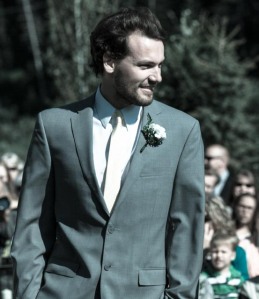
Delta Gamma influences members

Elizabeth Nielson

The Greek letters Delta Gamma influenced Delta Gamma members to do good every day. Doing good in the community, doing good in school, and just being good. In the Delta Gamma Sorority, the rituals and lifestyle is sacred to the individual’s that participate in Delta Gamma’s sisterhood.

“People told me to try and rush so I definitely did and I loved it right then, it was fun and I loved having people be so nice to me,” Hagen said.
After going through rush Haugen decided to be apart of the Delta Gamma sisterhood.

“I choose Delta Gamma because it felt like the right decision, and I felt good intentions with all the active members of Delta Gamma, and I can’t wait to find a special bond with these amazing individuals,” Hagen said.
As for Delta Gamma, it was founded in 1873, in Oxford, Mississippi. The sorority’s traditions and rituals haven’t changed. Every Monday, Delta Gamma meetings are held in the Chapter room in its their house at 5 p.m., right after dinner. Members receive fliers of information about upcoming events and read sections of their ritual book together to remember the sacred sisterhood of Delta Gamma. Reading through the Ritual Delta Gamma handbook every week helps the community to remember the important information that Delta Gamma was established on, on December 25, 1873. This literature is shared only with Delta Gamma members, with the intent of creating a closed sisterhood bond.

“The special bond that we get to share with each other is lifetime and a memorable experience that you get to be apart of,” Kelsey Routh, a Delta Gamma an alumnus explained.

The Delta Gamma’s philanthropy is service for sight; Friends for Sight is the business that members work with. Monica Daly works for Friends for Sight. She emails the Delta Gamma members sign-up sheets weekly for them to help her do eye screenings across Utah, mainly for glaucoma.

“It makes me frustrated and despondent when people that aren’t apart of greek life think we only party, but we do much more than that,” Tera Mahoney said.

“Someone would rather read about the rape charges and the underage sorority girl that had to go to the hospital for drinking too much than the stories of the group of sorority girls that raise money annually for their local or national philanthropy,” Routh said. This certain reputation is brought upon Delta Gamma members because of stereotypes. The stereotype of a sorority girl on Hubpages is: a beautiful girl that is uneducated whom has no morals, and is an alcoholic, daddy’s girl, super self-centered, dramatic, and classless.

“ I have gained confidence throughout my years, and also I have a support system through out the rest of my life, Routh said. Through these negative reputations and stereotypes sororities never have the opportunity to pronounce the good in what they do, Routh said.”

“So I haven’t been initiated yet, I will get initiated in a couple of weeks and I’m so excited, but it wasn’t what I expected at all. I was expecting people partying, girls not being to nice, but it was opposite, I seriously love all the girls and it’s awesome,” Hagen said.

Statistics have shown at Association of America Universities public research, that fraternity and sorority members manage to be more involved, allowing the involvement to be positively related to student learning and intellectual development.

“As a result, it would be reasonable to expect higher, not lower levels of learning and development for greek members,” Gary R Pike, said in his study.

“ I don’t want to be referred as a sorority girl, that’s why I never paid for friends while I am in college, but, I, mean let people do what they want to do,” said University of Utah Hilary Soter, who has never joined a sorority.
Delta Gamma has impacted several lives. Through sisters, Greek members, and students at the University of Utah, several have interacted with each other, not even realizing if they are apart of greek life. Should people express to their peers that they are apart of this community or should it be kept a secret? Being in a sorority over all has given me the chance to be me and meet people whether they are in DG or in the community and I wouldn’t change my experience for the world, “Routh said. “I’m a proud Delta Gamma.”

SAM KIOA

My Stories:


Blog:

As I gathered information to create my enterprise story, I tried to create a scenario to where the reader can feel as if they were student athletes going through a daily schedule.  I first developed my story idea because of my own personal experience in playing collegiate football and the trials that weighed heavily for the majority of student athletes throughout the country. It surprised me to think that the students that I did interview in fact actually agreed that student athletes had a more challenging schedule instead of debating the issue.  I was able to locate my sources through local football players of the University of Utah.  The starting right defensive end, Jason Fanaika, happens to be my first cousin, so I had no trouble reaching out to him and a few other close friends of mine who are on the team.   As for normal students, I asked a few people that I knew in a few of my classes and their responses were more than what I expected.   In reality, I expected negative responses and input on how unfair regular students are treated compared to student athletes, but in fact I received positive feedback and support from local students.  It was pretty cool to see how supportive the University of Utah students were towards their fellow student athlete classmates.  In the end, this was a fun experience being able interview students and get feedback about how Utah students felt and so far everything was nothing but positive.


Bio:

Born and raised in Salt Lake City, Utah.  Attended East High School from freshman through Jr years of high school but graduated from Pleasant Grove High School.  Played football at Southern Virginia University for one year straight out of high school followed by serving a two-year, full-time mission for the Church of Jesus Christ of Latter-day Saints in San Diego, California from 2011-2013.  Returned home and attended Butler Community College in El Dorado, Kansas and continued to play football there for two more years.  Recently moved back home to Salt Lake City in June of 2015.  Currently attending the University of Utah working toward a Bachelor’s of Arts Degree majoring in Strategic Communications.


SK

Matt Sullivan

MY STORIES :

BLOG: Never Stop Learning

Before taking Comm 1610, I never thought about the differences within writing.  I had always assumed that the writing I would do would either be essays or personal writing like email or letter writing. I never thought about news writing or a way to tell a story or event.  I have never really enjoyed writing, and for me it was hard to find the voices in my head to write in a different way.

Part of what has helped me to finally do some news writing  is actually reading newspaper articles.  As an intern at Beans & Brews, I was able to get The Salt Lake Tribune daily for free.  I would read just a few articles about three times a week during my lunch break.  It seems like something that is silly, but it go the story telling voices moving.  I know I still have a long way to go regardless of my career choice, but reading articles helped me to write news stories.

I wanted to do my best at writing about things that I cared about.  That being said, it was very hard for me to stay neutral, I show my colors pretty frequently and easily.  Part of being a good journalist is caring about the stories you’re covering but also being able to see and report on both sides of the story.  One of the main things I have learned so far in this class is there is always more than one side or one way to tell a story.  Events can be different in the eyes of the beholder.  That, to me, is one of the main reasons that journalists are so important in society today.

Writing is still not my strong suit and probably never will be. But through this class, I have learned and improved my overall writing skills. At least I hope that is the truth, I know I am paying more attention to my writing. In my stories, I have tried my best to really listen and try to get to know those that I interview. It was important for me to get as much information as possible from the teachers, students and professionals that I have interviewed writing my stories. I cannot write an accurate or relate to the audience if I am not paying attention or giving my all to those I ask open ended questions of.

Making sure that the research you did was appropriate and important to the story I am trying to write helps me to do a better job. The contacts that I reach out to is beneficial for me to be able to write about subjects that are important to me but in areas that I may lack knowledge of. I still continue to struggle with being biased, but with some hard work and practice, I really think I can improve on this area more than about any other area.

BIO:

My name is Matthew Sullivan a 24 year-old college senior who is lucky enough to have recently married my best friend.

I was born in Seattle on Dec. 10, 1990 and am a huge Seattle sports fan.  A lot of my life has revolved around soccer: I have played, coached and been a referee.  I played at the University of Utah for five years and enjoyed every year that I was able to play.  If you’re not skiing at Snowbird you’re missing out on what Utah has to offer.

I am currently working as an intern at Beans & Brews and am learning so much. There is no way I thought I would be able to enjoy this job as much as I have.  In the past, I worked for a number of years at Diamond Wireless, one of the largest Verizon Wireless retailers.  I learned a ton of lessons there, including how to deal with and interact witIMG_8083-3 (1)h people in a way that is not only about making sales but also making personal connections.
I want one day to work on the revenue side of a company, I love making sales and interacting face-to-face with people.  For me sales isn’t about just making money, it is all about creating an experience between myself and another human being.  If I think the sale isn’t right for them, I am not going to push it.  I hope that I can have a reputation for being a great salesman but also being a person that looks out for the well being of others.  I hope to improve in areas that are not my strengths. I am the kind of person that will work hard to improve areas of my life that are not strengths.

A day in the life of a police officer.

By: Tina Sissoko

Donal Antoine finally fulfilled his childhood dream of being a police officer, and he loves every aspect of it so far. To Antoine, being a police officer was the best decision he has ever made.

Antoine is originally from a little village in Haiti. His family moved to the United States when he was 15 years old. After working multiple customer service jobs, Antoine decided to join the Salt Lake City Police Department.

Before joining the Salt Lake City Police Department, Antoine’s mother, Claudine Baguette, did not agree to him being a part of a group that she says has earned a bad image from the media.

“I kept hearing a lot of talking on TV about these policemen killing innocent people, I don’t want Kozy to be a part of that, I didn’t want him being one of them,” she said, calling Antoine by his nickname.

Antoine also took the police brutality aspect into consideration before making his decision to join the SLCPD. To him, if everyone learned to respect a law officer and simply follow directions without being confrontational, there will not be as much tension between citizens and officers.

“Police officers actually are under a lot of risks throughout the day. We have to be in situations that we don’t know if we are going to come out of alive or dead. People need to understand that we are humans, too, and that we are trained to do a job and protect our communities,” Antoine said.

Antoine mentioned an article by Holly Campeau from the department of Sociology at the University of Toronto that stated, “Robert Reiner (1985) famously summarized the ‘core characteristics’ of police culture. These include descriptors such as conservative, mission-oriented, isolated, masculine, pessimistic and suspicious—and ideal type that has withstood the test of time. Within police studies more broadly, the ‘police culture’ concept is duly invoked to describe both an overarching occupational ethos (e.g. cop code of silence, ‘us versus them’ mentality and the thin blue line) and individual officer typologies (e.g. enforcers, optimists and dirty-harrys).”

When it comes to arresting someone or simply giving a person a ticket, Antoine said there is a lot more that goes into to making the decision as a police officer.

“Before being a police officer, I thought if you didn’t comply or if the officer wanted to prove a point, they can just take you in. Now I see the difference,” he said.

An example Antoine gave was the following: Let’s say someone was stopped for a traffic violation. The officer then takes the driver’s information such as a driver license. The officer then runs the person’s plate to see if the information matches. Antoine says it is somewhat of a “mini” background check.

If the officer sees that you have several traffic tickets, he or she can decide to give you another ticket or give you a simple warning. If the person has a warrant out for any reason, the officer can take the person into the station for processing. A person can also be detained if they are intoxicated, under the influence of any type of drug or if they are out-of-control in public.

Antoine does not plan to leave the Salt Lake City Police Department anytime soon. He would like to eventually move up from his police officer tittle. His ultimate goal is to be a crime investigator.

“I work with an amazing group of people. They are all resourceful, and we look out for one another; this is like a second family to me,” Antoine said. “We are here to protect the community.”
###

Tina Sissoko

MY STORIES:

A day in the life of a Police Officer
Coming to America 

MY BLOG: 

For my stories, I develop my ideas based off of what I may want to read when I pick a newspaper or a magazine. Before interviewing someone, I plan out how I want my story to flow and I arrange the questions according to that. This helps me keep track of what I need to include in my story. When I start the actual writing, I introduce the person or the subject to my readers to give them an idea of what the subject or the person is all about.

On my story about coming to America, I knew that people would be interested in knowing the person’s background and their journey in the United States. When interviewing Fatoumata Batourou, I started with getting to know her, asking personal questions to make it not so obvious that it was an interview but a conversation between friends. For my second source, I reached out to Batourou’s friend; he was the closest person to her when she first came to the USA, so his comments were very valuable.

While writing my stories, I have come to find out that I work a lot faster when I have a deadline. When I had an article due, let’s say Thursday, I can start it the same day and finish it hours before my deadline. I wouldn’t have any train of thought on the same article if I started it a week ago. This really surprised me because writing regular essays for my other classes were much easier to do if I started them ahead of time, but writing about the specific topics on my site were much easier if I started them later.Me

ABOUT ME: My name is Tina Sissoko, and I am a junior at the University of Utah. I have been writing about news since the August 2015. With my months in writing, I have discovered that profiles are my forte. I am currently working toward a bachelor’s degree in Strategic Communications; after obtaining my degree, I wish to work in the advertising field. I am also an employee at Ebay Inc. I reside in Salt Lake City, UT.

Hailey Fernelius


MY STORIES:

The fine art of fitness

Police officer: It’s time to talk about the good

Josie VanBaest: student-athlete and so much more

Multimedia jornalism

MY BLOG:

The way I like to collect my stories is from the people I meet. I find myself people-watching and wondering what another person’s life is like. I can get myself more involved in a story if I have some sort of personal connection to it.

I got into aerial fitness when a coworker was talking to my friend and me about it. At first, I was skeptical. I thought the same thing that most people think, the only person that would use this skill is a stripper. It took me a long time to try it for myself, but when I did, I realized that it is, in its simplest form, a fun fitness routine.

This is why I chose it as a topic for one of my stories. Finding sources was easy – the best people to source for this story were the girls I go to the studio with. Every single person I have talked to has received some sort of judgment from a family member about this type of fitness. Heck, I even get it myself.

My focus for this story was to write about the positive, to explain why they dress the way they do, and why it’s OK. All of the information I gathered is based on how people feel about the topic. How strongly they feel, how accomplished they feel, and how their family members feel about this hobby. You can find facts almost anywhere on the Internet, but I want to know how people feel about a topic.

The most interesting and easiest way to write about something is if you have an interest in it. And for me, my interest is in people and their daily lives. I want to know why someone loves their workout routine. I want to know why this student drives instead of taking public transportation. I want to know what motivates people to do the things they do every day. That is my type of journalism.

ABOUT ME:unnamed

My name is Hailey Fernelius, and I am currently a student at the
University of Utah. I am the typical student who goes to school, works to support myself, and has a hobby. In my spare time, I participate in aerial fitness. This includes silks, hammock hoop and pole dancing. I love it because I can now say that I have some sort of beautiful skill that also keeps my body in shape. Being a student, employee and aerialist keeps my life exciting.

Bank robbery disrupts University of Utah campus

By Sarah Mecham

SALT LAKE CITY— A location tracker on stolen money led the hunt for an aggravated bank robber to the University of Utah campus on Tuesday, Sept. 17.

After the U.S. Bank was robbed on 2300 East and 2100 South at 5:30 p.m., tracker information on the stolen money located the robber near the Eccles Broadcasting Center on the University of Utah campus.

The University of Utah Police and Eccles Broadcasting Center employees assisted the Salt Lake City Police Department securing campus safety. Because the robber threatened using explosives during the bank robbery, police units immediately secured upper campus and began searching the Eccles Broadcasting Center using K-9 units. According to Salt Lake City Police Detective Richard Chipping, officers cleared the building, searching room-by-room, looking for the suspect and explosives.

Philip Tipus, director of Broadcast Engineering at the Eccles Broadcasting Center, quickly reviewed security camera footage with police.

“I watched him walk around the building, but [he] never entered. But he set something down outside the building. Footage showed the suspect walking southeast toward the TRAX station,” said Tipus.

Chipping stated the police discovered the money-tracking device outside the Eccles Broadcasting Center.

Employees inside the Eccles Broadcasting Center were not initially informed of the situation, but they were rather surprised when armed police “stormed the building,” Tipus said. Employees were concerned for their safety when police officers entered the building with K-9s and visible weapons. Police officers did not respond to questions from Eccles Broadcasting Center employees.

“There is no good answer on what to do each time you enter a room when something is happening. There is no time to stop and communicate when officers are focused on tactics and safety,” Chipping said.

Campus employees and students were notified about the situation via Twitter and a campus safety alert at 6:03 p.m., alerting them of police activity at the Eccles Broadcasting Center “as very dynamic and to avoid the area if possible or secure in place until further notice.” Police released a description of the bank robber as a “white male, dark hair, straw hat with a fake mustache and beard; last seen wearing a black shirt with a tan vest, blue jeans and a fanny pack.”

Student athlete James Barker sat in biology when the campus alert came through. His biology professor proceeded with class, telling her students they were safer sitting on the third floor in Presidents Circle, so they should continue on with class. Shortly after, Barker received a text that all practices and intramural games for the night were cancelled due to the police activity on campus. The McCarthy Athletic field is located directly west of Eccles Broadcasting Center.

 At 7:55 p.m., campus police lifted restrictions to upper campus after they believed the bank robber was no longer on campus and no explosives were found on the premises.

“We located his abandoned car in the Eccles Broadcasting Center parking lot and assumed suspect fled the scene on TRAX,” Chipping said.

Police identified items in the car associated with the bank robbery and then identified the car’s owner as Curtis Crosby.

The next day the suspect, Crosby, age 30, was located in Layton by Layton Police, and transported to the Salt Lake City Police Department for questioning.

Sgt. Garth Smith with the University Police encourages staff and students to immediately call 911 if they see any suspicious or potentially dangerous activities on campus.

Ride Along with a Sandy Officer

By Michelle James

A police ride along with a Sandy police officer for more than three hours resulted in no calls in the area and instead involved proactive policing.

Officer Patrick Radke works with the Sandy Police Department and covers the East section of Sandy. He works a night shift that is 10 hours long.

The night started without any calls, and Radke decided to do some patrolling, which was watching traffic lights. Radke said citizens can report someone running a red light by calling the police and then acting as a witness. While waiting at a traffic light near the Sandy Police Station, a person ran a red light and Radke pursued the vehicle. Before even getting out of the vehicle, he decided that he probably wouldn’t give a ticket and he understood that the person was probably just running late. He tries to make this decision beforehand so that he isn’t influenced by the person. The man in the vehicle got away with just a warning.

Although this warning didn’t result in anything dangerous, Radke explained how going back to the car after they’re pulled over, and after he’s checked their license information, is when it can get dangerous. That’s the time when people get angry and possibly violent.

Calls that other officers got throughout the night were mainly domestic-related. This could be between any people that live or have lived together. It could be something serious, or it could be a neighbor reporting something they think happened.

Radke said about half the calls they get are smaller things, but they still have to go see what it is. Usually, the officer closest will take the call, and if they need help, then officers from different areas will go.

Kurt Brower, an officer in Boca Raton, Florida, said, “We get everything,” in terms of calls and how it depends on whether it is during the day or night. Brower explained how during the day, the population is higher so more calls will come in.

Radke said there is the issue with how people get angry when they get pulled over, but when they see something dangerous, they want the police to be there.

“Everybody wants the law enforced, but they don’t want it enforced on them,” Radke said.

A major part of a police officer’s shift is taken up with filling out paperwork. Officers have computers in their car where they fill out all the information after they give someone a warning or ticket. This information is crucial when a case is taken to court, and an attorney will question everything that the officer wrote. Radke said some attorneys even take classes at the police academy to get a better understanding of the system.

Since no calls in his area came in, Radke did “proactive policing,” which includes patrolling his area and being aware of traffic violations, as well as actions like looking for stolen cars. Radke often found stolen cars at a hotel near the station, looking for cars that have backed in trying to hide their license plate. According to city-data.com, there were 193 auto thefts per 100,000 people in Sandy in 2013. He said how “boring nights” give officers the chance to do this kind of policing, compared to busy nights where they are trying to catch up with all the calls.

At the end of the ride along with Officer Radke, there had been no calls in his quadrant, but he instead he had the time to watch out for speeding and traffic light violations.

police ride along

By: Elizabeth Nielson

The secrets of patrolling the Taylorsville community

By: Elizabeth Nielson

Taylorsville has a variety of criminal activity, but the officers in Taylorsville attempt to have their community under control for a safer environment. “I just want to make a change, some for the good and some for the bad,” an officer from the Taylorsville Police Department said. He was granted anonymity because he feared professional repercussions for speaking to the media. It is his duty 24/7 to keep the individuals in Taylorsville safe and comfortable.

The officer was able to talk about his career as a police officer. He explained, “Now, if I get a critical dispatch I will have to leave this conversation without fair warning,” he said. Eleven years ago he decided to pack up his belongings in California and begin his journey as a freshman student at the University of Utah. He graduated within four years with his bachelor’s degree with the anticipation of becoming a police officer.

Becoming a police officer changed his life. The stress and misery led to divorce and leaving behind his two children. His decision left a negative, sorrowful relationship with his kids, but he enjoyed his career more than anything, creating a drastic family separation. Having family problems and regulating citizens to obey the law, he has much to deal with everyday.

According to Police Chief Magazine, law enforcement careers have a higher rate in divorce than any other career. Citizen’s who serve their country and societies are at a higher risk for divorce. Domestic stress, working unusual hours, missing out on family activities, and putting their life at risk are just some reasons for an unhappy marriage. Being in an unhappy marriage may effect how the child is raised. In the officer’s case his child is affected by the divorce and it may have significant influence on the rest of his life. This is an example of a problematic situation for a child, but issues of child rearing can become more severe.

An ongoing investigation in Taylorsville had this officer mortified by the way a 5-year-old boy was treated. The parents of this 5-year-old boy became aggravated by the way he was acting and beat him to death. The officer explaining this horrifying story said, “This is why we don’t like to share stories.” Through personal and social experiences he emotionally and psychically copes by exercising the pain away.

Several topics in the news are related to guns and policemen abusing the system. By having negative standpoints in the media, it didn’t affect the way he considered gun control and officers abusing the system. He expressed that things happen and it’s your own responsibility to learn from them. It doesn’t matter about your race, gender, age or ethnicity. When breaking the law, consequences do happen, said. Once you are in the system, they know who you are and it’s easier to find you.

This officer has had a difficult life so far dealing with an ever-demanding need of protecting his community and tried having a family while doing this.


Work Cited

Westphal, G. (2009). Police Chief Magazine: Enforcement Healthy Marriage and Family Project. Retrieved October 1, 2015

Police Ride-Along

Talking like a Pirate can save you from a ticket

Written by: Gabriella Gonzalez


Officer Michael Downs has patrolled the roads of Sandy City for three years and counting. As a loyal officer who loves protecting local citizens, Downs reports when called upon to give traffic tickets, give warrants, and search for drugs. Downs says he loves to work for the Sandy Police Department because “this job keeps you on your toes!”

Chief of the department, Kevin Thacker, says he “teaches all of his officers the value and importance of community-oriented policing,” according to the Sandy Police Department’s website.

On a recent police ride along, Downs responded to a stolen car call at a local apartment complex in Sandy. While he was there, the young children admired his braveness, courage, and cool car. The children drew pictures for Downs to give to firemen. Downs displayed his “community-oriented policing” by accepting the pictures and talking to the children.

Apart from their community-oriented policing, Downs sometimes has to be the bad guy. Nobody likes getting pulled over, and Downs doesn’t like to pull people over either. Downs says it’s a boring day being a police officer when you only get to write tickets and direct traffic.

The most exciting things that happen on the job are when police officers get to search a car for drugs, serving warrants, or go looking for stolen cars. It just so happens that the most stolen car is a Honda Civic between the years of 1990-2002. Downs says there’s a high amount of cars stolen across the valley daily. If a car is stolen, it is most likely because the person needed to get from point A to point B. There usually aren’t many stolen items from the car, and sometimes the car doesn’t have much damage.

Aside from the typical duties of a police officer, they get a break to have fun. Every year at the Sandy Station, they have an annual Christmas party. To celebrate the season of giving in December, essentially nobody writes tickets.

Downs gave an example of how being a police officer can be fun. He told a story about one officer who works at the Sandy station. This officer liked to come up with his own traditions. He had a day called “Talk Like a Pirate Day.” If this particular officer pulled a person over on this day and the person can give him a great pirate accent, he won’t write the person a ticket.

Although becoming a police officer sounds dangerous, it can be extremely rewarding, Downs said. Downs gives wholesome advice for those contemplating whether or not to become a police officer. Downs says the most gratifying moment is “when somebody thanks you for saving their life. That phrase is very satisfying.”

“It is good to punish the bad guy, but it is more rewarding to help the good guy or help a lost child return to the parent,” he continued.

Despite the satisfaction Downs mentioned, there has been a lot of controversy about police brutality recently.

Jaycee Baker, whose father is a Commercial Motor Vehicle Inspector for the Utah Highway Patrol, said, “People don’t realize the sacrifice police officers put into their work and that they put their life on the line everyday.”

The stereotypical police officer is described as being intimidating, brutal and, unforgiving, but there are also officers who genuinely care about solving problems, and protecting people, Downs said.

Downs shares one last piece about why he loves being a policeman.

“In-between all the hate we get from people, 99.9 percent of all the officers enjoy their job because they get to help people.”

###