Senior pets find homes with senior citizens

by Gillian King

Imagine being in the final years of your life and not having a place to call home. Think of being completely alone without any family or anyone who loves or cares for you. Think of what it would be like to have no control over your own future. That is the predicament that homeless pets find themselves in every day, but that doesn’t mean they have to stay in this situation forever.

Organizations such as the Humane Society of Utah have an abundance of homeless pets awaiting adoption and the majority are senior pets. The society has come up with a way to help these seniors find a home, though. Placing Animals with Loving Seniors, or P.A.L.S., is a program implemented by the Humane Society that was developed to help find homes for the senior cats and dogs that fill the shelter.

Senior citizens, defined by the Humane Society as persons 65 and older, can adopt senior cats or dogs, age 2 or older, for a discounted adoption fee. Dogs are $25 each and cats are free. This helps raise the probability these animals will be able to find a forever home with a loving person.

The animals aren’t the only ones seeing a benefit from this program. Placing senior pets with senior citizens gives both parties the interaction and companionship they may otherwise be lacking. According to Amber Hansen, an adoption counselor with the Humane Society, many seniors are wary of the program because they don’t want to worry about chasing down a new pet or bother with cleaning up after it or having to train it, issues that may be less likely with an older pet.

“The program is a benefit to seniors because the animal already is who they are going to be,” Hansen said. She added that senior citizens often don’t have the energy or patience to adopt a younger animal, such as a puppy or kitten. Adopting a pet that has already been housebroken and grown out of its juvenile phase is a perfect fit.

Not only does the individual adopting the pet gain companionship, but there are also health benefits to having a pet.

“We have people come in with prescriptions (for a pet) from their doctors,” said Mary Rancipher, an adoption counselor with the Humane Society. She said people with conditions such as bipolar disorder or Attention Deficit Hyperactivity Disorder often come in looking for companion animals at the request of their doctor.

“Having something they can focus their attention on and have love them unconditionally provides huge health benefits,” Rancipher said. She should know. She has her own companion animal to help her with her needs. When her pet went missing she described herself as going “nuts” without it.

The health benefits from owning a pet are well documented. According to the Centers for Disease Control, a person’s blood pressure, cholesterol levels, triglyceride levels and feelings of loneliness can all be decreased by owning a pet.

Groups such as the Delta Society are dedicated to the ideal that animals can help improve a person’s health and emotional well-being.

“People are healthier and happier because companion, service and therapy animals enrich and positively impact their everyday lives,” their Web site states.

Whether it is at the behest of a doctor for health benefits or simply for a little companionship at home, the Humane Society’s P.A.L.S. program can help seniors find a senior pet that complements them and their situation. For more information on the P.A.L.S. program and for a complete listing of animals, visit the Humane Society online or in person at at 4242 S. 300 West in Murray.

Affinity fraud increasing among the elderly

by Alexis Young

Often at home alone, and happy to talk to anyone willing to stay on the phone with him, Dale Alexander was not about to pass up the opportunity to make an effortless $8,000. As it turns out, he was the victim of a wretched scheme.

Alexander’s case illustrates something prosecutors call “affinity fraud.” It is a scam that victimizes members of tight groups, such as religious or ethnic communities, professional organizations or the elderly into putting money toward a deceitful investment.

Utah has seen an increase in affinity fraud cases among the elderly. “The number of complaints coming into the Division of Securities has certainly increased during the economic downturn,” said Keith Woodwell, director of the Utah Division of Securities.

“The con artist made the investment seem worthwhile” by guaranteeing the money and claiming that it was only a limited-time offer, Alexander, 75, said. “He confessed he had a big wad of cash in hand, and it soon could be mine.”

Alexander had to meet the con artist within an hour at a local McDonald’s with $8,000 cash. If he made it within that time frame, the con artist would match the $8,000.

When they met, the con artist snatched the money and ran like the wind. “I should have never fallen for it in the first place, but I didn’t dare go after my money. I didn’t know if he had a gun,” Alexander said.

Affinity fraud targeting seniors has become a serious problem. Both federal and state laws have recognized this problem, and there are now enhanced penalties for con artists who target seniors and convince them to invest their retirement savings. During the time of an economic downturn, senior citizens want to ensure the future of their retirement.

“The recession has had a negative impact on the savings of many seniors, making them more vulnerable to con artists who prey on the fear of declining stock portfolios,” Woodwell said.

The large majority of fraud cases that the Division of Securities investigates involve some form of affinity fraud, or some kind of relationship between the perpetrator and the victim before the scam happens. Unfortunately, some affinity fraud cases do involve family members taking advantage of one another and the inherent trust involved in the family relationship.

“Older adults are notorious for scams, and family is most likely to scam each other,” said Scott Wright, director of the Gerontology Interdisciplinary Program at the Center on Aging at the University of Utah.

According to national estimates, only 1 in 10 cases of affinity fraud are reporte

“Numerous seniors remain quiet when they have been a victim,” Woodwell said. “No one likes to admit to themselves or others that they have been taken advantage of. This horror is perhaps even greater for seniors who do not want to be seen as incompetent of managing their own financial affairs.”

The Division of Securities actively publicizes all major cases and has an ongoing investor education program. The division organizes public service announcements and works alongside the media to help educate the public. On a regular basis, the division staff speak to various community groups about how to recognize and avoid affinity fraud. In addition, a statewide tour began in fall 2009 to help protect people against identity theft.

To avoid becoming an affinity fraud victim, the Division of Securities has straightforward advice.

“If an investment opportunity sounds too good to be true, it almost certainly is,” Woodwell said. “If you know someone through an existing social network, it is not a reason to invest with that person. You should check out an investment offer before you invest.”

The Division of Securities can help because it has access to national databases.  Staff check to see if the person making the offer is properly licensed as an investor and if he or she has a history of complaints or other problems.

Like Dale Alexander, many seniors are home alone and happy to talk to someone. The next thing they know, they are giving away financial information, only to be left penniless. If you believe you have been a victim of affinity fraud, contact the Division of Securities at (801) 530-6600 or file a complaint online.

Seniors enjoy friendly world competition

Story and photo by Jenna Cannon

A hush fills the cool air with the silence of intense concentration. Two hands, worn with age, seem to feel at home as they knowingly grasp the steel club. A deep exhale and the club swings, sending the golf ball soaring over the lush, green course. The intensity dissipates and a broad grin deepens the smile lines on the golfer’s face.

James Newton

James Newton practices his golf swing at the Salt Lake Country Club.

James Newton, a 68-year-old Utah athlete, has just experienced his favorite pastime. He plays golf at least once a week to perfect his swing and improve his putting. He is preparing to compete in an international senior sporting competition known as the Huntsman World Senior Games.

“It’s always a great experience. I love being able to play all day and just have fun,” Newton said. He has been competing in the games for five years. His sport of choice is golf.

The Huntsman World Senior Games began in 1987. It showcases 26 different sports. Kyle Case, CEO of the Huntsman World Senior Games, said the games currently host more than 9,500 athletes. These athletes come not only to compete, but also to socialize and learn about maintaining a healthy lifestyle.
The Senior Games are held each October in St. George, Utah. According to its Web site, the theme of the games is, “To foster worldwide health, friendship and peace.”

The health aspect is the sporting events and health clinics. Each sport caters to the skills and abilities of the athletes. Some of the sports can be played with a partner or team, such as bowling and basketball. Other sports are solo activities; these include the triathlon, swimming and archery.

In addition to physical sports, the Senior Games includes two mental sports. These allow seniors to exercise their minds. They use their mental skills by playing bridge or chess.

A popular sport among the senior women is tennis. Elouise Jensen, a 77-year-old Utah athlete, is an avid tennis player. Sporting a freshly styled blond bob and a contagious smile, Jensen excitedly talks about the Senior Games. She prides herself in her 11-year involvement in the games. She loves to go down to the games with her girlfriends to play tennis in the warm southern Utah weather.

“We just have so much fun!” she exclaimed.

Jensen feels that participating in sports keeps her young and healthy. This is apparent with her jaunty stroll and radiating healthy glow. She plays tennis with a group of friends twice a week. This keeps her active and prepared to participate in the Senior Games each year.

Newton also believes that staying active keeps an aging person healthy. When he golfs he likes to walk the course instead of renting a golf cart. He will play an entire round of 18 holes without ever sitting in a golf cart.

“All that walking keeps me young,” he said.

In addition to the athletic aspect of the event, the Senior Games promotes senior health by offering a health clinic and healthy lifestyle lectures. The clinic offers health testing for various diseases and ailments that afflict the elderly. Health-care professionals present the lectures and answer questions from the audience.

Promoting senior health is just one feature of the Senior Games. Another is to emulate worldwide friendship and peace. Athletes from 20 different countries attend the games, bringing with them a sense of worldwide unity.

“It’s unbelievable. We get players from far off places like Romania,” Jensen said.

The assembly of so many athletes in one location fosters friendship and encourages socialization. Newton thoroughly enjoys meeting new people at the games.

“It’s fun getting to know people. I stay in contact with many of the folks and I even e-mail a fellow I met from Australia,” he said.

The competitors are able to socialize in venues other than on the field. Various activities are made available to the athletes and visitors of the games. These activities include opening ceremonies, a western dinner-dance, an international festival and a talent show.

The Senior Games gives the elderly a unique opportunity filled with competition, activities and learning. A games regular, Charmaine Halversen, 84, enjoys the socialization and the athleticism that the games invoke.

“My favorite part is the association and the element of delight in seeing what older people can do,” she said.

Aging with flair

Story and photo by Jessica Calderwood

It all started with a red fedora and a poem.

The items were a 55th birthday present from Sue Ellen Cooper to a good friend in 1998.

“When I am an old woman I shall wear purple with a red hat which doesn’t go and doesn’t suit me,” wrote English poet Jenny Joseph in her 1961 poem titled “Warning.”

Doris Isom

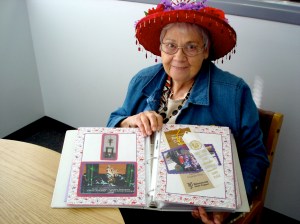
Doris Isom of the Jordan Jewels proudly displays her Red Hat scrapbook.

This poet’s wry words inspired Cooper and a group of five friends in Fullerton, Calif., to dress up in red hats and purple clothing and go out for tea on April 25, 1998.
Thus began the Red Hat Society.

Word spread, and soon thousands of local chapters consisting of 20 to 25 members began to dot the map. Women everywhere wanted to join in this light-hearted attitude toward aging. The poem has become the credo of Red Hatters worldwide.

Today, there are approximately 30,000 chapters in all 50 states and more than 25 countries. In order to wear the red hat and purple clothing, one must be a woman over 50. Those not meeting the age requirement wear pink and lavender. Leaders of the chapters are referred to as Queen Mother and members call themselves Red Hatters.

It is almost inevitable for us to reach a stage in life when loss becomes very prominent, whether it is loss of loved one, health, mobility or even enthusiasm for life. Linda Torres sees this in the lives of the people she interacts with every day. Torres is the Engage Life Director at Atria Senior Living in Sandy, Utah.

Doris Isom, 86, is Queen Mother to the Jordan Jewels, who consider the West Jordan Senior Center their home base. Isom began frequenting the senior center to ward off loneliness after her husband died six years ago. In response to the urging of the staff, Isom headed up organizing a chapter of the RHS at the senior center in 2006.

The Red Hat Society “provides an avenue for silliness,” Torres said.

Each member in the Atria Sandy RHS chapter embraced silliness to create their own Red Hat name, not required for Red Hatters, but still fun. “Sexy Savannah,” “Magical Millie,” “Bold and Beautiful Bernice,” “Ruthless Ruth,” “Whimsical Wendy” and “Witty Wanda” have enjoyed ice cream socials, facials, makeovers and a formal tea party with fine china.

“I think everyone likes to feel that they belong to something,” Torres said.

For Judi Freegardy, 58, that was the biggest reason she sought out the Red Hat Society in the little town of Payson, Ariz. Freegardy grew up in Phoenix and relishes the country life she now enjoys in Payson. The population difference is significant, with Phoenix at about 1.5 million and Payson a mere 14,000.

“I wanted to feel connected to my little community,” Freegardy said.

After hearing about the Red Hat Society in Payson, Freegardy knew she’d found her way to get connected. But she discovered neither of the two existing chapters was open to new members. Each chapter tries to keep their number around 20 to 25 so they can gather more easily.

So, Freegardy decided to put an ad in the newspaper inviting the women of Red Hat age in the community to gather for lunch at a local restaurant. She was floored when 72 women showed up.

Now years later, there are 10 to 15 chapters in the small community of Payson. Freegardy is part of a chapter of women who don their personalized red hats and go out to lunch every week.

To show her personality and love of gardening, Freegardy sports purple overalls with her red hat. “Embellishing your hat shows who you are in the tribe,” Freegardy said.

Doris Isom is especially proud of her elaborately decorated hat. Isom’s hat features a tiara, by virtue of her status as Queen Mother, and dangling purple beads trim the brim. She smiles as she recalled her reaction after affixing the beads; her hat reminded her of one of her mother’s lamp shades.

“Ninety-nine point nine percent of the girls in Red Hats reach out and volunteer for their community, we’re not just out being silly and having lunch,” Freegardy said.

That is especially true for the Jordan Jewels, whose activities are largely service oriented. A look through Isom’s lovingly compiled scrapbook shows the Jordan Jewels decorating the Children’s Justice Center of Salt Lake County every year for Christmas, volunteering for the county by making more than 200 scarves for the homeless and crafting quilts for Project Linus.

Isom fondly recounts cruising through West Jordan on the back of a Harley, her feather boa streaming in the wind. The Jordan Jewels join with the Bikers Against Child Abuse in West Jordan on its annual ride.

Simply put, there are no rules. Members show up if they want, there’s no pressure or dues. The RHS is women coming together to edify one another and embrace life and aging with humor and flair.

“We have our health, why not?”

Story and photo by Jessica Calderwood

While many seniors are busy reliving old memories, Ivan and Faunda Danielson are continually creating new ones. The Danielsons, who both turned 80 this year, pass each other a knowing smile as they recount their travels and can’t conceal the gleam of anticipation in their eyes at the thought of their next adventure.

Faunda and Ivan Danielson happily dine on their Panama cruise in October 2004.

The Danielsons are not alone in their love for travel. Now, more than ever, retired couples are able to continue traveling well into their 80s with increased mobility, health and longevity.

“We’ve got our health, why not?” Ivan Danielson said.

According to a report released in 2007 by AARP and Focalyst, retired people are more likely to take long vacations of two weeks or more, vacation by recreational vehicle (RV), take a cruise and go on an organized tour.

Retirement may bring an excess of free time but not always an excess of funds.
Jeni Jones, travel agent at A Travel Center in Sandy, Utah, said, “Our older clients are definitely there for the last-minute travel deals,” which usually saves on airfare. Jones said retirees are able to drop everything at a much shorter notice.

It gets cheaper still if you have the right connections. For example, the Danielsons fly standby for free thanks to their son, who works for an airline. Flying standby requires flexibility and patience, both of which the Danielsons have in spades. The payoff is thousands of dollars saved on flights every year.

In spite of the endless possibilities flying for free gives them, the Danielsons said emphatically, and in unison, their favorite trip was, “our Panama cruise.” This would come as no surprise to Jones.

In her experience, her older clientele tend to prefer cruises and guided tours for their value and the peace of mind they offer. Customers like to know things are planned and taken care of for them. In the case of international travel, Jones said, it is especially important for older travelers to know they will have English-speaking tour guides. “Besides,” she added with a smile, “your room floats with you.”

This rings true with the Danielsons, who have been on seven cruises to date and plan to continue cruising in the future. Aside from their favorite Panamanian cruise in October 2004, they’ve visited the Caribbean, Hawaii and Mexico and seen Alaska three times.

Although a room on the waves is their favorite, a room on the road is the Danielsons most frequent travel option. They take great pride in their RV, which may have more miles on it than Forrest Gump’s sneakers.

It’s never a lonely road, though, as they are always accompanied by a coalition of longstanding travel comrades. Accumulated over the years, this group of friends and family began with Ivan Danielson’s fast friendship with a few members of his company in the U.S. Army Military Police. Tom Vincent and Wallace Berry and their wives were some of the first members of the travel group. Even after Berry died, the group still made it a point to include his widow, Marna, in their travel plans. On one trip, they met and adopted Dean and Dot Spackman, who soon will be celebrating their 70th wedding anniversary. Faunda brought in her twin sister, Frieda, and husband, Mel. Ivan invited his sister, Ina.

With each new member comes fresh ideas and unique interests. Together in their travels, they’ve performed the Swedish Polka, achieved the title of horseshoe champions and sat basking in the late afternoon sun in rural Tennessee in the company of an ill-behaved pet goat. The Danielsons’ photo albums proudly display their adventures from Death Valley to Montana to New York and Canada.

On such road adventures, they serve as their own tour guides. Make no mistake, they still have a detailed itinerary, carefully color-coded by Ivan’s brother-in-law, Chuck Iverson.

It’s true that retirement has granted them more time and freedom to travel, but the Danielsons have made it a point to travel throughout their lives. They have fond memories of cozying up in a tent with their four children in Yellowstone National Park. Faunda’s eyes widen as she recounts the time a bear got into their food.

It makes one travel weary just to page through one of the Danielsons’ albums, to which they respond, “You’re just getting started!”

Low-income older adults find warmth in cold winter months

Story and photo by Lee Horton

Many older adults are faced with dilemmas they never imagined they would have to confront. Should they pay to eat or buy medicine? Or should they pay to heat their home?

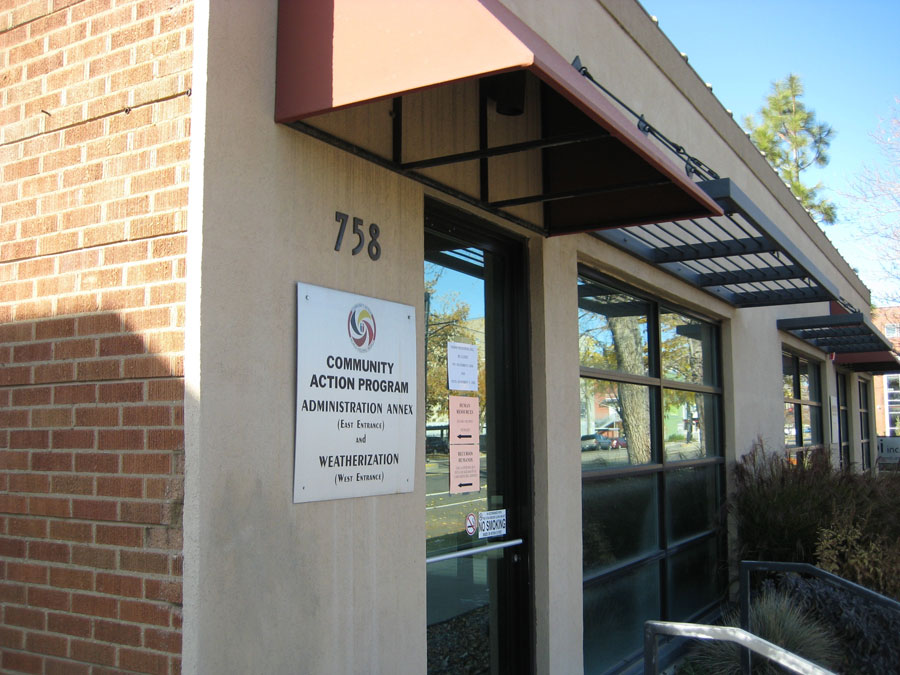
The Community Action Program, located at 764 S. 200 West in Salt Lake City helps weatherize the homes of low-income older adults.

“When (older adults) were working, they expected Social Security to solve all of their needs,” said Dale Canning, a deputy director at the Salt Lake Community Action Program (CAP). “That isn’t possible.”

Heating a home, though important, falls behind food and medical care in order of importance. Through the Weatherization Assistance Program, CAP helps heat low-income households by implementing cost-effective solutions.

“Our goal is to make it so they can afford to pay their bills,” Canning said.

The Weatherization Assistance program was started by the U.S. Department of Energy in 1976. It has three main goals: to save energy, to save money and to decrease greenhouse gases. The program is for low-income households, especially those with elderly or disabled residents. Canning estimates that half of the people who receive the benefits of the program are older adults, with a fairly even mix of couples and single individuals.

Many older adults don’t need the helping hand of the Weatherization Assistance Program. “Luckily, most seniors don’t have big house payments,” Canning said.

But not all are so fortunate. “We will go into homes where people are sitting around the house in blankets,” Canning said. “Their furnace won’t start or they will have broken windows, but no money to fix them.”

In 2008, the program helped 340 households save an average of $300 each by reducing their energy consumption, Canning said.

There are many ways CAP helps decrease heating bills through the Weatherization Assistance Program. They fix what Canning called “dangerous furnaces.” These furnaces have high carbon monoxide levels, don’t vent properly, have broken heat exchangers or don’t start at all. If a furnace is operating at 80 percent efficiency it will be replaced at no cost by a furnace that runs at 90 percent or better.

Some houses will have a set-back thermostat put in. These thermostats have a timer that automatically turns the heat down at a preset time at night and turns it back on at a desired time in the morning. This helps reduce energy use without forcing residents to remember to control the temperature themselves.

CAP will also implement cost-effective air sealing measures so that a house doesn’t lose its conditioned air. When necessary, CAP will insulate a home, fix broken or cracked windows, install compact fluorescent light bulbs and exchange shower heads.

Often CAP will install carbon monoxide and smoke detectors when doing the other improvements, “just to make their house a little more safe,” Canning said.

The benefits of the Weatherization Assistance Program are free for those who qualify. To be eligible, a household must be at 150 percent of the poverty level or lower. Older adults who work can have 20 percent deducted. Those who pay for their medical expenses with their own money can receive credits that go toward the services of the Weatherization Assistance Program.

Before CAP begins the weatherization work, a house must go through an energy audit. The audit suggests improvements that the home needs to be more energy efficient and cost-effective. CAP doesn’t just go through and fix everything. They need to make sure the improvements are worthwhile.

“Everything we do needs to pay for itself before it stops working,” Canning said.

While CAP does the labor, the work is funded by many different organizations. The bulk of the money comes from the U.S. Department of Energy. Funds are also provided by the Department of Health and Human Services through the Low Income Home Energy Assistance Program (LIHEAP) nationally, the Home Energy Assistance Target (HEAT) program locally, as well as Questar and Rocky Mountain Power.

CAP will also get money this year from the American Recovery and Reinvestment Act. Canning expects the ARRA stimulus will enable the Weatherization Assistance Program to help up to 1,000 people in 2009.

Families face difficult decisions when it comes to aging parents

by Jenna Cannon

She could sense that her memory was slipping away. So, at age 92, Phyllis Duncan made a life-changing decision. She wanted to move into an assisted living facility.

On the other hand, 95-year-old Beth Harris decided to stay at home. This choice enabled her to maintain her independence but required assistance from her family.

The choice of moving into an assisted living facility or remaining at home is not only a hard decision for an aging person, it is also hard on the family.

Duncan had seen other families go through hardships when faced with caring for elderly parents so she decided to take matters into her own hands. She sacrificed her independence for the well-being of her children. But many elderly individuals are like Harris and try to keep their independence intact by staying at home.

Deciding what to do when a parent is no longer able to care for him- or herself is a difficult decision that many families are faced with.

“People wait and wait, often at their own expense and health,” said Scott D. Wright, director of the Gerontology Interdisciplinary Program Center on Aging at the University of Utah.

There are numerous options to consider, but determining which option will work best for a family and an aged person is hard to agree upon. Many families try to take care of the parent, but there comes a point when they can no longer provide the care.

Utah families have been hit hard with this dilemma. “Utah is the fifth fastest growing state for an aging population,” Wright said.

Connie Carter can attest to this. Her family is currently faced with caring for two parents. She is Duncan’s daughter and Harris’ daughter-in-law.

The situation with Harris has brought many hardships. Harris still lives at home, but cannot be left alone for more than two hours at a time. Carter said caring for Harris is a lot of work and puts a strain on the family.

Despite this, Harris’ family wants to keep taking care of her at home due to financial reasons. Carter said they don’t think it’s necessary to put her in a care center when they can help her for a fraction of the cost.

According to pricing information on assistedlivingutah.com, the cost of elderly living facilities can cost upwards of $4,000 a month. To some, avoiding this hefty fee is worth the extra work that caring for a parent requires.

Carter’s mother, Phyllis Duncan, is paying for medical treatment and housing costs at Canyon Creek Assisted Living & Memory Care in Midvale, Utah. In order to pay for her care, Carter’s family was forced to sell her home. Proceeds from the sale are being used to pay her living expenses.

“This decision was easier than fighting over what to do and causing a rift between family members,” Carter said. In her experience, she has seen that most families that end up taking care of the elderly end up having hard feelings. Because of this she is relieved that her mother made the decision for them. Her family has been calm and peaceful about the situation.

Harris’ family is in control of her care and they are able to maintain her assets. However, these positive aspects come at the cost of her children’s personal health and well-being. On the other hand, Duncan is given 24-hour medical assistance and is able to live in an environment that satisfies her needs.

Determining what to do comes down to maintaining the highest levels of health and happiness for all the parties involved. The situation that works for one family may not work for another family.

Harris still seeks her independence by staying at home. She is happy and comfortable there, but her children worry about her deteriorating health. Carter hopes they can respect her wishes and continue taking care of her at home.

Duncan is now 97. Her memory loss is increasing, but she exhibits no signs of health problems. Her family is pleased to know she is well taken care of and she is content with her choice to move into an assisted living facility.

Senior fitness class makes working out fun

Story and photo by Alexis Young

Sheila Alford, an energetic 90-year-old, can officially say goodbye to her walker thanks to an exercise program designed for older adults.

When she began participating in EnhanceFitness at the Tenth East Senior Center, Alford could not complete a single arm curl with five pounds fastened to her wrist. But after just four months in the program, she was able to complete 20 repetitions.

“I have seen just about every single one of my bodily functions improve,” Alford said. “It’s the teacher, she really makes me motivated.”

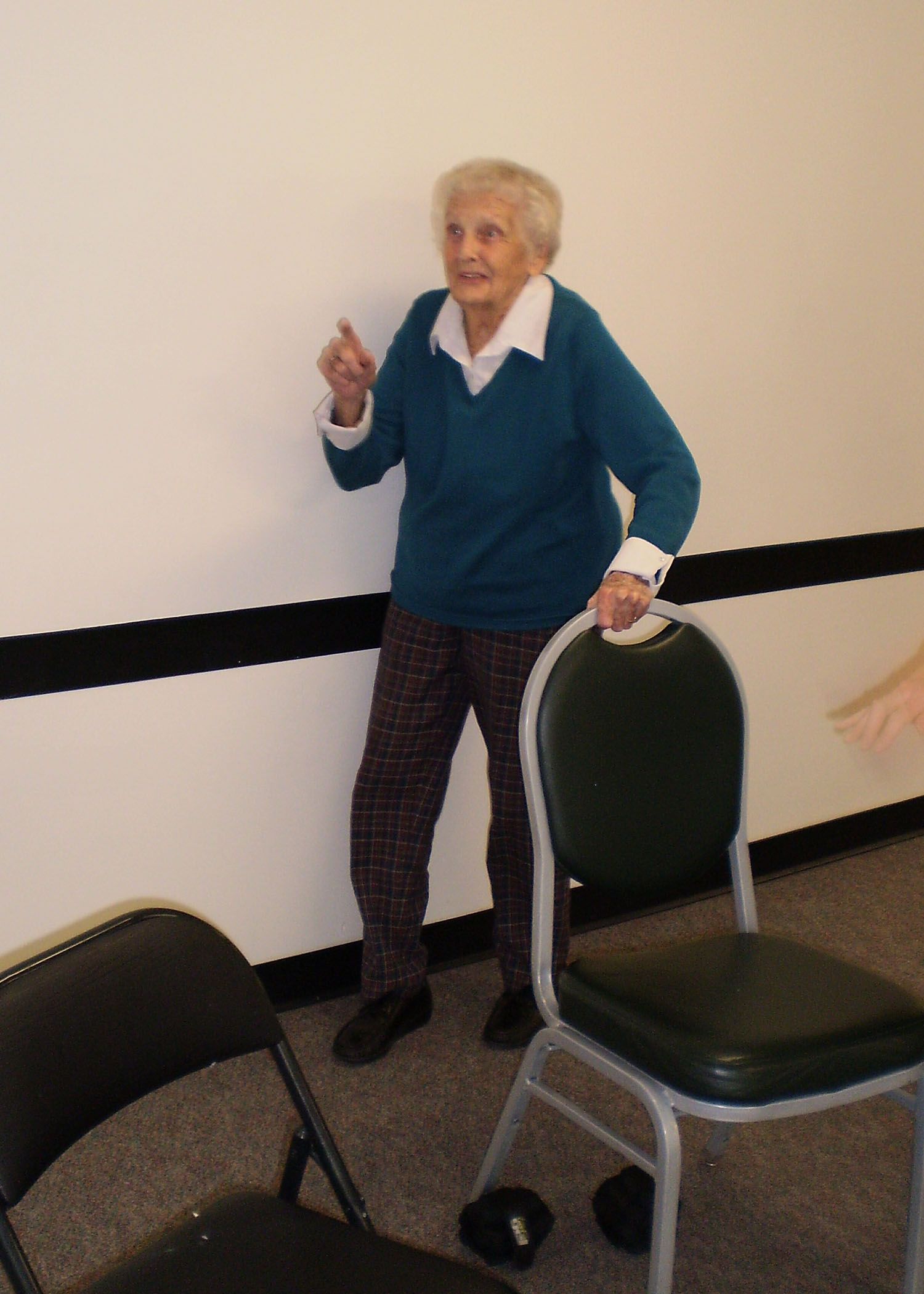
Sheila Alford dances to music as part of the EnhanceFitness exercises at the Tenth East Senior Center

Alford found exactly what she was looking for in EnhanceFitness, an exercise program taught at seven different locations across Utah. These classes are designed for older adults at all fitness levels and focus on aerobic activity, strength conditioning, flexibility and balance.

Nichole Shepard, the health and fitness instructor at the Tenth East Senior Center, is amazed by Alfords’s positive attitude. Shepard said she is a great example to everyone because does not let life bring her down.

“Instead of giving in to age, she goes along with it, and makes the best of what she has. She not only comes to my class three times a week, she attends two other fitness classes in her spare time,” Shepard said. “Sheila has made huge improvements, visually you can see she has more energy during class routines.”

Adding her own personal touch to every exercise class, Shepard creates the playlists to set music from the 1940s, 1950s and 1960s. She also choreographs every cardiovascular routine, adds verbal tasks during the strengthening sequence and incorporates a joke at the end of every clas

“They actually get mad at me now if I don’t bring along a joke,” Shepard said, “and because they are all having fun, they don’t realize their bodies are getting a great workout.”

EnhanceFitness is all evidence based, and was developed by the University of Washington’s Health Promotion Research Center (HPRC). According to the HPRC Web site, research has revealed participants of EnhanceFitness do significantly improve their health. In a survey done in 2008 by HPRC, seniors were asked about improvements in their physical capabilities. More than 94 percent said they had maintained or greatly improved their physical capabilities. And in 2006, the International Council on Active Aging recognized Project Enhance, which includes EnhanceFitness, as the sixth most innovative active aging program in North America.

At community senior centers around the state, EnhanceFitness is a free program providing a one-hour supervised class three times per week on an ongoing basis. The customized program allows the instructors to be creative and choreograph their own routine, yet still retain the EnhanceFitness exercises that have been proven to help older adults in maintaining and improving their strength, balance, posture, endurance and emotions. EnhanceFitness also incorporates alternative exercises in the program specifically intended for frail seniors. A participant such as Sheila Alford can do these exercises by using a support or sitting in a normal chai

“The most challenging part for me is when I have to move my feet during cardio; my arms are OK, but most of the time I have to hang on to my chair,” Alford said.

The energy was soaring through the roof during a recent visit to the Tenth East Senior Center. The open room was filled with 10 enthusiastic women throwing their hands up in the air and dancing around the circle of chairs to the song, “When the Saints go Marching In.” The ball really got rolling when it came time to strength train. Participants had to count the number of arm curl repetitions they were completing in Spanish. After the arm exercises, the women were instructed to lift their leg while holding onto a chair and recalling a variety of things such as cities, states, colors, animals or candy bar

“A verbal task significantly helps the seniors with their cognitive abilities,” said Michaelene Waters, a health educator for Salt Lake County and the founder of EnhanceFitness in Utah.

Waters started teaching EnhanceFitness classes in Utah at two different locations: the Draper Senior Center and Tenth East Senior Center. Seven classes are now offered at different locations around the Salt Lake Valley.

“My main focus now is growing the program. I would like to see EnhanceFitness in all of the senior centers throughout Utah,” Waters said.

Attendance at the Tenth East Senior Center is growing and the demand for more classes is increasing.

“Participants at the senior center range from 75 to 80 years old, and women by far are the most common types who participate,” Water said.

At the Tenth East Senior Center, participants fill out a questionnaire and perform a fitness check when they enroll. The check-up is then repeated every four months throughout the program. The fitness test is comprised of three things: how many times a participant can rise from a chair and stand up in 30 seconds; 30-second arm curls with five pounds fastened to the wrist; and the 8 feet up and go, which is a test that utilizes cones for balance and agility.

“The best part of EnhanceFitness is the social aspect of group exercise. They put in more effort when they are all together and they just have fun,” Waters said.

In all seven locations throughout the state, the success rate remains high.

“The program is ongoing and not very many people drop out, most people stick with it,” she said. “The only reason someone might drop out is if they get injured or have to move.”

Research conducted by HPRC over the past 15 years has demonstrated that getting sufficient physical activity, including strength training, helps people with arthritis, improves balance, helps to prevent falls and helps seniors to become more socially connected.

“Strength training is [one of] the most beneficial parts to EnhanceFitness, and is one of the most important aspects an older adult can incorporate into his or her life,” Waters said.

From time to time, Sheila Alford does not want to come to class, but says she comes for the health benefits and to see her friends. Alford is one of many who can affirm the values of EnhanceFitness and what it has added to her life.

“We will all age, but how we age is a personal choice. You can let age get the best of you, or you can continue to challenge your mind and your body,” Nichole Shepard said.

For more information about the EnhanceFitness program, contact Michaelene Waters at mwaters@slco.org.

Assistance is available for job-seeking seniors

by James Williams

Starting her day at 5:30 every morning, Betty Nielsen has a cup of coffee, takes a shower, gets dressed and catches the news headlines on a local television station. She does all this before catching the bus headed toward her job in downtown Salt Lake City.

There is one thing that sets her apart from the other commuters on the bus, though: Nielsen is 68.

“I’ve been working all my life,” Nielsen said, “there’s no reason to stop now.”

Nielsen is among the growing population of senior citizens who remain in the workforce. Some work out of necessity, while others work by choice, but one thing is certain: The number of seniors in the workplace is increasing.

According to the United States Department of Labor, between 1977 and 2007 the number of employed workers over 65 increased 101 percent. The number of women, like Nielsen, increased nearly 147 percent.

Employment of those 75 and older also increased by a staggering 172 percent during the same period.

Nielsen works out of necessity. Aside from her paycheck, Social Security is all she has to cover expenses.

“Bills pile up and Social Security just doesn’t cover them all,” she said. “I have to work to survive.”

Other seniors are also in her situation. According to “Older Workers,” a career guide produced by Utah’s Department of Workforce Services, Social Security benefits accounted for 37 percent of the older population’s total income in 2005. This might explain why a growing number of senior citizens are choosing to work full time.

In fact, according to the Department of Labor, 56 percent of today’s employed seniors, 65 and older, work full time. In 1995, only 44 percent of employees 65 and older worked full time. Today, the average employee over the age of 65 makes $605 per week.

Although the number of senior citizens in the workforce has risen nationwide, the overall unemployment rate also has increased. Currently, the unemployment rate sits at just above 10 percent, the highest in nearly two decades. This rate has affected many people, including senior citizens, and has made it more difficult to find employment.

Despite the tough economic times, companies are still hiring, and there are resources available to senior citizens who would like assistance with finding employment.

One place seniors can turn to is Salt Lake County Aging Services. Through the Senior Employment Program, seniors have found employment.

“We’re a good place to start,” said Charlyn Hanson, a program representative.

Hanson, who herself participated in the program, believes it’s successful. “It’s a good program,” she said.

In fact, the program is so popular there is a three-month waiting list just to be admitted, Hanson said.

The program is open to anyone who resides in Salt Lake County and is over the age of 55. But, since the program receives federal funding, participants in the program must meet federal income requirements, which can be obtained directly from Salt Lake County Aging Services.

Once admitted into the program, seniors are given a part-time, minimum-wage job with a government office or nonprofit organization. Participants learn the skills they need to perform the job, including computer skills.

Seniors can remain in the program for one or two years, but during that time they must be actually looking for a job and register with the State’s Department of Workforce Services, Hanson said.

For those who do not qualify for the program, Salt Lake County Aging Services can still help. A folder in the lobby contains new job leads and seniors are welcome to look through it.

The county also has two employment specialists who can sit down with seniors and assess their situation, teach them interview skills and give résumé assistance.

“Even if they don’t qualify for the program, we can give them encouragement,” Hanson said.

Another place where seniors can seek assistance is LDS Employment Services.

“Our services are open to anybody,” said Frank Sano, manager of the Centerville office.

Like Salt Lake County Aging Services, LDS Employment Services is a resource center, not an employment agency. The goal is to send people out with leads, but they also provide two useful programs that are free and open to anyone.

The first is known as the Career Workshop, which is a six-hour class that is spread over two days. Seniors learn an effective way to present themselves to employers in 30 seconds, as well as the importance of résumés, cover letters and interview techniques. They also participate in a mock job interview.

Businesses spend between $3,000 and $5,000 on similar programs for their employees, Sano said. “People who have taken both say our free one is just as good.”

The other program offered is known as the Professional Networking Group. This program puts jobseekers together where they can network, or share needs and job leads, with each other. Networking is an important tool for jobseekers.

“That’s where most of the jobs are found,” Sano said. “Lawyers, CEOs and chiropractors have all attended.” The program has even helped start a few new businesses.

Catholic Community Services of Utah and Jewish Family Services also provide employment leads and other assistance to those in need.

The number of seniors who remain in the workforce continues to increase, and despite a high unemployment rate, there is hope for seniors who are looking for employment. Employers are starting to see the benefits of hiring older workers.

“Employers are realizing that old can be good,” Sano said. “They bring a strong work ethic.”

Independent living: a community of friends

Story and photos by Paige Fieldsted

When you walk into Parklane Senior Apartments in downtown Salt Lake City, residents can be heard laughing and telling jokes. Men and women prepare to go out into the brisk November air. Staff bustle about, interacting pleasantly with the residents. If you close your eyes and just listen you might think you were in a university common area or workplace break room, not a retirement home.
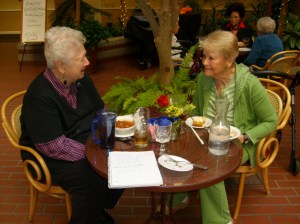
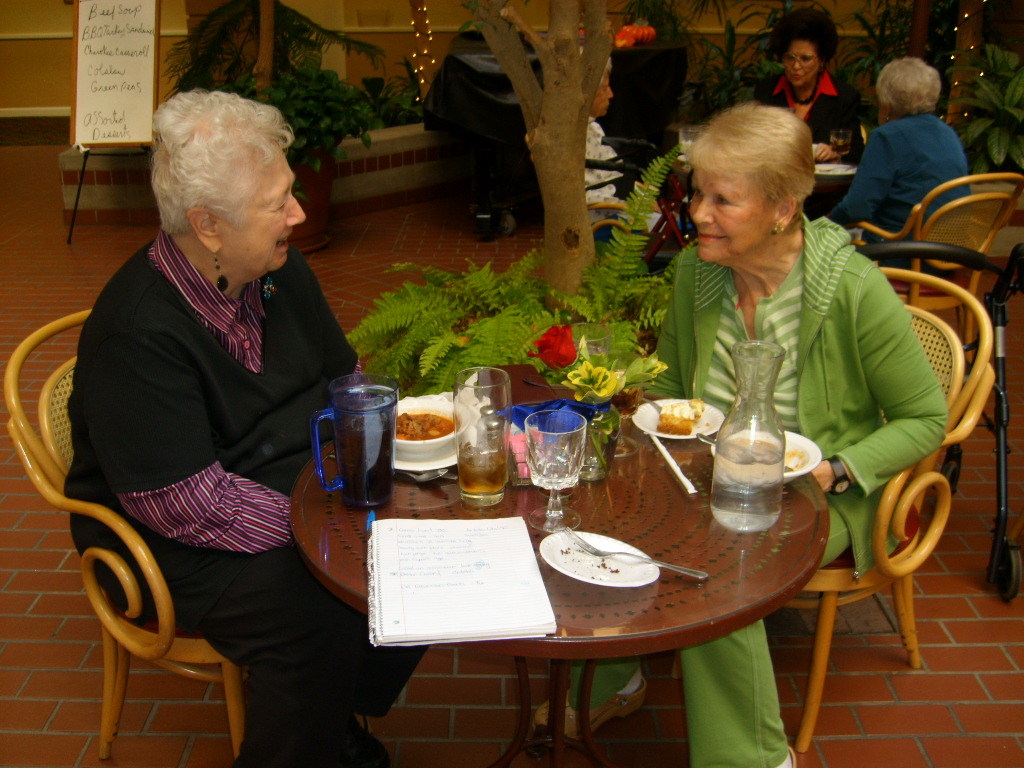
Carma Lunt and Pat Grossman gossip over lunch in the atrium at Parklane Senior Apartments.

Residents appear happy. Sitting down for lunch with Carma Lunt, 80, and Pat Grossman, 76, reinforces that notion. The two women laugh and joke with each other as they gossip about their neighbors.

Independent living communities like Parklane not only provide opportunities to make new friends, but also usually include all amenities and activities for residents.

Jamie York, director of marketing at Parklane, said that despite all the amenities and what she describes as “resort-style living,” most older people are reluctant to move away from their homes and are afraid of giving up their freedom and independence. She said, however, they usually transition smoothly once they arrive.

“Once they get here and see what it’s like they say, ‘Why did I wait so long?’” York said.

The luxury of having meals, laundry service and transportation on site comes with a price, though. Units at Parklane range in price from $2,500-$4,000 a month. Lunt said although the rates may seem high, it was actually cheaper to live at Parklane than it would have been to maintain her own house.

“By the time you pay taxes and utilities and everything else I just decided it would be cheaper,” Lunt said.

Even though all amenities are included, not all seniors may be financially able to live in a place like Parklane. York said they frequently offer specials that reduce rates by $300-$500 a month. She also said veterans are often eligible for a stipend that can help cover the cost of rent.

“Lots of people think places like this are out of reach,” York said. “But once they sit down and really look at everything, more people can afford it than think they can.”

Other independent living communities around the valley have similar pricing and amenities to that of Parklane. Highland Cove and The Coventry have units ranging from $1,900 for a studio to $3,300 for two bedrooms. Millcreek retirement has one and two bedroom units ranging from $2,395-$2,695.

York said planning ahead and looking into independent living options sooner rather than later makes it easier for residents and their family to work out finances. And the social interaction and freedom offered by independent communities can be priceless.

Although both Lunt and Grossman have lived at Parklane less than a year, they have become fast friends. Grossman points to Lunt when asked what her favorite thing about living there is.

“You make good friends,” Lunt said. “Her family is my family and my family is her family so you do have that relationship here, which is really good.”

At Parklane new residents are greeted by a welcoming committee and set up with other residents to accompany them to meals in order to help them make friends faster. York said the staff has the welcoming down to a science.

“Here there is no new kid on the bus,” York said. “People usually make friends quickly.”

Not only is the retirement community great for making friends, but it also has produced several couples throughout the years. Although most of the community’s residents are single females, York said a few couples live in the building and there are a few who met at Parklane and are now married and living together.

“We’ve even got a love boat kind of thing going on here,” York said, laughing.

Lunt and Grossman gossip about the couples who have emerged since they moved to Parklane, saying they have seen a few couples get married and others who are “coupled up” but not married. The women erupt into giggles reminiscent of junior high days when they talk about the couples at Parklane.
The women stop their storytelling every few minutes to say hi to residents walking by; they seem to know everybody. Lunt said every Wednesday some of the residents open a convenience-store-like shop that sells toilet paper, soap, cards and other household items, and that the business keeps her in the loop.

“That keeps me knowing the people here and the way they act and the things they do,” Lunt said. “It keeps you entertained.”

It’s the social interaction aspect that makes independent living facilities worthwhile for seniors looking to retain their independence.

“When seniors live alone they can get lonely with no social interaction,” York said. “They can get depressed; they stop eating and are more susceptible to falls. People that have social interaction live longer, so when they live at home alone their life span decreases.”

A study in the June 2009 issue of the “Archives of Internal Medicine” showed that elderly people who are more socially active retain their motor skills longer. The study found that a decrease in social activity increased risk of dying or developing a disability by 50 percent.

Lunt, who used to live in an assisted living facility, said that living in an independent living facility provides much more social interaction.

“When I lived there, there were only about four people I could have a conversation with,” Lunt said.

At most independent living facilities residents must be able to take care of their own needs and not require 24-hour medical attention. Lunt said residents needing lots of attention either must have an aide to help them full-time or move elsewhere.

The atrium at Parklane is a social hub of activity where residents enjoy most of their meals and activities.

Residents at Parklane have the option to enjoy three restaurant-style meals or cook something for themselves in their full kitchens. Most residents prefer to eat the meals in the atrium, not only for ease but also for dietary purposes.

“I eat all my meals here,” Lunt said. “I can cook better food than they serve but because I have diabetes it is healthier to eat down here.”

Meals are one of the many amenities offered at independent living communities like Parklane. Most facilities offer housecleaning and transportation services and set up activities for the residents to participate in.
Both women agree that while they like the housekeeping and meals, they enjoy their independence as well.

“It’s like having your own place,” Lunt said. “It’s very independent living. I have my own car so I can go where I want and do what I want to do. You’re really on your own and can do what you want.”

While most residents participate in the activities, it is the housekeeping, meals and maintenance that the residents really enjoy. Lunt said before she moved to independent living, taking care of her house was almost overwhelming.

“I kept thinking ‘What am I doing in this house, taking care of these things by myself when I would a lot rather be waited on?’” she said.

York said most residents come to Parklane at the request of their children.
But Lunt’s son, Scott, said it was his mom’s idea to move into a retirement community. Scott said he and his siblings first brought up the idea but were quickly corrected by their mother.

“I didn’t know where I was moving but I just decided I wasn’t going to be responsible for a house anymore,” Lunt said. “That is why I moved here because I didn’t want anyone to be responsible for me.”