Tribal colleges aid American Indian success

Story and photos by ANNE ROPER

American Indian students mixed with colonial teaching methods create an educational recipe for disaster. Drop out rates are high among Native students, such as the Navajo Nation where only 41 percent of American Indians graduating from high school.

In the 1960s, a movement for educational amelioration began to sweep throughout Indian Country, putting into motion a clarion call for reform.

Tribal colleges answered that call.

The tribal colleges, also known as tribally controlled colleges, can be found on reservations or in remote communities where post-high school education is so inaccessible, it is out of the question for many. The colleges boost the local economy by providing jobs for faculty and staff in places that face insurmountable unemployment, some as high as 70 percent.

And whereas some traditional schools have tried to stifle American Indian culture, tribal colleges encourage it. They even teach it.

L’Dawn Olsen teaches writing and English at Wind River Tribal College on Wind River Indian Reservation, home to the Arapaho Tribe in Kyle, Wyo. In her classes, the experience is different from the moment it starts.

“We begin every class with a ceremony,” Olsen said. “We smudge; we drum.”

Smudging is an American Indian practice that involves burning a plant and taking in its life experiences. The process is difficult to explain because American Indian culture learns by experiencing something firsthand, as opposed to mainstream American culture that emphasizes explanation from a scientific standpoint, Olsen said.

It is this cultural difference that has prohibited so many American Indian students from succeeding in the educational realm.

“[American Indian students] do not fair well in any kind of colonial idea of education,” Olsen said.

Tired of boarding schools and low graduation rates, some visionaries began the first tribal college in 1968 – Dine College in Tsalie, Ariz. – during the movement toward self-determination.

By 1972, six tribal colleges had been built. The American Indian Higher Education Consortium was created as an initiative of the tribal colleges to form a community. Today, the AIHEC has grown to represent 37 colleges in the U.S. and one in Canada.

All the colleges are fully accredited or are in the process of accreditation. Wind River Tribal College is accredited through the University of Wisconsin-Oshkosh. Students are able to transfer to any state university or to the handful of tribal colleges that offer bachelor’s and master’s degrees.

Tribal college enrollment is overwhelmingly female, with an average of two women for every man. The AIHEC describes the typical tribal college student as a single mother in her 30s.
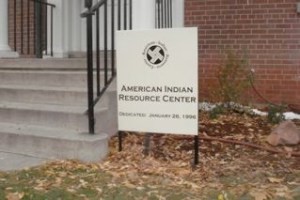
The American Indian Resource Center at the U.

The American Indian Resource Center at the U.

Beverly Fenton, director of the American Indian Resource Center at the University of Utah, has a feeling why. She has been there herself.

Fenton was widowed when her husband died at 36 of Lou Gehrig’s disease, which usually begins to afflict people in their 70s or 80s. She had a 7-year-old son, a broken heart and only three years of college. Because she fell just short of a bachelor’s degree, Fenton knew she still wouldn’t earn more than minimum wage.

Beverly Fenton, director of the American Indian Resource Center at the University of Utah, replies to questions from American Indian students. She is a strong supporter of tribal colleges.

Beverly Fenton, director of the American Indian Resource Center at the University of Utah, replies to questions from American Indian students. She is a strong supporter of tribal colleges.

Fenton completed three years of college at the University of Illinois, but culture shock, unhappiness and loneliness eventually caused her to drop out.

“I always felt badly I didn’t finish school,” Fenton said. “But I never felt compelled to until my husband passed away, and I had a little boy to support. So I went back and got my bachelor’s and master’s.”

For Fenton, one major advantage to tribal colleges is their proximity to students’ homes and families. Many students, especially first-generation college students, find the big universities difficult at first, Fenton said. Well-meaning families see the struggle and encourage them to drop out of school and come back to the reservation.

“A lot of their families will say, ‘It’s OK. Come home. We don’t want you to be unhappy. No one in our family has ever graduated from college.’ So you get stuck,” Fenton said.

Olsen has encountered this same problem in Wyoming.

“They have a very difficult time leaving, because living on a reservation, they are part of that support system,” Olsen said. “They feel very much at odds when they go to a university because there is no support system in place to help them integrate.”

At tribal colleges, students are able to naturally make that transition. It helps that they don’t have to give up their culture.

“[Tribal colleges] also infuse completely all of the tribe’s specific culture, tradition and language into the curriculum,” Fenton said. “They can feel like they’re getting not only academics but also the cultural and language aspects of who they really are.”

But American Indians aren’t the only students at these colleges. All tribal colleges, except two, allow non-American Indian students to enroll. Haskell Indian Nations University in Kansas and Southwestern Indian Polytechnic Institute in New Mexico are federally chartered institutions, administered by the Bureau of Indian Affairs. The bureau permits only American Indian and Alaskan Natives to enroll in the two schools.

Most colleges require a proficiency in the tribes’ native language, which may hinder students with no knowledge of the official dialect. It is no different than expecting a student to know English, Fenton said.

Non-American Indian and American Indian students alike can enjoy the lower cost of attending a tribal college as compared to community college or university off the reservation. The AIHEC lists tuition for one credit at $107 for an American Indian and $151 for a non-American Indian. By comparison, one credit hour for a resident at Salt Lake Community College costs $225.

“The cost of an education is prohibitive for a lot of students,” Fenton said. Both she and Olsen emphasized American Indian students must pay the same amount of tuition as any other student at colleges and universities across the country.

Of all the students who have thrived in tribal colleges, one couple represents the epitome of success for Fenton: Michael and Whisper Catches. Michael is working toward a master’s degree in Lakota leadership and management, and Whisper holds a bachelor’s degree in business administration with an emphasis in management. They have four sons: Wakiyan Hotun, 6, Hehaka Sapa, 4, Tatanka Nunpa, 3, and Kinyan Luta, 18 months. While Michael works toward his doctorate degree at Sinte Gleska, they have chosen to stay on the Rosebud reservation in South Dakota.

Success like Michael and Whisper’s is becoming more prevalent. Graduation rates for American Indian students are still at 4 percent in Canada where the tribal college movement has just begun, whereas U.S. graduation rates are hitting anywhere between 12 percent to 25 percent. Tribal colleges should be credited for this improvement, Olsen said.

There are no current plans for a tribal college in Utah, but one would be welcome.

Forrest Cuch, director of the Utah Division of Indian Affairs, hopes to get a tribal college running in Utah. But some barriers to such a project exist.

Cuch believes local leadership is not focused enough on education for a tribal college to start here.

Fenton thinks the reservations in Utah don’t have enough people to justify building one, but it would still be a good idea if they decided to.

All the advantages come down to one thing for Olsen: “Indian people want to be Indian people.”

Teaching Native American children in Utah

by ALLISON JOHNSON

Forrest S. Cuch, 57, executive director of the Utah Division of Indian Affairs, is a man with a mission to change the way Native children are educated in Utah.

Despite improvements in the state’s education system over the past decade, Native American children continue to struggle scholastically. With high drop-out rates and low test scores, they remain one of the lowest achieving minority groups in the state.  

LeAnn Johnson, 46, has been teaching high school math in Utah County for almost 20 years. During her years as a teacher, she has taught many Native American students and often finds herself frustrated and confused because they are not reaching their potential.

“I see so many of my [Native American] students drop out before they receive a diploma,” Johnson said. “The students that do graduate seldom go on to seek higher education. I wish these students would see how much potential they have.”

Cuch, an enrolled member of the Ute Indian Tribe, is also troubled that many Native American students are struggling academically.

“American Indians are the lowest achievers,” he said. “[They have] high drop-out rates, nearly 50 percent.”

Cuch has made it a priority to help improve Native American education in Utah. He believes there is a direct link between the quality of education and the quality of society.

“Education is important to building civilization, society,” he said. “Our future hinges on the education of our citizens.”

Through his job with the Utah Division of Indian Affairs, Cuch has worked to determine why some Native American children are not succeeding in school. He thinks one of the main reasons is because they learn differently.

“Indian children are different culturally. Our kids think differently,” he said. “The Indian world depends on feeling, the white world on intellect.”

Cuch stresses that Native American children learn better in interactive formats, and rely heavily on emotion and relationships. He said education today is often too rigid and ignores the individual needs and feelings of children. 

Teachers often don’t recognize the unique learning abilities of Native American children, he said, so they fall behind — not because they are not intelligent, but simply because they learn differently.

“We need to humanize education more. We have dehumanized it,” Cuch said. “The best way to teach is from the heart, from love. There is no better curriculum than love.”

Cuch said it is essential for Native American children to be educated about their history. Too often, this history is simply skimmed over in the classroom. And when it is covered, facts are often wrong and portray Native Americans in a demeaning or overly negative light.

He believes it is critical to a Native American child’s development to learn about their history in an accurate and positive manner. Children need to know their American Indian history in order to understand who they are.

“In many ways our history is alive and it still affects how we feel today,” he said. 

Cuch has worked on various projects to help improve the way children are educated in Utah.  He has worked with the American West Center to develop an accurate Native American history curriculum for Utah schools. He is also developing guides for teachers on how to teach Native American history.

Cuch said the government plays the most pivotal role in changing the way that Native American children are educated. He is an advocate of more funding for schools, better training for teachers and higher-quality schools on reservations. All of these improvements require the complete support of Utah’s government.

“We cannot have quality education without quality government,” Cuch said.

He believes he has an obligation to help improve the way the state prioritizes education.

“Our government is ours,” he said. “Democracy hinges on an educated government. If we don’t get involved in government it runs us.” 

Empowerment through education

by AARON K. SCHWENDIMAN

According to the National Center for Education Statistics, enrollment in public elementary and secondary schools rose 26 percent between 1985 and 2007. As enrollment in public schools and adult education programs increases in the United States, the quality of what is taught to children and adults becomes more important.

Jennifer Isleib, a University of Utah student majoring in education, said education is the key to the future.

“Without the education of the past and present, humanity would be lost,” said Isleib, who works as a teacher’s aid at Dilworth Elementary. “Knowing our past is how we are going to make changes in the future, especially with young children because they are our future voice.”

One of the most important subjects in school is history. One aspect of history that is very important is learning about American Indians, said David Keyes, a social studies specialist in the Salt Lake City School District.

He believes that teaching children about American Indians is important because their story is everyone’s story.

“We need to know about the many tribes and nations that were here before the encounter with Europeans,” Keyes said in an e-mail interview. “We also need to know what happened to these peoples as a result of the encounter and how these tribes and nations continue to be part of our story today.”

In many schools today, history curricula mention cultures very quickly and then move on, Keyes said. American Indians are only mentioned briefly in many of the lessons taught in school, and many of the textbooks in Utah schools today devote only a chapter or two specifically to American Indians before and at the time of the European encounter, Keyes said.

According to the Utah State Office of Education Social Studies Core curriculum handout, the first lesson about American Indians is not until the 4th grade. This is a brief mention of the American Indian settlement on the East Coast during the encounter with the Europeans and some details about American Indians settling in Utah.

As it is very important to educate children in public schools, it is also very important to educate adults about issues that have been taught incorrectly in the past. Forrest Cuch, director of the Division of Indian Affairs, has made it a goal to inform kids and adults about history.

Cuch is a member of the Ute Indian Tribe and was born and raised on the Uintah and Ouray Ute Indian Reservation in northeastern Utah. When Cuch attended elementary school he was taught that American Indians didn’t make any contribution to civilization.

In 1994, Cuch became the social studies department head at Wasatch Academy in Mt. Pleasant, Utah. During this time Cuch developed a multi-cultural program and taught a full load of classes.

Cuch has also developed an “empowerment training” program for members of Indian tribes. This 10-month program taught as many as 30 people at a time about the history of their culture, spiritual, physical and mental health and taught participants how to live a better life for themselves and their children, Cuch said.

“We let them choose by showing a contrast of both worlds,” Cuch said. “After 10 months many of them were empowered to get off welfare and live a better life.”

Cuch hopes in the future these programs can be expanded to include all types of cultures because cultural diversity is what makes the world beautiful today.

Incorporating many cultures into curricula in public schools is important for children to learn about cultural diversity.

Teaching and educating children and young adults will help them understand the issues that American Indians deal with. Society still uses language, images and generalization that reinforce stereotypes associated with minorities, said Keyes, the social studies specialist.

“Over the past decade we have had an explosion of excellent materials for teachers to use,” Keyes said. “At a societal level we can continue to hope that our nation becomes more sensitive to American Indian issues.”

The Native American ESL student

by CADE SORENSEN

Teachers and PTA members at West Jordan Elementary School in West Jordan, Utah, have combined their efforts to create the “I Can Read” program, a program designed for students who need help with reading and writing skills.

Cody Black is one student who has received the one-on-one help he needs to enhance his reading and writing skills. Stacy Murdock, Cody’s 4th-grade teacher, noticed he was struggling with his reading and writing assignments. He had a harder time in some areas because his parents, who are Native American, do not speak English well enough to help him at home.

Murdock entered Cody in the “I Can Read” program to help him improve his literacy skills. “I know that if he were to just get some help with his reading and writing, it will help him a lot in other subjects,” Murdock said before enrolling Cody in the program.

After his sessions in the “I Can Read” program, Cody often mentioned how helpful it was for him to be able to read with someone, something he couldn’t do at home with his parents.

Professors Nancy S. Lay and Gladys Carro explained in their article, “The English-as-a-Second-Language Student,” how students who struggle in reading and writing can struggle in other areas as well. “Many of the textbooks are written on a reading level far higher than that attained by many ESL students,” they wrote. “Thus, reading becomes slower and checking the dictionary for every word they do not know takes time and interrupts the comprehensibility of the texts.” For this reason it is important for schools to provide additional help for students who are behind in reading and writing.

Native American students going to school where their culture is not the dominant one can also have trouble adjusting to the culture of other students, making it harder to learn or feel comfortable.

Culturally, Native American children learn differently than white children, said Forrest S. Cuch, executive director of the Utah Division of Indian Affairs.

“Most Native American children learn to concentrate on the spiritual aspects of life. Most white children are taught to concentrate on the physical aspects,” Cuch said. In addition, he said, “Native Americans are taught to be cooperative, whereas whites are taught to be competitive.”

Similar to the way cultures are different from one country to another, Native American cultures are different from other cultures within the United States. Lay and Carro suggest that if an ESL student does not participate in some activities in class, it may be because of a cultural difference that is making the student uncomfortable.

“American Indians are different in so many ways, and we process information differently,” Cuch said. “And the school system is designed for the dominant culture. And consequently, our kids have always fallen behind.” To help Native American students feel more comfortable, Cuch suggests that schools implement a system of smaller classrooms, hire more Native American teachers and incorporate Native American history into the curriculum.

Cuch did agree that when there are a very small number of Native American students in a school it is often best to give that student more one-on-one help with specific needs. Most Utah elementary schools have some form of reading and writing program like “I Can Read” to help struggling students in a more personal way.

Although Cody was helped by the “I Can Read” program, those who helped him were only volunteers and not professional teachers. Cody is now in the resource program at West Jordan Elementary and is getting better one-on-one help from professional teachers who have been trained to help students with special needs.

According to the November 2004 United States Census Bureau, only 75 percent of Native Americans and Alaska Natives age 25 and older had at least a high school diploma. This is the lowest rate among all races and ethnicities in the U.S. If more is done to help Native American students at an early age, it is more likely they will further their education and learning.

A Native American leader

by CADE SORENSEN

Robert Jarvik, inventor of the first artificial heart, once said, “Leaders are visionaries with a poorly developed sense of fear and no concept of the odds against them.” Cal Nez is a leader to many Native Americans because of his vision and lack of fear.

Nez is the owner of Cal Nez Design in Salt Lake City. He is an accomplished graphic designer and has done work for the Office of the President of the United States – National Republican Party, Kodak, AT&T, the Navajo Nation Fair and many more clients. Although his business is thriving, it is his passion for his Native American culture that has helped sculpt his business into what it is today. Nez has dedicated himself to helping bridge the gap between cultures.

Native Americans are able to look up to Nez because he has worked so hard to get to where he is today, without forgetting where he came from. He was born for the Tanaszanii Clan and is originally from Tocito, N.M.

He was raised by his grandparents and to this day does not know why his parents left him. He spoke only Navajo with his grandparents and learned English when he entered the Bureau of Indian Affairs Boarding School in nearby Sanostee at age 5. His boarding school experience was, in his words, “A demon from the past.” Students of this boarding school were not allowed to speak Navajo and were punished for participating in some Native American activities. They were also punished for playing like children, Nez said.

As a teenager, Nez participated in the Indian Placement Program by The Church of Jesus Christ of Latter-day Saints. He left the reservation to go to South High School in Salt Lake City after his grandmother convinced him that it would be best for him. He remembers his grandmother telling him she had nothing more to give him to help better his life. So, he left and went to high school where he began to discover and build on his art and design talents.

After high school and some college courses, Nez went to work for Smith and Clarkson Design. After several years working there, Nez realized they did not have the same vision and direction that he did. So, in November 1986 he quit his job to start his own graphic design company.

At this time Nez was married with a child on the way and was very worried about providing for his family. Nez gathered his portfolio, packed a bag and drove to New Mexico to meet with Peter MacDonald, then the president of the Navajo Nation. He left the interview with two jobs. Both of them included contracts paying him more than he was making with Smith and Clarkson Design. Cal Nez Design has now been in business for more than 20 years.

Knowing from his own experiences what many Native Americans go through, he understands better now how to help others. In April 2008, Nez founded the Utah Native American Chamber of Commerce. According to its mission statement, it aims “to promote the economic development of Utah Native American-owned or serving businesses and organizations and those who appreciate diversity in commerce, and to also promote growth of the Utah Native American business enterprises and make them a powerful economic force.” Nez was named president of the Chamber of Commerce.

Nez is a strong leader, but he also does what he can to strengthen his culture by participating in the Native American Celebration in the Park. Nez believes that Native Americans still have a lot to fulfill as human beings. “We are not history,” he said, “we are people, our drums and song are still going on.”

Salt Lake American Indian leader promotes more accurate teaching of history

by CHRIS MUMFORD

For an illustrative example of how American Indian culture impacts people every day, look no further than a plate of spaghetti.

Although typically associated with Italian culture, the pasta dish’s roots can actually be traced to America and Asia. Tomatoes, the key ingredient in marinara sauce, were first domesticated by American Indians and later shipped back to Europe, while noodles were originally created by Asian cultures.

The example, though seemingly trivial, is one of several used by Forrest S. Cuch, executive director of the Utah Division of Indian Affairs, to underscore a troubling pattern in popular interpretations of history: the tendency to diminish or, more often, ignore outright American Indians’ role in history.

“When I went to school, [the] message I got: Indians made no contributions to Western culture,” he said in an interview with students in a University of Utah reporting class.

This at least partly explains why American Indian students often feel “written out of history,” said Cuch, 57. His own school experience was marked by conflicts between what he was learning at school and what his parents were telling him at home.

“Right off, I didn’t feel good about school,” he said, citing examples of the incomplete, often inaccurate accounts of history he was taught, including the notion that Pilgrims, not Indians, found the wilderness and learned to survive largely without help.

As part of his lifelong quest to teach a version of history in which American Indians are accorded their proper significance, Cuch gives a PowerPoint presentation when he travels around the state. The slideshow, titled “Did You Know?” provides a broad overview of some of the most prominent American Indian achievements glaringly omitted from school textbooks and curricula including: evidence of writing that pre-dates the earliest known samples from other cultures, their early and advanced organized societies, and the fact that they’ve inhabited the Americas for at least 13,000 years.

But the effort to restore American Indians to their rightful place history is not in any way intended as a judgment on prevailing white or Anglo-American culture. On the contrary, white people have also suffered needlessly as a result of these same misconceptions of history, Cuch said.

“White people who don’t know the facts walk around with huge doses of guilt,” he said. In particular, he referred to the diseases introduced by white colonists that severely decimated American Indian populations, and urged that students “Don’t blame [yourselves] entirely for that – it wasn’t intentional.”

The idea that American Indians are often marginalized in the teaching of history is shared by RaDawn Pack, who teaches second grade at Brockbank Elementary School in Spanish Fork, Utah. What is less clear is what to do to change it.

Compared to when she began teaching 22 years ago, Pack said that currently she may teach even less about American Indians. But she did mention a few activities still taught today that feature American Indian culture.

On “Native American Day,” students rotate between four stations, each headed by one of Brockbank’s four second-grade teachers. At these stations students learn to mash corn, hunt for cranberries, learn about Indian hunting skills and string Froot Loop necklaces.

Students also read “Giving Thanks: A Native American Good Morning Message” by Jake Swamp, a Mohawk Chief. The illustrated book imparts a message of kindness and respect for nature.

And in fourth-grade classes, Brockbank students study Utah history curriculum that focuses on American Indians.

For his part, Cuch, who taught social studies 14 years ago at Wasatch Academy in Mt. Pleasant, Utah, acknowledges there has been an effort to teach more accurate versions of American Indian history. Yet he questions the validity of the historical facts that most Utah children grow up learning.

“Most of the history you’ve received in school is terribly inaccurate,” he said, going so far as to say that as much as 90 percent of what is taught is erroneous.

He called for more education and training at the collegiate level. And, as a member of the Ute Indian Tribe, Cuch has worked with the American West Center to develop his ancestors’ history into curriculum for Utah schools. He is also developing teacher guides on American Indian topics.

“Education is complex and it’s simple,” he said. “There’s no curriculum better than love. You have to teach from the heart with love.”

Su banco opening up opportunities

by ERIK DAENITZ

Su Banco is not just a “survival skills” language program.

Instead, graduates leave Su Banco with advanced English skills in speaking, reading and writing.

“The purpose of the program is to give students the English skills they need to pursue the career they want here,” said Rick Van De Graaf, the program coordinator.

Many of the students already possess professional knowledge that they acquired in other countries, Van De Graaf said. However, their proficiencies with English may not be quite good enough to break into the jobs they desire.

Su Banco was launched in the spring of 2005 to help these individuals. It is offered through the English Language Institute at the University of Utah.

The class was the vision of Theresa Martinez, assistant vice president for academic outreach at the U. With the help of Zion’s First National Bank, her vision now is a reality.

The name Su Banco came from Zion’s involvement. It refers to banking services that the bank markets to the Latino community.

All students who are admitted to the program receive scholarships from Zion’s. The scholarship covers 80 percent of the $1,400 cost, and if students complete the three-month class they receive reimbursement for the remaining 20 percent.

“We owe a huge debt of thanks to Scott Anderson,” Martinez said.

Anderson, the president and chief executive officer of Zion’s, was instrumental in getting the program started, Martinez said.

Martinez, a member of Zion’s board of directors, brought the idea of an advanced English language program to Anderson in 2005 after spending a semester interviewing her colleagues in continuing education about her objectives.

Within months Su Banco became a reality and Van De Graaf was hired to coordinate the program and teach the classes.

He brought experience from community-based English language programs and looked forward to teaching students in an advanced class.

“Most of the people at this level are extremely concerned with education,” Van De Graaf said. “They are completely committed to learning English, or they wouldn’t be here.”

Wilder Guadalupe came to the United States with a degree in animal science engineering from Universidad Nacional Agraria La Molina in his home country of Peru. One of his goals is to receive a master’s degree in business administration from a university in the United States.

However, in order to be admitted to many universities he must pass the TOEFL, or Test of English as a Foreign Language. Students take the test near the end of the Su Banco class.

“Passing the test will help me reach my goals,” Guadalupe said. “I want to get an MBA degree and after that maybe a Ph.D. I think it’s very important for me to get this type of degree, and it’s another opportunity to improve my English level.”

Guadalupe plans on combining his experience in animal science and business with his continually improving English skills.

His experience buying, selling and trading grains and animal food commodities gives him valuable business expertise along with is understanding of the agricultural industry, Guadalupe said. “After graduation I want to look for a position in a financial institution focusing on agricultural topics and international trade.”

Gloria Villarreal, another Su Banco student is thankful for the opportunity Zion’s Bank has provided students like her.

While Guadalupe looks toward opportunities in business, Villarreal has a different career in mind.

“I like working in computing,” Villarreal said. “I also work for the Salt Lake school district and I am so happy. Everyday, seeing the kids makes me so happy.”

Villarreal took English classes at the Horizonte Instruction and Training Center in South Salt Lake City, but the classes focused mainly on grammar and written English. The Su Banco classes are giving her new exposure to vocabulary and words she never heard before, which helps her communication in all aspects.

“I would like to continue to study until I learn perfect English,” Villarreal said. “I’m not going to stop.”

With her improvements in the English language she brings another skill to her job in the school district.

She serves as a translator between parents, teachers and administration when language barriers exist, she said.

While improving job opportunities is a focal point of all the students, Jaime Mendoza brought up an additional motivation for improving his English skills.

“I have a son who is 4 years old,” Mendoza said. “He spends most of his time with people that speak English. He speaks more English than Spanish, and I want to be able to understand my son. Someday in the future I would like for him to speak Spanish and English well.”

Mendoza, who came to the United States from Peru, began learning English from friends and classes in school. However, he became too busy working to continue with classes.

Now he is dedicating more time to learning.

“It’s very good and very interesting,” Mendoza said. ” I really want to go to school for my family and for myself to be better.”

Su Banco is more than a basic English language class. It demands students’ time and effort.

“We have to study every day,” Gloria Villarreal said. “If we do not do our homework we must go home and not come to class. But I like that. If the teacher is not pushing us we will not study.”

Nevertheless, all of the participants recognize that their hard work will open new doors.

“If we improve our communication we can get a better job,” said Dinora Melendez, another Su Banco student. “That means a better life.”

Campus group encourages Native Americans, Hispanics in science

by LANA GROVES

Despite efforts to encourage minority students to pursue degrees in the sciences, such as chemistry, physics or biology degrees, enrollment numbers at the University of Utah are low.

Native American and Hispanic students comprise less than half a percent of all 21,566 undergraduate students from fall 2008, according to enrollment records from the Office of Budget and Institutional Analysis. The majority are enrolled in the College of Humanities or Nursing. Only 6 percent are enrollment in the College of Science.

“Nationally, one of the fields of study under-represented is sciences,” said Octavio Villalpando, associate vice president for the Office of Diversity at the U “We want to make sure the University of Utah can attract many more students of color to the programs, even by bringing students from across the country.”

Villalpando helped organize a national conference for the Society for the Advancement of Chicanos and Native Americans in Science (SACNAS) in October 2008 in Salt Lake City, Utah. The conference brought students interested in science degrees from all around the world to the U.

The Utah student chapter for SACNAS doesn’t think the U is doing enough to encourage students.

Doug Rodriguez, a physics graduate student and secretary of the Utah chapter, said the low enrollment numbers are frustrating but not surprising.

“Science has always had low interest, but even when students sign up for a degree they often drop out,” Rodriguez said.

Rodriguez and SACNAS Utah Chapter President Mauricio Rascon have plans to improve those numbers.

By December, the chapter will begin to visit elementary, junior and high schools in the Salt Lake Valley to talk to students and encourage them to continue to higher education and major in science-related degrees.

“A lot of students ask: What am I going to do with a physics degree?” Rascon said.  “Most people think they can just teach. They don’t know about all the opportunities available for medical physics or other career paths.”

Rodriguez said the need is especially great among Native American students. According to the Office of Budget and Institutional Analysis 2008 enrollment records, of the 150 Native American students enrolled at the University of Utah, only 12 are in the College of Science.

To combat these low numbers, College of Science Dean Pierre Sokolsky recently created a committee to help retain minority students to study biology, chemistry and physics degrees.

Rodriquez said that for every science degree, about 70 percent of all students listed as caucasian who enroll complete their degree, but only 10 percent of all Native American and Hispanic student graduates with a science degree.

“We’re going to hold mentoring sessions and have juniors, seniors and graduate students influence the newer freshmen [and] sophomores, and hopefully convince them to go into graduate school and bump these numbers up,” Rodriguez said.

The older students can also help them with difficult classes and subjects, he said.

Rascon said he remembers the effort it took to work through difficult classes, especially upper-level math classes. He said there were times he considered switching majors.

“When you go into the sciences, it’s like learning a whole new language,” Rascon said. “And if you don’t schedule your classes right, you can get extremely overwhelmed.”

Moises Terrazas, a former president of the student group, said teachers make a big difference in helping a student stay motivated.

“The people that gave me the motivation to continue was my family and good mentors in the science department,” he said.

Villalpando said the U is an excellent place for students of color to study sciences. He said many diverse students are already interested in studying with Mario Capecchi, who won the 2007 Nobel Prize for Medicine and Physiology.

“Capecchi is a great example of a student facing adversity and trial, and making revolutionary discoveries in science,” Villalpando said.

Rodriguez said some students struggle to pay for school and become discouraged.

The Utah SACNAS chapter tries to combat financial problems by offering about 10 scholarships every year to high schools students who will study at the U. The scholarships range from full tuition to half tuition for a year.

Rodriguez said many students don’t know that graduate schools often offer to pay students’ tuition.

Yet, the Utah SACNAS chapter has made strides over the past few years to encourage Native American and Hispanic students at the U to enroll in the College of Science and involve themselves in activities on campus.

Derek Lokni, a chemistry student and the U who is Navajo, said he joined SACNAS to meet other students and take part in activities on campus. He said more students should be interested in the group, but many don’t know it exists.

“Members of the (chapter) have helped me stay in chemistry,” Lokni said. “And it’s a lot of fun. We talk about some of the goals we have after graduation and what we like about chemistry, physics, biology or anything else. It’s there for you.”

Utah Navajo strings colorful beads, warm traditions

by KATHRYN JONES

  • See photos of Weasel Tail and his work by clicking his name, below. (Slideshow best viewed in full-screen mode.)

When he was a kid, Harold Garcia — better known as “Weasel Tail,” was never caught, not even once, with his hand in the cookie jar. He says he “kept watch” at the local store while his friends filled their pockets. When they got caught, his pockets remained empty and he was able to weasel his way out of the bad situation.

“Sure, I earned [my name] in the wrong way,” he says, “but it was [originally] given to me by my great-great grandfather. And that’s the most important thing.”

The name stuck.

Today, Weasel works in beadwork at the Native American Trading Post located at 3971 South Redwood Road in West Valley City. The business is owned by Dru and Leslie Drury, who have been friends with Weasel for 10 years.

In 2004, after 21 years in business, the store was moved to a more visible location, Leslie says. Weasel Tail has been working at the new location since then. She describes him with a sense of humor and admits that nobody knows how to bead like he does.

A Navajo and Tewa Pueblo American, Weasel says his bead skills began in pre-school where he strung “Froot Loops, Cheerios and little pieces of paper with holes in it.” Later, he graduated to moccasins as he watched his grandmother, Maria Martinez, assemble them.

“I already had my color co-ordination down,” he says. “Other people would put random colors together, me, I already had my colors separated because I saw my grandmother do the same thing.”

As Weasel grew, so did his craft.

“When I was in school, I’d beadwork the pens,” he says. “By the time that first week of school [was over] each one of my teachers in each one of my classes got a pen.”
The price of each?

Fifteen dollars.

Weasel Tail grew up in Utah, but his home life began in Ohkay Owingeh, a pueblo in New Mexico. Today, he lives in Salt Lake City and spends time in the winter putting together beaded purses, gloves, leggings for men and women, dresses, cradleboards, pipe bags and umbilical cord bags for those who seek out his work and those who sometimes stumble upon it.

“My sister introduced me to Weasel,” says Ardis Bryant, a frequent customer who makes her own jewelry. She not only purchases the mixings for her own creative endeavors; beads, string, and the like, Bryant says she swears by the crystals used in beadwork found at the trading post; they are unlike any she has found elsewhere.

“[Customers] find out there’s a lot more than teepees,” Weasel says. He speaks about the two most popular purchases at the trading post: baby moccasins and umbilical cord bags.

For those who are unfamiliar with the second purchase: The umbilical cord is saved for a reason, Weasel Tail says. The outward representation of what joined mother and child, yet connects mother and child spiritually in life and in death.

Tradition says that the cord is alive, Weasel says. “You will be taken care of because of that little cord.”

His 10 sisters have forbidden him to make cradleboards, however.

They get pregnant.

“So, what are you doing, bewitching us?” they tell him. “We’re all going to get a cradleboard and make it at your house.”

Weasel Tail admits he just likes to make them, and if he can’t do the job for his sisters, there are many customers who will appreciate them. “I’ve got the material,” he says. “Maybe someone else will want the cradleboard.” According to tradition, a cradleboard is not made unless a baby is expected.

Still, many other projects are ready for creation. Weasel’s mirror bag of an elk on a mountain is among his favorites.

“They had lots of different bags in [the 1800s],” he explains. Some were made to hold tools inside a teepee; others held porcupine quills, tobacco or umbilical cords.

When hand mirrors arrived with the trappers, Indians found a new use for the bags, Weasel says. They needed a way to protect the mirrors from getting broken so a new bag was born.

After that, Indian tribes wore mirrors on their clothing, Weasel says. Mirrors reversed bad thoughts. If someone was thinking or saying something negative it would naturally reflect back on them.

Negativity hasn’t always deflected from Weasel and his craft, however.

Even Weasel admits, “Don’t count your chickens before they’re hatched because something may not turn out the way you want it to, or somebody may fall through.”

He is speaking of business. Items he must re-bead because threads have loosened, orders that are made and not picked up; more expensive items that haven’t been purchased yet. Of the last he says, “I’ve learned not to rely on such. Some things I know will sell.”

But even if they don’t, Weasel is holding his head high.

“I see something here and know it will come to life,” he says, pointing to his head. “Whatever I see, whatever I put into it … it’s what I see up here. It’s my creation. Nobody’s going to take that from me.”

DIA: The first fully bilingual school in Salt Lake

by PHI TRAN

¿Habla Español? No? Then you may be one of the many young Hispanics in Salt Lake City who has either forgotten their Spanish or never learned it. This was the motivation for establishing the Dual Immersion Academy, the first fully Spanish-English bilingual school in Utah.

Patricia Quijano Dark, the one of the proud founders of DIA, said she was shocked to see how quickly and easily her daughters Kathryn, 5, and Elizabeth, 7, forgot their Spanish after only a few months of attending a local public school. Dark, 41, who speaks four different languages — Spanish, English, French and Italian, said that being able to speak more than one language comes naturally to her and she could not imagine her daughters not being able to speak Spanish, their first language.

Dark believes that being bilingual is a talent that most people want to possess and those who possess this talent should preserve it. However, after looking around at the local public schools for her daughters, she found that some children were not able to communicate in their native language because everyone else spoke English. “The other schools had no diversity, no color, no stories,” Dark said. She did not see the opportunities she wanted her daughters to experience in other public schools so she created one of her own. “I thought it would be easier to open up a school. It wasn’t,” she admitted.

Dark and the school administrators did not take into account the many different cultures and socioeconomic differences and they were unprepared to handle some of the situations that arose. “Opening a school is like building an airplane in the air,” she said.

Families were coming to the staff and faculty about personal issues at home for assistance they could not provide. Dark recalls having to deal with child services a number of times. This was not the school’s purpose. However, the school administrators did not want to completely ignore these people who came to them for help so they hired a social worker as the assistant director of the school to handle these situations.

DIA also has been a target of discrimination. Dark said that she has received many statements and responses about why they should not build this school. One person in particular wrote, “Why would people want to learn Spanish when this is an English speaking country.” Dark was bewildered. She could not understand why there was so much anger and why people were so opposed to the idea of a bilingual school so much.

Despite some of the criticism DIA has encountered, Dark said there is no discouragement. In fact, there are plans to expand the school in the future.

DIA opened in September 2007 and is located at 1155 S. Glendale Drive in Salt Lake City. It has 350 students currently enrolled this year, in kindergarten through sixth grade. However, Dark said the school will add grades 7 and 8 by 2009. Sixty percent of the students attending DIA are of Hispanic descent. Every class and every subject is taught in Spanish and in English. The textbooks that are provided are printed in both English and Spanish. Each grade has two classrooms, one for teachers who speak only Spanish to the students and another for teachers who speak only English to the students. Dark said it is easier for children to learning a second language, because their minds are much more able to adapt to language development. She also said that when a child is bilingual at a young age it is 70 percent more likely that they will go to college.

One setback that Dark has been working toward resolving: adding a cafeteria to the school. Earlier this year the students ate inside a large tent that was being used as a cafeteria. However, one of the walls to the tent was blown down due to a recent snowstorm, leaving the students no other choice but to eat in their classrooms. Since lunchtime is only 30 minutes long and the teachers have to supervise the children, this leaves them with no time to prepare for the afternoon classes. DIA is appealing to the public for funding.

Nonetheless, DIA has had many accomplishments since it opened. “It’s the most successful thing I’ve done,” Dark said.

Although she believes that education is an important aspect, it was not always her focus. In addition to DIA, she has been a journalist for more than 20 years and has worked in England, Argentina, and the U.S. She is also the first woman to be hired as the executive director of the Utah Hispanic Chamber of Commerce. Dark said rather than focusing on the business end of things, Dark will focus on integration.

She wants to help those who wish to start a business by introducing them to UHCC. She has formed monthly workshops so that people may converse with the owners of larger corporations. Dark said that her journalism background has definitely helped her to teach the small-business owners about networking opportunities and finding ways to improve their trade.

With all this on Dark’s plate she still finds time to dedicate to her family and to DIA. She said it is a matter of balancing everything that you care for in your life. Dark believes that if you start something you cannot give up on it and if you truly care about it you will make time for it.