A sport for life

Story and photos by Leigh Walsh

Raymond Haeckel, 73, is not one to sit back and let aging get the better of him. As he sits in the George S. Eccles Tennis Center in Salt Lake City, waiting for his practice partners to arrive, he reflects on the game of tennis and how it keeps him young.

“Tennis helps me age,” Haeckel said. “I feel my balance is better, I am more mobile and I can walk more briskly. Some people my age that don’t exercise have problems with simple tasks.”

Haeckel is determined to remain active and delay the inevitable aging process as long as possible. He credits his great quality of life and ability to be self-sufficient on his physically active lifestyle.

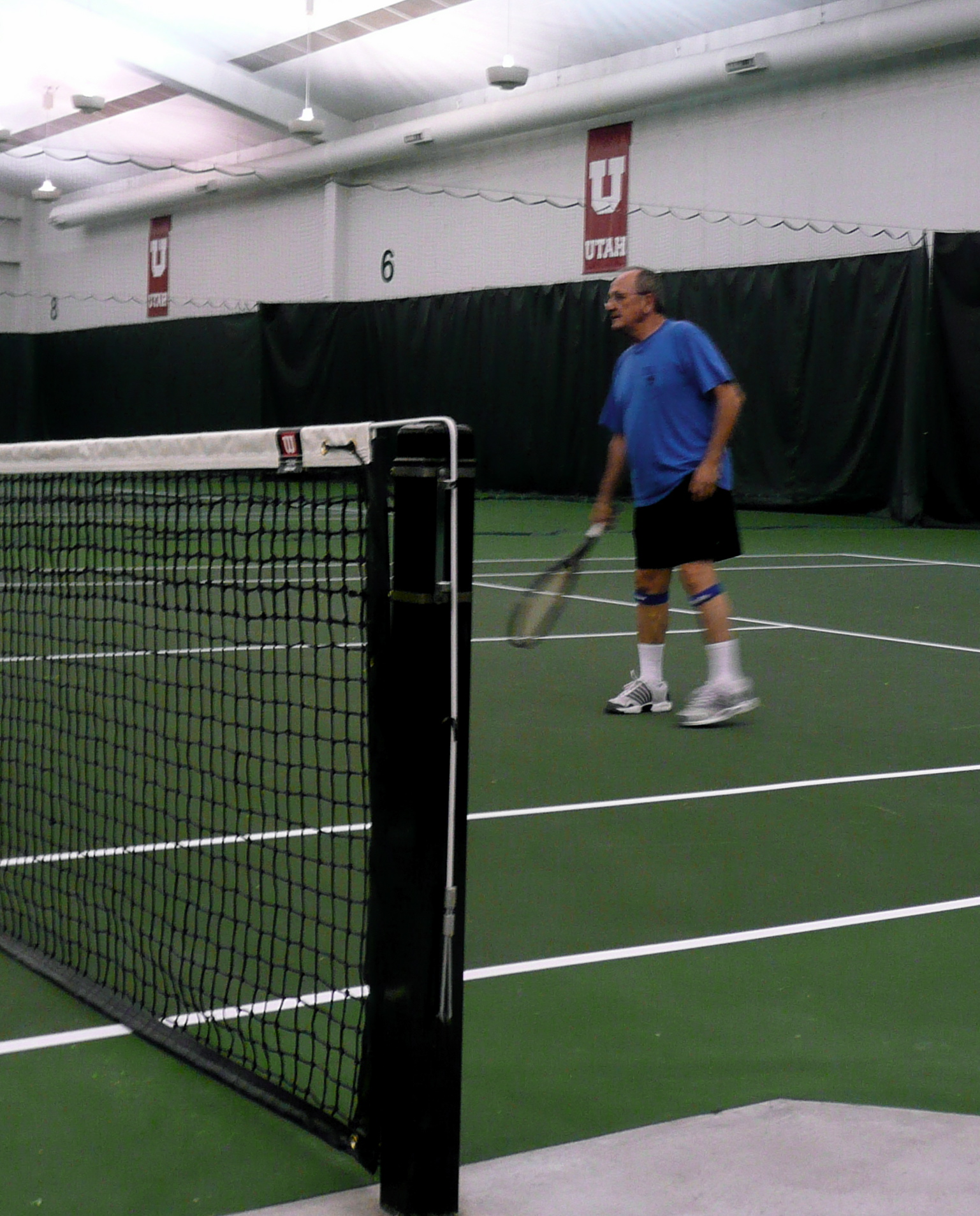
Raymond Haeckel, 73, prepares to return a shot during a tennis game at George S. Eccles Tennis Center.

Janet M. Shaw is an associate professor at the University of Utah who teaches courses specifically related to aging and exercise. Shaw said staying physically independent is an American ideal that we have as we get older.

“One of the goals of successful aging for most people is to be able to do things for themselves,” Shaw said.

Haeckel retired in 2002 from his job as the executive director of government, community and public relations at the University of Utah. At first he wasn’t too sure what he would do with all the hours in a day.

“I’m an anxious person. When I retired I didn’t have to deal with deadlines, and the fast tempo that I was used to had begun to slow down,” Haeckel said.

He knew he needed a plan, and one thing he was sure of was a portion of his time would be set aside to play some tennis.

Haeckel has made some lifelong friendships through the game of tennis. He meets with friends at least three times a week to play the sport they all share a common interest in. As Haeckel’s tennis buddies begin to stream in the door for today’s game, it is easy to see why he takes pleasure in these get-togethers.
Klaus Schmitt stands at the net during his doubles game at the George S. Eccles Tennis Center.

Klaus Schmitt has been playing tennis with Haeckel since the early 1960s. He shares Haeckel’s views on the role of tennis in his own life.

“Being physically active improves the quality of everything in my life,” he said.

Schmitt, a professor in mathematics, loves to travel but there is one catch: “I will travel everywhere as long as I can take my tennis racket with me,” Schmitt said with a smile.

Both men reflect on memories of playing on the old campus courts where the new biology building sits today.

“We used to play daily with our shirts off at high noon,” Haeckel recalled with a gleam in his eye.

Haeckel and Schmitt appear to be the exception and not the rule when it comes to older adults and exercise. Inactivity in the older adult population is a major problem today. According to the Centers for Disease Control and Prevention, the loss of strength and stamina attributed to aging is in part caused by reduced physical activity. By age 75, about one in three men and one in two women engage in no physical activity whatsoever.

Experts claim physical activity over the course of one’s life is of most benefit to an individual but it is never too late to start. Janet Shaw said physical activity is very important right now because there are lots of baby boomers in their early 60s who are still functional.

“Now is the time to capitalize on it and ask: How do I get into a routine of really helpful physical activity that I can continue as I get older?” Shaw said.

It can be difficult for older adults to begin exercise programs, especially when they haven’t been active for much of their lives. Recommendations can be made but the decision ultimately lies with the individual involved. Shaw emphasized the importance of enlisting help from a professional or a physically active friend for those people foreign to exercise.

“You have got to get people into it very slowly in a way that is very safe to them,” she said.

A major problem among the aging community is the increase in the number of fatalities due to falls. According to the CDC, in 2005, a total of 15,800 people aged 65 years and older died from injuries related to falls. An additional 1.8 million were treated in emergency departments for nonfatal injuries from falls.

According to the CDC, physical activity can be a good preventative measure to help limit the number of falls in older adults. Shaw recommends activities good for muscle strength and power in relation to helping balance.

“Catching oneself really requires that people be able to move quickly, and have a certain amount of strength to be able to hold up their own body weight,” Shaw said.

Haeckel and Schmitt are determined to postpone the aging process. “If I go two days without exercise I feel sluggish,” Haeckel said. “I enjoy having a good quality of life. I need one if I want to keep up with the grandkids,” he added.

The women they are playing tennis with find it funny Haeckel and Schmitt are being interviewed for an aging article. “You’re interviewing these two young guys?” they ask. Maybe they have a point. After all, you are only as old as you feel.

Wiis are for the young at heart

Story and photo by Kelli Coomes

Farrell Sorensen eagerly awaits the arrival of his great-granddaughters.

“What are we playing today?” the three girls ask in unison. Hallie, 8, Hannah, 6, and Hollie, 4, are spending the day with their great-grandparents.

“What do you want to play?” Farrell Sorensen asks.

“Baseball!”

“Tennis!”

“Bowling!”

“How about we play all three?” Farrell suggests. “We’ll take turns.”

His wife, Darla, comes in and sets up the only modern technology in the house that she’s figured out: the Nintendo Wii. Remotes get handed around and the games begin.

The four run around the room, squeals coming from the girls and laughter from Farrell. A whirlwind of motion continues for most of the day, stopping only long enough to change games and players. As more family come to visit, teenagers and adults take turns playing with the grandparents and the girls.

The children tire before the Sorensens are done playing.

“They used to be too shy to talk to us,” Darla said. “We’re too old, we make them nervous. But now they come over all the time and love to spend time with us.”

There is a computer in the house, but they have a hard time figuring out how to use it. Their grandson, Jason Sorensen, 29, has been over many times to teach and re-teach them how to use the Internet, e-mails and how to save the photos they take. They can work the TVs and the radio, but that’s about it. They’ve broken three karaoke machines so far.

“They’re fine until they press buttons or try to explore on their own,” Jason said. “It’s the joke in the family to not let them touch electronics.”

But Farrell, 86, and Darla, 84 have found a way to bridge the age differences in their family. The Wii has brought five generations together under their roof.

“Now they all come to us,” Farrell said with a smile. “Used to be we’d see everyone around family reunions and holidays. Now they don’t ever leave.”
They own family games like “Wii Sports,” “Mario Party 8,” “Mario Kart,” “Pokémon” and other games the younger kids can play. They also have games for the teenagers and adults who come to visit, such as “Zelda,” “SoulCalibur” and “Brunswick Bowling.”

When the grandkids first gave Farrell and Darla the Wii, it was Christmas and they couldn’t figure out what it was. Their grandsons, Jason and Casey Walker, 30, had to come show them what it was and how to hook it up.

“They were afraid to touch the Wii,” Casey said. “We went over a few times until we were sure they had it figured out.”

“It’s easier than most electronics,” Darla said. “There aren’t a lot of buttons to push and the words on the screen are big enough for us to see.”

Farrell grins as he catches his breath. “It’s easy to use and gives us a great time with the grandkids and great-grandkids. Best present the youngsters ever gave us.”

Farrell mostly only uses it for when his great-grandkids come to play with him. He enjoys the time they spend together. “Keeps me young at heart,” he said.

The adults enjoy watching the kids play with the grandkids. “It’s nice to have your kids begging to see their great-grandparents,” Sandy Sorensen said. “Plus, you get a free babysitter when you need one. The grandparents would love to take them for a day.”

Darla loves to play with the kids too, but she uses the Wii even when there are no kids around. Darla enjoys “Wii Fit,” a game that teaches yoga moves, improves balancing, strength and has aerobics exercises.

The Sorensens are part of a growing trend. Sports enthusiasts who are older and sedentary because of injuries or worn-out joints are now enjoying playing games again.

The Wii gives them the opportunity to play sports without the jarring impact the real sport would cause. Baseball no longer has the jarring on the arms that comes with hitting the ball. Bowling is no longer so hard on the knees and hands and tennis no longer requires so much running on a court.

Some senior centers have Wiis and are having tournaments. The Columbus Senior Center even had a competition where the seniors team beat the teenagers team in bowling. In October in Houston, there was a major Wii competition for seniors held with participants from all over the nation. The categories included sports games, intellectual games and the “Wii Fit.”

Darla enjoys her “Wii Fit” for the aerobics. She begins her stepping exercise and then turns on her favorite show. “I exercise while I watch my soaps,” Darla said. “It’s better than any other exercise tape I have; I actually have to watch those.”

Every day she does her stepping exercise. Sometimes when she’s feeling up to it, she tries the balance games, skiing is her favorite, and once in a while she does a yoga pose.

“It records what and when I do these things,” Darla said. “That way, when ‘grandpa’ teases me about sitting around and watching my soaps all day, I can show him that at least I wasn’t sitting.”

Bringing the family closer to them was one thing they had hoped for. Having it bring them closer to each other was something they never expected.

“Now we can spend more time together,” Farrell said. “She’s not one for sports so we’d spend time in different rooms watching TV. Now we’re playing games together.”

Darla added: “We now have a common interest that makes us laugh and play together. After 60 years of marriage, a little excitement is nice.”

Removing the stigma of senior sex

by Alicia Williams

Many consider sex to be one of life’s greatest pleasures. Yet the topic of sex among aging individuals is often considered taboo.

“People generally get pretty squeamish when they think about older folks having sex,” said Mimi Beattie, a geriatric nurse practitioner at the University of Utah. “But the reality is older folks have sex too.”

Shaun & Annette

Shaun Michel and his wife, Annette, spend time together in the backyard of their home in Sandy, Utah

Whenever Beattie hears someone say, “EEEUUUW. That’s gross,” she takes the opportunity to have a teaching moment. She said her middle-aged perspective of aging sexuality is different than younger people, because they haven’t gained the experiences needed to grasp the idea of a long lasting relationship.
So, Beattie asks them, “When would you like to stop having sex?”

Questioning stereotypes of aging and sexuality challenges our perspective, forcing us to conceptualize the absolute fact: We’re all going to be old one day. Suddenly, when we visualize ourselves as aged, the idea of being asexual, without sexual desire or sexually unattractive becomes completely illogical.

“You know what, as you get older, you don’t think older. I’m 56 and I still think I need to ask my mom for permission to buy things,” said Shaun Michel.

Shaun and his wife, Annette, 60, are uncommonly communicative about the intimate aspect of their 36-year marriage. Shaun said intimacy in a relationship is romance. It doesn’t matter how old you are, if your relationship stinks outside of the bedroom, it won’t be any better in the bedroom.

“You can’t go to the stove of life and say, ‘Give me some heat, and then I will put some wood in.’ You’ve got to put the wood in first, and then you’ll get heat,” Shaun said.

Society’s identification with the aging body as ugly, wrinkled, gross and definitely not sexy further perpetuates the stifling stigma encompassing the topic of aging sexuality. The taboo subject has healthcare professionals, even gerontologists, strategically steering clear of sexual discussions with their elderly patients.

Amanda Smith Barusch, a professor and associate dean of research in the College of Social Work at the University of Utah, wrote an article for “Social Work Today” titled, “Love and Ageism – A Social Work Perspective.” She recalls participating in a conference, about four years ago, and posing a question to an audience of 200 medical professionals.

“How many of you ask your clients about romantic love as part of your assessment?” Astonishingly, she said only two hands rose, and one of them was her assistant’s.

Several factors propel the ageism permeating society’s personal and cultural expectations, Barusch said. She defines the term ageism as a negative attitude towards older people and the process of aging. She finds it’s most often used while considering people of a certain age to be “too old” to accomplish something.

“I think mature sexuality challenges our stereotypes about age, and about sex. The notion that a lovely grandmother can enjoy intense passion goes against ageist notions of what old age is supposed to be like,” Barusch said.

A growing interest in romantic issues among older adults led Barusch to conduct a five-year qualitative research project and ultimately inspired her to publish a book in 2008, “Love Stories of Later Life.” She invites her readers to explore late-life romantic possibilities. And she believes romantic love, given its depth, pervasiveness and power, deserves to be targeted by medical professionals treating older adults.

“Professionals need to get past their own stereotypes and embarrassment, and talk seriously with older adults about their romantic experiences,” Barusch said. “This will help reassure them that they aren’t weird, and give them someone to talk to about the complications of late-life love.”

The Michels’ ability to easily converse about taboo subjects represents a sliver of light breaking through the dark wall of secrecy. Annette said even though the world worships youth, everyone has to eventually face the reality of their body changing as they age. For her, great physical experiences start with romance.

“It’s really important that your spouse lets you feel like you are a sexual being, and that you’re still wanted and desirable to that person,” Annette said.

Shaun said, “As we mature and our testosterone levels decrease, for a man, our vision improves on the things that are most important. She probably doesn’t feel as beautiful about herself as I feel about her. But it’s the whole package I love.”

“Yes,” Annette said, “and then you look at all these people that are known for their beauty and their youth. You know what? They’re gonna get old too. You don’t stay like that for very long.”

“And they aren’t necessarily happy,” Shaun said.

“Well,” Annette said, “if you judge your worth by the way that you look physically, you’re going to be really unhappy once you get older.”

Salt Lake County provides haven for Parkinson’s patients

Story and photos by Jessica Gonzales

Every morning, Fred Buchanan, 78, wakes up and takes his medication to prevent and relieve the uncontrollable shaking of his hands and feet. In 1992, he was diagnosed with Parkinson’s disease and over the course of 15 hours, he’ll take 18 pills to help alleviate his symptoms.

IMG_2175

Fred Buchanan works on exercises to improve his balance at the Rehabilitation and Wellness Clinic.

For nearly one million Americans nationwide who have been diagnosed with Parkinson’s disease (PD), most are of the aging population. This neurological disease develops in patients due to a lack of dopamine, a key neurotransmitter that aids in the roles of cognition and movement. As time progresses, stages of the disease become more apparent with symptoms including tremors, rigidity and postural instability. There is currently no cure for the disease.

According to the Parkinson’s Disease Foundation, currently one million Americans suffer from the disease and nearly 130 out of 100,000 Americans over 65 will be diagnosed with it every year.

For those suffering from Parkinson’s disease in the Salt Lake Valley, the University of Utah provides information resources for patients and their families. Sylinda Lee is the program coordinator for Utah’s chapter of the American Parkinson’s Disease Association (APDA) Information Center, which devotes its time to finding guidance for patients suffering from the disease and their families. The information center is a haven for those who have been diagnosed with Parkinson’s and offers a wide array of support groups, referrals to local neurological doctors and physical therapy options.

“Support centers and education helps them to manage their disease better so that they’ll be able to have a better life and quality of life,” Lee said. “As they learn more about their disease, they learn how to deal with it better.”

Through providing educational opportunities for Parkinson’s patients in Utah, Lee believes in focusing on the mental and physical health aspects. Called the “Four-legged stool,” she highlights four attributes that will help ease the symptoms of those going through PD: communication with a medical professional, physical therapy and exercise, a positive attitude and social support. By targeting these elements, namely support among family and friends, Lee believes patients will still be able to lead active and productive lifestyles while living with the disease.

“It’s really healthy for them to get involved,” Lee said. “It helps them contribute and feel like they’re fighting their disease.”

At the University of Utah Rehabilitation Clinic, the Parkinsonism Exercise and Wellness program provides PD patients with physical therapy and strength training exercises. These exercises target balance, strength and mobility to alleviate some of the symptoms many patients experience as a result of having Parkinson’s.

IMG_2199

Parkinson's disease patients exercise at different workout stations at the Rehabilitation and Wellness Clinic.

Jim Ballard is a physical therapist at the program and typically works with five to 10 patients twice a week, most who are 65 and older. While noticing the physical benefits that therapy provides, he says there are social benefits as well.

“The Parkinsonism Exercise and Wellness Program also provides a social and an educational benefit,” Ballard said. “Individuals with PD are able to meet others with the same disease and interact with them on a regular basis.”

Buchanan, who was diagnosed with Parkinson’s disease 18 years ago, has participated in the Parkinson’s Wellness Program since 2004. Attending twice a week for approximately one hour, Buchanan credits his overall health to his wife and the physical therapists at the rehabilitation clinic.

“My wife has been very supportive for me over the years,” Buchanan said. “And the staff really puts themselves out to reach our goals. It’s social and we find people that we can relate to.”

Reaching patients and their families is seen as a vital asset for the APDA and its programs. With awareness through newsletters and support groups, the University of Utah and the APDA aim to supply PD patients with the tools they need to continue carrying out their daily activities. Through networking and support, Lee hopes that patients will find a sanctuary among their families and communities.

“Right now there’s no cure, so people don’t have that light at the end of the tunnel,” Lee said. “But what they do have is the ability to really continue to have a quality of life, even if they have the disease.”

Elderly share stories at the of end of life

Story and photo by Alicia Williams

  • Watch a slide show of Tina Chavez telling her favorite story (best viewed in full screen mode).
  • Editor’s note: Tina Chavez passed away Dec. 22, a little over a month after this interview was given.

Stories told by the elderly express memories collected over a lifetime and filled with loving moments, tragic and monumental events and the valuable lessons learned through mistakes and successes. Sharing these stories offers undeniable joy, especially to individuals who have a preciously short amount of time left in their life.

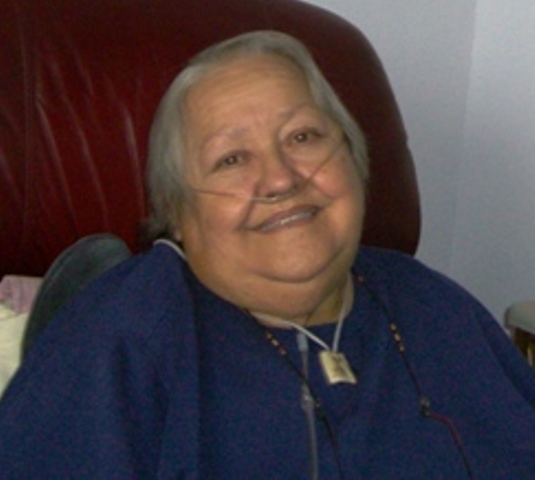
Tina Chavez at her home in West Jordan, Utah.

Evidence of the truthfulness of this shines in the ailing face of Augustina “Tina” Chavez, 71, as she recounts the memories of her beloved home in Las Cruces, N.M. It’s one of her many treasured stories recently published in a book for future generations to cherish.

“Where I come from, Las Cruces, it’s nothing but desert, dry heat, and the skies are always blue. There’s no pollution and the sun is 103 degrees in the summer. It’s warm and it’s beautiful,” Chavez said in a strained whisper as she tries to be heard above the soft whirling hum of a machine tucked neatly beside her recliner.

Chavez has been physically bound to her home in West Jordan and to the dialysis machine helping to keep her alive since her kidneys began to fail in 2004. While Chavez admits to desperately missing her Catholic Church back home, she said God brought a wonderful blessing into her life when she moved to Utah in 2007.

“When you’re an active person like I was, and then all of a sudden it stops just this quick. You can’t walk, you can’t move and the only thing you have left is God and the angels he sends,” Chavez said. “The people who come to visit me, I call them my angels, because they are angels, angels unaware, because God is telling me I am not alone.”

She is referring to the people associated with LifePath Home Health, Hospice & Family Care. Located in several major cities across Utah, the in-home medical service is offered to terminally-ill patients diagnosed with six months or less to live.

The patient receives visits from doctors and registered nurses to address medical health issues, and licensed clinical social workers to manage the needs of the family. There are bereavement specialists to help with grief, certified nurse assistants to address a patient’s personal care and chaplaincy for spiritual needs. Finally, hospice volunteers befriend and support patients during the last days of their life.

Hospice support consists of patient companionship, respite care for family caregivers, oral histories, yard and house work and all types of therapy: pet, music, massage and aroma. Shannon Thompson, the volunteer coordinator at LifePath Hospice, said she draws upon her 25-plus years of experience to complete the daunting process of locating qualified volunteers, training them in end-of-life care and then diligently matching them with an individual in need of comfort.

“The hospice program is extremely important, because it’s a setting in which someone is willing, from the heart, to give, listen and participate in what an individual is going through or what an individual needs,” Thompson said. “The support is freely given from a volunteer to share that life, those moments, and the end with an individual who is ultimately going to pass.”

For Tina Chavez, Thompson expertly chose Brady Petersen, a 23-year-old pre-med student studying exercise physiology at the University of Utah. Peterson said he learned of LifePath at the Lowell Bennion Community Service Center on campus and began volunteering a year and half ago.

“It’s been a blessing, because they send me visitors once a week like Brady. When Brady first came, he wanted to know a little bit about me and I just started talking,” Chavez said. “He asked me if I minded if he wrote a book about the interesting stories I had been telling him.”

Volunteers who seek knowledge from the experiences of the elderly find a unique opportunity to actually feel the lessons being taught.

“You do gain a lot from them when they are talking about their lives. They have a different attitude about life, and the important things in life,” Petersen said.

At the same time, whenever someone engages the elderly in sharing their stories, and when they take the time to listen to them, they’re validating the worthiness of that individual’s life experiences.

“It’s usually takes a visit or two and then it doesn’t feel like I’m volunteering anymore. It doesn’t feel like I am working, it’s just visiting with a person who really appreciates your time,” Petersen said.

The inspiration to write Chavez’s life story, or oral history, came to Petersen after his initial visit with her. She was down, emotionally, but he said he noticed a drastic change once she began talking about the stories of her past.

Completely absorbed in her storytelling, Chavez becomes animated and descriptive. At one point, she beautifully sings a song in Spanish, stopping intermittently to translate it into English. At times she laughs; at other times she cries, but the clear sparkle in her eyes signifies the overwhelming pride she holds in the precious memories of her life.

“Brady told me I have wonderful stories and I told him that’s my life, the stories. I’ve had a good life,” Chavez said.

Staying active into your senior years

Story and photo by Evan Frank

  • Watch a slide show on how Jane and Lowell Frank stay active.

Staying active for some people can be a difficult task. Remaining energetic into your 60s and beyond can be a lot more difficult.

“We’re beat,” Jane Frank said shortly after coming into her home. “We were raking leaves all day.”

Lowell Frank chops wood in the yard during the early morning.

Jane, 79, has worked part-time cleaning homes for three days a week for the past 15 years. She said iit may be about time to retire, though.

Her husband, Lowell, 80, keeps busy with several different activities. When he was in his 60s, he was an avid sailor with his wife. They participated in a race two or three times a week and once every weekend.

“It kept us physically active and mentally sharp,” he said.

In addition to burning leaves, mowing the lawn and trimming trees, Lowell now stays active by going to the local airport and tending to his plane. When his sailing days came to a close, he became more interested in flying. Keeping an airplane has kept him busy for over 20 years.

“You have to tie down the plane so it doesn’t get away from you,” he said. “I wipe it all down before I go out, then clean it up again when I’m done.”

Keeping active, according to Jane, is important at this point in their lives. But there are other things necessary to staying active.

“It’s what you do at the beginning of your life that’s the most important, rather than later on,” Jane said.

According to a study by the U.S. Department of Health and Human Services in 2006, the leading cause of death for adults 65 years and older was heart disease. Heart disease is just one of many problems older adults have to worry about.

The Salt Lake County Healthy Aging Program helps people who are 60 years or older have healthier lifestyles. Michaelene Waters, a health educator for the Healthy Aging Program, said there is an enhanced fitness class offered to older adults. Most of the programs are held between two and three days a week. Waters says the purpose is for elderly people to be “able to do things better in life.”

“There’s good feedback from the classes,” Waters said. “Doctors are pleased and seeing improvements.”

The program consists of a warm-up focusing on one’s balance. Strength training with weights is another important part of the program. During this section, the class works on major muscle groups, including deltoids, triceps and biceps. Average weights consist of three pounds with no weights being heavier than five pounds. Staying at a level that helps seniors maintain their heartbeat is part of the endurance section.

Before a senior can participate in the class, permission from a doctor is required.

Though the minimum age requirement is 60 years old, Waters says the average age of participants is around 75.

“The social aspects of the class are important as well,” Waters said. Having the seniors stay socially active can help improve their mental and emotional health, she added.

Seniors aren’t the only ones who enjoy interacting with each other. “One of the instructors likes to end on a joke,” Waters said.

Lowell and Jane have been married more than 50 years and continue to keep their acre and a half of land in good condition.

“Our company holds one-hour presentations at local senior center or churches,” said Kathy Hoenig, a health educator at the Healthy Aging Program.

Topics such as healthy eating and being prepared for winter are covered during the presentations.

However, one of the most important parts of the presentation is fall prevention. According to the Fall Prevention Center of Excellence, falls can result in hip fractures, head injuries or even death.

A Colorado State University study showed that falls are the leading cause of death from injury among people 65 or over. The organization was established to help improve practice and develop sustainable fall prevention programs. Approximately 9,500 deaths in older Americans are associated with falls each year.

According to the Fall Prevention Center of Excellence, an elderly person is more likely to fall if they are 80 years or older, or if they have previously fallen. Fear in not wanting to fall again can cause an individual to stay away from physical activity.

A workshop designed for healthy living with chronic conditions is also offered at the Healthy Aging Program. Hoenig said the workshop is six weeks long and offered to people who live with any long-term health problems such as asthma, arthritis and pains.

“It gives people strategies and the tools to help them positively manage their health problems and conditions,” Hoenig said. “In the fall, flu clinics for senior centers are offered.”

There are also medicine checks where pharmacy students will meet individually with seniors.

During the session, the seniors can ask questions about their medications, as well as have their medications looked at and checked if they are current or expired.

Taking information classes can help keep seniors aware of certain health risks.

Spreading the word out to seniors is critical in making sure people know what options are available. The Healthy Aging Program advertises on radio and television and in newspapers, local valley journals and even in the doctor’s office.

Whether it’s raking leaves in your backyard or attending classes at the Healthy Aging Program, there are a number of ways to stay active and fit.

Seniors enjoy friendly world competition

Story and photo by Jenna Cannon

A hush fills the cool air with the silence of intense concentration. Two hands, worn with age, seem to feel at home as they knowingly grasp the steel club. A deep exhale and the club swings, sending the golf ball soaring over the lush, green course. The intensity dissipates and a broad grin deepens the smile lines on the golfer’s face.

James Newton

James Newton practices his golf swing at the Salt Lake Country Club.

James Newton, a 68-year-old Utah athlete, has just experienced his favorite pastime. He plays golf at least once a week to perfect his swing and improve his putting. He is preparing to compete in an international senior sporting competition known as the Huntsman World Senior Games.

“It’s always a great experience. I love being able to play all day and just have fun,” Newton said. He has been competing in the games for five years. His sport of choice is golf.

The Huntsman World Senior Games began in 1987. It showcases 26 different sports. Kyle Case, CEO of the Huntsman World Senior Games, said the games currently host more than 9,500 athletes. These athletes come not only to compete, but also to socialize and learn about maintaining a healthy lifestyle.
The Senior Games are held each October in St. George, Utah. According to its Web site, the theme of the games is, “To foster worldwide health, friendship and peace.”

The health aspect is the sporting events and health clinics. Each sport caters to the skills and abilities of the athletes. Some of the sports can be played with a partner or team, such as bowling and basketball. Other sports are solo activities; these include the triathlon, swimming and archery.

In addition to physical sports, the Senior Games includes two mental sports. These allow seniors to exercise their minds. They use their mental skills by playing bridge or chess.

A popular sport among the senior women is tennis. Elouise Jensen, a 77-year-old Utah athlete, is an avid tennis player. Sporting a freshly styled blond bob and a contagious smile, Jensen excitedly talks about the Senior Games. She prides herself in her 11-year involvement in the games. She loves to go down to the games with her girlfriends to play tennis in the warm southern Utah weather.

“We just have so much fun!” she exclaimed.

Jensen feels that participating in sports keeps her young and healthy. This is apparent with her jaunty stroll and radiating healthy glow. She plays tennis with a group of friends twice a week. This keeps her active and prepared to participate in the Senior Games each year.

Newton also believes that staying active keeps an aging person healthy. When he golfs he likes to walk the course instead of renting a golf cart. He will play an entire round of 18 holes without ever sitting in a golf cart.

“All that walking keeps me young,” he said.

In addition to the athletic aspect of the event, the Senior Games promotes senior health by offering a health clinic and healthy lifestyle lectures. The clinic offers health testing for various diseases and ailments that afflict the elderly. Health-care professionals present the lectures and answer questions from the audience.

Promoting senior health is just one feature of the Senior Games. Another is to emulate worldwide friendship and peace. Athletes from 20 different countries attend the games, bringing with them a sense of worldwide unity.

“It’s unbelievable. We get players from far off places like Romania,” Jensen said.

The assembly of so many athletes in one location fosters friendship and encourages socialization. Newton thoroughly enjoys meeting new people at the games.

“It’s fun getting to know people. I stay in contact with many of the folks and I even e-mail a fellow I met from Australia,” he said.

The competitors are able to socialize in venues other than on the field. Various activities are made available to the athletes and visitors of the games. These activities include opening ceremonies, a western dinner-dance, an international festival and a talent show.

The Senior Games gives the elderly a unique opportunity filled with competition, activities and learning. A games regular, Charmaine Halversen, 84, enjoys the socialization and the athleticism that the games invoke.

“My favorite part is the association and the element of delight in seeing what older people can do,” she said.

Families face difficult decisions when it comes to aging parents

by Jenna Cannon

She could sense that her memory was slipping away. So, at age 92, Phyllis Duncan made a life-changing decision. She wanted to move into an assisted living facility.

On the other hand, 95-year-old Beth Harris decided to stay at home. This choice enabled her to maintain her independence but required assistance from her family.

The choice of moving into an assisted living facility or remaining at home is not only a hard decision for an aging person, it is also hard on the family.

Duncan had seen other families go through hardships when faced with caring for elderly parents so she decided to take matters into her own hands. She sacrificed her independence for the well-being of her children. But many elderly individuals are like Harris and try to keep their independence intact by staying at home.

Deciding what to do when a parent is no longer able to care for him- or herself is a difficult decision that many families are faced with.

“People wait and wait, often at their own expense and health,” said Scott D. Wright, director of the Gerontology Interdisciplinary Program Center on Aging at the University of Utah.

There are numerous options to consider, but determining which option will work best for a family and an aged person is hard to agree upon. Many families try to take care of the parent, but there comes a point when they can no longer provide the care.

Utah families have been hit hard with this dilemma. “Utah is the fifth fastest growing state for an aging population,” Wright said.

Connie Carter can attest to this. Her family is currently faced with caring for two parents. She is Duncan’s daughter and Harris’ daughter-in-law.

The situation with Harris has brought many hardships. Harris still lives at home, but cannot be left alone for more than two hours at a time. Carter said caring for Harris is a lot of work and puts a strain on the family.

Despite this, Harris’ family wants to keep taking care of her at home due to financial reasons. Carter said they don’t think it’s necessary to put her in a care center when they can help her for a fraction of the cost.

According to pricing information on assistedlivingutah.com, the cost of elderly living facilities can cost upwards of $4,000 a month. To some, avoiding this hefty fee is worth the extra work that caring for a parent requires.

Carter’s mother, Phyllis Duncan, is paying for medical treatment and housing costs at Canyon Creek Assisted Living & Memory Care in Midvale, Utah. In order to pay for her care, Carter’s family was forced to sell her home. Proceeds from the sale are being used to pay her living expenses.

“This decision was easier than fighting over what to do and causing a rift between family members,” Carter said. In her experience, she has seen that most families that end up taking care of the elderly end up having hard feelings. Because of this she is relieved that her mother made the decision for them. Her family has been calm and peaceful about the situation.

Harris’ family is in control of her care and they are able to maintain her assets. However, these positive aspects come at the cost of her children’s personal health and well-being. On the other hand, Duncan is given 24-hour medical assistance and is able to live in an environment that satisfies her needs.

Determining what to do comes down to maintaining the highest levels of health and happiness for all the parties involved. The situation that works for one family may not work for another family.

Harris still seeks her independence by staying at home. She is happy and comfortable there, but her children worry about her deteriorating health. Carter hopes they can respect her wishes and continue taking care of her at home.

Duncan is now 97. Her memory loss is increasing, but she exhibits no signs of health problems. Her family is pleased to know she is well taken care of and she is content with her choice to move into an assisted living facility.

Senior fitness class makes working out fun

Story and photo by Alexis Young

Sheila Alford, an energetic 90-year-old, can officially say goodbye to her walker thanks to an exercise program designed for older adults.

When she began participating in EnhanceFitness at the Tenth East Senior Center, Alford could not complete a single arm curl with five pounds fastened to her wrist. But after just four months in the program, she was able to complete 20 repetitions.

“I have seen just about every single one of my bodily functions improve,” Alford said. “It’s the teacher, she really makes me motivated.”

Sheila Alford dances to music as part of the EnhanceFitness exercises at the Tenth East Senior Center

Alford found exactly what she was looking for in EnhanceFitness, an exercise program taught at seven different locations across Utah. These classes are designed for older adults at all fitness levels and focus on aerobic activity, strength conditioning, flexibility and balance.

Nichole Shepard, the health and fitness instructor at the Tenth East Senior Center, is amazed by Alfords’s positive attitude. Shepard said she is a great example to everyone because does not let life bring her down.

“Instead of giving in to age, she goes along with it, and makes the best of what she has. She not only comes to my class three times a week, she attends two other fitness classes in her spare time,” Shepard said. “Sheila has made huge improvements, visually you can see she has more energy during class routines.”

Adding her own personal touch to every exercise class, Shepard creates the playlists to set music from the 1940s, 1950s and 1960s. She also choreographs every cardiovascular routine, adds verbal tasks during the strengthening sequence and incorporates a joke at the end of every clas

“They actually get mad at me now if I don’t bring along a joke,” Shepard said, “and because they are all having fun, they don’t realize their bodies are getting a great workout.”

EnhanceFitness is all evidence based, and was developed by the University of Washington’s Health Promotion Research Center (HPRC). According to the HPRC Web site, research has revealed participants of EnhanceFitness do significantly improve their health. In a survey done in 2008 by HPRC, seniors were asked about improvements in their physical capabilities. More than 94 percent said they had maintained or greatly improved their physical capabilities. And in 2006, the International Council on Active Aging recognized Project Enhance, which includes EnhanceFitness, as the sixth most innovative active aging program in North America.

At community senior centers around the state, EnhanceFitness is a free program providing a one-hour supervised class three times per week on an ongoing basis. The customized program allows the instructors to be creative and choreograph their own routine, yet still retain the EnhanceFitness exercises that have been proven to help older adults in maintaining and improving their strength, balance, posture, endurance and emotions. EnhanceFitness also incorporates alternative exercises in the program specifically intended for frail seniors. A participant such as Sheila Alford can do these exercises by using a support or sitting in a normal chai

“The most challenging part for me is when I have to move my feet during cardio; my arms are OK, but most of the time I have to hang on to my chair,” Alford said.

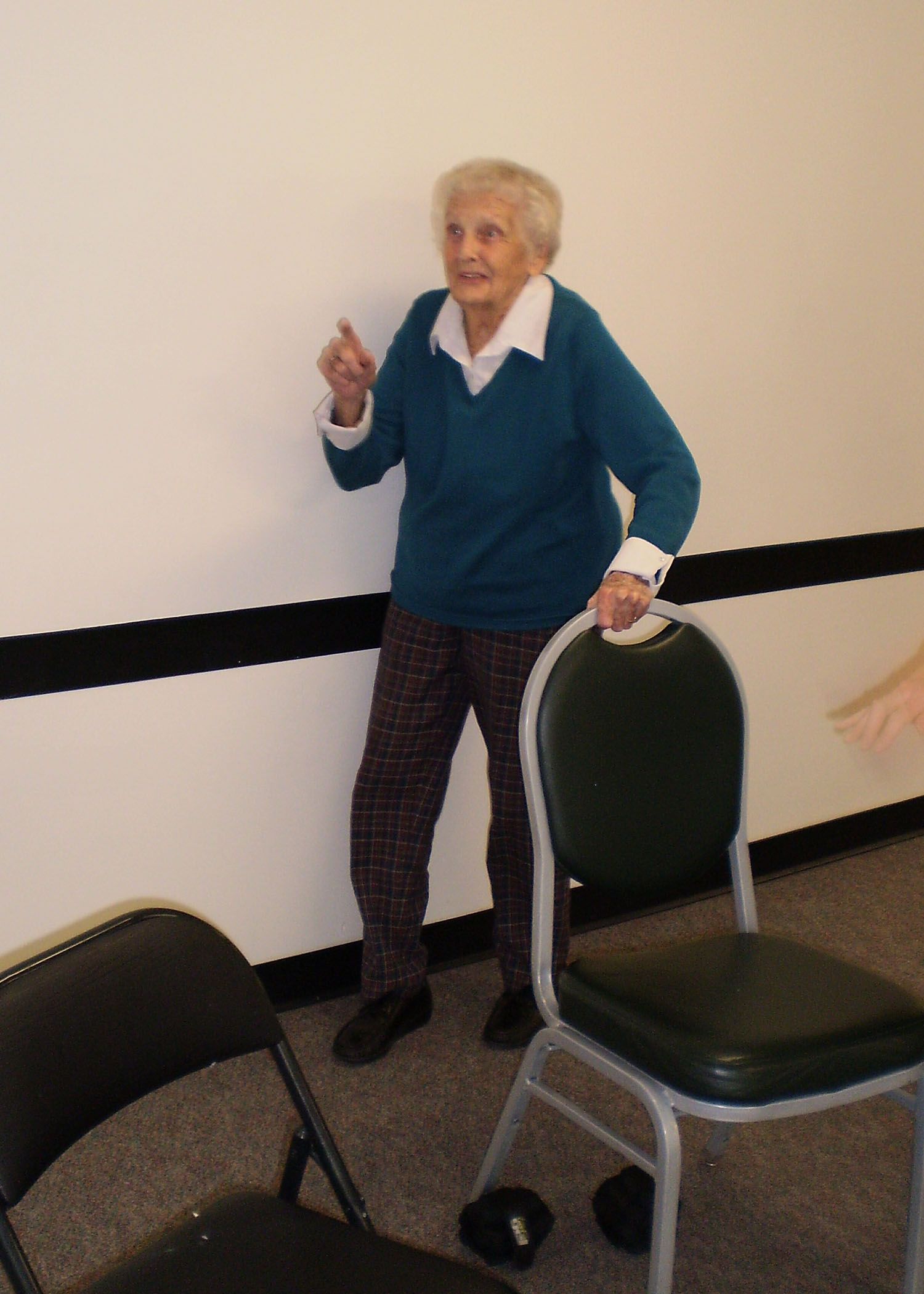
The energy was soaring through the roof during a recent visit to the Tenth East Senior Center. The open room was filled with 10 enthusiastic women throwing their hands up in the air and dancing around the circle of chairs to the song, “When the Saints go Marching In.” The ball really got rolling when it came time to strength train. Participants had to count the number of arm curl repetitions they were completing in Spanish. After the arm exercises, the women were instructed to lift their leg while holding onto a chair and recalling a variety of things such as cities, states, colors, animals or candy bar

“A verbal task significantly helps the seniors with their cognitive abilities,” said Michaelene Waters, a health educator for Salt Lake County and the founder of EnhanceFitness in Utah.

Waters started teaching EnhanceFitness classes in Utah at two different locations: the Draper Senior Center and Tenth East Senior Center. Seven classes are now offered at different locations around the Salt Lake Valley.

“My main focus now is growing the program. I would like to see EnhanceFitness in all of the senior centers throughout Utah,” Waters said.

Attendance at the Tenth East Senior Center is growing and the demand for more classes is increasing.

“Participants at the senior center range from 75 to 80 years old, and women by far are the most common types who participate,” Water said.

At the Tenth East Senior Center, participants fill out a questionnaire and perform a fitness check when they enroll. The check-up is then repeated every four months throughout the program. The fitness test is comprised of three things: how many times a participant can rise from a chair and stand up in 30 seconds; 30-second arm curls with five pounds fastened to the wrist; and the 8 feet up and go, which is a test that utilizes cones for balance and agility.

“The best part of EnhanceFitness is the social aspect of group exercise. They put in more effort when they are all together and they just have fun,” Waters said.

In all seven locations throughout the state, the success rate remains high.

“The program is ongoing and not very many people drop out, most people stick with it,” she said. “The only reason someone might drop out is if they get injured or have to move.”

Research conducted by HPRC over the past 15 years has demonstrated that getting sufficient physical activity, including strength training, helps people with arthritis, improves balance, helps to prevent falls and helps seniors to become more socially connected.

“Strength training is [one of] the most beneficial parts to EnhanceFitness, and is one of the most important aspects an older adult can incorporate into his or her life,” Waters said.

From time to time, Sheila Alford does not want to come to class, but says she comes for the health benefits and to see her friends. Alford is one of many who can affirm the values of EnhanceFitness and what it has added to her life.

“We will all age, but how we age is a personal choice. You can let age get the best of you, or you can continue to challenge your mind and your body,” Nichole Shepard said.

For more information about the EnhanceFitness program, contact Michaelene Waters at mwaters@slco.org.

Diagnosing memory loss

by Kelli Coomes

Imagine standing in your entry hall, keys in hand. You can’t remember where you need to go, only that you have some place to be. A few minutes later, you still can’t remember why you’re standing there.

Brian Fisher, an in-home certified nursing assistant, woke at 6 a.m. to find the 85-year-old man he cares for up and ready for work. Since Arvel hasn’t worked for more than 20 years, Fisher took him to McDonald’s instead. Arvel doesn’t care where they’re going, as long as he’s going somewhere.

Later that day, Fisher drove his patient to the doctor’s office. Arvel’s family was having him tested again for Alzheimer’s. Despite previous tests that showed he does not have the disease, his family keeps sending him to the doctor for further testing.

Arvel knows where he is and who the people around him are. He can understand most things that are told him, Fisher said. But what worries his family is that he cannot remember a lot of the little things. Arvel forgets he doesn’t work, so he gets ready when he wakes. He can’t remember where some things in the house are.

Dr. Edward Zamrini is the director of clinical trials at the Center for Alzheimer’s Care, Imaging and Research. Alzheimer’s Disease isn’t just about memory loss, but how much the loss progresses, Zamrini said. Doctors at the clinic look at how frequently a problem occurs and the loss by degrees, such as remembering where one’s keys are to where one’s car is located.

“To lose one’s memory is the ultimate loss,” said Scott D. Wright, director of the Gerontology Interdisciplinary Center at the University of Utah. “It’s like they’re dying twice.”

Alzheimer’s is the most common cause of memory loss in roughly 50 percent of cases. But it isn’t the only reason for memory loss.

“We jump to it too soon,” Wright said. There are about 25 other factors that can cause memory loss that are ruled out first. These include diet, diseases, stress and medications.

Zamrini said some health issues that cause memory loss include Lewy body disease and dementias like frontotemporal dementia.

Lewy body disease is a disease that is commonly mistaken for Alzheimer’s. Johns Hopkins Medicine states that like Alzheimer’s, Lewy body patients have memory loss, but there are other symptoms that distinguish it such as trouble with attention, hallucinations and symptoms that are similar to Parkinson’s disease. There are often problems with sleeping, falling and depression.

According to the Mayo Clinic, dementia describes a group of symptoms, both social and intellectual, that interfere with daily life.

Dementia, after several tests, can be diagnosed with complete accuracy about 90 percent of the time. However, dementia can lead to and be a symptom of Alzheimer’s.

Alzheimer’s can only be diagnosed with complete accuracy after death. According to the Mayo Clinic, a microscopic exam of the brain is the only way to accurately diagnose the disease. A brain with Alzheimer’s has plaques and tangles that are visible only with a microscope.

One form of dementia that can be tested accurately is frontotemporal dementia. The Mayo Clinic notes that it is commonly mistaken for Alzheimer’s, but it occurs at a much younger age.

The starting age for Alzheimer’s is roughly 65, with incidents increasing every five years. By age 85, people are 40 percent to 50 percent likely to develop it.

Frontotemporal dementia typically develops between the ages of 40 and 70.
Symptoms of frontotemporal dementia vary according to what part of the brain is affected. The term is used for disorders that affect the frontal and temporal lobes of the brain that are associated with personalities, behaviors and language.

Depression is another cause of memory loss. Zamrini said depression often causes forgetfulness. As people get older, they tend to lose their loved ones. Friends and family members die. This can create or add to depression. Often they stop caring about memories, or forget them because they become too painful. Often the memory loss is self-inflicted.

The hardest part for the families of Alzheimer’s patients, Zamrini said, is that they’re physically fit but not mentally well. This distinction is what’s helping doctors re-diagnose patients. Alzheimer’s only affects memory, Zamrini said. Diseases like Lewy body and dementia have some physical symptoms.

The testing for the other diseases is progressing and better diagnoses between them are increasing. Early detection helps with all these issues, Zamrini said.