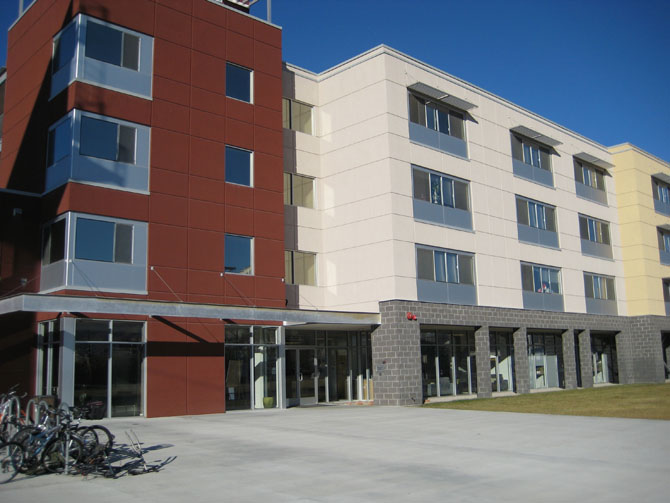
Affirmative action is debated at Utah 2010 general session

Story and photo by ANDREAS RIVERA

In 1969, President Lyndon B. Johnson signed into law an executive order that stipulated employers must “take affirmative action to ensure that applicants are employed, and that employees are treated during employment, without regard to their race, color, religion, sex or national origin.” Other laws, policies and initiatives like this were meant to give minority populations equal opportunities in employment and education. These polices are known as affirmative action.

Some lawmakers in Utah say that these policies have served their purpose and need to go.

H.J.R. 24, which was introduced in the 2010 General Session, states that it shall “prohibit the State, public institutions of higher education, and political subdivisions from discriminating against or granting preferential treatment to any individual or group on the basis of race, sex, color, ethnicity, or national origin with respect to public employment, public education, or public contracting; and provide exceptions.”

The 2010 Legislature debated the need for affirmative action.

The bill’s aim is to remove past affirmative action laws concerning public-sector establishments such as government and education. Proponents of the bill want candidates for employment or education given opportunities based on merit and not race, gender, or national origin. Republican Rep. Curtis Oda of Davis County is the chief sponsor of the bill.

“There is a difference between a hand-up and a handout,” Oda said. “If an employer is hiring and they have three or four candidates, shouldn’t they hire the most qualified candidate?”

To his surprise, Oda, who is of Asian descent, has been criticized by the Japanese community.

“If anyone should be embracing this bill, I would think it would be the Japanese,” Oda said.

The Japanese have a work ethic that drives them, he said. “After the internment of Japanese during World War II, the Japanese did not openly call themselves victims, they overcame the stigma.”

He added later, “You can not fight discrimination with more discrimination, that’s hypocritical.”

The bill would still protect people against discrimination, something that is human nature, he said. The bill’s goal is to put people’s value in their merit, not their minority group.

If someone suspects they were turned down because of their ethnicity even though they were the best qualified person, they could report it, but only because they believe it was racism that prevented them from getting the job, Oda said.

He said religion was not included in the bill because religion is a choice.

However, many oppose the bill and think there will be negative repercussions.

Roger Tsai, an attorney for Parsons, Behle & Latimer who sits on the board of directors of the Utah Asian Chamber of Commerce, said he is concerned about diversity of the public sector.

He said the chamber has stated it is against the bill.

“It is important to recognize diversity, but it does not mean you have to have a rainbow,” Tsai said.

Tsai said The University of Utah’s goal is to diversify, but how can it when it cannot give any advantages to minority groups for attending?

Tsai is worried about what the bill will mean for minority groups at the U. He said he is not sure what it means for funding for these groups. “Is it discrimination to give these groups money?”

It is important to have diverse outlooks on campus because it actually benefits the white majority, Tsai said. Students will be competing in the global economy.

Brittney Vuong, a freshman who is first-generation Vietnamese, said she agrees with the bill. “Different skin color should not deserve special treatment,” Vuong said.

Michael McFall, the news editor for the Daily Utah Chronicle who is first-generation Chinese, said when affirmative action was proposed, it worked well, but it may not be necessary now.

Both Oda and Tsai asked the question: When will we know when we are all equal?

Oda said, “If you go looking for prejudice, you will find it.”

Tsai said, “What’s changed? Are we all on an equal playing field? We have come so far, women are attending college at a higher rate than men.”

The bill made it past the committee stages of legislation, but failed to gain support and did not get the required two-thirds majority to become a law.

Despite this, Oda said this will not be the end of the debate.

UACC strives to educate people about the organization

But outreach takes time, money

by KEITH R. ARANEO-YOWELL

The Utah Asian Chamber of Commerce (UACC) was founded “to foster Asian … small businesses with activities that result in a prosperous and economically healthy Asian community,” according to its online mission statement.

But, leaders in Salt Lake’s Asian community say the city’s demographics — and current economic woes — make it difficult to reach out to prospective members.

Between 1990 and 2004, Utah’s Asian population nearly doubled in size, from 25,696 to 46,132. Still, Asians comprise only about 2.1 percent of the total population of 2.7 million and own only 1.5 percent of the businesses in Utah, according to the Utah Office of Ethnic Affairs and U. S. Census Bureau.

According to the UACC website, chamber membership can cost businesses between $100 and $1,000 per year, depending on the number of employees.

Most of the Asian-owned businesses in Salt Lake City’s 9th and 9th neighborhood would have to pay only $200 per year to maintain membership.

Despite the nominal cost, the owners of one Salt Lake City supermarket — who wished to remain nameless — wondered: Why spend marketing dollars on 2 percent of the population?

Other local entrepreneurs also said they had to weigh membership costs against the benefits it offers.

Sue Kim has been operating the Oriental Food Market at 667 S. 700 East for 37 years. Even though the chamber is around to benefit businesses like hers, she said she’s unsure membership will help more than the hard work she already invests in her business.

“I know such a thing exists,” Kim said in an interview, “but I don’t even know if the Asian Chamber of Commerce is actively working to help Asian businesses or not.” She added that Utah’s Asian community is so small, the chamber seems almost unnecessary.

Kim’s isn’t the only well-established business that hasn’t joined the chamber.

Linda Lin has owned and operated Big Ed’s, the beer bar-cum-hamburger joint across from the University of Utah, for 29 years.

“I don’t have time. I work too hard,” Lin said while preparing four different meals in a kitchen that can barely accommodate two people. “Most people are regulars who come every day. It’s very busy here all the time and I get very good business.”

She said the money and time UACC membership would cost her might detract from the hard work that keeps regulars in the stools.

Roger Tsai, an attorney with Parsons, Behle & Latimer and the former president of the Utah Asian Chamber of Commerce, said there isn’t a perceived need for an entity like the UACC because the lack of cultural diversity makes ethnicity almost a non-issue for people and businesses like Big Ed’s and the Oriental Food Market.

“[The Asian chamber] is primarily a shoestring organization that’s volunteer-run,” Tsai said in a phone interview. “Our outreach efforts have been purely by word of mouth through events that get media attention.”

Those events include the annual scholarship and awards gala, which recognizes outstanding Asian business owners and celebrates young leaders in the area. On April 2, 2011, 10 scholarships were awarded.

Tsai believes the online membership directory does not adequately reflect the organization or its members, who must remember to add and update their own contact information.

When the chamber first started in 2005, he said a group of members assembled a directory of Korean businesses and families. But after five years, only 30 percent of the information was still relevant.

Also, the high turnover rate for new small businesses, not just those that are Asian-owned, makes it increasingly difficult to maintain an up-to-date directory. Tsai said even the Salt Lake Chamber of Commerce, which represents every business in Salt Lake City, has a 40 percent turnover rate for small businesses from year to year.

Robert Rendon said the number of entries in an online member directory is not a fair assessment of the health of an organization such as the UACC. Rendon, who serves on the advisory board for the UACC and is also a member of the board of directors for the Utah Hispanic Chamber of Commerce, said educating an entire ethnic community is a learning process that can take a number of years.

In a telephone interview, Rendon recalled the speed at which the Hispanic chamber was able to gain traction as a real benefit in the Hispanic community.

“If you look at the Hispanic chamber, they have a business directory with probably 300 members,” Rendon said. “But, they started in 1992.”

He also noted that the UACC does not have a full-time employee. “It really makes a difference,” Rendon said, “when you have someone working on your chamber full-time” and promoting it to the community.

UACC board member Raymond Uno believes the recent economic downturn has affected the chamber’s ability to attract members. “When people are struggling financially it’s really hard to get them to sacrifice money and time when they’re having a hard time just feeding the family,” said in a phone interview.

Aprirak Pruksirisumbut, 35, is the owner of Tasty Thai at 1302 S. 500 East. He hasn’t pursued membership with the chamber yet because his restaurant has only been open since 2009.

“It’s been very busy, so I don’t have time to become a member,” Pruksirisumbut said in an interview. He added that it is important for Asian-owned businesses to network and help each other build their clientele and that in the future he will probably put more thought into joining the UACC.

Networking is one reason to join the chamber. But Tsai said the cultural homogeneity and the relatively small Asian population in Utah are additional reasons for supporting the UACC.

“Something that almost every major business based in Utah knows, understands and is facing, is how do we make Utah a more diverse welcoming place? Not just for people who are minorities,” he said, “but for people coming from out of state who feel like Utah is different.”

Businesses make more money in a diverse marketplace of ideas, Tsai said. “So, it’s within the larger business community’s interest to foster a vibrant minority community, because at the end of the day, that’s what every other major city has.” Membership in the chamber is just one of the ways businesses can foster diversity.

Pacific Citizen surviving times of declining traditional media

Story and photo by Andreas Rivera

The Pacific Citizen exists both online and in a monthly print edition.

In September 1929, a small, Asian-run newspaper was first published in San Francisco and has been in print ever since.

Today, The Pacific Citizen is now available both in print and online, and in these times of declining print media, it is still finding ways to connect with its audience.

The PC was started by the Japanese American Citizens League; members have a subscription to the print version of the newspaper that is published and mailed all over the country.

Jeff Itami, a member of the Pacific Citizen’s editorial board,  said the economic problem has affected the paper like any other business. The PC has had to cut operating costs and do some fundraising. According to the PC’s Web site, only six staff members publish the paper, not including contributors.

Even though the paper is part of the JACL, the PC covers a broad variety of issues such as Asian news, profiles of famous Asian Americans and pieces about historical events. It also has no cultural affiliation, meaning its content is not exclusive to Japanese, but to all Asian Americans, said Paul Fisk, co-president of the JACL chapter in Salt Lake City. “It brings a lot of news coverage others don’t.”

Itami said the print version of the Pacific Citizen is declining in circulation. Fisk said membership is steadily declining to the JACL, which could mean declining subscriptions to the PC.

“A lot of our key members are older,” Fisk said. “They are passing away and not a lot of new members are joining.”

About 30,000 people subscribe to the print version, Fisk said, some of whom were Japanese-Americans who were held at internment camps during World War II.

Other reasons for decline in membership are the many splits the JACL experiences due to its stances on certain issues in the media.

Fisk said the JACL lost members during World War II due to its lack of vocalization and action while Japanese-Americans were being interned in camps.

Another, more recent event, occurred when 1st Lt. Ehren Watada, was discharged from the U.S. Marine Corps because of his vocal opposition and refusal to take part in the war in Iraq. The JACL supported Watada, while many members thought it was not relevant to them, creating another split in membership, Fisk said.

The number of print subscriptions the PC has does not reflect its reach, Itami said. The paper is focusing on expanding its online popularity.

Despite the decline of the print version of the paper, Itami said the PC is reaching out to a younger audience. Recently the PC reformatted to a magazine format to appeal to younger readers.

“We are connecting to a younger audience through blogging, MySpace, Facebook, and YouTube, bringing that traffic to the PC,” Itami said. “Traffic is only going up,”

According to the PC’s Web site, it receives about 450,000 hits per month.

Itami said he is not worried about the PC’s financial future. The PC’s advertising revenue (which accounts for 50 percent of the paper’s income) is increasing.

“The PC is not a luxury,” Itami said, “it’s basic information we all need.”

Japanese, American or both?

by KEITH R. ARANEO-YOWELL

The Web site for the Utah Japanese-American Citizens League (JACL) is bad, and Salt Lake chapter’s co-president, Paul Fisk, recognizes this.

For an organization representing an entire group of Utahns, the Web site looks disorganized and messy at best. There isn’t a unified theme. The Salt Lake City chapter’s most current electronic newsletter is more than a year old. There are spelling and punctuation errors everywhere. The events calendar for 2010 is almost completely empty. Hollow text boxes dot the pages like tiny picture frames shouting to the world, “Hey! There’s nothing here!”

During a group interview with University of Utah students, Fisk, 27, explained the state of the Web site in these terms.

“One of the problems recently has been that because of declining membership rates, [the JACL] has cut back on some programs,” Fisk said. “It’s probably the same for maintaining the Web site.”

Floyd Mori, the JACL’s national executive director, said membership is on the decline for myriad reasons.

“The Nisei generation [second-generation Japanese Americans] is passing on rapidly with an average age near 90,” Mori said in an e-mail interview. “Also, young people do not see the direct issue of civil rights on an every day basis as before.”

Indeed, the FBI’s 2008 Hate Crime Statistics Table reported only 137 incidents of hate crimes against the broadly defined group of Asian/Pacific Islanders across the entire country.

“The JACL’s primary goal,” Fisk said, “is defending the civil rights of all Americans, particularly Japanese Americans.”

The most pressing civil rights issue currently on the Salt Lake chapter’s list is an offensive poster at a Winger’s Grill & Bar in Murray. The chain’s advertisement depicts a chicken with a Fu Manchu mustache and a Japanese flag headband with the caption, “We use only the finest oriental chickens in our oriental chicken salad.”

Decoration at a Winger's chain in Murray, Utah, advertising its Oriental chicken salad. The sign was subsequently removed. Photo courtesy of PAUL FISK

The JACL’s role doesn’t end at civil rights, though.

“It works to promote cultural, educational and social values of Japanese Americans, and preserve the heritage and legacy of the Japanese-American community,” Fisk explained. But as the lines separating Japanese from American begin to blur, the “Japanese-American” community will be ever more difficult to define.

Floyd Mori attributed this to the high cross-cultural marriage rate among Asian-Americans.

Noriko Okada is a Japanese citizen living in Salt Lake City who runs an English-Japanese translation service. She said it’s easier to classify herself as either American or Japanese and not necessarily Japanese-American. In an interview, Okada, 37, explained these definitions can change depending on the context of her experience.

“When I’m actually stating my opinions and doing what I want to do, I feel American, on the other hand when someone reminds me that I’m an immigrant, at that moment I become Japanese.”

Mori agreed there is no clear-cut definition of what makes a person of Japanese descent living in America a Japanese American. Nor does he know at what point that person ceases to be Japanese.

This nebulous definition of identity presents a problem. How does an organization preserve the Japanese-American experience, when there is seemingly no agreed-upon definition of Japanese American?

“The Japanese-American population’s high rate of cross-cultural marriage leads to the propensity for less association with the Japanese culture,” Mori said. “At the same time, there is a resurgence of younger people wanting to discover ‘who am I?’ The younger generations seem to be moving more towards identifying as an Asian-American rather than simply a Japanese-American.”

While the JACL does have difficulty defining the group for whom they advocate, they do see this as an opportunity for growth in a new direction on a national scale, Mori said. “The JACL must appeal to a broader base beyond the Japanese-American community.”

Looking ahead, Mori plans to change the structure of the JACL to rely more heavily on the skills of business and marketing professionals. “In the past and present, we have been governed by a board interested mostly in advocacy and community action. There will have to be a mix of community action and professional skills,” Mori said.

Mori said if the Utah chapters of the JACL want to mitigate declining numbers, they have some work to do.

“Membership takes aggressive recruitment. The local members have to be active in actually asking others to join,” Mori said. “If they ask, they will join because the JACL has a great tradition and has a lot to offer in terms of cultural activities as well as advocacy opportunities.”

Mori agreed that reassessing the Web site might be a good start.

In search of a new life

Story and photos by Leigh Walsh

The transition into old age is an inevitable life experience that can be a daunting thought for many. However, the transition into a new life and culture presents Utah’s aging refugees with the most challenges.

As the American flag is raised outside Catholic Community Services in Salt Lake City, three Bhutanese refugees have begun their day’s work inside. Padma Dhungle, Tara Gautam and Krishne Adhikari, each over the age of 65, arrived in the U.S. in 2008 with little more than hope packed in their hearts.

The American flag stands outside Catholic Community Services in Salt Lake.

They had spent the last 17 years in a refugee camp in Nepal, hopeful they would be offered a second chance at life. Their prayers were answered when they were relocated through the United Nations High Commissioner for Refugees (UNHCR) resettlement program.

“We had the feeling of happiness when we heard we could come to the United States,” Dhungle said through an interpreter. “So far it has been good,” he added with a smile.

Catholic Community Services in Salt Lake brings in about 600 refugees each year. The organization does its utmost to make the transition as smooth as possible for each of the immigrants. Aden Batar, director of refugee resettlement and immigration at CCS, explained the main goal is to integrate refugees into the community and provide them with the tools necessary for them to become self-sufficient.

“We help them with case management, job placement, housing, health services and immigration,” Batar said.

Life can be tough for many of the refugees who are resettled in Utah. “Everything is foreign to them when they first arrive,” Batar said. “The weather, the people, the food. It is all different.”

Simple everyday tasks can present obstacles for the refugees. Refrigerators, toilets and ovens are basic concepts to many of us, but are unrecognizable to some immigrants.

These difficulties pose an even bigger challenge for older refugees. They have spent most of their lives surrounded by a culture they are both familiar and comfortable with.

“Country by country the religion and culture is different. It is important to adjust to the new life cultures and new traditions,” Dhungle said.

According to Batar, older refugees can feel isolated, particularly when family members go to work and school. “In the culture where they come from, every day they go to their neighborhood and everybody knows each other. They have people they can talk with,” he said. “I think they miss that socialization.”

Dhungle, Gautam and Adhikari have benefited from the fact they all embarked on this journey together. They have been united since they first entered the refugee camp in Nepal in the early 1990s.

Keshab Adhikari, a case manager at CCS, said it helped greatly that they arrived here with their families. This provided the refugees with some stability as the environment around them changed dramatically.

From left to right: Keshab Adhikari, Krishne Adhikari, Tara Gautam and Padma Dhungel.

The three older refugees are very appreciative of everything the CCS has done for them.

“Each day we learn new things,” Gautam said. “At first we were unsure where to go, who to talk to, how to travel. Day by day we are learning new things and adapting to life in the U.S.”

They each work with CCS and are responsible for various chores around the center. Keshab Adhikari explained they would be paid by the state because they are all part of Salt Lake County Aging Services.

Batar recognizes language as one of the biggest barriers to a successful transition into the community. Dhungle, Gautam and Adhikari speak Nepalese among themselves but they have not yet grasped English. “We take classes to learn English for one hour each night,” Adhikari said. The refugees are hoping to improve their English so everyday tasks, like going to the grocery store, become easier for them.

A smooth transition into a new community is integral to the success of CCS resettlement efforts. Batar said one of the keys to this is community acceptance. “The community here has been very receptive to the refugees,” he said. “We would not be able to bring as many refugees into the state otherwise.”

Many religious groups around Utah get involved with volunteer work and provide much-needed support to the older refugees when they first arrive. “The Salt Lake community has been excellent to us,” Dhungel said. “They are lovely people.”

Along with the voluntary effort from the community, CCS depends heavily on donations from local people.

“Donations are the main source of funding for our program,” Batar said. Monetary and in-kind donations are fundamental in giving the refugees the best help possible. “All the furniture, household items, clothing and children’s toys that are given to the refugees are donated by the community,” he added.

It is important for older refugees to have some stability around them as they adapt into a new culture. For many, their family is their rock, but others depend on their faith to get them through the hard times.

“We have a lot of diverse religious groups in the state of Utah so they easily find a place that they can worship freely,” Batar said. Many refugees have found comfort in practicing their beliefs without reprisal from other religious groups.

With the current wars in Iraq and Afghanistan, the civil unrest in Somalia and the human rights issues in Burma, many older people continue to be stranded in refugee camps around these areas. The community support for refugees is extremely important if the resettlement efforts are to continue.

The majority of refugees the CCS works with are younger children. However, Batar said many of the refugees coming from Bhutan are older adults. They are immigrating with their families and all their children are over the age of 18.

The UNHCR, a branch of the U.N. established in 1951, has assisted millions of refugees over the years, including Dhungle, Gautam and Adhikari. Camps were set up in Nepal in 1991 after the Bhutanese government attempted to implement a “one nation, one people” program. This campaign attempted to integrate the minority groups into mainstream society and it was met with backlash. Many people in Southern Bhutan were forced to flee as a result.

According to the UNHCR Web site, refugees have to move if they are to save their lives or preserve their freedom. “If other countries do not let them in, and do not help them once they are in, then they may be condemning them to death — or to an intolerable life in the shadows, without sustenance and without rights.”

The foundations of American culture are built on freedom and opportunity for all and the Salt Lake community has been very helpful to CCS in their resettlement efforts. There are numerous opportunities to help refugees who are living in overcrowded camps around the world. As Batar said, they are not just relocating for a better quality of life, they are fleeing their circumstances.

Dhungle, Gautam and Adhikari have reached a stage in their lives where stability is vital. They are not focusing on returning to Bhutan. In fact, they want to bring more family here. “We are trying to make Salt Lake our home. We will be living here for the rest of our lives,” Dhungel said.

Survival the solution for older homeless men

Story and photo by Lee Horton

The front door is open while a man sleeps in his new studio apartment. It isn’t an accident. After years of being homeless, the man finally gets a place he can call his own. He just isn’t ready to believe it, or to let go of the life he has become accustomed to.

The Sunrise Metro Apartments, located at 580 S. 500 West in Salt Lake City, provide permanent shelter for chronically homeless men.

So, he purposely leaves the entrance open. He’s not the only one who does so.

“When you go into an apartment and close the door, you’re alone,” said Joyce Crockett, a case manager at The Road Home, a nonprofit service agency in Salt Lake City that helps shelter and feed the homeless. “As much as these guys want to get out of shelter, they hadn’t been alone alone for a long time.”

Crockett said one man continued to sleep outside for almost a month after he moved into his apartment.

“It is a surprisingly difficult adjustment,” Crockett said.

The Sunrise Metro Apartments, 580 S. 500 West in Salt Lake City, are a housing-first project opened by The Road Home in 2007. It provides apartments to men who have been chronically homeless.

A person needs to spend more than 700 nights in a shelter to be considered chronically homeless. Most clients of Sunrise Metro have been living on the streets for as long as seven to 10 years. Many of them are older adults.

The number of older adults who will be homeless and will need assistance from a shelter or other programs is only going to increase, said Alesia Wilson, a licensed clinical social worker at The Road Home.

“Because of the economy, the demographic is going to change,” Wilson said. “Society has always been able to take care of the elderly, but it is getting more difficult.”

She said a lot older adults are becoming homeless because their families are not able to afford to take care of them, or to put them nursing homes. Many others are ending up on the streets because they’ve lost their 401(k) money.

Wilson said homeless people live an average of 20 years less than people who have a consistent roof over their head.

Sunrise Metro takes some of the male older adults out of shelters and gives them their own apartment. Despite the difficult adjustment, having the responsibility of their own home is significant for chronically homeless older adults.

“There are a lot of self-esteem issues with being homeless,” Crockett said. “We see people accepting who they are and not being embarrassed of who they are. They feel comfortable in their own skin for the first time in a really long time. They have a nice apartment, and it’s pretty stable. They’re not on the street, they’re not in the shelter. They don’t feel like such a loser.”

The housing is permanent, but the residents still struggle to accept their good fortune. Crockett said many of the residents worry about the program leaving their lives as easily as it entered it. They also question why they are so lucky.
“A lot of people feel they don’t deserve it,” Crockett said.

The more the residents become accustomed to having their own apartment, the more confident they feel. The newfound self-esteem helps them take more risks.
One risk they take is being more social. Crockett has seen many people who never interacted with anyone at the shelter open up.

“When we see them, when we have an activity, having a conversation with a stranger or another tenant, it is very heart-warming,” Crockett said.

The best measure of success is the number of residents Sunrise Metro has been able help to reconnect with their family.

“There are a lot of people here who haven’t had any involvement with their family for a very long time,” Crockett said.

It often isn’t easy to get older homeless men to get in contact with their family. Case managers at Sunrise Metro ask residents about their family and if they want to talk to them. At first, the residents are uncomfortable with the thought and decline the invitation. Many of them feel guilty for causing their family to fall apart.

The residents will start to think about their family more and more after being asked. Eventually, they are ready to take action.

“Some families are very excited when they call,” Crockett said. “Sometimes, they just haven’t called their family. Their families want to know where they are and what they are doing.”

Crockett said the confidence to take the risk to get in touch with their family usually starts with having a suitable place to live.

“The fact that they have a place to live is probably the biggest drive to find their families because they have a nice apartment, and they’re not on the street, not in the shelter,” she said.

Residents also gain self-confidence from obtaining employment. Sunrise Metro has case managers who help the residents write up a resume. “They have more skills than they think,” Crockett said.

The struggling economy has made finding a job a more difficult task. The businesses usually willing to hire older homeless men don’t have any openings. Even the normally reliable Deseret Industries doesn’t have openings.

“When you can’t get them a job at the D.I.,” Crockett said, “you know things are bad.”

Older homeless adults also face age discrimination. Crockett believes these men are physically capable of doing most jobs. They just need an opportunity.

The case managers are on-site five days a week. Besides assisting the men with their job search, case managers also hook them up with resources and help them get out and functioning in the community. If the men are unable to find jobs, the case managers help the men through the Social Security process.
Case managers also help the residents put together a case plan. Crockett calls Sunrise Metro a “client-driven program.” This means the residents decide on their goals. Case managers make sure the residents are meeting their goals. If they are not, the case manager will refine the plan or revamp what isn’t working.

Case managers also get to know each resident’s specific situation so they don’t head back down the path they are trying to leave.

“The [purpose] of having on-site services is to be available when you see a problem that people fall in that leads them to be homeless,” Crockett said. “You would be here to interrupt that, whatever their cycle is.”

Residents also have therapy services available with Alesia Wilson through The Road Home. But they don’t often they take advantage of it.

“It’s not really their priority,” Wilson said. “They’re more in survival/crisis mode. Staying alive is all they need.”

Both Wilson and Crockett believe living through homelessness has made the residents resilient.

“These are strong people in a lot of ways,” Crockett said. “They’ve had to be in order to survive.”

Just getting a place to live after all the years of living in the streets and in shelters is enough to call Sunrise Metro a successful endeavor, Crockett said. “I think it allows them to die with some dignity.”

Volunteering at any age

Story and photo by Jessica Gonzales

Ann Mayne moved to Salt Lake City from Texas in 1991 to be closer to her son after her husband died. The change was difficult for her, and adjusting to a new community with no friends and little family made her feel helpless. At age 60, she was uncertain of what her future would be like now that she was alone.

“One morning I woke up and I said ‘What am I going to do with the rest of my life?’ I had no roots here, no sense of belonging,” she said.

Mayne’s life changed later that year after seeing a flyer for the Retired and Senior Volunteer Program (RSVP) at her local library. RSVP is part of one of the largest volunteer programs offered to those 55 years and older and is sponsored through the Salt Lake County Aging Services. After contacting the program, she was put in touch with the Utah Cancer Society, where she volunteered her time as a record taker and became actively involved working in other community partnerships.

Eighteen years later, Mayne continues to volunteer her time taking records in various projects, including the Healthy Aging program and RSVP at the Salt Lake County Aging Services. She spends most of her time volunteering when she can, tracking RSVP volunteer hours and collecting data from organizations involved in the program. “Volunteering has saved my life,” said Mayne, now 78. “When you help others, you help yourself.”

For seniors like Mayne, RSVP is an opportunity for them to donate their time to serving the needs of the community. Tutoring, providing meals for the elderly and involvement in environmental awareness programs are some of the many activities volunteers participate in through RSVP.

According to the Corporation for National and Community Service, RSVP significantly increases public support for organizations and increases the number of clients served in the organization. In return, volunteers benefit from the socialization with those whom they interact and gain a sense of belonging for contributing their time.

“They do like the involvement of what they’re doing and the fact that they are helping someone is very important to them,” said Vicki Hansen, program assistant for RSVP at Salt Lake County Aging Services. “Then they find out it makes a difference in their own lives as well.”

RSVP began in 1971 as part of a national network of community service programs called Senior Corps. Its mission is to provide volunteer opportunities for the aging community to use their talents and skills to help out their local community. RSVP has been a major success nationwide and in 2006, there were around 480,000 volunteers nationally who donated 66 million hours of their time in their local communities through the program.

Salt Lake County Aging Services has sponsored the program since 1974. There are currently 1,150 active volunteers whose ages range from 55 to 99. Last year alone, more than 200,000 hours of volunteer service were contributed to 70 community organizations, such as the University of Utah Hospital, local school districts and art museums. Collecting diverse agencies and programs is what Hansen aims to provide to guarantee volunteers are placed in an organization where they feel comfortable and confident to volunteer in.

“It’s all about matching the interests of the volunteer,” Hansen said. “Whenever someone is passionate about something and they’re enjoying what they’re doing, they feel better about what their involvement is.”

At the Kearns Food Pantry, most of the workers are RSVP volunteers. A total of 14 RSVP volunteers are active at the pantry, many who have been there for several years. Last month, the pantry fed about 2,900 needy people and volunteers donated 350 hours of their time.

“We wouldn’t have a food pantry if we didn’t have volunteers,” said Bobbie Mayberry, coordinator for the Kearns Food Pantry. “They love coming here.”

Loretta Mann, 77, became an RSVP volunteer for the pantry two years ago after she noticed an advertisement for the program at her local library. After retiring from her job at a local bank, she decided volunteering would be a great opportunity to spend her free time and engage with others in her community. Mann donates eight hours of her time each week at the Kearns Food Pantry with other volunteers whom she considers her family. She sorts and distributes food alongside with other RSVP volunteers, who have given meaning to her life .

“I really feel like I’m helping,” she said with a large grin on her face. “It will make you feel like you are needed.”

Loretta Mann, right, participates with other RSVP volunteers at the Kearns Food Pantry.

“The feedback I get from folks is amazing,” Vicki Hansen said. “The more involved they stay, the more healthy they seem to be.”

For the future of the RSVP program, Hansen hopes to see the amount of volunteers increase and become involved as the Baby Boomer generation retires. The benefits she says, will not only strengthen the community, but also strengthen the confidence of the volunteer and unlock the hidden talents they may have never discovered.

“We’re looking for people who want to initiate change,” Hansen said. “The more we have that, the better off our community will be as a whole.”

Will Social Security disappear?

Story and photo by Alexis Young

Social Security may be in jeopardy after the baby boomers, bigger than any generation before them, retire. There are about 78 million baby boomers in the U.S. The oldest will turn 62 next year, which is the age they qualify for Social Security benefits.

Rob Ence, the Utah state director of American Association of Retired Persons and an upcoming baby boomer himself reaching retirement age.

Social Security will be put to the test. Rob Ence, the state director of American Association of Retired Persons (AARP) in Utah, said without changes, Social Security faces a long-term economic shortfall.

“Payments of Social Security will rapidly exceed the baby boomer surplus. The system will only be able to pay out 70 percent of projected benefits after the year 2037, not the 100 percent current benefits,” Ence said.

According to the AARP Web site, Social Security is a public welfare program that started in January 1937. It is funded by taxes and administered by the federal government. Benefits are based on your year of birth, 35 of your highest years of earnings, and the age at which your benefits begin.

“It is not a retirement plan, and was never intended to meet all the needs in retirement, but rather a floor to protect against poverty in longevity,” Ence said. Social Security has always been designed to give a minimum level of support, and was designed to provide for sustenance needs.

Many baby boomers did not plan for retirement. “Consumption and debt accumulation have been the trend, and the self-indulgence will force dramatic reduction in lifestyle during retirement,” Ence said. “Because baby boomers haven’t saved, it is going to be quite difficult for them to rely exclusively on Social Security income. Those that do will have hardships in the cost of living expenses.”

Ence, an upcoming baby boomer himself reaching retirement age, is one of the few who is properly saving for retirement. “I am now 57, I have an excellent defined benefit plan with my employer, and I set aside 11 percent of my income monthly in a 401(k),” Ence said. “If my health is good, I plan to work full time until age 68-70.” Not having to depend entirely on Social Security, and planning on a sufficient monthly income after he retires, Ence intends to travel and participate in extensive service throughout Utah and perhaps abroad.

According to AARP’s November 2009 Social Security report, 49.9 million people throughout the country receive Social Security benefits (about 16 percent of the population). The Social Security Administration estimates 91 percent of Americans age 65 or older receive benefits. Among these people, Social Security is the major source of income for two-thirds and virtually the only source of income for the other one-third.

Rising unemployment, declining savings and an upcoming wave of baby boomers reaching retirement age has increased the number of people applying for Social Security benefits, which are available as early as age 62.

“It is unwise for a person to file for Social Security before age 66. People should work as long as they want to and are able,” Laura Polacheck, an attorney with AARP, said. Older adults, who take Social Security benefits before age 67, the established retirement age, get a reduced monthly amount. Polacheck said people need to think earnestly about the outcomes of taking early retirement benefits and consider their options.

Heather Spencer, an associate economics instructor for the University of Utah, points out taking a reduced benefit now may weaken one’s expectations of life later on. “Most Americans view Social Security as a retirement plan, and feel entitled to benefits when they are 65 or older,” Spencer said. “Be realistic, you want to plan on having the same standard of living both pre- and post-retirement.”

For an individual born after 1943, every year you delay the acceptance of benefits after your normal retirement age, you get a delayed retirement credit of 8 percent up to age 70, according to the Social Security Web site.

Spencer offered a list of suggestions that the government needs to do to keep Social Security viable for future generations:

• Make yearly adjustments that keep up with inflation.
• Change the cost of living from the average wage to the consumer price index.
• Increase the retirement age to 69.
• Raise the amount of income subject to Social Security taxes.
• Reduce benefits.
• Invest the trust fund money in reliable products.
• Make Social Security “means” tested, which suggest if a person does not need the extra income, they would not collect the benefits.
• Advance retirement assistance that meets the needs of American workers.

“Those things alone will more than account for any projected shortfalls, and will keep Social Security solvent for the unknown future,” Spencer said.

When asked if Social Security is going away or going to continue, Ence said he did not think it will go away, nor would he want it to. “It is the most successful social program ever created in our country, and a model for success internationally,” he said. “We need to recognize that Social Security needs to be modified to be sustainable, and not a burden for future generations.”

The technological age

by Jessica Calderwood

Where do you aspire to be at age 75? Do you envision living in a nursing home, reliant on the care of others, or do you imagine your own familiar home where you are living independently?

Being independent and living in your own home is the biggest goal for aging people, said Scott Wright, director of the Gerontology Interdisciplinary Center at the University of Utah.

Gerontology is the study of the social, psychological and biological aspects of aging. There is now an emerging field of study called gerontechnology. It combines the field of gerontology and the field of technology. The goal and main focus of this field is to help older adults maintain their independence and quality of life throughout the aging process.

Many older adults, like Gayle Olson, 81, enjoy independence.

“I’m not up in the technology,” Olson said.

Although she feels she is not technologically savvy, Olson benefits from technological advances that make her home life easier and more fulfilling.
She enjoys staying in touch with her 11 children and their families over the phone. However, she doesn’t own a cell phone.

It gives her peace of mind to know that her Social Security check will be electronically deposited into her bank account each month. She knows it’s there, but doesn’t use a computer.

She relies on the weather report from the local news to plan her outings.

Such simple things may not seem technologically advanced. However, they are important in maintaining independence and happiness in Olson’s life.

“The fountain of youth is being active,” Wright said. Most importantly, if a person can stay physically and mentally active, they will have a higher quality of life at any age.

For those willing to learn, there are computer games that monitor and exercise cognitive ability.

There are now sensors that can be installed in the home to notify a caregiver if a person is potentially unsafe. For example, caregivers would know if a person has fallen down or has not turned off the stove.

Health technologies that monitor blood pressure, respiration and other conditions in real time while the person is at home reduce the need for frequent doctor visits.

Medication dispensers provide the correct medicines at the appropriate times, reminding a person to take them using flashing lights and sounds.

For people like Olson, utilizing technological advances to improve quality of life can be something as simple as listening to a book on CD when eyesight begins to deteriorate.

Gerontechnologists focus on these specific aspects of life that can be improved through technology: health, housing, mobility, communication, leisure and work.

The International Society for Gerontechnology (ISG), established in 1997, is a nonprofit organization in the Netherlands. It has branches and members throughout the world and organizes conferences every two to five years.

The seventh world conference of the ISG will occur in Vancouver, Canada, in May 2010. Experts in gerontechnology will share their knowledge and experience. The conference is a meeting of the minds of professionals who desire to apply their expertise and the latest technology to enhance the health, functional capacity and quality of life of older adults.

Another organization focusing on applying technology to the issue of aging is the Center for Aging Services Technologies (CAST), which was organized in 2002.

CAST is an international coalition of more than 400 technology companies, aging-services organizations, businesses, research universities and government representatives working together under the sponsorship of the American Association of Homes and Services for the Aging.

Both of these organizations involve the coming together of experts in their respective fields. They have the desire to apply technology in new and innovative ways to improve the lives of aging adults.

Wright believes within 20 years, technology will transform what it means to grow old. The technological advances and applications will not only improve the longevity and health of older adults, but will also help them adapt to the natural aging process.

Aging adults can look forward to many new and exciting advances in technology. One of those advances is the invention of future home assistant robots like the robulab10 being developed by ROBOSOFT of France. Different models of this particular robot will provide cognitive assistance or physical assistance in the home.

Program helps older adults get around

by Lee Horton

For most of us, the ability to drive is a privilege. Having that privilege taken away would be akin to having our independence taken away.

When people obtain their driver’s license as a teenager, they gain the ability to go almost anywhere they want, provided they have the resources. The freedom to roam as they please only increases over the next 30, 40 or 50 years. The older people get, though, the more their physical abilities start to dwindle. Often, the privilege of independent transportation is taken away, but their need for transportation still exists.

“Things weaken with loss,” said Scott Wright, director of the Gerontology Interdisciplinary Program at the University of Utah. “It’s important to let (older adults) know they have options.”

When it comes to catching a ride to an important doctor’s appointment or the pharmacy, or to do other essential errands, an option older adults in Salt Lake County have is the Salt Lake County Aging Services’ Senior Transportation Program.

The Senior Transportation Program provides rides to people 60 years old and older who have no other means of transportation.

“A lot of people in their 70s and 80s can drive,” said program manager Bob Prottas. “(A person) might be able to drive to the store, the library, church or other places near her home, but she might not be comfortable driving to the University of Utah.”

Prottas reports the free service has been put to good use.

“We do 50,000 rides per year,” Prottas said. “We’re north of 200 every week.”

According to the Aging Services Web site, the Senior Transportation Program drives older adults to medical appointments, physical therapy, pick up prescriptions or to visit family members in hospitals. Some riders only use the services when their usual modes of transportation are unavailable. Others use it on a regular basis. The frequency often depends on the rider’s nearby family support.

“Some don’t have family, or they’re out of town, or they don’t give a damn,” Prottas said.

Wright and other gerontologists feel such programs go beyond the medical benefits in helping adults live healthier, longer lives.

“We feel mobility is critical for older adults,” Wright said.

Many older adults fear crime and the other dangers of the world. Statistics, however, show they are not often victims of crimes. Wright feels it is important these fears don’t stop older adults from venturing beyond the walls of their home. Just being out and interacting with the world is crucial.

“The fountain of youth is being mentally and physically active,” Wright said.

Prottas adds internal pride and a type of self-esteem to the list of benefits of the Senior Transportation Program. “It helps them maintain their independence,” he said.

The program allows older adults to not only take care of their essentials, but also to arrange the weekday rides to fit their schedules.

Driving positions are filled by both employees and volunteers, all of whom must pass a criminal background check. They also must possess the right kind of personality. Prottas considers driving older adults a “social-type job,” and therefore looks to hire outgoing people.

The Senior Transportation Program has 64 volunteers and is always looking for more. Just about anybody with a clean record and a driver’s license can volunteer.

“(The volunteers) range from their mid-20s to their mid-60s,” Prottas said. “Some of our volunteers are more apt to be clients.”

The service is available Monday, Tuesday, Wednesday and Friday from 8 a.m. to 4:15 p.m., and Thursdays from 9:30 a.m. to 4:15 p.m. Rides can be scheduled up to a week in advance. Prottas recommends getting it scheduled as close to that week as possible, as the schedules fill up fast.

There is no cost, though Aging Services sends out slips recommending a $2 donation for each trip. Because some clients do not pay and others pay more than $2, Prottas says the average received donation per ride is $1.75. With 50,000 trips in a year, according to Prottas, the program brings in approximately $87,000 per year.

Among those 50,000 rides are group grocery shopping trips prearranged with participating senior centers. Individual grocery excursions, though, do not fall within the “essential” category. The same is true for rides to movies, hairdressers or to the mall. Prottas and the Senior Transportation program will help people meet their needs, but satisfying wants is left up to the riders themselves.