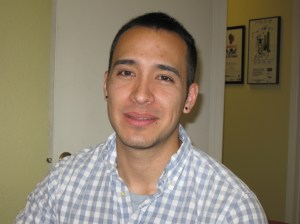
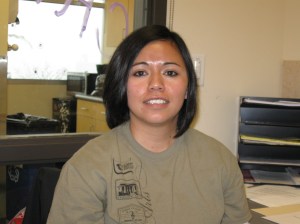
How Mormonism shaped Salt Lake City gay activist Troy Williams

Story and slideshow by CONNOR WALLACE

See Troy Williams in action.

It is difficult to mention Troy Williams without bringing up his experiences with the Mormon Church and his activism in the gay community. But Williams, production and public affairs director at KRCL 90.9 FM, is better known for his role in the Salt Lake City Kiss-Ins.

Williams grew up in Eugene, Ore., where he was raised in the LDS church. Like others, he decided to go on a mission and was sent to England. Looking back, he says there were signs that he was gay.

“I pushed down my sexual desires in such a way that I channeled it into zealotry,” Williams said. “But it would creep out in interesting ways. I was on my mission from ’89 to ‘91, and I still broke the rules so that I could get the new Madonna CD that came out or the new Erasure CD, all this gay stuff, gay music. I remember teaching … and this family let us in to teach the first discussion. So here I am talking about Joseph Smith … and I see for the very first time on the television set the Madonna ‘Vogue’ video and all of the sudden I’m transfixed…. All I could do was watch.”

After returning home from his mission he was an intern with Utah’s chapter of the Eagle Forum. In Utah, The Eagle Forum is a religiously conservative anti-gay organization that focuses on affecting policy. Williams tried to deny his identity while there, but it kept bubbling to the surface. Since then he has maintained a cordial relationship with Gayle Ruzicka, the chapter’s president.

“I love Gayle Ruzicka and Gayle Ruzicka loves me, and she’ll tell anybody. Gayle always says ‘I have gay friends’ and ‘I’m not a homophobe’ … Well she’s talking about me and other people that she knows,” Williams said.

Although Williams cares for her, he acknowledges the negative impact she and former Utah State Senator Chris Buttars have had on equal rights. Both have succeeded in striking down legislation that would give the gay community more rights.

“Make no mistake, I don’t trivialize the damage that she’s done to LGBT families because it’s been horrific,” Williams said. “But on the flip side of that I think that Gayle and Chris Buttars and all these homophobic adversaries in Utah have really helped the LGBT community congeal to become stronger, to become more weathered. We’ve organized so much and a lot of it is due to the fierce opposition that we’ve had.”

Williams also points out that not only does this opposition help to make the community stronger, but it also helps each individual to feel more wanted.

“Salt Lake City is one of the easiest places to be a gay person,” Williams said. “It’s so easy to plug in to the community here. We just kind of take you in.”

After his time at the Eagle Forum, Williams reevaluated his life and became more entrenched in the gay community. He eventually landed at the local nonprofit indie-music radio station, KRCL, which debuted in 1979. It was one of the first to put gay people on air when it introduced “Concerning Gays and Lesbians” in the 1980s.

Williams has used KRCL as a type of conduit to help not only the gay community, but also the Salt Lake City public as well. “RadioActive” is a set of community features that explore the different issues concerning the Salt Lake Valley. “RadioActive” has moved from being a one-hour show on Sundays to a segment that is played each hour.

Vicki Mann is the general manager of KRCL, located at 1971 W. North Temple. She said Williams is vital to the station because he oversees the community connection features, fills in as a DJ when needed and is a hard worker.

“He really does whatever he needs to do,” Mann said. “He’s a roll-up-your-sleeves kind of guy.”

In 2009, Williams took the activism out of the radio booth and onto the doorstep of the Mormon Church. Two gay men were arrested for kissing on Temple Square. In response, Williams helped lead three Kiss-ins there. Although the events were in protest, one of the Kiss-ins ended up bringing him together with his current boyfriend.

“I had to lead the Kiss-ins but I didn’t have anybody to kiss until I scanned the crowd, and there was this adorable guy there. I actually just went down and grabbed him and pulled him up with me, and then the pictures were shot and then it ended up in the [Salt Lake] Tribune and then three and a half years later he’s been my boyfriend. When I go in and meet with [the Church of Jesus Christ of Latter-day Saints], I’m always like ‘I want to thank you guys for helping me to hook up with my boyfriend because if it wasn’t for you arresting those two boys on the plaza I never would have met Josh,’” Williams said. “It’s fun to tease them about that a bit.”

Williams was in the spotlight again soon after his role in the Kiss-ins. He received a part on the “Colbert Report,” a satirical news show. He was also in “Tabloid,” a documentary about a woman who tried to seduce a Mormon away from his religion, and even met another famous Utahn.

“That was like the craziest week for me because I went and and shot the Colbert piece, and then I went to L.A. and did the … film the next day, and the third day I met with Roseanne Barr in a coffee shop and developed this deep friendship that I still have to this day,” he said.

Brandie Balken, director of Equality Utah, was a former co-host of “RadioActive” with Williams. Equality Utah is a civil rights organization that focuses on improving LGBTQ people’s lives through political action and educating the public about issues facing this community. Balken points out that there are more similarities than differences between Mormons and LGBTQ people.

“We share families, we share workplaces, we share neighborhoods, our kids go to the same schools,” Balken said. “There’s a lot of interface between these supposedly separate communities.”

Williams agrees and points to the group, Mormons Building Bridges. Members of the organization marched in June 2012 with Williams and Dustin Lance Black, the Academy Award-winning writer of the movie “Milk,” in the Utah Pride Festival Parade.

“We marched at the front of the Pride Parade with 300 active Mormons who, in their Sunday clothes, were marching to show their support for the LGBT community. That’s unprecedented, and it sparked Mormons marching in 10 different Pride parades across the summer, across the country,” Williams said. “This is such an exciting time. You can actually see the nation shifting on an issue and it’s happening so rapidly.”

Troy Williams continues his advocacy on behalf of the LGBTQ community and his work to improve relations with the LDS Church.

“I think without folks like Troy,” Balken said, “we are more likely to leave people behind.”

Immigration and gay rights discussed at the University of Utah

Story and photos by CONNOR WALLACE

Immigration and gay rights are usually thought about as two separate topics. This becomes a problem when individuals are both immigrants and identify as being gay. A panel at the Hinckley Institute of Politics on Oct. 4, 2012, titled “Pride Has No Borders” discussed both immigrant and gay rights during the University of Utah’s Pride Week. The panel included immigration attorney Mark Alvarez; Utah AIDS Foundation Hispanic Outreach Coordinator Alex Moya; and Mariana Ramiro-Gomez, a staff member of the U’s LGBT Resource Center. The topics of gay and immigration rights are not only pressing in this state, but also on a federal level.

According to the organization Immigration Equality, in May 2012 Pres. Obama announced his support for same-sex marriage. His administration then created a “written guidance that will extend discretionary relief to lesbian, gay, bisexual and transgender (LGBT) immigrants with U.S. citizen spouses and partners.”

Even though important steps are being made toward immigration equality, it is still very unequal.

“Same sex couples are not able to apply for certain immigration benefits the way heterosexual couples would be able to,” Alvarez said at the panel discussion.

He said that even though the U.S. is a progressive country, other countries are farther ahead in gay rights.

“There’s sometimes a misimpression that Latinos are slow on LGBT issues. That’s not true. I lived in Spain,” Alvarez said. “Spain has marriage equality. Argentina has marriage equality. Colombia allows same-sex couples rights in immigrating.”

According to the Library of Congress, the Uniting American Families Act of 2011 hopes to “amend the Immigration and Nationality Act to include a ‘permanent partner’ within the scope of such Act. Defines a ‘permanent partner’ as an individual 18 or older who: (1) is in a committed, intimate relationship with another individual 18 or older in which both individuals intend a lifelong commitment; (2) is financially interdependent with the other individual; (3) is not married to, or in a permanent partnership with, anyone other than the individual; (4) is unable to contract with the other individual a marriage cognizable under this Act; and (5) is not a first, second, or third degree blood relation of the other individual.”  This act, if passed, would affect the lives of thousands of people in the U.S.

“There are 36,000 couples affected by the inability to apply for immigration benefits. This is according to the 2010 U.S. Census,” Alvarez said. “The Uniting American Families Act, which has been proposed before the Congress for a decade, would allow permanent partners to be sponsored for residence.”

Alex Moya’s main focus at the Utah AIDS Foundation is speaking with gay Spanish-speaking immigrant men about health promotion and HIV prevention. It is this kind of boundary crossing that shows the division between immigration rights and gay rights.

“I think in publications and the mainstream discourse we talk about straight immigration rights and in the gay movement we talk about white men who want marriage but we don’t talk about what happens in between,” Moya said at the panel.

In an interview with Moya, he said that gay marriage isn’t thought about the same way in the gay Hispanic immigrants as it is in the mainstream gay community.

Alex Moya sees a unique side of the gay marriage debate due to his work with gay Hispanic immigrants.

Alex Moya sees a unique side of the gay marriage debate due to his work with gay Hispanic immigrants.

“When mainstream citizens are talking about gay marriage as a right, sometimes that has a different meaning for the guys that I work with,” Moya said. “There’s the idea that yes we should care because if same-sex marriage is legal then there’s another way to gain the green card, but there are many that don’t want to get married to a citizen. So I think that the conversation about the rights of the LGBT people is sometimes a little bit different on what we’re looking for as immigrant Latino men.”

Moya, who graduated from the University of Utah, said information about the gay minority community is not taught in schools.

“I think education needs to change. I think I was here five years and most of the important learning about queer people of color I’ve done outside of this institution,” Moya said during the panel. “I think teachers who don’t decide to dedicate the last class to talk about queer issues or to talk about Latinos needs to happen. I don’t see why it is more important to teach about one culture or one race over the other. I think that it should be more balanced.”

Mariana Ramiro-Gomez works for the LGBT Resource Center at the U. She is originally from Mexico, and is a legal resident in the US. When she and her family applied for their green cards, she feared coming out to her parents would ruin her chances for legal residency.

“I didn’t know if [my mother] was going to kick me out or if she was going to disown me or if I would have a family, and ironically when I was coming out is when we were in the middle of the process of getting our green cards,” Ramiro-Gomez said. “I was afraid that they would not include me as part of the process and the paperwork to get my permanent residency.”

She hopes that laws will change to make gaining legal residency and moving from one country to another easier.

Mariana Ramiro-Gomez said that being gay and Hispanic means she has to censor her identities depending on which group she is with.

Mariana Ramiro-Gomez said that being gay and Hispanic means she has to censor her identities depending on which group she is with.

“Nature doesn’t stick to these arbitrary borders that we’ve placed upon it. So I do believe that anything and everything that’s living would freely transfer,” Ramiro-Gomez said. “Especially between Canada, US and Mexico there is NAFTA so all of our produce and all of our trade travels freely but our bodies cannot. Ideally, our bodies would be part of that transfer. Realistically, I would love to see some sort of legal path toward legalization where everyone who is here already who is undocumented would get access to a green card to at least be here temporarily, ideally permanently.”

Ramiro-Gomez said the fear of her partner being deported is ever present for her. She would have to choose between going back with her partner to Mexico, which would disqualify her from legal residency here, or she would have to stay here and hope that laws change to the point where her partner can come back to the US.

There is hope for change. The Uniting American Families Act is one such option that allows permanent partners to stay in the US. This, coupled with gay marriage being passed in nine states as well as the District of Columbia, shows signs of change coming sooner rather than later.

2012 election results give LGBT community hope

Story and photo by DAYLAN JONES

“To achieve change, it takes multiple approaches.”
Two women hold hands to show strength and unity for a cause

“To achieve change, it takes multiple approaches,” explains Brandie Balken, executive director of Equality Utah.

Balken compares the inequality the LGBT community faces right now to the Civil Rights Movement. People were treated differently by others simply because of the way they were born. African-Americans eventually achieved equal rights and changed history.

Kari Ellingson, associate vice president for student affairs at the University of Utah, said, “There is a lot of unawareness. The more people become aware, the harder it is to discriminate…. Once you begin to recognize you know LGBT people and like them, the more you see them as people and that’s when legislation starts to change.”

Equality Utah is the state’s largest advocacy and policy organization for the lesbian, gay, bisexual and transgender (LGBT) community.

According to an Equality Utah email sent after Election Day, “YOU made this possible! … Thanks to you — our volunteers and supporters, we have accomplished so much to elect pro-equality candidates and build support for statewide nondiscrimination in employment and housing!”

The email also noted progress across the country for the LGBT community. Voters in Maryland, Maine and Minnesota passed same-sex marriage, the first openly gay senator was elected into office and the first president ever to endorse marriage equality was re-elected.

Equality Utah and the LGBT community have taken steps forward in Utah in recent years. According to the website, “In 2008 Equality Utah passed a bullying and hazing bill that created a statewide definition of bullying and hazing and outlines the minimum standards for bullying and hazing policies in local districts and charter schools. In 2010 Equality Utah added cyber bullying and verbal harassment to the list of prohibited behaviors.”

Most recently in 2012, in collaboration with the political election, Equality Utah released this statement: “‘It’s Utah’s time to lead!’ Last night we saw that the LGBT voice carries real power. Where are we headed next? The 2013 legislative session where we can, and we will, lead the nation by ending discrimination for LGBT Utahns and their families in workplace and housing.”

Equality Utah is constantly striving to look forward for a better tomorrow and has 21 “Equality”-endorsed Utah elected officials who it believes will join the organization in the fight for civil rights.

One of the  fights Equality Utah is winning is with bullying in schools. This is a major problem, one that parents can’t truly protect their child or children from. Balken said that when she was a child, bullying wasn’t as bad as it is today because she got to go home and escape it.

But these days, children can’t escape it because technology is everywhere. Cell phones and social media are constant for the younger generation. This makes the cyberbullying issue that much more crucial to stop in its tracks. Balken said the bullying and hazing bill that was passed will help make a difference in people’s lives; individuals want to live as normal of a life as possible while being treated equally.

“Equality means all of us” is the underlying theme that keeps her going. Balken said the LGBT community is facing more than just unequal marriage rights today. Some of the other obstacles include being unable to visit one’s partner in the hospital.

According to a 2011 poll of Utahns released by the Human Rights Campaign, “Seventy percent of respondents said they know someone who is gay or lesbian and 42 percent said their feelings about LGBT people have become more accepting over the last five to 10 years. (Seven percent said they have become less accepting.)”

Kari Ellingson said, “It’s important to recognize victories when you have victories, even if they seem small. The LGBT community made progress through this election nationwide. Here in Utah they received some hard knocks last session yet, they know it is important to keep standing up for things that matter.”

2013: LGBTQ equality in Utah? It has a fighting chance

Story and photo by SASCHA BLUME

With the 2013 Utah legislative sessions set to begin on Jan. 28, the lesbian, gay, bisexual, transgender and queer community is in a political quandary.

Max Green, advocacy coordinator for Equality Utah in Salt Lake City, said, “We’re not asking for special treatment, just the same protection that everyone is provided.”

Green said the national and state elections of 2012 have made an impact on the coming year’s legislative process.

“With so much turnover from the elections not every person is up to date and not every legislator is familiar with the legislative readings,” Green said.

This makes it particularly difficult to have a season-long dialogue about specific legislation, Green said.

In an attempt to bring equal rights and protection to the LGBTQ community, Equality Utah created the Common Ground Initiative in 2012. The nonprofit organization’s mission is: “To secure equal rights and protections for LGBTQ Utahns and their families.”

This proposed initiative was designed to positively impact four problem areas in Utah’s LGBTQ community:

(1) Fair housing and employment (SB 51). Currently, Utahns can be evicted from their house because of their sexual orientation.

(2) Expanding health care (HB 64). Currently, lesbian and gay individuals cannot visit a loved one in a hospital.

(3) Relationship Recognition (SB 126).

(4) Inheritance. LGBTQ individuals are unable to claim inheritance when their partner dies.

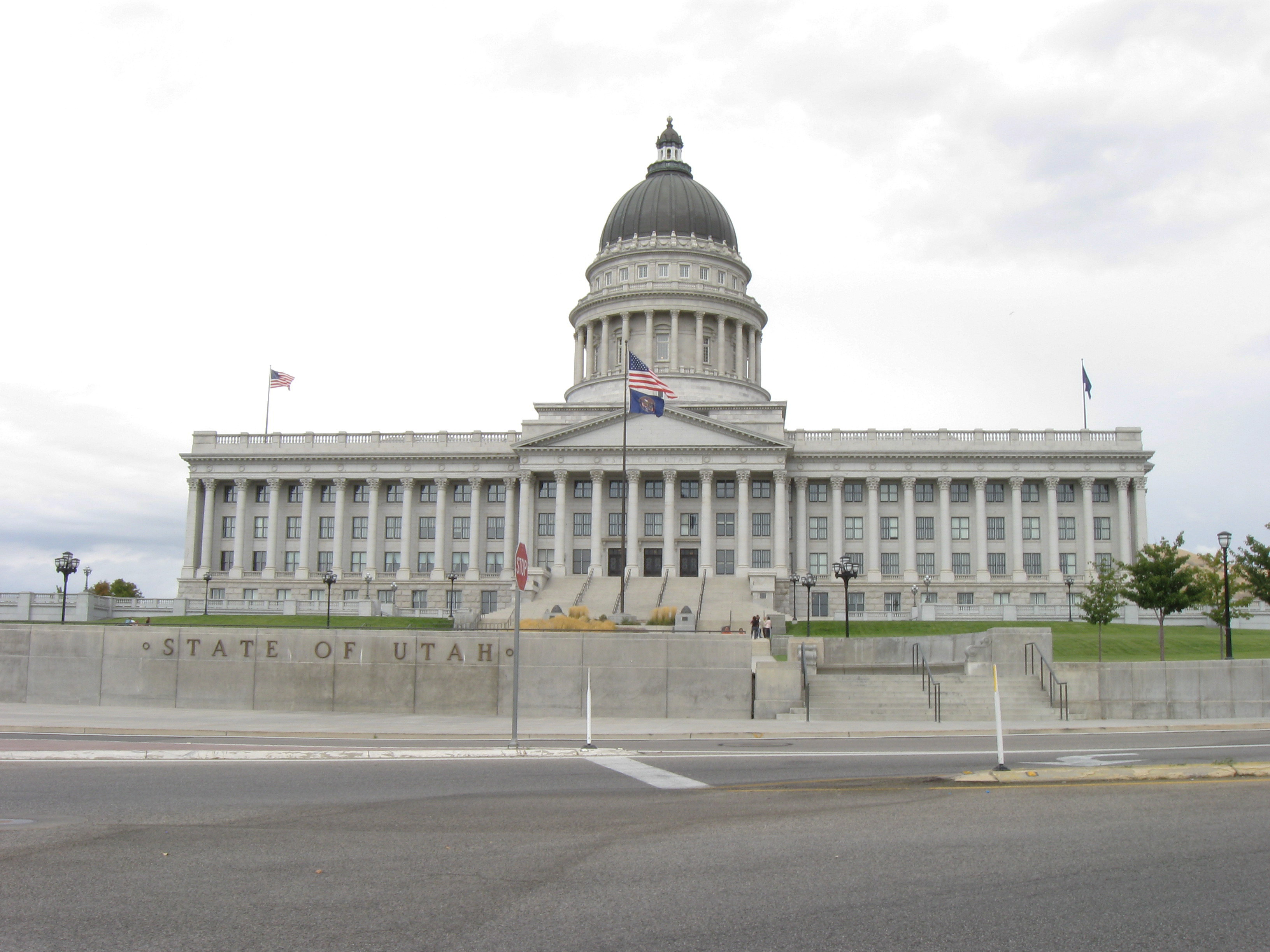
During the 2012 legislative sessions, Utah’s Sate Capitol Rotunda was the site of a rally organized by Human Dignity Utah. The purpose of the rally was to encourage Utah legislators to ratify the Common Ground Initiative.

The rally drew more than 100 people — some carried signs, others sang, but all were there to show solidarity in their quest for equality.

Five speakers addressed the audience and the dozens of lawmakers who watched from the third-floor balcony surrounded by armed Utah Highway Patrol officers.

Sister Dottie Dixon, a local art performer, told the audience, “By showing up here today we’re showing that we are fed up; we’re tired of being ignored, politely dismissed, relegated to second-class citizens.”

Kathy Godwin, president of the Salt Lake Chapter of Parents, Families and Friends of Lesbians and Gays (PFLAG), told the crowd that the majority of Utah citizens and businesses want equal protection for the LGBTQ community. She also said that approximately 70 percent of Utahns encourage state legislators to give civil rights to the LGBTQ community.

Isaac Higham, a keynote speaker with Human Dignity Utah, said after the rally, “I’m sick of the nonchalance of how easily they just dismiss our community and don’t even give us a true fair hearing.”

Higham said that Utah legislators are misinformed regarding what the people of Utah want. He said it’s the job of all Utahns to remind lawmakers that they are in office to work for the people, not just their agenda.

The Common Ground Initiative failed. All four bills went unheard and were effectively tabled.

Affirmation helps gay and lesbian Mormons reconcile faith and attractions

Story and slideshow by JAKE GORDON

Take a photographic tour of this story!

In many opinions, society as a whole is slowly becoming more accepting of the lesbian, gay, bisexual and transgender community. Organized religion, however, is almost the complete opposite. Most religions do not accept gays and lesbians, and often opposes them in many of their actions.

The problem is, many inside the LGBT community still hold on to their religion beliefs that they grew up with. Affirmation is a national not-for-profit organization with a chapter in Salt Lake City that helps provide much-needed support and belonging for gay and lesbian Mormons.

Affirmation President Joshua Howard Behn expresses the importance of having the group for gays and lesbians who still feel the need for their spiritual side.

“Affirmation essentially is a group that provides a safe place for those that are trying to reconcile their faith with their orientation and that is within the context of the LDS Mormon faith or heritage,” Behn said while sitting down for an interview in front of Café Marmalade in Salt Lake City. “For those who are just coming out, it gives them a place to talk to people who have been there and done that. It also gives them a safe environment where they can ask questions and not have to worry about the faith itself, because that can come later.”

Behn said there are other resources for the gay and lesbian community in Salt Lake City, but they are broader in scope. Affirmation specifically helps gay and lesbian Mormons with the spiritual aspect.

“We understand our people and we can speak the language,” Behn said. “When you are talking to somebody that is having a very difficult time, it helps to hear from somebody who relates to you directly and knows your story.”

The history of Affirmation goes as far back as 1977, when a group of gay Mormons quietly met at Brigham Young University in Provo, Utah, talk about faith and their same-sex attractions. Matthew Price was at those first meetings and became enthused at the idea of a national organization of gay LDS people. Although it hit its fair share of speed bumps of not being able to meet regularly, the meeting in December 1979 marked the real beginning of Affirmation as a national organization.

Currently, 11 regional chapters of Affirmation exist in the United States and the first official chapters started in Los Angeles and San Francisco.

As the president of Affirmation for 2012, Behn admits that the group has hit a crossroads after nearly 35 years of existence.

“Historically, we have tried to have a big tent model where we don’t care if you are in the church, we try to maintain everybody,” Behn said. “But now, there are needs that really aren’t being met because things are changing. The church is becoming more open.”

The crossroads of the organization is its struggle to define itself.

“There are those in the group that still want their faith very much and so it comes down to whether to define for those that want their faith or do we define it for all,” Behn said. “Personally, I don’t think that we can’t be everything to everybody as a group because we don’t have the resources for that.”

Chapter members range in age from 18 to 60-plus.

The group informally gets together as a chapter, but Affirmation also has national parties and events that all members are encouraged to attend.

Behn has noticed that church membership is changing more toward acceptance far more drastically than the leadership is. Those living in a ward would be hard-pressed not to find a family that currently doesn’t have a member that is either gay, lesbian, bisexual or transgender, he said. A ward is a neighborhood of church members who meet together for worship.

Mark Packer, who has been a member of Affirmation since he came out in 1991, has found comfort in the group. He was introduced to Affirmation that year by his partner. Packer at first was admittedly scared out of his mind to socialize with a group of gay and lesbian Mormons.

“I have a lot of friends in Affirmation,” Packer said during an interview at the Salt Lake City Library. “Early on, it was critical for me because I was early in my coming-out stages. To hear other peoples stories and to hear what they have gone through and what they are going through helped me to be able to survive at the time.”

Packer admitted that he thought occasionally about suicide during the coming-out process. He said it is also helpful to tell his story to fellow members, and he likes to be there for others who are coming out and need the same support that he received.

“It’s the old thing where I had a position in the church,” Packer said. “I had a wife and I had kids and at first I was scared to be found out. I was just scared of other gay guys.”

Before coming out, Packer was heavily involved in The Church of Jesus Christ of Latter-day Saints and even held callings of elder’s quorum president and ward executive secretary, both of which are responsible leadership positions.

“Looking back now I chuckle because it was complete chaos for a while and very unpleasant,” Packer said about his active life in the church.

Packer said he hasn’t attended church services since 2010, but he hasn’t really left the church.

“I was excommunicated (stripped of membership) in 1999,” Packer said. “The way I look at it is the church left me because that was not something I was looking to do.”

One of the last times Packer attended church was in November 2010, when he came out in front of his ward in fast and testimony meeting, where members share their spiritual feelings.

“I didn’t think it would cause trouble but it did,” Packer said. “I just felt like I needed to do it. It caused trouble with the leadership, not with the ward members.”

Like Behn, Packer has noted more willingness among younger Mormons to accept gays and lesbians. However, the church leadership is much slower when it comes to accepting gays and lesbians.

The Church of Jesus Christ of Latter-day Saints has been firm on its position of what marriage is and who is supposed to get married. As part of a message given in the General Relief Society Meeting in September 1995 titled, “Family, A Proclamation to the World,” Gordon B. Hinckley, who was president of the church, said, “The Family is ordained of God. Marriage between man and woman is essential to His eternal plan. Children are entitled to birth within the bonds of matrimony, and to be reared by a father and a mother who honor marital vows with complete fidelity.”

Utah voters mirrored this sentiment in 2004 with the passing of Amendment 3, a same-sex marriage ban.

Two years later, Dallin H. Oaks, a member of the Quorum of the 12 Apostles, shared his thoughts of the homosexual lifestyle in a press release.

“This is much bigger than just a question of whether or not society should be more tolerant of the homosexual lifestyle,” Oaks said. “This is more than a social issue – ultimately it may be a test of our most basic religious freedoms to teach what we know our Father in Heaven wants us to teach.”

Scott Trotter, media spokesman for The Church of Jesus Christ of Latter-day Saints, declined an interview request for this story.

Behn and Packer do hope for change in the church, but both men know that change won’t come swiftly.

Affirmation President Behn knows that members in the church hold a lot of power for change inside and outside the church as well.

“Once the membership is ready for it to change on a massive scale, then the leadership will be ready,” Behn said.

Lack of marriage equality for LGBT hinders immigrants’ ability to come to America

Story and photos by MATT ELLIS

For years there has been a struggle for the nationwide recognition of same-sex marriage. Some states have legalized the marriage of same-sex couples, but most have not and political battles wage on. At the center of the debate are liberties that are denied non-married couples. Though these discussions have taken a more prominent role in our culture over recent years, the implications of these policies on immigration have been discussed in far smaller circles.

The University of Utah Hinckley Institute of Politics is where five panelists gathered to discuss rights for LGBT immigrants on Thursday, Oct. 4, 2012.

The challenges that face same-sex couples where both partners are American citizens are compounded exponentially when crossed with issues of immigration, mostly because of the denial of rights that would normally be afforded to a couple trying to enter America.

Many pieces of legislation are under fire by those fighting for same-sex couples’ immigration rights, but the one that may be the most central is the Defense of Marriage Act (DOMA), passed in 1996. Section 3 of DOMA defines marriage exclusively as the union of a man and woman, and the word “spouse” as a reference only to a partner of the opposite sex.

Under these definitions, an American citizen can request citizenship for their partner so long as that partner is of the opposite sex. For same-sex couples, immigration to the U.S. can be vastly more complicated.

Mark Alvarez, an immigration lawyer in Salt Lake City, spoke at a panel at the University of Utah in October 2012 on the difficulties that face same-sex couples who want to immigrate to the U.S.

“It’s because of DOMA,” Alvarez said. “A same-sex couple cannot petition for normal family rights.”

Because an individual has no legal grounds for petitioning for the citizenship of a same-sex partner, the partner often has no way of achieving that status and is forced to leave the country with or without their companion.

Mariana Ramiro works with the LGBT Resource Center at the U. She is originally from Mexico City and has had personal experience with the difficulties of immigration.

She and her family immigrated here illegally, and lived illegally for more than a decade. She eventually got a green card and is now in a five-year probationary period before citizenship where she can still be deported for any reason.

Mariana Ramiro smiles for the camera. She and her partner are enduring the very issues that the panel was assembled to discuss.

Her partner is in a similar situation, which puts a great deal of stress on their relationship.

“I can be with my partner here, but if my partner ends up getting deported there’s no way to [bring us back together],” Ramiro said at the panel. “I either stay here and try to become a citizen, and maybe hope that in the future there is something that will change that I can bring my partner back. But realistically we are going to be separated unless I choose to go back there, but then that would disqualify me from citizenship.”

These fears are very real, even for those who have been legally married in the U.S.

In the case of Pablo Garcia and Santiago Ortiz, whose story was published on immigrationequality.org, the two were legally married in Connecticut but Garcia is not an American citizen.

Ortiz, who was born in New York, is an American citizen but because DOMA overrides local laws even he and his partner are not exempt.

Ortiz has tested positive for HIV and sometimes has to travel abroad to receive treatment. Garcia is unable to accompany him on those trips because he fears he would not be allowed reentry. When Ortiz’s father died Garcia couldn’t even attend the funeral in Caracas, Venezuela.

“You are putting yourself at risk for legal ramifications, for jail time, for pursuit under the state,” Max Greene, the advocacy coordinator for Equality Utah, said at the panel. “Those things prevent people from real meaningful relationships because you are already in the society where some of us aren’t valid. Imagine what that does to someone’s ability to be who they really are.”

But hope is on the horizon for couples like Ortiz and Garcia.

In 2011 the Obama administration announced that it found Section 3 of DOMA to be unconstitutional as it relates to issues of immigration, bankruptcy and public estate taxes. Though there has not been a formal repeal of the law, the administration decided that it would no longer be defended in court.

Eight federal courts, including the First and Second Circuit Court of Appeals, have also found Section 3 to be unconstitutional and as of 2012 several cases regarding immigration were awaiting a response to review in the U.S. Supreme Court.

Additionally, according to the Global Post, the Immigration and Customs Enforcement Agency has announced that deportation will not be a priority for illegal immigrants who have strong family ties in the U.S., specifically those in the LGBT community.

Many have compared the struggles of the LGBT community with the African-American civil rights movement and while that does entail subjugation and oppression, some are hopeful that the end result will be similar and that equality will soon emerge.

Alvarez is confident that, in spite of the political dealings moving at such a slow pace, America is ready for the next step.

“I think our society is [moving] forward,” the immigration lawyer said at the panel. “I firmly believe this country is on its way to marriage equality. The question is when, and I think it’s coming sooner rather than later.”

Equality for Utahns based on awareness

Story and photo by PAUL S. GRECO

Awareness is a compelling issue among the lesbian, gay, bisexual and transgender (LGBT) community. “Our biggest obstacle on Capitol Hill in Utah is awareness,” said Brandie Balken, Equality Utah’s executive director.

She said a lack of understanding regarding the rights of the state’s LGBT citizens daunts advocates. Envisioning a fair and just Utah is Equality Utah’s hope.

“Equality means all of us,” Balken said.

Equality Utah, located in downtown Salt Lake City, was established in 2001. It is the state’s largest civil rights organization for LGBT Utahns.

Max Green, a University of Utah alumnus, has been Equality Utah’s advocacy coordinator since December 2011.

Max Green with Equality Utah.

Green said he conducts citizen-lobbying and advocacy trainings to educate people about LGBT concerns. He alerts individuals to help make political changes that will bring equality to Utah’s LGBT community.

He said the primary goal of these trainings is to increase the number of supporters who will vote for more fair-minded officials.

Homelessness among LGBT youth

In 2008, UCLA’s Williams Institute used data gathered from the U.S. Census Bureau to estimate Utah’s LGB population at between 47,000 and 63,000.

In its mission statement, Equality Utah advocates to secure equal rights and protections for LGBT Utahns. Along these lines, Green addressed the concern of self-disclosure. He said there are safety factors involved. “It’s not necessarily safe for everyone to come out,” he said.

“There are people who are so admittedly against the LGBT community,” Green added, “that if it’s their child, they don’t know how they would react.”

He said many youth end up homeless when they come out to their parents.

According to the 2011 Comprehensive Report on Homelessness in Utah, “Sexual orientation is often cited in studies of homeless youth as one of the contributing factors in a youth’s reason for being expelled or running away from home. In the Utah survey, 29% of homeless youth were not heterosexual.”

This survey was conducted by the Volunteers of America Youth Drop-in Center, Salt Lake County Youth Services, the Utah Pride Center and Valley Mental Health. The report was based on youth aged 15 to 24.

LGBT youth and suicide

Another result of inequality and unfairness is suicide. As a member of Utah’s LGBT community, Green lost three close friends – in the course of junior high school through college.

“Not as a result of their sexuality, but their treatment because of their sexuality,” Green said.

According to a 2009 study by the American Academy of Pediatrics, “LGB young adults who reported higher levels of family rejection during adolescence [compared to heterosexual young adults] were 8.4 times more likely to report having attempted suicide, 5.9 times more likely to report high levels of depression.”

Bullying problems

Green said he not only wants Utahns to be aware of the LGBT concerns, but also for the LGBT community to be aware that change can and is happening.

In 2011, two Utah school districts, Salt Lake and Park City, passed an anti-bullying policy that includes sexual orientation. This is enforced among students as well as school employees.

Also involved in promoting equality for LGBT Utahns is the Human Rights Education Center of Utah (HREC), founded by Carla Kelley. She serves as HREC’s executive director and advocates against bias, bullying and discrimination of LGBT individuals.

“We have no right to dehumanize any human being,” Kelley said.

Kelley is not a member of the LGBT community; however, she is a single mother of three with one son who is openly gay.

Civic Ventures recognized Kelley as a social entrepreneur over 60. She also has received several acknowledgements for her humanity efforts. In 2009, Kelley was named Wasatch Woman of the Year by Wasatch Woman Magazine.

Kelley explained that it would be beneficial for individuals to check their biases and ask, “Why do I have these?”  Kelley said self-awareness of personal biases can help individuals better understand inequalities through association.

Equality Utah’s website details ways for individuals to get involved. Similarly, HREC has information on how to advocate for LGBT rights.

Max Green, with Equality Utah, said, “I believe that a better place to live is one where all of its citizens are respected, everyone has value, everyone has the same footing under the law. If society were changed slightly, not just for one group but for all of us, it would make a huge difference on the lives of kids growing up today.”

Inequality for same-sex couples in Utah’s laws

Story and photo by ADRIENNE PURDY

“It sucks. It’s just really, really sucky,” Brandie Balken says.

Balken is the executive director of Equality Utah and she has something to say about the lack of fairness of laws in Utah.

For instance, lesbian, gay, bisexual and transgender individuals can be evicted or fired because of their sexual orientation or gender identity. Access to healthcare for LGBT couples is limited and adoption in Utah as a same-sex couples is impossible.

It is legal to fire or evict LGBT people in Utah today. It is legal to discriminate against someone because they are or are perceived as LGBT.

Equality Utah Foundation, based in Salt Lake City, is an organization that aims to educate the general public and the LGBT community alike about issues impacting the LGBT community. It also works at passing legislation and raising awareness.

According to the American Civil Liberties Union, Utah’s laws make it illegal to discriminate based on sexual orientation in public employment, which means it is legal to discriminate based on gender identity in public employment, and to discriminate based on gender identity and sexual orientation in non-public employment.

The Utah legislative session is scheduled to begin Jan. 28, 2013.

Utah’s laws are way behind the 17 other states whose laws prohibit discrimination based on sexual orientation and gender identity in any form in employment.

The Employment Non-Discrimination Act (ENDA) is a pending federal legislation that would protect individuals from discrimination in employment based on an individual’s sexual orientation.

While some states are forward thinking in having equality among all Americans, some states and some national legislation have yet to catch up. This same problem is happening with adoption by same-sex couples in Utah.

According to the Human Rights Campaign second-parent adoption, or adopting the child of a partner, is a legal option in 18 states, a petition option in eight and a possibility in others.

But not in Utah.

A joint adoption, where the couple adopts a child from the biological parents or a child in the custody of the state is a legal option in 18 states, a petition option in two and a possibility in others.

But not in Utah.

Utah is one of two states that prohibit adoption by gay and lesbian couples. The legislation bans any unmarried couple from adopting and since same-sex marriage is not legal in Utah this law extends to the LGBT community.

As Balken says, it is possible to help raise a child for years and still be a legal stranger to that child. Although adoption by same-sex couples is not legal in Utah, it is recognized if completed outside of Utah.

Rocky Dustin, a freelance court reporter, says he does not come across many cases involving same-sex adoptions in part because it’s very uncommon in Utah and adoption legislation has a long way to go.

While Utah may be behind in the adoption aspect, it is much more represented in the case of healthcare.

The Healthcare Equality Index is an annual healthcare survey that rates respondents on their policies related to LGBT patients. Hospitals and clinics are rated based on non-discrimination, visitation and employment non-discrimination policies and training on LGBT care.

The University of Utah Hospitals and Clinics system was a respondent in the poll and qualified in two of the four requirements. This illustrates that as a major health provider in Utah, it is taking steps to improve availability and patient care to all Utahns.

The healthcare system did not, however, meet the requirement for the visitation policy, which “grants same-sex couples the same access as different sex couples.” This includes access to one’s partner as well as children under 18. Until Utah state laws catch up, the Healthcare Equality Index score will remain unchanged.

In 2011 the Salt Lake City School District added medical coverage for domestic partners of district employees. This is the first school district in the state of Utah to do so.

In addition to medical insurance, medical power of attorney is a critical aspect of equality in Utah. For a gay or lesbian couple to be able to have medical power of attorney for their partner, it requires a very expensive process of having multiple documents drawn up to prove that they are indeed able to make those medical decisions. Different-sex couples do not have this problem.

In a phone interview, Peter Asplund, an associate general counsel for the Office of Legislative Research and General Counsel, said, “There are automatic rights with marriage and medical power of attorney is one of them, except in the case of same-sex couples,” he said.

Although laws in Utah regarding equality may be lacking, the overall climate of attitudes toward the LGBT community is changing.

”Forty-two percent said that they have become more accepting,” Balken said, referencing a poll commissioned by the Human Rights Campaign in 2011. “And more than three-fourths now support anti-discrimination laws.”

Equality across the nation and in Utah has been a long time coming and still has a ways to go. But Balken is confident it will happen.

“We saw it first with gender and then race,” Balken said. “This is the next human rights movement.”

Fighting for Utah LGBT rights involves more than just marriage

Brandie Balken, executive director of Equality Utah, works in her office October of 2012 in downtown Salt Lake City.

Story and photo by JAKE GORDON

Fighting for equal rights in behalf of the lesbian, gay, bisexual and transgender community isn’t just about marriage — it is much more complex than that.

Brandie Balken, executive director for Equality Utah, expressed frustration that the public views gay marriage as the main issue.

“When we look at what the equality movement is and what our role in the equality movement is, we are really looking at the beginning of a person’s life all the way through the end of a person’s life,” Balken said in a talk to reporting students at the University of Utah on Sept. 13, 2012. “And I mention that because I think in the popular dialogue today, all we hear about is marriage and I have to tell you that there is so much more that needs to be done.”

The LGBT community has to fight hard for the same human rights that straight people generally take for granted. Rights like visiting loved ones in the hospital, transferring health and retirement benefits to a partner and being recognized as a non-biological parent are some things that Balken has had to fight for with the costly help of a lawyer.

“To secure access to your partner (in a hospital), even if you have been married in another state, you have to get a designated beneficiary contract and you need to establish a will and a trust if property is included,” Balken said. “My partner and I have spent literally almost $10,000 with our attorney preparing contracts to protect our home, to protect our life insurance investments and to protect as best we can our child to make sure that she is cared for.”

Tooele County Justice Court Judge John Mack Dow, who practiced law for 21 years prior to being named judge, talked about the differences between rights for straight and gay relationships.

“If there is a husband and a wife then the rights are transferred automatically in the relationship,” Dow said. “But if it is a homosexual partnership then they have to get the necessary paperwork and even that paperwork can be challenged in court by other family members.”

Balken has forked over the money to work with lawyers to become the medical decision-maker for her partner. When going on trips, Balken makes sure that she packs her paperwork and legal documents, just in case something does happen.

Niki Corpron, a registered nurse at Intermountain Healthcare hospital in Murray, said the hospital has strict policies regarding who can or can’t visit during an emergency.

“If someone is brought in by an ambulance and they have a homosexual partner then they aren’t allowed in to visit without the appropriate paperwork,” Corpron said. “If the partner doesn’t have their papers then they have to contact the family and receive permission from them.”

Balken is not only fighting for herself and her own family, but as executive director for Equality Utah she also is working for equitable rights for all in the state. Balken said Equality Utah was founded in 2001 as a political action committee, or PAC. The purpose of a PAC is to help people get elected into office. Equality Utah also fights legislation that seeks to disallow equal rights to gays.

She said that in the nation marriage is basically a state-by-state determination. Some states allow marriage, some states allow civil unions and some states, like Utah for one, prohibits any or all marriages or civil unions. Therefore, in Utah, equal rights are an uphill battle for Equality Utah and the LGBT community.

One piece of legislation Balken mentioned was a constitutional amendment that passed in 2004 penned by Rep. LaVar Christensen (R-Draper), which was called Amendment 3.

“This amendment to the constitution basically says marriage equality is prohibited, civil unions are prohibited, and any other contractual agreements with substantially equivalent benefits are prohibited,” Balken said. “That went before our legislature, was signed by our governor and put to the ballot in 2004 and more than two-thirds of the population of Utah approved that measure. So, currently in the state of Utah, marriage equality is banned in the constitution as are civil unions.”

Balken also knows that it takes multiple approaches to educate the public about equal rights.

“You have to educate the population about the issues, about the language, and about the implications of unequal policy,” she said. “You have to work with elected officials who are seated to understand the importance of equitable policy and to work with them to change that policy.”

Equality Utah works to get more fair-minded people in office, from the school board all the way up to the state house, to sustain achievable cultural change.

Although it is a long road to travel for equal rights, Equality Utah has had some success in passing some legislation. Balken said the organization passed in 2007 a bullying and hazing statute and a hate crimes prevention law.

“Those may seem like small things,” she said, “but . . . prevention of hate crimes or at least acknowledgement of hate crimes as well as prevention of bullying and hazing behaviors is crucially important.”

LGBT community pushes legislation for equal rights in Salt Lake City

Story and photo by MATT ELLIS

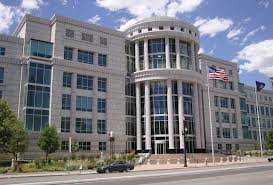
The Scott M. Matheson Courthouse is where the Utah Supreme Court meets.

It is no secret that people who are in the lesbian/gay/bisexual/transgender (LGBT) community may find life to be a lot more difficult on a day-to-day basis than those who are not. There are currently no laws against discrimination in the workplace and where they live. There is also a constant political battle as people who identify with the LGBT community fight for rights and protections many feel should be afforded to them as American citizens.

Though there seems to be growing support among the general public through most of Salt Lake City, people in the LGBT community are fighting an uphill battle in the court systems as they try to secure their liberties, such as the right to marry, the right to adopt children, and the right to be free of discrimination in the workplace.

Several organizations are involved in politics on behalf of the LGBT community, but little progress has been made relative to other, more progressive cities around the U.S. – such as San Francisco, where gender-reassignment surgery can be subsidized by the government.

So if the public opinion is shifting, why is it so hard to gain support in the political arena? Kai Medina-Martínez, director of the LGBT Resource Center at the University of Utah, summed it up simply.

“Gay, in our country, is not a good thing,” Medina-Martínez said. “It’s something to be ashamed of and be treated badly for.”

But in a study released in August 2012 by the Huffington Post and the Campus Pride Index, the U was declared to be one of the top-25 LGBT-friendly campuses in the nation. It seems, then, that the lack of widespread support for putting the LGBT community on an equal playing field probably goes deeper than just being gay or transgender.

“I think one of the first major obstacles is that any time you talk about protection and rights for LGBT it automatically means marriage,” said Brandie Balken, executive director of Equality Utah, in a phone interview. “There is not a lot of support for [gay] marriage in Utah among the population at large.”

That is due in large part to the presence of religious organizations, none more significant than the Church of Jesus Christ of Latter-day Saints. The LDS church holds firm that marriage should be between a man and a woman only. Given that many Christian sects share this belief and that America was founded on Christianity, this may help to explain why people are hesitant to show public displays of support.

Chad Christopher, a sophomore studying mass communication at the U and an openly gay student, said he supports legalizing gay marriage but he doesn’t think that it is totally necessary.

“It’s more about the benefits rather than the actual title of being married,” he said. “It’s about health benefits and just being able to really function as a family. If we can have all that, we don’t need the title.”

He said that unless things change over the next couple of years, he plans to leave Utah after graduation and settle in a place where he would be able to start a family, though he doesn’t know where yet.

But the struggle to legalize same-sex marriage is not the only legal battle the LGBT community is fighting. Every day, gay or transgender people are evicted from their homes or fired from their jobs simply because of the fact that they do not identify as a heterosexual male or female. Drew Call, a Salt Lake City man who worked for the LDS church, said in an interview with Salt Lake City Weekly that he is gay, but said he has never been sexually active with a man. In spite of that, he was fired from his job because of his friendship with other gay men.

Balken and Equality Utah, along with many other pro-LGBT organizations, hope that they can help our society progress to a point where things like gay friendships won’t matter.

Equality Utah is an organization that works to educate the public about the LGBT community and the issues it faces, as well as back political candidates who support the expansion of rights afforded to LGBT people.

“We’ve passed 25 pro-LGBT ordinances,” Balken said of EU’s work with local legislators. They include “fifteen [that] have to do with gender identity in housing and the workplace, four are to prevent bullying, and four others that are statewide statutes including a hate crime statute.”

She said Equality Utah plans to keep focusing on schools because bullies are targeting LGBT students. With students’ expanded use of social media websites such as Facebook and Twitter, Balken said it is much harder for students to escape the abuse and that her organization seeks to find a way to address that through legislation. Equality Utah was also able to pass a gatekeeper bill in March 2012, which mandates that teachers receive training on recognizing suicidal behavior in students and how to act accordingly.

Though she knows the road is not easy, Balken still has big plans for future legislative battles.

“Right now we are working on statewide legislation for housing and employment protection,” she said. “Further down the road we are looking at some sort of a contract package to make it easier [for LGBT people] to protect their homes, kind of like a will or trust.”

Such a package would allow unmarried same-sex couples to take advantage of many freedoms that are afforded to married couples, such as the ability to pass property on to their partner or make medical decisions on their behalf.

Balken said it might help the cause if there was a way to rally public support and try to get rid of the disconnect between popular opinion and that of the lawmakers, but she is not sure how that can be done.

“I would have addressed it by now,” Balken said, “I honestly don’t know.”