Iraqi refugees in SLC find differences and similarities

by BRETT PERFILI

  • View a slideshow of the families and the Humanitarian Center (best viewed in full-screen mode)

In the spring of 2003, the U.S. government sent in troops to invade Iraq because it was believed the country held weapons of mass destruction. The invasion also aimed to put an end to Suddam Hussein’s support for terrorism and to free the Iraqi people.

Since then, the United States is still there fighting for the freedom of the Iraqi people. However, U.S. troops have been able to capture Iraq’s leader and also see him executed.

Many Iraqi people have fled from their country to avoid persecution, discrimination and even death. Some of the Iraqis who have fled their native country have come to Utah.

Mazen Hamoudi, 32, an Iraqi native, is a doctor in Salt Lake City. Hamoudi said when American troops first arrived in Iraq there were differing feelings toward the soldiers.

“When the American soldiers came during the first few months, most not all, most of the Iraqi people say hello,” Hamoudi said. “But, after three months people started to hate the American soldiers. Americans angered Iraqis because of their behavior.”

Hamoudi did not flee his country as a refugee; he came by choice. He can speak fluent English, which he was taught beginning in the fifth grade. Hamoudi received his medical degree from Baghdad University and decided to come to the United States to avoid the dangers of living in Iraq and also to seek more money.

In late December 2006 Hussein was hung at Camp Justice, an Iraqi army base in a neighborhood of Baghdad. And again, mixed emotions existed among the Iraqi people, Hamoudi said.

“It is difficult to express my emotion,” he said. “He killed people, so he had to be killed, but not by this behavior. I was not happy at the time.”

Hamoudi said he now finds it was the right thing to do, but will always feel that Hussein contributed many positives to his native country.

“I consider him the perpetrator of the Iraqi people,” he said.

Omar Shakir, 40, a patient of Hamoudi’s, feels the same about Hussein, but still is mourning over his execution. Shakir cried after the execution of the Iraqi leader.

Speaking in Arabic, Shakir said he was still very sad.

“Omar thinks as leader and Arabic leader,” said Hamoudi, who translated the conversation.

Before Hussein’s execution U.S. soldiers marched into Firdos Square in Baghdad and pulled down a tall concrete statue of the Iraqi.

This was also a devastating moment, Shakir said.

“From his [Shakir’s] perspective the falling down of the statue all of Iraq was falling down,” Hamoudi said. “I was happy because I did not see the falling of the country. When he fell down I considered Saddam falling down.”

Shakir said he feels the invasion of Iraq by the United States was not a smart move. But, now he fears if U.S. soldiers pull out, there will be a civil war. Shakir feels this would only create larger problems for his country.

Unlike Hamoudi, Shakir was forced from Iraq. He literally was chased out of his country with bullets being fired at him because of his religious beliefs.

Shakir has lived in Utah for four months. He has only recently begun earning a salary for income at the Deseret Industries through the LDS church.

Shakir said language is the biggest barrier for employment at this point. He finds life in the United States frustrating because in his country he was considered a rich man, and in Utah he is not. Shakir was a businessman in Iraq where he owned his own supermarket.

When Shakir arrived from Jordan he was able to bring his wife, Huda Shakir, 33, their son and daughter and his brother, Mahmoud, 32. They are all living in a Salt Lake City apartment on 309 E.  4500 South in the Cottonwood Creek Apartment Community.

Faris Ali, 45, is also a refugee from Iraq who has lived in Utah for four weeks. He lives in the east side of Salt Lake City in an apartment.

Ali has taken a different path to the United States than Shakir. He also holds dissimilar beliefs about Iraq, however, he does find some things in common.

Ali sided with the United States during the 2003 invasion, which is why he left Iraq to come to Utah.

“I was the first Iraqi to go for the United States when America raised for our help,” Ali said in a telephone interview. “I made a pledge to help this country through the good times and the bad times.”

In contrast to Shakir, Ali was not saddened by Hussein’s execution.

“I felt great on that day,” Ali said. “He killed lots of people. He was dangerous to all of the war. He was the biggest terrorist in the war.”

Like Hamoudi, Ali attended Baghdad University. He received a degree in mechanical engineering. He is seeking a job here that will allow him to use his skills. One problem he faces in finding a job with those skills is no social security in the United States.

Right now he is working temporarily as an interpreter at the International Rescue Committee in downtown Salt Lake City. The IRC is an organization helping refugees find housing, employment and medical care.

Ali never plans on returning to Iraq, He considers Utah his home now, he said.

“I forget about my birth country. This is my new one,” Ali said. “I don’t miss anything about my country.”

However, he is still waiting for the arrival of his family within the next year or two.

Shakir and Ali agree that people are very kind and nice in Utah. Neither one said they feel discriminated against because of where they come from.

“They are so friendly, so nice,” Ali said. “Everyone says hi. They are not like this in the Mideast.”

Shakir said in Arabic that the people are very understanding to his origin. One of his initial thoughts entering the United States was Americans would see his culture and religion from the wrong perspective, however, this was not the case.

Still, Shakir hopes to be able to return to Iraq one day.

“He considers his home and country everything,” Hamoudi said.

However, Shakir said there is a lot that needs to be changed before he can go back. If the security changed in Iraq he would go home tomorrow, but he can’t. He would be killed.

With the war still ongoing and Iraqis as well as Americans being killed every day both Shakir and Ali feel blessed to be where they are today. They have families, are able to practice their cultures and are doing everything they can to succeed in a new place.

For poverty-stricken Navajo Nation, a wrenching choice between development and the environment

by CHRIS MUMFORD

Elouise Brown stands at the edge of a rise in the middle of the New Mexico desert, pointing toward a barely distinguishable plot of land in the distance that has become the center of a battle in which her family and the entire Navajo Nation have become bitterly divided.

Brown is the head of Dooda Desert Rock (dooda means “no” in Navajo), an organization she formed to oppose the Desert Rock power plant that has been proposed for the nondescript stretch of earth a few miles away. She stands on the edge of the Dooda Desert Rock Camp, located an hour’s drive southwest of Farmington, N.M. 

The controversy over the plant is hardly new to the Navajo Nation and the broader Four Corners community of which it is part: The coal-fired facility would be the region’s third.

But this time things are different. This time the threat is not posed solely by outsiders who intend to plunder the area’s resources, offering a pittance in royalties for the mess they leave behind. Rather, the developers are members of Brown’s own family and tribe, acting with funds and official authorization from the Navajo Nation.

The company co-developing the project, Dine Power Authority (DPA), is an enterprise of the Navajo Nation. And the company’s general manager, Steven C. Begay, by dint of the complexities of Navajo clan structure, is considered Brown’s grandfather.

“He’s not in his right mind, I don’t think,” Brown said of Begay, noting that she treats him with customary familial respect but doesn’t receive the same treatment in return.

Taking a Stand

It’s the first day of Dooda Desert Rock’s (DDR) second annual four-day protest and Brown has returned from pointing out the construction site. She is now sitting in the camp’s central plywood shack, wearing a black Dooda Desert Rock T-shirt and a camouflage army jacket with her last name embroidered on the sleeve.

“We’re nothing to them, we’re nobody to them,” she says, speaking of DPA and its partner, Sithe Global. “They say we’re out in the middle of nowhere, but we don’t consider it the middle of nowhere.”

The walls of the shack are hung with news clippings and timelines that chronicle DDR’s efforts to kill the Desert Rock project. An illustration posted outside, near the entrance, depicts the plant in stark black, a skull and crossbones painted in red inside a column of noxious CO2 rising into the air.

“We don’t have a choice, we have to do this,” she says forcefully. “There’s nobody else doing this so we have to do it.”

But the involvement of DPA has added a unique wrinkle to the issue, one that has opened fault lines within Brown’s family and the broader Navajo Nation community.

With a 25 percent equity stake, the Navajo Nation Council could potentially generate desperately needed jobs and revenue for its 180,000 people, nearly half of whom are unemployed. Yet for Brown, whose activism has been central in stalling environmental approval for Desert Rock in court, the potential for economic benefits means little when the true costs are accounted for.

“It’s totally insignificant,” she said, in a telephone interview before the protest. “What’s more important, money or health?”

Health and the Environment

A passage from the invitation to the DDR protest makes plain Brown’s feelings about the involvement of the Navajo Nation’s government in the Desert Rock project: “Our Navajo leaders are forsaking Traditional Ways to take corporate money to poison our land, foul our air, and steal our waters. This abuse must STOP!”

By “Traditional Ways,” Brown explains that she means “care for everything and everybody.” She was raised by her parents, she says, to “take care of the whole cosmos.”

From the same vantage point where the Desert Rock site is visible, one can also see smoke billowing from the Four Corners power plant, leaving a brown-black streak along the horizon just above Farmington. And just a few miles east from there, barely beyond sight, is the San Juan power plant.

“The two combined are putting high levels of mercury particulates into the air and into the water, because they’re both using the San Juan River,” says Miles Lessen, a math coach for Navajo Nation schools who has lived in the nearby town of Shiprock for about a year, in an interview at the DDR protest. “So people who live down in Sanostee [a town west of Shiprock], this breaks my heart, they’re drinking the water from both plants that are coming through, so they’re getting a higher dosage than even I’m getting.”

For Brown, the health effects she believes were caused by this pollution catalyzed her efforts to block construction of a third coal-fired plant. 

“I’m not going to pinpoint this certain person with this certain ailment, but there’s a lot of cancer patients,” she says. “If you go to the cancer center in Farmington, there’s a lot of people. I’m not just speaking for the Navajo Nation, I’m speaking for all walks of life, all living species. There’s a lot of kids with asthma, respiratory problems of all sorts. There’s babies that were still-born. These don’t just happen constantly for no reason, there’ve got to be reasons behind it,” Brown continues, identifying chemicals, like mercury, released by the San Juan and Four Corners plants as the cause. 

“That’s how I got involved, I wanted to know ‘what can I do?'” she says.

Yet, when confronted with Brown’s dire claims, Desert Rock’s top officials react with a mixture of puzzlement and frustration.

“From a total impact standpoint, I think it’s going to get better before it gets worse. I don’t even see it getting worse, I just see it getting better,” said Nathan Plagens, vice president of Desert Rock LLC, in a telephone interview.

“We have an agreement with the Navajo Nation that for SO2 [sulfur dioxide], every time we emit, we will mitigate 110 percent by reducing SO2 emissions from another source,” he said in describing the first of a three-tier arrangement in which Desert Rock is contractually bound to reduce emissions not only from its own plant, but also from the two existing coal-fired facilities.

After SO2, Desert Rock has pledged to reduce nitrous oxide and acid rain using similar formulas at the contractually mandated second and third tiers respectively.

As for mercury, the plant wouldn’t use the San Juan River. Instead, its water would come from an aquifer located a mile below the surface of the land. And Desert Rock is classified as a non-discharge plant, meaning none of the water it uses will be re-released into the environment, Plagens said.

“The majority of the water that we’re using is basically for pollution control,” he said, with a hint of irony in his voice. “I don’t know where mercury can get in to come in contact with the water.”

But the real sticking point, from the standpoint of the courts and the Environmental Protection Agency, has been carbon dioxide (CO2) emissions. The gas is a major contributor to global warming, yet the EPA is not currently authorized to regulate it, according to Plagens. And a coalition of environmental groups, including DDR, has used the lack of CO2 regulations to appeal the EPA’s permit for the Desert Rock plant in court.

“The Environmental Appeals Board will say whether the EPA has to regulate CO2 permits,” said Plagens. “If they do have to regulate CO2, then a lot of things would be thrown on the table.”

At the DDR protest, Brown stresses the widespread consequences of allowing another coal-fired power plant to be built.

“Where are kids in their future generation going to go when the global warming gets worse? When there’s no more good air quality for them to breathe? What are they supposed to do?” she says.

And she’s not alone in her concern. “Unfortunately, every day, I’m losing my life expectancy. I eat healthy and I take care of myself, but I’m inhaling carcinogenic material,” Lessen says. “People down here, they’re getting it even worse.”

And while Sithe Global and DPA have promised to set aside funds generated by the plant to disassemble the facility and restore the environment after its resources are exhausted, there are currently no such plans for CO2 reduction.

Begay refers to the global warming claims of Brown and her associates as “nebulous.” “There are no rules the EPA can go by,” he said.

“It’s the same old garbage they’re coming up with that’s already been discussed,” he said.

The Promises

In forming DPA, the Navajo Nation set the standard for a broad paradigm shift currently taking place in Native American communities nationwide. Alongside tribes like the Crow and Blackfeet, the Navajo are pursuing a more active role in developing their own energy resources, including renewables like wind and solar in addition to traditional coal, oil and gas.

“The old-school is to lease the land, lease the resources,” said Begay, DPA’s general manager, in a telephone interview.

“We’re doing things under a new approach, with more participation and more equity,” he said.

Projections for the Desert Rock facility indicate that the equity Begay speaks of could translate into as much as $50 million in annual revenue for the Navajo Nation, whose yearly budget is $96 million, according to the 2000 census.

In testimony before the Committee on Indian Affairs on May 1, 2008, Begay emphasized the potential economic impact of the proposed plant.

“This project, which would create thousands of jobs during its four-year construction phase, 200 permanent, family-wage jobs in the power plant and another 200 well paying jobs in the adjacent Navajo mine during its lifespan, is absolutely critical to the economic future of the Navajo Nation, one of the most impoverished areas of the United States, with 50 percent unemployment,” he said, in a transcript of his testimony retrieved from the Department of the Interior’s Web site.

And, while already substantial, the revenues become all the more significant in the face of the potential closure of several plants that use Navajo-owned coal, which Desert Rock Vice President Plagens predicts could cost the Navajo Nation $40 million to $60 million per year in lost royalties.

The looming shortfall underscores the vagaries inherent in royalty schemes that have become a major force behind the push to take on a more active, management role in energy resource development.

“A lot of underhanded tactics have taken place in the past,” said Duane Matt, technology coordinator for the Office of Surface Mining, a division of the Department of the Interior. “I think [Native American tribes] need to have a personal, vested interest in what’s going on.”

In particular, Matt, who provides technology and training to Native American mining enterprises, referred to a recent lawsuit in which a Blackfoot woman sued the U.S. government for $47 billion in unpaid royalties.

Decided on Aug. 7, 2008, for 1 percent – $455 million – of the amount originally sought, the Cobell v. Kempthorne case exposed the flaws of the “old school” land-lease system of which Begay spoke. He said the case is partly responsible for a stipulation in agreements between DPA and Sithe Global requiring that all financial disputes be resolved in Navajo courts rather than in U.S. federal courts.

Royalty graft is likewise part of the checkered legacy left by the San Juan and Four Corners plants that has engendered deep mistrust among Brown and her supporters. But they remain unconvinced that the equity arrangement with Desert Rock will offer a significant improvement over the past.

“There were a lot of things promised that were not fulfilled – jobs, economic growth,” said Brown, adding later that the Navajo people would have to be “stupid to fall for this again.”

Miles Lessen, the math coach, points to inadequacies in the status quo to explain why he is pessimistic about the idea of things changing much under the Desert Rock model. “I think you talk to most people, stay around here for a while, talk to most people over in Sanostee and Shiprock and Gallup and all over and they’ll tell you there’s a lot of money that the tribe gets and most of the people here don’t see any of it,” he says.

Moreover, extravagant promises of economic development have a hollow ring to Brown and her supporters, who question whether the Navajo Nation will ultimately be able to raise the hundreds of millions of dollars necessary to purchase an equity stake in the project.

“If it’s projected as a 3.7-billion-dollar project and it’s not going to be built for another four or five years, I almost guarantee it’s going to be double that,” said Michael Eisenfeld, an environmentalist with the San Juan Citizens Alliance, an organization that opposes the plant.

“Where do they think they’re going to get the money for this?” he asked in a telephone interview.

Moved Yet Unmoved

At the Dooda Desert Rock Camp, Brown talks about being forced from her previous three protest campsites, which were located closer to the Desert Rock construction zone. Members of her own family even attempted to drive her off the current site, summoning grazing officials and Navajo rangers to expel her.

“We can’t trust anybody,” she says. “Everybody’s doing this for greed.”

For Brown and her supporters, who include major environmental groups like the Sierra Club in addition to concerned area residents, opposition to the plant is not a simple choice between economic rewards and environmental preservation. It is a rejection of the premise that money cures all ills and brings nothing but happiness.

“To me, money’s not everything,” Brown says. “Money can buy a lot of things, but when your relative’s going to die from cancer, you’re not going to take that money that you earned from the coal-burning power plant and go buy your relative back.”

Perhaps the most tragic fallacy of all, she says, is the notion that people can no longer live without the comforts of modern technology.

“We’ve done without electricity coming into our house, we’re doing fine,” she says. “We live as good as any of you, anybody out there. We’re living as well as DPA does, or Sithe. And we may be hauling water; I don’t see any faucet in here, do you? They don’t need it either, they’re just lazy.”

Diversity is complicated for refugees in Utah

by BRADY LEAVITT

In a state that is 93 percent white, Gerald Brown represents diversity.

Brown is white. He wears bow ties and peers through round-rimmed glasses. When asked if he speaks foreign languages, he says, “Only Southern.” When asked what his epitaph might read, he says, “A Holy Man.” And when asked if refugee caseworkers are tough, he says without hesitation, “Shit.”

Brown, 57, is the director of the Refugee Services Office in the Utah Department of Workforce Services. He works as a sort of traffic cop at the intersection of politics and nonprofit groups, coordinating efforts to help refugees integrate into Utah’s communities and culture.

Brown became director of the Refugee Services Office in February 2008 after Gov. Jon Huntsman Jr. ordered its creation. Huntsman and the state legislature appropriated $200,000 to fund the office, the first time state money has been provided specifically for refugees. The sum is small, Brown said, less than 10 percent of the money he receives from the federal government. However, it as a sign that the state is willing to invest in refugees, he said.

“I need Huntsman for another term,” Brown said, referring to the upcoming elections. “He gets it.”

A self-described “lefty activist type,” Brown wants democratic Sen. Barack Obama to be elected president in November. He figures that with a Democratic president, Republican Gov. Huntsman will be re-elected in Utah and not called to a cabinet position in Washington.

Before Gov. Huntsman’s executive order, the Refugee Services Office consisted of “one guy and a cubicle,” Brown said. Now the office has six employees and one volunteer coordinator.

While he enjoys working in Utah, Brown’s fondness for the state and its governor only goes so far. He expressed frustration with the organizational difficulties of his job. One of his office’s goals is to build a network of trained volunteers to assist caseworkers. But, he said, the bureaucracy is slowing it down.

“Do we have trained volunteers on the ground yet? Nope. Because we’re still meeting,” Brown said.

Brown began his work in the field of refugee services assisting Cambodians at a YMCA in Houston in 1981. It was his first-hand experience that inspired him to be an advocate and an activist. The most effective activists, he said, are those who have had similar exposure to diverse populations.

Brown both praises and criticizes Utah in this respect. He accuses many Utahns as being insular and in many cases ignorant when compared with other groups of people he has worked with.

Peter Robson works as an interpreter for refugees at the Asian Association of Utah. He said that he included his work experience at a refugee resettlement agency on his resume. As he interviewed for jobs this past summer, many employers would ask him about it.

“These were well-informed people, but they were surprised that there were real refugees in Salt Lake,” Robson said.

According to the U.S. Census Bureau, Utah’s population in 2006 was identified as 93.5 percent white and only 5.1 percent black, Asian, Native American or Pacific Islander.

Robson, 23, is a native Utahn. Growing up in his east Salt Lake City neighborhood he was separated, and not just from the refugee community, he said.

“It’s easy to insulate yourself and separate yourself from anyone who is less-privileged,” Robson said.

Robson said his experiences working with the refugee community have changed his underlying career goals – salary and other considerations are no longer as important as the satisfaction that comes from helping people.

Robson is similar to many people that Brown knows in Utah. Brown said he is baffled by how simultaneously sheltered and eager the volunteers he finds here are.

“Utah County is the volunteer capital of the U.S.,” Brown said, “It’s like the perfect job.”

Brown said that diversity is edifying and that people need to begin to realize that the world is getting smaller and people are more reliant upon each other than ever.

While Brown may feel that Utah is not a hub of diversity, he maintains that Utah is the “Wild West for resettlement work,” meaning that he feels so much is possible because people and organizations are so willing to help. And despite his criticism insularity, Brown said that one of the reasons it is so easy to work with people in Utah is that they are conservative and relatively nondiverse. ”

They have no complicated experiences,” he said, “and people seem generally nice.” Brown epitomizes in many ways the unique and unlikely diversity of Utah.

Diversity, Brown said, is a two-way street – a street on which he directs the traffic.

And doing so, Brown said, “I have had the privilege to get to know the world.”

Local exhibit promotes acceptance, offers historical perspective

Story and photo by JEFF DUNN

It’s been almost two years since the largest public demonstration in Utah’s history. On April 9, 2006, roughly 43,000 Latinos marched in Salt Lake City, promoting unity in the Hispanic community and petitioning the state for comprehensive immigration reform.

This year, Armando Solorzano is bringing the rally back to life with a photo-documentary titled “Invisible No More: Latinos Dignity March in Utah.” Solorzano says he received more than 4,000 pictures from participants in the demonstration before settling on 700 of the most striking images.

“The reason I did the exhibit was to provide a different aspect to the undocumented immigrants,” Solorzano said. “The whole idea was to portray their feelings, their hopes, their expectations and the love they feel for the United States.”armando-solorzano

The exhibit has been successful so far, according to Solorzano. More than 85,000 people visited when the documentary was first displayed at the city library, and about 8,000 people showed up in February to see the exhibit at Westminster College.

Solorzano and his staff have a goal of 100,000 people viewing the photographs, and with trips to Dixie State, Weber State and the University of Utah scheduled for later this year, that goal seems attainable.

Solorzano, a professor of family and consumer science at the U, said the exhibit helps dispel negative stereotypes about Latinos.

“The whole intention [of the documentary] was to humanize their experience, because the perception is that these people are coming here to violate the law or to engage in criminal acts,” he said. “But that is not true.”

Tony Yapias, the main organizer of the march, donated more than 1,500 photos taken by his wife and son.

“Our purpose was to send a message to the rest of the country that we need immigration reform,” he said. “The march was a huge success. There’s been nothing like it in the history of this state.”

Though the march did not immediately achieve the immigration reform its organizers hoped for, Yapias said the march has promoted change in other ways. For example, since 2006, the state has received a record number of applications for citizenship and hundreds of thousands of Latinos have registered to vote.

“We’re beginning to see the fruits of the march,” he said. “We accomplished a lot more than we ever expected.”

Yapias said the documentary has provided him a window to the past and an opportunity to contextualize the march.

“When you’re doing something, you don’t realize what you’re doing,” he said. “The documentary opened up a new perspective for us to look back and realize what happened.”

Yapias said Solorzano has been an instrumental contributor to Utah’s Latino community.

“Professor Solorzano is one of the unique professors in the state,” he said. “I’m glad to have had an opportunity to work with him.”

Gonzalo Palza, who continues to work with Yapias in promoting immigration reform, helped organize the walk and also participated.

“It was empowering, a great, great moment for Latinos in the state,” he said. “It triggered some concerns from the status quo. It triggered a bunker mentality. For the first time, [the status quo] really felt threatened. The state realized this is an issue that needs to be dealt with and cannot be ignored.”

But Palza also is quick to point out that the demonstration had negative results as well. He feels that the march has limited reform bills from being passed and encouraged anti-immigration legislation. Some have become even more entrenched in their fears and stereotypical views since the rally, he said.

Still, Palza believes the event brought the Latino community together in a powerful way.

“It was a great opportunity for us to display our unity,” he said. “Everybody who participated in the march felt really good.”

Solorzano’s collection of photographs has brought thousands together, as well. He said the media often focus on negative aspects of the Latino community, but he wants to use the exhibit to focus on its contributions and history in the state.

“Our struggles, our contributions, our participation in political or religious areas is not taken into consideration,” he said. “It looks like we don’t have a history, despite the fact that we have been in this place, in Utah, for about 15,000 years. Nobody knows about us.

“The intention of the exhibit was to document, to bring history alive again, and to remind people that we are bringing important components for the history of the state,” he added.

And Solorzano knows plenty about history, among other things. He was born in Ciudad Guzman, Mexico, but has lived in the United States for 32 years. He has an impressive academic resume, holding multiple degrees from several institutions. He said his constant desire to learn has given him motivation in school.

“Part of my way of living is I need to learn something every day,” he said. “I can’t go to bed without knowing something new. The only reason I like to learn is that I like to teach and share with others.”

Solorzano has been learning about other cultures his entire life. His mother is French, his father is Native American and his wife is Italian American.

“The majority of people believe that Mexicans are mainly Spaniards or Mestisos,” he said. “It’s pretty interesting, because my diversity has been at the roots of who I am.”

As for his two children, “they identify themselves as members of the cosmic race. My children are the combination of all races and different nationalities and countries,” he said.

Solorzano said the United States is about 20 years away from the most important change in the country’s history.

“By the year 2035, minorities or people of color will become the majority in the United States,” he said. “In order to come to that transition in a peaceful way, we need to understand each other more. I think that the racism and discrimination that people typically face is based on a lack of knowledge.”

The tenured professor said he works daily with students to promote diversity and, more importantly, acceptance.

“In my classes, I try to make the students more aware of the situation,” he said. “The whole idea is that we can come together and live in peace. Twenty years from now, America will look very, very different.

“By understanding people of a native background, Asian background, or Latino background, we will be able to maintain this society as one of the most exciting places to live in the world.”

It’s an early spring day, and the late afternoon light sifts through the half-drawn blinds hanging in Solorzano’s office window. Most of his colleagues and students are on their way home, having already absorbed a day’s worth of teaching and learning. Not this man. He sits attentively at his computer, still typing, still working, still dreaming.

Bill defines human rights: equality vs. morality

by YEVGENIYA KOPELEVA

When Equality Utah, a nonprofit political organization in Salt Lake City that advocates for the LGBT community, asked Rep. Christine Johnson, D-Salt Lake City, to take on the employment non-discrimination bill protecting sexual orientation and gender identity, she agreed. Then she hung up the phone and began to cry.

“It’s going to be difficult to pass this law, but it’s the beginning of a conversation and a learning curve to educate others,” Johnson said.

An event sponsored by the Department of Communication and the University of Utah’s Debate Team was designed to do just that. On Nov. 15, 2007, politicians, students, faculty and staff gathered in the Reed Auditorium at the U to discuss the significance of equality. “Debating Discrimination” created dialogue about the following resolution: “Should the state of Utah pass legislation establishing protections from discrimination regarding sexual orientation and identity in the workplace?”

Johnson began her eight-minute perspective on the resolution by noting, “Working Americans should be judged on one criterion and one criterion alone, job performance not prejudice.” She said that 33 years after the first federal employment non-discrimination bill passed, the country has slowly progressed toward understanding the definition of discrimination and establishing equality to all. She encouraged everyone to give voice to the minority and protect everyone. “Another civil rights movement shall begin tonight,” Johnson said.

Anastasia Niedrich, representing the U’s Debate Team on the affirmative team, asked the audience how long the GLBTQ population must wait before Congress passes legislation to ensure equal rights in the workplace. “People are simply trying to be who they are and they need to be protected now because equality is right,” Niedrich said.

Chrissy Hayes, another member of the affirmative team, reassured the audience by saying equality is the top priority for the Utah State Legislature. She said GLBTQ issues are more important than education, poverty and health care, and through this resolution, Utah can set the precedent for the nation. “Utah is fighting for what is right – the principle America upholds above all others, equality,” Hayes said. Many GLBTQ people go to work every day in fear of losing health care and other benefits because of someone discovering their identity, she said. “Individuals should be judged on competency, not sexual orientation or gender identity.”

Her third point reflected the idea that as a large minority in Utah, the GLBTQ population can have a significant effect on the economy where tax revenue and cash flow will benefit all of Utah. The passage of the law would improve the quality of life for the GLBTQ population and give them equal rights to voice their opinions. Hayes concluded with a quote from John F. Kennedy: “Those who look only to the past or present are certain to miss the future.”

U student Danielle Hughes, on the opposition team, said the law would raise controversial issues that don’t correspond with the morals of many Utahns. In particular, she added that the majority of the Latter-day Saints in Utah would not support the bill. “If we wait for Congress to strengthen the laws, then Utah would most likely pass this bill,” Hughes said.

Near the end of the deliberation, Nina Hall, Hughes’ debate partner, made three contrasting points about the resolution. First, the current laws protect everyone in Utah and passing this bill is a waste of time, energy and focus. Instead, she said the money being spent on fighting the bill should be allocated to more essential issues like education, poverty and health care. “The plan would cause backlash in Utah because changing the mindsets of Utahns would be impossible,” she said. Hall also said businesses and employers will be negatively affected if the law passes. Finally, she recommended keeping the status quo and letting change happen on a federal level.

Sen. Chris Buttars, R-West Jordan, who in 2004 co-sponsored the constitutional Amendment 3, that defined marriage as “only the legal union between a man and a woman,” proudly defended traditional values, saying the law would cause many lawsuits. “I am going to get to the point like I usually do: It’s wrong, wrong, wrong,” he said.

Buttars contradicted himself by saying he will fight against Amendment 3 if it reappears before the Senate, while noting he doesn’t believe in discrimination because “discrimination is wrong and those who discriminate need to be punished.” Buttars questioned what would happen if this subgroup were to be accepted and how the passage of the bill would affect others. While Amendment 3 is, in fact, discriminatory, he also said he didn’t believe individuals who say, “Because we are born that way, you can’t discriminate against us.”

Gayle Ruzicka, president of the Utah Eagle Forum, defended Buttars by reiterating the importance of protecting order and morality in the state of Utah. “We have the responsibility to preserve the moral values of the people,” she said.

On the other hand, Will Carlson, manager of public policy for Equality Utah, said a healthy economy depends on rational decision-making, welcoming people who are the innovators and creators. “You discourage competency while promoting secrecy and distrust within the workplace,” Carlson said. By emphasizing the golden rule in which every religion believes in the importance of treating everyone with dignity and respect, he reinforced the importance of employees having the right to be judged on competency, not on their sexual orientation or gender identity. “It’s the inclusion from all church leaders that says morality calls for the passage to this law,” Carlson said.

Although 19 states, the District of Columbia and 150 cities and towns protect the LGBT community in the workplace, it took Colorado eight years to pass the law. Johnson thinks it will take at least 15 years for the state of Utah to give equal rights to the LGBT population. “The [Utah State Legislature] is going to chew me up and spit me out, but I am willing to get beat up knowing that I will initiate change and create dialogue,” she said.

According to the results of the debate, 44 out of 145 people believed the bill is unnecessary. “I would have been interested in speaking with those who oppose the bill so I could ask them if their thoughts remained the same after hearing all the positions,” Johnson said. She believes the process of educating people is a very slow and arduous one. “The U of U event is another step in hearing one another and learning.”

Johnson, a former Equality Utah board member, continues to work closely with the organization.

“As our strategy for the 2008 session took shape, it was determined that Rep. Johnson would be the best person to sponsor the [employment non-discrimination] bill in the House of Representatives,” said Mike Thompson, executive director of Equality Utah. “Her performance on the ‘Debating Discrimination’ panel is a perfect demonstration of her passion for the issue.”


SIDEBAR: Rep. Christine Johnson aims to make a difference

In 2004, when Sen. Chris Buttars, R-West Jordan, sponsored a marriage recognition policy bill, which defined marriage as “only of the legal union between a man and a woman,” Christine “Chris” Johnson was so upset she wrote a document in the middle of the night to be presented the next day at the capitol.

At the time, Sen. Karen Hale, D-Salt Lake City, sided with the Republicans on the proposed bill. In an effort to convince Hale that her constituents were not opposed to civil unions, Johnson stood outside of her local grocery store in the snow to get 100 signatures from people who wanted Hale to vote against the bill. She succeeded and went on to testify against the bill at the committee hearing. “I simply said that my homosexuality wasn’t a choice, but rather a reflection of my authentic self,” Johnson said. “I spoke of my love for my partner and daughter, and even though the sponsor felt his God condemned my commitment, my God approved completely.” She told the committee that morality is subjective and it is not the place of government to legislate morality.

Johnson and her family were interviewed by local media because they were the only gay family to testify. “We were on the news the next morning and my family became advocates for the gay and lesbian community,” said Johnson about her first steps into the field of politics.

Wanting to effect positive change and make a difference, she aimed to be a part of the capitol. In November 2006, Johnson was the only female running against six other candidates. With a 75.4 percent winning margin, she was elected to serve the residents of District 25 as a representative in the Utah House of Representatives. “The LGBT community got me elected into office,” said Johnson, a proud lesbian, single mother and activist.

“I respect anyone on the hill who is out and proudly fighting for equal rights,” said Bonnie Owens, staff intern at the LGBT Resource Center at the University of Utah.

For Rep. Johnson, D-Salt Lake City, the most difficult aspects of running a campaign was to raise the money to win and ask people to vote for her. “Authority is assumed and then respected when you are confident,” Johnson said. “People saw that I was passionate and voted for me.”

She believes everyone should have the right to live with authenticity – whether it is a man wearing makeup or a woman wearing men’s clothing. “You need to put your foot down when you feel something wrong inside you,” she said about standing up for your one’s values and beliefs.

Johnson supports public and higher education, women’s reproductive rights, literacy and minority issues, health care, open-space preservation and air quality. “It’s about portraying your passion with your heart,” Johnson said. 

Realizing the small progress she has made in the House as a female, Johnson created the Women’s Leadership Project in hopes of giving voice to a minority. “We don’t have enough minority voices in politics,” Johnson said. By visiting classrooms within her district, she encourages females to think about being community leaders in politics. After demonstrating how a bill winds through the process, Johnson asks students to write a paragraph about the significance of women and minorities in the government. The teacher selects the best paper and the winner gets to shadow Johnson at the capitol for a day.

Johnson spends her weekdays answering at least 50 e-mails a day, speaking with three to four organizations that want her attention, attending interim sessions every Wednesday and making a living through real estate. Despite this busy schedule, she said, “It is simply the labor of love and creating change in this state.”

She has a 15-year-old daughter, Olivia, who is a sophomore at Judge Memorial High School. Olivia dances 14 hours a week with the Ballet West Academy, gets straights A’s, is open-minded and educates herself on a variety of issues.

In her free time, Johnson enjoys cooking, spending time with her daughter and volunteering in the community. For example, Headstart, a program that assists children with literacy skills, recently invited Johnson to visit and play with the pre-school children.

She expects to continue fighting for equality and making a difference, but change does not come without personal sacrifice. “It’s been hard to balance professional and personal life,” she said. 

Equality Utah fights for ‘fair and just’ state

by STEPHANIE FERRER-CARTER

There is a checklist to the approach: a smile, eye contact and a confident, “Hello, senator. I need to talk to you.” As fellow politicians stream from the freshly finished session, the Senator acknowledges the lobbyist and walks over. Then, suddenly, the senator’s smile freezes. A glance down at the blue button pinned to the lobbyist’s chest decorated with white block letters that reads “EQUALITY” is enough to quickly divert the politician’s path.

It’s a scenario recounted by Mike Thompson, 43, executive director of Equality Utah. In a conservative state, the often taboo subject of lesbian, bisexual, gay, and transgender (LBGT) rights may make any politician hesitant to become a crusader for the LBGT community.

It’s not easy, but to Thompson that just means, “This is where the work has to take place.” Thompson thinks politicians shouldn’t be so quick to write off Equality Utah. “We can influence a race,” he said.

Political activeness is one aspect of Equality Utah. What drives the organization is the goal of making Utah “fair and just” and securing the rights of LBGT Utahns and their families.

Founded as Unity Utah in 2001, Equality Utah encompasses three separate groups. The Equality Utah Foundation focuses on political education. Its aim is to inform people about why they should vote and why it is important to be politically active.

Equality Utah, the state’s largest LBGT civil rights group, advances local LBGT issues. And the Political Action Committee gives official endorsements to Utah candidates running for any state office. More than the endorsement, however, the PAC also makes financial donations and provides volunteers for candidates, an invaluable resource during an election.

Though they are labeled a statewide organization, a majority of the group’s work is done in and around Salt Lake City. However, with continuous growth year after year, Equality Utah hopes to one day have a representative in all 29 of Utah’s counties.

Thompson said he’d also like to see the day when the group is fighting for, and not against new bills, moving from the defensive to the offensive. He first saw Equality Utah flex its political muscle during the “No on 3” amendment campaign in 2004. “The Marriage Amendment” defining marriage as a union between a man and woman only, had a flurry of hard-line, conservative support.

The proposed amendment also acted as a “catalyst” Thompson said, igniting the LBGT community around a single cause. Together, Equality Utah and other advocates worked to educate Utahns on why to vote against the proposed amendment.

The amendment passed and with it came a new battle, securing domestic-partner benefits.

That is one issue Equality Utah will be focusing on in the 2008 Legislative Session. First and foremost will be the employment non-discrimination act, making it illegal for any employer to fire or discriminate against employees based on sexual orientation or gender identity. Where the non-discrimination act is already in place, domestic partner benefits must be obtained, and even further, Equality Utah hopes to make it mandatory for companies that work with the city to have the non-discrimination act.

“We don’t have an activist approach … that’s not going to work in Utah,” Thompson said.

What does work?

“We have to build relationships on both sides of the political aisle,” Thompson said. He credits the personal touch of Equality Utah’s staff and volunteers for its success.

The group isn’t working in the political arena alone. Utah is one of 10 states with three openly gay legislators, one in the Senate and two in the House of Representatives, with whom Equality Utah has often found ally support.

The group has also had strong backing from Salt Lake City Mayor Rocky Anderson. It’s a trend they hope to continue by officially endorsing mayoral candidate Ralph Becker.

In the 2007 Salt Lake City mayoral race, three of the top four candidates were members of Equality Utah. Before giving an official endorsement Equality Utah looks for candidates who have demonstrated leadership and support the LBGT community.

“There’s not a line we’re expecting anyone to cross to get our support,” Thompson explained.

Equality Utah is looking for politicians who are “reasonable” and “willing to communicate and have dialogue.”

It also helps to endorse a candidate who will help Equality Utah overcome its biggest obstacle, stereotypes and bias, and someone who won’t change directions when faced with the issue of gay rights.

Mike Thompson’s mission: To be a ‘change agent’

by YEVGENIYA KOPELEVA

Imagine a beach covered with thousands of miles of starfish and an individual throwing them one by one back into the ocean. This is how Mike Thompson, executive director of Equality Utah, envisions his position. For him, it’s not about saving every starfish, it’s about making a difference to just that one. His personal mission is to be the “change agent.”

“I can’t change the world, but I can influence my part,” Thompson said about his career in Salt Lake City.

Thompson was born in Broken Arrow, Okla., in 1964, and received a bachelor of business administration in management and communication from the University of Oklahoma in 1986. After working for oil companies in Chicago and St. Louis for eight years, Thompson left the corporate world and joined a ministry training program for two years. Upon completing the program, he traveled to London to work with inner-city children and youth. It is there that he learned to work with his heart, not his head.

While using his spirit and compassion working as a nonprofit consultant in Denver, Thompson met a member of Equality Utah’s board of directors who encouraged him to interview for a campaign position in the summer of 2004. Thompson helped Scott McCoy, a state senator of District 2, raise $800,000 to say “no” to the “Don’t Amend” campaign. The constitutional Amendment 3 denied same-sex marriage. “It’s the passion of working on issues that resonates within me,” Thompson said about his responsibilities with the campaign. Although Amendment 3 passed in November 2004, Thompson’s leadership led him to be invited to interview for the position of Equality Utah’s executive director in August 2005.

Equality Utah was founded as Unity Utah in 2001 as a political organization. It became the political advocate for the LGBT community with the goal of creating “a fair and just Utah” and finding common ground with other members in the community. Equality Utah is part of three nonprofit organizations that share the same mission of “securing equal rights and protections for LGBT Utahns and their families.”

The Equality Utah Foundation educates and informs the community about issues impacting the LGBT community, while the Equality Utah Political Action Committee “endorses candidates and supports their campaigns with volunteer efforts and financial contributions.” Equality Utah strives to provide volunteer support to candidates who are “willing to be open-minded and create dialogue.”

When Thompson lobbies at the capitol, people first notice the “equality button” he is wearing on his suit, and then they simply walk away. He identifies this sort of bias as a major obstacle for Equality Utah. “It’s people assuming or stereotyping all the time that becomes frustrating in that you always have to prove credibility first,” Thompson said. “I need to be the whole of who I am and be treated equally regardless of who I am.” Thompson encourages the public to eliminate biases and “talk about the root of the issue.” He hopes that by reaching one person, dialogue about stereotypes and biases will lead to change.

Thompson believes that “people of faith have the biggest opportunity to support LGBT issues and Utah is where the social change needs to take place.” With that, he hopes to have point people in the 29 Utah counties to establish relationships and have Equality Utah be more of a presence in the state. Thompson says Equality Utah is successful because of its approach of building relationships. “We don’t have an activist approach; it’s about meeting people where they are,” Thompson said about the organization’s efforts to initiate conversations.

Through Thompson’s vision of effecting change, the Annual Allies Dinner, a fundraising event that benefits the Equality Utah Political Action Committee, has grown from 250 attendees in 2002 to 1,127 people this year. In addition, Equality Utah hosts “Out for Equality” events to promote membership and inform the LGBT community of available resources and current issues. “Anything we do socially has to have a tie to our mission,” Thompson said. With almost 1,000 members and an e-mail database with 10,000 supporters, Equality Utah is gaining influence in the community.

Equality Utah’s current starfish is working with municipalities to implement employment non-discrimination policies, which include both sexual orientation and gender identity, for their city’s employees. The policies aim to protect the rights of all people and create domestic partner benefits. “It’s about equal pay for equal work,” said Thompson. Although Salt Lake City voters approved this ordinance in March, Thompson hopes to introduce the issue in the 2008 Utah Legislature for a statewide ruling.

Straight allies are voices, advocates of LGBT community

by YEVGENIYA KOPELEVA

“Allies are those who are willing to be vocal and advocate for equal opportunities,” said Whit Hollis, director of the Olpin Student Union, in a short video presented at the beginning of “The Straight Ally: Putting the A in LGBTQ” panel at the University of Utah on Oct. 17, 2007.

In support of the LGBT Resource Center’s Pride Week 2007, U students and faculty filled more than 50 desks in a classroom at the Union building to listen, learn and ask questions about what it means to be an ally of the Lesbian, Gay, Bisexual, Transgender and Queer community. “You have the choice to help everyone, but you don’t have the time or resources to save the world so you choose your passion,” said Esther Kim, a panelist and student at the U.

A straight ally is someone who accepts, supports and respects members of the LGBTQ community. An ally also can be someone who is an activist for equality, fairness and justice.

“As a student of color, I have always felt comfortable making connections with a minority group and my experience has been that I am the voice and advocate for the LGBTQ community,” Kim said.

While Kim appreciates the ally to be acknowledged as part of LGBTQ, panelist Matt Basso, a professor of gender studies, feels uncomfortable because it’s “normalizing” something. “It is a reminder for ‘normal’ individuals to remember to be activists, but the ally tag should remind me to not walk in life easily,” Basso said.

Allies can be some of the most effective and powerful voices for the LGBTQ community. Not only can they assist in the coming-out process, but they can also inform others about the importance of mutual respect and acceptance. “Allies are people who take the time to consider how other people affect them and their identities, and work towards a better understanding of people who might be different than themselves,” said Bonnie Owens, staff intern for the LGBT Resource Center.

When it comes to creating awareness of LGBTQ issues, Octavio Villalpando, a panelist and the associate vice president for the Office of Diversity, believes one of the failures in the education system is not exposing students to inequality and issues of diversity. “Students going to school for 12 years and still not knowing about LGBTQ issues until college is a problem,” he said.

Kari Ellingson, associate vice president for student development, shared a personal story with the audience. While driving her son and his friend to West High School, Ellingson overheard her son’s friend say “that’s gay.” When she pulled the car over and asked what the phrase meant to him, he was speechless and didn’t realize how his words had impacted someone else. “It’s for us parents to take action and advocate our children on issues they may not face or hear about in high school,” Ellingson said.

Panelist Becky McKean, who works as an administrative assistant for the Center for Ethnic Student Affairs, believes everyone needs access to education without barriers. “I am LDS and when I accepted my current job, I was honest and asked permission to ask questions about the people I would be working with,” she said. “I discovered how many things I take for granted. For example, I rarely have to question being accepted or go to a place where I feel unsafe.” As an ally, she supports the idea of allowing individuals to be who they are and encourages people to put themselves in someone else’s shoes before making assumptions.

Although Pride Week is a step toward celebration and forming conversations, “there never is only one issue and if you open up conversations, you will get new ideas from everyone,” McKean said. Ellingson admits that there still are battles to fight, but she also recognized the LGBT Resource Center for doing a great job at reaching out to students, faculty and the community.

Basso believes it’s about finding common ground and knowing that you can somehow relate to everyone you encounter without having any expectations. “At universities, it is easier to be an ally and have those discussions, but we need to create more dialogue and awareness,” Basso said.

Owens says allies are a growing part of the community and represent new theoretical terrain for the fields of gender and sexuality. “I thought it was important to host the straight ally panel because it shows dedication and commitment to our ally community on campus and it reaffirms our relationship to academics and the growing awareness of our communities and identities,” Owens said.

Bhutanese celebrate holiday, new life in SLC

Story and photos by MATT BERGSTROM

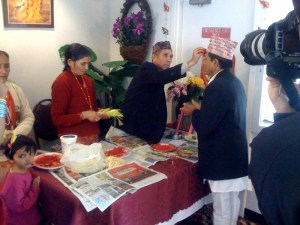
Thursday, Oct. 9, was an important day for Hindus around the world. It was the celebration of Dashera, the victory of the goddess Durga over the demons who stood in the gods’ way during creation.

For a group of Bhutanese refugees in Salt Lake City, it was also a celebration of a different victory.

Thursday was the first time the small Bhutanese community in Salt Lake City has officially gathered since refugees began arriving in the city in April 2008. The gathering was held at the Taj India restaurant at 4515 S. 900 East.

Bhutanese celebration

Bhutanese celebration

For nearly 20 years, these families had been living in refugee camps in Nepal. Most of that time the Bhutanese coexisted peacefully with their Nepali hosts. For the past few years, tense relations between China and Tibet have driven more refugees into Nepal. This flood of new arrivals pushed the Nepali government to its breaking point, prompting officials to make an appeal to the United Nations for help. The U.N. decided to resettle the Bhutanese who had long been without a home of their own.

Nearly 250 Bhutanese have resettled in Salt Lake since April. Among them are many members of the Dulal family.

Biren Dulal, 26, was only 8 years old when his life was uprooted and he moved with his family from his home in Bhutan to a camp in southeast Nepal. Today he barely remembers why he had to leave his home. He thinks it had something to do with the Buddhist government wanting Hindus to convert in the interest of national identity.

The actual reason seems to still be in dispute. According to the Web site for Human Rights Watch, the exodus was based on ethnic reasons rather than religious ones. The government of Bhutan in the late 1990s was interested in establishing a firmer national identity. The dispute is whether ethnic Nepalese in Bhutan chose to leave or were forced out by the government.

Regardless of the reason for leaving, Biren said life in the camp was difficult, but not unbearable.

Refugees were seldom allowed to leave. They had their own schools and shops and most of their basic needs were met. However, under certain circumstances, refugees could get permission to live outside the camp.

Biren left the camp for the first time at 18 years old to attend Kalimpong College in eastern India. After earning his bachelor’s degree he went to Katmandu to teach middle school science. A short time later he decided to return to the camp where most of his family still lived to continue his teaching there.

Soon after, members of Biren’s family began being resettled in the U.S. He decided it would be best if he joined them.

Biren Dulal arrived in San Diego on June 21, 2008. He had been sent to live with a brother and sister who had already been resettled there. Biren did not care for San Diego, but is too polite to say why.

Biren Dulal at the celebration.

Biren Dulal at the celebration.

He was then allowed to join the rest of his other brothers and sisters in Salt Lake City. The former teacher now divides his time between his job as an interpreter for the International Rescue Committee in Salt Lake, the nonprofit group that helped resettle him, and his volunteer work teaching English to other Bhutanese in town.

Ultimately he would like to get back to teaching science.

Travis Zirker, an IRC caseworker for many members of the Dulal family, said getting back to work is a common desire. A few of Biren’s brothers also were teachers in Nepal before coming to America.

One of those brothers is Ghana Dulal, who Zirker said has become a sort of unofficial community leader.

In the small Indian restaurant packed on an unseasonably warm autumn afternoon with almost 200 Bhutanese refugees, guests from various resettlement organizations and members of the press, Ghana Dulal offered a speech of gratitude and, in a small way, victory.

He talked of their hardships while encamped in Nepal and of the warnings they received from friends before leaving. They were told they would not be allowed to be Hindus in America.

In the end, Ghana Dulal summed up what all the Bhutanese were feeling, and what those who have not been there could not understand, when he said, “We are no longer refugees. We are free people.”

A big change is coming for the IRC in SLC

by MATT BERGSTROM

Imagine you have just contracted a life-altering disease. You find a specialist who knows how to treat it and the two of you work together to improve your quality of life. Now imagine that after six months you are told you have to go to a new specialist. The new doctor is just as qualified, but knows very little about your specific needs. You now have to go back and find a system that works for you both.

This is what life is like for newly arrived refugees in Salt Lake City. They are given six months to grow accustomed to one aid organization, and then their case is handed over to another, Patrick Poulin said. Poulin is the resettlement director for the International Rescue Committee in Salt Lake.

The IRC is an international nonprofit organization that specializes in resettling refugees from around the world in the United States.

The IRC is also the first doctor in the scenario given above.

When the U.S. State Department decides who will be given a new home here, they approach groups like the IRC and ask them how many refugees their organization can take on. The IRC then gives them a number. When the two agree which cases will be handled, the IRC is given all the information on each person being resettled.

The next job is deciding which of the IRC’s 17 U.S. regional offices will handle each case.

Once the local office has the information and has arranged for the refugee to enter the country, the staff have six months to do everything they can to help people get resettled and become self-sufficient.

According to the IRC’s Web site, staff and volunteers work together to help refugees obtain “the tools of self-reliance: housing, job placement and employment skills, clothing, medical attention, education, English-language classes and community orientation.”

This is where the second specialist gets involved.

After six months of assistance from the IRC the refugees and their cases are transferred to the Asian Association of Utah.

The AAU, which is also a nonprofit organization, works with refugees to improve their situation by upgrading housing, finding permanent employment so they can become completely self-sufficient. The goal of the AAU is to have refugees settled into a job, a community and a way of life that will best facilitate their individual needs.

Both organizations have similar goals, but Poulin says it’s a difficult transition for someone coming from a completely different world to have to adjust to a new aid organization so quickly. That is why he and the IRC have been trying to extend their involvement with refugees from six months to as many as 24 months. Poulin feels this is ample time for refugees to get settled into their new surroundings and firmly anchor their new life in America.

Lina Smith, program director for resettlement for the Asian Association of Utah, agrees with Poulin. “I think whatever works for the refugee, I’m for it,” Smith said.

The AAU currently handles all refugee cases in the state including those managed by other nonprofits.

Smith said the IRC will begin working with refugees for up to two years beginning in January. She feels this will help ease the workload of the AAU’s four full-time caseworkers who currently oversee more than 80 cases each. Her organization will still be there to help refugees who need assistance after the first two years.

Smith and Poulin agree that a more equal share of the responsibility between the two organizations is beneficial for the refugees and the nonprofits. But they still worry about money.

Both organizations receive funding from the State Department, but Smith and Poulin feel that it is not enough. Currently, refugees receive $425 a month on which to live.

Poulin said Gov. Jon Huntsman Jr. has set aside an additional $200,000 from the Utah state budget for refugee services in 2009. Poulin also says The George S. and Dolores Dore Eccles Foundation has promised the IRC a $50,000 grant.

Poulin is convinced the additional funding will help greatly with the overall success of their program. He said, “If we are able to provide more quality services to refugees … then we are successful.”