Domestic violence is devastating to children

by PAIGE KASTELER

Domestic violence is not just a problem for adults. It has an even greater impact on children, a group that cannot seek help for themselves or call attention to their issues.

“Children often experience the same abuse and trauma as battered women do, but children don’t have the emotional capacity to deal with the trauma that their mothers do,” said Mindy Simon, director of Children’s Services for the YWCA.

The number of children who have been victimized from domestic abuse in Utah is at an all-time high, according to the Utah Lieutenant Governor’s Office. Yet the state has few programs to help with this ever-growing problem. Like many other Utahns, Lisa is struggling to find help for her children who have been abused and victimized.

Lisa, who asked that her last name not be revealed for safety reasons, sought services from the YWCA after years of suffering in an abusive relationship. Lisa has two boys, ages 7 and 10, who also suffered verbal and physical abuse — much more abuse than Lisa realized.

“After I got the boys to talk about the stuff they went through, they told me a lot of stuff that I didn’t think they overheard and sometimes even went through themselves. I had no idea the extent of what they experienced. I always thought I kept them out of it, but with this situation I guess that’s impossible,” Lisa said.

Lisa’s abusive boyfriend had a drinking problem, which led him to become much angrier and physically abusive than he was when he was sober. At first he began to isolate Lisa and emotionally manipulate her. Once Lisa was feeling alone, her boyfriend became physically violent. At first it was just Lisa, but then her boyfriend started being physically abusive with her young boys. That was Lisa’s final indication to leave.

“I should have left much earlier. But I thought I could handle it. Once it turned to my kids though, I knew I had to leave. I couldn’t let them go through what I had been going through for years,” Lisa said.

Once Lisa removed herself and her two boys from the abusive relationship, she had some problems finding places for her boys to get help.

“There are a ton of places for women to get help,” she said. “The YWCA and lots of state programs, but there aren’t that many programs for children that have suffered from domestic violence. I mean someone has to look out for these kids; they can’t get help for themselves like adults can. I think that makes their problems even worse than the problems of women of domestic abuse.”

The YWCA does offer some limited child services and programs, including childcare for children from six weeks to kindergarten age. But no such service is available for children over that age. Simon acknowledges that even the YWCA could use some improvements to its child services.

“As an organization, we are slowly realizing the enormity of the impact that domestic abuse has on children,” Simon said. “We are constantly redeveloping our child services and programs to better serve these children, especially young children, but we can’t fulfill all of their needs. We offer child services and refer them to counselors, but at this point, that’s all we can really do. Although I do realize that this is a huge problem, every child that comes through here is facing a set of obstacles.”

Jennifer Edwards, a Salt Lake resident, also faced issues with her 3-year-old daughter Maya. Edwards’ ex-husband emotionally abused Maya during a prolonged custody battle. Edwards was unsure of how to help Maya.

“I wasn’t sure that counseling could help a child so young, but I didn’t have another option so I tried counseling, and it turned out to be a huge success. It really helped Maya,” Edwards said.

Edwards is a low-income Utahn who received legal help from the Legal Aid Society of Salt Lake. This nonprofit organization provided her with free to low-cost legal assistance in dealing with her custody battle and other legal issues with her ex-husband. She got help with her legal needs, but there wasn’t an agency to help with Maya’s issues. Edwards had to cope with Maya’s issues on her own, which was difficult to do, considering all of the other problems she was facing while dealing with her ex-husband.

Edwards is just one of many facing a similar problem. In a national survey of more than 6,000 American families conducted by the American Psychiatric Association, between 53 percent and 70 percent of males who abused their wives also frequently abused their children. One study demonstrated that some fathers deliberately arrange for their children to witness the violence.

This violence often creates an array of problems for the child victims. Not only do they suffer physically, but they also suffer greater emotional and mental damage than adults who suffer the same abuse. Child psychologists are in agreement that abuse occurring to children and adolescents when their brains are in critical development stages results in more permanent and lasting damage than an adult with a fully developed brain.

According to the APA, the symptoms of abuse often include social withdrawal and deterioration of trust; children will isolate themselves and refuse to talk about their traumatic experiences. This results in children being even more unnoticed and therefore receiving less help.

Utah has multiple programs that offer different kinds of assistance to adults, especially women, who suffer from domestic abuse. However, only one program offers any semblance of assistance to children.

The Utah Division of Child and Family Services Web site gives a phone number for people who need help with domestic violence and their children. This line gives references to counseling, shelter and other services. Aside from that resource, this agency doesn’t offer any other assistance to children.

“I guess the state figures it’s the non-abusive parent’s responsibility to take care of all of their kid’s needs,” Lisa said. “And while that parent probably could under normal circumstances, it’s really hard when they’re trying to deal with everything else. If you’re anything like me, then you have your own problems from the abuse and you have to work out a bunch of stuff like where you’re going to go, how you’re going to be a single mom and provide financially for the kids, and legal stuff. It’s really too much to handle without help.” 

Lisa’s boys are still struggling with the effects of their abuse. The boys are doing worse in school; Lisa’s youngest is becoming more withdrawn and isolated and the oldest is starting to act out and lose his temper. Lisa has begun to take them to counseling and hopes that it will help, but it is difficult to afford without assistance.

“I know that counseling will help them. The question is how long I can afford to keep taking them there,” Lisa said.

Disabilities can create courtroom confusion

by JED LAYTON

For many people, the courtroom is unfamiliar territory.

The judicial process can be difficult to understand and the legal language seems foreign. Life-changing decisions are made by strangers and a significant amount of trust is put in the hands of attorneys, judges and jurors.

Add in a communication barrier, and the courtroom becomes more intimidating. For many people with communication disabilities, such as a speech impediment or deafness, it can be a nightmare.

Barbara Toomer, secretary of the Disabled Rights Action Committee, a privately funded and nonprofit organization, said people with disabilities are often at a disadvantage in public places, including the courtroom.

Toomer said such disadvantages can be in violation of the Americans with Disabilities Act. However, the Disabled Rights Action Committee and other organizations are working to change that.

“It is discrimination to deny someone public services regardless of any disability,” Toomer said. “We are trying to make sure people have a voice and access in their communities.”

The Americans with Disabilities Act was created by Congress in 1990 and signed into place by George H.W. Bush. It changed the way public places were required to accommodate people with disabilities, especially in regard to communication.

The ADA requires public agencies to provide ways in which people with disabilities can effectively communicate with others, just like an average person can, according to the U.S. Department of Justice.

Toomer said one of the biggest problems people with disabilities face is that ADA regulations are often unknown or confusing.

“Many public agencies don’t know of the ADA or don’t know it well enough,” she said, “and some people with disabilities don’t know their own rights.”

People who have ADA complaints can contact the Disabled Rights Action Committee or similar organizations. The Disability Law Center provides free legal advice and representation for Utahns with disabilities. The Access Utah Network is a government agency that is attempting to make Utah more accessible to people with disabilities.

“[The Disabled Rights Action Committee] will get them in contact with a disability rights attorney that can advise them,” Toomer said.

Lisa Fine, an attorney with the Disability Law Center, said most Utah courts want to help people with disabilities have better access.

Fine provided legal counsel and helped mediate a disability access complaint between Lana McKinsey of Layton, Utah, and the Layton City Courthouse. She said it served as an example of how courtrooms and people with disabilities can work together to find solutions.

McKinsey was born mostly blind and has been partially deaf for the last five years. She can only hear with the help of hearing aids.

McKinsey was in court because of a domestic violence case where she was the victim. When it was McKinsey’s turn to speak she was unable to use any of the accommodations the Layton courthouse had in place to help people with disabilities.

The ADA recommends public entities have qualified interpreters, note takers, computer-aided transcription services, assistive listening devices and systems, audio recordings, Braille and large print materials, hearing aids and other methods to make communication accessible to all.

McKinsey could not use translation, telecommunications devices for deaf persons, captioning or video text displays because of her limited sight.

She was also unable to use the assistive listening devices because the amplifiers conflicted with her hearing aids. None of the other ADA methods worked or were available.

McKinsey left the courthouse in tears because she was unable to hear the questions and provide answers in a case that directly involved her.

She contacted Fine a few days after the communication dilemma. Fine said the situation was difficult but was appropriately dealt with by the Layton Courthouse.

“I was impressed. It was a government entity that responded quickly and sincerely,” Fine said.

Al Hansen, the building coordinator for the Second District Court for Utah, which includes the Layton City Courthouse, helped resolve McKinsey’s problem and recommended a similar procedure for other public entities in comparable situations.

“We determined the problem, did our own research and then involved Lana [McKinsey] in the decision making process,” Hansen said. The courthouse obtained other types of assistive listening devices from neighboring courthouses and let McKinsey determine which one best suited her.

“It was a win-win situation for everyone,” he said. “We felt good about it, she felt good and now we have both kinds of assistive listening devices for the future.”

Fine said the situation was handled perfectly and was an example of how ADA complaints should be resolved.

Hansen said the courts he oversees do their best to follow the guidelines set out by the ADA and attempt to fix problems as soon as possible.

“We want everyone to feel comfortable if they need to come to court,” Hansen said. “It is almost impossible, but we do the best we can to meet everyone’s needs.”

Still, Toomer and other disability organizations would like to see the courts make more improvements.

Mark Smith, information specialist for the Access Utah Network, said enforcement of ADA regulations is mostly driven forward by people with disabilities. He said limited regulation and enforcement has made the ADA a weak document.

“People with disabilities just about have to beg for changes to be made to make areas more accessible for them,” Smith said.

Toomer said some Utah courts are still not up to ADA code. Toomer, who uses a power wheelchair to move around, said she wishes public-service providers would take it upon themselves to better understand and abide by the ADA.

“Unfortunately it is up to people with disabilities to make sure the laws are enforced,” Toomer said.

Smith and Toomer said ADA problems occur more often outside of the Wasatch Front.

One problem rural courthouses face is distance. Few small towns have trained interpreters on hand for those requiring American Sign Language or foreign language translation. The Grand County Courthouse in Moab, Utah, requests interpreters from either Salt Lake City or Arizona, both of which are at least a four-hour-drive away.

Rural areas also have smaller populations; special-needs requests are less frequent, which can catch some public venues off guard.

“Smaller courthouses likely do not have the technology larger ones do,” Fine said. “Often there isn’t a need so communication methods aren’t as likely to be made available.”

Claudia Page, clerk of court for Grand and San Juan counties, said her courthouse in Moab tries as much as possible to make the courtroom open and available to anyone who needs to use it. She said hearings can be postponed to allow interpreters to make arrangements to travel to Moab.

Page said her courthouse is fully accessible for people in wheelchairs and has technology to help those who are hard of hearing, either with assistive listening devices — headphones and microphones — or technology turning the spoken word into readable type.

However, Page said accommodating everyone can be difficult.

“We share the devices with neighboring courthouses in the district,” Page said. “And if we don’t have a warning a few days ahead it is almost impossible to get an interpreter on the spot.”

Toomer said the change process is slow and will only improve as communication and understanding of the ADA gets better. A goal both Toomer and Page agree with.

One Salt Lake family struggles to improve autism awareness

by PATRICK HARRINGTON

“The school psychologist said that Thomas would need to be institutionalized one day … which was very startling,” said Faith Wallin, recalling what she was told after he was unable to deal with Thomas’ behavior triggered by his autism.

Thomas is not the only autistic child in the state, even in his school. According to the Centers for Disease Control and Prevention in 2002, 10 percent of 8-year-olds in the U.S. have a form of autism.

Thomas Wallin was an eager 3rd grader at Jordan Ridge Elementary (located within the Jordan School District in the south end of the Salt Lake Valley) when he was suspended due to repeated incidents of behavioral problems, including acting out in class and making inappropriate comments to teachers.

The problems and subsequent suspensions were not due to the student’s disregard for authority, but rather the inability of the school’s staff to deal with Thomas’ high-function autism and ADHD, his mother said. As a result, Thomas was suspended for more than 25 days from school, which was in direct violation of federal law.

Even before Thomas was diagnosed with autism in October 2007, his parents had obtained an Individualized Education Program (IEP) for his attention deficit hyperactivity disorder. The IEP sets certain guidelines for teachers to follow when working with a student with a disability, and are enforced by federal law.

According to the U.S. Department of Education, the purpose of  the guidelines set by the government is to help public schools and families of children with disabilities understand their rights under  the Individuals with Disabilities Education Act (IDEA).

One of those guidelines is that any student with an IEP cannot be suspended more than 10 days in a school year for behavioral problems. Wallin was confused about how to approach the situation although she knew that something was wrong.

“The principal, teachers and even the school psychologist struggled when dealing with Thomas. Something needed to be done in order to prevent this from continuing,” Wallin said.

“My sister is a school principal and she spelled out a lot of the rules for me. I knew that the school had broken rules, but what could we do to stop it?” she said.

Thomas works with professionals at Valley Mental Health and they recommended Faith get help from the Disability Law Center of Salt Lake. “The people at Valley Mental Health said my case had some legs to stand on and the legal people at the DLC could help me with the issue. We didn’t have the funds to hire a private lawyer and it was our best option,” she said.

The main issue for Wallin in the resolution of the case was the proper education of the school’s staff on how to deal with autistic children. “I didn’t want to sue for money, because that would overlook the issue. I just wanted the autistic students and their families to have a better experience with their school,” she said.

Originally assigned to the case was Adina Zahradnikova, an eight-year employee of the DLC and senior advocate. Any case that comes to the DLC involving educational problems with a disabled person, she spearheads the project.

“Thomas’ case is fairly common. A lot of people don’t know how to deal with children with special needs, so they react without fully understanding the rules that are in place,” Zahradnikova said. “The initial step that is taken with a case like this is to interview the prospective client and make sure their case is viable. We will analyze the case from both sides, then serve a letter to the school and district administrators explaining the action we are going to take.”

At this point Zahradnikova decided to take a sabbatical for personal reasons, and handed the case to a fellow DLC advocate. “I needed a break, so I handed the case to the competent hands of John English,” Zahradnikova said.

English is a second-year law student at the University of Utah who has worked in special education for the better part of a decade.

“This is my passion. I do enjoy this area of health and disability law as well as special education. Working with people like the Wallin family is very rewarding,” English said. “Faith Wallin was great to work with, because she was very reasonable. With her we devised the basis of our resolution that we suggested to the Jordan School District.”

The district was asked to hold a seminar, so educators at Jordan Ridge Elementary and from other schools within the district could learn how to better work with children who suffer from autism.

The Jordan School District sent both the DLC and Faith Wallin a packet with the material covered in the teacher seminar. Included was a roster listing all 51 teachers in attendance and a certified letter that the special needs education had been completed. At that point the case was closed.

“From a legal standpoint, I think the outcome was a huge success. We achieved everything that we wanted, I feel,” English said.

Even though the legal goals were met, Wallin sees a need for more improvement. “Although the seminar was taught, and the teachers may have a better understanding how to deal with autistic children, parents say they are still having problems at that school,” Wallin said.

Thomas switched schools in September 2008.

“Throughout the experience, I was so impressed by the work the DLC did for us. The level of professionalism was high and I was amazed by the concern they showed for our case,” Wallin said. “When attending support groups for parents of autistic children, I always recommend the services of the DLC to any parent struggling to find help for their child in any setting.”

Divorce education building bridges of friendship

by MADISON MURPHY

Belinda Hartranft, a shopaholic and soccer mom, divorced her husband after 10 years of marriage. The decision to divorce came quickly after Hartranft discovered her husband had been cheating on her.

Alma Perez, their paralegal through Legal Aid Society of Salt Lake, admitted that although Hartranft’s case was alarming, it was the most speedy and successful divorce she ever processed.

Generally, divorce is not a pleasant experience. It can include separation, conflict and bitterness. Hartranft used her divorce to build a stronger bridge between her ex-husband and children.

Fifty percent of the nation’s marriages result in divorce, according to Jim Stringham, a therapist of 15 years.

According to “Common Ground,” Utah’s official newsletter for divorcing couples, the parties involved make separation more difficult than it needs to be. “[They] feel like they have to compete with each other… like there is a battle to be won,” the newsletter notes.

How then, can two people avoid a battle and instead benefit from a divorce?

LAS offers clients a divorce education course before they separate. Through the course, clients can learn how separation can strengthen relationships, rather than taint them.

“Divorce education courses discuss how [the divorce] will affect the children … as well as the steps taken during their divorce so that they know what is actually going to happen,” Perez said.

Divorce education courses and mediation are required by law. David Musselman, a mediator from the Divorce Mediation Institute of Utah, said mediation is a way that people can resolve their disputes without going to court. It helps the couples negotiate better and learn how to modify their behaviors. “It costs less, it saves a lot of time and it helps the couple to reach a conclusion without a judge,” Musselman said.

After the course, Perez said Hartranft’s divorce took just three months to complete, giving their relationship a firmer foundation for friendship.

“It made me see things differently,” Hartranft said. “I realized how important it was to let things go instead of continuously fighting. Divorce was just the better thing to do, and now we can have a good friendship.”

Musselman mentioned that mediation has a 90 percent rate of effective cases. That may be an outstanding result, but what about the other 10 percent? Is divorce the only solution a couple can come up with?

Like Belinda Hartranft, Edye Wagstaff felt her only solution was divorce. After five years of counseling, Wagstaff and her husband decided to divorce. “From the very beginning we were in therapy through religious leaders and psychologists … it never helped,” Wagstaff said.

She and her husband were both stubborn. If they hadn’t separated, they never would have considered their big issue to be a small and simple one. “It gave us an opportunity to step outside and look at our relationship with a different perspective,” Wagstaff said.

Wagstaff said she feels therapy works only if both people are going to be honest with themselves. “They need to be willing to respect the responsibilities of their own weaknesses,” she said.

Wagstaff and her husband happily remarried after two years of separation.

Therapist Jim Stringham handles about 45 sessions a week, a third being couples. He knows from experience that therapy, mediation, or divorce education courses can never promote happiness unless both parties are willing to change.

If the couple cannot sort things out, Stringham often splits them up to do individual sessions. He has learned that it is important for a person to work on their problems separately before trying to work them out as a couple. “If there is not enough commitment … it doesn’t work,” he said.

Wagstaff and Hartranft consider themselves lucky. Their divorces were definitely painful at first, but in the long run it was for the best.

“It was probably the weirdest divorce,” Wagstaff said. “But it saved our marriage…. Everything became so healthy. We learned that we could trust each other in every aspect of our lives.”

Hartranft said not only do her children spend time with their father regularly, but she also speaks with her ex-husband on the phone almost every night. This journey of separation strengthened their friendship by encouraging them to see what they value most in life.

“I totally recommend those classes to anybody,” Hartranft said. ”It teaches you how to deal with your kids and it gives you options and suggestions. I had to realize he was ready to move on — and I needed to get there too. I am a much better person now than I was, and I have grown to appreciate myself better…. Thank you Alma and all of Legal Aid.”

Rates decline, but domestic abuse still a crisis

by ELIZABETH PEZQUEDA

Large numbers of women across the United States suffer from domestic violence every year, and until recently, many of them did not have access to the resources they need to get help.

While there are currently hundreds of programs and centers for domestic violence victims around the country, it continues to be a problem.

In 1994, Congress passed the Violence Against Women Act (VAWA), which was designed to make the criminal justice system more responsive to domestic violence, sexual assault and stalking and to have more services available for victims, according to the U.S. Department of Justice.

The bill was reauthorized in 2000 and 2005, and has spurred the development of several other bills and programs designed to assist abuse victims. Some of these programs include the development of the Office on Violence Against Women and child witness programs, among others.

Prior to the passing of VAWA, getting help was especially difficult for those victims who qualified as low-income. Without being able to afford an attorney for legal proceedings like court hearings, divorce filings and custody battles, fighting domestic abuse through the legal system was not always easy.

Kai Wilson, executive director of “…And Justice For All,” a nonprofit legal group in Salt Lake City that caters to low-income individuals, said with all the programs that are now available to victims, “money should never be a reason not to seek help.”

Organizations like “…And Justice For All” are now available all around the country. Most do not charge for many of their services and can help victims with a range of issues stemming from domestic abuse.

Alma Perez, a paralegal at Legal Aid Society of Salt Lake, said whether or not violence is addressed as a primary reason for filing for divorce, most of the divorce cases she handles do have domestic abuse issues. Legal Aid is one of three groups that make up “…And Justice For All” and handles hundreds of requests for domestic violence assistance every month. Two other groups offer assistance for other legal issues, including disability cases and employment discrimination.

Perez also said women make up 85 percent of those who file for protective orders or civil stalking injunctions at Legal Aid.

Sergeant Dan Brewster, who supervises the domestic violence squad in the Salt Lake City Police Department, said officers investigate between 100 and 200 reports of domestic abuse every month.

Sandra Campbell-Tenhagen, the office manager at the Legal Aid branch office inside the Matheson Courthouse in Salt Lake City, has been working for Legal Aid for 11 years and estimates that her branch sees around 175 requests for protective orders and stalking injunctions every month, indicating a major issue.

“Most protective orders get granted or denied on the same day,” Campbell-Tenhagen said. “If it’s granted, it’s an order as soon as the judge signs off on it, but the respondent has to be served with a copy before if becomes effective.”

If something were to happen between the victim and the abuser before the abuser can be served with a copy of the order, the abuser cannot be punished for violating it, Campbell-Tenhagen said.

After being served with the order, the respondent then has a chance to fight the allegations of abuse at a hearing that is scheduled within 20 days from that time. During the hearing, the judge may either dismiss the order or grant it permanently.

If the victim and alleged abuser have children, the petitioner will be assigned custody of their children if the order is granted.

In addition to assisting victims of abuse in the Salt Lake area with filing protective orders and civil stalking injunctions, Legal Aid works with several other organizations to help victims resolve any issues that may stem from seeking help, such as finding housing, employment and child care.  Some groups that work with Legal Aid are: the YWCA, the Utah Department of Human Services, the Family Support Center, the Salt Lake Area Family Justice Center and the Department of Workforce Services.

Legal Aid may also refer victims to counseling services or a victim’s advocate from a police department.

Stewart Ralphs, executive director of Legal Aid, said his experience in dealing with domestic abuse cases has proven that abuse typically escalates, and that seeking help is the first step in stopping that trend.

“Until someone intervenes, the violence only gets worse,” Ralphs said. “It may come in waves and cycles, but it does get worse.”

With a large portion of the nonprofit’s funding coming from the government, Ralphs said he is thankful that domestic abuse issues are being acknowledged by the state.

“The government has recognized that [domestic abuse] is a prevalent problem, and [government funding] is a major reason that we get to offer our services for free,” he said.

Indicators that domestic violence is still a serious issue include statistics from the U.S. Department of Justice that family violence accounted for 11 percent of reported and unreported violence between 1998 and 2002. Twenty-two percent of murders in 2002 were family murders, and in 1997, 15 percent of nearly 500,000 violent offenders in state prisons were there for a violent crime against a family member.

Statistics also show in 2005, a parent or other family member committed two-thirds of murders of children under the age of 5. In the same year, 18 percent of offenders who committed violent crimes against women were described as having a current or previous relationship with their victim.

Despite these trends and percentages, statistics also state the rate of nonfatal relationship violence against females between 1993 and 2001 declined by nearly half.

With so many resources available to abuse victims, no matter their income, there is reason to hope victims will be able to get out of abusive situations with much less financial and legal struggle than in previous years.

“We hope we’ve worked to make this process much simpler for victims than it used to be,” Ralphs said.

If victims are unsure about the name, location or details of organizations in their area that can help, they can call the National Domestic Violence Hotline or a local police department.

Overcoming: The story of a middle-aged divorcee

by DANIELLE MURPHY

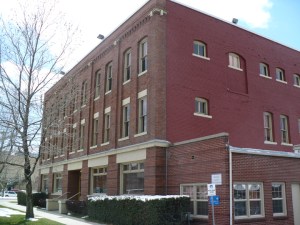
The entrance to the Community Legal Center, the location of the Legal Aid Society of Salt Lake.

The entrance to the Community Legal Center, the location of the Legal Aid Society of Salt Lake.

She always thought she would have a good marriage. She thought he was a good husband, a good father and a good provider. They had four children and nine grandchildren. But, 32 years after their blissful wedding day, it was over.

Monica was in her 50s and had only lived in the United States for six years after emigrating from South America. She hadn’t held a job, or planned to hold a job, since her midwife training when she was first married. Suddenly she was left alone and had to take care of herself.

Monica requested that her real name not be used due to concerns for her safety and well-being.

“We had some goals,” Monica said. “To have a life together like normal. For me, that is a normal thing and I always thought that, that was his normal thing too. There wasn’t any reason to think something different. The idea was to be together as a family, as a couple.”

She began to feel alienated as things began to go wrong at his work. As she asked about it, he grew more distant. He said he was trying to protect her, but she felt hurt.

“Communication in a marriage is the most important part. This is a sad story but it could have been better. He just never wanted to talk about it,” Monica said.

When she asked him what he was trying to cover up, he told her he wanted a divorce. That was it. They separated.

He moved out immediately.

Monica was bewildered. “I think he lost his mind,” she said, “because he always had good principles.”

During the three-year separation, he informed her he would take the necessary steps to start divorce proceedings. Time passed and nothing happened.

Neither one had taken further steps toward a divorce when she found out she needed an operation. He agreed to pay for part of her medical bills. He also assisted her with a small amount of money and kept her on his medical insurance.

The operation was successful, but the attempts at obtaining monetary support weren’t. The money Monica received from him became more and more infrequent.

She started to work, taking care of children for extended family, but this only covered a small portion of her living expenses. She knew she had to officially file for divorce.

Monica heard about Legal Aid Society of Salt Lake from a friend. The Legal Aid Society is a nonprofit legal assistance organization that assists almost 3,000 low-income individuals with domestic violence and family law issues annually.

She was introduced to Stewart Ralphs, an attorney and the executive director of the Legal Aid Society. “Ralphs was a great help,” Monica said. “He helped me through the whole thing.”

Filing for divorce includes divorce papers being served to the spouse by law enforcement. “I didn’t know the procedure or how it worked really,” Monica said. “When he was served, he was really mad about it. He thought I was sending the police to him.”

Then, on a snowy Christmas Eve just a couple years after he moved out, she learned he had found someone else. It was a painful surprise. They were separated but not legally divorced and he had already remarried.

“Even though it’s technically bigamy, it’s hardly ever enforced,” Ralphs said.

The money stopped coming. No help with medical bills was ever received.

A judge finally issued a temporary order at the initial hearing for Monica to receive alimony. But for months Monica didn’t receive any support. After another hearing, her estranged husband agreed to mediation.

Through mediation, she found out he was making wages similar to hers. They agreed that he wouldn’t have to offer her any support now, but as he began to make more, he would pay her alimony. They were officially divorced.

Monica continued working, but still struggled to earn a decent income. When she asked her ex-husband for pay stubs, he refused, telling her to have a judge ask him instead.

Frustrated, Monica called Ralphs. He advised presenting her ex-husband with a 10-day time frame to send over the pay stubs before she would make a motion to find him in contempt of court. He didn’t respond to any of her phone calls or e-mail.

Ralphs sent an e-mail on her behalf. The response was immediate. She had the pay stubs right away.

Now, she sends Ralphs a copy of every e-mail she writes to her ex-husband to ensure compliance. The alimony comes steadily. He’s reluctant, but “as my attorney got into the middle of it, he knew I wasn’t messing around,” she said.

Monica’s current situation isn’t her ideal, but she does it with dignity. She continues to tend children for extended family members, and also does housekeeping. “I would like to only be the grandma, not the nanny,” she said. “It is not pleasant, when you are more capable than that.”

Monica’s daughter, Jill, echoes those thoughts. “My mom having to start from zero, that was hard to see,” she said.

But, Monica isn’t giving up. “I will do whatever I need to, to be financially independent, I don’t want Social Security…. It’s not pride it’s self-reliance,” she said.

She is currently waiting for results on her written certified nursing assistant test. She has already passed her skills test and is looking for various CNA positions. As for her ex-husband, she said, “I wish for him the best. It was all his decision. You can’t make anyone love you. They have to want to do it.”

Unsung heroes help disabled access their rights

Story and photo by MICHELLE SCHMITT

Sitting in her window office at the Community Legal Center located in the minority-rich northwest quadrant of Salt Lake City, Janis Tetro sees herself as a woman on the front lines in the fight for fairness of the disabled at the Disability Law Center (DLC). A World War II propaganda poster of a woman wearing a red bandana hangs on the wall behind Tetro, proclaiming “We Can Do It!”

Community Legal Center, located at 205 N. 400 West.

The Short Term Assessment Team, or STAT, is a division of DLC that responds to incoming calls from disabled persons in need of guidance and direction.

“We’re one of the few [organizations] left who still try to have live people answering the phones, so we try to get to them as quickly as we can,” Tetro said.

When Tetro, a self-advocacy expert and self-proclaimed “STAT lady,” started working for DLC 23 years ago, she had no idea her influence would change the way disabled individuals access their rights.

Tetro and her team developed a computer system that allows them to quickly access all available avenues that a disabled person can pursue in search for assistance in a world that may not cater to their unique needs. The STAT team is able to get answers rapidly for those who call; questions range from legal advice to building access, to weatherization and heating help. At the inception of STAT staff were simply jotting information on 3-by-5 cards, a method that has since advanced to the intricate computer system.

Now every protection advocacy agency across the country has adopted this system, something that Tetro said “was pretty cool.”

STAT is “the most critical link that we have to the disabled community,” said Eric Mitchell, a spokesman with DLC. Mitchell praised STAT for the division’s ability to quickly and accurately field calls and assist distressed individuals.

Tetro is proud of the accomplishments STAT has made. The division has been around for 23 years and has had to adjust to match the progressing times.

“In the beginning we only did little issues,” she said. “We had to inform people that they do have rights, and over the years the people have become more sophisticated on what their rights are. Now we get calls from people who know they have rights,” but just need to know how to address a situation.

Tetro told the story of a man with back problems who gets around on a Segway, per doctor’s orders. While doing so at a Utah college, a campus police officer told the young man that Segways were not permitted on campus. He called Tetro’s team, whose immediate action quickly got him back on campus with no further interruptions.

Tetro said DLC trains disabled individuals about what they are entitled to. The center visits mental health houses, talks to architects about making buildings handicap accessible and provides school training to teachers and officials.

The biggest challenge for Tetro and the STAT is the sheer number of calls. “We get around 5,000 calls a year and we really want to get every one of them individual attention,” Tetro said.

The busiest times of year are during the holidays, when many feel sad and lonely, and at the start of the school year, Tetro said.

Education issues are largely left in the hands of DLC special education team leader Adina Zahradnitova, who works closely with schools to monitor that they are obeying the laws that protect disabled students.

Zahradnitova told the story of a young boy who got shuffled in the system so much that he ended up in the hospital. She and her team stepped in.

It was the school’s responsibility to provide an assessment for a 7-year-old student, a boy believed to have attention deficit hyperactivity disorder (ADHD), and they failed to do so, Zahradnitova said. When the child’s behavior escalated, the school rushed him to the emergency room; later he was moved to the psychiatric ward at Primary Children’s Hospital. The family received a $17,000 hospital bill and the school accepted no responsibility. The issue is ongoing and DLC is working on behalf of the family. The DLC’s argument is that the boy has the right, under the law, to a free education and it was the school’s job to provide a timely assessment. Instead, the school waited and did not know how to handle the child. Zahradnitova says the family should not have to pay the substantial medical bill. Instead, she says the school should have to since it failed to perform a timely assessment on the boy.

The issue may be handled through the courts, but Zahradnitova hopes to resolve the matter privately. Mitchell said that DLC prefers to handle matters quickly and informally. Litigation takes a lot of time and therefore it is the “tool of last resort.” That is why STAT is so important.

“People walk in literally off the streets,” Mitchell said. “[STAT] is the front line, they provide short term assistance to people and prepare things that need to be forwarded.”

Zahradnitova lauded STAT as a “critical part of the agency,” one that “functions as a well-oiled machine.” Employees provide one-on-one advocacy, offer necessary referrals and work closely with landlords and school districts. She said Tetro has empowered both her team and disabled individuals by training and educating them.

People call who are “totally in crisis,” Tetro said. “They’re kind of mad at the whole world because they haven’t found any help. If we can’t help we have a whole program set up on the computer of agencies that may be able to help [and] we can transfer their calls right over.”

But probably one of the easiest and most effective things that STAT offers is a person to listen. Tetro said many people who call are relieved to have someone to talk to, willing and ready to help.

Attorney strives to help families adopt

Story and photo by TYLER COBB

Paul MacArthur knows the joy adoption can bring to a family firsthand.

Kaelys, now 7, was adopted in 2002 by Andrea Anaya.

Kaelys, now 7, was adopted in 2002 by Andrea Anaya.

The 37-year-old lawyer has spent the last eight years helping families adopt children, which to this day, MacArthur says is a worthwhile experience.

“The newly adopting people ask me, ‘Does it feel any different than your biological children?’ and I can say it doesn’t,” said MacArthur, who has two adopted and three biological children of his own. “My heart is in it.”

When he married his wife, Monica, they wanted to have children right away but couldn’t. About a year later, his wife suggested they adopt a child.

MacArthur said he struggled with the idea of adopting for a few months before he agreed, and three years later they adopted their first child, Emma.

And through that experience, MacArthur now understands the worry and pain new parents feel when something goes wrong and they can’t adopt. He and his wife had three failed adoptions before Emma, now 10, came into their lives.

“You become attached when you meet the birth mother,” Monica MacArthur said about failed adoptions. She said that in one attempt, they had seen pictures of the child. They had spent nine months trying to adopt, but the night before they were scheduled to pick up their baby they were told the adoption had fallen through.

However, in the case of international adoptions, multiple things can go wrong. The failure to obtain and complete the right paperwork in the child’s country or in the United States, and the ambiguity in a country’s laws can create problems.

“Mexico doesn’t specifically allow for international adoption,” MacArthur said. “They also don’t specifically exclude it.”

And even on the national spectrum, adoptions still fail despite the cost and time spent working with lawyers and agencies.

Andrea Anaya, a Salem, Utah, resident, turned to MacArthur for help with adopting an American Indian child in 2002.

“The birth mother had to sign over her parental rights three times because of all the paperwork,” said Anaya, who received custody in 2003.

MacArthur said the costs for adoptions vary from $10,000 to $45,000 and can take years to finalize.

Yet the trouble is worth it, he said.

And despite the hard work, MacArthur loves his job. He didn’t always want to be a lawyer, but after nine years helping families adopt, he can’t imagine doing anything else.

When MacArthur returned from a mission for the Church of Jesus Christ of Latter-day Saints in the early 1990s, his father, James MacArthur, encouraged him to take an aptitude test to help decide on a career. His skills pointed in the direction of law school, and in 1995 MacArthur started down a three-year path at the J. Reuben Clark Law School at Brigham Young University.

Upon graduation, he and his wife moved to Idaho where he clerked for a judge, gaining expertise in court procedure.

However, within a couple years, MacArthur decided to open his own firm with a few other BYU law school graduates in Provo. MacArthur, his wife and their daughter Emma had to live in his parents’ house for nine months while setting up his firm.

“It was scary to start this firm, but it was the best thing to do at the time,” Monica MacArthur said. “It took off really quick, but we had no income. We had one kid and another on the way.”

At the time, the couple was trying to adopt a second child, Jake, who is now 7 years old.

Bill Heder, a BYU law school graduate, started working for the firm, which is now called MacArthur, Heder and Metler, in 2004. He said they didn’t have an extravagant office and it was just two lawyers working in a three-room office.

MacArthur specializes in adoption cases, but most of the lawyers do business law.

“We were living very frugally, but we were also very busy,” Heder said.

And now the firm, which handles 110 to 130 adoptions annually, has expanded from two attorneys to more than 10 full- and part-time attorneys.

And MacArthur has gone even further to help families.

He helped start A Child’s Hope Foundation, an organization that creates adoption orphanages in underdeveloped countries.

MacArthur, who is the foundation’s legal counsel and a board member, often travels out of the country to help families adopt children through the foundation.

He’s encouraged his first adopted child, Emma, to get into the spirit of helping other children too.

When MacArthur was packing for a 10-day trip to Haiti near Christmas to offer legal counsel for the foundation, his daughter walked into the room.

“My daughter Emma was 7 at the time and she was being kind of mopey,” MacArthur said. “Then I just asked her [why] and she said, ‘I get tired of you leaving and I don’t know why.’”

He explained to his daughter how he was leaving to help other children who didn’t have parents or homes get some help.

“I kept packing and five to 10 minutes later, she went and got her toys,” MacArthur said. “She wanted me to give them to the kids in the foundation.”

Despite the time spent away from home, he says it’s worth it to see the joy on new parents’ faces. And for the next trip, he’s bringing his two oldest children with him to help.

“It makes me feel really proud of my kids,” Monica MacArthur said.

Low-income legal help turns lives around

by PAIGE KASTELER

The need for legal aid is great among low-income Utahns. Two out of every three low-income households in Utah will face a civil legal problem every year. The average cost of legal services in Utah is about $10,000 — a cost few low-income families can probably afford.

These statistics were reported in a study done by “…And Justice For All,” a nonprofit organization designed to give legal assistance to low-income Utahns. Fortunately, there are many organizations like AJFA that can help.

The Legal Aid Society of Salt Lake is a private nonprofit organization that offers free and low-cost legal assistance in the area of family law, including divorce and help for victims of domestic violence.

Established in 1922, LAS has been assisting Utahns for almost a generation. LAS helped an estimated 22,000 low-income Utahns gain access to the legal system during 2008; that has been increasingly difficult to do, due to lack of funding.

Kai Wilson, executive director of AFJA, said these organizations are important because the legal system is becoming more specialized and only accessible to people with money. Wilson said the legal system is something everyone should have access to and dreams of a day when Utah will catch up to other states and have the funding to assist 20 percent of low-income individuals. Right now Utah assists 13 percent.

LAS receives half its funding from the state. Budget cuts and a drop in funding are a constant threat to LAS. The No. 1 thing that holds LAS back from helping more people is usually funding, which means that only those who need help the most can be assisted.

To qualify for legal assistance, paralegals at LAS look at several things. They take cases on the basis of severity of poverty, the type of case and the immediate need of the legal aid.

Rosario Martinez, 54, of Salt Lake City is one of those individuals who was turned away from LAS. After divorcing her abusive husband, Martinez sought help from LAS but was turned away during the screening process because she was not in any immediate danger from her ex-husband.

Martinez understands there are limits to how many people these organizations can help, but she does intend to keep on trying, especially now that her husband is trying to get out of paying child support.

While LAS cannot help everyone, it does assist many people each year. Stewart Ralphs, director of LAS, said the average client LAS sees is about 25 years old, has about two kids and usually is a member of the Church of Jesus Christ of Latter-day Saints.

LAS specializes in cases of domestic violence, specifically protective orders and stalking injunctions. It also offers help with domestic-relations cases, such as child custody and support, divorce, paternity and guardianship.

People seeking legal aid from LAS can apply at the Matheson Courthouse, 450 S. State St., in Salt Lake City. First there is a conflict check where paralegals determine if LAS will have any conflict representing the potential client. Then there is an intake interview with a paralegal who prepares the legal paperwork. This part takes about four to five hours, and is “not something you can do on your lunch hour,” Ralphs said. When the paperwork is completed, clients are assigned a lawyer to represent them through their legal needs. The average case takes about 45 days of legal work, which is relatively short; some legal cases can drag out for years.

These short legal cases often change clients’ lives forever.

One of these people is Susan, whose last name is being withheld for her safety. Susan filed a protective order against her physically abusive spouse to keep herself and her two children safe. But under the guise of visitation, Susan’s husband violated the protective order and took the children to Florida. LAS and the county attorney’s office in Florida arrested Susan’s husband. She flew to Florida to be reunited with her children and her spouse was extradited to Utah to face charges of custodial interference. Susan then filed for divorce.

She now has full custody of her children and is divorced from her abusive spouse, something she would have not been able to accomplish without the help of LAS.

Employment difficult for injured construction worker

by MADISON RICE

Some of us talk about the time we broke our arm in the fifth grade, or maybe how we tore our ACL or MCL playing football or hiking. But would you be telling these glory stories if you knew John Holt?

Holt, 40, an action junkie, lives in West Valley City and has years of accidents and injuries under his construction belt. When he’s not doing a construction job, this single guy can be found snowboarding or wakeboarding — and doing anything else that gives him an adrenaline rush.

“I broke my first arm when I was 3,” Holt said. Since then, he’s been in more than a dozen car accidents and has even fallen off a roof during a job.

“I fell off a two-story roof with a ladder around my legs. I broke my wrist in two places, sheared the bone of my elbow off, broke a couple ribs, and sprained my ankles,” he said. “I’m starting to rethink if I am accident prone.”

However one might interpret these injuries, they have taken a toll on his body and are the very reason Holt can no longer find work in the job he loves. Contractors and construction businesses simply will not hire him because of his extensive injuries and dependence on medication.

“After being hurt so much, they want to know what your history is like and they find out about my medication and then they don’t want me. I’m highly skilled but my back is messed up,” he said. “I’m a fairly decent guy. I have talent. But I’m not young anymore and that makes it difficult.”

For the past eight years, Holt has gotten by doing construction work for friends and through referrals, but he realizes now more than ever that he cannot rely on an unsteady and unsure income. His medical bills alone are more than $400 a month. So Holt has begun the application process to go on disability, following advice from many of the doctors who have treated him.

“I have been avoiding it because it seems like giving up to me,” Holt said.
According to Matt Knotts, executive director of the Disability Law Center in Salt Lake City, the program will allow him to do everything but give up.

“The sense of giving up is common, but we approach this issue from the perspective that disability is a natural part of the human condition and in no way diminishes an individual’s ability to participate fully in their community,” Knotts said. “Utilizing the public benefits program is completely appropriate.”

Holt began his process with the Disability Law Center in early March 2009, after several months of debating what he would do. If Holt qualifies, he may receive financial help with medications and have back surgery, something he’s needed for a few years.

According to the most recent study by the Bureau of Labor Statistics in 2007, of the 7.8 million U.S. construction workers, 5 percent reported a nonfatal occupational injury or illness. Of those reporting injury or illness, 62,100 had to transfer jobs. “If they were working in construction and they got hurt, that means they’re probably in a clerical occupation now,” said a BLS expert at the Injury Illness Office in Washington, D.C.

Aware that he may face occupational change in the future, Holt enrolled in a computer class. “I found myself in a computer class with no computer at home. That obviously didn’t work out,” he said.

So Holt met with the Utah State Office of Rehabilitation to use its Vocational Rehabilitation services. According to the Web site, the mission of Vocational Rehabilitation “is to assist and empower eligible individuals with disabilities to achieve and maintain meaningful employment.”

Once he is ready for work, Holt will meet with his counselor at the USOR to decide where he needs help. The USOR can give him job coaching, on-the-job training, or referral to an employment service.

“I took an aptitude test and they told me to be an engineer,” he said. “Vocational rehab can help me find a new career, but it’s difficult to jump from construction to what normal people do. There’s a difference in construction people and normal people.”

Holt still waits to hear from the Disability Law Center to see if the organization can help him receive the requested medical procedure for his back. Until then, the Primary Care Network helps him with medication costs.

“One of my prescriptions is $250 a month, and I only pay $5, so there’s a big difference,” he said. He works when jobs come his way and hopes to get his general contracting license and have his own business.

“The disability program will help me get back on my feet. I look at it as a platform to start from,” Holt said. “If I get on it I can jump off after I get my life back again.”