Salt Lake City’s Lượm Làm tries to forget her tough past

Story and slideshow by CHLOE NGUYEN

View a slideshow of Làm’s memories as she talks about her tough past


Pictures of smiles hang on the wall. It’s a nice home, comfortable with green indoor plants. She arrives to the interview two minutes late. She’s just gotten home from her job as souschef at the Little America Hotel. It’s 8:02 p.m. and she probably hasn’t had dinner. Within seconds of walking into her house, she takes her coat and boots off and says, “We can start.” She takes a seat on her tan coach next to one of the plant pots. The recorder is pushed to “record.” She tells her story.

Abandoned by her parents shortly after birth in the city of Dĩ An, Việt Nam, Lượm Làm, 41, was the offspring of an affair between a married Vietnamese woman and an American soldier during the Vietnam War. Her name, Lượm, was given to her by her adoptive mother, Hương Vũ. “It means I was ‘picked up,’” Làm said. In Vietnamese, lượm means to pick something off the streets or something that no one else wants.

Làm’s birth mother, Tôi Lê, kept her pregnancy a secret. And when Làm was born in 1969, she became a secret as well. “I was told she hid me,” Làm said. “She tied her stomach so no one would know she was pregnant. I was always sick as a child.”

Vũ thought Làm wouldn’t make it past childhood, so she and Lê signed an agreement: if the baby died of illness, Vũ wouldn’t be held responsible. But if Làm grew strong and led a healthy life, she would no longer have any connections with her birth mother. Làm would only have one mother, her adoptive one.

“[My birth mother] agreed right away,” Làm said. “I guess she didn’t want her family and friends to know she had a daughter like me.”

Like a miracle, Làm’s health improved. She grew up without memories of her birth mother. Làm’s adoptive parents loved her, and so did their son, Làm Văn Phước. They gave her a family to come home to every day after school; meals were present on the table each night. The family of four lived a happy life in the countryside of Dĩ An for the first few years through Làm’s childhood. But school for Làm was a different story.

“People looked at me different, but I didn’t know why,” Làm said. “I was always lonely.”

Others could see that Làm looked different, and so could she. Làm didn’t have the dark hair that others had; hers was light brown. Her skin looked paler than her other classmates; her eyes, not dark. Làm stood out. The 8-year-old girl was called names and bullied. Classmates threw centipedes at her and teachers didn’t care. Not only did she look different from her classmates, she also looked different from her parents and brother.

Làm slowly realized that the parents who loved her since she could remember were not her biological parents. Làm started to wonder who her birth parents were. The face of one woman kept coming to mind. Làm had seen her a few times in Dĩ An when she went to the market with her mom. She had seen her for the first time at 5 years old; a second time at 8. “I didn’t know who she was,” Làm said. “I just knew she gave me money to buy some clothes and food.”

Làm recalls the moment when she was 10 years old, when she realized who her birth mother was. She remembers sitting at the stairs outside of Lê’s shop one day. Her adoptive mother was talking to the woman whom she would soon know as her birth mother. She didn’t hear the conversation, but a “feeling” told her the truth.

Làm recalls Lê as being somewhat happy and excited the first few times she went to visit her birth mother. But after a while, annoyance and bother replaced the happiness and excitement. Làm limited her visits.

Because of the country’s poor economy after the war, money and food became limited. At 14 years old, Làm stopped going to school because her family could not afford to pay her tuition. “It was a cup of rice to four people a day,” Làm remembers. “I went to bed hungry because we didn’t have enough food to eat.”

Làm had to eventually seek financial help from Lê in order to survive. Tears ran down her cheeks as she remembers the pain of humiliation when she asked for money. “Every time I took her money, I’m crying inside,” Làm said. “But I told myself, ‘the family needs it to survive, don’t just think about yourself.’” Làm said her parents’ love was her only motivation to stay strong.

But their love wasn’t enough to keep life going. Làm worked hard as a farmer, but received little pay. Eventually, she gave in to her adoptive parents’ wishes for her to return to her birth mother. They could no longer provide for her what she needed in order to stay alive.

Làm was, however, looking forward to moving in with her birth mother – it would give her the chance to get to know the person who brought her into this world. But Làm’s dream of a happy reunion quickly turned into a nightmare. From the moment she walked into the wide doors of the big house that belonged to Lê, Làm wasn’t her daughter. “I was a slave for her,” Lam said. “I was her housekeeper.”

Làm had to keep her identity a secret. But as the Vietnamese saying goes, giấy không gói được lửa, meaning, paper cannot hold fire – the truth will come out sooner or later. In Làm’s case, it came out sooner.

Suspicion quickly ran through the house and rumors that Làm was actually part of the family spread like a wildfire. Her birth mother looked her in the eye and asked her if she had spread the rumors. Làm remembers that she didn’t know how to answer the harsh questions. Both she and Lê knew the answer to the question. But Làm told her stepsister, “No, I’m not your sister. Don’t listen to the people talk. I am just a daughter of your mom’s friend. My family is too poor, so I’ve come here to work for you; your mom gives me food to eat.”

That night Làm made the decision to return to her adoptive family. “I was OK with going to bed hungry every night, but I want[ed] to live with someone who loves me and I loved them,” Làm said.

When Làm turned 18, she began dreaming about going to America. “I wanted to go over there and make money,” Làm said. “I have to work hard, make money, and take care of my dad and mom and brother. I cannot let them live hungry every day and let people look down on them.” She also had hopes to find her biological father.

Làm’s dream for a better life came to a halt when her paperwork got denied. She resorted to an option that she still regrets to this day – she agreed to an arranged marriage that would, as she thought, bring her to America. She thought wrong. Her paperwork for America was on a long hiatus with no approval date in sight.

Làm married Tuấn Nguyễn on March 19, 1989, in Dĩ An. She acknowledged that there was no love in the relationship, so she didn’t say anything when he cheated on her repeatedly. He also physically abused her. “If I was lucky, 25 out of 30 days a month I got beat[en],” Làm said. “Normal months, I get beat[en] every day.”

On March 10, 1990, she had her first son. When he was 4 months old, she took him and fled. But her in-laws found them and threatened to take her son away from her. With her son in mind, Làm swallowed her pride and continued to stay in a house where she was being physically and mentally abused.

Làm was offered a miracle when her paperwork for America was finally approved. In 1991, after spending 20 years in Dĩ An, Làm, with her husband and son, traveled to the Philippines and waited for the final departure to America.

On Aug. 15, 1992, the three made it to America. Her second son was born on May 18, 1993. “I heard doctors say the word ‘baby’ and I started crying,” Làm said. “My life was hell, how was I going to take care of another baby?”

After moving from Ohio to Utah in 1995, Làm found a job working at Fashion Tech Windows Curtain in Salt Lake City, but was soon let go. She was constantly late to work because she had to rely on her husband for a ride. Without a job and no income for food, she reached a dead end.

Làm tried committing suicide by overdosing on pills. “I didn’t die the first time, so I tried again.” Làm recalls. “The doctors thought I was crazy, they put me in the hospital for crazy people.”

Làm said she remembers the moment before she fell unconscious. The only sound she heard were the crying calls of her two sons. Làm says that her sons’ crying was what kept her from attempting suicide a third time. She couldn’t leave them without a mother, not with the type of father they had. When Làm returned home after being released from the hospital, she filed for divorce.

The divorce would be finalized after a three-month separation period. Nguyễn didn’t want to move out of their current apartment, so Làm and her two sons moved out instead. She remembers the very spots where they slept: 1000 N. 300 West and 1300 S. Main St.

“I didn’t have anywhere to go. I drove around the city for about two weeks, no, it was almost one month,” Làm said. “I took my two sons and slept in my black Mazda while it was snowing outside.”

One of her few friends at the time offered them a place to stay. Shane Christensen, 40, Làm’s present boyfriend, stood up for her when her husband unexpectedly came looking for her. “No one’s done that for me before,” Làm said. “It meant a lot.”

After realizing he could no longer control her, Nguyễn left and never came back.

With her husband finally out of her life, Làm was ready to start fresh. She says she found her first love in 1996. Christensen helped her get welfare, a place to stay, find a job and apply for school.

In 1999, Làm realized she was ready for another marriage, but Christensen wasn’t. He was diagnosed with kidney failure. Although Christensen’s health is stable now, the wedding date is no longer something the couple aims for. “[We’re] comfortable with the way we are now,” Làm said. “I don’t want to marry again. But I’ll always remember Shane helped me 15 years ago. I’ll always be there for him.”

And she has. “She spent time with me at the hospital; she’s there after I came out. She’s taken care of me; she’s helped me through many problems I have with my own life,” Christensen said. “She’s always been there for me; I appreciate her quite a bit.”

Christensen said Làm is one of the kindest people he’s ever met. “Many times we’ll be driving down the street and she’ll see a homeless person,” he said. “She’s gonna stop to give them something. She’ll even come back later if she missed them the first time. You can tell that she cares about everybody.”

Làm simply says, “I was homeless, I know the feeling.”

Still, as comfortable as she may be now in her life, there is one thing Làm says she will never be able to let go of. “I still dream about my real father,” Làm said. “Even if he is dead, I want to find him.”

She also wants an apology from her birth mother. “I want my mom to come to me, look at me and tell me she’s sorry for what she did do me,” Làm said. “I will definitely not be mad at her. I will definitely understand.”

Làm plans to write her a letter that explains how she has felt all these years, how she’s lived, how she wants information about her birth father, and about how she finds it unfair that her step-siblings got to lead a happy life while she led a miserable one.

Her close friend, Sau Ngô, 54, finds it troubling as well. “I think had she been born at a different time, things would be different,” she said in Vietnamese. “It’s the Việt Nam culture back then. Anyone who was mixed was looked down upon. But it’s different now.”

But Ngô believes Làm’s past made her the strong person she is today. “It’s wrong to leave your daughter, it’s very wrong. She had a sad past, so it’s encouragement to do better for her future,” Ngô said. “Sometimes, people will say harsh words to her, look down on her and say she’s not smart or can’t do this, can’t do that; so it’s her strength to do better with her life.”

Làm says she will be finishing her high school diploma at Horizonte Instruction & Training Center in April 2011. She plans to go to college and become a chef. But first, she would like to improve her English with more ESL classes.

“I’m proud of my mom for fighting to survive and I know that she’s gone through everything for me,” said Ming Nguyễn, 17, Làm’s youngest son. “I love my mom. She’s my hero. I’ll do the best I can to be the son she wants. I’m going to make it in life and be successful for her.”

Ming Nguyễn had little to say about his father. “I have a lot of hate for him.”

Làm admits she cries often. Coming home from work each night, she’ll sit in the driveway until her tears are dried because she doesn’t want her sons to see. She says that only those close to her know her story – but not all of it. She keeps the whole story to herself. “I’ve only told half my story,” Lam said. “There’s too much to tell.”

As she wipes the tears from her eyes, Làm smiles. “Thank you,” she says. “You’ve helped me by listening. I needed to tell it to someone.” She gets off her coach and continues to the kitchen of her present-day house. It’s 10:26 p.m. And although it’s late, she can now say that she no longer goes to bed hungry every night.

Gay minorities in Utah can face double discrimination

Story and multimedia by KAREN HOLT BENNION

Watch Jerry Rapier direct a reading of “The Scarlet Letter” for the 2011-2012 season.

Listen to Jennifer Freed talk about Jerry Rapier, director of Plan-B Theatre Co.

Jerry Rapier has made a name for himself in Salt Lake City as an award-winning producer and director.

This is the 11th season of Plan-B Theatre Co. which he founded in 1991 with Cheryl Cluff and Tobin Atkinson. Rapier has been given many honors, including the Salt Lake City’s Mayor’s Artist Award in the Performing Arts in 2008. In 2009, he was given the title of Alternative Pioneer by Salt Lake City Weekly. With many successful plays, a rewarding career and a loyal partner who has been with him for 15 years, some might say that Rapier is living the “American Dream.”

However, despite his current success, he still remembers facing trying times in his past. Jerry Rapier is Asian-American and he is gay. Consequently, he faces a double hardship in Utah.

He was born in Nagasaki, Japan, to an alcoholic mother. When he was 8 years old he was adopted by an American family and went to live with them in New Mexico. Life with his new family was trying at times because his family was “very, very LDS,” he said in an e-mail interview. When he was 23, he mustered all of his courage to come out to the family. Rapier says it was difficult for a few years because they needed time to adjust. “They are great now,” he said.

As a minority who is gay, Rapier is part of a small number of gay minorities in Utah. He says the main reason for the low figure is due to demographics. “This is not a very diverse place, period,” he said in a recent interview. On the other hand, he believes that minorities who are also gay fear coming out because they could be ostracized from their families. “But I will say that I believe this to be changing, slowly, surely,” Rapier said.

“I think it’s almost impossible to live your life now and not know a gay person — and that changes your perspective,” he said in the e-mail.

He remembers how isolated he felt as a teen and is upset by the bullying that is escalating against gay teens today across the country, with some ending in suicides. As a result, Plan B joined 40 other local Outreach Partners to put an end to bullying. The event on Sunday, Nov. 14, was called “Different is Amazing.” The fundraiser included theater, songs and dance. The festivities opened with a short dance by the Ririe-Woodbury Dance Company’s Step Up group, which consists of dancers from Salt Lake City high schools. All proceeds went to the Human Rights Education Center of Utah.

Another advocate for civil rights is Cathy Martinez. She is the director of the Lesbian Gay Bisexual Transgender Resource Center at the University of Utah. She agrees with Rapier about the small number of gay minorities in Utah. While she acknowledges that Utah is predominantly white, she says gay minorities are trapped in a stigma of being “a minority within a minority.” They are virtually forced to live in two communities.

Her experience with international students at the U has led her to realize some Asian families do not embrace or encourage members who have different sexual identities. “We need to talk about race too when we talk of sexual discrimination,” Martinez says. She recounts helping a  gay couple, who were international students studying at the U from China and Korea. When the Korean student’s family found out he was gay, they immediately st0pped paying for his schooling. Without money to continue his studies,  he was forced to return home.

“Not all cultures look down on homosexuality,” Martinez says. Thailand is the Asian hub for sexual reassignment surgery. Moreover, before missionaries arrived in early America many Native American tribes respected gay and transsexual members. They believed them to be two spirited.

Plan B’s latest production, “She Was My Brother,” which was directed by Rapier, is about a government ethnographer who is sent to study the Zuni Tribe of the Southwest in the late 1800s. The government official becomes attracted  to a male transgender tribal member. The tribal member is revered by the Zunis as very wise. Ironically, the Native American calls people in the “white society” uncivilized because of their intolerance to its citizens who fall outside of what society deems normal.

Martinez feels that education about race and sexuality and ability level (blind, deaf and disabled) must filter down to more high schools, junior highs and communities. She is working hard to educate people at the college level.

Brandi Balken, executive director of Equality Utah, says her office is working on educating the public as well. She says that being a gay minority is enduring “double marginalization.”

“There is not state for federal protection in housing and employment based on sexual orientation or gender identity,” Balken says.

Protection is available for those based on race, age and gender under the Civil Rights Act. Moreover, the Americans with Disabilities Act helps those with different levels of ability. However, people at Equality Utah are continually working with local legislators to pass state and federal laws to help all citizens of Utah gain the same rights to fair housing and employment.

Gay and transgendered citizens in seven Utah cities and counties have some protection regarding employment and housing rights.  They include: Salt Lake City, Salt Lake County, Park City, Summit County, Logan, Taylorsville and West Valley City.

With the help of Jerry Rapier, Cathy Martinez and Brandi Balken, the future could look brighter for people of all races and gender identities who are in need of support.

Kyoto Japanese Restaurant – bringing Japan to Utah

Story and slideshow by RICH FAHEY

View a slideshow of Kyoto Japanese Restaurant

Japanese paintings featuring koi fish, birch trees and buildings hang on the walls. A vase of fresh lilies sits on each table, illuminated by a paper lantern hanging overhead. Diners at a table to the left are just out of view thanks to a thin paper wall, allowing light to pass through. To the right, a family of five sits cross-legged with their shoes off. The place is Kyoto Japanese Restaurant.

From the cuisine and décor to the staff, Kyoto Japanese Restaurant is an authentic Japanese eating experience in Salt Lake City.

Founded on Aug. 16, 1984, by Osamu Tada and his wife Yoshiko, Kyoto has developed a large customer base of locals and out-of-state visitors alike. The restaurant is popular among members of both the Asian and white communities.

“We get a lot of customers from around the neighborhood, so we see a lot of the same people eat here often,” Yoshiko Tada said.

Located at 1080 E. 1300 South, Kyoto is easily accessible for visitors as well. The restaurant sees a lot of customers who come for conventions, such as the Outdoor Retailer Market held biannually in August and January. In the winter, snow sports enthusiasts who are on vacation frequent the restaurant.

“When people visit on one vacation, they always come back the next time,” Tada said.

Kyoto has both a lunch and dinner menu and a wide variety of dishes. It also serves Japanese beer such as Sapporo, and hot or cold sake. While the establishment does serve teriyaki chicken, tempura, sashimi and gyoza, it is known mainly for its sushi.

“We serve more traditional sushi than most places in the city,” Tada said.

Three different chefs, all of whom were trained in northern Japan, make the sushi rolls. It serves more traditional sushi so beginners are not as likely to eat at Kyoto, Tada said. One specialty roll that is a common choice for the experienced sushi eater is the Red Dragon roll.

Charles S., an online restaurant reviewer on Yelp, wrote, “My daughter ordered it and it was phenomenal! Best roll I’ve ever tasted … anywhere!”

Another dish served at Kyoto that is difficult to find anywhere else is Dobin Mushi. Made from the very rare pine mushroom, Dobin Mushi is a soup that also includes chicken and vegetables. What makes it special is the rarity of the mushroom and how long it takes to make. Each bowl of soup is heated and served individually in a small clay pot. The lid of the pot doubles as a cup to sip the soup from, similar to tea.

“Japanese people very much appreciate it,” Tada said.

The décor contributes to the authentic feel of Kyoto. The waiting area decorations are replaced every few months to accompany the changing of the seasons. Currently, pumpkins, leaves, an autumn bouquet and paintings representing fall give the small room a festive feeling.

“In Japan it is very important for people to feel the seasons,” Tada said.

Most of the paintings, some of which are extremely rare, are imported from Kyoto, Japan. Others were created by local artists. Kyoto is also home to a variety of beautiful furniture from Japan. In the front of the restaurant is a chest of drawers made of weathered wood. Crafted metal handles and designs give the drawers a worn look. On top sits a well-manicured bonsai tree. At the back of the restaurant in one of the high-occupancy booths is a similarly designed hutch, displaying different Japanese plates and sculptures, all imported from Kyoto.

The seating in the restaurant offers an authentic Japanese experience as well. While Kyoto has standard tables and chairs, it also offers traditional low tables where customers can sit on pillows and take their shoes off, which is customary in Japan.

Adding to the authentic atmosphere is the service. During dinner hours the waitresses, all of whom are Asian, wear kimonos. A kimono is a long robe traditionally worn in Japan that usually depicts a floral design.

“It is unique for Salt Lake City. I can’t think of another restaurant where they wear kimonos,” Tada said.

The staff at the restaurant is helpful and courteous. Some of the waitresses have been working there since it opened more than 26 years ago.

“We are just like a family,” Tada said.

Heather Scaglione, 23, a University of Utah alumna and sushi lover, said, “It’s not just the food that keeps me going back. Every time I’ve gone to Kyoto I’ve had a good experience.”

Miss Utah USA’s first minority beauty queen aims for the best in life

Story and slideshow by CHLOE NGUYEN

Whom do you picture when someone says, “Miss Utah USA”? Do you picture a beautiful, tall, blond-haired beauty? Does the image of the all-American-girl-next-door come to mind? Given Utah’s history of beauty queens, you would have been correct. But there is one queen who does not fit the typical description – Soben Huon.

Crowned as Miss Utah USA on Nov. 12, 2005, Huon is by all means American. She is a native of Texas, but she doesn’t have the blond hair or the fair white skin. She has brown eyes, dark hair and sun-kissed skin. Huon is a Cambodian American beauty with the confidence, right talent and attitude for the winning title.

Since 1952, when the pageant coronated its first queen, 57 women have been crowned Miss Utah USA. But Huon was the first, and still remains, the only Asian minority to represent the title at the national Miss USA competition. She is also the first Cambodian American to win a state title in Miss USA history.

“I was raised to embrace a really rich Asian heritage,” Huon said in an e-mail interview. “At home, I learned the Asian way of life and at school, I learned the American way. I feel as much American as I do Asian.”

And to prove she’s got the confidence, Huon entered the competition for Miss Utah USA. She figured it would be a great opportunity to network if she were to win.

But Huon admits she didn’t expect to be awarded the title. She told her mom, who was in California at the time, not to come to the pageant because she didn’t have confidence in winning. But when her name was announced for the crown, Huon had to find a phone fast, to relay the exciting news. “Since then, I learned never to underestimate myself again,” she said.

Huon was unaware she was poised to be the first minority titleholder for Utah until a friend mentioned the fact to her. “By then, I was already mentally prepared to go forward,” she said. “I took a chance and went for it and figured that I can always walk away from a wonderful experience.”

She believes that if ethnicity had been a factor in selecting the winner, then the pageant would have suffered for its lack of diversity. “A person cannot change where he comes from,” Huon said. “But he can certainly change his ideology and opinions.”

Huon was crowned at the age of 22, when she was a senior at Brigham Young University in Provo – she subsequently graduated with a bachelor of arts in political science and international relations. The beauty queen, now 27, was described as a “very kind and determined person” by the Miss Utah USA organization.

Jessica Whitehead, executive assistant of the Miss Utah USA organization, had great things to say about Huon. “Out of the contestants that year, Soben was the most unique and exuded confidence on stage,” she said.

The Utah USA beauty pageant is a competition that selects Utah’s representative for the Miss USA pageant. With a successful history at the national level, Utah has had 20 placements in the top 15 at the Miss USA competition as of 2009. According to the Miss Utah USA organization, ethnicity does not matter as long as the participant is a citizen of the United States, has never been married and has no children.

“We have had several minorities and immigrant participants in the pageants,” Whitehead said. “I do not think that one’s race, religion or background will determine if they will win the pageant.”

Each contestant is judged in the categories of swimsuit, evening gown and interview based on a scale of 1 to 10, with 10 being the highest. From there, the top 15 are chosen to compete again in the swimsuit and evening gown segments on the final night. The top five are then selected based on their performance during the onstage question and answer. “We want[ed] someone that will work hard as Miss Utah USA,” Whitehead said. “[And] will represent herself and her state well at the Miss USA pageant.”

Huon has proven that minorities living in America can make a name for themselves in a country where the white majority rules, at least when it comes to beauty pageants. “I think it gives hope to several other people and encourages them to go for their dreams,” Whitehead said.

And although Huon did not place in the Miss USA nationals on April 21, 2006, in Baltimore, Md., this hasn’t stopped her dream and goal of being and doing her best.

Huon moved to Europe in 2009 for an apprenticeship and will be completing her master’s degree in international relations there in 2011. She is currently residing in Berlin, Germany, playing the role of the American expatriate, enjoying learning about the European cultures and sharing her own with the people there.

“There’s something sizzling in Berlin since the Wall fell 21 years ago,” Huon said. And she wants to be a part of the indescribable historical social change that is occurring in the capital of Germany.

Huon plans to travel across the European Union while she’s there studying – she’s even got a “Places to Go before I Get Married” list. She has already crossed off countries like France, Italy, Spain, Austria and Switzerland from the list.

She’s traveling the world, but she hasn’t forgotten her roots. Huon says she’s still very much Asian, as well as American, even with all of the cultures she’s experienced so far. “I feel like I really stick out like a sore thumb at times, particularly when I am the only Asian in a group of Anglo students or when I am the only American in a group of Germans,” Huon said.

But she says in the end, these experiences just make her even more grateful to live in a time where the progression of diversity is occurring nationally, as well as internationally.

Huon says her minority status hasn’t stopped her from achieving what she wants in life. It’s something she cannot change, and wouldn’t want to. Instead, she focuses on things she can change, like doing her best in her studies and enjoying life as it goes by. The sash and crown were a representation of what she worked hard for, Huon said. And she felt the greater Asian community was excited there was going to be an Asian American representative at the Miss USA competition.

Huon believes her win sent a message to the rest of America that Utah is becoming more diverse. She wants to let minorities know they shouldn’t be afraid to be different and never let the fear hinder them from doing what they want to achieve.

“Be grateful that you are living in an age and society where the majority rules,” she said. “But the ever increasing endorsement of diversity paves a way for minority to have a voice.”

This slideshow requires JavaScript.

Former Miss Asia Utah says pageantry is more than beauty

by KENDRA WILMARTH

Lipstick and nylons fly across the room. Hairspray pollutes the air as women hold down aerosol nozzles sculpting each strand of hair in place. Women glide down runways with chiseled smiles and a glimmer of confidence in their stride. But this isn’t a fashion show, this scene is one of hopeful women competing at local beauty pageants to be considered for a crown identifying them as the next year’s titleholder.

In Utah countless pageants are available for young girls and women to compete in. Pageantry has become a popular outlet for women to get involved in their community, while at the same time earning scholarship money.

Miss Asia Utah is one of these pageants. The program began in 2008 and now takes place every June when the Utah Asian Festival is held in Salt Lake City. Asian women aged 17 to 25 are given the opportunity to showcase their talent and elegance while on stage. The pageant is open to anyone who is at least 50 percent of Asian descent and willing to be a role model for her community and the Asian-American community.

“We believe that these young women have a responsibility to do something in the community, it’s not just a pageant,” said Agnes Higley, chairwoman of Miss Asia Utah, in a phone interview.

Higley said the pageant is a way for women to personally develop. The program helps women gain and maintain confidence as well as high self-esteem. According to the pageant’s mission statement,  participants through this program will be able to foster relationships through friendship and cultural interactions. Higley said one of the main reasons for starting this pageant was the lack of knowledge in younger generations about their ethnic roots.

“There’s a lot of Asian-Americans who were born here, and they don’t know a lot about their cultures,” Higley said.

Women competing will also learn to understand about their own heritage and embrace others in their cultural differences. According to the mission statement, the pageant promotes intercultural unity among Asian-Americans in Utah. Judges pick winners based on talent, national costume, evening gown and eloquence in interviews. Each year different sponsors finance the pageant and provide the winner with a unique scholarship amount.

courtesy of Nicole Abalos

Abalos wins crown and title of Miss Asia Utah in 2009. Courtesy of Nicole Abalos.

Nicole Abalos was crowned Miss Asia Utah in 2009. The University of Utah student and former ROTC cadet says the program is a great way to showcase the diversity and multicultural societies here in Utah. In an e-mail interview Abalos said pageantry brings young women from all over the state to represent their ethnic heritage and unites them in many different ways.

Abalos became involved in pageantry in 2007 when she was given the title of Miss Philippine. Although she is one-half Filipino, one-fourth Japanese and one-fourth German, Abalos was mainly raised with Filipino traditions and also speaks some Tagalog, a major language in the Philippines.

Many doors have been opened for Abalos since her crowning, including opportunities with school, volunteering and even job interviews. Through the preparation of the pageant Abalos says she learned more about herself, was able to gain confidence and the self gratitude from helping others. Winning the pageant gave her not only a window to become a role model in her community, but also was an educational experience.

“The pageant has taught me a great deal about my ethnic roots which include, respect to elders, giving back, and keep traditions through every generation,” Abalos said in her e-mail.

Abalos, now 20, competed for the title of Miss Utah USA on Oct. 22. While she had hoped to receive the crown, for her it wasn’t about winning.

“It’s about finding who you are and why you should be the face or example of communities within the state,” Abalos said.

The Miss USA program is gaining more cultural depth. The current Miss USA is the first Arab-American titleholder. The 2010 Miss Utah USA is Russian and the previous winner was Bulgarian. Abalos says she believes it’s exciting to have contestants with such varied cultural backgrounds competing in pageants.

“This just proves how diverse our country is and the opportunities available to everyone,” Abalos said.

The former Miss Asia Utah says being involved in these competitions helps her learn from many amazing women who live around the state. Although Abalos didn’t win the title of Miss Utah USA, she said she will continue to be a great example and leader.

“I work hard for what I deserve and give back to those less fortunate,” Abalos said. “Hoping to be a role model to younger girls is all I could ask for.”

Educating the community about Filipino culture through dance

Story by RICH FAHEY

Filipino children in the Salt Lake Valley are getting involved in a new dance group as a way to help maintain tradition. Kulturang Pinoy Ensemble, or Filipino culture ensemble, gives Filipino youngsters the opportunity to learn traditional dances, and educates the community about the culture as well.

“We have a lot of young Filipinos growing up here, and we’d like for them to learn their culture,” said Teena Jensen, vice president of the Kulturang Pinoy Ensemble, in a phone interview. “It’s also a way to keep them out of trouble.”

The ensemble was developed at the end of August 2010 when some Filipino families became concerned that their children were losing their heritage. Jensen was a dancer in a similar Salt Lake City program that discontinued performances in 1998. The group’s main focus was to educate others about Filipino culture. While the new ensemble is following in their footsteps, it is a learning tool for both the audience and performers.

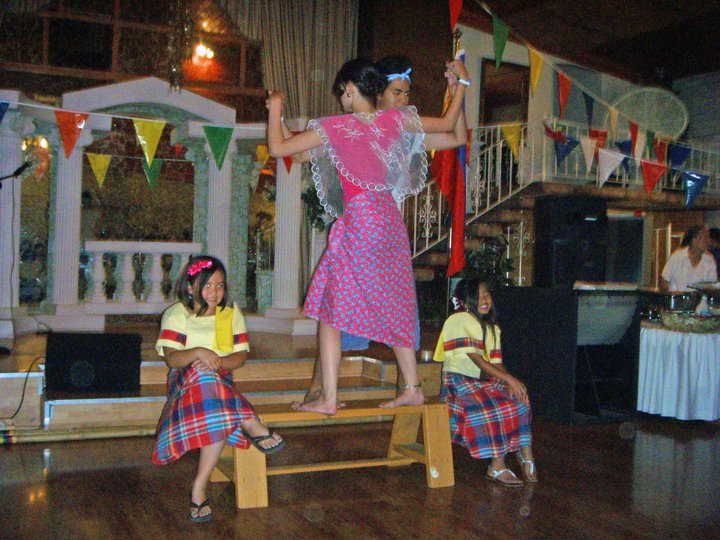
Dancers performing Sayaw sa Bangko, or the bench dance, at the fundraiser. Photo courtesy of Teena Jensen.

The Kulturang Pinoy Ensemble currently consists of 10 children between the ages of 13 and 18. The first performance was held on the evening of Sept. 11, 2010, during a fundraiser to raise money for costumes and props. The girls will wear a balintawak, which is a long dress with butterfly sleeves and a brightly colored overskirt that matches the sleeves. The boys will wear a chino, or brightly colored shirt. When the children outgrow them, plans are in place to pass the costumes down to younger children in hopes of getting more people involved in the ensemble.

Jensen said the program has seen a lot of interest from parents and children alike. When fully developed, the ensemble will have children as young as 5 years old dancing with the group.

“The younger ones come out and watch their brothers and sisters and say, ‘when are we going to start dancing,’” Jensen said.

However, it’s not just about the dancing. The ensemble also encourages the youngsters to learn the Filipino language. During each practice and performance, the children are given a Filipino word of the day. The group includes children who are from the Philippines, as well as those born here. The interaction between them is good for both groups, especially those learning the Pinoy language, Jensen said.

“It’s also learning respect from other Filipino children,” she said. “In the Philippines they respect their parents more than some of the children here do.”

The Philippines are made up of more than 7,000 islands, which creates diversity between the various areas. Jensen said each island has a unique dialect and is like a totally different culture. These different cultures allow for variety in the dances. Each dance has its own meaning and represents a story. Every performance is divided into suites that feature a dance native to a particular area or Filipino culture.

In an e-mail interview, Jensen said one dance suite the ensemble will perform is the Barrio Fiesta Suite. This is comprised of four different dances. The first is the Pista, which displays the lavish preparation for a party. Next is the Gala, also known as the Boholano. This dance comes alive with the clashing of pans, pots, plates, ladles and brooms with firewood, pails and knives to represent a wedding. The third dance is the Kalatong, a popular dance from the province of Batangas that uses bamboo percussion tubes. The finale, and perhaps the most well known of all Filipino dances, is the Tinikling, named after the Tikling bird. For this part the dancers imitate the bird as it avoids traps set by farmers.

The ensemble plans to perform the Barrio Fiesta Suite and others at schools, churches, fundraisers and any time the opportunity presents itself. However, the ultimate goal is to dance at the Living Traditions Festival in May and the Utah Asian Festival in June.

“That’s one of the main reasons for the ensemble, because people were asking – how come there are no Filipino groups performing at these events?” Jensen said.

Eunice Jones, president of the Kulturang Pinoy Ensemble and chairwoman of the Utah Asian Festival, said, “It’s not going to be just a dance group for one organization. It has to be for the whole community.”

Both Jensen and Jones are excited to share the Filipino culture with the community through the Kulturang Pinoy Ensemble.

Nepalis work hard to keep their culture alive in Utah

Story and photo by KENDRA WILMARTH

Imagine you are in a store. Casually running your hands along various items, looking for something that grabs your attention. Wishing you could find apparent character in a product, something different from the same old mass-produced item you saw at your neighbor’s house on Tuesday. For Salt Lake County residents, stores are starting to fill their shelves with something a little more unique.

Artisans from all over the world are working hard right here in Salt Lake City to provide the local consumer with products such as gloves, necklaces, scarves, blankets and handbags.

Many of these artists are refugees who have come from countries around the globe, such as Somalia, Burma and Nepal. They left their homes due to the dangers of war and moved to refugee camps. Now they have found refuge here in Utah.

The Global Artisans program was created by Salt Lake County to assist these refugees in countless ways and to also help ease their transition to a new way of life. The program was founded in 2008 and is a division of the Pathways to Self Sufficiency project. Ze Min Xiao, refugee services liaison for Salt Lake County, said it was set up as a way to address the gap in the refugee community.

“There is a large population of refugees who are not being engaged,” Xiao said. “This program provides them with the opportunity to get together in a safe place, keep their traditions alive and earn supplemental income for their family and also at the same time gives them the opportunity to be encouraged and empowered to achieve more.”

One of the largest groups seeking refuge here in Utah are the Bhutanese from Nepal. After 18 years of being in camps these refugees have found freedom in Salt Lake City. Now, these individuals are provided the opportunity to capitalize on their own skills by taking part in the Global Artisans program.

Xiao said around 80 participants are enrolled in this program and more than half of them are Nepali refugees. They meet a couple times (sometimes more) per week to knit and sew.

When crafts are complete, artisans have the opportunity to sell their products to the Global Artisans program for an estimated $32,000 a year. However, program participants can also independently sell their own products if they wish to do so.

“It’s teaching them that they can take their culture and make some good of it,” said Linda Oda, director of Asian Affairs.

Oda calls Utah the “welcoming state” because of the state’s willingness to allow refugees to settle within its borders. According to the State of Utah Refugee Services Office an estimated 1,000 refugees have resettled in Utah just in 2010 alone.

Several stores around Salt Lake County sell Global Artisan products, including Little America Boutique, Dancing Queen and Jolley’s Pharmacy. Soon BYU and the University of Utah’s bookstores will  carry their goods. Many of the artisans are also selling their products on Overstock.com. Xiao says the program is in the process of finding new businesses to carry their handcrafted items. They hope to add another 10 stores to the list by the end of 2010.

Refugees meet in the Pioneer Craft House in South Salt Lake, where they are given the proper instruments to fashion various crafts. This equipment is financed through a grant given to the program from American Express.

“This generous grant allows us to purchase supplies, equipment, hire a part-time coordinator and also for marketing purposes,” Xiao said.

Heidi Ferguson is the project coordinator of Global Artisans. Ferguson meets regularly with the program participants. She said most of the individuals in the program already possess the talent and ability to knit and sew and that her job is to help train refugees in the basics of business and teach them new ways to improve their craft.

“All of these refugees are very talented and willing to work hard,” Ferguson said. “They feel comfortable here in Utah, and are glad they can add a little more to the community that has given them a safe place to live.”

Southeast Supermarket – helping to maintain culture and diversify Utah

Story and photo by RICH FAHEY

For the majority of Utahns, eating a traditional meal means going to the grocery store for a wide selection of American foods. For the Asian community, eating traditional cuisine requires a little more effort. While most chain grocery stores offer an ethnic aisle, it lacks in authentic Asian food. But several specialty food stores that stock a wide selection of Asian cuisine can be found throughout the valley.

These Asian-specific supermarkets not only supply tasty foods, they also help the Asian community to maintain its heritage and culture.

“Just like language is part of their culture, so is their food,” said Linda Oda, director of Asian Affairs in the Utah State Office of Ethnic Affairs.

Southeast Supermarket, located at 422 E. 900 South in Salt Lake City, is one of these stores. The family-owned and operated business is the largest Asian-specific supermarket in the downtown area. It carries Chinese, Japanese, Korean, Hmong and Thai goods, including foods, drinks, teas, medicines, decorations and kitchen supplies.

Aisle

A wide range of items, both in bulk and individual portions, can be purchased at Southeast Supermarket.

Southeast Supermarket caters to a large number of Asian students from the University of Utah. According to the University of Utah Center for Ethnic Student Affairs, more than 1,300 Asian students are enrolled at the U. This creates a sizeable customer base for the store, especially while school is in session.

“We see a lot of international students, because we have products that they identify with,” said Thanh Trang, a Southeast Market employee and son of the owner.

According to Trang, items like dumplings, pot stickers and instant noodles are popular choices for students because they are quick and easy for people on the go.

These specialty food stores can also have a large impact on Asian-American children growing up in Utah. Growing up in a primarily white city, it is easy for children to become assimilated with American culture.

“You start becoming more American by being part of the community,” Oda said.

Without being exposed to traditional Asian cuisine, a portion of Asian culture can be lost in younger generations. By being part of both communities, children are able to retain some of their heritage and keep an important part of who they are.

“Although I was raised here in the States, and in Japan, I prefer to cook Japanese food for myself because it is always a nostalgic reminder of my childhood,” said Penelope Moffett, 20, a fine-arts graphic design student at the U. “Southeast Supermarket is the only way I can go to Japan, without actually flying anywhere.”

More recently, Southeast Supermarket has seen the number of white customers rise. According to Trang, over the past several years the clientele has changed from mostly Asian, to nearly half Asian and half white. This increase in white patrons shows a larger acceptance of the Asian culture. Oda said this acceptance of Asian cuisine is great for both cultures, and can be attributed to the availability of Asian restaurants and markets throughout the valley.

“It’s a substantiation that I’m OK, and you’re OK,” Oda said.

Another reason for the diversity among customers is the staff at Southeast Supermarket. The store takes pride in its customer service, and the fact that most of the staff speaks English makes it easier for American customers who are unfamiliar with the items.

“I can’t get to this place enough. The place is packed with aisle upon aisle of ingredients to bring your cooking alive,” wrote Stuart M., a Southeast Supermarket customer who posted a review on Yelp.

Coffee Shop in Salt Lake City’s Little America Hotel strives for authenticity with Asian cuisines

Story and photos by CHLOE NGUYEN

Asian seafood salad; beef tournedos with Asian-style salmon steak; vegetable stir fry; grilled chicken breast marinated with a ginger plum sauce — all food you would typically find in an Asian restaurant, right? Not quite.

You can actually find these dishes at the Coffee Shop, located inside the Little America Hotel, a three-star hotel in downtown Salt Lake City. The Coffee Shop is ranked 7th out of the 104 restaurants in the Salt Lake area, according to Virtual Tourist. It has always been known for its traditional “comfort food,” as Ashley Bollinger, 26, the hotel’s community relations manager, calls it. Its menus have had limited changes over the years because they have been well received by customers. But this does not mean there haven’t been accommodations.

“Most of the guests are very vocal with the dishes they like and what they would like to see added,” Bollinger said. “We feel the best way to review or make changes on our menu is to listen to them firsthand.”

Customers want diverse dishes, including those from Asian cultures, such as seafood salad and marinated ginger plum chicken. And while these dishes are only available through the hotel’s banquet menu, the hotel’s Coffee Shop is always serving their customers Asian vegetable stir fry. And if a dish is requested often enough, the decision to include it in the regular menu is considered.

Besides the customers, the people who make the dishes also contribute to what is on the menu. The hotel’s kitchen staff consists of a diverse group of individuals, including Caucasians, Chinese, Vietnamese, Koreans and Hispanics. “[Because of this,] over the years I have incorporated many different dishes from all around the world in our daily cooking techniques and final products,” said Bernhard Götz, Little America’s executive chef.

Those final products are something to be proud of. Unlike some Americanized Asian dishes served at chain restaurants such as Panda Express or P.F. Chang’s China Bistro, the Coffee Shop is different. The chefs value the authenticity of a dish and the culture behind it.

“The traditional Asian dishes are prepared by my Asian cooks,” Götz said. “They are cooked in the traditional way with authentic ingredients.”

Ingredients native to Southeast Asia are included in the making of the dishes. Soy sauce, pineapple juice and ginger are some of the ingredients that go into the ginger plum sauce. Tofu, Napa cabbage, Bok Choy cabbage and Chinese mushroom are among the native vegetables of Southeastern Asian countries that are included in the vegetable stir fry. And like any authentic Asian dish, rice is always included.

If you ask people of Asian ethnicity, many will tell you that rice is a critical part of their culture. In most Asian cultures, “to eat” is often synonymous with the phrase “eat rice.” This can suggest that rice is of high importance to the people of Asia. Rice can be said to be an identification of the Asian community. “It’s important to keep the ingredients the way they would be as if in Asia,” Götz said. “You can’t get more authentic than that.”

But in America, it’s not always easy to keep the ingredients authentic. Chinese restaurant owners developed American Chinese cuisine when they modified their dishes to suit a more Western appetite. According to China Insight, these restaurants adapted by using local ingredients that were familiar to their customers, like flour. Rice was often replaced with noodles, made from flour. As a result, American Chinese cuisine is usually less pungent than authentic cuisine.

Many of these new dishes were quickly and easily prepared. According to an article by Yao-Wen Huang at Flavor & Fortune, they tend to be cooked with a lot of oil, monosodium glutamate (MSG) and sugar, which authentic cuisines do not commonly use.

It is rare to find an Asian American restaurant that serves Asian dishes with authentic ingredients and cooking methods. But the Little America Hotel recognizes and values the importance of diversity and culture in food. Just like language is a part of culture, so is food. “If we serve Asian food, we want it to be real, not fake,” Götz said. “That’s the whole point of why people come looking for authentic food.”

U student dreams of becoming a filmmaker

Story and photo by ANDREAS RIVERA

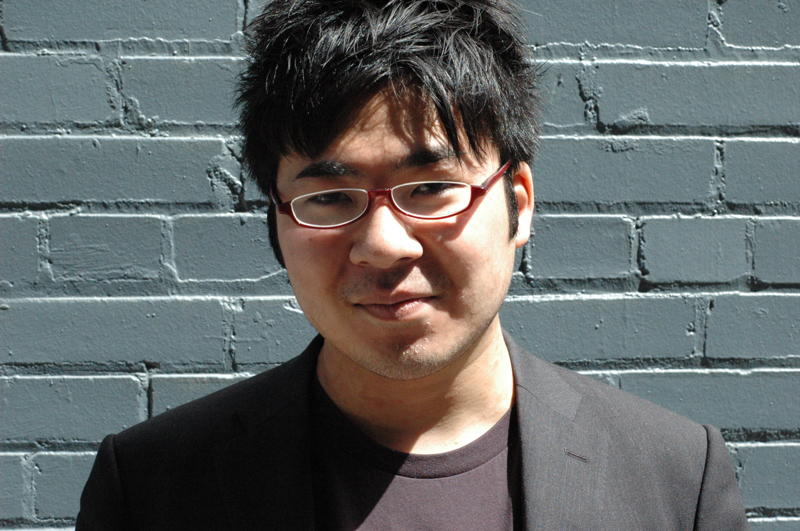
Hirotaka Yoshikawa is described by classmates in his screenwriting class as quiet and well-mannered, but one of the most interesting people they’ve ever met.

Yoshikawa was born in Tokyo, Japan, on June 26, 1987. He grew up close to an American Air Force base, which was his first introduction to American culture. The neighborhood he lived in was very conservative, and this clashed with the American ideals of the base.

He went to an international elementary school where he was taught English.

Yoshikawa wanted to leave the country for his education, so his school contacted a teacher in Utah who put him on an exchange program. In 2001 he came to Salt Lake City for high school and college.

“I wasn’t scared, I was too excited to be scared,” Yoshikawa said.

It was easy adjusting to the new culture, he said.

“People were the main things that were different, but other than that I had no complaints,” he said.

Even before coming to the U.S. he had wanted to be in the movie business, and upon attending the University of Utah, decided he wanted to go into movie production and write screenplays. He is currently a film major at the university.

“I like to try different types of writing, but I really like comedies,” he said. His favorite movies are comedies, including “Back to the Future,which is his favorite film.

“I’ve actually stopped watching films after becoming a film major,” Yoshikawa said. “I’m not huge into big budget films, so I hardly watch new ones.”

He and other students in the film department bash films, both big-budget and independent films, he said.

One of his biggest influences is Charlie Kaufman, who is famous for writing “Being John Malkovich and “Eternal Sunshine of the Spotless Mind.”

“He always leaves in something unexpected,” he said.

Yoshikawa has submitted two scripts, “Where You Wereand Run, to several contests. He hopes they will get picked up and made into movies. But if they don’t, he may make them himself. His script, “Where You Were,” has recently made it into the quarter finals of a screenwriting contest by Fernleif Productions.

Paul Larsen, a professor of film studies and instructor of Yoshikawa’s screenwriting class, said Yoshikawa produces a lot of pages.

He said Yoshikawa’s style of writing is very unique to him as well as being funny and witty.

Besides writing scripts, Yoshikawa has made a few short films, both for school and for personal experience. His favorite one is called, “A Color of Summer.”

“The film is about someone trying to find satisfaction in cultural things, but he can’t find what exactly he’s looking for,” Yoshikawa said. “However, what he is really looking for finds him.”

He said making a short film is a threeday process for him. On the first day he comes up with the plot and writes the first draft and then revises it. On the second day he films the movie. He said filming shouldn’t take any longer than a day for him. He spends the third day editing the movie, which also shouldn’t take longer than a day, he said.

Valerie Douroux, a fellow film major at the U described Yoshikawa’s filming style as very abstract and experimental, which she believes reflects from his personality.

Douroux, who met Yoshikawa in a screenwriting class they shared, said her first impression of him was that he was very quiet, studious and thoughtful.

“He has a very Buddha-like personality,” Douroux said. “Whenever I see him he is very mellow-tune.”

She said despite his low-key personality, his writing is very funny.

“As a filmmaker, I have learned from Hirotaka you have to have dedication,” Douroux said. “He has dedication and that’s exactly what you need to elaborate a story.”

Yoshikawa will graduate in May 2010. He plans to work all summer at the U’s Marriott Library to earn enough money to move. He plans to leave Utah within a year and go to California. That is where the business is, Yoshikawa said.

His family is still in Japan, and occasionally comes to visit him. His father is an editor of a golfing magazine and his mother owns an antique store. His older brother works as a graphic designer. “Two years ago was my last visit, but they are very proud of me,” Yoshikawa said.

The most important thing he has learned as a filmmaker, he said, is “just do it, don’t stop, you need to finish what you have started.”