Is Latinx the new norm?

Navigating the landscape of inclusive speech in 2019

Story and images by JUSTIN TROMBETTI

LATIN (X_)

Culture is in a constant state of evolution, ebbing and flowing between ideas and advancements that slowly ingrain themselves into what we call the status quo. Language is very much a part of this reality.

Language develops naturally for functional purposes, but perhaps more importantly is how and why it bends to the emotional side of humanity. The term Latinx, first searched on Google in 2004 and seeing a huge trend spike in 2015, is one of the latest examples of this.

Its percolation to the surface of our cultural dialogue has been driven by the ever-loudening voices of ethnic minorities, LGBTQIA+ individuals, allies, and their opposition alike. If every generation sees its own push for civil rights and inclusivity, this development could well be a leading indicator of the next one, if not a lagging indicator of the last.

A recent poll revealed that over 20 percent of Latinx millennials identify as LGBTQIA+, and as the Latinx population as a whole continues to grow, the relevance of the conversation would seem to be self-evident.

But what do the most direct stakeholders think of the term, or how to approach inclusivity as a whole? How do allies approach the debate delicately, and how does the advent of broader opinions on political correctness influence it all?

Unpacking these paradigm shifts is a challenging undertaking in its own right, but it becomes especially difficult when there is overwhelming consistency in the discomfort of sharing these types of opinions on record.

Some sources interviewed for this story cited our fragile socio-political climate, public opinion of the media, and a rise in intolerance and hate crimes as sources for this discomfort.

A gender-fluid individual who uses the pronoun they and asked not to be identified on record for many of the reasons noted above, said about inclusivity, “Latin is just a generally more appropriate term.

“It’s a completely a gender [sic] term that does not create a notable difference when used in conjunction with words like Latina and Latino.”

They shared a strong sentiment against the use of the term Latinx, however. While many believe its adoption is a step toward more inclusive language, the source describes it as isolating.

“[It’s] as though the x itself identifies you as other,” they said.

Their dissension with other popular opinions of the term elucidates an important reality of these types of discussions. While part of a cohort of non gender-conforming Latinx individuals, that doesn’t mean that everyone feels the same about certain language.

Others see Latinx as the next step in reaching real, palpable inclusivity. Some went as far as to say they found the development to be unnecessary, or even an outright bastardization of their native tongue.

In trying to make sense of sensitive and complex issues, it’s often best to understand the history behind them. Ed Muñoz, an associate professor of ethnic studies and sociology at the University of Utah, helped to do just that.

To Muñoz, this is the latest iteration of a cyclical occurrence. He’s paid close attention over many decades to the dissection and emergence of terms like Chicano, Latin (and the o/a appendage that was eventually added), Hispanic, and the use of nationality-based language.

The ultimate goal of finding a “pan-ethnic term” for a group sharing a variety of underlying struggles may seem a straightforward idea, but it is often anything but in reality. Muñoz explained that within the Latinx community, issues of class, skin color, gender struggle, and more have fueled these debates.

He recalled that many Latinx feminists who were instrumental in the struggle for gender equality found the degendering of the language exclusive, the development of slang like “Highspanic,” and time periods where certain phrases implied privilege.

The adoption of anti-PC beliefs, though, still have yet to be unpacked. The perceived over-sensitivity of the modern generations, which has grown more and more prevalent in American culture especially, exists within the conversation still. Muñoz believes this to be a systemic issue, a combination of “the internalization of racism and ethnic self-hatred” that has been perpetuated for decades, even centuries.

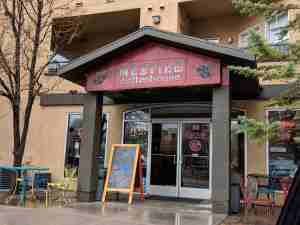
As he was not unironically sitting in a coffee shop called Mestizo (a term which refers to a man of mixed race), he pondered a question posed to him that the other sources for this story had earlier tried working through: How does a non-ethnic person with no practical horse in this race go about being a decent ally?
IMG_20190403_130418 (1)-min

Mestizo Coffeehouse, where Ed Muñoz spoke to Voices of Utah, is nestled within a small apartment complex in a diversity-rich area of downtown Salt Lake City.

“I’m still learning to be a good ally,” he responded with a subtle hint of calm acceptance. He explained that while some may lack ethnic context, he lacks some context too as a cisgendered male. At face value, it seems more convoluting than it does helpful, but as the conversation continued, it’s becoming increasingly apparent that there’s no right answer here.

Rebecca Chavez-Houck made a statement during a Voices of Utah press pool that seemed to further cement this idea. The former journalist and Utah state representative stated that she thought one of the biggest issues facing the Latinx community was the monolithic narrative so many hold about them.

That is, there’s no such thing as a blanket belief, opinion, or characteristic that applies to Hispanics. Further, Chavez-Houck said she believes that all too often the Latinx community is perceived to be defined by deficits and struggle, rather than the many strengths and positive qualities unique to them.

She asserts, “We’re a much more complex community than that.”

So what does it all mean for the future of Latinx and inclusive language? It’s often easy to assume that some kind of objectively correct answer exists out there, whatever it might be. With that mentality, though, we might be asking the wrong question entirely.

No single approach or word choice would have been “most right” to a majority of the individuals who were interviewed. The common denominator among them was not a preference or philosophy, but rather an investment in the dialogue and the impact that it has on them.

Latinx could be here to stay, or it could be in today and out tomorrow, but the conversation will persist regardless. The best thing any of us can do may well be to just listen to it.


La Quinceañera: A girl’s coming-of-age celebration is a rite of passage

Story and photos by SARAH SAIDYKHAN

It could be said that most people have at least one tradition or celebration they carry with them throughout their lives. Weddings, family reunions, bar mitzvahs, cultural holidays, coming-of-age celebrations and more. These traditions become a safety net; a way to keep focus in a sometimes crazy world. No matter where you live, it can be important to keep traditions alive.

In Latino communities, one of the many traditions is the Fiesta de quince años or the quinceañera. When a young Latina girl turns 15, she is celebrated with a party unlike any other event in her life. According to an article in the Journal of New York Folklore, this birthday is a rite of passage.

For young Latino men though, there are no special coming-of-age celebrations. Alejandro Garcia, human resource director at the Marriott City Center in Salt Lake City, said he remembers back to when he asked his mom, “When do I get my quinceañera?” Garcia said his mom chuckled and explained, “It’s just for girls.”

In a quinceañera, the girls are honored through this special celebration and then introduced back into their communities as young women. This event is a milestone in Hispanic culture, but not all young girls feel they need to have such a lavish party.

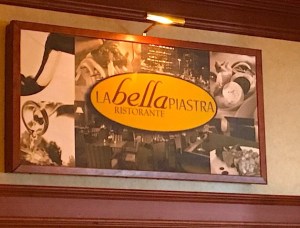
La Bella Piastra

La Bella Piastra

Mercy Garcia, who works at La Bella Piastra on Gallivan Plaza, said, “I chose to have a quinceañera, but my sister decided not to have one. She is very shy and didn’t want all the attention this type of celebration brings.” Garcia said she loved her quinceañera and wants to carry on the tradition.

Before the young Latina girl turns 15, she is given a choice as to what she wants for her special day. The girl’s parents could throw her a birthday party extravaganza or almost anything else she would like to do. If she chooses the party, the only issue is finding a space big enough to hold the possible hundreds of guests — families, friends, neighbors and more — who will join in the celebration.

The quinceañera ceremony today typically has six main parts to it with dancing and meals throughout the event. According to Bella Ballroom, first is the formal entry where the young girl makes her grand entrance. Second, one or both of the parents or godparents make a toast to the birthday girl. Next is the first dance, usually a waltz danced with the girl’s father. The events move on throughout the celebration with a group dance for the immediate family and then the preferred song and dance, which is going to be a favorite of the birthday girl. Last is the final dance, often a waltz. Some families also choose to add other components to the ceremony depending on local traditions and desires of the birthday girl.

According to one published history of the quinceañera, the tradition has changed over the years. Before the 20th century, girls were considered for marriage once they turned 15 and potential suitors would give gifts to the girl’s family as dowry. This is when the idea of a quinceañera started — a small party to celebrate the transition into womanhood. While mingling with family and friends, the young girl would be able to meet and visit comfortably with these potential suitors.

In preparation for the girl’s birthday, Q by DaVinci, a company that specializes in quinceañera dresses, said the women in the community would pull together and plan the event. They would spend time teaching the girl the responsibilities she would need to know, like cooking, cleaning, laundering and even details about childbearing. Then, these older women would bestow upon this new young woman their inspirations to help her throughout life.

During the Chicano Civil Rights Movement in the 1960s, more Latino families were traveling into and around the United States. As they moved around, their traditions were carried and shared with others. Over time, the quinceañera changed into a celebration that young girls experience today — elaborately themed attire, ballgowns, home-cooked or catered feasts, plentiful drinks, delicious cakes along with family, friends and lots of dancing.

You Are InvitedSalt Lake City resident Emily Thompson recently attended her first quinceañera and said, “When I walked into the room, the decorations were as extravagant as any wedding I had ever been to. The girl’s dress was beautiful and almost matched Cinderella’s ballgown.” Thompson said the event was mostly in Spanish. Even though she’s learning the language, she said it was a little too difficult for her to fully follow. But she said, “I couldn’t control my tears when they did a portrayal of the daughter growing into adulthood.” Thompson said it reminded her of being both a young woman and also being a mother of two young women. “This moment touched my heart and helped me understand the entire meaning of the event.” With watery eyes, Thompson smiled and said, “This celebration was about the love for their daughter.”

Ermy Jaco, who also works in the hotel industry, said she prefers the quinceañera over a larger wedding celebration later on, due to the special traditions. “The surprise dance, the changing of the shoes and the last toy,” Jaco said, “these are all part of the special change into womanhood.”

In the book, Once Upon a Quinceañera: Coming of Age in the USA. Julia Alvarez writes about the traditions of the shoes and the last toy as symbols of leaving childhood and entering womanhood. The shoe ceremony allows the young girl to go from wearing flat, dress shoes to wearing heels. Because girls are wearing heels much younger than 15 nowadays, Alvarez said this is now done for symbolism.

IMG_4792

Eventos Reception Center

The last toy is meant to signify the last doll the young girl will receive. Alvarez also explains the clothing on the doll should match the quinceañera and during the ceremony, the girl will usually cradle the doll to symbolize the end of her childhood. In addition, the doll may represent the child that she herself could be having in the not-too-distant future.

But what happens when the birthday girl decides she doesn’t want this huge celebration? “A lot of girls are deciding not to have a quinceañera and are choosing things like a new car,” Jaco said. “My daughter chose the new car.” Jaco said girls today have different priorities and need different things. “And at 15 they’re definitely not looking for a suitor!”

Now, not all girls want a new car. Blogger Grecia Hernandez writes on Quinceañera, an online party-planning resource, that some girls just want something different. They might choose a VIP dinner at their favorite restaurant with their best friends or a girls-only weekend. Some will choose to visit a theme park or even take a family vacation instead. Hernandez said, “A quinceañera is not about spending tons of money but more about celebrating such a special moment in your life, your coming of age [party].”

The last step after the ceremony, according to the Joyful Event Store, is when the parents give thanks to the young girl for being beautiful. They also thank God for bringing her to them. The girl then acknowledges her parents for everything they do and for giving her the party and then tells the guests she appreciates their presence.

It doesn’t matter what theme the girl chooses for her party or if she even wants to be honored with this celebration. A quinceañera is about celebrating the young girl as she grows into womanhood.

IMG_4794

Eventos — Hours

Planning for this special event takes time. Multiple event centers in Utah specialize in catering and hosting quinceañeras, including Eventos Reception Center, Arcoiris Reception Center, Villa Magnolia Eventos or the Colonial Reception Center. Event coordinators understand the importance of this celebration and work hard to make the day memorable for the birthday girl, her family and the friends who have come to celebrate her.

What you think about when you think about Latin Food

Story and photos by SHAUN AJAY

Latin American cuisine is sometimes seen as synonymous with your neighborhood taco or burrito stand. A restaurant in Virginia discusses in an article how most of our perceptions of Mexican food are inaccurate. Dishes we typically think about aren’t really Mexican, but a fusion between American and Mexican food. Not all Latin food is fried. Not all Latin food is tortillas with beans and rice. Yes, Mexico is on the list, but it isn’t the sole contributor to this rich and diverse culture of Latin food. In every South American country, there is a specific regional taste.

MEXICO

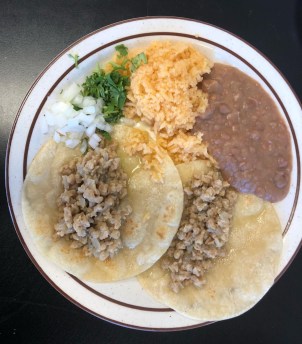
Taqueria Los Lee is a small family business at 700 E. 2646 South in Salt Lake City. The restaurant is a building in the corner of the street, beside a Sinclair gas station. The menu is drawn in primary colors on a blackboard. The daughter of the owner suggested a plate of tacos and gorditas with rice and beans (frijoles) and un medio litro de Cola (half liter). A fitting size meal for an ordinary customer.

The restaurant has little paper cutouts of cacti, sombreros and chilis colorfully hung up on the ceiling. The walls are covered with little lotería cards: a red sun, a scorpion, some palm trees. The whole thing feels like a summer’s breeze in mid-July in the chilly month of February.

A plate of gorditas with rice and frijoles.

The order arrives in 15 minutes, steaming and carrying a strong aroma of fried garlic and cilantro. Frijoles is a doughy sauce made from pinto beans boiled for six hours on low-fire. The gordita (meaning chubby in Spanish) drips some rich oil like liquid gold on a ceramic plate.

Oscar Lee, the patriarch of the restaurant, has his lunch break before his interview. He is from Victoria City in Tamaulipas, Mexico, a state historically known for its agricultural and livestock prosperity. He used to live by the border near Texas and immigrated to the United States. He has lived in Utah for nearly 17 years and has been running his restaurant since July 2018.

Lee wanted to cater to his area and provide what he believes is authentic Mexican food. The demographic of his customers is true to this fact, during lunch hour, the restaurant is occupied by Spanish speakers. But after an article written by the Salt Lake Tribune, he has had more gringos (an American who is not Latinx) visit his restaurant and even become regular customers.

He turns and faces the menu on the blackboard and, like a school teacher, starts to explain his menu. He said their las gorditas is their most popular dish, with either homemade asada (roasted pork or chicken) or potatoes stuffed inside. But he prefers to snack on something a little more sweet called esquites. This is a dish made with corn, freshly cut from the grain, that is mixed with margarine and fresh cheese in a cup.

Lee said that red enchiladas are his most special dish. He makes them with corn tortillas, fresh cheese, ground beef and a red chili sauce. He prefers to not make this too spicy. Another special dish is chicken mole. It mixes chicken breasts with some chocolate and peanuts. Genuine chicken mole takes days to make with additional ingredients. He said that ready-made mole is available, but he prefers making everything from scratch.

Shortly after the restaurant opened, Lee said he was approached by Sysco, a food distribution company, to provide him with menu ingredients. He refused to take the offer, as they were all ready-made and only involved putting them in the oven. “It takes the authenticity from cooking, and from the food,” he said. Lee believes in making his ingredients daily to preserve the authenticity of his cuisine that reminds him and many others of home.

EL SALVADOR

Juanita Restaurant is a small family-owned business at 271 W. 900 South in Salt Lake City. The restaurant specializes in classic Salvadorian food. Carolina Vides, the daughter of the owners, was born in Cabañas, Sensuntepeque. Her family moved to the U.S. in the 1990s and opened this restaurant only four years ago. The restaurant business has always been a part of the Vides family, having run another in Salvador, cooking and making the same pupusas that they love.

IMG_3517

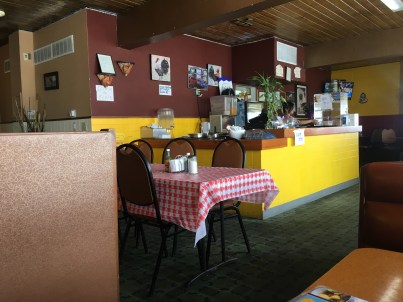
A look inside Juanita’s restaurant

Juanita’s is designed with dark maroon and bright yellow wall paint. Diners can take a seat by the television screen in the corner that broadcasts the Premier League with Spanish commentary. Vides then sits down to talk about the menu — a wide selection of main dishes, appetizers and finger snacks to try.

Pupusas, you should go for the pupusas,” she said. They are a typical Salvadorian snack made from either rice or corn flour. Her favorite is the corn flour. Vides said the pupusas are a staple diet in El Salvador, having been passed down from generation to generation. The fillings are versatile and can be made with anything from chicharron (pork skin) to frijol con queso (beans with cheese). She offered an assorted plate of mini pupusas.

Vides said most people confuse this with Mexican gorditas. Most of her customers are either Mexican or Guatemalan. She places the pupusas on the table beside a tub of curtido, or coleslaw, and a bottle of spicy tomato sauce that complements the meaty pupusas.

For the main dish, she presented a plate of mojarra frita (fried fish) with green salad, rice, and tortillas. The fish is a fresh-water tilapia, cooked till a dark brown like charred wood, but the inside remained a creamy white texture. The restaurant also sells bottles of Kola Champagne by Cuzcatlan, a classic soft drink with a sweet mix of orange syrup and carbonated soda. It leaves a refreshing taste in the mouth.

While patrons feast on the tenderness of their tilapia or pupusas, Vides is usually tending to other customers, flipping tortillas on a hot pan, or taking orders on the phone. One can leave the restaurant feeling very satisfied.

PERU

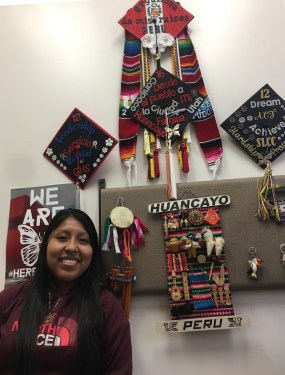
Giulia Soto is a second-year program coordinator and advisor at the Center for Ethnic Student Affairs (CESA) at the University of Utah. She comes from an indigenous family from Huancayo, in the central highlands of Peru. Soto immigrated to West Valley City at age 5, during the sendero luminoso era, a Communist party during the 1990s that wanted to overrun the government. Her father was able to come to the U.S. and was given a work visa to live in the mountains as a shepherd.

“Since my family is indigenous, it affects . . . how I was brought up, and the foods that I eat,” Soto said. Her diet is completely Peruvian. That was all she knew of during her younger years. The most common dishes for her are arroz chaufa, lomo saltado, and pollo a la brasa.

Arroz chaufa (Chinese rice) and lomo saltado are a mixed style of Chinese fried rice and vegetables with typical meats like pork, chicken or beef. Soto said that most of their dishes use white rice, potatoes and chicken. “We laugh about this sometimes, because a lot of people connect this to the Asian community,” she said. Her favorite dish to make is aji de gallina (chicken stew) that combines rice, potatoes and aji de gallina (yellow capsicum). Soto said this dish is usually considered to be Peruvian comfort food. 

Soto in front of her Huancayo displays

A common ingredient across the board is pimiento y comino (black pepper). Another is aji panca, a hot red capsicum that’s not too spicy, and is used as a paste when making food like tallarin rojo (Peruvian red spaghetti). All of these spices are indigenous to Peru and are the trademark for its dishes.

La Pequeñita International market at 2740 State St. is owned by a Peruvian in Salt Lake City. It provides imported ingredients from Latin America to the locals in Utah. Soto said she sometimes sees people driving down from Idaho and buying these ingredients in bulk. “You have to be savvy at cooking, cuz it’s just aisles and aisles of herbs and spices, and you should know what to use it for,” she said.

Pachamanca peruana is a popular dish from the mountainous regions of Peru. Pacha means earth and manka means pot in Quechua, the indigenous language of Soto’s family, spoken in the highlands. The dish is made for special occasions like family gatherings or fundraisers, as it requires extreme preparation.

Soto said that the pachamanca is usually comprised of marinated sheep meat, camote (sweet potato) and humitas (fresh corn with dough). She also noted that humitas is usually mistaken for tamal, a Mesoamerican dish, that tastes savory and usually has stuffings like chicken inside. The pachamanca begins with heating stones over a fire, and then placing everything into a natural oven dug from the ground, cooking the meat for about two hours.

Soto said that the pachamanca is not something you would see at a restaurant in Lima, let alone in a Peruvian restaurant in Salt Lake City. The pachamanca is only maintained as a tradition through teaching the next generation how it’s done. However, one way to grab a taste, without buying your next ticket to Peru is to attend fundraisers.

In Utah, Peruvian families come together and do fundraisers for the community where they make and sell food and sometimes host soccer tournaments. “It’s a way for us to help each other out, someone who’s had a car accident or immigration issues,” Soto said. There are at least 15-20 fundraisers in the summer between the months of June and August that she attends. 

The Peruvian community in Utah typically hosts its fundraisers at what it calls “parque canipaco,” or Parkway Park, in West Valley City. These fundraisers not only help the community at large for Peruvians, but also is a way of keeping their tradition alive through food and celebration. For more information about these fundraisers, contact Soto at giulia.soto@utah.edu.


Minorities brighten up the future of science and technology

Story and photo by SAYAKA KOCHI

STEM (Science, Technology, Engineering, and Mathematics) is a key field for innovations. As demand increases for researchers and engineers in Utah, the underrepresented minorities, especially those with roots in Latin America, are needed to be scientific innovators.

IMG_0475

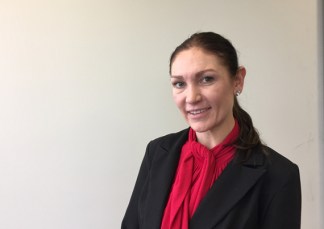
Katherine Kireiev, STEM communication manager at the Utah STEM Action Center.

“It doesn’t matter what the color of skin is. STEM is helping to improve human lives, and maybe, the technologies are based on our abilities to keep up with them,” Katherine Kireiev said. She is an underrepresented first-generation American born to Russian parents. She works at the Utah STEM Action Center as a STEM communication manager, supporting Utah citizens including Latinxs to engage in sciences.

Latinx people are less likely to pursue higher education or their careers in the STEM fields, compared to other ethnic groups. According to a 2018 Pew Research Center report, Hispanics are significantly underrepresented in most STEM occupations; only 7 percent of all STEM workers in the U.S. are Hispanics, while 69 percent are Caucasians.

“The Latino culture of filial piety can be one of those things where they are expected to go into similar lines of work. Or maybe not given the right messaging to drive them toward college or science at home,” Kireiev said.

“Latinos are very family oriented and tend to work more in hands-on jobs rather than go and pursue higher education, because culturally, over generations, they don’t think that’s a pathway,” she said.

“What we do here in this agency is to try to make equity across all of the population,” Kireiev explained about what the center, located at 60 E. South Temple in Salt Lake City, is doing. The Utah STEM Action Center creates children’s “wow” and “why” moments by organizing STEM-related events, showing how science works around them.

“We try to equip students with opportunities that they wouldn’t dream of,” Kireiev said.

“With our very large Latino population in the state of Utah, we target public schools and charter schools. … We’re really trying to get teachers to recognize that [we need to] start them young and get them young and just show them that it can be really fun,” Kireiev said. For example, students are given a little toy that can be programmed to follow different color patterns. “It’s really cool and they say, ‘Oh, my gosh. I made it do that?’ Once students make these physical connections and see in actuality that hands-on piece, then it really lights them up,” she said. 

SACNAS (Society for Advancement of Chicanos/Hispanics and Native Americans in Science) is also an organization supporting college students in the minority groups to build up their community in the STEM fields.

“SACNAS offers a lot of career development, a lot of workshops to help with applying for grad schools, med schools,” said Reuben Ryan Cano in a phone interview. He was born and raised in Utah, and his parents are both from Mexico. He became the president of SACNAS University of Utah chapter while studying as a pre-med biology student at the University of Utah.

“There is a lot of networking that goes on. There is a chance to present their research, learning how to present, and also see other presentations, sharing science as well as sharing those professional skills,” Cano said. “SACNAS can engage minorities in STEM by building a community, providing support necessarily, and professionally encouraging skill development.”

The connection is vital when motivating underrepresented students to be exposed to scientific fields. Lace Padilla, the former vice president of SACNAS University of Utah chapter who currently works as a post-doctoral fellow at Northeastern University, has discovered the importance of connection through an unexpected meeting.

padilla_conference

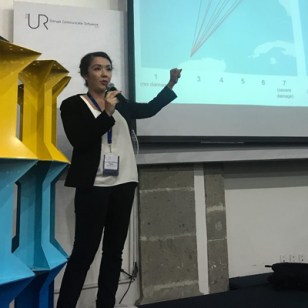
Lace Padilla has a Ph.D. in cognitive neuroscience. Photo courtesy of Padilla.

Padilla was born to a Mexican-Native American mother and a Caucasian father. She grew up in a small mountain town in Colorado. Her first career was not in science but in an artistic field.

“Where I grew up, people didn’t become a scientist. I never knew any scientists, and I didn’t think someone who looked like me could be a scientist,” Padilla said. Her art career started when she got to know an artist in her hometown. Inspired by the artist who trained Padilla, she became a graphic designer.

“But I always loved science. I graduated first in my class, but for whatever reasons, I never met a college counselor. Just nobody encouraged me to pursue science. So I just didn’t think it was an option,” Padilla said.

After she came to Utah to complete her master’s degree in arts at the University of Utah, she happened to meet a woman who was studying visual perception.

“Visual perception is a really interesting field because it is a science of how our visual system understands the world around us. It was so cool because that was always what I wanted to study in arts,” Padilla explained. Thanks to this meeting, Padilla was encouraged to get into the science field, a decision that changed her life.

Padilla became a graduate research assistant in the visual perception and spatial cognition research lab under the professor’s mentorship and finished her doctoral program in cognitive neuroscience at the U. Since 2018, she has been working as a National Science Foundation (NSF) postdoctoral research fellow at Northeastern University in Boston.

“I wouldn’t have gotten to science if it wasn’t for just randomly meeting this woman who believed in me,” Padilla said.

“Sometimes minority groups get passed over for science because they don’t know someone that can show the way they should have,” Padilla said. “One of the biggest applying factors that makes a minoritized person successful in STEM is having a mentor. If you don’t have a mentor, it’s hard to find a path.”

The current STEM fields are not diversified enough. This inequity is resulting from a lack of real person-to-person connections, inspirations, and encouragements. Underrepresented people hold unlimited potential in science.

“Studying science changed my life,” Padilla said. “I’ve never imagined someone like me could be a scientist. Because I learned a possibility, it changed everything for me. I feel like I’ve been successful because I realized what a privilege it is to study science.”


Navigating bilingual education for Utah students

IMG_8714

Story and photos by KAELI WILTBANK

The last decade has seen a large influx of Utah residents who speak a language other than English in the home. As of 2016, that number was over 400,000 people, ranking Utah as the third-fasting growing state for residents who speak a foreign language in the home. Much of that growth can be attributed to native-born children of immigrants

Paige Wightman teaches eighth- and ninth-grade English at West Jordan Middle School. Because of the demographics of the area, she was required to get an English as a Second Language (ESL) endorsement, which has given her the opportunity to teach a language development class. The curriculum is designed for students who don’t speak English as their primary language at home. While the languages spoken in the class range from Portuguese to Arabic, the main language spoken by her students is Spanish.

IMG_8716

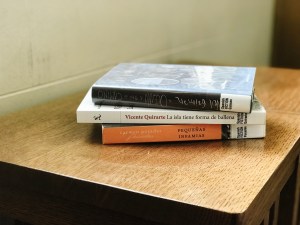
Pictured here and at top, three books from a small Spanish selection of books at Sprague Branch Library in Salt Lake City.

When speaking of the challenges of teaching a class of bilingual children she explains, “I ran into some problems when I encouraged my students to read a book in English and a book in their native language one quarter and the kids didn’t have access to what they needed. It surprised me and it was very disheartening when I learned that we didn’t have any Spanish books in the library.”

According to a study by the American Psychological Association, native Spanish-speaking students who had an increased vocabulary in Spanish saw significant positive effects on their English fluency and reading speed. Their research helped prove a positive correlation of literacy skills being transferred between the first and second languages. 

Rebecca Chavez-Houck, former Utah State House Representative, is a third-generation American. She recounts her grandfather moving to the United States from Mexico in the early 1900s and making education in both Spanish and English a priority for his children. “My grandfather, my mom’s dad, knew how to read and write in Spanish. So what did he do? He taught his kids how to read and write Spanish before they were in kindergarten. This set the stage for my mom’s success as well as for subsequent generations,” she said.

The Gomez family has been living in Utah for over 15 years and has been navigating their own bilingual experience a bit differently in 2019. Both Monica and her husband Rafael grew up speaking Spanish as their native language. Monica was born in Mexico and picked up English from watching movies and television. When she moved to San Diego and married Rafael, who was born in the U.S. to immigrant parents, they had to decide how they wanted their three children to learn both languages.

Gomez explained the education her oldest daughter received in San Diego. “It was a Spanish immersion program in San Diego where they had half of their classes in English and half of their classes in Spanish. By sixth grade, they would come out reading and writing in both languages. But she was only there for a couple of months because we moved.”

After coming to Utah the girl was put in the English courses. Monica’s daughter, now 18, said she can speak both Spanish and English like she’s a native to both, but has a difficult time writing in Spanish.

Monica’s youngest son, Nick, is 10 years old and can understand Spanish, but doesn’t feel confident speaking the language. “Nicholas is different [than my older children] because, church, school, and friends are in English. We speak Spanish at home but if it’s homework time it has to be in English.”

Monica described a system that she saw in Mexico growing up. Many of the schools have English classes offered to children from the time they are in preschool, similar to what is offered to high school students here in the United States. She said she would have liked the opportunity to have her son take Spanish classes in elementary school, believing that this could be an alternative route to the ESL program.

Wightman, the teacher at West Jordan Middle School, is eager to offer better resources to her bilingual students. She has asked her school librarian to be on the lookout for Spanish books. Like many teachers, she has spent much of her personal money filling her bookshelf with Spanish options but has found that most books are low level and not what her middle school students need. Wightman explained, “I think that sends the message to that community that they are children or like it’s some sort of disadvantage if you don’t speak English and the only other resource we offer them is something with very simple Spanish. We should be encouraging culture and language through a variety of different ways.”

While the resources for bilingual students in Utah may be limited, Wightman said she has deep respect for her diligent students. “I’m especially fond of the Latinx community because they are some of the hardest working students I have, keeping in mind they have to work double time. They have to translate what they hear into Spanish, then they have to translate their answer from Spanish to English. They have to have the courage to speak up, which is hard for any teenager, but especially hard if you’re afraid you’re going to sound dumb.”

Wightman concluded, “We need this generation to stay in school and we need them to have post-secondary education. They are going to be the change makers and if we want any change we need to invest in them, in the Latinx community.”

Losing the Latinx identity

Story and photo by KARA D. RHODES

Culture has always been an idea that people hold close to their heart as it brings families, friends, and generally speaking, people together. What happens when people decide that their culture is no longer important to them? Killing their culture little by little by not accepting or not keeping their culture as prominent as they once had before.

Alex Guzman, president and CEO of the Utah Hispanic Chamber of Commerce, is mainly a hard-hitting businessman committed to the growth of the Latinx business community. Guzman is a family man who fears his children are losing their culture that he is fond of. In an interview, he tells a story of his son getting ridiculed at the local elementary school for not speaking English well enough for his teacher to understand him.

Now, immersion schools assist with teaching those who have a first language that is not English. Guzman says he wishes his son hadn’t had to go through something so traumatic. This taught the young boy that his language was not correct and forced him out of his culture. Guzman likes to speak Spanish while he is home; his son now speaks Spanish with an accent that is not from his culture.

Christian Oregon, a 23-year-old student with family origins in Acapulco, Guerrero, Mexico, says, “Culture is very important to me. It sets us apart; we value a lot of different things. My culture has helped define and shape me into the person I am today. I always remember my roots. I take huge pride in my culture so it’s definitely important to me.”

Oregon says he believes that his culture is stronger than ever despite all the push-back from the political climate. “We’re staying strong together because we have people thinking we’re all drug dealers and criminals. The racists are believing everything Trump says. We have people yelling at us with their MAGA (Make America Great Again) hats saying, build the wall, but we are fighting back and we’re not letting them take away or make us feel bad because of our culture.”

As strong as Oregon says the culture is, he believes that there are still people losing the culture. He says the times are to blame because people want to “fit in” nowadays. “Latinx people believe they should forget their culture to advance in today’s society,” Oregon says.

Oregon says there are ways to preserve their culture. “People can conserve their culture by sticking to their roots and teaching everything they’ve learned from their family onto their children. Doing this preserves our culture and keeps it alive. I think it’s just about passing it down from generation to generation.”

Asset_Story 1

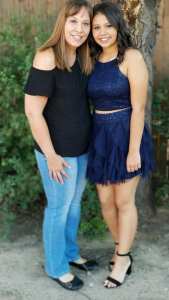
Combining cultures: Amanda Ruelas, left, is Navajo while her husband is Latinx. She is pictured with her daughter, Gabby Ruelas. 

Amanda Ruelas, a mother of three, is immersed in multiple cultures including the Latinx community. Ruelas had a difficult time explaining what culture means to her but that it is very important. “I do feel that the younger generation is losing culture. They definitely see it different than I do. Especially my eldest daughter, Gabby. She is so interested in fitting in that she doesn’t want to understand our culture as much,” she says.

Ruelas’ husband, Vic, speaks Spanish but didn’t take the time while the children were young to teach them. She explains that they should have started teaching their kids both Navajo and Spanish when they were younger because her daughters are no longer interested in it. Ruelas is Navajo while her husband is Latinx.

Culture is clearly a big part in the Latinx community. Some believe it is thriving while others can see it slowly fading away. According to a summary of a 2014 forum at Mimar Sinan Fine Arts University, “Cultural heritage affirms our identity as a people because it creates a comprehensive framework for the preservation of cultural heritage including cultural sites, old buildings, monuments, shrines, and landmarks that have cultural significance and historical value.”

Hispanic belief system that the family is the heart and focus of life

Story and photo by EMMA JOHNSON

The family is the heart of the Hispanic culture. Children taking care of their parents as their parents took care of them in their childhood is a “circle of life” concept the Latinix communities value. Birth and death are interesting life experiences. Latinx people are viewed as family-centered with divine importance placed on caring for the young and elderly. Learning from family members’ wisdom that will benefit future generations is an honorable life adventure Hispanic families respect.

A 2014 poll conducted by the Associated Press-NORC Center for Public Affairs Research found that Hispanics have a higher likelihood of caring for their elderly relatives and having it be a positive experience. The poll concluded that Hispanic families have reported a greater percentage of their caregiving being less financially stressful.

Alex Guzman, president and CEO of the Utah Hispanic Chamber of Commerce, feels the opportunity to take care of his elders enhances his family centered beliefs. “In the Hispanic culture, they will take care of their parents because their parents took care of them.” For him and his family, the statement is as simple as it sounds. Guzman says assisted-living homes are a rarity in his home county of Guatemala. The family is the center. Whatever sacrifices need to be made to ensure fulfillment of the circle of life will be made.

IMG_1799_1551905733197

The Livas family represents the circle of life. Standing from left: Norma, Manny, and Ed. Sam is seated

Latinx communities are loyal to their heritage.  They are proud of who they are and willing to share their rich culture with others. Sam Livas is a Mexican-American who prides himself on his family-oriented lifestyle. Livas’ mother grew up in Cananera Sonora, Mexico, and his father in Tucson, Arizona. His mother migrated to the United States to marry his father. Livas was born in California but said he would not trade his Hispanic upbringing up for the world.

Growing up, Livas said he watched as his mother cared for her elderly parents. “Seeing my mother and her siblings take care of their mother is where I feel or saw the need to take care of my own parents.” The firsthand experience helped him to realize the cultural importance and value of caring for those he loved.

According to a study conducted by the University Of Austin, Texas, despite high levels of need, Hispanics shun nursing homes and remain where they are even with compromised health conditions. It isn’t uncommon for children caretakers to fail meeting the needs of their elderly relatives. Most family members aren’t medical professionals. The looming pressure of where family members with health complications will live daunts and alters cultural customs.

Livas said in an email interview that his Mexican-American values have given him a clearer understanding of why many Americans put their parents into nursing centers. “I don’t fault those that CAN provide better care for their loved ones.” He said he feels assisted and rehabilitation homes should not be a substitute for family, but used as a resource that benefits all. “Don’t forget to call and visit,” Livas added, there is no better emotional love than a family can provide.

Latinx communities rely on family units as human bodies rely on their heart. Family belonging and involvement is the foundation of their lives. Guzman, with the Utah Hispanic Chamber of Commerce, said, “If you have to work three jobs with the intention to provide for your children, you do.”


Community, stereotypes and culture: Three Hispanics share their stories

Story and photos by LINA SONG

Within the past few years, the Hispanic community continues to grow every day across the United States. As the population increases, many people are starting to lose their own culture as they are influenced by American culture.

Three members of the Hispanic community in Utah shared their perspectives of their embracement of culture as well as the stereotypes that they face while living in Utah.  

Alex Guzman

Alex Guzman, CEO of the Utah Hispanic Chamber of Commerce, is originally from Guatemala. He worked in the field of marketing and business research there before coming to Utah in order to represent and provide support to the Hispanic community.

After living in the United States for 11 years, Guzman has come to a realization that many Americans believe that the Hispanic community consists of just Mexicans. However, he said that each member has different preferences and likings based on their country of origin, how long they have been in the U.S., educational level, and many more factors. Furthermore, Guzman said his friends are from different cultures and backgrounds, though they are grouped under the broad label, “Hispanic.”

“They think Hispanics are Mexicans and a bunch of taco eaters,” Guzman said while remembering this with a big grin on his face. “We are [not] taco eaters, we have more segmentation.”

Guzman noticed his children were starting to adapt and assimilate into the American culture. Due to the differences in culture and language, he pointed out that his son started to embrace the American culture in order to fit in with the majority. “What is happening is, I’m losing my son,” Guzman said. He highlighted his concerns about the Hispanic community’s future generation facing the elimination of their original heritage. But, he also said the diversity within the Hispanic community also enhances its beauty.

Jasmin Valdivia

edit 1

Valdivia believes stereotypes are dangerous because they limit the ways people view each other.

Jasmin Valdivia, an undergraduate student at the University of Utah, comes from a small family of three and has been living in Utah since she was born. She grew up in Orem, a majority white town, and attended a majority white high school. As a minority, she faces many stereotypes while living in Utah. Valdivia said she feels that the Hispanic community is stereotyped based on members’ physical features and capabilities as well as their actions and the way they are presumed to think or act.

Some of the stereotypes Valdivia has personally faced are based on her academic factors. She said that by attending university, it was against the norm of how her community is viewed. Valdivia said stereotypes like these have helped her strive to be a better person because she does not want to fit people’s idea of what a Hispanic person should be like, especially if it is negative stereotypes.

“I would say that for the most part I think I embrace American culture more just because it is easier to ‘fit’ in if I am more in tune to the American culture. There are still minor aspects of my Hispanic culture in my American culture for sure,” Valdivia said. “But when I am around my Hispanic friends or my family members I definitely embrace my Hispanic culture more comfortably.”

Sahaara Pena

IMG_5645

When Pena was little, she grew up in a primarily Latino neighborhood and was never ashamed of her culture.

Sahaara Pena, an undergraduate student at the U, comes from a family of five. She has lived with her grandparents in Utah since shortly after her birth in California. She also grew up in a majority white town and faced stereotypes in the past.  She said most people assume she was born in Mexico. Another stereotype she faced is that people are very surprised that she speaks English well without an accent since they assume her English will be inadequate.

“Stereotypes can be damaging because they group individuals who have one thing in common together and so they assume that if one person acts or is a certain way, then everyone else must be the same,” Pena said. “This can mean that due to past experiences people will assume that the same characteristics will apply to you or me due to the stereotypes. … Then the person is taken less seriously or won’t be given an equal chance or opportunity due to the stereotypes.”

Pena said she began to realize that in the past she was trying to fit into the American standard until she recognized that she was never going to fit in. Pena said she is part of a rich and beautiful culture and she has no reason to hide it. She feels strongly about her culture for the history and power it possesses and is willing to teach others about her culture and correct the stereotypes people have previously believed in.

“I definitely would have to say I embrace a mixture [of] both because I have grown up with both,” Pena said. “But other than that I embrace more of my Hispanic culture with people around me because in our culture we treat everyone as if they’re family because family is very important to us and we always have to take care of each other.”

Including the Hispanic culture into a tight-knit Utah community

Story and photo by KAELI WILTBANK

It is estimated that by mid-century, the United States population will be a minority-majority nation. According to the U.S. census, the Utah minority population has grown 24 percent since 2010, resulting in one in five Utahns being a minority.  

Noemi Morales Clark, whose parents immigrated to the United States from Mexico shortly after she was born, has chosen to spend the last few years living in West Valley City, Utah, where it is estimated that 37.9 percent of its population is made up of Hispanics. Commenting on her experience as a Latina, she said in a phone interview, “A number for diversity isn’t going to change anything, it’s just going to make people aware of what’s already happening, but talking about inclusivity would make a bigger difference. Inclusivity is very different because it is based more on a feeling.”

Alex Guzman, president and CEO of the Utah Hispanic Chamber of Commerce, said of his time spent in Utah, “We live in a very nice and beautiful state. It’s very open and very friendly. I am faced, on a daily basis with, I don’t want to say racism, but yes, I suffer some consequences not being white and Mormon.”

The Church of Jesus Christ of Latter-day Saints has a large presence in the state of Utah, with 49 percent of the population belonging to the religion. Although that number is declining, the church has traditionally played a considerable role in the culture of the community.

Clark, the woman who lives in West Valley City, is an active member of the church. She said about inclusivity, “I think the church is just so big here that you get accustomed to knowing the people living around you that are in your ward.” She added, “If they aren’t in the ward or not LDS it’s like I don’t know how to interact with this person living next to me.”

A ward refers to a small congregation of your neighbors who meet together each week for church services. The local ward congregations often create a very close-knit community, prioritizing service and fellowship. The church has made extreme efforts to offer equal resources for those who don’t speak English. One way they are striving for more inclusivity is by creating Spanish wards.    

IMG_8200

Ruben Gomez pictured above in front of a local building for The Church of Jesus Christ of Latter-day Saints.

It’s common for communities to experience growing pains as adjustments are made to be more diverse and inclusive. Ruben Gomez was raised by immigrant parents in San Diego. He explained how he and many other Hispanics face fear when immersing themselves into a new culture, “You have to roll with the punches, you have to include yourself. A lot of people will think, oh, I have nothing to contribute, but you have a lot to contribute, as an individual and with your culture.”

The Utah community has much to benefit from the Hispanic culture. When asked how Utahns can engage more with the Latinx population, UHCC President Guzman said, “How do [you] engage a community? It’s not about the language, it’s about the culture.” He described how the culture of the Hispanic community in Utah is powerful enough to break down the language barriers and suggested visiting West Valley City.

West Valley City, with its many Hispanic restaurants, grocery stores, and businesses, give native Utahns the perfect opportunity to engage with the Hispanic culture. Although there may be a language barrier, there is a unifying power that comes from striving to better understand and include your neighbors.

Gomez said how uncomfortable it can be for someone living in the United Staes who doesn’t speak English as their native language. “It’s an ingrown thing in Hispanics where they feel less than and looked down on if they speak with an accent.” Gomez said “it comes down to being humble and seeing everyone, all creeds, nationalities, genders, and colors as equals. You need to see that in yourself and you have to value it in others.”

Bev Uipi, Marc Roberts, Jake Fitisemanu Jr. — Pacific Islanders in Utah politics

“If we truly believe in government that is by, for, and of the people,” Jake Fitisemanu Jr. said, “then by definition our governmental bodies should represent the makeup of our communities.”

Story by DIEGO ROMO

In the current social climate of the United States, even a half-mention of the word politics sends many fleeing. The word conjures feelings of distrust, misuse and abuse. But, in Utah’s Pacific Islander community, there is a different story to be told — a story of values, community and customs.

Bev Uipi, Marc Roberts and Jake Fitisemanu Jr. are three Utahns of Pacific Islander descent who are serving their communities in various governmental and political roles across the Wasatch Front. Their backgrounds and stories are unique and diverse, but the culture of community that has always run through the veins of Pacific Islander history connects them all and drives their political outlooks. This trait seems at odds with the current culture of American politics.

For Millcreek City Councilwoman Bev Uipi, politics is no unfamiliar game. The daughter of the only Tongan, and first Pacific Islander, to be elected to the Utah State Legislature, Uipi knows what it means to be truly at the service of her community. And through this firsthand experience of her father’s tenure as a Utah state legislator, she figured she would never put her name on the ballot.

“When he ran, I thought I would never do this,” Uipi said.

But all of that changed when Uipi was studying for a master’s degree in public administration at the University of Utah. It was there that she found a new interest in city management, which sparked the idea to run for office.

Uipi found herself conflicted as she was faced with the decision to pursue a path she never thought she would be traveling.

“For all of that pushback you’d think I wouldn’t want to run, but I did,” added Uipi.

And in 2016 Bev Uipi put her name in the hat for the office of Millcreek city councilmember for District 4 and won by a landslide. Uipi credits the win to the fact that her campaign had far more resources than all of the other campaigns.

“We raised and spent more money than all other campaigns combined,” Uipi said. “I learned a lot of strategies from Dad.”

When she was a young girl, her father told her “Don’t think outside the box, live outside the box.” Phil Uipi also spent time teaching his children about their Tongan heritage and about the epic stories of transoceanic voyages that their ancestors undertook. He shared, too, their keen ability to adapt to new situations and places because they were frequently on the move.

“We were given the skills to survive this far,” Phil Uipi would say, encouraging his children to pursue their dreams.

Uipi credits these lessons with her ability to navigate the very white, very male world of Utah politics.

“Water moves, so does politics,” Uipi said, commenting on her ability to adapt fluidly in this strange environment.

Marc Roberts, state representative for Utah’s 67th district, also never saw himself running for office. But, in 2012, he found himself in a new district after the 2010 census called for redistricting within the state. This change led him to become a more active member of his community, and eventually to office.

Roberts’ fellow community members noticed his newfound passion and encouraged him to run for a leadership position within his community.

“I was looking at people like, you’re crazy, I don’t want to do that,” Roberts said in a telephone interview. “But, push came to shove.”

Roberts ran against four longtime and well respected residents in his community and beat them in the caucus.

“I still remember going to vote. Sitting there standing in line realizing that everyone there is going to vote for me,” Roberts added. “And here I am in jeans and a hoodie looking like a regular guy.”

Roberts grew up in a very large family: nine siblings to be exact. And although he was reared in a household that taught him the core values that are prevalent in many Pacific Islander families, he was not raised in a home where Polynesian culture was at the forefront.

“I’m one foot in, one foot out when it comes to the Pacific Islander community,” he said.

But to Roberts, like many Pacific Islanders, family has always come first.

“To me family is the first level of government,” Roberts said. And that is how he views his role as a political leader in his community. “The stronger the family, the stronger the community.”

Jake Fitisemanu Jr., the current West Valley City councilman for District 4, grew up in both Hawaii and Utah. He never saw himself running for office, either. But during his time in college, Fitisemanu came to find himself elected to student senate on somewhat of a whim.

“I didn’t really campaign in any formal way, I just put my name on the ballot and hoped for the best,” Fitisemanu said in an email interview. “To be completely honest, at that stage in my life, I felt that getting involved would be great for my resumé. It wasn’t really out of a sense of civic duty, but more like an experiential challenge.”

Fast forward a few years and the experience that he thought would only be a footnote on his resumé became a full-time responsibility as the new councilman for West Valley City’s District 4.

In this new position, he hoped to connect his community to policies and resources that would impact their lives in a positive way.

“I feel like local government is the closest access point for everyday people to connect with the policies that impact our daily lives. I wanted to help improve the community where I live and I knew that representing my neighbors on the city council would be an effective and meaningful way to do that,” Fitisemanu said.

Regardless of their background, it seems that for most Pacific Islanders, it all comes back to the family and to the community, which makes them great candidates for leadership positions in their communities. Unfortunately, there are not enough role models in the community.

According to a 2016 article in “@ the U,” Representative Marc Roberts was one of four Pacific Islanders who were elected and had served in some form of Utah politics. That is only four out of about 37,000 Native Hawaiians and Pacific Islanders who reside in Utah, according to 2010 census data. Millcreek City Councilwoman Bev Uipi credits these staggeringly low numbers to representative bureaucracy.

Something has to change.

“If we truly believe in government that is by, for, and of the people,” Fitisemanu said, “then by definition our governmental bodies should represent the makeup of our communities.”