Pride Week at the University of Utah, a ‘top-25’ LGBT-friendly school

Story and photos by DAYLAN JONES
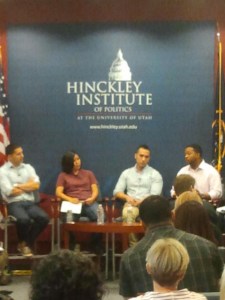
Pannel style discussion at the Hinkley Institute, Oct 4, 2012

Panel discussion at the Hinkley Institute of Politics, Oct. 4, 2012.

The University of Utah was named one of the top 25 most LGBT-friendly colleges and universities in the U.S. by Campus Pride in August 2012. The ranking gave the U something else to celebrate during the annual Pride Week celebration, held Oct. 1-5, 2012.

The rankings are based on data from the Campus Pride Index, which rates colleges and universities on things such as LGBT-friendly policies.

The U received high scores in all categories but LGBT Housing and Residence Life, where it scored a 3.5 of 5 stars.

“We are currently working towards that with the housing department and other necessary departments to have that by the fall [of 2013],” said Kai Medina-Martínez, director of the LGBT Resource Center at the U.

“It’s a good thing,” Medina-Martínez said about the publicity. “When the list came out the major news outlets contacted us, the U’s webpage acknowledged us, and in addition to the school, it’s a really good thing for the state.”
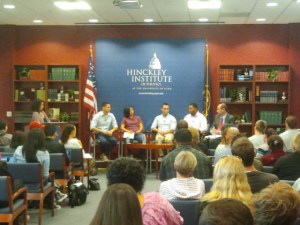
The Pride Week panel at the Hinckley Institute of Politics, Oct. 4, 2012.

The Pride Week panel at the Hinckley Institute of Politics, Oct. 4, 2012.

Pride Week has a different focus or theme every year to educate students and the public about issues in the LGBT community. This year’s theme was “Pride Has No Borders.”

The panel, “Pride Has No Borders: Immigration,” held Oct. 4 at the Hinkley Institute of Politics, focused on the challenges lesbians and gays of color face as they apply for immigration, get jobs and try to make a difference.

“As a woman of color and an immigrant myself I can connect with this,” said Valeria Moncada, a student who attended the panel. “It hurts my heart to see the hardships and unfairness we as people of this country place on immigrants. Immigrants as individuals are treated unfairly but because you are LGBT, you have less rights than a traditional immigrant.”

Pride Week also featured fun events. The Drag Show was a hit and gave new insight to one student. Madeline Smith commented on the “feisty” performers and “huge variety of looks and performances.”

The show, also Oct. 4, was held at Sugar Space in Salt Lake City. “My favorite performance was Klaus von Austerlitz,” Smith said. “He lip-synced to ‘Call Me Maybe,’ but mixed the song so it would change from the original song to a really creepy version and he would dance accordingly. He walked out all stiff like a doll and had 666 written on his hand so every time it said ‘here’s my number…’ he pointed to his hand.”

Smith, who was attending her first drag show, said she was “in awe at how Klaus fought the stereotype that all drag queens have to have fake boobs [and] wear heels…. He creeped out the crowd but everyone loved him.”

Sterling Anderson, a gay student at the U said about Pride Week, “I feel like I can be myself, and accepted for who I am on this campus. I don’t feel I have to hide my status and know I will be respected in that aspect. I feel very fortunate.”

University of Utah named one of top-25 LGBT friendly university and colleges

Story and photos by KOURTNEY COMPTON

The University of Utah received a near-perfect ranking in every category in a study announced on Aug. 21, 2012, by the Huffington Post in partnership with Campus Pride. Campus Pride is a national nonprofit organization for student leaders and campus groups working to create safer, more inclusive LGBT-friendly colleges and universities.

The Campus Pride rankings are based on questionnaires submitted voluntarily by students, faculty and staff at 339 U.S. colleges and universities. The questionnaire addresses issues on LGBT-inclusive policies, housing, academic life, health and counseling, faculty, recruitment and retention, and other categories.

“Praise and accolades are deserved for these top 25 colleges and universities,” Campus Pride executive director Shane Windmeyer said in a press release. “Every student deserves to feel safe on campus, and all of these colleges are committed to creating a more LGBT-friendly campus.”

The lowest ranking the U received was a 3.5 out of 5 in the housing and residence life category. Currently there is no designated housing on campus that is listed as gender-neutral, which could have impact on the rating.

LGBT life was not always this way in colleges, and this ranking is a statement of growth, work and effort of the campus, its staff, faculty, and students alike.

Kai Medina-Martínez, the director of the U’s LGBT Resource Center who identifies with the pronoun they, said the U received a low rating for its housing policy. They said the U doesn’t allow students to self-select a roommate of the opposite sex.

Medina-Martinez said the LGBT Center is working with the Housing and Residential Center to create more inclusive housing policies.

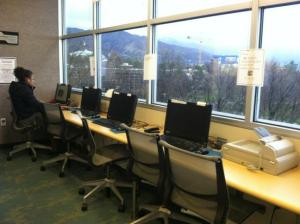
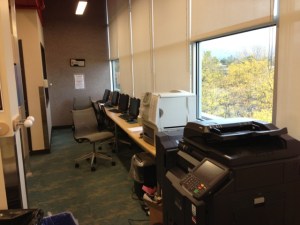
The computers available to students at the LGBT Resource Center.

The computers available to students at the LGBT Resource Center.

“We want to stay away from the word tolerance, we aim for acceptance,” they said. “The more we can breakdown the myths about us, such as, we want to recruit people or we are out to destroy the traditional family, the more people can be less threatened and more open.”

Many colleges have LGBT organizations as well as departments dedicated to the fair treatment of all students, such as the LGBT Resource Center at the U, which is located in the Olpin Student Union.

“There is a large lounging area that the students utilize,” Medina-Martínez said. “Right now we have four computers that students can use to do papers or study and we also allow students to do 10 free copies a day.”

The LGBT Resource Center also holds an event called “Fabulous Fridays,” every Friday between 3 p.m. and 5 p.m. for students to socialize, eat snacks and play games.

“College is about preparing people to navigate many different environments and interact with many different people, it is consistent,” Medina-Martinez said.  This leads to many LGBT individuals taking this opportunity to fully explore themselves and realize who they are.

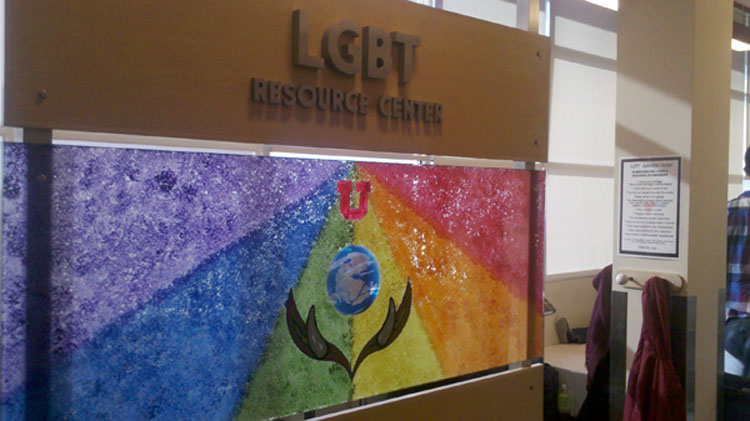
Mural located in the LGBT Resource Center.

Mural located in the LGBT Resource Center.

Travis Nguyen, an openly gay student at the U, said, “It’s definitely easier for me at the U. In high school and during my freshman year at Dixie [State College], no one knew that I was bisexual. I just felt I didn’t have enough strength to put myself out there and deal with it then. It was also easier in college because I knew that once my mom found out she wouldn’t be happy and at least I wouldn’t be living in her house. At the U the people are more mature and open minded to the people and things around them. Basically it’s just a whole lot easier.”

The LGBT Resource Center hosted Pride Week, Oct. 1-5, 2012. The theme was, “Pride has no Borders.”

Nguyen added, “The University of Utah hold a lot of gay and lesbian events all over campus. Here I can be who I want to be.”

When it comes to the University of Utah, pride has no borders

Story by VALERIA MONCADA
Photo from the Utah Legal Immigration blog

The University of Utah celebrated Pride Week in October 2012 with many different activities. 

A discussion panel on Oct. 4 was open to U students to inform them about “Pride has no borders,” the theme for the immigration panel. Immigration and equality are two much discussed topics in the United States, and lesbian and gay individuals want to have rights in the U.S just as much as an immigrant does.

Panelists discussed issues that focused on different countries, states throughout the U.S and at one point religion was involved as well. Life becomes much more complicated as a gay immigrant who is interested in issues such as marriage, benefits, receiving citizenship and adopting children.

Panelist Ricky Gutierrez, a graduate student in education, culture and society, said, “I think we need to recognize the way both immigration and sexuality have been intimately connected. We cannot have ideas around being gay without ideas around being white or being black.”

Another discussion was about religion and the LGBT community. Mariana Ramiro Gomez, a graduate assistant at the LGBT Resource Center, said that when she came out her mother didn’t attend church for about two years due to the conflicts that she faced there for supporting her daughter.

Max Green, an advocacy coordinator with Equality Utah said, “The truth is, gay people go to church.”

Green also said that the best way to break down stereotypes is to communicate with church leaders.

“This probably won’t change their opinion, but it will let them know that the people they preach about are in their audience,” he said.

Utah office

The immigration center in Salt Lake City, Utah.

Other concerns had to do with immigration and same-sex marriages. Due to the federal immigration law lesbian or gay citizens cannot marry an immigrant and hope to start the citizenship process. Lesbian and gay individuals face double discrimination: not only are they discriminated against for being immigrants, but they also are discriminated against by the immigrant community for being gay. This also includes the issues they face in the process of coming out to the community.

According to the Immigration Legal Resource Center’s webpage on LGBT immigrant rights, “many immigrants have fled their country of origin due to sexual orientation or gender identity also referred to as SOGI based persecution. Others fear social isolation from their community in the United States.”

Not only does this mean that lesbian, gay, bisexual or transgender immigrants need legal and social services that are unavailable to them because they are both immigrants and gay or bisexual, but they could also face difficulties in obtaining a lawful immigration status.

Max Green of Equality Utah added, “You have absolutely no safeguard, you have no rights and these things prevent people from having real and meaningful relationships.”

LGBT Resource Center connects through Pride Week

Story and photos by CARSON HUISKAMP

This cute dog represented the U as it hit the event stage.

The dogs wagged their tails, they barked and they ran around the Union patio at the University of Utah, strutting their stuff in order to win the Pride Pet Pageant and garner a few toys such as doggy bones and chew toys. As folks gathered around to watch the owners and their dogs give a show, in the background stood a small kiosk that was the sole reason for  the event.

This kiosk stood all by itself, much like a lone wolf in the middle of the patio. Many asked why it was there as they walked by.

That dialogue enabled staff with the university’s LGBT Resource Center to share information about Pride Week.

“We wanted to do a Pride Week and come up with a theme that spoke to the fact that there are issues in this population that are more than just marriage equality,” said Kai Medina-Martínez, the center’s director.

An important aspect of Pride Week is fundraising, which helps keep the center running. Financial support through donations helps build programs that promote its message to the LGBT community at the U.

This center might not be the most well known around campus, but its goal is as big as any.

When the LGBT Resource Center first opened its doors in 2002, it didn’t have the resources to help much of the community.

“It was a small closet. In that closet all they could put in it were a desk and a small red couch,” Medina-Martínez said.

A grant from the David Bohnett Foundation enabled the LGBT Resource Center to provide computers for students.

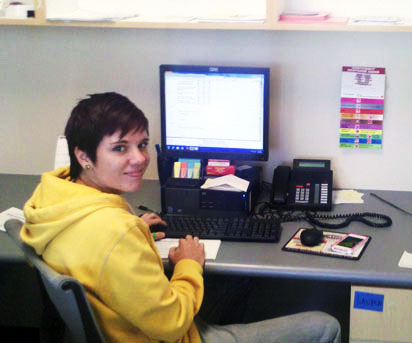
Now the facility has grown to more than 1,000 square feet and is located on the fourth floor of the Union Building. The Resource Center offers students access to safe workstations and printing hubs. All this was made possible through the David Bohnett Foundation, which donated $15,000 to create the LGBT CyberCenter. Because of this donation, the Resource Center was able to include four Internet-ready IBM computers, as well as a laser jet printer for students to use on a daily basis Monday-Friday, from 8 a.m. to 5 p.m.

One of the biggest contributions the Resource Center provides is the variety of programs and events it runs or is involved in that help ensure the safety of LGBT students around campus.

The LGBT Resource Center provides one of the friendliest atmospheres around campus.

One unique program the LGBT Resource Center provides is called Queers Peers, which allows students to anonymously ask questions about being LGBT or other issues through the use of email.

“What is most beneficial about the program is that anyone can submit any question without the fear of having to ask someone in person or being judged,” said Mariana Ramiro, head of the Queers Peers email service.

However, Ramiro said the program isn’t very well known around campus and has not gotten much of a boost in acceptance or usage over the years.

“We only get about one email a month. Most of the emails tend to just be spam,” she said.

However, where the email service is most helpful to U students is with the distribution of LGBT information and social events.

“We do get emails asking about resources for coming out, as well as where and how to find out about possible social events,” Ramiro said. “It has existed for a couple of years now, and I just wish most people knew about Queers Peers so it could be used more.”

And that is why the LGBT Resource Center was found all throughout campus during Pride Week in hopes to spread the word about resources like Queers Peers, and the center itself.

Safe-zones create inclusive environment, safe space to be in

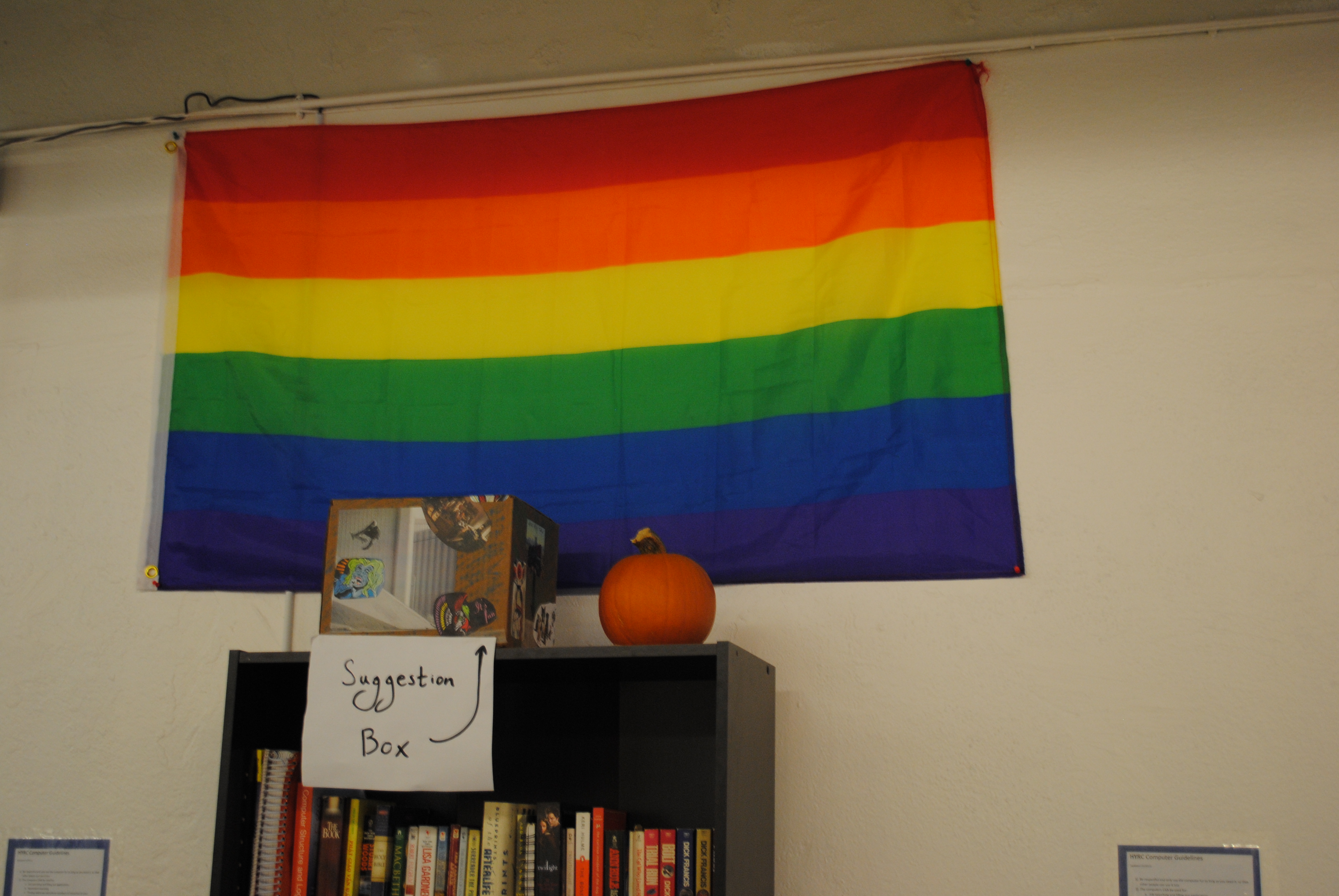
A rainbow flag, the symbol for the LGBTQ+ community, is a sign to all that the space is a safe place to go and be included in everything without worry of discrimination.

Story and photo by AINSLEY YOUNG

Every month, the LGBT Resource Center at the University of Utah holds classes known as Safe-Zone Trainings. They’re a three-hour session designed to answer questions and provide a safe space for people to come together and be educated about the power of words, how they affect people around you and how to keep an open mind when it comes to diversity.

Each training session is usually formatted with a short presentation, a discussion and activities. At the training offered during Pride Week 2012, the activity was to go around the room and silently answer several yes or no questions and then add a bead to a string for each yes, to symbolize the attendees’ privileges.

“In the training, we cover concepts related to the LGBTQA community. We also do exercises that are intended to spark dialogue on what it’s like for people to be marginal on gender expression and orientation,” said Kai Medina-Martínez, the director of the university’s LGBT Resource Center.

“The trainings create a situation of inclusion around dialogue that’s intended to bring awareness to people and have them learn things based on inclusive narratives,” said Medina-Martínez, who uses the pronoun they.

“We live in a world where we assume everyone is cisgender [born as a gender and identifies and acts within societal expectations of that gender] and heterosexual but we’re not. We have people who are transgender, gay, bisexual and a-sexual,” they said.

Medina-Martínez said it’s important to break down the negative stereotypes that are cast by society.

“We value a certain type of person, but we live in a diverse world with a lot of diverse people. Not everybody is the same, and we should all benefit from equal treatment,” they said.

The trainings are designed to be a safe place where people can meet others who are interested in learning how to be inclusive of all people or people who want to share their knowledge on being inclusive.

“I think it’s a great resource for anyone who wants to know a little more about the community and the real issues that face this population,” said Valerie Velarde, the safe-zone coordinator at the LGBT Resource Center. “As for creating a safe zone, people have to know where they can go for support with no biases or assumptions precluding them. Too much of this world is harsh, and people need that place they can go to relax and be themselves.”

Velarde said the trainings can help to make the world “be that much less harsh.”

“We always say once you hear a person’s story, it is a lot harder to hate them. I think that is a lot of what we are trying to get out there — personal stories of raw and real hatred. We are all privileged and not everyone sees the pain we often inflict,” she said.

“Safe-zone training gives individuals the quaint, safe space to ask any questions they want and get a rough view of LGBT identities,” Velarde said.

These trainings are a good way to educate people on different matters and issues going on in the LGBTQ+ community that may not be shown to everyone all the time, she said.

“For too long, people have had little to no idea of what the community really looks like, simply gaining most of their assumptions from popular media or the news…. A little more knowledge never hurt anyone,” Velarde said.

It’s important to be knowledgeable and active in minority communities, such as the LGBTQ+ community, she said. These trainings are an excellent way to get involved by showing an interest and making an effort to create a safe space and environment for all people, she said.

Between five and 30 people usually attend the workshops that are held in open, public spaces. The LGBT Resource Center also holds private training sessions for companies and departments at the university or small businesses. These private trainings have more than 100 attendees.

In addition to the full-length, three-hour trainings, the center hosts quasi-trainings that are a little shorter, with varying activities tailored to the organization or department’s needs, with job-specific situations and  opportunities to work together as coworkers and peers.

“Also, I sometimes mix and match what I do and ask different questions, but usually the same concepts are brought up regardless of what I say,” Velarde said. She said sometimes she starts with a question and answer session, while other times she’ll start with a discussion or activity she created to best suit whichever audience she is educating.

“These trainings opened up a lot of doors for me,” said Kim Bliss, who attended a safe-zone training in spring 2012. Bliss attended the training when she saw a flyer for it around the university campus that caught her attention.

Bliss said she was deeply impacted by one of the discussions at the training, and that it had changed her mind about a lot of the stereotypes that she had been familiar with.

“Whether you’re straight or gay, black or white, young or old, you’re still a person and you deserve to be treated with respect. Just because you may not agree with how someone lives their lives doesn’t mean you can judge them and cause them any harm,” she said.

Velarde holds these trainings  once a month at various locations around the U campus. Velarde said there can be more than seven meetings a month depending on which department or campus organization wants to schedule one.

The importance of allies in the LGBT community

Story and photos by Chad Mobley

Attending a Safe Zone training, like the one held during Pride Week on Oct. 5, 2012, at the University of Utah, gives people a chance to gain a better understanding of the lesbian, gay, bisexual and transgender community.

Lauren Jensen works tirelessly to build education and awareness of the LGBT community around the University of Utah and Salt Lake City.

This training was an open forum with conversations led by two facilitators to create dialogue among participants. Many of the talks focused on how straight people could become allies of the LGBT community and how important  allies are in the progress of equality among all genders and sexual orientations.

“Allies are underappreciated because it takes a lot to be a part of the LGBT community whether you are actually in the community or a supporter,” said Lauren Jensen, speakers bureau coordinator at the LGBT Resource Center at the U. “The LGBT community couldn’t exist without supporters on the outside. We need as many voices and as many supporters as we can get.”

But becoming an ally of the LGBT community may bring unwarranted connotations.

“There is a stereotype for allies as well,” Jensen said. “If they support gay marriage or gay rights, then people think ‘Oh they must be gay.’ When in fact all they believe is that everybody should have equal rights. Just because you support gay rights doesn’t make you gay and that’s something people need to realize.”

Jensen sets up panel discussions all over campus at professors’ requests. She also coordinates workplace panels for companies across the Salt Lake Valley. The purpose of these events is to create a situation for people to openly ask questions about anything that has to do with the LGBT community. These panels, in conjunction with events like Safe Zone trainings, educate straight allies about LGBT issues.

Janice Marcus of Parents, Families and Friends of Lesbians and Gays (PFLAG) recognizes these programs as an effective means to grow the allied community in Salt Lake City.

“PFLAG is aware of Safe Zone training and encourages members to attend trainings,” she said in an email.

In addition to Safe Zone trainings and panel discussions facilitated by the University of Utah LGBT Resource Center, PFLAG separately holds events to build and educate the straight ally population.

PFLAG provides a support group for parents, families and friends of the LGBT community the second Tuesday of every month from 7-9 p.m. at the Utah Pride Center, 361 N. 300 West. The first hour is spent as a support group helping people to understand the feelings of a friend or family member coming out to them. The second hour is used to educate members by providing accurate information about what it means to be LGBT, how it feels and how they can provide the best support.

“We provide support for parents, families and friends of gays and lesbians, as well as advocate for the LGBT community,” Marcus said. “We are willing to provide education and panel discussions for any group or work place that would like to contact us. I think that it’s critical that people understand that PFLAG is not associated with any political organization or religious belief.”

Thanks to events like these across the country, the LGBT community is gaining strength nationwide through growing allied support.

Sean Mehew, federal club co-chair for the Human Rights Campaign’s Utah steering committee, has seen this growth firsthand over the past few years.

“Voter approval of gay marriage is over 50 percent for the first time ever nationwide. Five years ago it was probably only 30 to 40 percent,” Mehew said.

One of the HRC’s top priorities is fighting for same-sex marriage. If it is ever going to become a reality, the LGBT community needs allies in high places.

“Look at President Obama coming out [as an ally]. That’s the first time that a president has ever even had a positive stance,” Mehew said. “When he originally came to office, he said he wasn’t sure what his stance was on gay marriage, but he evolved.”

Educating people and growing the straight ally community is the best means for gaining equal rights for lesbian, gay, bisexual and transgender people. People interested in becoming an ally can attend Safe Zone trainings, panel discussions or PFLAG support groups. A week much like Pride Week, called Ally Week, will be held on campus in April 2013 for students and community members.

“As allies mature in the process of providing support for the LGBT community, they transition from offering support to [the LGBT community], to speaking up when they hear inappropriate comments,” Janice Marcus of PFLAG said. “Regardless of the process in which they are involved, they cannot remain silent. Silence allows abuse and discrimination to continue unchecked, so that speaking up in small groups, followed by increased knowledge to provide education through interviews and panel discussions are critical.”

The LGBT Resource Center at the University provides a wealth of information on becoming an ally.

10 ways to be an ally and friend:

  1. Be a listener.
  2. Be open-minded.
  3. Be willing to talk.
  4. Be inclusive and invite LGBT friends to hang out with your friends and family.
  5. Don’t assume that all your friends and co-workers are straight. Someone close to you could be looking for support in their coming-out process. Not making assumptions will give them the space they need.
  6. Homophobic comments and jokes are harmful. Let your friends, family and co-workers know that you find them offensive.
  7. Confront your own prejudices and homophobia, even if it is uncomfortable to do so.
  8. Defend your LGBT friends against discrimination.
  9. Believe that all people, regardless of gender identity and sexual orientation, should be treated with dignity and respect.
  10. If you see LGBT people being misrepresented in the media, contact GLAAD.

Information courtesy of Lauren Jensen.

Gender Blender at University of Utah Pride Week

Story and photos by ADRIENNE PURDY

How would you feel if your job was in jeopardy based on your sexual orientation? How about if you were asked not to associate with your extended family because of perceived negative influences from your lifestyle? These issues and more were addressed at Gender Blender, an event put on by the Social Justice Advocates in correlation with the University of Utah Pride Week during the first week of October 2012.

This year’s Gender Blender showed a short movie from YouTube, titled “Transgender Basics – Gender Identity Project,” and concluded with a panel of four students self-identifying as members of the LGBT community who took questions from the audience. Lauryn Hansen of the Social Justice Advocates was in charge of the event held in the Petersen Heritage Center. The campus organization strives to create and promote a safe environment for everyone on campus. The Gender Blender event is a way to bring up conversations that otherwise would not happen.

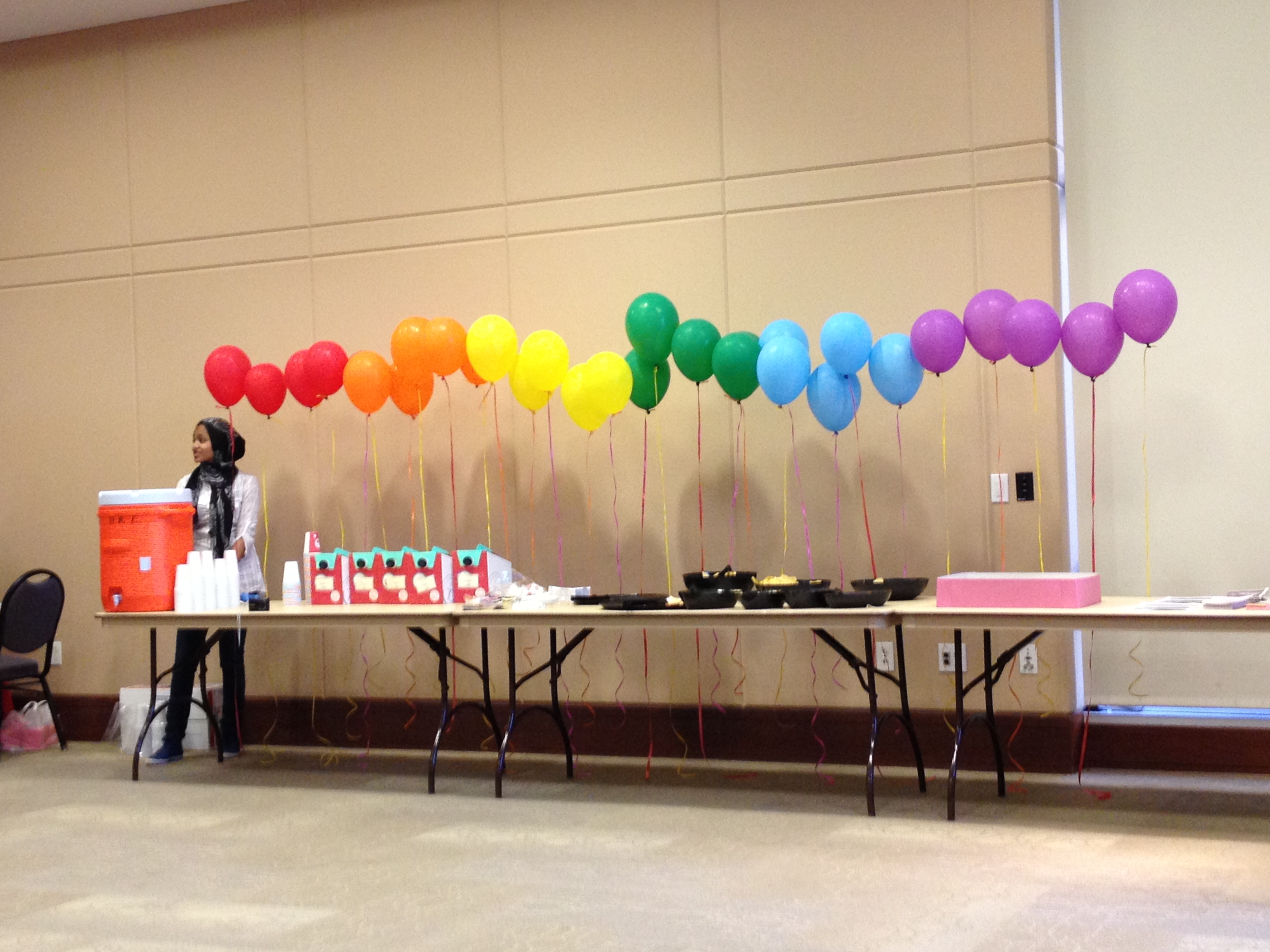
Decorations at the Gender Blender discussion at the University of Utah Pride Week.

The video highlighted three individuals with different identities: A transgender man or a woman living as a man, a transgender woman or a man living as a woman and a gender-queer individual or an individual who identifies as both a man and a woman.

The video showed some of the problems encountered by transgender individuals, such as gender expectations and the feeling of being forced to select a particular box, indicating that one must choose male or female and there is no other option.

A handout was given at the Gender Blender with a picture of a “Genderbread Person” showing gender identity, gender expression, biological sex and sexual orientation and making the differences between them easier to understand.

The Genderbread Person illustrates that gender identity is how you think about yourself in your head. It is the chemistry aspect and how you interpret what it means. This can range from woman to genderqueer to man.

Gender expression is how you demonstrate your gender based on how you act, dress and behave and can be expressed as feminine, androgynous and masculine.

Biological sex refers to the organs, hormones and chromosomes that you were born with that determine whether you are male or female. One can be born male or female, but one can also be born intersex, which is a biological combination of both the male and female sexes. When a child is born intersex — and depending on the type of intersex condition — surgery may be performed for social reasons rather than medical necessity.

Sexual orientation is who you are physically attracted to, which can range from heterosexual, bisexual and homosexual. Knowing the wide range of possibilities of identity, expression and orientation helps us understand why the problem of “boxing in” is so prevalent.

The four-person panel who fielded questions from the audience after the movie was comprised of Adrian Harrison, Kiko Cloward, Kai Medina-Martínez and Eduardo Galindo, who are students or faculty at the U. All panelists self-identified as members of the LGBT community. Different sexual orientations were represented on the panel, which enabled different points of view to be expressed and heard.

One question from the audience regarding how to ask about someone’s identity sparked different answers from the panel.

“The best way to learn is just to ask,” Cloward said.

Medina-Martínez countered: “I think the intention of needing to know is important. If it’s to honor someone or meet them there that’s great, otherwise does it really matter?”

Galindo said: “Ask respectfully instead of asking a loaded question.”

When asked about what it is like on campus for a member of the LGBT community, Galindo and Medina-Martínez told the audience about the initiative for an inclusive bathroom policy on campus.

The LGBT Resource Center in the Union Building at the University of Utah.

Medina-Martínez, who is the director of the LGBT Resource Center on campus, said that where to go to the bathroom is something most people don’t even think about. But for a transgender individual it can be a big problem. Wanting to go to a restroom where one feels comfortable usually means going out of the way to find a single-stall bathroom. The LGBT Resource Center has compiled a list of these bathrooms.

The stigma that surrounds transgender individuals in society was a hot topic and attendees asked whether the same stigma exists in the LGBT community.

“There can be trans phobia in the LGBTQ community as well as the non LGBTQ community,” Galindo said. Transgender can still be a taboo subject even in communities who are very accepting.

A recurring theme among the panelists was the term cisgender, which means conforming to gender-based expectations. Medina-Martínez, who now identifies as gender fluid and uses the pronoun they, said they became very good at expressing hyper femininity at a younger age.

“People want to put me in boxes. I like the fluidity,” Medina-Martínez said.

Cloward, who now identifies as genderqueer, went through periods of expressing femininity and masculinity.

“I love some feminine activities no matter how I look and I love some masculine activities no matter how I look,” Cloward said.

As Lauryn Hansen of the Social Justice Advocates said, “We live in a world with seven billion people, each with our own uniqueness.”

Note: A new version of the “Genderbread Person” with a flowchart is now available.

Campus resources and policies make the University of Utah attractive for LGBT community

Story and photos by JAKE GORDON

With assets like the LGBT Resource Center and policies that really benefit all students, the University of Utah is one of the top schools in the nation when it comes to the lesbian, gay, bisexual and transgender community.

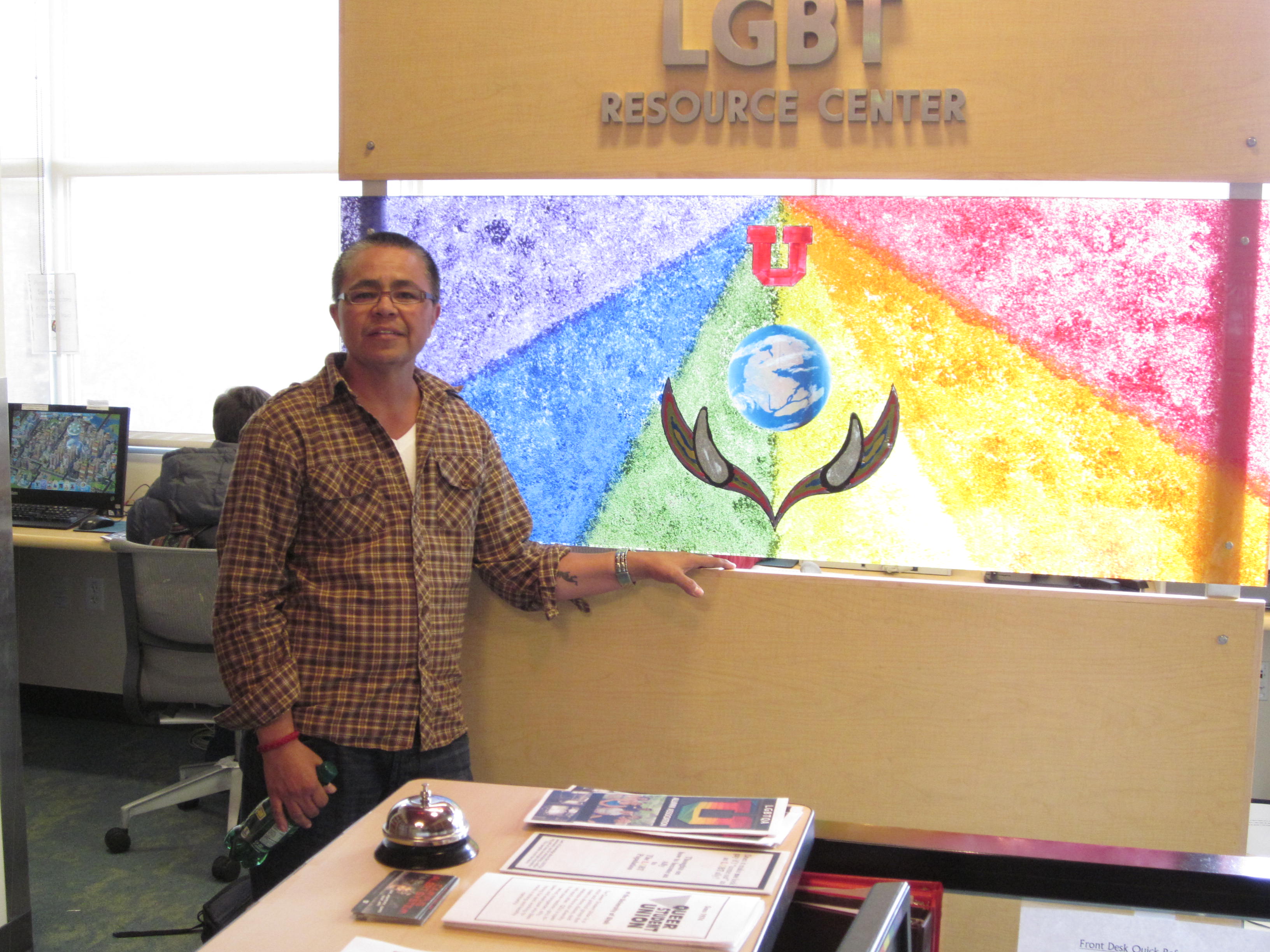
C. Kai Medina-Martínez stands in front of a mural inside the LGBT Resource Center at the University of Utah. Medina-Martínez is the center’s executive director.

C. Kai Medina-Martínez, executive director of the LGBT Resource Center, talked to journalism students in September 2012 at the university about the benefits of having the resource center.

The center, which is located in the Olpin Student Union, had a grand re-opening in October 2011 after moving into an office space of just under 1,000 square feet.

“There is a large lounging area that the students utilize,” Medina-Martínez said. “Right now we have four computers that students can use to do papers or study and we also allow students to do 10 free copies a day.”

Medina-Martínez, who prefers the pronoun “they,” said the resource center is a great resource to U students. The center also does a lot of education, including training and outreach.

“We do LGBT one-on-one training,” they said. “We also do our Safe Zone training, which is three hours. We talk about terminology and we talk about history.”

Being an ally, or “someone who advocates for and supports members of a community other than their own,” is talked about in the Safe Zone training as well as transgender training. Medina-Martínez said it is important to educate people on what transgender means and also the importance of having trans-inclusive policies in the classroom and on campus.

Valerie Velarde, who is the center’s Safe Zone coordinator, is one of the students responsible for the trainings, which she did during campus Pride Week in October 2012. Velarde said educating people about the LGBT community is helpful for everybody involved and that it can change the way people think.

“I would really like to bring home the fact (in Safe Zone training) that this is not an exclusive issue that affects only those with queer, or different than the hegemonic norm, identities,” Velarde said in an email interview. “We have an incredibly diverse campus with a multitude of ideologies and varying degrees of liberalism and conservatism floating about ­— which is a good thing.”

Safe Zone training is an educational class for everyone to better understand the lesbian, gay, bisexual and transgender community.

Both Velarde and Medina-Martínez talked about campus policies that benefit all students and not just the LGBT community.

One of those policies brought about by Medina-Martínez is located on the Campus Information System (CIS) under the student tag. Students can now list a preferred name that they will go by in classes.

That is important for individuals “who are going through some sort of transition,” they said. “They will change their name that is assigned to them at birth to match more of their identity.”

The sign for the LGBT Resource Center just outside the front door. The center is just one resource for the LGBT community that makes the University of Utah a desirable school to attend.

“These policies might start out to appear to be helping a certain group but they actually expand to help more than just that one group,” they said.

Medina-Martínez has also worked to make changes to buildings on campus, such as the campus recreational activities building (HPER).

Now, there is more privacy in the men’s shower area. “From what I hear from men, regardless if they are cisgender (opposite of transgender) or however they identify themselves, they want privacy in the shower,” Medina-Martínez said.

The policy changes that the U has made in an effort to accommodate all students has earned the university some recognition.

Campus Pride is a national nonprofit organization for student leaders and campus groups that are working to create a safer college environment for LGBT students. Campus Pride also has created an index, released in August 2012, for the purpose of helping a prospective student who identifies as lesbian, gay, bisexual or transgender to find a university that has policies in place to create a safe study environment.

According to the Campus Pride Index, the University of Utah scored the highest possible score of five stars as a prospective place for higher education for the LGBT community. The university scored perfect in the sub-categories of support and institutional commitment, academic life, student life, campus safety, counseling and health and recruitment and retention efforts. The only categories that the university fell short on was in policy inclusion and housing/residence life.

“Campus Pride is really the only resource out there for the prospective LGBT student to find out what college to go to,” said Jess McDonald in a telephone interview. “Being highly ranked says a lot about the campus and that they value LGBT students as much as any other student,” said McDonald, who is media, communications and programs manager for Campus Pride.

Medina-Martínez also talked about the U’s favorable rating.

“They (Campus Pride) rated the university based on their policies and procedures as one of the top-25 schools in the nation out of more than 300 schools,” Medina-Martínez said. “What it means is a really great thing for the university.”

University of Utah LGBT Resource Center breaks “out of the closet,” allowing for improvement, greater student outreach

Story and photos by RACHEL JACKSON

The expansion of the LGBT Resource Center at the University of Utah has enabled the center to provide more assistance for members of the LGBT community, as well as a judgment-free zone for all students to study.

The first LGBT center, which opened at the U in 2002, was housed in a cleaned-out utility closet in the A. Ray Olpin University Union. And now, 10 years later, the center has doubled in size, to nearly 1,000 square feet, thanks to the David Bohnett Foundation, an activist group from California, which gave the LGBT center a grant of $15,000.

“We broke out of the closet,” said Kai Medina-Martínez, LGBT Resource Center director. “Last year the space was expanded and we now have a larger area to work in.”

The sign that is featured in the LGBT Resource Center on the University of Utah campus. The center is located on the fourth floor of the Union building.

The center on the fourth floor of the Union also offers a larger lounging area for all students, including a printing center with computers that students are able to use with no cost to them.

Before the grand “re-opening” on Oct. 17, 2011, students had to meet in the library for advocacy groups and training classes. Now everyone who is interested has an exact place to go for information on LGBT issues and the staff has the chance to be more organized.

The resource center offers a variety of informational classes and training on LGBT issues, such as Safe Zone training, which is designed to educate participants about the LGBT community and how to stop discrimination.

“We make sure the policies of the university are inclusive of LGBT and other identities also,” Medina-Martínez said.

The policies that Medina-Martínez has been working on are important, because they focus on equality for all. This includes all students in general and specifically trans-gender or non-gender-conforming students who might be in a transition stage.

“One of those policy changes that occurred about a year ago … is any student regardless of how they identify can go on [the student system] and choose a preferred name,” Medina-Martínez said. This was a way to allow people who are going through a gender transition to be identified in class by a name that more appropriately matches the gender they wish to identify with.

Another top priority for Medina-Martínez is to have a place for transgender students and everyone in general to have private, single-stall bathrooms that they can access on campus.

The LGBT Resource Center website has a list of unisex and single-stall bathrooms that includes the areas on campus where the bathrooms are located and on what floors.

“So these policies even though they start out to be inclusive of a certain group, they actually expand to everybody to be able to utilize,” Medina-Martínez said.

In the College of Health building (HPR) on campus, some trans-identified students were unsure of where they could go on campus to shower. Medina-Martínez was able to have some shower curtains installed. This was for the benefit of the trans students, but also for students in general who prefer privacy.

On Aug. 21, 2012, the U was named one of the top 25 friendliest LGBT campuses in the nation by Campus Pride, a nonprofit organization striving for a safer environment for LGBT students all over the country.

The top schools were chosen based on data from the Campus Pride Index and rated on a 5-point scale according to policy inclusion, student life and academic life. The study included a total of 339 universities and colleges.

Even though the U excelled above several other schools in areas of policy and acceptance of LGBT students, Medina-Martínez said work still needs to be done in the area of gender-neutral housing on campus.

“Many of these things couldn’t have taken place in the small closet our office used to be,“ Valerie Velarde, a student worker at the center, said in an email. “This is a highly important place to come hang out in, gain community, or even do homework in comfortably.”

One way the center encourages community is by hosting an event called Fabulous Fridays once a week from 3 p.m. to 5 p.m. This brings people together to enjoy free food, play games and meet new people.

Brandon Vanschoiack feels at home in the LGBT Resource Center at the U.

The continual goal of the center is to create a place where students can meet peers with similar interests and experiences.

“It’s a great place to connect with others,” said Brandon Vanschoiack, a senior double-majoring in political science and philosophy.

Vanschoiack said he has been going to the resource center for a year since it has moved locations. He keeps coming back, because he feels a kinship with other students who visit and likes to share experiences “of feeling unwanted.”

Unwanted is something he never feels at the LGBT Resource Center.

“When you walk in there are no flashing lights that go off and say, ‘gay, gay, gay,'” Medina-Martínez said. “Anyone is welcome to come up.”

This type of environment is what the center has worked toward since its original opening in 2002.

Vanschoiack said, “It’s really a safe place I can go to be myself.”

The difficulties of being LGBT in sports

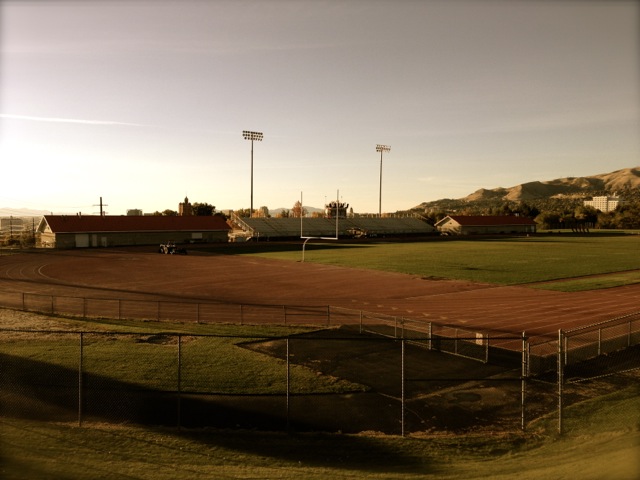
A local high school football stadium has seen brighter days.

Story and photo by CARSON HUISKAMP

Many boys grow up hoping to become an All-Star like Lebron James or Aaron Rodgers.

Throwing the ball around with friends, they imagine they have just caught the game-winning pass at the Super Bowl, or made that buzzer-beating 3-pointer just before time ran out. Sprinting down their driveway in pure joy, they look around as the crowd around them screams and shouts their name in rejoice.

In a sense, every child is just like one another.

But when it comes to LGBT student-athletes, not every child is just like one another. And some members of the lesbian, gay, bisexual, and transgender community must examine the risks and dangers of coming out to the public, especially in sports.

“I think it’s just fear. Not knowing what they will be faced with, and especially not knowing themselves,” said Bernadette Bell, director of student services at Judge High School, located in Salt Lake City.

“I don’t even know any LGBT kids who play sports. But our school policy is they get to play like anyone else,” Bell said.

LGBT students face many more risks with coming out than just losing family or friends. Peer pressure from fellow classmates can have a lasting effect on LGBT kids and sway their decision about coming out in school.

A teacher at Rowland Hall who asked not to be identified said, “There was one time I walked by and a couple students made the comments ‘you’re just so gay’ to another student. I stopped them and said, ‘you think I’m a bad person?’ They just stood there. Walking by that stuff concerns me. You’re using the term so freely and people tend to just laugh that stuff off.”

Imagine a student who has a passion for sports but may possibly be shunned by other players or coaches because he or she is gay or lesbian. Imagine the possible tension in locker rooms from not-so-accepting teammates, or even opponents.

“I think in women’s sports and women’s fields of play, it’s not as bad,” the teacher said. “But in the male field, everyone feels they have to keep up that aura that ‘I’m masculine and physical and tough’ so they aren’t seen as weak to others.”

The fact is, sports and being gay don’t mix well. In fact, the two don’t mix at all. It wasn’t until 2007 that the first NBA player came out to the public well into his retirement. The NFL has not had a single active player in its entire history come out to the public about their sexual orientation either. And nearly every professional sport one hears about avoids the topic altogether.

When such little attention is given to the issue by the media, it’s no wonder kids are hesitant about coming out to their respective high school teams. When no professional player is willing to risk coming out to the public in fear of the ramifications, a child will likely be hesitant in their personal lives to come out as well. Professional athletes are role models for millions of kids, and yet many refuse to even talk about the issue of equality and LGBT communities.

“I think that you are so worried that you will lose your family, and peer pressure is so difficult,” the Rowland Hall teacher said. “In junior high, middle school, and high school, the peer pressure can just be so harmful.”

It is very rare to see openly LGBT kids in high school sports, mostly because of the threat of stereotypes and bullying.

“A guy who is gay doesn’t want to come out to others because they don’t want people to say they are not as strong,” the teacher added. “The same can be seen in the armed forces, you don’t want the assumption that you’re not strong enough in sports.”

Strong, tough, brave, confident. These are the messages boys and men are bombarded with on a daily basis.

“There is so much fear out there that people are afraid to be who they are,” the teacher said. “It has a long ways to go.”