University of Utah Pacific Islander Medical Student Association

Story by ALEXANDRA OGILVIE

Julius Ulugia is a Samoan American in his second year at the University of Utah School of Medicine. He helps to operate the University of Utah Pacific Islander Medical Student Association (PIMSA). According to their currently cached University of Utah club website, the mission is, “To provide students and mentors with a venue to network, increase awareness, promote and advocate, serve our Pacific Islander communities, and prepare for careers in medicine, healthcare, and administration. PIMSA provides peer mentors and role models for students seeking to enter academic and clinical healthcare fields.”

PIMSA was started in 2008 by Jake Fitisemanu Jr. and Kawehi Au. But, “it essentially became dormant when those who started either sought other careers or graduated and went off to residency,” Ulugia said. Currently, Ulugia is the only Pacific Islander in his medical school class of around 130, according to the school.

“Many people, Pacific Islanders and non-Pacific Islanders alike, see us as great athletes. That is literally what I got from my own family and non-Pacific Islanders. Many of us don’t see ourselves as intellectually equal to other people. This is magnified in health care, where we are unable to sufficiently care for our own,” Ulugia said in an email interview.

Fitisemanu wears many hats in the Utah Pacific Islander community. Among other things, he works at the Utah Health Department, he chairs the Utah Pacific Islander Health Coalition, and he is an elected representative for West Valley City. “PIMSA was a great opportunity for medical students to get involved in our own ethnic communities and expose other youth to possibilities in health science careers,” he said in an email interview.

“PIMSA has helped at least eight Pacific Islander pre-meds who have been accepted to med schools, and at least that many who have prepped for the MCAT and applied to medical school,” Fitisemanu said. Although it started off for MD students, it has branched to include other health sciences fields like nursing, physician assisting, dental, and pharmacy. Since there is only one Pacific Islander MD student in the state (Ulugia), the focus has shifted to undergrads rather than graduate students.”

Vainu’upo Jessop, a Samoan American anesthesiologist attendant, helped to found PIMSA when he was an undergraduate student at the University of Utah. He went on to complete medical school at the University of Utah. He was only one of four Pacific Islanders in his class and the first Samoan American to graduate.

PIMSA’s current focus is on Pacific Islander high school and undergraduate students. One way they excite high school students is to bring them to health conferences held at the University of Utah and Salt Lake Community College, to show them cow heart dissections and other exciting demonstrations. PIMSA also works on a one on one basis to help students navigate the college process.

“A lot of the [Pacific Islander] college students are first-generation students, and we would help them with the logistics of how to set up their schedule in order to optimize their chances for success at the undergraduate level.  We would also get these people more involved in increasing awareness in the [Pacific Islander] community by having them run booths at health fairs, participating in after-school programs to promote healthy lifestyles, etc,” Jessop said in an email interview.

Jessop left town to do his residency at the University of Massachusetts in Worcester, Massachusetts, from 2012-2016 and completed a fellowship in critical care from 2016-2017. He returned home to Utah soon thereafter.

“Since I’ve moved back, I’ve had many [Pacific Islander] patients who are shocked to find out I’m a doctor. They ask me if I’m Polynesian, and when they find out I am, they usually say, ‘Wow! I didn’t know that there were any Polynesian doctors!’ I hope to be an example to other [Pacific Islanders] and show them, that we can make it,” he said.

Jessop believes that getting more Pacific Islanders into medical professions would increase the health of Pacific Islanders in the state. Currently, Pacific Islanders lead the state in incidents of diabetes, cardiovascular disease, and obesity, according to the Utah Department of Health.

“A lot of the older [Pacific Islanders] either don’t feel the need to see a medical provider, they don’t understand what a provider is telling them, or they flat out don’t trust people in the medical establishment. I think the more [Pacific Islander] providers there are in the community, the easier it will be to increase health awareness in the community,” he said.

Alyssa Lolofie, a Samoan American PIMSA member who is about to start medical school at Rocky Vista University College of Osteopathic Medicine, agrees. “It’s important to get more [Pacific Islanders] interested in medicine (medical school, physician’s assistant programs, nursing, etc.) to increase representation and education on Western or mainland medicine for these [Pacific Islander] communities. Many patients with diverse backgrounds or from underserved communities are less likely to see a medical provider because of an assumed lack of understanding of the traditions and ways of life of these communities,” she said in an email interview.

Jessop added, “Overall, as more [Pacific Islanders] we can get into college and get professional degrees, there will be an overall increase in awareness in the community. I believe the benefits are twofold: the overall health of the [Pacific Islander] community will improve, and the younger PIs will see this and want to contribute.”

Two other organizations could potentially be helpful: the Asian Pacific American Medical Students Association and the Health Sciences Multicultural Student Association of Utah.

Use of haka as pre-game ritual may be appropriation

Story and pictures by SHAELYN BARBER


This slideshow requires JavaScript.

The haka dance, originally performed by the indigenous Maori people of New Zealand, has become a staple of world wide rugby culture, often performed before important games by sports teams across the globe.

“Haka can be a war dance, but it can also be a way to show love and a way to show support,” Te Anu Tonga said. She was born in New Zealand, but moved to the U.S. with her family when she was a young child.

“To be Maori is to connect, to connect with the people around you, connect with your environment,” Tonga said. Maori value spirituality, family and genealogy, and that is reflected in their haka dances.

In addition to a war dance, hakas are often performed at weddings, graduations or other celebrations. The dance is a way to show love.

“One of the things that does bother Maori is that haka is being used without permission and without knowledge of the stories behind it, the meaning behind it, what tribe it comes from,” Tonga said. “They’re mimicking things that they don’t understand.”

The haka was first brought into rugby by the New Zealand All Blacks, the country’s national rugby team.

“They were kind of the epitome of the rugby culture, still are,” said Nate Fairbanks, assistant coach for the Highland rugby club. “If you know about rugby, you know about the New Zealand All Blacks.”

Fairbanks, a former Highland rugby player himself, recently began his position as assistant coach of the team. While Highland once performed a haka before every game, Fairbanks said that during his time as a player the team reserved it for special or important occasions.

“You know, a bunch of high school kids, everyone was joking, making light of everything, but that was something that it was never appropriate to joke about,” Fairbanks said.

Larry Gelwix, the first coach of the Highland rugby team, introduced the dance as a pre-game ritual.

“He [Gelwix] had a lot of respect for the Polynesian culture, he had a lot of love for the people and wanted to make sure that his love for it didn’t become irreverent,” Fairbanks said.

“We don’t do the haka because we want to be cute or different … We did the haka because we believed it,” Gelwix said in a phone interview.

“It wasn’t that we just took it. We had the tribes and the tribal elders’ blessing and permission to do the haka on certain occasions,” Gelwix said. The team was given permission by one Maori tribe, who even wrote them a haka to perform.

“Larry [Gelwix] was really the one who drove the use of the haka,” coach Dan Berg said. Berg and his two older brothers were former players on the team under Gelwix.

Berg later became an assistant coach and, when Gelwix retired, took on his position as head coach.

As more sports teams picked up the traditional haka dance as their pre-game challenge, Berg began to feel that they weren’t doing it for the right reasons.

Berg said he doesn’t question other teams’ uses of the haka, because each team is doing it for a different reason.

“Under the right circumstances we would consider doing it again,” Berg said. “The boys ask about it all the time.”

The Highland rugby team consists of about 45 players ranging from eighth grade to 12th grade.

Michael Pakofe is currently a senior at Highland High School and one of the team’s starter players. He grew up in Hawaii, where the performance of the haka is a common practice before most sports games.

“When I started this program I thought they did the haka and when I found out they didn’t I was just hurt,” Pakofe said. ““I feel like it just starts with us players. We got to get together and just learn it.”

Highland Rugby player Kaufusa Pakofe said, “It gets you, like, pumped up and kind of intimidating or scared our opponents.”

However, not all the players feel the same.

“It’s very cultural so I would want to make sure it’s a certain group, does that make sense? Let’s put it this way, Italian teams should not do the haka,” Highland rugby player Alexander Whitmore said, voicing his concerns about the appropriation of the dance.

“I’m not really convinced that most teams who perform haka here in the United States understand sort of the deep spiritual and cultural significance of the haka,” said Toanui Tawa, lecturer of English at Southern Utah University, in a phone interview. “I think they view it simply as something that’s ‘cool.’”

Tawa was born and raised in New Zealand and moved to Hawaii to pursue an education at Brigham Young University, Hawaii. He completed his degree in English education at Southern Utah University.

“It’s more than just a form of entertainment, it is a way in which we are able to keep the stories and legends of our communities alive,” Tawa said. “It’s a way to honor the memory and lives of ancestors who have since passed on. It’s a medium through which we are able to communicate our belief systems and attitudes.”

Tawa is hesitant about the use of the haka in the world of sports.

“I believe there’s only a place for haka in sports only if the people who are performing it truly understand it,” Tawa said.

Cultural awareness through dance among Pacific Islanders in Salt Lake City

Story and photos by SHEHERAZADA HAMEED

Traditional Tongan dances are stories sung by the singers and acted out by the dancers, says travel writer David Stanley, author of Tonga Travel Guide. He explains that in a dance the words are represented by the movements of the hands and feet, not the hips.

But you don’t need to travel to the Pacific Islands to admire Polynesian performing arts.

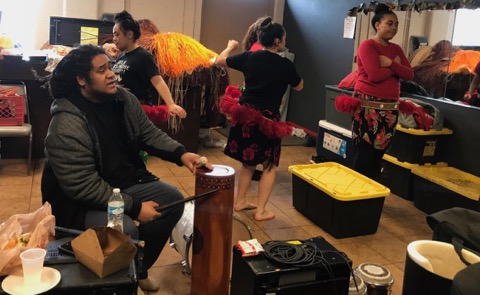
On a cold February afternoon, Haviar Tuitama Hafoka, Malialole‘s leader and drummer, was teaching children from East High School in Salt Lake City. The dance they were practicing was to be performed at an event just a few weeks later.

Malialole 8

Haviar Tuitama Hafoka with a toere drum.

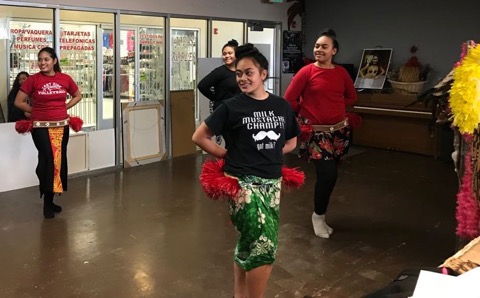
Haviar was teaching three boys the steps of their part of the choreography. Barefooted, they were slamming their feet against the cold concrete where a small heater was working in an attempt to heat up the large space. While the boys were repeating the steps under the sound of the drums, Haviar’s sister, Singa Fonua, was helping three girls to dress in traditional dresses that she was pulling out of large plastic bins. Behind a screen wall, the girls put on black skirts and colorful belts as decoration.

Malialole 1

Haviar Hafoka is teaching boys from East High School the steps of Otai dance.

Fonua is not only the person in charge of the costumes and appearance. She is also the contact person who manages the calendar of events and practices. For her, Haviar said laughing, “She is like the drill sergeant.”

Malialole (mah-lee-yah-low-lay) is a Salt Lake City-based music, dance and art performing group, promoting cultural awareness among Pacific Islanders. The group performs music and dance from the islands of Samoa, Tonga, Hawaii, Tahiti, Tokelau, Niue, Aotearoa (New Zealand) and the Cook Islands. In their dance studio at 1133 Glendale Drive, rehearsal and lessons are held daily.

The group was named for Haviar’s niece, who was the first to be born in Salt Lake City after the family relocated from Kansas City, Missouri. His mother, Merine Vida Tuitama Hafoka, who is Samoan, founded the dance ensemble. Haviar says Malialole is a symbol of something new, innovative and innocent, which is the beat of the group.

The next part of the practice in the studio is to merge the boys’ dance and the girls’ dance into a choreography. Haviar was directing them while drumming on a large wooden drum. “Keep your arms up higher. Girls, your fingertips should match up to your nose. Try it again. Ready?” The drum was loud and the students danced in the rhythm. The boys’ moves reminded a visitor of martial arts while the girls’ moves were feminine. Fonua reminded the dancers a few times to smile.

Malialole 2

The girls dress while the boys rehearse.

Haviar is strongly connected to the art of drumming. Drums are used to call for attention; to announce a town meeting or prayer; or warn of war. Haviar added, “In Tahitian culture, they [drums] are actually representative of the male and female counterparts.” He also said the stick and the drum represent the mother and the father replenishing the earth. Haviar explained the different types of drums. “The big ones are called lalis, these ones from Tahiti are called toere and the ones from the Cook Island are called pate, the big roller ones are takiruas, but they all serve the same purpose.”

Haviar explained the dance they were practicing is called Otea and is traditionally used to appease the gods in a request to make the land plentiful. “That’s why you see a lot of sensual moves and lots of hip shaking.” He said this particular dance tells the story of the ocean hitting the land.

Haviar gave a break to the dancers and while munching on warm fried chicken and pizza, they prepared for the next dance. Fonua said she makes sure all kids are fed before they leave the practice. She added some of them come from single-parent families or others leave home early for a practice.

For their second dance, they played a song on a large speaker. It filled the room with the sound of a soft and sensual island melody in a native language. The moves are feminine and are performed by girls only. Haviar explained the dance is Aparima and literally means “the kiss of your hands.” It is an interpretive dance and the song is about love and keeping someone close to yourself.

Malialole 9

Girls from East High School dancing Aparima.

Haviar explained that every aspect of dancing in Polynesian culture is about telling a story. The dance is interpretive and lyrical. Meaning that if the dancer’s hands are up, the movements relate to the sky, sun or moon. If the hands are down, they relate to the earth and the ocean.

Haviar said every part of the costume must be made of materials from the land. The colors are meaningful as well. For example, the yellow and red represent fire.

For the parts of the costume, especially the titi skirt, Haviar said, “It is used to enhance the dancer and represents the land wrapped around the individual and is developing the spirit of Tahiti.”

Malialole 7

From left: Singa Fonua, Selu Hafoka and Simi “Jimbo” Hafoka.

Merine Vida said, “Every different island has its meaning and we dance from our soul out to our hands and tell a story about our generations that have past and generations that are in the future for us.”

Malialole 4

Merine Vida Tuitama Hafoka, the founder and director of Malialole Dance Group.

By Pacific Islanders’ tradition, the first and second cousins are considered brothers and sisters. Haviar said the family members in the group number about 70 people. They all participate in Malialole. There are about 30 additional performers from Salt Lake City schools.

The whole family is involved with the dance group. They all have full-time jobs, but when it is time to teach and perform, they are available for the community. The main performing art group is broken into smaller groups by age, starting at 5 years old up to 40 years old. They also have a smaller performing group that goes out and performs at events and weddings.

The Hafoka family and the Malialole dance group are involved in a few different projects. In December 2017, they performed for the Mundi Project. It is a campaign that helps disadvantaged children to have access and play musical instruments and learn music. Haviar’s sister, Selu Hafoka, was the highlighted artist focusing on storytelling through music. She is also one of the choreographers for the ensemble.

Malialole participated in a workshop for the People in the Pacific at Utah Valley University in March 2017. At the annual event, the group teaches students about dance, music and cultural arts in the islands.

Maliaole also manages Talk2Me, an organization reaching out to families and creating a platform to speak about bullying, depression, suicide and family law in Pacific communities around Salt Lake City. About the program and the Pacific youth, Merine Vida said, “The kids understand that they will have bad days, but there is something brighter at the end.”

Another project developed by the Hafoka family is WhoGotRoots. It is a Polynesian high school competition that occurs in April between schools in Salt Lake City. The performers must focus on three island groups. They have 20 minutes to perform three dances or songs and the winners receive a prize of $1,000.

Haviar said students are judged on executing the culture correctly and properly. He thinks the competition gives the kids a platform to present their knowledge of Polynesian music and dance.

Malialole’s involvement in Salt Lake City schools helps to keep Polynesian youth occupied after class. Spending afternoons at practice prevents the young dancers from taking drugs and joining gangs, which are threatening the new generations of Pacific Islanders.

Haviar remembered, “There was a time when my life fell away. And it was our culture. And it was our music. And our dance, that brought us back to reality; to realize that there is something better out there we can be doing. We don’t want our kids to fall into that same sort of habit.”

Haviar said there are more dance groups in town that serve the same purpose. “In our culture, especially, the parents are really grounded, they are really good, they teach us respect, but when kids come out to the society, the kids don’t translate it so well.”

The newest event among the Pacific Islanders in Salt Lake City is the Pasifika First Fridays. It is a Salt Lake City-based initiative dedicated to celebrating Pacific Islander artists and art every first Friday of the month.

Malialole 5

Selu Hafoka singing at the Pasifika First Fridays evening with Nia Haunga and Simi “Jimbo” Hafoka. Haviar Hafoka is on the drums.

Heritage and belonging are essential for the Pacific Islanders and the tradition of celebrating their uniqueness through dance, music and art, every first Friday of the month. This is one more event that will unite the community.

At the EMBER venue in downtown on March 2, 2018, Haviar and his brother Simi “Jumbo” Hafoka opened the evening with some traditional drumming. While the room was filling with guests, Merine Vida sang a song with Selu Hafoka, the lead singer and her daughter, and the vocalists Lavinia Haunga and Nephi Moe. Nana Utai, who is also a choreographer and dance teacher, performed a solo dance.

Haviar wishes the Islanders can be more connected to locals and other communities, but he still puts family first. “Family is the core of everything,” Haviar said.

“What I wish to do more,“ Haviar said, “is to reach out to more individuals to recognize us. We can recognize ourselves within our community, but we are not validated without other communities.”


Image courtesy of Nicole Aguirre and Siva Pasefika, a Polynesian dance company based in southern Utah that performs and teaches children and families about Pacific Islands dances and traditions. 

The University of Utah’s Pacific Islander Student Association

Story and photos by GEORGE W. KOUNALIS

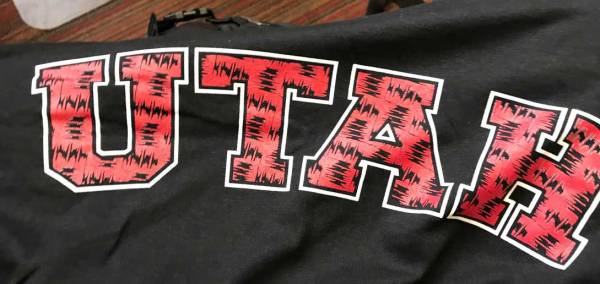
In Tongan culture, fala mats have been a part of the kingdom’s traditions for much of its history. The fala design is created by weaving and hammering strips of trees, which creates a very strong material. The strength of this material represents the strength of the community. The University of Utah’s Pacific Islander Student Association is a strong example of fala.

Story2Pic4

A University of Utah shirt containing the fala weave pattern. Photo by George Kounalis.

“We love our students, we’re proud of them, ” Tevita “Ti” Kinikini said. As the adviser of the U’s Pacific Islander Student Association (PISA), he has many reasons to be proud. The walls of his office are covered in art done by PISA alumni. His office door is covered with newspaper articles about many of the students who went through the organization. “This door represents a lot of our community on this campus,” Kinikini said.

“I came to the University of Utah in 2007,” Kinikini said. “I was a high school counselor and teacher in the Salt Lake School District.” He left that position to help out the Pacific Islander community at the university. Kinikini is an academic adviser with the first-year program and family support coordinator at the Office for Equity and Diversity as well as the adviser for the Pacific Islander Student Association.

tiKinikini

Tevita Kinikini is an academic adviser with the first-year program and family support coordinator at the Office for Equity and Diversity. He also serves as the adviser for PISA. Image courtesy of Kinikini.

PISA offers resources to many Pacific Islander students at the U. The program consists of many first-generation students who are studying music, fine arts, health sciences, social sciences, among other programs. PISA gives them a way to network on as well as off campus. “You can adjust the sails, but not the wind,” Kinikini said.

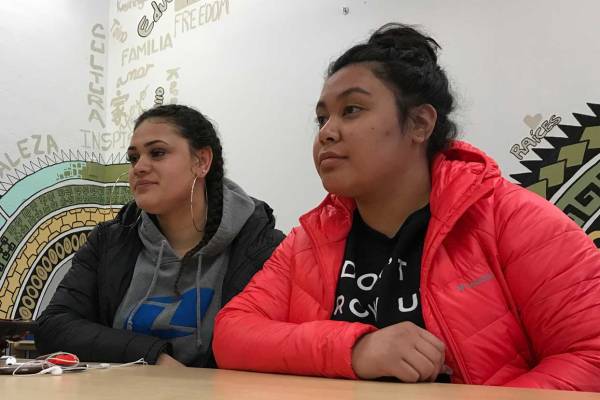
PISA allows a space to voice cultural advancement as well as improve academic achievement. “It’s been a long-standing club on campus,” said Hannah Makasini, a sophomore attending the University of Utah and member of PISA.

“In the past, we’ve done lots of activities, lots of student involvement, a lot of our students are involved with other things such as being orientation leaders,” Makasini said. “We like to think of our group as a welcome home for anybody, not just Pacific Islanders, but anybody who needs a friend to guide them through college.”

Grace Finau, a freshman attending the University of Utah and member of PISA, said, “In a sense, I feel like our club with our students, there’s a lot of groundbreaking going on. A lot of students venturing into areas that Polynesians aren’t necessarily involved in.” Many of these areas include being involved with Greek Life, New Student Orientation and the Center for Ethnic Student Affairs.

“Our club is very adamant and venturing out and doing groundbreaking stuff, we take our identity and our culture very seriously,” Finau said. “Our culture is very family and values-based.” She said the club doesn’t want to push people away from these values, but rather show that these values can be used to expand horizons.

STory2Pic9

Grace Finau (left) and Hannah Makasini. Photo by George Kounalis.

Kinikini said these resources allow the school and community to connect and grow. “Our students are active in a lot of different areas,” he said of the students involved with PISA.

The group co-hosted a conference for high schoolers with Salt Lake Community College’s Pacific Islander Student Association in March 2018. “That’s our biggest event, probably, on a year-long schedule,” Makasini said.

High schools in six different districts will send their Polynesian students to the conference at SLCC. “We have a lot of hardworking individuals in our group that have worked hard to get to where we’re at,” Makasini said about organizing the event.

The event provides high school students with several workshops. They can learn about college, adversities these students may face, and different ways they can get financial or admissions information for college.

“We want them to realize that higher-ed is doable and important,” Makasini said. “There’s this stigma that college is too expensive and it feels like the only way in is through sports.” The conference seeks to strike that stigma and show Polynesian high school students that there are other ways to get into college that don’t have to be through sports.

“Our conference is really resource based,” Finau said. “We have a lot of successful Pacific Islanders and people of other races that come and show these kids what you can do, and here’s how you do it.” Finau said this year’s theme for the high school conference is, “I can and will create my own tide.”

In addition to the high school conference, PISA does many other activities. “We do food drives, clothing drives, and we even have students involved through the Bennion Center that volunteer on their own,” Makasini said. Even now, PISA is jumping into action.

The Kingdom of Tonga was hit by Cyclone Gita in February 2018. The cyclone devastated the country and PISA is helping with relief efforts. This is currently one of PISA’s biggest projects.

“We’re in the gathering stages of humanitarian supplies and school supplies,” Kinikini said. “We are hoping to send out a crate here within the next three weeks of school supplies, hygiene products, household wares and gardening tools.”

He added, “They’re in the cleaning and rebuilding stage right now. This is what our club does.” PISA’s quick efforts to help the Kingdom of Tonga show that the fala of this community expands beyond just the University of Utah and its surrounding community. “No one cares how much you know, unless someone knows you care,” Kinikini said.

One does not have to be a Pacific Islander to join PISA. All University of Utah students are welcome. The organization hosts Power Talks two to three times a month. The group is also active on Facebook and Twitter.

For those interested in getting involved with the group or wishing to help PISA with their collection for Tonga, Tevita Kinikini can be reached at the Center for Ethnic Student Affairs in Suite 235 in the University of Utah’s A. Ray Olpin University Union Building.

The bottom line: preserving Pacific cultures through language conservation

By ALLISON OLIGSCHLAEGER

Of Utah’s 38,000 Native Hawaiians and Pacific Islanders, 44 percent report speaking a language other than English at home. The figures are even higher in Polynesian families, with 45 percent of Utah Samoans and 68 percent of Utah Tongans reporting use of at least two household languages.

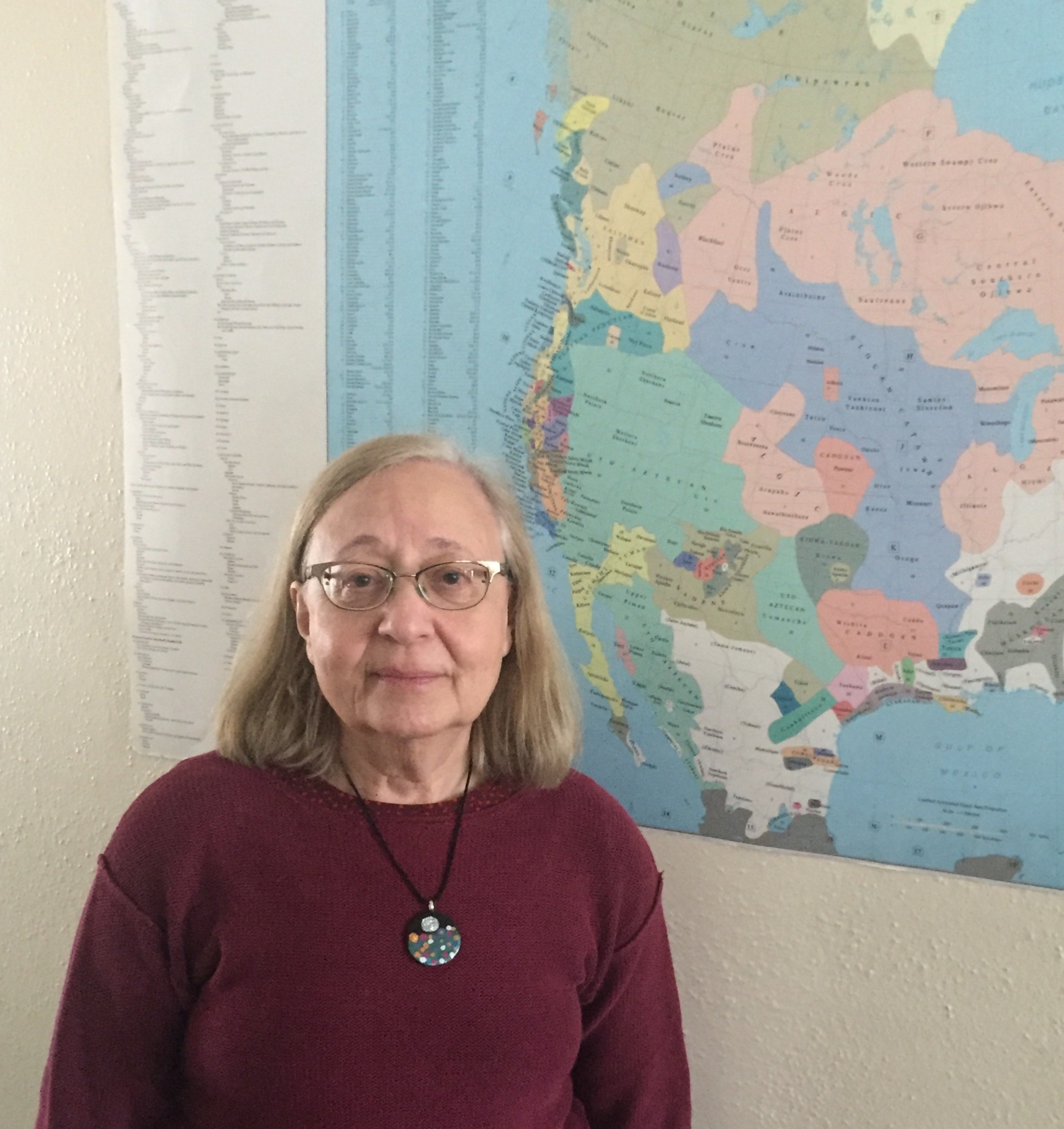
But according to Marianna Di Paolo, a professor of sociolinguistics and anthropology at the University of Utah, most immigrant families will lose their language of national origin within three generations. Although little research has been done on language attrition in Pacific Islanders — Di Paolo and her colleague Adrian Bell are some of the first to research Tongan language use in American immigrant communities — the standard seems to hold as true for Polynesian languages as it does for more researched languages like Spanish and Italian.

“The norm is loss in three generations,” Di Paolo said in a phone interview. “It doesn’t mean it has to be that way, but that’s the norm.”

Marianna Di Paolo

Anthropologist Marianna Di Paolo is one of the first researchers to study Tongan language use in the U.S.

Di Paolo explained that language loss frequently occurs as a byproduct of assimilation. First-generation immigrants, who arrive in the United States with varying levels of English proficiency, tend to use their language of national origin in the home, so children born to immigrants often learn their ancestral languages before or alongside English. However, most bilingual children go on to attend primarily English-speaking schools full of primarily English-speaking students.

“The children start using English primarily with their peers, so who are they going to marry? People who are also using English with their peers,” Di Paolo said. “English will become the household language of the second generation, the generation that is born and raised here.”

This means that third-generation Pacific Islanders born into English-speaking households are far less likely to speak and understand their ancestral languages than their older family members.

“If English becomes the language of the home, it is very likely that the grandchildren of immigrants will shift completely to English, or only use Samoan when talking with a grandparent, or understand Samoan but not speak it,” Di Paolo said. “In three generations, you have moved from a nearly-monolingual Samoan-speaking family to a nearly-monolingual English-speaking family.”

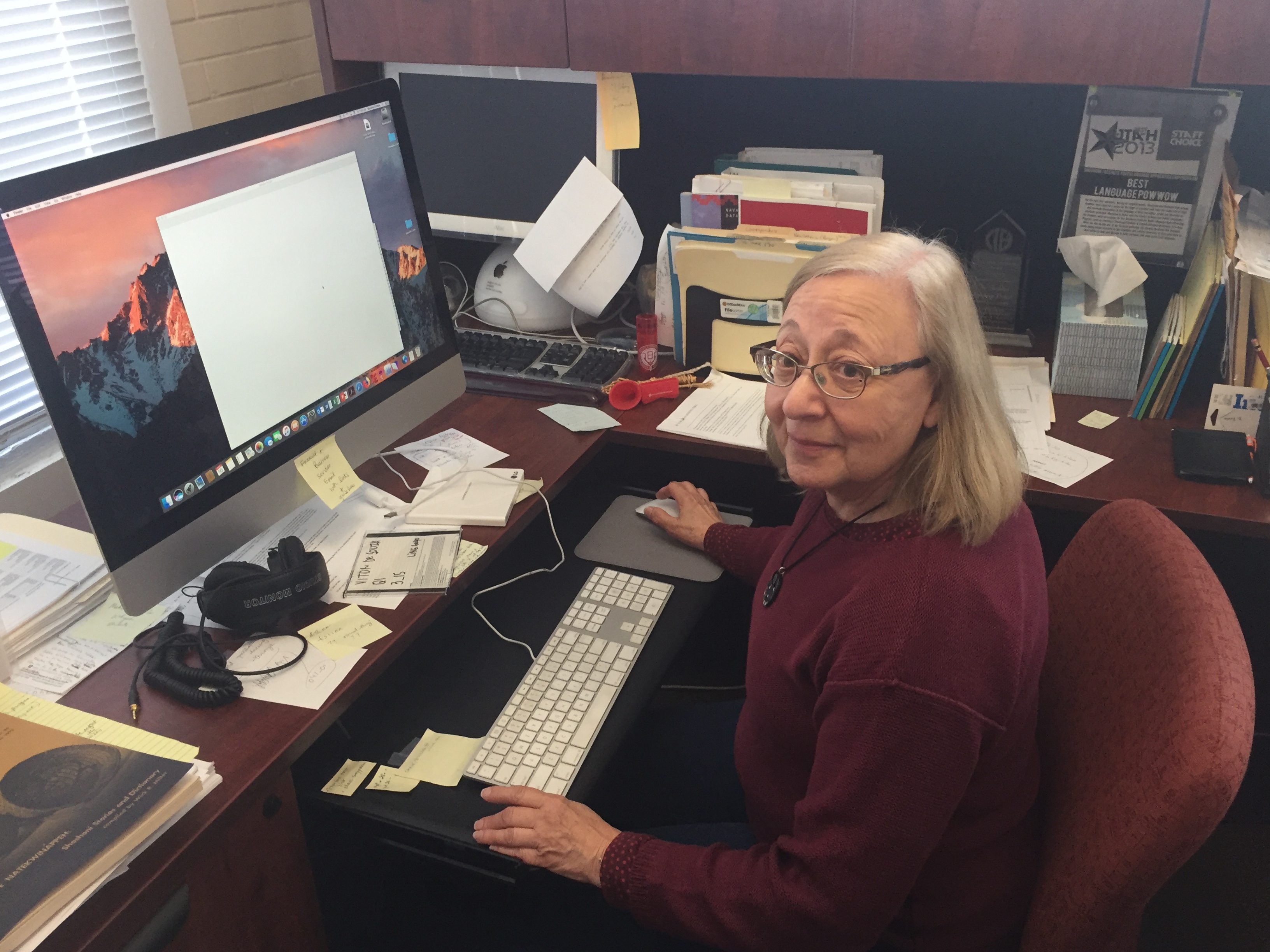
Marianna Di Paolo

Much of Di Paolo’s research focuses on recording and revitalizing immigrant and indigenous languages.

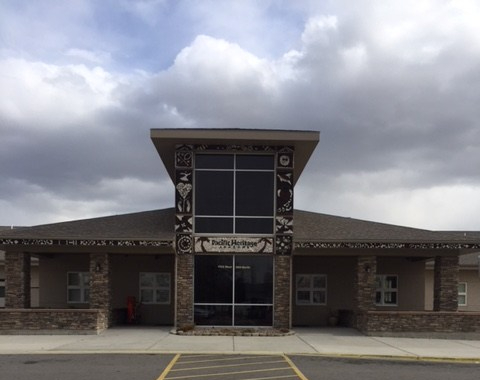
Heritage languages are lost even more quickly when first-generation parents use English in the home or choose not to teach their children their ancestral languages. Sisi Muti, who teaches Tongan language at Pacific Heritage Academy in Salt Lake City, said she sees this frequently in her students’ families.

“They moved to America to learn English, not to perpetuate Tongan,” Muti said in a telephone conversation. “That’s why they’re here — they want their kids to learn English well.”

But Muti believes that learning a heritage language can be a valuable experience for Polynesian children, grounding them in their culture of origin and giving them a sense of identity.

“Losing the language is the beginning of losing a culture,” she said. “Even here in America, it is important that they know their identity and know who they are.”

Muti said educating immigrant parents on the link between language and identity development is critical to preserving Polynesian languages in Utah’s Pacific Islander communities.

Di Paolo agreed, noting a long-standing history of misinformation about the harms and benefits of learning two languages as a child.

“Educators have misinformed parents about bilingualism, saying that learning two languages in early childhood actually harms children. It absolutely does not,” Di Paolo said. “It improves a positive sense of identity and it improves cognitive development.”

Di Paolo said families who continue to use their language of national origin in the home stand a much better chance of retaining their language beyond the three-generation average, but may still face other challenges.

“That supports it in the home, but it isn’t probably, in the long run, the only support that the language will need,” she said. “It is incumbent on some other part of society to create some other situation where language can be used.”

These “other situations” are known as domains: sociocultural settings in which languages can be used. Along with home and school, possible domains include work, church and government settings. In a viable domain, the use of any given language is not suppressed; in an optimal domain, it is facilitated and encouraged.

“Keeping the heritage language alive means that there have to be places for people to use the language and have pride as they’re using the language,” Di Paolo said. “The more domains that are possible for the language to be used, the more likely it is that Samoan will persist.”

While not immigrants, the indigenous Polynesians of New Zealand have seen great success in revitalizing their ancestral language, Te Reo Maori, in part due to its recent reintroduction into school and government settings throughout that country. Curleen Pfeiffer, a Utah educator and member of the Navajo Nation, believes the Maori people’s techniques for language preservation may have transpacific significance here in Utah.

To date, Pfeiffer has led four groups of Native Utahns across the ocean to study language preservation in New Zealand. The trips started as general cultural exchanges, but took on a new focus after Pfeiffer was touched by the value the Maori place on their language.

“The importance of language started really hitting me, and I turned my purposes totally around to language specifically,” Pfeiffer said in an interview at the American Indian Resource Center. “I really wanted to help the tribes of Utah see and understand for themselves how language is vitally important for our culture to remain alive.”

Pfeiffer brings Native students, educators and tribal leaders to New Zealand to study Te Ataarangi, a Maori teaching method that claims to have helped more than 50,000 people learn Te Reo. Pfeiffer has adapted Te Ataarangi to teach Dine, the Navajo language, and hopes to emulate the Maoris’ success in her own linguistic community.

Pfeiffer also hopes the students who visit New Zealand with her will understand the cultural significance of their own languages and be inspired to advocate for their preservation.

“Language is the bottom line,” Pfeiffer said. “Just like reading is the bottom line for education, language is the bottom line for culture. And if we want to keep our culture, we’ve got to do something. We can’t just sit back and let it fade away.”

Pacific Heritage Academy emphasizes heritage in order to succeed

Story and photo by JANICE ARCALAS

IMG_2788 (1)

Pacific Heritage Academy opened in 2013.

“Look for the things in common and celebrate the differences,” said Dirk Matthias, director of the Pacific Heritage Academy. The charter school in Salt Lake City guides its students to success by implementing heritage in their daily school life.

Matthias was the school designer for Pacific Heritage Academy. He was drawn to the vision of the school and to work in a diverse community. When there was an opening for the director’s position five years ago, he applied for it and got the position.

Most of the students at the Pacific Heritage Academy located at 1755 W. 1100 North come from demographic sub-groups who struggle in the public school system. The schools in Utah don’t have a role model for students of color, Matthias said. The school helps their students find their roots and wings. Once their students understand their roots, they can grow wings to fly. This means that when the students understand their heritage they can grow.

Kindergarten to eighth grade students are taught Hawaiian, Tongan, Samoan and Spanish heritage at the Pacific Heritage Academy. For nine weeks a student will learn a specific heritage each year till their seventh and eighth grade. Seventh and eighth grade students have the opportunity to choose a heritage, where they will learn more in-depth about the heritage and develop conversational skills. Students have a heritage learning class, where they will learn their target heritage. It will consist of learning the language and culture.

Sisi Muti teaches the Tongan heritage at the school. She said that the students, when learning the language, will learn the alphabet, body parts, days of the week, conversational phrases and action words. The students are also taught Tongan culture songs, dances and legends. Muti also said that the students’ favorite activities are storytelling, games, writing poetry and stories, and making a book about themselves in Tongan.

The students will learn about heritage in their heritage language class, Matthias said. Every Friday they have a community meeting, where they will sing heritage songs. The community meeting also contains a heritage festival every nine weeks. The festival contains a target heritage and they will do all heritages. In addition to the community meetings on Fridays, every morning the students’ day starts with a circle about how they are doing focusing on the Habits of Crew through a video or a reading. They will set a goal keeping the Habits of Crew in mind.

The Habits of Crew contain six elements: Courage, Compassion, Craftsmanship, Responsibility, Perseverance and Collaboration. These elements have a connection to Polynesian heritage. The Habits of Crew is also the narrative of the voyager, which is the school’s mascot.

“We are Voyagers like ancestors of old. We are strong, inventive, courageous, and filled with wonder. Sailing seas of knowledge, we seek understanding and use it with compassion. Looking forward, we honor the past to better see our future. We will find hope and success in spite of wind and change. With our eyes to the heavens, fixed on guiding lights, we know ourselves, our space, our time. We will seek, we will find, we will know new horizons. We are Mighty Voyagers!” This statement at the bottom of the PHA’s website recognizes the characteristics of a voyager and connects them to the school and student success.

The school is coming up on its fifth year and it is starting to see stability. In the beginning, there was a lot of student turnovers. There are over 400 students and it is difficult to see a student’s growth when they start in the middle. Now the school is able to see the students’ growth, who started at kindergarten, who are now in fifth grade, Matthias said.

The teaching staff is also stabilizing. The teachers who are coming to PHA are interested in teaching, the mission and vision of the school, Matthias said. The teachers take leadership in the school and have a lot of say about making decisions at the school.

Just as how their indigenous heritage community is, at the PHA, they don’t leave students behind, Matthias said. When they make mistakes or get into trouble they are there for the students to get back on their feet and work with them to succeed.

The Pacific Heritage Academy’s students succeed through learning about their heritage; roots, so that that they can fly.  For five years, the academy has implemented Tongan, Spanish, Samoan, Hawaiian heritage learning so that the students can see that not only white students can be protagonists in books, but children of color can also be too, Matthias said .

The website contains this quote on the front page. “Through thoughtful inquiry, challenging curricula, rigorous requirements, and compassionate service students learn who they are and what they can become. We create learning experiences and students find their Roots … and their Wings.”

Image courtesy of Nicole Aguirre and Siva Pasefika, a Polynesian dance company based in southern Utah that performs and teaches children and families about Pacific Islands dances and traditions.

Empowering cultures in Pacific Islands community in Utah

Story and photo by DAYNA BAE

Utah has the largest Pacific Islander population in the United States per capita. Approximately 38,000 Pacific Islanders are currently living in the state. However, stereotypes against Pacific Islanders are considered a significant obstacle in constructing their own cultural identities.

Susi Feltch-Malohifo’ou is having an interview at the University of Utah.

“Our first, second and third generation, they are floating around with lost identity,” said Susi Feltch-Malohifo’ou, the executive director of Pacific Island Knowledge 2 Action Resources (PIK2AR). “When they are in their home, they are Americans, when they leave, it’s not how we perceive ourselves, it’s about how you perceive me.”

Pacific Islanders often face stereotypes related to their physical strength. They are commonly thought of as athletes due to their physicality. Consequently, many Pacific Islander figures in mass media and pop culture are typically portrayed as security guards or athletes.

In addition, many Americans tend to view different Pacific Islander cultures as one identical culture. This creates yet another stereotype.

In fact, Pacific Islanders consist of Polynesians, Micronesians and Melanesians divided into three different regions. Polynesia includes Hawaiian Islands, New Zealand, Easter Island and the Samoan Islands. Micronesia incorporates the islands of Kiribati, Nauru, the Marianas such as Guam, Fiji, Norfolk Islands and other small islands. Lastly, Melanesia is comprised of the island of New Guinea, Papua New Guinea, the Solomon Islands, New Caledonia, Fiji and few other smaller islands. Since each region has different geographic, historical and weather conditions, there are obvious differences among the Pacific Islanders.

Jacob Fitisemanu Jr., a clinical manager with the Utah Department of Health and an associate instructor of ethnic studies at the University of Utah, said, “Literally hundreds and hundreds of different languages are spoken throughout the Pacific, accompanied by myriad worldviews, artistic perspectives, governance systems, subsistence patterns, etc.”

Despite diverse Pacific Island cultures, a misconception as perceiving them as one group pervades in everyday life.

“When I went to the hula dance class, the instructor told me that she thought every Polynesian knows how to do a hula dance,” Feltch-Malohifo’ou said.

To correct pervading misunderstandings, PIK2AR focuses on emphasizing dissimilarities and cultures of various Pacific Islands communities. The organization offers educational and cultural programs such as the Utah Pacific Island Heritage Month, an annual festival held in August. Regarding the missions of PIK2AR, Feltch-Malohifo’ou said, “To educate outside of our community of similarity between all of our countries, but also some differences.”

Feltch-Malohifo’ou shared what she had witnessed in East Palo Alto, California. “Pacific Island kids were coming to know how to go to college.” She was helping them with filling out the documents. “There was a missing bridge between culture and resources,” she said.

According to NBC News report, many Pacific Islander students have experienced a lack of academic support and information. Some students were frustrated by filling out Free Application for Federal Student Aid (FAFSA) documents. The others did not feel confident about signing up for scholarships.

Although Pacific Islander students are willing to go to college or university, many of them do not have access to adequate information due to lack of appropriate support. Lack of academic resources leads to unfortunate statistics. Empowering Pacific Islander Communities, a nonprofit organization, announced that only 18 percent of Pacific Islander adults have a bachelor’s degree.

Biased perspectives also hinder Pacific Islander students from building cultural identities.

Feltch-Malohifo’ou said, “It feels like they need to uphold stereotypes and they are pigeonholed by everybody around them that they have to be this way.” One of the common stereotypes is that Pacific Islander students play in a football team at school. “How about if they don’t want to be a football player?” she said.

Putting them into a pigeonhole not only influences their school life but also has negative effects in their life.

Although PIK2AR has not yet quantified the depression rate among Pacific Islander teenagers, the suicide rate has increased in Utah and a 12-year-old committed a suicide in 2017, according to Feltch-Malohifo’ou.

As a response, PIK2AR prioritizes children and young students from Pacific Island communities who are suffering from intertwined identity and stereotypes as primary targets.

“We try to educate and reach out to youngsters,” Feltch-Malohifo’ou said.

One of PIK2AR’s cultural preservation education programs is using cultural objects of Pacific Islands communities. They use the objects to educate young students. Kava bowls and tapa cloth are the examples. “A kava bowl, maybe it’s different, but everybody can recognize that it comes from the Pacific Islands community,” Feltch-Malohifo’ou said. With the objects, PIK2AR tries to find cultural commonalities and builds meaning around it. Teaching about shared culture helps young children to differentiate dissimilarities between Pacific Islands cultures as well as the common features. “We teach the history and teach about the objects. Because it still has value,” she said.

Fitisemanu shared his idea about another effective method of cultural preservation. “Teaching and developing literacy and fluency in heritage languages is another important piece, and this process involves updating language with new words to reflect modern contexts that our ancestors never encountered,” he said.

Fitisemanu also suggested that documenting oral histories and perpetuating ceremonies, customs, language and performing arts are all necessary to preserve culture. “But more importantly, to me, is demonstrating the value of these practices and values for contemporary Pacific Island generations, who will ultimately decide what cultural traits to maintain and transmit to future generations,” he said.

A community can also provide a useful way of preserving culture.

Fitisemanu lives in West Valley City, which has the largest Pacific Islander population in Utah. He said that his daughter is involved in many cultural aspects by attending school, participating in cultural dance classes and speaking Samoan language in the community. He said, “Preserving a sense of Pacific Islands identity and culture is facilitated here, whereas it would be very difficult for my family to maintain cultural and language connections if we lived, say, in Sevier County,” he said.

Young Pacific Islander students are currently living in American multicultural and bilingual settings. Within the mixed Pacific Islands culture and American culture, students need help and support to develop their own unique identity.

Fitisemanu said, “We should encourage children to be versed in English and their heritage languages. That kind of upbringing teaches children to be very observant situational learners who pick up on social cues and learn to code switch and see through different perspective lenses.”

Local universities and colleges also put efforts to work with Pacific Island communities. The University of Utah has the Pacific Islander Student Association (PISA), which is a student-run organization within the Center for Ethnic Student Affairs (CESA). The student group enhances learning experiences and provides off-campus opportunities to serve Pacific Islands communities. In addition, the Pacific Islands Studies Initiative (PISI) is an academic collective that makes the U as a premier institution for Pacific Islands studies.

Utah has the largest population of Pacific Islanders per capita in the nation, and it also has numerous organizations and communities to support them. Pacific Islander organizations such as PIK2AR and PISA aim to provide cultural preservation, economic support, domestic violence education and other useful programs for Pacific Islanders in Utah. 

Cultural rediscovery in Utah’s Pacific Islander community

Story and photo by DIEGO ROMO

Pacific Islanders have a long history and legacy in the United States that spans multiple generations. In Utah specifically, according to many sources, Pacific Islanders can trace their roots to religious immigrants who arrived shortly after the original Mormon pioneers. The community has left its mark on Utah’s unique cultural heritage and has been shaped by it as well.

Statistics from the Utah Department of Health show that the state is home to 38,000 Pacific Islanders and the average age among the community is 20 years old. Only one-quarter of those who identify themselves as Pacific Islanders are foreign born, meaning that three-quarters of Utah’s Pacific Islander population has no physical tie to the cultural homeland of their ancestors. This leaves many in the community culturally severed from their history and people.

This void leaves many feeling lost, as if they are floating between the two identities that help them to establish their self-image.

“I always felt divided,” said Susi Feltch-Malohifo’ou, executive director of Pacific Island Knowledge 2 Action Resources, a Pacific Islander community resource group based in Salt Lake City.

Unlike many of the younger generations of Pacific Islanders in Utah, Feltch-Malohifo’ou has a direct, physical connection to her homeland. The daughter of a woman who worked as a housekeeper at a Mormon coconut plantation, Feltch-Malohifo’ou was born in Tonga, but was quickly adopted by a pair of Mormon missionaries who oversaw the estate.

She described the plantation as one very similar to the those of America’s deep South: rolling lawns with many trees and the key feature situated in the middle, the plantation manor.

Her life changed when she moved into the manor and began attending church school with the children of fellow Mormon church workers in Tonga.

“In my school picture, I’m the only Tongan,” she said. “I lived in Tonga, but didn’t have the real experience.”

Feltch-Malohifo’ou remembers celebrating American traditions like Halloween and Easter, and always having running hot and cold water, an uncommon luxury in Tonga at the time.

From a very young age she adapted to her new life with its unfamiliar traditions and culture, but began to lose some of her Tongan heritage in the process.

When she finally arrived in Utah after spending some time in Texas, she was eager to get back in touch with the Pacific Islander community. But initially she felt like an outsider among her people.

“When I interact with other Pacific Islanders I have a hard time relating,” she said.

Many who share similar experiences to Susi Feltch-Malohifo’ou express the same sentiment. This may be attributed to the fact that the Pacific Islander community in Utah is very diverse in and of itself.

According to 2010 census data, the community breaks down into four groups: native Hawaiians, Guamanian, Chamorro, Samoan and Other Pacific Islanders. However, the census is not fully representative of how diverse this community truly is.

For those who are second-, third-, even fourth-generation Pacific Islanders born in America or raised in its culture, it can be difficult to pinpoint which cultural identity to relate to.

“I always looked at what made me different from them,” Feltch-Malohifo’ou said, referring to her connection to the Pacific Islander community. “My parents gave me opportunities that other kids of my situation didn’t have.”

Those opportunities and experiences isolated her from the community that she considered family. With no cultural anchor, Feltch-Malohifo’ou began to reach back out to the Pacific Islander community. She was surprised when the welcome wasn’t as warm as she had hoped.

She recalls an early incident when a co-worker at a former Pacific Islander community resource group told her, “If I close my eyes, you think and sound white.”

Hokulani Aikau, a University of Utah professor can relate. “It’s hard to find a way to connect when you feel like an imposter in your community,” she said.

IMG_8322V2

Hokulani Aikau, a University of Utah professor in the Gender Studies department, is collaborating with fellow faculty to launch the Pacific Islander Studies Initiative.

Aikau was born in Hawaii but was raised in Utah for the majority of her life. She shares many of the same cultural dilemmas as Susi Feltch-Malohifo’ou because she was raised in a primarily Anglo society.  Aikau grew up going to schools with white student bodies who were taught by white faculty, about a primarily white history and subject matter.

“How can we claim Hawaiian identities when we were raised here?” Aikau said.

She brings up a major dilemma in the community. How can Pacific Islanders maintain cultural identities when travel back to the islands is sporadic and access to the native language is limited and even nonexistent in some cases?

“Where do we go for that information? Universities are supposed to be a place for that,” she said.

Aikau, along with other professors and staff at the University of Utah, are launching the Pacific Islander Studies Initiative, an enterprise set forth by the university in order to further diversify its faculty and curriculum.

She described it as a hiring initiative that responds to the cultural needs of the community. This initiative would provide Pacific Islander students — who make up about 1 percent of the university’s population — with a culturally relevant education that challenges and critiques the status quo, while at the same time teaching students alternatives that are culturally relevant to their backstories and histories.

“You have to provide students with alternatives,” Aikau said. Especially those that are culturally relevant.

“The most important thing is the building of confidence,” she said, adding that Pacific Islanders “need to know there is a place for them here.”

She also touched on the fact that cultural education needs to address the diversity that exists within the Pacific Islander community.

“To be Hawaiian does not equal dancing hula and working at taro farms. You can express your culture in a variety of ways,” she said.

Feltch-Malohifo’ou’s organization, PIK2AR, provides another avenue for cultural education within the community by empowering parents and families with culturally relevant resources. These resources then help parents take that information back into the home to begin teaching children of all ages about their heritage.

“There needs to be more avenues for diversity within the ethnic communities,”  Feltch-Malohifo’ou said. But ultimately, “It’s about connection. It feels good to be valued,” she added.

Brandon Ragland, whose mother moved to Utah from Hawaii as a young child, seems to agree that implementing cultural education in the home is key to helping children understand their identities.

“Growing up we did lots of things to learn about our heritage and people. Every Sunday the entire family would get together,” Ragland said in a Facebook chat conversation. “We would have endless amounts of amazing food from home and after we ate, my great aunt got all the kids together, she’d teach us some short history lesson as well as a few Hawaiian words for everyday things,” he said.

“And the importance of passing each of those down to through the family to keep the spirit of aloha alive,” he added.

Ragland is now a father and says that he has been and will continue teach his son all that he learned from his great aunt.

“There’s a vast amount of history coming out of the Hawaiian Islands and knowing about it helps keep our ancestors’ memories alive,” Ragland said.

Cultural education is one way to rediscover one’s culture, and it can come in many different forms. But ultimately, it helps to clear the foggy area between cultural intersections and can provide a sense of identity to many who feel lost.

University of Utah launches Doctors Without Borders student chapter

Story and image by ANNA STUMP

Médecins Sans Frontières (MSF), also known as Doctors Without Borders, is an international humanitarian organization whose mission is to expand accessibility of medical care for those affected by conflict, epidemics, disasters, or exclusion from health care. These efforts include providing doctors, nurses, logistical experts, water and sanitation engineers and administrators to over 70 war-torn regions and developing countries across the globe.

Doctors Without Borders emphasizes “independence and impartiality.” The organization provides support to those in need regardless of political, religious and economic factors. Working as a private entity allows MSF to follow its own moral code and operate in any way it sees fit. Because MSF is a non-governmental organization, all of the services and operations are driven by the selfless work of volunteers.

Two of these volunteers are Julia Case and Kelsie Lee. The freshman roommates at the University of Utah are working toward bringing a student chapter to life on campus. Both women were exposed to the organization’s work at an exhibition that left them hungry to help in any way possible.

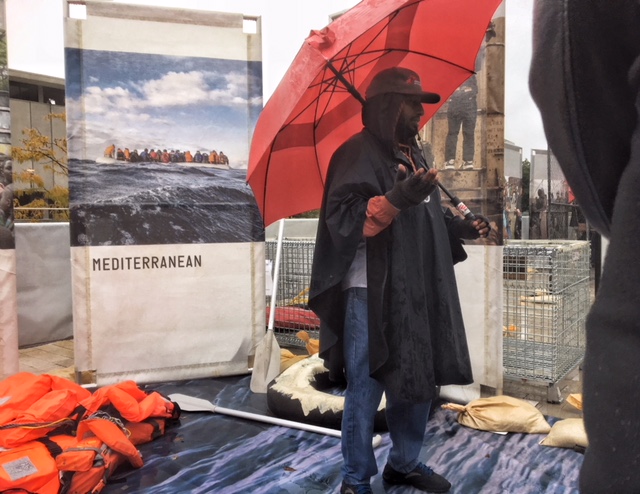
They attended MSF’s exhibition “Forced from Home,” which took place at the Salt Lake City Public Library in late September 2017. The interactive experience was designed to expose the realities of the global refugee crisis to those who attended. While walking through the exhibit, participants gained a closer look at some of the disturbing challenges faced by the 65 million asylum seekers displaced from their homes due to war and persecution.

FORCED FROM HOME

A tour guide leads participants through the exhibition and shares the hardships of traveling through the Mediterranean Sea.

During the tour, participants experienced what it would be like to gather essential belongings with dire urgency. The group had a 20-second time limit to determine which five items they would take with them on their arduous journey into the unknown. Constrained to only five items, participants were forced to decide which necessities were more crucial. For example, debating between a blanket and water or food and money. This activity gave participants a taste of what a refugee experiences while scrambling for necessities during a time of emergency.

Motivated to act

The exhibition emotionally impacted Case and Lee to the point of seeking ways they could lend their hands to MSF, despite neither of them having any medical knowledge.

“When our guide finished taking us through the exhibit, Julia and I were really eager to do something,” Lee said in an email interview. From here it gets a little blurry, but all I remember was spontaneously writing down that we wanted to start an MSF chapter at the U, and next thing I know we’re here, with the chapter expected here on campus at the beginning of next semester.” The student chapter should begin in the Spring of 2018.

MSF currently has student chapters on campuses across the country that work closely with the organization to unite students who are passionate about MSF’s mission to provide lifesaving care to those who need it most. MSF collaborates with each chapter, and provides the resources needed to plan memorable events such as fundraisers, map-a-thons, film screenings and Doctors Without Borders field staff presentations on campus.

Future goals

Both Case and Lee are hoping to hold up to four events in Spring 2018 semester. One event in particular is a “Walk 4 Water.” During this event, students will walk to raise awareness of the demand for clean drinking water in countries with limited access and help raise money to provide sterile water and drinking wells to developing countries in need.

For Kelsie Lee, fundraising walks are no foreign activity. She herself has participated in a Walk 4 Water and has helped organize a community-wide walk for charity. At the age of 10, Lee went on her first service trip to Uganda. On this trip, she witnessed the hardships faced by those who walk miles for water, struggle to find food and are exposed to sometimes fatal diseases such as malaria.

“Walking for water specifically is such a cool concept because it really puts into perspective the fact that women, men, and kids all around the world walk miles upon miles upon miles for water every day, and sometimes it’s not even clean water. When people come out and get involved in these walks, they are walking for those people,” Lee said.

The freshmen are also working toward having a field worker from MSF visit campus. The volunteer will speak with students and faculty about the organization’s current projects and share the various ways one can support refugees from home. Case is thankful for the opportunity the student chapter will present to students who want to help but have no idea where to start. “This club offers a unique experience of being part of a global organization, and we as students can help with pressing issues on the other side of the globe right from our own campus,” she said.

Both women are eager to further the reach of the MSF program through their projects at the U.

“Doctors Without Borders has been very open to allowing us to not only plan out our own ideas for fundraisers, but also giving us choices as to where the money goes. It could go anywhere from helping the refugee crisis, to medical needs, to water. The options are endless, which is why I’m so proud to get to be a part of something so awesome, that really just wants to help in any way possible,” Lee said.


Teaching nutrition to refugees in the Salt Lake Valley

Story and photos by ZACH CARLSON

Laureen Carlson is an employee for the Expanded Food and Nutrition Education Program through Utah State University’s College of Agriculture. Carlson’s goal is to help individuals and families, especially those who are lower-income, eat healthy and affordable. Carlson said EFNEP is available in every state and most territories. Carlson has been employed by EFNEP since 2013.

For the past four years Carlson has gotten to know many refugees. Most of the refugees she has worked with are Nepalese, but she has also worked with some families from Sudan and other African countries.

When asked what nutrition was like in refugee camps, Carlson said, “They would get packages that they were so appreciative for. But for example, their protein was lacking.” She also added that they would get meat packed in salt. Salt-packed meat isn’t as healthy but does last longer. “Their diet consisted mainly of rice with small amounts of vegetables,” Carlson said.

Once refugees get to Utah they can get the ingredients that they really need to be healthy and provide for their family from a nutrition standpoint. Carlson said one of the biggest problems she faces is getting refugee families to eat complete proteins. Because most families face dietary restrictions due to their religion or customs, they only will eat goat or yak — especially with the Nepalese. These also happen to be two of the more expensive meats to purchase, so many families go without the proper proteins that they need.

Carlson’s goal is for families to eat healthy, not necessarily eating like Americans. “I always try to be their facilitator using their own bread, yogurt, whatever food and spices they regularly eat,” Carlson said.

Often, she tries to combine common foods here with food or spices that refugees know and eat. Carlson said many families make their own yogurt. She will use this yogurt with fruits to make healthy smoothies. One of her other go-to foods is pizza.

She uses bread that the family makes in place of regular pizza dough. “With almost everything we add spices we wouldn’t traditionally use in American pizza. I use theirs,” she said. “They have these tin containers that have all these different spices. Some of them have even brought those when they came because they are very careful with their spices. I would have them use what spices they wanted on their pizza.”

She would then add cheese that meets their dietary standards. This is to add more dairy to their diet. “I don’t think I went into a refugee home that was getting enough dairy,” Carlson said. She added that some children do get enough dairy, because many refugee mothers nurse longer than average here. Most of the refugee families Carlson teaches breastfeed the children until they are about 3, with one family even nursing a child until he was 5.

Carlson only speaks English, so sometimes there is a language barrier in their communication. When she can, Carlson works with a Nepalese translator, Chandra Sapkota. Sapkota often asks for Carlson because he considers her to work well with the families.

Google Translate is an incredibly helpful tool for her to communicate with refugees who aren’t fluent in English when she doesn’t have Sapkota’s help. She recalls one instance where she was teaching a mother, who spoke little English, how to make tuna casserole for her daughter. By using Google Translate, Carlson could communicate by typing in what she wanted to say in English, then it was translated to the mom’s native language. Because she can’t read, Carlson would have Google Translate “speak” the translated message to her.

“You couldn’t tell her to go buy tuna fish because she wouldn’t know. I left her all the cans, everything, so that way she could go match it in the store,” she said. “So, not only did we make it together but you can’t give her a recipe. We ended up having to make it two different times so that she could go through all the steps. In hindsight, I should have had her do voice recordings on her phone,” Carlson said. This is a new technique she has begun using, where she will have refugees record the steps in recipes on their phone in their own language. This helps them re-create the meals cooked together on their own, because they can grasp the cooking concepts better.

A health and hygiene issue that Carlson faces involves proper dental care. “I never saw a grandparent or great-grandparent that had a full set of teeth. There were multiple children that their teeth had rotted and had to be pulled. That was something we would try to bring up and encourage. We really would talk about brushing teeth and things like that,” she said.

Carlson said it is uncommon for a refugee to eat out a lot and get fast food often, but she has taught some refugees who partake in American food. She taught an African refugee who was extremely excited to be here and eat American food. But then he noticed that he was gaining a lot of weight. Carlson said once he realized how much weight he was gaining he immediately stopped eating fast food and went back to the food of his culture. He began working out to lose weight and is back to where he was before he dove into American food.

Carlson said most of the families she teaches make food from their homeland. Most, if not all of them, cook their own food, typically curry, sometimes three times a day. One indulgence that she has had a problem with is soda pop. They particularly love Fanta Orange.

“There’s something about Fanta Orange,” she says. Many of the refugee families thought that Fanta had juice in it and that they were being healthy. They loved that they were drinking juice and that it tasted so good. Except it wasn’t juice. Even when she went back to visit them later after her teaching with them concluded, some families still consumed Fanta Orange very frequently.

Life is hard for everyone, refugees included. For many refugees, their trials and hardships don’t end once they get to a new country. They instead face a new set of challenges that take the place others. A big challenge that many of them face is eating properly. Through the Expanded Food and Nutrition Education Program, Laureen Carlson helps refugees get the nutrients they need without spending unreasonable amounts of money.