University of Utah named one of top-25 LGBT friendly university and colleges

Story and photos by KOURTNEY COMPTON

The University of Utah received a near-perfect ranking in every category in a study announced on Aug. 21, 2012, by the Huffington Post in partnership with Campus Pride. Campus Pride is a national nonprofit organization for student leaders and campus groups working to create safer, more inclusive LGBT-friendly colleges and universities.

The Campus Pride rankings are based on questionnaires submitted voluntarily by students, faculty and staff at 339 U.S. colleges and universities. The questionnaire addresses issues on LGBT-inclusive policies, housing, academic life, health and counseling, faculty, recruitment and retention, and other categories.

“Praise and accolades are deserved for these top 25 colleges and universities,” Campus Pride executive director Shane Windmeyer said in a press release. “Every student deserves to feel safe on campus, and all of these colleges are committed to creating a more LGBT-friendly campus.”

The lowest ranking the U received was a 3.5 out of 5 in the housing and residence life category. Currently there is no designated housing on campus that is listed as gender-neutral, which could have impact on the rating.

LGBT life was not always this way in colleges, and this ranking is a statement of growth, work and effort of the campus, its staff, faculty, and students alike.

Kai Medina-Martínez, the director of the U’s LGBT Resource Center who identifies with the pronoun they, said the U received a low rating for its housing policy. They said the U doesn’t allow students to self-select a roommate of the opposite sex.

Medina-Martinez said the LGBT Center is working with the Housing and Residential Center to create more inclusive housing policies.

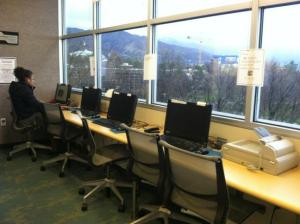
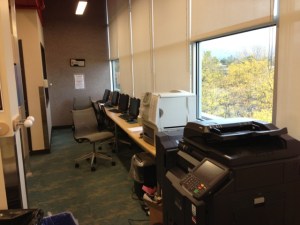
The computers available to students at the LGBT Resource Center.

The computers available to students at the LGBT Resource Center.

“We want to stay away from the word tolerance, we aim for acceptance,” they said. “The more we can breakdown the myths about us, such as, we want to recruit people or we are out to destroy the traditional family, the more people can be less threatened and more open.”

Many colleges have LGBT organizations as well as departments dedicated to the fair treatment of all students, such as the LGBT Resource Center at the U, which is located in the Olpin Student Union.

“There is a large lounging area that the students utilize,” Medina-Martínez said. “Right now we have four computers that students can use to do papers or study and we also allow students to do 10 free copies a day.”

The LGBT Resource Center also holds an event called “Fabulous Fridays,” every Friday between 3 p.m. and 5 p.m. for students to socialize, eat snacks and play games.

“College is about preparing people to navigate many different environments and interact with many different people, it is consistent,” Medina-Martinez said.  This leads to many LGBT individuals taking this opportunity to fully explore themselves and realize who they are.

Mural located in the LGBT Resource Center.

Mural located in the LGBT Resource Center.

Travis Nguyen, an openly gay student at the U, said, “It’s definitely easier for me at the U. In high school and during my freshman year at Dixie [State College], no one knew that I was bisexual. I just felt I didn’t have enough strength to put myself out there and deal with it then. It was also easier in college because I knew that once my mom found out she wouldn’t be happy and at least I wouldn’t be living in her house. At the U the people are more mature and open minded to the people and things around them. Basically it’s just a whole lot easier.”

The LGBT Resource Center hosted Pride Week, Oct. 1-5, 2012. The theme was, “Pride has no Borders.”

Nguyen added, “The University of Utah hold a lot of gay and lesbian events all over campus. Here I can be who I want to be.”

Studies show no difference for children raised by same-sex parents

Story and slideshow by KOURTNEY COMPTON

See some of the controversy surrounding Chick-fil-A and religion.

Rob Fuentes’ niece holds up a sign with a broad smile across her face. The sign reads, “I love my gay uncles.” He says, “I can’t wait to adopt a child of our own. We have been wanting one for so long now and I think we can finally do it this next year.” He and his same-sex partner are just starting the process of adopting a child of their own.

There is much controversy surrounding same-sex parenting.  People of all walks of life wonder how the children of gay and lesbian parents will turn out.

Julie Johnson, a Salt Lake mother in a lesbian partnership of 20 years said, “I had two children from my previous marriage, and my partner Margaret brought two into the relationship. We faced a lot struggles, at first, we stayed almost hidden from and out of our children’s extracurricular lives. I would attend my children’s activities and Margaret would attend hers. But, as times progressed and acceptance began to increase this changed. Ultimately, our children were really the ones who opened our eyes to the acceptance. I still remember the day when my daughter came in and said she wanted us both to go stating if we were not proud of her together, she couldn’t be proud of what she was doing.”

Today gay parents are certainly no novelty. Television is full of examples, such as the characters  Mitchell and Cam, parents of an adopted child on “Modern Family.”

Annette Bening’s portrayal of a lesbian mom to two teens in the movie “The Kids are Alright,” garnered her nominations for multiple awards including an Oscar. Hollywood has many examples that have helped set the ideal that same-sex parenting is not unlike straight parenting.

Keith Eckert of Salt Lake City, an adoptive father in a same-sex relationship of 15 years, said, “These are some of my favorite shows, because I feel that finally the rest of the world is getting it. We had to jump through so many legal hoops and circus acts to do what happens many times by accident and mistake for so many others. We love our child and both of us wanted to adopt badly. It is a shame that society will only allow me to be the legal parent of our son. Hopefully someday that will change. But these shows open our world up to the rest and say, hey, we go through the same things you do, and it’s hard at times, and it is fun, and challenging, and full of love, just like your family.”

However, there are those who feel differently. In January 2012, then-presidential hopeful Rick Santorum suggested that it was better for a child to be raised by a societal “normal” family and better for the child to have a straight dad in prison than two gay dads raising them.

Pope Benedict has come forward and said that the need for children to live in a heterosexual home is the key to preserving humanity. In November 2011, The Huffington Post reported that Catholic charities had quit the business of adoption completely in Illinois rather than agree to not discriminate against same-sex gay and lesbian parents.

However, numerous studies have shown that children reared by same-sex parents are well adjusted.

A study published in the American Sociological Review in 2001 found that while there appeared to be some differences in outcomes between children in same-sex and heterosexual households, they were minor and not nearly what family scholars would have expected.

In 2007 a second study was published in the Journal of GLBT Family Studies. Researchers conducted a combined analysis of developmental outcomes for children of same-sex and heterosexual parents found that there were no differences in the raising of the child by same-sex parents and in fact they fared equally well in both environments.

In 2010 the Williams institute released a study suggesting that same-sex parents now appear to be more stable and competent than heterosexual ones. The study listed many deficits in societal norm heterosexual relations, such as defined roles of parents, sexual abuse of the child, and parent’s lack of desire for the child in their life as part of the reasons. The study finds that these negative aspects are all but nonexistent in a same sex parenting family.

This study asserted that “non-heterosexual parents, on average, enjoy significantly better relationships with their children than do heterosexual ones, and the kids in same-sex families exhibited no differences in the domains of cognitive development, psychological adjustment and gender identity.”

Based strictly on this published science, two women parent better on average than a woman and a man. Lesbian co-parents seem to outperform comparable married heterosexual, biological parents on several measures, even while being denied the substantial privileges of marriage.

The overall academic discourse surrounding gay and lesbian parents’ comparative competence has swung — from the wide acknowledgement of challenges to “no differences” to more capable than traditional heterosexual parenting families.

This is old news to psychologists, who in fact have considered the issue settled since 2005 when the APA had issued a brief on Lesbian and Gay parenting in which it asserted, “Not a single study has found children of lesbian or gay parents to be disadvantaged in any significant respect relative to children of heterosexual parents.”

Dawn Appleburg, of Seattle, was adopted by one partner in a lesbian relationship when she was 8. “At times it was difficult. I would get asked all sorts of questions that I didn’t feel other children had to deal with. Even at times asked if I had any interest in boys at all or if I would be just like my mom’s and only like other women. Well, my three beautiful children and my husband I guess can answer that.”

Appleburg added, “I am as normal as it comes. I am a Christian, a wife, a mother, and an advocate of equality for everyone. My moms instilled the acceptance of all people in me. I wish others had the same level of love for everyone that they do, and my kids can’t wait to see their grannies every time we go and visit.”

The future of homeless LGBT youth in Salt Lake City

Story and slideshow by RACHEL JACKSON

See inside the Homeless Youth Resource Center.

It’s just another Monday for the Volunteers of America Utah outreach team. Members spread out so they can cover more ground and find their target — homeless youth. The team members hop on TRAX, because that is a common place to find them. The next place they look is under overpasses or in parks. They just want to tell them that they have somewhere safe to go.

Volunteers of America is a national nonprofit organization, which was established in 1896 by social reformers Ballington and Maud Booth. A chapter is located in Salt Lake City that has various human services programs, including homeless resources, detoxification services and housing assistance.

A  survey done by Volunteers of America showed that approximately 41 percent of the youth they served in 2010-2011 identified as LGBT.

Although that number has varied slightly since the summer months, Zach Bale, vice president of external relations for Volunteers of America, said that a little more than one-third of the youth he sees are LGBT. The number is disproportionate when compared to the general population of LGBT in the Salt Lake City community, which is 6 to 9 percent.

According to both the Utah Pride Center and Equality Utah, an advocacy organization for LGBT Utahns, there are two central causes to youth homelessness: a lack of recognition and acceptance on both the personal family level and by society in general.


Recognition

Recognizing that homeless youth exist, and realizing that there are specific reasons why they end up homeless, is a crucial step for initiating changes.

According to the 2012 Comprehensive Report on Homelessness in Utah, released Nov. 8 by the Housing and Community Development Division, there was no representation of the LGBT community in both the adult and the teen categories. The survey included race, gender and age, but omitted sexual orientation.

This is one main reason why the state doesn’t know how many homeless people identify as LGBT. Awareness of LGBT homeless people on the state level would enable places like Volunteers of America to receive more funding.

“Awareness is half the battle,” Bale said. The homeless youth center on 655 S. State St., sees about 60 to 70 youth per day. In 2011, more than 1,000 youth were served at the center with basic needs such as accessing laundry services, food and hygienic resources.

The Volunteers of America Homeless Youth Resource Center accepts a small portion of funding on the federal and state level, but the majority of funding comes from local and private donations.

In 2011, Volunteers of America joined advocacy work with Equality Utah. The advocacy work was for the emancipation bill, which allows teens who are 16 and older to make legal decisions for themselves. And for many homeless youth this is a necessity.


Acceptance 

Lack of acceptance is another reason why teens end up on the street.

“We see a high level of family rejection at TINT,” said Danielle Watters, director of community support and wellness services at the Utah Pride Center. “If they were accepted it wouldn’t be such a big issue.”

Utah Pride Center houses TINT, the other downtown youth resource center in Salt Lake City where youth can come to access basic needs.

Utah has the highest population of members of the Church of Jesus Christ of Latter-day Saints (LDS) in the nation — 62.2 percent of the total population.

In a January 2012 Pew Research study on Mormons in America, 65 percent of U.S. Mormons reported that being LGBT should be discouraged by society.

Eliana Birdsall, 20, said, “I have been homeless on and off for about 5 years. It was just easier to be homeless than to have to deal with all of it.”

Birdsall’s mother has been into heavy drug usage for most of her daughter’s childhood. Birdsall feels she has no one to turn to, because the rest of her family members are LDS. She is bisexual and is afraid to tell them. Her aunt came out to her family as a lesbian and they refused to speak with her for several months.

Birdsall uses the homeless youth center almost every day.

Brandie Balken, executive director of Equality Utah, said, “When we look at our homeless youth, they are almost 50 percent [LGBT]. There is an obvious misrepresentation of our LGBT kids who are in our homeless youth population.”

Balken said that one of the reasons why these kids end up on the street is because they do not fit in with their biological families due to a lack of acceptance. The kids then look for a place they can be acknowledged for who they are, and the sexual orientation they identify with. They are either placed with a foster family through the state or they end up roaming the streets in search of shelter.


What is being done?

Volunteers of America also has a homeless outreach program where staff and volunteers search for individuals and families experiencing homelessness. Outreach workers supply people with basic necessities such as food, clothing and other survival material.

“We hop on TRAX, and seek out youth,” Bale said. “The outreach workers find youth and let them know that they don’t need to stay on the street.”

Meals are prepared three times a day at the center, often by volunteers who have purchased the food.

To further help youth, Volunteers of America Utah has partnered with the Utah Pride Center. Each now refers clients to the other organization if staff feel people would be better served or feel more comfortable at the other facility.

Volunteers of America also works with the Fourth Street Clinic. Youth are referred to the clinic when they are in need of medical care. This clinic allows uninsured and homeless individuals the opportunity to become healthy so they can work toward getting back into secure housing.

“We’ve been seeing a lot of kids with kids lately,” Bale said. So the center has had to acquire supplies to help teen mothers in need. The Fourth Street Clinic gives homeless pregnant girls or women the prenatal care they need to give their baby a chance at a healthy life.


What still needs to be done? 

“In an ideal world we wouldn’t have anyone to help, but that’s not the case,” Bale said.

The Homeless Youth Resource Center is looking to expand. Bale said Volunteers of America is searching for a parcel of land that is big enough to construct a building from scratch and incorporate all of the plans for the future.

“We don’t provide shelter,” Bale said. “We want to be able to open an emergency shelter with about 30 beds for youth to sleep in.”

Bale and a group of other staff with Volunteers of America Utah went to various U.S. cities such as San Francisco and Seattle to study and learn from larger cities’ youth resource centers. They found that several cities offer homeless youth employment training and specific skills required to get a job.

Volunteers of America Utah hopes to offer something similar to help homeless youth get off the streets and transition into confident, self-sufficient adult lives.

Transitional housing is another project that Volunteers of America is currently working on. The existing building was scheduled to be remodeled, but on Sept. 16, 2012, an accidental electrical fire destroyed the roof and most of the top floor of the building located at 556 S. 500 East in Salt Lake City.

Two organizations, including the B. W. Bastian Foundation, have donated $50,000 each to support the project. Individuals will be able to live in the Transitional Home for Young Men until they get a job and are capable of supporting themselves.

Bastian said in a 2011 press release, “The fact that over 40% of the homeless youth are on the street because they are ‘not straight’ sickens me. I believe the LGBTQ community owes it to these kids to show them there is love for them. We also need to educate the parents and families of these kids to the truth so that fewer and fewer of these kids end up homeless.”

2013: LGBTQ equality in Utah? It has a fighting chance

Story and photo by SASCHA BLUME

With the 2013 Utah legislative sessions set to begin on Jan. 28, the lesbian, gay, bisexual, transgender and queer community is in a political quandary.

Max Green, advocacy coordinator for Equality Utah in Salt Lake City, said, “We’re not asking for special treatment, just the same protection that everyone is provided.”

Green said the national and state elections of 2012 have made an impact on the coming year’s legislative process.

“With so much turnover from the elections not every person is up to date and not every legislator is familiar with the legislative readings,” Green said.

This makes it particularly difficult to have a season-long dialogue about specific legislation, Green said.

In an attempt to bring equal rights and protection to the LGBTQ community, Equality Utah created the Common Ground Initiative in 2012. The nonprofit organization’s mission is: “To secure equal rights and protections for LGBTQ Utahns and their families.”

This proposed initiative was designed to positively impact four problem areas in Utah’s LGBTQ community:

(1) Fair housing and employment (SB 51). Currently, Utahns can be evicted from their house because of their sexual orientation.

(2) Expanding health care (HB 64). Currently, lesbian and gay individuals cannot visit a loved one in a hospital.

(3) Relationship Recognition (SB 126).

(4) Inheritance. LGBTQ individuals are unable to claim inheritance when their partner dies.

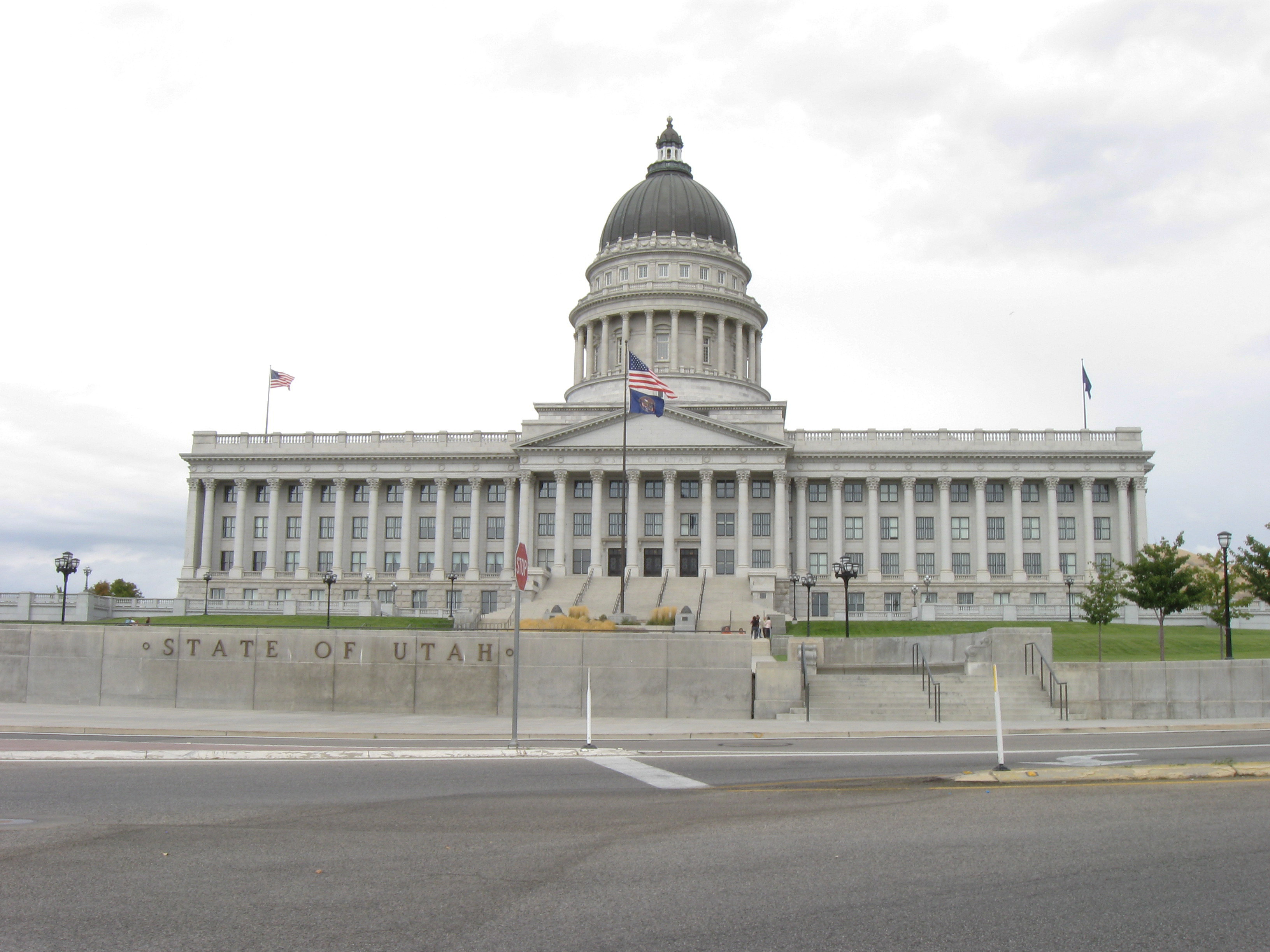
During the 2012 legislative sessions, Utah’s Sate Capitol Rotunda was the site of a rally organized by Human Dignity Utah. The purpose of the rally was to encourage Utah legislators to ratify the Common Ground Initiative.

The rally drew more than 100 people — some carried signs, others sang, but all were there to show solidarity in their quest for equality.

Five speakers addressed the audience and the dozens of lawmakers who watched from the third-floor balcony surrounded by armed Utah Highway Patrol officers.

Sister Dottie Dixon, a local art performer, told the audience, “By showing up here today we’re showing that we are fed up; we’re tired of being ignored, politely dismissed, relegated to second-class citizens.”

Kathy Godwin, president of the Salt Lake Chapter of Parents, Families and Friends of Lesbians and Gays (PFLAG), told the crowd that the majority of Utah citizens and businesses want equal protection for the LGBTQ community. She also said that approximately 70 percent of Utahns encourage state legislators to give civil rights to the LGBTQ community.

Isaac Higham, a keynote speaker with Human Dignity Utah, said after the rally, “I’m sick of the nonchalance of how easily they just dismiss our community and don’t even give us a true fair hearing.”

Higham said that Utah legislators are misinformed regarding what the people of Utah want. He said it’s the job of all Utahns to remind lawmakers that they are in office to work for the people, not just their agenda.

The Common Ground Initiative failed. All four bills went unheard and were effectively tabled.

Annual Gay-La and Silent Auction raise funds for the U’s LGBT Resource Center

001

Story and photos by SASCHA BLUME

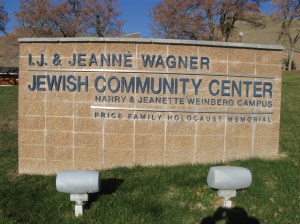
The culmination of Pride Week at the University of Utah was the Gay-La and Silent Auction at the Jewish Community Center.

Approximately 240 people attended the dinner and silent auction with all proceeds being donated to the LGBT Resource Center at the U.

The money earned at the event went to student scholarships and student emergency funds.

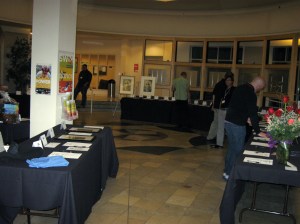
People who attended the event were able to silently bid on numerous items, including: a limited edition collection painting by Trevor Southey, Ballet West tickets and a two-night stay at Hotel Monaco located in downtown Salt Lake City.

The silent auction raised $2,800, with the highest auction item being Southey’s painting. It sold for $500.

gay la_silent auction

The Gay-La Silent Auction featured a wide variety of items.

Attendees enjoyed the meal and the silent auction, but every person who paid to participate in the Gay-La was there because Matthew Breen was the keynote speaker.

Breen, a U alumnus, is the chief editor of the nationwide LGBTQ news magazine, “The Advocate.”

He began his speech by thanking everyone in attendance for their time and kindness toward the U’s effort in championing LGBT equality in Utah.

Breen disscussed the hardships of growing up gay in Salt Lake City during the 1980s and 1990s, and said how thankful he was to be back at the U.

It was while he was at the U, that Breen grew to understand that on planet Earth, it is not easy to conduct one’s life with loving kindness, especially  when the community he grew up in was intolerant toward the LGBT community.

“A younger me would have benefited from Pride Week,” he said.

During the keynote speech, Breen said how important it is for gay and lesbian people to come out as soon as possible. He also encouraged parents and the community to support all people in this process.

It has been 15 years since Breen publicly stated that he is gay. However, this trip to Salt Lake City was the first time he has been openly gay in Utah.

gay la_jim dabakis

Approximately 240 people attended the Gay-La and Silent Auction at the JCC.

In his speech, he encouraged the audience to never forget the hard work and dedication of previous generations and their efforts to end discrimination against the LGBTQ community.

Breen’s speech, however, was not exclusively focused on how far the LGBTQ community has come. Rather, he focused on the idea that people should “take abject lessons to heart,” and that they should “unlearn that there are two sides to the story.” Breen said there is only one truth in a story and that is what people should focus on.

He then discussed the idea that the media and general public still are misinformed regarding what being gay or lesbian is.

Breen explained that in America most people still link pedophilia with gay men. He also said the media and general public still believe that children cannot thrive in a same-sex household. He stated categorically that there is zero evidence to support these myths. The audience responded with loud applause.

The Gay-La also recognized nine students who attend Brigham Young University for their courage and resilience for upholding its Honor Code despite the fact that they are gay. BYU forbids sexual contact between gay people and will expel students for having same-sex relationships.

IMG_0007

BYU students having dinner.

One of the students, Adam White, said, “It is scary to speak up for what you believe to be right, but I found that when I raise my voice to spread awareness and understanding, that it does make a positive difference on this campus.”

Misrepresentation in media portrayal of the LGBT community

Story and slideshow by Adrienne Purdy

See a slideshow of media misrepresentation of gays and lesbians.

Our lives include so much media and television that we often take in what we see without question. But should we? Are groups being represented accurately? Or do the media depict stereotypical images of Asians, African Americans, women and lesbians and gays?

For instance, “Modern Family” is a multi-award-winning TV show that features a media stereotypical gay couple: two middle age white, upper class, extremely flamboyant men who are trying to adopt. But is that how all or even most gay couples are? Or are a wide variety of lifestyles represented?

From Ellen DeGeneres, one of the first high-profile celebrities to come out in 1997, to the many entertainers who have done so in 2012, Hollywood is showing that coming out does not have to include the fanfare of magazine covers and daytime talk shows. For instance, Jim Parsons became one of the first gay men to allow a reporter out them in a story.

In a New York Times profile, the key sentence does not come until more than three quarters of the way through the two-page article: “The Normal Heart resonated with him on a few levels: Mr. Parsons is gay and in a 10-year-relationship and working with an ensemble again onstage was like nourishment, he said.”

Other actors are working to defy stereotypes of gay men. For example, Matt Bomer plays Neal Caffrey in “White Collar”, a white-collar criminal who helps the FBI catch other criminals. He also plays a stripper in the hit “Magic Mike.” Bomer shows that the stereotypical image of a gay man is not only incorrect most of the time, but not important.

Dave Kirtley, who identifies as straight, says, “Celebrities have definitely paved the way for coming out of the closet. Ellen DeGeneres paved the way. Rosie O’Donnell paved the way. ‘Will and Grace’ is huge for the gay community. The LOGO station for gays and lesbians, I mean, they even have their own TV channel.”

But what about celebrities who are the subject of rumors about coming out but will neither confirm nor deny them?

Entertainment Weekly reported, “The media are becoming less tolerant of celebrities they believe to be unforthcoming about their sexual orientation.”

Actors who are openly gay are also showing that coming out in no way hurts their career. Take Chris Colfer, for example, one of the youngest openly gay actors in Hollywood. Stemming from his success on “Glee as one of the only gay kids at the fictional McKinley High School, he is now releasing a new movie that he has written, executive produced and starred in.

Some may say that coming out can hurt an actor’s career. But, as Entertainment Weekly’s Matt Harris wrote, “If your greatest ambition is to be the star of a series of Nicholas Sparks-style sincerity-in-the-rain romantic melodramas, being an out gay man is still probably going to be a handicap. Could an openly gay actor, for example, have gotten cast in Channing Tatum’s role in ‘The Vow’? It’s doubtful. On the other hand, could an openly gay actor have gotten Channing Tatum’s role in ’21 Jump Street’? Absolutely.”

Does this speak to the stereotypes the media portray? If an out gay man can convincingly portray a heterosexual romantic lead better than a straight man, shouldn’t he get the role?

These boundaries and barriers may take some time to break down.

Kristina Spainhower is a UPS driver. Her handle was “Wild Child” until she turned 40, and then she shortened it to “Wild.”

Her partner, Wendy Judson, is a critical care nurse who also happens to be a movie aficionado.

“We vote, we pay taxes, we have jobs, we come home to pets, we donate to charities,” Judson says. “We are just like anyone else. We’re no different.”

Spainhower says that most media portray gays and lesbians in a stereotypical and often-times biased light.

One TV series that Spainhower believes shows situations accurately is “The L Word.”

“The L Word” was a TV series that ran from 2004-2009 about the lives of a group of close-knit lesbians and their interactions with friends and family members with differing opinions about their orientation.

“It’s pretty close to life,” Spainhower says. “The family situations and interactions are very good as well. It’s not something that’s talked about a lot on channels 2, 4 or 5 or in the news or mainstream media.”

Others, like Kirtley, feel that the family situations in “Modern Family” aren’t true to life. “I think that Cam and Mitch [the gay couple] are the quintessential stereotype, and since ‘Modern Family’ is such a successful show and has such a large viewership some people who may not know many gay couples may get the idea that all gay couples are like them which isn’t true,” Kirtley says. “I think Hollywood and the media in general need to portray gay couples, and lesbian couples for that matter, more accurately and with more diversity.”

Jacob Stokes feels that although “Modern Family” does a good job portraying one kind of relationship, it is not the standard of every gay relationship. Stokes, who identifies as gay, says, “As with any culture, you have people on either end of the spectrum and everywhere in between. There certainly are gay couples consisting of flamboyant men who want to adopt children. There are conservative couples whom many would not believe to be gay except for the fact that they like other men. Some men want children, others do not. I think Modern Family has done a good job at portraying one type of couple, but it certainly does not extend to every gay man or relationship,” he said in an email interview.

Spainhower says that neither lesbian nor gay couples are portrayed enough in the media, let alone accurately. She also feels that two women together are more accepted in media and culture than two men are.

Stokes says, “I think that widespread stereotypes take a lot of work and time to change. Just as stereotypes about African Americans or any other historical minorities still linger it will certainly take time for people to regard homosexuality without discrimination or prejudice.”

Affirmation helps gay and lesbian Mormons reconcile faith and attractions

Story and slideshow by JAKE GORDON

Take a photographic tour of this story!

In many opinions, society as a whole is slowly becoming more accepting of the lesbian, gay, bisexual and transgender community. Organized religion, however, is almost the complete opposite. Most religions do not accept gays and lesbians, and often opposes them in many of their actions.

The problem is, many inside the LGBT community still hold on to their religion beliefs that they grew up with. Affirmation is a national not-for-profit organization with a chapter in Salt Lake City that helps provide much-needed support and belonging for gay and lesbian Mormons.

Affirmation President Joshua Howard Behn expresses the importance of having the group for gays and lesbians who still feel the need for their spiritual side.

“Affirmation essentially is a group that provides a safe place for those that are trying to reconcile their faith with their orientation and that is within the context of the LDS Mormon faith or heritage,” Behn said while sitting down for an interview in front of Café Marmalade in Salt Lake City. “For those who are just coming out, it gives them a place to talk to people who have been there and done that. It also gives them a safe environment where they can ask questions and not have to worry about the faith itself, because that can come later.”

Behn said there are other resources for the gay and lesbian community in Salt Lake City, but they are broader in scope. Affirmation specifically helps gay and lesbian Mormons with the spiritual aspect.

“We understand our people and we can speak the language,” Behn said. “When you are talking to somebody that is having a very difficult time, it helps to hear from somebody who relates to you directly and knows your story.”

The history of Affirmation goes as far back as 1977, when a group of gay Mormons quietly met at Brigham Young University in Provo, Utah, talk about faith and their same-sex attractions. Matthew Price was at those first meetings and became enthused at the idea of a national organization of gay LDS people. Although it hit its fair share of speed bumps of not being able to meet regularly, the meeting in December 1979 marked the real beginning of Affirmation as a national organization.

Currently, 11 regional chapters of Affirmation exist in the United States and the first official chapters started in Los Angeles and San Francisco.

As the president of Affirmation for 2012, Behn admits that the group has hit a crossroads after nearly 35 years of existence.

“Historically, we have tried to have a big tent model where we don’t care if you are in the church, we try to maintain everybody,” Behn said. “But now, there are needs that really aren’t being met because things are changing. The church is becoming more open.”

The crossroads of the organization is its struggle to define itself.

“There are those in the group that still want their faith very much and so it comes down to whether to define for those that want their faith or do we define it for all,” Behn said. “Personally, I don’t think that we can’t be everything to everybody as a group because we don’t have the resources for that.”

Chapter members range in age from 18 to 60-plus.

The group informally gets together as a chapter, but Affirmation also has national parties and events that all members are encouraged to attend.

Behn has noticed that church membership is changing more toward acceptance far more drastically than the leadership is. Those living in a ward would be hard-pressed not to find a family that currently doesn’t have a member that is either gay, lesbian, bisexual or transgender, he said. A ward is a neighborhood of church members who meet together for worship.

Mark Packer, who has been a member of Affirmation since he came out in 1991, has found comfort in the group. He was introduced to Affirmation that year by his partner. Packer at first was admittedly scared out of his mind to socialize with a group of gay and lesbian Mormons.

“I have a lot of friends in Affirmation,” Packer said during an interview at the Salt Lake City Library. “Early on, it was critical for me because I was early in my coming-out stages. To hear other peoples stories and to hear what they have gone through and what they are going through helped me to be able to survive at the time.”

Packer admitted that he thought occasionally about suicide during the coming-out process. He said it is also helpful to tell his story to fellow members, and he likes to be there for others who are coming out and need the same support that he received.

“It’s the old thing where I had a position in the church,” Packer said. “I had a wife and I had kids and at first I was scared to be found out. I was just scared of other gay guys.”

Before coming out, Packer was heavily involved in The Church of Jesus Christ of Latter-day Saints and even held callings of elder’s quorum president and ward executive secretary, both of which are responsible leadership positions.

“Looking back now I chuckle because it was complete chaos for a while and very unpleasant,” Packer said about his active life in the church.

Packer said he hasn’t attended church services since 2010, but he hasn’t really left the church.

“I was excommunicated (stripped of membership) in 1999,” Packer said. “The way I look at it is the church left me because that was not something I was looking to do.”

One of the last times Packer attended church was in November 2010, when he came out in front of his ward in fast and testimony meeting, where members share their spiritual feelings.

“I didn’t think it would cause trouble but it did,” Packer said. “I just felt like I needed to do it. It caused trouble with the leadership, not with the ward members.”

Like Behn, Packer has noted more willingness among younger Mormons to accept gays and lesbians. However, the church leadership is much slower when it comes to accepting gays and lesbians.

The Church of Jesus Christ of Latter-day Saints has been firm on its position of what marriage is and who is supposed to get married. As part of a message given in the General Relief Society Meeting in September 1995 titled, “Family, A Proclamation to the World,” Gordon B. Hinckley, who was president of the church, said, “The Family is ordained of God. Marriage between man and woman is essential to His eternal plan. Children are entitled to birth within the bonds of matrimony, and to be reared by a father and a mother who honor marital vows with complete fidelity.”

Utah voters mirrored this sentiment in 2004 with the passing of Amendment 3, a same-sex marriage ban.

Two years later, Dallin H. Oaks, a member of the Quorum of the 12 Apostles, shared his thoughts of the homosexual lifestyle in a press release.

“This is much bigger than just a question of whether or not society should be more tolerant of the homosexual lifestyle,” Oaks said. “This is more than a social issue – ultimately it may be a test of our most basic religious freedoms to teach what we know our Father in Heaven wants us to teach.”

Scott Trotter, media spokesman for The Church of Jesus Christ of Latter-day Saints, declined an interview request for this story.

Behn and Packer do hope for change in the church, but both men know that change won’t come swiftly.

Affirmation President Behn knows that members in the church hold a lot of power for change inside and outside the church as well.

“Once the membership is ready for it to change on a massive scale, then the leadership will be ready,” Behn said.

When it comes to the University of Utah, pride has no borders

Story by VALERIA MONCADA
Photo from the Utah Legal Immigration blog

The University of Utah celebrated Pride Week in October 2012 with many different activities. 

A discussion panel on Oct. 4 was open to U students to inform them about “Pride has no borders,” the theme for the immigration panel. Immigration and equality are two much discussed topics in the United States, and lesbian and gay individuals want to have rights in the U.S just as much as an immigrant does.

Panelists discussed issues that focused on different countries, states throughout the U.S and at one point religion was involved as well. Life becomes much more complicated as a gay immigrant who is interested in issues such as marriage, benefits, receiving citizenship and adopting children.

Panelist Ricky Gutierrez, a graduate student in education, culture and society, said, “I think we need to recognize the way both immigration and sexuality have been intimately connected. We cannot have ideas around being gay without ideas around being white or being black.”

Another discussion was about religion and the LGBT community. Mariana Ramiro Gomez, a graduate assistant at the LGBT Resource Center, said that when she came out her mother didn’t attend church for about two years due to the conflicts that she faced there for supporting her daughter.

Max Green, an advocacy coordinator with Equality Utah said, “The truth is, gay people go to church.”

Green also said that the best way to break down stereotypes is to communicate with church leaders.

“This probably won’t change their opinion, but it will let them know that the people they preach about are in their audience,” he said.

Utah office

The immigration center in Salt Lake City, Utah.

Other concerns had to do with immigration and same-sex marriages. Due to the federal immigration law lesbian or gay citizens cannot marry an immigrant and hope to start the citizenship process. Lesbian and gay individuals face double discrimination: not only are they discriminated against for being immigrants, but they also are discriminated against by the immigrant community for being gay. This also includes the issues they face in the process of coming out to the community.

According to the Immigration Legal Resource Center’s webpage on LGBT immigrant rights, “many immigrants have fled their country of origin due to sexual orientation or gender identity also referred to as SOGI based persecution. Others fear social isolation from their community in the United States.”

Not only does this mean that lesbian, gay, bisexual or transgender immigrants need legal and social services that are unavailable to them because they are both immigrants and gay or bisexual, but they could also face difficulties in obtaining a lawful immigration status.

Max Green of Equality Utah added, “You have absolutely no safeguard, you have no rights and these things prevent people from having real and meaningful relationships.”

The Paper Moon, a one-of-a-kind bar in Salt Lake City

Story and slideshow by CARSON HUISKAMP

Take a personal tour of the Paper Moon bar.

There it stood. A rainbow flag painted across the front entrance of the Paper Moon for guests to see.

When it opened in December 1993, there was no such thing as a gay bar, or a bar that had a target audience of mainly the lesbian community in Utah.

Paper Moon co-owner Rhonda Wilson attributed this to two things.

“I do believe it has a lot to do with the liquor laws and the strong standing of the Mormon Church here,” she said.

It is true that Utah has some of the strangest, most strict liquor laws in the entire country. Utah also has one of the most religious populations in the country, with 62.2 percent of the state identifying with the LDS church. But facts like these don’t mean that the entire state is conservative.

In fact the number of people coming out in the LGBT community has boomed in the last quarter century, with an estimated 4 million openly gay people in the US, according to one expert.

According to statistics from Parents, Families, and Friends of Lesbians and Gays, anywhere between 4 and 10 percent of  the population is LGBT. That estimate puts the Salt Lake Valley at roughly 48,000-120,000 LGBT individuals currently.

Also, according to the Advocate, a gay and lesbian news magazine, Salt Lake City is one of the most welcoming LGBT cities in the country.

“While those unfamiliar with the Beehive State are likely to conjure images of the Mormon Tabernacle Choir, far less-oppressive-than-it-used-to-be Salt Lake City has earned its queer cred,” said Matthew Breen in an article published by the Advocate.

Many people will ask, what has changed in Salt Lake City to make it so much friendlier for the LGBT community?

The answer is the social scene.

The Paper Moon, which is located on State Street and 3737 South, plays host to one of the most unique bars in Utah. In a sense, it truly is one of a kind.

“The history of the club is in December [2012] we will be 19 years old,” Wilson said.

“We really are the only lesbian club in the state of Utah,” she said.

When the Paper Moon first opened, the owner didn’t exactly know what the reception would be for the club. But after some thought she went ahead and decided to open anyway.

“The owner herself was lesbian, and she felt the lesbian community needed somewhere to go,” Wilson said. “There were all these gay clubs at the time popping up …, so she felt the girls would like somewhere to go also.”

What really makes the Paper Moon unique is the number of regulars who come to the bar to break away from their everyday lives and join the LGBT community at night.

“I’d say at least 50 percent of the people who come here are regulars,” said Alicia, who asked that her last name not be used in the story.

People may ask, what does the Paper Moon offer that other bars do not? And the answer is simple — fun atmosphere with a little bit of spice and originality for the women who socialize at the venue.

To the right of the entrance, a bar sign of two women kissing shows what this scene is all about.

Inside the bar women dance, sing and play pool with one another as they intermingle without the worry of what others may think.

On Mondays starting at 8:30 p.m., the bar holds its weekly White Trash Texas Holdem’ Tournament.

Tuesday and Thursday nights provide a more vibrant feel to the club, as women can sing and dance under the disco lights for Karaoke night. Or, if they are feeling a little more seductive, a stripper pole and cage are located on the stage.

Free pool is offered every Wednesday for those who want to relax.

Finally, Friday and Saturday nights provide the finale of the week for customers, as local DJs provide the Top 40 DJ House Party Music event all night long for those at the Paper Moon.

All these events held at the Paper Moon each and every week give customers a reason to come back.

“I just think it is a great place for lesbians to come together and be themselves honestly. A lot of times we are singled out and looked upon differently, so I think it’s a great place to come to and be ourselves and be gay,” Alicia said.

LGBT Resource Center connects through Pride Week

Story and photos by CARSON HUISKAMP

This cute dog represented the U as it hit the event stage.

The dogs wagged their tails, they barked and they ran around the Union patio at the University of Utah, strutting their stuff in order to win the Pride Pet Pageant and garner a few toys such as doggy bones and chew toys. As folks gathered around to watch the owners and their dogs give a show, in the background stood a small kiosk that was the sole reason for  the event.

This kiosk stood all by itself, much like a lone wolf in the middle of the patio. Many asked why it was there as they walked by.

That dialogue enabled staff with the university’s LGBT Resource Center to share information about Pride Week.

“We wanted to do a Pride Week and come up with a theme that spoke to the fact that there are issues in this population that are more than just marriage equality,” said Kai Medina-Martínez, the center’s director.

An important aspect of Pride Week is fundraising, which helps keep the center running. Financial support through donations helps build programs that promote its message to the LGBT community at the U.

This center might not be the most well known around campus, but its goal is as big as any.

When the LGBT Resource Center first opened its doors in 2002, it didn’t have the resources to help much of the community.

“It was a small closet. In that closet all they could put in it were a desk and a small red couch,” Medina-Martínez said.

A grant from the David Bohnett Foundation enabled the LGBT Resource Center to provide computers for students.

Now the facility has grown to more than 1,000 square feet and is located on the fourth floor of the Union Building. The Resource Center offers students access to safe workstations and printing hubs. All this was made possible through the David Bohnett Foundation, which donated $15,000 to create the LGBT CyberCenter. Because of this donation, the Resource Center was able to include four Internet-ready IBM computers, as well as a laser jet printer for students to use on a daily basis Monday-Friday, from 8 a.m. to 5 p.m.

One of the biggest contributions the Resource Center provides is the variety of programs and events it runs or is involved in that help ensure the safety of LGBT students around campus.

The LGBT Resource Center provides one of the friendliest atmospheres around campus.

One unique program the LGBT Resource Center provides is called Queers Peers, which allows students to anonymously ask questions about being LGBT or other issues through the use of email.

“What is most beneficial about the program is that anyone can submit any question without the fear of having to ask someone in person or being judged,” said Mariana Ramiro, head of the Queers Peers email service.

However, Ramiro said the program isn’t very well known around campus and has not gotten much of a boost in acceptance or usage over the years.

“We only get about one email a month. Most of the emails tend to just be spam,” she said.

However, where the email service is most helpful to U students is with the distribution of LGBT information and social events.

“We do get emails asking about resources for coming out, as well as where and how to find out about possible social events,” Ramiro said. “It has existed for a couple of years now, and I just wish most people knew about Queers Peers so it could be used more.”

And that is why the LGBT Resource Center was found all throughout campus during Pride Week in hopes to spread the word about resources like Queers Peers, and the center itself.