Why Pacific Islanders in Utah have trouble connecting with mental health care

Story and photo by ALEXANDRA OGILVIE

Most Pacific Islanders live in a clan-based family society, where the family unit as a whole is viewed as more important than the individual, said Susi Feltch-Malohifo’ou, the executive director of Pacific Island Knowledge 2 Action Resources (PIK2AR) in Salt Lake City. Family is so important that many Pacific Island languages don’t distinguish between “brother” and “cousin.”

However, this family-based support system often prevents Pacific Islanders from getting professional help with mental illnesses and domestic abuse.

Karson Kinikini, a Pacific Islander and a licensed professional counselor of mental health, said in an email interview, “As a tribal/family based culture, they may more naturally seek support from within their family system in non-clinical ways. Often times, the concept of counseling (going to talk to a stranger about personal things) seems like a foreign concept to a people who have learned to rely on each other. Polynesians are often LDS in Utah, and so they have another support system of the Church, who they will often talk to before reaching out to a stranger.”

While having a strong support system is key to good mental health, family members and clergy often aren’t trained to give mental health advice. This is generally OK when the problems are about having an unrequited crush, but can become problematic when a family member has an undiagnosed serious mental illness, Kinikini said.

One example of mental illness is depression. Depression can present in many ways other than feeling sad all of the time. In men, it can often show itself as aggression. “All types of mental health problems were positively associated with aggression perpetration,” according to a study in the Journal of Family Violence.

This is certainly not unique to the Polynesian community, but the Organisation for Economic Co-operation and Development reports that Polynesian women are at the same risk for spousal abuse as are women in Somalia and Afghanistan.

Line drawing of sad people

A bipolar woman’s visual description of her illness. Used with permission.

One of the programs that PIK2AR offers is an anti-domestic abuse Pacific Island initiative. Feltch-Malohifo’ou said domestic abuse doesn’t end when families leave the islands and come to Utah. She said the family clan system also contributes to women not seeking help. “Women are expected to carry their share of the family burden.”

According to the Office of the Surgeon General, racism is a major barrier when it comes to getting mental health help. “Ethnic and racial minorities in the United States face a social and economic environment of inequality that includes greater exposure to racism and discrimination, violence, and poverty, all of which take a toll on mental health,” it stated. And for good reason, the office reported, “Their concerns are reinforced by evidence, both direct and indirect, of clinician bias and stereotyping.”

Along with overt racism, racial minorities tend to occupy the lower socio-economic echelons. Kaati Tarr, a Pacific Islander who is a licensed clinical social worker in Salt Lake City, said in an email interview, “In my opinion, it’s a combination of culture and socioeconomic status. Having insurance coverage helps, but still, the co-pay might be considered excessive, especially if paid weekly. $25 x 4 visits a month is $100 dollars that could be used to pay for food and higher priority basic needs.”

According to The Utah Health Department, “16.3% of PIs (Pacific Islanders) reported that someone in their household had been unable to receive needed medical care, tests, or treatments during the past year, usually due to financial barriers.”

Kinikini, the counselor of mental health, said money isn’t the only missing resource — mental health professionals often don’t have translators. “Services available in a native Polynesian language is very difficult to find access to. I, for example, am of Tongan descent but I do not speak Tongan. I have struggled to find native language speaking therapists to refer native language speaking clients to. Consequently, often the solution is to have a family member or friend translate. This can limit the effectiveness of the counseling process.”

Studies have been done on bridging this gap for other racial minorities, such as Latino and black communities. But, few data exist on Pacific Islander communities, so many families and mental health professionals are left on their own to determine best practices.

“The overall rates of mental disorder for many smaller racial and ethnic groups, most notably American Indians, Alaska Natives, Asian Americans and Pacific Islanders are not sufficiently studied to permit definitive conclusions,” the NIH reports.

Tarr, the local clinical social worker, said, “Unfortunately, I don’t have any additional resources to provide you with … that’s part of the issue, I think.”

But local Pacific Islanders like Kinikini and Feltch-Malohifo’ou are working toward closing that gap.

What happens when brave women make waves in their communities

Story and photos by HANNAH CHRISTENSEN

IMG_20180210_113831

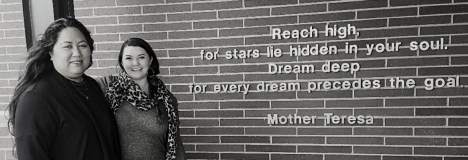
Matapuna Levenson and reporter Hannah Christensen at the SLC Family Justice Center, YWCA.

Pacific Island (PI) women who experience domestic violence often feel powerless, helpless and alone because the American idea of rugged individualism contradicts the ideals of PI collectivism.

Matapuna Levenson, Salt Lake Area Family Justice Center at the YWCA lead guide and advocate, said, “When intimate partner violence occurs, somebody is making you believe that you are not powerful. We need to go back to remembering and believing in ourselves both as individuals and as a people, that we are powerful. We’re resilient, we’re here, we’re alive.” Those of PI descent embody this power and strength through honoring and remembering where they have come from.

Levenson spoke to how this deep connection with their ancestral and cultural roots is sacred to the PI community. They have passed down many traditions, beliefs and ways of living that provide a stark contrast from the colonized white world of America.

Leata Puailoa Hunt is an advocate against domestic abuse. She is a native of Samoa who now lives in Draper, Utah. “In our true culture, high chiefs honor their wives and treat them like queens and then all the daughters in a home are treated like princesses. We keep them in a sacred status,” she said.

Historically, women of the Pacific Islands were in positions of power and held in high regard. Today they are raised to be strong matriarchs. “The good thing about our culture,” Hunt explained, “is we’re trained as girls growing up to be mothers already, we can cook, we can clean, we can solve problems, we can do this. We are independent and we can carry a family, but also at the same time I love that we train our men to respect our women.”

While many PI communities continue to treat women with reverence, something switched when patriarchal systems were introduced to the islands. Levenson, with the YWCA, said, “I’m going to blame patriarchy, because it’s not just white capitalists. Whenever there is an opportunity to have power and control over individual groups or communities, they’re going to do it. And it’s typically men, that’s just history. We have to combat and oppose this historical power.”

Levenson explained how indigenous PI communities did not have these complex power dynamics. A well-known Samoan proverb, “Ó le fogāv’a e tasi,” translates to, “The canoe has one deck.” This is the PI mentality at its best. Everyone is on the same boat, striving toward the same goal, together as equals. It wasn’t until power dynamics were introduced that the canoe became difficult to navigate.

Both Levenson and Hunt spoke about how the hierarchy of power was introduced to PI culture and the result was individualistic thinking. The clash of the collectivist community ideals and the egocentric mentality results in a lot of confusion, cognitive dissonance and anger. This is one underlying reason that domestic violence is happening within PI communities. The contradiction here is that because of the deep-seated beliefs, everyone works together for the greater good of all, and rather than challenge the systemic problem, it is best to ignore or not speak out when there is violence in the home.

Not feeling able to speak out about abuse also stems from the strong PI beliefs in families and family unification, because it is important to protect the family name. Hunt said “a family will hide secrets, like abuse or domestic violence, you know, things that are going on that shouldn’t be going on, that’s actually another key factor because of the family name. They hide it or sweep it under the rug and go forth as a perfect family that has a title.” Hiding these secrets within families is sometimes the only way a family can keep their titles and status in the community.

IMG_20180214_114722

A Samoan newspaper featured Leata Puailoa Hunt in the 2015 Miss Oceana Pageant in Sydney, Australia.

Hunt recalled how there was much less tolerance for abuse in Samoa than there was in American Samoa. “If someone is abusive or commits adultery, they will be fined by the village and if it was really extreme, they would be banished from the village,” she said.

Hunt is an advocate for those who have been abused because she lived through her sister’s domestic violence abuse. “There’s no excuse for it no matter what. I know from my personal upbringing, it is not part of our culture, it is not taught on our homeland.” Hunt advocated for domestic abuse survivors as a contestant in the 2015 Miss Oceana Pageant in Sydney, Australia.

There are many resources in Utah for victims and survivors of domestic violence within the PI community. Pacific Island Knowledge 2 Action Resources (PIK2AR) is one of them. Susi Feltch-Malohifo’ou, co-founder of PIK2AR, started the organization with her husband, Simi Poteki Malohifo’ou. He and other men wanted to get involved with the domestic violence issue in the community. Feltch-Malohifo’ou said of the men who started this group, “They came together because they recognized that there is a problem.” She has been an advocate for women because she herself is a survivor of domestic violence.

Feltch-Malohifo’ou coordinates many programs to provide support for PI women. These programs provide a safe space for them to share their experiences. The YWCA also focuses on empowering women and connecting them with resources. Levenson, who grew up in a domestically abusive home, shared, “I asked a survivor once, ‘What do you need to feel more comfortable in sharing your story?’ And she said very quickly and naturally, ‘I just need to hear other people share theirs.’ And that’s it exactly.”

Additional resources can be found on the Salt Lake Area Family Justice Center’s website, the Utah Domestic Violence Coalition website and the Utah 2-1-1 website. Women also can dial 2-1-1 for help and connection to resources.


Post-incarceration life for the Pacific Islander community in Salt Lake City

Story and infographic by GEORGE W. KOUNALIS

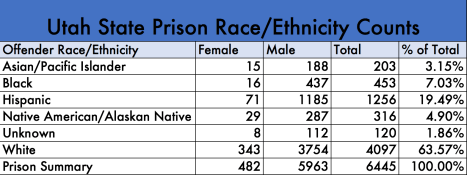
According to the Utah Department of Corrections statistics, Pacific Islanders make up 3 out of every 100 inmates in their population.

Susi Feltch-Malohifo’ou, executive director of Pacific Island Knowledge 2 Action Resources (PIK2AR), said, “Pacific Islanders are 1 percent of the general population in Utah, 4 percent of the prison population, and it’s not getting any better.”

The question arises, what resources are there for those leaving the prison system and what can society do to give former inmates a second chance?

“The color of your skin makes a huge difference. I’m not being racist, I’m speaking from experience,” said Randy Tinoga, 46, in a phone interview about life after prison.

Tinoga came from Hawaii to Utah in 1999. He moved to get away from a meth addiction. In 2002 Tinoga relapsed and went through multiple drug rehabilitation facilities across Salt Lake City. Odyssey House was his last inpatient residential program, and soon after leaving, he began using again in a much bigger manner.

Tinoga received charges in 2005 and was sent to federal prison January 2006 and released in April 2011. Tinoga was put on probation through the federal system until 2014. After getting in trouble, Tinoga has stayed in Utah and has not returned to Hawaii.

When inmates are released they are required to spend six months in a federal halfway house. During that time period, they have to find employment and then they’re expected to contribute back to society.

“The resources are out there, people are afraid to take a chance on a federal felon,” Tinoga said about his post-incarceration life.

“Every person in federal prison feels like you’re starting one to two laps behind everyone else,” Tinoga said. “If you’re a Polynesian convicted felon, you feel like you’re five steps behind everyone else.” These statements speak to what the prison system does to those who go through it and the impact the system has on minorities.

Tinoga said the most important thing needed outside of prison is a telephone and family. “Without a family, you’re playing catch up,” Tinoga said. “Most Polynesians incarcerated come from strong families. They do have a strong support system.”

The concept of family is a significant aspect of Pacific Islander culture. “The collectivist perspective is very important to the Pacific Islander community,” said Oreta M. Tupola, community health worker section coordinator with the Utah Public Health Association.

Tinoga is living in Salt Lake County and involved with PIK2AR’s Kommitment Against Violence Altogether (KAVA) talks, a Pacific Islander male domestic violence advocacy group. “My transition back to public life was easier on my part,” Tinoga said. “If you want to make a change, you have to take a chance! If someone is willing to take a chance on a Polynesian American, take a chance on them.”

Pauliasitolo Vainuku, 39, describes his life after leaving prison. Vainuku went to federal prison for a bank robbery. He was released from prison and had his probation terminated in January 2018.

“A lot of things in our culture, we don’t like to talk about,” Vainuku said in a phone interview. “Abuse is there and it’s not talked about. That’s how a lot of Pacific Islanders join a gang because there’s a cultural understanding there for them.”

Tupola said, “Family is important in Pacific Islander culture. Gangs are from a loss of that identity and trying to look for it again.”

This is where groups like PIK2AR’s KAVA talks come in. They can help those who are struggling with abuse.

Vainuku’s brother, who was involved in a gang, was killed when Vainuku was 12. “After his death I was depressed. I had nobody to talk to,” he said.

Vainuku then turned to robbing at the age of 12. “When you’re depressed you don’t care,” he said. “Certain things you do make you feel alive,” he said, describing how his robbing began.”If you keep doing the same things it becomes normal.”

A couple of months after turning 18, Vainuku was sent to federal prison. “For me it was actually getting away. Getting locked up made me able to escape reality,” he said.

Vainuku said after getting out of prison, there were resources available to him. “There’s a second chance bill that lets small businesses hire us and they bond them for hiring us.” The Second Chance Act of 2007 “was enacted to break the cycle of criminal recidivism; improve public safety; and help state, local, and tribal government agencies and community organizations respond to the rising populations of formerly incarcerated people who return to their communities.”

The bill gives the small business a bond that provides insurance in case a former inmate ends up robbing or doing damage to the business as well as a tax break for the business. Bills like this give former inmates of the federal prison system a second chance.

Vainuku spent six months in a federal halfway house while he worked and saved money to live independently. “The federal halfway house makes you actively look for employment,” Vainuku said.

These programs help federal prisoners when they adjust on the outside, but Utah State prisoners don’t receive many of these resources, according to Vainuku.

According to the Utah Department of Corrections, mental health resources are offered at Utah State Prison for prisoners within the system. “We’re coming out and not getting the help and support with mental health,” Vainuku said. “For the guys in prison, they need to get help in prison and get ready to come out.”

A May 2017 article in the Deseret News backs up what Vainuku said. Many of those in the Utah corrections system are not receiving appropriate care when they leave prison.

Vainuku said the state of Utah could do more to help inmates coming out. “In the state prison, they’re stuck in a cell with their cellie and get a packet. They’re not getting classes or help for life on the outside.” According to Vainuku, this packet is the only resource that state prisoners in Utah receive prior to being discharged.

Racial prejudice within jail is also a factor that makes it difficult for inmates. “Prison is a negative setting, the guards tend to get stuck in a negative mindset with an us versus them mentality,” Vainuku said. “The guards build a prejudice and they do things that upset the prisoners more.”

Tinoga said, “Stereotypes are bad all the way around. A good number of Polynesian men are first-time offenders.” Stereotypes of Pacific Islander men being pushed by society at large creates very negative environments that can hinder the lives of many of these men.

It’s important for society to look beyond stereotypes and give former inmates a second chance. “Just giving someone the opportunity helps,” Vainuku said. “Look at the individual instead.”

Many of these changes that society needs start at a community level. Challenge stereotypes, give individuals a second chance. Community-driven resources are also important.

In a 2016 Seattle Times article, Sarah Stuteville talks about the Formerly Incarcerated Group Healing Together (F.I.G.H.T), a group of former Pacific Islander and Asian inmates who work to provide resources to those leaving the Washington State penal system. The Utah Department of Corrections does offer programs to inmates, however, nothing specifically like the F.I.G.H.T group offered in Washington state.


Why mental health services fail Pacific Islanders

Story and photo by ANTHONY SCOMA

You are in a foreign country and you need help with an urgent problem. You may seek help but the stark differences in language, customs and values renders any assistance frustrating and ultimately useless.

That is the reality for many Pacific Islanders seeking mental health services in Utah.

The disconnect between Pacific Islanders and mental health services starts at the fundamental contrast between western culture and Pacific Islander culture. Oreta Tupola, a community health worker coordinator at Utah Public Health Association, said, “The differences in our culture is that individualistic perspective and [the] collectivist perspective.” She continued, “That community and family perspective is everything we’re about, and you can understand … all these issues that we’re facing. It surrounds how it impacts the family and how it impacts my family name and my lineage and my genealogy.”

The conception of the self and its relation to the world outside the self is important to mental health and informs how one deals with conflict. In a collective perspective, several sources said, the actions of the individual reflect the family or group as a whole. This is particularly important for immigrants from the Pacific Islands whose view of family connection extends far beyond the nuclear norm in the U.S.

Within this framework, the accountability to the family makes shame a powerful tool for social control. Lani Taholo, director and owner of Child and Family Empowerment Services, said in a phone interview that these feelings of shame also work as a deterrent to seeking mental health services.

Story1Assetv2

Lani Taholo in her Child and Family Empowerment Services office in the Glendale neighborhood of Salt Lake City.

“When it comes to shame, if we’ve done something wrong to lose face in our community it’s a big deal because we don’t want to bring shame to our family or our family name,” she said. “Then the poor family starts to feel judged and can easily feel … shamed by that so that just pushes it down further — to repress it and suppress it — and unless they have services that they can relate to they just don’t go.”

Taholo is currently working on her Ph.D. in Social Work at the University of Utah. Her research is on the underutilization of mental health services by Pacific Islanders and how to make those services more inclusive of their experiences and culture.

Taholo said that even when Pacific Islanders are required to use mental health services, the cultural differences are still an obstacle. In cases where violent behavior calls for intervention by mental health professionals, the established model does not seem to work for Pacific Islander participants. They either don’t attend or barely participate to avoid punishment. Taholo says that these approaches fail to relate to Pacific Islanders culture.

“There is no change, there is no healing, there is no recognition and acknowledgment of what’s really happening because it’s not even relatable,” she said. Taholo described instances when judges from the West Valley Justice Court called her to help out in cases involving Pacific Islanders because of their shared culture. “They already know they aren’t going to finish the other program,” she said.

The contrasting cultural perspectives also have consequences for communicating thoughts and feelings across generational divides in Pacific Islander communities. In the cases of first-generation immigrants, there is a separation of experience between those raised on the islands and those raised in the U.S.

Those experiences also represent a clash in cultural ideology for the new Americanized generation. They learn a collective perspective from their families, while school and peer interactions instill a more individualistic mentality.

Fisi Moleni, a licensed clinical therapist in Salt Lake City, said in a phone interview that the move to America introduced a lot of mental health issues that were not as prevalent in the islands.

“In that transition to America, the complexity of living here and all the different stimulus and exposure to society … it seems to have been quite a challenge,” he said. “The Polynesian parents, the Pacific Island parents, are trying to utilize to some degree their old methods of parenting, of conditioning … the core values of respect and loyalty and all those things.”

Moleni also links this change in geography and culture to the rise in various forms of addiction and has observed a disconnect between the first generation of immigrant parents and their American-raised children.

“Children are … leaving the home and being influenced by so many other entities that when it comes time to connect, there is a disconnect,” he said. “They don’t feel comfortable … communicating with parents and expressing difficulty with certain challenges at school, with friends, with … the more extreme addictive behavior.”

While this disconnect might lead to children being influenced more by friends and cultural norms, Moleni also acknowledged the potential of the Pacific Islander family to achieve positive mental health. When parents have the tools to communicate and connect with their children, the loyalty to name and family creates a robust, adaptable social network.

“Our people were the greatest navigators, the greatest seafarers that history … has seen,” Moleni said. “They adapted, they were able to use their navigational skills to extend themselves to other islands and to survive and began to thrive. … I thoroughly believe that we can adapt even here and not just survive but thrive within this society.”

How the Refugee Services Office fights discrimination and empowers refugee women

Story and gallery by ALAYNIA WINTER

Approximately 60,000 refugees from all over the world live here in Utah. Unlike other traditionally red states, Republican Gov. Gary Herbert has openly pledged to keep Utah’s doors open to refugees. The UN Refugee Agency (UNHCR) reports at least 50 percent of refugee populations are women and girls. This means there are somewhere around 30,000 resettled women and girls attempting to pick up their lives and integrate into Utah’s society.

Women are especially vulnerable to violence when displaced or during times of war during the process of migration. According to a report by Amnesty International, women in refugee camps are raped every day while collecting water. This is just one example of the incredible hardships women face during the resettlement process. Gerald Brown, assistant director for the Refugee Services Office, said, “Five to six years ago, we realized women needed more resources. Just more.”

The Refugee Services Office (RSO), a division of Utah’s Department of Workforce Services, is a government organization filled with individuals working hard to improve the lives of refugees by assisting in finding employment, providing mental health services, and much more.

As a government organization, Refugee Services Office can’t have a volunteer program. Programs are primarily supported through the Know Your Neighbor program through the city mayor’s office. This program is very supportive, said Halima Hussein, a Somalian refugee herself and women’s refugee coordinator for RSO.

“There is always a need for more programming,” Brown said. Whether it’s funding for more women’s programs, or daily and after-school programs, help from the community is always appreciated. RSO has workshops available such as: family planning, domestic violence and sewing classes. Anyone is welcome to participate.

Issues facing women are often serious, ranging from domestic violence to public harassment stemming from antipathy to facial coverings. “If they go to the bathroom, or try to get on TRAX and someone is yelling at them — and it happens in any of those public spaces — we have [a safety escort] specifically assigned who walks with the refugee community,” said Hussein, referring to resources RSO offers to refugees when faced with abuse or harassment. She puts her hand down on the table with conviction. “But for Utah, I think compared to any other place it’s been better. I think it’s been better for our community. The community around us has been extremely supportive, including the LDS church.”

Despite the occasional incident, Hussein maintains Utah is a welcoming community. She warmly shares a story of a Utah family and a Somalian family who have become dear friends through the Know Your Neighbor Program.

There are a variety of resources available to refugees who experience discrimination or abuse. “We have a lot of mental health patients in the community, because of the trauma. And some people cope better than others,” Hussein said. “We are very big on therapy and medication — that kind of thing. We have social workers and therapists in the office who work very closely with domestic violence, sexual abuse, discrimination and gender identity issues.”

Hussein is highly respected, Brown said, and many women feel comfortable speaking to either her or Asha Parekh, the organization’s director. However, the caseload is large and Hussein is often stretched thin. “Halima is one of the few resources we have for these women,” Brown said.

In addition to struggling with roadblocks such as language and cultural barriers or not having a car, female refugees also face additional hindrances stemming from lack of equal opportunities and sociocultural factors. Such opposition can substantially hinder establishing friendships and support systems, which can lead to unhealthy alienation, depression and loneliness.

Due to a lack of trusted confidants and support systems, women refugees often struggle with having limited resources in talking about certain sensitive, yet vital topics. Brown said, women are often not comfortable discussing complex family issues, physical or sexual abuse, or hygiene issues in front of men and the organization needs Utah women to be involved.

The Refugee Services Office is committed to empowering women by also strengthening their families. Alexx Goeller, youth services coordinator for RSO, works directly with Utah school districts to help refugee families to know their rights and facilitate success in refugee children’s education.

Refugee women frequently struggle to communicate with their children and with the education system after resettling here in Utah. Goeller said, “Often families will know a kid is acting out and don’t know why and when we hear about things like this, we will facilitate a meeting with a translator.” Schools are legally mandated to communicate with parents in their native language, she said. RSO works diligently to partner with translation services and companies. Sending home letters to parents in their native languages is the school’s responsibility.

“It is costly for school and some schools are better than others,” Goeller said. “It’s important that schools are cognizant that New American families have different needs. It’s not that they don’t want to be involved, often they just don’t have the resources to now how.”

In many instances, refugee children’s parents aren’t able to communicate with the teachers, Halima said. The language barrier is much easier to overcome for children than for adults.

“For women to have stronger families, we really need to work with their kids especially because school is so hard for them” Hussein said. “Some will drop out and go to wrong places. The school system here is according to age and you cannot put a child who studies from kindergarten here and has had all the privileges from the school system in the same level.”

The Utah State Board of Education has been a huge support as far as letting families know their rights when it comes to education, said Goeller. The Utah Education Network (UEN) has a website that is designed for supporting refugees and Utahns in finding resources for education.  There are also parent resources specifically for refugee parents, such as translations in 30 languages.

“We see a lot of kids that get really discouraged because they can’t catch up in school or can’t learn English fast enough. We see these kids getting involved in gangs, or substance abuse,” Goeller said. “When we hear about these situations we have social workers visit the families and become involved.”

Despite the many barriers and setbacks refugees face, Hussein firmly believes in the perseverance and resilience of refugees. She has seen many positive changes and is hopeful for the future.

Looking forward, Halima hopes to see thriving, self-sufficient communities. She believes a more personalized and collaborative approach would empower communities to better serve members who are struggling.

“There are 17 communities, each with a woman leader. … So, my dream is to see each community apply for grants and do their own thing,” Hussein said. “And each community can work on something they need specifically. Maybe one community needs to focus on health issues. They can start their own programs — community-based programs. That’s my dream.”

Hussein encourages Utahns to dig deeper and to build friendships with communities that may be different from the mainstream population. “Some people see refugees, but don’t really know them. Many people are surprised by what they find.”

To get involved, read about opportunities to work with refugees in Salt Lake City.


Refugees given tools to adjust to a new culture

Story by SCOTT FUNK

What makes a home? Is it the people you live with, or is it the pictures and decorations within the house? Is it the home-cooked meals, or the fun and games with family and friends? No matter what it is, a home can be defined in many ways. However, leaving the place you call home often is only described in one way: difficult.

Gerald Brown, the Utah state refugee coordinator and assistant director of the Refugee Services Office, has dedicated his life to helping refugees.

Throughout his lifelong career, he has constantly been “trying to make the world a little more fair.” He has found his motivation to do his work based off what he has seen and experienced. “Leaving their country is difficult and traumatic,” Brown said. “And the resettlement process is just as difficult and often traumatic.”

On a daily basis, Brown works side-by-side with the International Rescue Committee (IRC) developing programs designed to make the resettlement process less traumatic. One of these programs that the IRC has established is called Adjustment Support Groups.

Jennica Henderson, the mental health program coordinator for the IRC in Utah, said in a phone interview that the curriculum of these groups consists of three parts: adjusting to the U.S. and a new culture; mental health; stress management and community wellness and development.

Henderson said the curriculum was designed by a company in Seattle called Pathways to Wellness. She said the curriculum and groups are designed to “provide education and skill development around mental health and well-being. It is also designed to develop community support for one another so that our participants can rely on one another.”

Following the curriculum, refugees participate in an eight-week course featuring a new topic weekly that falls under one of the three key concepts of the curriculum. These topics in order are: introduction to the group and establishing guidelines and rules; culture shock and moving from one country to another; refugee experience; mental health and tools to overcome stress; mind and body connection; goals and dreams.

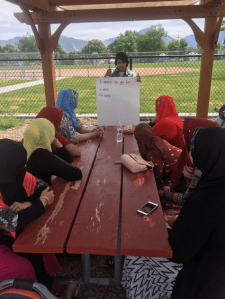
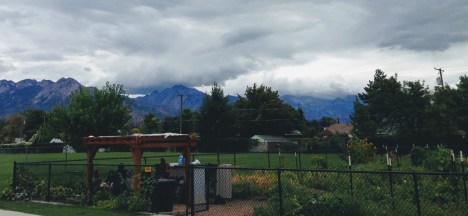
Adjustment Group at the Central Park Community Garden. Photo courtesy of New Roots SLC.

In Utah, these groups are just getting underway, as they have only been in use since fall 2016. They are funded by grants and currently run in the spring, summer and fall and are only offered to women. However, the program is expanding to start its first male group in spring 2018.

For now, the program meets at the Central Park Community Garden, located at 2825 S. 200 East in Salt Lake City.

The signup process for the group is simple: there is none. When a refugee is resettled, their location is saved within a database. Henderson said one of the goals of the program is to make the ability to attend as easy as possible. Therefore, once a location for the group is chosen, based on their geographical location, refugees are then called and invited to attend.

When invited, refugees are asked what day and time would work best for their schedules. Based on the results, a day and time is chosen that is best suited for the majority. Refugees are also informed in that call that the IRC provides transportation to and from the meetings, food and childcare for who attend.

In Utah, up to three separate support groups are offered at once. These groups are led by three instructors — Jennica Henderson, Alex Haas and Sara Franke — all of whom are employees of the IRC and have completed hands-on training to know the curriculum and know how to best help the refugees in their process of settling in a new culture.

One of the instructors, Alex Haas, said in a phone interview that he believes these groups are helping refugees become self-sufficient and that they are creating a “community of wellness.”

As refugees come and participate in the program, they meet new people and develop new relationships. Although the programs may never replace everything that a refugee lost, they are succeeding in what they were meant to do: helping resettle in a new home.

Refugees planting new roots in Utah

Story by SCOTT FUNK

War. Persecution. Death. Three things that many people in other countries across the world have to face on a daily basis. They go through life living in their homeland in fear. They’re left with two options: Stay in the country and risk death, or flee for survival. Many choose to stay, but many choose to become refugees.

Aden Batar, director of immigration and refugee resettlement for Catholic Community Services and a Somali refugee himself, said, “Becoming a refugee is the most difficult process a human being can go through. When you’re in your country, you either face the hard condition of leaving, or you die. Looking back, I don’t know how I did it, but when you don’t have a choice, you just want a new place to survive.”

According to a letter to Gov. Gary Herbert included in the Utah Refugee Services Office 2016 report, 1,200 refugees have been resettled in Utah annually by the CCS and International Rescue Committee.

The refugees who are resettled in Utah can choose from different programs to help them adapt to a new culture. One option is the New Roots Program, organized and managed by the IRC.

The New Roots program has the moto: “The food is local. The story is global.” Its purpose, according to the website, is to “enable refugees to celebrate their heritage and nourish themselves and their neighbors by planting strong roots – literally – in their new communities.”

The program consists of three parts: Community Gardening, Micro-Training Farm Program and the Sunnyvale Farmers Market.

Community Gardening Program

This program is designed to help the emotional well-being of the refugees as they try to adjust to a new country, culture and way of life.

Central Park 1. Photo credit New Roots SLC

In this program, plots of land (approximately 14 feet by 20 feet for 100 total square feet) are reserved for local refugees and their families throughout the Salt Lake community to grow crops from their home country and to come together as a community. Alex Haas, community garden program coordinator, said it is their opportunity to not only work, but also to provide for their family while connecting with others who may come from the same circumstance. There are 15 different gardens throughout the valley that refugees have access to.

Also within this program, Haas said, is the opportunity to meet as a group to develop skills and become accustomed to the new society they are in. Within these adjustment groups refugees can discuss their feelings, learn skills such as how to deal with anger, stress, depression and ultimately become self-sustained as they build a new home.

“The purpose of our community gardening program and adjustment groups is to help refugees become self-sustaining moving forward,” Haas said.

He also said in a phone interview that the gardens are a way to remind refugees of home and that they give them “a sense of comfort, while they enjoy cultural foods, and while they build a community of wellness.”

Micro-Training Farm Program

The next step in the New Roots program is the farming aspect. After resettled refugees have participated in the community gardens for a year, they have an opportunity to work on larger plots of lands at the Redwood Road Micro-Training Farm, located at 3060 S. Lester St. in West Valley City, to continue their farming.

Local refugee farming at the Redwood Farm. Photo credit New Roots SLC

Jordan Bryant, manager of the IRC’s New Roots program, said in a phone interview that the farm is maintained by generous grants and donations. The farmers pay different amounts for seeds and plants from their heritage, and tools to grow them to bring their home to Utah.

Currently, Bryant said, there are about 33 farmers who are there on a constant basis. These farmers, each of whom were once strangers, develop a community with one another as they work together to grow and sell their crops at local farmer’s market.

Although it is not the main source of income for their families, the refugees rely on the farming as a source of income for their families. At the same time, they continue to develop relationships and friendships with the other refugees around them.

“It’s more than just a job,” Bryant said. “It’s that they gain access to their home and people to socialize with.”

Sunnyvale Farmers Market

Local refugees buying produce at the Sunnyvale Farmers Market. Photo credit New Roots SLC

The Sunnyvale Farmers Market, located at 4013 S. 700 West in Salt Lake City, gives the refugee farmers the opportunity to provide for their family by taking the food they grow and selling it.  It is also an opportunity to bring food from cultures around the world to the refugee community.

“The farmers market is a great opportunity for income,” Bryant said. “Although it’s not their main source of income, for some it does provide a substantial amount for their family. It also is a community benefit by providing food from the countries of the refugees that are in the community.”

Escaping persecution is a long journey. But after choosing to leave their home to survive, the New Roots program has given refugees the opportuntiy to bring a piece of their culture to Utah.


Beyond mental health: welcoming refugees to Utah

Story and photos by ALAYNIA WINTER

“Everything.”

That was the resounding answer from the three refugee panelists who spoke on Sept. 23, 2017, following a documentary movie screening held at The Leonardo museum in Salt Lake City. Each was asked the question: “What were the most difficult aspects of transitioning to living in Utah?”

Everything is different. The weather. The food. The language. The culture and customs. The ethnicity.

Visitor information is posted on the front door of the IRC located at 221 S. 400 West in Salt Lake City.

One of the panelists, Kamal Bewar, came to the U.S. as a refugee from Iraqi Kurdistan during the Iraqi Kurdish Civil War at 22 years old. Since then he has made Utah his home.

“I have been fortunate to have had people who made a difference and made me feel welcome. It has been the individuals who have made the difference in my life,” said Bewar during the event.

He is an example of a political refugee who has successfully created a new life after arriving with close to nothing. Bewar graduated with a Ph.D. from Argosy University in higher educational leadership. He now has a flourishing career working at Salt Lake Community College. He also is president of the Kurdish Community of Utah.

So, what happens when refugees arrive in Utah? First, they are welcomed by International Rescue Committee or another resettlement organization. After they have food and shelter and immediate safety, they are given English classes and tasked with adapting to the new environment.

What is the western answer to this often traumatic experience? IRC, Department of Child and Family Services (DCFS) and many other organizations offer therapy, medication and mental health programs. These programs are beneficial. However, the clinical concept of mental health may be foreign to some New Americans.

Hannah Fox, who was an intern at IRC before accepting a position as a social worker with DCFS said a problem many healthcare workers, social workers and others are seeing, is a systemic disconnect in the way we, as Americans, understand other cultures — and vice versa.

The IRC is nestled between The Rose Establishment and the historic W. S. Henderson Building.

“Our programs take mental health from a very western perspective,” Fox said, “versus where many of them [refugees] come from, they likely do not. So, while we might diagnose and medicate, they might believe in a spiritual or traditional folk remedy.” Visibly exasperated, Fox added, “So when they go to health care workers, and they give them a western experience of mental health care, it really f**** with them. It discourages them from trying again.”

What is found to be actually helpful, said Fatima Dirie, refugee coordinator for the University of Utah, is making a community. Once the programs are over, it’s the relationships and friendships made that create lasting change and true integration.

“As a community, we are not there yet,” Dirie said. “To truly feel welcomed you have to understand each other.”

Fox added, “With refugees that is their ‘therapy.’ It’s home and it’s talking about their culture. It’s sharing their experiences on their terms — not just some white person who has a degree behind a desk.”

Utahns can help make people feel welcome by saying hello, simply smiling, or inviting someone over for dinner. If interested, sign up for a Family Mentor Program, or complete a volunteer orientation at IRC.

Fostering meaningful relationships is what truly matters.


Community remains in the heart of Salt Lake City refugees

Story and photo by HAYDEN S. MITCHELL

All over the world refugees are fleeing their homes from violence, oppression and fear. These families are all looking for a new place to live where they can feel safe. In 2016, Utah became home to a little over 1,200 refugees from multiple countries: Iraq, Iran, the Congo, Somalia and Sudan. The New Americans are experiencing the shock and awe of a new country and culture, places that are vastly different than anything they had ever seen before, according to a PBS story.

When first coming to Utah, refugees have a variety of feelings and emotions ranging from exhilaration to fear. Two individuals, Aden Batar and Romeil Analjok, who have resettled in Utah, discussed how similar their experiences were. They were introduced to a different language, new environments, foreign foods and smells. Add to that, they said the residents of Salt Lake City dressed and acted differently than they had seen before in their home countries. This can create an overwhelming burden for any refugee.

555555555

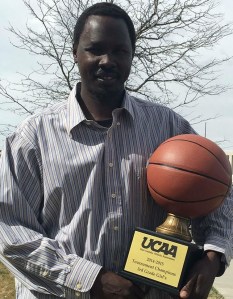
Romeil Analjok, holding a trophy his daughter won playing basketball. Sports helped the family feel like a part of the community.

“It’s America man, of course it is going to be crazy. I did not know what to expect when my family first came here,” said Romeil Analjok, a refugee from Sudan, who created a new home for himself and his family in Utah in 2004. “Language was the biggest problem along with not knowing anybody … so I enrolled in school hoping to learn English and meet new people.”

While at school, Analjok met a couple of people whom he remains friends with today. He was grateful that they interacted with him during his first few days in class. He did not know how they would talk to him or act around him, but they treated him like everyone else, with respect. Analjok appreciated how quickly he made friends. It made the transition from Sudan to Utah easy and encouraged him that he could create a home for his family and be a part of a community once again.

“Romiel’s story is common for many [who are] moving their families,” said Francis Mannion, a priest who has seen an increase in refugee parishioners within his parish. They need somewhere to start.

For this reason, there are organizations like the International Rescue Committee or Catholic Community Services that will help new arrivals. These groups are in place to assist with the transition and make an adjustment easier for refugees coming to the United States.

In addition to established organizations, becoming part of an open and caring community is vital to helping families transition into a new community. Community allows refugees to make new friends, participate in all sorts of activities, or even worship together. Mannion made it clear that faith is not the predominant force that makes it easier for those going through the refugee process — it is community. A community can hold people up when they struggle the most.

“Every week in Sudan, we gathered with our friends and family, just celebrating everything good we had in life,” Analjok said. “I was happy to be a part of something every week … it gave me something to look forward to.”

Analjok said he felt out of sorts until he found a stable, welcoming community. He treasures it. In his community were fellow refugees from the Sudan who generously donated their time to helping him find friends and a new church, Saint Patrick’s, located at 1058 W. 400 South in Salt Lake City. Becoming involved with this church allowed Analjok some networking in the business world, eventually leading to a new job opportunity.

He said finding a new community can be a lifesaver for refugees. Without this connection, families and individuals can sometimes feel like they are on their own. Typically the countries that these refugees are coming from have a strong sense of community. They must rely on each other significantly to survive, eat and exist. This is why it can be such a challenge for refugees in America because it is solely their responsibility to provide for themselves and their families.

“Having a strong, loyal community around you will always make everything easier in life,” said Mannion, pastor at St. Vincent de Paul. “As refugee families come to church through the years, you can see the change happen. They start off nervous and still, and gradually became an active member of the community.”

Aden Batar, immigration and refugee resettlement director with Catholic Community Services, said refugees can have a hard time adjusting because they are coming from a life we have very little knowledge of. Life in countries like Iran, Sudan and Somalia is not easy. Batar, a refugee from Somalia who now helps other refugees in the resettlement process, said it is a real struggle every day for people living there to provide for their families and keep them safe. He said families are forced to flee because they are being oppressed or they fear potential threat and violence. Batar added that most people never anticipate leaving their home and are not prepared when it happens.

Such disruption can negatively impact people and even cause Post Traumatic Stress Disorder in many individuals, Batar said.

Analjok said, “When we came to Utah we were welcomed by a lot of refugees who came here before us.”  He reiterated the importance of community to his family’s resettlement. “They made me very comfortable and treated me well. It was also nice to see them all doing well,” he said. “It gave me hope for me and my family.”

Homelessness does not mean hopelessness

Story and photos by SHANNON O’CONNOR

From an outsider’s point of view, a homeless person on the side of the road may look intimidating or unapproachable.

“I usually don’t pull over or stop to donate money because I feel like they will waste the money on drugs,” said Sadie Swenson, a Westminster College student. Swenson’s reasoning is a common opinion, but that isn’t always the case.

All homeless people don’t have the same story. They come from different backgrounds and are on the streets for various reasons.

test

Francis Reeding standing on the corner of 400 S. 600 East in Salt Lake City.

Francis Reeding, 65, stands on the streets of downtown Salt Lake City for about six hours a day,  hoping to get enough gas money to go home to California. He has been living out of his car for three months.

Reeding fought in the Vietnam War starting in 1968. When he got home from the war, in 1970, he experienced hearing loss and suffered from Posttraumatic Stress Disorder. Later, Reeding went to the University of Utah in 1976 as a math major. But since then he has struggled to keep a job. Now he feels hopeless and apathetic to get his life back on track.

“It’s embarrassing standing out here holding this dang sign,” Reeding said.

Although it is common to see people holding up a cardboard sign, it does not mean they are all the same. The homeless need a helping hand and The Road Home, located at 210 S. Rio Grande St., can get them off the streets and into housing.

The Road Home is the biggest homeless shelter in Utah and is always ready to help men, women, children and families.

test

The front of the Road Home located at 210 S. Rio Grande St. in Salt Lake City.

“Everyday I see people that I think are beyond hopeless and I see them make it and overcome homelessness,” said Celeste Eggert, Road Home development director.

Eggert has been with the agency for 17 years and has been the development director for 12 years. She fell in love with the shelter because of the clients’ strength and courage and she loves the mission of the Road Home.

The mission is to educate people about shelter and housing and to “get people out of homelessness and back into the community,” Eggert said.

How does this get accomplished? By the effectiveness and success of their programs: Permanent Supportive Housing, Rapid Rehousing and the emergency shelter.

“Collaboration is huge, many of the programs we’ve done have gotten national attention,” Eggert said.

Palmer Court is part of the Permanent Supportive Housing program. Palmer Court, located on 99 S. Main St., is an apartment complex that was purchased by the Road Home. It houses up to 300 of its chronically homeless clients. The chronic clients are people who have been homeless for one year or longer due to mental illness, addiction, or substance abuse. When they live at Palmer Court they sign a lease and pay rent that is reasonable with their income.

Eggert explained how the chronic clients need a slow transition from homelessness to living in housing. Being homeless is all they know and they’re scared of change, on top of trying to combat their personal trials. Specialists are needed for the severe cases. The Road Home is considered to be the general practitioner and they bring in the specialists.

“We try to collaborate, never duplicate services and work closely together,” Eggert said.

The agency partners with people who specialize in a variety of the clients’ necessities, such as jobs, rehabilitation, free medical care, school enrollment for the Salt Lake City districts and therapy. The combination of the staff, specialists and housing is designed to provide Palmer Court clients with a path to recovery.

Rapid Rehousing is the homeless family program. In 2009, it was brought to light that there was an increase in homeless families. Since the program was launched the Road Home reports that “87% of families on that program will never be homeless again.”

What is provided through Rapid Rehousing? According to the website, the families are offered “barrier elimination, housing placement assistance, short term subsidies and supportive services,” until they can get back on their feet.

The third program is the emergency shelter. This is for the clients who need a roof over their head for 24 hours. The men’s and women’s shelters consist of beds, bathrooms, showers, microwaves and hygienic products.

Elise Adams was homeless for five months and never stayed in a shelter.

“They have all these rules and they’re usually run by a church so the rules are often arbitrary. I think it’s easier to sleep in a park undisturbed,” said Adams, who uses a male pronoun.

Once he was informed that the Road Home is not a religious shelter, and there is the emergency shelter program, he admitted he would have stayed there.

Eggert said, “We don’t give up on people, we’re always going to work with them.”

Helping the homeless is financially beneficial for Utah and the community. But more importantly, it’s saving people’s lives. The majority of the beds are used by the clients who stay six months or more. Once individuals get the proper help, they can move up to housing and reach their full potential.

Eggert admits it’s a challenging population to work with. But she said it’s worth it because the staff, donors and volunteers are making a difference. The Road Home is a shelter that recognizes the clients’ unique situations and offers the support needed to overcome homelessness.