Refugee mother of seven longs to see husband and sons again

Mother flees Somalia after men in family are kidnapped, relocates to Salt Lake City with her five daughters.

Story and photos by ANNA STUMP

Halimo Ismail was living with her husband and seven children in Somalia when their lives unraveled. One night, Halimo woke to discover that her two sons and husband were missing. She quickly realized that they had been kidnapped, but had no idea by whom or whether they were still alive.

Halimo and her five daughters fled to Egypt in 2011, where they spent the next five years in a small apartment just in view of the pyramids. Her youngest daughter, Asmaa, was just shy of 6 years old. The other daughters were ages 7, 8, and 9.

In February 2017, Halimo Ismail and her daughters resettled in Salt Lake City.

100kb - Voices of Utah-2

A family who lives in the same complex as Halimo Ismail and her family decorates for Halloween.

Asmaa, now 12, sits beside her mom in a two-bedroom townhome in South Salt Lake City, where the smell of incense fills the room with a musky aroma. She agreed to help translate for her mother, who speaks Somali and Pashto but is not yet conversant in English. Communication seems to be a problem outside of the interview, where Halimo finds herself too timid to converse beyond the small Muslim community she is a part of. Young Asmaa translates her mother’s responses to a reporter’s questions in her own words.

“My mom says sometimes she feels people are better than her because they can talk together,” she said.

Asmaa is comfortable communicating due to her inclusive public schooling and speaks in short and well thought out sentences. She is now attending middle school, and has a group of friends who teach her customs that did not exist in Somalia or Egypt. Her middle school offers a variety of extracurricular activities that she takes part in, her favorite being basketball.

“I guess I’m pretty good. I don’t know,” she said with a bashful grin as she gazed down at her feet.

She said her elementary school in Egypt offered no games for the children to play. “It was not as good, the schools. The schools here are better.” Asmaa added that she and her sisters feel welcome in Utah, despite their cultural differences.

100kb - Voices of Utah-10

Children play on a fence in the complex where Halimo Ismail and her daughters live.

The same is not true for her mother, however, who mostly interacts with those who speak in her native tongue. There is a small Muslim population in Salt Lake City, and they support one another like family. It is a tight-knit community and holidays are often spent together. During the last day of Ramadhan, on the holiday known as “Eid al-Fitr,” all of the men get dressed up and the community gathers for dinner. Halimo misses her husband and sons deeply, but still enjoys the sense of unity that surrounds her during religious gatherings.

Gerald Brown, the state refugee coordinator and assistant director of the Refugee Services Office, says it is important for those within the mainstream to become friends with refugees like Halimo, who struggle with seclusion after a long journey through the refugee resettlement process. “I know people who have been here for 12 years and don’t have any American friends,” Brown says.

Volunteers can have a positive impact on the lives of refugees. The Refugee Services Office offers a Refugee Family Mentor Program that helps “guide refugee families in areas such as education, health care, [and] accessing local services and resources.” Brown understands the impact of this program from firsthand experience.

“And even if the refugees can’t speak any English, just having somebody across the table who smiles at them from the mainstream is real important,” Brown says.

His wish for Salt Lake City is for more people to become involved in the lives of refugees through volunteer programs. “To get integration, though, you’ve got to have mainstream [people] getting to know [and] befriending, refugees. Which is why our volunteer program is probably the most important thing that we do,” Brown says.

Nine volunteer agencies operate throughout the country, each of which have affiliates across the US. One organization is the Catholic Community Services. Adan Batar, the director of immigration and refugee resettlement for CCS, says women who are at risk are a priority for Utah.

“Every year, I fill what we call a capacity survey, so I tell them what type of cases I can take — what language, what religion, the mix of the cases,” he said. Utah seeks to take in single mothers with children who are escaping violence, like Halimo and her daughters.

As for Halimo, however, her heart is set on reconnecting with her husband and two sons. She is less interested in becoming an integrated part of Utah culture, and more determined to reunite her family. After five years of uncertainty, she received news upon her arrival in Utah that her husband and sons are alive and currently living in Belgium.

When asked if she believes if her family will be whole again, Halimo Ismail responds in Arabic.

“Insh’Allah.” God willing.


This slideshow requires JavaScript.


Source Citations:


“Get Involved.” Get Involved | Salt Lake City – The Official City Government Website, http://www.slcgov.com/get-involved.


“Home.” Catholic Community Services of Utah, http://www.ccsutah.org/.


Saber, Latifa. “6 Words Everyone Should Know: Muslim Slang 101.” Mvslim, 24 Apr. 2017, mvslim.com/6-words-everyone-should-know-muslim-slang-101/.


Refugee Justice League, SLCPD work to help refugees feel comfortable with justice system

Story and photos by EMILY ANDERSON

When then 17-year-old Abdullahi “Abdi” Mohamed was shot by police in downtown Salt Lake City in 2016, a wave of shock washed over the community.

According to reports from The Salt Lake Tribune, police said Mohamed was involved in an altercation and armed with a metal broomstick. When police ordered him to drop the weapon, Mohamed appeared to attempt to hit the man he was fighting, so officers fired at him. Mohamed’s family later disputed these claims.

Hundreds mobilized in support of the Somali refugee and rallied against police brutality toward people of color. Meanwhile, many refugees living in the Salt Lake Valley were paralyzed with terror.

“Anytime there is a publicized law enforcement-refugee conflict, it reinforces the fear [of law enforcement],” said Brad Parker, one of the founders of the Refugee Justice League, in a telephone interview.

IMG_7098s

Abdi Mohamed was shot by Salt Lake City Police at 200 S. Rio Grande St.

Refugees frequently have negative memories of police in their home countries, according to Natalie El-Deiry, the deputy director of the International Rescue Committee (IRC) — one of the agencies that resettles refugees in Salt Lake City. Along with the military, law enforcement is commonly used to silence those who speak out against an oppressive government.

“One thing that is often the case with people who have fled persecution from another country is that they often didn’t have the protection of law enforcement when they fled,” El-Deiry said in a telephone interview. “So when people first arrive, there is definitely a skepticism or uncertainty around whether law enforcement is really there to protect you.”

Police officers frequently participate in behaviors considered war crimes by international organizations like Human Rights Watch. For example, Kenyan police officers repeatedly target Somali refugees with rape, arbitrary arrests and unlawful deportations.

Jodi Larson-Farrow of the Boise Agency for New Americans, which helps resettle refugees in Boise, Idaho, has interviewed recent refugees about their feelings toward police. Her research was included in a report on law enforcement relations with refugees released by the Police Executive Research Forum in May 2017. The words and phrases refugees most commonly associate with police, she found, are “fear, rapist, power, corruption, intimidation, no trust, they will beat you, they will take your life and run from them.”

“In addition to the language and cultural barriers that separate refugees and police in many U.S. localities, there is a deeper source of distrust that can hamper engagement from the outset,” read the report. “To fully understand the barriers that may stand in the way of building trust, U.S. police must be educated about the historical experiences of refugee communities with their native police forces.”

Refugees’ understanding of the U.S. justice system also tends to be influenced by the way criminal cases are handled in their country of origin. The Police Executive Research Forum’s report said that refugees’ home countries generally convict people of crimes more quickly than in the U.S. These experiences, the forum believes, led to confusion after Abdi Mohamed was shot.

“The Salt Lake City Police Department [SLCPD] discovered in the aftermath of a police-involved shooting of a refugee that members of the refugee community assumed there would be no consequences for the officer, simply because the investigation was still pending and they had not been aware of the process,” the report said. “As a result of this incident, the department recognized the need to expand their educational efforts to avoid confusion surrounding such issues in the future.”

After Abdi Mohamed was shot, SLCPD held town halls to assuage the fears of the refugee community and hosted Citizens Academy, which allows refugees and other Salt Lake City residents to learn how the department functions. SLCPD also has a refugee liaison, Detective Robert Ungricht, who attends community events in an effort to get to know refugees.

Ungricht said in a telephone interview that the department is working to bring refugees onto the force, but are running into problems because many refugees aren’t citizens. This is an issue that the Utah State Legislature, or even Congress, he said, would have to address.

“We’re trying our hardest,” Ungricht said. “We get told a lot that the refugee community sees that we’re really doing a lot more than some agencies. I’m happy to hear that they’re happy that we’re trying to fight for them and fight for their rights and give them these opportunities.”

The Salt Lake City Public Safety Building houses the Salt Lake City Police Department’s refugee liaison and Citizens Academy.

SLCPD attends orientation sessions given by the International Rescue Committee for newly-arrived refugees. Natalie El-Deiry said the police department has become an advocate for refugees who are feeling unsafe in the community.

“There’s always room for improvement, but I think [SLCPD] is doing a really great job,” El-Deiry said.

However, Brad Parker feels refugees in the Salt Lake Valley still struggle to rely on law enforcement. His group, the Refugee Justice League — a coalition of lawyers formed to defend refugees’ rights — is now trying to bridge that gap.

“The Salt Lake City Police Department has done a great job in an outreach effort to build trust with refugees,” Parker said. “The fear is just deep-seated enough that it hasn’t completely worked.”

The league was formed after President Donald Trump was elected, as some refugees faced harassment and were concerned about the prospect of Trump following through with threats to build a Muslim registry. Attorneys who have since joined the organization wanted to help represent refugees who feel they are being discriminated against or are in trouble. All lawyers working with the league do so pro bono.

If a refugee is at the police station, Parker said, an attorney will go meet with the refugee. The attorney will communicate that everything the refugee says is confidential and that the attorney’s priority is to help. If the refugee has been accused of a crime, the Refugee Justice League will then secure a criminal attorney. If needed, the representative will help the refugee communicate with police.

“In those cases, it’s a win-win. It’s a win for refugees, and it’s a win for law enforcement,” Parker said.

To help refugees navigate encounters with the police, the Refugee Justice League has distributed personalized cards. Each card includes the refugee’s name, photo and preferred language. It says that the cardholder is represented by an attorney from the Refugee Justice League and gives the refugee instructions on how to comply with law enforcement while protecting the person’s rights.

“We did the cards to help the refugees become more fully-engaged participants in the legal system,” Parker said. “It gives us the chance, as we assist them, to model appropriate behavior when you’re dealing with police — that is a polite, cooperative behavior in many instances.”

In order to receive the card, refugees must complete a training that instructs them on when it is appropriate to show it. The Refugee Justice League tells them not to use the cards in incidents like traffic stops or domestic disputes. Refugees are also taught how they are expected to react to police.

Parker said the organization had three goals in creating the cards — to protect refugees’ rights, to reduce fear and build trust and to enhance communication between refugees and law enforcement. Because refugees are often not yet citizens, giving police a false statement out of fear or not following instructions can result in a withdrawal of their refugee status and deportation.

“A lot of times if refugees are questioned by the police, they just clam up,” Parker said. “Sometimes they’ll pretend that they don’t understand the language — and sometimes they don’t. They’re worried that they might get in trouble for something they say, so they say nothing.”

When the card was first proposed, Ungricht worried that the cards would destroy the trust SLCPD has worked to develop with refugees.

“I was like, ‘That’s going to create some major tension,’” Ungricht said. “It’s going to knock down a lot of bridges that we’ve built in the [refugee] community.”

Since the league announced the program, they have worked with numerous groups including SLCPD, the International Rescue Committee and the American Civil Liberties Union to make changes to the card. El-Deiry said that through these conversations, the cards can accommodate all parties.

“I think that there is potential for [the cards] to be helpful,” said El-Deiry. “I think that there are some concerns around the Justice League actually working with law enforcement themselves to make sure that there is a unified voice around that, and those are some discussions that we’ve had and they’re ongoing.”

The Refugee Justice League believes that through the combined effort of SLCPD and attorneys, refugees will feel safer in the Salt Lake Valley. As a result, the league hopes refugees will be more cooperative and further integrated into the justice system and society.

But first, Parker said, law enforcement must continue to build relationships with refugees on an individual level.

“A lot of them are scared of talking to the police,” Parker said. “These psychological scars that they have aren’t just easily set aside. It’s hard to say, ‘Oh, don’t worry anymore, now the police are your friends.’ You can preach that all you want, but until they’ve had an experience that helps them realize that, there’s sort of this deep-seated fear that comes from their past.”

Read a related story about the Refugee Justice League.

Traveling Exhibit Program provides Utahns access to high-quality art

Story and slideshow by JORDAN SENTENO

According to the Utah Division of Arts and Museums, the Traveling Exhibit Program (TEP) delivers high-quality, professional exhibits to numerous educational and nonprofit organizations, including underserved communities. The exhibits travel to museums, colleges, universities, community galleries, arts and cultural centers and libraries.

TEP Coordinator Fletcher Booth said the program is particularly important to rural communities where access to high quality, original art is limited. The exhibits nurture understanding of diverse art forms and cultures, promote creativity and encourage cultural activities in local communities. The program also provides artists a way to showcase their artwork, gain public recognition and increase the value of their art.

Laura Durham, who does marketing and communication for the Utah Division of Arts and Museums, said, “The Traveling Exhibition Program is one of the more far-reaching programs we have. It takes visual art to all the regions in the state of Utah, including a lot of schools and community centers that don’t get to see very much artwork.” She added, “The kids especially get very attached to the exhibits when they come to their schools and they hate to see them go. We provide educational materials for the teachers so the kids can interact with the artwork in a meaningful way.”

TEP aims to provide meaningful arts experiences by including educational components that teachers can download and use. The materials vary from exhibit to exhibit. For example, the Design Arts Utah exhibit provides two documents called “Why Teach Art?” and “Looking at Art.” They discuss why art is important and how to look at art in different ways.

“It [TEP exhibits] is the one thing that students will stand and talk about,” said Rhonda Harrison, principal of Fillmore Elementary School, in an interview at Hogle Zoo. “We have seen a lot of conversations about why they think it is drawn or painted. Students look forward to the art work coming [the zoo] once or twice a year.”

Every year, Hogle Zoo sponsors the World of the Wild, which showcases artwork of animals and the wild. According to the Utah Division of Arts and Museums, the goal of the exhibit “is to bring together the works of serious artists who are interested in displaying their view of wild animals, plants and places with which we share our world.”

According to a press release, “by highlighting animals and plants in the wild, this exhibition strives to educate viewers on the challenges faced by artists and techniques used when depicting animals. Additionally, this exhibition strives to draw public awareness to and increase appreciation for the animals and fragile ecosystems depicted.”

The companion curriculum, “Stamp Out Extinction,” “encourage[s] students to examine wild animals in their community that may be endangered or approaching extinction.” Teachers can help students use printmaking techniques to create posters that promote animal conservations.

Rose M. Milovich, preservation manager and exhibition program director at Utah State University Special Collections and Archives, said, “Having the opportunity to see and study original artworks from cultural, aesthetic and technical standpoints can really encourage creative/critical thinking and doing.” Milovich, who was at the zoo, added, “This kind of encouragement can happen for anyone at any age. Our world needs people who can think creatively – people who can examine the work and find solutions to all that faces us.”

Each year, the Utah Division of Arts and Museums curates about 20 traveling exhibits that feature many different mediums, processes and styles. For example, photographs that won prizes at the 2015 Utah State Fair are being shown at Grand County Library in Moab through April 26, 2016. The traveling exhibits are scheduled for one-month periods at $125 per exhibit and people can sign up for them online.

Fletcher Booth, as TEP’s coordinator, then creates a schedule. On average, he arranges about 80 exhibits each year.

Laura Durham said, “Not only does this provide the communities with a new show to look forward to, it’s also great for the artists who have work in the shows. Their audience is greatly expanded as a participant in these exhibitions and they can put all these locations on their resume of where individuals have viewed their artwork.”

Laura Durham: The work of an artistic woman

color

Laura Durham enjoys her job with the Utah Division of Arts and Museums. Photo courtesy of Durham.

Story by JORDAN SENTENO

Utah native Laura Durham has a bachelor’s degree in art history from Brigham Young University. She currently works for the Utah Division of Arts and Museums in Salt Lake City and manages marketing and special projects that encourage public value of the arts in the state.

Growing up as a young girl, she really enjoyed music and art. Both her parents were musicians so she was surrounded by music all the time. The turning point for her was when she was in high school. She went to London with her father when she was 17 to study art and music.

“Since my parents were both musical artists I knew I wanted to do something with art and music and kind of rebelled against them by going into the field of art history,” she said in an email interview.

She has 15 years of working experience with the Utah Division of Arts and Museums. Before being promoted to marketing and public value manager, she worked as the visual arts coordinator. She also does graphic design on the side as a hobby, but has used those skills to create a brand and unique look for the Utah Division of Arts and Museums.

Durham also enjoys cooking, traveling, writing and sharing stories in her spare time. With her enjoyment of music, she sings with the Utah Chamber Artists.

Durham works out of the division’s main office in the historic Glendinning Mansion at 617 E. South Temple in Salt Lake City. Also located there is the Alice Gallery, named after founder Alice Merrill Horne. Durham chose to work at the Utah Division of Arts and Museums because she wanted to work with the arts and build programs, while also giving back to the community.

She serves on many boards, including the Salt Lake Gallery and Utah Emerging Museums Professionals. And she sits on the Downtown Marketing and Events committee, assisting with the Downtown Farmers Market, Dine O’Round and other community events.

She has worked for several other arts programs within the Utah Division of Arts and Museums, and was the visual arts coordinator managing the Rio Gallery and Traveling Exhibits. She also served as the vice president of the Salt Lake Gallery Association from 2003 to 2006.

Durham was program director of the Salt Lake Gallery Stroll from 2005 to 2010. “It was significant because it’s a great anchor in Salt Lake City when it comes to the visual arts,” said Durham in an email interview. “It’s a community event that people can count on each month and it has fostered a fertile environment for new galleries to pop up and join. A lot of business have joined the fun too, as we see more small business rotating local artwork on their walls and opening up their doors for the Stroll.”

unnamed

A piece that Durham designed for “15 Bytes” about Utah artists. Image courtesy of Durham.

She regularly contributes to “15 Bytes,” which is an online visual arts magazine in Salt Lake City. She serves, too, as assistant editor and managing music editor. Durham has developed a longstanding partnership with Artists of Utah, publisher of 15 Bytes. The magazine publishes two free adds every month for the Utah Division of Arts and Museums so it can advertise what is going on in its galleries, literary arts programs and more.

Durham has developed many other partnerships, such as with the Salt Lake Film SocietyUtah Film Center and Utah.com. She is in the process of helping the latter showcase its website and direct tourists to the wide variety of arts that are available here in Utah.

In 2014, Durham completed the Change Leader Program, which is a professional development course. According to the Utah Division of Arts and Museums website, “Participants attend a three-day institute with instruction on assessing environment and the communication and facilitation skills necessary to implement change.” As part of the program, Durham initiated a project called “Utah’s 15 most influential artists.” In a press release about it, Durham said, “Hopefully this program will inspire more people to recognize how art has enhanced their quality of life as well. And hopefully we will nurture a society that more widely and visibly values artists and their contributions.” She  said in the release she believes artists influence our landscape and culture. “I sought to identify Utah artists who influence and impact our community,” she said.


Salt Lake Gallery Stroll Spotlight: Mod a-go-go

Story and photos by PEYTON M. DALLEY

Clear pane windows line the walls and the smell of old furniture fills the room. In the background, a smooth-jazz album spins on the record player.

Welcome to Mod a-go-go, at 242 E. South Temple in Salt Lake City,  and step into the scene of the iconic sitcom “Mad Men.” Jon Hamm’s character, Don Draper, would not be disappointed. With local artwork on the walls as well as a compilation of old-school furniture, this store-turned-gallery is just one of the 36 galleries featured in the monthly Salt Lake Gallery Stroll.

On the main floor, buyers or patrons of the event can look at both furniture and artwork.

But the real masterpieces are located upstairs, where Mod a-go-go hosts its stroll event. And on the night of Feb.19, that event, which focused on landscapes, captured the essence of what artists here in Utah have to offer.

The idea became a reality

Eric Morley and Marcus Gibby are the owners of this local gallery. When artists choose to have Mod a-go-go promote them, Morley and Gibby split the profit 50/50. “We’re a launching pad for artists,” Morley said. “We have had people here who now are featured outside of Utah.”

20160219_191134

Eric Morley, left, and Marcus Gibby, owners of Mod a-go-go, enjoy a break during February’s Salt Lake Gallery Stroll.

He and Gibby set up everything for the artists. “We don’t even require volunteer work,” Morley said, unlike some galleries. “Our goal here is to get artists out of cafes and restaurants and give them a place to showcase their work.”

Morley came up with the idea for the gallery during a project he was working on as part of his MBA. He said his entrepreneur class at Westminster College in Salt Lake City helped spark the idea, because students had to identify a gap in the market. Morley knew the business of art, while his business partner, Gibby, was an artist. Together, the two balance out the scene of the gallery.

Emergining artists

Artists who are interested in showcasing their work through Salt Lake Gallery Stroll must contact the specific gallery they want to work with. For example, Mod a-go-go has an online application that individuals can submit with a sample of their portfolio.

20160219_185011

Artist Laura Beagley and husband James stand by a piece they designed together. James creates the base, and Laura uses copper wire and precious stones to construct the piece.

Artist Laura Beagley promoted three pieces for the first time at Mod a-go-go. She showed delicate sculptures created as part of a “Wishing Forest” theme.

“Wishing trees and the tree of life are what inspire me. Every culture has a tree of life in it [that] links us to the world and heaven,” Laura said. She handcrafts the works with copper cord and precious stones that her husband, James, finds from the Utah mountains. He also helps her set the foundation for her works of art.

20160219_192058

Artist Oscar Da Silva stands in front of his canvas artwork portraying the theme of the West. He was exhibiting for the first time at Mod a-go-go.

“I get different inspirations. I like the feeling of the seasons,” Laura said. Her pieces also reflect a mythical approach and include fairies and fantasy.

Local artist Oscar Da Silva also had his first showing at Mod a-go-go. He had on display six of his original oil pieces portraying the theme of the West.

“I like working with subjects that don’t limit my creativity,” Da Silva said.

He said he prefers to paint portraits, but said he loves the land.

“Take a look around you, that’s inspiration,” Da Silva said. “Inspiration comes, let it find you.”

He is passionate about what he does. S0 passionate, in fact, he quit his full-time job in customer service at the University of Utah to pursue his art. He has shown in galleries across northern Utah.

Gallery Stroll draws crowds of all ages

Word of mouth, and promotions by local media such as City Weekly and SLUG Magazine, are how artists and viewers alike get a snippet of what is offered at the Salt Lake Gallery Stroll.

Natassja and Ryan Turek said it is their second time attending the gallery stroll. They said they are merely “art appreciators,” but hope to one day buy pieces of their own.

The Salt Lake Gallery Stroll on the night of Feb.19, 2016, drew crowds of all ages to venues such as Mod a-go-go. With the scent of old finished wood still lingring in the air, and the record player spinning jazz music, the gallery slowed down for the night. But a  few visitors lingered in the “Mad Men”-like setting.


The Utah Cultural Alliance: Past, present and future

Story by JORDAN SENTENO

It all began in 1981 as Utah Citizens for the Arts. According to a history of the organization, it led the development of the public art programs in Utah. It also held events to help educate the community and elected officials.

Then, in 1993, it assumed a new identity and became the Utah Cultural Alliance (UCA). Its job is to work with the art and culture organizations as well as the legislators and county governments to solidify funding throughout the state of Utah and its community.

“Everyone and anyone can work with the arts and make a contribution to the community,” said Kate Ithurralde in an email interview. Ithurralde serves on the UCA board as treasurer.

According to UCA’s website, the organization serves as “the voice of the arts, humanities and cultural sector of Utah.” Its mission is to “empower and strengthen this community through advocacy, professional development and awareness.”

Crystal Young-Otterstrom, executive director of UCA, said, “It’s a great way to help the Utah community and for others to get involved and make a difference in the community as well.”

According to the website, UCA has transformed into a membership-driven organization comprised of many museums, corporations, and groups such as the Utah Division of Arts and Museums, the Stewart Foundation and the Salt Lake City Arts Council.

UCA has joined to help support the Utah community through cooperation, communication and advocacy in an attempt to help increase the value of the arts program in the state.

“I choose to be involved because the arts and humanities have a rich history in our state and I think we can do a better job supporting the sector,” said UCA Board Chair Jason Myers in an email interview. “By doing that I believe we will have more vibrant and rich communities — culturally and economically,” said Myers, who manages internal communications at Children’s Miracle Network Hospitals.

Young-Otterstrom said one way that community members can become involved is by becoming an advocate. “The most important part of advocacy is anyone can choose to be involved, can talk to an elected official. It’s really not a hard thing to get in touch with one of them and get involved,” she said in a phone interview.

UCA seeks community involvement to help impact the culture in Utah. The organization is committed to working with people to increase their individual and organizational knowledge of policy issues. UCA also involves the community by hosting events like Arts Day on the Hill in February, which UCA notes is an opportunity for residents to connect with their legislators and discuss why the arts are important.

UCA has a new five-year strategic plan for 2016-2020 that outlines its desire to become the forefront organization of Utah’s cultural issues. A subcommittee of the board factored in the mission, vision and value statements when creating the plan.

The subcommittee identified several guiding principles to help UCA accomplish its goal. For example, the small group recommended creating a separate advocacy branch that will enable UCA to endorse candidates and pursue fundraising to directly support advocacy efforts in Utah.

Another guiding principle is awareness. The organization aims to expand marketing and public relations in order to increase appreciation of the arts. It also plans to develop a Utah Culture Wiki, a comprehensive site about the arts and humanities.

According to UCA’s website, “the Utah Cultural Alliance [looks] to become the top voice of the arts, humanities and cultural sector of Utah.”

Webster agrees, the definition of beautiful is YOU

Story and slideshow by SHANNON O’CONNOR

Learn more about how people are impacting lives through positive body image.


Lexie Kite, 29, created the nonprofit organization, Beauty Redefined, with her twin sister Lindsay Kite. The idea to start the motivational program was sparked in their media literacy class at Utah State University.

The class opened their eyes to how women are negatively represented in the media. The Kite sisters were angry at how the media transform the public’s idea of what makes a woman beautiful.

“One day my heart started pounding faster and I wanted to spread the word,” Lexie said. Lindsay felt the same way.

They decided to continue their research on body image and the media at the University of Utah and earned PhDs in 2013.

Their doctoral dissertations formed the basis of an empowering visual presentation they have given to “tens of thousands of people across the U.S. since 2009,” according to the website.

“We started through a dinky website, and based on the reviews we realized people were starving for this information,” Lexie said.

Their presentations are a compilation of their research, studies and experiences. “Beauty Redefined teaches audiences to recognize and reject harmful messages about bodies and continuously resist those limiting ideals through the power of body image resilience” according to the website.

Body image resilience is their main promoted message. It is “the ability to combat harmful ideas and bring to light the lies women are told,” Lexie said. The lies that women are just objects and have to look a certain way to be beautiful.

Lexie and Lindsay are passionate and driven to empower women and remind them they are “more than just bodies, more than just something to decorate the world,” Lexie said.

The portrayal of women in the media makes them feel pressured to look a certain way. If women don’t look that way, they may feel negatively about their appearance or get negative critiques from others.

“You’re just fat and ugly and jealous of all the beautiful women,” wrote a woman in an email to the Kite sisters.

“We can use painful experiences as stepping stones and not stumbling blocks,” Lexie said. “We can help provide the skills, resources, and tools to do that.”

Lexie and Lindsay Kite will not stand for women being objectified. They are influencing people around the world to have a positive outlook on body image through their blog, website and presentations.

Another program that promotes positive body image is a University of Utah club called SPEAK (Students Promoting Eating Disorder Awareness and Knowledge). SPEAK chapters are spreading to other universities, including George Washington University and the University of Minnesota. Each chapter has about 100 members.

Some of the 110 members at the U are people who have experienced an eating disorder or a body image issue. Other members, like Jon Junejo, financial director for SPEAK, have not experienced such issues. But they have a passion to educate and help people through their body image struggles.

Members of the U’s SPEAK chapter regularly engage in outreach to elementary schools, high schools, teams and clubs throughout Utah. “The more outreaches we do, the more it becomes evident that our program, and other positive body image programs are worth it,” Junejo said.

Junejo, 21, has been a part of SPEAK since 2013. At first, he joined the club so he could gain public speaking experience. Junejo wasn’t expecting to gain a passion for the importance of positive body image.

“Honestly, after the first outreach I did at Dilworth  Elementary, SPEAK became something much more,” Junejo said. “As I began hearing stories about people’s experiences with the eating disorder epidemic, it became clear to me that I could have a real positive effect on these people.”

SPEAK’s mission is to educate people about the effects from negative body image, body dysmorphia and provide ways to help people struggling with body image.

Body dysmorphia is a “conflict between what you see as an ideal body, compared to what you actually look like,” Junejo said. The disorder can affect people of all ages and may be caused be peer pressure, genes, or culture – including images in the media.

Junejo learned about one result from negative body image, eating disorders. He has not experienced it himself but he has friends who have suffered from anorexia and bulimia.

“Our [SPEAK] goal is to prevent eating disorders in the first place,” Junejo said. “We refer people to treatment centers on an individual case basis.” He added that eating disorders are predominantly emotional issues, but each person has a unique situation. It’s a multidimensional problem that the members of SPEAK are trying to help.

“Who you surround yourself with can dictate how you feel about yourself,” Junejo said. It’s important to have positive people around to overcome negative thoughts. Junejo has been a part of helping people through a struggle that people are scared to talk about.

When people compare themselves to the media, Junejo and the team want them to re-evaluate the source and “think differently about what source is making you feel like you should look a certain way.”

A main source to promote positive body image is through social media.

“They’re [social media sites] great places to get a conversation started with girls and women. We struggle wanting to be a certain way and look like this person, or that person,” said Nicea DeGering, host for “Good Things Utah.” “So when someone says, out loud, ‘just be you, you is good enough’ and it’s said on social media, which is the primary language spoken by young women today, it’s even more of a positive impact.”

DeGering has been a host for “Good Things Utah” for 12 years and graduated in 1995 with her communication, broadcasting degree from Brigham Young University. DeGering is a successful woman, wife and mother to two daughters.

She sees her daughters influenced by the pressure the media have put on women to look a specific way. “It’s something that we talk about in my house on a daily basis,” she said. “When is it OK to just be yourself? The answer should be, every day.”

DeGering didn’t have the same social media issues as her daughters, but she did struggle with her body image growing up. Her peers called her “big” because she was 5 feet 10 inches tall by the time she was in seventh grade.

“Now I’m mad I wasted one minute worrying that I was different,” she said. “Thank heavens there is only one of me, and I want to do me the best I can. Unique needs to be celebrated.”

Beauty Redefined promotes this notion, too: “Reflect on what impact narrow beauty ideals have had on your life and take inventory of the time, money and energy you dedicate to appearance concerns.”

DeGering added, “Looks are the first thing we all see. That’s a fact. And that’s actually OK, as long as you keep looking, as long as you continue to dig deeper beyond that, there is more to everyone. Everyone has their hard times, everyone struggles.”

The media disseminate many unrealistic messages about beauty to women.

“Conversation and awareness are key in making change,” DeGering said. That conversation begins with help from programs like Beauty Redefined and SPEAK, and by influential people like Nicea DeGering.

“Just be you, you is good enough,” DeGering said.

Homelessness does not mean hopelessness

Story and photos by SHANNON O’CONNOR

From an outsider’s point of view, a homeless person on the side of the road may look intimidating or unapproachable.

“I usually don’t pull over or stop to donate money because I feel like they will waste the money on drugs,” said Sadie Swenson, a Westminster College student. Swenson’s reasoning is a common opinion, but that isn’t always the case.

All homeless people don’t have the same story. They come from different backgrounds and are on the streets for various reasons.

test

Francis Reeding standing on the corner of 400 S. 600 East in Salt Lake City.

Francis Reeding, 65, stands on the streets of downtown Salt Lake City for about six hours a day,  hoping to get enough gas money to go home to California. He has been living out of his car for three months.

Reeding fought in the Vietnam War starting in 1968. When he got home from the war, in 1970, he experienced hearing loss and suffered from Posttraumatic Stress Disorder. Later, Reeding went to the University of Utah in 1976 as a math major. But since then he has struggled to keep a job. Now he feels hopeless and apathetic to get his life back on track.

“It’s embarrassing standing out here holding this dang sign,” Reeding said.

Although it is common to see people holding up a cardboard sign, it does not mean they are all the same. The homeless need a helping hand and The Road Home, located at 210 S. Rio Grande St., can get them off the streets and into housing.

The Road Home is the biggest homeless shelter in Utah and is always ready to help men, women, children and families.

test

The front of the Road Home located at 210 S. Rio Grande St. in Salt Lake City.

“Everyday I see people that I think are beyond hopeless and I see them make it and overcome homelessness,” said Celeste Eggert, Road Home development director.

Eggert has been with the agency for 17 years and has been the development director for 12 years. She fell in love with the shelter because of the clients’ strength and courage and she loves the mission of the Road Home.

The mission is to educate people about shelter and housing and to “get people out of homelessness and back into the community,” Eggert said.

How does this get accomplished? By the effectiveness and success of their programs: Permanent Supportive Housing, Rapid Rehousing and the emergency shelter.

“Collaboration is huge, many of the programs we’ve done have gotten national attention,” Eggert said.

Palmer Court is part of the Permanent Supportive Housing program. Palmer Court, located on 99 S. Main St., is an apartment complex that was purchased by the Road Home. It houses up to 300 of its chronically homeless clients. The chronic clients are people who have been homeless for one year or longer due to mental illness, addiction, or substance abuse. When they live at Palmer Court they sign a lease and pay rent that is reasonable with their income.

Eggert explained how the chronic clients need a slow transition from homelessness to living in housing. Being homeless is all they know and they’re scared of change, on top of trying to combat their personal trials. Specialists are needed for the severe cases. The Road Home is considered to be the general practitioner and they bring in the specialists.

“We try to collaborate, never duplicate services and work closely together,” Eggert said.

The agency partners with people who specialize in a variety of the clients’ necessities, such as jobs, rehabilitation, free medical care, school enrollment for the Salt Lake City districts and therapy. The combination of the staff, specialists and housing is designed to provide Palmer Court clients with a path to recovery.

Rapid Rehousing is the homeless family program. In 2009, it was brought to light that there was an increase in homeless families. Since the program was launched the Road Home reports that “87% of families on that program will never be homeless again.”

What is provided through Rapid Rehousing? According to the website, the families are offered “barrier elimination, housing placement assistance, short term subsidies and supportive services,” until they can get back on their feet.

The third program is the emergency shelter. This is for the clients who need a roof over their head for 24 hours. The men’s and women’s shelters consist of beds, bathrooms, showers, microwaves and hygienic products.

Elise Adams was homeless for five months and never stayed in a shelter.

“They have all these rules and they’re usually run by a church so the rules are often arbitrary. I think it’s easier to sleep in a park undisturbed,” said Adams, who uses a male pronoun.

Once he was informed that the Road Home is not a religious shelter, and there is the emergency shelter program, he admitted he would have stayed there.

Eggert said, “We don’t give up on people, we’re always going to work with them.”

Helping the homeless is financially beneficial for Utah and the community. But more importantly, it’s saving people’s lives. The majority of the beds are used by the clients who stay six months or more. Once individuals get the proper help, they can move up to housing and reach their full potential.

Eggert admits it’s a challenging population to work with. But she said it’s worth it because the staff, donors and volunteers are making a difference. The Road Home is a shelter that recognizes the clients’ unique situations and offers the support needed to overcome homelessness.

Swim Utah offers athletes opportunities to train and master elite skills

Story and photos by SYDNEY BULL

Swim Utah has had a reputation for being small but mighty ever since 1990 when the club was founded.

The nonprofit USA swimming club offers year-round professional coaching and technique instruction for youth of all ages and abilities, which prepares athletes for every level of competition, including Olympic trials where swimmers qualify for the USA Olympic Team. In Salt Lake City, the team practices at two pool locations, the University of Utah HPER Natatorium and the Steiner Aquatic Center at the Salt Lake City Sports Complex, adjacent to Utah’s campus.

Swim Utah’s ultimate goal is to inspire and enable its members to achieve excellence in the sport of swimming and life.

Swim Utah’s ultimate goal is to inspire and enable its members to achieve excellence in the sport of swimming and life.

Coaches, parents and club board members commonly say, “It is important for kids to enjoy the sport.” That phrase meshes well with the mission of Swim Utah, which consists of many satisfied members.

Amy Barefield, a University of Utah swim team alumna and assistant swim coach, brings a wide range of experience to the club.

“We do not do a ton of marketing to be honest,” Barefield said. “I know there’s been a lot of debate back and forth. Our intent is to grow strategically; we can’t just do a ton of marketing without having the facilities in place. And the lanes are getting pretty full, so there’s just not enough space at least to get a good quality workout in if we bring in more people. We’ve spent some time purposefully not growing because we do not want to bring new kids in and just frustrate the ones we do have. We want to give everyone a quality experience.”

As a nonprofit organization, Swim Utah relies wholly on fundraisers and donations from outside sources. However, word of mouth serves to market the fundraisers rather well. Besides the general payments from parents that cover the pool fees and the coaches’ salaries, the team relies on fundraising to make sure it has enough in reserve to cover operating costs for about six to three months.

"Swimming has taught me how to live life as a reliable and hard working person with integrity and discipline," Patrick Nordstrom said.

“Swimming has taught me how to live life as a reliable and hard working person with integrity and discipline,” Patrick Nordstrom said.

Patrick Nordstrom, a 17-year-old sprinter for Swim Utah, hopes to swim for the U after graduation. But he agrees that he loves the small size of the club because of his great relationship with his coach.

“Swim Utah is not a very big club which is something I really like about it,” Nordstrom said. “Everybody knows everybody. It’s nice to know everyone on a deeper level other than just swimming. You become very closely knit and it’s like we’re all family.”

Swim Utah does not actively market the club mainly because members appreciate the small size. That ensures the quality of coaching each swimmer receives due to the coach-to-swimmer ratio and maintains the best possible environment to improve the current swimmers’ performance.

But the locations at which the swimmers practice also limit the club’s ability to expand. Lane space availability is Swim Utah’s biggest challenge. It is difficult to fit the entire team in one pool, so the more advanced athletes practice at the Natatorium, while the beginner-level groups practice at the Aquatic Center.

Another challenge is the cost of practicing at a college facility. HPER Natatorium is very expensive compared to other facilities, such as high school pools, because it has higher operating fees, limited time slots and prioritizes University needs.

Although Swim Utah faces a few challenges regarding location and size, it does not struggle with maintaining an excellent coaching staff. Head Coach Mark Gray has had a heavy influence on the club’s successes.

“Coach Mark is my high school coach too, and he’s definitely the right coach for me,” Patrick Nordstrom said. “He’s very polite and he understands all of us. He knows what he’s doing, he’s a very experienced, intelligent and awesome coach.”

“I coach because it’s really fun, I  like to help my swimmers reach their goals and watch them grow.” says Coach Amy Barefield

“I coach because it’s really fun. I like to help my swimmers reach their goals and watch them grow,” says Coach Amy Barefield.

Coach Amy Barefield said, “Our head coach is a genius. He’s very knowledgeable and very well-read. He is very particular about technique and patient with his swimmers,” she said. “He has led many individuals to the National level too. It’s great to have a passionate group of coaches who have a lot to contribute to the team.”

The Board of Trustees, currently led by Susan Winter, operates Swim Utah. As its president, she takes care of all the fiduciary needs of the organization. Winter is in charge of organizing local meets and fundraising events, supporting the coaches and administering the board. She also manages Swim Utah’s bylaws as they’re written out and helps communicate them to members in regards to how the club operates and what decisions need to be made with the other board members.

A lot of the clubs here in Utah have to work extra hard to catch up with other states that have more investment with the sport because they are a lot faster and more competitive. There are a number of meets that occur throughout the season to help swimmers qualify for the next level of competition and Utah’s time standards have actually gotten faster this year so that they can be more exposed to those faster swimmers outside of the state.

“With the time standards getting faster and faster, a lot of the kids here in Utah are working extra hard to catch up with the other states that are around us,” Winter said. “We have very competitive teams in Arizona and California they have much bigger bases, they have much more significant investment in the sport. One of the things we’re presented with here in Utah is that for kids to really be competitive in this sport they need to be exposed to fast swimmers. You need a large base of swimmers to compete against in order to improve your speeds and recognize improvement. One of the challenges here has been the availability of pool space in order to increase those numbers of swimmers participating.”

The LSC, Local Swimming Committee for Utah, recognized that it wants to increase the Utah state time standards and continue to increase them until Utah is in line with the other states around them.

Swim Utah holds an annual USA Swimming sanctioned fundraiser known as Swim-A-Thon where participants earn money for Swim Utah by swimming as many lengths of the pool in a two-hour period. Participants get pledges from businesses, family members, neighbors and friends before the event and swim the amount of lengths based off how much money they raised. Or swimmers can receive pledges per length and collect the money after the Swim-A-Thon is over. Many people from the community get involved. Even the U swimmers volunteer at the event. The minimum obligation for each family is to raise $150 but usually the club members go over and beyond that.

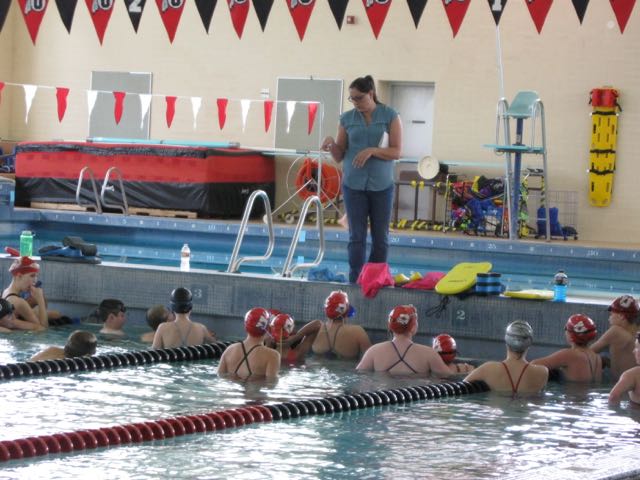
Swim Utah manages to run an organized practice in a rather crowded pool.

The swimmers work hard during practice at HPER Natatorium in its rather crowded pool.

Cindy Nordstrom is a board member in charge of events, fundraisers and activities.

“Pool rental is premium in this state,” she said. “Basically all the money we raise goes to pay for pool rental here (HPER) and at Steiner.”

To help Swim Utah this year, the public is welcome to donate money to help the club meet operating expenses. This year the Swim-A-Thon will take place May 13, from 4 p.m. to 6 p.m.

“In regards to Swim-A-Thon,” Winter said, “our goal this year is to raise $20,000. That seems like a huge amount, however, our team has exceeded that last year. We’re looking for partnerships and donors within the community and appreciate all donations.”


How dreams fuel small businesses’ futures

Story and photos by ALEX HARRINGTON

How does something as gut-wrenchingly difficult as starting a new business ever get off the drawing board?

Simple.

The people who make it happen have a dream.

Oftentimes everything is riding on this dream, which can be as different between business owners as the stars are from the sun. But the common thread is the hope that they can succeed in the unforgiving world of business.

If there’s one person who knows that success in the business world can come from just a dream and a liberal amount of elbow grease, it’s Ann Marie Thompson, the program director for the Women’s Business Center.

It’s Thompson’s job in the WBC to turn prospective entrepreneurs’ lofty, seemingly unreachable dreams into reality. The Women’s Business Center builds dreams in every way it can, from its “Jumpstart” business essentials training to the expert advice it gives on the direction a budding business should take. Thompson described her organization’s mission of making hopeful small business owners “start small and think big.”

However, even with the help that the Women’s Business Center provides, dreams can seem unreachable when so much is at stake. Though Thompson said she frequently advises her clients against quitting their jobs or taking out a big loan, the enormous dreams that her clients hold often demand a lot from their dreamers.

She pointed to “Utah’s cultural aversion to risk” as one of the many reasons that many women and men never pursue their dreams. Thompson said a dream or idea for a small business has to have the potential to make money and to fill a need.

However, not every dream has these qualities. She has witnessed a score of disappointments amid the successes, and seen dreams that weren’t able to come to fruition.

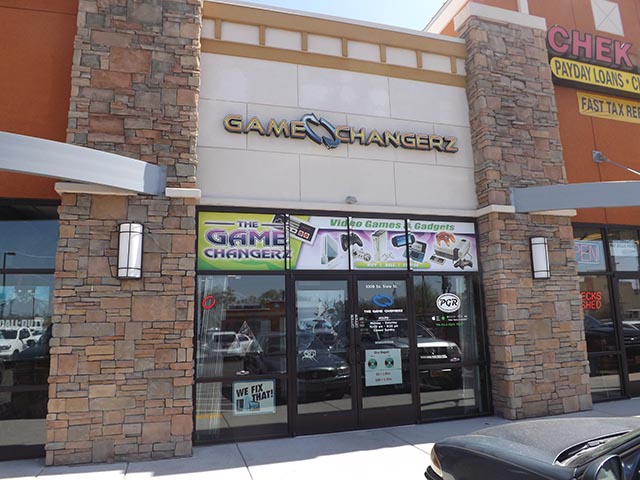
Game Changerz provides incredible customer service and products to all who check them out.

But why does this have to be? Dreams like starting a small business often need more than wishing stars and fairy dust to succeed. While almost anything can be turned into an opportunity to make a quick buck, this need that Thompson describes is much trickier for some small businesses to meet.

Though starting a business from these tiny dreams can be a terrifying and difficult prospect, it is not impossible. For

For Michael Morrissey, branch manager for a video game retail store called Game Changerz, his small business does its best to fill a need that sets it apart from other larger retail stores.

During a phone interview, Morrissey said, “[Our store] is free to do whatever we want for our customers.” He recalled many instances where his store worked with customers, adjusting prices and even throwing in free games, in order to make their experience more positive.

Fulfilling these needs can create something new in the business world. “We offer the best customer service in town,” Morrissey said. From anyone else it might sound like an empty boast, but his willingness to work with customers on a personal level gives it much more weight.

The branch manager of Game Changerz, Michael Morrissey, poses by some of his incredible videogame items.

The branch manager of Game Changerz, Michael Morrissey, poses by some of his incredible video game items.

For people like Morrissey, the dreams they have are about making a new and wonderful experience that the customer has never seen before. He is filling a need that many people didn’t even know they had.

But what does fulfilling this need mean for small businesses? Kristen Lavelett, executive director of Local First Utah, said “[Small businesses] keep the American Dream alive.”

The meaning of the American Dream that Lavelett talked about has been debated for hundreds of years throughout U.S. history. But this dream is almost always thought of as the ability of a single person to find a way to start with nothing and to rise to be as great a business figure as they can be.

But for many small businesses, this big, majestic concept is simply a way of life that they strive to achieve every day. Morrissey described other larger retail stores, like GameStop, as being “very corporate.” In a world cluttered with mega stores that often limit their interests to the contents of their customers’ wallets, small businesses like Game Changerz create a bit of personality and individuality that sets them apart.

Morrissey described in a subsequent interview what he believed makes his small business important to his customers. Game Changerz carries many games that bigger retail stores don’t have, like games for older systems like the Super Nintendo or Sega Genesis. Morrissey said “people want to relive their childhood.”

Our world would be diminished without the individuality that the dreamers provide. The dreams are a big part of what makes small businesses so special.