Affirmation helps gay and lesbian Mormons reconcile faith and attractions

Story and slideshow by JAKE GORDON

Take a photographic tour of this story!

In many opinions, society as a whole is slowly becoming more accepting of the lesbian, gay, bisexual and transgender community. Organized religion, however, is almost the complete opposite. Most religions do not accept gays and lesbians, and often opposes them in many of their actions.

The problem is, many inside the LGBT community still hold on to their religion beliefs that they grew up with. Affirmation is a national not-for-profit organization with a chapter in Salt Lake City that helps provide much-needed support and belonging for gay and lesbian Mormons.

Affirmation President Joshua Howard Behn expresses the importance of having the group for gays and lesbians who still feel the need for their spiritual side.

“Affirmation essentially is a group that provides a safe place for those that are trying to reconcile their faith with their orientation and that is within the context of the LDS Mormon faith or heritage,” Behn said while sitting down for an interview in front of Café Marmalade in Salt Lake City. “For those who are just coming out, it gives them a place to talk to people who have been there and done that. It also gives them a safe environment where they can ask questions and not have to worry about the faith itself, because that can come later.”

Behn said there are other resources for the gay and lesbian community in Salt Lake City, but they are broader in scope. Affirmation specifically helps gay and lesbian Mormons with the spiritual aspect.

“We understand our people and we can speak the language,” Behn said. “When you are talking to somebody that is having a very difficult time, it helps to hear from somebody who relates to you directly and knows your story.”

The history of Affirmation goes as far back as 1977, when a group of gay Mormons quietly met at Brigham Young University in Provo, Utah, talk about faith and their same-sex attractions. Matthew Price was at those first meetings and became enthused at the idea of a national organization of gay LDS people. Although it hit its fair share of speed bumps of not being able to meet regularly, the meeting in December 1979 marked the real beginning of Affirmation as a national organization.

Currently, 11 regional chapters of Affirmation exist in the United States and the first official chapters started in Los Angeles and San Francisco.

As the president of Affirmation for 2012, Behn admits that the group has hit a crossroads after nearly 35 years of existence.

“Historically, we have tried to have a big tent model where we don’t care if you are in the church, we try to maintain everybody,” Behn said. “But now, there are needs that really aren’t being met because things are changing. The church is becoming more open.”

The crossroads of the organization is its struggle to define itself.

“There are those in the group that still want their faith very much and so it comes down to whether to define for those that want their faith or do we define it for all,” Behn said. “Personally, I don’t think that we can’t be everything to everybody as a group because we don’t have the resources for that.”

Chapter members range in age from 18 to 60-plus.

The group informally gets together as a chapter, but Affirmation also has national parties and events that all members are encouraged to attend.

Behn has noticed that church membership is changing more toward acceptance far more drastically than the leadership is. Those living in a ward would be hard-pressed not to find a family that currently doesn’t have a member that is either gay, lesbian, bisexual or transgender, he said. A ward is a neighborhood of church members who meet together for worship.

Mark Packer, who has been a member of Affirmation since he came out in 1991, has found comfort in the group. He was introduced to Affirmation that year by his partner. Packer at first was admittedly scared out of his mind to socialize with a group of gay and lesbian Mormons.

“I have a lot of friends in Affirmation,” Packer said during an interview at the Salt Lake City Library. “Early on, it was critical for me because I was early in my coming-out stages. To hear other peoples stories and to hear what they have gone through and what they are going through helped me to be able to survive at the time.”

Packer admitted that he thought occasionally about suicide during the coming-out process. He said it is also helpful to tell his story to fellow members, and he likes to be there for others who are coming out and need the same support that he received.

“It’s the old thing where I had a position in the church,” Packer said. “I had a wife and I had kids and at first I was scared to be found out. I was just scared of other gay guys.”

Before coming out, Packer was heavily involved in The Church of Jesus Christ of Latter-day Saints and even held callings of elder’s quorum president and ward executive secretary, both of which are responsible leadership positions.

“Looking back now I chuckle because it was complete chaos for a while and very unpleasant,” Packer said about his active life in the church.

Packer said he hasn’t attended church services since 2010, but he hasn’t really left the church.

“I was excommunicated (stripped of membership) in 1999,” Packer said. “The way I look at it is the church left me because that was not something I was looking to do.”

One of the last times Packer attended church was in November 2010, when he came out in front of his ward in fast and testimony meeting, where members share their spiritual feelings.

“I didn’t think it would cause trouble but it did,” Packer said. “I just felt like I needed to do it. It caused trouble with the leadership, not with the ward members.”

Like Behn, Packer has noted more willingness among younger Mormons to accept gays and lesbians. However, the church leadership is much slower when it comes to accepting gays and lesbians.

The Church of Jesus Christ of Latter-day Saints has been firm on its position of what marriage is and who is supposed to get married. As part of a message given in the General Relief Society Meeting in September 1995 titled, “Family, A Proclamation to the World,” Gordon B. Hinckley, who was president of the church, said, “The Family is ordained of God. Marriage between man and woman is essential to His eternal plan. Children are entitled to birth within the bonds of matrimony, and to be reared by a father and a mother who honor marital vows with complete fidelity.”

Utah voters mirrored this sentiment in 2004 with the passing of Amendment 3, a same-sex marriage ban.

Two years later, Dallin H. Oaks, a member of the Quorum of the 12 Apostles, shared his thoughts of the homosexual lifestyle in a press release.

“This is much bigger than just a question of whether or not society should be more tolerant of the homosexual lifestyle,” Oaks said. “This is more than a social issue – ultimately it may be a test of our most basic religious freedoms to teach what we know our Father in Heaven wants us to teach.”

Scott Trotter, media spokesman for The Church of Jesus Christ of Latter-day Saints, declined an interview request for this story.

Behn and Packer do hope for change in the church, but both men know that change won’t come swiftly.

Affirmation President Behn knows that members in the church hold a lot of power for change inside and outside the church as well.

“Once the membership is ready for it to change on a massive scale, then the leadership will be ready,” Behn said.

LGBT Resource Center connects through Pride Week

Story and photos by CARSON HUISKAMP

This cute dog represented the U as it hit the event stage.

The dogs wagged their tails, they barked and they ran around the Union patio at the University of Utah, strutting their stuff in order to win the Pride Pet Pageant and garner a few toys such as doggy bones and chew toys. As folks gathered around to watch the owners and their dogs give a show, in the background stood a small kiosk that was the sole reason for  the event.

This kiosk stood all by itself, much like a lone wolf in the middle of the patio. Many asked why it was there as they walked by.

That dialogue enabled staff with the university’s LGBT Resource Center to share information about Pride Week.

“We wanted to do a Pride Week and come up with a theme that spoke to the fact that there are issues in this population that are more than just marriage equality,” said Kai Medina-Martínez, the center’s director.

An important aspect of Pride Week is fundraising, which helps keep the center running. Financial support through donations helps build programs that promote its message to the LGBT community at the U.

This center might not be the most well known around campus, but its goal is as big as any.

When the LGBT Resource Center first opened its doors in 2002, it didn’t have the resources to help much of the community.

“It was a small closet. In that closet all they could put in it were a desk and a small red couch,” Medina-Martínez said.

A grant from the David Bohnett Foundation enabled the LGBT Resource Center to provide computers for students.

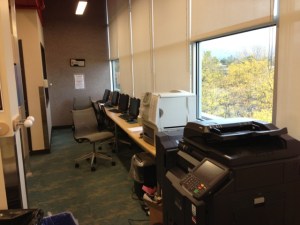
Now the facility has grown to more than 1,000 square feet and is located on the fourth floor of the Union Building. The Resource Center offers students access to safe workstations and printing hubs. All this was made possible through the David Bohnett Foundation, which donated $15,000 to create the LGBT CyberCenter. Because of this donation, the Resource Center was able to include four Internet-ready IBM computers, as well as a laser jet printer for students to use on a daily basis Monday-Friday, from 8 a.m. to 5 p.m.

One of the biggest contributions the Resource Center provides is the variety of programs and events it runs or is involved in that help ensure the safety of LGBT students around campus.

The LGBT Resource Center provides one of the friendliest atmospheres around campus.

One unique program the LGBT Resource Center provides is called Queers Peers, which allows students to anonymously ask questions about being LGBT or other issues through the use of email.

“What is most beneficial about the program is that anyone can submit any question without the fear of having to ask someone in person or being judged,” said Mariana Ramiro, head of the Queers Peers email service.

However, Ramiro said the program isn’t very well known around campus and has not gotten much of a boost in acceptance or usage over the years.

“We only get about one email a month. Most of the emails tend to just be spam,” she said.

However, where the email service is most helpful to U students is with the distribution of LGBT information and social events.

“We do get emails asking about resources for coming out, as well as where and how to find out about possible social events,” Ramiro said. “It has existed for a couple of years now, and I just wish most people knew about Queers Peers so it could be used more.”

And that is why the LGBT Resource Center was found all throughout campus during Pride Week in hopes to spread the word about resources like Queers Peers, and the center itself.

Safe-zones create inclusive environment, safe space to be in

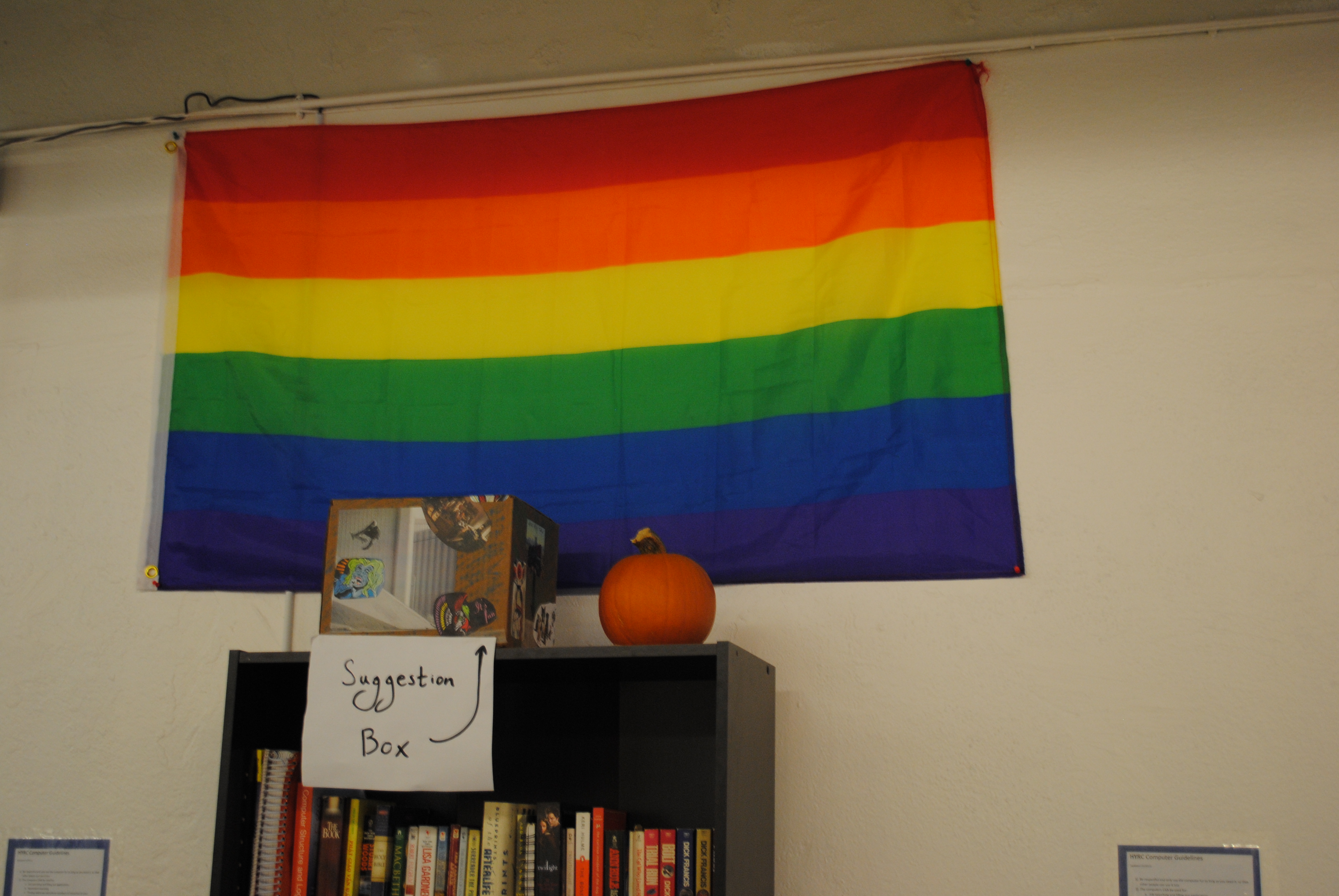
A rainbow flag, the symbol for the LGBTQ+ community, is a sign to all that the space is a safe place to go and be included in everything without worry of discrimination.

Story and photo by AINSLEY YOUNG

Every month, the LGBT Resource Center at the University of Utah holds classes known as Safe-Zone Trainings. They’re a three-hour session designed to answer questions and provide a safe space for people to come together and be educated about the power of words, how they affect people around you and how to keep an open mind when it comes to diversity.

Each training session is usually formatted with a short presentation, a discussion and activities. At the training offered during Pride Week 2012, the activity was to go around the room and silently answer several yes or no questions and then add a bead to a string for each yes, to symbolize the attendees’ privileges.

“In the training, we cover concepts related to the LGBTQA community. We also do exercises that are intended to spark dialogue on what it’s like for people to be marginal on gender expression and orientation,” said Kai Medina-Martínez, the director of the university’s LGBT Resource Center.

“The trainings create a situation of inclusion around dialogue that’s intended to bring awareness to people and have them learn things based on inclusive narratives,” said Medina-Martínez, who uses the pronoun they.

“We live in a world where we assume everyone is cisgender [born as a gender and identifies and acts within societal expectations of that gender] and heterosexual but we’re not. We have people who are transgender, gay, bisexual and a-sexual,” they said.

Medina-Martínez said it’s important to break down the negative stereotypes that are cast by society.

“We value a certain type of person, but we live in a diverse world with a lot of diverse people. Not everybody is the same, and we should all benefit from equal treatment,” they said.

The trainings are designed to be a safe place where people can meet others who are interested in learning how to be inclusive of all people or people who want to share their knowledge on being inclusive.

“I think it’s a great resource for anyone who wants to know a little more about the community and the real issues that face this population,” said Valerie Velarde, the safe-zone coordinator at the LGBT Resource Center. “As for creating a safe zone, people have to know where they can go for support with no biases or assumptions precluding them. Too much of this world is harsh, and people need that place they can go to relax and be themselves.”

Velarde said the trainings can help to make the world “be that much less harsh.”

“We always say once you hear a person’s story, it is a lot harder to hate them. I think that is a lot of what we are trying to get out there — personal stories of raw and real hatred. We are all privileged and not everyone sees the pain we often inflict,” she said.

“Safe-zone training gives individuals the quaint, safe space to ask any questions they want and get a rough view of LGBT identities,” Velarde said.

These trainings are a good way to educate people on different matters and issues going on in the LGBTQ+ community that may not be shown to everyone all the time, she said.

“For too long, people have had little to no idea of what the community really looks like, simply gaining most of their assumptions from popular media or the news…. A little more knowledge never hurt anyone,” Velarde said.

It’s important to be knowledgeable and active in minority communities, such as the LGBTQ+ community, she said. These trainings are an excellent way to get involved by showing an interest and making an effort to create a safe space and environment for all people, she said.

Between five and 30 people usually attend the workshops that are held in open, public spaces. The LGBT Resource Center also holds private training sessions for companies and departments at the university or small businesses. These private trainings have more than 100 attendees.

In addition to the full-length, three-hour trainings, the center hosts quasi-trainings that are a little shorter, with varying activities tailored to the organization or department’s needs, with job-specific situations and  opportunities to work together as coworkers and peers.

“Also, I sometimes mix and match what I do and ask different questions, but usually the same concepts are brought up regardless of what I say,” Velarde said. She said sometimes she starts with a question and answer session, while other times she’ll start with a discussion or activity she created to best suit whichever audience she is educating.

“These trainings opened up a lot of doors for me,” said Kim Bliss, who attended a safe-zone training in spring 2012. Bliss attended the training when she saw a flyer for it around the university campus that caught her attention.

Bliss said she was deeply impacted by one of the discussions at the training, and that it had changed her mind about a lot of the stereotypes that she had been familiar with.

“Whether you’re straight or gay, black or white, young or old, you’re still a person and you deserve to be treated with respect. Just because you may not agree with how someone lives their lives doesn’t mean you can judge them and cause them any harm,” she said.

Velarde holds these trainings  once a month at various locations around the U campus. Velarde said there can be more than seven meetings a month depending on which department or campus organization wants to schedule one.

LGBT youth become homeless for many reasons

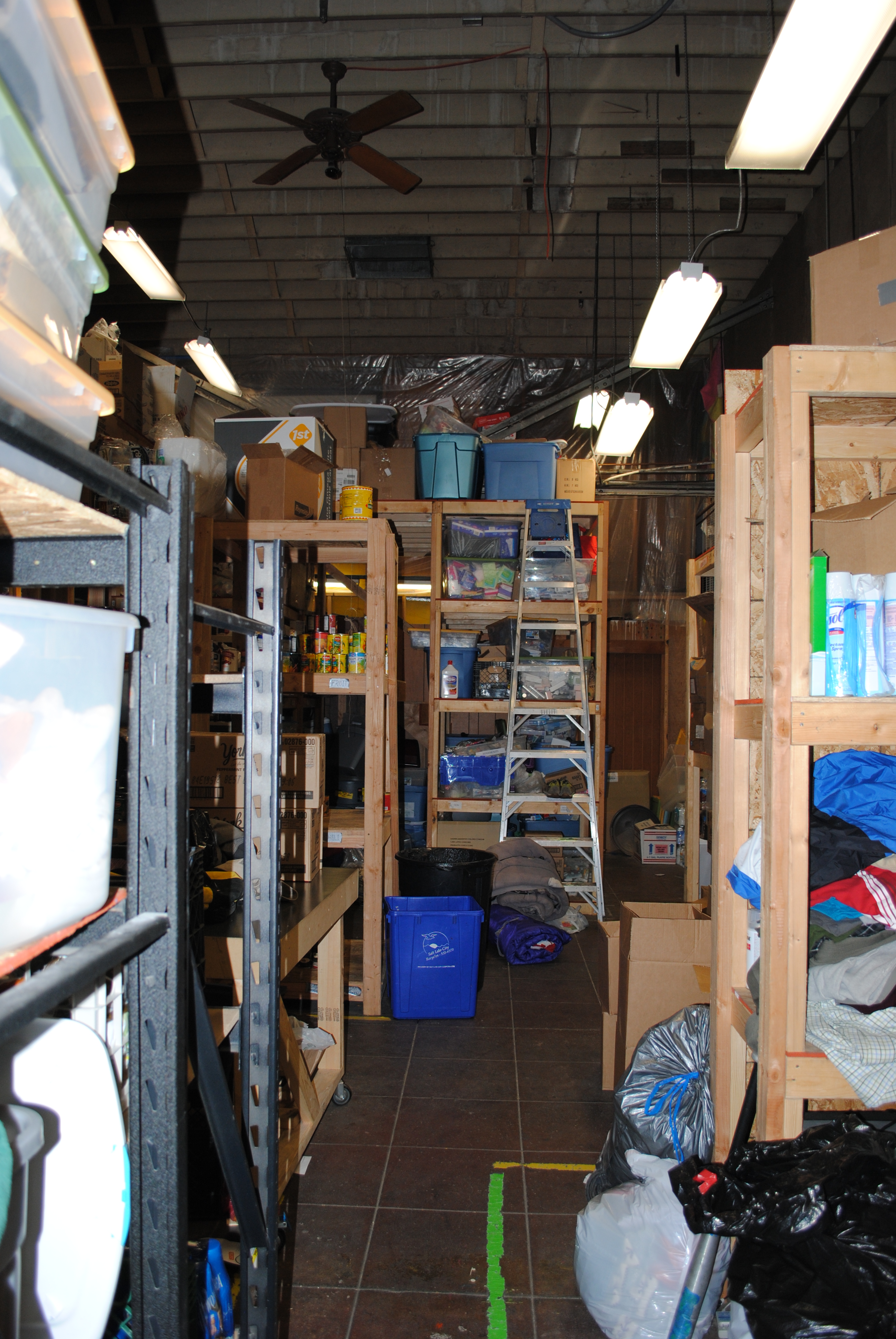
A look into the back room of the Volunteers of America homeless youth shelter in downtown Salt Lake City shows shelves of food, clothes and other items donated by people.

Story and photo by AINSLEY YOUNG

Take a tour of the Volunteers of America resource center.

In 2009, the Road Home, a homeless shelter based in Salt Lake City, helped more than 4,456 individuals.

Statewide, 42 to 44 percent of the homeless population self-identify as LGBTQ+. This number of  individuals is disproportionate compared to the overall population. About 6 percent of every population self-identifies as lesbian, gay, bisexual, transdender, questioning or another identity within this community. When most people think of homeless LGBTQ+, they usually get the scenario of a young person coming out to their families and then getting thrown out and are forced to live on the streets.

However, Brandie Balken, the director of Equality Utah in Salt Lake City, said that is not usually the case.

“When you think about the paradigm of… [coming] out to your parents and [getting kicked out] of the house, that’s the most extreme situation — not to say that it doesn’t happen — but that’s not the most common situation. Parents will frequently do things like ‘you can’t see these friends, you can’t dress this way, you can’t say those things’ or [they will] say things that are demeaning to folks who happen to be LGBT, and if that’s your own identity as a 13-, 14- or 15-year old, it’s unbearable,” she said.

Individual identities are so fragile at those ages, and there’s so much going on in the lives of youth. To not be supported by family, their most intimate support structure, makes the situation become unbearable. As a result, many people choose to leave home altogether, Balken said.

“They feel like it’s safer and they have a greater chance to explore their opportunities that way…,” she said.

These individuals will frequently stay with their friends, doing what is known as “couch hopping,” or sleeping on couches and air mattresses because they can’t afford a bed. Eventually, they find themselves with no other place to go but the streets, Balken said. Many of these young people haven’t even come out yet, but they feel that the unsupportive environment is not something they can live with, so they leave.

Balken said part of the contribution to the LGBTQ+ homelessness comes from a part in the adoption system that doesn’t allow any committed, long-term couples who are unmarried to adopt. This knocks out those couples as potential parents to children in need of foster care or adoption.

“We know that some of our young people are not with their birth parents or not in a stable home because of their orientation or because they don’t feel supported in their lives by their parents and we have a system that doesn’t allow youth who identify as lesbian, gay, bisexual and transgender to be adopted into a family that could model for them what it is to be an adult and be that person,” she said.

Intrigued with the process of becoming homeless, Natalie Avery created a documentary called “Outside,” which follows the lives of homeless LGBTQ+ individuals. This documentary followed four individuals for five years and was released in May 2012. Avery was a graduate student in film at the University of Utah when she began the project.

“I was in my last year of graduate school and I learned about the issue of couch surfing.… I had never heard of it and I heard that the LGBT population was significantly higher than just the average and that when people were talking about homeless youth, at that time, they were talking about children of families, not invisible youth,” Avery said.

Avery was inspired to take a deeper look into the issue of homelessness and highlight the lives of these individuals, the problems they face and how they handled them. Avery said she was surprised at how fast the fall could be from having a home to getting involved in drugs, finding a safe place to sleep or keeping warm in the winter, some of the many issues they were met with on the street.

“There is this remarkable group of people out there trying to help [these youth] in different ways, particularly the Homeless Youth Resource Center which still exists and is getting stronger and doing a lot for LGBT homeless youth. I was really impressed with the level of service they were getting,” she said.

Many youths take refuge in shelters like the Homeless Youth Resource Center, run by Volunteers of America Utah, located in downtown Salt Lake City. The shelter runs during business hours and offers refuge, hot meals cooked by volunteers, a donated clothing box and group activities to teach life skills and also bring the individuals together.

From July 2011 to July 2012, the shelter served 1,264 homeless youth, and around 30 percent of those individuals self-identified as LGBTQ+.

“Our hope is to meet the needs of youth and help keep them off the street,” said Zach Bale, vice president of external relations at the VOA in Salt Lake.

The drop-in shelter bases its different services on the intake of individuals, mostly aged 15 to 22 years, and what their needs are, Bale said. The center allows youths to come in and get what they need, including showers and laundry, with computers just recently added to provide individuals with aid in job searching. Youth can select everyday clothing from the donations closet at the front of the shelter. A special closet in the back contains clothes suitable for job interviews.

In addition to providing individuals with food, clothes and daytime shelter, a therapist at the shelter is available to work with youths each day to give them guidance and direction on personal matters in their lives. Tanya Ray is a certified counselor who completed a class at the Utah Pride Center where she learned how to be inclusive and friendly toward members of the LGBTQ+ community.

While many may have the classic scenario of getting kicked out of the house after coming out to parents, many members of the LGBTQ+ community feel that leaving home is their best option as far as making their way in the world.

The importance of allies in the LGBT community

Story and photos by Chad Mobley

Attending a Safe Zone training, like the one held during Pride Week on Oct. 5, 2012, at the University of Utah, gives people a chance to gain a better understanding of the lesbian, gay, bisexual and transgender community.

Lauren Jensen works tirelessly to build education and awareness of the LGBT community around the University of Utah and Salt Lake City.

This training was an open forum with conversations led by two facilitators to create dialogue among participants. Many of the talks focused on how straight people could become allies of the LGBT community and how important  allies are in the progress of equality among all genders and sexual orientations.

“Allies are underappreciated because it takes a lot to be a part of the LGBT community whether you are actually in the community or a supporter,” said Lauren Jensen, speakers bureau coordinator at the LGBT Resource Center at the U. “The LGBT community couldn’t exist without supporters on the outside. We need as many voices and as many supporters as we can get.”

But becoming an ally of the LGBT community may bring unwarranted connotations.

“There is a stereotype for allies as well,” Jensen said. “If they support gay marriage or gay rights, then people think ‘Oh they must be gay.’ When in fact all they believe is that everybody should have equal rights. Just because you support gay rights doesn’t make you gay and that’s something people need to realize.”

Jensen sets up panel discussions all over campus at professors’ requests. She also coordinates workplace panels for companies across the Salt Lake Valley. The purpose of these events is to create a situation for people to openly ask questions about anything that has to do with the LGBT community. These panels, in conjunction with events like Safe Zone trainings, educate straight allies about LGBT issues.

Janice Marcus of Parents, Families and Friends of Lesbians and Gays (PFLAG) recognizes these programs as an effective means to grow the allied community in Salt Lake City.

“PFLAG is aware of Safe Zone training and encourages members to attend trainings,” she said in an email.

In addition to Safe Zone trainings and panel discussions facilitated by the University of Utah LGBT Resource Center, PFLAG separately holds events to build and educate the straight ally population.

PFLAG provides a support group for parents, families and friends of the LGBT community the second Tuesday of every month from 7-9 p.m. at the Utah Pride Center, 361 N. 300 West. The first hour is spent as a support group helping people to understand the feelings of a friend or family member coming out to them. The second hour is used to educate members by providing accurate information about what it means to be LGBT, how it feels and how they can provide the best support.

“We provide support for parents, families and friends of gays and lesbians, as well as advocate for the LGBT community,” Marcus said. “We are willing to provide education and panel discussions for any group or work place that would like to contact us. I think that it’s critical that people understand that PFLAG is not associated with any political organization or religious belief.”

Thanks to events like these across the country, the LGBT community is gaining strength nationwide through growing allied support.

Sean Mehew, federal club co-chair for the Human Rights Campaign’s Utah steering committee, has seen this growth firsthand over the past few years.

“Voter approval of gay marriage is over 50 percent for the first time ever nationwide. Five years ago it was probably only 30 to 40 percent,” Mehew said.

One of the HRC’s top priorities is fighting for same-sex marriage. If it is ever going to become a reality, the LGBT community needs allies in high places.

“Look at President Obama coming out [as an ally]. That’s the first time that a president has ever even had a positive stance,” Mehew said. “When he originally came to office, he said he wasn’t sure what his stance was on gay marriage, but he evolved.”

Educating people and growing the straight ally community is the best means for gaining equal rights for lesbian, gay, bisexual and transgender people. People interested in becoming an ally can attend Safe Zone trainings, panel discussions or PFLAG support groups. A week much like Pride Week, called Ally Week, will be held on campus in April 2013 for students and community members.

“As allies mature in the process of providing support for the LGBT community, they transition from offering support to [the LGBT community], to speaking up when they hear inappropriate comments,” Janice Marcus of PFLAG said. “Regardless of the process in which they are involved, they cannot remain silent. Silence allows abuse and discrimination to continue unchecked, so that speaking up in small groups, followed by increased knowledge to provide education through interviews and panel discussions are critical.”

The LGBT Resource Center at the University provides a wealth of information on becoming an ally.

10 ways to be an ally and friend:

  1. Be a listener.
  2. Be open-minded.
  3. Be willing to talk.
  4. Be inclusive and invite LGBT friends to hang out with your friends and family.
  5. Don’t assume that all your friends and co-workers are straight. Someone close to you could be looking for support in their coming-out process. Not making assumptions will give them the space they need.
  6. Homophobic comments and jokes are harmful. Let your friends, family and co-workers know that you find them offensive.
  7. Confront your own prejudices and homophobia, even if it is uncomfortable to do so.
  8. Defend your LGBT friends against discrimination.
  9. Believe that all people, regardless of gender identity and sexual orientation, should be treated with dignity and respect.
  10. If you see LGBT people being misrepresented in the media, contact GLAAD.

Information courtesy of Lauren Jensen.

Gender Blender at University of Utah Pride Week

Story and photos by ADRIENNE PURDY

How would you feel if your job was in jeopardy based on your sexual orientation? How about if you were asked not to associate with your extended family because of perceived negative influences from your lifestyle? These issues and more were addressed at Gender Blender, an event put on by the Social Justice Advocates in correlation with the University of Utah Pride Week during the first week of October 2012.

This year’s Gender Blender showed a short movie from YouTube, titled “Transgender Basics – Gender Identity Project,” and concluded with a panel of four students self-identifying as members of the LGBT community who took questions from the audience. Lauryn Hansen of the Social Justice Advocates was in charge of the event held in the Petersen Heritage Center. The campus organization strives to create and promote a safe environment for everyone on campus. The Gender Blender event is a way to bring up conversations that otherwise would not happen.

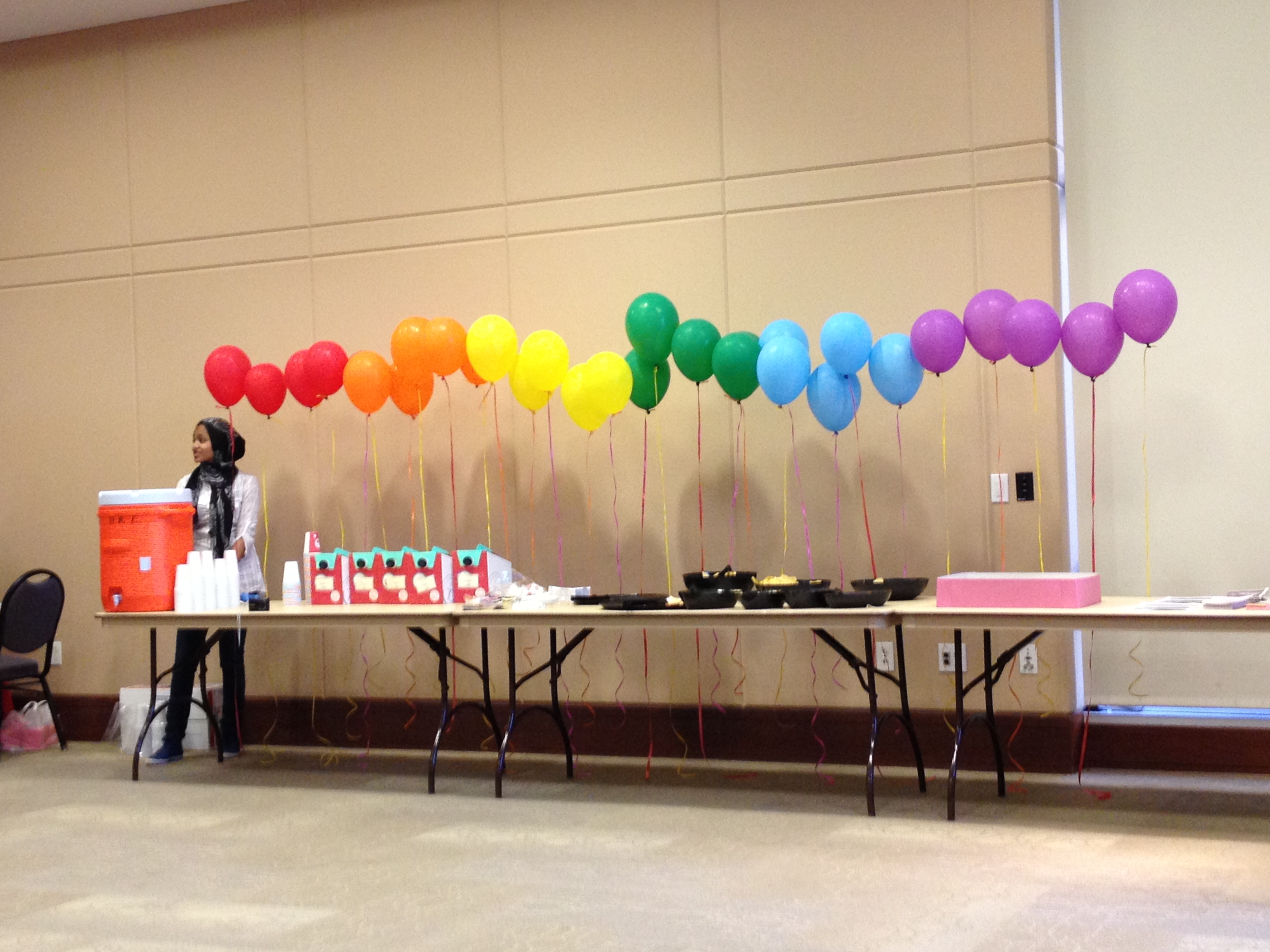
Decorations at the Gender Blender discussion at the University of Utah Pride Week.

The video highlighted three individuals with different identities: A transgender man or a woman living as a man, a transgender woman or a man living as a woman and a gender-queer individual or an individual who identifies as both a man and a woman.

The video showed some of the problems encountered by transgender individuals, such as gender expectations and the feeling of being forced to select a particular box, indicating that one must choose male or female and there is no other option.

A handout was given at the Gender Blender with a picture of a “Genderbread Person” showing gender identity, gender expression, biological sex and sexual orientation and making the differences between them easier to understand.

The Genderbread Person illustrates that gender identity is how you think about yourself in your head. It is the chemistry aspect and how you interpret what it means. This can range from woman to genderqueer to man.

Gender expression is how you demonstrate your gender based on how you act, dress and behave and can be expressed as feminine, androgynous and masculine.

Biological sex refers to the organs, hormones and chromosomes that you were born with that determine whether you are male or female. One can be born male or female, but one can also be born intersex, which is a biological combination of both the male and female sexes. When a child is born intersex — and depending on the type of intersex condition — surgery may be performed for social reasons rather than medical necessity.

Sexual orientation is who you are physically attracted to, which can range from heterosexual, bisexual and homosexual. Knowing the wide range of possibilities of identity, expression and orientation helps us understand why the problem of “boxing in” is so prevalent.

The four-person panel who fielded questions from the audience after the movie was comprised of Adrian Harrison, Kiko Cloward, Kai Medina-Martínez and Eduardo Galindo, who are students or faculty at the U. All panelists self-identified as members of the LGBT community. Different sexual orientations were represented on the panel, which enabled different points of view to be expressed and heard.

One question from the audience regarding how to ask about someone’s identity sparked different answers from the panel.

“The best way to learn is just to ask,” Cloward said.

Medina-Martínez countered: “I think the intention of needing to know is important. If it’s to honor someone or meet them there that’s great, otherwise does it really matter?”

Galindo said: “Ask respectfully instead of asking a loaded question.”

When asked about what it is like on campus for a member of the LGBT community, Galindo and Medina-Martínez told the audience about the initiative for an inclusive bathroom policy on campus.

The LGBT Resource Center in the Union Building at the University of Utah.

Medina-Martínez, who is the director of the LGBT Resource Center on campus, said that where to go to the bathroom is something most people don’t even think about. But for a transgender individual it can be a big problem. Wanting to go to a restroom where one feels comfortable usually means going out of the way to find a single-stall bathroom. The LGBT Resource Center has compiled a list of these bathrooms.

The stigma that surrounds transgender individuals in society was a hot topic and attendees asked whether the same stigma exists in the LGBT community.

“There can be trans phobia in the LGBTQ community as well as the non LGBTQ community,” Galindo said. Transgender can still be a taboo subject even in communities who are very accepting.

A recurring theme among the panelists was the term cisgender, which means conforming to gender-based expectations. Medina-Martínez, who now identifies as gender fluid and uses the pronoun they, said they became very good at expressing hyper femininity at a younger age.

“People want to put me in boxes. I like the fluidity,” Medina-Martínez said.

Cloward, who now identifies as genderqueer, went through periods of expressing femininity and masculinity.

“I love some feminine activities no matter how I look and I love some masculine activities no matter how I look,” Cloward said.

As Lauryn Hansen of the Social Justice Advocates said, “We live in a world with seven billion people, each with our own uniqueness.”

Note: A new version of the “Genderbread Person” with a flowchart is now available.

Campus resources and policies make the University of Utah attractive for LGBT community

Story and photos by JAKE GORDON

With assets like the LGBT Resource Center and policies that really benefit all students, the University of Utah is one of the top schools in the nation when it comes to the lesbian, gay, bisexual and transgender community.

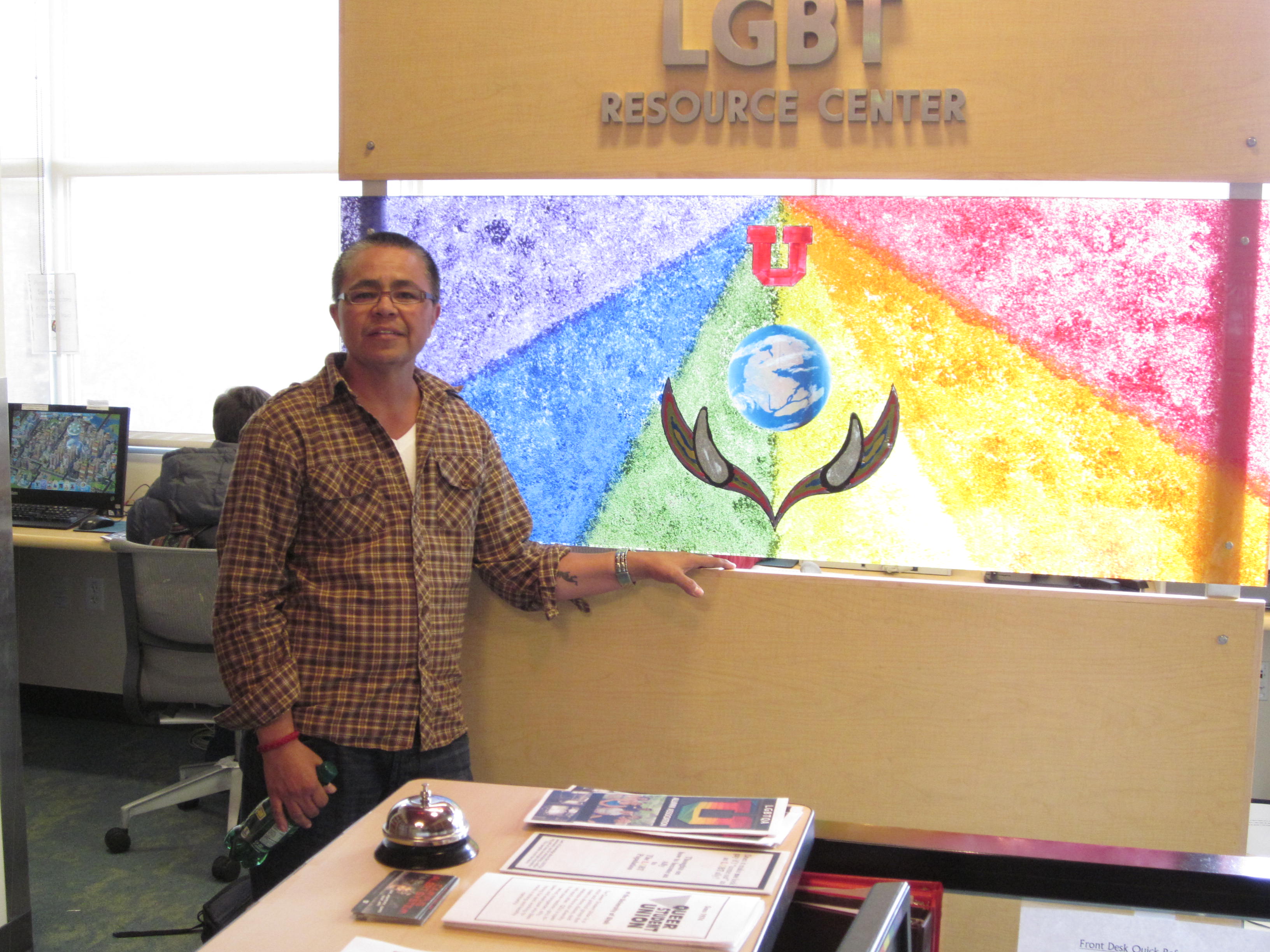
C. Kai Medina-Martínez stands in front of a mural inside the LGBT Resource Center at the University of Utah. Medina-Martínez is the center’s executive director.

C. Kai Medina-Martínez, executive director of the LGBT Resource Center, talked to journalism students in September 2012 at the university about the benefits of having the resource center.

The center, which is located in the Olpin Student Union, had a grand re-opening in October 2011 after moving into an office space of just under 1,000 square feet.

“There is a large lounging area that the students utilize,” Medina-Martínez said. “Right now we have four computers that students can use to do papers or study and we also allow students to do 10 free copies a day.”

Medina-Martínez, who prefers the pronoun “they,” said the resource center is a great resource to U students. The center also does a lot of education, including training and outreach.

“We do LGBT one-on-one training,” they said. “We also do our Safe Zone training, which is three hours. We talk about terminology and we talk about history.”

Being an ally, or “someone who advocates for and supports members of a community other than their own,” is talked about in the Safe Zone training as well as transgender training. Medina-Martínez said it is important to educate people on what transgender means and also the importance of having trans-inclusive policies in the classroom and on campus.

Valerie Velarde, who is the center’s Safe Zone coordinator, is one of the students responsible for the trainings, which she did during campus Pride Week in October 2012. Velarde said educating people about the LGBT community is helpful for everybody involved and that it can change the way people think.

“I would really like to bring home the fact (in Safe Zone training) that this is not an exclusive issue that affects only those with queer, or different than the hegemonic norm, identities,” Velarde said in an email interview. “We have an incredibly diverse campus with a multitude of ideologies and varying degrees of liberalism and conservatism floating about ­— which is a good thing.”

Safe Zone training is an educational class for everyone to better understand the lesbian, gay, bisexual and transgender community.

Both Velarde and Medina-Martínez talked about campus policies that benefit all students and not just the LGBT community.

One of those policies brought about by Medina-Martínez is located on the Campus Information System (CIS) under the student tag. Students can now list a preferred name that they will go by in classes.

That is important for individuals “who are going through some sort of transition,” they said. “They will change their name that is assigned to them at birth to match more of their identity.”

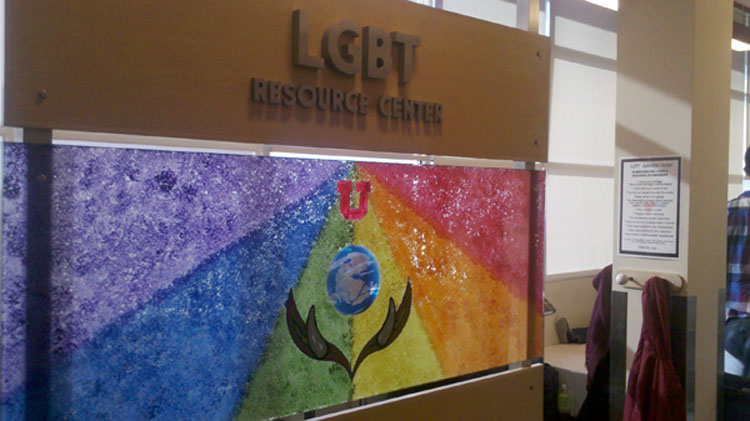
The sign for the LGBT Resource Center just outside the front door. The center is just one resource for the LGBT community that makes the University of Utah a desirable school to attend.

“These policies might start out to appear to be helping a certain group but they actually expand to help more than just that one group,” they said.

Medina-Martínez has also worked to make changes to buildings on campus, such as the campus recreational activities building (HPER).

Now, there is more privacy in the men’s shower area. “From what I hear from men, regardless if they are cisgender (opposite of transgender) or however they identify themselves, they want privacy in the shower,” Medina-Martínez said.

The policy changes that the U has made in an effort to accommodate all students has earned the university some recognition.

Campus Pride is a national nonprofit organization for student leaders and campus groups that are working to create a safer college environment for LGBT students. Campus Pride also has created an index, released in August 2012, for the purpose of helping a prospective student who identifies as lesbian, gay, bisexual or transgender to find a university that has policies in place to create a safe study environment.

According to the Campus Pride Index, the University of Utah scored the highest possible score of five stars as a prospective place for higher education for the LGBT community. The university scored perfect in the sub-categories of support and institutional commitment, academic life, student life, campus safety, counseling and health and recruitment and retention efforts. The only categories that the university fell short on was in policy inclusion and housing/residence life.

“Campus Pride is really the only resource out there for the prospective LGBT student to find out what college to go to,” said Jess McDonald in a telephone interview. “Being highly ranked says a lot about the campus and that they value LGBT students as much as any other student,” said McDonald, who is media, communications and programs manager for Campus Pride.

Medina-Martínez also talked about the U’s favorable rating.

“They (Campus Pride) rated the university based on their policies and procedures as one of the top-25 schools in the nation out of more than 300 schools,” Medina-Martínez said. “What it means is a really great thing for the university.”

University of Utah LGBT Resource Center breaks “out of the closet,” allowing for improvement, greater student outreach

Story and photos by RACHEL JACKSON

The expansion of the LGBT Resource Center at the University of Utah has enabled the center to provide more assistance for members of the LGBT community, as well as a judgment-free zone for all students to study.

The first LGBT center, which opened at the U in 2002, was housed in a cleaned-out utility closet in the A. Ray Olpin University Union. And now, 10 years later, the center has doubled in size, to nearly 1,000 square feet, thanks to the David Bohnett Foundation, an activist group from California, which gave the LGBT center a grant of $15,000.

“We broke out of the closet,” said Kai Medina-Martínez, LGBT Resource Center director. “Last year the space was expanded and we now have a larger area to work in.”

The sign that is featured in the LGBT Resource Center on the University of Utah campus. The center is located on the fourth floor of the Union building.

The center on the fourth floor of the Union also offers a larger lounging area for all students, including a printing center with computers that students are able to use with no cost to them.

Before the grand “re-opening” on Oct. 17, 2011, students had to meet in the library for advocacy groups and training classes. Now everyone who is interested has an exact place to go for information on LGBT issues and the staff has the chance to be more organized.

The resource center offers a variety of informational classes and training on LGBT issues, such as Safe Zone training, which is designed to educate participants about the LGBT community and how to stop discrimination.

“We make sure the policies of the university are inclusive of LGBT and other identities also,” Medina-Martínez said.

The policies that Medina-Martínez has been working on are important, because they focus on equality for all. This includes all students in general and specifically trans-gender or non-gender-conforming students who might be in a transition stage.

“One of those policy changes that occurred about a year ago … is any student regardless of how they identify can go on [the student system] and choose a preferred name,” Medina-Martínez said. This was a way to allow people who are going through a gender transition to be identified in class by a name that more appropriately matches the gender they wish to identify with.

Another top priority for Medina-Martínez is to have a place for transgender students and everyone in general to have private, single-stall bathrooms that they can access on campus.

The LGBT Resource Center website has a list of unisex and single-stall bathrooms that includes the areas on campus where the bathrooms are located and on what floors.

“So these policies even though they start out to be inclusive of a certain group, they actually expand to everybody to be able to utilize,” Medina-Martínez said.

In the College of Health building (HPR) on campus, some trans-identified students were unsure of where they could go on campus to shower. Medina-Martínez was able to have some shower curtains installed. This was for the benefit of the trans students, but also for students in general who prefer privacy.

On Aug. 21, 2012, the U was named one of the top 25 friendliest LGBT campuses in the nation by Campus Pride, a nonprofit organization striving for a safer environment for LGBT students all over the country.

The top schools were chosen based on data from the Campus Pride Index and rated on a 5-point scale according to policy inclusion, student life and academic life. The study included a total of 339 universities and colleges.

Even though the U excelled above several other schools in areas of policy and acceptance of LGBT students, Medina-Martínez said work still needs to be done in the area of gender-neutral housing on campus.

“Many of these things couldn’t have taken place in the small closet our office used to be,“ Valerie Velarde, a student worker at the center, said in an email. “This is a highly important place to come hang out in, gain community, or even do homework in comfortably.”

One way the center encourages community is by hosting an event called Fabulous Fridays once a week from 3 p.m. to 5 p.m. This brings people together to enjoy free food, play games and meet new people.

Brandon Vanschoiack feels at home in the LGBT Resource Center at the U.

The continual goal of the center is to create a place where students can meet peers with similar interests and experiences.

“It’s a great place to connect with others,” said Brandon Vanschoiack, a senior double-majoring in political science and philosophy.

Vanschoiack said he has been going to the resource center for a year since it has moved locations. He keeps coming back, because he feels a kinship with other students who visit and likes to share experiences “of feeling unwanted.”

Unwanted is something he never feels at the LGBT Resource Center.

“When you walk in there are no flashing lights that go off and say, ‘gay, gay, gay,'” Medina-Martínez said. “Anyone is welcome to come up.”

This type of environment is what the center has worked toward since its original opening in 2002.

Vanschoiack said, “It’s really a safe place I can go to be myself.”

Utah Pride Festival unites community

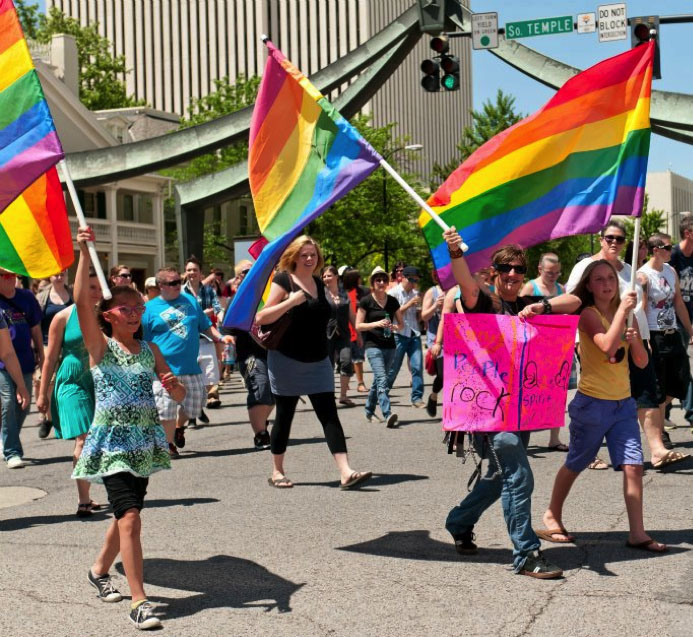
Participants in the annual Utah Pride Festival show their colors as they march holding rainbow flags. Photo courtesy of the Utah Pride Center.

Story by AINSLEY YOUNG

The Utah Pride Festival is a three-day event held each June that allows people of the LGBTQ+ community and their allies to come together to celebrate who they are and to show their true colors.

“People know they can attend the festival and are free to be who they are and they will see 20,000 other people also being free to be who they are. People will also find acceptance and love at the Pride Festival,” said Megan Risbon, executive assistant and volunteer program manager at the Utah Pride Center.

In 2012, there were around 23,000 attendees.

“I think people attend the Pride Festival for many reasons,” Risbon said. “Most people know they can see how diverse our community here in Utah really is at the Festival.”

Risbon said it’s important to attend the festival and make new friends and allies. One way to do this is by volunteering.

“This volunteer had recently come out and was afraid to attend his first Pride Festival without any friends or family. Even though he was hesitant, he signed up to volunteer for a three-hour shift. I assigned him to take tickets at the main gate for that one shift but he ended up working another shift for us that day,” Risbon said.

“After the festival, he emailed me and told me what a wonderful time he had volunteering. He had met so many people when taking tickets and it was a great experience for him. He stated that he was usually quite shy but decided to be super friendly and extroverted while volunteering and because of that, he made many new friends,” she said.

Bexi Lee, a volunteer at Ogden Outreach and the Utah Pride Center, said she has been to the Utah Pride Festival for the last three years in a row.

“It’s a weekend off from work, a chance to hang out with friends and an opportunity to join my community in voicing our needs and wants. Oh, it’s also the first sunburn of the summer,” she said.

Lee said in addition to the parade and shows, there is a lot of information on sexual health. The Utah Pride Festival is also where she discovered the organizations she’s a part of now.

“The more we continue to have the festival, the more opportunities we have to spread our message,” Lee said. “Those who have a different idea of how life should be lived would consider it a victory on their part if the festival was discontinued.”

Brenden Beery, who volunteered as parade monitor at the festival in 2012, said he goes to get more acquainted with the LGBTQ+ community.

“Being a gay male, I wanna know what’s going on in my demographic. It’s more than just a parade; they have political booths and other things like that,” he said.

The booths inform people about the human rights movement and goings on in the fight for marriage equality. There was also a booth from the U doing a study on same-gender attraction.

To Beery, knowing he isn’t the only one is comforting, and he finds that comfort at the Utah Pride Festival.

People attending the festival shows that they are proud of who they are, Beery said.

“It shows there is a generational shift in values regarding the LGBT community,” he said. “They welcome all aspects of human sexuality; it’s not so much a gay pride parade as an equality parade.”

Each year, the festival kicks off with the Grand Marshal Reception where the Utah Pride Center honors its Grand Marshal along with other award recipients.

Saturday’s festivities begin with a 5K run in the morning. Following the run are three simultaneous rallies and marches. The Interfaith Service, Gender Rally and Dyke Rally are held, followed by a joint march to the festival grounds.

When these groups reach the festival grounds, the opening ceremonies are held (national anthem, raising of the rainbow flag above the City/County Building) and the festival is officially opened.

The first few hours of Saturday’s events are set aside for family-friendly activities. Parents may bring their children for family-specific events (clowns, magicians, cotton candy, kid crafts, etc.). Saturday night finishes up with a dance party at the Main Stage.

Sunday begins with the annual Pride Parade. The 2012 festival marked the largest Pride Parade and the largest parade in the State of Utah with over 150 entries, Risbon said.

Also in 2012, the festival welcomed 300 active and faithful LDS members representing Mormons Building Bridges, along with allies and parents of LGBTQ+ people to march at the beginning of the Pride Parade. After the parade, the festival grounds open with music, speakers, vendor booths, bingo, karaoke and other activities being held from 11 a.m. to 7 p.m.

Equality for Utahns based on awareness

Story and photo by PAUL S. GRECO

Awareness is a compelling issue among the lesbian, gay, bisexual and transgender (LGBT) community. “Our biggest obstacle on Capitol Hill in Utah is awareness,” said Brandie Balken, Equality Utah’s executive director.

She said a lack of understanding regarding the rights of the state’s LGBT citizens daunts advocates. Envisioning a fair and just Utah is Equality Utah’s hope.

“Equality means all of us,” Balken said.

Equality Utah, located in downtown Salt Lake City, was established in 2001. It is the state’s largest civil rights organization for LGBT Utahns.

Max Green, a University of Utah alumnus, has been Equality Utah’s advocacy coordinator since December 2011.

Max Green with Equality Utah.

Green said he conducts citizen-lobbying and advocacy trainings to educate people about LGBT concerns. He alerts individuals to help make political changes that will bring equality to Utah’s LGBT community.

He said the primary goal of these trainings is to increase the number of supporters who will vote for more fair-minded officials.

Homelessness among LGBT youth

In 2008, UCLA’s Williams Institute used data gathered from the U.S. Census Bureau to estimate Utah’s LGB population at between 47,000 and 63,000.

In its mission statement, Equality Utah advocates to secure equal rights and protections for LGBT Utahns. Along these lines, Green addressed the concern of self-disclosure. He said there are safety factors involved. “It’s not necessarily safe for everyone to come out,” he said.

“There are people who are so admittedly against the LGBT community,” Green added, “that if it’s their child, they don’t know how they would react.”

He said many youth end up homeless when they come out to their parents.

According to the 2011 Comprehensive Report on Homelessness in Utah, “Sexual orientation is often cited in studies of homeless youth as one of the contributing factors in a youth’s reason for being expelled or running away from home. In the Utah survey, 29% of homeless youth were not heterosexual.”

This survey was conducted by the Volunteers of America Youth Drop-in Center, Salt Lake County Youth Services, the Utah Pride Center and Valley Mental Health. The report was based on youth aged 15 to 24.

LGBT youth and suicide

Another result of inequality and unfairness is suicide. As a member of Utah’s LGBT community, Green lost three close friends – in the course of junior high school through college.

“Not as a result of their sexuality, but their treatment because of their sexuality,” Green said.

According to a 2009 study by the American Academy of Pediatrics, “LGB young adults who reported higher levels of family rejection during adolescence [compared to heterosexual young adults] were 8.4 times more likely to report having attempted suicide, 5.9 times more likely to report high levels of depression.”

Bullying problems

Green said he not only wants Utahns to be aware of the LGBT concerns, but also for the LGBT community to be aware that change can and is happening.

In 2011, two Utah school districts, Salt Lake and Park City, passed an anti-bullying policy that includes sexual orientation. This is enforced among students as well as school employees.

Also involved in promoting equality for LGBT Utahns is the Human Rights Education Center of Utah (HREC), founded by Carla Kelley. She serves as HREC’s executive director and advocates against bias, bullying and discrimination of LGBT individuals.

“We have no right to dehumanize any human being,” Kelley said.

Kelley is not a member of the LGBT community; however, she is a single mother of three with one son who is openly gay.

Civic Ventures recognized Kelley as a social entrepreneur over 60. She also has received several acknowledgements for her humanity efforts. In 2009, Kelley was named Wasatch Woman of the Year by Wasatch Woman Magazine.

Kelley explained that it would be beneficial for individuals to check their biases and ask, “Why do I have these?”  Kelley said self-awareness of personal biases can help individuals better understand inequalities through association.

Equality Utah’s website details ways for individuals to get involved. Similarly, HREC has information on how to advocate for LGBT rights.

Max Green, with Equality Utah, said, “I believe that a better place to live is one where all of its citizens are respected, everyone has value, everyone has the same footing under the law. If society were changed slightly, not just for one group but for all of us, it would make a huge difference on the lives of kids growing up today.”