Redefining service in a spirit of kindness and empowerment

Story and slideshow by HANNAH CHRISTENSEN

Pacific Islanders (PI) believe that what is best for the village is best for the individual. This value system instills a spirit of empathy, generosity and kindness. This is particularly evident in the types of service we see from local members of the PI community. These individuals redefine service through the work that they do as a way of life.

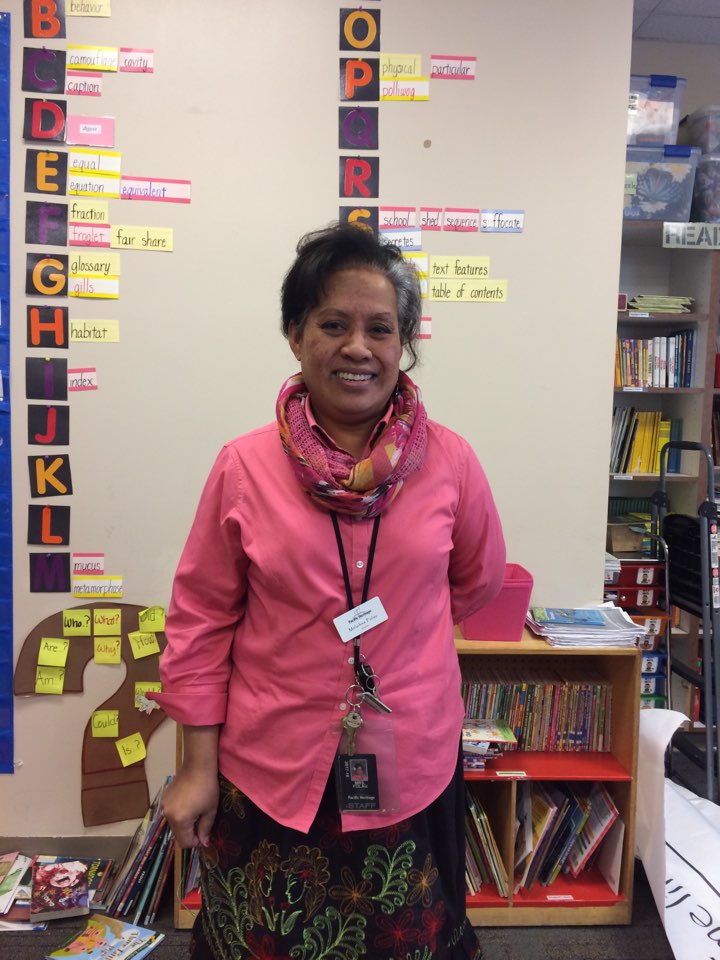
Puna Fatanitavake is a former teacher at Mana Academy Charter School, where she enjoyed teaching second graders. Previously she taught at Liahona High School in Tonga. Fatanitavake moved to Utah in 2015 with two young children and a third on the way to be closer to her mother and pursue more education.

Because of her service to her students, religion and family, Fatanitavake feels that her life is blessed. “Serving helps me be the strong woman I am right now. The love I had for these kids and the good I could do for them, I didn’t expect anything in return because I knew that God would bless me,” she said.

Fatanitavake also explained how every decision she has ever made was for others — the people in her Tongan village, her children, her mother, her former students and current community. She participates in local service through her religion which allows her to serve while also educating and empowering children on how they can be successful and follow their dreams like she is currently doing by attending LDS Business College.

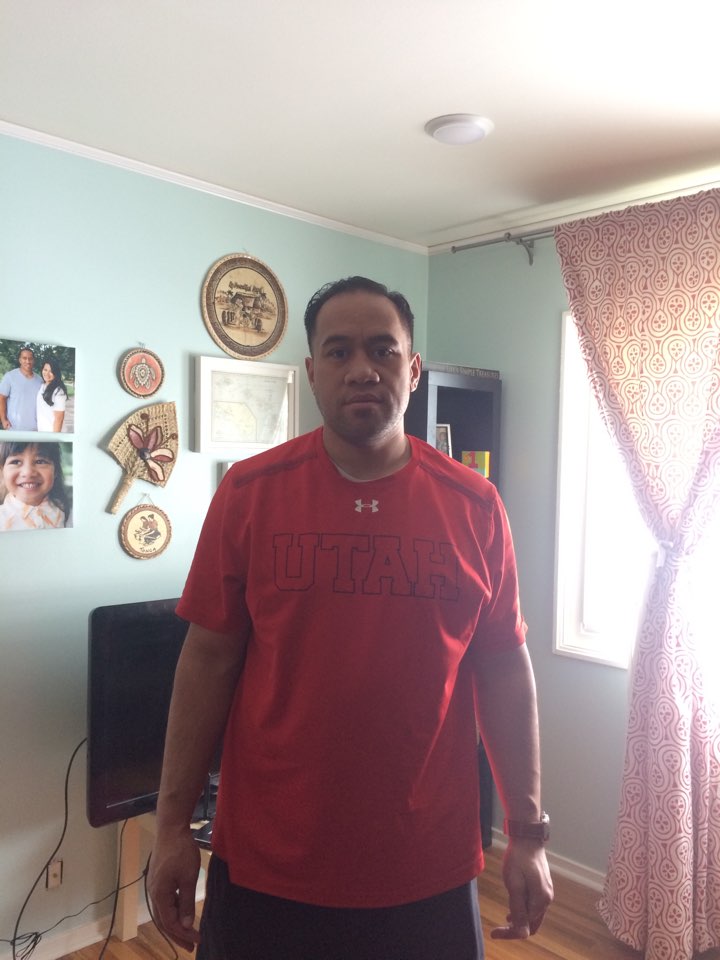
Ulysses Tongaonevai has also dedicated his career to serving youth in his community. Tongaonevai is a conduct hearing officer for The Office of the Dean of Students at the University of Utah where he also instructs courses for PI students as an adjunct professor. Before working at the university, Tongaonevai worked for local government with youth from at-risk homes.

“I’m here to advocate for these individuals or groups,” he explained. “I’ve done things in the community from cultural awareness, higher ed awareness, I’ve created programs to help young people graduate high school and connect with resources.”

Tongaonevai grew up in the inland empire of Southern California in a single-parent household and did not always know where to turn for help. “Because of where I’ve been and what I’ve experienced, I feel like I need to give back because I’ve been given much,” he said.

One of these programs that Tongaonevai created with his wife, Kalo, is called Teine Malohi, a competitive fast pitch softball program for PI girls. They chose this name because “Teine” is Samoan for “girl” and “Malohi” is Tongan for “strong.”

This girl power program was founded in 2016 and has been sponsored by Royal Outreach, West High School Softball, Uplift Foundation Inc. and the University of Utah Neighborhood Partners. They practice and hold events for the teams at The Sorenson Unity Center in Salt Lake City.

Teine Malohi softball has participants from all over the Salt Lake Valley, including: West Valley, Glendale, Poplar Grove, Rose Park, Herriman, West Jordan, South Jordan, Murray, Taylorsville, Salt Lake City, Bountiful, North Salt Lake and Centerville. There are 53 girls total who participate in three separate age-grouped teams ranging from age 8-14.

Teine Malohi provides an opportunity to be physically active while interacting with the community. It also focuses on affordability (scholarships and equipment), player development, academics, culture, empowerment, student-athlete experiences and college prep.

“We also include a community aspect, not only just within the Pacific islander community, but we encourage the players to do some type of voluntary service in the neighborhoods that they live in, and for them to also connect to their legislative representatives,” Tongaonevai said.

With the goal of empowering young women, the Tongaonevais have been able to create this thriving program that teaches young women from all over the Salt Lake Valley how they can serve their communities. “When I first went to school, I didn’t have the understanding of those resources or how to look for them, I didn’t know they existed,” Tongaonevai recalled. As a result, he has spent his entire adulthood advocating for youth and connecting them to resources.

The PI view is that we are all connected and so it’s important that everyone helps each other to find happiness and success. Community activist Susi Feltch-Malohifo’ou co-founded an organization called Pacific Island Knowledge 2 Action Resources (PIK2AR). “All of our goals encompass helping, educating and empowering,” Feltch-Malohifo’ou said. PIK2AR focuses on economics, cultural preservation and domestic violence.

Feltch-Malohifo’ou seeks to provide services for people of PI background because of her childhood, where she felt disconnected from her roots. By providing knowledge, connection and empowerment to the community, Feltch-Malohifo’ou is able to help orchestrate support groups, a business alliance and cultural community events.

Fatanitavake, Tongaonevai and Feltch-Malohifo’ou each described service as part of everyday life. They don’t separate service into a task to accomplish, or some way to balance the scales. Service is organic, it is a way of life.

These Utahn Pacific Islander leaders each seek not only to serve, but to empower others. Empowering others teaches them to take control of their lives, enabling them to be their best selves. This is the Pacific Island way, believing that we are all in this journey together and the success of one, is the success of all.


This slideshow requires JavaScript.

Local groups aim to ease Pacific Islander alienation through cultural identity

Story by ADAM FONDREN

Kautoke Tangitau, 30, was shot to death at Club Suede in Kimball Junction near Park City, Utah, on Oct. 14, 2003.

The Deseret News reported on Oct. 16, 2003, that the club, now closed, was hosting the reggae performer Lucky Dube when a fight broke out and Tangitau was assaulted and shot in the chest. Police and paramedics were called but were unable to resuscitate Tangitau. He died shortly after.

The Deseret News also described how Tangitau had a bench warrant for his arrest at the time of his death for failing to appear in court after being arrested and posting bail in July 2002. Charges included: purchase/possession of a dangerous weapon, obstruction of justice, assault on a police officer and carrying a concealed/dangerous weapon.

At the time of the murder, the then Summit County Sheriff Dave Edmunds stated to the Deseret News that he defined the shooting as a gang shooting involving Polynesian gangs.

Lavinia Taumoepeau-Latu, Tangitau’s girlfriend at the time, disputes this claim. She said in a phone interview that the fight was “just a bunch of boys” who jumped him and not a larger example of Pacific Islander gang violence as portrayed in the media. She said the only people in their party at the club were Tangitau, Taumoepeau-Latu and her sister, not an entire gang.

KSL reported on Oct. 13, 2003, that two men, Telefoni Palu and Viliamie Tukafu, were arrested in connection with Tangitau’s murder. At the time, neither was suspected of being the shooter nor was either charged with the murder.

KSL reported on March 10, 2009, that Finau Tukuafu was arrested and charged with the murder. Tukuafu pleaded guilty to third-degree felony homicide of Tangitau and was sentenced to five years in prison. Unable to find witnesses willing to testify against him, prosecutors were unable to convict Tangitau of first-degree murder. As a result, he served his five-year sentence and was released in January 2009. Tangitau is now a free man. His whereabouts are unknown.

“We’ve lost the duty to each other,” Taumoepeau-Latu said, referring to the way in which the Pacific Islander community has lost its way and forgotten its past on the mainland. According to Taumoepeau-Latu, who now lives in Tonga, this loss is due to two main factors: the lack of interaction within the community, and the desire to assimilate into the predominant culture after immigration caused a loss of traditional Pacific Islander cultural ways.

Concerning the participation of young Pacific Islanders in gangs Taumoepeau-Latu said, “They don’t have a sense of who they really are as Pacific Islanders, they don’t know what their responsibilities are to each other.” She continued, “If they did then I guarantee they wouldn’t fight amongst each other.”

Taumoepeau-Latu felt abandoned by her Pacific Islander community when this was all happening. She felt that not only was the portrayal of the Pacific Islander community in the media biased against her, but that her own community was biased and unhelpful toward her.

“This experience taught me a lot about what we’re working against, the disadvantage for the Pacific Islander youth,” Taumoepeau-Latu said when asked about what she felt what were the problems that led to Tangitau’s murder.

Susi Feltch-Malohifo’ou said images of the athlete or the gangster are the primary examples provided to young men of Pacific Islander heritage here in the mainland. Feltch-Malohifo’ou is the executive director of Pacific Island Knowledge 2 Action Resources (PIK2AR), a community outreach program aimed at the Pacific Islander community that provides opportunities for advancement they might not otherwise have. These include business opportunities, opportunities to explore their heritage, to express themselves through art, dance and the spoken word and perhaps most importantly, the opportunity to be surrounded by people of their own community.

Feltch-Malohifo’ou, her organization and its constituent entities have undertaken a concerted effort to reach disenfranchised Pacific Islanders. They have developed programs such as Pasifika Enriching Art of Utah (PEAU), headed by Bill Louis, that uses art to reach out, teach cultural history and provide outlets to the Pacific Islander youth of Utah. Another organization, Kommitment Against Violence Altogether (KAVA Talks), headed by Simi Poteki, uses roundtable discussion among Pacific Islander men to address the issue of domestic violence.

Lastly an event hosted by PIK2AR that specifically addresses the Pacific Islander youth is the People of the Pacific Conference, held on Feb. 22, 2018, at Utah Valley University (UVU). The conference is aimed specifically at Utah high schoolers of Pacific Island heritage with the aim of exposing them to aspects of their cultural heritage. This exposure is done with art, dance, talks and lessons. Most importantly — and in keeping with the general purpose of PIK2AR —  the event gives them a community to belong to and a sense of what it is to be of Pacific Islander heritage.

Through the efforts of PIK2AR, PEAU and KAVA Talks, the feelings of disenfranchisement that some Pacific Islanders experience in society and within their own community will hopefully be reduced. These groups aim to connect their cultural history and possible futures by giving them an inclusive community to exist within.

Nā HALE: A home for Pacific Islander well-being

Story and slideshow by MARISSA SITTLER

In Hawaiian, nā hale means “the houses,” a word that embodies the sense of traditional Hawaiian community. This word is the driving force behind the newly formed umbrella organization for Pacific Islander wellness and resources. HALE is an acronym for Health, Advocacy, Leadership and Education.

Some of the strongest leaders of Utah’s Pacific Islander community came together to hatch the idea of Nā HALE. The idea was devised by members of the Utah Pacific Islander Health Coalition, the University of Utah Pacific Islander Studies Initiative, Margarita Satini from Utah Pacific Islander Civic Engagement Coalition and Charlene Lui from Hui Hawai’i O Utah Hawaiian Civic Club.

The first formal meeting took place in January 2016. During that meeting, an exploratory committee was formed “to research different collaboration models, bylaws and articles of incorporation, and membership structures of existing organizations in other states,” said Jake Fitisemanu Jr. in an email interview. He is the acting chair of the steering committee that is tasked with preparing Nā HALE to become a more formal entity. He is also the council member for District 4 in West Valley City, Utah. 

In April 2016, the Utah Pacific Islander Health Coalition unanimously supported the proposal to create a statewide umbrella group. It was one month later that the name Nā HALE was chosen.

Pacific Islanders have a strong sense of family and community, so it is only natural that many of the already formed Pacific Islander resource groups are some of the main collaborators for this project. In addition to the founding organizations, Fitisemanu said local groups including Queen Center, National Tongan American Society, Beyond Culture, Utah Pacific Islander Behavioral Health Association, Samoana Integrated Language Initiative, Southern Utah Pacific Islander Coalition, Pacific Island Knowledge 2 Action Resource and PEAU Artists Collective are all main members of Nā HALE.

Charlene Lui, director of educational equity for Granite School Districts, is native Hawaiian and has lived in Utah since the 1970s. She and her husband, who is Tongan, have been very involved in the Pacific Islander community in Utah through various groups, such as Hui Hawaiʻi O Utah and the National Tongan American Society.

Lui said in a phone interview that collectively, they have always wanted to strengthen the Pacific Islander community by organizing a group somehow. She sees Nā HALE as “trying to bring everybody together under one umbrella and to strengthen and maximize what every group group does, to collectively share our resources.”

Dr. Kalani Raphael, who is a kidney, electrolytes and high blood pressure specialist at the University of Utah School of Medicine and one of the key members of Nā HALE’s formation, said in a phone interview that the importance of Nā HALE “boils down to recognizing that there’s a lot of disparities in health, economics and incarceration in the Pacific Islander community.” He adds, “We can and should be doing better.”

Fitisemanu sees Nā HALE as a way to strengthen each individual organization’s capacity and reach. “This kind of network can facilitate resource pooling as well as information sharing; for example, a program that has been successful in the Samoan community might be more readily adopted as a best practice among the Tongan community. It also creates opportunity for more impactful civic engagement, when communities can band together and promote policies that are in the best interest of underrepresented communities,” he said.

While Nā HALE is a solidified concept, it is still just that — a concept. The individuals who are working on this project also have full-time careers, which can make it difficult to dedicate extra time to Nā HALE’s formal creation. Despite this, the umbrella organization already has a strong presence in the Pacific Islander community. It was featured as a community-based initiative during the American Public Health Association conference in October 2016 in Denver and was introduced to national partners across the United States and the Pacific territories in May 2017 during a webinar hosted by the Native Hawaiian & Pacific Islander National Network in Los Angeles.

This slideshow requires JavaScript.


It Takes a Village: how a culturally responsive public health program is improving birth outcomes for Utah Pacific Islanders

Story and news graphics by ALLISON OLIGSCHLAEGER

Before the Christian fervor to “multiply and replenish the earth” reached Hawaii, most women waited 18 to 24 months between pregnancies (the time period now recommended by medical professionals). Birth spacing was determined by a simple test: after bearing a child, a woman would wait to have sexual relations with her husband until that child could pick up a stone and throw it out of the house.

But according to Jacob Fitisemanu Jr. of the Utah Department of Health, in today’s Pacific Islander communities, the intervals between births are much shorter. According to a 2013 study by the department, 37.4 percent of Utah Pacific Islander mothers waited twelve months or less between pregnancies, compared to 15.9 percent of Non-Hispanic White mothers.

In addition to shorter pregnancy intervals, the health department’s first targeted study on ethnic disparities in birth outcomes found that Pacific Islander mothers had disproportionately high rates of obesity, hypertension and gestational diabetes, and were significantly less likely to access prenatal care in their first trimester of pregnancy.

“Less than half of Pacific Islander women even got screened or treated in their first trimester, which is horrific,” said Fitisemanu, who chairs the Utah Pacific Islander Health Coalition.

These factors lead to disproportionately poor birth outcomes for both mother and child. When compared to Utah’s state averages, Pacific Islander infants are significantly more likely to be born prematurely and about twice as likely to die within their first year.

In response to these findings, the health department reached out to The Queen Center and Moana Nui Utah, two local 501(c)(3) nonprofit organizations devoted to promoting health and wellness among Utah’s Pacific Islanders. Together, they ran focus groups and conducted surveys of about 60 Pacific Islander women and couples.

“We wanted to look at, if you’ve had a baby, did you have prenatal care or not? If so, where? If not, why?” Fitisemanu said in an interview at the University of Utah.

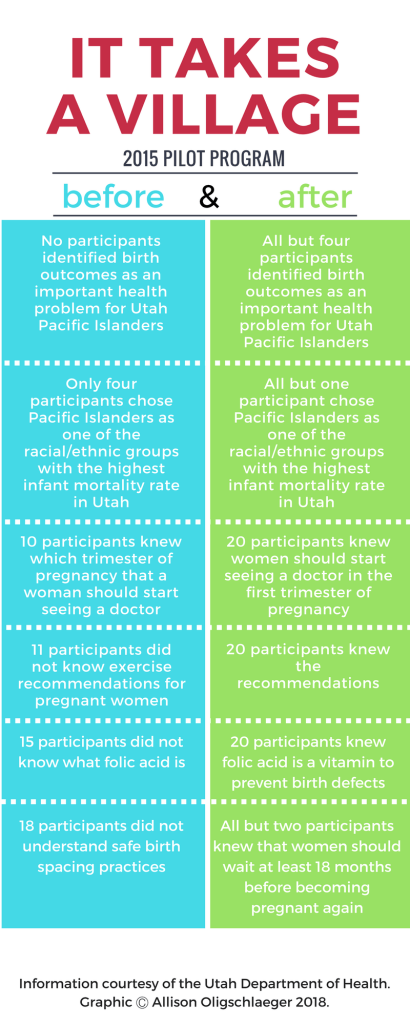
Alongside lack of insurance, researchers identified a lack of knowledge/understanding as the primary barrier to accessing prenatal care. In later focus group results published by the health department, no participants identified birth outcomes as an issue in the Pacific Islander community and most seemed unsure of what prenatal care was.

Looking for insight into this knowledge gap, Fitisemanu and Lita Sagato, who worked for The Queen Center at the time, began conducting individual interviews with Pacific Islander mothers.

“Our biggest concerns were making sure [the research] was an honest reflection of the community, meaning we actually went out to homes and met with different mothers and different women that had experienced losses,” Sagato said in a phone interview.

They found that for Pacific Islander women — even those who were born in Utah, spoke English as a first language, and/or had a college degree — the primary source of information about pregnancy and childbirth was older women in their families.

“So if you think about it, you ask your grandma … who delivered a baby in a village in a hut,” Fitisemanu said. “She doesn’t know what folic acid is, she doesn’t believe in ultrasounds — she had five healthy kids under a mango tree!”

Perhaps as a result of this, only 48 percent of Utah Pacific Islander mothers receive any sort of prenatal care within their first trimester, compared to the state average of 78 percent. Even among those who do receive professional care, the advice of family and community members is often valued above doctors’ recommendations.

“If no one in the family has experience with what you’re saying, they may go with what auntie said or what grandma said or what sister-in-law said over the advice of an MD or OBGYN,” Fitisemanu said.

Armed with insight and funding, the health department’s Office of Health Disparities established the MAHINA Task Force, a network of Pacific Islander public health professionals, educators and activists. MAHINA, a loose acronym for “maternal health and infant advocates,” is also the word for “moon” in Hawaiian and Tongan and the name of the moon goddess in many pre-colonial Polynesian religions.

“The health department said, ‘Hey, we want to help you with this. We see these statistics are really bad — one preventable death is too many — so what can we do?’” Fitisemanu said. “These women looked at the curricula and the different things the health department had and said, ‘Yeah, this stuff is not going to work in our community.’ It targets the mother, but if less than 50 percent of these mothers are even getting in in the first trimester, we’re missing all of those women.”

Working together with The Queen Center and the MAHINA network, Fitisemanu and Sagato set about adapting the health department’s approaches to maternal and prenatal health to better suit the needs of their community. This meant shifting the focus from the individual woman’s choices to the entire family’s lifestyle, in keeping with Pacific cultures’ emphasis on collective well-being.

“Everything important to us really is the family, the village,” Sagato said. “If everyone’s on board, it’s much easier for the women to take care of themselves.”

Fitisemanu also emphasized the practical necessity of involving the family.

“If we tell the mom, ‘You’ve got to take folic acid, you’ve got to eat this, you’ve got to exercise,’ but everybody in the house is eating a full pig for dinner, that doesn’t help,” Fitisemanu said.

Story continues below graphic.

beforeandafter

MAHINA’s community-oriented curriculum, titled “It Takes A Village,” was first debuted in a Salt Lake City focus group in 2015. The program spanned six weekly sessions, held in a Polynesian church building, and focused on teaching expectant mothers and their families what they can all do to promote healthy pregnancies and positive birth outcomes. Discussion topics included things like folic acid, diet and exercise, and birth spacing. The health department report on this pilot program notes that while participants were initially skeptical of advice on birth intervals, they were more receptive after learning that their ancestors practiced birth spacing.

“The pre-colonial constructs regarding that and customs regarding that are actually exactly the same,” Fitisemanu said. “We insert them into this curriculum to remind them, and these old ladies are like, ‘Oh yeah! That’s what my mom taught me.’”

Joyce Ah You, founder and director of The Queen Center, said the importance of culturally relevant resources cannot be overstated.

“It is everything,” Ah You said in a telephone conversation. “Having the program tailored to Pacific Islanders, making sure it’s culturally appropriate, we spoke to them. We didn’t speak about what was going on with Hispanics or African Americans, this is what’s happening in our homes.”

Even adjustments as simple as using photos of Pacific Islander women and families in slideshows make a difference, Sagato said.

“If they see Caucasian women on there or other ethnicities, they’re going to think, ‘Well, that’s not us,’” Sagato said. “When they see themselves on there, it kind of gives them a reminder that it affects all of us.”

confidence

The pilot program was “wildly successful,” Fitisemanu said, and is the only study in Utah’s health department history to have negative attrition, meaning it ended with more participants than it began with.

“That never happens when you do public health studies!” Fitisemanu said. “It’s a pretty neat program.”

Since its rollout in 2015, “It Takes a Village” has been through several rounds of testing and revision. About 200 Pacific Islander women and couples have completed the program to date, according to program manager Brittney Okada of the Office of Health Disparities.

“We are very proud of this curriculum,” Okada said in a phone interview. “To see the response — to see how they are taking pride in their culture and to see how it relates to maternal and child health, to see this light bulb go on when you mix in the cultural wisdom, it’s quite beautiful.”

Okada and her colleagues are in the final stages of preparing to release the curriculum to the public in April 2018. It will be available for free on the health department’s website, along with facilitator manuals and participant workbooks, for noncommercial public use. Okada hopes local Pacific Islander communities throughout the state will take advantage of the curriculum and implement it in ways that make sense for their populations.

“We are excited to see what might happen and to see how the community can take this program and make it theirs,” she said.

The health department has also been approached by public health organizations in Hawaii and California hoping to adapt the curriculum for their own Pacific Islander populations.

Ah You, who founded the Queen Center with her husband Sale Ah You “to help our people and give back to the community,” said her experience with the MAHINA Task Force was deeply fulfilling.

“I realized how much work needs to be done, but I realized also how much our community, my community, is like a sponge,” Ah You said. “They’re so willing. It just needs to be brought to their attention.”

This slideshow requires JavaScript.

Cultural awareness through dance among Pacific Islanders in Salt Lake City

Story and photos by SHEHERAZADA HAMEED

Traditional Tongan dances are stories sung by the singers and acted out by the dancers, says travel writer David Stanley, author of Tonga Travel Guide. He explains that in a dance the words are represented by the movements of the hands and feet, not the hips.

But you don’t need to travel to the Pacific Islands to admire Polynesian performing arts.

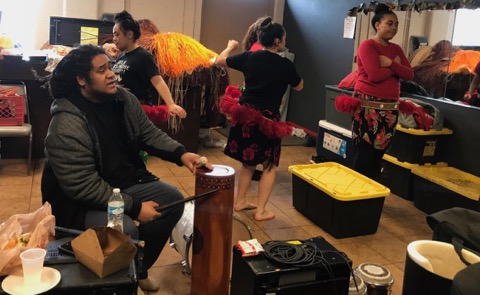
On a cold February afternoon, Haviar Tuitama Hafoka, Malialole‘s leader and drummer, was teaching children from East High School in Salt Lake City. The dance they were practicing was to be performed at an event just a few weeks later.

Malialole 8

Haviar Tuitama Hafoka with a toere drum.

Haviar was teaching three boys the steps of their part of the choreography. Barefooted, they were slamming their feet against the cold concrete where a small heater was working in an attempt to heat up the large space. While the boys were repeating the steps under the sound of the drums, Haviar’s sister, Singa Fonua, was helping three girls to dress in traditional dresses that she was pulling out of large plastic bins. Behind a screen wall, the girls put on black skirts and colorful belts as decoration.

Malialole 1

Haviar Hafoka is teaching boys from East High School the steps of Otai dance.

Fonua is not only the person in charge of the costumes and appearance. She is also the contact person who manages the calendar of events and practices. For her, Haviar said laughing, “She is like the drill sergeant.”

Malialole (mah-lee-yah-low-lay) is a Salt Lake City-based music, dance and art performing group, promoting cultural awareness among Pacific Islanders. The group performs music and dance from the islands of Samoa, Tonga, Hawaii, Tahiti, Tokelau, Niue, Aotearoa (New Zealand) and the Cook Islands. In their dance studio at 1133 Glendale Drive, rehearsal and lessons are held daily.

The group was named for Haviar’s niece, who was the first to be born in Salt Lake City after the family relocated from Kansas City, Missouri. His mother, Merine Vida Tuitama Hafoka, who is Samoan, founded the dance ensemble. Haviar says Malialole is a symbol of something new, innovative and innocent, which is the beat of the group.

The next part of the practice in the studio is to merge the boys’ dance and the girls’ dance into a choreography. Haviar was directing them while drumming on a large wooden drum. “Keep your arms up higher. Girls, your fingertips should match up to your nose. Try it again. Ready?” The drum was loud and the students danced in the rhythm. The boys’ moves reminded a visitor of martial arts while the girls’ moves were feminine. Fonua reminded the dancers a few times to smile.

Malialole 2

The girls dress while the boys rehearse.

Haviar is strongly connected to the art of drumming. Drums are used to call for attention; to announce a town meeting or prayer; or warn of war. Haviar added, “In Tahitian culture, they [drums] are actually representative of the male and female counterparts.” He also said the stick and the drum represent the mother and the father replenishing the earth. Haviar explained the different types of drums. “The big ones are called lalis, these ones from Tahiti are called toere and the ones from the Cook Island are called pate, the big roller ones are takiruas, but they all serve the same purpose.”

Haviar explained the dance they were practicing is called Otea and is traditionally used to appease the gods in a request to make the land plentiful. “That’s why you see a lot of sensual moves and lots of hip shaking.” He said this particular dance tells the story of the ocean hitting the land.

Haviar gave a break to the dancers and while munching on warm fried chicken and pizza, they prepared for the next dance. Fonua said she makes sure all kids are fed before they leave the practice. She added some of them come from single-parent families or others leave home early for a practice.

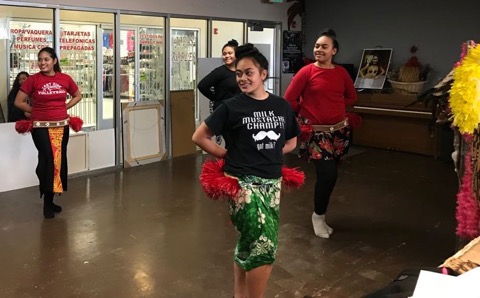
For their second dance, they played a song on a large speaker. It filled the room with the sound of a soft and sensual island melody in a native language. The moves are feminine and are performed by girls only. Haviar explained the dance is Aparima and literally means “the kiss of your hands.” It is an interpretive dance and the song is about love and keeping someone close to yourself.

Malialole 9

Girls from East High School dancing Aparima.

Haviar explained that every aspect of dancing in Polynesian culture is about telling a story. The dance is interpretive and lyrical. Meaning that if the dancer’s hands are up, the movements relate to the sky, sun or moon. If the hands are down, they relate to the earth and the ocean.

Haviar said every part of the costume must be made of materials from the land. The colors are meaningful as well. For example, the yellow and red represent fire.

For the parts of the costume, especially the titi skirt, Haviar said, “It is used to enhance the dancer and represents the land wrapped around the individual and is developing the spirit of Tahiti.”

Malialole 7

From left: Singa Fonua, Selu Hafoka and Simi “Jimbo” Hafoka.

Merine Vida said, “Every different island has its meaning and we dance from our soul out to our hands and tell a story about our generations that have past and generations that are in the future for us.”

Malialole 4

Merine Vida Tuitama Hafoka, the founder and director of Malialole Dance Group.

By Pacific Islanders’ tradition, the first and second cousins are considered brothers and sisters. Haviar said the family members in the group number about 70 people. They all participate in Malialole. There are about 30 additional performers from Salt Lake City schools.

The whole family is involved with the dance group. They all have full-time jobs, but when it is time to teach and perform, they are available for the community. The main performing art group is broken into smaller groups by age, starting at 5 years old up to 40 years old. They also have a smaller performing group that goes out and performs at events and weddings.

The Hafoka family and the Malialole dance group are involved in a few different projects. In December 2017, they performed for the Mundi Project. It is a campaign that helps disadvantaged children to have access and play musical instruments and learn music. Haviar’s sister, Selu Hafoka, was the highlighted artist focusing on storytelling through music. She is also one of the choreographers for the ensemble.

Malialole participated in a workshop for the People in the Pacific at Utah Valley University in March 2017. At the annual event, the group teaches students about dance, music and cultural arts in the islands.

Maliaole also manages Talk2Me, an organization reaching out to families and creating a platform to speak about bullying, depression, suicide and family law in Pacific communities around Salt Lake City. About the program and the Pacific youth, Merine Vida said, “The kids understand that they will have bad days, but there is something brighter at the end.”

Another project developed by the Hafoka family is WhoGotRoots. It is a Polynesian high school competition that occurs in April between schools in Salt Lake City. The performers must focus on three island groups. They have 20 minutes to perform three dances or songs and the winners receive a prize of $1,000.

Haviar said students are judged on executing the culture correctly and properly. He thinks the competition gives the kids a platform to present their knowledge of Polynesian music and dance.

Malialole’s involvement in Salt Lake City schools helps to keep Polynesian youth occupied after class. Spending afternoons at practice prevents the young dancers from taking drugs and joining gangs, which are threatening the new generations of Pacific Islanders.

Haviar remembered, “There was a time when my life fell away. And it was our culture. And it was our music. And our dance, that brought us back to reality; to realize that there is something better out there we can be doing. We don’t want our kids to fall into that same sort of habit.”

Haviar said there are more dance groups in town that serve the same purpose. “In our culture, especially, the parents are really grounded, they are really good, they teach us respect, but when kids come out to the society, the kids don’t translate it so well.”

The newest event among the Pacific Islanders in Salt Lake City is the Pasifika First Fridays. It is a Salt Lake City-based initiative dedicated to celebrating Pacific Islander artists and art every first Friday of the month.

Malialole 5

Selu Hafoka singing at the Pasifika First Fridays evening with Nia Haunga and Simi “Jimbo” Hafoka. Haviar Hafoka is on the drums.

Heritage and belonging are essential for the Pacific Islanders and the tradition of celebrating their uniqueness through dance, music and art, every first Friday of the month. This is one more event that will unite the community.

At the EMBER venue in downtown on March 2, 2018, Haviar and his brother Simi “Jumbo” Hafoka opened the evening with some traditional drumming. While the room was filling with guests, Merine Vida sang a song with Selu Hafoka, the lead singer and her daughter, and the vocalists Lavinia Haunga and Nephi Moe. Nana Utai, who is also a choreographer and dance teacher, performed a solo dance.

Haviar wishes the Islanders can be more connected to locals and other communities, but he still puts family first. “Family is the core of everything,” Haviar said.

“What I wish to do more,“ Haviar said, “is to reach out to more individuals to recognize us. We can recognize ourselves within our community, but we are not validated without other communities.”


Image courtesy of Nicole Aguirre and Siva Pasefika, a Polynesian dance company based in southern Utah that performs and teaches children and families about Pacific Islands dances and traditions. 

Diabetes is a health risk with Pacific Islanders in Utah

Story and photo by JANICE ARCALAS

IMG_2789

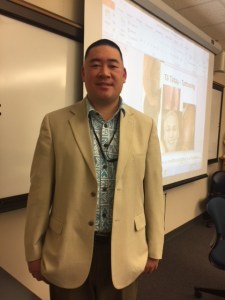
Jake Fitisemanu Jr., chair of the Utah Pacific Islander Health Coalition.

Type 2 diabetes is a health risk among Pacific Islanders in Utah. According to a Pacific Islander report done in 2011 by the Utah Department of Health,  the rate of Utah Pacific Islanders is at 13.7 percent. This is nearly double the statewide rate in Utah, which is at 6.5 percent.“The biggest risk factor for diabetes is being overweight or obesity which is a huge problem in Pacific Islanders,” said Dr. Kalani Raphael, a University of Utah associate professor of internal medicine, in an email interview. “Of course obesity is related to poor diet quality and low physical activity, so these factors contribute.”

According to the 2011 report, 63.6 percent of Pacific Islanders in Utah were considered obese. Researchers  defined obesity to be a body mass index of over 30. Poor diet and sedentary lifestyle are the main factors that contribute to Pacific Islanders getting diabetes, said Jake Fitisemanu Jr., chair of the Utah Pacific Islander Health Coalition, in an email interview.

Rice is a common food that is in a Pacific Islander’s diet. Rice has lots of carbohydrates, which can spike blood sugars. “Rice is a huge one and is an unfortunate staple of the diet,” Raphael said. “Potato or macaroni ‘salad’ is another one and lots of processed foods.  I also suspect that there is a low proportion of fruits and vegetables.”

Many Pacific Islanders think that since their family members have diabetes there is nothing they can do about it. “My experience is that it is one of the toughest things to deal with. There is a lot of fatalism meaning that a lot of Pacific Islanders think that since their family members had diabetes that there is nothing they can do about it when there is a lot that can be done to lower their risk,” Raphael said. “Same thing for the complications like kidney failure. I hear a lot of people say that they don’t think they can prevent kidney failure because their family had it.”

One complication with Pacific Islanders who have diabetes is language barriers. According to the report, those interviewed in English had lower obesity rates than those interviewed in Tongan and Samoan. The Utah Department of Health also found that those interviewed in English were more likely to perceive themselves as overweight compared to Samoan and Tongan speakers. “Language barriers for providers that don’t speak the language or have access to an interpreter are an issue. Also providers who don’t understand the culture make it challenging,” Raphael said.

A traditional Polynesian diet wasn’t always like this. “The traditional Polynesian diet was plant-based, varied, and very healthy. This was a protective factor that was further strengthened by the very active lifestyle the ancestors lived. Fast forward to today, that healthy lifestyle and wholesome diet has been replaced by modern sedentary lifestyles and sugary diets that increase the likelihood of developing diabetes.” Fitisemanu said.

Resources are available to Pacific Islanders in Utah who have diabetes. “The Utah Department of Health’s Office of Health Disparities developed a brief video in English, Samoan, and Tongan languages that mention some overall health tips that can help prevent diabetes and promote overall wellness,” Fitisemanu said. “There is also a diabetes pamphlet in Samoan that the UDOH Diabetes program has published. Local health providers from our Pacific communities are also good resources, including Dr. Kalani Raphael, Dr. Liana Kinikini, Dr. Kawehi Au, Uaisele Panisi, [and] Karen Mulitalo.”

Raphael mentioned community resources such as the National Tongan-American Society, which assists with diagnosing diabetes and counseling. It is located at 3007 S. West Temple, Bldg. H, in Salt Lake City. Another resource is the American Diabetes Association of Utah, located at 986 W. Atherton Drive, Suite 220, in Taylorsville.

The report of the health needs of Pacific Islanders advises limiting sugary drinks to help control obesity, which is a factor that causes diabetes.

“Our communities need to be aware of the risk factors and symptoms of diabetes so that they can try to reduce their risks and be able to identify diabetes early on, before serious complications occur,” Fitisemanu said. “Our families, social groups, and churches need to take more proactive roles in encouraging healthy living while providing support for those who seek treatment, and acknowledge and incentivize those who comply with treatment and make improvements. Apathy and normalization are the two worst enemies in this fight against diabetes. Because it’s so prevalent in some families and communities, it can become normalized and ‘accepted’ as an inevitable fact of life, and that notion is not only false but also incredibly dangerous to us as a community.”

Diabetes can be overwhelming but there is hope. “Diabetes is a complicated disease that requires a lot of self-care, but the motivated and informed patient can be successful,” Raphael said.

Pacific Islanders coalesce to preserve their culture

Story and photos by WOO SANG KIM

The Sixth Utah Pacific Island Heritage Month — an annual celebration held to increase the profile of the Pacific Islander communities and raise awareness of the different Pacific Islands — will be held July 28, 2018, from 6-11 p.m. at Sorenson Multicultural Center & Unity Fitness Center at 855 W. California Ave. in Salt Lake City.

Susie Feltch-Malohifo’ou, executive director of Pacific Island Knowledge 2 Action Resources, proposed the observance in 2013 and Gov. Gary J. Herbert declared August as Utah Pacific Island Heritage Month.

Will Unga, career adviser at Salt Lake Community College, has assisted with hosting the annual celebration at the Sorenson center. “The event is like Hawaii. We offer different types of foods and teas. Some people love it. Some people find it interesting. Some of the dishes are lu sipi, palusami, ika, taro and cape. We also have dances like haka, mari, sipi tau and siva tau and arts like tattoos, drawings, ta moko and tatau,” he said.

“We prepare yearlong, working to offer tables for vendors or to let them perform. We want to get to a level of having an application process to elevate the level of quality,” Unga added.

He said the event is extremely short-staffed. Volunteers’ time is limited. More money is needed to hire an overseer. Yet, Feltch-Malohifo’ou’s drive and determination have helped the event to expand exponentially each year.

“The first celebration was a test, the second was going somewhere and the third was phenomenal. The first gathered about 100 people, mostly the families and friends of the event associates. The second had 300 people and the fourth had 600 people,” Unga said.

Micronesia Cultural Booth participated as a vendor at the past celebration. Melsihna Folau, a third-grade teacher at Pacific Heritage Academy who volunteered for the booth, said, “We aim to raise awareness of the current problems of the Micronesian region and educate people about the culture of Caroline Islands, Mariana Islands, Marshall Islands and Kiribati Islands.”

2

Folau helped in hosting the Micronesia Cultural Booth.

Folau said the staff offered food and clothing as samples. Pilolo, tapioca mixed with banana and coconuts, and kemalis, rice mixed with coconuts, are given. The staff also answered questions about the Micronesian region. Most inquired about global warming and what the inhabitants are doing to slow the heating, Folau said.

“It took us six months to prepare. We had to get approved from the Marshallese government, connect to friends in Kiribati Islands, write to tourism management companies and talk to visitors from Guam. Getting the approval was the hard part,” Folau said.

The vendor also increased in size and had to divide. “The Marshallese wanted to have their own things, so they separated last year. They were excited to show their crafts and share things that they were shy about before,” Folau said.

“We are all part of the one history with different perspectives. I was excited to learn from experiences and network with people. I am just happy that I have been a part since the beginning,” Folau said.

The Queen Center, a Pacific Islander nonprofit promoting healthier lifestyles by providing cultural resources, tobacco prevention and advocacy and education, also has participated in the heritage celebration. Tufui Taukeiaho, a health sciences instructor at Granite Technical Institute who served as a committee member to the nonprofit, said, “We helped out by starting a 5K run.”

Taukeiaho said the Queen Center has hosted the run since the first celebration. The 5K started with 80-100 runners but the number surged each year. The funding from the run was given to two families. The husband of one family had a kidney failure and the other family had a 4-year-old boy who had cyclin-dependent kinase-like 5 (CDKL5) disorder — a rare X-linked genetic disorder that results in difficulty controlling seizures and severe neurodevelopmental impairment. Each family received a check of $6,000.

3

Taukeiaho assisted families in need by helping coordinate the 5K run.

“Helping out to host the 5K run as a committee member and handing out the checks to the families was very rewarding to me,” Taukeiaho said.

The celebration increased the cultural awareness even among Pacific Islanders. According to a Salt Lake Tribune article, “One of every four Tongans in the U.S. calls Utah home,” Utah boasts the second largest Tongan population and fourth largest Samoan population in this country. Yet, Unga said, “Second-generation Pacific Islanders have never been home (Pacific Islands). They don’t get any more of the culture, food, and language.”

Second-generation Pacific Islanders responded very positively to the past celebrations. “They can’t get enough. They want more. After the taste, they save up money to go back to the Pacific Islands and see more, especially the language,” Unga said.

They also garnered an opportunity to network with other community members. “I advise and connect students to other Pacific Islanders. I help them get internships and jobs, and refer them to other business contacts,” Unga said. “I help no less than 50 students a year.”

Some students even took part in the fourth celebration by screening a film. Unga said students from Salt Lake Community College made the film incorporating the Pacific Island videotaping techniques learned from the New Zealand filmmakers.

Participants gained novel experiences, too. “When you work with people, you have to learn to compromise. Keeping mind and heart in the right spot answered my question of what I want to accomplish at the UPIHM. Past years have been that way,” Unga said.

“Pacific Islanders are a very small group of minorities,” he said said. “We have challenges because of that, and we have one common goal: To live a happy life. We just want everyone to be successful and try to be good members of the society.”


Why Pacific Islanders in Utah have trouble connecting with mental health care

Story and photo by ALEXANDRA OGILVIE

Most Pacific Islanders live in a clan-based family society, where the family unit as a whole is viewed as more important than the individual, said Susi Feltch-Malohifo’ou, the executive director of Pacific Island Knowledge 2 Action Resources (PIK2AR) in Salt Lake City. Family is so important that many Pacific Island languages don’t distinguish between “brother” and “cousin.”

However, this family-based support system often prevents Pacific Islanders from getting professional help with mental illnesses and domestic abuse.

Karson Kinikini, a Pacific Islander and a licensed professional counselor of mental health, said in an email interview, “As a tribal/family based culture, they may more naturally seek support from within their family system in non-clinical ways. Often times, the concept of counseling (going to talk to a stranger about personal things) seems like a foreign concept to a people who have learned to rely on each other. Polynesians are often LDS in Utah, and so they have another support system of the Church, who they will often talk to before reaching out to a stranger.”

While having a strong support system is key to good mental health, family members and clergy often aren’t trained to give mental health advice. This is generally OK when the problems are about having an unrequited crush, but can become problematic when a family member has an undiagnosed serious mental illness, Kinikini said.

One example of mental illness is depression. Depression can present in many ways other than feeling sad all of the time. In men, it can often show itself as aggression. “All types of mental health problems were positively associated with aggression perpetration,” according to a study in the Journal of Family Violence.

This is certainly not unique to the Polynesian community, but the Organisation for Economic Co-operation and Development reports that Polynesian women are at the same risk for spousal abuse as are women in Somalia and Afghanistan.

Line drawing of sad people

A bipolar woman’s visual description of her illness. Used with permission.

One of the programs that PIK2AR offers is an anti-domestic abuse Pacific Island initiative. Feltch-Malohifo’ou said domestic abuse doesn’t end when families leave the islands and come to Utah. She said the family clan system also contributes to women not seeking help. “Women are expected to carry their share of the family burden.”

According to the Office of the Surgeon General, racism is a major barrier when it comes to getting mental health help. “Ethnic and racial minorities in the United States face a social and economic environment of inequality that includes greater exposure to racism and discrimination, violence, and poverty, all of which take a toll on mental health,” it stated. And for good reason, the office reported, “Their concerns are reinforced by evidence, both direct and indirect, of clinician bias and stereotyping.”

Along with overt racism, racial minorities tend to occupy the lower socio-economic echelons. Kaati Tarr, a Pacific Islander who is a licensed clinical social worker in Salt Lake City, said in an email interview, “In my opinion, it’s a combination of culture and socioeconomic status. Having insurance coverage helps, but still, the co-pay might be considered excessive, especially if paid weekly. $25 x 4 visits a month is $100 dollars that could be used to pay for food and higher priority basic needs.”

According to The Utah Health Department, “16.3% of PIs (Pacific Islanders) reported that someone in their household had been unable to receive needed medical care, tests, or treatments during the past year, usually due to financial barriers.”

Kinikini, the counselor of mental health, said money isn’t the only missing resource — mental health professionals often don’t have translators. “Services available in a native Polynesian language is very difficult to find access to. I, for example, am of Tongan descent but I do not speak Tongan. I have struggled to find native language speaking therapists to refer native language speaking clients to. Consequently, often the solution is to have a family member or friend translate. This can limit the effectiveness of the counseling process.”

Studies have been done on bridging this gap for other racial minorities, such as Latino and black communities. But, few data exist on Pacific Islander communities, so many families and mental health professionals are left on their own to determine best practices.

“The overall rates of mental disorder for many smaller racial and ethnic groups, most notably American Indians, Alaska Natives, Asian Americans and Pacific Islanders are not sufficiently studied to permit definitive conclusions,” the NIH reports.

Tarr, the local clinical social worker, said, “Unfortunately, I don’t have any additional resources to provide you with … that’s part of the issue, I think.”

But local Pacific Islanders like Kinikini and Feltch-Malohifo’ou are working toward closing that gap.

Empowering cultures in Pacific Islands community in Utah

Story and photo by DAYNA BAE

Utah has the largest Pacific Islander population in the United States per capita. Approximately 38,000 Pacific Islanders are currently living in the state. However, stereotypes against Pacific Islanders are considered a significant obstacle in constructing their own cultural identities.

Susi Feltch-Malohifo’ou is having an interview at the University of Utah.

“Our first, second and third generation, they are floating around with lost identity,” said Susi Feltch-Malohifo’ou, the executive director of Pacific Island Knowledge 2 Action Resources (PIK2AR). “When they are in their home, they are Americans, when they leave, it’s not how we perceive ourselves, it’s about how you perceive me.”

Pacific Islanders often face stereotypes related to their physical strength. They are commonly thought of as athletes due to their physicality. Consequently, many Pacific Islander figures in mass media and pop culture are typically portrayed as security guards or athletes.

In addition, many Americans tend to view different Pacific Islander cultures as one identical culture. This creates yet another stereotype.

In fact, Pacific Islanders consist of Polynesians, Micronesians and Melanesians divided into three different regions. Polynesia includes Hawaiian Islands, New Zealand, Easter Island and the Samoan Islands. Micronesia incorporates the islands of Kiribati, Nauru, the Marianas such as Guam, Fiji, Norfolk Islands and other small islands. Lastly, Melanesia is comprised of the island of New Guinea, Papua New Guinea, the Solomon Islands, New Caledonia, Fiji and few other smaller islands. Since each region has different geographic, historical and weather conditions, there are obvious differences among the Pacific Islanders.

Jacob Fitisemanu Jr., a clinical manager with the Utah Department of Health and an associate instructor of ethnic studies at the University of Utah, said, “Literally hundreds and hundreds of different languages are spoken throughout the Pacific, accompanied by myriad worldviews, artistic perspectives, governance systems, subsistence patterns, etc.”

Despite diverse Pacific Island cultures, a misconception as perceiving them as one group pervades in everyday life.

“When I went to the hula dance class, the instructor told me that she thought every Polynesian knows how to do a hula dance,” Feltch-Malohifo’ou said.

To correct pervading misunderstandings, PIK2AR focuses on emphasizing dissimilarities and cultures of various Pacific Islands communities. The organization offers educational and cultural programs such as the Utah Pacific Island Heritage Month, an annual festival held in August. Regarding the missions of PIK2AR, Feltch-Malohifo’ou said, “To educate outside of our community of similarity between all of our countries, but also some differences.”

Feltch-Malohifo’ou shared what she had witnessed in East Palo Alto, California. “Pacific Island kids were coming to know how to go to college.” She was helping them with filling out the documents. “There was a missing bridge between culture and resources,” she said.

According to NBC News report, many Pacific Islander students have experienced a lack of academic support and information. Some students were frustrated by filling out Free Application for Federal Student Aid (FAFSA) documents. The others did not feel confident about signing up for scholarships.

Although Pacific Islander students are willing to go to college or university, many of them do not have access to adequate information due to lack of appropriate support. Lack of academic resources leads to unfortunate statistics. Empowering Pacific Islander Communities, a nonprofit organization, announced that only 18 percent of Pacific Islander adults have a bachelor’s degree.

Biased perspectives also hinder Pacific Islander students from building cultural identities.

Feltch-Malohifo’ou said, “It feels like they need to uphold stereotypes and they are pigeonholed by everybody around them that they have to be this way.” One of the common stereotypes is that Pacific Islander students play in a football team at school. “How about if they don’t want to be a football player?” she said.

Putting them into a pigeonhole not only influences their school life but also has negative effects in their life.

Although PIK2AR has not yet quantified the depression rate among Pacific Islander teenagers, the suicide rate has increased in Utah and a 12-year-old committed a suicide in 2017, according to Feltch-Malohifo’ou.

As a response, PIK2AR prioritizes children and young students from Pacific Island communities who are suffering from intertwined identity and stereotypes as primary targets.

“We try to educate and reach out to youngsters,” Feltch-Malohifo’ou said.

One of PIK2AR’s cultural preservation education programs is using cultural objects of Pacific Islands communities. They use the objects to educate young students. Kava bowls and tapa cloth are the examples. “A kava bowl, maybe it’s different, but everybody can recognize that it comes from the Pacific Islands community,” Feltch-Malohifo’ou said. With the objects, PIK2AR tries to find cultural commonalities and builds meaning around it. Teaching about shared culture helps young children to differentiate dissimilarities between Pacific Islands cultures as well as the common features. “We teach the history and teach about the objects. Because it still has value,” she said.

Fitisemanu shared his idea about another effective method of cultural preservation. “Teaching and developing literacy and fluency in heritage languages is another important piece, and this process involves updating language with new words to reflect modern contexts that our ancestors never encountered,” he said.

Fitisemanu also suggested that documenting oral histories and perpetuating ceremonies, customs, language and performing arts are all necessary to preserve culture. “But more importantly, to me, is demonstrating the value of these practices and values for contemporary Pacific Island generations, who will ultimately decide what cultural traits to maintain and transmit to future generations,” he said.

A community can also provide a useful way of preserving culture.

Fitisemanu lives in West Valley City, which has the largest Pacific Islander population in Utah. He said that his daughter is involved in many cultural aspects by attending school, participating in cultural dance classes and speaking Samoan language in the community. He said, “Preserving a sense of Pacific Islands identity and culture is facilitated here, whereas it would be very difficult for my family to maintain cultural and language connections if we lived, say, in Sevier County,” he said.

Young Pacific Islander students are currently living in American multicultural and bilingual settings. Within the mixed Pacific Islands culture and American culture, students need help and support to develop their own unique identity.

Fitisemanu said, “We should encourage children to be versed in English and their heritage languages. That kind of upbringing teaches children to be very observant situational learners who pick up on social cues and learn to code switch and see through different perspective lenses.”

Local universities and colleges also put efforts to work with Pacific Island communities. The University of Utah has the Pacific Islander Student Association (PISA), which is a student-run organization within the Center for Ethnic Student Affairs (CESA). The student group enhances learning experiences and provides off-campus opportunities to serve Pacific Islands communities. In addition, the Pacific Islands Studies Initiative (PISI) is an academic collective that makes the U as a premier institution for Pacific Islands studies.

Utah has the largest population of Pacific Islanders per capita in the nation, and it also has numerous organizations and communities to support them. Pacific Islander organizations such as PIK2AR and PISA aim to provide cultural preservation, economic support, domestic violence education and other useful programs for Pacific Islanders in Utah. 

What happens when brave women make waves in their communities

Story and photos by HANNAH CHRISTENSEN

IMG_20180210_113831

Matapuna Levenson and reporter Hannah Christensen at the SLC Family Justice Center, YWCA.

Pacific Island (PI) women who experience domestic violence often feel powerless, helpless and alone because the American idea of rugged individualism contradicts the ideals of PI collectivism.

Matapuna Levenson, Salt Lake Area Family Justice Center at the YWCA lead guide and advocate, said, “When intimate partner violence occurs, somebody is making you believe that you are not powerful. We need to go back to remembering and believing in ourselves both as individuals and as a people, that we are powerful. We’re resilient, we’re here, we’re alive.” Those of PI descent embody this power and strength through honoring and remembering where they have come from.

Levenson spoke to how this deep connection with their ancestral and cultural roots is sacred to the PI community. They have passed down many traditions, beliefs and ways of living that provide a stark contrast from the colonized white world of America.

Leata Puailoa Hunt is an advocate against domestic abuse. She is a native of Samoa who now lives in Draper, Utah. “In our true culture, high chiefs honor their wives and treat them like queens and then all the daughters in a home are treated like princesses. We keep them in a sacred status,” she said.

Historically, women of the Pacific Islands were in positions of power and held in high regard. Today they are raised to be strong matriarchs. “The good thing about our culture,” Hunt explained, “is we’re trained as girls growing up to be mothers already, we can cook, we can clean, we can solve problems, we can do this. We are independent and we can carry a family, but also at the same time I love that we train our men to respect our women.”

While many PI communities continue to treat women with reverence, something switched when patriarchal systems were introduced to the islands. Levenson, with the YWCA, said, “I’m going to blame patriarchy, because it’s not just white capitalists. Whenever there is an opportunity to have power and control over individual groups or communities, they’re going to do it. And it’s typically men, that’s just history. We have to combat and oppose this historical power.”

Levenson explained how indigenous PI communities did not have these complex power dynamics. A well-known Samoan proverb, “Ó le fogāv’a e tasi,” translates to, “The canoe has one deck.” This is the PI mentality at its best. Everyone is on the same boat, striving toward the same goal, together as equals. It wasn’t until power dynamics were introduced that the canoe became difficult to navigate.

Both Levenson and Hunt spoke about how the hierarchy of power was introduced to PI culture and the result was individualistic thinking. The clash of the collectivist community ideals and the egocentric mentality results in a lot of confusion, cognitive dissonance and anger. This is one underlying reason that domestic violence is happening within PI communities. The contradiction here is that because of the deep-seated beliefs, everyone works together for the greater good of all, and rather than challenge the systemic problem, it is best to ignore or not speak out when there is violence in the home.

Not feeling able to speak out about abuse also stems from the strong PI beliefs in families and family unification, because it is important to protect the family name. Hunt said “a family will hide secrets, like abuse or domestic violence, you know, things that are going on that shouldn’t be going on, that’s actually another key factor because of the family name. They hide it or sweep it under the rug and go forth as a perfect family that has a title.” Hiding these secrets within families is sometimes the only way a family can keep their titles and status in the community.

IMG_20180214_114722

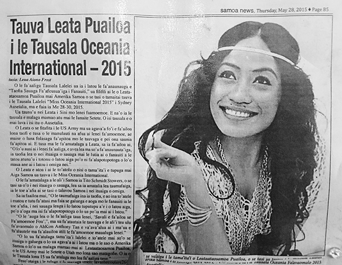
A Samoan newspaper featured Leata Puailoa Hunt in the 2015 Miss Oceana Pageant in Sydney, Australia.

Hunt recalled how there was much less tolerance for abuse in Samoa than there was in American Samoa. “If someone is abusive or commits adultery, they will be fined by the village and if it was really extreme, they would be banished from the village,” she said.

Hunt is an advocate for those who have been abused because she lived through her sister’s domestic violence abuse. “There’s no excuse for it no matter what. I know from my personal upbringing, it is not part of our culture, it is not taught on our homeland.” Hunt advocated for domestic abuse survivors as a contestant in the 2015 Miss Oceana Pageant in Sydney, Australia.

There are many resources in Utah for victims and survivors of domestic violence within the PI community. Pacific Island Knowledge 2 Action Resources (PIK2AR) is one of them. Susi Feltch-Malohifo’ou, co-founder of PIK2AR, started the organization with her husband, Simi Poteki Malohifo’ou. He and other men wanted to get involved with the domestic violence issue in the community. Feltch-Malohifo’ou said of the men who started this group, “They came together because they recognized that there is a problem.” She has been an advocate for women because she herself is a survivor of domestic violence.

Feltch-Malohifo’ou coordinates many programs to provide support for PI women. These programs provide a safe space for them to share their experiences. The YWCA also focuses on empowering women and connecting them with resources. Levenson, who grew up in a domestically abusive home, shared, “I asked a survivor once, ‘What do you need to feel more comfortable in sharing your story?’ And she said very quickly and naturally, ‘I just need to hear other people share theirs.’ And that’s it exactly.”

Additional resources can be found on the Salt Lake Area Family Justice Center’s website, the Utah Domestic Violence Coalition website and the Utah 2-1-1 website. Women also can dial 2-1-1 for help and connection to resources.