From confusion to confidence: Search for self-acceptance as a transracial adoptee

Story and photo by MARISSA SITTLER

Through childhood, adolescent and adult memories, the first transracial adoptee from Tonga recalls the feeling of never being able to fit in within her Tongan heritage, or the white culture that she was raised in. And, how she was able to turn this insecurity into one of her greatest strengths.  

Susi Feltch-Malohifo’ou turns 55 in 2018. But she was 3 years old when a white couple legally adopted her. She left the staff quarters where she lived with her biological mother and moved into the main house on the plantation estate.

It was the first day that Feltch-Malohifo’ou started living with her adoptive parents that her Tongan grandfather said to her, “So from here on out you don’t speak Tongan. I don’t ever want to hear you speak Tongan again before I cut your tongue out.” Feltch-Malohifo’ou is able to speak a little Tongan, but cites her grandfather’s admonishment as a reason why she has never truly been able to pick up the language.

Before moving to America when she was 12, Feltch-Malohifo’ou lived where there was lots of diversity and was never taught to be aware of skin color. She adds that she never heard the terminology “black” before, or that people had to be different skin colors, or be labeled at all.

Feltch-Malohifo’ou first experienced racial tension in Vernal, a town about 170 miles from Salt Lake City that she described as predominantly white and Mormon. She recalls, “I remember kids said, ‘Where are your parents?’ and I would say, ‘Right there.’ The kids would say, ‘You’re black, and they’re white.’ And I’d be like, ‘I’m black?’”

In high school, Feltch-Malohifo’ou remembers how she never dated, because of the way that the boys at her high school viewed her: as a brown girl. She says, “I was best friends with guys that I played sports with, but I wasn’t someone that they dared asked out, even though I knew they wanted to.” This feeling of being romantically undesired is one of the ways that her self-confidence was negatively impacted.

She also recalls, “I was really a follower. I just wanted to be accepted.” She says she never really felt part of the majority in her high school, partially because she was never able to fit into the same clothes or shoes as other girls in school. She felt “different.”

Growing up with her adoptive white family, Feltch-Malohifo’ou remembers that her brothers and sisters never recognized that she looked differently than they did, other than the variation of their hair colors. She says, “But [my family] never talked about skin color. So I didn’t recognize that I was a different color. I had never thought about being different, because in my family I was the same as my siblings.”

Angela Tucker, a transracial adoptee, creator of the website The Adopted Life and advocate for adoptee rights, believes in the importance of parents talking comfortably to their transracially adopted children about some topics that may be uncomfortable to discuss, such as racism. Tucker said in a phone interview, “It’s hard for a transracial adoptee to have a high intact self-esteem if the parents aren’t able to talk about racism.”

Kathy Searle, Utah director of program for the Adoption Exchange and parent of transracial adoptees, also believes that how parents choose to be involved in resources for their transracially adopted children can further strengthen the relationship between parent and child.

In an email interview, Searle said, “I also think that it’s important for adoptive parents to join communities that are the same race as their children. They need to cultivate relationships that can help them to better understand what their children face.”

It was when Feltch-Malohifo’ou played volleyball at a Northern California community college that she was around a lot of Pacific Islanders for the first time. She says, “My world was so different. So I did a lot of observing, I did a lot of watching, and trying to fit in.” She went from wanting to be accepted in “this white world,” to wanting to be accepted by the people who looked like her. It was only when she attended college that she discovered what the word racism meant.

Despite her desire to belong, she still was not accepted. “I was still different. I didn’t fit here, I didn’t fit there,” she says. Feltch-Malohifo’ou believes it was her upbringing in a white household that truly set her apart from her similarly looking peers.

In a clear moment of self-reflection, Feltch-Malohifo’ou says, “I’ve had problems just, like, figuring out where do I fit in this world. And so I went way this way, way that way, just trying to figure out where it is that I actually I fit in. Till I just started finding my own voice and realizing that everybody has value, everybody has privilege.”

While Feltch-Malohifo’ou says it has taken her many years to be comfortable and confident in herself, she has learned to love her unique “hybrid” background. Her perspective and understanding of white and Pacific Islander culture allows her to successfully be the executive director of Pacific Island Knowledge 2 Action Resources (PIK2AR), a community resource group.

PIK2AR’s mission “is to help Utah’s Pacific Islander communities flourish through providing culturally-relevant resources, opportunities and services to help build alliances, bridge communities, and provide opportunities.”

Feltch-Malohifo’ou believes she has finally found her place with PIK2AR. Before, she felt like an outsider, but “now I have a whole group of people who have been struggling like me trying to figure it out.” She hopes that her work with PIK2AR will be able to create a space for the generations of Pacific Islanders that follow, without facing similar struggles that Feltch-Malohifo’ou did herself.
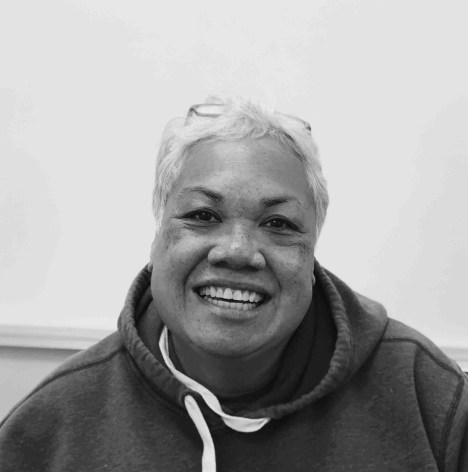
Processed with VSCO with b1 preset

Susi Feltch-Malohifo’ou before meeting with a women’s resource group that is organized by PIK2AR.

Why music matters: cultural anchors in the Polynesian diaspora

Story by ALLISON OLIGSCHLAEGER

To Ogden filmmaker Te Anu Tonga, music is more than a hobby.

“Music is a language to us, and maybe even a first language,” said Tonga, 37, who was born in New Zealand to a Maori mother and Tongan father. “It is our whakapapa.”

So when Tonga felt the need to reconnect with her whakapapa, a Maori concept of heritage, genealogy and identity, she returned to New Zealand to produce a documentary on kapa haka, an indigenous performance art based in music and dance. Kapa haka functions as a key source of cultural celebration and preservation for the Maori people and provided an ideal lens through which to view Tonga’s central questions of identity.

“At its core, kapa haka is, ‘Who are you?’ ‘What are you made of?’ ‘Where do you come from?’ And when you find that out, what are you going to do in the future?” Tonga said in an interview.

Tonga’s forthcoming documentary, “Keepers,” details kapa haka’s impact on the families, communities and identity development of three Maori teenagers from different Auckland high schools. The film follows each school’s kapa haka team through their competition season, a year of competitive performance that culminates in Ngā Kapa Haka Kura Tuarua o Aotearoa, or the National Secondary Schools Kapa Haka Competition.

IMG_6672

Maori teenagers perform at a regional kapa haka competition. This is a still image taken from the trailer for “Keepers,” Te Anu Tonga’s upcoming documentary on “kapa haka, culture, and keepin’ it real.” Courtesy of Te Anu Tonga.

Tonga, who immigrated to Utah as a 5-year-old girl, says the art is a powerful tool in developing a sense of identification with one’s heritage. For her, it seems natural that such a tool would take the form of music.

“Singing is just so natural for them back home,” she said. “They’re all bottle-fed on music.”

Joel Kongaika, a Tongan American who lived in Tonga, Samoa and Hawaii before moving to Utah in 2009, said music is a key feature of cultures throughout the Pacific.

“It’s not as formal — there’s no opera house, there’s no musical theater, it’s not as first world or institutionalized — but you get way more music with it not being that way,” Kongaika said in a conversation in his Centerville home.

Children in Polynesia learn music from a very young age, Kongaika said, beginning with exposure through their parents and churches and later through formal musical instruction in elementary school. Singing is not reserved for the “talented,” “expressive” or “effeminate” — it is considered an activity for everyone.

“As a young person, it’s never something that you’re ashamed to participate in,” Kongaika said.

For first-generation Utahns like Tonga and Kongaika, Pacific music and dance are invaluable links to their home cultures. They foster community, preserve language and articulate cultural history and values.

Kongaika’s daughters Anna and Eryn, who were born in Hawaii, have each taken several years of Polynesian dance classes here in Utah.

“Our hope is that the girls have exposure to their roots,” Kongaika said. “I’d rather they take hula lessons than piano lessons.”

Kongaika also tries to introduce his children to indigenous music. Two of his daughters are taking ukulele lessons from their grandfather, and Anna keeps a playlist of her favorite Hawaiian music for family road trips.

Kongaika’s father, Isileli Kongaika, lives in South Jordan, where he attends a Tongan-speaking congregation of the Church of Jesus Christ of Latter-day Saints. Although Isileli speaks excellent English, he prefers to attend a Tongan-speaking assembly where he can worship in his native tongue and sing the hymns he grew up with in the islands.

Between Salt Lake, Davis and Utah counties, the LDS Church has 42 designated Tongan congregations. But each meeting features a blend of English and Tongan language use, Isileli said – especially the musical numbers.

“One person will sing the English translation, the person next to him will sing the old Tongan language verse,” Isileli said in a phone call. “I find it difficult to do myself because I am used to the old one, so I just sing my own way.”

Isileli said the language chosen by each singer depends largely on their age, with the older congregation members typically opting for the Tongan originals and most second- and third-generation members singing in English. However, as their language skills improve, many young churchgoers find themselves drawn to the original Tongan versions of hymns they once sang in English.

“They’ll pick up some words, some language, and I do see some pick up the Tongan songs and hymns,” Isileli said.

Many second-generation church members cite a desire to learn their heritage language as their primary reason for attending a Tongan-speaking congregation or for joining a Tongan church choir, which typically performs traditional music or Tongan language hymns.

“Everyone who goes to church sings, so these choirs are basically the entire congregation,” Joel Kongaika said. “To see music still helping to care for Tongan language is a big deal.”

As in the islands, the choirs welcome each and every singer.

“With our culture, it’s not about who can sing really well,” Te Anu Tonga said. “You’ll get someone who’s singing and you can just tell they’re going home. It may not sound the best musically, but you can feel that he’s just missing home, and he’s going to go there and take us with him.”

From kapa haka to church choir, polished performances to impromptu a capella – for Polynesian Utahns, the music of the islands is a powerful cultural anchor.

“Wherever we are in the world, we are home,” Tonga said.

Cultural rediscovery in Utah’s Pacific Islander community

Story and photo by DIEGO ROMO

Pacific Islanders have a long history and legacy in the United States that spans multiple generations. In Utah specifically, according to many sources, Pacific Islanders can trace their roots to religious immigrants who arrived shortly after the original Mormon pioneers. The community has left its mark on Utah’s unique cultural heritage and has been shaped by it as well.

Statistics from the Utah Department of Health show that the state is home to 38,000 Pacific Islanders and the average age among the community is 20 years old. Only one-quarter of those who identify themselves as Pacific Islanders are foreign born, meaning that three-quarters of Utah’s Pacific Islander population has no physical tie to the cultural homeland of their ancestors. This leaves many in the community culturally severed from their history and people.

This void leaves many feeling lost, as if they are floating between the two identities that help them to establish their self-image.

“I always felt divided,” said Susi Feltch-Malohifo’ou, executive director of Pacific Island Knowledge 2 Action Resources, a Pacific Islander community resource group based in Salt Lake City.

Unlike many of the younger generations of Pacific Islanders in Utah, Feltch-Malohifo’ou has a direct, physical connection to her homeland. The daughter of a woman who worked as a housekeeper at a Mormon coconut plantation, Feltch-Malohifo’ou was born in Tonga, but was quickly adopted by a pair of Mormon missionaries who oversaw the estate.

She described the plantation as one very similar to the those of America’s deep South: rolling lawns with many trees and the key feature situated in the middle, the plantation manor.

Her life changed when she moved into the manor and began attending church school with the children of fellow Mormon church workers in Tonga.

“In my school picture, I’m the only Tongan,” she said. “I lived in Tonga, but didn’t have the real experience.”

Feltch-Malohifo’ou remembers celebrating American traditions like Halloween and Easter, and always having running hot and cold water, an uncommon luxury in Tonga at the time.

From a very young age she adapted to her new life with its unfamiliar traditions and culture, but began to lose some of her Tongan heritage in the process.

When she finally arrived in Utah after spending some time in Texas, she was eager to get back in touch with the Pacific Islander community. But initially she felt like an outsider among her people.

“When I interact with other Pacific Islanders I have a hard time relating,” she said.

Many who share similar experiences to Susi Feltch-Malohifo’ou express the same sentiment. This may be attributed to the fact that the Pacific Islander community in Utah is very diverse in and of itself.

According to 2010 census data, the community breaks down into four groups: native Hawaiians, Guamanian, Chamorro, Samoan and Other Pacific Islanders. However, the census is not fully representative of how diverse this community truly is.

For those who are second-, third-, even fourth-generation Pacific Islanders born in America or raised in its culture, it can be difficult to pinpoint which cultural identity to relate to.

“I always looked at what made me different from them,” Feltch-Malohifo’ou said, referring to her connection to the Pacific Islander community. “My parents gave me opportunities that other kids of my situation didn’t have.”

Those opportunities and experiences isolated her from the community that she considered family. With no cultural anchor, Feltch-Malohifo’ou began to reach back out to the Pacific Islander community. She was surprised when the welcome wasn’t as warm as she had hoped.

She recalls an early incident when a co-worker at a former Pacific Islander community resource group told her, “If I close my eyes, you think and sound white.”

Hokulani Aikau, a University of Utah professor can relate. “It’s hard to find a way to connect when you feel like an imposter in your community,” she said.

IMG_8322V2

Hokulani Aikau, a University of Utah professor in the Gender Studies department, is collaborating with fellow faculty to launch the Pacific Islander Studies Initiative.

Aikau was born in Hawaii but was raised in Utah for the majority of her life. She shares many of the same cultural dilemmas as Susi Feltch-Malohifo’ou because she was raised in a primarily Anglo society.  Aikau grew up going to schools with white student bodies who were taught by white faculty, about a primarily white history and subject matter.

“How can we claim Hawaiian identities when we were raised here?” Aikau said.

She brings up a major dilemma in the community. How can Pacific Islanders maintain cultural identities when travel back to the islands is sporadic and access to the native language is limited and even nonexistent in some cases?

“Where do we go for that information? Universities are supposed to be a place for that,” she said.

Aikau, along with other professors and staff at the University of Utah, are launching the Pacific Islander Studies Initiative, an enterprise set forth by the university in order to further diversify its faculty and curriculum.

She described it as a hiring initiative that responds to the cultural needs of the community. This initiative would provide Pacific Islander students — who make up about 1 percent of the university’s population — with a culturally relevant education that challenges and critiques the status quo, while at the same time teaching students alternatives that are culturally relevant to their backstories and histories.

“You have to provide students with alternatives,” Aikau said. Especially those that are culturally relevant.

“The most important thing is the building of confidence,” she said, adding that Pacific Islanders “need to know there is a place for them here.”

She also touched on the fact that cultural education needs to address the diversity that exists within the Pacific Islander community.

“To be Hawaiian does not equal dancing hula and working at taro farms. You can express your culture in a variety of ways,” she said.

Feltch-Malohifo’ou’s organization, PIK2AR, provides another avenue for cultural education within the community by empowering parents and families with culturally relevant resources. These resources then help parents take that information back into the home to begin teaching children of all ages about their heritage.

“There needs to be more avenues for diversity within the ethnic communities,”  Feltch-Malohifo’ou said. But ultimately, “It’s about connection. It feels good to be valued,” she added.

Brandon Ragland, whose mother moved to Utah from Hawaii as a young child, seems to agree that implementing cultural education in the home is key to helping children understand their identities.

“Growing up we did lots of things to learn about our heritage and people. Every Sunday the entire family would get together,” Ragland said in a Facebook chat conversation. “We would have endless amounts of amazing food from home and after we ate, my great aunt got all the kids together, she’d teach us some short history lesson as well as a few Hawaiian words for everyday things,” he said.

“And the importance of passing each of those down to through the family to keep the spirit of aloha alive,” he added.

Ragland is now a father and says that he has been and will continue teach his son all that he learned from his great aunt.

“There’s a vast amount of history coming out of the Hawaiian Islands and knowing about it helps keep our ancestors’ memories alive,” Ragland said.

Cultural education is one way to rediscover one’s culture, and it can come in many different forms. But ultimately, it helps to clear the foggy area between cultural intersections and can provide a sense of identity to many who feel lost.