From Mexico to Utah, a man gave his family freedom

A life buried to create another

LEWIS WALKER

What is a human being with no true place to call home? And what would it feel like to be abandoned by your own country and risk your life to create a better life for yourself.

“My job is not to be popular, It’s to do what’s right,” said Salt Lake City Police Chief, Chris Burbank. Utah, being one of the highest cities that hold refugees makes it a vulnerable situation for discrimination and racial profiling because they are not from this country, or state for that matter. “People are unaware of the rights they have in this country,” said Burbank.

Efron is a 45-year-old custodian at a Salt Lake County recreation center. He has seen and experienced many things in his life before crossing the border into a country that offered him a much healthier lifestyle. “Thirty years ago I was in Mexico where I was born, and had many horrible things happen to me and my family,” said Efron, whose name is being withheld to protect his identity. He said, at one point he had to sell cocaine to support his family after his mother was killed because of the troubles his father brought to the family. Wanting a much better life, Efron ran away from his home, trying desperately to cross the border and transform his life.

In January 2010, according to the U.S. Department of Homeland Security, there were nearly 11 million unauthorized residents living in the 50 states, which were approximately the same as 2009, but less than 11.8 million in 2007.

“The first time I tried to cross over to the U.S. I was 15, but I didn’t make it very far and bad things happened to me,” Efron said. In 2010 there were 0.7 million unauthorized citizens in the U.S. that were 18 and younger, which is where Efron would have been if he made it the first time. Instead many years later, when he finally made it to the U.S. he joined the highest amount of Immigrants from the DHS source of 2.3 million men of the age’s 25-34-years old.

“Discrimination and racial profiling is not the way to solve this problem,” Burbank said. “The number one goal is to protect the constitutional right of every individual.”  Burbank was very into protecting the individual rights of people as he talked to a journalism class at the University of Utah.

Efron, although has admitted to doing a lot of illegal things just to gain possession of a green card and become a citizen of the United States, would not trade any of the hardship he went through to get to this point of time in his life. “Now that I have made it to a better place, I do not look back at all,” said Efron. Happy to have finally buried his past and created a better one for his children, Efron is happy where his hard work and faith has landed him. “I gave my children freedom that I didn’t have, I had to force myself out of fear to allow them to have a life they can enjoy and I am happy with that,” Efron said.

-30-

Millions spent in Utah state prison for illegal immigrants.

Utah illegal immigration issue in the works                                                                                                                                   by MCKENZIE DEAN

With the issue of illegal immigration vastly growing, Utah is taking action to make a better situation out of a sticky one for every person that resides in the Beehive State.

As of most recent, Bloomberg Business Week, reported in its Feb. 23 issue, the state of Utah spends eight million dollars a year to keep nearly 300 illegal immigrants in prison. In addition, the state spends $55 million on undocumented children’s education.

Like Utah, the rest of America continues to pay costs associated with illegal immigration, as courts and the federal government continue to wrestle with the issue.

In 1994, Congress’ established the North American Free Trade Agreement (NAFTA). With good intentions, the government established a trilateral trade bloc among the United States, Canada and Mexico. Since its creation, some critics argue, NAFTA has backfired and developed into a large contributor towards illegal immigration.

“Ninety percent of trade that happened through the agreement were drugs. In addition, it lowered the amount of patrolling between the borders, allowing many undocumented people to come to the U.S,” said Scott Haskell, West Jordan Utah Police force. “It is an agreement that backfired on us and has been a large contributor towards the mass amount of illegal immigrants living in America currently.”

That in mind, the government allowed more than intended to effect America and the issue of illegal immigration to vastly grow.

Here within the state of Utah, it has been an issue that has caught national attention. A Utah law in which police were required to verify immigration status of victims of a felony, is actually violating the United States Constitution.

“Racial Profiling is committed too much and we need to allow it not to happen,” said Salt Lake City Chief Chris Burbank. “A different tone needs to be set.”

Simply asking undocumented immigrants for personal information interferes with how the government pursues its priorities in federal law enforcement.

With the knowledge that there is no way to completely stop illegal immigration, there are numerous ways the judicial system can improve the situation, some say.

“Working to become legal is the biggest and best step that immigrants can do. The ability to earn a work visa will also prevent enforcement issues from continuing as much as they do,” said Rick Marshall, Nye County, Nev., Assistant Sheriff.

Nye County, which is located in rural Nevada, has taken positive steps toward addressing illegal immigration.

A woman in the county had entered the United States illegally.  While she was growing up, her parents worked to gain legal status. She had earned her work visa, become a U.S citizen and later graduated from the Nye County Police Academy to join the Nye County Sheriff’s police force with Marshall.

Situations like these are what need to occur more often. People are not aware of their right and things to do in order to gain citizenship, noted Marshall.

“There is definitely a need for more understanding towards every citizen here,” Burbank said. “It would be a failure of our system if we allow a person to become victimized without their own understanding of what is to be justifiably right.”

Building bridges with the Mexican economy

By BLAKELY BOWERS

Immigration has always been an issue in the United States, and continues to be. With immigration comes the issue of racial profiling, or singling an individual out for criminal suspicion based solely on skin color or ethnicity.  Racial profiling is illegal, but often this discriminatory pigeonholing sets the enforcement tone for those in the law enforcement profession.

“If you give the public an example of conduct to follow, get them to enlist and help stand up for what’s right instead of just accepting or allowing these wrong things to happen in their society, then we can make progress” said Salt Lake City Police Chief Chris Burbank. “We need to make sure that criminal behavior profiling is setting the tone, not racial profiling.”

According to Burbank, immigration is the biggest issue facing law enforcement in Salt Lake City, and it’s a matter in dire need of reform. Salt Lake City has one of the highest percentages of legal refugees in the country, he said, along with a steadily increasing number of illegal immigrants. As the number of immigrants rises, so does the need for change.

A Salt Lake City police officer who asked to not be named because of his current work as a narcotics agent, said, “In the past 20 years on duty, I have never seen an issue so impacting on so many levels as immigration is. In some way my job as an officer is impacted by immigration on a daily basis.”

The language barrier plays a big role in this change. “In order to narrow the divide between those who speak English and those who don’t, the community should provide more assistance and printed material in other languages” Burbank said. Some say it is unfair that we make exceptions or change our ways to accommodate non-English speakers, seeing it only fit that immigrants learn the language. The only way for them to progress as contributors to our society is by providing them the necessary measures to know how to follow the laws, to start off on the right foot, and to learn the language.

Burbank tells a story he said is far too common in Salt Lake City, about an immigrant who was misinformed by an acquaintance that he could purchase a license plate from him, slap it on the back of his car and drive legally. The inevitable happens: he is pulled over by the police, confused and still unsure of exactly what’s going on. Driving an unregistered vehicle with stolen plates, this is just the beginning of his troubles.

By preventing the undocumented from having the right information regarding laws and regulation, society is not preventing illegal immigration, Burbank said. “We are allowing them to drive improperly; we are allowing them to break the law unknowingly.” The Salt Lake City Police Department now publishes a handbook for people to read in more than 14 languages. This handbook provides immigrants with the information they need in order to become legal, to properly drive, to register vehicles and to observe neighborhood zoning rules.

You can read detailed information about these handbooks and more immigration assistance here.

Paul Ahlstrom, a long-time Salt Lake City resident, moved his family to Monterrey, Mexico almost three years ago to run a venture capital firm. He has a strong relationship with the state of Nuevo Leon, the state in which Monterrey is located. Watching first-hand the immigration issue from both sides, Ahlstrom became a driving force behind HB 466, which became law in 2011. In brief, the bill passed to start a state program corresponding with the federal guest worker program beginning a partnership between Utah and Mexico to start bringing guest workers here.

“The main factor in this bill is creating a proper way to study the legal, economic, cultural, and educational impact of illegal immigration on Utah. Providing a way to find the right answers in the right ways, not just creating a temporary solution,” Ahlstrom said. To read about Ahlstrom’s current progress in assisting Mexican entrepreneurs, you can visit the Alta Ventures website.

He advocates for providing the right aid and information for immigrants, not simply continuing to allow their illegal entrance to the U.S.  He believes the answer is to assist Mexican citizens in strengthening their own countries by building their economies. “We need to see the positive impact these immigrants have on our country, as well as the positive impact we can have on theirs. The best immigration policy for Utah is aiding in building the Mexican economy.”

Got the chops to be a cop?

by ZACH ARTHUR

Becoming a police officer is a process, and those who are thinking about embarking on the journey should know what they are getting into.

Salt Lake City Police Chief Chris Burbank spent 15 years as an officer on the force before becoming the capital city’s police chief.

He won the 2011 award for “Utahn of the Year” from The Salt Lake Tribune, and has been trying to take positive steps with the police department since he became chief.

Burbank has said that, “Police officers jobs are to prevent crimes from occurring.” The question is how does one get to be in position to even become a cop?

It all starts with tests and training.

The National Police Officer Selection Test (NPOST) is the first test that prospective police officers must take. Reading comprehension, vocabulary, memory recall and math are a few of the test areas.

A high score in the NPOST gives police departments an indicator of the subject’s potential because the test asks questions that are relevant to skills a police cadet will learn at the academy.

High test scores give the police department an incentive on taking them in for more training or sending them to the Police Academy.

A series of physical examinations comes next. Potential employers can determine what kind of shape the applicants are in.

These tests include how many push-ups and sit-ups an applicant can do in one minute, as well as how fast he or she can run a mile.

If the subject passes these tests with high scores, a background check comes next. Tests in this section include a lie detector exam, a drug screening and a psychiatric evaluation.

All in all, the entire police officer (training regimen) can take up to six months. Those who are not ready for such a strenuous experience are likely to fail early in the process.

Former University of Utah student Jesse Wood, 21, has been thinking about becoming a police officer since he was in high school.

“I was never set on what I wanted to do as far as a career or life plan, but I can always remember considering becoming a cop,” Wood said.

A profession that requires its employees to have a gun strapped to a hip for the entire day is anything but a safe job, but Wood isn’t thinking of future employment in terms of its safety factor.

“Is the job potentially dangerous? It absolutely is. But walking across the street is dangerous in its own way. It’s really not about if I can get killed, but more about if I can make a positive impact on society.”

The opportunity to change the world around him drives Wood toward becoming a police officer.

Yuki Leavitt, on the other hand, has considered being a cop because of the heroism that comes with the title. Leavitt’s catch is that he doesn’t know if being a hero is worth hours and hours of work it takes to get there.

“I’m a college student and as much as I’d like what comes along with the title of becoming a police officer, I just don’t know if I have the time,” the 21-year-old Leavitt said.

“Becoming a cop is not as simple as filling out an application and handing it in to see if you got the job. There is test after test. I have plenty of tests I’m taking in school right now.”

Burbank has been close and personal with danger multiple times in his career. While he says that most officers will never be put in a situation where they must use their firearm, he also knows that moment may always present itself.

“I’ve never shot anybody,” Burbank said, “I’ve been involved in 13 separate incidents where I could have used deadly force by the statute and been OK under the law, but have not.”

Burbank believes there might even be a danger in using a firearm in the line of duty.

“The majority of law enforcement officers that discharge their gun in the line of duty don’t last beyond five years after doing so. They change their mind and they leave the profession.”

Your Community Is Safe

By Jason Nowa

Being there for each other in a community can be burdensome for families trying to live in a safe environment. With Utah’s ever growing population there is more criminal activity throughout the years, and families tend to lean upon the local police for safety. This can be a constant concern for worried citizens. Salt Lake Police Chief Chris Burbank (Voices of Utah) says “We are here for you. There’s no reason to be afraid.”

Burbank spoke recently to students at the University of Utah about the Salt Lake Police Department and the efforts his officers put forth to keep the state’s largest city safe.

Burbank, 46, has been on the force nearly half of his life, or 21 years on the job.

Burbank emphasized the need for the eyes and ears of all Salt Lake City residents in fighting crime. Last year alone there were 12,000 burglaries, he said. There are only so many police officers to go around, but, he said, many more citizens are able to see and report criminal activity. Everyone in a community can be a watchdog.

“Our role is to prevent crime,” Burbank said. “ We can only truly prevent crime when the community helps us and gives us a call.”

Communication skills can help descalate a tense situation very quickly if an officer can get into the mind of an individual. In spite of stereotypes from TV cop shows, most real police officers will never fire a service revolver in the line of duty, Burbank said.  The chief’s philosophy is to calm a difficult disturbance in various ways before ever thinking of drawing a weapon. In an unruly crowd, for instance, popular wisdom might demand police put on riot gear and use mace at any sign of danger. Burbank said the use of these measures at first puts on a defensive tactic and might quickly enrage an already excited crowd.

“Pepper spray is a use of force. There are other ways to calm a conflict,” he said.

He wants to remember to observe every person’s constitutional rights and the ability to voice opinions. Burbank’s approach would be to first have a conversation with people to help them, followed by telling them their options and then to put into action the safest decision possible.

Burbank said there is gang violence (Voices of Utah) in the Salt Lake area, mostly in Glendale and West Valley City. There are about 5 officer shootings a year. The law defines a gang as two or more people gathered and involved in criminal activity. Burbank said the majority of officers involved with shooting someone usually don’t last beyond five years on the job after an incident.

The gang violence in Salt Lake has become more silent in recent years with gangs staying off the police radar and drug dealing mostly. During his tenor he said the biggest gang he had to deal with was a Tongan Crip gang in Glendale but they are mostly nonexistent nowadays. Anybody that is involved in any way with gang activity whether they commit an actual crime or not are considered suspects and will be jailed for whatever involvement they have. Burbank emphasized this would help crack down on the friends who are just along for the joy ride.

Ethical dilemmas occur daily as Burbank emphasized, “We are part of the community, and we work for the public. And my responsibility is to not allow racial stereotyping. I will not allow my officers to act as such.”

Salt Lake Police officer in charge of Public Relations, Cary Wichmann, mentioned that police officers jobs are very serious in nature and that any help the community can ever provide is helpful information.

The Metro Gang Unit (Voices of Utah) was created to establish identity, control, and prevent criminal gang activity. This force provides data and assistance to all law enforcement agencies. This unit also provides helpful information for youth on alternatives to being involved in a gang, and provides education for the public about the destructiveness of the gang lifestyle.

The Metro Gang Unit works in part with the Unified Police Department of Greater Salt Lake.

The UPD is a helpful specialized force that serves various communities within suburban Salt Lake. These participating cities share the costs with neighboring communities which save local governments and reduce the tax burdens of citizens. The pool of services that the UPD provides is SWAT, forensics, records, dispatches, K-9, and media services.

Salt Lake County Sheriff Jim Winder is the CEO of the UPD. Winder oversees local precincts but that each precinct has their own commander which was chosen by the given city. Commanders are those who run the precincts and have authority over traffic, patrol, and crossing guards. Winder explained the organization of the UPD. Eight elected officials from participating communities serve as the Board of Directors over the UPD. They oversee global and local policies along with operational, budgetary, and human resource issues.

The Executive Management has Winder as the county sheriff serving as CEO. There are also financial and human resource management advisers. The various communities have joined together to have the UPD serve their cities. Operational and cost efficiencies are achieved by the sharing of resources that ordinarily wouldn’t be fully utilized by a single community.

New plans for old problems

by: ZACHARY ARTHUR

Salt Lake County District Attorney Sim Gill recently voiced his policies on rehabilitating drug addicts while visiting a University of Utah class.

Gill, originally born in India, came to Utah in 1971 and is a graduate of the University of Utah and Lewis and Clark College of Law in Portland, Oregon.

Gill said that his interest in law started back when he was living in India. He described seeing a man who cleaned the Gill home for living wrongfully accused of stealing jewelry.

Authorities took the man in front of a crowd and beat him for the alleged crime. “I still remember as a little boy, walking out to the courtyard,” Gill said, “And they were wailing on him, they were beating on him”

This experience set the tone for how the rest of his life would play out. Gill began his career as a public prosecutor and after 15 years, he was appointed as chief Salt Lake City prosecutor by former Salt Lake Mayor Rocky Anderson.

Gill would go on to become the first Indian born district attorney in the history of the United States. Over the years Gill developed a passion for mental health issues and drug abuse, and the way that both tie together.

For Gill, mental health issues can lead to drug abuse, which then leads to prison for most. Unfortunately, instead of helping people with these problems while in prison and when they get out, he believes the system of continually sending them to prison becomes a habit.

“We as a result start locking up people that we dislike rather than locking up people that we are afraid of,” Gill said.

Numbers based on the people inside of the prisons is disproportionate to who is on the streets.

Two to five percent of people in society suffer from some kind of mental illness. Yet, 17 to 21 percent of people in prison suffer from some kind of mental illness.

How are these numbers so different and what different solutions are at society’s disposal?

Gill’s plan for the mentally ill who keep moving through the revolving door from the street, to prison and back again is for them to commit to a carefully supervised treatment plan.

Defendants who are ready to commit to a 12-36 month treatment plan will have support through Mental Health Court, administered by Third District Court in downtown Salt Lake City.

The treatment only excludes sex offenders, active DUI cases, excessively violent, and mentally incompetent people who cannot be treated with proper medication. This allows the program to reach a wide variety of people.

Gill believes, that if the people are ready to buckle down and commit to the treatment plan, then they are ready to be free of their addiction and able to treat their mental disease with some responsibility and determination.

Offering respect to those who struggle with mental illness pays off, Gill believes. “The worst thing you can do to a person is to make them insignificant, to disrespect them.”

So far, the program has been a success in several ways. The state has lowered the cost to treat the people in the program while increasing their care at the same time.

The average length of a prison stay for program participants has also decreased.

Chad Myers, a recovering drug addict who lives in Salt Lake City supports Gill’s view of restorative justice, including mental health court.

“I’ve been sober for four months now and I credit the majority of my sobriety to the programs put in place for me,” Myers said.

“My rehabilitation is going to be a battle that I face my entire life, but if I continue to be strong and work with the resources around me then I know that I will succeed in the end.”

Although Myers does not have any mental health, he still knows the depths of addiction.

“Every day is going to be a struggle because I was heavily addicted to cocaine, but I am confident in myself and what I am doing to know that I will not be going back.”

Jason Nowa

MY STORIES: Sim Gill Story, Chris Burbank Story, Utes Basketball, Utes Baseball

My Blog: Living Words

I enjoyed this class I just took at University of Utah, Communication 3660 with Holly Mullen, a lot because it taught me a variety of things that I need to know for my major and for an eventual career in journalism. communication. We have created multiplemedia presentations that help further a career in this field. I have made a Twitter account and understand how it works now, as before I didn’t have one.

The LinkedIn portfolio helps provide myself  to connect with others in a business format. Multimedia is necessary nowadays to communicate with other people. The picture-taking is important, as well, to show you are well-rounded in this field as we have done in some assignments this semester.  I liked the X-ray readings analysis because it gives me a chance to read and really think and analyze an article instead of just reading to read. The analysis helps you to point out grammar issues, along with format and ideas.

The writing projects we did with Sim Gill and Chris Burbank were an eye opener as to how to write. I struggled to start with ideas on where to go with the law and justice portion of the assignment at first. Once I figured out which direction I could go with each article I did OK. I felt like I did a lot better with the enterprise stories, about Utah Ute baseball and Ute basketball, because it was something I was interested in and felt like I could really write about the stories I did. Ideas were a lot more free- flowing in my mind as to what to write about, after I figured out the topics I would write on. The interviewing in this class for the articles we did continued to remind me of the field I’m going into and how it will be in real life. The interview process is all about positive communication, even when denied. Persistence is necessary to be a good journalist. The Study Abroad Fair was the first real interviews for the class to get us ready for other interviews we did in the semester.

I learned a lot this semester by working on my writing. I know that I can write if I have a topic I’m interested in. New ideas might always be a struggle, but it keep me always thinking. I think positioning or formatting an article is something I can work on by brainstorming beforehand  to get my articles to be more cohesive. I need to read more AP Style to be able to remember how to write certain things before I write instead of looking it all up afterwards. Overall, this class has really helped me to be more confident in my writing, my interviewing and the fact that I can succeed in this field for a career. The only thing that got hard was having multiple articles being written at once. I will have to get used to that though. I really liked the suggestions that you, Holly, gave us as our teacher after I wrote because it helped me to see how I can write in an active voice and make things simple to read. Learning how to write is always a process of continuing to become better. I think writing these articles has helped me and practice will make perfect.

Writing about sports is what I enjoy because my entire life I have played them and to still have it in my life is important to me. Only a few people are lucky enough to make professional sports a career, but to write on games, or teams is something that keeps me young and competitive. Emotion is something that people enjoy in life and sports provides such thrills for people to entertain that.

Though I have written before in my life in high school and at a previous university, it had been a while for myself and I had forgotten for a while how to write. This class I took really helped me to get back on track with my writing style with help from my teacher. I hope to continue in the journalism world and make a career for myself some day.

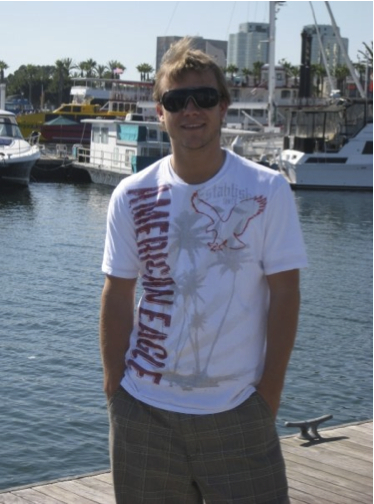
ABOUT ME: My name is Jason Nowa. I’m a student at University of Utah. I love sports and music. I am 25 years old. My major is communication. My hometown is in Southern California. I want to be a journalist because writing about my hobby of sports is interesting to me. My stories will have a great impact on myself and those who read them.

Photo by Jason Nowa

Laura Schmitz

MY STORIES:

Johanna Wischmann

MY STORIES:

MY BLOG:

Doing beat stories are a lot of work. I learned a lot of skills and new information throughout my journey doing beat stories. I never went to the west side of Salt Lake City before doing the beat stories. The stories taught me that there is a lot more diversity in Salt Lake than most people would assume. Doing these beat stories I realized that there will be a lot of times that I will not know anything about a story and it will be completely new to me. During my career I will have to do a lot of things that may make me feel uncomfortable. Doing these things will strengthen me and prepare me for the greater tasks that I will one day have to face. The beats have not changed my views on politics or religion. During high school I volunteered a lot and have already been aware of the issues in our state. I learned and became more aware of foundations in Salt Lake City that can help people. As a communicator it is my responsibility to report what is going on, no matter how bad or good it is. It was not very difficult to stay objective because as a communicator you must be able to understand that it is your job to be fair and stay objective no matter how you personally feel about the matter.

ABOUT ME:

Originally, I am from Hamburg, Germany. I have been living in the United States for the past 11 years. For the last three years, at the University of Utah, I have been studying mass communication with an emphasis on visual journalism. I am also minoring in leadership studies. I plan to graduate in May 2012. For almost a year now I have been interning at KUTV Channel 2 News. I love to travel and hope to discover stories everywhere in the world.

Melanie Holbrook

MY STORIES:

MY BLOG:

Reflection: the intentional consideration of an experience in light of particular learning objectives. As I’ve taken the time to reflect on my service-learning course, I’ve learned a lot about myself along with having had epiphanies about my career.

Throughout the course our class focused on nonprofit organizations located on the west side of Salt Lake City. From September to November, we had to write four stories about four different organizations; this process included research and interviews with multiple sources.

It sounded like a simple process to me at first, but contacting sources can be difficult. People may not get back to you, their schedules may be too busy for an interview or they may have trouble answering your questions the way you’d like. Our stories also required multimedia assets. My beats pertained to organizations helping youth, which then raised another problem of permission of taking pictures of children.

A lot of times you’ll come across organizations not allowing photos to be taken, which is a problem some of my peers and I encountered.

These occurrences drew epiphanies about my career. Gathering all the information and placing the puzzle pieces together to write a great story is hard.

Another epiphany and aspect I learned about myself is the concept of giving your reader total background about what you’re writing about. I found that in my writing I’ll use vague words such as “activities” or “things.” What sort of things? What sort of activities?

As I write it out and as some may read, it sounds obvious: of course you can’t be vague with your readers. But that’s something I learned. I was OK with doing it and now have learned not to do it.

About myself, I learned that I still have some brushing up to do with my grammar, punctuation and knowledge of AP style. In order to be successful and a great journalist, I need to know it in my sleep, no excuses.

I knew I loved talking and getting to know people, but reporting for these stories proved that fact even more. The people behind the scenes of these nonprofits are amazing people, they are working solely to help others. I absolutely loved interviewing people and being able to inform myself and readers about these organizations.

I want to inform people the best I can, to let them know every detail of what’s going on and what’s out there.

A journalist’s career is tough, but I want to stick with it and pursue this career.

ABOUT ME:

Originally from San Francisco, I’ve lived in Salt Lake City now for three years. I plan to graduate with my major, mass communication/journalism, and my Spanish and international studies minors. With the help of great professors and internships at ABC 4 News and Salt Lake magazine I’ve developed a love for writing and reporting. I’d love to eventually report for art, music and fashion. I love talking with people and finding out what their story is.