Homelessness does not mean hopelessness

Story and photos by SHANNON O’CONNOR

From an outsider’s point of view, a homeless person on the side of the road may look intimidating or unapproachable.

“I usually don’t pull over or stop to donate money because I feel like they will waste the money on drugs,” said Sadie Swenson, a Westminster College student. Swenson’s reasoning is a common opinion, but that isn’t always the case.

All homeless people don’t have the same story. They come from different backgrounds and are on the streets for various reasons.

test

Francis Reeding standing on the corner of 400 S. 600 East in Salt Lake City.

Francis Reeding, 65, stands on the streets of downtown Salt Lake City for about six hours a day,  hoping to get enough gas money to go home to California. He has been living out of his car for three months.

Reeding fought in the Vietnam War starting in 1968. When he got home from the war, in 1970, he experienced hearing loss and suffered from Posttraumatic Stress Disorder. Later, Reeding went to the University of Utah in 1976 as a math major. But since then he has struggled to keep a job. Now he feels hopeless and apathetic to get his life back on track.

“It’s embarrassing standing out here holding this dang sign,” Reeding said.

Although it is common to see people holding up a cardboard sign, it does not mean they are all the same. The homeless need a helping hand and The Road Home, located at 210 S. Rio Grande St., can get them off the streets and into housing.

The Road Home is the biggest homeless shelter in Utah and is always ready to help men, women, children and families.

test

The front of the Road Home located at 210 S. Rio Grande St. in Salt Lake City.

“Everyday I see people that I think are beyond hopeless and I see them make it and overcome homelessness,” said Celeste Eggert, Road Home development director.

Eggert has been with the agency for 17 years and has been the development director for 12 years. She fell in love with the shelter because of the clients’ strength and courage and she loves the mission of the Road Home.

The mission is to educate people about shelter and housing and to “get people out of homelessness and back into the community,” Eggert said.

How does this get accomplished? By the effectiveness and success of their programs: Permanent Supportive Housing, Rapid Rehousing and the emergency shelter.

“Collaboration is huge, many of the programs we’ve done have gotten national attention,” Eggert said.

Palmer Court is part of the Permanent Supportive Housing program. Palmer Court, located on 99 S. Main St., is an apartment complex that was purchased by the Road Home. It houses up to 300 of its chronically homeless clients. The chronic clients are people who have been homeless for one year or longer due to mental illness, addiction, or substance abuse. When they live at Palmer Court they sign a lease and pay rent that is reasonable with their income.

Eggert explained how the chronic clients need a slow transition from homelessness to living in housing. Being homeless is all they know and they’re scared of change, on top of trying to combat their personal trials. Specialists are needed for the severe cases. The Road Home is considered to be the general practitioner and they bring in the specialists.

“We try to collaborate, never duplicate services and work closely together,” Eggert said.

The agency partners with people who specialize in a variety of the clients’ necessities, such as jobs, rehabilitation, free medical care, school enrollment for the Salt Lake City districts and therapy. The combination of the staff, specialists and housing is designed to provide Palmer Court clients with a path to recovery.

Rapid Rehousing is the homeless family program. In 2009, it was brought to light that there was an increase in homeless families. Since the program was launched the Road Home reports that “87% of families on that program will never be homeless again.”

What is provided through Rapid Rehousing? According to the website, the families are offered “barrier elimination, housing placement assistance, short term subsidies and supportive services,” until they can get back on their feet.

The third program is the emergency shelter. This is for the clients who need a roof over their head for 24 hours. The men’s and women’s shelters consist of beds, bathrooms, showers, microwaves and hygienic products.

Elise Adams was homeless for five months and never stayed in a shelter.

“They have all these rules and they’re usually run by a church so the rules are often arbitrary. I think it’s easier to sleep in a park undisturbed,” said Adams, who uses a male pronoun.

Once he was informed that the Road Home is not a religious shelter, and there is the emergency shelter program, he admitted he would have stayed there.

Eggert said, “We don’t give up on people, we’re always going to work with them.”

Helping the homeless is financially beneficial for Utah and the community. But more importantly, it’s saving people’s lives. The majority of the beds are used by the clients who stay six months or more. Once individuals get the proper help, they can move up to housing and reach their full potential.

Eggert admits it’s a challenging population to work with. But she said it’s worth it because the staff, donors and volunteers are making a difference. The Road Home is a shelter that recognizes the clients’ unique situations and offers the support needed to overcome homelessness.

Steadman’s Fine Jewelry is proud of its family legacy

Since 1904, four generations of craftsmen have worked with watches, clocks and jewelry

Story and movie by McCALL GRAY

Meet the two men behind the fine quality — and ongoing legacy — of Steadman’s Fine Jewelry.

Four generations and 111 consecutive years later, Steadman’s Fine Jewelry serves the community in more ways than diamonds.

The Steadman family refers to the family-owned and operated business as the “cuckoo shop.” Not because working with family could drive one crazy, but because Steadman’s Fine Jewelry offers clock and watch repairs in addition to its jewelry services. A practice the family has kept alive for more than a century.

In the early 1900s, Edward Steadman was in search of a new occupation. He asked a local Salt Lake City watchmaker if he could apprentice under him but was told he did not have what it took to be a watchmaker or jeweler.

His grandson, Rodney “Rod” Steadman, the current owner of Steadman’s Fine Jewelry, recalled the “exact words” from the story, told to him by his father, Virgil Otto Steadman.

“The watchmaker told my grandfather, ‘all you’re going to do is ruin watches and spoil the trade,’” Rod said. “Now if you tell a stubborn Englishman that he can’t do something, they have to prove to themselves and the world that they can do it.”

Edward prevailed and founded Steadman’s Fine Jewelry in 1904.

The business was located in Murray on the north side of 4800 South, just west of State Street, and west of where the Winger’s Roadhouse Grill now stands.

For roughly two decades Edward successfully ran the business of clock and watch repairs. He then moved the shop almost directly across the street, to 4824 S. State St., where he introduced jewelry sales and repairs.

Edward’s five sons all took a try at the clock and jewelry business, but four of them ended up going in different directions. Rod said, “My dad is the only one that ended up with the business.”

Virgil Otto Steadman took over his father’s business completely after Edward had retired and died in 1957. He had dedicated 53 years to Steadman’s Fine Jewelry by age 81.

Virgil relocated the business to 4844 South, State St. where he later taught his own son, Rod, the family trade. Rod began apprenticing with Virgil at age 12. During his junior and senior year of high school, he got out early on work release and continued to repair clocks and watches.

“While everyone was out playing, I came home and tried to learn the business,” Rod said.

Rod expected to carry on the tradition of watch, clock and jewelry repairs after his father retired. He was never forced into the position to keep the business going, but Rod was devoted to the family legacy. He allowed Steadman’s Fine Jewelry the opportunity to reach the third generation.

Virgil, like his father Edward, successfully ran the family business for 50 years before retiring in 1986. Rod then decided to move the business to its current location at 1217 W. 4800 South in Taylorsville.

“Well, it’s usually the children that ruin it [break the family businesses cycle],” Rod said. “And I didn’t want to be that child to ruin the business.” He jokingly added, “No pressure or anything, but make it work!”

As stated by CNN Money in 2008, “Two-thirds of family businesses fold before reaching the second generation, and just 12 percent make it to the third.”

Rod acquired all the knowledge he could from Virgil. One thing he learned very quickly was how powerful the main springs in the old clocks were. Rod said when the springs — a clock’s power source — are wound, it should only be done in small increments. A vivid memory reminded him of the reason behind the rule.

“I remember my dad and I sitting next to each other working,” Rod said. “He was working on a clock, and put a screwdriver in the end of the key and was winding it up. The next thing I know, the screwdriver whizzed past my face and stuck straight into the wall! His face turned white, you know, he thought it was a horrible thing that he just about got me with the screwdriver that slipped off the key. So there’s a lot of power in those main springs.”

If wound one turn too tight, the main spring can kick back and cause severe damage to not only the clock, but also to the person winding it. Rod recalled customers coming in with their clock, a broken spring and broken fingers.

When it came to watches, Rod said Virgil was one of only two people in the state who had a timing machine and was qualified to certify the watches of the railroad engineers. Every quarter the engineers came into Steadman’s Fine Jewelry to ensure their watches would keep accurate time.

“There was no other communication to rely on besides their watches and the time, but they knew the distance, how long it would take from point A to point B,” Rod said.

Rod also recalled one of his father’s clever watch advertising tactics to show what Steadman’s Fine Jewelry offered.

He said at community fairs, such as the one at Plymouth Elementary School in Taylorsville, Virgil would fly in an airplane and drop out a Wyler watch that he carried in Steadman’s Fine Jewelry. Whoever found the watch got to keep it. The purpose of dropping them from the sky was to show they could survive the fall and still continue running.

Virgil died in 1994 at the age of 78, leaving the legacy in Rod’s hands.

While raising a family of his own two doors down from Steadman’s Fine Jewelry, Rod introduced custom jewelry making to the business for the first time. Previously, the business only offered jewelry repairs and sales.

“We sold a lot [of jewelry], but my dad never got into the manufacturing of it,” Rod said. “So that’s why I decided I wanted to learn how to actually manufacture the pieces that are done by a lost wax method of casting.”

Rod introduced his younger son, Cassidy, to the business at an early age, just as his own father had done. He did not become that involved from the start, though. After he graduated high school he decided to experience other jobs, like construction. But, a shocking experience changed his mind.

“I had a dream that I was working on construction, demolition, and I was going to die on the job site,” Cassidy said. “I had the dream several times. I had to listen to myself, and I quit.”

It came as a surprise to his boss. A month after Cassidy had quit, the parking structure he had been working on in Temple Square downtown had collapsed. He said several people were injured in the accident. That was the moment when Cassidy realized he had made the right decision.

In 2006, he joined his father, Rod, at Steadman’s Fine Jewelry as the fourth generation of the business. He found that he enjoyed creating and doing things with his hands and designing custom jewelry.

Fashion and style are constantly changing, but Cassidy has a great skill for coming up with new ideas for custom pieces. He said it is rewarding to take his own ideas and turn them into something tangible.

“You have to be really self disciplined in this business because you can fall back in other areas, like you can get distracted easy, so keeping motivated really comes from your self-drive,” Cassidy said.

Rod said the jewelry business is very different nowadays, versus what it was during the time his grandfather and father owned and operated it.

“I think it was better in many ways because there were probably only three or four jewelry stores from Salt Lake to Sandy, so there wasn’t a lot of competition,” Rod said. “Now we’re dealing with a dime a dozen.”

There is an evident shift in where jewelry can be bought today. It can be found for a reasonable price at a chain business such as the Shane Company, at a bargain store like Wal-mart Stores Inc., or multiple places on the Internet.

Rod said that when buying jewelry, it is always important to remember to look at the piece in person. Things look different than they do in a picture and on the internet.

“The problem is that people look at jewelry and take it for the price, not the quality,” Rod said. “We’re proud of quality and in-house jewelry. Making jewelry that lasts.”

Christie Steadman, Rod’s wife, said, “I know he [Rod] has great joy and pleasure bringing happiness to couples when they get engaged or for special occasions, making a customized piece of jewelry.”

It is very rare that a family-owned and operated business can survive to the third and fourth generation. That is why Rod and Christie said they would like to see Steadman’s Fine Jewelry carry on into their grandchildren’s generation.

“We were very happy with Cassidy’s decision to become involved,” Christie said. “That was our dream, that our children would carry on the family business and legacy. But the most important thing for us was that our children be happy in whatever decision they made with their careers.”

Cassidy added, “Our goal is to make something that the customer wants and appreciates. Jewelry that will last not only a lifetime, but something they can pass on to their kids someday.”

Diamonds are said to be similar to businesses. There are old ones and new ones, rare ones and common ones. But there is none that compares to the value of Steadman’s Fine Jewelry. Dedicated to the trade and family since 1904.

anne b designs creates employment for Utah refugees and immigrants

Story and movie by MEGAN DOLLE

See the behind-the-scenes action in anne b design’s shop.


Maroufa Fnu sits at a sewing machine in an old pickle factory, stitching together leather and cotton fabric to create a variety of colorful designer bags.

Clutches, handbags, pouches and keepalls are only a few of the creations Fnu, 29, has in her repertoire. She had her own dressmaking business in Afghanistan before immigrating to the U.S. in 2012 to join her husband. She was familiar with sewing machines and retained some transferable skills, but admits that making bags is different than dresses.

Fnu appreciates the job and the ability to earn — and keep — her own money, something that wasn’t a possibility in Afghanistan due to cultural restrictions and norms affecting women. “I’m happier here,” she says about moving to the U.S.

Fnu works for Sarah Burroughs, owner of anne b designs, located in Salt Lake’s Granary Row. Fnu says she’s thrilled to be working for Burroughs, who designs and creates handbags that are sold online and at boutiques across the country, including Utah’s own Unhinged.

Burroughs initially decided she wanted to employ refugees and new immigrants after participating in a humanitarian trip with HELP International in summer 2013. She went to a village in Uganda and taught sewing techniques to the community.

“I came back, and I really liked teaching. I really liked how hard-working international makers were and that they were really skilled,” Burroughs says.

A friend of hers had worked with refugees in a similar industry. Burroughs reached out to her and soon got in contact with local refugee agencies like Catholic Community Services of Utah, Asian Association of Utah and International Rescue Committee in Salt Lake City.

Erica Wood, program specialist at the Department of Workforce Services within the Refugee Services Office, played an instrumental role in helping Burroughs find potential employees.

Wood and representatives from other refugee agencies held initial meetings with Burroughs to ensure she understood refugee culture. They also reassured her that an entire community of organizations was there to support her and her future employees.

Additional services provided by Wood and her team included screening and assessing applicants prior to interviewing, identifying reliable workers, providing job readiness orientation and employment counseling.

“It’s services that we would provide to any employer as long as they seek us out,” Wood says.

Impressed by her organization and passion, Wood was excited to work with Burroughs and help connect her business to the community.

More professional partnerships with refugees

Interestingly, Wood says she has noticed an increasing number of employers in Utah who want to hire refugees. And, she says placement numbers have risen over the past couple of years.

Why the growing interest in this part of Salt Lake City’s population?

It may be due to educational efforts. Wood works alongside refugee agencies in Salt Lake City to inform the community about refugee culture. Wood says she believes her refugee customers are hardworking, loyal and simply looking for an opportunity to be engaged in their new community and to support their families. She hopes to help the community understand that refugees are a great population to work with.

Wood also says it might be due to the labor market.

“Employers are looking to expand their pool of candidates. DWS, as a whole, is dedicated to helping employers increase their workforce while assisting people from all walks of life as they enter or reenter the job market,” Wood says in an email interview.

Utah is also unique in its ability to provide two years of case management. In nearly every other state, this service is only provided to refugees for six to eight months.

Refugees who are resettled in Utah receive support for their family and children in health, employment, success in school and overall cohesion with their community. This extra help can make refugees even more attractive for prospective employers.

“With every refugee who is recently resettled, there’s really a team of people that’s working together to support that refugee individual and the family and their employment search and just them in their communities as well,” Wood says.

Bridging the cross-cultural gap

This team of individuals may be necessary when employees and employers are working to bridge cross-cultural differences.

Since July 2014, Burroughs has trained and hired two other employees in addition to Fnu. Her first employee, a seamster from Afghanistan, simply didn’t come into the shop one day.

Left with impending Christmas orders, Burroughs quickly trained and employed a seamstress from Uganda. But, after months of back-and-forth miscommunication and unrealized expectations, Burroughs once again began searching for a new employee.

“There’s really unfortunate situations where it’s not a good fit, where I learned a lot as a business owner that I need to set these expectations. And so I have,” Burroughs says.

Burroughs has continually changed the way she assesses and evaluates her employees. She realized the need for clear training and employment expectations for all future employees, regardless of their culture. But she has also encountered some complex situations. For example, one employee, perhaps used to bartering in her culture, wanted to haggle over her pay. Another expected Burroughs to deliver supplies to her.

Despite the learning curve, Burroughs is determined to continue employing international seamstresses. “Because they’re great workers,” she says.

Bethany Hyatt, public information officer with the Department of Workforce Services, wants to reassure potential employers that there are individuals ready and willing to help in circumstances like those Burroughs experienced.

“The program is set so that there’s an open dialogue, so that if there’s ever a question an employer has about an employee and expectations … Erica and her team can help answer those questions as specific circumstances change over time,” Hyatt says.

Meeting Maroufa

In July 2014, around the same time Burroughs launched a crowdfunding campaign, she began the process of searching for employees to help fulfill incoming orders.

She heard about a couple of sisters from Afghanistan who resettled in Utah. Burroughs began training the women shortly thereafter, but it ended up being too difficult for her to work with them due to their full schedules.

Months later, after training and hiring two other employees, Burroughs started to realize the disconnect between her and her Ugandan seamstress. One of the sisters from Afghanistan messaged Burroughs on Facebook around this same time. She said her friend, Maroufa Fnu, was interested in a job. She asked for Burroughs’s phone number to give to Fnu.

Instead of waiting for Burroughs to reach out to her, Fnu called her right after receiving the contact information.

“She did a lot of being proactive,” Burroughs says.

Armed with her new skills and expectations, Burroughs was confident this professional relationship would be successful.

After training for three weeks under Burroughs’s direction, Fnu was promoted to a part-time seamstress position with anne b designs. She helps Burroughs fill online and boutique orders by working 20 hours a week.

Fnu is Burroughs’s only paid employee at the moment. She has so far shown herself to be a dedicated and hard worker.

Burroughs hopes to employ more refugees as she expands. She has been grateful for the assistance from Erica Wood and her team at the Department of Workforce Services within the Refugee Services Office. They both continue to be confident about the future of anne b designs and its partnership with local refugees.

“It’s been a success story for each individual, for personal mile markers, some big successes, some small successes,” Wood says. “And Sarah has been a big part of that.”


Editor’s Note: Since this story was published, anne b designs relocated to 17 E. 400 South and Maroufa Fnu moved to Denver, Colorado for family reasons.

The Pie Pizzeria, a hole in the wall that happens to serve some of the best pizza in town

Story and photos by BRANDON RISLEY

Just west of the campus of the University of Utah, The Pie Pizzeria has been a staple of Salt Lake City for nearly 35 years.

IMG_5375-1

The Pie sits down below the University Pharmacy at 1320 E. and 200 South.

With its old-style brick walls and dim lighting the Pie has been labeled “the best hidden secret in Salt Lake City” by its customers and has continued to make “Best Pizza” lists throughout the state’s local papers.

The Pie’s original restaurant lies a block away from the University campus and is located in the basement underneath the University Pharmacy off the corner of 1320 East and 200 South.  With The Pie situated underground and only one sign marking the location it isn’t a very easy place to find.  However “word of mouth” has kept The Pie one of the busiest establishments around campus.

Owner Mathew Palmer has been living the dream ever since his family created The Pie back in 1980. “Every time I walk into the restaurant and see all the people it just makes my day,” Palmer says. “My family and I worked hard to make not only a great tasting restaurant but also a fun hang out spot.”

According to The Pie’s website, “The establishment was remembered by long time Salt Lake residents as Bimbos, in the Cellar in 1965. Bimbos was a pizza and pasta place where a 14 inch pizza was had for only $2.20. One of only three pizza restaurants at the time, the seats were actually wooden pews and closed on Sunday for use as a church.”

Palmer went on to talk about how back in 1980 his family decided that they needed a change of scenery. “Since we were set up right next to the U my parents wanted to make it more of a college atmosphere,” he says. “We changed the name to The Pie, took away the church feel and made it more accessible to students. It was an instant success.” The word quickly spread through the students at the university as they came in by the dozens.

Jennifer Ogden, a Salt Lake City resident and University of Utah alumna in the class of 1987, said that she and her friends spent many nights there hanging out and studying. “Most kids spent their nights in the library but we needed a place where we could be ourselves and not get in trouble,” Ogden says. “We were quite a loud group and it also helped that we loved the pizza.”

The Pie’s mission statement is that it believes that every pizza should take the time and care it deserves. The dough is hand rolled and tossed the traditional way, the meats and vegetables are freshly sliced every morning, and Palmer believes that if a pizza took five minutes to cook than it’d either be a miracle or not taste very good.

“We’re not afraid to take our time because we know that our customers have loved the way we’ve cooked our product for the past 35 years,” Palmer says. “My family believed in making every dish special and I’ve wanted to continue that trend.”

Current University of Utah student Mitchell Orr says that one of the best things about The Pie is that it is open till late at night. “As far as I know there are really only two places around campus that are open late, Village Inn and The Pie,” he says. “With Village Inn not really being within walking distance The Pie is the place to go when experiencing those late night munchies.”

IMG_5378-1

The Pie’s colorful door welcomes Salt Lake City residents and U students alike.

The Pie is open until 1 a.m. on weeknights, 3 a.m. on Friday and Saturday and 11 p.m. on Sundays. It has become one of the most popular hangout places for students. “Living in Salt Lake my entire life I grew up going to The Pie when I was younger but I never truly understood the majesticness of it until I got to college,” Orr says. “Only when you’re tired of studying after midnight and head to The Pie do you taste the greasy toppings and melty cheese of an incredible pizza.”

According to the website The Pie also has not only been voted as one of premier pizza places in Utah by local media such as KSL, Salt Lake Tribune and Salt Lake Magazine, but it was also voted the 7th best Pizza in the nation by Citysearch.com

Palmer couldn’t have been happier with how The Pie has been given so much praise over the years. “In a word, I’ve been overjoyed with (The Pie’s) success,” Palmer says. “My family set out to create a place that people will come to and then go out and tell all their friends and that’s exactly what has happened. I hope to keep this going for another 35 years.”

Ogden says that even after she graduated she still comes back to reminisce about old times. “Everything is still how I remember it,” she says. “Going back there is our way of remembering what we went through and never wanting to do it again. Except for tasting this great pizza.”

The Pie may be small and hard to find but its legacy has made it a whole lot bigger to Utah students.

Swim Utah offers athletes opportunities to train and master elite skills

Story and photos by SYDNEY BULL

Swim Utah has had a reputation for being small but mighty ever since 1990 when the club was founded.

The nonprofit USA swimming club offers year-round professional coaching and technique instruction for youth of all ages and abilities, which prepares athletes for every level of competition, including Olympic trials where swimmers qualify for the USA Olympic Team. In Salt Lake City, the team practices at two pool locations, the University of Utah HPER Natatorium and the Steiner Aquatic Center at the Salt Lake City Sports Complex, adjacent to Utah’s campus.

Swim Utah’s ultimate goal is to inspire and enable its members to achieve excellence in the sport of swimming and life.

Swim Utah’s ultimate goal is to inspire and enable its members to achieve excellence in the sport of swimming and life.

Coaches, parents and club board members commonly say, “It is important for kids to enjoy the sport.” That phrase meshes well with the mission of Swim Utah, which consists of many satisfied members.

Amy Barefield, a University of Utah swim team alumna and assistant swim coach, brings a wide range of experience to the club.

“We do not do a ton of marketing to be honest,” Barefield said. “I know there’s been a lot of debate back and forth. Our intent is to grow strategically; we can’t just do a ton of marketing without having the facilities in place. And the lanes are getting pretty full, so there’s just not enough space at least to get a good quality workout in if we bring in more people. We’ve spent some time purposefully not growing because we do not want to bring new kids in and just frustrate the ones we do have. We want to give everyone a quality experience.”

As a nonprofit organization, Swim Utah relies wholly on fundraisers and donations from outside sources. However, word of mouth serves to market the fundraisers rather well. Besides the general payments from parents that cover the pool fees and the coaches’ salaries, the team relies on fundraising to make sure it has enough in reserve to cover operating costs for about six to three months.

"Swimming has taught me how to live life as a reliable and hard working person with integrity and discipline," Patrick Nordstrom said.

“Swimming has taught me how to live life as a reliable and hard working person with integrity and discipline,” Patrick Nordstrom said.

Patrick Nordstrom, a 17-year-old sprinter for Swim Utah, hopes to swim for the U after graduation. But he agrees that he loves the small size of the club because of his great relationship with his coach.

“Swim Utah is not a very big club which is something I really like about it,” Nordstrom said. “Everybody knows everybody. It’s nice to know everyone on a deeper level other than just swimming. You become very closely knit and it’s like we’re all family.”

Swim Utah does not actively market the club mainly because members appreciate the small size. That ensures the quality of coaching each swimmer receives due to the coach-to-swimmer ratio and maintains the best possible environment to improve the current swimmers’ performance.

But the locations at which the swimmers practice also limit the club’s ability to expand. Lane space availability is Swim Utah’s biggest challenge. It is difficult to fit the entire team in one pool, so the more advanced athletes practice at the Natatorium, while the beginner-level groups practice at the Aquatic Center.

Another challenge is the cost of practicing at a college facility. HPER Natatorium is very expensive compared to other facilities, such as high school pools, because it has higher operating fees, limited time slots and prioritizes University needs.

Although Swim Utah faces a few challenges regarding location and size, it does not struggle with maintaining an excellent coaching staff. Head Coach Mark Gray has had a heavy influence on the club’s successes.

“Coach Mark is my high school coach too, and he’s definitely the right coach for me,” Patrick Nordstrom said. “He’s very polite and he understands all of us. He knows what he’s doing, he’s a very experienced, intelligent and awesome coach.”

“I coach because it’s really fun, I  like to help my swimmers reach their goals and watch them grow.” says Coach Amy Barefield

“I coach because it’s really fun. I like to help my swimmers reach their goals and watch them grow,” says Coach Amy Barefield.

Coach Amy Barefield said, “Our head coach is a genius. He’s very knowledgeable and very well-read. He is very particular about technique and patient with his swimmers,” she said. “He has led many individuals to the National level too. It’s great to have a passionate group of coaches who have a lot to contribute to the team.”

The Board of Trustees, currently led by Susan Winter, operates Swim Utah. As its president, she takes care of all the fiduciary needs of the organization. Winter is in charge of organizing local meets and fundraising events, supporting the coaches and administering the board. She also manages Swim Utah’s bylaws as they’re written out and helps communicate them to members in regards to how the club operates and what decisions need to be made with the other board members.

A lot of the clubs here in Utah have to work extra hard to catch up with other states that have more investment with the sport because they are a lot faster and more competitive. There are a number of meets that occur throughout the season to help swimmers qualify for the next level of competition and Utah’s time standards have actually gotten faster this year so that they can be more exposed to those faster swimmers outside of the state.

“With the time standards getting faster and faster, a lot of the kids here in Utah are working extra hard to catch up with the other states that are around us,” Winter said. “We have very competitive teams in Arizona and California they have much bigger bases, they have much more significant investment in the sport. One of the things we’re presented with here in Utah is that for kids to really be competitive in this sport they need to be exposed to fast swimmers. You need a large base of swimmers to compete against in order to improve your speeds and recognize improvement. One of the challenges here has been the availability of pool space in order to increase those numbers of swimmers participating.”

The LSC, Local Swimming Committee for Utah, recognized that it wants to increase the Utah state time standards and continue to increase them until Utah is in line with the other states around them.

Swim Utah holds an annual USA Swimming sanctioned fundraiser known as Swim-A-Thon where participants earn money for Swim Utah by swimming as many lengths of the pool in a two-hour period. Participants get pledges from businesses, family members, neighbors and friends before the event and swim the amount of lengths based off how much money they raised. Or swimmers can receive pledges per length and collect the money after the Swim-A-Thon is over. Many people from the community get involved. Even the U swimmers volunteer at the event. The minimum obligation for each family is to raise $150 but usually the club members go over and beyond that.

Swim Utah manages to run an organized practice in a rather crowded pool.

The swimmers work hard during practice at HPER Natatorium in its rather crowded pool.

Cindy Nordstrom is a board member in charge of events, fundraisers and activities.

“Pool rental is premium in this state,” she said. “Basically all the money we raise goes to pay for pool rental here (HPER) and at Steiner.”

To help Swim Utah this year, the public is welcome to donate money to help the club meet operating expenses. This year the Swim-A-Thon will take place May 13, from 4 p.m. to 6 p.m.

“In regards to Swim-A-Thon,” Winter said, “our goal this year is to raise $20,000. That seems like a huge amount, however, our team has exceeded that last year. We’re looking for partnerships and donors within the community and appreciate all donations.”


Great Salt Lake Clothing Co. entrepreneurs talk fear, failure and success

Story and photos by NATHAN ASTILL

Young, fresh and active, entrepreneurs are the embodiment of Utah’s new spirit. That same spirit is also everything that Great Salt Lake Clothing Co. stands for.

“There is a voice in everyones’ head and as soon as you come up with a new idea, as soon as you say something to yourself, it tells you that it’s stupid,” David Marquardt says. He pauses briefly, thinking about his phrasing before continuing. “Ignore that voice at all times, it is never an entrepreneur’s friend.”

Marquardt, left, stands side-by-side with Martin.

Marquardt, 28, and co-owner Michael Martin, 37, sit at their desks, working from behind their computers while they casually talk about the business they started in November 2014, Great Salt Lake Clothing Co.

For the time being they are working out of an old church, which is currently being renovated, located on the northwest corner of 400 S. and 300 East in downtown Salt Lake City.

And downtown Salt Lake is exactly where they want to be. They are bulding their company around the heart of the city.

“We wanted to model ourselves after the Cleveland Clothing Co,” Martin says. The Ohio-based company was also started by two friends and is locally owned. According to their website, their mission is simple, “Spreading Cleveland pride, one T-shirt at a time.”

Jumping back to Marquardt and Martin, it’s easy to see the parallels. “From skiing to hiking to Utah Jazz shirts, we wanted to represent everything that makes Salt Lake City awesome,” Martin says.

But to those on the outside looking in, starting and running a business is not as easy as it may seem.

“To succeed at any small business you have to wear a lot of hats,” Marquardt says.

Both men are wearing multiple hats — one is in the form of the other jobs they work. Martin comes into the office early so he can do his part-time job, writing computer software for a company on the East Coast, while Marquardt is busy running his other business, Beehive Sport and Social Club, on the side. This sport and social club offers a casual, no pressure environment for people looking to hang out with friends and/or make new ones.

Test

Some of the more popular Great Salt Lake Clothing Co. shirts, with the “mistake” Utah Jazz basketball shirt (at bottom right of photo).

A casual and fun yet alluring environment is also what Martin and Marquardt are creating with Great Salt Lake Clothing Co. But make no mistake, a casual atmosphere and hard work can, and should, go hand-in-hand.

The two men have worked extremely hard to create options. Customers may buy directly from them at their office or at their website. Now they may also find Great Salt Lake Clothing Co. retailing in stores like Sports Den, Uintah Standard and the gift shop at the Great Salt Lake State Marina.

Not only that, but Martin and Marquardt are also funding everything out of their own pockets. “The first six months [are] tough, you only have a certain amount of money,” Marquardt says. “It can be very stressful, if people don’t buy shirts, if you go a week and sell just one or two there is the thought, are we going to have to stop?”

But runaway trains don’t stop. Neither of the men have a background in clothing or design, yet they still design, and more importantly sell, all of their own shirts. Neither of the men have managed Fortune 500 companies, yet they still send out feelers to connect with other businesses while continuing to fill online orders. And lastly, neither of the men started out as social media gurus, and yet they still manage to successfully promote themselves online through their social media, such as their visually striking Instagram account.

“Instagram has been our best resource by far,” Martin says. “I have a lot of fun connecting with people through social media. But it’s hard not to get burned out trying to come up with new ideas every day.”

But persistence is important, said Ann Marie Thompson, program director of the Salt Lake Chamber Women’s Business Center. “You can do it. Continue to be studious, look for opportunities. Not only would I be looking for opportunities, I would be willing to do the work and homework.”

Test

The Sundance Film Festival LOVE shirt, which was designed to be included in the 2015 swag bag.

And their work has paid off in unique ways. They landed the contract for designing “LOVE” T-shirts for the 2015 Sundance Film Festival Swag bags, which are given to directors and producers, thanks to a Twitter follower who recommended them to the Utah Film Commission.

Not only are they putting in the work, but they also are constantly learning.

“I mean we kinda had to learn everything from scratch,” Martin says. “I had to Google a lot of stuff to learn how to do things.”

But Google isn’t the only way the two men learn. They also learn from each other. Take for example Marquardt, who pauses in between sentences, asking Martin for help with updating the web design on their site.

Like most people, both men also realize that hindsight is 20/20. “Looking back on things, in the beginning, maybe it would’ve been smart to research the whole T-shirt printing method and the cost,” Martin says.

Marquardt agrees, but says making mistakes and learning is all part of the process. “You just need to start, break it down into small steps and keep it going,” he says. “If you stop learning you start failing.”

Marquardt laughs as he thinks back over some of their recent mistakes. “Our basketball shirt was a pretty decent failure, at the time. I mean, the timing for the T-shirt was wrong. It was winter and the Jazz were doing bad,” Marquardt says pausing. “But if you’re not failing you’re not pushing the envelope far enough.”

He mulled it over for another moment. “But if it was easy, everyone would do it,” he says.

Nevertheless, the rewards have the potential to far outweigh the risks. Martin and Marquardt both enjoy the freedom that allows them to create their own products.

Church

Downtown Salt Lake is exactly where Marquardt and Martin want to be. For now they are working out of the Central Christian Church building, which is being renovated to accommodate more small businesses.

“It’s more rewarding than the average 9-to-5 job,” Martin says, “because it allows you to see the end result of what you’ve worked on.” Martin leans back in his chair, continuing, “It’s really cool to see people using something that you’ve created. I remember this time when I was riding the lift up at Snowbird. I was chatting to this kid about Great Salt Lake Clothing Co. and the shirts we made. Then this kid goes, ‘Oh like this?’ and raises his jacket up and he was wearing our ‘church is in session’ shirt. It was a really awesome moment.”

So even though they may not be selling shirts every day right now, and even though every new day may present more challenges and questions than answers, both men are assured that they are doing the right thing.

Besides, Marquardt knows exactly how to handle the hard times. “At every dead end you encounter,” he says, “you’ve either got to find another door to open or you need to bash your head through the wall.”

Guitar maker Ryan Thorell builds custom, hand-crafted instruments

Story and photos by WILLIAM PHIFER III

Behind the scenes of Ryan Thorell’s guitar making process.

test

Ryan Thorell, who recently shaved his beard, chisels away at the bracing on the back of a guitar’s sound board.

Nestled in the heart of downtown Logan, Utah, is a warehouse with a fire-engine red door on the southern side. But this is no ordinary warehouse. Inside, the scent of wood dust fills the nostrils and a man named Ryan Thorell can be seen huddled over a workbench. With thick red hair and a bright bushy beard to match, Thorell’s passion and profession is evident as he carefully chisels away unwanted shavings from a piece of cedar wood.

Thorell, 35, uses many old-fashioned methods to efficiently hand-craft innovative, fine acoustic guitars.

“A lot of what I do is custom,” Thorell said. “My designs are constantly changing. I try to really reinvent the guitar and push it with each design.”

As a guitar maker, Thorell said, “I think you’re constantly prototyping instruments with everything you build, and trying to improve upon it. You’re constantly trying to build a better [sound] box and trying to make it perform and look as good as you can.”

Unlike other instruments, such as the violin, Thorell said the guitar is continually being redesigned and improved. This creates a desire among musicians for custom and personalized guitars with different sound profiles.

One of those musicians is Frank Vignola, 49. A world-renowned guitarist, Vignola teaches various workshops online and at music universities such as the Juilliard School. As a prominent jazz musician who owns three guitars made by Thorell, Vignola really likes the durability and tone of each one.

“I travel and play about 150 shows a year all over the world,” Vignola wrote in an email interview. “I am always amazed that the guitar barely goes out of tune.” He added, “Always knowing I can rely on the guitar to sound great and travel well is a must for any professional touring musician.”

Vignola, who performed in Salt Lake City on Jan. 3, 2015, wrote in the email, “There are many great builders out there. What stands out about Ryan’s guitars are their uniqueness in look, design and sound.” Thorell’s guitars were on display at the Capitol Theatre.

Thorell prides himself on creating guitars that are pleasing to his customers. He said one of the things he enjoys the most is “working with clients and getting excited about a concept, and turning that into a super high-quality, fine machine for making music.”

However, the process of designing, crafting and finishing guitars is time-intensive. Thorell currently has a year-long waiting list for prospective clients.

Perhaps one of the reasons Thorell enjoys making guitars and working with musicians is because he has also played the guitar for many years.

“I think it has been very informative to me to have a good playing background so that I can fine tune what’s important to me in a guitar,” Thorell said.

Growing up in Utah, Thorell always had a passion for music and guitars. He said listening to the band, Metallica, influenced him to learn how to play the guitar. He started lessons at the age of 14 and was introduced to a guitar maker by the name of Tim Gonzalez.

Gonzalez, who died in 2009, was a board member of the Intermountain Acoustic Music Association and owner of a shop in Salt Lake City called Gonzo Guitars.

test

The first guitar Thorell made with the help of Tim Gonzalez.

Intrigued by Gonzalez’s work, Thorell decided to try his hand at making his very first guitar. With the help and guidance of Gonzalez, Thorell learned how to build and repair guitars and completed his own guitar when he was 16.

Thorell became involved with playing the guitar in high school and after graduation, he chose to enroll in music and guitar performance at the University of Utah. Family issues later caused him to move to Logan, where his grandfather had a wood-working shop.

“I got messing around with stuff in his shop and decided to go back into guitar making,” Thorell said.

Thorell completed apprenticeships with many people who influenced his guitar making. One of those people was Chris Gochnour, an experienced furniture maker in Salt Lake City who uses traditional hand-crafting tools. Gochnour taught Thorell, who was 23 at the time, a great deal about woodworking and how to work efficiently when creating different designs.

“He was building the largest range of styles of furniture,” Thorell said. “He would just gear up for each piece and it would be drastically different than the piece before it. It was such an experience in how little you need to be efficient … on the fly like that.”

With a firm grasp of woodworking, Thorell decided he wanted to focus on building archtop guitars. Similar in style to violins, archtop guitars have a convexly curved back and the f-holes on the soundboard, or front of the guitar, often look very similar to that of a violin.

Thorell, then 25, went to study with Tom Ribbecke.

Based out of Healdsburg, Calif., Ribbecke, 62, is an expert guitar maker who teaches and specializes in building archtop guitars.

“Tom is the guitar world’s version of James Krenov, the redwood-style furniture maker,” Thorell said in a phone interview. “He has approached archtop building from a perspective that is very much in line with that school of woodworking.”

During his time in California, Thorell studied the fluid arm motions Ribbecke used to carve his guitars. “He is able to get these finely graduated curves on his archtops that are very unique in the instrument design world,” Thorell said.

Thorell is proud to call Ribbecke his mentor, while Ribbecke admires Thorell and considers him one of his best students. “He’s gifted, he’s brilliant and he’s fun,” Ribbecke said in a phone interview. “I’m very lucky to have met an individual like him. … To have been able to have a positive influence on him, it’s a great gift and it’s a great blessing for me.”

Over the years, the two have continued to seek each other’s opinions and share insights on their work. Having taught an estimated 150 guitar makers, Ribbecke said, “Ryan is a pretty unique and insightful guy [and] I would say [he] is the best of those makers and the most gifted.” But, he added, “I haven’t told him this, lest it would cause his large red head to get any larger.”

Every day Ryan Thorell continues to develop his craft, art and business. “In the guitar market you have so much leeway to be creative,” he said. “Instrument-wise there is almost nothing that can look as weird and different as a guitar can from the next guitar. There is nothing else like it.”

Jorge Fierro accomplishes the American Dream with restaurant, Rico brand

Story and photos by CALLI PETERSON

“The fact that as an outsider coming to this country not speaking any English and not knowing anybody,” said Jorge Fierro, owner of Rico brand and Frida Bistro, “I have been able, with a lot of hard work and a lot of help from my employees and friends, to accomplish the American Dream.”

jorge

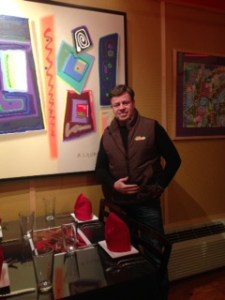
Fierro stands next to one of the paintings in Frida Bistro.

Fierro proved that dreams can truly become reality with deep passion and a lot of hard work. After growing up in Mexico, Fierro decided to leave his home and head to the U.S. hoping to learn English and make a name for himself.

“When I came to Utah in 1985, I didn’t know anybody,” Fierro said.

He said he did not have a place to live, so he ended up staying at a shelter for about a month.

Though his choice of living proved limited, he did not let that stop him from pushing to learn English and searching for a place to work.

“I went to a Catholic church, and they needed a volunteer to wash dishes,” Fierro said. “So, I said ‘Me! Me! I’m a dishwasher!'”

Fierro’s time at the men’s shelter gave him opportunities to see life in a new light. As he became more and more successful, Fierro searched for ways to give back to those around him.

“I was never hungry, so I promised to pay it forward,” he said, raising his sleeve and showing the words, “Pay It Forward,” tattooed on his arm.

And “Pay It Foward,” Fierro does.

In the early 1980s, he gained the friendship of a local couple, Larry and Gail Gerlach. Gail, who was teaching at Shriners Hospitals for Children, hoped to bring some authentic Mexican food to children from Mexico who were undergoing surgeries.

She called Fierro, knowing he would help her accomplish this dream.

“He came up one day and brought food for these kids, and they just exploded with joy,” Larry said in a phone interview. “Gail wrote him a check, and he said, ‘No. No, no, no. Señora, it’s on me, for my people.'”

By this action, Fierro supplied the children with something to look forward to and gained a permanent part in the hearts of the Gerlachs.

“He’s a special friend,” Larry said. “What he did for my wife at that hospital, I think, as much as anything, speaks of his character.”

Fierro actively works with the community by holding fundraisers for nonprofit organizations and initiating the Burrito Project.

The Burrito Project helps to feed the homeless with burritos and bottles of water in Salt Lake City. A large percentage of the homeless, Fierro found, are veterans. This discovery became a significant reason why he works so hard to feed them.

Fierro assembles a group of volunteers who come together to make bean and rice burritos. After the burritos are made, the volunteers hop on bicycles and ride around the city giving burritos to those in need.

This humanitarian effort attracted many volunteers, including University of Utah football players.

“Being able to feed the homeless is one thing, but actually seeing the ins and outs and seeing how these people in the shelter live, it’s very eye-opening,” said Matt Martinez, a former U football player and Burrito Project volunteer. “It’s very humbling to have them say ‘thank you.'”

In a phone interview, Martinez said he has become friends with Fierro and hopes to bring more publicity to this project.

Fierro’s philanthropy has been possible, in part, because one day he had an epiphany about the poor quality of Mexican food in America.

“One day I went to a supermarket, and I bought some flour tortillas and kinds of refined beans and some cheese,” Fierro said. “When I opened them, I was really disgusted with the beans. I thought, ‘What is this?’”

Fierro never dreamed of running his own food business, but after recognizing the lack of quality ingredients in Utah, he realized he needed to do something.

“I was thinking ‘What can I do?'” Fierro said.

He grew up with his mother running a small business. Fierro’s mother would make cooked beans, package them and sell them to markets in Mexico. Having watched her, Fierro had the thought that maybe he could do that too.

Not thinking once more about it, Fierro asked his mother for her cooked bean and creamy salsa recipes and started selling beans downtown at the farmer’s market.

Frida

Frida Bistro is designed with many bright colors and dim lighting. Even the waiting area is decorated to match the design.

Sales started to increase little by little and soon Fierro was approached by someone who represented a small line of farmer’s markets. They asked him if he would be interested in putting a label on his products and selling them.

Fierro jumped at this opportunity and thus was born the Rico brand.

Sales took off, so Fierro started searching for a larger place to prepare and distribute his products. As he was searching, he came across a large warehouse located on 545 W. 700 South.

He turned the warehouse into a place where he and his employees could make the food for the Rico brand.

Then, another opportunity presented itself.

“The front of [the warehouse] used to be my employees’ break room and my office,” Fierro said. “People would drive by and see my employees eating. They would come in and open the door and go ‘Oh, I’m so sorry. I thought it was a restaurant.’ So, OK, let’s start a restaurant.”

And so, Fierro converted the warehouse into a restaurant.

He chose the name Frida Bistro to honor the celebrated artist, Frida Kahlo. “Like Frida Kahlo’s passion for art, Frida Bistro represents Jorge’s passion for food,” according to ricobrand.com.

Bistro

Pictured is one of Fierro’s favorite spots in his restaurant.

Frida Kahlo became the overall theme of the restaurant as paintings of her embellish the walls. Bright colors and dim lighting also contribute to the decorative design of the restaurant which Fierro designed himself.

To add to the authentic feel of the restaurant, Fierro changes the menu every four months or so.

“I took the time to go to Mexico and learn about our gastronomy,” Fierro said. “We created our menu around that.”

In 2011, Frida Bistro was recognized as the best Mexican restaurant in Salt Lake City, according to the Salt Lake Magazine Dining Awards 2011.

Now, Fierro is the proud owner of Rico brand and Frida Bistro and also serves on the board of directors for Local First Utah. He actively works with the community by holding fundraisers for nonprofit organizations and initiating the Burrito Project, which helps to feed the homeless.

He adamantly believes in searching for a passion and is glad he found his calling.

“The most important thing: I love what I do for a living,” Fierro said. “I love what I do for a living.”

Roy pharmacy prescribes customer care

Lloyd Thomas stands at his pharmacy in Roy Winegars.

Lloyd Thomas stands at his pharmacy in the Roy Winegars.

Story and photos by BRITTNI STRICKLAND

Lloyd Thomas, a University of Utah alumnus who owns the pharmacy inside Roy Winegars, recently reminisced about his 46 years as a pharmacist during a phone interview with Voices of Utah.

Thomas first realized he wanted to be in the pharmacy industry at a career day as a sophomore in high school. Thomas grew up in South Ogden, Utah, and recalled going into the local pharmacy thinking it had “really neat smells.” Thomas also watched his uncle own a pharmacy and said he knew it was an opportunity for him to help people. So, he had to take it.

“There aren’t a lot of people who know what they want to do so young, I was lucky,” Thomas said, chuckling.

He opened the Winegars pharmacy in 1995 at 3444 W. 4800 South, in Roy. Winegars is one of the oldest family-owned supermarkets in the state of Utah and values the name of a “Home Town Grocer,” according to the website. Winegars is a convenient grocery store near the center of the city.

Thomas is specifically known in the Roy community for his unique customer care.

Sheri Tanner said her mother has been coming to the Roy Winegars pharmacy for 20 years, since it opened. Tanner still comes to the same pharmacy to pick up her mother’s prescriptions simply because of the quality care. “When I come get her medicine they always say ‘how’s your mom doing?’ and it’s very personal,” Tanner said.

Julie Arthur, a resident of Roy, has shopped at the local pharmacy for 15 years because of the personal service. “Every time I go in I feel like they genuinely care about your health, they’re not just doing their job,” Arthur said. She said she trusts the Roy pharmacy because she feels that the pharmacy staff is very knowledgeable and willing to answer her questions regarding prescriptions.

Thomas said he believes treating customers well is key. “People don’t care how much you know, it’s how much you care,” he said.

Being the owner of his own pharmacy, Thomas said he’s in control of the prices, where products are bought and whom he hires and fires. His pharmacy is independent, so he can focus more on customer care rather than being told to focus on money. He also said it’s more fun that way: “When you’re not intent on making money, it just comes.” Thomas said he prefers to shop where people love what they do, so he makes sure that that is clear in his pharmacy.

Customers head to the west side of the store, where the pharmacy is located. Even from a distance it is easy to sense the passion and camaraderie. Taped to the counter of the pharmacy are quotes, comics and obituaries of loyal customers. Behind the gray counter, two or three employees stand with smiles on their faces and a hello to give.

Nick Lucas has worked as an employee for Thomas for 20 years. Lucas quickly brought up Thomas’ heart for the customers. “He looks at it as extended family for some of these people,” Lucas said. “It’s a tough standard to live up to, he’s a great man.” Lucas learned the art of caring for customers simply by spending time around Thomas and watching him work with people. “He’s a great boss, but a better person,” Lucas said.

Roy Winegars is the home of Lloyd Thomas' pharmacy

Roy Winegars is the home of Lloyd Thomas’ pharmacy.

Location and loyal customers are what keeps the pharmacy up and running to this day. “It’s the only reason we have a job is because of them,” Thomas said. Having the pharmacy inside Winegars has been an ideal location because it is one of the more popular grocery stores in town where people can shop and pick up their prescription in a timely manner.

Thomas joked about how interesting it is that it is now a popular occurrence to have a pharmacy in a grocery store, compared to when he first began as a pharmacist. There wasn’t a single grocery store in the area that had a pharmacy. He said pharmacies are now more popular because people are living a lot longer and there is a lot of new medicine available.

Now that people are living longer, Thomas said convenience has become an issue in our society. “Everyone’s time is valuable,” Thomas said.

Customers such as Julie Arthur appreciate that consideration. “At other pharmacies I’ve noticed a longer wait time, and when you’re sick you don’t want to just stand around,” she said. The Roy Winegars pharmacy promises to have prescriptions out as quickly as possible, usually with a wait time no longer than five minutes.

Timely service is one thing Thomas has learned during his two decades as a pharmacist. With his years of experience also come numerous memories. “There are so many great memories, that I couldn’t come up with one,” he said. However, Thomas remembered winning the “Bowl of Hygeia” award in 2013. According to the website, the prestigious honor “recognized pharmacists who possess outstanding records of civic leadership in their community.” He said it truly was an honor to win that award.

Thomas made clear that the customers are why he stays in the pharmacy industry by saying, “I love people, I love to help people.”

How dreams fuel small businesses’ futures

Story and photos by ALEX HARRINGTON

How does something as gut-wrenchingly difficult as starting a new business ever get off the drawing board?

Simple.

The people who make it happen have a dream.

Oftentimes everything is riding on this dream, which can be as different between business owners as the stars are from the sun. But the common thread is the hope that they can succeed in the unforgiving world of business.

If there’s one person who knows that success in the business world can come from just a dream and a liberal amount of elbow grease, it’s Ann Marie Thompson, the program director for the Women’s Business Center.

It’s Thompson’s job in the WBC to turn prospective entrepreneurs’ lofty, seemingly unreachable dreams into reality. The Women’s Business Center builds dreams in every way it can, from its “Jumpstart” business essentials training to the expert advice it gives on the direction a budding business should take. Thompson described her organization’s mission of making hopeful small business owners “start small and think big.”

However, even with the help that the Women’s Business Center provides, dreams can seem unreachable when so much is at stake. Though Thompson said she frequently advises her clients against quitting their jobs or taking out a big loan, the enormous dreams that her clients hold often demand a lot from their dreamers.

She pointed to “Utah’s cultural aversion to risk” as one of the many reasons that many women and men never pursue their dreams. Thompson said a dream or idea for a small business has to have the potential to make money and to fill a need.

However, not every dream has these qualities. She has witnessed a score of disappointments amid the successes, and seen dreams that weren’t able to come to fruition.

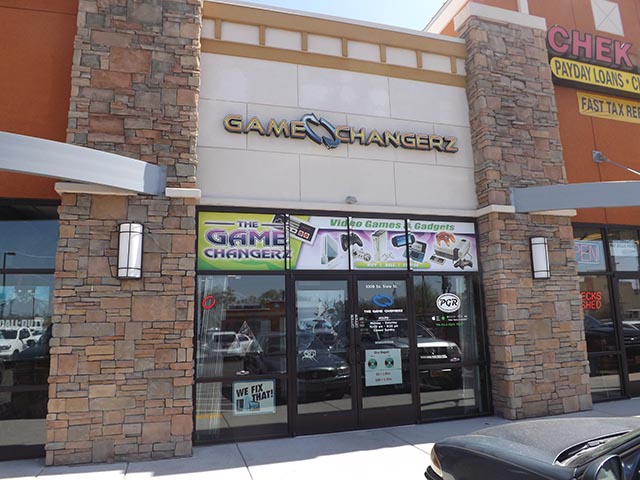
Game Changerz provides incredible customer service and products to all who check them out.

But why does this have to be? Dreams like starting a small business often need more than wishing stars and fairy dust to succeed. While almost anything can be turned into an opportunity to make a quick buck, this need that Thompson describes is much trickier for some small businesses to meet.

Though starting a business from these tiny dreams can be a terrifying and difficult prospect, it is not impossible. For

For Michael Morrissey, branch manager for a video game retail store called Game Changerz, his small business does its best to fill a need that sets it apart from other larger retail stores.

During a phone interview, Morrissey said, “[Our store] is free to do whatever we want for our customers.” He recalled many instances where his store worked with customers, adjusting prices and even throwing in free games, in order to make their experience more positive.

Fulfilling these needs can create something new in the business world. “We offer the best customer service in town,” Morrissey said. From anyone else it might sound like an empty boast, but his willingness to work with customers on a personal level gives it much more weight.

The branch manager of Game Changerz, Michael Morrissey, poses by some of his incredible videogame items.

The branch manager of Game Changerz, Michael Morrissey, poses by some of his incredible video game items.

For people like Morrissey, the dreams they have are about making a new and wonderful experience that the customer has never seen before. He is filling a need that many people didn’t even know they had.

But what does fulfilling this need mean for small businesses? Kristen Lavelett, executive director of Local First Utah, said “[Small businesses] keep the American Dream alive.”

The meaning of the American Dream that Lavelett talked about has been debated for hundreds of years throughout U.S. history. But this dream is almost always thought of as the ability of a single person to find a way to start with nothing and to rise to be as great a business figure as they can be.

But for many small businesses, this big, majestic concept is simply a way of life that they strive to achieve every day. Morrissey described other larger retail stores, like GameStop, as being “very corporate.” In a world cluttered with mega stores that often limit their interests to the contents of their customers’ wallets, small businesses like Game Changerz create a bit of personality and individuality that sets them apart.

Morrissey described in a subsequent interview what he believed makes his small business important to his customers. Game Changerz carries many games that bigger retail stores don’t have, like games for older systems like the Super Nintendo or Sega Genesis. Morrissey said “people want to relive their childhood.”

Our world would be diminished without the individuality that the dreamers provide. The dreams are a big part of what makes small businesses so special.