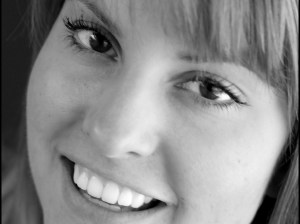
Teresa Getten

MY STORIES:


MY BLOG: A Reflective Essay

Quinceanera anyone?

The most challenging part of my intermediate reporting class was finding a Quinceanera to document. I placed an ad in every paper:

$ FREE

Photographer for Quinceanera!!!!

Portraits, ceremony, reception and party —

including family portraits — my whole day is yours.

You will receive all the digital files and prints of your special day.

(Think this is too good to be true? It is.

You will need to answer all of my questions about your

“rite of passage” and create an environment suitable for

portfolio quality photographs. My grade will rest on your conscience;

I revoke all responsibilities.)

How can you say no to an offer like that?

I called a Hispanic newspaper and asked if they would translate the ad. The translator asked, “What would you do if someone called speaking Spanish?” to which I replied …  “Um, no habla Espanol?”

We had a laugh. I have no idea if the ad ran.

Then I posted ads on Latino message boards, even MySpace. Yes, I stooped that low, but I was desperate.

Local Quinceanera shops are not found in phonebooks or search engines such as Google. I searched thoroughly and can tell you that fact with absolute certainty.

Most of the bridal shop names were familiar, except for one in Kearns, located on the west side of the Salt Lake valley. I called the promising dress store and a woman answered in Spanish (Score!). I asked for information or contacts, promising to be a dedicated student photographer. She gave me a number (Yes!). But it was for a wedding photographer (No!).

So I hit the streets, with my two kids in tow. Our first target was a Mexican market on the west side of Salt Lake. I spotted two innocent men peacefully eating their lunch, and marched in front of the two boxes they were sitting on. I looked down and began my interrogation without hesitation. (I sent my children to go berserk in the candy section.)

“We don’t speak English,” they pleaded, but that didn’t stop me.

I tried to recall any words from my high school Spanish class. I think I was confusing assignment with moon, and said that I was a either a student or that I was stupid. Just when I was about to switch it up and prove my gift at charades, a cashier walked in from the back. She spoke English.

I’ve never seen any face with such a dramatic transformation from terror to relief, and without any hesitation the men went back to their lunch.

I was relieved to speak in my native tongue, but she could not help me in my quest to find a Quinceanera. At this point I needed something, anything!

“Can I document your market?” I pleaded.

She said, “No.”

I wanted to be a good patron so I bought my kids candy (my daughter actually bought the candy. The store only accepted cash so I snatched a $5 bill from my not-too-happy daughter’s pocket.).

I called my older sister in Las Vegas and every other friend and family member I could think of. A member of my family had connections to the Latter Day Saint Spanish ward and promised to pull some strings.

I called Patricia Dark, co-founder of a bilingual elementary school. Her advice was to call the Catholic churches. The Bishops, Fathers, Priests, I used the titles interchangeably, were ransacked with voice messages. When a live person answered, they sweetly gave me a time to call back. I would call back on that hour, just to talk to another voicemail.

Defeated, I searched for another topic, one with plenty of sources.

The Holy Cross was my new savior. Not only did they provide legal services for immigrants, they offered ESL classes, counseling, medical services, political activists’ organizations, charities and endless volunteer opportunities.

When I started I had a list of contact phone numbers, and about 50 information papers and questions spread out covering the whole space around me on my queen size bed. Perhaps the organization was too big because half of the calls never picked up and the other half referred me to more telephone numbers. The new numbers weren’t much different than my first telephone marathon, and I felt like I was going around in circles. But the fruits of my labor did provide me with three sources, the minimum for the assignment.

I interviewed Ana Aboite, a counselor at an elementary school who also taught English to adults. She had a hard time explaining what she does. “If you have a problem I will do whatever I need to do to help.” Her main focus is to teach parents English. Her lessons are for one hour a week whenever the parent can come in, and she expects them to practice at least 2 hours a day on their own before their next lesson.

“It is the parent’s responsibility to learn English so they can communicate with their children … without it you will never fully connect.”

Aboite said the reason it was important for her to learn English was for her daughter’s sake. It hurt her deeply as the connection she had with her daughter began to weaken. Now that she knows how to speak English, she enjoys helping her daughter with homework and is happy to understand the conversations her daughter has with her friends.

I also spoke with a volunteer, Tim Jackson, who helps immigrant children transition into an English speaking school. He had a lot to say about his after school program.

Seeing the children learn, be successful and be proud of who they are, “That’s what makes my job worth it,” Jackson said.

He gave a touching example of a girl who was in fifth grade, recently moved from Mexico. She didn’t know any English. She was sad and depressed, and often would burst in to tears. “She felt so out of her skin.” The school sent her to Jackson’s Holy Cross after school program, and he was amazed as he watched her transition. Only five months later, he proudly reported, “She is now adapting and making friends at school.” 

Shauna Crosby, the office supervisor of the South Main Clinic, estimates that more than 80 percent of the patients at The Holy Cross Ministries South Main Clinic are Hispanic. “I love helping a large number of people who are often refused service when they are sick,” Crosby said.

Still the services are for the uninsured and not provided exclusively the Hispanic population. Not sure if it fit in with this semester’s website theme, I decided to file the source away, and explore this contact at another time when I could focus exclusively on the project and create the comprehensive photo essay it deserved.

Putting all the information together, I realized I had three different stories, and the last one wasn’t specifically a service for the Hispanic Community. I struggled making a cohesive paper.

Then I got a tip from my little sister.

“There might be a Hispanic wedding reception in Rose Park.” The man she spoke with didn’t know a lot of English so she wasn’t sure on the details.

The lead took me to a small family barbeque. The couple had been married the previous Wednesday, and they were celebrating in their small backyard. I couldn’t find anyone who spoke English. Everyone was friendly to me, the foreigner, who had crashed their party, and I was grateful for that.

I asked about a Quinceanera and the man with the bright new cowboy hat said, “Corona?” “Um no thanks,” I said and apologized as I left.

I drove by one of the churches I had called on the phone, Our Lady of Guadalupe, then made a U-turn in my Thunderbird and floated my ‘80s classic’ into the parking lot. I wandered the halls a bit, thinking nothing could be more awkward than what I had just experienced, and welcomed this new feeling of…well, the feeling of being lost. It was a similar feeling, but I didn’t have to force smiles pointblank and be greeted with the same forced smiles, polite masks to cover our confusion.

I looked into random classrooms searching for someone who didn’t look too busy. I was referred to the bishop currently in confessions. He was due to come out at any time and then there would be a 5-minute window to ambush him before he conducted mass.

I headed toward the chapel (is that what it’s called?) and then I thought maybe that wasn’t the most brilliant idea. The last tip I acted on didn’t turn out as well as I had thought, and I might save that kind of humiliation when I’m not in front of a full Saturday mass congregation.

I had to get a concrete tip before I left. I could hear people speaking English, and at the risk of sounding like a parrot I asked again if anyone knew anything at all about a Quinceanera.  

“No, but the lady who teaches the classes just walked by,” the Sunday school teacher calmly replied.

“Grab her!”

My demand motivated the teacher to run out of the room, take the woman by the arm and place the Quinceanera teacher two feet in front of me. “She wants to know about Quinceaneras,” said the Sunday school teacher.

“Yes, I’m a student at the University of Utah …”

She seemed to look more at ease when I provided this information. People often relax when they know that I am a student—the idealistic pupil on a search for knowledge, seeking and gathering information from the world to create words on a page, or images in a picture, that will be analyzed and graded according to their composition.

I conducted an impromptu interview, which didn’t go too bad. The Quinceanera teacher, Josie Martinez, had so much information and was willing to sit there and explain everything to me, I knew nothing it was easy not to focus on my own questions, and I felt the interview flow smoothly from the beginning to the end.

She went into the history and the rituals of the Aztecs. That was surprising to hear in a Catholic church, but the Quinceanera tradition they celebrate came from their Mexican ancestors.

The young Sunday school teacher who obediently brought me the Quinceanera teacher, Nellie Strada, gave me a lot of information on the reception as well as the ceremony. She provided imagery with the small details she contributed.

So I had the key to getting answers; stand around and look lost. Holding the shred of confidence I had gained, I drove to The Cathedral of the Madeline. (It’s the majestic cathedral at the center of town, and the only building in the city that is able to compete with the Mormon Temple for its magnificent beauty.)

I spoke with a man in a black robe who seemed to be guarding the entrance into the cathedral. I felt like a kid on my tip-toes peering in the window of a door more than three times my height. The man in black pointed out the man in charge. He was in a white robe, with purple and gold details around his neck, which much symbolize his importance. It was a busy Saturday night for mass. I’ll come back I said to the man in black “Good idea,” he said, and handed me a program with a phone number. The number looked familiar.

Outside I snapped a photo, and startled a 14-year-old girl, Vanessa Clavijo, and her brother. They were waiting for their mom who was inside attending mass. I spouted off questions and found out she was from Peru and did not plan on having a Quinceanera. Vanessa wanted to celebrate a sweet 16 with her friends. Maybe if she lived in Peru….she said, “But in America it’s more of a choice.”

My quick shot-gun questions proved to be a useful, because they left as abruptly as I had approached them, and jumped up the stairs to the cathedral in record speed. I had the one photo and names before they ran to the sanctuary of the holy church.

Back to the west side of town I drove aimlessly until I found a Floras Shop (which apparently is not a flower shop, but a bakery). I stood in line with my croissant on a green tray along with everyone else, trying futilely not to stand out. I asked the cashier if she had any Quinceanera cakes she raised one eyebrow and seemed a bit skeptical, but before I could run out of the shop humiliated (because I had to wait for my change), she pulled out a sample book filled with Quinceanera cakes and pointed to her favorites.

I started to realize why everyone was looking at me like I had escaped from an asylum. As I proudly walked out of the bakery happy to have accomplished my mission, I started to feel the same way. I did not leave with a name, an interview, nobody even spoke English, but I did leave with a photograph that was shot from my hip, and a delicious croissant.

I knew where I was headed next, the Latino Mall. I discovered it earlier that week when I was ‘hitting the streets’ with my kids, but as I pulled in promising Mexican food, my kids made it clear we were going to IHOP. My son gets the ‘hunger rage’ bad and my daughter was already traumatized after I mugged her for a $5 bill.

Walking around the Latino Mall for something, not sure where my boundaries were anymore, I found a store with some beautiful white dresses.

“Are these Quinceanera dresses?”

The salesperson said, “No.”

They were baptism dresses.

“Oh” I slowly started backing toward the door, but stopped two feet in front of it. My eyes had never left the saleswoman. Did she know something? Why do I feel like she is hesitating with me in these few short seconds?

“But these are,” she pulled out a similar dress in a larger size.

My uneasiness shifted and I remembered to tell her I was a student from The University of Utah. My interrogation was for educational purposes only. Very smoothly and nonchalantly she started to pull out boxes of Quinceanera gifts. Satin pillows and satin bibles, the treasure box excited me more than it probably should have. She must have been interested by my reactions, and I was shown detail and gift that was explained at my lesson at Our Lady of Guadalupe Church.

Many Quinceanera items were behind the counter, and not displayed. It was like a store with a trick door. It looked like a children’s store with racks of tiny outfits on the floor and walls, but it was also a Quinceanera shop in disguise. That added to the excitement of the discovery. Her interested but nonchalant attitude blended with my fascination and intensity. The whole experience was surreal. Her mom called to her from the other room in Spanish.

When her mom, the shop owner, found out I was researching Quinceaneras, she rushed over unmistakably overjoyed. She had so many stories to tell, and show. I don’t know how long I listened. She dramatized feelings of sorrow by clutching her chest; her face looked like a tragedy mask (I don’t know how else to describe It). Her emotions came flooding out with intimate disclosures, and meaningful memories.

She danced as she talked about the reception and at the end of the performance I thanked her and we embraced. I am not a ‘huggy’ person, but I think I might have initiated the hug, I’m not sure. It just felt natural. (That might be totally unethical, unprofessional for sure. I don’t know the rules or boundaries of a true journalist yet.)

I only took a couple of shots from my hip as I wrote frantically down the details and made as much eye contact as I could, hoping I wouldn’t convey disinterest, worried that the stories might stop.

As I left the store, I looked through my digital images and found the shot, the one that included her face and the moment was captured, and it was sheer luck. I was hoping the luck would stick around long enough for me to go home and write the story.

Still even without a Quinceanera to document, I changed my story.

When I got home I agonized over how to write and what to write. It was a struggle even to put words onto the page.

My photo shots from the hip didn’t exactly create a comprehensive photo essay, so the experience would have to come alive on paper. What happened? What was my essay about?

How could I keep myself out of it, when I felt like the story was about me? How I felt when I became an investigator, braving uncomfortable situations for the sake of journalism; it was my story.

I didn’t do what I was taught in class. I didn’t have questions. I had no idea where I was going or what was going to happen once I got there. I’m not sure if my story was very good, but none of that matters.

I had a fun day, testing the limits of my social anxiety, finding places where I was sure I would not fit in. Whether or not I felt brave …

I did feel like a journalist.

(Whether it was the right way, the wrong way, or the pretend way)

This is the end of my reflection essay and blog.

This is where I tell you what I have learned, and what piece of wisdom I have received from my reporting journey. Well here it is:

I discovered that if you hang around no matter how lost, confused, or awkward you feel, moments or seconds after defeat, you might find the answer you were looking for, even if it might not be the answer you expected.


ABOUT ME:teresa-getten

My name is Teresa Getten and I am a photo-journalist working for the Daily Utah Chronicle, documenting campus life. In 2006 I earned a degree in photography from Salt Lake Community College, and in 2009 I plan to graduate from the University of Utah with a mass communications degree with an emphasis in news-editorial.

I knew I wanted to be a photojournalist when I documented a housing project for single mothers in 2004.

As I watched their colorful lives unfold, my camera captured the children running free in their underwear among a plethora of toys scattered along the sidewalk, and the strong bonds between the mothers who were raising their little village together. I called my project “The Freedom of Poverty.”

When my photo essay was coming to a close, and I had all the shots I needed to complete my project, the story began to shift.

I sensed something beyond the colorful chalk murals on the sidewalk, the pool parties and neighborhood barbecues.

My eyes saw beyond the lens, and I used my camera to capture the stress and hardships that came with economic strain. I started to notice the frequent ramen noodle dinners, then the long weeks that passed before there was enough money to do the laundry, and every mother juggling which bill to skip that month so there was enough money to buy diapers.  

My project “The Freedom of Poverty” was far from complete. Even though what I had documented was real, there was another side left unexposed, hidden and silent. I couldn’t stop … I wouldn’t rely on my own perceptions. I needed to stay. I needed to understand. I needed to see.

That was my own “decisive moment.”

“We [photojournalists] pass judgment on what we see, and this involves an enormous responsibility.”

-Henri Cartier-Bresson

The Native American ESL student

by CADE SORENSEN

Teachers and PTA members at West Jordan Elementary School in West Jordan, Utah, have combined their efforts to create the “I Can Read” program, a program designed for students who need help with reading and writing skills.

Cody Black is one student who has received the one-on-one help he needs to enhance his reading and writing skills. Stacy Murdock, Cody’s 4th-grade teacher, noticed he was struggling with his reading and writing assignments. He had a harder time in some areas because his parents, who are Native American, do not speak English well enough to help him at home.

Murdock entered Cody in the “I Can Read” program to help him improve his literacy skills. “I know that if he were to just get some help with his reading and writing, it will help him a lot in other subjects,” Murdock said before enrolling Cody in the program.

After his sessions in the “I Can Read” program, Cody often mentioned how helpful it was for him to be able to read with someone, something he couldn’t do at home with his parents.

Professors Nancy S. Lay and Gladys Carro explained in their article, “The English-as-a-Second-Language Student,” how students who struggle in reading and writing can struggle in other areas as well. “Many of the textbooks are written on a reading level far higher than that attained by many ESL students,” they wrote. “Thus, reading becomes slower and checking the dictionary for every word they do not know takes time and interrupts the comprehensibility of the texts.” For this reason it is important for schools to provide additional help for students who are behind in reading and writing.

Native American students going to school where their culture is not the dominant one can also have trouble adjusting to the culture of other students, making it harder to learn or feel comfortable.

Culturally, Native American children learn differently than white children, said Forrest S. Cuch, executive director of the Utah Division of Indian Affairs.

“Most Native American children learn to concentrate on the spiritual aspects of life. Most white children are taught to concentrate on the physical aspects,” Cuch said. In addition, he said, “Native Americans are taught to be cooperative, whereas whites are taught to be competitive.”

Similar to the way cultures are different from one country to another, Native American cultures are different from other cultures within the United States. Lay and Carro suggest that if an ESL student does not participate in some activities in class, it may be because of a cultural difference that is making the student uncomfortable.

“American Indians are different in so many ways, and we process information differently,” Cuch said. “And the school system is designed for the dominant culture. And consequently, our kids have always fallen behind.” To help Native American students feel more comfortable, Cuch suggests that schools implement a system of smaller classrooms, hire more Native American teachers and incorporate Native American history into the curriculum.

Cuch did agree that when there are a very small number of Native American students in a school it is often best to give that student more one-on-one help with specific needs. Most Utah elementary schools have some form of reading and writing program like “I Can Read” to help struggling students in a more personal way.

Although Cody was helped by the “I Can Read” program, those who helped him were only volunteers and not professional teachers. Cody is now in the resource program at West Jordan Elementary and is getting better one-on-one help from professional teachers who have been trained to help students with special needs.

According to the November 2004 United States Census Bureau, only 75 percent of Native Americans and Alaska Natives age 25 and older had at least a high school diploma. This is the lowest rate among all races and ethnicities in the U.S. If more is done to help Native American students at an early age, it is more likely they will further their education and learning.

A Native American leader

by CADE SORENSEN

Robert Jarvik, inventor of the first artificial heart, once said, “Leaders are visionaries with a poorly developed sense of fear and no concept of the odds against them.” Cal Nez is a leader to many Native Americans because of his vision and lack of fear.

Nez is the owner of Cal Nez Design in Salt Lake City. He is an accomplished graphic designer and has done work for the Office of the President of the United States – National Republican Party, Kodak, AT&T, the Navajo Nation Fair and many more clients. Although his business is thriving, it is his passion for his Native American culture that has helped sculpt his business into what it is today. Nez has dedicated himself to helping bridge the gap between cultures.

Native Americans are able to look up to Nez because he has worked so hard to get to where he is today, without forgetting where he came from. He was born for the Tanaszanii Clan and is originally from Tocito, N.M.

He was raised by his grandparents and to this day does not know why his parents left him. He spoke only Navajo with his grandparents and learned English when he entered the Bureau of Indian Affairs Boarding School in nearby Sanostee at age 5. His boarding school experience was, in his words, “A demon from the past.” Students of this boarding school were not allowed to speak Navajo and were punished for participating in some Native American activities. They were also punished for playing like children, Nez said.

As a teenager, Nez participated in the Indian Placement Program by The Church of Jesus Christ of Latter-day Saints. He left the reservation to go to South High School in Salt Lake City after his grandmother convinced him that it would be best for him. He remembers his grandmother telling him she had nothing more to give him to help better his life. So, he left and went to high school where he began to discover and build on his art and design talents.

After high school and some college courses, Nez went to work for Smith and Clarkson Design. After several years working there, Nez realized they did not have the same vision and direction that he did. So, in November 1986 he quit his job to start his own graphic design company.

At this time Nez was married with a child on the way and was very worried about providing for his family. Nez gathered his portfolio, packed a bag and drove to New Mexico to meet with Peter MacDonald, then the president of the Navajo Nation. He left the interview with two jobs. Both of them included contracts paying him more than he was making with Smith and Clarkson Design. Cal Nez Design has now been in business for more than 20 years.

Knowing from his own experiences what many Native Americans go through, he understands better now how to help others. In April 2008, Nez founded the Utah Native American Chamber of Commerce. According to its mission statement, it aims “to promote the economic development of Utah Native American-owned or serving businesses and organizations and those who appreciate diversity in commerce, and to also promote growth of the Utah Native American business enterprises and make them a powerful economic force.” Nez was named president of the Chamber of Commerce.

Nez is a strong leader, but he also does what he can to strengthen his culture by participating in the Native American Celebration in the Park. Nez believes that Native Americans still have a lot to fulfill as human beings. “We are not history,” he said, “we are people, our drums and song are still going on.”

Salt Lake American Indian leader promotes more accurate teaching of history

by CHRIS MUMFORD

For an illustrative example of how American Indian culture impacts people every day, look no further than a plate of spaghetti.

Although typically associated with Italian culture, the pasta dish’s roots can actually be traced to America and Asia. Tomatoes, the key ingredient in marinara sauce, were first domesticated by American Indians and later shipped back to Europe, while noodles were originally created by Asian cultures.

The example, though seemingly trivial, is one of several used by Forrest S. Cuch, executive director of the Utah Division of Indian Affairs, to underscore a troubling pattern in popular interpretations of history: the tendency to diminish or, more often, ignore outright American Indians’ role in history.

“When I went to school, [the] message I got: Indians made no contributions to Western culture,” he said in an interview with students in a University of Utah reporting class.

This at least partly explains why American Indian students often feel “written out of history,” said Cuch, 57. His own school experience was marked by conflicts between what he was learning at school and what his parents were telling him at home.

“Right off, I didn’t feel good about school,” he said, citing examples of the incomplete, often inaccurate accounts of history he was taught, including the notion that Pilgrims, not Indians, found the wilderness and learned to survive largely without help.

As part of his lifelong quest to teach a version of history in which American Indians are accorded their proper significance, Cuch gives a PowerPoint presentation when he travels around the state. The slideshow, titled “Did You Know?” provides a broad overview of some of the most prominent American Indian achievements glaringly omitted from school textbooks and curricula including: evidence of writing that pre-dates the earliest known samples from other cultures, their early and advanced organized societies, and the fact that they’ve inhabited the Americas for at least 13,000 years.

But the effort to restore American Indians to their rightful place history is not in any way intended as a judgment on prevailing white or Anglo-American culture. On the contrary, white people have also suffered needlessly as a result of these same misconceptions of history, Cuch said.

“White people who don’t know the facts walk around with huge doses of guilt,” he said. In particular, he referred to the diseases introduced by white colonists that severely decimated American Indian populations, and urged that students “Don’t blame [yourselves] entirely for that – it wasn’t intentional.”

The idea that American Indians are often marginalized in the teaching of history is shared by RaDawn Pack, who teaches second grade at Brockbank Elementary School in Spanish Fork, Utah. What is less clear is what to do to change it.

Compared to when she began teaching 22 years ago, Pack said that currently she may teach even less about American Indians. But she did mention a few activities still taught today that feature American Indian culture.

On “Native American Day,” students rotate between four stations, each headed by one of Brockbank’s four second-grade teachers. At these stations students learn to mash corn, hunt for cranberries, learn about Indian hunting skills and string Froot Loop necklaces.

Students also read “Giving Thanks: A Native American Good Morning Message” by Jake Swamp, a Mohawk Chief. The illustrated book imparts a message of kindness and respect for nature.

And in fourth-grade classes, Brockbank students study Utah history curriculum that focuses on American Indians.

For his part, Cuch, who taught social studies 14 years ago at Wasatch Academy in Mt. Pleasant, Utah, acknowledges there has been an effort to teach more accurate versions of American Indian history. Yet he questions the validity of the historical facts that most Utah children grow up learning.

“Most of the history you’ve received in school is terribly inaccurate,” he said, going so far as to say that as much as 90 percent of what is taught is erroneous.

He called for more education and training at the collegiate level. And, as a member of the Ute Indian Tribe, Cuch has worked with the American West Center to develop his ancestors’ history into curriculum for Utah schools. He is also developing teacher guides on American Indian topics.

“Education is complex and it’s simple,” he said. “There’s no curriculum better than love. You have to teach from the heart with love.”

Latin dancing has style and flavor

by KASSIDY MATHER

Looking for something to spice up a boring Saturday night?

“Salsa can be spicy, or not so much. There are a lot of flavors,” says Latin dance instructor Victor Mosquera. Mosquera has been teaching Latin dancing at Studio 600 for about six months and loves every minute of it.

Studio 600 is a non-smoking, alcohol-free dance club at 26 East and 600 South in Salt Lake City. It features Latin dancing on Saturday nights from 9 p.m. to 1:30 a.m. The first hour is dedicated to dance lessons, then dancers get to try out what they’ve learned.

Mosquera, who along with teaching is in charge of the Latin dancing instructors, teaches a mix of beginning Merengue, Bachata, Cumbia and Cha-Cha-Cha, but Salsa is his favorite. “Salsa is unique. There are so many stylings in Salsa,” he said. “Salsa is my life.”

Born in Cuenca, Ecuador, Mosquera started Latin dancing about three years ago. A friend recommended dancing when Mosquera became depressed after his five-year marriage ended. “It made my self-esteem go up,” he said. Mosquera taught Latin dancing lessons at Salsa Chocolate (cho-co-la-tay) in Provo for a year prior to coming to Studio 600.

“When you are dancing, your whole brain is working,” says Mosquera.test He went on to explain that when you’re talking, you’re only using half of your brain, but when you’re dancing or doing some kind of sport, your whole brain is working. Listening to the music and planning what you’re going to do next really requires concentration. “That’s what makes you feel good out there,” he said.

Yony Lopez agrees. He and his wife, Eagan, come to Studio 600 every Saturday to Latin dance. They enjoy the clean, conservative atmosphere. “Latin music is super fun,” he said. He said Latin dancing is a hard way to move your body, so it’s a good way to lose a lot of weight.

Salsa music has a fast beat, it is loud and happy. It usually features a strong percussion section, with instruments like claves, cowbells, timbales and the conga. Other instruments include trumpets, trombones and bass. Guitar and piano can be used as accompaniment. According to Mosquera, salsa bands can have 12 to 18 people playing, which makes it special.

“In our culture, the way we meet girls and guys is dancing,” says Lopez, who was born and raised in Guatemala.

Lopez thinks that the club attracts a lot of Latino people because the variety of styles draws an assortment of different people and languages. “All kinds of people [come] from different backgrounds and countries,” he said. Merengue and Bachata are popular in the Dominican Republic, Cumbia originates from Colombia and Cha-Cha-Cha is Cuban. Salsa, he explained, is from all over, including Cuba, Puerto Rico and Colombia.

But Studio 600 has more than just Latin dancing. Tuesday and Thursday nights are dedicated to country dancing; Wednesday is Reggae and 80s night and Friday features Top-40 music. Plus, there are three separate dance floors, each featuring a different style each night, and even a room with karaoke and pool tables. There really is something for everyone, every night.

Steve Ames, the founder and owner of Studio 600, mixes up the styles to attract the mainstream crowd and make it more diverse. “It kind of hit me last week when we started this reggae floor and it really has attracted the Polynesian crowd,” Ames said. “I just got thinking about it, and … we really cater to all the ethnicities, the larger ethnic groups in the city and state. We have something for everyone, for the most part.”

Ames has worked hard to expand the club into what it is today. He began with a small group at Trolley Square, where he held country dancing Tuesdays and Thursdays, Top-40 on Fridays and Latin dancing on Saturdays.

The crowds have grown slowly and steadily. After almost eight years, the group had outgrown the original Trolley Square location, and his lease was up, so Ames had to find somewhere else to go. He had passed the old building on 26 East and 600 South for years and never noticed it. “When I needed a place there was a for lease sign on the building,” Ames said.

He made a deal with the owner and went to work. The building was originally built in the 1940s and Ames put $1.2 million into renovations. The process from the time he signed the lease to the day the doors opened took three years.

The move has proved beneficial. “Latin night at Trolley Square used to be about 200 people,” Ames said. “Now we’re over 800 to 900 every single Saturday.”

The club hosts about 2,000 dancers a week. The most popular nights are Thursdays and Saturdays, although once a month larger parties are held which attract a good sized crowd. These parties are usually held on a Friday and include New Year’s Eve, Valentine’s Day, St. Patrick’s Day and an End-of-Summer party.

The club also hosts a disc jockey every night and often has live performances by up-and-coming local artists. The entrance line is usually stretches to the street, but it moves quickly and is worth the wait.

Studio 600 is one-of-a-kind. The environment attracts people who just want to dance. “It fits the community, you know, a large base of the community,” Ames explained. “You have literally hundreds of bars and nightclubs that serve alcohol,” he said. “We cater to a different crowd.”

Ames went on to say that compared to other nearby nightclubs, Studio 600 has a more conservative crowd, and offers a greater variety of dancing styles. Plus, he bragged, “You could put four of their clubs inside of our club.”

Mosquera agrees. “I think there’s no other place to go,” he said. “Here, you come for dancing.”

Beginners and experienced dancers alike can enjoy this club; few places offer to teach dance lessons before the crowds come. Even Mosquera takes lessons to learn new moves, often traveling to Los Angeles, New York and Las Vegas to learn the latest techniques. When he returns he shares them with the dancers at the club.

Mosquera plans to finish the year teaching at Studio 600, but after that will probably move on. “I always like to move forward,” he said. His two children have kept him in Utah for now, but he likes to compete and is considering going to Los Angeles to take part in the salsa congress there.

A salsa congress is a meeting of professional and beginner dancers to enjoy and learn about the evolving dance. The meetings include shows, workshops, live bands, master classes and competitions. Congresses can be found throughout the world.

Stop by Studio 600 and experience the fun for yourself. Country lessons are taught from 8 to 9 p.m. Tuesday, Thursday and Friday, and Latin lessons from 9 to 10 p.m. Saturday. The earlier you go, the lower the entrance fee, which ranges from $4 to $10. Once the lessons end, the open dancing begins.

Su banco opening up opportunities

by ERIK DAENITZ

Su Banco is not just a “survival skills” language program.

Instead, graduates leave Su Banco with advanced English skills in speaking, reading and writing.

“The purpose of the program is to give students the English skills they need to pursue the career they want here,” said Rick Van De Graaf, the program coordinator.

Many of the students already possess professional knowledge that they acquired in other countries, Van De Graaf said. However, their proficiencies with English may not be quite good enough to break into the jobs they desire.

Su Banco was launched in the spring of 2005 to help these individuals. It is offered through the English Language Institute at the University of Utah.

The class was the vision of Theresa Martinez, assistant vice president for academic outreach at the U. With the help of Zion’s First National Bank, her vision now is a reality.

The name Su Banco came from Zion’s involvement. It refers to banking services that the bank markets to the Latino community.

All students who are admitted to the program receive scholarships from Zion’s. The scholarship covers 80 percent of the $1,400 cost, and if students complete the three-month class they receive reimbursement for the remaining 20 percent.

“We owe a huge debt of thanks to Scott Anderson,” Martinez said.

Anderson, the president and chief executive officer of Zion’s, was instrumental in getting the program started, Martinez said.

Martinez, a member of Zion’s board of directors, brought the idea of an advanced English language program to Anderson in 2005 after spending a semester interviewing her colleagues in continuing education about her objectives.

Within months Su Banco became a reality and Van De Graaf was hired to coordinate the program and teach the classes.

He brought experience from community-based English language programs and looked forward to teaching students in an advanced class.

“Most of the people at this level are extremely concerned with education,” Van De Graaf said. “They are completely committed to learning English, or they wouldn’t be here.”

Wilder Guadalupe came to the United States with a degree in animal science engineering from Universidad Nacional Agraria La Molina in his home country of Peru. One of his goals is to receive a master’s degree in business administration from a university in the United States.

However, in order to be admitted to many universities he must pass the TOEFL, or Test of English as a Foreign Language. Students take the test near the end of the Su Banco class.

“Passing the test will help me reach my goals,” Guadalupe said. “I want to get an MBA degree and after that maybe a Ph.D. I think it’s very important for me to get this type of degree, and it’s another opportunity to improve my English level.”

Guadalupe plans on combining his experience in animal science and business with his continually improving English skills.

His experience buying, selling and trading grains and animal food commodities gives him valuable business expertise along with is understanding of the agricultural industry, Guadalupe said. “After graduation I want to look for a position in a financial institution focusing on agricultural topics and international trade.”

Gloria Villarreal, another Su Banco student is thankful for the opportunity Zion’s Bank has provided students like her.

While Guadalupe looks toward opportunities in business, Villarreal has a different career in mind.

“I like working in computing,” Villarreal said. “I also work for the Salt Lake school district and I am so happy. Everyday, seeing the kids makes me so happy.”

Villarreal took English classes at the Horizonte Instruction and Training Center in South Salt Lake City, but the classes focused mainly on grammar and written English. The Su Banco classes are giving her new exposure to vocabulary and words she never heard before, which helps her communication in all aspects.

“I would like to continue to study until I learn perfect English,” Villarreal said. “I’m not going to stop.”

With her improvements in the English language she brings another skill to her job in the school district.

She serves as a translator between parents, teachers and administration when language barriers exist, she said.

While improving job opportunities is a focal point of all the students, Jaime Mendoza brought up an additional motivation for improving his English skills.

“I have a son who is 4 years old,” Mendoza said. “He spends most of his time with people that speak English. He speaks more English than Spanish, and I want to be able to understand my son. Someday in the future I would like for him to speak Spanish and English well.”

Mendoza, who came to the United States from Peru, began learning English from friends and classes in school. However, he became too busy working to continue with classes.

Now he is dedicating more time to learning.

“It’s very good and very interesting,” Mendoza said. ” I really want to go to school for my family and for myself to be better.”

Su Banco is more than a basic English language class. It demands students’ time and effort.

“We have to study every day,” Gloria Villarreal said. “If we do not do our homework we must go home and not come to class. But I like that. If the teacher is not pushing us we will not study.”

Nevertheless, all of the participants recognize that their hard work will open new doors.

“If we improve our communication we can get a better job,” said Dinora Melendez, another Su Banco student. “That means a better life.”

Local exhibit promotes acceptance, offers historical perspective

Story and photo by JEFF DUNN

It’s been almost two years since the largest public demonstration in Utah’s history. On April 9, 2006, roughly 43,000 Latinos marched in Salt Lake City, promoting unity in the Hispanic community and petitioning the state for comprehensive immigration reform.

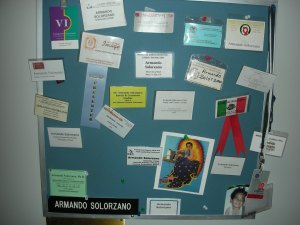
This year, Armando Solorzano is bringing the rally back to life with a photo-documentary titled “Invisible No More: Latinos Dignity March in Utah.” Solorzano says he received more than 4,000 pictures from participants in the demonstration before settling on 700 of the most striking images.

“The reason I did the exhibit was to provide a different aspect to the undocumented immigrants,” Solorzano said. “The whole idea was to portray their feelings, their hopes, their expectations and the love they feel for the United States.”armando-solorzano

The exhibit has been successful so far, according to Solorzano. More than 85,000 people visited when the documentary was first displayed at the city library, and about 8,000 people showed up in February to see the exhibit at Westminster College.

Solorzano and his staff have a goal of 100,000 people viewing the photographs, and with trips to Dixie State, Weber State and the University of Utah scheduled for later this year, that goal seems attainable.

Solorzano, a professor of family and consumer science at the U, said the exhibit helps dispel negative stereotypes about Latinos.

“The whole intention [of the documentary] was to humanize their experience, because the perception is that these people are coming here to violate the law or to engage in criminal acts,” he said. “But that is not true.”

Tony Yapias, the main organizer of the march, donated more than 1,500 photos taken by his wife and son.

“Our purpose was to send a message to the rest of the country that we need immigration reform,” he said. “The march was a huge success. There’s been nothing like it in the history of this state.”

Though the march did not immediately achieve the immigration reform its organizers hoped for, Yapias said the march has promoted change in other ways. For example, since 2006, the state has received a record number of applications for citizenship and hundreds of thousands of Latinos have registered to vote.

“We’re beginning to see the fruits of the march,” he said. “We accomplished a lot more than we ever expected.”

Yapias said the documentary has provided him a window to the past and an opportunity to contextualize the march.

“When you’re doing something, you don’t realize what you’re doing,” he said. “The documentary opened up a new perspective for us to look back and realize what happened.”

Yapias said Solorzano has been an instrumental contributor to Utah’s Latino community.

“Professor Solorzano is one of the unique professors in the state,” he said. “I’m glad to have had an opportunity to work with him.”

Gonzalo Palza, who continues to work with Yapias in promoting immigration reform, helped organize the walk and also participated.

“It was empowering, a great, great moment for Latinos in the state,” he said. “It triggered some concerns from the status quo. It triggered a bunker mentality. For the first time, [the status quo] really felt threatened. The state realized this is an issue that needs to be dealt with and cannot be ignored.”

But Palza also is quick to point out that the demonstration had negative results as well. He feels that the march has limited reform bills from being passed and encouraged anti-immigration legislation. Some have become even more entrenched in their fears and stereotypical views since the rally, he said.

Still, Palza believes the event brought the Latino community together in a powerful way.

“It was a great opportunity for us to display our unity,” he said. “Everybody who participated in the march felt really good.”

Solorzano’s collection of photographs has brought thousands together, as well. He said the media often focus on negative aspects of the Latino community, but he wants to use the exhibit to focus on its contributions and history in the state.

“Our struggles, our contributions, our participation in political or religious areas is not taken into consideration,” he said. “It looks like we don’t have a history, despite the fact that we have been in this place, in Utah, for about 15,000 years. Nobody knows about us.

“The intention of the exhibit was to document, to bring history alive again, and to remind people that we are bringing important components for the history of the state,” he added.

And Solorzano knows plenty about history, among other things. He was born in Ciudad Guzman, Mexico, but has lived in the United States for 32 years. He has an impressive academic resume, holding multiple degrees from several institutions. He said his constant desire to learn has given him motivation in school.

“Part of my way of living is I need to learn something every day,” he said. “I can’t go to bed without knowing something new. The only reason I like to learn is that I like to teach and share with others.”

Solorzano has been learning about other cultures his entire life. His mother is French, his father is Native American and his wife is Italian American.

“The majority of people believe that Mexicans are mainly Spaniards or Mestisos,” he said. “It’s pretty interesting, because my diversity has been at the roots of who I am.”

As for his two children, “they identify themselves as members of the cosmic race. My children are the combination of all races and different nationalities and countries,” he said.

Solorzano said the United States is about 20 years away from the most important change in the country’s history.

“By the year 2035, minorities or people of color will become the majority in the United States,” he said. “In order to come to that transition in a peaceful way, we need to understand each other more. I think that the racism and discrimination that people typically face is based on a lack of knowledge.”

The tenured professor said he works daily with students to promote diversity and, more importantly, acceptance.

“In my classes, I try to make the students more aware of the situation,” he said. “The whole idea is that we can come together and live in peace. Twenty years from now, America will look very, very different.

“By understanding people of a native background, Asian background, or Latino background, we will be able to maintain this society as one of the most exciting places to live in the world.”

It’s an early spring day, and the late afternoon light sifts through the half-drawn blinds hanging in Solorzano’s office window. Most of his colleagues and students are on their way home, having already absorbed a day’s worth of teaching and learning. Not this man. He sits attentively at his computer, still typing, still working, still dreaming.

Plazas making difference in Utah’s Hispanic community

by JEFF DUNN

Sometimes inspiration can come from an unlikely source. For Sandra Plazas, it came from a door-to-door salesman.

Two years after the first copies of Utah’s first bilingual newspaper came off the press, Plazas and her mother, Gladys Gonzalez, had had their share of difficult challenges. When the two began Mundo Hispano in May 1993, they didn’t have a staff of writers, editors or designers, and the women were forced to multitask to get everything ready for press. Financial issues added to the burden, and by 1995, the women were tired and discouraged and ready to quit.

“I didn’t think I could make it,” Plazas says.

The salesman learned of the family’s struggles in getting the paper off the ground and offered encouragement. He told of his own father who had given up too soon on a business venture years before.

“He said, ‘When a tough time comes, after that you find a solution. Don’t give up.”

They didn’t. Though impossibly long hours continued for the next few years, the women persisted, and in 1998 the paper turned the corner.

“For the first five years, I didn’t know what a vacation was,” she says. “I forgot that even existed. It was a lot of work. Thank God for technology.”

More than 10,000 copies of Mundo Hispano now are printed every week, with issues being distributed from Ogden to Payson. The paper became the official Spanish language portal of KSL in 2006.

“The thing I learned best is persistence,” Plazas says. “Even when times are tough.”

The paper’s co-founder says the mission of Mundo Hispano is to bring people together, not pull them apart. That, she says, is what makes the paper stand out against the backdrop of other bilingual and Spanish-language papers in the U.S.

“We focus on integration, they focus on separation. That’s the difference,” she says.

Plazas hopes the paper provides people the opportunity to get to know Utah’s Hispanic population.

“We are humans,” she says. “We may speak a different language, but we’re still from planet Earth. We believe that as each community learns from each other there is going to be a lot more understanding.”

Though Plazas has never made a personal profit off the paper, she says she’s more concerned with Mundo Hispano having a positive impact on the community.

“We believe the newspaper has a mission of integration, of getting to know each other,” she said. “And that’s why we do it.”

The integration effort has required Plazas and Gonzalez to work countless hours side-by-side. The editor says she and her mother have learned to work well together over the years.

“It’s not usual to work with your mother for 15 years and still be friends,” she said, smiling. “We fight sometimes.”

Sandra Plazas fled political unrest in Colombia in 1991, looking for safety and new opportunities with her mother and brother. The Mormon family relocated to Salt Lake City because they wanted to be close to the Church of Jesus Christ of Latter-day Saints, she said.

But Plazas and her brother were frustrated when their mother, who had worked in a high position in a Colombian bank, could not find comparable work in Utah. Instead of working in American banks, she began cleaning them to make ends meet.

“In the beginning, I wasn’t happy,” she said. “Now I love the USA, but at first, I didn’t. When you come here you’re starting just like everyone else.”

Plazas said it took her a year before she was conversant in English. She attended language classes full time while juggling a full work schedule during her first 12 months in Utah.

“It was really, really hard,” she said. “I hated it with a passion. I can’t tell you how much I hated it.”

Despite her initial struggles with acculturation, Plazas has become a significant player in Utah’s Hispanic community. When she’s not working at the paper or her and her mother’s ad agency, La Agency, which provides much of their income, Plazas takes time to coach an underprivileged boys soccer team, aptly named Mundo Hispano.

“That has been one of my most rewarding moments, to show those kids a different world,” she said. “It’s been an incredible experience for me.”

The former youth soccer player says she requires the boys, who are 15 and 16, to keep up on their grades and stay out of trouble to be eligible to play on the team. Plazas encourages her players to succeed in school and says she wants them to aim for college.

“I believe that any kid, if you raise the bar and give them expectations, they will step up,” she said.

The coach often serves as a mediator between the players and their parents. She told of one instance where a player had got into trouble for sneaking out at night to be with his girlfriend. The parents called her and asked for advice. She first talked to the son and then the parents until the issue was resolved.

“I don’t lie when I say I am like their mom,” she said. “Sometimes it’s not easy. One thing I try to teach them is not only getting but giving back.”

Plazas says she is certain the team has made a lasting impact on the players.

“If I talk about achieving success in life in general, I would say the soccer team [is the greatest]. I know I have changed the life of at least one of those kids.”

Local chef finds success and celebrity after fleeing Cuba

by DAVID SERVATIUS

Adalberto Diaz makes his weekly cooking class a hands-on experience for students. Photo by David Servatius.

Adalberto Diaz makes his weekly cooking class a hands-on experience for students. Photo by David Servatius.

It is seafood and pasta night. The menu includes smoked spinach fettuccini with shrimp, fresh tuna seviche and crab cakes on fennel angel nests. The room is full of upscale, white, middle-aged men and women, some seated, some up and moving around. The atmosphere is unruly, the air full of laughter, shouting and clapping.

At first glance the kitchen area looks like a bizarre three-ring circus with shooting flames, flashing blades and a grinning, wise-cracking Cuban in the middle of it all, barking directions. Like a ringmaster, he is stirring with one hand, pointing with the other, telling the crowd how to chop onions correctly and instructing a woman at his side to drop her battered scallops into the fryer one at a time.

It is not a circus, though. It is just a typical night at the popular weekly cooking class taught by local chef and television personality Adalberto Diaz. Every Wednesday in the center showroom of the Roth Concept Center in Salt Lake City, Diaz creates a unique menu and a beautifully presented, delicious meal for 24 emerges from this organized chaos. But before everyone finally sits down and eats, there are two hours of fun.

“This is not a cooking show,” Diaz tells the audience at the outset. “I’m not cooking for you. You are cooking with me. Now who wants to help me with skewers?”

One class member yells, “I do. I do.”

“Not you,” Diaz snaps. “You are the pan washer.”

The crowd erupts into laughter and applause.

“I don’t know how he does it,” kitchen assistant Chelsea Smoltz says. “Every night I’m sure that we won’t get done in time to eat, or that someone will lose a finger or burn their face. But it always works out better than I’m expecting. The people just love him.”

Diaz, 35, has come from a different place and a different life than what he knows now. He says it is hard to believe that just seven short years ago he was sitting alone in a Texas detention center, terrified, between two worlds and unsure what would become of him.

Born in Havana in 1972, Diaz grew up with three brothers, two aunts, a grandmother and a great-grandmother in what he calls “the family house,” a modest but spacious two-story structure built by his grandfather in 1948.

“There were at least 10 people living there all the time,” Diaz says. “I always cooked with my grandmother. I never got any credit, I was just a helper for her, but I loved doing it and I learned a lot.”

When he was 9 years old, he used a pressure cooker — most Cuban families were too poor to afford traditional ovens — to make a lemon sponge cake. A neighbor tasted it, loved it and wanted one. He says he made another, charged his neighbor three pesetas, or about 15 cents, and realized he had a way to earn extra money for the family.

In Castro’s Cuba, however, the capital to purchase supplies for a private business was hard to come by. Diaz says he set up a system in which he would repair leather shoes in exchange for rum, which he would, in turn, trade for eggs, flour and other essentials.

Later, after high school and his required two years of service in the Cuban military, Diaz enrolled in the culinary school at the Hotel Sevilla in central Havana, where he also worked as a tourist entertainer. From the hotel, he ran a private, forbidden, baking business on the side, sometimes working all night to keep up with the ever-growing demand for his pastries, cakes and breads.

He says he became friends with three Salt Lake City nightclub promoters who made frequent trips to host parties on the island in violation of U.S. law. For years, Diaz helped them prepare the food for their parties.

In 2000, he was noticed by the Cuban government.

“I found out I had been what we called ‘tagged,’” Diaz says. “Not for my business, though. It was because I had had too much direct contact with the Americans. I couldn’t work at the hotel anymore unless I spied on my friends for the government. I’m not that kind of person so I lost my job.”

That May, he says his best friend Rafael Labrada convinced him it was time for both of them to leave the country for good. Diaz was unemployed, probably now unemployable, and as officials snooped into his life there was suddenly the very real possibility of jail.

“I found out that a big project linking all of the government computers was almost done,” his friend Labrada says. “That would make it impossible for a marked person like Adalberto to ever leave the country, for any reason. If he was going he had to do it within a week or so.”

The two went into hiding in Havana while the necessary documents were secured, going out only early in the morning or late at night. On May 24, Diaz told his family he was going on a camping trip and began a journey out of Cuba to a new life with his three American friends in Salt Lake City who had urged him to come.

“I was afraid to stay in Cuba, I had a big fear of jail, but I also wanted to leave,” Diaz says. “It wasn’t just fear. I knew that if I didn’t leave I would not improve as a chef, or as a person. The hardest thing was leaving my mother, not knowing when I would see her again.”

Using phony work visas, Diaz and Labrada took a short flight to Mexico City. Under the U.S. “Wet Feet, Dry Feet” policy, implemented in 1995, Cubans caught at sea trying to enter the country are turned back, but those apprehended on American soil are allowed to apply for asylum. Because of this policy, the U.S. Department of Homeland Security says Mexico has become the most popular route into the country for Cuban refugees.

In Mexico City the two were picked up by a “mule,” an American man they paid $3,000 to smuggle them to the border town of Reynosa. When they arrived in Reynosa, Diaz says they were instructed by their mule to cross the bridge over the Rio Bravo River into Hidalgo, Texas, on foot, and to tell the guards on the other side they were Cuban and seeking political asylum.

When the two refused to return to the Mexican side of the border to wait for their paperwork, they were taken by federal agents to the U.S. Immigration and Naturalization Service processing center at Port Isabel, on the Gulf Coast of Texas. Labrada would be released in a matter of days, but Diaz would stay for what he says were the worst three weeks of his life.

“There were cells, with bars,” he says. “It was a jail. There were six or seven curved buildings with big walls and lots of fences, and everything was ugly gray, everything, except for the uniforms. They were bright blue, for the good guys, like me, and bright orange for the criminals.”

Labrada says he and Diaz were separated as soon as they arrived. “They didn’t like anyone having friendships inside the place,” he says. “But we would see each other sometimes, at meals or in the bathrooms.”

Diaz says the bathrooms were probably the worst part of the entire ordeal. “There was no privacy,” he says. “If someone happened to have diarrhea you could hear it all over, and, even worse, smell it. Cubans are private people. I was so stressed that my hair turned white with dandruff.”

After what he says seemed like an eternity, his paperwork was processed and Diaz was free and in America. He and Labrada reunited in Miami and, after a long bus ride, arrived in Utah in the wee hours of the morning on the Fourth of July.

“I was stinky and tired, but the first thing I did was go to the Fourth of July parade in Provo, to celebrate being in America,” Diaz says. “I remember thinking, ‘This is a parade? This is how they celebrate?’ It was lame! There was no music, no dancing. I was expecting Brazilian Carnival and it was a bunch of white people walking.”

When the parade was over, however, the reality of life as a new immigrant in America set in. For almost a year Diaz worked as a laborer, painting and installing Sheetrock for a construction company. He says it was hard physical work. Then, in 2001, two of his friends opened a restaurant called Orbit in downtown Salt Lake City. They heard Diaz had been well-known in Cuba for his pastries and hired him as the restaurant’s pastry chef.

A year later he was running his own show as head chef at a trendy new restaurant and deli called Juhl Haus where, just like with his neighbor and his lemon cake all those years ago, a stranger was so impressed with something he cooked that it changed the direction of his life.

Marie Ritchie, the showroom manager at the Roth Concept Center, where most of the cooking programs on local television networks are taped, hired Juhl Haus to cater a party. One of the menu items Diaz prepared for the event was a spicy tomato soup.

“It was the best tomato soup I had ever tasted in my life,” Ritchie says. “I had wanted to start cooking classes in the big center showroom where we do television, so Adalberto and I talked about it that night. Within days we were working together and within two or three weeks we offered our first class.”

Ritchie says the weekly classes quickly started filling up and she noticed it was Diaz himself that people were coming for as much as it was his food or his recipes.

“He is like an artist, and he is a natural entertainer,” she says.

Ritchie knew that local television station KUTV needed someone for a cooking segment on its mid-day news program, and, on a hunch, recommended Diaz to the producers. The station hired him in 2003 and he was a hit with viewers.

Today, in addition to teaching his weekly classes, Diaz hosts a cooking segment every Tuesday on local television station Fox 13 and is the head chef for Granatos Restaurants, overseeing a staff of 13 people in four Salt Lake Valley locations.

As this week’s class ends and his assistants clean up the dishes, a crowd of students lingers to chat with Diaz. Some are thanking him, some cracking jokes and others asking questions.

“That was the most fun I’ve had in a very long time,” Tooele resident Karen Doolittle says. “He is very amusing, and the meal was incredible. I feel like I just had Thanksgiving dinner.”

A lot has changed for Diaz in a very short time, less than eight years, but he says he’s only just begun. He plans to publish a cookbook in the near future and would like to open an authentic Cuban restaurant in Salt Lake City at some point.

“I’ve packed 70 years of life into 35 years,” he says. “I am going to relax for at least a little while and enjoy this life I have. Celebrity is not important to me. Seeing someone’s face light up because of something you said to them or gave them to eat is what is important to me.”

Kassidy Mather

MY STORIES:


MY BLOG:kassidymather

My studies in communications so far have given me a newfound respect for journalists. They get a bad rap a lot of the time, but take into consideration all that journalists, say, news writers, do.

First, they have to do extensive research to find out what it is they’re even writing about. Then they have to hunt down somebody — anybody — who will talk to them and give them accurate information. After their e-mails and voicemails are ignored for two weeks they have to either find someone else to talk to, or show up at the person’s office and refuse to leave until their questions are answered. They have to ask intelligent questions while hoping their tape recorder doesn’t run out of batteries because that little red warning light is flashing. Then their pen runs out of ink. Once the interview is over, they have to talk to someone else to double check the facts. Then they triple check.

Once they have all the information they think they need, they finally sit down to write the article. They have to figure out how to make people want to read it. They have to keep their own opinion on the subject completely out of it. They have to listen to that crappy tape recording 17 times to make sure they got the quotes exactly right. When they realize they need a little more information, they have to write another email for clarification, which will be ignored, as will the follow-up call.

They have to write an exact number of words in a specific amount of time in AP style for a specific audience. Once finished, the article is ripped apart by an editor. Whole paragraphs are crossed out, arrows going every which way. Five drafts later the article is finally accepted, then printed. But the frustration isn’t over. Readers comment and complain; someone is always unhappy and disagrees.

Yep, being a journalist isn’t easy. They don’t get no respect. For the most part, journalists are just trying to let you know what’s going on in your community and throughout the world, so unless you want to go through the above process yourself, how about cutting them some slack?  


ABOUT ME:

I will graduate from the University of Utah in Spring 2009 with degrees in English literature and mass communication. 

Both of my majors have required me to write extensively. News writing really encompasses all kinds of writing skills, whether it be creative writing or maintaining objectivity in a news story. I hope the skills I have learned will help me go on to a career in editing and publishing.