Sudanese ‘Lost Boys’ in Salt Lake City seeking a better life

by REED NELSON

The store is hectic, so much movement that the one focal point is the bustle itself, each individual indistinguishable to the glancing eye. But to those who know the store, it is organized, but not in the casual sorted order consistent with the ordained rules of a normal grocery store.

“We have our own way of doing things in here,” said Simon Kuay, 33, owner of the K&K African Market, and a Sudanese “Lost Boy.” This is the unique way in which the Lost Boys go about, and generally succeed, in living life. They have managed to channel their life experiences into productivity, responsibility and in some cases, an education.

The Second Sudanese Civil War began in 1983, when northern Sudan, which had become economically and religiously divided from the south, imposed its religous will of then-president Gaafar Nimiery upon the south. Nimiery wanted to transform the southern part of Sudan into a Muslim Arab state.

That same year, the Sudanese People’s Liberation Army began secession plans and the government retaliated. It would then escalate into a full-scale civil war and eventually, raids on villages and towns.
In 1987, that civil war displaced 27,000 kids, mostly boys, from Sudan. They traveled for two months to Ethiopia, only to be turned away. For two years they tried to return to southern Sudan until they found refuge in Kenya.

Nineteen years later, Salt Lake has become not only a safe haven, but also a permanent home for some of these refugees. Now there are 90 of these “Lost Boys” enrolled at Salt Lake Community College, and a growing list of alumni.

Augustino Kuol, a student at SLCC and the current president of the Lost Boys and Girls Association, finds his experiences here slightly different than growing up on the road, or as a temporary high school student in Kenya.

“Being here allows me the opportunity to try to rise up,” Kuol said. “But I still wish my circumstances were a little more fortunate.”

Even while Kuol excels, he often finds himself in situations where family would normally come into play. He has not seen his family since he began his journey from Sudan. However, these are the times that the Lost Boys’ friendships, friendships forged in the midst of unspeakable turmoil, come in handy.

“These boys tend to stick together because, growing up, they had to,” said Cindy Clark, who runs the Sudanese Student Association at SLCC.

These kids have had experiences varying from being targeted as children in a civil war to watching close friends die. “Kids have shared stories with me in which they went from being at makeshift [refugee] camp talking,” she said, “to seeing a lion grab a boy and take him away.”

Clark said they have not let these experiences affect them. “You would think that they would have Posttraumatic Stress Disorder or something,” she said. “But they just take it in stride, move on, they know no other life than the one they lived. No traditions can hold them.”

Clark knows the students are not exactly given every advantage as they begin their schooling. But a majority of their time, she said, is spent working twice as hard as those students attending school for the sake of attending school.

“The ones that make it here tend to be the cream of the crop,” she said. “They were also lucky enough to escape the refugee camps.” Clark said they are lucky indeed, because the U.S. government might allow only 20 people from a camp entry into the U.S via a lottery.

A fine line runs between the margins of society and the fabric of society. They have climbed from the lowest of lows, from permanent exile, from the seemingly never ending persecution, Kuol said, across an ocean, to a life that they have improved. 

“You think these kids would have been discouraged long ago?” Clark asked. “They weren’t. They always smile, the happiest kids I know. They have stayed alive being optimistic.”

Native American designer finds home

by RITA TOTTEN

The definition of home is different for everyone. Some people consider home a place where family lives; others view home as where one feel the most at peace. For many, a simple definition of home is hard to construct.

Cal Nez, a successful Native American graphic designer, has struggled with the idea of home for as long as he can remember.

“Is home a physical location or inside me or Sandy, Utah?” Nez wondered during an  interview at the University of Utah.

As is tradition in the Navajo Nation, Nez was given to his grandparents to be raised at a young age. However, instead of being raised by his mother’s clan, which is considered to be dominant, Nez was raised by his father’s side. He never knew his mother and hardly knew his father. When he was about 5 years old he was forced, like so many Native Americans, by the federal government to attend boarding school.

Nez remembers his experience at boarding school as nothing short of hell and likens his time there to prison.

“I understand every aspect of confinement, abuse, of mental manipulation,” Nez said.

According to Amnesty International USA Magazine, beginning in 1869 with President Grant’s Peace Policy, more than 100,000 Native American children were taken from their families and forced into boarding schools in an attempt to “Americanize” the Native American population.

A scene he plays back in his head is one of a long, dark hallway at the boarding school in New Mexico. He is standing at one end and his grandmother is walking slowly down the hallway toward a tiny door, barely visible. Nez said he would never forget that image and the feeling he had of loneliness when his grandmother left him.

When Nez was a sophomore in high school he enrolled in the Latter-day Saints Indian Placement Program. The program placed Native American students with LDS families and Nez moved to Salt Lake City to attend South High School.

“I came to Salt Lake to learn what a normal family was,” Nez explained. But before he began his journey he had to deal with leaving his grandmother and the need to find himself. Nez vividly remembers leaving his family but telling them that he would remember who he was. He promised to come back for his grandmother.

This parallel in his life, first his grandmother leaving him and then leaving his grandmother would shape the ideas he has about family and belonging.

Nez moved to Salt Lake and attended Sough High School. While attending South, Nez felt the drive to succeed. He excelled in art and design and was the first Sterling Scholar in Art from South High. He remembers seeing the seniors graduate with honors and all the adornments. At that moment he realized he wanted to feel that sense of pride and accomplishment. He wanted to emulate the success he had seen the other students achieve.

Nez said he had always been able to duplicate and capture images and showed talent at a young age. At the boarding school he remembers doing one of his first drawings and his teacher, Ms. Beach, rewarded him with a one-dollar bill. The drawing was of Abraham Lincoln chopping wood.

With his natural ability to recreate designs and determination to “make it” Nez worked locally for a couple of advertising agencies. While working, however, he discovered he was missing something.

Nez decided he needed to take his talents and start his own business. “I quit. I packed up my stuff and left,” he recalled. Nez and his wife, Yolanda, were expecting their first child.

Armed with nothing more than his portfolio, Nez drove to Arizona to present his raw abilities in graphic design to the Chairman of the Navajo Nation, Peter MacDonald. Nez walked into MacDonald’s office and said: “I want to show you what I can do.” He walked out with two jobs.

One of the jobs MacDonald assigned him was for the Navajo Nation Fair in 1989. It is an original oil painting depicting a Navajo man wearing silver sunglasses and the scene of the fair can be seen in the reflection. Nez said this painting symbolizes the presence of the Native American.

The face of the man in the poster is made up of a collection of a few dozen different faces, one of which is his wife’s, Yolanda, grandfather.

Cal Nez Design, based out of Salt Lake City, is a 100 percent Native American graphic design and advertising agency. In October 2005 Nez was featured on the cover of Utah Business Magazine, when it highlighted minority business owners in Utah. Of the experience Nez says it was and is such a great honor. He said he just hopes he can be a good role model for other Native American business owners.

His philosophy about graphic design is that he tries to keep the integrity of the art. Each piece he works on and designs has his own personal touch. Nez believes the world of graphic design should move away from pre-made templates and generic work; he wants to return to the human aspect. “Every client is different,” he said. “Every message is different.”

Tribal colleges aid American Indian success

Story and photos by ANNE ROPER

American Indian students mixed with colonial teaching methods create an educational recipe for disaster. Drop out rates are high among Native students, such as the Navajo Nation where only 41 percent of American Indians graduating from high school.

In the 1960s, a movement for educational amelioration began to sweep throughout Indian Country, putting into motion a clarion call for reform.

Tribal colleges answered that call.

The tribal colleges, also known as tribally controlled colleges, can be found on reservations or in remote communities where post-high school education is so inaccessible, it is out of the question for many. The colleges boost the local economy by providing jobs for faculty and staff in places that face insurmountable unemployment, some as high as 70 percent.

And whereas some traditional schools have tried to stifle American Indian culture, tribal colleges encourage it. They even teach it.

L’Dawn Olsen teaches writing and English at Wind River Tribal College on Wind River Indian Reservation, home to the Arapaho Tribe in Kyle, Wyo. In her classes, the experience is different from the moment it starts.

“We begin every class with a ceremony,” Olsen said. “We smudge; we drum.”

Smudging is an American Indian practice that involves burning a plant and taking in its life experiences. The process is difficult to explain because American Indian culture learns by experiencing something firsthand, as opposed to mainstream American culture that emphasizes explanation from a scientific standpoint, Olsen said.

It is this cultural difference that has prohibited so many American Indian students from succeeding in the educational realm.

“[American Indian students] do not fair well in any kind of colonial idea of education,” Olsen said.

Tired of boarding schools and low graduation rates, some visionaries began the first tribal college in 1968 – Dine College in Tsalie, Ariz. – during the movement toward self-determination.

By 1972, six tribal colleges had been built. The American Indian Higher Education Consortium was created as an initiative of the tribal colleges to form a community. Today, the AIHEC has grown to represent 37 colleges in the U.S. and one in Canada.

All the colleges are fully accredited or are in the process of accreditation. Wind River Tribal College is accredited through the University of Wisconsin-Oshkosh. Students are able to transfer to any state university or to the handful of tribal colleges that offer bachelor’s and master’s degrees.

Tribal college enrollment is overwhelmingly female, with an average of two women for every man. The AIHEC describes the typical tribal college student as a single mother in her 30s.

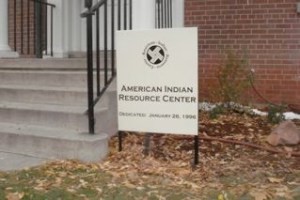
The American Indian Resource Center at the U.

The American Indian Resource Center at the U.

Beverly Fenton, director of the American Indian Resource Center at the University of Utah, has a feeling why. She has been there herself.

Fenton was widowed when her husband died at 36 of Lou Gehrig’s disease, which usually begins to afflict people in their 70s or 80s. She had a 7-year-old son, a broken heart and only three years of college. Because she fell just short of a bachelor’s degree, Fenton knew she still wouldn’t earn more than minimum wage.

Beverly Fenton, director of the American Indian Resource Center at the University of Utah, replies to questions from American Indian students. She is a strong supporter of tribal colleges.

Beverly Fenton, director of the American Indian Resource Center at the University of Utah, replies to questions from American Indian students. She is a strong supporter of tribal colleges.

Fenton completed three years of college at the University of Illinois, but culture shock, unhappiness and loneliness eventually caused her to drop out.

“I always felt badly I didn’t finish school,” Fenton said. “But I never felt compelled to until my husband passed away, and I had a little boy to support. So I went back and got my bachelor’s and master’s.”

For Fenton, one major advantage to tribal colleges is their proximity to students’ homes and families. Many students, especially first-generation college students, find the big universities difficult at first, Fenton said. Well-meaning families see the struggle and encourage them to drop out of school and come back to the reservation.

“A lot of their families will say, ‘It’s OK. Come home. We don’t want you to be unhappy. No one in our family has ever graduated from college.’ So you get stuck,” Fenton said.

Olsen has encountered this same problem in Wyoming.

“They have a very difficult time leaving, because living on a reservation, they are part of that support system,” Olsen said. “They feel very much at odds when they go to a university because there is no support system in place to help them integrate.”

At tribal colleges, students are able to naturally make that transition. It helps that they don’t have to give up their culture.

“[Tribal colleges] also infuse completely all of the tribe’s specific culture, tradition and language into the curriculum,” Fenton said. “They can feel like they’re getting not only academics but also the cultural and language aspects of who they really are.”

But American Indians aren’t the only students at these colleges. All tribal colleges, except two, allow non-American Indian students to enroll. Haskell Indian Nations University in Kansas and Southwestern Indian Polytechnic Institute in New Mexico are federally chartered institutions, administered by the Bureau of Indian Affairs. The bureau permits only American Indian and Alaskan Natives to enroll in the two schools.

Most colleges require a proficiency in the tribes’ native language, which may hinder students with no knowledge of the official dialect. It is no different than expecting a student to know English, Fenton said.

Non-American Indian and American Indian students alike can enjoy the lower cost of attending a tribal college as compared to community college or university off the reservation. The AIHEC lists tuition for one credit at $107 for an American Indian and $151 for a non-American Indian. By comparison, one credit hour for a resident at Salt Lake Community College costs $225.

“The cost of an education is prohibitive for a lot of students,” Fenton said. Both she and Olsen emphasized American Indian students must pay the same amount of tuition as any other student at colleges and universities across the country.

Of all the students who have thrived in tribal colleges, one couple represents the epitome of success for Fenton: Michael and Whisper Catches. Michael is working toward a master’s degree in Lakota leadership and management, and Whisper holds a bachelor’s degree in business administration with an emphasis in management. They have four sons: Wakiyan Hotun, 6, Hehaka Sapa, 4, Tatanka Nunpa, 3, and Kinyan Luta, 18 months. While Michael works toward his doctorate degree at Sinte Gleska, they have chosen to stay on the Rosebud reservation in South Dakota.

Success like Michael and Whisper’s is becoming more prevalent. Graduation rates for American Indian students are still at 4 percent in Canada where the tribal college movement has just begun, whereas U.S. graduation rates are hitting anywhere between 12 percent to 25 percent. Tribal colleges should be credited for this improvement, Olsen said.

There are no current plans for a tribal college in Utah, but one would be welcome.

Forrest Cuch, director of the Utah Division of Indian Affairs, hopes to get a tribal college running in Utah. But some barriers to such a project exist.

Cuch believes local leadership is not focused enough on education for a tribal college to start here.

Fenton thinks the reservations in Utah don’t have enough people to justify building one, but it would still be a good idea if they decided to.

All the advantages come down to one thing for Olsen: “Indian people want to be Indian people.”

Navajo rug sale supports American Indian elders

by JAMIE A. WELCH

Life on the Navajo reservation and in traditional hogans made people strong. Years of following sheep around the desert, watching children move away from their homes and weaving together strand after strand of coarse sheep’s wool to create hundreds of rugs in a single lifetime has given the elders at the 19th Annual Navajo Rug Show and Sale their dedication to each piece.

The rug show took place Nov. 7-9, 2008 in Deer Valley Resort’s Snow Park Lodge in Park City, Utah.

Rug weaving is a historic Navajo, or Diné, tradition and is honored in the show that was formed specifically to support the Adopt-A-Native Elder Program (ANE).

This program, created to benefit Navajo elders, began in the 1980s through the efforts of Linda Myers, a Park City woman who was impressed by an early display of Navajo rugs from elders in northern Arizona. Soon after that event, Myers got involved in collecting and distributing medical, food, and hygienic supplies to elders living on the Navajo reservation in southern Utah and northern Arizona.

A group of supporters eventually joined Myers and the Adopt-A-Native Elder Program was established. Mary Phillips, one of the many volunteers at the rug sale, said it is “an honor to work with Linda. The program’s success is truly inspiring and shows Linda’s devotion not only to the elders themselves, but to the Navajo tradition [of rug weaving.]”

According to the program’s Web site, there are more than 2,500 people involved in the program today. Most are from the United States but some are from other countries as well.

Rosita Van den Berg is one such volunteer. Rosita is from Holland and became interested in the program while visiting a fan site of American Indian actor Jay Tavare. 

Tavare, an avid supporter of ANE, has information regarding the program on his personal Web site and on his Facebook and MySpace pages. Van den Berg, who attended the event this year, created a painting to honor American Indian people and donated it to be auctioned off with its proceeds going to the program.

Tavare, known best for his roles in the TV miniseries “Into the West” and films “The Missing” and “Cold Mountain,” has supported ANE for seven years. He has attended the rug show for the past three years. “It definitely brings awareness about the culture of Native Americans,” he said. He hopes his support can act as “a symbol to reach across nations and get the message as far out as possible.”

Another supporter at the show was author Rose Johnson-Tsosie of “Finding Helen – A Navajo Miracle.” Tsosie was born on the Hopi reservation of northern Arizona in 1950 but she and her twin were taken from her biological mother at birth and were placed for adoption. The siblings were raised by a white family, Albert and Wilmont Johnson, in Cache Valley, Utah, where they grew up never learning much about their American Indian heritage. Tsosie said all she was aware of was that “growing up Navajo in a white society was different only because I knew my skin was different.”

In 1983, Tsosie reconnected with her biological mother, a Navajo, while serving a mission for The Church of Jesus Christ of Latter-day Saints in the Arizona Holbrook Mission. Through tears Tsosie said, “there are many exciting times in my life but this is the ultimate dream when I got to hold my mother and my mother got to hold me.”

Since then, Tsosie has been actively involved in the American Indian communities of California and Utah. She now travels around the country promoting her books and speaking about and on behalf of American Indians.

Attending the ANE rug show gave Tsosie a chance to show the reason she says she loves being Navajo: “learning the tradition of my heritage.” Tsosie also said, “I do respect my heritage. I am still learning about who I am, about where I am going and where I have been.”

About 28 weavers were featured in this year’s rug show. Their ages ranged from the early teens to nearly 100 years old.

Patrina and Diana Furcap, ages 13 and 12, are sisters. They learned to weave from their mother at about 6 years old. Each sold one hand-made rug on the first day of the show. “I think it’s important to keep the tradition going from one generation to the next. We shouldn’t lose it because it’s art,” Patrina said.

Most of the weavers present were women. However, four men also participated. William Whitehair, who has been weaving since he was 7, said gender differences might be rooted in history. When European settlers arrived, they brought with them their traditional form of household with women at home doing domestic activities and men outside working in farms. Although the American Indian way is matriarchal, many Native people adopted the European style and over time, weaving became primarily a female activity. Still, Whitehair said, he weaves because he’s “always enjoyed the art.”

At the show, rugs were sold at prices ranging anywhere from $150 to several thousand dollars. Prices are indicators of the quality of each rug and the amount of labor involved.

Linda Myers explained, “It’s not about the weaving itself. It’s about how when you go up and feel these rugs and you feel the hands of the weavers…that’s one of the gifts of purchasing the Navajo rugs all woven by hand. All these rugs carry that beautiful spirit of the weaver and their hands and the patterns.”

Designs range from the simplistic “Diamond” pattern (a single shape woven throughout a rug) to the intricate “Tree of Life.” This rug is a story, beginning with a “wedding basket.” At the bottom of the rug is the basket, usually woven in yellow or brown, which symbolizes the beginning of a family. From the basket grows a tall corn stalk with many branches growing from both sides. Birds of all colors are perched on the branches, each representing older generations of the family. There are also birds in flight on either side of the stalk, which stand for the younger generations. At the top is the “tassel” of the corn which holds the pollen. In Navajo tradition, corn pollen is offered with prayers, giving significance to the tassel being the tallest point on the Tree of Life. This rug can be woven in any color assortment ranging from rich dark colors to pastels.

Proceeds from the rug sales go to support the ANE program in buying food, firewood, and other items for Native elders. Individuals also could purchase balls of yarn in various shades to donate to elders for use in weaving. Some customers chose to sponsor a specific elder and invited him or her to choose the colors they liked the best. Additional donations can be made at the Web site.

The Adopt-A-Native Elder program has been a success for more than 20 years. One weaver has been a part of the program since its inception. Weaver Grace Smith-Yellowhammer of Teesto, Ariz., feels blessed to play a part in ANE and is proud of the international community involved. “We are all connected,” she said, “One voice, one prayer, one heart.”

Diversity is complicated for refugees in Utah

by BRADY LEAVITT

In a state that is 93 percent white, Gerald Brown represents diversity.

Brown is white. He wears bow ties and peers through round-rimmed glasses. When asked if he speaks foreign languages, he says, “Only Southern.” When asked what his epitaph might read, he says, “A Holy Man.” And when asked if refugee caseworkers are tough, he says without hesitation, “Shit.”

Brown, 57, is the director of the Refugee Services Office in the Utah Department of Workforce Services. He works as a sort of traffic cop at the intersection of politics and nonprofit groups, coordinating efforts to help refugees integrate into Utah’s communities and culture.

Brown became director of the Refugee Services Office in February 2008 after Gov. Jon Huntsman Jr. ordered its creation. Huntsman and the state legislature appropriated $200,000 to fund the office, the first time state money has been provided specifically for refugees. The sum is small, Brown said, less than 10 percent of the money he receives from the federal government. However, it as a sign that the state is willing to invest in refugees, he said.

“I need Huntsman for another term,” Brown said, referring to the upcoming elections. “He gets it.”

A self-described “lefty activist type,” Brown wants democratic Sen. Barack Obama to be elected president in November. He figures that with a Democratic president, Republican Gov. Huntsman will be re-elected in Utah and not called to a cabinet position in Washington.

Before Gov. Huntsman’s executive order, the Refugee Services Office consisted of “one guy and a cubicle,” Brown said. Now the office has six employees and one volunteer coordinator.

While he enjoys working in Utah, Brown’s fondness for the state and its governor only goes so far. He expressed frustration with the organizational difficulties of his job. One of his office’s goals is to build a network of trained volunteers to assist caseworkers. But, he said, the bureaucracy is slowing it down.

“Do we have trained volunteers on the ground yet? Nope. Because we’re still meeting,” Brown said.

Brown began his work in the field of refugee services assisting Cambodians at a YMCA in Houston in 1981. It was his first-hand experience that inspired him to be an advocate and an activist. The most effective activists, he said, are those who have had similar exposure to diverse populations.

Brown both praises and criticizes Utah in this respect. He accuses many Utahns as being insular and in many cases ignorant when compared with other groups of people he has worked with.

Peter Robson works as an interpreter for refugees at the Asian Association of Utah. He said that he included his work experience at a refugee resettlement agency on his resume. As he interviewed for jobs this past summer, many employers would ask him about it.

“These were well-informed people, but they were surprised that there were real refugees in Salt Lake,” Robson said.

According to the U.S. Census Bureau, Utah’s population in 2006 was identified as 93.5 percent white and only 5.1 percent black, Asian, Native American or Pacific Islander.

Robson, 23, is a native Utahn. Growing up in his east Salt Lake City neighborhood he was separated, and not just from the refugee community, he said.

“It’s easy to insulate yourself and separate yourself from anyone who is less-privileged,” Robson said.

Robson said his experiences working with the refugee community have changed his underlying career goals – salary and other considerations are no longer as important as the satisfaction that comes from helping people.

Robson is similar to many people that Brown knows in Utah. Brown said he is baffled by how simultaneously sheltered and eager the volunteers he finds here are.

“Utah County is the volunteer capital of the U.S.,” Brown said, “It’s like the perfect job.”

Brown said that diversity is edifying and that people need to begin to realize that the world is getting smaller and people are more reliant upon each other than ever.

While Brown may feel that Utah is not a hub of diversity, he maintains that Utah is the “Wild West for resettlement work,” meaning that he feels so much is possible because people and organizations are so willing to help. And despite his criticism insularity, Brown said that one of the reasons it is so easy to work with people in Utah is that they are conservative and relatively nondiverse. ”

They have no complicated experiences,” he said, “and people seem generally nice.” Brown epitomizes in many ways the unique and unlikely diversity of Utah.

Diversity, Brown said, is a two-way street – a street on which he directs the traffic.

And doing so, Brown said, “I have had the privilege to get to know the world.”

Issa Moursal, determined not to fail

by BRAD TAGGART

Issa Moursal was riding in a truck with his cousin when he felt a burning sensation on the back of his neck. As he reached back to feel what had burned him he noticed blood running down his neck and soaking his shirt.

“I looked at my cousin and the same bullet that grazed the back of my neck had hit my cousin and killed him,” Moursal said. He sat and reflected for a second remembering the terrifying moments.

Moursal, now 38, grew up in Chad, Africa, in a French colony. Moursal had aspirations of becoming a lawyer. He studied hard and for long hours with that goal in mind. He would walk to school with no shoes, and sit under a tree for class, which was typical in Chad where the economy struggled.

Scenes of Niger, Africa. Photos courtesy of Issa Moursal.

Scenes of Niger, Africa. Photos courtesy of Issa Moursal.

In school, Moursal learned to speak two languages. French was his primary language and Arabic was his second language.

He attended high school in Niger and would visit home during his summer vacations. One particular summer Moursal returned to his village for vacation. As Moursal and his sister went to get firewood some government officers from Chad approached them. The officials asked Moursal to tell them where his father was. Moursal’s father was an officer in a rebellious tribe that was trying to overthrow the government. Moursal refused to tell them.

“I knew if I told them [where my dad was] that they would not only kill him, but kill me also,” Moursal said. “So I refused to tell them and they started beating me.”

Moursal’s sister pleaded with him to tell them but Moursal knew the consequences and kept his fathers whereabouts secret. The officers arrested Moursal and took him to a city about 20 miles from his village where he would spend the next week in jail.

While in prison Moursal came in contact with a Catholic priest who knew Moursal from his congregation and had sent Moursal to school in the first place. The priest asked city officials to release him and they did.

After being let out of prison Moursal left for Sudan where he would begin fighting for his tribe and against the government.

“The government is corrupt in Chad,” Moursal said. “They can arrest you for not even doing anything and can kill you if they want with no reason.” Moursal’s tribe joined forces with another and together, they were able to overthrow the government in December 1990.

Issa Moursal holds a traditional mask from Niger. Photo courtesy of Issa Moursal.

Issa Moursal holds a traditional mask from Niger. Photo courtesy of Issa Moursal.

Afterward Moursal was assigned to be part of the security team that would protect the new vice president. Things remained calm for a period of time until the tribe that had helped to overthrow the original government decided to try to take over the new government.

Moursal and his cousins were in a truck protecting the vice president when they were shot at. Moursal recalls the situation being frantic and chaotic. “That is when I felt the burning on my neck,” Moursal said. “I looked and my cousin was dead.”

The fateful event led Moursal to decide to flee Sudan and seek protection. “I had to go into hiding for just a couple of hours,” Moursal said. “Then I traversed across a river and then was smuggled across the border to Nigeria and then to Niger.”

By the time he arrived in Niger, his neck was badly infected. “I went to the University hospital and met a nurse from my tribe to help with my infection,” Moursal said.

Even though Moursal had escaped the war he still had the desire to fight for his people and go back. “The nurse convinced me to stay,” Issa said. “She told me go to talk to the United Nations and they would help me.”

An official from the United Nations listened to Moursal’s plea and decided to protect him with the stipulation that Moursal study and then work for the United Nations. He agreed.

For the next two years Moursal began to realize his dream yet again. He had two years of law school under his belt when he was awarded a scholarship.

After getting the good news of the scholarship, Moursal encountered yet another obstacle in his path. The United Nations had enough lawyers and needed to pull Moursal out of law school and place him in a technical school. He agreed to continue and finished his degree in library science in spite of not being able to become a lawyer.

After a seven-year stay with the United Nations Moursal was offered the chance to come to the United States as a refugee. “They came and interviewed us to see if we could make it in the States,” Moursal said. “I was not convinced that I would be going but knew I had as good as chance as any.”

Moursal was one of 3,000 possible candidates to come to the U.S. Only 27 were selected; he was among the 27.

When granted asylum by the U.S. Moursal needed to find an organization that would accept him and help him with the transition. He came in contact with the International Rescue Committee, which helped Moursal with the final details of his arrival.

On June 4, 1997, one year after Moursal was asked if he wanted to come to the U.S. he arrived in Utah. He was a little different than most of the refugees, though. Usually a refugee needs help getting started.

“Finding a job, paying bills, and other tedious tasks can be a big problem for newcomers,” said Michelle Amussen, a student in the Occupational Therapy program at the University of Utah, who helps the new refugees get settled.

“Most of the time they don’t speak any English at all and this seems to be their biggest downfall,” Amussen said. “If you can speak English it is much easier to find a job, understand mail and paperwork, and navigate through the system.”

Two weeks after his arrival Moursal’s resilience began to shine. He found his first job without the help of the IRC at a Marriott, booking rooms in French.

“I don’t want to be a parasite for society,” Moursal said. “I want to be able to do it on my own and be successful.” He is currently working at Franklin Covey as the International Operation Coordinator and is studying business at the University of Utah working toward his MBA.

Issa Moursal with Mona and Melissa.

Issa Moursal with friends Mona and Melissa. Photo courtesy of Issa Moursal.

“Life is good here,” Moursal said. “I have a successful job and a nice house a beautiful and wonderful wife and two kids.”

“We [the Moursal family] are raising money so they can build wells for the village.” Moursal said. “This is what drives me to get my Ph.D. and get more money so I can help more people. What keeps me here is that everyone in the village has this hope for me to succeed. You have all these people looking up to you and you don’t want to let them down,” Moursal said.

“Success is easier to come by here in the states,” Moursal said. “There are many opportunities to get a good job and support your family.”

Moursal has had a big advantage coming to the U.S. with an education and a background learning languages. “English is the key to success here in the States,” Moursal said. “If you do not speak English you will be stuck with a low-paying job and not be able to move up.”

Issa Moursal's son, Quintin. Photo courtesy of Issa Moursal.

Issa Moursal's son, Quintin. Photo courtesy of Issa Moursal.

Moursal has lived in Salt Lake City for 11 years. His continued success is warranted by his determination not to fail. “I still have the scare that reminds me of where I have been and what I have survived,” Moursal said. “I know I can fight through almost anything.”

LDS Humanitarian Center and Inner City Project helps refugees

Story by MICHAEL OLSON


  • See a slideshow about an English class provided by the LDS Humanitarian Center and hear from a service missionary (best viewed in full-screen mode)

Amy Wylie, 49, and her husband have been volunteering with The Church of Jesus Christ of Latter-day Saints in the Inner City Project for nine years. They started volunteering with the project as service missionaries in a ward in Salt Lake; now they serve as assistant directors of refugee services for the project.

This is their church calling. They turned in their missionary application papers to serve a 30-month service mission, the longest term a service missionary can serve without resubmitting another application.

The LDS church has several programs designed to help refugees adjust to life in Utah. One of them, the Inner City Project, helps prevent people from getting lost in the transfer between agencies giving care to refugees.

For example, at the International Rescue Committee most refugees only have six months before their case is transferred to another agency. However, the Inner City missionaries are always available to help and give service.

“Service missionaries play a bigger role longer term,” Wylie said.

Service missionaries are not the same as the church’s full-time missionaries who spend every day proselytizing. These missionaries are there to help people in the area, whether they are members of the church or not.

About 500 service missionaries currently serve in Salt Lake City. They are not specifically assigned to work with refugees, but it is part of their overall assignment in the ward, or area in which they work.

“When you are assigned to a ward you become a part of that ward and you take what ever the bishop asks you to do,” Wylie said. When missionaries are assigned to work in an area with a large refugee population it is likely the bishop will send them to assist them.

“We serve as a resource to help train. If they have questions and don’t know where to go they will call us and we will help them figure out a plan of action,” Wylie said.

They also help refugee children enroll in school and make sure they are getting the attention in class they need.

“We met one of the lost boys of Sudan in our first mission assignment,” Wylie said. Wilson was 7 years old when he was separated from his family during an attack on his village. He ended up in a refugee camp and hasn’t seen or heard from his family since.

Wilson met the Wylie family during church. He would sit with the family every week because he felt comfortable with them.

One Sunday he handed Wylie a note.

“It said ‘Could I have a picture of your family to remember them by?’ and I realized that he had no picture of a family, he didn’t belong to a family,” Wylie said.

The Wylies went to Temple Square where they took a family picture with Wilson in front of the temple.

Now Wylie shares her copy of the picture with people every chance she gets. She feels that people think it takes too much effort to make a difference in people’s lives.

“Look how simple it was. He now calls me mum and my children his brother and sisters,” Wylie said.

The Inner City Project also plays a role in finding refugees jobs. Missionaries help them find work at the LDS Church Humanitarian Center and at the Deseret Industries.

“It is set up to train them and help them learn skills and move them out to the work force,” Wylie said.

The LDS church established the Humanitarian Center in 1991 in Salt Lake City. It is located on the corner of 1700 South and Bennett Road. According to its mission statement, the center’s mission is three fold: “To prepare emergency relief supplies for shipment worldwide, to train those desiring to develop employable skills and become self-reliant and to offer service opportunities.”

The Humanitarian Center provides various skill training for refugees. They learn computer skills, they attend job etiquette classes to learn appropriate behavior in the work place, and they learn English. A teacher from the Granite School District teaches ESL classes, said Bart Hill, the center’s development manager.

During 2006, 175 refugees were employed at the Humanitarian Center. They are involved in sorting and bailing clothing. Items are sent to areas around the world where they are distributed to the needy.

They also put together packages the Humanitarian Center distributes, including hygiene kits filled with combs and toothbrushes, newborn kits filled with diapers and bottles, and school kits filled with rulers and pencils.

To obtain a job at the center refugees only need an endorsement from the bishop of the area they live in, as well as documentation proving they can legally work in the United States.

They manage the language barrier with help from interpreters who work with local relocation agencies. Some refugees have even learned English well enough to translate for those who need it.

Refugees working for the Humanitarian Center earn wages ranging from $6.55 to $9 per hour. They can earn more in the clothing sorting and bailing departments if they prepare shipments quickly for transport.

A refugee’s job performance is evaluated on a quarterly basis to make sure their work skills are progressing. Once refugees have worked for a year at the Humanitarian Center they are better qualified to work other jobs, Hill said.

“The great thing here is assisting them as they move toward self-reliance,” Hill said.

Luna Sasa, 28, works as a sorter in the medical supplies department at the Humanitarian Center. She helps gets the emergency medical supplies ready to be shipped.

Sasa was born in Sudan. She fled eight years ago with her mother, sister and her then 3-year-old daughter because of war.

She kept getting laid off because she lacked certain skills other jobs required. She was looking for a job she could hold down. Then she heard about the skills training program at the Humanitarian Center from the bishop in her area.

“I went to the bishop and he gave me the paper, and I started working here,” Sasa said.

Since Sasa has started working at the Humanitarian Center she has learned how to use a computer, how to type and how to use programs like Excel and PowerPoint.

Eventually Sasa wants to study at LDS Business College to become a medical assistant.

“Refugees need a lot of friends,” Wylie said. “They need people that just welcome them and take them into their neighborhoods and communities and school systems.”

Wylie and her family invite these friends over to her house in Salt Lake to celebrate holidays together.

“They are still a big part of our family. One night we had about 11 languages in our home,” Wylie said.

Whenever she hears that one of the refugees she stays in touch with has had a child, Wylie rushes over in her van that she has filled with boxes of supplies she gives to refugees. She gives the new parents a box overflowing with baby clothes and blankets.

“They aren’t assignments to us,” said Wylie, “we consider them our brothers and sisters.”

Teaching Native American children in Utah

by ALLISON JOHNSON

Forrest S. Cuch, 57, executive director of the Utah Division of Indian Affairs, is a man with a mission to change the way Native children are educated in Utah.

Despite improvements in the state’s education system over the past decade, Native American children continue to struggle scholastically. With high drop-out rates and low test scores, they remain one of the lowest achieving minority groups in the state.  

LeAnn Johnson, 46, has been teaching high school math in Utah County for almost 20 years. During her years as a teacher, she has taught many Native American students and often finds herself frustrated and confused because they are not reaching their potential.

“I see so many of my [Native American] students drop out before they receive a diploma,” Johnson said. “The students that do graduate seldom go on to seek higher education. I wish these students would see how much potential they have.”

Cuch, an enrolled member of the Ute Indian Tribe, is also troubled that many Native American students are struggling academically.

“American Indians are the lowest achievers,” he said. “[They have] high drop-out rates, nearly 50 percent.”

Cuch has made it a priority to help improve Native American education in Utah. He believes there is a direct link between the quality of education and the quality of society.

“Education is important to building civilization, society,” he said. “Our future hinges on the education of our citizens.”

Through his job with the Utah Division of Indian Affairs, Cuch has worked to determine why some Native American children are not succeeding in school. He thinks one of the main reasons is because they learn differently.

“Indian children are different culturally. Our kids think differently,” he said. “The Indian world depends on feeling, the white world on intellect.”

Cuch stresses that Native American children learn better in interactive formats, and rely heavily on emotion and relationships. He said education today is often too rigid and ignores the individual needs and feelings of children. 

Teachers often don’t recognize the unique learning abilities of Native American children, he said, so they fall behind — not because they are not intelligent, but simply because they learn differently.

“We need to humanize education more. We have dehumanized it,” Cuch said. “The best way to teach is from the heart, from love. There is no better curriculum than love.”

Cuch said it is essential for Native American children to be educated about their history. Too often, this history is simply skimmed over in the classroom. And when it is covered, facts are often wrong and portray Native Americans in a demeaning or overly negative light.

He believes it is critical to a Native American child’s development to learn about their history in an accurate and positive manner. Children need to know their American Indian history in order to understand who they are.

“In many ways our history is alive and it still affects how we feel today,” he said. 

Cuch has worked on various projects to help improve the way children are educated in Utah.  He has worked with the American West Center to develop an accurate Native American history curriculum for Utah schools. He is also developing guides for teachers on how to teach Native American history.

Cuch said the government plays the most pivotal role in changing the way that Native American children are educated. He is an advocate of more funding for schools, better training for teachers and higher-quality schools on reservations. All of these improvements require the complete support of Utah’s government.

“We cannot have quality education without quality government,” Cuch said.

He believes he has an obligation to help improve the way the state prioritizes education.

“Our government is ours,” he said. “Democracy hinges on an educated government. If we don’t get involved in government it runs us.” 

Empowerment through education

by AARON K. SCHWENDIMAN

According to the National Center for Education Statistics, enrollment in public elementary and secondary schools rose 26 percent between 1985 and 2007. As enrollment in public schools and adult education programs increases in the United States, the quality of what is taught to children and adults becomes more important.

Jennifer Isleib, a University of Utah student majoring in education, said education is the key to the future.

“Without the education of the past and present, humanity would be lost,” said Isleib, who works as a teacher’s aid at Dilworth Elementary. “Knowing our past is how we are going to make changes in the future, especially with young children because they are our future voice.”

One of the most important subjects in school is history. One aspect of history that is very important is learning about American Indians, said David Keyes, a social studies specialist in the Salt Lake City School District.

He believes that teaching children about American Indians is important because their story is everyone’s story.

“We need to know about the many tribes and nations that were here before the encounter with Europeans,” Keyes said in an e-mail interview. “We also need to know what happened to these peoples as a result of the encounter and how these tribes and nations continue to be part of our story today.”

In many schools today, history curricula mention cultures very quickly and then move on, Keyes said. American Indians are only mentioned briefly in many of the lessons taught in school, and many of the textbooks in Utah schools today devote only a chapter or two specifically to American Indians before and at the time of the European encounter, Keyes said.

According to the Utah State Office of Education Social Studies Core curriculum handout, the first lesson about American Indians is not until the 4th grade. This is a brief mention of the American Indian settlement on the East Coast during the encounter with the Europeans and some details about American Indians settling in Utah.

As it is very important to educate children in public schools, it is also very important to educate adults about issues that have been taught incorrectly in the past. Forrest Cuch, director of the Division of Indian Affairs, has made it a goal to inform kids and adults about history.

Cuch is a member of the Ute Indian Tribe and was born and raised on the Uintah and Ouray Ute Indian Reservation in northeastern Utah. When Cuch attended elementary school he was taught that American Indians didn’t make any contribution to civilization.

In 1994, Cuch became the social studies department head at Wasatch Academy in Mt. Pleasant, Utah. During this time Cuch developed a multi-cultural program and taught a full load of classes.

Cuch has also developed an “empowerment training” program for members of Indian tribes. This 10-month program taught as many as 30 people at a time about the history of their culture, spiritual, physical and mental health and taught participants how to live a better life for themselves and their children, Cuch said.

“We let them choose by showing a contrast of both worlds,” Cuch said. “After 10 months many of them were empowered to get off welfare and live a better life.”

Cuch hopes in the future these programs can be expanded to include all types of cultures because cultural diversity is what makes the world beautiful today.

Incorporating many cultures into curricula in public schools is important for children to learn about cultural diversity.

Teaching and educating children and young adults will help them understand the issues that American Indians deal with. Society still uses language, images and generalization that reinforce stereotypes associated with minorities, said Keyes, the social studies specialist.

“Over the past decade we have had an explosion of excellent materials for teachers to use,” Keyes said. “At a societal level we can continue to hope that our nation becomes more sensitive to American Indian issues.”