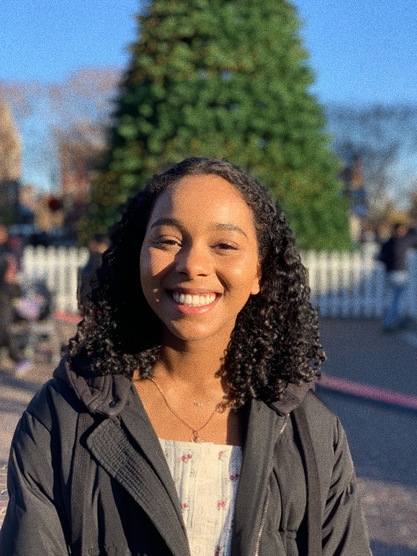
Taesha Goode

MY STORIES:

MY BLOG:

I remember sitting on a metrobus in Incheon, South Korea, mindlessly scrolling through Instagram, when I came across the body-cam footage of the death of Rayshard Brooks. It was early summer and the air outside was muggy. The sun had already set, leaving a warm, deep, blue sky only offset by twinkling city lights. The bus rocked back and forth; harsh overhead lights flickered. Through an open window, the sounds of a buzzing city commanded attention. Still, I was glued to my phone screen. I watched the video three times, listening to his pleas, cringing at the gunshots that took his life.

Being biracial, I’ve struggled for the majority of my life to accept and love my Black side. As the Black Lives Matter movement in Summer 2020 began to gain momentum nationally, and later globally, I made the decision that self-love was no longer something I would await but seek out. Although I’d always been aware of lingering scars in Black communities, and empathized greatly with them, I didn’t allow myself the same compassion. It took being confronted with injustice for me to learn my own worth and, in turn, join in creating meaningful change. Thus far, writing has been the only way I know how to do that.

Investigating and reporting on the African American beat has been eye-opening. I’ve been given the opportunity to sit down with activists, businesswomen, families, and community pillars, all of whom have provided me with new pieces to the puzzle. I felt that the most firmly when a 9-year-old girl explained to me the importance of loving your Blackness. The sensitivity of this beat, amid waves of racial tension in the U.S., is not lost on me, and has only made how I share people’s stories that much more significant to me.

From the point of view of a writer, I’ve learned the difficulty in being raw with your writing. During the pandemic, it’s been much harder to get inspired. Sitting down in front of my computer, I’ve found that many times, stories don’t flow from my fingertips the way they did before. Though writing has been romanticized as this beautiful process where you just allow your thoughts to spill over onto a blank page, when you’re low on thoughts, it feels near impossible to create. When covering such a heavy beat, the way we write our stories is the difference between educating someone and allowing that chance to slip away. Though I’ve had trouble with gathering inspiration from the world around me, my interviewees’ activism and work in the community has been a source of little sparks of passion, and that passion has left me longing to produce.

For me, there’s no option in ending my involvement with this beat. Though, in the past, I’ve allowed my Blackness to take a backseat, I’ve had many harsh reminders of the state of the world. Being Black is a part of my identity, and one I will continue to nurture. I want to stay active and spread love in my community. I want to teach those who want to learn, and I want to support those who need it most. In the future, I hope to write more stories on Black activism, what it looks like, and where it can take us.

As the bus rolled to a stop, and I took my first few steps into the glowing night, I felt lost. But clarity has never been easy to find. Even now, I still feel as if I’m miles away. What’s become clear to me, however, is that there is peace in the journey.

ABOUT ME:

Taesha Goode is a mixed-race, Turkish-American immigrant to the United States. Having lived in Germany, the U.S., and South Korea during her university years, Taesha has always been passionate about understanding the experiences of those different from her. It has been her goal for the past three years to document and write about these experiences in a refreshing and engaging way.

Her favorite author and inspiration in writing is Haruki Murakami. In 2018, Taesha began attending the University of Utah Asia Campus as a psychology major. In 2019, after reading Murakami’s “Kafka on the Shore,” she switched her major to communication with an emphasis in journalism.

Since 2020, Taesha has been writing mainly about the African American beat, with the majority of her work published on the Songdo Chronicle. In the future, she hopes to maintain her work in this community, as well as attend a graduate school in the Washington, D.C., area for journalism or creative writing.

Taesha will graduate from the University of Utah in December 2021, with a Bachelor of Arts in Communication.


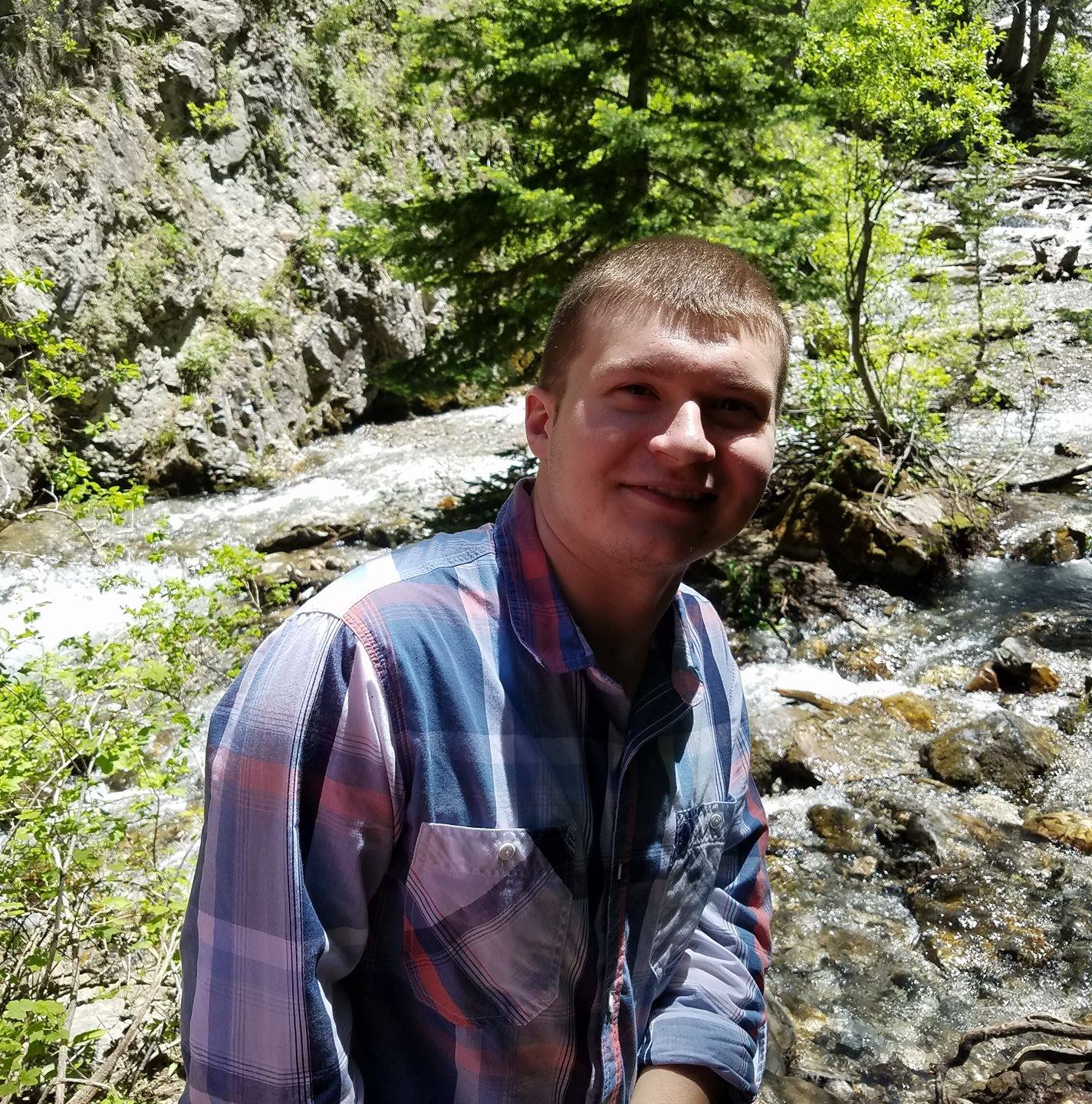
Justin Galletly

MY STORIES:

MY BLOG:

Going into my beat, I knew I was tackling some touchy subject matter, but I didn’t fully wrap my head around the extent of how big an issue my particular beat topic was. I’ve been aware of the issue of systemic racism for a while, but much of my knowledge was very surface level and not well educated in the grand scheme of things. Taking on this beat to cover how the issue affects Black’s regarding health care coverage was a big eye-opener for me, as I never fully realized how big a deal the problem was until now. It really touched me to speak to educators on the subject and fully understand how bad the problem has been for long, as it gave me a sense of perspective I never had previously.

Covering this beat has really made me realize how much broader my options are for journalism and reporting than I had previously considered. Going into this field, I was much more interested in covering media, such as working to become a video game or movie critic, something more fun and escapist rather than real world events. While I would still love to work for a publication like the Hollywood Reporter, covering a serious topic like systemic racism helped me realize that I probably would be fine covering serious events as well. It’s still not my ideal journalism angle, but I think I’m more up for it than I was previously, as covering social justice issue is an important matter, and there’s a sense of satisfaction coming off of it.

While doing this beat, I wouldn’t say I’ve become more aware of social justice issues, more than I’m better educated on them. I was very politically active in the immediate years out of high school, and for several years after as I was getting further into my college career. I’ve been a little less active in the political space since several professors warned me about taking a side as they’ve pushed this idea of “objective reporting”, and that taking a stance in politics put you at risk of getting blacklisted.

Taking part in this beat has helped remind me why being politically aware is important and to always take consideration for those less fortunate and have all the facts on the table. While I will never fully understand what its like to deal with systemic racism given my privilege as a straight white male, I think that privilege makes it all the more important that I’m aware of these problems. I have the ability to take a stand against it and help those in need, and even if I can’t officially take a side in some reporting circles, having all the facts and reporting them accurately can make a huge difference. I hope I can continue to make an impact and help those less informed who are willing to listen know the whole truth so they can hopefully make the right decisions regarding standing up to systemic racism.

ABOUT ME:

I’m a college student attending the University of Utah currently working toward my Bachelor’s degree of science in Journalism. I hope to move to Los Angeles after college and get a job writing for the Hollywood Reporter, Variety, Deadline, or any other entertainment-based journalist organizations.

Harrison Fauth

MY STORIES:

Message of hate empowers Black students to demand more from Salt Lake Community College administration

Stigma of mental health creates challenges for Black community

MY BLOG:

I am not a journalism major. This class and subsequent assignments pushed me out of my comfort zone. Interviewing strangers was work for me. I had to face my anxiety, and try to conquer it. Multiple times my instinct was to drop the class and every time I felt this I did not act. In the end my anxiety kept me from doing something that could have harmed me, and even kept me from graduating this Spring. 

Our beat was something that did keep me engaged. I am aware at some level of the social justice issues this community faces. As a student, completing a minor in environmental science and sustainability, I have taken classes that focus on disenfranchised communities. These communities suffer more from environmental injustice, food insecurity, financial insecurity, and blatant discrimination. In Utah being Black clearly makes you stand out, and not always in desired ways. You can attract good and attract those who hate. 

My first story, and the subject of my second, exposed a real issue that I have not heard discussed. That issue is access to Black therapists for the Black community. It never occurred to me prior to hearing this from a Black student, that this is another way the Black community is underrepresented. 

Another eye opening fact is the stigma of mental health in the Black community. One survey found that  63% feel it is a weakness to discuss mental health issues. It is a stigma to ask for help, and at the same time it may be viewed by some as a stigma to enter this field of work. This helps explain some of the reasons there are so few Black professionals in this field. It is a complex issue.

I realized that I was an outsider for both of my stories. I felt more like an outsider when I was speaking to mental health professionals than students. I wanted to make sure I did not insult or imply anything in my questions. How I  asked or responded to a question was important. 

When communicating a story, I realized how important it was to tell it through their lens. To be respectful of their experience. I cannot share the experience of being Black, but I can respect the story they tell about their experience. I need to remove any bias if it is present. I am here to listen to their story, to share their story, but once heard it changes your perspective about your own story.  

ABOUT ME:

My name is Harrison Fauth and I am a Spring 2021 graduate of the University of Utah. I hold a Bachelor of Science in Communication and a Minor in Environmental Science and Sustainability.

I was born in St. Louis and have lived in the Midwest and the East Coast, but have spent all of my school years in Utah. I enjoy the proximity and access to nature that living in Utah provides.

I am passionate about the environment and very concerned about the future of our planet. I plan to focus my future work on areas that help improve sustainable practices both in government and corporate America. I hope that new government legislation will allow for more people working around green solutions for the long-term health of our planet. I am also interested in helping disenfranchised communities that suffer more from environmental injustice.

Hannah Carlson

MY STORIES:

MY BLOG:

When I first heard of our semester’s beat, I was very excited. With the recent events of George Floyd, Breonna Taylor, and the growing Black Lives Matter Movement, I felt that this beat was very timely and applicable to today’s racial climate.

Since the deaths of Taylor and Floyd, I have found myself striving to become better aware of social justice issues through education and avocation. I thought I knew a lot before this semester, however, I learned so much more through my beat reporting.

I took two topics that are important to me, hair and skiing. Before this semester, I was rarely able to draw connections between my own interests and the social justice movement. Before this semester, I was never on the slopes thinking about the harsh racial disparity that exists there. I’m happy to be thinking of these things now throughout all of my day-to-day activities.

I also cherished beat reporting because it took one topic and I became especially conversant with it. I believe that it also made it easier to brainstorm story ideas since I already had a broad topic at hand. It led me to look for story ideas everywhere and ultimately, seek out any aspect of the Black community here in Utah. Before, I think I would have avoided the beat. I would have felt like I wouldn’t be able to do it justice enough. Or, that I may be too naive to report on such an important issue.

ABOUT ME:

Hannah Carlson (she/her) is a recent graduate from the University of Utah.

Carlson began her studies at the University of Utah in 2017 as a business marketing major, later switching her degree to strategic communication. The switch began after Carlson stumbled upon her newfound interest in writing after taking a media writing course.

Other than writing, Carlson loves to ski, hot tub, spend time with the people she loves, and spoil her dog, Annie.

Sunwhee Mike Park

MY STORIES:

MY BLOG:

Something that was entirely unexpected for me this semester was the amount of genuine, personal connections that I made with the sources that I interviewed. I think I always approached reporting in a strictly professional way, and never imagined having relationships with my sources outside of a professional context. This semester especially, in the midst of a pandemic and the sheer absence of face-to-face encounters, I thought that this would certainly continue to be the case.

However, the sources that I talked to surprised me with how personable they were, how easily they opened up to me, and how close I felt to them when listening to their stories. During interviews, I felt myself feeling more at ease and increasingly feeling like I was simply having a conversation with these people, instead of interviewing sources. In essence, it felt as though I had made a friend after each interview – something I never anticipated while reporting. Since my stories focused primarily on Black business owners and community leaders, I now want to visit them in their elements in person as soon as the opportunity arises.

Apart from the personal connections I made, though, I grew a lot as a professional in this field as well. In the past, the task of reaching out to sources, setting interview times, and then the final act of interviewing itself felt hugely taxing to me. As a natural introvert, it is directly outside of my nature to do these things. This semester, however, I felt a push – both out of necessity and of my personal desire to grow out of these introverted tendencies – to just put myself into those uncomfortable situations as much as possible in order to build a sort of tolerance.

With this change in mindset, I certainly felt myself becoming more confident and efficient in all aspects of my reporting. Having sent out so many interview inquiry emails (and being rejected by quite a few of them), reaching out to people barely crosses my mind as a task anymore. I’ve also become more skillful in finding ways to contact sources, sometimes talking to a handful of people just to get through to the source I want. Finally, the interview process (as I mentioned above) started feeling more natural, comfortable and conversational instead of presentational. I feel almost like I could translate my skills directly into the professional field now.

But perhaps most importantly, reporting on this beat has allowed me to become more active in my own community. I spoke with several Black leaders whose activism and devotion to Utah’s Black community is simply inspiring. I think the idea of activism and being a leader in a community felt like it was reserved for a special kind of person who had special skills to take on such daunting responsibilities. But hearing many of these leaders’ stories, they claimed to have started in a similar place: without much knowledge or experience, but with great passion and ambition. Their stories made me start to understand that it does not take much to get started in activism. I began to feel that I have a responsibility to represent and speak up for my community, to help it grow and overcome its many challenges in this country.

With that in mind, I attended and spoke at my first march this semester, to condemn the recent rise in violence against AAPI (Asian-American and Pacific Islanders). Additionally, I am now focused on reporting as much as possible on this issue (separately from Voices). I truly think that speaking with Utah’s Black leaders, and understanding that I could be a leader in my own community through devotion and passion, was crucial in making my decision to get involved in activism.

ABOUT ME:

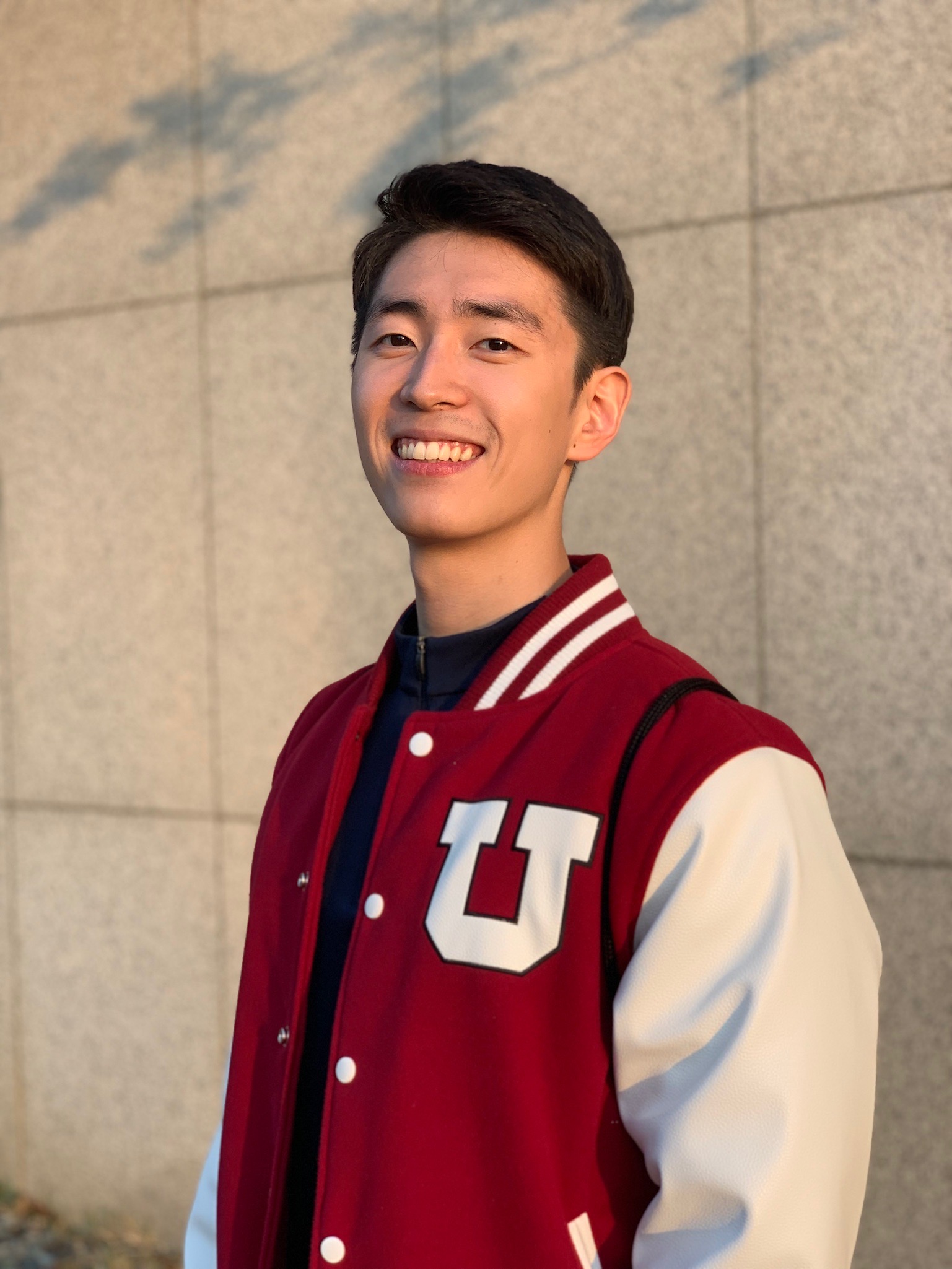
Sunwhee Mike Park is a student reporter at the University of Utah. He is a fourth-year student completing his bachelor’s degree in communication with an emphasis in journalism, and minoring in writing and rhetoric studies. He originally attended the University of Utah Asia Campus in Songdo, South Korea, before moving to Salt Lake City in 2021.

Park is already a published writer in his native South Korea. Beginning in 2019, his pieces have been printed in publications such as The IGC Journal and Incheon NowHe was also the head writer for the Songdo Chronicle – the Asia Campus’s iteration of the Daily Utah Chronicle.

Park’s interest in journalism began in 2016, when he shadowed a freelance journalist covering the protests against former President Park Geun-hye in Seoul, South Korea. Park began to film and narrate his own reports of the protests independently in the field, which he considers to have been an invaluable introduction to journalism and the spark that lit his passion for reporting.

In his final year at the U, Park serves as the treasurer for the International Student Council and works as an international ambassador for the International Student & Scholar Services (ISSS) office. Tying his passion for journalism to his interest in international affairs, Park hopes to work in the global communication field in the future.

Tess Roundy

MY STORIES:

MY BLOG:

Writing was never an obvious career choice for me. I remember as a child I was drawn to math and science. In school, I felt confused by grammar rules. In math there was a step-by-step guide that led me to the right answer. In writing I felt paralyzed by the endless possibilities.

It wasn’t until after graduating high school that my love for journalism sprouted. Particularly radio journalism that told stories centered around people. I loved (and still love) programs like “This American Life,” “RadioLab,” and “Reply All.”

I fell in love with the creativity, voice and production these programs brought to stories. I had never felt so magnetically drawn to a medium before.

After a lot of deliberating, I decided to pursue it academically. This wasn’t an easy choice. I still didn’t feel like a writer and was scared I’d never feel like a journalist. But upon starting this degree I loved it. It was satisfying a deep craving.

Though, that’s not to say it’s been easy for me.

I still have trouble writing. Sometimes I feel like no combination of words I conjure can give justice to the ideas in my head. Or that there’s no way I can give my topic or interviewees the reporting they deserve.

But overcoming the challenges I have and covering Black representation in Utah K-12 schools this semester in Voices of Utah has been rewarding.

Throughout this semester I’ve noticed a great improvement in my interviewing. This isn’t the first experience I’ve had finding people and conducting interviews, but this is the semester with the most obvious self-improvement.

During my first interviews this semester I acted like a nervous, giggly robot. I’d read off my list of questions without following up on anything they had said, or asking them to expand. I’d nervously laugh then feel self-conscious that I was being unprofessional.

Before my third interview of the semester, I noticed an unfamiliar calmness. I had prepared talking points, and a few questions I wanted to ask, but I left room for listening. From then on, the interviews I conducted were more conversational, and frankly better. In fact, I look forward to interviews now. I think they’re fun.

What originally drew me to journalism was hearing remarkable true stories. I realized that finding these stories and listening to people’s experiences brings me the same excitement and joy I felt listening to the podcasts I love.

I still sometimes feel writing paralysis. But giving a voice to those in Salt Lake City’s Black and minority communities has been rewarding and worth the personal struggles I’ve encountered. I look forward to my future of amplifying voices to underrepresented folks in my career. I am happy with the progress I’ve made and the experience I got reporting this semester. And I look forward to the progress I’ll make as a journalist in my career.

ABOUT ME:

I am an aspiring radio journalist who enjoys telling and hearing human interest stories. I study journalism at the University of Utah and will graduate fall 2021. I love living in Utah, I love the mountains, desert, and the people here.

In the past most of my stories revolved around education in Utah and this continued with my contributions to Voices when I covered the importance of Black teachers in Utah’s K-12 schools. After this semester, I’ll continue telling stories about underrepresented groups in this state I love.

In my free time I love finding and trying new recipes, baking and cooking (so long as I can eat and share it with my friends and family). I also love reading, playing Tetris, and, of course, listening to podcasts.

Brynna Maxwell

MY STORIES:

MY BLOG:

My first article raised awareness for the struggle athletes are going through in regard to their mental health during the pandemic and how it is happening on all levels of play — from high school to college. My initial expectations were to have each athlete I interviewed tell the same type of story and have the same issues in their life.

However, I could not have been further from the truth. Each interview took a different turn and went on a unique path. I learned that everyone has had a different experience related to COVID-19 and has each handled it differently. It was so interesting learning about the trials and tribulations they each had gone through because they were all entirely different from one another. 

I had a couple epiphanies through the process of writing both of my articles. I learned that I like learning about other people’s stories and what their life is like. It fills me with so much joy when a person gets asked that one question and they just light up, catching me up on their journey through life. I want to continue doing that in some way.

The stories I have written have both hit very close to home. The first had such an impact on me because my mental health was not that great for a lot of my sport’s season. The second article was about my childhood coach and it was so great to go back and reflect on all of the memories over the years. Because of these similarities in articles, I learned a lot about myself during the interviewing process. I found out I was not the only one struggling mentally this year, and that everyone has had issues related to their mental health and overall wellbeing. It was a relief to know I was not alone. 

I am currently a shooting guard on the University of Utah women’s basketball team. Photo courtesy of Utah Women’s Basketball

I definitely want to continue my involvement in relation to athletes and their mental health. Both articles I wrote showed me the incredible impact coaches can have on their players. Being a student athlete myself, I can relate to these people’s experiences involving mental health and my heart goes out to them. I want to continue being a voice for the voiceless in this area, whether through journalism or just using the platform I have been blessed with to engage and educate others on mental health.

After interviewing people for my second article, I might be able to help by becoming a coach. Through my experiences, and the people I interviewed for my article, I learned there is a lot that needs to be done to give athletes the support they need mentally on all levels and I want to be a part of the journey to get that help for them.

ABOUT ME:

Born and raised in the Pacific Northwest, I have always had a love for writing. I grew up in a small town about an hour away from Seattle and graduated from Gig Harbor High School. When not writing, I fill my time playing basketball, writing in my journal, petting my cat, and going on adventures. You can almost always see me hiking up a mountain.

I am currently a sophomore attending the University of Utah and pursuing a bachelor’s degree in communication with an emphasis in journalism. My first story was published in the fall of 2020 on the U NewsWriting website.

Through my writing, as well as playing basketball, I have been blessed to experience a lot of amazing things, including being shown on TV. Those experiences helped me understand my passion for sports broadcasting and journalism which, hopefully, I can find a lasting career in once I graduate.

How redlining practices affect the health of Salt Lake City’s west-side communities

Story by TESS ROUNDY 

The link between housing location and race in Salt Lake City is not coincidental. Discriminatory real estate practices, loan programs and local city ordinances created segregation in a practice called redlining. 

In the 1930s the Home Owners’ Loan Corp. (HOLC), with help from local banks, real estate agents and city officials, designed a map outlining which neighborhoods they deemed ineligible for home loans.  

The criteria used for grading these neighborhoods were age, housing upkeep and public amenities. If neighborhoods had high minority concentrations they were outlined in red, regardless of other criteria. Although redlining is illegal now, it still affects our community. 

An example of local redlining in the 1930s. Credit: Robert K. Nelson, LaDale Winling, Richard Marciano, Nathan Connolly, et al., Mapping Inequality: Redlining in New Deal America.

Four local leaders discussed the problems it has caused and offered ideas to redress inequities in a panel discussion held Jan. 20 at the University of Utah. “Reframing the Conversation: Good Trouble and the Redline” was among the events offered during the annual campus-wide celebration of MLK Week. 

Franci Taylor, the director of the U’s American Indian Resource Center, explained that people living around Rose Park, Poplar Grove and Liberty Wells, all redlined areas on the west side of Salt Lake City, were denied mortgages. However, HOLC readily gave loans to those living in the Sugar House and Avenues neighborhoods, and near the U.

Redlining west-side communities has had greater consequences than access to home loans. 

Freeways bypass many of these Salt Lake City neighborhoods, which causes health repercussions for the people living there. Panelist Ashley Cleveland, a city planner for Salt Lake City, said members of her family and community who grew up on the west side have asthma and other diseases connected to environmental factors. 

Ciriac Alvarez Valle, another panelist, underscored Cleveland’s anecdote by noting that these redlined neighborhoods have higher rates of chronic illnesses, infant mortality and health disparities. To make matters worse, there are no hospitals on the west side.

Hospitals aren’t the only outlying amenity for west Salt Lake City. Neighborhoods in this area also are characterized by fewer schools, parks and grocery stores. “The conditions of the environments where people are born, where people learn, where people live, where people worship are the things that affect the quality of life,” Valle said.

The panelists discussed what U students could do to combat the effects of redlining. Cleveland recommended reading publications about city planning, housing, and environment. She urged students to sit on Salt Lake City’s Community Council. Additionally, the U offers community-involvement opportunities like the Bennion Center, The Hinkley Institute of Politics, and University Neighborhood Partners.

The panelist Fatima Dirie runs a program called Know Your Neighbor. She urged students to volunteer and get connected with individuals from minority communities. “Really hear their lens and their story from their own perspective,” she said.

The panel, held virtually this year due to the pandemic, concluded with Cleveland’s endorsement of a quote by Gregory Squires, a professor of public policy and public administration at George Washington University. In a 2007 article he linked housing patterns to general economic inequalities and said, “Where different groups of people live and the homes in which they live are not simply neutral or random demographic phenomena. They profoundly influence the allocation of rewards in the United States.”

University of Utah discusses racialization of homeownership on President Biden’s first day

Story by SUNWHEE MIKE PARK

MLK Day 2021 arrived in a timely manner – just two days before the inauguration of President Joe Biden. The transition marked a political shift that many Americans saw as synonymous with the return to progressive social attitudes and the renewed start of efforts at racial unity after four tumultuous years under the previous presidential administration.

In celebration of Martin Luther King Jr.’s lasting legacy, the University of Utah’s Department of Equity, Diversity and Inclusion hosted a series of events throughout the week of Jan. 18, aptly titled “Good Trouble.” Those words were uttered by John Lewis, the Georgia congressman and civil-rights icon who died in 2020.

One event during the week held particular significance: a virtual seminar on the topic of redlining. This practice was exercised by American banks and federal bodies until the mid-20th century to exclude minority families in underprivileged neighborhoods from receiving mortgages or homeowner loans. Areas were defined by red lines on maps, hence the term “redlining.”

While the practice has been outlawed for over half a century in the United States, the vestiges of this discriminatory act are still widely visible to this day.

The event, “Reframing the Conversation: Good Trouble & the Red Line,” was held via Zoom on Jan. 20, the day of Biden’s inauguration. Afterward, he signed multiple executive orders. One extended the CDC’s federal eviction moratorium to allow nearly 40 million Americans to keep their homes until late March, according to the Washington Post. Many of the homeowners that the order impacts are minorities who reside in redlined regions, the Aspen Institute reports.

The virtual seminar introduced a panel of leaders from within the Salt Lake City community: Ciriac Alvarez Valle, a recent graduate of the U and policy analyst at Voices for Utah Children; Ashley Cleveland, a board member for Utah’s Outdoor Recreation Advisory Committee and nonprofit Curly Me; Fatima Dirie, policy advisor for the Mayor’s Office of New Americans; and Franci Taylor, director of the U’s American Indian Resource Center. The conversation was moderated by Jennifer Mayer-Glenn, director of University Neighborhood Partners.

Mayer-Glenn posed a series of prepared questions which covered a range of topics — from the implicit ways redlining practices remain today to their long-term effects in modern American society. Some panelists shared personal stories about the challenges they have faced in homeownership as Black and Indigenous women of color.

“Redlining went from legal to insidiously hidden,” Taylor said about the ways discrimination can still be seen in homeownership today. (The Fair Housing Act banned the practice in 1968, according to the Department of Housing and Urban Development website.)  She said it is painfully obvious when noting how many exits and entrances go in and out of Salt Lake City’s minority-rich, lower-income west side compared with the whiter, richer east side. Taylor said this was an intentional design implemented by the government to minimize access into wealthier Salt Lake City neighborhoods.

Other panelists discussed how redlining affects their personal lives. Cleveland, a new mother, explained that redlined minority neighborhoods pose serious health issues, especially to children and pregnant women. Their proximity to freeways causes rampant asthma, and a lack of healthy food options in these “food deserts” leads to high numbers of patients with diabetes and hypertension. But minority families are unable to escape these conditions because of the continued effects of redlining today, Cleveland said, expressing how difficult it is for her and her daughter to live healthily.

The seminar, however, was not restricted to a gloomy discussion about how minority groups have been, and still are, disenfranchised by redlining practices. The latter half of the event breathed an air of hopefulness to an otherwise dismal topic, as panelists were asked how they fight to overcome discriminatory challenges, and how American society as a whole can move forward.

Valle, the youngest panelist, suggested the equal dispersion of resources to all communities, regardless of their populations’ racial backgrounds or financial statuses in order to ensure their growth. She explained that constant participation in community activities, especially by the younger generation including students, would gradually help to raise redlined neighborhoods out of a continuous cycle of poverty and neglect.

Later in the discussion, in a moment undeniably evocative of King and Lewis during the Civil Rights Movement era, Taylor said the fight against discrimination and hatred must be taken on as a daily chore. The key, she said, lies in refusing to tolerate discrimination nor embracing the fear that comes with it each day.

In a separate email interview with Mayer-Glenn, she explained that conversations like these play an important role in informing communities about how certain laws and policies are enacted to promote discrimination. When people become educated about structural racism and biases in their communities, she said, they can then take part in “good trouble” by voting for representatives who will fight to eliminate inequality and racial disparities.

As the event neared its end, it was clear that the hour-long conversation represented a much larger phenomenon occurring at that very moment: America ushering in a new administration with the dire hope of overcoming its deep and painful racial divisions. Panelists and moderator of the event alike seemed to be ardently optimistic as the conversation came to a close.

Valle, the young panelist, quoted the words of Lewis himself as the mantra for her work, “If not us, then who? If not now, then when?”

Student athletes join in community service in celebration of MLK week

Story by BRYNNA MAXWELL

Lola Pendande has always had a fear of needles. Gritting her teeth, she closed her eyes in anticipation of the dreaded sharp pain that would inevitably come. The only reason she would ever put herself in this situation would be to help others.

The Utah women’s basketball team came together in January 2021 during Martin Luther King Jr. Week to join in acts of community service to celebrate and keep paying forward all that King did for America.

To these athletes, this week is more than just a few days of remembrance. It is a great opportunity to serve others.

Giving blood was a common theme for the team and Pendande was surrounded by teammates.

“It was a great way to bond as a team,” Pendande said. “I don’t know if I could have done it without them, but it was for a good cause.”

Lola Pendande focuses on shooting a free throw in practice. Photo by Becca Jonas for Utah Women’s Basketball.

Utah women’s basketball point guard Issy Palmer looks at MLK Week a little differently. Originally from Australia, this is only Palmer’s second year in the United States so she has a unique perspective on the service week.

“Although I am from a foreign country and have not grown up celebrating MLK Day, I understand its significance and history.” Palmer added, “By donating just one unit of blood, I could have potentially saved the lives of up to three people. This was important to me because it was a reflection of what MLK stood for.”

Members of the basketball team enjoyed the opportunity and the challenge of doing something sacrificial for others, something King was known for. Both Pendande and Palmer experienced joy in serving others through blood donation.

Student athletes are the face of their school. Eyes are on them at all times. They are representatives of their university. For the Utah women’s basketball team, using their influence to serve others shows their true character.

The women’s basketball team was only one of the sports teams at the University of Utah that participated in acts of service during MLK Week. And all those who participated found that they were able to learn and grow from the experience.

“This week was important to me,” Palmer said, “because it was a reflection of what Martin Luther King Jr. stood for, a reflection of how he was selfless and sacrificial for the greater good of his race and for the rights of all people.”

2020 opened many eyes to the racism and fear that is still alive in America. Being able to conduct service projects and lead the way with love is a powerful way to help heal our country.

“MLK means a lot to me,” Lola Pendande said. “He was such an inspirational man. This service project week was important because it means I get to give back and help others with any problems they may have, just like Martin Luther King did. “