Misrepresentations of Pacific Islands culture in Disney movies

Story by DAYNA BAE

Cultural delineation in media frequently involves praises and criticisms at the same time. The Pacific Islands culture could not avoid such portrayal.

The Walt Disney Company Co., one of the major entertainment companies in the world, has depicted various cultures through its film productions.

As a result, Disney’s animated films gained large popularity and reputation for their diverse cultural representations. Up to the present, Disney has released numerous films including “Aladdin,” “Mulan” and “Pocahontas” based on different cultural backgrounds around the world.

With success of prior films, Disney released two animated films “Lilo and Stitch” and “Moana,” both of which describe Pacific Islands culture.

Two films depicted culture and stories of indigenous people in the Pacific Islands. The films starred a number of actual artists and professionals with Pacific Islands background.

Jacob Fitisemanu Jr., a clinical manager with Health Clinics of Utah and an associate instructor of ethnic studies at the University of Utah, said in an email interview, “Lots of Pacific Islander artists got into the production of the films and movies, and it became a good opportunity for them.”

The production and release of movies about the Pacific Islands not only aroused public attention about its mysterious and veiled culture, but also provided a good opportunity for Pacific Islanders working in the field of animation production.

“The major positive aspect of those films is the showcasing of the incredible potential and abilities of the Pacific Islander artists who lent their expertise and talents to the films,” Fitisemanu said.

According to the Guardian, the writer-director team of Disney’s “Moana” conducted a five-year research trip to Polynesia to interview elders and people living in Samoa, Tahiti and Fiji to have a better understanding about Pacific Islands cultures.

Despite the efforts of the research team, the public reactions to “Moana” varied. Some people showed optimism about the movie for displaying unique features of a minority culture, while others, reported the Guardian, criticized the movie for misrepresenting the culture and history of Pacific Islands.

Fitisemanu said, “Some people are very upset about Maui’s depiction and the way his legendary exploits are shown in the animation.” Maui is a main character who is a demigod in the movie. He also said that some people are uncomfortable with the fact that Maui is not put into context. According to Fitisemanu, Pacific Islands legends are in fact metaphors of actual historical events, unlike how the movie portrays them as mythological and fantastical ones.

Dr. Malie Arvin, an assistant professor of history and gender studies at the University of Utah, said, “The movie was not making sense to me, because Maui was described as a braggart, comical, and arrogant person in the movie.” She said that Pacific Islanders criticize the movie because many of the legendary stories of Maui’s are missing. “Maui has lots of stories such as slowing down the sun and fishing up islands,” Arvin said.

Another criticism of “Moana” deals with tourism. According to the Guardian, “Moana” caused a flurry of travel articles about the Pacific Islands triggered by the movie’s depiction of vibrant landscapes. Disney partnered with Hawaiian Airlines to promote the film and tourism catalyzed by “Moana” led to more ecological destruction of the Pacific Islands. The Guardian reported that the problem is due to the “merchandise and tourism machine [which] operates in direct opposition to the morals of Moana, a young girl who cares fiercely for her people and her island.”

According to the Huffington Post, one of the major flaws of the movie is its failure to mention Hina, a companion goddess of the god Maui. “In Polynesian lore, a goddess with a god creates symmetry that gives harmony and beauty to the story.” In this regard, “Moana” lacks a critical concept of “symmetry” in the story.

However, this is not Disney’s first time to be criticized for its misrepresentation of indigenous cultures. “Lilo and Stitch,” an animated film released in 2006, was also blamed for using inappropriate lyrics for a Hawaiian traditional song.

According to Arvin, “There is an aboriginal song about King Kalākaua, who was the last monarch of the Hawaiian kingdom before he was overthrown by the U.S. government.” The lyrics are a dedication to his honor, which is very respectful about his legacy. “However, ‘Lilo and Stitch’ just took that song and replaced his name with Lilo’s name. It was disrespectful and painful to see,” Arvin said. “And that was really depreciative of the history of Hawaii,” she added.

Although there are fierce criticisms toward Disney’s films about Pacific Islands culture, there are still positive voices that compliment the works for their valiant efforts and attempts.

Fitisemanu said, “If the Disney movie inspired Pacific Islanders to learn more by doing their own research, opening dialogue with family elders and cultural custodians, and increasing the sharing of our own stories with the next generation, then I think that is a good thing.”

To prevent and correct cultural misconceptions created by major film production and entertainment industry, Arvin said that there should be more Pacific Islands directors. “One of the most famous Pacific Islander directors is Taika Waititi. He is a Maori film director who directed Marvel’s ‘Thor: Ragnarok’,” Arvin said.


Bring the fire, bring the energy: The Nu Tribe

Story and slideshow by MCKENZIE YCMAT

At the edge of Salt Lake City in a small quiet neighborhood, a grocery store is closing for the night as the rest of the town gets ready for bed. It’s 10:00, the streets are dark and the parking lot is empty, except for a glowing light at the far end of the building. Music is blasting, laughs can be heard from the street, it sounds like a party. This is where the Nu Tribe gets together every Thursday night.

The energy in the Just Dance studio at 8087 W. 3500 South in Magna is contagious. The air is hot, the energy is high, everyone laughs but focuses on the teacher for the day when it’s time to dance. On that late night in early March, the teacher was a sassy but passionate man named Nate with a confident 9-year-old sidekick named Susie. The song of choice was “Oh” by Ciara.

Susie is the DJ and quickly runs back and forth between the plugged in iPhone and the front of the dance floor. The students yell and laugh when the music starts and follow the dance moves Nate taught them earlier in the night, with a mix of their own style.

“It’s the only time and place that we can practice for cheap,” Ofa Vahe said. “But we don’t mind. We’re just happy we get to teach dance.”

Vahe is one of the original founders of the Nu Tribe, alongside other dancers Moana Aiono and Teresa Kuma. The Nu Tribe is a Utah-based dance crew consisting of only Polynesian dancers who travel all over the state to teach others about their heritage. They also provide the younger generation of Polynesians a safe place to dance.

Each week a member of the Nu Tribe teaches a class of about 20 students, usually members of the Polynesian community, for an hour. The dance styles change every week so that the students learn different traditional dance routines.

“Our rule is that no matter what style the teacher brings that week, you have to fully submerge yourself in that style,” Vahe said. “It doesn’t matter if it’s hip hop, ballet, contemporary, or anything else the teacher wants to do that day, you have to do it.”

The Nu Tribe teachers mix up their styles of dance to teach the students about different forms of expressing themselves and getting that sense of love and family that the Polynesian community teaches.

Polynesian dancing started as a way of communication for most of the islands in the Pacific, including Tahiti, Tonga, Samoa, Fiji and Hawaii. Traditional Polynesian dancing was used to tell a story and to convey a literal meaning that they carry with them after they leave.

After the first hour, the second teacher steps up to teach her choice of dance for the day. She’s a quiet, petite woman who quietly steps up to the front of the class. But once the music starts she becomes a confident and sexy hip-hop dancer.

“That’s Hannah Gagon,” Vahe said. “Growing up, she was always extremely shy and reserved but once she was introduced to the Nu Tribe, we realized she was this insanely talented dancer. Now she teaches her own classes throughout the week.”

The Nu Tribe brings together those in the Polynesian community and gets them to step outside of their comfort zones and enjoy the art of dance expression. Just like traditional Polynesian dances, they aim to tell a story.

Once everyone has learned the two different dances for the night, the teacher splits the class up by groups and has the students dance together. After that, they separate everyone one by one and eventually, a student will find themselves dancing alone.

This technique allows a student who stepped into the class for the first time, shy and hidden in the back of the room, to suddenly show confidence on their own as other members of the class cheer them on, chant their name, and even record them on their phones to share on social media so they can share the love with others not there.

“After I broke up with my fiancé, I was depressed and needed friends,” said Dook Kelsall, a member of the Nu Tribe. “I found the Nu Tribe through my friend Ofa and now we’re like family. He gave me a safe place to express myself and helped me through that tough time.”

By now, it’s midnight and it’s the end of the second hour. Everyone gathers around in a circle to share positivity and any news they have involving the class or news within the Polynesian community. They hold hands, introduce new people to the class, and say a prayer.

“Thank you for the gift of dance, amen,” says a member of the Nu Tribe giving the prayer after they all bow their heads and close their eyes.

Once the prayer is over, they gather closer together in a type of group hug and share more positive words and love with each other. Vahe proclaims, “Bring the fire, bring the energy!” and the entire group yells “Nu Tribe!” They give hugs and high fives and gather their things. Some even still dance around and laugh. It’s late at night and many of the students have to wake up early the next day for school, but they don’t care. They’re with family and they’re just there to have fun, learn and feel loved.

This slideshow requires JavaScript.

Teaching Pacific Islander Art Past and Present With Pasifika Enriching Arts Of Utah (PEAU)

Story and photos by ADAM FONDREN

My heritage is who I am

It is where I come from

It is where I’ve learned

That I represent my aiga

And we represent Samoa

Oreta-Tupola-for-Web

Oreta Tupola sits listening to a presentation on Pacific Island Knowledge 2 Action Resources (PIK2AR) at the University of Utah in Salt Lake City.

In this poem titled “My Heritage,” Oreta Tupola, a Samoan artist and member of Pacific Island Knowledge 2 Action Resources (PIK2AR), writes of family (aiga means family in her native language) and standing up for her cultural preservation. For Tupola, this is representative of what being Samoan is and this is what Pacific Islander art is about: being a protector of the past and educator of the future through art.

Pasifika Enriching Arts of Utah (PEAU) is an organization that falls under the umbrella organization of PIK2AR and aims to do the very same thing: help the Utah Pacific Islander culture with its self-identity and provide outlets and options for self-improvement.

PEAU describes itself as “a Pacific Island community-based group of artists, creators, and patrons of the arts bridging across all art communities to preserve, perpetuate, empower, support, educate and promote artists and creators of Pacific Island descent and of ethnic and underserved communities, to increase income into households through the arts.”

PEAU was founded in 2014 by Alisi Maka’afi, a visual artist of Tongan and Māori heritage. She has since moved back to New Zealand and has formed PEAU New Zealand. PEAU here in Utah has grown and changed slightly to become a large part of what PIK2AR does and how it does it. The organization has about 10 full-time members covering a range of arts from visual to dance and photography along with a number of rotating artists and contributors who contribute as their time allows.

PEAU introduces the cultural storytelling aspect of its goal by holding monthly artist and creator meetups where working artists team with aspiring artists to make art and discuss art. Annual exhibits are held at the Salt Lake County Libraries and at the Sorensen Unity Center. During the annual Utah Pacific Islander Meritage Month, PEAU holds an exhibit, and also take part in the annual People of the Pacific High School Conference (POP) held at Utah Valley University.

Bill-Louis-for-web

Bill Louis gives a presentation on street art at the People of the Pacific (POP) High School Conference at Utah Valley University in Orem, Utah.

According to Bill Louis, a Tongan street artist and the public art coordinator for PEAU, the organization is open to all Pacific Islanders. But much of PEAU’s efforts are directed toward underprivileged youth, leading to PEAU’s involvement with POP. POP provides an opportunity for PEAU to share its message and introduce the organization to high school age youths.

At the 2018 POP Conference, held in February, several different types of Pacific Islander art were explored. Nephi Prime, a Māori, presented on the haka or Māori traditional war dance. Bill Louis, a Tongan street artist, presented on contemporary graffiti. And Havier Tuitama, a Samoan who hosts a radio program on KRCL, taught a class on traditional dance and spoken word.

PEAU’s goal is to provide as many young Pacific Islanders as possible with an option in their life that they either haven’t considered or haven’t had the resources to explore. The resident artists and presenters from PEAU share the possibility of pursuing art as a career and not just a hobby. And members teach the continuation of the Pacific Islander narrative to remind youth of their place in the world and their ancestry.

The Pacific Islander history is rooted in exploration. Tupola spoke of how the early Pacific Islanders set out to explore the Pacific in small canoes. They couldn’t bring much in the way of possessions. As such, much of their cultural heritage is preserved in art, songs, dances, spoken anthologies, tattoo, and in how their ships were decorated. Art preserves their history. So, ensuring that the tradition of storytelling through art continues to be passed down through generations is imperative to the preservation of their culture.

The largest reason to focus on Pacific Islander youth is they need PEAU more than most to help them escape preconceived notions and the western stigma of Pacific Islander culture. They need additional avenues and experiences in their lives.

“There is more than just football and music out there,” said Louis, the Tongan street artist and PEAU Board member. Through his mentoring, he hopes to be able to influence youth and show that there is more out there, that art is a legitimate possibility in their future.

One of the main problems PEAU faces is a lack of a permanent space. Louis spoke of the efforts of PEAU to utilize everything from the Utah Museum of Fine Arts to county libraries to host exhibits and events. All of this costs money and much of the organization’s financial resources are obtained either through government grants secured through PIK2AR or through the artists themselves.

“I fund my own materials if I need to pay for something for an exhibit,” Louis said when asked about how he goes about getting studio space and materials for presentations.

PEAU has a goal and is working toward it. So far, it has been successful at finding and securing what it needs to continue. The aim is to continue to grow and expand the reach with more art, more shows and more mentoring. As Louis explained, PEAU’s hope is to introduce not only Pacific Islander youth but all Pacific Islanders to their history and their future with art.


Utah cemetery unites Islanders for Memorial Day

Story and photos by SHEHERAZADA HAMEED

On a sunny March morning, William AhQuin and his son Job AhQuin are leaving their Salt Lake City home. They are going to visit the cemetery where Mabel Lani Poepoe AhQuin is buried. She is William’s wife and Job’s mother. They haven’t visited since May 2017. Job said winter has been cold and the drive is too long.

IMG_0054

William, right, and Job AhQuin in front of their home in Salt Lake City.

Ready to depart Job remembered he forgot something and went back to the house. He grabbed bug spray. He said, “It is still cold for bugs but just in case.”

William is sitting in the passenger seat and is giving directions to a reporter he invited to go with them. He knows every turn and exit along the way to the cemetery. William seems to have taken that ride so many times.

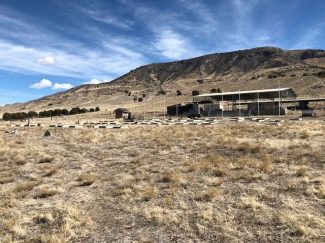
They drive west on Interstate 80. Along the way is the Morton’s Salt Factory and the Great Salt Lake is to the north. William said, “You need to take exit 77 and drive south about 15 miles.” On the deserted road, just off I-80, the Stansbury Mountains are to the left. There is no single car in both directions. Suddenly William said to slow down at a sign that says “Aloha.” A dirt road up the hill takes them to the cemetery of Iosepa. The only monument left behind of the Hawaiians who once lived here in the Skull Valley Desert.

IMG_0029 v2

Today the cemetery is a Utah Historic Site.

According to Benjamin Pykles, historical archaeologist, Iosepa was a thriving town, where Hawaiians worked hard to turn the desert into a paradise. The first settlers came in 1889. They were given those lands by The Church of Jesus Christ of Latter-day Saints (LDS church). They put the foundations of Iosepa.

The town was called Iosepa after Joseph F. Smith. He was a Mormon missionary in Hawaii. Later he became the LDS church president. William said Smith was only 15 years old when he was sent to Hawaii by his aunt and uncle. He was able to learn the language and culture of Hawaiians very quickly. Later he was recognized by the Islanders to be the miracle worker who brought them to Utah so they could be close to their faith and the temple.

William explained that at this time the Salt Lake City temple wasn’t complete so the believers had to walk about 50 miles to the city of Layton where there was located the nearest Mormon temple.

William said that if the Islanders wanted to live in the city at this time, they had to have a skill to survive. He said, “Hawaiians are children of the land and they live off the earth.” They mainly knew how to grow crops and breed animals. They had 1,900 acres of the land in Tooele County, about 75 miles southwest of Salt Lake City, and were given the opportunity to survive in the harsh conditions of the desert.

William said, “The first winter was hard.” He pointed out the numerous graves of children in the cemetery. Children were the most vulnerable to the cold winter and diseases.

The hard work of the people paid off. William said that the Islanders managed to build water canal systems to bring water from the Stansbury Mountains. That’s how they were able to successfully irrigate the soil, grow crops and raise animals.

William said that in 1911 Iosepa was voted to be the most progressive town in Utah. Nearly 230 people lived there, mostly Hawaiians but also some Samoan families moved. They built homes, streets, a school and stores. Then, when the first person died in Iosepa the Islanders needed to organize a cemetery park.

In 1915, the LDS church announced plans to build a temple in the Hawaiian island of Oahu at Laie. The news drove back the Islanders who wanted to help build the new temple in their native, rich and fertile land. The theory of Benjamin Pykles and the LDS Church is that Hawaiians left because there was no longer a reason to be in Utah.

As the years have passed, the houses, streets, school and store have disappeared with the people. Today the wilderness has taken over. There is no sign that once there was a town and nearly 230 people living here.

Only the cemetery reminds of the Hawaiian pioneers

Arriving at the cemetery, William recalls about the area, “Anything that was left was demolished just a few years ago.”

The only memory, left behind by the Hawaiians, is the gate to the cemetery. There is a green aluminum turtle, somehow out of place in the desert, reminding of the Pacific Seas’ lost paradise.

IMG_0013 v2

The graves are lining up in front of the only structure standing.

William wants to demonstrate his gratitude to the LDS church by telling his story.

When he left Hawaii in 1978 and arrived in Utah with his wife and nine children, they hoped for better opportunities. Work, good schools for the children and safer environment to grow a family was the reasons they came. Life goes and after years of hard work and trying to accomplish the American dream, the family lost their house in West Valley City. William explained the family was big. The children who still lived with them promised they will each make contributions to the mortgage payments. Later they were not able to pay any longer. Out of their home, William and Mabel had to find a place to live.

They went to Iosepa with two of their children. At this time some of the abandoned homes were still standing and William was able to survive for a year in a metal home with no running water or electricity. They used a lantern. He said they had a generator, but they avoided using because it was an emergency resource.

William felt it was his duty to clean and maintain the cemetery in honor of his grandfather, who actually was one of the first Hawaiians who came to Utah. William’s grandfather spent only one winter in Iosepa and left; he found the place cold and unwelcoming.

William cleaned the graves and took care of the cemetery. He said the graves were unrecognizable and they had to guess who is buried where. The graves looked like stacks of dirt above ground. To mark them and fence them they had to bring stones from the mountain.

Father and son arrive at the cemetery

William regrets he didn’t take his walker; only his cane. He took a break next to a stone that looked like a bench. He said this is a Hawaiian chess game. It was made by his cousin, who is also buried here. He pointed toward the grave with his cane. William said the game is called konane and is played by two people by placing black and white stones in the indentations of the board game.

IMG_0003 v2

William in front of the konane that was made by his cousin.

Job came back and said, “There are no snakes, you know sometimes the rattlesnakes sleep in the graves, but it is still too cold.”

Slowly William walked toward his wife’s grave. It is decorated with silk flowers and a plastic lighthouse. “I bought this from Walmart. It is plastic, but if it was real, it was going to be destroyed by the weather.” He explained that Mabel loved lighthouses. “Do you know, the oldest lighthouses are in Hawaii,” he said smiling.IMG_0005 v2

William said that not even a year before his wife died in 2005, the AhQuin family was camping here for the Memorial Day weekend. Mabel was already sick and weak. She saw the cemetery out in the wilderness and decided to be buried there. She chose the spot, near the fence so when the family comes to visit, her grave will be the first to be seen from the road. The grave space left between the fence and Mabel’s grave is marked with a bench. William said that for the years of marriage Mabel liked to sleep on the inside of the bed, not near the door.


IMG_00010 v2

William at his wife’s grave sitting on the bench that marks where he will be buried when he dies.

One day William will be buried here so he can be between his wife and the fence, to protect her.Today, Mabel’s grave has a headstone with her name and birth and death dates but some of the graves are still unrecognizable. The markers have weathered and are unreadable. William said there was an idea to construct a wall where they can put gravestones with the names of all the people buried in the cemetery. When the plan failed, they lined them on the ground by the gate of the cemetery.

IMG_0008 v2William said the state limited burial in the cemetery only to people who were born in Iosepa. Members of the community discussed with the Tooele City Council and now the cemetery is opened to anyone who wants to be buried here.

Today the cemetery stands as a historical monument. It represents the willingness of people to relocate in the name of faith and belief.

During Memorial Day weekend the cemetery brings back between 800 and 1,000 people from all over the world to pay respect to the first Island pioneers. The tradition started about 30 years ago and William is one of the first people who initiated it.

IMG_0046 v2

The large pavilion with a stage where Islanders will gather to celebrate during Memorial Day weekend.

He said they used to come on that weekend to clean and decorate the graves. Over the years it grew into a celebration. They camp, share food and different performing groups entertain the visitors.

William said the event is open to other communities and everybody can come. He reminded to bring food to share and camping equipment if you decide to stay overnight.

On the drive back to Salt Lake City, William promised to meet the reporter again during Memorial Day weekend.

William, besides the difficult life, is looking forward, making sure the heritage of the first Hawaiian pioneers in Utah is not forgotten.

Iosepa might appear as a ghost town on the map of Utah but is a memory and history for many families that will come to celebrate their departed ancestors this Memorial Day weekend.


Use of haka as pre-game ritual may be appropriation

Story and pictures by SHAELYN BARBER


This slideshow requires JavaScript.

The haka dance, originally performed by the indigenous Maori people of New Zealand, has become a staple of world wide rugby culture, often performed before important games by sports teams across the globe.

“Haka can be a war dance, but it can also be a way to show love and a way to show support,” Te Anu Tonga said. She was born in New Zealand, but moved to the U.S. with her family when she was a young child.

“To be Maori is to connect, to connect with the people around you, connect with your environment,” Tonga said. Maori value spirituality, family and genealogy, and that is reflected in their haka dances.

In addition to a war dance, hakas are often performed at weddings, graduations or other celebrations. The dance is a way to show love.

“One of the things that does bother Maori is that haka is being used without permission and without knowledge of the stories behind it, the meaning behind it, what tribe it comes from,” Tonga said. “They’re mimicking things that they don’t understand.”

The haka was first brought into rugby by the New Zealand All Blacks, the country’s national rugby team.

“They were kind of the epitome of the rugby culture, still are,” said Nate Fairbanks, assistant coach for the Highland rugby club. “If you know about rugby, you know about the New Zealand All Blacks.”

Fairbanks, a former Highland rugby player himself, recently began his position as assistant coach of the team. While Highland once performed a haka before every game, Fairbanks said that during his time as a player the team reserved it for special or important occasions.

“You know, a bunch of high school kids, everyone was joking, making light of everything, but that was something that it was never appropriate to joke about,” Fairbanks said.

Larry Gelwix, the first coach of the Highland rugby team, introduced the dance as a pre-game ritual.

“He [Gelwix] had a lot of respect for the Polynesian culture, he had a lot of love for the people and wanted to make sure that his love for it didn’t become irreverent,” Fairbanks said.

“We don’t do the haka because we want to be cute or different … We did the haka because we believed it,” Gelwix said in a phone interview.

“It wasn’t that we just took it. We had the tribes and the tribal elders’ blessing and permission to do the haka on certain occasions,” Gelwix said. The team was given permission by one Maori tribe, who even wrote them a haka to perform.

“Larry [Gelwix] was really the one who drove the use of the haka,” coach Dan Berg said. Berg and his two older brothers were former players on the team under Gelwix.

Berg later became an assistant coach and, when Gelwix retired, took on his position as head coach.

As more sports teams picked up the traditional haka dance as their pre-game challenge, Berg began to feel that they weren’t doing it for the right reasons.

Berg said he doesn’t question other teams’ uses of the haka, because each team is doing it for a different reason.

“Under the right circumstances we would consider doing it again,” Berg said. “The boys ask about it all the time.”

The Highland rugby team consists of about 45 players ranging from eighth grade to 12th grade.

Michael Pakofe is currently a senior at Highland High School and one of the team’s starter players. He grew up in Hawaii, where the performance of the haka is a common practice before most sports games.

“When I started this program I thought they did the haka and when I found out they didn’t I was just hurt,” Pakofe said. ““I feel like it just starts with us players. We got to get together and just learn it.”

Highland Rugby player Kaufusa Pakofe said, “It gets you, like, pumped up and kind of intimidating or scared our opponents.”

However, not all the players feel the same.

“It’s very cultural so I would want to make sure it’s a certain group, does that make sense? Let’s put it this way, Italian teams should not do the haka,” Highland rugby player Alexander Whitmore said, voicing his concerns about the appropriation of the dance.

“I’m not really convinced that most teams who perform haka here in the United States understand sort of the deep spiritual and cultural significance of the haka,” said Toanui Tawa, lecturer of English at Southern Utah University, in a phone interview. “I think they view it simply as something that’s ‘cool.’”

Tawa was born and raised in New Zealand and moved to Hawaii to pursue an education at Brigham Young University, Hawaii. He completed his degree in English education at Southern Utah University.

“It’s more than just a form of entertainment, it is a way in which we are able to keep the stories and legends of our communities alive,” Tawa said. “It’s a way to honor the memory and lives of ancestors who have since passed on. It’s a medium through which we are able to communicate our belief systems and attitudes.”

Tawa is hesitant about the use of the haka in the world of sports.

“I believe there’s only a place for haka in sports only if the people who are performing it truly understand it,” Tawa said.

Cultural awareness through dance among Pacific Islanders in Salt Lake City

Story and photos by SHEHERAZADA HAMEED

Traditional Tongan dances are stories sung by the singers and acted out by the dancers, says travel writer David Stanley, author of Tonga Travel Guide. He explains that in a dance the words are represented by the movements of the hands and feet, not the hips.

But you don’t need to travel to the Pacific Islands to admire Polynesian performing arts.

On a cold February afternoon, Haviar Tuitama Hafoka, Malialole‘s leader and drummer, was teaching children from East High School in Salt Lake City. The dance they were practicing was to be performed at an event just a few weeks later.

Malialole 8

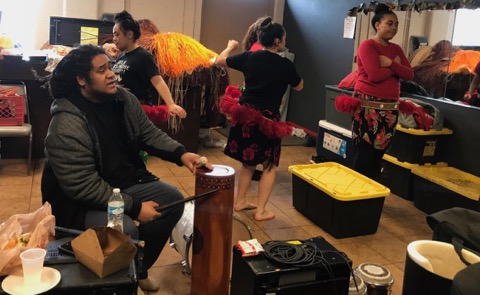
Haviar Tuitama Hafoka with a toere drum.

Haviar was teaching three boys the steps of their part of the choreography. Barefooted, they were slamming their feet against the cold concrete where a small heater was working in an attempt to heat up the large space. While the boys were repeating the steps under the sound of the drums, Haviar’s sister, Singa Fonua, was helping three girls to dress in traditional dresses that she was pulling out of large plastic bins. Behind a screen wall, the girls put on black skirts and colorful belts as decoration.

Malialole 1

Haviar Hafoka is teaching boys from East High School the steps of Otai dance.

Fonua is not only the person in charge of the costumes and appearance. She is also the contact person who manages the calendar of events and practices. For her, Haviar said laughing, “She is like the drill sergeant.”

Malialole (mah-lee-yah-low-lay) is a Salt Lake City-based music, dance and art performing group, promoting cultural awareness among Pacific Islanders. The group performs music and dance from the islands of Samoa, Tonga, Hawaii, Tahiti, Tokelau, Niue, Aotearoa (New Zealand) and the Cook Islands. In their dance studio at 1133 Glendale Drive, rehearsal and lessons are held daily.

The group was named for Haviar’s niece, who was the first to be born in Salt Lake City after the family relocated from Kansas City, Missouri. His mother, Merine Vida Tuitama Hafoka, who is Samoan, founded the dance ensemble. Haviar says Malialole is a symbol of something new, innovative and innocent, which is the beat of the group.

The next part of the practice in the studio is to merge the boys’ dance and the girls’ dance into a choreography. Haviar was directing them while drumming on a large wooden drum. “Keep your arms up higher. Girls, your fingertips should match up to your nose. Try it again. Ready?” The drum was loud and the students danced in the rhythm. The boys’ moves reminded a visitor of martial arts while the girls’ moves were feminine. Fonua reminded the dancers a few times to smile.

Malialole 2

The girls dress while the boys rehearse.

Haviar is strongly connected to the art of drumming. Drums are used to call for attention; to announce a town meeting or prayer; or warn of war. Haviar added, “In Tahitian culture, they [drums] are actually representative of the male and female counterparts.” He also said the stick and the drum represent the mother and the father replenishing the earth. Haviar explained the different types of drums. “The big ones are called lalis, these ones from Tahiti are called toere and the ones from the Cook Island are called pate, the big roller ones are takiruas, but they all serve the same purpose.”

Haviar explained the dance they were practicing is called Otea and is traditionally used to appease the gods in a request to make the land plentiful. “That’s why you see a lot of sensual moves and lots of hip shaking.” He said this particular dance tells the story of the ocean hitting the land.

Haviar gave a break to the dancers and while munching on warm fried chicken and pizza, they prepared for the next dance. Fonua said she makes sure all kids are fed before they leave the practice. She added some of them come from single-parent families or others leave home early for a practice.

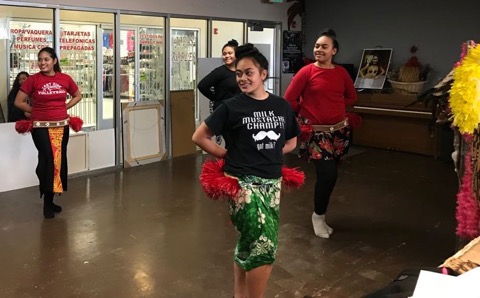
For their second dance, they played a song on a large speaker. It filled the room with the sound of a soft and sensual island melody in a native language. The moves are feminine and are performed by girls only. Haviar explained the dance is Aparima and literally means “the kiss of your hands.” It is an interpretive dance and the song is about love and keeping someone close to yourself.

Malialole 9

Girls from East High School dancing Aparima.

Haviar explained that every aspect of dancing in Polynesian culture is about telling a story. The dance is interpretive and lyrical. Meaning that if the dancer’s hands are up, the movements relate to the sky, sun or moon. If the hands are down, they relate to the earth and the ocean.

Haviar said every part of the costume must be made of materials from the land. The colors are meaningful as well. For example, the yellow and red represent fire.

For the parts of the costume, especially the titi skirt, Haviar said, “It is used to enhance the dancer and represents the land wrapped around the individual and is developing the spirit of Tahiti.”

Malialole 7

From left: Singa Fonua, Selu Hafoka and Simi “Jimbo” Hafoka.

Merine Vida said, “Every different island has its meaning and we dance from our soul out to our hands and tell a story about our generations that have past and generations that are in the future for us.”

Malialole 4

Merine Vida Tuitama Hafoka, the founder and director of Malialole Dance Group.

By Pacific Islanders’ tradition, the first and second cousins are considered brothers and sisters. Haviar said the family members in the group number about 70 people. They all participate in Malialole. There are about 30 additional performers from Salt Lake City schools.

The whole family is involved with the dance group. They all have full-time jobs, but when it is time to teach and perform, they are available for the community. The main performing art group is broken into smaller groups by age, starting at 5 years old up to 40 years old. They also have a smaller performing group that goes out and performs at events and weddings.

The Hafoka family and the Malialole dance group are involved in a few different projects. In December 2017, they performed for the Mundi Project. It is a campaign that helps disadvantaged children to have access and play musical instruments and learn music. Haviar’s sister, Selu Hafoka, was the highlighted artist focusing on storytelling through music. She is also one of the choreographers for the ensemble.

Malialole participated in a workshop for the People in the Pacific at Utah Valley University in March 2017. At the annual event, the group teaches students about dance, music and cultural arts in the islands.

Maliaole also manages Talk2Me, an organization reaching out to families and creating a platform to speak about bullying, depression, suicide and family law in Pacific communities around Salt Lake City. About the program and the Pacific youth, Merine Vida said, “The kids understand that they will have bad days, but there is something brighter at the end.”

Another project developed by the Hafoka family is WhoGotRoots. It is a Polynesian high school competition that occurs in April between schools in Salt Lake City. The performers must focus on three island groups. They have 20 minutes to perform three dances or songs and the winners receive a prize of $1,000.

Haviar said students are judged on executing the culture correctly and properly. He thinks the competition gives the kids a platform to present their knowledge of Polynesian music and dance.

Malialole’s involvement in Salt Lake City schools helps to keep Polynesian youth occupied after class. Spending afternoons at practice prevents the young dancers from taking drugs and joining gangs, which are threatening the new generations of Pacific Islanders.

Haviar remembered, “There was a time when my life fell away. And it was our culture. And it was our music. And our dance, that brought us back to reality; to realize that there is something better out there we can be doing. We don’t want our kids to fall into that same sort of habit.”

Haviar said there are more dance groups in town that serve the same purpose. “In our culture, especially, the parents are really grounded, they are really good, they teach us respect, but when kids come out to the society, the kids don’t translate it so well.”

The newest event among the Pacific Islanders in Salt Lake City is the Pasifika First Fridays. It is a Salt Lake City-based initiative dedicated to celebrating Pacific Islander artists and art every first Friday of the month.

Malialole 5

Selu Hafoka singing at the Pasifika First Fridays evening with Nia Haunga and Simi “Jimbo” Hafoka. Haviar Hafoka is on the drums.

Heritage and belonging are essential for the Pacific Islanders and the tradition of celebrating their uniqueness through dance, music and art, every first Friday of the month. This is one more event that will unite the community.

At the EMBER venue in downtown on March 2, 2018, Haviar and his brother Simi “Jumbo” Hafoka opened the evening with some traditional drumming. While the room was filling with guests, Merine Vida sang a song with Selu Hafoka, the lead singer and her daughter, and the vocalists Lavinia Haunga and Nephi Moe. Nana Utai, who is also a choreographer and dance teacher, performed a solo dance.

Haviar wishes the Islanders can be more connected to locals and other communities, but he still puts family first. “Family is the core of everything,” Haviar said.

“What I wish to do more,“ Haviar said, “is to reach out to more individuals to recognize us. We can recognize ourselves within our community, but we are not validated without other communities.”


Image courtesy of Nicole Aguirre and Siva Pasefika, a Polynesian dance company based in southern Utah that performs and teaches children and families about Pacific Islands dances and traditions. 

The bottom line: preserving Pacific cultures through language conservation

By ALLISON OLIGSCHLAEGER

Of Utah’s 38,000 Native Hawaiians and Pacific Islanders, 44 percent report speaking a language other than English at home. The figures are even higher in Polynesian families, with 45 percent of Utah Samoans and 68 percent of Utah Tongans reporting use of at least two household languages.

But according to Marianna Di Paolo, a professor of sociolinguistics and anthropology at the University of Utah, most immigrant families will lose their language of national origin within three generations. Although little research has been done on language attrition in Pacific Islanders — Di Paolo and her colleague Adrian Bell are some of the first to research Tongan language use in American immigrant communities — the standard seems to hold as true for Polynesian languages as it does for more researched languages like Spanish and Italian.

“The norm is loss in three generations,” Di Paolo said in a phone interview. “It doesn’t mean it has to be that way, but that’s the norm.”

Marianna Di Paolo

Anthropologist Marianna Di Paolo is one of the first researchers to study Tongan language use in the U.S.

Di Paolo explained that language loss frequently occurs as a byproduct of assimilation. First-generation immigrants, who arrive in the United States with varying levels of English proficiency, tend to use their language of national origin in the home, so children born to immigrants often learn their ancestral languages before or alongside English. However, most bilingual children go on to attend primarily English-speaking schools full of primarily English-speaking students.

“The children start using English primarily with their peers, so who are they going to marry? People who are also using English with their peers,” Di Paolo said. “English will become the household language of the second generation, the generation that is born and raised here.”

This means that third-generation Pacific Islanders born into English-speaking households are far less likely to speak and understand their ancestral languages than their older family members.

“If English becomes the language of the home, it is very likely that the grandchildren of immigrants will shift completely to English, or only use Samoan when talking with a grandparent, or understand Samoan but not speak it,” Di Paolo said. “In three generations, you have moved from a nearly-monolingual Samoan-speaking family to a nearly-monolingual English-speaking family.”

Marianna Di Paolo

Much of Di Paolo’s research focuses on recording and revitalizing immigrant and indigenous languages.

Heritage languages are lost even more quickly when first-generation parents use English in the home or choose not to teach their children their ancestral languages. Sisi Muti, who teaches Tongan language at Pacific Heritage Academy in Salt Lake City, said she sees this frequently in her students’ families.

“They moved to America to learn English, not to perpetuate Tongan,” Muti said in a telephone conversation. “That’s why they’re here — they want their kids to learn English well.”

But Muti believes that learning a heritage language can be a valuable experience for Polynesian children, grounding them in their culture of origin and giving them a sense of identity.

“Losing the language is the beginning of losing a culture,” she said. “Even here in America, it is important that they know their identity and know who they are.”

Muti said educating immigrant parents on the link between language and identity development is critical to preserving Polynesian languages in Utah’s Pacific Islander communities.

Di Paolo agreed, noting a long-standing history of misinformation about the harms and benefits of learning two languages as a child.

“Educators have misinformed parents about bilingualism, saying that learning two languages in early childhood actually harms children. It absolutely does not,” Di Paolo said. “It improves a positive sense of identity and it improves cognitive development.”

Di Paolo said families who continue to use their language of national origin in the home stand a much better chance of retaining their language beyond the three-generation average, but may still face other challenges.

“That supports it in the home, but it isn’t probably, in the long run, the only support that the language will need,” she said. “It is incumbent on some other part of society to create some other situation where language can be used.”

These “other situations” are known as domains: sociocultural settings in which languages can be used. Along with home and school, possible domains include work, church and government settings. In a viable domain, the use of any given language is not suppressed; in an optimal domain, it is facilitated and encouraged.

“Keeping the heritage language alive means that there have to be places for people to use the language and have pride as they’re using the language,” Di Paolo said. “The more domains that are possible for the language to be used, the more likely it is that Samoan will persist.”

While not immigrants, the indigenous Polynesians of New Zealand have seen great success in revitalizing their ancestral language, Te Reo Maori, in part due to its recent reintroduction into school and government settings throughout that country. Curleen Pfeiffer, a Utah educator and member of the Navajo Nation, believes the Maori people’s techniques for language preservation may have transpacific significance here in Utah.

To date, Pfeiffer has led four groups of Native Utahns across the ocean to study language preservation in New Zealand. The trips started as general cultural exchanges, but took on a new focus after Pfeiffer was touched by the value the Maori place on their language.

“The importance of language started really hitting me, and I turned my purposes totally around to language specifically,” Pfeiffer said in an interview at the American Indian Resource Center. “I really wanted to help the tribes of Utah see and understand for themselves how language is vitally important for our culture to remain alive.”

Pfeiffer brings Native students, educators and tribal leaders to New Zealand to study Te Ataarangi, a Maori teaching method that claims to have helped more than 50,000 people learn Te Reo. Pfeiffer has adapted Te Ataarangi to teach Dine, the Navajo language, and hopes to emulate the Maoris’ success in her own linguistic community.

Pfeiffer also hopes the students who visit New Zealand with her will understand the cultural significance of their own languages and be inspired to advocate for their preservation.

“Language is the bottom line,” Pfeiffer said. “Just like reading is the bottom line for education, language is the bottom line for culture. And if we want to keep our culture, we’ve got to do something. We can’t just sit back and let it fade away.”

Tribal tattoos are more than just a fad

Fred

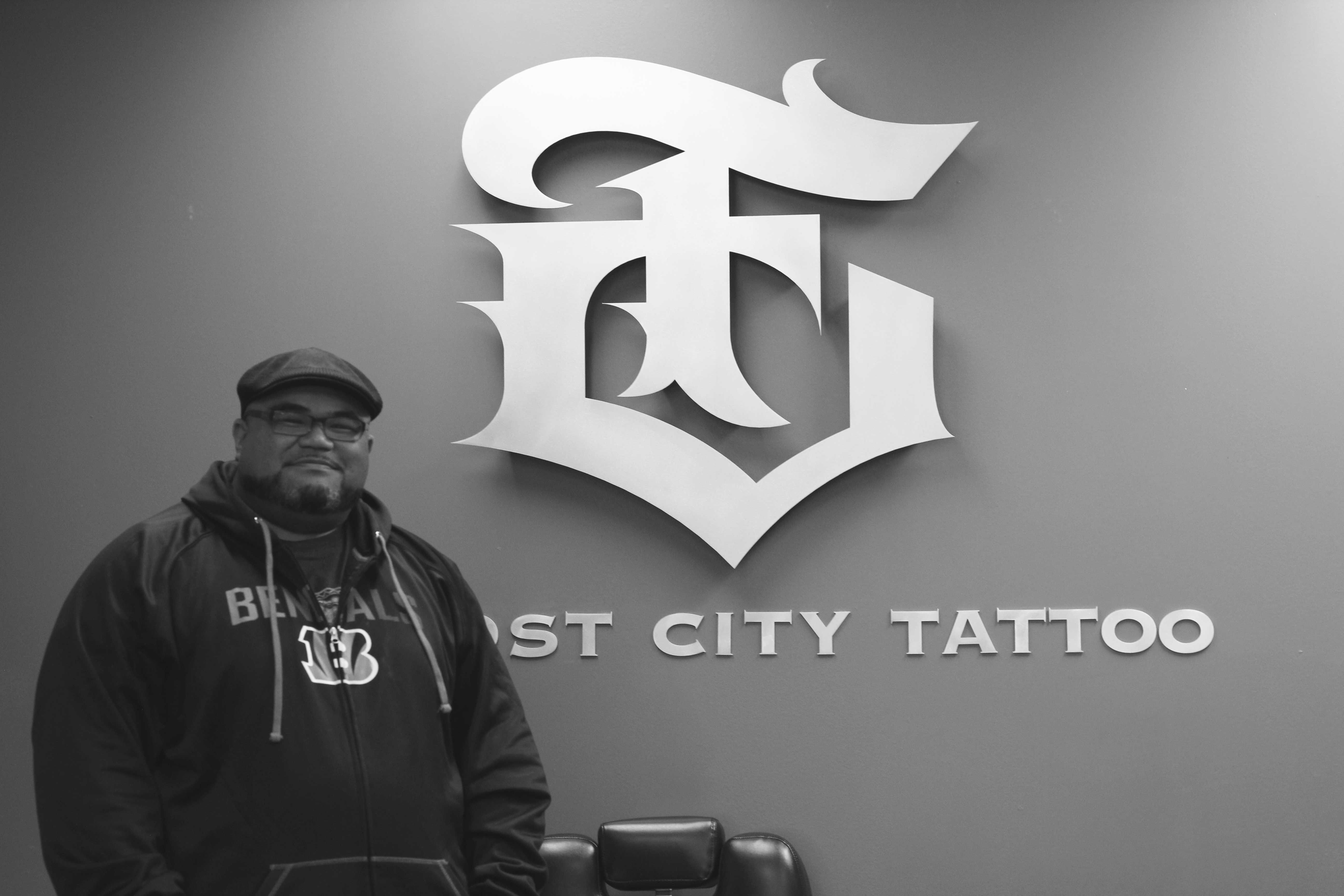
Fred Frost, owner of Frost City Tattoo. Photo by Diego Romo

Story and photos by DIEGO ROMO

The first thing you notice when walking into Frost City Tattoo is an overwhelming sense of community and inclusiveness. It’s as if the shop were a working and living metaphor for the values that most, if not all, Pacific Islanders stand for: community and tradition.

A warm “hello” greets you as you push open the door, quickly followed by a “make yourself at home” and inviting conversation.

But as you walk around and begin to explore the shop, the work of the artists grabs your attention. The walls are filled with pictures of the beautiful motifs that have ornamented the bodies of generations and generations of Pacific Islanders, which entices your focus and sustains it. The tradition is deep and diverse. The art is unique and beautiful.

Anthropologists agree that the tradition of tattooing has existed in Pacific Islander society for over two millennia. Almost all of the island societies scattered across the Pacific have some form of tattoo culture that permeates their community and helps indicate their place in it.

Although experts disagree on the geographical origin of tattooing — there is evidence of tattoos on the preserved skin of Egyptian mummies and countless other ancient cultures — historians can agree that the linguistic history of the word derives from the Samoan word tatau, which means “to strike.”

Called “kakau” in Hawaiian culture and “moko,” the traditional name for the face tattoos of the Maori in New Zealand, the art has always played an integral role in Pacific Islander society.

“Tattooing is as fundamental to Pacific Islander culture as anything else,” said Fred Frost, owner of Frost City Tattoo, which is located at 7045 State St. in Midvale.

Frost, who has been tattooing for 20 years, never saw the craft as a potential career choice. He got into the art by giving tattoos to friends as party favors when he was a young man living in California.

By the time he was 16, Frost gained an apprenticeship with a shop in California and had begun to discover his passion, which in turn helped him to learn more about himself.

“I actually learned how to speak Samoan through tattooing,” Frost said.

Frost jumped into research and began practicing the ancient motifs that are prevalent in Pacific Island tattooing, becoming a master in the process.

The traditional style of tribal tattoo varies from island to island, but the most common themes seen in the tattoos are strength and the representation of the environment in which they lived.

Many agree that the repeated use of triangles, which are representative of shark teeth, generally symbolizes strength and protection. Another very common pattern seen is the spiral-esque design meant to represent waves.

Because the early societies of the Pacific Islands had no written language, they used tattoos as a means of communication between members of the society.

According to Kealalokahi Losch, an expert in Pacific Islander culture, agrees that tattoos were a way of preserving history and culture, as well as a means of broadcasting one’s individuality.

“For Polynesian people it’s kind of our identity. It’s our thing,” said Lala Ellsworth, a tattoo artist working at Frost City Tattoo.

LaLa

Lala Ellsworth, a tattoo artist at Frost City Tattoo. Photo by Diego Romo

Historically, tattoos contained symbolism that related to the matriarchal and patriarchal lines of the family. They displayed successful hunts and the spoils of war. They also denoted what standing in the society one had, be it king or warrior, and even the origins of their ancestor.

Frost credits these characteristics for his passion and interest in the style. He really liked the fact that he was “able to tell a story using our language.”

Tattoos also played a very personal role in the sense that they shared the story of the bearer to the world. But they were never about the individual, as is the case with most Pacific Islander culture and practices.

“There’s no individual. That doesn’t exist in our style,” Frost said. “You’re all about the family, the clan, and community in a way that makes you whole.”

Historians state that as European cultures began to make contact with the Pacific Island communities, the practices and techniques of Polynesian tattooing began to spread and influence styles all over the world.

“All islanders have always gifted tattoos to foreigners,” Frost added.

And despite many efforts by zealous religious missionaries to curb the practice, it’s still thriving two thousand years later

Frost said that there is a large and growing market of Pacific Islanders who wish to continue the tradition of receiving the tattoos as part of their cultural identity — those who truly understand the deep meaning of the symbolism and the history of the art.

But you do not have to be of Pacific Island descent to appreciate and understand their style of tattooing.

“There’s a lot of non-Polynesians getting Polynesian stuff,” Frost said.

He added that this is a factor in what’s keeping the art alive. The symbols and their meanings are universal. They tell the story of all humans, just through the lens of the Pacific Islander experience.

“The meaning behind it is relatable to anyone in the world,” Frost added. “It’s just done in our style.”

Zay Dela Pena, who has tattooed at Frost City Tatau for three years, was born in Hawaii and grew up in a very religious family. The traditional, Polynesian style tattoos that were inspired by his culture and his spirituality by interweaving symbolism and meaning between the two identities.

tattoo2

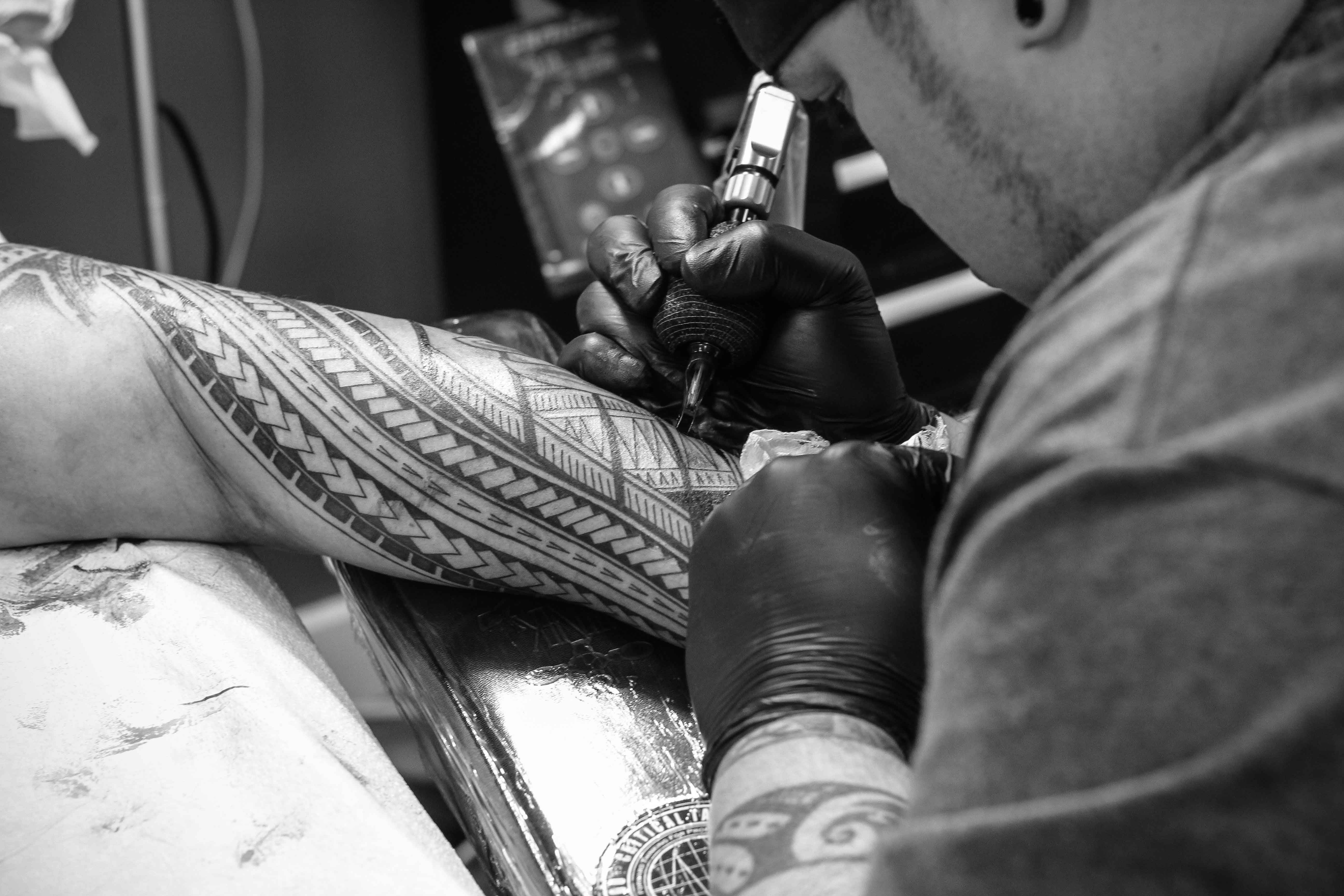
Zay Dela Pena tattooing a client at Frost City Tattoo. Photo by Diego Romo

“I had to figure out a way to connect the cultural symbols to spiritual symbols,” he said.

Dela Pena, like many others, was able to see the universal qualities in the symbols and add his own experience and identity to the tattoo, deepening its meaning.

Although the art-form has remained highly unchanged over its two thousand year existence, artists are now beginning to blend styles and create pastiches that contain the influence of many different works and cultures.

“What’s happening now is you’re seeing an evolution,” Fred Frost said. “Because artists are becoming diverse.”

Younger artists like Jroo Winquist are influenced by the tattoos of their older relatives and peers, but are continuing the Pacific Islander tattooing legacy through exploring different and newer styles.

“I love the look of tribal,” Winquist said. “It’s aesthetically so pleasing.”

But Winquist stated his favorite style of tattoo to work on is contemporary, modern and even surrealistic. Still the art is influenced in some way by the traditional Pacific Islander style.

Fred Frost said the traditional style of Polynesian tattooing will not be going away any time soon.

“It has stood the test of time until now, so I’m sure it will last,” he said.

As the buzz of the tattoo guns begins to fade, the conversation builds at Frost City Tatau in Midvale. Those who have just finished receiving their new ink don’t just pay and leave — they stay and talk for a while. Because before anything else, community and family come first in the Pacific Islander tradition.

Pacific Islanders coalesce to preserve their culture

Story and photos by WOO SANG KIM

The Sixth Utah Pacific Island Heritage Month — an annual celebration held to increase the profile of the Pacific Islander communities and raise awareness of the different Pacific Islands — will be held July 28, 2018, from 6-11 p.m. at Sorenson Multicultural Center & Unity Fitness Center at 855 W. California Ave. in Salt Lake City.

Susie Feltch-Malohifo’ou, executive director of Pacific Island Knowledge 2 Action Resources, proposed the observance in 2013 and Gov. Gary J. Herbert declared August as Utah Pacific Island Heritage Month.

Will Unga, career adviser at Salt Lake Community College, has assisted with hosting the annual celebration at the Sorenson center. “The event is like Hawaii. We offer different types of foods and teas. Some people love it. Some people find it interesting. Some of the dishes are lu sipi, palusami, ika, taro and cape. We also have dances like haka, mari, sipi tau and siva tau and arts like tattoos, drawings, ta moko and tatau,” he said.

“We prepare yearlong, working to offer tables for vendors or to let them perform. We want to get to a level of having an application process to elevate the level of quality,” Unga added.

He said the event is extremely short-staffed. Volunteers’ time is limited. More money is needed to hire an overseer. Yet, Feltch-Malohifo’ou’s drive and determination have helped the event to expand exponentially each year.

“The first celebration was a test, the second was going somewhere and the third was phenomenal. The first gathered about 100 people, mostly the families and friends of the event associates. The second had 300 people and the fourth had 600 people,” Unga said.

Micronesia Cultural Booth participated as a vendor at the past celebration. Melsihna Folau, a third-grade teacher at Pacific Heritage Academy who volunteered for the booth, said, “We aim to raise awareness of the current problems of the Micronesian region and educate people about the culture of Caroline Islands, Mariana Islands, Marshall Islands and Kiribati Islands.”

2

Folau helped in hosting the Micronesia Cultural Booth.

Folau said the staff offered food and clothing as samples. Pilolo, tapioca mixed with banana and coconuts, and kemalis, rice mixed with coconuts, are given. The staff also answered questions about the Micronesian region. Most inquired about global warming and what the inhabitants are doing to slow the heating, Folau said.

“It took us six months to prepare. We had to get approved from the Marshallese government, connect to friends in Kiribati Islands, write to tourism management companies and talk to visitors from Guam. Getting the approval was the hard part,” Folau said.

The vendor also increased in size and had to divide. “The Marshallese wanted to have their own things, so they separated last year. They were excited to show their crafts and share things that they were shy about before,” Folau said.

“We are all part of the one history with different perspectives. I was excited to learn from experiences and network with people. I am just happy that I have been a part since the beginning,” Folau said.

The Queen Center, a Pacific Islander nonprofit promoting healthier lifestyles by providing cultural resources, tobacco prevention and advocacy and education, also has participated in the heritage celebration. Tufui Taukeiaho, a health sciences instructor at Granite Technical Institute who served as a committee member to the nonprofit, said, “We helped out by starting a 5K run.”

Taukeiaho said the Queen Center has hosted the run since the first celebration. The 5K started with 80-100 runners but the number surged each year. The funding from the run was given to two families. The husband of one family had a kidney failure and the other family had a 4-year-old boy who had cyclin-dependent kinase-like 5 (CDKL5) disorder — a rare X-linked genetic disorder that results in difficulty controlling seizures and severe neurodevelopmental impairment. Each family received a check of $6,000.

3

Taukeiaho assisted families in need by helping coordinate the 5K run.

“Helping out to host the 5K run as a committee member and handing out the checks to the families was very rewarding to me,” Taukeiaho said.

The celebration increased the cultural awareness even among Pacific Islanders. According to a Salt Lake Tribune article, “One of every four Tongans in the U.S. calls Utah home,” Utah boasts the second largest Tongan population and fourth largest Samoan population in this country. Yet, Unga said, “Second-generation Pacific Islanders have never been home (Pacific Islands). They don’t get any more of the culture, food, and language.”

Second-generation Pacific Islanders responded very positively to the past celebrations. “They can’t get enough. They want more. After the taste, they save up money to go back to the Pacific Islands and see more, especially the language,” Unga said.

They also garnered an opportunity to network with other community members. “I advise and connect students to other Pacific Islanders. I help them get internships and jobs, and refer them to other business contacts,” Unga said. “I help no less than 50 students a year.”

Some students even took part in the fourth celebration by screening a film. Unga said students from Salt Lake Community College made the film incorporating the Pacific Island videotaping techniques learned from the New Zealand filmmakers.

Participants gained novel experiences, too. “When you work with people, you have to learn to compromise. Keeping mind and heart in the right spot answered my question of what I want to accomplish at the UPIHM. Past years have been that way,” Unga said.

“Pacific Islanders are a very small group of minorities,” he said said. “We have challenges because of that, and we have one common goal: To live a happy life. We just want everyone to be successful and try to be good members of the society.”


Pacific Heritage Academy emphasizes heritage in order to succeed

Story and photo by JANICE ARCALAS

IMG_2788 (1)

Pacific Heritage Academy opened in 2013.

“Look for the things in common and celebrate the differences,” said Dirk Matthias, director of the Pacific Heritage Academy. The charter school in Salt Lake City guides its students to success by implementing heritage in their daily school life.

Matthias was the school designer for Pacific Heritage Academy. He was drawn to the vision of the school and to work in a diverse community. When there was an opening for the director’s position five years ago, he applied for it and got the position.

Most of the students at the Pacific Heritage Academy located at 1755 W. 1100 North come from demographic sub-groups who struggle in the public school system. The schools in Utah don’t have a role model for students of color, Matthias said. The school helps their students find their roots and wings. Once their students understand their roots, they can grow wings to fly. This means that when the students understand their heritage they can grow.

Kindergarten to eighth grade students are taught Hawaiian, Tongan, Samoan and Spanish heritage at the Pacific Heritage Academy. For nine weeks a student will learn a specific heritage each year till their seventh and eighth grade. Seventh and eighth grade students have the opportunity to choose a heritage, where they will learn more in-depth about the heritage and develop conversational skills. Students have a heritage learning class, where they will learn their target heritage. It will consist of learning the language and culture.

Sisi Muti teaches the Tongan heritage at the school. She said that the students, when learning the language, will learn the alphabet, body parts, days of the week, conversational phrases and action words. The students are also taught Tongan culture songs, dances and legends. Muti also said that the students’ favorite activities are storytelling, games, writing poetry and stories, and making a book about themselves in Tongan.

The students will learn about heritage in their heritage language class, Matthias said. Every Friday they have a community meeting, where they will sing heritage songs. The community meeting also contains a heritage festival every nine weeks. The festival contains a target heritage and they will do all heritages. In addition to the community meetings on Fridays, every morning the students’ day starts with a circle about how they are doing focusing on the Habits of Crew through a video or a reading. They will set a goal keeping the Habits of Crew in mind.

The Habits of Crew contain six elements: Courage, Compassion, Craftsmanship, Responsibility, Perseverance and Collaboration. These elements have a connection to Polynesian heritage. The Habits of Crew is also the narrative of the voyager, which is the school’s mascot.

“We are Voyagers like ancestors of old. We are strong, inventive, courageous, and filled with wonder. Sailing seas of knowledge, we seek understanding and use it with compassion. Looking forward, we honor the past to better see our future. We will find hope and success in spite of wind and change. With our eyes to the heavens, fixed on guiding lights, we know ourselves, our space, our time. We will seek, we will find, we will know new horizons. We are Mighty Voyagers!” This statement at the bottom of the PHA’s website recognizes the characteristics of a voyager and connects them to the school and student success.

The school is coming up on its fifth year and it is starting to see stability. In the beginning, there was a lot of student turnovers. There are over 400 students and it is difficult to see a student’s growth when they start in the middle. Now the school is able to see the students’ growth, who started at kindergarten, who are now in fifth grade, Matthias said.

The teaching staff is also stabilizing. The teachers who are coming to PHA are interested in teaching, the mission and vision of the school, Matthias said. The teachers take leadership in the school and have a lot of say about making decisions at the school.

Just as how their indigenous heritage community is, at the PHA, they don’t leave students behind, Matthias said. When they make mistakes or get into trouble they are there for the students to get back on their feet and work with them to succeed.

The Pacific Heritage Academy’s students succeed through learning about their heritage; roots, so that that they can fly.  For five years, the academy has implemented Tongan, Spanish, Samoan, Hawaiian heritage learning so that the students can see that not only white students can be protagonists in books, but children of color can also be too, Matthias said .

The website contains this quote on the front page. “Through thoughtful inquiry, challenging curricula, rigorous requirements, and compassionate service students learn who they are and what they can become. We create learning experiences and students find their Roots … and their Wings.”

Image courtesy of Nicole Aguirre and Siva Pasefika, a Polynesian dance company based in southern Utah that performs and teaches children and families about Pacific Islands dances and traditions.