Salt Lake Gallery Stroll Spotlight: Mod a-go-go

Story and photos by PEYTON M. DALLEY

Clear pane windows line the walls and the smell of old furniture fills the room. In the background, a smooth-jazz album spins on the record player.

Welcome to Mod a-go-go, at 242 E. South Temple in Salt Lake City,  and step into the scene of the iconic sitcom “Mad Men.” Jon Hamm’s character, Don Draper, would not be disappointed. With local artwork on the walls as well as a compilation of old-school furniture, this store-turned-gallery is just one of the 36 galleries featured in the monthly Salt Lake Gallery Stroll.

On the main floor, buyers or patrons of the event can look at both furniture and artwork.

But the real masterpieces are located upstairs, where Mod a-go-go hosts its stroll event. And on the night of Feb.19, that event, which focused on landscapes, captured the essence of what artists here in Utah have to offer.

The idea became a reality

Eric Morley and Marcus Gibby are the owners of this local gallery. When artists choose to have Mod a-go-go promote them, Morley and Gibby split the profit 50/50. “We’re a launching pad for artists,” Morley said. “We have had people here who now are featured outside of Utah.”

20160219_191134

Eric Morley, left, and Marcus Gibby, owners of Mod a-go-go, enjoy a break during February’s Salt Lake Gallery Stroll.

He and Gibby set up everything for the artists. “We don’t even require volunteer work,” Morley said, unlike some galleries. “Our goal here is to get artists out of cafes and restaurants and give them a place to showcase their work.”

Morley came up with the idea for the gallery during a project he was working on as part of his MBA. He said his entrepreneur class at Westminster College in Salt Lake City helped spark the idea, because students had to identify a gap in the market. Morley knew the business of art, while his business partner, Gibby, was an artist. Together, the two balance out the scene of the gallery.

Emergining artists

Artists who are interested in showcasing their work through Salt Lake Gallery Stroll must contact the specific gallery they want to work with. For example, Mod a-go-go has an online application that individuals can submit with a sample of their portfolio.

20160219_185011

Artist Laura Beagley and husband James stand by a piece they designed together. James creates the base, and Laura uses copper wire and precious stones to construct the piece.

Artist Laura Beagley promoted three pieces for the first time at Mod a-go-go. She showed delicate sculptures created as part of a “Wishing Forest” theme.

“Wishing trees and the tree of life are what inspire me. Every culture has a tree of life in it [that] links us to the world and heaven,” Laura said. She handcrafts the works with copper cord and precious stones that her husband, James, finds from the Utah mountains. He also helps her set the foundation for her works of art.

20160219_192058

Artist Oscar Da Silva stands in front of his canvas artwork portraying the theme of the West. He was exhibiting for the first time at Mod a-go-go.

“I get different inspirations. I like the feeling of the seasons,” Laura said. Her pieces also reflect a mythical approach and include fairies and fantasy.

Local artist Oscar Da Silva also had his first showing at Mod a-go-go. He had on display six of his original oil pieces portraying the theme of the West.

“I like working with subjects that don’t limit my creativity,” Da Silva said.

He said he prefers to paint portraits, but said he loves the land.

“Take a look around you, that’s inspiration,” Da Silva said. “Inspiration comes, let it find you.”

He is passionate about what he does. S0 passionate, in fact, he quit his full-time job in customer service at the University of Utah to pursue his art. He has shown in galleries across northern Utah.

Gallery Stroll draws crowds of all ages

Word of mouth, and promotions by local media such as City Weekly and SLUG Magazine, are how artists and viewers alike get a snippet of what is offered at the Salt Lake Gallery Stroll.

Natassja and Ryan Turek said it is their second time attending the gallery stroll. They said they are merely “art appreciators,” but hope to one day buy pieces of their own.

The Salt Lake Gallery Stroll on the night of Feb.19, 2016, drew crowds of all ages to venues such as Mod a-go-go. With the scent of old finished wood still lingring in the air, and the record player spinning jazz music, the gallery slowed down for the night. But a  few visitors lingered in the “Mad Men”-like setting.


Artist exposed: What does it take to make it in Utah?

Story and photo by PEYTON M. DALLEY

While blue skies and daunting summers may claim Utah’s geography, the passion driven from local artists shines brighter than any summer day could.

From public art outside to Saturday morning farmers markets, local artists can be seen from every part of the state, enlightening audiences from Saint George to Logan.

What exactly does it take to be a successful artist in this state? Utah has world-renowned programs at the University of Utah and Brigham Young University that focus on art-related programs, and platforms like the Utah Cultural Alliance that allow local artists to be showcased.

However, does education play a role in the success of the artists that Utah is producing? Or is it the connections made by individuals that create their success?

Young-Otterstrom

Crystal Young-Otterstrom

Crystal Young-Otterstrom, executive director of the Utah Cultural Alliance and a noted opera singer, is one example of Utah success. She has been named one of Utah Business Magazine’s “40 under 40″ and boasts an impressive resume that includes performances in Vivace, an opera group based in the Utah area, helping to start the Utah Symphony and founding her own company, Foursight Partners. Young-Otterstrom is an artist who has shown success in the Utah community.

Young-Otterstrom earned a music theory degree from BYU, and completed her master’s degree at Queens College in New York. She credits her success to her knowledge of the field and the skill sets she learned in college. But, she added, “You [also] learn along the way.” Young-Otterstrom currently promotes her own company while serving on the board of several art organizations, including LDS Composers Network.

Young-Otterstrom said connections can help people get from one step to the next. She said she has gained valuable contacts through the wide variety of work she has done with local organizations.

Another success story in the Utah community is Pat Bagley, the editorial cartoonist for the Salt Lake Tribune. He said in a phone interview that he “immersed” himself in the arts community and took history and political science classes. Bagley said “it helps to be exposed to what you want to do.”

Bagley’s work has been featured in Time magazine, the Wall Street Journal and the Washington Post. Bagley, also a  graduate of BYU, has been putting pen to paper at the Tribune since 1979. He said connections are helpful, but skill set is more valuable. He obtained his job at the newspaper based on his portfolio.

While success can be found in the Utah market, what are the necessary steps to get there?

Tanner Forbes aspires to one day make Broadway headlines. Photo courtesy of Tanner Forbes.

Tanner Forbes aspires to one day make Broadway headlines. Photo by Wendy Clymore.

Tanner Forbes, a student at BYU who is triple majoring in the Music Dance Theater Program, is hoping to one day break into the arts field, locally as well as nationally.

“I think there needs to be a balance of talent and connectivity,” Forbes said in an email. “I strongly believe that all talent will eventually make its way to the top, but there’s communities of artists everywhere and you have to immerse yourself in that world in order to expand your success as an artist. But always be trained! Always be trained before you jump into communities of artists. Education works wonders with that.”

Forbes is currently a BYU Young Ambassador. He credits his ambitions to the skill set he has developed in his courses and  through outside training. He also studies the work of individuals such as the late actor Heath Ledger, who died in 2008, for  inspiration.

Forbes is focused on his future and is passionate about his career choice. He hopes to land an audition on Broadway after his training at BYU, and hopes to play a role such as Elder Price in “The Book of Mormon” in New York City.

“I’ve found that Utah is extremely diverse,” Forbes said. “Sure, it’s no New York or [Los Angeles,]  but we have so many different types of people pursuing so many different types of paths, especially in the Salt Lake area. There’s really opportunities for everyone here.”


Great Salt Lake Clothing Co. entrepreneurs talk fear, failure and success

Story and photos by NATHAN ASTILL

Young, fresh and active, entrepreneurs are the embodiment of Utah’s new spirit. That same spirit is also everything that Great Salt Lake Clothing Co. stands for.

“There is a voice in everyones’ head and as soon as you come up with a new idea, as soon as you say something to yourself, it tells you that it’s stupid,” David Marquardt says. He pauses briefly, thinking about his phrasing before continuing. “Ignore that voice at all times, it is never an entrepreneur’s friend.”

Marquardt, left, stands side-by-side with Martin.

Marquardt, 28, and co-owner Michael Martin, 37, sit at their desks, working from behind their computers while they casually talk about the business they started in November 2014, Great Salt Lake Clothing Co.

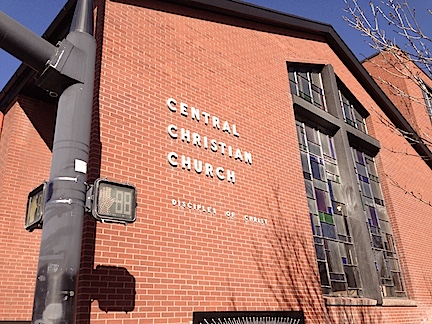
For the time being they are working out of an old church, which is currently being renovated, located on the northwest corner of 400 S. and 300 East in downtown Salt Lake City.

And downtown Salt Lake is exactly where they want to be. They are bulding their company around the heart of the city.

“We wanted to model ourselves after the Cleveland Clothing Co,” Martin says. The Ohio-based company was also started by two friends and is locally owned. According to their website, their mission is simple, “Spreading Cleveland pride, one T-shirt at a time.”

Jumping back to Marquardt and Martin, it’s easy to see the parallels. “From skiing to hiking to Utah Jazz shirts, we wanted to represent everything that makes Salt Lake City awesome,” Martin says.

But to those on the outside looking in, starting and running a business is not as easy as it may seem.

“To succeed at any small business you have to wear a lot of hats,” Marquardt says.

Both men are wearing multiple hats — one is in the form of the other jobs they work. Martin comes into the office early so he can do his part-time job, writing computer software for a company on the East Coast, while Marquardt is busy running his other business, Beehive Sport and Social Club, on the side. This sport and social club offers a casual, no pressure environment for people looking to hang out with friends and/or make new ones.

Test

Some of the more popular Great Salt Lake Clothing Co. shirts, with the “mistake” Utah Jazz basketball shirt (at bottom right of photo).

A casual and fun yet alluring environment is also what Martin and Marquardt are creating with Great Salt Lake Clothing Co. But make no mistake, a casual atmosphere and hard work can, and should, go hand-in-hand.

The two men have worked extremely hard to create options. Customers may buy directly from them at their office or at their website. Now they may also find Great Salt Lake Clothing Co. retailing in stores like Sports Den, Uintah Standard and the gift shop at the Great Salt Lake State Marina.

Not only that, but Martin and Marquardt are also funding everything out of their own pockets. “The first six months [are] tough, you only have a certain amount of money,” Marquardt says. “It can be very stressful, if people don’t buy shirts, if you go a week and sell just one or two there is the thought, are we going to have to stop?”

But runaway trains don’t stop. Neither of the men have a background in clothing or design, yet they still design, and more importantly sell, all of their own shirts. Neither of the men have managed Fortune 500 companies, yet they still send out feelers to connect with other businesses while continuing to fill online orders. And lastly, neither of the men started out as social media gurus, and yet they still manage to successfully promote themselves online through their social media, such as their visually striking Instagram account.

“Instagram has been our best resource by far,” Martin says. “I have a lot of fun connecting with people through social media. But it’s hard not to get burned out trying to come up with new ideas every day.”

But persistence is important, said Ann Marie Thompson, program director of the Salt Lake Chamber Women’s Business Center. “You can do it. Continue to be studious, look for opportunities. Not only would I be looking for opportunities, I would be willing to do the work and homework.”

Test

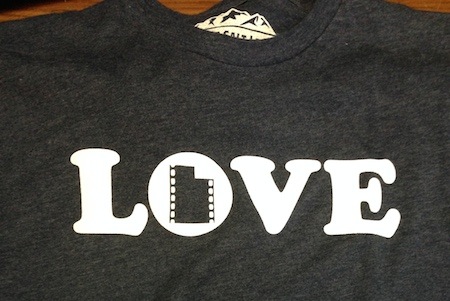
The Sundance Film Festival LOVE shirt, which was designed to be included in the 2015 swag bag.

And their work has paid off in unique ways. They landed the contract for designing “LOVE” T-shirts for the 2015 Sundance Film Festival Swag bags, which are given to directors and producers, thanks to a Twitter follower who recommended them to the Utah Film Commission.

Not only are they putting in the work, but they also are constantly learning.

“I mean we kinda had to learn everything from scratch,” Martin says. “I had to Google a lot of stuff to learn how to do things.”

But Google isn’t the only way the two men learn. They also learn from each other. Take for example Marquardt, who pauses in between sentences, asking Martin for help with updating the web design on their site.

Like most people, both men also realize that hindsight is 20/20. “Looking back on things, in the beginning, maybe it would’ve been smart to research the whole T-shirt printing method and the cost,” Martin says.

Marquardt agrees, but says making mistakes and learning is all part of the process. “You just need to start, break it down into small steps and keep it going,” he says. “If you stop learning you start failing.”

Marquardt laughs as he thinks back over some of their recent mistakes. “Our basketball shirt was a pretty decent failure, at the time. I mean, the timing for the T-shirt was wrong. It was winter and the Jazz were doing bad,” Marquardt says pausing. “But if you’re not failing you’re not pushing the envelope far enough.”

He mulled it over for another moment. “But if it was easy, everyone would do it,” he says.

Nevertheless, the rewards have the potential to far outweigh the risks. Martin and Marquardt both enjoy the freedom that allows them to create their own products.

Church

Downtown Salt Lake is exactly where Marquardt and Martin want to be. For now they are working out of the Central Christian Church building, which is being renovated to accommodate more small businesses.

“It’s more rewarding than the average 9-to-5 job,” Martin says, “because it allows you to see the end result of what you’ve worked on.” Martin leans back in his chair, continuing, “It’s really cool to see people using something that you’ve created. I remember this time when I was riding the lift up at Snowbird. I was chatting to this kid about Great Salt Lake Clothing Co. and the shirts we made. Then this kid goes, ‘Oh like this?’ and raises his jacket up and he was wearing our ‘church is in session’ shirt. It was a really awesome moment.”

So even though they may not be selling shirts every day right now, and even though every new day may present more challenges and questions than answers, both men are assured that they are doing the right thing.

Besides, Marquardt knows exactly how to handle the hard times. “At every dead end you encounter,” he says, “you’ve either got to find another door to open or you need to bash your head through the wall.”

Guitar maker Ryan Thorell builds custom, hand-crafted instruments

Story and photos by WILLIAM PHIFER III

Behind the scenes of Ryan Thorell’s guitar making process.

test

Ryan Thorell, who recently shaved his beard, chisels away at the bracing on the back of a guitar’s sound board.

Nestled in the heart of downtown Logan, Utah, is a warehouse with a fire-engine red door on the southern side. But this is no ordinary warehouse. Inside, the scent of wood dust fills the nostrils and a man named Ryan Thorell can be seen huddled over a workbench. With thick red hair and a bright bushy beard to match, Thorell’s passion and profession is evident as he carefully chisels away unwanted shavings from a piece of cedar wood.

Thorell, 35, uses many old-fashioned methods to efficiently hand-craft innovative, fine acoustic guitars.

“A lot of what I do is custom,” Thorell said. “My designs are constantly changing. I try to really reinvent the guitar and push it with each design.”

As a guitar maker, Thorell said, “I think you’re constantly prototyping instruments with everything you build, and trying to improve upon it. You’re constantly trying to build a better [sound] box and trying to make it perform and look as good as you can.”

Unlike other instruments, such as the violin, Thorell said the guitar is continually being redesigned and improved. This creates a desire among musicians for custom and personalized guitars with different sound profiles.

One of those musicians is Frank Vignola, 49. A world-renowned guitarist, Vignola teaches various workshops online and at music universities such as the Juilliard School. As a prominent jazz musician who owns three guitars made by Thorell, Vignola really likes the durability and tone of each one.

“I travel and play about 150 shows a year all over the world,” Vignola wrote in an email interview. “I am always amazed that the guitar barely goes out of tune.” He added, “Always knowing I can rely on the guitar to sound great and travel well is a must for any professional touring musician.”

Vignola, who performed in Salt Lake City on Jan. 3, 2015, wrote in the email, “There are many great builders out there. What stands out about Ryan’s guitars are their uniqueness in look, design and sound.” Thorell’s guitars were on display at the Capitol Theatre.

Thorell prides himself on creating guitars that are pleasing to his customers. He said one of the things he enjoys the most is “working with clients and getting excited about a concept, and turning that into a super high-quality, fine machine for making music.”

However, the process of designing, crafting and finishing guitars is time-intensive. Thorell currently has a year-long waiting list for prospective clients.

Perhaps one of the reasons Thorell enjoys making guitars and working with musicians is because he has also played the guitar for many years.

“I think it has been very informative to me to have a good playing background so that I can fine tune what’s important to me in a guitar,” Thorell said.

Growing up in Utah, Thorell always had a passion for music and guitars. He said listening to the band, Metallica, influenced him to learn how to play the guitar. He started lessons at the age of 14 and was introduced to a guitar maker by the name of Tim Gonzalez.

Gonzalez, who died in 2009, was a board member of the Intermountain Acoustic Music Association and owner of a shop in Salt Lake City called Gonzo Guitars.

test

The first guitar Thorell made with the help of Tim Gonzalez.

Intrigued by Gonzalez’s work, Thorell decided to try his hand at making his very first guitar. With the help and guidance of Gonzalez, Thorell learned how to build and repair guitars and completed his own guitar when he was 16.

Thorell became involved with playing the guitar in high school and after graduation, he chose to enroll in music and guitar performance at the University of Utah. Family issues later caused him to move to Logan, where his grandfather had a wood-working shop.

“I got messing around with stuff in his shop and decided to go back into guitar making,” Thorell said.

Thorell completed apprenticeships with many people who influenced his guitar making. One of those people was Chris Gochnour, an experienced furniture maker in Salt Lake City who uses traditional hand-crafting tools. Gochnour taught Thorell, who was 23 at the time, a great deal about woodworking and how to work efficiently when creating different designs.

“He was building the largest range of styles of furniture,” Thorell said. “He would just gear up for each piece and it would be drastically different than the piece before it. It was such an experience in how little you need to be efficient … on the fly like that.”

With a firm grasp of woodworking, Thorell decided he wanted to focus on building archtop guitars. Similar in style to violins, archtop guitars have a convexly curved back and the f-holes on the soundboard, or front of the guitar, often look very similar to that of a violin.

Thorell, then 25, went to study with Tom Ribbecke.

Based out of Healdsburg, Calif., Ribbecke, 62, is an expert guitar maker who teaches and specializes in building archtop guitars.

“Tom is the guitar world’s version of James Krenov, the redwood-style furniture maker,” Thorell said in a phone interview. “He has approached archtop building from a perspective that is very much in line with that school of woodworking.”

During his time in California, Thorell studied the fluid arm motions Ribbecke used to carve his guitars. “He is able to get these finely graduated curves on his archtops that are very unique in the instrument design world,” Thorell said.

Thorell is proud to call Ribbecke his mentor, while Ribbecke admires Thorell and considers him one of his best students. “He’s gifted, he’s brilliant and he’s fun,” Ribbecke said in a phone interview. “I’m very lucky to have met an individual like him. … To have been able to have a positive influence on him, it’s a great gift and it’s a great blessing for me.”

Over the years, the two have continued to seek each other’s opinions and share insights on their work. Having taught an estimated 150 guitar makers, Ribbecke said, “Ryan is a pretty unique and insightful guy [and] I would say [he] is the best of those makers and the most gifted.” But, he added, “I haven’t told him this, lest it would cause his large red head to get any larger.”

Every day Ryan Thorell continues to develop his craft, art and business. “In the guitar market you have so much leeway to be creative,” he said. “Instrument-wise there is almost nothing that can look as weird and different as a guitar can from the next guitar. There is nothing else like it.”

Local singer-songwriter Emily Bea uncovers hidden talent after soccer injury

Story and photos by McCALL GRAY

Music can be defined as an art of sound that turns ideas and emotions into words. The elements of melody, cadence, harmony and voice are strung together with a conscious effort to create it. Music can inspire both the artist and the listener to something beyond the lyrics.

Local singer-songwriter Emily Bea, from Sandy, has demonstrated exactly this — and she’s only 20.

Bea comes from a musical family. Her parents and three siblings all played instruments and shared a love for playing soccer. Bea has been devoted to the sport since she was 3. Simultaneously she began to enjoy music, too. She began piano lessons, then taught herself the violin, ukulele and mandolin. By 8th grade, she had moved on to teach herself the guitar and experiment with song writing.

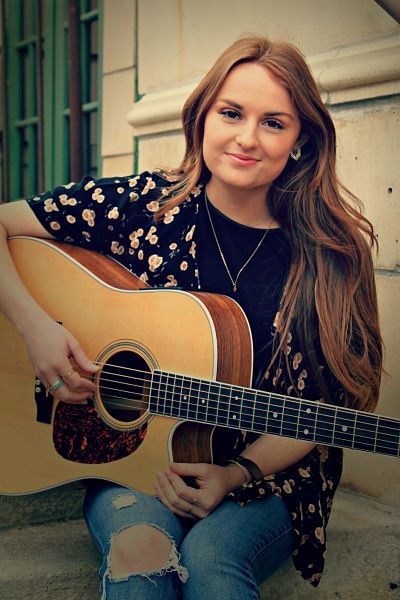
Bea cherishes her Martin guitar because she earned enough money from her performances to help pay for it.

“The first song I remember her writing and singing to me was about her twin sister who passed away when she was a baby,” said Brian, Bea’s father.

When she wrote it, Bea said she was experiencing a sorrowful moment of loss, missing her sister. She was looking for a way to gain comfort and peace and found that avenue through her guitar.

“I started singing words and they just kind of came out,” Bea said.

The song was called, “Wow, I Really Love You.”

“It completely floored me. … From that experience, I knew she had potential to do something great with her music,” Brian said.

Bea began to discover her way with music and her indie pop style of songwriting. But, it always came second to playing soccer. That is until on two separate occasions she sustained a serious injury. Her ACL tore twice, preventing her from playing on her Brighton High School soccer team. Bea pushed through therapy and worked hard to get back on the field. Meanwhile, the recovery period allowed her more time to focus on her music.

“Soccer was the thing I ultimately wanted to do, but when it [the ACL tear] happened again it made me question if soccer was what I was really supposed to be doing,” Bea said. To her surprise, it wasn’t. After she fully recovered the second time around, she met with a vocal coach.

“[The coach] heard her sing and told her, ‘I don’t care how good of a soccer player you are. God gave you a gift, and you need to sing,’” Brian said. “With that, she gave up soccer and focused on music.”

Bea’s music career progressed from there. She promoted her music independently, gaining a steady viewership on her YouTube channel, Facebook page, Twitter and Instagram accounts.

“I think her music is truly original, and that nobody can fully replicate her sound nor style. I appreciate other musicians who take ownership of their art like she does,” said Scott Hebertson, a fellow music artist and friend of the family.

Music turned out to be a natural talent even though Bea hand’t intended to strongly pursue it in the beginning. “Music was always my fallback,” she said. “It was really hard at first, but it’s really been a blessing. … I really enjoy it.”

Bea played her song "Bench For Two." It was the song that sparked her theme for her second album.

Bea played her song “Bench For Two.” That song sparked her theme for her second album.

When it came to performing in public, she started out at open mics and restaurants such as Winger’s in West Valley and Pat’s Barbecue in Salt Lake City. She did her first show in 2012, opening for the musical group, “A Great Big World” and Greg Holden, who wrote the song “Home,” made famous by “American Idol” winner Phillip Phillips.

“It is inspiring to see someone start from nowhere, begin to chase their dream, and then start seeing results,” Hebertson said.

Bea’s creation process for writing a new song stems from many sources. “Inspiration comes from everywhere,” Bea said. She discovers ideas for new songs by what people say as they pass her by, what she reads, sees in movies and from personal experiences.

Bea self-produced a quality list of original content where she sang and played an instrument in each song. In 2012 her first EP album, “Love A Fair,” launched. With its success came another and in 2014 she released her first full-length album, “Bench For Two.”

“When I got my first album I cried, a lot, just because it was really exciting,” Bea said. “It was tangible and had my name and picture on it.”

Bea’s producer, Trevor Price, assisted her in recording “Love A Fair” in his basement studio. Two years later, “Bench for Two” was recorded at Price’s new Salt Lake City location, Stone Angel Music Studios.

Once the recording process was complete, she manufactured her CDs through an independent CD and DVD manufacturer called Disc Makers. This allowed her the opportunity to sell them worldwide on CDBaby.com and have them available on Spotify, Amazon and iTunes. Bea also received 1,000 hard copies to sell on her own, which she does through email, emilybeamusic@gmail.com.

“I initially helped out financially to get her on her feet. But she has been able, through album sales and shows, to pay me back and make some money,” Brian said. “She books her own shows and spends a lot of time marketing her music. It is fun to see her learn and grow, both in music and business.”

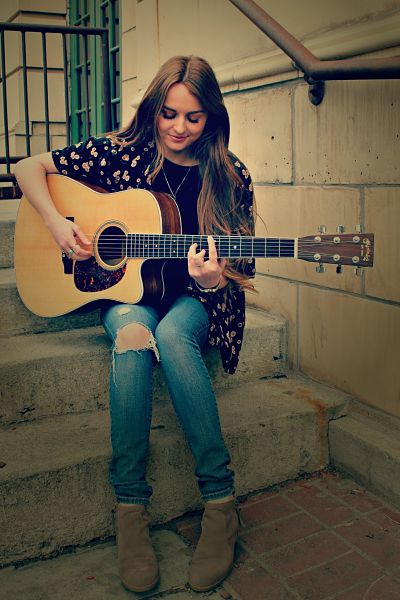
Bea finds her favorite place to compose new songs is outside.

Bea finds being outside is her favorite place to compose new songs.

Since her latest album release in 2014, Bea aims to perform two to three shows per month. She has performed at the Utah State Fair, Kilby Court in Salt Lake City and many times at Velour Live Music Gallery in Provo.

She announced the news via social media that her newest single, “Angel Fly,” had been chosen for the “Songs For Life 2015” album. “Angel Fly” was written in memory of her high school classmate, Tyler Robinson, who lost his battle to cancer. The album was released March 6, 2015, two years and two days since his passing. All proceeds from the album and individual songs are donated to cancer research.

Whether it’s the interactions with fans after performances or the accomplishment of finishing the lyrics to a new song at 2 a.m., rewarding experiences surround Bea and make her journey worthwhile.

“I definitely didn’t expect myself to be this far, especially being independent and doing everything by myself,” Bea said.

She has managed her music career while attending Salt Lake Community College full time and working another job. Bea will graduate May 2015 with her general associate degree. She expects to release more albums in the future and continue her pursuit of a full-time career in the industry.

“I think it’s just a gift that I have that I want to share with people,” Bea said. “And I feel like if I just didn’t do it then I would just be wasting what my Heavenly Father gave me. Ultimately it is to bless other people and their lives as well as help me in mine.”

Unique, local restaurants bring cultural value to Utah

Story and slideshow by William Phifer III

This slideshow requires JavaScript.

In Layton, Utah, there is a strip of real-estate running along the east side of Interstate 15 that the locals call “restaurant row.” Littered with a copious amount of national chains, the area also has a few unique, local restaurants that bring an irreplaceable cultural value to the community.

Corbin’s Grille is one of those restaurants. Located at 748 W. Heritage Park Blvd., Corbin’s is a family-owned business that is operated by Jake Garn, whose father is the landlord of the location. Since its opening in 2006, Garn has learned a lot about running a small local restaurant.

“I’ve learned that appreciating the local food, instead of chains, isn’t something that comes automatically to most Utahns,” he said in a phone interview.

However, as time has progressed and people have learned about Corbin’s Grille, Garn said, “I’d like to think everyone is starting to appreciate the value of local flavor a little bit more.”

Garn said his favorite way to make the restaurant a unique place for patrons is by “bringing something that’s a local creation – something people out of town can try and look forward to.”

To help him consistently achieve this goal, Garn appointed Jimbo Snarr the executive chef in 2014. Snarr understands that the owners of Corbin’s Grille are looking to provide a unique experience for their customers.

“Our goal is to take good classic dishes that people really like and make them classy and higher-end,” Snarr said.”[To do] this we use a lot of fresh ingredients and we make everything in house.”

One example of a popular dish that is made at Corbin’s Grille is the spinach artichoke dip. While almost every restaurant has its own variation of this common appetizer, Snarr said most receive it pre-made and frozen from other vendors. Unsatisfied with any of those inexpensive variations, Snarr said that Corbin’s Grille preps its spinach artichoke dip in-house using fresh ingredients.

Another popular dish at Corbin’s Grille is the lemon asparagus salmon, created at the restaurant during a cooking competition among the cooks. The fresh sushi-grade king salmon is pan-seared in a sauce consisting of white wine, lemon juice, fresh tomatoes, asparagus and other ingredients. This particular salmon dish is one of three offered at Corbin’s Grille and it is the only one that is not cooked over a wood fire grill.

Chefs utilize a white almond wood fire to grill everything from steak, seafood, chicken and burgers, to asparagus and lemon wedges, which are used on seafood dishes. Snarr said the intense heat sears the edges of the steak and really locks in the flavors and juices.

While the food itself is a unique part of Corbin’s Grille, Snarr says that is just part of what makes eating there a distinctive dining experience. Snarr believes the open kitchen and experienced staff also create an inviting atmosphere for the clientele.

“We’re an open book, come on in. We have an open kitchen. Anybody can walk up,” Snarr said, “and watch my guys cook. We do it proper, we do it right … and everybody can see it and know it. I think that’s what makes us popular.”

In the spirit of transparency, Corbin’s Grille does cooking demonstrations where restaurant management share their recipes and techniques. Snarr said some people don’t understand why they are divulging “restaurant secrets” and giving people the tools to make their dishes at home.

In his experience, Snarr said, “People are still going to come to us when they don’t want to cook, because they still like to come out” and have a fine dining experience.

Anthony Lella also recognizes the value of unique restaurants, which is why he is entertaining the idea of opening his own Italian restaurant in the Ogden area.

Lella, formerly the general manager of Iggy’s Sports Grill in Layton, is from a family with strong Italian roots.

He has identified a lack of quality Italian restaurants in the northern Utah area. He also has recognized an increasing trend toward homemade food and cultural culinary diversity.

Recalling a visit to Utah years before he moved to Ogden, Lella said he went out to eat with someone who had never eaten prosciutto, which is an Italian cured ham.

“I was so shocked that this grown woman had no idea what this was, that I’d been eating all my life,” Lella said. “So I think things like that, specialty markets, are just emerging in Utah.”

Lella has considerable experience working in restaurant management, both in and out of state, and knows that location is a key factor in making a restaurant unique.

“If there’s anything I’ve learned about running a restaurant the last 13 years – location is key,” Lella said. “Think about where you’re at now [and] what has the opportunity to be there in five years.” If someone else builds a similar, competitive restaurant right across the street, he said both restaurants can lose their unique quality.

Lella has been searching for an ideal restaurant location in the Davis County area to bring authentic Italian food and culture to the beehive state.

He already has a clear vision of what the menu will include: four different risotto dishes, homemade fettuccine and gnocchi. He has also considered making his own sausage, meatballs, mozzarella and ricotta.

Like management at Corbin’s Grille, Lella is eager to provide a unique venue where patrons can enjoy fresh food made in-house.

Maeberry Vintage collaborates with local artists through Instagram

This slideshow requires JavaScript.

Story and slideshow by MEGAN DOLLE

In her spare time as a child, Rachael Skidmore reveled in trips to her local thrift store, combing through piles of discarded attire in search for that rare and timeless treasure.

Skidmore, now 27, admits that vintage clothing has always made her feel beautiful. She still looks forward to those trips to the thrift store, and has since turned this uncommon passion into a commercial venture. At her business, Maeberry Vintage, located on 207 E. Broadway in Salt Lake City, Skidmore showcases her coveted possessions.

Tireless exploring of thrift outlets, estate sales and yard sales seem to be the secret behind creating a timeless inventory.

“It’s not just old stuff, these are treasures. It’s hard to find those quality pieces,” Skidmore said.

Skidmore simply needs potential customers to appreciate her passion and hard work. Yet, she faces another problem. Location. Maeberry Vintage is situated in the basement of a local retro furniture store.

“I do miss the light of day,” Skidmore said when speaking about her unconventional location. She has found that owning a physical store is more difficult than her experiences with an online business through Etsy, an e-commerce website for handmade or vintage items. “It’s hard for some people to find us. … Getting people here is a challenge,” Skidmore said.

Large companies with enormous marketing budgets don’t appear to have a problem creating foot traffic. Local businesses, on the other hand, need to be more resourceful. How do these resilient entrepreneurs overcome such an overwhelming task? The answer is collaboration.

Salt Lake City business owners and artists have built supportive relationships with one another through Instagram, a popular social networking application. These collaborations allow each participant to take advantage of following, thus dramatically growing his or her own client base and social media reach.

In Skidmore’s case, she is able to reach out to local photographers and stylists through the photo-sharing platform, offering her inventory for trade. Artists with upcoming shoots can rent the clothing for free in exchange for photographs that will be used in marketing by both parties.

Instagram is also an important tool for artists Zach French, 20, and Audrey Tran, 19, who use it for marketing and collaborations. Her boyfriend, French, is majoring in photography at Salt Lake Community College and describes himself as a fashion and street photographer. Tran runs a fashion blog, working alongside French as a stylist and makeup artist.

“I have always loved fashion, it’s always been my passion,” Tran said in a phone interview.

Tran found Skidmore’s store through Instagram and discovered she was searching for artists to collaborate with. Tran jumped at the opportunity to get creative with Maeberry Vintage’s wardrobe. French photographed Tran and other models in a variety of outfits and accessories.

“We have something that is valuable to photographers, which is basically a huge wardrobe full of lots of period pieces, a lot of interesting items that are fun to photograph,” Skidmore said. “They get a wonderful opportunity to put the wardrobe together and it’s free of charge. We get wonderful images of our items in the store and that social media part is just huge.”

That social media part is huge for Maeberry Vintage. When customers arrive, Skidmore asks each of them how they found out about her hidden store. The No. 1 answer she receives is “Instagram.” The young business owner attributes this to her collaborations with local artists like Tran and French.

Yet Skidmore isn’t the only one who benefitted. Tran also experienced a dramatic rise in social media presence since their collaboration — from 1,500 to 2,000 followers in just two weeks.

“I’ve seen a huge increase in my followers. … A lot of them were due to Maeberry Vintage,” Tran said in a phone interview.

Between the three locals involved in this collaboration, their Instagram posts reach almost 14,000 people.

Tran and French appreciate these collaborations because they are also discovering the difficulty of building a client base. In February 2015, they rented a shared space in a studio together at 329 W. Pierpont Ave. French is excited about the opportunity, but they also have some clear concerns.

“So far it’s going great. I love the space. … I think that I will be able to take my art to the next level here,” French said in a phone interview.

But Tran understands the need for increased social media reach and collaborations. “It’s just hard to spread your name out there,” she said.

Kristen Lavelett, executive director of Local First Utah, knows that marketing is one of the biggest challenges entrepreneurs face.

“Actually expressing who they are is the hardest things for businesses to do. They certainly can’t hire marketing firms, they can’t afford traditional media advertising,” she said.

While Lavelett recognizes the preferred social media platform may differ for each business owner depending on his or her style, she identifies an increasing number of younger users on Instagram. For local clothing companies and artists, Instagram seems to be the new way to reach their target market.

Lavelett expressed it simply, “[Instagram] allows you to very quickly visually represent your business.”

Opportunities for actors who are disabled are scarce in Salt Lake City

Story and slideshow by MAKAYLA STOWELL

See photos of Sandbox Theatre’s production of “Curtains.”

The overture starts, the lights hit you, and you act your heart out. Actors across the country find this feeling to be one of the most exhilarating and exciting things in the world. Shouldn’t this feeling be equally available to everyone, regardless of disabilities?

However, that is not always the case in Hollywood. Actors with disabilities are finding it very hard to find work.

According to an article published by the Deseret News, actors without disabilities are being hired to portray characters with disabilities far more often for large-scale movies being produced in California.

This isn’t only happening on a national level, however. In a local perspective, there are very few actors with disabilities performing on Utah stages.

What few opportunities there are in Salt Lake are hard to find out about, and harder for actors with disabilities to actually audition for.

But it isn’t about the money. Some actors with disabilities say they just want the chance to perform and feel the exhilaration of performing in front of a live audience.

So how are disabled actors in Utah getting the opportunity to get up on stage and do what they love?

In November 2011, Jordan Valley School in Midvale, Utah, put on a production of “Beauty and the Beast.” The cast was made up entirely of students with disabilities.

According to the KSL news story, the show was a huge success and audiences loved it.

Jaycie Vorhees, music therapist for the school, said in the story, “A lot of them are smiling more than I’ve ever seen them smile before.”

This was one opportunity for actors in high school to perform, but what about those actors who are disabled who aren’t in school?

The Sandbox Theatre Company, located in Midvale, offers an opportunity for one blind actress to get on the stage.

Kira Larkin, who is now 36, has been blind since she was a child and loves to perform.

Bridgette Stowell, the producer for Sandbox Theatre Company, said Sandbox enjoys giving Larkin the opportunity to perform.

“It gives her something to do and she works really hard,” Stowell said.

Stowell recalled one time during a production of “Spamalot” that Larkin walked across the stage holding a sign that read, “Did you say Holy Braille?” instead of Holy Grail, which in a big joke within the show.

She said casting Larkin in the shows does present challenges. “She has to have someone guide her around stage and we have to come up with alternative choreography since she can’t do the major dance stuff.”

Stowell said she has received several comments from audience members who think it is really neat that Larkin can be involved with the shows.

Susan Noren, who came several times to see “Curtains,” the last musical produced by Sandbox, thought that Larkin did a great job.

“I wasn’t distracted by Larkin at all, however at one point I was not sure what she was doing in the background,” said Noren, who was aware of Larkin’s visual impairment before seeing the show.

The choreographers had placed Larkin in the background or off to the side of most numbers because she wasn’t able to do the more advanced choreography.

“I think it is really neat that they would make a part for her and that she can add enrichment to her life by being in the shows,” Noren said.

Noren regularly attends theater performances around the Salt Lake Valley and said she had never seen any other actors with disabilities in another show.

She did, however, say that in another Sandbox Theatre production, she had seen an actor without disabilities play the part of the wheelchair-bound President Franklin D. Roosevelt.

Stowell said no actors with disabilities auditioned for the role and the actor who was cast worked hard to portray the disability to the best of his ability.

Larkin started performing when she was in the fourth grade. At her elementary  school, it was required that all students in the fourth and fifth grades audition for the school play.

She fell in love with performing and has been doing it ever since.

The first show she did with the Sandbox Theatre Company was “The Sound of Music” in 2008. She heard about it from a friend who encouraged her to audition. Figuring she had nothing to lose, Larkin went to auditions.

She was cast as a nun in the show. She enjoyed the performing and loved getting out and being involved.

Larkin has been in every performance the company has produced but one since then. These shows include “Beauty and the Beast,” “Annie,” “Joseph and the Amazing Technicolor Dream Coat,” “Spamalot” and “Curtains.”

The only show Larkin didn’t audition for was “The Scarlet Pimpernel.” The directors told her there was a lot of dancing in the show and some on-stage combat. It would probably be best if she sat that one out.

She missed performing but understood and came back to audition for the next one.

“The hardest part is sitting and waiting while everyone else learns the choreography,” Larkin said.

The choreographers have to be patient as does Larkin while they teach modified versions of the more difficult choreography to her.

Larkin is not aware of any other theater companies in Salt Lake that allow and even encourage actors who are disabled to audition for the shows.

She does have other friends who are disabled who do theater in the community. Her friend Kyle, who is also blind, has been in “Savior of the World” at The Church of Jesus Christ of Latter-day Saints Conference Center. Like many other talented artists, he also plays the piano despite not being able to see.

Resources for actors with disabilities are available, however. A company called Abilities United Productions allows actors who are disabled to post pictures, resumes and contact information on the company website for potential casting opportunities.

Abilities United works mostly with paraplegics but will represent any actor with any disability.

The company is based in Logan, Utah. Larry N. Sapp II created the company in 2005 after he nearly lost his life in an accident that left him paralyzed from the waist down. He also designed the business model for the company.

Abilities United aims to create an accurate representation of people with disabilities in its independent films. It also hires crew members who are disabled.

The company has produced several feature and short films, all starring actors with disabilities. These films include “London Time” and “Forever Yours.” All titles can be found on its website.

Through companies like Sandbox and Abilities United, actors who are disabled are getting more opportunities to perform. As Larkin wrote in her biography for the play bill of “Curtains,” “(I) would like to thank (the production team of Sandbox) for making my life better by performing in these shows.”

KUDU: Gifts and decor from Africa helping others from Salt Lake City

Story and slideshow by DANEALLE PLASCENCIA

Visit KUDU gift shop in Salt Lake City, which features handmade items including baskets, masks and clothes.

Many people always think or dream about visiting other countries, states or continents, just to learn about different cultures, food, language and traditions. But sometimes this is impossible to accomplish due to money or time constrains.

However, what would you think if someone told you that you can learn the most important elements of the African culture in Salt Lake City and help poor families with your support?

KUDU, a small business located at 2155 E. 2100 South, does just that. The shop sells gifts and decors directly from Africa. And this is possible because of Susan Clissold.

Clissold was born in South Africa and studied culinary arts there.

She moved to Salt Lake City five years ago with the purpose of just visiting her friend, but she ended up staying and making Salt Lake City her second home.

Clissold got married and she and her husband had a daughter who now is 14 months old.

Clissold credits her mother-in-law, who had just returned from a trip to Africa, with the idea of opening a small shop with handmade items imported from Africa. It seemed a logical next step for the women, who had been working on obtaining the necessary permits to sell the imported items.

After the opening of KUDU three years ago, Clissold’s mother-in-law couldn’t work at the store. The main reason was the short time periods that she was living in Salt Lake City. So she asked Clissold to take over the small business.

The store is named after the kudu, a species of antelope that comes from the savannas and is popular in Africa because of its skin and meat. Also, the horns are used as musical instruments.

The store instantly reflects African culture. The walls are painted with warm colors such as brown and beige, and decorated with masks and paintings from different African artists.

KUDU offers hundreds of handmade items imported and made from African artists.

Some of those items are dishes such as mugs, spoons, spatulas and butter containers, all of which are hand painted.

Clissold sells clothing too, such as hand-knitted scarves made by women from Swaziland. Crocodile belts, baby shoes and animal skins, which are used as blankets or carpets most of the time, are sold at the store.

Musical instruments are indispensable for the African culture. KUDU sells handmade carved drums from different types of wood that makes every drum sound different and unique, as well as kudu horns. They are as long as regular drum sticks but thicker and beige in color.

Beaded giraffes, monkeys and dolls are the most detailed items that this store offers. The bright colors call the attention of any customer who is looking for a gift, especially one for children.

Home decoration is something that Clissold includes in her store. Lampshades made of bamboo, photo frames and Zulu hand-woven baskets are some of the articles that can be added in any home.

“I have items in my house that I bought for the store and I just loved them so much that I keep them as decoration,” Clissold said .

Showing art to the customers in different ways is the main objective of this store. Currently, the store has paintings by Daniel Novela, an African artist who now exhibits his work at Adlou Art Gallery.

“I was always interested in art, even when I was back home,” Clissold said.

Clissold also supports local businesses. She sells chocolate from the Millcreek Cacao; lotions, shampoos, soaps and shea butter are some other items that come from Africa but are packed in the United States that KUDU offers.

Meanings, shapes and animals are an important element for the store.

KUDU sells animal sculptures of elephants, giraffes, monkeys and zebras, which are a representation of the African continent and culture.

Colors as well teach every single customer a meaning. For example, green represents Africa as land, red the color of African ancestors, black the color of the African race and yellow the natural resources the community uses for living.

“Africa is all nature. If you are expecting to see big buildings and streets Africa is really far away from that,” Clissold said.

African culture is based on trading some items for others, and Clissold’s mission is to help African artists by buying the products so they can have a better life back home.

Such is the case for Zimbabwe, who is Clissold’s buyer.

He lives in Africa and talks to the artists and makes arrangements for prices or trading.

“With the money that I get from working with Susan now I have a small little truck that helps me move around to get the gifts,” Zimbabwe said in a phone interview.

But Clissold’s mission entails more than selling items from Africa to people in Salt Lake City.

Her motivation is helping families in Africa to have a better way of living and share her culture with the residents of Salt Lake City. The reason is to show residents what Africa is made of and what they can find in the continent.

Clissold has big plans for KUDU. Recently she started a sale day every month to attract new customers.

Since KUDU is in a two-story building and she only uses the lower floor, Clissold plans to offer massage sessions with oils from Africa. The massages are going to be held two times per month with unique arrangements and decorations from her shop.

Recently, she ordered new paintings that are going to be low cost so anyone can afford to have one at home and help others. She will be exhibiting them sometime during the month of May. Clissold will invite all of her regular customers to stop by.

Since Clissold likes being involved in charity work she is going to be part of a Westminster College event during May. She will donate 15 percent of the sales to an organization that helps poor minority families in Salt Lake City.

“I am really excited to help. It is just hard to be part of many different charity programs at the same time,” Clissold said.

Sales at the store have steadily increased since it opened. Clissold said she has been able to help many more families than she ever expected.

“The store is like my second home, where I can teach people about my culture and help my people to have a better life selling their work. I know Africa is a third-world country and it needs more than one person to change the poverty but I feel satisfied to help just a little bit,” Clissold said.

KUDU is open Monday through Saturday from 11 a.m. to 6 p.m. For more information call (801) 583-5838.

Shades of grey: understanding African-American voices on gun control.

Story and graphics by TREVOR RAPP

Break downs of the demographics of shooters in school shootings show the vast majority are not ethnic minorities.

What does a gun in a hand of a black man symbolize?

Three highly publicized photographs demonstrate the complexity and disparity of portrayals of the African-American gun culture.

In one, an African-American man stands alone in an apartment facing away from the camera, his head slightly bowed, enough to make out an outline but no details of his face. An AR-15 assault rifle with custom grips, a 30-round magazine and collapsible stock hangs from a sling off his back. His left hand grips a pistol of unknown make and caliber that he points at the ground.

In another, smoke explodes from the barrel of a shotgun being held by an African-American man with salt-and-pepper hair wearing a black Nike polo tucked neatly into blue jeans. He wears black sunglasses and ear protection.

In a third, a young African-American man’s face and upper torso fill the camera frame. Graffiti lines the background and tight braids slip out from underneath his black bandana. His chest is bare and he curls his bottom lip under to better show off the two rows of gold-capped teeth. Both his hands, with his index and middle fingers, form imaginary guns pointed at his head.

The first is of Colion Noir, a self-proclaimed “YouTube Personality, Gun Enthusiast, Budding Attorney, Regular Guy who happens to love Guns.” Noir is also a correspondent for the National Rifle Association.

The second is a photo released on the White House’s Photo Stream on Flickr with the caption, “President Barack Obama shoots clay targets on the range at Camp David, Md., Saturday, Aug. 4, 2012. (Official White House Photo by Pete Souza).” Much debate followed as to whether the photo was genuine or a staged photo-op to appeal to gun rights advocates.

The third is of rapper A$AP Rocky, who was praised by the New York Times for his debut album, “Long.Live.Asap.” the Times described him as being “a Harlem native with an expansive ear … one of hip-hop’s brightest new stars,” and, “a peacock, [rapping] with flair and authority.” One of the hit songs on the album, titled “F**kin Problems,” describes putting “your chrome to your dome,” a reference to putting a gun to your head. Other descriptions include acts of fellatio as making “it pop like an automatic or a nine,” references to automatic weapons and 9 mm pistols.

So what does it symbolize? Does the image of the average Joe portray a means of protection or a sign of paranoia? Is the image of a politician a depiction of high-class recreation or calculated propaganda? And for young, black males and females struggling to create their own identity, does this “art-imitates-life” photo provide insight and inspiration surrounding a successful artist, or social commentary on the numbing allure of becoming someone by racking up “street cred” points?

The answer is multi-faceted, with similar local and national conversations but quite different realities. Most importantly though, it’s a complicated answer that must be looked at through the lens of history, socio-economic factors and influences of the African-American family culture and African-American pop culture.

In the Salt Lake City area the true story for African-American gun violence, or crime for that matter, is not much different than the story for whites, said Salt Lake City Police Sgt. Shawn Josephson.

“It actually is one of those misnomers,” he said. “People tend to think that there is a significant difference [in crime] in the east side [a more densely white-populated area] to the west side [a more densely minority-populated area] and there really hasn’t been over the course of the history of the police department.”

However, the African-American population in Salt Lake City is extremely low. According to the United States Census Bureau, only a mere 2.7 percent of the population of Salt Lake City is African-American compared to 75.1 percent white. When taken in the context of the entire state the amount drops to 1.1 percent.

This makes it very difficult to get a statistical perspective on things like gun violence in the African-American community, Josephson said.

“As far as African-American [population], we are very, very low as far as our percentages go. … One person that’s a bad person can skew the whole percentages,” Josephson said. “I don’t believe [statistics] tell the true story most of the time.”

The same story seems to hold true in local school districts.

Jason Olsen, communication officer for the Salt Lake City School District, said, “We don’t see a greater propensity for violence in schools with a lot of minority students or schools without a lot of minority students. Our concern for school safety spreads across the entire district. It’s not really based on the ethnic diversity of certain schools.”

Olsen admits that concern for school safety was heightened in minority communities post-Sandy Hook, but also says it’s hard to gauge how much.

For example, though an astounding 200 Utah teachers poured into a single concealed weapons class right after the Sandy Hook incidents, Olsen has no way of knowing which teachers have concealed-carry permits, much less how the demographic breakdown is.

“In the Salt Lake School District we abide by the state law, that teachers with a concealed-carry permit are allowed to bring their weapon to school, but that weapon has to remain concealed and in their control at all times,” Olsen said. “Also the key point of what a concealed-carry permit is, is that it is concealed. We don’t necessarily know who would have a weapon and who wouldn’t.”

Later Olsen said, “Were there concerns in those [minority] communities? Yes. Were they greater than any concerns in any other communities? I didn’t get the feeling they were. I think the one thing that especially Sandy Hook has taught us is that acts of violence like this can happen anywhere. … It’s going to take the districts, the students, the community, community leaders, businesses, organizations, it’s going to take everybody to end this problem.”

But even in the apparent lack of a local problem, some Salt Lake City groups have expressed deep concerns about a very different reality of the effect of gun violence on the African-American community on the national level.

Jeanetta Williams, president of the NAACP Salt Lake Branch and tri-state conference of Idaho, Nevada and Utah, wrote a letter to Sen. Orrin Hatch detailing the epidemic proportions of gun-related deaths.

“The leading cause of death among African-American teens ages 15 to 19 in 2008 and 2009 was gun related homicide,” Williams wrote on April 12, 2013. “African-American children and teens accounted for 45 percent of all child and teen gun related deaths in 2008 and 2009 but were only 15 percent of the total child population. Clearly we have a stake in the debate.”

Earlier in the same letter, Williams “strongly” urged Hatch to “support the strongest policies possible, including implementation of a universal background check system; a ban on military-style assault weapons and high capacity ammunition clips; and tough new penalties for ‘straw purchasers’ of any size.”

But the presence of strong African-American voices like Williams’ hasn’t been seen much on the national stages. Since the Sandy Hook massacre of 20 children, the debate over gun control has raged like a white man’s Nor’easter blizzard, causing a whiteout in the mainstream media that has marginalized the African-American community. It’s a sea of Caucasian talking-heads with only a Black “blip” here and there. It leaves many wondering not just what is the African-American perspective, but where is it?

President Barrack Obama has probably been the most visible African-American in the debate. He made similar comments when he returned to Newtown on April 8, 2013, the place of the Sandy Hook massacre, to drum up support for more active gun control measures.

“I know many of you in Newtown wondered if the rest of us would live up to the promises we made in those dark days … once the television trucks left, once the candles flickered out, once the teddy bears were gathered up,” the Huffington Post quoted Obama as saying. “We will not walk away from the promise we’ve made.”

Since the attacks on Columbine rocked the nation until realizations of the Sandy Hook massacre, hundreds of people have been injured or died.

Since the attacks on Columbine rocked the nation until the more recent horrors of the Sandy Hook massacre, hundreds of people have been injured or died in school shootings.

Those promises included 12 Congressional proposals and 23 executive actions, according to a Jan. 16, 2013, New York Times story, “What’s in Obama’s Gun Control Proposal.” Some of the more controversial points included universal background checks, a ban on assault rifles and pistols that have more than one military characteristic (such as pistol grips, forward grips, detachable or telescoping stocks and threaded barrels), a ban on all rifles or pistols that have a fixed magazine that can take more than 10 rounds and a ban on all magazines or clips that hold more than 10 rounds.

In stark contrast to this opinion are other African-Americans like Colion Noir.

“No one wants to fight for their protection, they want the government to do it,” Noir said in a video posted on the NRANews YouTube channel on March 1, 2013. “The same government who at one point hosed us down with water, attacked us with dogs, and wouldn’t allow us to eat at their restaurant, and told us we couldn’t own guns when bumbling fools with sheets on their heads were riding around burning crosses on our lawns and murdering us.”

But all Noir’s bluster hasn’t necessarily allowed him to break through any publicity ceilings. Noir’s YouTube videos for the past month have averaged 60,000 total views, while Piers Morgan, a white male and frequent gun control advocate and commentator on CNN, still beat out those numbers in spite of drawing an all-time low of 87,000 viewers in the 25-54 demographic for his show “Piers Morgan Tonight.”

Still, Noir’s comments prompted a firestorm of blog and Twitter comments from various people. Among them was Russell Simmons, a business magnate who founded Def Jam recordings and Phat Farm clothing.

“Our community is not interested in a corporate sponsored gun group telling us what to do, when their real mission is to make more money for the corporations that line their dirty pockets with rolls of cash and silver bullets,”  Simmons wrote in “The NRA & Black People: Ain’t Nobody Got Time For That!” posted on globalgrind.

If the composition of the NRA board of directors is a reflection of its level of commitment to African-Americans, then perhaps Simmons’ mistrust is not off base. Of the 75 members, only four are African-American. Of these four, one is Karl Malone, the former NBA star who played for the Utah Jazz.

“We’re much smarter than that and certainly can see through their motives,” Simmons wrote. “Until they show a real interest in solving the violence problem in our community, they can keep their Yankee hat-wearing spokesman and their African-American ‘campaigns’ for themselves. In the words of another internet star, ‘ain’t nobody got time for that.'”

While Noir isn’t the only prominent African-American to reference historical violence enacted upon blacks to promote gun rights, such disparate opinions speak not just to the divisive nature of the debate, but also the depth and complexity that underlies the debate about the role guns should play in the African-American community.

Justice Clarence Thomas, the second African-American to serve on the United States Supreme Court, used various references to black history when he wrote in partial support of a 2010 court opinion. In the case involving a Second Amendment challenge to a Chicago ordinance that “effectively bann[ed] handgun possession by almost all private citizens,” Thomas observed that “organized terrorism … proliferated in the absence of federal enforcement of constitutional rights” following the Civil War. In particular, he addressed the Ku Klux Klan and its reign of terror. Thomas wrote that “the use of firearms for self-defense was often the only way black citizens could protect themselves from mob violence.” He added that Eli Cooper, “one target of such violence,” reportedly explained, “‘The Negro has been run over for fifty years, but it must stop now, and pistols and shotguns are the only weapons to stop a mob.”’

Thomas also quoted another man whose father had stood armed at a jail all night to ward off lynchers. That empowering experience, Thomas wrote, left the man feeling hopeful that mob violence could be halted by individual acts of “standing up to intimidation.”

Others have noted the necessity of being armed during the civil rights movement.

“It is a myth that the civil-rights movement was exclusively nonviolent,” wrote Akinyele Umoja, a professor in the Department of African-American Studies at Georgia State University, in “Black Ambivalence about Gun Control.”

Umoja detailed some of the provocations African-Americans suffered during the summer of 1964. Workers and volunteers in the Student Nonviolent Coordinating Committee, a civil rights organization trying to register local African-Americans to vote, were being harassed by “night riders,” white vigilantes who terrorized the SNCC. One night as a posse of night riders followed SNCC workers from the registration office, an 89-year-old woman armed and organized her children, grandchildren and neighbors and formed an ambush which so surprised the night riders that they never returned.

Umoja said in a phone interview that there was a shift between the 1950s and ’60s in how children got guns. Where before the “elders” took an involved role in teaching their children how and for what purposes to use guns, shifts in the general American culture that made it easier to obtain a gun illegally put more guns in the hands of “unstable elements.”

“It was a rite of passage for rural black families to teach children to use arms as a means of survival, for both food and protection. And black girls were trained to shoot to protect themselves from white rapists,” Umoja wrote in the article, which was published in the Chronicle of Higher Education.

But even deep-seated traditions of armed heroism don’t make for clear delineations among African-Americans on issues of gun control.

“There are some people in our community that don’t identify with either of the positions put out by the NRA or liberals,” Umoja said in the phone interview.

Though the rhetoric can be polarizing, the views certainly are not just black and white among the African-American community. Rather, the nuanced grey areas have to be understood through the many factors shaping and influencing the African-American community.

Umoja wrote in the article about social issues including the destabilization of families due to cuts in the federal government’s welfare system, increased individualism among blacks, declines in the manufacturing economy which employed many blacks, and increases in gang activity and the influx of drugs — all of which have led to an increase in cycles of poverty and gun violence, and by extension a motivation to support gun control.

But the fear of violence among under ground elements within the black community hasn’t erased the memory of violence from outside the black community, Umoja wrote. “Gun control for many black activists is at heart an issue of self-determination, self-reliance, and self-defense. But at the same time, we need to provide economic alternatives for black youths trapped in the drug economy; end the ‘war on drugs’ through decriminalization and the treatment of substance abuse as a public-health issue, and provide accessible and culturally relevant education that prepares black students for professions and entrepreneurship.”


From the Journalist’s Notebook, some reflections:

What does a gun in a hand of a black man symbolize?

For Utahns afraid of an overspill of violence from the 1 percent — a non-issue.

For those tired of being political puppets of a national white gentlemen’s club — white ignorance.

For those tired of being in the crosshairs of white oppressors — power.

And for those tired of looking down the wrong end of it — a call to find more peaceful way to build a community.