Economic growth: Now is the time and Utah is the place

Story and photo by SARAH SAIDYKHAN

Utah is home to thriving companies, up-and-coming businesses, an eclectic array of restaurants, nightlife, recreations and so much more. For an eager entrepreneur, Utah is the home of opportunity. Since 1991, the Utah Hispanic Chamber of Commerce (UHCC) has worked in assisting people on their quest for economic development and stronger ties to their communities.

UHCC

The sign and coat of arms on the Salt Lake City building.

For almost 30 years, what began as a small handful of people looking for a change in Utah’s economy has grown into a large network now led by Alex Guzman, president and CEO, according to the Better Business Bureau of Utah. Now the chamber assists Utahns with networking opportunities to showcase their businesses, provides access to educational workshops, offers scholarship opportunities and more. In the four years that Guzman has been president of UHCC, he has revolutionized the chamber. He said he had a vision of what leaders in the Hispanic community must be doing and he set out to make it happen. Under Guzman’s direction, the chamber has moved away from the corporate office scene and ventured out into the community where he meets with the people of Utah.

The Kem C. Gardner Policy Institute reported in 2016 that Utah had a Hispanic community with over 400,000 residents. These numbers are growing each day. Utah’s Latino residents work hard, play hard and give back to their communities to help the state flourish. As Guzman said, “We take care of each other.”

One of the goals of a chamber of commerce is to help citizens understand what it takes to start a business. Guzman said he has taken this theory and put it into action. If you’ve thought about opening your own business, there are steps you must follow. For members of Utah’s Hispanic community, one of those first steps should be joining the UHCC. The possibilities to expand the business are then at one’s fingertips.

Esmeralda Avalos works for the chamber and is one of the first points of contact at UHCC. She said the opportunities offered through the chamber are beneficial to keeping a business running smoothly and she loves seeing business owners looking for new ways to explore the vision and mission of their companies.

One opportunity is the Business Academy, a 10-week course that specializes in essential business topics through education and training. It is only offered at UHCC.

“The Business Academy opens your mind to become more business wise; look at it as a business,” Avalos said. Participants must realize there is more to entrepreneurship than simply stating, “I want to open a business.” Avalos said the course entails in-depth education and hands-on learning. “Marketing, objectives, workshops, communications, customer service, goals, how to get funding” — these are just a few of the topics that are covered during the Business Academy courses, she said.

To obtain financing, loan institutions need to know that entrepreneurs have taken classes on accounting, marketing, distribution, licenses, fees, permits, employees and even taxes.

Juan Pascua is the membership director at UHCC. He said the chamber offers the skills to “help Hispanic businesses understand what they need.” Learning about owning and operating a successful company is all part of the membership, which includes media marketing on Alpha Media Radio, representation on the UHCC website and direct links to other members’ businesses.

Helping to support the Hispanic community in Salt Lake City is important. Pascua said. “If we don’t have the information, we can get the people to another member who has it.” For example, he explained that if someone has a question about business taxes that an employee can’t answer, an expert will be called in. “It’s all part of networking,” Pascua said.

The Utah Hispanic Chamber of Commerce is growing. Right now, it has offices in Salt Lake, Ogden and St. George. These locations serve as information centers, places to hold seminars, workshops and the Business Academy courses.

With help from local sponsors like Zions Bank, Utah’s Hogle Zoo, Utah Cultural Celebration Center, Utah’s economy will continue to grow and provide for the residents for years to come.

For more information about UHCC or to become a sponsor, call Esmeralda Avalos at 801-532-3308.


Latinxs at work: stereotyping results from a lack of sympathy

Story and photo by SAYAKA KOCHI

The population of Latinx is increasing in the Western United States. The Census Bureau’s data says one in four Americans are supposed to be Latinx by 2045. Many people originating from Latin America have crossed the borders to seek high paying jobs for their own dreams to come true or for their families’ sake. On the way to get a better life, many Latinx immigrants encounter stereotypes in their workplaces.

Monica Carpentieri was born and raised in Brazil. After getting married there, she moved with her husband to the United States to pursue her master’s degree. Later on, she started working as a licensed acupuncturist. Monica and her husband have become residents in Scottsdale, Arizona.

“Stereotyping was never overt,” Monica said in an email interview. “I personally had instances though that due to having a Latin accent, people immediately did not give me the credit of being highly educated. Unlike a friend of mine who had a British accent and no formal education.”

Monica’s husband, David, also faced the issue that the employers were ignorant. While he was in the medical residency training in the U.S., one hospital refused him to be a trainee for the following reason: they did not accept medical graduates from Europe. David is from Brazil, located in South America. The hiring manager at the hospital did not know where the country is.

“I was a bit shocked,” David said in an email interview. This case might be rare. But certainly, employers’ ignorance becomes an obstacle to get a job for Latinxs.

Stereotypes that are far from the truth are caused by ignoring true facts and cultural intolerance. The absence of true facts is highly contributed to by media productions. According to research done by an Eastern Washington University student, English-language television programs have often portrayed Hispanics and Latinxs as criminals or gangsters in the past few decades.

In fact, the data provided by the FBI in 2016 proves that more than 80 percent in total arrests were non-Hispanics. True facts are not on TV in many cases.

The same thing can be said about education. The Pew Research Center published a significant report in 2016. The report showed that even though the college enrollment rate of Hispanic U.S. citizens was still low compared to other ethnic groups, the rate of increase was outstandingly high.

Believe it or not, Whites and Hispanics have only 7 percent difference in the college enrollment rate. Recalling Monica’s experience, she has been stereotyped that she was not educated well because of her accent. Like Monica, Hispanics are sometimes unreasonably labeled to be uneducated no matter what kind of higher education degrees they have.

According to a 2017 poll by the Robert Wood Johnson Foundation and the Harvard T.H. Chan School of Public Health, about one in three Latinx poll participants have ever felt discriminated against when applying for jobs because of their ethnicity. The same amount of Latinx participants have experienced that they couldn’t get promoted or a pay raise. What is the main cause of employment discrimination? One of the answers is a false portrayal that Latinx workers are lazy, violent, and uneducated.

Alex Guzman, president and CEO of the Utah Hispanic Chamber of Commerce, said, “Traditionally speaking, the Hispanic community members are very hard workers. They have one, two, or even actually three jobs. Mama works. Papa works. Grandma or grandpa works.”

Story1

The Utah Hispanic Chamber of Commerce is located at 1635 S. Redwood Road in Salt Lake City.

Guzman was born in Guatemala. He was a professional in the strategic marketing field there and also helped foreign companies reach out to the Hispanic community. While continuing his marketing career, he started a political career. However, his children were almost kidnapped twice. To escape from the threats throwing shadows over his family, he got out of his home country and moved to America in 2008. He became an advocate to support Latinx and Hispanic immigrants to become business owners, providing sources and connections.

“They become or became business owners without intent to be business owners. They are intent on surviving. For the business owners, they have to learn how to own a business. They need to know how to pay taxes,” Guzman said.

Utah is one of the states in which the Hispanic population is rapidly growing. According to the data by the Utah Hispanic Chamber of Commerce, the population in Utah now exceeds  450,000. The data also show that Hispanic Utah residents are yearly contributing $9.5 billion to the local economy. Utah’s economy is highly supported by Hispanic hard workers.

Hispanic immigrants are citizens who have civil rights, including equal employment opportunity. Guzman considered equality as “one size does not fit all.” People have different backgrounds, ages, languages, and beliefs. Everyone cannot be treated in the same way.

“There are more than 13,700 Hispanic business owners registered at Hispanic Chamber of Commerce. But actually, the number is more than that. Only 13,700 business owners had the courage to self-identify themselves as Hispanics or minority when they registered their own businesses,” Guzman said.

People tend to estimate who the person is by only looking at the group where he/she belongs in spite of their backgrounds. Stereotyping results from ignorance of who the person is. Hispanic workers and business owners can feel more comfortable with their ethnic identity in a society where they can live fully as citizens.


Community, stereotypes and culture: Three Hispanics share their stories

Story and photos by LINA SONG

Within the past few years, the Hispanic community continues to grow every day across the United States. As the population increases, many people are starting to lose their own culture as they are influenced by American culture.

Three members of the Hispanic community in Utah shared their perspectives of their embracement of culture as well as the stereotypes that they face while living in Utah.  

Alex Guzman

Alex Guzman, CEO of the Utah Hispanic Chamber of Commerce, is originally from Guatemala. He worked in the field of marketing and business research there before coming to Utah in order to represent and provide support to the Hispanic community.

After living in the United States for 11 years, Guzman has come to a realization that many Americans believe that the Hispanic community consists of just Mexicans. However, he said that each member has different preferences and likings based on their country of origin, how long they have been in the U.S., educational level, and many more factors. Furthermore, Guzman said his friends are from different cultures and backgrounds, though they are grouped under the broad label, “Hispanic.”

“They think Hispanics are Mexicans and a bunch of taco eaters,” Guzman said while remembering this with a big grin on his face. “We are [not] taco eaters, we have more segmentation.”

Guzman noticed his children were starting to adapt and assimilate into the American culture. Due to the differences in culture and language, he pointed out that his son started to embrace the American culture in order to fit in with the majority. “What is happening is, I’m losing my son,” Guzman said. He highlighted his concerns about the Hispanic community’s future generation facing the elimination of their original heritage. But, he also said the diversity within the Hispanic community also enhances its beauty.

Jasmin Valdivia

edit 1

Valdivia believes stereotypes are dangerous because they limit the ways people view each other.

Jasmin Valdivia, an undergraduate student at the University of Utah, comes from a small family of three and has been living in Utah since she was born. She grew up in Orem, a majority white town, and attended a majority white high school. As a minority, she faces many stereotypes while living in Utah. Valdivia said she feels that the Hispanic community is stereotyped based on members’ physical features and capabilities as well as their actions and the way they are presumed to think or act.

Some of the stereotypes Valdivia has personally faced are based on her academic factors. She said that by attending university, it was against the norm of how her community is viewed. Valdivia said stereotypes like these have helped her strive to be a better person because she does not want to fit people’s idea of what a Hispanic person should be like, especially if it is negative stereotypes.

“I would say that for the most part I think I embrace American culture more just because it is easier to ‘fit’ in if I am more in tune to the American culture. There are still minor aspects of my Hispanic culture in my American culture for sure,” Valdivia said. “But when I am around my Hispanic friends or my family members I definitely embrace my Hispanic culture more comfortably.”

Sahaara Pena

IMG_5645

When Pena was little, she grew up in a primarily Latino neighborhood and was never ashamed of her culture.

Sahaara Pena, an undergraduate student at the U, comes from a family of five. She has lived with her grandparents in Utah since shortly after her birth in California. She also grew up in a majority white town and faced stereotypes in the past.  She said most people assume she was born in Mexico. Another stereotype she faced is that people are very surprised that she speaks English well without an accent since they assume her English will be inadequate.

“Stereotypes can be damaging because they group individuals who have one thing in common together and so they assume that if one person acts or is a certain way, then everyone else must be the same,” Pena said. “This can mean that due to past experiences people will assume that the same characteristics will apply to you or me due to the stereotypes. … Then the person is taken less seriously or won’t be given an equal chance or opportunity due to the stereotypes.”

Pena said she began to realize that in the past she was trying to fit into the American standard until she recognized that she was never going to fit in. Pena said she is part of a rich and beautiful culture and she has no reason to hide it. She feels strongly about her culture for the history and power it possesses and is willing to teach others about her culture and correct the stereotypes people have previously believed in.

“I definitely would have to say I embrace a mixture [of] both because I have grown up with both,” Pena said. “But other than that I embrace more of my Hispanic culture with people around me because in our culture we treat everyone as if they’re family because family is very important to us and we always have to take care of each other.”

Effort equals reward for Latinx organizations in Salt Lake City

Story and photos by BRITT BROOKS

IMG_3388 (1)

“DREAMers Life III” by Ana M., 2009.

Twice a year monarch butterflies make a 2,500-mile trek between the U.S. and Mexico. The migration is what keeps them alive. When cold temperatures in the states are unlivable, the warmth of a Mexican winter is the saving grace for this entire species.

Monarchs are more than pretty to look at, though. They’re a symbol for the Latinx community of migrants traveling to the U.S. and elsewhere. Though the journey is long and difficult, the destination promises opportunity, safety and a better life for Latinx individuals and their families.

The immigration process from Central and South America to the U.S. is grueling for even the toughest and most determined, but what happens when immigrants finally cross the border? How are Latinx people — with or without papers — supposed to integrate into American cities? If a language barrier exists, where can immigrants find jobs, housing and education? These kinds of questions are being asked and answered in Salt Lake City by professionals at organizations like the Dream Center, the Utah Coalition of La Raza, and the Utah Hispanic Chamber of Commerce.

The Dream Center at the University of Utah can be found on the south side of campus in the Annex building in the middle of a long hallway dedicated to diversity. Flags and banners hang in bold color, workshops and offices are bustling, and one can’t help feeling better about the world when students of all different cultures and ethnicities are seen thriving.

But the opportunity for higher education isn’t accessible to everyone. Some states bar undocumented citizens from attending universities, even though no federal laws support these actions. Thankfully, Utah isn’t one of them.

Luis Trejo and Brenda Santoyo greet those walking into the Dream Center with smiles and a friendly “what can we do?” attitude. Complete with memorized statistics and an impromptu presentation, Trejo and Santoyo shared some serious knowledge about the college experience of Latinx students in Utah.

Trejo, 19, is a student at the U and peer mentor with Santoyo, 24, a graduate assistant. They help Latinx students with their legal status, career goals, scholarships and strategies for picking the best college. Sometimes, they even recommend that students start at Salt Lake Community College, which is more affordable than the U. The Dream Center is also a resource for community gatherings and conversations and offers a space for local Latinx artists to display their work.

IMG_3392

The Annex building at the University of Utah.

Invigorating orange walls complete with posters and artwork create an environment that is both comforting and energizing. Monarch butterflies are featured in many of the decorations, including two graduation caps made by Santoyo. One of the caps says “Todo lo que hago, lo hago por ustedes.” Everything I do, I do for you. The stories here don’t just educate — they inspire as well.

The faculty are friendly, considerate of sensitive topics and well read on current laws that affect undocumented people here and nationwide. They know about options most students aren’t aware of, such as in-state tuition for anyone during summer semesters. And though the center is located at the U, is offers services to students from any college in the state. “It’s also really important to note we’re the only Dream Center in Utah,” Santoyo said.

Diversity and higher education create a new generation of young adults to tackle inequality, stereotypes and ignorance in an otherwise white-dominated professional world. For years the Latinx community has been marginalized, and Trejo mentioned how dehumanizing it is to call another person illegal.

Civil rights are crucial for Latinxs in America, and an active resistance against prejudice and discrimination has grown considerably in the last few decades. The rapidly growing Utah Latinx populace is at nearly half a million people, as reported by the Salt Lake Tribune in 2018. They strengthen and inspire each other, as well as continue the work of past civil rights leaders, most notably César Chávez.

The Utah Coalition of La Raza was founded in 1992 as a way to ensure the community had an organization to back up Latinx people in multiple situations. UCLR honors the legacy of César Chávez — Mexican American civil rights activist — with a fundraising banquet each year.

Chris Segura, 78, was president of the organization from 1997-99 and spoke about the action and assistance UCLR provides the Latinx community. “They’re an organization that promotes advocacy through education, immigration, civil rights and justice,” he said.

Segura knows plenty about the Latinx experience in education, as he was the first ever Hispanic administrator in Granite School District. As a U alumnus himself, his eyes lit up when talking about the partnership he started with the University of Utah. His plan involved the education and engineering departments at the U with the goal of making more college-credit classes available. This got Latinx students to take university classes in high school and created a higher chance of graduating and earning scholarships for low-income or undocumented students.

One of the biggest facets of the organization as a whole is education. UCLR runs three programs for K-12. The programs include the Utah Latinx Youth Symposium, CommUNITY Club, and Latinos in Action. As written on the website, Latinx are the least likely group to enroll in early childhood education, something UCLR is trying to change with community outreach. Equity in education for all students is important to give the same opportunities no matter their background.

IMG_3391

Hashtags help connect different communities on social media.

Organizations like the Dream Center and UCLR are resources for the Latinx community to have, especially for education. But what happens after graduation? One of the best pathways to success is to become an entrepreneur. Entrepreneurship is especially popular among undocumented people who might not speak English fluently or at all. Barriers against Latinxs aren’t just legal and political but can be seen in our local communities as well, where non-English speakers are all but ignored.

Someone else advocating for Latinxs is Alex Guzman, CEO of the Utah Hispanic Chamber of Commerce and a former politician from Guatemala. He’s versed in all things business and runs the chamber to give counsel about the different strategies for Latinx people when starting their own company in Utah.

When asked about his personal journey he said, “I’m a door maker more than a door opener.” According to Guzman, this is the kind of attitude one should have in order to be part of UHCC. An annual membership fee covers free classes, community gatherings, and networking events and activities. Once members join they have the opportunity to work with other Latinx-owned businesses and be supported and educated on how to succeed in Utah’s culture.

For the historically marginalized Latinx people of America, Utah is making strides. UHCC wants people to thrive and has helped over 13,700 business owners not just with seminars and networking but also political representation in connection with the national Hispanic Chamber of Commerce in Washington, D.C.

Growing diversity is good news for Salt Lake and surrounding Utah cities. And there’s an abundance of hardworking, inspiring Latinx members in communities across the state. Different cultures and experiences not only enrich our communities, but also help with international perspectives as well.

These organizations truly have what’s best for Latinx people in mind, whether they’ve made a journey like the monarch butterfly or were born in the U.S. In a world where the odds are against you, resources, networks and services can be invaluable.


Immigration, business and community: Organizations in Utah assist Hispanic entrepreneurs overcome challenges and find success

Story and photo by MEGAN CHRISTINE

Gladys Gonzalez was forced to leave her home in Colombia due to the unrest in the region in 1991. She was also forced to start her career over when she arrived in the United States.

Many immigrants who come to the U.S. are unable to pursue their previous vocation because barriers exist between foreign academic and professional worlds. They often are obligated to start at the bottom. This is a phenomenon known as brain waste.

Gonzalez, a former bank executive, knew she did not want to start over cleaning banks. She decided to start her own business.

Gonzalez noticed that there was a need for Spanish speakers in Utah to have a sense of community. She decided to create one of the first Spanish newspapers in Utah, Mundo Hispano. Through this process, Gonzalez was required to write a business plan. But, she had no idea where to start.

Pete Suazo, the first Hispanic Utah state senator, assisted Gonzalez with writing that business plan and finding funding. Gonzalez was inspired by his help and thought that everyone should have their own Pete Suazo to help them launch their business.

Suazo died in 2001, but Gonzalez never forgot the kindness he offered her. She wanted to honor his memory by creating similar opportunities for her community. This is where the idea for the Suazo Business Center was born.

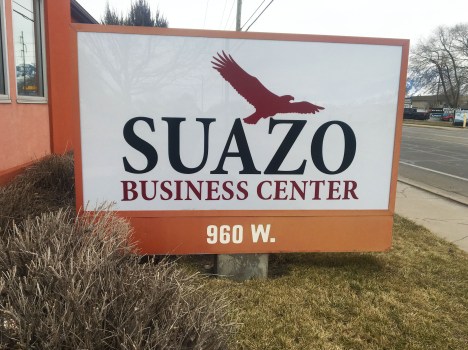
The Suazo Business Center launched operations in 2003. It is a nonprofit organization that assists entrepreneurs from underserved, low- to moderate-income communities start and sustain their businesses. These communities include Hispanic, female, and refugee populations.

Story1Asset

Silvia Castro, executive director of the center, noted the uniqueness of the center. “We’re focused on economic development, which isn’t a typical role for a nonprofit,” she said. The reason the organization is a nonprofit is because its clients can’t typically afford a consulting business.

The center offers tools to communities who don’t usually get them, which can in turn end cycles of poverty. “We don’t do it for them, but we teach them how to do it,” Castro said. “To me, that’s our community impact. It goes beyond economics, job creation, sales dollars. I think that when you have a stable family, you have a stable community, and then you look to give back to that community.”

Castro added, “As a nonprofit, we serve the client. We’re looking for the best way to impact the community to grow. It also gives us more credibility within the Hispanic community, that we’re actually out there to help them instead of taking advantage of them.”

There are a variety of reasons these populations may require the center’s help when conducting their business. It is difficult for them to access capital. Regulations are troublesome to understand and almost always changing.

Compliance is one of the main challenges these entrepreneurs face because there are regulations that the Utah Department of Commerce asks business owners to follow that may not be in other states, and that definitely aren’t in other countries.

Business regulations in Utah can change without notification, and it is necessary to keep up with them in order to be compliant and to stay in business. Antonella Packard, the lead business advisor and teacher at the center, said business regulations can be complex. “It’s always going to feel like a stink bomb being dropped in the middle of a room because it’s like ‘Oh, really? I didn’t know that I wasn’t complying, what do I do now?’ Don’t worry, we can help.”

The Suazo Business Center offers a variety of services. It offers six-month-long trainings with either a startup or growth track and one-time workshops that focus on specific topics. The center’s business financing will assist those looking for loans or grants.

The center also does one-on-one business advising where clients are able to have their specific concerns reviewed. These sessions help immigrants and refugees understand how entrepreneurship works in this country. Castro said, “Navigating this government regulation can already be rough. Imagine English is your second language.”

The Suazo Business Center is not the only organization in Utah that is dedicated to helping Hispanic entrepreneurs. The Utah Hispanic Chamber of Commerce is a network of entrepreneurs who seek to increase their business opportunities by providing trainings, scholarships, and market research.

UHCC provides networking avenues, while the center works more on business development. “Our focus is different,” Castro said. “We want to make sure that they (entrepreneurs) have an up and running business first, so our priorities are a little different.”

Alex Guzman, president and CEO of the chamber, said about the center, “We have a very nice and good relationship. We should collaborate and make it a bit better, but in reality, we kind of compete. So rather than help my colleague grow, I’m a little bit selfish. But in business, it helps to be selfish. I’d rather keep that customer for the chamber.”

No matter what organization provides these entrepreneurs with resources to help their businesses grow, it is crucial that it is happening at all. Castro said, “When we talk about the Latino community, it’s always in a negative light. Yet what we see here day in and day out, it’s the things that really should be more out in the public.”

Moki’s Hawaiian Grill offers a taste of Hawaiian and Pacific Islander food in Salt Lake City

Story and slideshow by GEORGE W. KOUNALIS

Moki’s Hawaiian Grill brings the food and atmosphere of Hawaii to Taylorsville, Utah, from the 808 to the 801. Located right next to an Indian market and a True Value hardware store, the restaurant’s bright yellow sign sticks out as one drives by on Redwood Road.

The atmosphere of the restaurant is laid back and family-oriented. Family is a cornerstone of many Pacific Islander cultures, and Moki’s is able to make many customers feel like they’re part of the family.

Bele Tukuafu, 19, has been working at Moki’s for six months.

“My uncle owns the restaurant,” she said. “My uncle’s sister started the restaurant in 2002, and he took it over.”

Tukuafu said the Moki’s in Utah is the first of two locations, with the second restaurant located in Mesa, Arizona.

“We try to make simple, good Hawaiian food,” she said.

The food is simple and basic, but explosive with flavor. It is a tour of the Hawaiian Islands and many other Pacific Islander cultures.

Each plate comes with a choice of meat; two mounds of white rice; a Hawaiian salad consisting of chicken, cabbage and rice noodles with a house dressing. The flavors of each respective item had a story.

Kristian Naone of Honolulu was at the restaurant with Ted Camper, a University of Utah student from Chicago. Growing up in Honolulu with Hawaiian cuisine, Naone had a lot to say about the food.

Naone ordered the chicken katsu plate. Katsu is very similar to the fried chicken many Chinese restaurants make prior to coating it with a sweet sauce.

“It’s a dish that one could eat a lot of without getting full too fast and is complemented by the macaroni salad that Moki’s makes,” he said.

“That’d be good on a sandwich, it’s real crispy,” Camper said about Naone’s order. Both diners offered the writer a piece of each respective dish.

Camper ordered the teriyaki beef. Moki’s dish is more authentic than anything one can get at Rumbi Island Grill, Naone said. The teriyaki beef at Moki’s is marinated prior to being cooked, unlike many other restaurants’ interpretation of teriyaki where a sauce is coated on the meat after cooking.

The marinade reminds one of Korean bulgogi, a dish that consists of thin sliced marinated beef that’s been grilled.

“Modern Hawaiian food is a culmination of multiple ethnic foods,” Naone said.

“It’s because of the sugar plantations back in the day,” he said. “There were a lot of different cultures from Asia that were living with each other, but had no way to communicate with each other, except using food.”

“Prior to colonization,” he added, “Hawaiian food was simple. Taro was the big starch for people. It was the potato for the islands.” Colonization had brought problems with it, such as the overthrow of the Hawaiian monarchy in 1893, but also created a fusion of food.

The Spam musubi is an example of this. The dish is comprised of a piece of cooked Spam covered in teriyaki sauce, put in rice that was pressed with a musubi press, then wrapped in seaweed.

“Spam is a big part of Hawaiian cuisine,” Naone said. World War II “created a lot of meat shortages on the islands, but Spam was abundant and easy to access and quickly became part of the cuisine.”

Lokomokos are also a popular Hawaiian dish, he said. “We call it surfer food because it’s simple to make, but hearty and gives you the energy to go out and surf all day.” Lokomokos consist of rice, brown gravy, hamburger patty and egg. The meal is served with a side of macaroni salad.

The theme of this fusion of cultures is very apparent with the kalua pork and kalbi ribs. Hawaii’s history can be told by its cuisine.

Naone said, “Kalua pork is made in a slow cooker. You put your pork and cabbage in and let it cook. The cabbage absorbs the juices and turns almost translucent, but is filled with the pork flavor.”

One bite into the kalua pork shows the flavor of the seasoning salt used. The pork has the consistency of almost melting in one’s mouth.

“The cabbage in this dish almost acts like noodles,” Naone said. While eating the pork, one has to mix it with the cabbage at the same time to make sure that all the juice is eaten.

The kalbi ribs are a dish very similar to Korean BBQ short ribs. “You have to make sure to eat all the meat around the bone,” Naone instructed. “Be sure to bite around the bone to get the sinew as well.”

The kalbi ribs at Moki’s explode with the flavor of the marinade and the cooking technique used. The smell of the marinade prior to taking a bite builds the flavor as one takes a bite of it. The flavor is a rich experience of sweet and smoke along with the fat melting in one’s mouth. It is similar to eating meat candy.

“There was a place across the street of my high school that offered comfy memories,” Naone said. “They’d serve kalua pork, rice, chicken katsu, all the comfort foods were there. This was the food we would have served in school as well. Katsu, rice, kalua pork. This is local food to me.” 

The Hawaiian salad offered a mix of sweet and salty flavors that pair well. The sweetness of the vinaigrette against the crunch and saltiness of the rice noodles offered an equilibrium that made the dish a good go-to in between the kalua pork and kalbi ribs.

The rice at Moki’s is served in two big mounds, topped with black sesame seeds, and can be mixed with the restaurant’s own rice sauce. The sauce offers a flavor similar to the Filipino condiment toyomansi, which is a mix of soy sauce with lime juice.

To finish the massive lunch, the two placed an order for malasadas, mango otai and a pineapple split.

The malasadas are very similar to a donut, but not as dense. “This is food you would get at a carnival,” Naone said. Malasadas are covered in semi-wet granulated sugar with a very crunchy outside, but a warm doughy inside.

Camper said, “The best part about the malasadas is they’re not as floury and you don’t have to drink a sip of something after every bite.”

Naone pointed out, “It’s very important that they use granulated sugar to coat the malasadas.” He also said that the way the granules stick to the outside surface of the malasada creates the texture necessary when one eats malasadas. “Usually when you order these back home, they give it to you in a brown paper bag and you just eat it straight out of the bag.”

For the pineapple split, a pineapple is cut in half and served with Dole Whip, whipped cream, and strawberries on top. The quality of Moki’s Dole Whip, a soft serve pineapple-flavored frozen dessert, is very similar to the Dole Whip served at Disneyland.

“When my family came to California for the first time, we went to Disneyland,” Naone said. “We saw the line for the Dole Whip and I was just thinking to myself that I can get this anytime I want at the Dole Plantation.”

The mango otai is one of Moki’s non-Hawaiian dishes that shows the Tongan roots of the Tukuafu family. Naone said, “Otai isn’t necessarily a Hawaiian drink, but it’s still present in Hawaii.” The otai consists of shredded mango, coconut cream, sugar and mango juice. Naone pointed out that the use of a boba tea straw is important for this drink because of the shredded mango.

Camper said, “There’s nothing like this in the Chicagoland area. Pacific Islander culture feels like it’s missing in Chicago.”

Salt Lake City’s Pacific Islander community is big. According to the Salt Lake Tribune, Utah is home to one out of every four Tongans who live in the United States.  

Moki’s also offers a Polynesian plate. “The plate has samples of Tongan, Fijian and Samoan food,” Tukuafu said. The restaurant’s mixing of Pacific Islander cuisine offers Utahns a unique chance to get an authentic taste of these cultures. “We just try to make it as close to home as we can,” she said.

Hawaii’s history is marked by colonialism, the sugar plantations and the impact of World War II. The islands’ story is not only told through what’s been recorded but also through its cuisine. The use of Spam, teriyaki and lokomokos tell Hawaii’s post-colonial history through food. Moki’s is a testament to that history by serving its cuisine.

[Editor’s Note: Salt Lake City’s growing demand for Hawaiian and Polynesian food was the subject of a recent New York Times article. Reporter Priya Krishna focused on one local chain, Mo’ Bettahs, owned by brothers Kalani and Kimo Mack.]

This slideshow requires JavaScript.

Business group leads minority members of the Utah community

Slideshow and story by WOO SANG KIM

Salt Lake City Pacific Island Business Alliance (SLCPIBA) opens the door for minorities by giving people networking and mentorship chances.

Tracy Altman, manager of government programs at the University of Utah Health Plans, said the business alliance connect Pacific Islanders and the rest of minority members to this community. In short, SLCPIBA bridges communities in finance, business, retail, service, real estate, mortgage, nonprofits, government entities, healthcare, insurance and food service.

Altman also said training, learning, podcasting and profiting are the goals of this group. The members exchange employment chances, startup ideas and interviewing tricks with each other. Altman said mentoring happens too.

“Companies get together to help new organizations become popular and stronger and to access the mayor of Salt Lake City and Salt Lake County. They teach skills for small business owners and find jobs for refugee groups,” Altman said.

Pioneer Rugby 7s, a rugby tournament for men, women, and youths of all ages, was sponsored by this group to distribute 600-1,000 T-shirts. “It teaches people how to get along and work as a group. It also helps to build character and teach kids to learn how to follow through an example. It helps the underserved community,” Altman said.

The tournament also hosts an afterschool program. “Children with autism talks to us to play rugby. It’s a success story because we show them that the work can be done. We sponsor more opportunities than just handing out T-shirts,” Altman said.

The group typically meets from 8-9 a.m. on the first Thursday of each month at different locations. One meeting took place at Oish Barbershop at 4300 3500 South in West Valley City. “We plan the event, conduct the meetings and facilitate the business. It is a community locale where people come out to hang out. They have pool tables and a lounge. People go there and just relax,” Altman said.

Susie Feltch-Malohifo’ou, executive director of Pacific Island Knowledge 2 Action Resources (PIK2AR), and Agnes Lomu-Penitani, employer coordinator at the Refugee Services Office and secretary of PIK2AR, created this group in 2016. Lomu-Penitani said it serves to teach blue-and white-collar workers available resources and services of many departments.

Lomu-Penitani connects refugees to possible employers. “I focus specifically on employers willing to partner with us in helping refugees with transportation, culture and English.”

However, this friendship is not for everyone. “We look for something else. We look for employers who give up their time to contribute to the community and people. If not, the business alliance is not for you,” Lomu-Penitani said.

Altman said four types of membership exist: volunteer, emerging, enterprise, and enterprise plus. Emerging is $195, enterprise is $295 and enterprise plus is $495. There are about 30 members.

SLCPIBA is divided into groups. “African-American and Hispanic chambers are focused more on generating profits, but we are focused in education. We look to recruit those who want to give back to the community,” Lomu-Penitani said.

Puanani Mateaki, a substitute teacher at Granite School District and Salt Lake City School District, connects with those in her field. She said she plans to speak to a real estate broker because his team has an opening. She is interested in working in Park City markets, so her appointments are based in that area.

Mateaki also gained a lot through participating. “A conference channeled me to meet Mitt Romney and a wide variety of people. Real estate is all about contacts. Increasing the contact and networking has been a great help,” Mateaki said.

Other members gained, too. “I got connected to businesses through our department. I helped those in power to connect to refugees and to get refugees hired,” Lomu-Penitani said.

SLCPIBA even created an online shopping network. “We connected a woman who sells jewelry to online shopping center. She gathered a lot of customers,” Lomu-Penitani said.

The organization offers free training in many fields. “We offer free photos, business cards, and trainings that cost thousands of dollars. We also offer access to the city council and national entity representatives,” Altman said.

The group, however, is still setting up and has imperfections. “I think that the weakness is getting more memberships and not having an establishment of our own. The problem is all of us work. We have full-time jobs. It’s hard to juggle regular jobs and family lives continually so not having an office is negative. It is something we should work on. Signing up people to be a member is the most difficult part,” Lomu-Penitani said.

Feltch-Malohifo’ou tries to set up a system. “Susie sends out emails inquiring people to work for us. She makes sure that the organization is working by sending out surveys to make sure people get something out from us,” Altman said.

The members are fond of the organization. “This group is unique and positive. It doesn’t matter what else is going on. This is a way for people to get together, no pressure, in the business community. It’s really positive,” Altman said.

Mateaki commented, “I love it so far.”

A strong, interdependent atmosphere creates a synergy overall. “You come in, give hugs, different from handshakes. Culturally we hug or kiss on cheeks when we meet someone for the first time,” Lomu-Penitani said.

This slideshow requires JavaScript.


Utah restaurants provide traditional Hawaiian food

Story and photos by SHAELYN BARBER

The traditional Hawaiian plate lunch is a rich fusion of foods from many countries. When Hawaii’s pineapple and sugarcane industry began people came from all over the world to work on the farms, and they brought a variety of cultural foods with them. When workers took their lunch break they shared their food with each other, and the Hawaiian plate was born.

Keni Aikau, the owner of The Hungry Hawaiian, and Masa Tukuafu, the owner of Moki’s Hawaiian Grill, are two men who brought this tradition to Utah with their restaurants.

The Hungry Hawaiian


The Hungry Hawaiian is a hidden gem. Tucked away in an unassuming strip mall at 1492 S. 800 West in Woods Cross, the tiny restaurant packs a punch with its full-flavored meat plate.

“For us, food is the other emotion, you know? You’ve got happy, sad, food,” Aikau says.
He was born in Hawaii and raised in Utah, and his childhood was filled with food.

“At a very young age we started learning and we just cooked. Everything we did was based around food,” Aikau says. He began learning at family luaus and celebrations. The young children in the family would carry out simple tasks, and as they got older they became more involved in the process of making food.

In 1978, Aikau’s father opened the original Hungry Hawaiian restaurant in Provo, Utah. It didn’t last long. Despite the popularity of the restaurant, it ran into financial difficulty and was forced to go out of business. He was never able to re-open his beloved restaurant.

But Aikau’s love for food led him to pursue a culinary education at Western Culinary Institute, now called Le Cordon Bleu, in Portland, Oregon. He brought his traditional food with him.

“You can’t tell me that Spam isn’t a meat!” Aikau exclaimed. Spam, though popular in Hawaiian cuisine, comes with a negative stigma on the mainland. His colleagues at Western Culinary Institute scoffed at the canned meat. That is, until Aikau gave his classmate a Spam and egg sandwich for breakfast. He ate the whole thing, and part of Aikau’s as well.

After his father’s death in 2010, Aikau returned to carry out his father’s dream himself. He modified his father’s original recipes and on June 23, 2017, the restaurant opened once again — this time in Woods Cross, north of Salt Lake City.

His goal was to keep the menu as simple as possible. Each plate comes with two scoops of white rice, a scoop of macaroni salad, and a choice of beef, chicken or pork.

“We just keep hearing how good it is from everyone around us,” Michelle Benedict says. She was drawn to the restaurant for the first time after hearing about the food from her neighbors.

“I just adore Hawaiian food,” Kristin Yee says with a laugh. “I know it’s rich so I have to be careful how much I come.” She has been a regular at the restaurant since its beginning. She was initially interested when she noticed Aikau’s children on the corner holding signs during the first week they were open.

Yee loves local food places but says, “It’s not just support, it’s really good. So, you’re getting the benefit too.”

Moki’s Hawaiian Grill


From the minute you step into Moki’s Hawaiian Grill, the warm smell of Hawaiian barbeque greets your nose. Mellow ukulele music hovers underneath the friendly chatter of customers, and the staff greet you with a smile from behind the counter.

“Food is what brings people together,” Masa Tukuafu says. He started Moki’s in 2002 and now owns two restaurants: one in Mesa, Arizona, and one located at 4836 S. Redwood Road in Taylorsville.

“In the beginning I just wanted to burn the place down,” Tukuafu says. “And, as time goes, you figure things out. So, you learn from your trials and you just keep going at it.”
Despite his trials, Tukuafu says the biggest benefit of owning Moki’s Hawaiian Grill is being able to provide for his children and his family.

“Being a first-generation here and struggling all the way through school and graduating from the University [of Utah], it was a challenge, and I didn’t want my kids to do that,” Tukuafu says.

Tukuafu is half Tongan and half Samoan. Traditional Polynesian food is costly to make, so he chose to run a Hawaiian restaurant instead. The ingredients for that cuisine are much easier and cheaper to find, and far more accessible than those required for Polynesian food.

“We wanted to provide something that was more for the majority instead of the minority,” Tukuafu says. He places an emphasis on health at his restaurant, altering traditional cooking methods to reduce fat and grease by using an open broiler for the restaurant’s meat.

“I heard about Moki’s because they’re one of the only places that sells musubi and I love musubi,” says customer Faitele Afamasaga. Spam musubi consists of a hunk of grilled spam and a block of rice wrapped in seaweed.

Afamasaga is a frequent visitor and usually comes for a cone of Moki’s ever-popular Dole whip ice cream.

“We like the cultural food from Hawai’i,” says Jennifer Selvidge, a first-time customer with her husband. She drives past Moki’s almost every day for work and wanted to try it.
“Everyone that’s had Moki’s or the style seemed to enjoy it and go back,” Selvidge says.

“Food is love” at the Pacific Seas Restaurant and Market in Salt Lake City

Story and photos by SHEHERAZADA HAMEED

IMG_1613V2

The entrance of the Pacific Seas Restaurant and Market, facing Redwood Road.

According to eua-island-tonga.com, living on the island of Tonga doesn’t mean all the food comes from the sea. The traditional cuisine of the beautiful tropical island consists of two main categories — “food from the sea” and “food from the land.”

The Pacific Seas Restaurant and Market makes it possible to experience Tongan flavors here in Utah. The restaurant is located at 1151 S Redwood Road in Glendale, a neighborhood not far from downtown Salt Lake City.

Family owned and operated for more than 28 years, the restaurant is a popular location for Tongans and other Polynesians to dine. The atmosphere is casual and friendly and pays a large tribute to Tongan athletes. Framed photos of football and rugby players line the walls of the dining room.

The aromas of cooking meat and chicken curry awaken a hunger in the shoppers who come to the market to purchase items such as canned coconut cream, long rice, mackerel fish and corned beef. People often complete their shopping and stay for a meal or a take out.

The kitchen and the counter are run by the family members and overseen by David Lavulo. He is recognizable from the framed newspaper articles that hang on the wall. In one of the articles, David and Leti Lavulo are pictured wearing Mormon missionary badges. In another picture, Lavulo is next to Kalani Sitake, the head coach of Brigham Young University’s football team.

Lavulo left Tonga in 1968 to study in Fiji. A year later he moved to the United States and settled in San Francisco, where he married his wife Leti Lavulo. After five years, they moved to Utah. He said they moved to Salt Lake City because they liked the slower paced lifestyle.

After working in construction and other jobs, he decided it was time to start his own business as a way to serve the local Pacific Islander community.

Lavulo said the restaurant serves almost the same food as in the American cuisine, especially the types of meats. Pork chops, sausage, lamb ribs, chicken curry, fried fish and raw fish are among the menu items. The one thing that distinguishes them is the use of different vegetables.

IMG_1610v2

Lavulo’s open kitchen at the restaurant.

The favorable climate, soil, rainfall and sunshine contributes to the growth of many fruits and vegetables, typical for the Pacific Islands, according to eua-island-tonga.com. 

Taro is a vegetable that grows under the ground. While it is growing, the leaves can be cut and used as greens. Lavulo said they are used instead of spinach.

Another typical root vegetable for the Pacific Islanders is the sweet potato, also called kumara. There are 77 different varieties. “I think you have seen some of those sweet potatoes … not the very soft ones, not the orange ones, but we have kind of white and almost green,” he said.

Another significant item on the menu is the green banana. “It is the remedy to the people in the Pacific that have diabetes,” he said.

IMG_1596v2

David Lavulo shows the green bananas out of his refrigerated walk-in storage.

The animal protein on the menu comes from the variety of fish, chicken, lamb, pork and beef. Although these are relatively lean options, Lavulo reduces calories by healthy cooking. He wraps meats in taro leaves, adds coconut milk and seasoning, then steams the dish. “It is really tasty,” he said.

The signature dish, which is Lavulo’s favorite, is the Rainbow Sushi. It is similar to the Japanese sushi and is prepared with tuna, mahi-mahi, snapper, mixed with coconut milk, tomatoes, onions and cucumber. “All the Polynesian likes to eat fish,” he said, smiling. He opened the walk-in refrigerator and showed boxes of fish from Taiwan.

Lavulo said they cook everything from scratch daily. He took a visitor on a tour of his kitchen. Everything from the ceiling to the floor is spotless. Containers are labeled and vegetables are fresh. He imports his produce (taro, green bananas and yams) from Costa Rica.

“The flavors of the yams from there are different,” he said. He buys his lamb from New Zealand. “We don’t eat the lamb over here, it is not tasty. We also import the taro leaves from Hawaii,” Lavulo added.

To the right of the open kitchen are chafing dishes with steaming side options of taro, yams, yuca and green bananas. The Pacific Seas Restaurant and Market kitchen staff are dedicated to serving fresh meals. The restaurant is open from 11 a.m. to 7 p.m., but at 5 p.m. they stop cooking. “We don’t want the leftovers,” Lavulo said.

Unique beverage options are available. Otai is a beverage made of mango, coconut and sugar; it is a traditional drink made fresh daily at the restaurant.

Lavulo recently visited Tonga and said he was amazed by how much the island has been developed since the last time he was there, 11 years ago. When he first left his homeland, there were still houses made of coconut fronds and today there are modern multistory buildings. ”The [Mormon] Temple was the most beautiful building,” he said.

While Lavulo shares his memories of his trip to Tonga, four family members cook and serve to customers who wait in line to purchase lunch.

On the north wall, there are frames of Tongan beauties and pageant queens. One of Lavulo’s five daughters, Anamarie Lavulo Havea, discussed the female beauty standards in Tonga. The heavier-set women are found to be beautiful. Thin women are considered unattractive. But, she said, when women move to the U.S. they consume a lot of junk food and become even heavier.

Tongan food, however, is particularly wholesome and healthy, because the main ingredients are fruit, vegetables and lean proteins.

Havea is the youngest of Lavulo’s five daughters. She is married and already has children of her own. She has worked in the family business since she was very young. She and her siblings ran the restaurant while their parents served an LDS mission in Papua New Guinea in 2014. Now Havea cooks. On a typical day, she said, 100 to 150 patrons dine at the restaurant. As many as 250 meals are served on a busy day.

IMG_1609v2

Anamarie Lavulo Havea and her nephews work behind the counter, while David Lavulo is overseeing the restaurant.

There is a large poster with an autograph from Will Tukuafu, a Tongan player, from Salt Lake City, who played for the Seattle Seahawks with number 46. His message is “To Pacific Seas, thank you for the great food and continued support for the community.”

Havea added, “This is that food, that you would find in the South Pacific and is what a lot of our NFL players eat.”

According to Susi Feltch-Malohifo’ou, the executive director of Pacific Islanders Knowledge 2 Action Resources (PIK2AR), food in the Pacific Island is related to family prestige and prosperity. She said, “People with more weight, and why we are overweight, signifies that your family has money to feed you. If you are thin that means your family is poor, and there is no food to feed you.”

The Pacific Seas Restaurant and Market is where Pacific Islanders meet for an authentically cooked food and mutual support. Customers seem to be regulars because they know each other and the Lavulo family. The sound from the football game on TV is mixed with lively conversations in the native language. The large pots of steaming taro leaves and cooking meat fill in the dining room with aromas.

For them, the peaceful islanders, Feltch-Malohifo’ou, said, “Food is love in the Pacific Islands culture, and it shows everything with food and service.”


Women of the World: a safe haven for Salt Lake City’s refugee and immigrant women.

Story, photos and slideshow by DEVON ALEXANDER BROWN

Thanks to the steadily rising influx of technology companies, the Salt Lake City metropolitan area is becoming affectionately known as Silicon Slopes, a burgeoning parallel to California’s Silicon Valley.

But it wasn’t career advancement opportunities that brought Samira Harnish, a former semiconductor engineer for Micron Technology Inc., back to Utah. It was the chance to make a difference and fill a necessary void.

IMG_5587

Samira Harnish standing in her office at Women of the World, located at 3347 S. Main St.

Harnish immigrated to the United States from Baghdad, Iraq, in the late 1970s. She studied engineering at Utah State University, but frequently suffered discrimination due to her race and gender. She also endured depression because she felt isolated in her new community and found it difficult to express her feelings. The need for female advocacy and empowerment drove her to establish Women of the World, a nonprofit organization based in Salt Lake City, in 2010.

Harnish knew from an early age that she wanted to help others. As a result she’s amassed over two decades of volunteer experience and before founding Women of the World, she served as a medical interpreter for local organizations like Catholic Community Services, the International Rescue Committee, the Huntsman Cancer Institute and the Refugee and Immigrant Center – Asian Association of Utah.

But it wasn’t until her stint as an interpreter that she came to realize the true wants and desires of refugee and immigrant women.

“I actually listened to them to know what they want,” Harnish said. “They say, ‘I wish we had a woman that could hear us and guide us.’ When you are foreign in a country you don’t know anything. You need someone to guide you and to give you advice.”

And as she listened to the desires of refugee women from disparate cultural backgrounds, Harnish said they came to the same conclusion: they wanted a space of their own. Where they could freely share their concerns, interests and dreams without being overshadowed by the men in their lives.

Although Harnish stepped up to meet their needs, for a while she was alone in her efforts. For five years she operated without an office or case managers, simply visiting refugee homes, gathering contacts and securing much needed donations.

Salt Lake City is the nation’s second largest resettlement site for refugee women. It also has the largest proportion of single mothers and women-at-risk of any resettlement community. Four out of five refugees are women and many are survivors of teen marriage, domestic violence and rape. Once resettled they must juggle the effects of these traumas with unique economic and social challenges.

Yet, until Harnish founded Women of the World, there was no local organization dedicated to assisting such a notable demographic. And the women are grateful.

IMG_5598

Thank you letters displayed in the Women of the World office.

Apiel Kuot, a refugee from South Sudan, is one of these women. She said she was stressed and scared when arriving in Utah in the fall of 2016, but Women of the World helped her with winter clothing, a television and other essential household goods. She also learned to start thinking positively.

“I can’t count the things they’ve helped me with because there are so many things I have received from them,” Kuot said in a telephone interview. “And they give me encouragement which is much better than anything else someone can give.”

Now a year later, she is confident and self-reliant and is planning to earn a social work degree.

“There are some women who are at a camp that will soon be in this place, but they don’t know where to go with their issues,” Kuot said.  “I trust Samira and Women of the World and I will tell them because they (WoW) always give me positive things, not negative things.”

The Women of the World office, located at 3347 S. Main St., is considered a second home by women like Kuot. Women hailing from countries like Iraq, Nepal, Myanmar, Iran, Rwanda, Somalia and Uganda come there for help navigating community resources and often engage with one another over hot tea and desserts, sharpening their conversational English skills in a pressure-free setting. Most of the women learn of Women of the World through word of mouth.

“We love to warm everybody’s heart,” Harnish said, while preparing a cup of hibiscus tea. “I love the way everybody comes in here and feels comfortable. Some of them that wear hijab, they take it off because they know the windows are tinted and there are no men so they feel very secure.”

Women of the World seeks to empower women by promoting self-reliance through service, education and economic development programs. As a nonprofit, Women of the World operates without government funding, instead relying on charitable donations and an annual fundraiser held the day after International Women’s Day. Harnish says she prefers to operate without federal assistance because it allows her to tailor Women of the World’s services without worry of a pushed agenda.

“When the government gives you the money, they always tell you to go that way or this way, you know, their way,” Harnish said. “I’m here to listen to them (the women) and do whatever they ask.”

Harnish and the case managers she employs work to help women create resumes, tighten interviewing and job skills, plan for entrepreneurship and acquire mental health and legal assistance. More importantly, they help instill in participants a deeply rooted sense of self-confidence through their practical English program. Launched as a two-month pilot program for six women with no English skills, by its conclusion all six women were able to gain employment.

When discussing self-reliance, terms like education and employment tend to rank paramount. While earning potential is indubitably connected to the ability to provide for oneself and family, Women of the World knows it is only one aspect and it differs by individual.

McKenzie Cantlon, a case manager at Women of the World, worked with refugees in Buffalo, New York, and the United Kingdom before relocating to the Salt Lake Valley. She says the economic and social support refugees receive has been phenomenal in all areas, but she’s noticed a problematic pattern: proximity to services.

In Utah, voluntary agency affiliates like Catholic Community Services and the International Rescue Committee are based in Salt Lake City. That means refugees located farther north or south do not have the same access to essential resources. For this reason, Women of the World stresses self-reliance above all else.

“For some women self-reliance might be having the courage to leave the house and go grocery shopping or taking their children to the park,” Cantlon said in an email interview. “For other women this might mean going to school, getting a job and supporting their children without the help of others. Women of the World works to promote every kind of self-reliance.”

Courtney Bullard began working as a case manager for Women of the World in the summer of 2016. She lived in the Middle East for five years and attended graduate school in London. Bullard said she’s seen tremendous success from refugees working with Women of the World, but true economic independence isn’t always an option. Regardless, self-confidence is the first step to its path.

“There are a lot of barriers that refugees face upon coming to the USA because of how the resettlement process is set up,” Bullard said in an email interview. “We have women who might always rely on government assistance because of their various situations, however, when they advocate for themselves whether it might be asking for higher pay at work or looking the cashier at the grocery store in the eye at the store — I consider them on their way to self reliance.”

Regardless of definition self-reliance does not manifest overnight. Rather, it’s often an arduous journey that requires discipline and dedication. For Kaltum Mohamed, a Sudanese refugee, it’s taken four years to reach her dream of opening a restaurant.

IMG_5611

Kaltum Mohamed standing in front of her food truck “Mother of All.”

Mohamed was resettled in 2013 after years of moving between refugee camps. After receiving assistance from the IRC for 10 months, she met Samira Harnish. Through their shared Arabic language, they quickly formed a powerful friendship.

Harnish said Mohamed approached her early on with the desire to open a restaurant — refusing to allow any obstacles to deter her confidence. However, after attending a few practical English classes she stopped showing up.

“The last day she got really upset and said she just wants to find someone to give her a loan,” Harnish said. “I told her, ‘No one is going to give you a loan unless you finish that program. You go in there and finish.’”

So Mohamed persisted. She now operates Mother of All, a food truck that can be found at The Black Diamond Store and The Front Climbing Club in Salt Lake City.

“They (WoW) help me too much,” Mohamed said reflectively in her South Salt Lake apartment. “And I always tell everyone, don’t give up on the things you need. Continue doing it and face everything with confidence.”

To commemorate the successes of refugee women like Mohamed, Women of the World holds an awards banquet and social mixer at the end of every year. In addition to inspirational stories, small ethnic meals are brought and shared by members of the community and musical entertainment is provided.

This year’s event will be held Dec. 9, 2017, from 2-5 p.m. at the Salt Lake County South Building Atrium on 2100 S. State St. It is Women of the World’s 7th Annual Celebration for women who achieve their goals and is free and open to the public.


This slideshow requires JavaScript.