Artist exposed: What does it take to make it in Utah?

Story and photo by PEYTON M. DALLEY

While blue skies and daunting summers may claim Utah’s geography, the passion driven from local artists shines brighter than any summer day could.

From public art outside to Saturday morning farmers markets, local artists can be seen from every part of the state, enlightening audiences from Saint George to Logan.

What exactly does it take to be a successful artist in this state? Utah has world-renowned programs at the University of Utah and Brigham Young University that focus on art-related programs, and platforms like the Utah Cultural Alliance that allow local artists to be showcased.

However, does education play a role in the success of the artists that Utah is producing? Or is it the connections made by individuals that create their success?
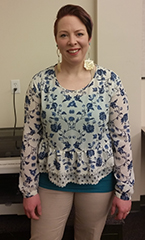
Young-Otterstrom

Crystal Young-Otterstrom

Crystal Young-Otterstrom, executive director of the Utah Cultural Alliance and a noted opera singer, is one example of Utah success. She has been named one of Utah Business Magazine’s “40 under 40″ and boasts an impressive resume that includes performances in Vivace, an opera group based in the Utah area, helping to start the Utah Symphony and founding her own company, Foursight Partners. Young-Otterstrom is an artist who has shown success in the Utah community.

Young-Otterstrom earned a music theory degree from BYU, and completed her master’s degree at Queens College in New York. She credits her success to her knowledge of the field and the skill sets she learned in college. But, she added, “You [also] learn along the way.” Young-Otterstrom currently promotes her own company while serving on the board of several art organizations, including LDS Composers Network.

Young-Otterstrom said connections can help people get from one step to the next. She said she has gained valuable contacts through the wide variety of work she has done with local organizations.

Another success story in the Utah community is Pat Bagley, the editorial cartoonist for the Salt Lake Tribune. He said in a phone interview that he “immersed” himself in the arts community and took history and political science classes. Bagley said “it helps to be exposed to what you want to do.”

Bagley’s work has been featured in Time magazine, the Wall Street Journal and the Washington Post. Bagley, also a  graduate of BYU, has been putting pen to paper at the Tribune since 1979. He said connections are helpful, but skill set is more valuable. He obtained his job at the newspaper based on his portfolio.

While success can be found in the Utah market, what are the necessary steps to get there?

Tanner Forbes aspires to one day make Broadway headlines. Photo courtesy of Tanner Forbes.

Tanner Forbes aspires to one day make Broadway headlines. Photo by Wendy Clymore.

Tanner Forbes, a student at BYU who is triple majoring in the Music Dance Theater Program, is hoping to one day break into the arts field, locally as well as nationally.

“I think there needs to be a balance of talent and connectivity,” Forbes said in an email. “I strongly believe that all talent will eventually make its way to the top, but there’s communities of artists everywhere and you have to immerse yourself in that world in order to expand your success as an artist. But always be trained! Always be trained before you jump into communities of artists. Education works wonders with that.”

Forbes is currently a BYU Young Ambassador. He credits his ambitions to the skill set he has developed in his courses and  through outside training. He also studies the work of individuals such as the late actor Heath Ledger, who died in 2008, for  inspiration.

Forbes is focused on his future and is passionate about his career choice. He hopes to land an audition on Broadway after his training at BYU, and hopes to play a role such as Elder Price in “The Book of Mormon” in New York City.

“I’ve found that Utah is extremely diverse,” Forbes said. “Sure, it’s no New York or [Los Angeles,]  but we have so many different types of people pursuing so many different types of paths, especially in the Salt Lake area. There’s really opportunities for everyone here.”


University of Utah professor and chef collaborate and create ways to spice up their nutrition class

Story and slideshow by SYDNEY BULL

Catch Chef J Looney in action cooking up some of his favorite dishes.

“Follow your bliss,” Chef J Looney said as he lounged next to the fireplace while enjoying a green smoothie.

Looney is a private chef in the Salt Lake area. He caters events and works for the College of Health at the University of Utah as well. He is obsessed with cooking and shares foods from other cultures around the world with a diverse group of students in the Cultural Aspects of Food class, NUTR-3620.

It all started when Looney was a young kid. His father has been in the food service for a very long time and worked with institutional food, in churches, hospitals and schools on a mass scale.

When Looney was 8 years old, his father managed a cafeteria in a church office building in downtown Salt Lake serving between 3,000 and 5,000 meals a day.

Looney said he fell in love with the action in the kitchen and the look of the large stockpots full of chicken noodle soup and the fact that his dad could make so much food for all those people in need.

Once he turned 14 he lied on his application and told his hiring manager that he was 15 so he could be hired as a dishwasher. He went home every night with the stench of grease and dishwater but loved every second of it.

Looney then spent eight to nine more years there working his way up to line cook and then lead cook. He was finally promoted to managing a prime rib and seafood buffet before he decided to leave the food service industry.

Looney said he realized that he was still making minimum wage compared to all of his friends, which swayed him into working for “corporate America” at the Ritz-Carlton Hotel Company in central reservations. He worked there for seven years and traveled to many of its hotels.

He spent the next nine years in UPS management, but when he turned 40 years old he said he felt like something was missing. Looney needed that spark. That is when he decided to go back into the food industry again.

He said his wife was hesitant to let him quit at UPS because the pay in the food industry is low and the hours are long. But Looney insisted it was his passion.

“I just want something more,” Looney said. “I want to do something I am passionate about rather than do something just for a paycheck over and over again. I trusted my gut that it was going to work out.”

Word got out that Looney was getting back into food business. His friend Jason, who owns Point of Sale Retail System, called him up and asked Looney for a list of his top five dream jobs.

Looney said that Jason sent out letters of introduction. That is when Karen Olsen, the owner of the Metropolitan, called Looney and offered him an interview with the restaurant’s head chef. (The Metropolitan used to be the crown jewel of Utah’s fine dining but is no longer open in Salt Lake City.)

However, Looney said he met with the head chef and explained that although he had been out of the food service for 15 years, he cooked consistently throughout that time period and still had a huge love and desire toward it.

He was offered an unpaid shift to see if he was qualified enough to work in its kitchen. Looney, who never attended culinary school, said he walked in with only one knife.

The head chef placed Looney at the salad station, and it wasn’t easy. He said after a whole night of feeling completely stressed and demoralized, the head chef offered him the job as a line cook.

Looney said it was still a bad paying job and had long grueling hours but he used it as an opportunity to learn as much as he possibly could from everyone in the kitchen.

Once the Metropolitan closed, Looney became an executive chef at the Prairie Schooner in Ogden, Utah. At the same time, he also got a call from a friend at the U, who wanted his help teaching a nutrition class focused on ethnic foods.

The class, Cultural Aspects of Food, became extremely popular once word got around on campus that there was a chef cooking food for students. Looney worked with another talented cook, Tahmina Martelly, a chemist and licensed nutritionist who works as a professor at the U

After two and a half semesters, the class expanded to four classes a week and became a significant part of Looney and Martelly’s career. Their teamwork allowed her to spend time in the class teaching the cultural factors of each region while Looney spent time in the lab cooking up different recipes according to those regions.

“Food is like a language,” Martelly said. “Food is a huge part of cultural identity and has a sense of home and helps people connect to a new place and also has a healing effect.”

Martelly’s experience with food hits closer to home than most people in the United States. She is a refugee from Bangladesh and now also works as a program director for after-school tutoring and homework help at the International Refugee Center (IRC). In addition, she teaches a computer class to adult refugees to help them gain experience and find future jobs.

The Cultural Aspects of Food class is important to her because of her experience, knowledge and perspective of different cultures covered in the class. She is in the middle of rewriting the course curriculum because the way she teaches is more personable and relatable than other instructors.

Martelly has done a lot of traveling and has more background with these regions compared to the other instructors. She said she wants to help the department apply knowledge from her experiences and standardize those items compared to just teaching out of the textbook.

“When Chef J and I got together he wasn’t as familiar with the cultural stuff,” Martelly said. “Which is why I did most of the teaching and he did the cooking in the lab. He has a teachable spirit, he talks and cooks at the same time. He is very good at interacting with his students. He is a talented cook but very modest and humble. Most chefs I know have a huge ego. But the more we teach and give background information the more he learns and the more familiar he gets with the recipes and the cultures behind them.”

Chef J Looney found his bliss. So on top of teaching he began cooking for athletes, doctors, families and friends. He said he makes a pretty good living now, to the point where his wife is completely happy and satisfied.

“I started promoting that I can cook meals for individuals and families while also catering events,” he said. “I have a pretty solid client list, about 20 people that I cook for at any given time. On Mondays I go grocery shopping, Tuesday I spend cooking all day and Thursdays and Fridays I spend planning out the meals for the following week. It’s a good gig and the days in between I spend on campus teaching because I want to. That’s basically how I got into the whole personal chef thing and wedding season is coming up so I have a few weddings scheduled for the next six months.”

Looney rarely cooks at people’s houses, he mainly works out of a commissary kitchen on Redwood Road, which gives him plenty of space to prep meals for the week. Around 8 a.m. he and his staff prepare approximately 10 different meals within five hours. Then when completed he and his staff send the coolers off to be delivered to the clients’ door. Typically he makes about five lunches and five dinners per client. However, his bodybuilding clients are a little high-maintenance.

Not in a bad way though, they just require about six smaller meals a day and have a very selective menu to choose from. Because Looney is so familiar with flavoring his meals, it helps bodybuilders spice up their foods without going over their macros, the number of grams of protein, carbohydrates, and fats they consume on a particular day. That is why Looney occasionally offers a Bodybuilder’s Meal Prep Class to demonstrate cooking skills and items that can make their food taste better without sabotaging their physical gains.

Looney is an experienced cook and does his best in social media marketing. But most of his marketing is done by word of mouth because he leaves all of his clients and students feeling not only full and satisfied but also inspired.

Chef J Looney and Tahmina Martelly are a dynamic duo in the classroom and have worked very hard to be successful human beings. They are prime examples of the cliché phrase, “follow your dreams.” But how else can one be truly happy if he or she is not taking risks and living life fully?

“My whole underlying theme to my life thus far is, just do what you love,” Looney said. “I spent 15 years in ‘corporate America’ because I thought I needed a paycheck. And when I really took the leap to follow what I wanted to do made all the difference. And yes I took a lot of risks and it hasn’t been smooth sailing, there’s been some huge learning lessons, a lot of pain, blood, sweat and tears getting there. But I have never been happier in my life. So whatever the price you have to pay to follow your bliss, pay the price. Build your lifestyle around what it is you love doing, not the other way around.”

Webster agrees, the definition of beautiful is YOU

Story and slideshow by SHANNON O’CONNOR

Learn more about how people are impacting lives through positive body image.


Lexie Kite, 29, created the nonprofit organization, Beauty Redefined, with her twin sister Lindsay Kite. The idea to start the motivational program was sparked in their media literacy class at Utah State University.

The class opened their eyes to how women are negatively represented in the media. The Kite sisters were angry at how the media transform the public’s idea of what makes a woman beautiful.

“One day my heart started pounding faster and I wanted to spread the word,” Lexie said. Lindsay felt the same way.

They decided to continue their research on body image and the media at the University of Utah and earned PhDs in 2013.

Their doctoral dissertations formed the basis of an empowering visual presentation they have given to “tens of thousands of people across the U.S. since 2009,” according to the website.

“We started through a dinky website, and based on the reviews we realized people were starving for this information,” Lexie said.

Their presentations are a compilation of their research, studies and experiences. “Beauty Redefined teaches audiences to recognize and reject harmful messages about bodies and continuously resist those limiting ideals through the power of body image resilience” according to the website.

Body image resilience is their main promoted message. It is “the ability to combat harmful ideas and bring to light the lies women are told,” Lexie said. The lies that women are just objects and have to look a certain way to be beautiful.

Lexie and Lindsay are passionate and driven to empower women and remind them they are “more than just bodies, more than just something to decorate the world,” Lexie said.

The portrayal of women in the media makes them feel pressured to look a certain way. If women don’t look that way, they may feel negatively about their appearance or get negative critiques from others.

“You’re just fat and ugly and jealous of all the beautiful women,” wrote a woman in an email to the Kite sisters.

“We can use painful experiences as stepping stones and not stumbling blocks,” Lexie said. “We can help provide the skills, resources, and tools to do that.”

Lexie and Lindsay Kite will not stand for women being objectified. They are influencing people around the world to have a positive outlook on body image through their blog, website and presentations.

Another program that promotes positive body image is a University of Utah club called SPEAK (Students Promoting Eating Disorder Awareness and Knowledge). SPEAK chapters are spreading to other universities, including George Washington University and the University of Minnesota. Each chapter has about 100 members.

Some of the 110 members at the U are people who have experienced an eating disorder or a body image issue. Other members, like Jon Junejo, financial director for SPEAK, have not experienced such issues. But they have a passion to educate and help people through their body image struggles.

Members of the U’s SPEAK chapter regularly engage in outreach to elementary schools, high schools, teams and clubs throughout Utah. “The more outreaches we do, the more it becomes evident that our program, and other positive body image programs are worth it,” Junejo said.

Junejo, 21, has been a part of SPEAK since 2013. At first, he joined the club so he could gain public speaking experience. Junejo wasn’t expecting to gain a passion for the importance of positive body image.

“Honestly, after the first outreach I did at Dilworth  Elementary, SPEAK became something much more,” Junejo said. “As I began hearing stories about people’s experiences with the eating disorder epidemic, it became clear to me that I could have a real positive effect on these people.”

SPEAK’s mission is to educate people about the effects from negative body image, body dysmorphia and provide ways to help people struggling with body image.

Body dysmorphia is a “conflict between what you see as an ideal body, compared to what you actually look like,” Junejo said. The disorder can affect people of all ages and may be caused be peer pressure, genes, or culture – including images in the media.

Junejo learned about one result from negative body image, eating disorders. He has not experienced it himself but he has friends who have suffered from anorexia and bulimia.

“Our [SPEAK] goal is to prevent eating disorders in the first place,” Junejo said. “We refer people to treatment centers on an individual case basis.” He added that eating disorders are predominantly emotional issues, but each person has a unique situation. It’s a multidimensional problem that the members of SPEAK are trying to help.

“Who you surround yourself with can dictate how you feel about yourself,” Junejo said. It’s important to have positive people around to overcome negative thoughts. Junejo has been a part of helping people through a struggle that people are scared to talk about.

When people compare themselves to the media, Junejo and the team want them to re-evaluate the source and “think differently about what source is making you feel like you should look a certain way.”

A main source to promote positive body image is through social media.

“They’re [social media sites] great places to get a conversation started with girls and women. We struggle wanting to be a certain way and look like this person, or that person,” said Nicea DeGering, host for “Good Things Utah.” “So when someone says, out loud, ‘just be you, you is good enough’ and it’s said on social media, which is the primary language spoken by young women today, it’s even more of a positive impact.”

DeGering has been a host for “Good Things Utah” for 12 years and graduated in 1995 with her communication, broadcasting degree from Brigham Young University. DeGering is a successful woman, wife and mother to two daughters.

She sees her daughters influenced by the pressure the media have put on women to look a specific way. “It’s something that we talk about in my house on a daily basis,” she said. “When is it OK to just be yourself? The answer should be, every day.”

DeGering didn’t have the same social media issues as her daughters, but she did struggle with her body image growing up. Her peers called her “big” because she was 5 feet 10 inches tall by the time she was in seventh grade.

“Now I’m mad I wasted one minute worrying that I was different,” she said. “Thank heavens there is only one of me, and I want to do me the best I can. Unique needs to be celebrated.”

Beauty Redefined promotes this notion, too: “Reflect on what impact narrow beauty ideals have had on your life and take inventory of the time, money and energy you dedicate to appearance concerns.”

DeGering added, “Looks are the first thing we all see. That’s a fact. And that’s actually OK, as long as you keep looking, as long as you continue to dig deeper beyond that, there is more to everyone. Everyone has their hard times, everyone struggles.”

The media disseminate many unrealistic messages about beauty to women.

“Conversation and awareness are key in making change,” DeGering said. That conversation begins with help from programs like Beauty Redefined and SPEAK, and by influential people like Nicea DeGering.

“Just be you, you is good enough,” DeGering said.

Unstructured past creates stable future

Story and slideshow by LIZ G. ROJAS

You’ve read her story, now meet the woman.


It’s been more than three weeks since Katara Nyberg, office manager for a Utah-based lending company, helped the business relocate from Salt Lake City to its new location in Sandy. Nyberg, who is only 23 years old, not only works as office manager but also as a member of the executive team for the lending company.

Nyberg has been with the company for more than four years. Her responsibilities vary from internally setting up software to directing the client services department.

Her commitment makes her an essential part of the company as she grows, learns and directs its structural organization.

Though Nyberg is in a position where not many young adults find themselves, she credits her success to her unstructured past and how it helped create a strong, secure future.

BEGINNINGS

Nyberg was born in Salt Lake to a 15-year-old girl in the early ’90s. She began her education at Hawthorne Elementary, a school on the outskirts of the city.

There, she remembers, was where everything began.

Nyberg’s first grade teacher had asked her to go outside the classroom with her partner to read a book. Before she went out the teacher started examining her, specifically a scab on her wrist.

She was called to the front office where she saw her 3-year-old brother. Next to him, in handcuffs, sat their mother.

“I went through a lot of court from that time,” Nyberg said.

School administrators were under the impression Nyberg was being neglected and/or abused because of the presumed cigarette burns on her wrist and body. As required by the state of Utah, the school contacted the Department of Child and Family Services.

A police officer escorted the confused and scared little girl from the school. While sitting in the police car she remembers being asked if she was hungry.

“I was so frustrated at the fact that he asked,” Nyberg said.

She didn’t understand why this was happening — why her mother was handcuffed and why she couldn’t be with her.

From what Nyberg remembers, her mother wasn’t guilty of abusing her.

A few weeks before the incident her family had gone camping. While camping, Nyberg said she’d gotten some mosquito bites, including one on her wrist. That bite got infected and that’s what her first grade teacher had seen.

She remembers repeating this to court officials during numerous recorded interviews. This made no difference because in court, her recordings were said to be inaudible.

“One day, they say, if you say yes [your mother abused you], you can see your mom,” Nyberg said.

On her mother’s trial date the judge put Nyberg on the stand and asked if her mother had abused her.

“I looked at my mom and she’s staring right at me and she’s bawling,” said Nyberg. “Because the last thing that I said was ‘yes.’”

She then saw as her mom was handcuffed once again and taken from the courtroom.

Nyberg and her younger brother were also separated and sent to live with different foster parents for two years.

LIFE AFTER COURT

Nyberg was living with foster parents when her paternal grandmother was able to get custody after finding out about the children’s situation.

Once her mother was released, she regained full custody after successfully finishing parenting classes at Valley Mental Health.

Nyberg recalls the transitional period her mother experienced.

“My mother is a great mom, but I think because she went to jail so young that really took a toll on her,” Nyberg said. “She was younger than I am now.”

The family moved to Vernal in 2000 where her environment consisted of addictions and police officers.

Nyberg had to take care of herself and her brother. The adults in her life were in no condition to do so.

At the end of sixth grade Nyberg’s grandmother told the children their father had been released from jail. She offered a trip to Nevada to meet their birth father after many years of not seeing him.

In July 2004, they went to Nevada.

After a few days with him, Nyberg asked when she and her brother would return home. He told her they would remain with him. There was no home to go back to — her mother had been evicted and there was nowhere to go.

Devastated, Nyberg resigned to her fate and lived with her father.

Nevada was her temporary home from 2004 until 2009, when she graduated from Spring Creek High School with a scholarship worth $10,000 for academic achievement. The scholarship was to be used in any university in the state of Nevada.

Nyberg knew she had to move back to Utah to reunite with her mother.

There was nothing in Nevada for her. The only way she could think of getting out of Nevada was to attend school in Utah. She packed her bags and enrolled in Salt Lake City’s Paul Mitchell School of Beauty, beginning her education.

PERSISTENCE AND DEDICATION

Nyberg juggled work and school. She had to commute from Salt Lake City to Draper in order to go to work. Eventually she realized she couldn’t keep on commuting. It was making her late to class every day and she needed a job closer to the school.

She started applying to multiple jobs and came across a small start-up lending company in Salt Lake City. With no previous sales experience, she was hired as a junior funding analyst.

Initially, Jantzen Fugate, the CEO and founder, did not want to hire Nyberg. However, after persistence from the former office manager who saw potential for her development, she was hired.

“I have never been more wrong and more pleased at being wrong,” Fugate said.

Nyberg worked her way up from an entry-level junior sales position to director of client services. As director of client services, she helps ensure the fulfillment of services provided by the company like business plan writing, credit repair, website creation and lender matching.

Describing her experience working in the company Fugate said, “It’s because of her relentlessness to outperform other people.”

Shelby Fielden, a close personal friend and coworker of Nyberg’s, admires her attentiveness in their friendship. When referring to Nyberg’s past, she believes the way she’s overcome her situation has molded her into the person she is now.

“I think it made her a stronger person,” Fielden said.  “She does things on her own, she’s very independent.”

Nyberg is currently in school at Stevens-Henager College working on her business administration degree while simultaneously working as director in the client services department. During the day she works at the company and at night she completes her courses.

“My mom was passionate about me being smart because we were poor, we didn’t have money for college,” Nyberg said. “No one in my family even considered going to college.”

She’s driven by success and motivated by past failure.

“Growing up and being successful is what I was always told to do,” Nyberg said. “’Don’t be like me,’ is what everyone always told me. ‘Be different, be better than me. Make sure you go to school.’”

She sighed when she reflected on how she has dealt with the difficulties in her past.

“What else are you going to do,” Nyberg said. “I love myself, and I love my family, I love it because it’s who I am.”

The Women’s Business Center: A support in the entrepreneurial journey

Story and photos by LIZ G. ROJAS

One of Utah’s best-kept secrets for aspiring entrepreneurs is the Women’s Business Center, located in downtown Salt Lake City within the Chamber offices.

The WBC is a nonprofit organization that is partially funded by the federal government through the Salt Lake City Chamber. Because the center is a 501(c)(3), it is expected to match the funding it receives through fundraising or sponsors.

The Women’s Business Center’s goal and purpose is to help increase the number of women-owned businesses in the state of Utah through consulting, training and networking opportunities.

The center has been operational for 17 years and has a consultant who provides a variety of different services. Services are free to the public and range from helping with business plans and cash flow projections to government consulting.

Former day-care owner Lorena Sierra missed the opportunity to work with the Women’s Business Center.

Lorena Sierra

Lorena Sierra

“I know a lot of times I needed help with grants and I wasn’t able to apply because I had no idea how,” Sierra said. “I wish I would have known of an organization like that [WBC].”

Sierra owned a day-care center in Utah County alongside her business partner for 17 years. In 2012, after her partner sold her half, Sierra ran out of funding options and chose to sell her business.

According to American Express, her center was 1 of 73,000 businesses in Utah that are women-owned, compared to the 9.1 million nationally that are owned by women.

The Small Business Administration defines a woman-owned business as one that is owned at least 51 percent by a woman. In addition, the woman can make independent decisions regarding the business without being undermined by anyone and is responsible for planning the short- and long-term activities.

Ann Marie Thompson- Program Director for the Women's Business Center

Ann Marie Thompson

Ann Marie Thompson, program director for the Women’s Business Center, says there is demand for a woman-oriented organization because there are different stresses for women than there are for men.

Most women are trying to start a business from home or as an addition to full-time responsibilities. They’re driven by flexibility because their first obligation is to their family. The majority of clients who meet with the WBC have these similar backgrounds and priorities.

Evette Alldredge, a local business owner, was guided by the Women’s Business Center and benefited from its services.

In a phone interview, Alldredge said that she arrived at the center with a partial business plan and high hopes. She met once a week for approximately five months with the center to create a business plan and explore all aspects of the planning.

Alldredge was able to present in front of Utah’s Microenterprise Loan Fund and received funding from the nonprofit for her business.

In April 2014, Evette Alldredge’s business, Super Gym Gymnastics, opened its doors.

However, even though the business center does direct its organization toward women, its services are for everyone. Thompson said that 20 percent of the WBC’s clientele are, in fact, men. She said, “We consult with anyone who wants to come.”

The Women’s Business Center has a broad range of connections and partnerships. Some of the partners are the National Association of Women Business Owners, the Utah Microenterprise Loan Fund and the Utah Governor’s Office of Economic Development.

The center also works with the Salt Lake City World Trade Center and Salt Lake Magazine. The WBC refers clients to the World Trade Center if they need help learning how to import and export.

Salt Lake Magazine features the Women in Business section in the September/October issue. The WBC is highlighted in that issue.

Although the center is associated with the Salt Lake City Chamber it is not confined to the Wasatch Front. Thompson said Google Hangout and Skype are frequently used to communicate with clients throughout the state.

According to the Small Business Administration, twice as many women-owned businesses are opened every day, compared to three years ago. However, there are still barriers that haven’t been overcome by women business owners.

One of the barriers is the compensation gap. Even if a woman is the owner of a business, her salary is lower compared to others in her same position.

“Women choose to pay themselves less, not knowing what others are paying themselves,” Thompson said. “Women are also choosing jobs that pay less. ”

American Express reported in 2014 that the goal shouldn’t be to motivate more women to open businesses, but instead to financially support those who are already established and help them expand.

Regardless, the need for the Women’s Business Center in Utah is crucial. As Lorena Sierra said, “We do need a lot of support. We have the desire to have our own businesses but we don’t have a guide.”

The WBC is one of Utah’s best-kept secret support systems for aspiring business owners.

“If it weren’t for the Women’s Business Center I would not be where I am today,” said Evette Alldredge, owner of Super Gym Gymnastics, who continues to work with the center for a business expansion loan. “I am the most happy, successful entrepreneur.”

Salt Lake City library teaches older adults basic technology

Story and photo by STACEY WORSTER

Salt Lake City is known for its large library, which offers many services to the public, including the free rental of thousands of books and the free use of computers, study rooms, wireless internet and more. 

The busy atmosphere at The Salt Lake City Main Library not only allows anyone to enter, but it also offers classes to people who want beginning-level courses on technology.

Courses focus on applications such as: Google Drive, Excel and Word. Other classes teach people how to use the Internet to search for jobs, how to send an email and how to create a proper resume.

Errin Pedersen, adult services manager at the library, said she is passionate about helping the aging community.

“I’m particularly interested in finding ways to serve the aging population in terms of getting them engaged in creative pursuits,” Pedersen said in an email interview. “So in the next year we will start having programming at the library that is geared toward that in particular.”

The people who visit the downtown library at 210 East and 400 South range in age and education level. Each person who walks through the door has different aspirations, Pedersen said.

“You have baby boomers who are just beginning to enter retirement, and then you have seniors in their 80s and 90s,” Pedersen said. “And the needs and interests in that range vary widely, which means we have a lot of opportunities to connect.”

She said the technology instructors help people connect with their world so they don’t get left behind. Computers are now so fundamental to everything we do.

“I think we have well-suited instructors to teach the classes,” Pedersen said in a phone interview. “I think it helps knowing the end goal, that you’re taking someone with very limited technology skills and teaching them things that help them navigate the world around them.”

Pedersen served on Salt Lake City’s Aging in Place Initiative in 2013 and learned a lot about the aging community.

“Serving got me really interested in finding ways to serve the aging population. Also, it really helped open my eyes to the community needs regarding seniors,” Pedersen said in the email. “I want the work I do to be effective in reaching the aging people I’m trying to serve.”

An important aspect of reaching people is knowing where they live. Individuals who live closer to the library are more likely to patronize it.

“I think it’s important to constantly look at the data available to us that tells us what the population we serve looks like, so we can better hone our services to work for everyone,” she said.

Pedersen said the library has seen a rapid increase in attendance of the entry-level computer courses. She said the library is working on offering more classes in the future.

Anne Palmer Peterson, the executive director for the Utah Commission on Aging, said technology can be a barrier for older adults. The world is progressing at an ever-increasing rate and technology is now so fundamental to everything we do.

The award-winning Salt Lake City Main Library holds entry-level technology classes so all can learn computer skills.

The award-winning Salt Lake City Main Library holds entry-level technology classes so all can learn computer skills.

Palmer Peterson earned a master’s degree in public administration from The University of Utah. She focused on barriers and incentives to technology and online course delivery.

“I am very interested in finding out how our libraries can be better equipped as technology centers for people who didn’t grow up digital natives,” she said.

“These are people who are excited about being retired and the life of the mind is something that they are devoted to,” Palmer Peterson said.

Lisa Nelson, the program manager for the regional library for the blind, said in an email, “I think libraries will continue to function as community centers, with programming geared toward users of all ages. The focus is shifting from libraries being repositories of information and knowledge, to being an access point to information outside the walls. So to remain vital, libraries will provide what is most interesting to their users,” she said, “including the type of programming that the community wants. Remaining relevant to the community in this digital age is the biggest challenge for libraries, in my opinion.”

University of Utah’s Veterans Center offers support

Story and photograph by KEITH LAMAR McDONALD

This mural, painted by Derrin Creek (USAF), greets visitors as they come to the Veterans Support Center.

This mural, painted by Derrin Creek (USAF), greets visitors as they come to the Veterans Support Center.

Located on the fourth floor of the A. Ray Olpin Union building is a small office where a close-knit interest group forms. A large detailed painting of an American flag graces the front entrance. Underneath is a bronze statue of a helmet, combat boots and an M-16. On the right side of the office is a row of cabinets adorned with various ranks from the four branches of the military. The staff includes a representative from the library, health and benefits counselors, GI Bill workers and the center’s director. They occupy different offices on the left flank and in the rear, forming a contingent of eight. They are charged with the task of helping the University of Utah’s military veterans improve and enrich themselves by earning a college degree.

The Veterans Support Center helps former soldiers, airmen, seamen and marines with transitioning from a military lifestyle to that of a citizen and student, which can be a difficult task. The slogan on its website is “Boots to Utes” and it specializes in equipping veterans at the U with the tools they need to graduate.

Former servicewomen and -men lounge on couches, study, get information about their GI Bill and benefits and talk about any and every subject — but mostly their service to their country. The 2,100-square-foot office space features free printing and coffee, plush seating, a computer lab, a meeting room and a place for student veterans to unwind, all in the hopes of making veterans’ transition to the U as smooth as possible.

“The biggest hurdles in the way of assimilation are the lack of structure, less traveling, and dealing with reduced responsibilities,” said Air Force Master Sgt. George Sanon in a phone interview. Sanon is an active member of the Veterans Support Center at Prairie State University in Chicago Heights and received his first college degree after the age of 50.

Roger L. Perkins, a former army major and the director of the U’s  Veterans Support Center, said patrons of the center are normally in their mid-20s. However, some of his clients are well beyond their 60th birthday.

Veterans need the same things as any other student, such as information on what classes to take and how or where to resolve issues. The military is more organized than the civilian world when it comes to “redress of grievances,” Perkins said. In many cases the Veterans Support Center acts as an advocate for students who have troubles on campus with issues such as financial aid, GI Bill or the VA hospital. 

Some veterans, like Mark Bean, are prospering in school after a full military career.

Bean, 66, is a doctoral student in international relations who teaches political science at the U. At 6 feet 2 inches tall, he is slim and has a strong aura about him. He is sharp and quick-witted. He graduated from the U.S. Air Force Academy and served in the Air Force in the Vietnam War. He retired with the rank of colonel after a little more than 25 years of service as a C-130 pilot and political military affairs worker. Before his (military) retirement in 1995, he graduated with a master’s degree from UCLA.

Just because Bean has reached social security age, it doesn’t mean he is ready for a walker and assisted living. “I don’t plan on retiring any time soon,” he said. 

Bean added, “I don’t consider myself to be an aging veteran, I’d say my Dad’s generation are aging vets.” His father is a retired World War II veteran who is 92 years old and still enjoys telling his son stories.

During an interview at the center, Bean noted that “things have dramatically changed for veterans” over the years. “I think there is a difference in how veterans are treated now. Aging veterans are afforded a great deal of respect these days. Veterans were not held in high regards in the past.”

He said some aging student veterans might feel like they are being overloaded with information. Learning about new programs, social networking websites and electronics that their classmates already know how to use may take a while. In addition, he said some aging vets were not raised with the Internet and the glut of information and sources could be confusing.

Sylvia O’Hara, a veteran of the Army National Guard and an executive assistant at the Veterans Support Center, said rhetoric is the main problem with aging students (and veterans as a whole) transitioning from military life to civilian and student life. Civilians can be passive-aggressive, whereas military personnel use blunt expressions. For example, using profane language in the military is generally accepted but in the civilian world it is not.

Perkins, the center’s director, said, “The center provides a place for veterans to share like interests and similar experiences. I can say things to the vets here that I could not say to my wife.”

The majority of the students at the U are fresh out of high school, he continued, while aging military veterans are worldlier and may not understand contemporary phrases. Perkins said the center is important because veterans can bond with people they relate to and share stories. Military veterans, young and old, understand the same acronyms, traveled to the same bases and share the same unique job skills.

Aging veterans at the U are actively growing and evolving with each other in their own corner of campus. What they seek most, Perkins said, is solidarity. “Most aging veterans, and what I mean by aging vets is Vietnam-era guys that are in their 50s and 60s, they’re not looking for help,” he said, “they’re looking to offer help.”

Utah’s employment resources for people with disabilities

Story and slideshow by PAUL S. GRECO

Meet Corby Campbell and learn more about his success story.

People with disabilities bring valuable skills to the workforce. For example, in 2008 the National Science Foundation reported more than 600,000 scientists and engineers in the U.S. have disabilities.

Some top innovators have learning disabilities, including chief executive officers of Ford Motor Co., Xerox, Kinko’s and Charles Schwab. Apple’s Steve Jobs had dyslexia.

The federal government and each state provide means for people with disabilities to receive assistance with getting employment.

The Utah State Office of Rehabilitation (USOR) is located in downtown Salt Lake City inside the Utah State Board of Education building. Its mission is to assist eligible people with disabilities in obtaining employment and increasing their independence.

The USOR has four divisions: the Division of Rehabilitation Services, Division of Services for the Blind and Visually Impaired, Division of Services for the Deaf and Hard of Hearing and the Division of Disability Determination Services.

Kyle Walker was recently selected as the director of the DRS. He’s been employed with USOR for 13 years.

Born in California and raised in New Mexico, Walker received his Bachelor of Science in sociology and Master of Rehabilitation Counseling degrees from Utah State University. He’s lived in Utah for 20 years.

Walker said every counselor working for USOR has a master’s degree and is licensed with the National Board for Certified Counselors in addition to being state certified.

“So when a person comes in our door,” Walker said, “we’re not just looking at ‘let’s go get you a job at McDonald’s.’”

Instead, clients are given an assessment by a certified counselor. This evaluation is to help the client make meaningful choices for employment, taking into account their interests, aptitudes, abilities and values.

But first, a client must be considered eligible for counseling.

As one of the four divisions within USOR, The Utah Division of Disability Determination Services (DDS) is designed to determine if a claimant is disabled or blind.

Because 40 percent of USOR’s clients have mental illness and 25 percent have cognitive disabilities, evidence must first be obtained. To attain evidence, a claimant’s medical records are sought. If that evidence is unavailable or insufficient to make a determination, the DDS will arrange for a consultative examiner’s evaluation in order to gain additional information.

After sufficient information is gathered, a determination is made by a two-person team consisting of a physician or psychologist and a disability examiner.

If the claimant is found eligible, employment counseling is conducted under the DRS’s Vocational Rehabilitation (VR) program.

After completing the assessment, determinations are made for clients regarding not only their interests and abilities, but also what is needed to obtain employment.

For example, if it’s decided that schooling is the best option, VR will pay for the client’s tuition costs. If transportation is an issue, VR will provide travel arrangements to work sites through UTA or by making special accommodations to the clients’ vehicles — things like hand controls on steering wheels or wheelchair lifts.

If working for an employer is not the answer, USOR will fund self-employment opportunities.

“Really, our program is whatever we can do, whatever’s necessary to help them get back to work,” said Walker, director of the Division of Rehabilitation Services.

Eighty percent of the funding for VR’s services comes from the federal government. The remaining 20 percent is provided by the state’s Department of Education.

Employing individuals with a disability benefits both state and government.

In 2005, the University of Utah’s Center for Public Policy & Administration conducted an Economic Impact Study. The results showed that for every dollar the state contributes to the Vocational Rehabilitation program, $5.64 is returned. These returns are in terms of individuals paying taxes from employment and no longer needing government and state assistance.

Corby Campbell, 27, was born in Utah and lives in Orem. Nine years ago Campbell broke his neck in an accident and uses a motorized wheelchair.

“I can’t feel anything below my armpits or move anything below my armpits,” Campbell said.

He said someone told him about the Vocational Rehab program and that it might be able to help pay for college and other job-related necessities.

“And so, I went there,” Campbell said, “expecting to find help from them to get me through school.”

He talked with VR’s counselors and they helped him get started at Salt Lake Community College. Later, he transferred to Brigham Young University and graduated with a Bachelor of Computer Science degree. The Vocational Rehab program paid all his tuition costs.

“They’re wonderful,” Campbell said. “They’re super great people that are just all about trying to help you and figure out just where you want to go.”

In addition to helping with his schooling, VR got him in touch with the right people so he could buy a van.

He bought one with a ramp. VR paid for steering wheel modifications and other hand controls like special knobs to control the wipers, heating controls and other items.

“So that I could drive it independently, which was great,” Campbell said.

He felt his counselors liked working with him because he had direction and he was trying to obtain the goals they set with him.

Campbell finished school in December 2010 and started working full time as a software developer for Mobil Productivity Inc. in Orem the following February.

But his van broke down.

He bought a new one and paid for all of the modifications himself.

“I’m completely self-sustaining,” Campbell said. “That’s what a degree and a van did for me. That’s the point of VR.”

Another resource that helps people with disabilities find employment is TURN Community Services located at 423 W. 800 South in Salt Lake City.

Karen Wright directs two programs for TURN, vocational rehabilitation, and employment personal assistance service.

The latter assists clients who need help with daily living tasks so they can get ready for work. In addition, if the person needs help during work, a personal assistant will act as a liaison for the employer and TURN’s client. These services are provided free of charge.

Wright also works directly with USOR’s vocational rehab counselors once they have completed a client’s assessment and determined whether she or he can work.

“We start on thing like resume, job development, some life skills. Things like learning how to use a bus, learning how to use TRAX, learning how to advocate for themselves,” Wright said.

The list of companies that hire people with disabilities is long. Businesses include Home Depot, Kentucky Fired Chicken, Dan’s Market, WinCo Foods and Sutherlands.

Wright said people with disabilities are very dedicated. “They want to get up in the morning and get ready and they want to go to work. They really like working and they’re good hard workers.”

Being able to be in the workforce not only increases the income a person with a disability makes, but also betters their quality of life.

According to USOR, the following information demonstrates the individual and program success VR achieved during 2012:

  • 30,853 individuals were provided with VR services.
  • 3,427 individuals with disabilities were successfully employed.
  • $15,437,130 in estimated annual taxes were paid.
  • 146 public assistance recipients were successfully employed.
  • 671 Social Security Disability Insurance recipients were successfully employed.

In addition, clients found work in the following areas:

  • 1,032 industrial
  • 754 sales/clerical
  • 727 service occupations
  • 704 professional occupations
  • 98 homemaker/unpaid family worker
  • 74 farm/fishing/forestry
  • 37 self-employed

“This is how welfare programs should work,” Corby Campbell said. “This is what I see Vocational Rehab as: (it) is something to help people that fell down … get back in a way so they can be independent.”

How accessible is Utah’s new Granger High School?

Story and photos by WENDY DANG

The new Granger High School in West Valley City opened its doors in Fall 2013. With a fresh start, Granger has made better accommodations for students with physical and learning disabilities.

Rebecca Beck, a resource teacher who taught in the old building, commented on the lack of accessibility her students who use wheelchairs faced in the old school.

Beck said in previous years, the school “tried lifts on staircases but (they) were too dangerous.”

The main entrance to Granger High School, which opened in Fall 2013.

The main entrance to Granger High School, which opened in Fall 2013.

Now with the $80 million building, Beck sees how much easier it is for her students to get around.

“(The) only access problems are crowds,” Beck said. Other than the hordes of students walking to class during pass time, the numerous elevators and wide hallways offer easier access for students who use wheelchairs.

Since 1958, Granite School District has kept the general floor plan of Granger relatively the same. Although the school tried its best to make the main building accessible by moving required classes to the main floor, students who used wheelchairs still couldn’t get to the upper level.

This new building has elevators scattered around the building, as well as accessible ramps that are noticeable improvements on the old school.

IMG_3030

A bathroom in the resource area offers easier access due to wider floor space.

The bathrooms, located around the resource student area on the first floor, have three wide stalls that are roomy and efficient enough for any student to use.

The building still has some planning issues to work out, however.

John Carlisle teaches photography, a humanities course and is also the yearbook and newspaper editor. Regarding the security of the new elevators, Carlisle said, “In the event of a legit fire alarm, we have to carry kids down. Safety first.”

If a fire alarm is set off, the elevators will shut down. The school authorities are still in the process of finding a procedure that might be safer for the students on upper floors.

The new building sits just south of the old one, where the parking lot and Granger Park used to be. Along with new facilities including multi-garage shops for automotive classes, an exclusive black-box theater for the drama students and an entire hallway for the sciences, Granger High School is offering more space for students to learn.

The school supplies each classroom with iPads for students to stay current with technology. Many teachers are using them to exercise alternative mediums of learning in order to reach students who have different learning and behavior disabilities.

Clete Johansson was an English teacher in the old math and English building. He was brought over to the new one to continue his classes.

“iPads probably allow me to do more (with students) if they can’t write” due to mobility issues, he said.

Brandon Moore, another resource teacher, implements aspects of technology into his classroom experience to accommodate the students’ different learning styles.

Widely known as the READ 180 program, the students in his class are rotated between 20 minutes on computers, 20 minutes in small groups and 20 minutes of individual reading.

This helps stir the usual pot of a traditional classroom. By replacing an 80-minute class lecture with interactive learning and engaging people skills, Moore can cater better to students who might have attention disorders and can’t focus for an entire class period.

Whether it be a physical or learning disability, Granger High School can now offer education to students when it couldn’t before.

Fremont High School seminary teacher overcomes disability

Story and photo by MAKAYLA STOWELL

Jeremy Chatelain wakes up every morning and drives himself to his job at Fremont High School in Ogden, Utah, where he teaches seminary for the Church of Jesus Christ of Latter-day Saints.

Sounds like a normal day, right? Wrong. Chatelain is a quadriplegic. The simple task of going to his job every day isn’t so simple for him. But he does it anyway because it’s what he loves to do.

Fifteen years ago Chatelain dove off an Idaho bridge into shallow water and broke his neck, leaving him paralyzed from the neck down. The accident happened just six weeks after he signed his teaching contract with the LDS church.

Chatelain and his wife of less than a year had just moved to Blackfoot, Idaho, for his teaching career when the accident occurred.

Instead, the couple spent three and a half months at the University Hospital in Salt Lake City while Chatelain went through physical therapy. He said it was the “worst time of our lives.”

When Chatelain was finished with therapy, the young couple moved back to their home in Blackfoot.

Chatelain had been placed on leave from his job due to the accident. He was not quite ready to begin teaching full time so he decided to do some volunteer teaching instead.

After six years of volunteering and part-time teaching, Chatelain was ready to go back to full-time teaching at Blackfoot High School. The adjustment to teaching in a wheelchair wasn’t easy, but he persevered.

Then, Chatelain’s daughter, Sarah, was diagnosed with leukemia. The family had to travel to Primary Children’s Medical Center in Salt Lake City for her treatment. When the opportunity arose for Chatelain to transfer to a school in Utah, he took it to be closer to the hospital.

Sarah is now 11 years old and cancer free.

During her illness, Chatelain taught at several schools in the Ogden area. The LDS church assigned him to Fremont High School in 2013.

Daren Saunders, the seminary principal at Fremont, said, “I found out pretty quickly how independent he is and how helpful he is to our faculty.”

He knew Chatelain before the accident and knew about his dedication to teaching. Saunders was happy to welcome him to the Fremont seminary staff and have him teach the Gospel of the Church to teenagers.

As the seminary principal, Saunders handles all student requests to switch out of classes. “I have had very few requests to move out of his class, and the ones I have had haven’t even been related to his disability,” Saunders said in an email interview.

“Most of the kids love him and respect him. They find out from day one that his wheelchair doesn’t hold him back in any way from doing what he love to do, and he does it well,” he said.

He added that the seminary staff make sure not to do things that would automatically exclude Chatelain. They carefully plan meetings and retreats and make sure to think about his needs.

“Chatelain is so good to ask everyone for help, trying not to burden any one person,” Saunders said.

The Book of Mormon is the basic doctrine taught by the LDS church.

The Book of Mormon is the basic doctrine taught by the LDS church.

He believes that Chatelain’s disability helps him teach the doctrine of the LDS church. He offers a unique perspective and appreciation of certain beliefs of the church. He helps students to truly understand what it means to endure and persevere, despite life’s challenges and hardships.

“He really is a fantastic teacher. The kids love him and he loves them,” Saunders said.

Kat Flegal, a former student of Chatelain’s, said in an email interview, “I have always greatly admired his strength and great happiness that he has chosen since his accident.”

In addition, she said, “A typical class day with Jeremy wasn’t too much different than other teachers.”

Sometimes students would need to help put papers on the overhead projector, write on the boards or hand out papers. They also had to remember to keep backpacks and coats out of the aisle so Chatelain could wheel his chair through.

“Students were always happy and volunteering to help out,” Flegal said.

She said Chatelain would teach all of his students how to shake his hand at the beginning of the semester. It could be difficult, so he always gave them the option of bumping elbows.

“He was funny and his lessons were always well prepared. I think students like him just as much as any other teacher,” Flegal said.

Because of Chatelain’s injury, he did offer different insight into the teachings of the church.

“I think he applied the gospel to his life to a greater extent than most I know. He could have been bitter about his accident but instead he uses his story and his life to teach and uplift all of his students,” Flegal said.