The University of Utah plans to update transgender housing policy

Story and photo by MADELINE SMITH

The University of Utah ranked as one of the top schools in the country for having an LGBT-friendly campus, according to Campus Pride’s “Top 25 LGBT-Friendly Colleges and Universities,” released on Aug. 21, 2012.

However, Kai Medina-Martínez, the director of the U’s LGBT Resource Center who uses the pronoun they, said the U received a low rating for its housing policy. They said the U doesn’t allow students to self-select a roommate of the opposite sex.

Medina-Martínez said in a telephone interview that the Center collaborates with Housing and Residential Education on inclusive policies in housing.

“We let students know how to contact housing and find safe and comfortable living arrangements,” they said.

The U’s current policy accommodates transgender, genderqueer and gender variant students in finding comfortable on-campus housing through a confidential application process.

According to the Housing and Residential Education website, possible accommodations include allowing the student to live with a preferred roommate, live in a super single room, or live in one of the communities that have shared rooms and a unisex bathroom.

Andrew Kahrs is a housing specialist with Housing and Residential Education at the U. With regards to transgender students, Kahrs said in a phone interview that they work with students on a case-by-case basis to find appropriate housing.

Kahrs said Campus Information Services (CIS) recognizes students by their birth gender, and the U only offers single-gender suites.

“A student can request to be identified as female although CIS says male, and if they have already transitioned, they can live with other females,” Kahrs said.

Kahrs said all of the resident advisors, resident advisor supervisors and live-in supervisors in the residence halls are trained by the Utah Pride Center, located off campus at 361 N. 300 W.

“We train our staff to be aware, and there are resident advisors on every floor to make sure all students’ needs are met,” Kahrs said.

The U’s housing office and the LGBT Resource Center are working on a more simplistic process for transgender students to get into appropriate housing, Kahrs said.

A possible change to general housing applications would be asking students if they would be comfortable living with an LGBT student, Kahrs said.

“Times are changing and people are more open,” he said.

By including a web page on the Housing and Residential Education website specifically for students to see transgender housing options, Kahrs said it’s easier for potential students to see that the U has multiple housing options and it could help students choose to attend the U.

LGBT Housing at Other Pac-12 Universities

The U was among four other Pac-12 schools listed in Campus Pride’s “Top 25 LGBT-Friendly Colleges and Universities.” According to Campus Pride, University of California, Berkeley; University of Oregon; University of Washington; and Stanford University are also lesbian, gay, bisexual and transgender-friendly campuses.

The University of Oregon has a Gender Equity Hall that is open to any student identifying as LGBT. It’s located on one floor of Carson Hall, a residence hall on Oregon’s campus. According to Oregon’s housing website, this option is also open to intersex students, or those who don’t want to be identified by any gender, and students who are more comfortable living with members of the opposite sex are able to live here. It has gender-neutral bathrooms in every wing.

The University of California, Berkeley, offers mixed-gender room assignments in the Unity House, which is a theme program. Theme programs are residential communities sponsored by an academic department. According to the website, “The Unity House Theme Program is unique to Berkeley and is a pioneer in its focus on gender and sexuality…”

Similar to Oregon’s housing policies, Stanford University has gender-neutral and gender-inclusive housing in buildings that offer additional privacy in restrooms and showering areas, according to the student housing website. Transgender students can choose to find their own roommate and live in the gender-neutral housing, or apply for housing through a confidential process. They are only asked as much information as needed to place them in the appropriate housing arrangement.

Like the U, The University of Washington allows students to request their own roommate. According to the housing web page, roommates are assigned based on the “gender marker as it appears in the UW Student Database and cannot assign opposite sexes to the same room or apartment.” However, gender-neutral housing is available.

On-campus Housing at the U

According to the U’s website, students can choose their roommate, live in a super single room with their own bedroom and bathroom or in a community of single rooms with a shared unisex bathroom.

Chapel Glen and Sage Point residence halls are the only two buildings that offer super single bedrooms, which are more expensive, Kahrs said. Super single rooms and single deluxe rooms run for $4,322 per academic year, according to Housing and Residential Education’s website.
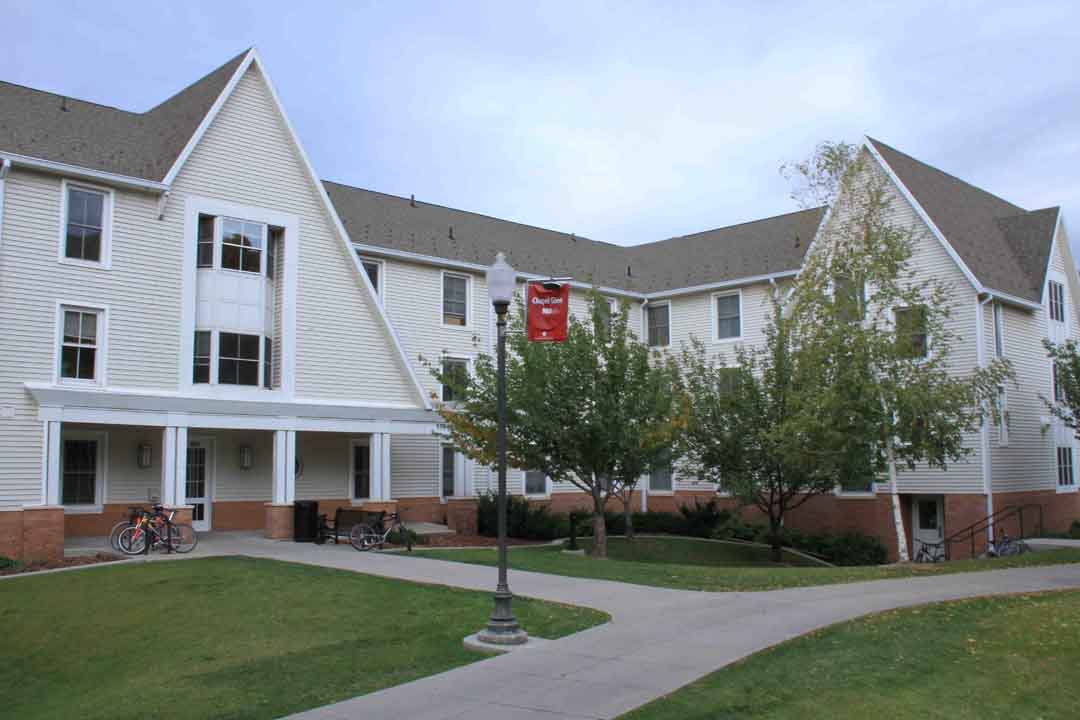
Chapel Glen is one of the residence halls at the U that offers super single rooms.

“Students who are nervous about living with other students often choose the super single,” Karhs said. He added that there’s a possibility that similar spaces to the super single could be built in the future if there were to be an increase in students living on campus.

The Alliance House is another on-campus housing option that is open to anyone with an academic interest in living and learning, and it celebrates diversity. “It’s not just for LGBT students,” Kahrs said.

According to the Community Diversity web page, “[The Alliance House] is a safe place where the things that make us unique are shared and explored.”

Kahrs said, “Most students want to live with someone else, regardless of how they identify.”

Equality Utah and LGBT Resource Center work to prevent bullying

Story and photo by CONNOR WALLACE

The Gay, Lesbian & Straight Education Network (GLSEN) released on Sept. 5, 2012, the 2011 National School Climate Survey, which outlined the experiences of more than 8,500 LGBT students in all 50 states. The survey found “6 in 10 LGBT students reported feeling unsafe at school because of their sexual orientation.” This marks the first significant drop in bullying based on sexual orientation. GLSEN credits schools and districts with helping to prevent bullying and harassment.

Locally, Equality Utah and the LGBT Resource Center at the University of Utah can be credited with helping school districts to implement bills and provide services regarding LGBT issues.

Equality Utah is a nonprofit organization that focuses on providing equal rights for all LGBT people and their families through helping politicians get elected as well as affecting policy through advocacy. In 2008, Equality Utah helped pass a bill, H.B. 325, which created a definition of hazing and bullying as well as set “the minimum standards for bullying and hazing policies in local districts and charter schools.” Two years later, cyberbullying and verbal harassment were included in the criteria of forbidden activities.

“Bullying has changed,” said Equality Utah Director Brandie Balken regarding cyberbullying.

The Human Rights Education Center of Utah define cyberbullying as “willful and repeated harm inflicted upon others through the use of computers, cell phones, and other electronic devices.”

Balken said Equality Utah is working to prevent bullying for any reason and pointed out that it has helped two school districts, Park City and Salt Lake City, to adopt policies preventing bullying and discrimination. Despite those policies, students still suffer persecution because of their gender identity or sexual orientation.

Allison Shepard is a student at the University of Utah. She said she was bullied in high school when people discovered that she was bisexual.

“There were rumors spread that I fooled around with my best friend,” Shepard said. “The rumors were completely untrue.”

She said people need to stand up for themselves when being bullied.

“If a bully says that you’re a loser, prove them wrong,” Shepard said.

Shepard is originally from Chicago and came to the U to study nursing. She said that while progress is being made due to efforts by organizations like Equality Utah, the process is a slow one.

“I do believe that Utah is slowly becoming more intolerant of bullying,” said Shepard, who plans to graduate in May 2013 with a bachelor’s in health promotion and education.

However, she added, “the LGBT community is affected more than others because bullies will use [being LGBT] to target people.”

There is truth to Shepard’s statement. In a 2009 study conducted by the Child Trends Data Bank and the Centers for Disease Control and Prevention, one in five high school students reported being harassed at school. But the GLSEN study found that more than 80 percent of LGBT students were verbally harassed in 2011.

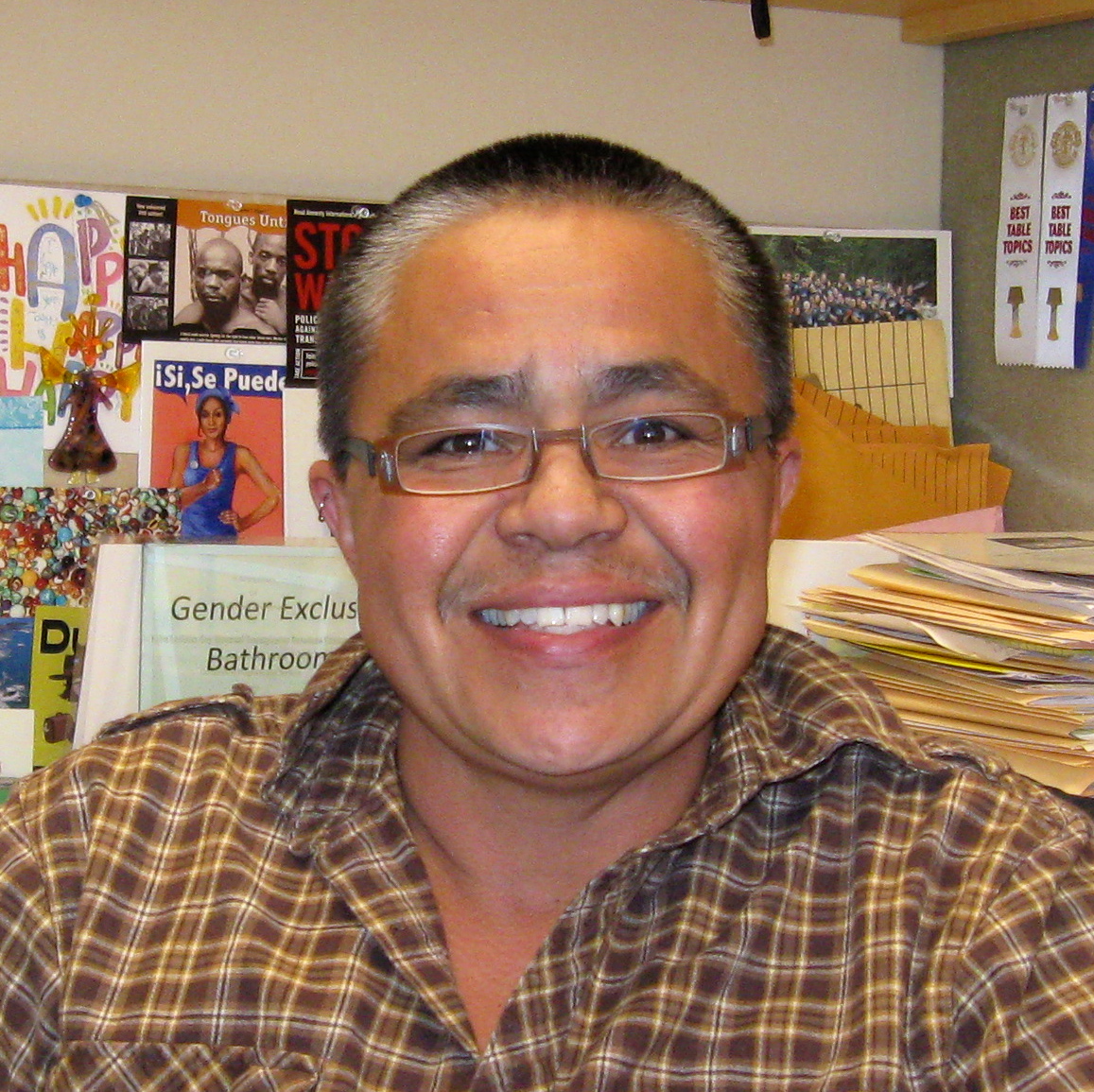
Kai Medina-Martínez became the director of the LGBT Resource Center in 2007.

Kai Medina-Martínez is the director of the U’s LGBT Resource Center, which provides information on LGBT issues as well as sensitivity training for allies.

Medina-Martínez, who prefers the gender-neutral pronoun “they,” equated the higher occurrence of bullying in the LGBT community to a societal stigma.

“Gay in our country is a bad thing,” they said. “Bullying is very much a concern in the LGBT community.”

Medina-Martínez said bullying is a problem for every group. However, they pointed out that in order to prove that bullying is a hate crime, a victim must demonstrate that sexual orientation was a factor. Medina-Martínez said in order to help stop bullying, society needs to be more aware and look for signs that include: loss of interest in school and school events, trouble sleeping and nightmares, declining grades and increased fighting in school.

“The secrecy around bullying keeps the cycle going,” Medina-Martinez said.

Beyond the medical standard: University of Utah offers wide array of beneficial research

Story, Photo, Video, and Audio by JAVAN RIVERA

Additional Photos courtesy of CAROLYN STWERTKA and CRAIG GRITZEN.

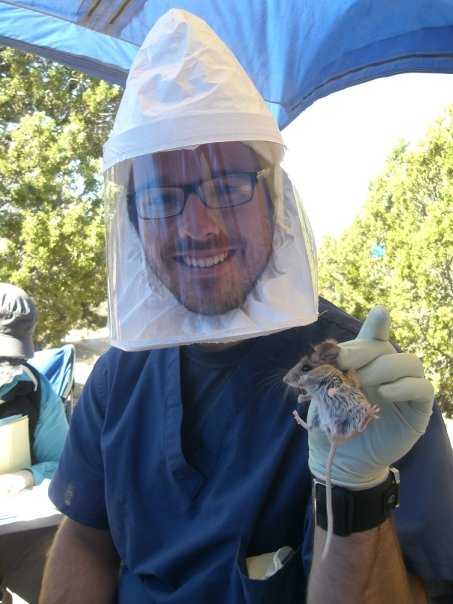
Craig Gritzen doing fieldwork in the Great Basin Desert, in Juab County Utah, 2009. Working with the sin nombre virus requires the use of specialized headgear to prevent human infection.

It’s a delicate and time-consuming process.

University of Utah graduate researcher Craig Gritzen spends his days at the U’s Dearing Lab viewing parasites through microscopes and testing for the sin nombre virus. However, it’s not medical research he’s doing, but biological studies of parasite and virus correlation in Utah’s population of deer mice.

The U is well known for being on the cutting edge of medical research and innovation. With an entire section of the campus dedicated to a fully-functioning research hospital, it can be easy to forget that the university also serves as a quality institution of scientific research that spans from biology and immunology, to meteorology and paleontology and more.

Gritzen is just one of the many students and professionals at the U doing important research that rarely gets the press of its better-known  medical counterparts. But that doesn’t make it any less vital.

“There’s a lot of opportunity for students to pursue their interests,” Gritzen said. “You really find yourself as a scientist when you do research.”

Doing research is exactly how Gritzen spends most of his days. A graduate student pursuing his master’s in biology, the core of Gritzen’s work is investigating possible correlations between the numerous parasites that can be found in the guts of deer mice, and the deadly sin nombre virus that the rodents carry.

Gritzen’s work represents an important step forward in understanding the dangers of at least one type of Hantavirus, a genus of virus that can be fatal to humans if inhaled. He hopes his research can help to track sin nombre virus infection in future deer mice populations and provide more warning for the people who live in deer mice populated areas, such as Emigration Canyon.

“Understanding what parasites are infecting these mice and identifying the effects of the parasites on the mice will allow for researchers to understand whether the parasites will increase or decrease the likelihood of the mice becoming infected by the virus, which in turn can determine the likelihood of humans getting infected due to close proximity to the mice,” Gritzen said.

Protospirura numidica is just one of the many parasites that can infect the digestive tract of Deer Mice.

Gritzen’s research could benefit Utahns who live in close proximity to the mice, who are, by default, at risk of inhaling the rodents’ feces and contracting sin nombre virus. The virus, which fills human lungs with liquid, literally causes the infected human to slowly drown.

“Humans who live in close quarters with the mice are the ones in danger of being infected,” Gritzen said. “It [his research] is important for people who live in environments where the mice can live and thrive.”

Of course, biology isn’t the only field of lesser known, but important research going on at the U. Two graduate researchers at the U’s Atmospheric Sciences Department are working on separate research projects that could shape the future of pollution regulation and legislation, and save energy investors millions of dollars.

Carolyn Stwertka is one of those researchers. She is working on a revolutionary new atmospheric model that could help us truly understand and accurately measure carbon dioxide emissions.

An inversion creeps across the city as Carolyn Stwertka hikes up the Grandeur Trail to gather carbon dioxide density measurements of Salt Lake City’s surface air.

Stwertka, a graduate researcher in the U’s Atmospheric Sciences Department,  is working with a unique set of carbon dioxide measuring sensors set up across the Salt Lake Valley that help measure and compare carbon dioxide output across the valley and into the upper atmosphere. The outcome, Stwertka explained, should help scientists truly understand the amount of carbon dioxide circulation in our atmosphere and its effect on the population.

These sensors, she said, represent the “longest standing, consistently running set of stations in a city in the world.”

Part of what makes Stwertka’s research unique, besides the network of established carbon dioxide sensors, is that Salt Lake City represents an exceptional staging ground for her research and the development of her carbon dioxide tracking model.

“Essentially, Salt Lake City is a great place to study [carbon dioxide circulation] because it’s so isolated,” Stwertka said. “It’s very difficult for air to drain out of this valley.”

What has Stwertka discovered so far?

With research that has spanned from crunching years of data, to a hike up Millcreek Canyon’s  Grandeur Peak lugging a backpack full of electronic, atmospheric measuring equipment, Stwertka’s unpublished results seem to indicate an interesting atmospheric affect.

Carbon dioxide seems to create a sort of bubble around cities like Salt Lake, which  is quite similar to another scientific phenomenon known as the “heat island effect.”

“That [her research] is important because the human population is growing, more people are moving into cities, and more carbon dioxide is being added in the atmosphere,” Stwertka said. “If there is going to be [future] regulation on carbon dioxide, they should be enforced in cities because that is where the highest concentrations of human-created emissions are.”

Stwertka’s research represents real progress, not only in helping to solve Utah’s inversion and pollution problems, but could even be used to better understand global climate change and pollution regulation around the world.

With climate change and global warming becoming a hot topic around the world, Stwertka’s work is extremely relevant, if unconnected to U researcher Ryan Oates’ atmospheric studies.

Ryan Oates uses global climate models to simulate massive increases of carbon dioxide in earth's atmosphere in order to make observations of its affect on the polar vortex.

Oates, whose work is also based in the Atmospheric Sciences Department at the U, is based around an established phenomenon known as a “Stratospheric Sudden Warming Event.”

These warming events take place above the North Pole in the upper part of the atmosphere, known as the troposphere. The events are basically destabilization of the polar vortex, a massive circulation of the atmosphere during the winter months above the North Pole that directly affects mid-latitude weather.

Oates said the cause of these polar vortex destabilization is simply strong weather fluctuations below the vortex.

“The troposphere affects the polar vortex but it also works the other way,” Oates said. “So when you have these sudden warming events, that then impacts storm tracks. ”

That’s where the money comes into play with Oates’ research. With energy representing a billion dollar industry that relies on weather forecasting and the understanding of storm tracks and weather patterns during the winter, adding more knowledge to that database is priceless.

“That [research] is important to investors because it increases both the opportunity and risk of their investments,” Oates said.

Oates’ work is very similar to Stwertka’s research because, much like her, he is interested in discovering the effects of carbon dioxide on the atmosphere, and more specifically, the effects of carbon dioxide increase on the polar vortex.

“I’m seeing how the vortex changes with climate change,” Oates said. “It’s really important because we’ll be able to identify the behavior and frequency of these sudden warming events, thus we’ll be able to see if there is an increase or decrease in [large-scale] tropospheric weather.”

Oates’ preliminary results seem to point to a direct correlation between carbon dioxide increase and an increase in stratospheric sudden warming events, something many weather-sensitive commodity investors will likely find interesting—and profitable.

In the end, whether they’re studying climate change and weather patterns, or mice and deadly viruses, the quiet but deliberative scientific research going on at the University of Utah is more important than most people realize.

“For me science ties into everyday things,” Oates said. “What I love about science is that you can’t isolate it to just one thing. It always has real life implications.”

Utah’s Abbott smashes records, leaves as a role model

by MCKENZIE DEAN

University of Utah’s Alyssa Abbott, 22, nears her final season for the Running’ Utes as one of Utah’s finest women’s distance runners.

Abbot began as a sprinter in high school. It was her coach at Galena High School in Reno, Nev., who inspired her to pick up distance running. It helped motivate her in school as she developed a great balance between academics and running.

With no college scholarships offers coming her way and her telephone silent Abbott stayed positive and began dialing numbers.

A phone call to Kyle Kepler, the U’s head women’s track and field/cross country coach, allowed her to become a Runnin’ Ute.

“Alyssa’s greatest attribute from a coach’s point of view is how self-motivated she is.  I know that she does all the little things to get better on a daily basis. As a coach you have to have athletes who want success more than you want it for them because they ultimately hold all the cards,” Kepler said.

With Abbott’s motivation, desire to achieve her goals and a solid training schedule; she was well on her way toward a successful college career.

During her freshman year she received daily doses of what college distance running was all about. Abbott led the team as top finisher in both the conference and regional meets in cross-country. Competing in the 800-meter run, Abbott received an invitation to compete at the U.S. Junior Championships at the end of the 2009 outdoor season.

“After my first year I knew then I was a distance runner. I have developed such a strong love and passion for it.  I decided to move up the distance I was running and compete in the 1500-meter for the next season,” said Abbott.

Moving to the 1500-meter played in her favor. She was an NCAA regional qualifier in that event and the 800-meter for outdoor track in the 2008 season. Abbott went on to claim a spot in the NCAA national championship for cross-country, with a ninth-place overall finish at the regional championships.

“Going to nationals was a very exciting and fun experience. It was great to compete against the top girls in the nation I had read about. It really motivated me even more after that,” Abbott said.

During the next few seasons she was struck with multiple injuries and surgeries on her knees and feet that set her back.

“Alyssa has been a warrior.  She has fought through adversity with chronic injuries, but has never given up or complained,” said Mary Bowman, Associate Athletic Director at the U.

With her outstanding running career and an award–winning past outdoor track season, she is just as successful academically. Abbott has earned multiple conference student-athlete awards, academic all-conference honors and has been named to ESPN magazine’s Academic All-District Team.

“She has had success as a student athlete on the track as well as in the classroom. I will miss her contagious smile,” Bowman said.

Abbott will receive a degree in exercise sports science in May. She is currently interning at a senior center, and helping patients increase their physical activity. Still waiting to hear back on to where her new life will take her, Abbott’s leadership and success on the field will continue to carry over to new paths.

Again struggling with an injury, this time rehabbing a ligament in her knee, Abbot puts on a Utah uniform in her last season as a Ute. Her success continues to build throughout this spring season.

“She will graduate as one of the University of Utah’s most successful female track and cross country athletes as both a student and an athlete,” Kepler said.

###

Mestizo Arts and Activism: a result of U, community collaboration

Story and slideshow by RYAN McDONALD

In a coffeehouse located at 631 WNorth Temple in Salt Lake City, a group of about 15 teenagers and young adults gathers twice a week to discuss issues that concern them, such as media misrepresentation and stereotypes. It is one link in a large chain of community projects that University Neighborhood Partners (UNP) at the University of Utah is involved in.

UNP (originally called West Side Initiative) was created in 2001. Bernie Machen, the president of the University of Utah at the time, was concerned that if a better effort wasn’t put into helping first-generation underrepresented youth graduate from high school and get into college, the U would not have the student body to be considered the flagship university in the state.

“Since west-side neighborhoods were so totally underrepresented at the U it was a clear geographically-defined place to start,” said Sarah Munro, who currently works as the associate director of UNP. “The charge was to set up collaborative partnerships between the university and west Salt Lake neighborhoods.”

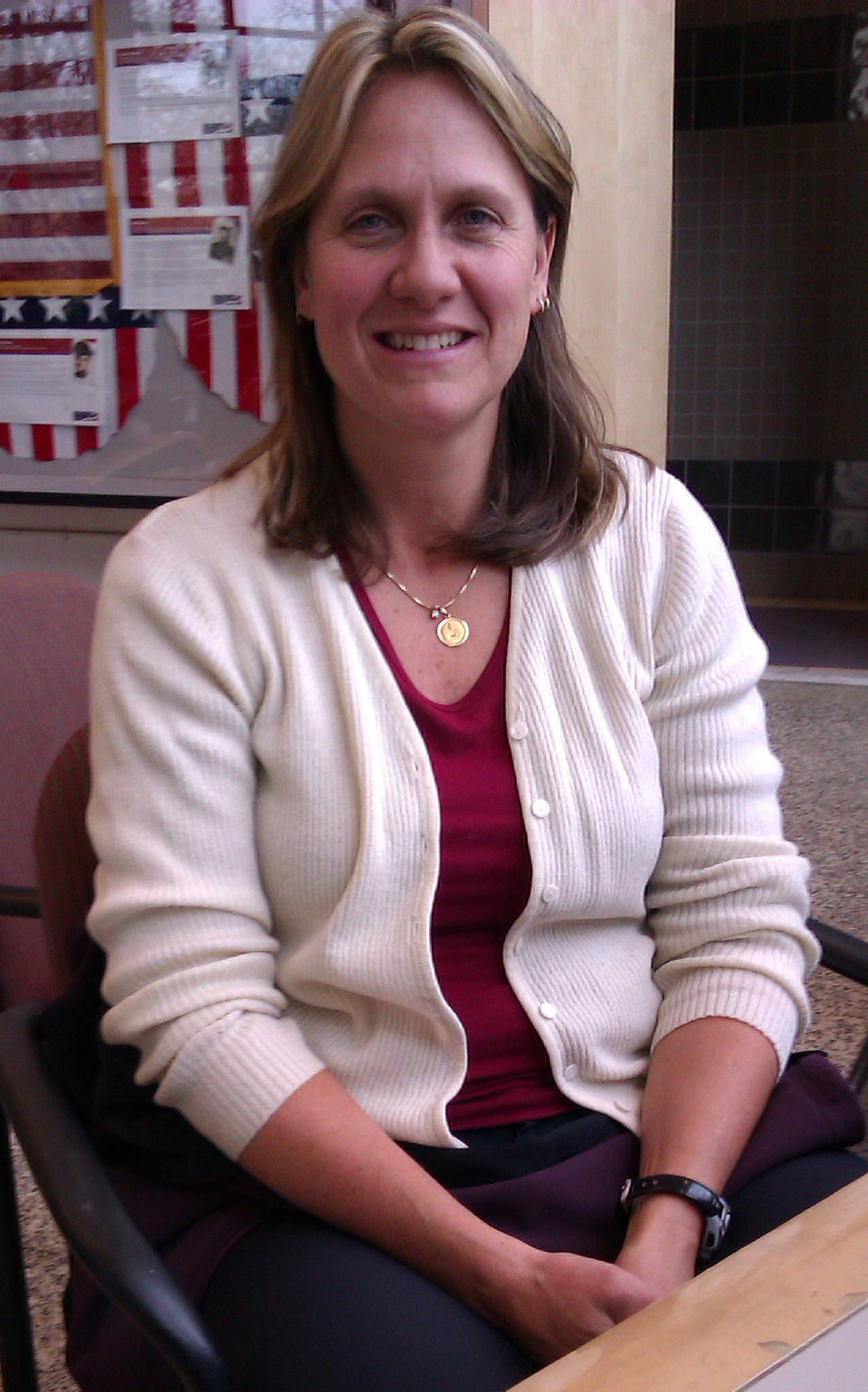
Sarah Munro, associate director of University Neighborhood Partners.

Early in UNP’s existence, an assessment was conducted in seven west Salt Lake neighborhoods to determine what was needed in order for Machen’s concern to be eased. Munro said direct student recruitment was one way of accomplishing this, but that it was not the most effective.

“The vision for this was long-term engagement,” Munro said. “By being engaged in the community, that’s how you create access. You’re addressing barriers to access to higher education. Our charge was to look at those needs and priorities that came out of the neighborhoods and say, ‘What are the university resources that could be brought to this and then how do we bring them to work in a collaborative partnership with one or more organizations?’” Munro said.

By 2003, UNP had begun working with organizations, individuals and government to help west-side residents overcome challenges Munro referred to as “systemic barriers,” obstacles that take a long time to change. The staff of UNP does not participate directly in this work, but the organization serves as a bridge between the university and these entities to enable collaborative work.

“I think that people are more creative and more motivated when they work in teams and that’s what these partnership groups really are,” Munro said.

She referenced changes that have been made in the Salt Lake City School District to respond to the growing Latino and refugee populations, in part due to collaborative work. As an example, she indicated that in-home visits are made to parents who might not otherwise be able to attend a traditional parent-teacher conference.

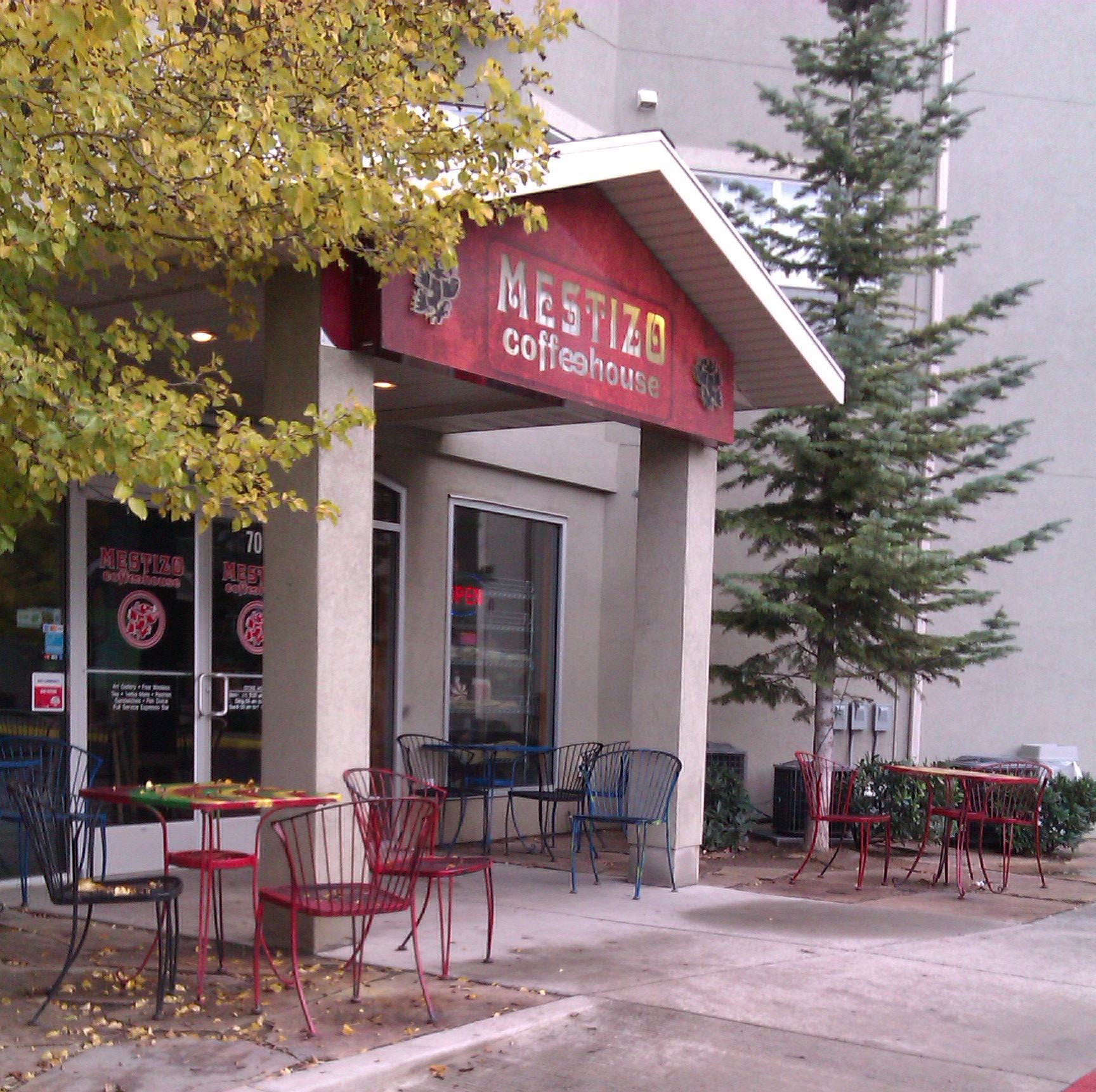
Members of MAA meet twice a week at Mestizo Coffeehouse.

Munro’s philosophy of teamwork is evidenced by Mestizo Arts and Activism (MAA), which meets each Monday and Wednesday afternoon at the Mestizo Coffeehouse. MAA is a partnership between the U and Mestizo Institute for Culture and Arts (MICA).

Having finished a project working with youth on community issues about five years ago, Matt Bradley, an adjunct professor in the Honors College  at the U, wanted to do more. He got in contact with the directors of MICA to explain that he wanted to do a similar project. With MICA’s support, MAA began. The Honors College is the entity that represents the U in the partnership.

MICA’s mission is, “To strengthen and build community through arts, civic engagement, and dialogue. Provide space to those who engage community through their work, are from underrepresented communities, or use art as a tool for social change.”

In that spirit, MAA brings students, primarily from West High School, together to talk about issues related to remembering and preserving their native culture. An ultimate goal is to “create the ability and potential for civic participation,” Bradley said.

During a recent meeting, students discussed the portrayal of Latinos in the media.

“I saw an episode and I got pissed,” said one teen in reference to a time he watched “Family Guy.” “It was a whole attack on Mexicans.”

Sujey, a student at West High School, said she is involved in MAA because it gives her a chance to remember a big part of who she is.

“I feel like all of us are forgetting our roots,” she said. “A lot of people at school are just trying to fit in. Over here you can just come and talk about your culture. You remember who you are and you remember where you came from. It’s a place where you can just come and talk about and relate to things with everyone. You can’t be doing that at school.”

Kania is another student from West who is involved in MAA.

“Your name, your family came from somewhere,” she said. “It began somewhere. Everybody has a different story. The people before you lived a whole different life. Everything that you’re learning, you’re learning from the mistakes that they made. Keeping our culture alive is a way of honoring them for the lessons that they are giving us.”

Another student named Israel discussed a cultural challenge he feels many of those at MAA experience.

“I just feel that mixing two cultures is a lot more difficult than you might think,” Israel said. “I feel like we have to be more Mexican than the Mexicans because not even Mexicans accept us. You have to be more American than the Americans because not even the Americans accept us. We’re just kind of in the middle sitting there wondering which way to go. It’s a big culture clash that we can’t get into. I’m glad I am (involved in MAA) because I’m able to bring two cultures together.”

Although the students discuss serious topics, fun is a core element of the activities at MAA. From having a chance to reflect on Disney movies they watched as kids to playing group games, the students are able to form close friendships through the things they do there together.

José Hernandez, left, and Alonso Reyna, at Mestizo Coffeehouse, 631 W. North Temple.

“We build a sense of family here and that has been incredible,” said Alonso Reyna, a student at the U majoring in sociology who volunteers at MAA.

José Hernandez, another mentor, began his involvement at MAA in 2008, his senior year of high school. He is now majoring in gender studies at the U and plans to become a teacher.

“I didn’t go to college just for myself, but for my family and I wanted to help my community,” he said. “Mestizo allows me to apply what I learn at the U and even learn more than I would normally learn.”

The opportunities that MAA provides these students to explore their culture is only part of its story, however. Part of UNP’s mission is to provide faculty and students at the University of Utah the chance to conduct community-based research through the work its partners are doing.

Ashley Edgette is an undergraduate student who is helping to teach students at MAA how to be community researchers and organizers. She is majoring in political science and environmental studies and minoring in French. Upon graduation she plans to attend graduate school to study city and metropolitan planning and community development. She is currently researching how best to involve people in the creation and maintenance of a community garden.

“Working with these students makes it a more involved community project,” she said. “I think this is the only way to do this kind of research. I think our students (at MAA) get a perspective that you don’t get otherwise.”

U student Ashley Edgette is researching ways to involve people in the creation of community gardens.

Edgette feels this research model helps the students at MAA and the surrounding neighborhoods. She also said it helps the U become more involved in the city.

“It’s not only beneficial for the U to be connected to high school students and community members, but I think it’s also really beneficial to do these kinds of studies that are based on community knowledge and based on student participation, because it shifts the way the U interacts with communities,” she said. “It makes it a relationship where they’re (the U) invested and have responsibility and are expected to participate in the action with these communities. It’s been really beneficial for my education.”

Hernandez, the volunteer who wants to one day be a teacher, said the things happening at Mestizo Coffeehouse exemplify why UNP exists. Its goal is to build bridges between the U and the community and he feels that this is beneficial for MAA. Participants get to discuss community issues and learn about the university.

“It really represents what community and higher education can be together,” he said.

Utah Dream Center proves helping goes a long way

Story and slideshow by MELANIE HOLBROOK

Explore the Utah Dream Center

“Our dream is to see you live yours.” That is the slogan of the nonprofit organization Utah Dream Center, which was created to help community members fulfill their dreams.

Whether starting an arts program or a private elementary school, the organization located at 1624 S. 1000 West helps people get started so that more individuals can be assisted in the long run.

In 1998 husband and wife Alfred and Anna Murillo traveled to Los Angeles for a short-term mission project. Already involved with servicing their community, the Murillos brought with them 40 boys and girls to help out at one of the Los Angeles Dream Center’s programs.

Amazed by that center’s goals and projects, such as its after-school programs that provided activities for kids, the Murillos became inspired and knew Salt Lake City needed its own Dream Center.

In January 2000, Alfred and Anna launched the Utah Dream Center, modeled after the one in Los Angeles. With no help yet, the Murillos traveled throughout the U.S. in search of ideas and help from anyone interested.

With creativity and a U-Haul, the Murillos began to follow their dreams in June 2001. With the back of the U-Haul used as their stage they pursued after-school programs for any Glendale-area neighborhood kids who were interested in participating. Starting off simple, boys and girls could come hang out at the U-Haul after school for food and games.

With that, word spread fast. In February 2002 their U-Haul had become their very own facility that they still use today.

With their name already in the public, the Utah Dream Center was able to serve more than 400 kids in the first year.

“People had heard about what we were doing and wanted to get involved. People want to help out and contribute to making something of their community,” Alfred said in a telephone interview.

Over the years the Utah Dream Center has added at least 200 volunteers to their family. Alfred explained that there isn’t a payroll; the organization functions off the work of volunteers.

The Utah Dream Center stays running and thriving through its donors, volunteers and other sources that want to be a part of it. Out-of-state churches and businesses that have heard of the organization will send in donations.

Alfred explained that they’ve never purposely been in the news. The organization doesn’t believe in soliciting or asking people for contributions; people hear about the organization and want to donate.

“We work on helping kids around us, we’re not trying to make a big uproar,” he said.

“The other day I was getting my oil changed and during those 15 minutes we (the employee and I) started talking about what I do. He didn’t charge me for my oil change and handed me $250 because he wanted to help,” Alfred said.

He said it’s the goodness in people and their mentality that keeps their organization going.

Donations to the organization are given in various ways. Alfred said when he took his daughter to the dentist he again got to talking about his work. After listening, his dentist told him to bring kids in and he will work for free. Over the past eight years Alfred has taken in three kids while his dentist has put in thousands of dollars of service just so he can help others.

“Our dream is to see your fulfill your dream. We’re not asking you to make ours. When you help people it spreads a mentality, you want to help people when you’ve been helped,” he said.

Utah Dream Center has four programs in the Glendale area. Those programs are the Arts Academy, Open Door, Provisions for the Ministry and Mobile Medical. A director who came to the Murillos with his or her idea started each program. After discussion of their idea, the Murillos helped them get it started.

“The Open Door is held every Monday night. We’ll have chunks of different segments; half an hour for free time, time for reading and tutoring. We feed them a healthy dinner,” Susanna Metzger said in a telephone interview.

Metzger, the director of the Open Door after-school program, said on average 40 kids come every Monday.

The Arts Academy lets kids engage in music such as piano, drums and singing. The program also incorporates painting and drawing.

“My daughter has been going to Arts Academy for two years now. She’s 8 years old and is so bright — I thank the program,” Gabriela Hardy said.

“Hobbies such as piano or painting can make a child so much more well-rounded and determined to learn and grow at a young age. It shapes them,” she said.

The program Provisions for the Ministries delivers food and donates clothing to various churches every Wednesday.

Mobile Medical is stationed in the U-Haul the Murillos used back in 2001. This program was established to help community members who can’t afford certain medical help. Having it in the U-Haul makes it easier to serve more people.

Hardy isn’t one of the only fans of the organization. Richard Williams, a donor to the organization, said his son isn’t old enough for any of the programs but wants to get him in them when he’s ready.

“I found out about Utah Dream Center through my brother and donated soon after. An organization that helps people succeed in things they want to do, why wouldn’t I want to support something so great?” Williams said.

But community members aren’t the only people who have heard about the organization and want to help out.

Kyle Korver, a former player for the Utah Jazz, became involved with the organization. Korver would give Alfred 30 tickets to every Jazz game for any boys and girls who wanted to attend.

Real Salt Lake presented Alfred and his wife with the “Heroes Among Us” honor at a sold-out game. In the middle of the field, the Murillos were given jerseys with their names on them.

Alfred said one of the greatest honors was when “Good Things Utah” surprised him and his wife with a big metal key that would unlock the door to their new office. Utah Dream Center will be on “Extreme Home Makeover” where the organization will be given an entirely brand-new office; the episode is set to air in summer 2012.

The Utah Dream Center has expanded to help those suffering with problems such as gangs and drugs. There are now locations in Ogden, Provo and Kearns.

“You never know where helping people can take you,” Alfred said.

A closer look at Salt Lake City’s Discovery Gateway children’s museum

Story and slideshow by BROOKE MANGUM

See the world through the eyes of a child at Discovery Gateway

Imagine a place where children’s minds can run free. Imagine a place where children can be whatever they want to be. Imagine a place where play is celebrated. What if this place encouraged and facilitated education and learning as well.

Does that sound too good to be true? This is what Discovery Gateway offers the community.

“Discovery Gateway, and organizations like it, are so important and different from other museums because they inspire children to learn via play,” said Steven Suite, chairman of Discovery Gateway board of directors.

Formally known as the Children’s Museum of Utah, the west-side nonprofit Discovery Gateway is located at 444 W. 100 South. The museum relocated to this 60,000-square-foot building in 2006 and is filled with exhibits of hands-on educational fun.

The museum was founded in 1978 by a group of parents and educators who believed children learned best by “doing.” The museum aims to be one of the most trusted and preferred family discovery centers and child educational resources in the Intermountain West.

The exhibits in Discovery Gateway are designed to address the multiple ways that children learn. All of the exhibits are interactive and inspire learning through creative play. The museum is divided into six zones, each having various hands-on learning experiences. Each section appeals to different age groups and children’s interests.

“What is so cool about our exhibits is that they not only teach children but they get them thinking about possible future fields,” said Lindsie Smith, Discovery Gateway development and marketing director in an email interview. “Each exhibit that we have focuses on a different career field. We have science exhibits, medical exhibits, activities in the theatre and arts, journalism, the possibilities are endless.”

Discovery Gateway is divided into six main zones: the Garden, Kids Eye View, Story Factory, Media Zone, the Studio and the Terrace.

The Garden is a 30-foot beehive that serves as the main entryway to the museum. This exhibit is designed to teach cause and effect. Children and adults work together to keep the hive functioning by performing various mechanical tasks. For example, one child is in charge of feeding plastic balls into a machine while another uses a hand crank to power a fan that moves the balls along the path to the next station. In another part of the hive a child uses foot pedals to activate a vacuum tube that propels the balls back to the beginning. When all the stations and children are working together and doing their job the hive comes alive.

Kids Eye View is dedicated to the museum’s youngest visitors. This zone is divided into multiple mini exhibits designed for tiny hands and budding motor skills. The exhibits within the Kids Eye View capture toddlers’ imaginations by exposing them to life on the farm, construction zones, a life-sized playhouse and every little one’s favorite, the rushing water exhibit.

The Story Factory offers visitors an opportunity to explore the many ways to tell a story. This is the journalism zone that is designed to inspire young future writers to discover the fun in writing and storytelling. The exhibit has something for all levels of writers, from those who are just beginning to craft sentences to those who are more experienced   with using words and modern multimedia.

Media Zone is sponsored in part by KSL 5 news. In this zone children are able to try out any and all media jobs and try their hands at TV and music production. Children can see what it is like to anchor the news, do a weather report and work as a camera operator. This section also has music mixing tables and recording devices where children can learn to make, record and produce their own music.

“My favorite is the news station,” said Gabriel Rosse, 10, a regular museum visitor. “It is so cool! I feel like I am doing the news for real.”

The Studio is a place for little scientists, artists and engineers to let their imaginations run wild. This is a hands-on creative space where children can learn about such things as physics, earth sciences, biology, mathematics and forms of art and architecture. The children are able to build their own mini structures and test their earthquake durability on the vibration tables. They also can conduct their own experiments with vacuum tubes.

The Terrace is home to one of the museum’s most beloved and recognizable exhibits, the Life Flight Helicopter, donated by Intermountain Healthcare. In this area children are able to learn about medical professions as well as search and rescue occupations. The once fully functional helicopter is now a kid friendly version that allows children to experience the thrill of flight using sounds and vibrations. The chopper lights up and makes all of the sounds of real flight such as the hum of the engine, the wind blowing on the tarmac and voices on the radio reciever.

“I love the helicopter,” said Max Smith, 6. Max lives in Salt Lake City and attends Reid School. “It is loud and makes me feel like I am flying fast.”

The museum also hosts traveling exhibits that are featured at Discovery Gateway for a limited time. The most recent exhibit was called PLAY. An exhibit called “Tinker Toys” is expected to début in 2012.

“The exhibits are fantastic,” said Anne Godfrey, a Salt Lake City mother who often brings her children to the museum. “I really feel good about taking my kids here. Not only do the kids love it, but I feel good knowing they are improving their education.”

The people at Discovery Gateway consider their crowning achievement to be the Junior Achievement City (JA City), located on the fourth floor. They are so excited about this exhibit because in their eyes it is the ultimate example of hands-on learning. JA City is in partnership with Junior Achievement of Utah and offers a hands-on learning environment for fifth-graders to gain “real-life” business experience. It is also a place for eighth-graders to learn how to manage their personal finances.

In JA City children run their own mock fully functional city. Using the knowledge they have acquired in the classroom they are able to bring this information to life. The children hold their own elections for mayor and hold different occupations and positions in the community.

Some youth are bankers, others grocery store workers. If it exists in real life it is highly likely that it is represented at JA City. The children involved in the program assume different positions in the mock community and learn valuable lessons about different occupations and the work that goes in to make society function.

“This exercise gives a huge opportunity for youth,” said board chairman Steve Suite. ”The kids have to work together or things don’t run smoothly. It is a lot like our Garden in the lower level but on a whole new scale where they make their own laws and essentially their utopia.”

Suite says Discovery Gateway is a magical place where kids can be kids, but they also learn and have the opportunity to think about their futures.

Boys and Girls Clubs, dealing with stereotypes and challenges

Story and slideshow by COLLIN McLACHLAN

Take a look at the Lied Boys and Girls Club

“Is it this one teacher?”

“No, not that one. Can you find it? Does anybody know what the answer is?”

“Is it this one?”

“Yep, that’s it. Good job, José. It’s true that most kids are not drug users.”

If this sounds like the dialogue of a normal classroom, that’s because it is. The students in this classroom are trying to answer a question from the teacher by finding the answer card that has been hidden in the room.

This typical classroom situation was one that happened at the Lied Boys and Girls Club, which is located deep in the west side of Salt Lake City. People who have stereotypes about this area might like to learn that the kids who were part of this conversation were all Latino or African American. These kids face challenges in their life, just like everybody else. Some are not unusual, while others are totally unique to their generation and circumstance. That’s what the Boys and Girls Club tries to help with.

The Boys and Girls Club of America is a non profit organization that provides after-school activities for children and teens. Founded in 1860, the B&GC of America is devoted to being “a safe place to learn and grow – all while having fun. It is the place where great futures are started each and everyday.”

According to the club’s mission statement, the organization aims to provide its members with “a safe place to learn and grow, ongoing relationships with caring adult professionals, life enhancing programs and character development experiences.”

The B&GC of America is a national organization with branches all over the country. There are two B&GC houses on the west side of Salt Lake, the Lied and the Capitol West. Like all B&GCs, the Lied Club, which is located at 460 S. Concord St. (1235 West), works with kids ages 6 – 18. The kids are divided into two age groups: the Juniors – who range from 6 – 12, and the Teens – who range from 12 – 18.

For the first hour or so kids get to “decompress” by just playing games and hanging out. Most clubs have pool tables, ping-pong tables, full gym and a food court. The club then tries to feed the students a meal every Monday, Wednesday and Friday, with small snacks given out every day. Staff and volunteers will then do an activity with small groups of kids that is centered on learning.

A lot of kids attend the B&GC’s for many reasons. “I like that they help me with my homework and stuff,” said Casandra Darca, 14, in an interview. She has been attending the B&GCs since she was in third grade. “I get to have fun with my friends.”

Darca, like many members at the B&GC, comes from an underprivileged home. Her parents aren’t home during after-school hours so she has nowhere else to go. Her mom signed her up for the club because she used to be a member when she was little. “She liked it when she went here, so she wanted me to try it out,” Darca said.

Many Utah residents often have a stereotype about people on the west side of Salt Lake City. Lied Boys and Girls Club Director Tiffany Harris, 30, in an interview said that some people even start to form stereotypes about the kids she works with. “I’ve encountered a few people, thankfully not many, that will assume that all these kids are bad,” Harris said. “There’re not bad, they’re just kids.”

The kids themselves aren’t bad, but the situation they’re in might be. According to the Utah Refugee Coalition, the state is home to more than 25,000 refugees who come from all over the world.  A lot of refugee housing is located on the west side, so the B&GC works with a lot of refugee children.

Harris says that some of the challenges that these kids face really are unique. “I think there’s a stereotype that assumes that since they’re a refugee, that they’re all suffering from PTSD. That they’re all victims.” She states how sometimes a refugee’s current circumstance is what’s hard, not just their past. “Just coming to a new culture and trying to adapt and acculturate, that takes a lot of internal strength and courage, both from the parents and from the kids,” Harris said.

This does not mean, however, that what lays in these kids’ past aren’t causing problems for them. “We’ve had kids that have drawn pictures of men with AK-47s, and people who have their arms cut off by machetes, because they’ve seen that. They’ve had family members that have been killed,” Harris said.

Harris points out that many B&GC’s are intentionally placed in underprivileged neighborhoods to help improve those communities. She also says that they don’t discriminate against anybody coming. “If you can get here, you’re welcome to come,” Harris said.

It’s this underprivileged circumstance that a lot of B&GC kids are in that can cause more problems. “They’re expecting and wanting cell phones at a young age, because that’s what’s out there,” Harris said.

Kelly Gudall, 18, a volunteer at the Lied Boys and Girls Club, feels that having technology can also be a problem. “I feel like a challenge for them is just going outside,” Gudall said. “I mean they do, but I feel like it’s not as their first choice.”

Society’s increasing dependence on technology, and these kids’ inability to use or purchase technology, causes a very unique challenge for them that has not been seen in previous generations. “In school, they might be required to do some Internet research or type something up,” Harris said. “They don’t have a computer at home, and it can be difficult to find transportation to the library.” Harris points out that these kids have to wait for mom or dad to get home and take them before the library closes at 9 p.m. “That is a challenge that I never had to deal with when I was a child,” Harris said.

Despite helping its kids overcome all these challenges, the B&GC is making a substantial difference in children’s lives. A focus for the club is building relationships with the kids. Gudall says that this is one of her favorite parts of volunteering. She explains that like any classroom there are shy kids and outgoing kids. What she tries to do is get the shy kids to open up to her. “It feels like an accomplishment when a kid warms up to you,” Gudall said. “I like that.”

Harris told a story of a girl who had once shared a secret with her. Her secret was that someone had been hurting her. The club was able to take the appropriate action to help this girl. Harris realizes that it was the relationship between the staff and this girl that allowed her to open up and tell someone. “Right then I felt as though we’re doing what we need to,” Harris said.

The kids at the B&GC have a great way of changing people’s stereotypes, not only about them, but about the west side of Salt Lake itself. When Gudall first started volunteering, she said that she had an expectation of what it was going to be like. “I hate to say, but it was the stereotypical thing. But after the first time I came down here, it was so much fun.”

Gudall also says that her expectation of the west side of Salt Lake has changed. “They all seem really, really nice and really friendly. I’m not scared to come down here at all,” Gudall said.

Utah Dream Center: providing much needed education

Story and slideshow by COLLIN McLACHLAN

Last time you were around Thanksgiving dinner and you had to go around the table and say what you’re thankful for, did you say “a chance to go to school and get an education”? If you did say that, did you really mean it?

For refugees who attend the Utah Dream Center’s Open Door reading classes, anyone can see that they mean it.

The Utah Dream Center is a nonprofit organization that operates on the west side of Salt Lake City, near an area of refugee housing. According to the Center’s website, its students are devoted to “transforming their neighborhood into a thriving community.” The Utah Dream Center “holistically provides physical, educational and Christian programming to strategic neighborhoods throughout the state of Utah.”

The Center has a number of different programs that are designed for the benefit of people who are living on the west side of Salt Lake. Some of these programs are: Open Door, an after-school reading tutor program; SierraAlta Bible College; Arts Academy; Urban Flow, a multicultural dance class; and a clothing outreach program. Most of the programs that are offered at the Dream Center are free and open to the public.

The Dream Center works with refugees who come from all over the world. Volunteers from the Dream Center will go recruiting by knocking on doors of the apartments near the Center and inviting residents to participate in the activities.

“One of my favorite things is when we do the reading part of the program,” said Susanna Metzger, 27, director of the Open Door after-school reading program, in an interview. “Just reading books with the kids, I can see them learning and improving. I think that’s really awesome.”

The Dream Center focuses on a faith in Christ to effect change in the community. Its website states, “Jesus Christ’s transforming power compels us to emphasize compassion, hope and restoration in each of our programs.” The Dream Center, however, deals with immigrants from all over the world, some from areas with state religions.

“We do not try to force a religion on them,” Metzger said. “Once parents realize that we’re here to just help with their education, or feed them dinner, then I think they start to be more at ease with us.”

Metzger directs the Open Door program. It meets every Monday for reading or math tutoring. Metzger says anyone is allowed to come and receive free tutoring. A Dream Center volunteer will either help a child with their math or reading homework, or will read a book with them.

“It’s loosely structured at the beginning,” Metzger said. “So when the kids show up we’ll play with them and hang out, build relationships.” After the building relationships portion, the students will split up into two groups according to their age. These groups will rotate between reading or homework and doing crafts.

Metzger has been a part of the Open Door program for about four years. Being the director of the program, she leads the 12 to 15 regular volunteers the Dream Center has in personally tutoring the 40 to 50 kids who come in every Monday, which she says is a challenge. She says that what she loves most is seeing a student learn something. “A concept will catch in their heads and it’s one of those ‘ah-ha’ moments,” Metzger said. “I get to experience that with them. I love it.”

Shalom Boutwell, 20, has been volunteering at the Dream Center for nearly a year. In an interview, she talked about why a lot of kids love the Center. “It’s easy for a student to become comfortable because all the other students are ones they go to school with,” Boutwell said. “They’re growing up together and learning together at the same time.”

Boutwell says that her favorite thing to see is when students are excited for the opportunity to learn. “They look forward to it every week, they run to our cars as we pull up, they’re sitting on their porches waiting for us to come knocking,” Boutwell said with a smile. “They love it, and I love building those relationships, to have the students remember your name every time you come, best feeling in the world.”

Marien Niwenshupi, 13, has been a student at the Dream Center for about two years.“My favorite thing is coming and talking to the ladies,” Niwenshupi said. “They really help a lot with your homework. That’s what I really like.”

Volunteers for the Open Door program found Niwenshupi by knocking on her door. She is from Zambia, and is very grateful for the opportunity she now has to attend school.

Niwenshupi said that in Zambia, “it’s really hard because your parents have to pay money, and in Africa, that is hard because they don’t have jobs. Sometimes it’s hard for parents to pay for their students.” If parents, like hers, can’t afford to send their kids to school, they are never able to go.

“But here, it’s really nice. They pay for your school,” Niwenshupi said, with optimism in her eyes. “I wish I was there right now, because I would say ‘Yeah, I’m going to school!’”

Niwenshupi said the Center offers a lot of fun activities. “It’s a good place to be on Mondays,” she said.

This slideshow requires JavaScript.

Salt Lake City Head Start provides comprehensive educational experience for young children

Story and slideshow by TOM BETAR

Explore the Head Start kitchen

The average Head Start  family in Salt Lake City, regardless of the number of members, has an annual income of about $13,947. Some of the children of these families require $5,000 in dental work alone. These alarming numbers come from Kristyn Hancock, the community partnerships manager for Head Start who has been with the organization for more than a year.

The good news is that help is available, and from classrooms to kitchens the staff of Head Start work to educate and support these families so they can be successful now and in the future.

Head Start is a nonprofit organization with 83 classrooms and seven facilities throughout the Salt Lake City Valley that help these needy families overcome financial, educational and health-related obstacles.

The overall mission of the organization, according to its website, is to provide health, education and self-sufficiency to young children and families facing adversity. This entails working with children as early as possible to prepare them for future success in school. About 2,400 children in Salt Lake City, the majority of them ranging from 3 to 5 years old, receive assistance in education and healthcare from the Head Start program. Some of the children are helped from birth until age 2 as well.

Hancock said in a telephone interview that she quit her job doing sales and then was later approached about a position at Head Start. She said even though she may have made more money in sales or other lines of work, she is extremely happy with her decision to work for Head Start.

“I am so fortunate and so thankful to be here,” she said. “I feel like I’m able to give back every single day. Before I never felt like I was able to make a difference. I guess I traded in the big paycheck for a big heart.”

The community partnership aspect of Head Start is built around organizing fundraising and community events that spread the word about the Head Start program. Social media and grant writing fall under this umbrella as well, and Hancock works with many community volunteers to make programs successful.

“Our goal is to be out in the community informing people what Head Start is,” she said. “We are like ambassadors for the program.”

Hancock said every year assessments are done to gauge which areas are in most need of Head Start services, and the west side of Salt Lake City is the frontrunner every year. Although many people may have misconceptions that west-side residents are just sitting around waiting for handouts, Hancock said that is simply not the case for the residents she encounters.

“They are an amazing group of people to work with,” she said. “Many of them are working two or three jobs and they work so hard. They are so resilient. I love working with them.”

In terms of assistance to the children, or “kiddos” as Hancock calls them, the services that Head Start provides in regards to education, healthcare and self-sufficiency all go hand-in-hand.

“For most of our kiddos we are their only opportunity to begin the lifelong education experience,” she said. “I don’t know of any other preschool program that does what we do.”

She said parents play a large role in the development and success of the children, so Head Start tries to involve the parents as much as possible.

“Our goal is to get every child ready for kindergarten and on the same level playing field as their affluent peers,” she said. “We believe parents are a primary asset and we want them to be involved in their child’s education, not just when they (children) are 5 years old but when they are 15. The parents want their kids to succeed and break the cycles of poverty.”

Hancock said in order to properly educate and prepare these children, the first step is to make sure they are healthy and have proper nutrition. This is where people like Brian Ralph come in.

Ralph is the food services director for Head Start and has been in the food business for more than 30 years. He came to Utah to work in the 2002 Winter Olympics and was a food service manager in the Olympic village. He said he fell in love with Utah and now has a job with Head Start. He previously did food service work in the athletic departments of colleges such as Louisiana State University and the University of Colorado.

“There’s really no difference between feeding football players or little kids,” he said. “It’s really the quantity because you still need the healthy food.”

Ralph works in a kitchen located at 2180 S. 300 West that provides Head Start children with diverse, healthy and balanced meals. Food is prepared at the kitchen and then delivered to the classroom sites across town so that children can enjoy nutritional meals to supplement their early education.

“Pretty much the kids will get everything that an adult would eat minus the sugars and the salts,” Ralph said. “The kids learn to trust that the food they are getting is good, so our kids actually do eat our vegetables.”

Ralph said the kitchen uses whole-wheat products and does not serve canned vegetables or deep-fried food. He said the food that is served is restaurant quality and not only nutritional but also ethnically diverse. Meals include vegetarian dishes, jambalaya, beef stir-fry, chicken taco salads, lentil soup, sweet potatoes, fresh grilled tuna casseroles, spinach soufflés and Atlantic salmon — just to name a few.

“We do not believe in buying anything at discounted prices,” he said. “We bring in the best quality we can possibly bring in.”

Ralph said Head Start has a program at the University of Utah where the link between proper nutrition and a better education is visible.

“They (children) are better behaved because they’re not hungry. They are more attentive when it’s time to learn, and they sleep better because their stomachs aren’t hungry,” he said.

In order to qualify for Head Start, a family must be at 100 percent poverty level, which means the income of the household falls below a level set by the government. Hancock, the community partnerships manager, said there are about 1,000 kids on the waiting list for Head Start.

“We serve the neediest of the needy,” she said. “We always have a waiting list.”

Income is not the only criterion. For example, if the father of a family unit is incarcerated, Hancock said that family might be prioritized over another family.

Hancock said in order to measure and quantify success of the Head Start programs a tracking system is now in place for Salt Lake City children. This allows their academic progress to be recorded and analyzed as they move on from Head Start and continue schooling. Because Head Start is a nonprofit, the organization relies heavily on government grants and funding. Consequently, it is closely monitored by the federal government. Data such as test scores can be tracked to reveal the effectiveness of the Head Start programs and help to maintain the high standards.

Patty Mazzoni, Head Start education manager, has been with the organization since 1992. She started out as a teacher and has held her current position for five years. She said the educational aspect of Head Start is codependent on the fulfillment of the other needs for the children.

“We provide an all-around comprehensive education for our children and families,” she said in a telephone interview. “We not only meet the educational needs of a child we also meet the health and nutritional needs.”

Mazzoni said Head Start relies heavily on volunteers and in-kind contributions. For example, medical volunteers such as doctors or dentists provide free health screenings for children in the classrooms.

“Volunteers are a huge part of what we do,” she said. “We encourage parents to volunteer in classrooms.”

She said few other organizations provide the same benefits as Head Start.

“We are probably the only opportunity to place children in a program that will give them a head start in education,” she said.

Mazzoni said there may be some misconceptions out there about exactly what Head Start is and what it is for.

“People think that we are just a daycare to drop kids off,” she said. “We are not at all. We are very comprehensive and we have academic outcomes that we have to show data for.”

Mazzoni said there is something else unique about Head Start that makes her proud to be a part of the organization.

“We serve all children with disabilities, so we are a full-inclusion program,” she said. “We accept any child within our program.”

Being a Head Start employee provides opportunities to make measurable changes in the lives of young children and their families. Food services director Ralph said his job comes with many satisfying rewards, and that results from his work can clearly be seen.

“I enjoy coming to work every day,” he said. “We see the results. We see the change in the children’s weight, we see the change in their attitude, and we see the change in their eating habits. It’s hard to change a child’s eating habits when they’re older.”

Ralph recounted some of the most rewarding experiences he has been a part of since joining Head Start: “When you go into a classroom and you have 3- to 5-year-olds clapping because they enjoyed the meal that was prepared that day, or you have a parent send you a request for a recipe. It’s small steps here. It’s child by child.”