Utah nonprofits fighting to stay afloat in a rough economy

Story and photos by BROOKE MANGUM

With the downturn in the economy many businesses are losing their shirts, but what is seldom thought about is how nonprofits are impacted during these times.

According to the National Center for Charitable Statistics (NCCS) the U.S. is home to more than 1.5 million nonprofit organizations. There are nearly 10,000 registered nonprofits in Utah alone.

Although nonprofits may not be the first type of corporation that comes to mind when thinking about big business, it is still a moneymaking entity that relies on a healthy economy. Many Utah nonprofits are struggling to survive and are looking for strategies and ways to stay in business.

“Obliviously in this economy everybody suffers,” said Nancy Basinger, Ph.D., the Lowell Bennion Community Service Center assistant director. “Nonprofits maybe suffer more because there is more demand and there are fewer dollars coming in the door.”

Nonprofits have been an area of research for Basinger for about eight years. She received her master’s degree in nonprofit organizations and her doctorate studying the interactions between government and nonprofits. Basinger has also worked in the nonprofit sector as a bookkeeper and financial director.

Basinger said the main problem facing Utah nonprofits is that community needs are up but the revenues are down. Organizations are being forced to lay off staff members and downsize services even though the demand is still rising. This makes fulfilling the needs of the community extremely difficult, if not impossible.

The Community Foundation of Utah  reported that in 2010, 77 percent of reporting nonprofits in Utah saw an increase in demands for their services. Subsequently, organizations are looking for funding any way they can, since much of their savings have been depleted.

“Organizations that used to keep six months’ worth of expenses in the bank for a rainy day have now spent it all. This is the rainy day and now we have to figure out what to do,” Basinger said.

Nonprofits are tightening their belts and are working to become as cost efficient as possible. This means organizations are finding new ways to deliver their services as well as making changes in funding sources.
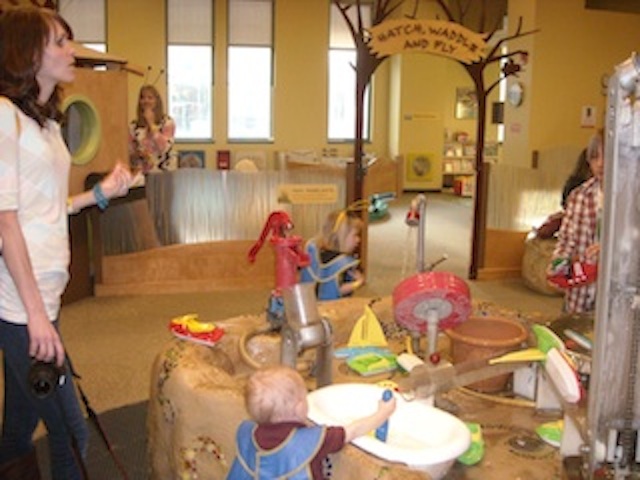
Discovery Gateway has fun interactive exhibits suitable for children of all ages

One organization that is doing this is the west-side nonprofit Discovery Gateway. Discovery Gateway specializes in children’s education through interactive exhibits, and like many nonprofits has experienced a drop in funds to the organization.

Steven Suite, chairman of the board of directors of Discovery Gateway, says the museum has been hit hardest by the decrease in donations given by foundations. Many foundations base their donation amount upon the interest they make on their investments. If the foundation’s investments do poorly, the donations to nonprofits suffer.

“Our strategy has been to put more focus on corporate sponsorship, more importantly, finding new donors to help fill the pot,” Suite said.

All donations to Discovery Gateway are tax-deductible

Discovery Gateway children’s museum is a 501 (c)(3) public charity. This type of nonprofit is tax exempt, benefits the community and derives at least one-third of its revenue support from the public.

“Discovery Gateway gets its funding from two places, the ZAP tax, which comes from the government and private donations and fundraising events,” Suite said. “Donations and fundraisers account for more than half of the museum’s yearly income. Without it the museum would cease to exist.”

According to the Community Foundation of Utah, 35 percent of Utah nonprofits have experienced a significant decrease in end-of-year giving. Twenty-eight percent reported a decrease in overall contributions and foundation, and corporate giving is down by nearly 50 percent. Overall, 64 percent of Utah nonprofits have seen donations decrease since the beginning of 2010.

Historically, Utah residents have given a great deal of support and funding to charitable organizations such as nonprofits. In fact, according to a report by the Community Foundation of Utah, the average charitable contribution per tax return in Utah is 4.9 percent while the national average is only half of that at 2.2 percent.

“Luckily, we have not had to go as far as raising our admission prices, or cutting down our hours but we did reorganize,” said Lindsie Smith, Discovery Gateway development and marketing director in a phone interview. “We have made changes in our staff and board of directors, and consolidated. To keep overhead costs down we have not rehired or filled any open positions.”

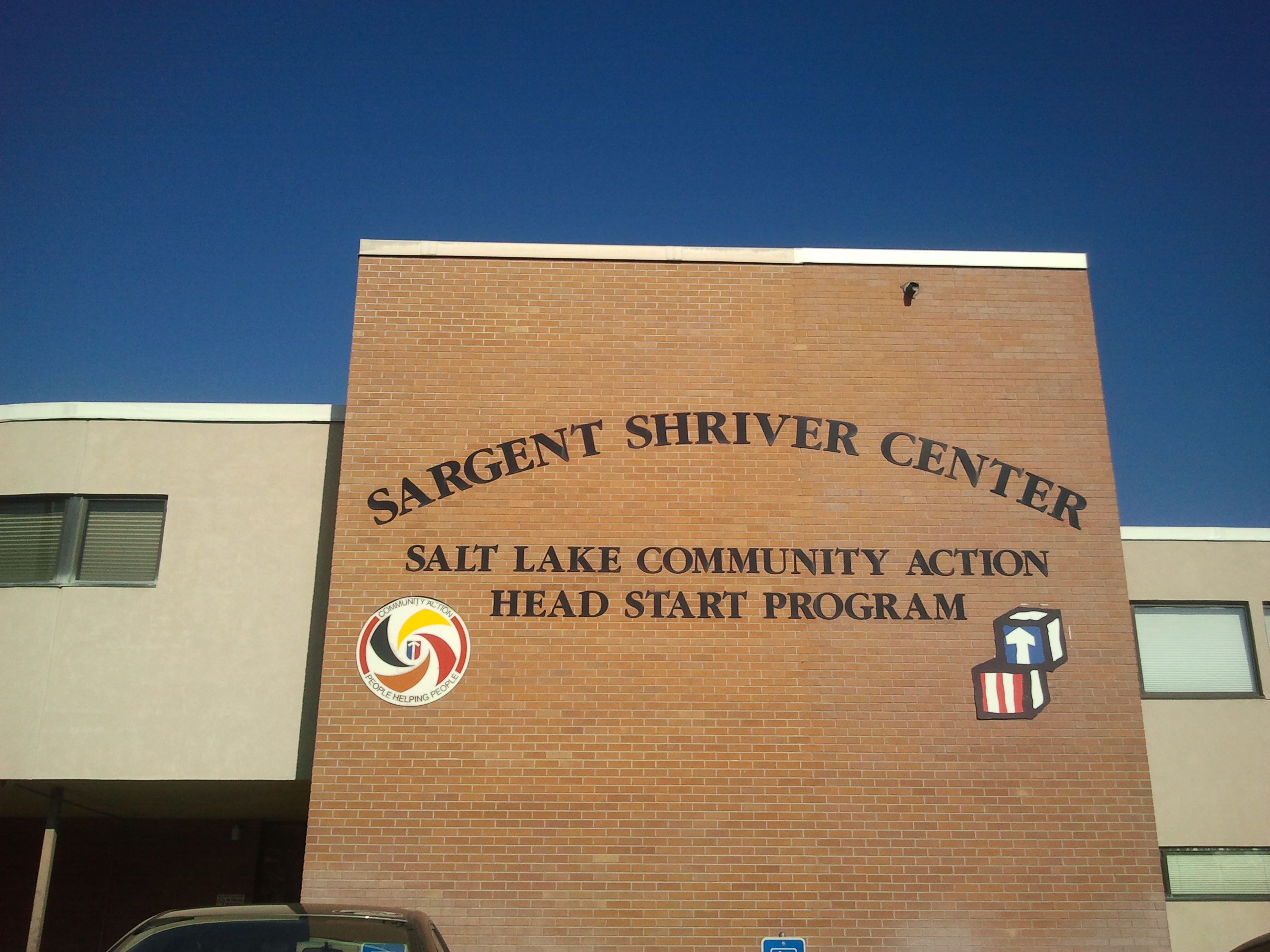
Salt Lake City Head Start: More than just a preschool

Story and photo by NATHANIEL BINGAMAN

Children are the future. In the United States the poverty level is increasing. That increase includes children. So, what are communities doing to ensure that children will grow strong, healthy and educated? One program to assist those in need is Head Start.

Low-income families can involve their 3- to 5-year-old children in Head Start.

According to its mission statement, “The mission of Head Start is to empower and educate young children and families facing adversity.”

The Salt Lake Community Action Program (CAP) opened the first Head Start program in 1965. In its first year the program had 34 students in two classrooms. Today Head Start works with 2,400 different families per year, spread throughout 84 different classrooms. The main campus is located at 1307 S. 9oo West. It also has various classrooms spread throughout the Salt Lake Valley. Children and their families all receive personal attention.

For example, at the beginning of every school year dentists volunteer their time go to the schools and give dental care to every child.

“If you are in pain because your teeth are falling out, you are not going to learn very much,” said Kristyn Hancock, the community partnership manager of Head Start, in a phone interview.

Dental hygiene is not the only thing on which Head Start focuses. The value of a healthy meal is also high on the list.

Children receive two-thirds of their daily nutritional needs during the day. “Our families are on a limited income. Foods that are unhealthy are usually the cheapest,” Hancock said. She also said they serve more than 2,000 meals per day and these are not your typical school lunches. The meals include a wide variety of selections such as pumpkin soup and salmon linguini.

Families with children in Head Start are assigned a family advocate. These advocates work with families and help them engage in their child’s learning.

“We teach parents to read to their kids and how to help them with their homework,” said Kayla Beesley a family advocate in the Head Start program.

Beesley works with 64 families in the Salt Lake area. Her position allows her to help find resources for families. From health care to clothing, she works with local businesses and nonprofit organizations to get families the things they need. Families who have children enrolled in the Head Start program can receive all these services for free. “It is very satisfying to know you are helping someone in their time of need,” Beesley said.

The Head Start program relies heavily on volunteers. According to the website, Head Start places about 4,000 volunteers each year. Volunteers must be 16 years of age or older and complete a background check.

“This job has made me aware of problems that I was not aware of before. Our waiting list is a sign of how much help is needed,” said Katie Smith, the volunteer coordinator for Head Start. “Volunteers help with a lot. They read to the children, play games with the children even help them brush their teeth after breakfast and lunch time.”

Not only do the volunteers help inside the classroom, they can help outside as well. Student-nurses volunteer their time to give free checkups and physicals to the children every school year. Landscapers and painters provide their trades to the interior and exterior of the buildings as well.

“People think we are just a preschool for poor kids,” Hancock said, “but we are so much more.”

The U connects to the west side for further educational options

The Jordan River, West Valley City

The Jordan River runs through the west side of Salt Lake City.

Story and photo by JOHANNA WISCHMANN

“Partners in the Park” gives the community on the west side access to information and opportunities for further education after high school.

The program, which focuses on seven neighborhoods, started about nine years ago to raise awareness to people that they can have the chance to receive a further education.

“Partners in the Park” strives to strengthen opportunities for youth to receive further education. It also supports community leadership and helps the community have a more stable foundation by working on things like health, safety, housing and employment.

During the summer, free events are held in ethnically diverse neighborhoods at Jordan Park, Neighborhood House, Riverside Park, Sherwood Park, Westpointe Park, Constitution Park and Poplar Grove Park.

Joèl Arvizo, the partnership manager for youth education and success at University Neighborhood Partners, said particular communities are targeted because “of historical inaccessibility and disadvantages.” He also said, “The families are very interested in direct information for their children’s further education.”

UNP works with culturally diverse Salt Lake City neighborhoods to try to get students interested in attending the University of Utah. UNP partners with nonprofit organizations and U departments and colleges to try to link these neighborhoods to the U and create a stronger foundation for these communities.

“The west side has a lot of stereotypes which often aren’t accurate,” said Sarah Munro, UNP’s associate director. “Partners in the Park” is one of UNP’s programs.

Overall, Munro said UNP’s “program gives the west side the same opportunities that other neighborhoods have.”

Munro said one of her long-term goals is to try to ensure that the west side receives more recognition from the government. “The biggest complaint is that they were under represented,” Munro said. In an interview she described some of the problems west-side residents have had and said people often don’t know how to make their voices heard.

UNP aims to “help build a bridge from the U to the west side.” Munro said programs like Partners in the Park help a lot of children because parents want them to have a brighter future than the situation they are currently in.

“Our policy is to work with anybody,” she said. “They should have the same opportunities that other areas have.”

On average, 400 people attend the events, which feature activities and picnic dinners.

“For the past 10 years the region has been researched and we found that fewer numbers of students were attending the U from that region,” Arvizo said.

“Partners at the Park is necessary to spread information about the help we can offer the community,” Arvizo said.

“Partners in the Park” and the UNP are always looking for help and volunteers. To access more information and ways to help visit the website or contact staff.

Bennion Center, Mountain View Elementary School partner to prepare students for higher education

Story and photos by TOM BETAR

Put down the crayons and paint and pick up the calculator and textbook — students at Mountain View Elementary School are being prepared to soar into college and beyond with the help of the University of Utah’s Lowell Bennion Community Service Center.

The Lowell Bennion Community Service Center, located in the Student Union Building, has partnered with Mountain View for about 10 years. During that time they have fostered many positive relationships with their students and faculty. The Bennion Center staff coordinates several programs that are designed to help students and teachers of Mountain View, both inside and outside the classroom.

Nancy Basinger, Bennion Center assistant director and service learning manager, said the center was founded in 1987 and was named for Lowell Bennion, a famous volunteer in the community. He is honored by the Legacy of Lowell event, which is the kickoff to homecoming every year. In 2011, the event was held Sept. 24 at Mountain View. It featured about 1,000 university students and community members working on about 20 different service projects that included everything from making dental hygiene kits to crafting quilts for refugees.

Mountain View Elementary School, located at 1389 S. Navajo on the west side of Salt Lake City, is a Title 1 school, which means it is typically populated by students from low-income families. Students in this area are generally underrepresented at colleges such as the U, so schools like Mountain View Elementary are working to reverse this trend.

Mountain View Elementary School has many programs in place to help students succeed in higher education.

Alice Ma, 22, is the education and advocacy coordinator at the Bennion Center and works with Mountain View children by reading to them throughout the week. She also oversees two student-directed programs that take place at Mountain View. The programs, SOARE and Soaring Eagles, are directed by student volunteers at the U and are set up to get Mountain View students thinking about higher education as early as possible.

SOARE is a program where field trips are set up so students from Mountain View can come visit the U campus to explore and ask questions.

Soaring Eagles is a tutoring program where volunteers from the U spend a minimum of one hour a week throughout a full semester at Mountain View tutoring students, helping out in classrooms or working with students after school. Ma said Mountain View students respond well to these programs.

“The field trips have been successful in the past and they get kids excited,” she said. “The idea is to encourage them to come to college and get them excited about coming.”

Jim Martin, 36, has been the principal at Mountain View Elementary School for two years. He said Soaring Eagles helps tutor his elementary students specifically in math and reading. He said volunteers help all throughout the day, but even when the final bell rings to dismiss students at 2:50 p.m., many of them do not head home.

“We have about 270 kids who stay for an additional hour of school,” Martin said. “So some of those (Soaring Eagles) volunteers are steered toward the after-school time and being able to support kids’ learning needs.”

Ken Kurimoto, the student director of the Soaring Eagles program since May 2011, said many students and teachers at Mountain View need assistance.

“Because of the distraction of other students and learning levels of individual students, teachers cannot teach every student in an equal level, especially with a large amount of students,” he said in an email interview. “People need our help, so we need to understand the strategies and concepts of helping others in need.”

Kurimoto said there is a unique atmosphere at Mountain View that indicates how serious the school is with achieving the goals of higher education. He enjoys the work he does with these students.

“Mountain View is highly focused on the discipline of the entire students including hallway procedures, classroom procedures and respect to authority such as teachers and tutors,” he said. “Teaching them is a very interesting and exciting matter. It does not matter what your major is, teaching other people is important.”

Principal Martin said college preparation at elementary school is now a reality.

Children at Mountain View are spending less time on the playground and more time in the classroom as programs such as Soaring Eagles prepare them for higher education.

“Our goal in elementary school now is having kids be college and career ready,” Martin said. “And anytime they can interact with someone from the university it sort of cements that idea for them.”

Ma said it is true that elementary students respond differently to university students than they do to teachers or administrators.

“University students know what’s going on and can better answer all of their questions,” Ma said. “The (elementary) students get more one-on-one time are more willing to listen to someone who has the experience. They get really excited when university students come.”

Another student-directed program the Bennion Center provides in connection with Mountain View is the Social Justice Gardens. Lacey Holmes, Bennion Center public relations coordinator, said the community garden is divided in two. Half of the space is reserved for families who want to rent beds and maintain their own space. Residents can come and pick fresh produce from the other half. The garden is on the grounds on Mountain View and there is an after-school aspect of the program that focuses on teaching students about nutrition and environmental education.

“The Social Justice Gardens were started by a Bennion Center student and their idea is really to focus on environmental education and really bridging that gap between income,” Holmes said. “It really provides an opportunity for natural organic food in that area that might not be provided any other  way.”

She said much of the west-side work that her organization does is related to Mountain View Elementary.

“I think our mission on the west side is really to get our students involved in bettering the community but also to get the residents involved in higher education and desires for that, so it’s kind of a two-way street,” she said.

Holmes said students should stop by the Bennion Center at any time to get more information on service that can be provided to Mountain View or any part of the Salt Lake City community.

“It really provides an opportunity for students to get outside themselves and to maybe see a different aspect of life than they’re used to, and for them to really do things that they care about and to put their skills to use,” Holmes said.

Principal Martin said being a west-side school has historic challenges, so partners such as the Bennion Center are invaluable.

“(Elementary) schools have traditionally not been very successful with west-side students, so that continues to be a challenge,” he said. “What’s great about this area here is we understand that it is really important to try to pool as many resources as possible for the benefit of the students that we work with. I think that’s what been done so successfully here.”

Martin said these educational partners and programs provide hope for students in the future.

“We’re constantly trying to figure out ways to be more successful with our students because we believe that their potential is huge and we just need to be able to figure out how to best tap that potential so that we can see kids achieving at super high levels,” Martin said.

Martin said right now there is no way to track the progress of his students as they move on to higher education, so it is hard to quantify any success. He said he has seen progress in the past few years, but there is room for improvement in regards to preparing students for higher education.

“We haven’t figured it out,” he said. “We haven’t found the recipe for success but I think we’re slowly and gradually figuring things out and seeing some success. I think we’re on the right track.”

Martin said seeing his elementary students work with students from the U is a great opportunity to plant the seed of higher education.

“Our 84104 ZIP code is pretty poorly represented at the university (of Utah) so it’s nice to be able to make connections with university students,” Martin said. “It’s always powerful when I see a student from Mountain View with a student from the University of Utah because I think that we’re making those connections so that students can start to see the university and higher education as a possibility and as kind of a life plan.”

Spy Hop and UNP: Shining some light on the west side of Salt Lake City

Story and photo by COLLIN McLACHLAN

What if you turned on the radio and heard this: “A young man was stabbed today in a probable gang fight in Bountiful.” Would you be surprised? Now imagine if the radio said it was in Rose Park.

“Stereotypes don’t reflect crime statistics,” said Sarah Munro, associate director of University Neighborhood Partners.

Founded Nov. 1, 2002, UNP is a program that “brings together University and west side resources for reciprocal learning, action, and benefit.” According to its website, UNP collaborates with communities and nonprofit organizations in an effort to “provide access to higher education.” Its drive comes from the idea that education is the key to strengthening both families and communities.

“UNP is not a service organization,” Munro said. “What we do is meet with local nonprofit organizations on the west side and establish partnerships that will benefit the community.”

UNP has many challenges to its work. “The difficult thing is that people want to know what changes are happening,” Munro said.

She said it’s difficult for UNP to measure its success because success doesn’t come from UNP’s work alone. Since its main focus is to create partnerships, UNP finds success when its partners do.

This doesn’t mean that success cannot be tracked. One organization that UNP has partnered with in the past is Spy Hop Productions.

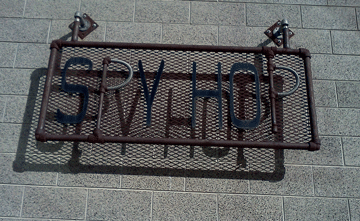
Spy Hop Productions works to help students on the west side.

Spy Hop Productions is a youth media arts and educational enrichment center. Spy Hop’s purpose, according to its website, is to “empower youth to express their voice and with it create a positive change in their lives.”

According to the site, Spy Hop works with some 1,800 students every year in the fields of documentary arts, video production, audio engineering, music and interactive media. Founded in 1999, Spy Hop has been “acknowledged by the Sundance Institute as setting the standard for media arts learning across the nation.”

Students learn things at Spy Hop that go beyond the classroom. “These kids are being taught to express themselves in a positive way,” said Virginia Pearce, director of Marketing and Community Programs in a phone interview. “It gives the kids a chance to be proud of something, which goes a long way.” A lot of students at Spy Hop live on the west side and come from backgrounds which Spy Hop refers to as “underprivileged.”

Spy Hop works directly with its students over long-term mentor-based instruction. The students get hands-on tutoring as they work on media stories, documentaries or music recordings. “There are so many success stories, I couldn’t think of just one,” Pearce said.

Matt Mateus, a programs director at Spy Hop, shared one student’s story that can be counted as a success for both Spy Hop and UNP. He says a student who grew up in Rose Park in an underprivileged family came to Spy Hop wanting to be a recording engineer. But he needed special classes that Spy Hop couldn’t provide. Spy Hop did, however, have contacts with universities that offered those classes. After the student had worked to raise the money, Spy Hop helped to send him to a school in Arizona that had a recording engineer program. “That student now works in Salt Lake where he owns his own recording studio,” Mateus said in a phone interview.

Spy Hop and UNP do still share a common belief that drives each organization. “Preparing students for higher education is directly related to Spy Hop’s programming goals,” Mateus said. The organization collaborates with Salt Lake Community College (SLCC) quite a bit.

“A lot of our students are underserved,” Mateus said. “They usually don’t have the opportunity to jump into the U of U, so they go to SLCC.”

These types of success stories are different from the articles normally published in the newspaper.

Salt Lake City Bicycle Collective offers Community Bike Shop programs to west-side youth

Story and photo by CECELIA FENNELL

The University of Utah Community Bike Shop has a bike on the roof.

The Community Bike shop, located at the Salt Lake Center for Science Education, offers tools and know-how for people to fix their bikes. In addition to providing basic bike repairs, The Community Bike Shop offers youth programs.

Middle-school aged students residing on the west side of Salt Lake City volunteer at this community bike shop and teach other children from that community how to fix and repair bikes. Students learn how to teach the children by taking classes taught by bicycle instructors from the Salt Lake City Bicycle Collective, a nonprofit organization located at 2312 S. West Temple.

Thanks to University Neighborhood Partners of the University of Utah, the Community Bike Shop and the Salt Lake City Bicycle Collective — two organizations with similar missions — were able to partner.

“Through this partnership, volunteer instructors from the collective teach student volunteers how to fix bikes,” said Sarah Munro, associate director of UNP.

According to its website, UNP’s mission  is to “redress historical inequity by understanding systematic barriers that have prevented access to higher education and to rewrite that history so residents of the west side see themselves as holders and creators of knowledge.” UNP serves as a bridge between organizations with similar goals and interests, Munro said.

The Salt Lake City Bicycle Collective was founded in April 2002 by five bicycle enthusiasts: Jonathan Morrison, Edward Whitney, Brenton Chu, Brian Price and Jesse Ratzkin. Its mission “is to promote cycling as an effective and sustainable form of transportation and as a cornerstone of a cleaner, healthier and safer society.” According to the website, the “Collective provides refurbished bicycles and educational programs to the community, focusing on children and lower income households.”

The Collective offers seven programs and services, two of which are youth programs for children living on Salt Lake City’s west side. One, Earn-A-Bike, helps kids learn bicycle mechanics and confidence.

“Kids get to come in, pick out a bike and they get to keep it. The catch is they have to take it all apart and put it back together themselves,” said Jonathan Morrison, executive director of the Salt Lake City Bicycle Collective.

Bike mechanical skills aren’t the only skills learned through Earn-A-Bike. According to the Collective’s 2009 annual report, “In addition to learning bike mechanics, the children are mentored in time and resource management and many students become valuable mentors to their classmates.”

Morrison sees the impact his instruction has on his students, how it affects not only them, but also the kids they will teach.

“The best part was when they used their extra time and knowledge to become a peer-mentor,” Morrison said. “As an Earn-a-Bike instructor, those moments where the student becomes the teacher make it all worth it,” he said.

Another youth program, Trips for Kids, reconnects city youth with Utah’s mountains through mountain biking. Participants are able to take trips to Bonneville Shoreline Trail, the Mormon Pioneer Trail and Liberty Park with the help of adult and youth volunteers. According to the annual report, “Trips for Kids opens up the world of cycling to at-risk youth through mountain bike trips, which include lessons in personal responsibility, achievement, environmental awareness, practical skills and the simple act of having fun.”

Locations of the Bicycle Collective have extended to the Day-Riverside Library, the Ogden Bicycle Collective and the University of Utah community bike shop, located near the Utah Museum of Fine Arts. Each location shares its volunteers and other nonfinancial resources. While services are limited to low-income youth and families on the west side, everyone is invited to volunteer. Students at the U may wish to volunteer at the campus bike shop.

For more information, call 801-FAT-BIKE (328-2453).

Refugees learn at The English Skills Learning Center

Story and photo by NATHANIEL BINGAMAN

Imagine moving to a new country where you do not know the language and you do not have any formal educational experience. Even holding a pencil is new to some. This is the case for thousands of refugees every year. But, with the help of the English Skills Learning Center in Salt Lake City, these individuals are able to learn basic skills such as reading and writing in English.

Beth Garstka, the volunteer coordinator for the ESLC, said more than 16 million refugees live around the world and more than 1,100 come to Utah per year. These individuals come from countries such as Afghanistan, Egypt and Sudan. They are people suffering from war, natural disasters and famines. They come to America with the hope of freedom and improving their lives, but many of the refugees do not have a formal education.

The ESLC offices are located at 631 W. North Temple. It was originally called Literacy Volunteers of America-Wasatch Front (LVA-WF). Its founding member, Mary Hausen, formed LVA-WF in 1988. She was previously involved with an affiliate in Connecticut.

The organization’s first mission was to help improve literacy in adults and those learning English as a second language. In 2001, due to the rapid growth of refugees in the world and non-English speakers in the community, the organization focused solely on English as a Second Language.

The nonprofit organization is unique because it works with a student’s availability. “If they do not have transportation we will meet them at a library or church, anywhere that is convenient for them,” Garstka said.

Multiple class options are available to the students, including one-on-one classes and small group classes that have four to 10 students at a time. Many students participate in classes that prepare individuals to become United Sates citizens. There are even classes to help parents better communicate with teachers and enable them to read their child’s report card. Best of all, the classes are free.

Students have a good reason to come to class. “We teach the people what they want to learn, not what they don’t have interest in,” Garstka said.

The ESLC focuses on where the students are in their life. For example, if students want to drive so they can get to work, they will be taught to read the necessary books and learn writing skills so they can obtain a driver’s license. If they want to obtain United States citizenship, the ESLC will teach lessons pertaining to obtaining that goal.

Jose Amezcua participated in a program offered by the ESLC while in grade school.

“We teach people simple things like the alphabet or even the proper way to hold a pencil,” Garstka said.

The tutors are volunteers 18 years of age or older. These volunteers go through a 14-hour training session where they learn how to teach reading, writing, listening skills and speaking activities. No previous teaching or tutoring experience is required and individuals do not need to know another language because all classes are taught only in English. For those wanting to volunteer, the ESLC offers information on various volunteering opportunities.

“We have amazing volunteers who love being here,” Garstka said.

When the ESLC first began it had a program called “I Can Read” aimed at elementary students who were reading below grade level. The program was eventually adopted by the Utah State Office of Education and used in schools throughout the state.

“The ESL program helped me a lot,” said Jose Amezcua 29, who took ESL classes while he was in grade school. “Without it I would have had no friends and it would be hard for me to get an education in this country.”

Now a college graduate and an electronics salesman at a local Sears store. Amezcua is grateful for the ESL program and the help he received. “Without the classes it would have been hard for me to go to college and get a job,” he said. “Without a job it would be hard for me to take care of my wife and family,”

Learning a new language is difficult for almost everyone, but The ESLC helps make that transition a little easier.

University Neighborhood Partners, Bad Dog Arts collaborate for Salt Lake City’s west side

Story and photo by BROOKE MANGUM

The University Neighborhood Partners (UNP) and Bad Dog Arts are collaborating to provide underprivileged youth on Salt Lake City’s west side opportunities to learn, discover and express themselves through art.

UNP is a program at the University of Utah that forms partnerships with organizations like Bad Dog Arts to create a greater sense of community between the U and west-side neighborhoods. It serves as a liaison between the U and west-side nonprofit organizations, resident groups and city governments.

“The reason for the focus on the west-side neighborhoods was because those neighborhoods were historically marginalized within Salt Lake City socially and economically and were incredibly under-represented at the U in terms of where students came from,” said Sarah Munro, UNP associate director.

UNP has been in this building since 2003.

Originally called the West Side Initiative, UNP developed about 10 years ago in response to feedback gathered during 300 interviews with area residents. Currently, UNP has 34 partnerships with 43 departments at the U that each focus on identified issues within the community such as race, ethnicity, religion, political views and geography.

“All of the UNP partners contribute to the community in different ways depending on their area of expertise,” said April Daugherty, program coordinator at Bad Dog Arts during an email interview. “Since our focus is in the arts, our role is to bring art into the community. Our role with UNP fulfills our mission to inspire youth from diverse cultures and offer art experiences to populations who would otherwise not have the opportunity.”

Bad Dog Arts has partnered with UNP for three years. It is located at 824 S. 400 West in Salt Lake City. Bad Dog Arts is a nonprofit organization that aims to inspire “at-risk and underserved” youth ages 5 through 18 to experience the power and freedom to imagine, dare, learn and challenge themselves through art. The hope is that  youth will develop self-confidence and be able to use these skills throughout their lives.

“It is a form of expression that has no boundaries, transcending language barriers,” said Victoria Lyons, Bad Dog Arts co-founder and director, in an email interview. “Bad Dog programs instill confidence and pride and give children a safe space to discover their innate creativity, artistic ability, purpose, and potential.”

Through the partnership of Bad Dog Arts and UNP, art classes are offered on a weekly basis at UNP’s Hartland Partnership Center. The center, located at 1060 S. 900 West, is often used as a place for campus-community partnership activities to take place.

During the fall and winter of 2011 and the spring of 2012, Bad Dogs Arts will be working with UNP on a mural art project that will be displayed at the Hartland Partnership Center.

“This project will be a collaborative effort of all the residents and staff of Hartland, involving children, teens and adults,” Daugherty said. “The theme of the project is ‘Community.’ Art brings people together and on this scale can really function as a tool for building community.”

Through activities and programs like this, UNP and its partners hope to bring together the U and west-side resources and create a community environment of learning that is mutually beneficial.

“Learning is reciprocal,” said Sarah Munro, UNP associate director. “There is important knowledge in a lot of different places and different forms. It is critical for people to learn to recognize that in others.”

Switch to Under Armour brings budget increase, controversy to women’s basketball team

Story by JANITA BADON

Nike has been around the University of Utah women’s basketball team for more than 25 years. Nike guaranteed the team comfortable travel gear, shoes that fit perfectly and thin jerseys to make the players run faster. All  of that sounds good, but would you rather have quality or quantity?

The women’s basketball team is trading to Under Armour, along with the rest of the school. When talking about quality over quantity, the women’s basketball team budget grew from the $50,000 that Nike gave yearly to the $140,000 that Under Armour is putting on the table.

Nike gave the team home and away jerseys, practice uniforms, two pairs of basketball shoes, travel shoes and a pair of running shoes. Under Armour not only doubled that, but they’re also giving the womens basketball team pink jerseys for the national “Pink Game” that supports breast cancer.

Last year, the Lady Utes played Texas Christian University in a nationally televised game. The game just so happened to be the “Pink Game,” on the Utes home floor. The Utes took the court in pink shoe laces – all Nike game them. But the Lady Frogs wore pink shoes, pink jerseys and pink laces. Nike couldn’t give the Lady Utes pink jerseys because the football team is Under Armour and it would have cost $25,000, just for those jerseys.

With Nike not giving the Lady Utes what their opponents were getting, the coaches thought it was simply time for a change.

Although the coaches think it’s a great idea to switch from Nike to Under Armour, not all the players share their excitement. Rita Sitvi a sophomore guard for the women’s basketball team isn’t too fond of this decision and is actually considering switching schools.

“I love Nike, simple as that,” Sitvi said, “I had offers from other schools that were sponsored by Adidas but I turned them down for that reason.”

Most wouldn’t think switching sponsors would create this many problems, but it is the talk of the locker room around campus. But since the coaches call the shots, they don’t think it’s necessary to discuss with players. Anthony Levrets, coach of the women’s basketball team, thinks this was a great decision.

“I think switching to Under Armour was a huge decision, which I made with a smile on my face,” Levrets said. “I think our girls deserve way more than what Nike was supplying us, and Under Armour isn’t not only enough, but they’re spoiling our girls this year. I say spoiling because what they get from Under Armour compared to Nike is double, almost triple the amount”

Comparing and contrasting the numbers and the quality of the product, he only worries about the shoes. With Nike being around for as long as they have been, they have a good resume for the basketball shoes they produce. Under Armour just began to make basketball shoes in 2010.

“My one and only worry about Under Armour is how comfortable the shoes are going to be for the players,” Levrets said. “With them being so new to basketball shoes, that thought, makes me want quality over quantity.”

The players on the team have mixed emotions and are really just worried about how comfortable they’ll be on the floor. But it’s not all frowns on every player on the women’s basketball team; some are really happy about the change. Michelle Plouffe a freshmen small forward for the Utes, is excited.

“I have never been the one that’s into what I wear on the basketball court; I more concentrated on how I play,” Plouffee said. “Most people are caught up in the swoosh symbol, when that’s not what’s putting the ball in the basket.”

University of Utah students brace for tuition hikes

Watch a multimedia slideshow about increasing tuition costs as the University of Utah.

Story and multimedia by SCOTT WISEMAN

The price of a college education is at a record high, causing troubles for students across the nation. While financial aid, scholarships and student loans are available to create some relief, many students are scraping together their last pennies to meet the required costs to attend college.

University of Utah students met financial struggles last year as the cost of attending school was at an all-time high. The same students will face yet another challenge as tuition will rise 7.8 percent starting in the summer semester of 2011, university officials announced earlier this month.

The increase determines that the average in-state undergraduate student taking 15 credit hours will expect to see an increase of $247 per semester. A 15 credit load for an out-of-state undergraduate will increase by $783 per semester.

“I really do not know how I’m going to come up with the extra money,” said Gunnar Lamb, an undecided freshman. “Being an out-of-state student is really starting to catch up with me financially.”

The tuition increase for next year is less than last year’s increase, which hit students for 9.5 percent.

“Of course, we do understand that in a tough economy, this is hard for students,” said David Pershing, senior vice president of academic affairs. “This is why we tried really hard to find a balance between maintaining the quality of the university and the tuition increase.”

Tuition at the U is divided into two different tiers. Tier one is the budget decided upon by the Board of Regents, while tier two is decided on by the University of Utah. The overall 7.8 percent increase is comprised of a 5 percent increase in tier one, and a 2.8 percent increase in tier two. The Board of Regents in St. George approved the final adjustments to the increases on March 27.

The Board of Regents originally approved a 7 percent reduction in state funding, but lowered that amount to 2.5 percent early last month, according to higheredutah.org. The tuition increase would have raised an additional 5 percent if the original reduction had been approved. The students have been asked to pay the amount out of pocket that the federal government decides to cut each year.

“State support for our colleges and universities has been steadily declining over recent years,” said Board of Regents chair David Jordan in an interview with higheredutah.org. “We need to reverse that trend so that all of our institutions remain affordable, particularly at the community college level. We can’t continue to cover increasing costs with tuition hikes.”

Students are turning to additional sources of funding such as grants, scholarships and loans to help make up the difference in prices.

“Although my tuition has been paid through scholarships, for friends who do have to pay out of pocket, that is a pretty high increase which would make a significance difference,” said Carla Gonzalez, a senior in behavioral science.

Currently, the U is funding is comprised of 47 percent tuition and 53 percent state funding, Pershing said. An increase in tuition will help bring a higher percentage of private funding to the U.

Tier two funding, the additional budget determined by the University of Utah, has been broken down by use. A majority— 56 percent— of tier two funding will be used to restore funding to academic departments, 18 percent given to student services, 13 percent for academic support and 13 percent given to other support areas such as utilities.

The overall increase in tuition has 32 percent of budget going to faculty retention, 29 percent for academic departments and 19 percent to staff health insurance. Only 5 percent of the overall increase will go to benefit academic support.

“Students clearly don’t look forward to the increases in tuition and fees, but most students seem to understand that we try to keep increases as small as we could,” Pershing said. “The U is a very cost effective place to attend school based on its quality.”

In the 2010 school year, the university’s resident undergraduate tuition and fees totaled $6,274. This is significantly lower when compared to the national average of $7,605. When compared to other public universities of similar rapport, the University of Utah fared well. Select schools such as Pennsylvania State University and the University of Illinois cost almost three times as much as Utah.

Chase Jardine, president of the Associated Students of the University of Utah and a senior in economics and chemistry, said that while he believes that the increases may bring hardships to college students, they were necessary to prevent department closures and faculty layoffs.

“Of course the increase is unfortunate, but I was very impressed with the administration’s dedication to see it as low as possible,” Jardine said. “The 7.8 percent is as low as we possibly could increase given the economic severities we have.”

Pershing highlighted the fact that the University of Utah only can offer approximately $17,000 worth of core funding per student. Other top schools, such as the University of North Carolina provide almost $30,000 of core funding per each student. He stressed that in order for Utah to compete with the top schools in the nation, more core funding is needed.

Dominic Ford, a junior in geography said he doesn’t like tuition increases, but sometimes they are necessary. Increased funding for academic departments will be an improvement, Ford said.

“It’s better than last year’s increase,” Ford said. “I don’t know if I’m okay with it, but with budget cuts everywhere, there’s not much that we can do about it.”

Student fees are also increasing at 7.8 percent. Some of the increases will be represented by a $17 increase in a building fund and a $5 increase in the fine arts budget for an in-state undergraduate taking 15 credit hours. The only area with a cut budget is the utility fee, which is dropping $3 per semester.

“If the fees are going to impact the student in a better way, then I guess it is okay, but the part I don’t agree with is the increased health insurance for the faculty,” Gonzalez said. “If they want better insurance, they should pay for it out of pocket, not out of mine.“

These increases in budgets have already had impact on the university’s campus, as the Associated Students of the University of Utah announced this week that it will be able to increase its amount of funding for the next school year.

“I do not attend any on campus events hosted by ASUU, and I would like to see those budgets cut before I pay more tuition,” Lamb said. “The academic integrity of this school is the most important value, and tuition increases are only justifiable to improve academics.”

Cheston Newhall, a junior in business said while tuition increasing will be negative to many students on campus, he believes that increased funding will help to improve the quality of the university.

“They’ve got to do what they’ve got to do,” Newhall said. “Although it is unfortunate that we will all be paying more money as students, but at least we’re going to get something back out of it.”

Along with the increase in funding to help maintain key staff and faculty members, Newhall said that an increased budget to help with on campus events is important.

“Going out to events sponsored by ASUU on campus is a great way to get connected to the university,” Newhall said. “I feel as if the U would not be as strong of a community if the events budgets were cut.”

According to Pershing, in 2008, a high school graduate had mean earnings of $40,000 per year, while those who had their bachelor’s degree earned a mean of $70,000 per year. Even though the price of obtaining a bachelors degree is rising dramatically, students say those mean salaries show it is worth the initial sacrifice.

“All in all, the tuition increase is unfortunate, but ultimately necessary,” Gonzalez said. “I will continue to stick it out and get my degree as planned.”