University of Utah professor and chef collaborate and create ways to spice up their nutrition class

Story and slideshow by SYDNEY BULL

Catch Chef J Looney in action cooking up some of his favorite dishes.

“Follow your bliss,” Chef J Looney said as he lounged next to the fireplace while enjoying a green smoothie.

Looney is a private chef in the Salt Lake area. He caters events and works for the College of Health at the University of Utah as well. He is obsessed with cooking and shares foods from other cultures around the world with a diverse group of students in the Cultural Aspects of Food class, NUTR-3620.

It all started when Looney was a young kid. His father has been in the food service for a very long time and worked with institutional food, in churches, hospitals and schools on a mass scale.

When Looney was 8 years old, his father managed a cafeteria in a church office building in downtown Salt Lake serving between 3,000 and 5,000 meals a day.

Looney said he fell in love with the action in the kitchen and the look of the large stockpots full of chicken noodle soup and the fact that his dad could make so much food for all those people in need.

Once he turned 14 he lied on his application and told his hiring manager that he was 15 so he could be hired as a dishwasher. He went home every night with the stench of grease and dishwater but loved every second of it.

Looney then spent eight to nine more years there working his way up to line cook and then lead cook. He was finally promoted to managing a prime rib and seafood buffet before he decided to leave the food service industry.

Looney said he realized that he was still making minimum wage compared to all of his friends, which swayed him into working for “corporate America” at the Ritz-Carlton Hotel Company in central reservations. He worked there for seven years and traveled to many of its hotels.

He spent the next nine years in UPS management, but when he turned 40 years old he said he felt like something was missing. Looney needed that spark. That is when he decided to go back into the food industry again.

He said his wife was hesitant to let him quit at UPS because the pay in the food industry is low and the hours are long. But Looney insisted it was his passion.

“I just want something more,” Looney said. “I want to do something I am passionate about rather than do something just for a paycheck over and over again. I trusted my gut that it was going to work out.”

Word got out that Looney was getting back into food business. His friend Jason, who owns Point of Sale Retail System, called him up and asked Looney for a list of his top five dream jobs.

Looney said that Jason sent out letters of introduction. That is when Karen Olsen, the owner of the Metropolitan, called Looney and offered him an interview with the restaurant’s head chef. (The Metropolitan used to be the crown jewel of Utah’s fine dining but is no longer open in Salt Lake City.)

However, Looney said he met with the head chef and explained that although he had been out of the food service for 15 years, he cooked consistently throughout that time period and still had a huge love and desire toward it.

He was offered an unpaid shift to see if he was qualified enough to work in its kitchen. Looney, who never attended culinary school, said he walked in with only one knife.

The head chef placed Looney at the salad station, and it wasn’t easy. He said after a whole night of feeling completely stressed and demoralized, the head chef offered him the job as a line cook.

Looney said it was still a bad paying job and had long grueling hours but he used it as an opportunity to learn as much as he possibly could from everyone in the kitchen.

Once the Metropolitan closed, Looney became an executive chef at the Prairie Schooner in Ogden, Utah. At the same time, he also got a call from a friend at the U, who wanted his help teaching a nutrition class focused on ethnic foods.

The class, Cultural Aspects of Food, became extremely popular once word got around on campus that there was a chef cooking food for students. Looney worked with another talented cook, Tahmina Martelly, a chemist and licensed nutritionist who works as a professor at the U

After two and a half semesters, the class expanded to four classes a week and became a significant part of Looney and Martelly’s career. Their teamwork allowed her to spend time in the class teaching the cultural factors of each region while Looney spent time in the lab cooking up different recipes according to those regions.

“Food is like a language,” Martelly said. “Food is a huge part of cultural identity and has a sense of home and helps people connect to a new place and also has a healing effect.”

Martelly’s experience with food hits closer to home than most people in the United States. She is a refugee from Bangladesh and now also works as a program director for after-school tutoring and homework help at the International Refugee Center (IRC). In addition, she teaches a computer class to adult refugees to help them gain experience and find future jobs.

The Cultural Aspects of Food class is important to her because of her experience, knowledge and perspective of different cultures covered in the class. She is in the middle of rewriting the course curriculum because the way she teaches is more personable and relatable than other instructors.

Martelly has done a lot of traveling and has more background with these regions compared to the other instructors. She said she wants to help the department apply knowledge from her experiences and standardize those items compared to just teaching out of the textbook.

“When Chef J and I got together he wasn’t as familiar with the cultural stuff,” Martelly said. “Which is why I did most of the teaching and he did the cooking in the lab. He has a teachable spirit, he talks and cooks at the same time. He is very good at interacting with his students. He is a talented cook but very modest and humble. Most chefs I know have a huge ego. But the more we teach and give background information the more he learns and the more familiar he gets with the recipes and the cultures behind them.”

Chef J Looney found his bliss. So on top of teaching he began cooking for athletes, doctors, families and friends. He said he makes a pretty good living now, to the point where his wife is completely happy and satisfied.

“I started promoting that I can cook meals for individuals and families while also catering events,” he said. “I have a pretty solid client list, about 20 people that I cook for at any given time. On Mondays I go grocery shopping, Tuesday I spend cooking all day and Thursdays and Fridays I spend planning out the meals for the following week. It’s a good gig and the days in between I spend on campus teaching because I want to. That’s basically how I got into the whole personal chef thing and wedding season is coming up so I have a few weddings scheduled for the next six months.”

Looney rarely cooks at people’s houses, he mainly works out of a commissary kitchen on Redwood Road, which gives him plenty of space to prep meals for the week. Around 8 a.m. he and his staff prepare approximately 10 different meals within five hours. Then when completed he and his staff send the coolers off to be delivered to the clients’ door. Typically he makes about five lunches and five dinners per client. However, his bodybuilding clients are a little high-maintenance.

Not in a bad way though, they just require about six smaller meals a day and have a very selective menu to choose from. Because Looney is so familiar with flavoring his meals, it helps bodybuilders spice up their foods without going over their macros, the number of grams of protein, carbohydrates, and fats they consume on a particular day. That is why Looney occasionally offers a Bodybuilder’s Meal Prep Class to demonstrate cooking skills and items that can make their food taste better without sabotaging their physical gains.

Looney is an experienced cook and does his best in social media marketing. But most of his marketing is done by word of mouth because he leaves all of his clients and students feeling not only full and satisfied but also inspired.

Chef J Looney and Tahmina Martelly are a dynamic duo in the classroom and have worked very hard to be successful human beings. They are prime examples of the cliché phrase, “follow your dreams.” But how else can one be truly happy if he or she is not taking risks and living life fully?

“My whole underlying theme to my life thus far is, just do what you love,” Looney said. “I spent 15 years in ‘corporate America’ because I thought I needed a paycheck. And when I really took the leap to follow what I wanted to do made all the difference. And yes I took a lot of risks and it hasn’t been smooth sailing, there’s been some huge learning lessons, a lot of pain, blood, sweat and tears getting there. But I have never been happier in my life. So whatever the price you have to pay to follow your bliss, pay the price. Build your lifestyle around what it is you love doing, not the other way around.”

The H may be a mystery, but Hires is not

Story and photos by BRANDON RISLEY

Come see why Hires Big H has been one of the most popular restaurants in Salt Lake City for over 50 years.


Walk into any Hires Big H and you’ll almost certainly find a crowd. This is particularly true for the restaurant at the corner of 400 South and 700 East in Salt Lake City.HiresBigH_Stand

Hires Drive In was founded in 1959 by Don Hale. He originally worked for his family’s grocery store that they created to help with money during the Great Depression.

Mark Hale, a son of Don Hale and current co-owner of Hires with his brother Jon, said that during the time of the Great Depression Don worked a lot with fresh meats and produce and developed a keen sense for how burgers should be made.

Mark talked about how his father wanted out of the of the grocery business. “He hated it,” he said. “He had to work long hours and did the same things every single day. Because of the store he knew his way around a grill and with his knowledge of food he wanted to start his own restaurant.”

Mark said his father purchased property in the early 1950s by his family’s grocery store in hopes to one day open his own place. When Don finally had the money to build, he completed his first restaurant. To this day it still stands at the same street corner in Salt Lake City.

Before Don opened his restaurant’s doors he still couldn’t figure out what to name it. Mark said that Don Hale had taken a trip to California before the restaurant’s first day to get away from the store for a bit. He visited a place called Bob’s Big Boy and fell in love with burgers there. “He wanted to name it after [Bob’s Big Boy] but it had already been trademarked,” Mark said.

Shortly before the store opening day a salesperson for Hires Root Beer was making rounds asking if people wanted to sell Hires at their establishments.

“My father figured, ‘Yeah that’s not a bad idea. A tall, cold glass of root beer would go great with a burger,’” Mark said. According to Hires Big H website, when Don took the deal Hires sent him a sign to put up above his restaurant to help advertise Hires and not long after the name of Hires Drive In came to life.

Mark said the restaurant was doing very well but his father wanted to spice up the place by adding something new. “His mother used to make a kind of Thousand Island dressing-type sauce that had a pink color to it. My father loved the sauce and figured it would taste great on a hamburger,” Mark said.IMG_5459

Don experimented with a few different ingredients until he finally created the sauce he adored as a kid. He then put it on a burger and the Big H Burger was created.

Mark said the customers loved the sauce so much that they asked for cups of it to dip in their fries. The experiment took off and Hires’s signature fry sauce was then invented. According to Don Hale’s obituary, published in the Salt Lake Tribune in January 2011, the company was then producing more than 10,000 gallons of fry sauce annually for its restaurants and retail.

Mark said that he can’t reveal exactly what is in fry sauce. “It’s a family trade secret but essentially it starts with ketchup and mayonnaise,” Mark said.

According to the Tribune article, the Big H led to a whole new line of burgers such as the Western H, which is basically the Big H with bacon, and Country H, which comes with BBQ sauce. With the “H” added to the menu, Don decided to rename his restaurant from Hires Drive In to Hires Big H.

Mark said that Don never actually told his customers exactly what the H stood for. “The rumors going around were that it was either Hale, Hires or hamburger,” Mark said. According to the Tribune article, Don only had this to say to his customers: “Let’s just say it’s one of those.”

Mark said that with old age and many years of work setting in for Don he handed ownership over to his oldest son Jon in 1980. Five years later Mark joined his brother as co-owner. “We’ve tried to keep things as similar as possible to when my father first opened the place,” Mark said. “We did a remodel shortly after taking over and tried to bring it more back to what it felt like in the ’50s but for the most part we’ve tried to keep it the same with the same items and feel.”

Don Hale died on Jan. 29, 2011, at the age of 93. “We were devastated with our loss but we knew my father had led a successful and happy life,” Mark said.

Mark said his father believed in hard work, quality of food and bringing together a community. Long-time Salt Lake City resident Celeste Bennett said she’s been coming to Hires Big H since it opened. “We had just moved from Denver [and we] used to live off 600 South and 800 East,” Bennett said. “We’ve been going to Hires ever since the ’60s. When we first met DoIMG_5454n as he was walking around the restaurant we were just blown away by how nice he was. He not only asked us if everything tasted good but also talked to us about our move to Salt Lake and how we liked the city.”

Mark went on to say, “My father didn’t just want to create a place with great tasting food, which he did, but he wanted to create a place the friends and families could come to celebrate life. It’s kind of become our mission statement.”

Mark also said Hires’s fame has been helped by articles written in publications such as the Wall Street Journal and USA Today.

Cassidy Simpson, a student at the U, has loved Hires Big H ever since she moved to Utah in August 2013. “I love this place so much,” Simpson said. “There isn’t really a local burger joint close to my house in Las Vegas and so coming here and experiencing something as awesome as this is just incredible. The burgers taste like heaven.” Simpson also talked about the fry sauce. “I’d heard that fry sauce was created in Utah and after tasting it with one of the yummy fries at Hires I’m very glad that they did.”

Mark said owning Hires Big H has been one of the greatest joys in his life. “I love seeing people happy,” he said. “I love seeing them so content and satisfied and it just makes me smile. They come together and bond and become happier from the moment they walk through the doors.”

The best part about Hires Big H? “The community has all came together over a simple hamburger,” Mark said.

Zest Kitchen and Bar provides organic dining in Salt Lake City

Story and slideshow by RYAN CARRILLO

Visit Zest Kitchen and Bar and see some of the amazing organic dishes.


Nestled between some of the biggest chain restaurants in Salt Lake City, Zest Kitchen and Bar provides a dining experience that no one else can.

The restaurant, located at 275 S. 200 West, is reinventing healthy eating by providing a menu free of processed foods that tastes incredible. Everything the restaurant serves is also 100 percent organic.

“Everything’s fresh, and that’s really what I wanted is fresh and organic real food that came from whole foods and not from a box,” said Casey Staker, the restaurant owner. He opened the bar and restaurant nearly 2 and 1/2 years ago.

Staker has crafted a menu of 35 unique items between brunch, lunch, dinner and dessert. The restaurant offers an eclectic fusion of ethnic tastes and American favorites while using healthier ingredients than nearly anywhere else. It also offers a more “grown-up” environment, being for individuals 21 years old and older.

The brunch menu, available on Fridays and Saturdays (11 a.m. to 3 p.m.) features perfectly sculpted buckwheat pancakes or a fresh southwest skillet with quinoa, cheese, black beans and fresh pico de gallo, among other entrees. The brunch menu also includes the “best mimosas in town” for just $5, which come in a variety of flavors.

Zest’s lunch menu provides options that are hard to find anywhere else. Selections range from fresh fruit smoothies and small plate items like cheesey Brazilian bread bites to a fresh kale salad and larger entrée items like coconut curry forbidden rice. For people looking for less-healthy health food there is “barely buzzed beehive” grilled cheese, which puts a fresh spin on an American favorite by pairing it with the soup of the day, pesto and seasonal fruit.

The dinner menu mixes things up by offering mostly shared plates or larger entrees, while still featuring fresh salads and perfectly blended juices. This particular menu is home to beet and walnut dip served with fresh veggies, baked mushrooms with cashew cheese and a tomato and eggplant ratatouille that comes with spinach quinoa.

Perhaps the best part of the menu comes after the entrées, soups and salads have been cleared away: dessert. Staker takes the same approach from his entrees and appetizers and applies it toward dessert staples, creating sweet, succulent cakes and tortes. One of these masterpieces is a carrot cake topped with rich cream cheese, shaved carrot and orange peel.

Tim Hurty, a local resident, has visited Zest Kitchen and Bar on multiple occasions. He is fond of the black bean chia patties served on a multigrain bun. Being a dedicated vegan, he was drawn to the restaurant because of its ability to accommodate his dietary needs. At Zest he is able to enjoy a delicious meal without fear of cross-contamination, which occurs when animal byproducts come in contact with any of the ingredients used in the meal.

Being a vegetarian himself, Staker’s menu is completely free of meat. Many of the dishes are also vegan and the staff is currently working to provide vegan accommodations for all their menu items. Not only that, all the dishes are gluten-free as well.

“Naturally by design vegetarian food or [rather] healthy vegetarian food is almost always gluten-free,” Staker said. As a restaurant owner, the needs of his customers seem to be a driving force behind the menu selection.

Billy McMichael is the head chef at the restaurant. Having worked in vegetarian restaurants for 10 years he understands the importance of these dietary restrictions in the lives of his customers.

“The Zest mission is to be inclusive,” McMichael said. “So almost any allergy you have, you can come here and get a good meal anyway.”

McMichael personally likes the challenge that comes with providing healthy food without sacrificing the taste. It forces him to be creative and innovative with the dishes he and the other staff members prepare.

“It’s been nice to come here where it is less about copying meat style dishes,” he said. “[It’s] more about charting your own path, making things that people haven’t done before, working with more ethnic variety, more variety of produce. I can’t just cheat and flavor up a big piece of tofu and put it with some mashed potatoes and say ‘here’s dinner.’”

The restaurant is also nearly free of soy and doesn’t use any peanuts. For individuals with any of these dietary restrictions, whether forced or voluntary, a restaurant with Zest’s knowledge and dedication is heaven-sent.

For vegans it can be difficult to find a restaurant that fully understands the difference between their needs and vegetarians. Vegetarians limit their diet to not eat any killed animals while vegans take it a step further by not eating anything from an animal. This eliminates things like eggs, milk and cheeses. While there are several restaurants in the Salt Lake Valley that can accommodate  the needs of both groups, there are few, if any, that also match Zest’s focus to overall health.

Zest Kitchen and Bar is also the only dedicated gluten-free restaurant in the city, which may come as a surprise as the gluten-free trend continues to grow and has created a multibillion dollar industry. Chain and local restaurants alike are expanding gluten-free menu items, but none have entirely abandoned the ingredient. Salt Lake is home to several bakeries that are dedicated gluten-free but that’s where it stops.

For individuals with Celiac Disease, a severe autoimmune disease that is triggered by gluten, Zest’s commitment offers them a hidden benefit that most people don’t see. The symptoms of the disease can be unleashed with the slightest trace of gluten in someone’s food. That means that even eating a gluten-free meal, if prepared in a standard restaurant kitchen where gluten is also used, can potentially cause symptoms to flare-up since the food may come into contact with gluten in a variety of ways. Since Zest’s kitchen is dedicated gluten-free there is zero chance for cross contamination. No one else in the area can offer that.

What may be most surprising is why Staker and his staff run the restaurant this way.

“I didn’t do this restaurant because I was sick,” said the owner. “I did it because I wanted a healthy place to eat.”

Zest is also “healthy” for the economy. The restaurant tries to buy as much local product as possible, supporting local merchants throughout the year. Since the menu is dependent on fresh fruits and vegetables this can become difficult as the seasons change.

“In the summer we do as much local [shopping] as we can. We still get our greens from a local greenhouse,” Staker said. “We have a special salad that’s always local. [The selection of produce] gets better and better when it gets warmer. Spring, summer, fall we have a lot of local stuff. During winter we have to outsource. Our goal is to support local.”

That commitment to the local community doesn’t stop just in the restaurant’s shopping practices. The staff is active in the community, exposing new people to their food on a regular basis and helping them make better dietary decisions.

During the summer of 2014, Zest operated a booth at the summer farmers market at Pioneer Park, 350 S. 300 West. In 2015, the restaurant is ditching the booth for a more mobile option.

Soon Zest Kitchen and Bar will be unveiling Utah’s first health food truck. The truck will be featured at health conventions like the gluten-free and healthy living expos. Staker is excited for the opportunities the truck will give the restaurant.

He says that public response has been great whenever Zest has had a booth at these types of events, so the food truck response should be even better.

“When we go to the gluten-free expo people say ‘oh my gosh you guys actually have real food. You guys are serving heathy vegetables and dips and stuff,’” he said. “At the gluten-free expo it’s cakes and cookies and packaged stuff.”

The restaurant’s truck is scheduled to debut at the end of April 2015 once preparations are finalized; an exact date has not been set yet.

Roy City gets “facelift” in hope of growth

Story and slideshow by BRITTNI STRICKLAND

Visit the city of Roy and meet some local business owners.

Roy City, populated with 37,733 individuals, is commonly known for its strong community and hometown feel, which can be especially found in local businesses in the area. However, popular chain businesses like CVS Pharmacy, Walgreens and WinCo Foods have begun to take the focus off of local businesses and in a different direction.

At the recent city council meetings at the Roy City Office courtroom and in speaking with city council member John Cordova, it is apparent that the council would like larger corporations moving into the town of Roy.

“You never want to chase away the small guys because the small guys are huge,” Cordova said. “They’re local and they’re loyal. But on the other hand any homeowner in Roy, if we don’t continue to bring in big businesses, then supporting the city ends up on the resident’s back and that’s not good.”

While sitting at the kitchen table in his Roy home, Roy City Mayor Willard Cragun said the city started a “facelift” in April 2015 on 1900 West in Roy to help take some of the pressure of supporting the city off of the residents’ shoulders.

“What I have planned for Roy City is re-establishing Roy City’s business community, so that we can provide local services to the residents of Roy. So, if you want to buy a pair of shoes, you can buy a pair of shoes in Roy City, or a dress, or pair of pants, you should have a shop you can go to in Roy,” he said.

Cragun noticed in 2000 that the majority of local businesses were moving out of town as developers moved in. “Over the years those ma and pa businesses have left Roy City. It’s been very, very hard to get them to re-establish in Roy,” he said. Once the developers established in Roy, the 25-year leases through the Redevelopment Agency expired and prices skyrocketed, making it hard for locals to afford rental rates. Another problem the town faces with bringing locals back, is the city does not have open ground for locals to build on. Consequently, they must purchase buildings from developers, tear them down and rebuild, all of which is an expensive process.

The city has no control over the developers and what type of businesses they choose to lease to. “The developers have all the rights and the city has no say,” Cragun said. Roy City only has control of business when the City Council approves business licenses.

Councilman Cordova said, “A lot of spots in our town need fixing, everyone sees it.” The council has approached merchants on 1900 West and heard outpouring support for a plan to clean up the downtown area in a mission to attract larger markets to Roy City.

Cordova and Councilman Brad Hilton are currently working on economic development of the city and plan to visit Las Vegas in May 2015 to meet with economic planners to get ideas for the facelift. Cordova mentioned the idea of the city approaching the local Harmons to get its help in spurring the development of the entire city. He mentioned how Harmons has helped spark growth at Farmington Station and in downtown Salt Lake City.

The council has been approached and has begun focusing on plans to have a movie theater come into town where Albertsons store was located on the corner of 5600 S. 1900 West in Roy. The building has been vacant for almost 13 years, Cragun said. Traffic from adjacent towns like West Point, Hooper, Clearfield and from the freeway would be brought into the city benefitting everyone. Cragun said the city needs something to draw people to Roy and hopes that a movie theater would do just that similarly like it did for the city of Ogden when Megaplex 13 was built.

The thought of having larger corporations come into the city of Roy has caused mixed reviews from local businesses including Jessie Jean’s Coffee Bean’s Homestyle Café, Sacco’s Produce and Roy Winegars pharmacy.

Lloyd Thomas is the owner of the pharmacy in Winegars that has been located at 3444 W. 4800 South in Roy for 20 years. He said that when CVS Pharmacy opened last year on 1900 West he was nervous about what that might do to his business. But, he has yet to see a change. “It’s just a way of the economy, there are chain stores everywhere,” Thomas said.

“I’ve always felt that Roy City has been really supportive of us,” Thomas said. The city supports the pharmacy at the annual Roy Days Parade and carnival as well as in the local newsletter.

Jessie Jean’s Coffee Beans Homestyle Café in Roy has experienced struggles keeping the business alive while in the city. Anna Whitnack, owner of Jessie Jean’s for 15 year, said “it’s been hell” while being in the city. Owning a business on 1900 West has been difficult due to a neglected main street and continuous problems with a nearby store, Whitnack said.

Whitnack is working hard to move her coffee shop to a new town in hopes of better business and more support from the city. “We went to talk to Ogden City and they had open arms,” Whitnack said. There is no confirmed date as to when Jessie Jean’s Coffee Bean’s Homestyle Café will move out of town.

Sacco’s Produce has been in the same spot in Roy since 1969. Dominic Sacco said Roy City has always been a local type of city, but he wouldn’t necessarily mind other business in town.

Sacco’s Produce, at 6050 S. 1900 West, has frequenters from Idaho and all over the state of Utah during the summer months. Locals patronize it during the winter months. But with larger markets coming into the town, he said the biggest struggle for Sacco’s Produce has been competing with those “box stores” like Winco and Wal Mart.

“People think they’re going to get a better deal, which pricewise they may. But they may not get the quality. We’re more about selling local products grown here,” Sacco said.

Even with the struggles of keeping up with larger market stores, Sacco believes it’s a good idea to continue to move them into the city. “It’s good to have businesses around each other, it brings everybody to the same location,” Sacco said.

Mayor Cragun clarified that larger corporate markets would help the city of Roy. But, he still wants to keep that local hometown feel that Roy City is known best for. “I’m looking forward to more of the locally-owned businesses in Roy,” Cragun said. He added that he hopes that the beautification of downtown Roy on 1900 West will bring in larger markets as well as local shops while helping the city of Roy and the residents within the city.


3 Squares Produce keeps farming alive in Salt Lake County

Story and slideshow by CALLI PETERSON

View the main orchard with 3 Squares Produce owners Ralph Larsen and Jack Wilbur.

Owning a family-operated business for more than 70 years can be tough, but running a farm business in the urban Salt Lake County can prove to be even tougher. Ralph Larsen, initial owner of what is now 3 Squares Produce, never let that stop him from continuing what he knows to do.

WHERE IT BEGAN

Larsen moved to Orchard Drive in Bountiful, Utah, around the age of 9 with his parents and nine brothers and sisters. Since then, he has lived in the same white, green-trimmed farmhouse planting vegetables and growing fruit trees.

“We moved out here in 1938,” Larsen said. “July 18th, I think it was. Orchard Drive was called Orchard Drive because it had orchards.”

While his father worked as a janitor, Larsen and his family looked for other ways to supply their household with the income they needed to sustain a healthy lifestyle.

“Back in the Depression, if you wanted money, you go and find a job,” Larsen said. “We started out picking cherries. We had cows, and we had pigs, chickens, turkeys one year and we had geese.”

As time passed, Larsen chose not to leave his farm life behind. He adamantly continued his family farm and welcomed his brother, wife, daughter and son-in-law to help keep the business thriving.

In 2009, Larsen’s son-in-law, Jack Wilbur, took charge and turned Larsen Farms into 3 Squares Produce.

Wilbur grew up gardening with his father and then married Kari Cutler, Larsen’s daughter, who happened, as Wilbur said, to be a “farmer’s daughter.” This union brought him to Larsen, proving to be just what he needed.

“We started [the orchard] and two gardens,” Wilbur said. “That’s why we call it 3 Squares Produce. My wife likes to say we’re doing our part to help people have three square meals a day.”

But 3 Squares Produce is not just a small farm. Wilbur advanced Larsen’s business and initiated a CSA. The CSA helps the Larsen and Wilbur families stay connected to the community by providing shares to their customers. Wilbur said that about half of the business is a farm and the other half is the Community Supported Agriculture.

Wilbur spends his nights and weekends working at Larsen’s orchard and planting at the other 3 Squares Produce properties. Those properties include: two small orchards in Bountiful, a backyard orchard in Farmington, an orchard in West Valley and four private residence yards in the Salt Lake area.

“In order to make it as a small farm business in the city,” Wilbur said, “you pretty much have to have different fields in different locations. We grow the things that grow the best in the areas that grow the best.”

When Wilbur is not working in the orchards or gardens, he works as a public information officer for the Utah Department of Agriculture and Food, a state agency that promotes and regulates agriculture and business.

“It was not by design, but now pretty much my entire life is agriculture one type or another,” Wilbur said. “I’m either promoting it or writing about it.”

Though farming can turn into serious work, Larsen’s authentic humor and genuine personality keep the family-operated business full of laughs. His stories, told from a straightforward perspective, lead to unmistakably unforgettable stories such as the one about the skunks who enjoyed reading the newspaper.

“You know how we used to get rid of skunks?” Larsen said. “Barrel of water with a ramp going up and put a newspaper up there, see? And the skunks would climb up there to read the paper, and they’d read and fall in and drown.”

Larsen enjoys making jokes and sharing stories. And Wilbur makes sense of the tales.

“Actually, the rest of the story is, he put eggs, I think, eggs or something on the paper,” Wilbur said. “So they didn’t actually get up there to read the paper.”

Larsen chuckled, “Put down they read the paper.”

Even though Wilbur came to take care of the business, 86-year-old Larsen still makes his way working in the blossoming orchard and tending to the tasteful fruits and gardens. He contributes as much as he can to 3 Squares Produce and fills the long work days with wisdom and humor.

“We planted a tree the other day,” Larsen said. “Five years and we’ll be able to start picking. You know how old I’m going to be? Someone’s going to have to hold me up to pick the peaches.”

Wilbur nodded, adding, “He’ll still do it. You bet he will.”

TIMES ARE CHANGING

Though the work of a farmer never seems to be complete, Larsen cannot help but look back on the way things used to be when his home in Bountiful was not surrounded by paved roads and fast-moving cars.

“The street was a dirt road out here,” Larsen said. “We’d go down there and play baseball and football right there in the street.”

Larsen and Wilbur enjoy reflecting on the changes made to Bountiful and farming in general.

“Everything’s changing,” Larsen said. “Twenty years from now it’s going to be really different.”

Wilbur added, “And farming too. There’s not going to be these little farms anymore.”

They often look back on the way things used to be, but they still work just as hard, if not harder, making sure the past is not forgotten.

“Times have changed, and there are not that many farms like this anymore,” Wilbur said. “That’s kind of why we do this — to keep it going.”

Though towns are booming and land is becoming harder to acquire, Larsen and Wilbur still think about the beauty in what farming can do for a community.

“Every year in the spring anything’s possible,” Wilbur said. “That’s the neat thing about farming. Look at those young plants, right now. They’re just going to be wonderful crops with big yields. Who knows what’ll happen.”

WHY THEY KEEP GOING

Though Larsen has spent many years working in the orchards, he still cannot find a way to stop. He says he does what he knows to do.

“Might as well do something,” Larsen said. “It’s a good day when I can get out of bed and walk. If I quit walking, I’ll probably die.”

Wilbur added, “It really does keep you going.”

Wilbur will follow in his father-in-law’s footsteps and continue planting and growing fruits and vegetables.

“I don’t really have a complete sense at what’s going to happen here, but I do have control over what I do,” Wilbur said. “I will probably be doing this the rest of my life.”

Though towns are growing and the weather is uncertain, the life of a farmer finds its way molding into the ever-changing world. 3 Squares Produce discovered a way to keep going and remain family-operated.

“Sometimes our life doesn’t turn out quite the way we think it’s going to,” Wilbur said. “It turns out in ways we can never imagine, but it’s perfect, and that’s sort of what happened here.”

Food trucks serving up a crowd in Salt Lake City

Story and slideshow by DAVID FISHER

See what food trucks are serving up on the streets of Salt Lake City.

Korean barbeque, gourmet grilled cheese sandwiches, slow-roasted barbeque and delectable cupcakes are only a few of the options available during Food Truck Thursdays at The Gallivan Center in downtown Salt Lake City. Hundreds of customers rally in from 11 a.m. to 2 p.m. between 200 and 300 South every Thursday afternoon to purchase endless amounts of street food during a weekly local gathering of food trucks.

Creating a social scene, food truck-goers interact with one another as they wait in line for their food. This is a unique dining experience; the diversity of the dishes and the à la carte style of eating is not something that can be found at a typical sit-down restaurant.

Three years ago, food trucks were required to follow a strict set of laws that prevented them from gathering within private properties of Salt Lake City. However, in April 2012 this law was changed to permit food trucks to gather in these areas and serve a wide variety of customers. This has created a totally new scene, and a plethora of newly successful businesses on wheels.

What started as only four food trucks in 2012, has increased to more than 40 trucks that roll through the streets of Salt Lake City.

One such food truck is Cupbop, a truck known for its Korean food in a to-go cup. Beef, spicy pork, chicken, or a meat combo are options available for customers to enjoy over rice, noodles and vegetables. All meat is slow roasted and marinated in a delectable homemade sauce that owner Junghung Song learned to make on a church mission he served for three years in South Korea. Each cup is covered in a savory sauce that ranges from mild to spicy. Song uniquely named the mild seasoning “baby spice” (level 1 spicy). For those who like a spicier dish, he recommends the “melt your mouth spice” (level 10 spicy).

Cupbop’s motto is “Shhhh, just eat,” which Song describes as not asking what Cupbop is, but rather just trying it for yourself.

Song went to a Salt Lake City restaurant convention in spring 2013 and noticed there were not any Korean food restaurants. This was when food trucks were starting to appear within the city. He wanted to start his own unique Korean barbeque food truck to serve his homemade recipe to customers.

Song quit his job working for an advertising company and decided to pursue running his own local business on wheels. It only attracted a few customers at first, but now Cupbop is one of the most popular food trucks in Salt Lake City. A large line of customers always gathers up the steps of the Gallivan Plaza every Thursday afternoon.

Waiting in line for food can be boring, but Cupbop makes it an experience.

Song is known for having his employees who work within the truck come out and sing and dance with the people waiting in line. Korean pop music echoes through the plaza as customers attempt to sing along to tunes that they are hearing for the first time in a language they may not understand.

“If I’m not having fun, I cannot smile to my customers,” Song said. “A bad experience would make you want to leave, and never want to come back. This is your lunch break. I don’t want you to stress out during an already busy day.”

Song always serves Cupbop with a smile, and hopes to bring a smile to all of his customers’ faces. He wants them to come back for more.

“Sometimes the other food trucks find us annoying because we are so loud,” Song says while laughing.

Song communicates with all of the other owners of food trucks because they are beginning to become their own community. Song runs and operates Food Truck Underground, which allows people to vote on locations for food trucks to gather. Food Truck Thursdays at the Gallivan is just one of many gatherings that occur throughout the week.

One truck that participates in Food Truck Underground is Heidi Cakes Utah, a food truck specializing in gourmet cupcakes made from scratch with fresh ingredients. Known for the eye popping, spotted bright pink motorhome, Heidi Cakes Utah has been serving customers for a little more than two years.

Owner Janine Lestwich wakes up every morning at 4 o’clock to start baking hundreds of her cupcakes in the commercial kitchen attached to the back of the motorhome. All cupcakes are loaded and ready to be sold for $3 apiece by 9 a.m.

What started as a bake sale to raise money for an annual anti-drug and alcohol rally is now a large-scale business. Ten percent of profits that Lestwich makes from selling her cupcakes is given to 4TheSolution.org, which educates youth about the dangers of drugs and alcohol.

With sales and donations combined, Lestwich has raised more than $10,000 toward 4TheSolution.org since the start of her business.

“We are one of the few food trucks which only sells desserts and donates profits to a good cause,” Lestwich said. “We have no competition. Our customers want to keep coming back to support the cause and my business. I really appreciate everybody coming together.”

When the Heidi Cakes Utah truck is not at Food Truck Thursdays, it can be found in downtown Ogden or at local car dealerships.

One of the biggest challenges that both Cupbop and Heidi Cakes Utah face is when the truck decides not to work. This includes engine failure or oil leaks and problems within the kitchen.

“Truck issues are extremely difficult to deal with,” Song said. “It can completely shut down our business and decrease profits, especially in the winter. But it’s worth it because it creates a challenge.”

Both Cupbop and Heidi Cakes Utah inform customers of these problems through social media outlets like Facebook, Instagram and Twitter. Because both trucks do not have an official website, this is their means of communicating to the public.

For Heidi Cakes Utah, Lestwich posts a daily menu and schedule on Facebook and Instagram as to where her truck will be located and what she will be serving that day. She listens to her customers’ words. If they are requesting a specific flavor of cupcake or for her to be at a certain location, she will respond.

“I share a lot of my personal life on my business Facebook,” Lestwich said. “People don’t get angry when I have to take a week off from my truck because they know I am visiting one of my daughters in Tennessee or Texas. Sometimes you just need to put family before business.”

Lorna Balfour, 21, is a customer of Heidi Cakes Utah who has been following the business for the past few months on social media platforms.

“I try to come down to Food Truck Thursdays as much as possible during my lunch break,” said Balfour, who works at the University of Utah. “It’s a place where the community comes together to try new foods that they may not have tried before. I go to Heidi Cakes because of the cause she supports and her red velvet cupcake.”

Balfour follows a multitude of food trucks on Instagram and Facebook so she can stay up to date as to where they are located. Sometimes she posts photos on Instagram of the food she gets from the truck and her friends always ask her about where she got the food in her photographs. She describes it as being a part of a community that is unique to Salt Lake City.

Song explains that with Cupbop, most of his new customers come because they saw social media posts from friends of theirs. Free Cubop is offered to customers who share images of their food on social media to an abundance of followers or give a great review. It is a type of reward that Song likes to give as a thank you for marketing for his truck.

The food truck community within Salt Lake continues to grow as more food trucks are beginning to gather in public places. This creates a village of a melting pot of different styles of food for customers to enjoy. There’s always something new to enjoy, and a new favorite food truck to be discovered.

The Pie Pizzeria, a hole in the wall that happens to serve some of the best pizza in town

Story and photos by BRANDON RISLEY

Just west of the campus of the University of Utah, The Pie Pizzeria has been a staple of Salt Lake City for nearly 35 years.

IMG_5375-1

The Pie sits down below the University Pharmacy at 1320 E. and 200 South.

With its old-style brick walls and dim lighting the Pie has been labeled “the best hidden secret in Salt Lake City” by its customers and has continued to make “Best Pizza” lists throughout the state’s local papers.

The Pie’s original restaurant lies a block away from the University campus and is located in the basement underneath the University Pharmacy off the corner of 1320 East and 200 South.  With The Pie situated underground and only one sign marking the location it isn’t a very easy place to find.  However “word of mouth” has kept The Pie one of the busiest establishments around campus.

Owner Mathew Palmer has been living the dream ever since his family created The Pie back in 1980. “Every time I walk into the restaurant and see all the people it just makes my day,” Palmer says. “My family and I worked hard to make not only a great tasting restaurant but also a fun hang out spot.”

According to The Pie’s website, “The establishment was remembered by long time Salt Lake residents as Bimbos, in the Cellar in 1965. Bimbos was a pizza and pasta place where a 14 inch pizza was had for only $2.20. One of only three pizza restaurants at the time, the seats were actually wooden pews and closed on Sunday for use as a church.”

Palmer went on to talk about how back in 1980 his family decided that they needed a change of scenery. “Since we were set up right next to the U my parents wanted to make it more of a college atmosphere,” he says. “We changed the name to The Pie, took away the church feel and made it more accessible to students. It was an instant success.” The word quickly spread through the students at the university as they came in by the dozens.

Jennifer Ogden, a Salt Lake City resident and University of Utah alumna in the class of 1987, said that she and her friends spent many nights there hanging out and studying. “Most kids spent their nights in the library but we needed a place where we could be ourselves and not get in trouble,” Ogden says. “We were quite a loud group and it also helped that we loved the pizza.”

The Pie’s mission statement is that it believes that every pizza should take the time and care it deserves. The dough is hand rolled and tossed the traditional way, the meats and vegetables are freshly sliced every morning, and Palmer believes that if a pizza took five minutes to cook than it’d either be a miracle or not taste very good.

“We’re not afraid to take our time because we know that our customers have loved the way we’ve cooked our product for the past 35 years,” Palmer says. “My family believed in making every dish special and I’ve wanted to continue that trend.”

Current University of Utah student Mitchell Orr says that one of the best things about The Pie is that it is open till late at night. “As far as I know there are really only two places around campus that are open late, Village Inn and The Pie,” he says. “With Village Inn not really being within walking distance The Pie is the place to go when experiencing those late night munchies.”

IMG_5378-1

The Pie’s colorful door welcomes Salt Lake City residents and U students alike.

The Pie is open until 1 a.m. on weeknights, 3 a.m. on Friday and Saturday and 11 p.m. on Sundays. It has become one of the most popular hangout places for students. “Living in Salt Lake my entire life I grew up going to The Pie when I was younger but I never truly understood the majesticness of it until I got to college,” Orr says. “Only when you’re tired of studying after midnight and head to The Pie do you taste the greasy toppings and melty cheese of an incredible pizza.”

According to the website The Pie also has not only been voted as one of premier pizza places in Utah by local media such as KSL, Salt Lake Tribune and Salt Lake Magazine, but it was also voted the 7th best Pizza in the nation by Citysearch.com

Palmer couldn’t have been happier with how The Pie has been given so much praise over the years. “In a word, I’ve been overjoyed with (The Pie’s) success,” Palmer says. “My family set out to create a place that people will come to and then go out and tell all their friends and that’s exactly what has happened. I hope to keep this going for another 35 years.”

Ogden says that even after she graduated she still comes back to reminisce about old times. “Everything is still how I remember it,” she says. “Going back there is our way of remembering what we went through and never wanting to do it again. Except for tasting this great pizza.”

The Pie may be small and hard to find but its legacy has made it a whole lot bigger to Utah students.

Jorge Fierro accomplishes the American Dream with restaurant, Rico brand

Story and photos by CALLI PETERSON

“The fact that as an outsider coming to this country not speaking any English and not knowing anybody,” said Jorge Fierro, owner of Rico brand and Frida Bistro, “I have been able, with a lot of hard work and a lot of help from my employees and friends, to accomplish the American Dream.”

jorge

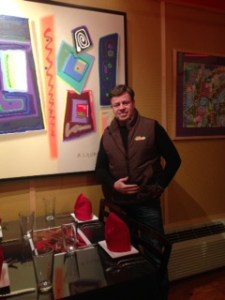
Fierro stands next to one of the paintings in Frida Bistro.

Fierro proved that dreams can truly become reality with deep passion and a lot of hard work. After growing up in Mexico, Fierro decided to leave his home and head to the U.S. hoping to learn English and make a name for himself.

“When I came to Utah in 1985, I didn’t know anybody,” Fierro said.

He said he did not have a place to live, so he ended up staying at a shelter for about a month.

Though his choice of living proved limited, he did not let that stop him from pushing to learn English and searching for a place to work.

“I went to a Catholic church, and they needed a volunteer to wash dishes,” Fierro said. “So, I said ‘Me! Me! I’m a dishwasher!'”

Fierro’s time at the men’s shelter gave him opportunities to see life in a new light. As he became more and more successful, Fierro searched for ways to give back to those around him.

“I was never hungry, so I promised to pay it forward,” he said, raising his sleeve and showing the words, “Pay It Forward,” tattooed on his arm.

And “Pay It Foward,” Fierro does.

In the early 1980s, he gained the friendship of a local couple, Larry and Gail Gerlach. Gail, who was teaching at Shriners Hospitals for Children, hoped to bring some authentic Mexican food to children from Mexico who were undergoing surgeries.

She called Fierro, knowing he would help her accomplish this dream.

“He came up one day and brought food for these kids, and they just exploded with joy,” Larry said in a phone interview. “Gail wrote him a check, and he said, ‘No. No, no, no. Señora, it’s on me, for my people.'”

By this action, Fierro supplied the children with something to look forward to and gained a permanent part in the hearts of the Gerlachs.

“He’s a special friend,” Larry said. “What he did for my wife at that hospital, I think, as much as anything, speaks of his character.”

Fierro actively works with the community by holding fundraisers for nonprofit organizations and initiating the Burrito Project.

The Burrito Project helps to feed the homeless with burritos and bottles of water in Salt Lake City. A large percentage of the homeless, Fierro found, are veterans. This discovery became a significant reason why he works so hard to feed them.

Fierro assembles a group of volunteers who come together to make bean and rice burritos. After the burritos are made, the volunteers hop on bicycles and ride around the city giving burritos to those in need.

This humanitarian effort attracted many volunteers, including University of Utah football players.

“Being able to feed the homeless is one thing, but actually seeing the ins and outs and seeing how these people in the shelter live, it’s very eye-opening,” said Matt Martinez, a former U football player and Burrito Project volunteer. “It’s very humbling to have them say ‘thank you.'”

In a phone interview, Martinez said he has become friends with Fierro and hopes to bring more publicity to this project.

Fierro’s philanthropy has been possible, in part, because one day he had an epiphany about the poor quality of Mexican food in America.

“One day I went to a supermarket, and I bought some flour tortillas and kinds of refined beans and some cheese,” Fierro said. “When I opened them, I was really disgusted with the beans. I thought, ‘What is this?’”

Fierro never dreamed of running his own food business, but after recognizing the lack of quality ingredients in Utah, he realized he needed to do something.

“I was thinking ‘What can I do?'” Fierro said.

He grew up with his mother running a small business. Fierro’s mother would make cooked beans, package them and sell them to markets in Mexico. Having watched her, Fierro had the thought that maybe he could do that too.

Not thinking once more about it, Fierro asked his mother for her cooked bean and creamy salsa recipes and started selling beans downtown at the farmer’s market.

Frida

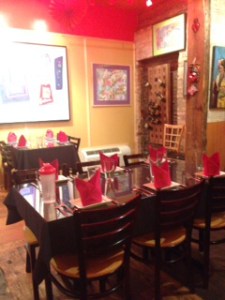
Frida Bistro is designed with many bright colors and dim lighting. Even the waiting area is decorated to match the design.

Sales started to increase little by little and soon Fierro was approached by someone who represented a small line of farmer’s markets. They asked him if he would be interested in putting a label on his products and selling them.

Fierro jumped at this opportunity and thus was born the Rico brand.

Sales took off, so Fierro started searching for a larger place to prepare and distribute his products. As he was searching, he came across a large warehouse located on 545 W. 700 South.

He turned the warehouse into a place where he and his employees could make the food for the Rico brand.

Then, another opportunity presented itself.

“The front of [the warehouse] used to be my employees’ break room and my office,” Fierro said. “People would drive by and see my employees eating. They would come in and open the door and go ‘Oh, I’m so sorry. I thought it was a restaurant.’ So, OK, let’s start a restaurant.”

And so, Fierro converted the warehouse into a restaurant.

He chose the name Frida Bistro to honor the celebrated artist, Frida Kahlo. “Like Frida Kahlo’s passion for art, Frida Bistro represents Jorge’s passion for food,” according to ricobrand.com.

Bistro

Pictured is one of Fierro’s favorite spots in his restaurant.

Frida Kahlo became the overall theme of the restaurant as paintings of her embellish the walls. Bright colors and dim lighting also contribute to the decorative design of the restaurant which Fierro designed himself.

To add to the authentic feel of the restaurant, Fierro changes the menu every four months or so.

“I took the time to go to Mexico and learn about our gastronomy,” Fierro said. “We created our menu around that.”

In 2011, Frida Bistro was recognized as the best Mexican restaurant in Salt Lake City, according to the Salt Lake Magazine Dining Awards 2011.

Now, Fierro is the proud owner of Rico brand and Frida Bistro and also serves on the board of directors for Local First Utah. He actively works with the community by holding fundraisers for nonprofit organizations and initiating the Burrito Project, which helps to feed the homeless.

He adamantly believes in searching for a passion and is glad he found his calling.

“The most important thing: I love what I do for a living,” Fierro said. “I love what I do for a living.”

Spice Kitchen Incubator helps refugees start food businesses

Story and photos by RYAN CARRILLO

Spice Kitchen Incubator gives certain Utah residents a unique opportunity: a chance to plan and develop a food-based business.

The kitchen incubator primarily assists international refugees who have relocated to Salt Lake City, but also provides services to immigrants and lower-income individuals. The program is part of the International Rescue Committee in Salt Lake City, or IRC SLC, which helps in international crises and relocates refugees in 22 different cities throughout the U.S.

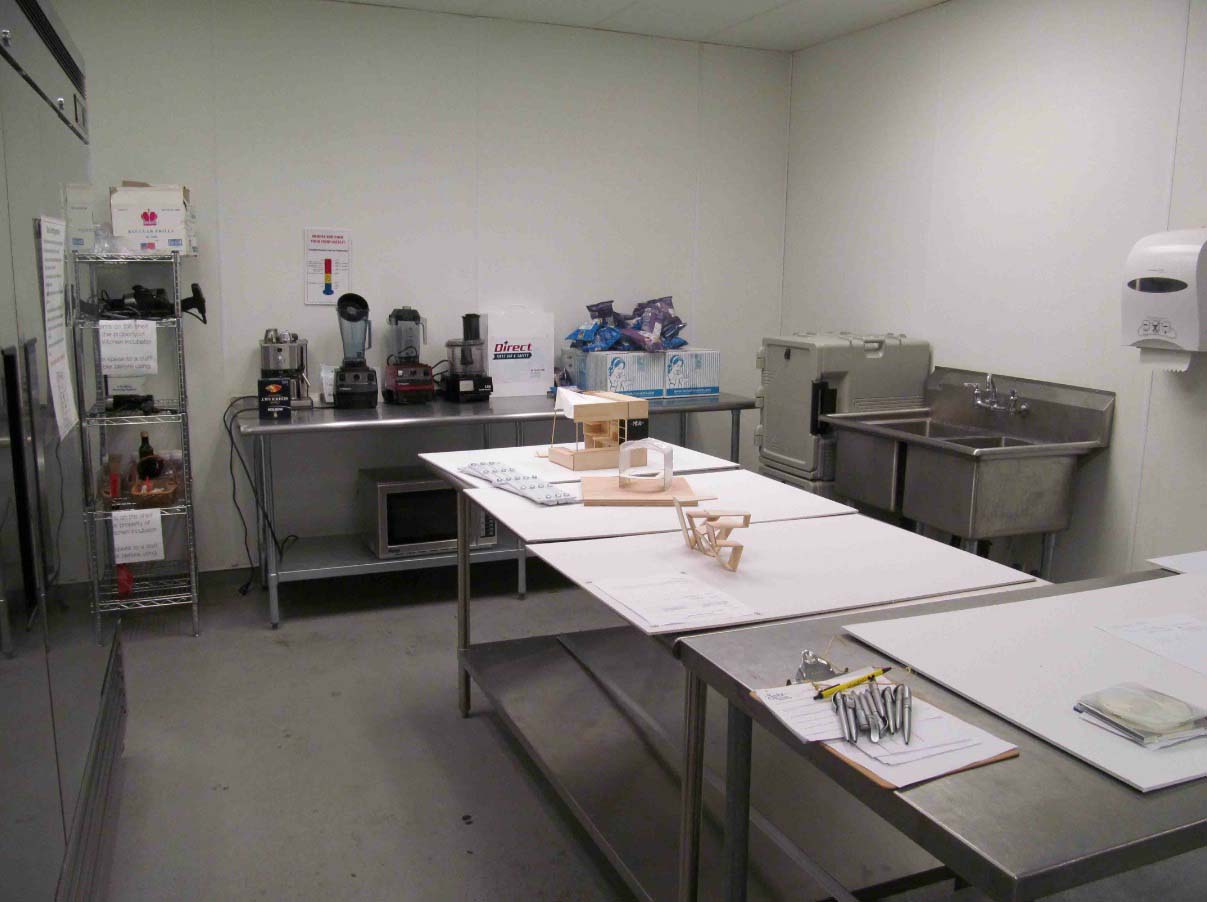
Spice Kitchen Incubator provides everything from ovens to large prep space for the chefs

Spice Kitchen Incubator provides everything from ovens to large prep space for the chefs.

Refugees are individuals forced to leave their native country due to political unrest, war or safety concerns. When they are relocated to the United States, they have to adapt to a completely new culture and way of living.

Spice Kitchen Incubator helps them adjust to some of these changes.

Entrepreneurs, or participants, in Spice Kitchen Incubator aspire to start their own business. These individuals will mostly likely run their own catering business, food truck or farmers market booth by the end of the program.

The program is designed to help each entrepreneur achieve these goals and be successful in the American business market.

“Every entrepreneur’s goals are different but our overall goal is to build self-sufficient businesses,” said Genevieve Healey, the program coordinator for Spice Kitchen Incubator. “Those are the things we are helping them with, [things] like accounting, marketing and connecting them to resources. At a certain point they are comfortable doing that all on their own and they know how to use those resources.”

Spice Kitchen Incubator is divided into two different levels: pre-incubation and incubation. Pre-incubation is designed to help entrepreneurs develop a business plan and teach them how to run a successful business. Incubation is focused on real experience and exposure, putting each participant in control of their business.

Entrepreneurs begin in pre-incubation. They participate in this level for six months before advancing to incubation, depending on their individual needs and progress. During this phase of the program, they are building the foundation for running a business.

Each Saturday, the kitchen incubator hosts workshops for those individuals, covering everything from profit-and-loss and advertising to marketing positioning and food costing. Additionally, each entrepreneur will participate in a focus group. The focus group plays an essential role in the development of the aspiring business owner’s business plan.

“Volunteers from the food industry and the community come and try the entrepreneur’s food and those are entrepreneurs in pre-incubation so they are just developing their menu and what they are going to sell,” Healey said.

Feedback from volunteers is essential. It helps the chefs make adjustments to the business plan. It also can help them develop a mentorship with people in the community.

Kamal is one of 10 entrepreneurs in the pre-incubation stage. As a Bhutanese refugee, he was resettled in the U.S. almost five years ago. He has participated in the Spice Kitchen Incubator for almost a year.

Kamal’s focus group met on March 11, 2015. The chef spent several hours preparing food to present to the group. He said he has enjoyed participating in the program and was excited to share his culture and food with the volunteers and staff. He said he is very appreciative for the help of his wife and daughter, as well as a local volunteer, while preparing for his focus group.

Kamal prepares for his focus group with the help of his wife, daughter and a community volunteer.

Kamal prepares for his focus group with the help of his wife, daughter and a community volunteer.

After pre-incubation, entrepreneurs advance to incubation. This portion of the program typically lasts for 4 to 4 1/2 years. In all, entrepreneurs are able to be in the program for five years. There are currently three entrepreneurs enrolled in the incubation portion of the program. Since the Spice Kitchen Incubator was only opened in 2013, no one has graduated from the program yet.

During incubation, the aspiring business owners begin running an operational business. They start by applying for their business license. Once received, the entrepreneurs begin catering events and participating in local farmers markets.

During the winter, the chefs sell pre-packaged food at the market that they prepare at the Spice Kitchen Incubator’s facilities. The winter market is held every other Saturday at the Rio Grande Depot (300 S. 300 West) from 10 a.m. until 2 p.m. It runs through April 2015.

During the summer farmers market, entrepreneurs rotate between packaged and prepared foods. Prepared foods are cooked on-site rather than at the Spice Kitchen Incubator facilities. Healey said the kitchen hopes to expand its services at this year’s summer market to include one booth dedicated solely to packaged foods and another just for prepared foods. This would give the entrepreneurs more exposure and increase their ability to build a client base. The summer market runs from June 13 to Oct. 24, 2015, and is held each week at Pioneer Park on 300 W. 400 South.

Healey said the farmers market demonstrated how beneficial the incubator’s programs can be for both the business owners as well as the community as a whole.

“The farmers market was a really awesome experience, especially the summer farmers market because it is where we can do prepared foods,” she said. “We’ve said that there is a need for this in the community but it was really cool to have that hands-on [experience], like ‘oh yeah, people really want this.’”

Community members can get involved with the incubator through several different ways. The Spice Kitchen Incubator is always looking for individuals to serve on focus group panels, which requires a commitment of a couple hours each session, as well as help with any other topics related to running a business. Donations can also be made on the incubator’s website.

Maria Gigourtaki, who works as the volunteer and communications coordinator for the kitchen, said volunteers can have some amazing experiences with the program. “[The entrepreneurs] are all so passionate,” she said. “I mean, food is something that gets people together and it’s awesome. You can get to see and meet people, new cultures, new flavors, history, languages, everything. It’s amazing!”

Roy coffee shop stays in business by focusing on customers

Story and photo by BRITTNI STRICKLAND

Anna Whitnack sits at a gray table listening to the whir of blenders, ringing timers and the laughter of customers. The smell of brewing coffee fills Jessie Jean’s Coffee Beans and Homestyle Café, the shop she owns in Roy, Utah. Whitnack recounts her journey as a local business owner.

Growing up in California, Whitnack and her friends would always go out to coffee shops rather than bars. But Whitnack didn’t think it was realistic to ever start her own business. “You think you have to have so much to put up and I never thought it would be a possibility because I thought it was beyond who I was,” she said. Then, after moving to Utah when she was 25, a friend encouraged her to go after what Whitnack thought of as a “pipe dream.” She gained the courage to bring her own recipes for pastries, burgers, sandwiches, smoothies and a variety of coffee flavors to the 37,000 people of Roy, Utah.

Whitnack opened Jessie Jean’s Coffee Beans on Nov. 1, 2000, but becoming an entrepreneur didn’t turn out to be so easy. Whitnack decided late in 2013 that times were just too tough and she and her partner were going to have to close the shop.

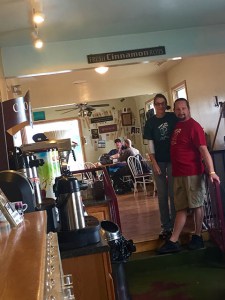
Anna Whitnack and Ron Ford stand in their coffee shop Jessie Jean's Coffee Beans Homestyle Café.

Anna Whitnack and Ron Ford stand in their coffee shop Jessie Jean’s Coffee Beans Homestyle Café.

They planned to tell employees the news at an early Christmas dinner. When the time came at the end of the meal, Whitnack just couldn’t find it in her to tell the employees that Jessie Jean’s Coffee Beans would soon be closed.

She told herself she would try to last as a local business for just one more month.

Each month she found herself saying the same thing. With increased support from local patrons, things began looking up and now, two years later, Whitnack is still serving customers.

Though there have been tough times, caring customers and the small, family-like group of employees have made it worthwhile for Whitnack. She looks at a wall covered with notes, photos, and obituaries from loyal customers. “This is our life, this is our family, our friends, our social network, our hearts,” she said, while wiping away her tears with a napkin from the table.

Phil Wagner, a Salt Lake City local who makes an hour-long drive north on his motorcycle to Roy simply to indulge in the food, said, “I think this is a great place. It kind of has that ‘ma and pa’ feel to it. Just down home and good food.”

Ron Ford, co-owner of Jessie Jean’s Homestyle Café, said the two became business partners after a unique experience. He and his son, Bryan, had been living in a neighborhood home behind the café. Whitnack said with a laugh that Bryan would play next door in the parking lot when he was 4 years old. Occasionally he would go into Jessie Jean’s and ask if there was any sort of service he could do to get a hot chocolate. He would always run around saying things like, “I’m going to work here someday.”

Right then Bryan, who is now 15, walked up to the table and said, “And guess what? I work here.” Bryan has worked at Jessie Jean’s for two years.

Unlike his son, Ford had never visited the café until he read a sign out front that caught his eye — “Bodacious Burgers.” Ford isn’t sure why he had never stopped in during the eight years of living nearby. But once he finally ate there, he continued to frequent the shop. Over time he developed a relationship with Whitnack, which later led to them co-owning the local coffee shop.

The two firmly believe in supporting other local businesses, because they know what it’s like to be one. If a business in the area does not have the supplies it needs, Whitnack and Ford encourage friends, family and customers to support the owners in the surrounding areas.

Ford and Whitnack said owning a local business and trying to survive from month to month is difficult. Ford advised people thinking of starting their own business, “Don’t take no for an answer, don’t let them get you down and if you have a dream, go get it.”

Whitnack added, “Fight as hard as you can fight and don’t ever go into business thinking you’re going to be rich. If you’re going into it to make money, you’re doing it for the wrong reasons.”

Several customers paused at the table, touched her shoulder and  said hello. Whitnack smiled and greeted them by name. Gazing around the room, she said, “It’s hard and stressful, but there are the moments in the kitchen and we’re super busy and we’re crazy and [Ford is] playing drums on the pans,” Whitnack said. “Those are the moments where you stop and you’re like, OK this is good.”