Refugees planting new roots in Utah

Story by SCOTT FUNK

War. Persecution. Death. Three things that many people in other countries across the world have to face on a daily basis. They go through life living in their homeland in fear. They’re left with two options: Stay in the country and risk death, or flee for survival. Many choose to stay, but many choose to become refugees.

Aden Batar, director of immigration and refugee resettlement for Catholic Community Services and a Somali refugee himself, said, “Becoming a refugee is the most difficult process a human being can go through. When you’re in your country, you either face the hard condition of leaving, or you die. Looking back, I don’t know how I did it, but when you don’t have a choice, you just want a new place to survive.”

According to a letter to Gov. Gary Herbert included in the Utah Refugee Services Office 2016 report, 1,200 refugees have been resettled in Utah annually by the CCS and International Rescue Committee.

The refugees who are resettled in Utah can choose from different programs to help them adapt to a new culture. One option is the New Roots Program, organized and managed by the IRC.

The New Roots program has the moto: “The food is local. The story is global.” Its purpose, according to the website, is to “enable refugees to celebrate their heritage and nourish themselves and their neighbors by planting strong roots – literally – in their new communities.”

The program consists of three parts: Community Gardening, Micro-Training Farm Program and the Sunnyvale Farmers Market.

Community Gardening Program

This program is designed to help the emotional well-being of the refugees as they try to adjust to a new country, culture and way of life.
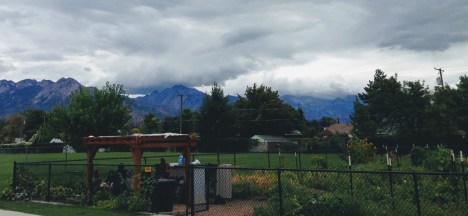
Central Park 1. Photo credit New Roots SLC

In this program, plots of land (approximately 14 feet by 20 feet for 100 total square feet) are reserved for local refugees and their families throughout the Salt Lake community to grow crops from their home country and to come together as a community. Alex Haas, community garden program coordinator, said it is their opportunity to not only work, but also to provide for their family while connecting with others who may come from the same circumstance. There are 15 different gardens throughout the valley that refugees have access to.

Also within this program, Haas said, is the opportunity to meet as a group to develop skills and become accustomed to the new society they are in. Within these adjustment groups refugees can discuss their feelings, learn skills such as how to deal with anger, stress, depression and ultimately become self-sustained as they build a new home.

“The purpose of our community gardening program and adjustment groups is to help refugees become self-sustaining moving forward,” Haas said.

He also said in a phone interview that the gardens are a way to remind refugees of home and that they give them “a sense of comfort, while they enjoy cultural foods, and while they build a community of wellness.”

Micro-Training Farm Program

The next step in the New Roots program is the farming aspect. After resettled refugees have participated in the community gardens for a year, they have an opportunity to work on larger plots of lands at the Redwood Road Micro-Training Farm, located at 3060 S. Lester St. in West Valley City, to continue their farming.
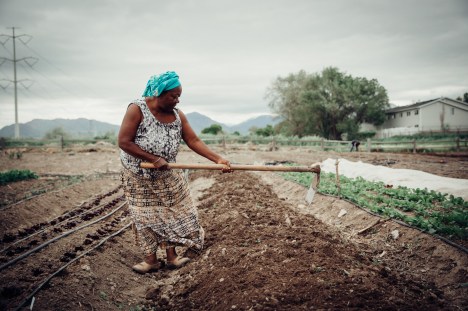
Local refugee farming at the Redwood Farm. Photo credit New Roots SLC

Jordan Bryant, manager of the IRC’s New Roots program, said in a phone interview that the farm is maintained by generous grants and donations. The farmers pay different amounts for seeds and plants from their heritage, and tools to grow them to bring their home to Utah.

Currently, Bryant said, there are about 33 farmers who are there on a constant basis. These farmers, each of whom were once strangers, develop a community with one another as they work together to grow and sell their crops at local farmer’s market.

Although it is not the main source of income for their families, the refugees rely on the farming as a source of income for their families. At the same time, they continue to develop relationships and friendships with the other refugees around them.

“It’s more than just a job,” Bryant said. “It’s that they gain access to their home and people to socialize with.”

Sunnyvale Farmers Market

Local refugees buying produce at the Sunnyvale Farmers Market. Photo credit New Roots SLC

The Sunnyvale Farmers Market, located at 4013 S. 700 West in Salt Lake City, gives the refugee farmers the opportunity to provide for their family by taking the food they grow and selling it.  It is also an opportunity to bring food from cultures around the world to the refugee community.

“The farmers market is a great opportunity for income,” Bryant said. “Although it’s not their main source of income, for some it does provide a substantial amount for their family. It also is a community benefit by providing food from the countries of the refugees that are in the community.”

Escaping persecution is a long journey. But after choosing to leave their home to survive, the New Roots program has given refugees the opportuntiy to bring a piece of their culture to Utah.


University of Utah’s Center for Research on Migration and Refugee Integration builds on success of first year

Story and photos by ZACH CARLSON

The Center for Research on Migration and Refugee Integration is housed in the University of Utah’s College of Social Work. The CRMRI is located in Caren Frost’s office.

The Center for Research on Migration and Refugee Integration opened as part of the College of Social Work at the University of Utah in 2016. Leading this center is Dr. Caren Frost. The CRMRI’s main focus is on obtaining federal grants and analyzing data that it receives from groups like the Catholic Community Services and the International Rescue Committee.

Aden Batar is himself a refugee who works with the Catholic Community Services in Salt Lake City, helping to resettle refugees. With roughly 60,000 refugees here in Utah and hundred more coming each year, these two organizations are working together to help make Salt Lake City home for refugees from around the world.

Each year, the CCS helps resettle roughly 400 to 500 refugees, according to Batar. These refugees are from all over the world, with 53 percent of them migrating or hailing from Afghanistan, Somalia and Syria. Batar says he expects the Syrian Civil War to lead to an influx of Syrian refugees, making Syria the largest source of refugees in the coming years.

As the individuals integrate into Salt Lake City, they obtain education as well as work. Batar says that about 85 percent of refugees become self-sufficient within six months of arriving in Utah. While most parents don’t pursue a higher education once arriving, their children are more likely to go to college, says Caren Frost of the CRMRI.

No information is collected on how many refugees go to the U, but the CRMRI estimates that there are at least 500 students with refugee backgrounds. The CRMRI describe itself as active with students on campus, but it thinks it can always be more involved. It finds itself interacting more with younger children in junior high and high schools, Frost says.

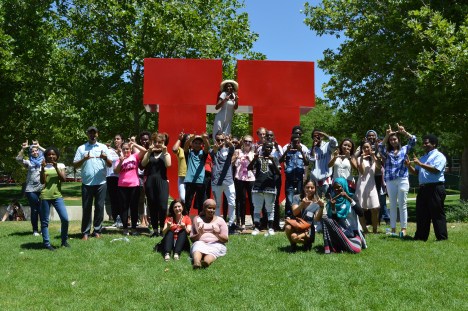
Over the summer of 2017, the CRMRI hosted a workshop at the U for about 25 high school seniors from the Salt Lake Valley who were interested in college. Delva Hommes, the administrative manager for CRMRI, says it had a broad range of students, with some having been in America from two months to two years. The students spoke about a dozen different languages.

Students who attended the summer workshop. Photo courtesy of Delva Hommes.

Volunteers discussed with the students what different aspects of college and campus life are like at the U, why they think the students should go there, and how to help them achieve their goals. The CRMRI hopes to do similar workshops every summer, Frost says.

Frost writes grants and articles, and analyzes data for the CRMRI. “We have information about what country the refugees are coming from, how long they were in camps, what languages they speak, what are their healthcare needs,” Frost says. “We also have information about jobs that they have once they get here, how much they’re getting paid per hour, what other training needs they might have.”

CRMRI celebrated its first year at the U in August 2017. Frost described the program’s first year as “fact finding,” citing repetitive redundancy, also known as tautology where the same idea is said twice but with different words, as an issue that it deals with often. Because it is trying to put people in touch with others, she says it can sometimes be a challenge to coordinate and work with everyone’s schedules.

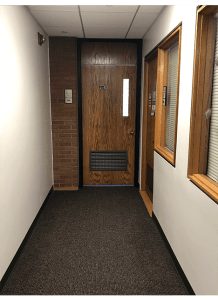
The hallway leading to the CRMRI, which is on the second floor of the College of Social Work.

The research center has three main goals for its second year. First, Frost says “working to define integration. This isn’t just trying to get refugees to assimilate,” she says, “but to encourage a two-way exchange of ideas about different values, different cultural systems, between refugees and those hosting them.”

Her second goal for the center is to create a geospatial map of the Salt Lake Valley. An earlier draft of this was created for the Refugee Women’s Committee, which Frost has chaired for more than five years, she said in a subsequent email interview. This map pinpoints where these women lived in the Valley, the public transportation routes near them, where libraries are and where they can go to get health and dental care.

With this, researchers can see where people are versus the resources individuals need. Frost says these women are in a sort of “resource desert.” The medical care they need is far away, and in case of an emergency those without vehicles might not get the necessary medical attention, Frost says. Frost is looking to further enhance this project by working with individuals within the Department of Geography and with the Social Research Institute, to try to make something useful with this information.

The Center’s final goal of 2017-18 is trying to get more community partners to help the program and do research with it. The CRMRI is constantly learning from its partners, like the Catholic Community Services and International Rescue Committee, about each group’s on-the-ground work, Frost said in a subsequent email interview. It would really like “to be doing more cross-cutting discussions about what research actually is, what we can actually say with things, what kind of data do we actually need,” Frost says.


Beyond mental health: welcoming refugees to Utah

Story and photos by ALAYNIA WINTER

“Everything.”

That was the resounding answer from the three refugee panelists who spoke on Sept. 23, 2017, following a documentary movie screening held at The Leonardo museum in Salt Lake City. Each was asked the question: “What were the most difficult aspects of transitioning to living in Utah?”

Everything is different. The weather. The food. The language. The culture and customs. The ethnicity.

Visitor information is posted on the front door of the IRC located at 221 S. 400 West in Salt Lake City.

One of the panelists, Kamal Bewar, came to the U.S. as a refugee from Iraqi Kurdistan during the Iraqi Kurdish Civil War at 22 years old. Since then he has made Utah his home.

“I have been fortunate to have had people who made a difference and made me feel welcome. It has been the individuals who have made the difference in my life,” said Bewar during the event.

He is an example of a political refugee who has successfully created a new life after arriving with close to nothing. Bewar graduated with a Ph.D. from Argosy University in higher educational leadership. He now has a flourishing career working at Salt Lake Community College. He also is president of the Kurdish Community of Utah.

So, what happens when refugees arrive in Utah? First, they are welcomed by International Rescue Committee or another resettlement organization. After they have food and shelter and immediate safety, they are given English classes and tasked with adapting to the new environment.

What is the western answer to this often traumatic experience? IRC, Department of Child and Family Services (DCFS) and many other organizations offer therapy, medication and mental health programs. These programs are beneficial. However, the clinical concept of mental health may be foreign to some New Americans.

Hannah Fox, who was an intern at IRC before accepting a position as a social worker with DCFS said a problem many healthcare workers, social workers and others are seeing, is a systemic disconnect in the way we, as Americans, understand other cultures — and vice versa.

The IRC is nestled between The Rose Establishment and the historic W. S. Henderson Building.

“Our programs take mental health from a very western perspective,” Fox said, “versus where many of them [refugees] come from, they likely do not. So, while we might diagnose and medicate, they might believe in a spiritual or traditional folk remedy.” Visibly exasperated, Fox added, “So when they go to health care workers, and they give them a western experience of mental health care, it really f**** with them. It discourages them from trying again.”

What is found to be actually helpful, said Fatima Dirie, refugee coordinator for the University of Utah, is making a community. Once the programs are over, it’s the relationships and friendships made that create lasting change and true integration.

“As a community, we are not there yet,” Dirie said. “To truly feel welcomed you have to understand each other.”

Fox added, “With refugees that is their ‘therapy.’ It’s home and it’s talking about their culture. It’s sharing their experiences on their terms — not just some white person who has a degree behind a desk.”

Utahns can help make people feel welcome by saying hello, simply smiling, or inviting someone over for dinner. If interested, sign up for a Family Mentor Program, or complete a volunteer orientation at IRC.

Fostering meaningful relationships is what truly matters.


From camps to cities: refugees and their path to self-reliance

Story and photo by DEVON ALEXANDER BROWN

Many refugees resettled in the United States have survived horrors of war and persecution in their homelands. Others have endured years of scarcity in refugee camps. Utah Health and Human Rights, an organization that specializes in mental health services for refugees with severe trauma, estimates there are 17,500 survivors of trauma located throughout Utah.  For those granted asylum that trauma is not left at customs — it is carried with them as they ease into new lives. This process ultimately means finding employment and navigating an unfamiliar world, all within a goal of six months.

An individual with refugee status is very different than someone issued an immigrant visa. An immigrant voluntarily takes up residence in a new nation and has the luxury of returning home. A refugee does not have the same luxury. By federal law, anyone granted refugee status must have a “well-founded fear of persecution” based on religion, political opinion, race or social status.

Aden Batar, director of immigration and refugee resettlement for Catholic Community Services, is well aware of the distinction between refugees and immigrants. A former refugee, he fled his native Somalia due to civil war. After two weeks of hiding he traveled alone by road to neighboring Kenya. Once in Nairobi, he paid a pilot to return for his family — with money he kept secretly stitched to the inside of his trousers.

“Looking back I don’t know how I did it,” Batar said while chronicling the measures he took to secure his and his family’s safety. “Thinking about it now, it seems crazy, but it was worth it for peace and a new life.”

Batar endured challenges, but he says he was fortunate. He was a college graduate and had a brother in Logan, studying at Utah State University, who helped him and his family obtain refugee status in the early 1990s. And he managed to quickly land a manufacturing job while studying at USU himself, before relocating to Salt Lake City and joining the CCS staff in 1996.

But many new arrivals are resettled with little or no formal education. And without any ties to their new home, resettlement can be an unnerving and difficult process.

Catholic Community Services is a social services organization located at 745 E. 300 South, in the Avenues neighborhood of Salt Lake City. CCS helps resettle approximately 1,200 refugees a year (a number that is subject to change in 2018) with the primary mission of preparing arrivals for self-sufficiency within six months. Batar estimates 85 percent of the refugees CCS receives meet this goal.

IMG_5553

The Rev. Terence M. Moore initiated the refugee resettlement program in 1974.

Ali Abid, a job developer for CCS, is a refugee from Iraq. And like Batar, he is college educated — having earned a degree in computer science from a university in his homeland. He says he felt self-sufficient by his sixth month because he was proficient in English and secured a decent paying job at a call center. He also resettled alone and did not need assistance for medical conditions or disabilities, although he has struggled to further his education here in the U.S. Abid says English is one of the primary challenges for new arrivals seeking self-sufficiency, but not knowing what’s available in the community is an equally ongoing struggle.

“Let’s say you come [to America], you speak English very well, but you don’t know where to go, how to start, what’s the best option for you,” Abid said while sitting behind a desk in his sun-filled office. “Types of resources like the libraries we have and online education … they might not be all that familiar or popular in some countries, [but] there are many benefits provided from visiting the library and having a membership with libraries and many refugees don’t know about this.”

All refugees are met by agencies like CCS, which places new arrivals in fully furnished housing. They also receive counseling, medical care, a monthly stipend and are advised on different aspects of employment. But caseworkers are often overloaded and limited in how they can aid new arrivals. And after three months of assistance, refugees are expected to pay back the cost of their travel and begin paying their own rent. Abid says it takes around two months for new arrivals to get the documents they need to begin applying for jobs and when they are finally placed with employment, the jobs are generally entry-level.

Most refugees are not college graduates or proficient English speakers. Many are unable to read and write in their native language. And there isn’t a standard definition of what self-sufficiency is. Regardless of the disparities among new arrivals, they’re held to the same timetable. Gerald Brown, director of refugee services for the Utah Department of Workforce Services, strongly believes the rate of achieving self-sufficiency is dependent on background.

“It depends on what community you’re from,” Brown said in a telephone interview. “Iraqis as a group are the most educated and westernized refugee group and speak English better so they should do better faster than any other group.”

It is unclear what it means for a refugee to be self-sufficient, but Brown says he thinks it means having a job and being able to pay the rent — and it comes in stages. For a family, self-sufficiency might mean being able to “negotiate important systems” like their children’s school enrollment and healthcare programs. Brown says that some refugees can do this very quickly, but others can take five years or longer.

Despite the obstacles refugees face, Ali Abid believes Salt Lake City is ideal for resettlement because of resources like the Refugee Training Center — which provides educational courses and job seeking services — and programs offered by the Church of Jesus Christ of Latter-day Saints. He says this makes self-sufficiency easier to attain and always encourages new arrivals to get a degree or certification.

“It’s better for their future and getting better jobs and better opportunities,” Abid said. “Even if you decide to move, to live in a different state … you maybe can get a better job and will have some skills instead of starting at ground zero.”

Community remains in the heart of Salt Lake City refugees

Story and photo by HAYDEN S. MITCHELL

All over the world refugees are fleeing their homes from violence, oppression and fear. These families are all looking for a new place to live where they can feel safe. In 2016, Utah became home to a little over 1,200 refugees from multiple countries: Iraq, Iran, the Congo, Somalia and Sudan. The New Americans are experiencing the shock and awe of a new country and culture, places that are vastly different than anything they had ever seen before, according to a PBS story.

When first coming to Utah, refugees have a variety of feelings and emotions ranging from exhilaration to fear. Two individuals, Aden Batar and Romeil Analjok, who have resettled in Utah, discussed how similar their experiences were. They were introduced to a different language, new environments, foreign foods and smells. Add to that, they said the residents of Salt Lake City dressed and acted differently than they had seen before in their home countries. This can create an overwhelming burden for any refugee.

555555555

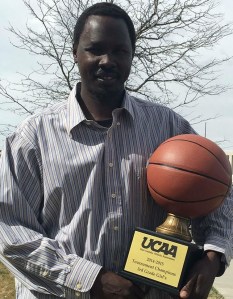
Romeil Analjok, holding a trophy his daughter won playing basketball. Sports helped the family feel like a part of the community.

“It’s America man, of course it is going to be crazy. I did not know what to expect when my family first came here,” said Romeil Analjok, a refugee from Sudan, who created a new home for himself and his family in Utah in 2004. “Language was the biggest problem along with not knowing anybody … so I enrolled in school hoping to learn English and meet new people.”

While at school, Analjok met a couple of people whom he remains friends with today. He was grateful that they interacted with him during his first few days in class. He did not know how they would talk to him or act around him, but they treated him like everyone else, with respect. Analjok appreciated how quickly he made friends. It made the transition from Sudan to Utah easy and encouraged him that he could create a home for his family and be a part of a community once again.

“Romiel’s story is common for many [who are] moving their families,” said Francis Mannion, a priest who has seen an increase in refugee parishioners within his parish. They need somewhere to start.

For this reason, there are organizations like the International Rescue Committee or Catholic Community Services that will help new arrivals. These groups are in place to assist with the transition and make an adjustment easier for refugees coming to the United States.

In addition to established organizations, becoming part of an open and caring community is vital to helping families transition into a new community. Community allows refugees to make new friends, participate in all sorts of activities, or even worship together. Mannion made it clear that faith is not the predominant force that makes it easier for those going through the refugee process — it is community. A community can hold people up when they struggle the most.

“Every week in Sudan, we gathered with our friends and family, just celebrating everything good we had in life,” Analjok said. “I was happy to be a part of something every week … it gave me something to look forward to.”

Analjok said he felt out of sorts until he found a stable, welcoming community. He treasures it. In his community were fellow refugees from the Sudan who generously donated their time to helping him find friends and a new church, Saint Patrick’s, located at 1058 W. 400 South in Salt Lake City. Becoming involved with this church allowed Analjok some networking in the business world, eventually leading to a new job opportunity.

He said finding a new community can be a lifesaver for refugees. Without this connection, families and individuals can sometimes feel like they are on their own. Typically the countries that these refugees are coming from have a strong sense of community. They must rely on each other significantly to survive, eat and exist. This is why it can be such a challenge for refugees in America because it is solely their responsibility to provide for themselves and their families.

“Having a strong, loyal community around you will always make everything easier in life,” said Mannion, pastor at St. Vincent de Paul. “As refugee families come to church through the years, you can see the change happen. They start off nervous and still, and gradually became an active member of the community.”

Aden Batar, immigration and refugee resettlement director with Catholic Community Services, said refugees can have a hard time adjusting because they are coming from a life we have very little knowledge of. Life in countries like Iran, Sudan and Somalia is not easy. Batar, a refugee from Somalia who now helps other refugees in the resettlement process, said it is a real struggle every day for people living there to provide for their families and keep them safe. He said families are forced to flee because they are being oppressed or they fear potential threat and violence. Batar added that most people never anticipate leaving their home and are not prepared when it happens.

Such disruption can negatively impact people and even cause Post Traumatic Stress Disorder in many individuals, Batar said.

Analjok said, “When we came to Utah we were welcomed by a lot of refugees who came here before us.”  He reiterated the importance of community to his family’s resettlement. “They made me very comfortable and treated me well. It was also nice to see them all doing well,” he said. “It gave me hope for me and my family.”

Refugee mother of seven longs to see husband and sons again

Mother flees Somalia after men in family are kidnapped, relocates to Salt Lake City with her five daughters.

Story and photos by ANNA STUMP

Halimo Ismail was living with her husband and seven children in Somalia when their lives unraveled. One night, Halimo woke to discover that her two sons and husband were missing. She quickly realized that they had been kidnapped, but had no idea by whom or whether they were still alive.

Halimo and her five daughters fled to Egypt in 2011, where they spent the next five years in a small apartment just in view of the pyramids. Her youngest daughter, Asmaa, was just shy of 6 years old. The other daughters were ages 7, 8, and 9.

In February 2017, Halimo Ismail and her daughters resettled in Salt Lake City.

100kb - Voices of Utah-2

A family who lives in the same complex as Halimo Ismail and her family decorates for Halloween.

Asmaa, now 12, sits beside her mom in a two-bedroom townhome in South Salt Lake City, where the smell of incense fills the room with a musky aroma. She agreed to help translate for her mother, who speaks Somali and Pashto but is not yet conversant in English. Communication seems to be a problem outside of the interview, where Halimo finds herself too timid to converse beyond the small Muslim community she is a part of. Young Asmaa translates her mother’s responses to a reporter’s questions in her own words.

“My mom says sometimes she feels people are better than her because they can talk together,” she said.

Asmaa is comfortable communicating due to her inclusive public schooling and speaks in short and well thought out sentences. She is now attending middle school, and has a group of friends who teach her customs that did not exist in Somalia or Egypt. Her middle school offers a variety of extracurricular activities that she takes part in, her favorite being basketball.

“I guess I’m pretty good. I don’t know,” she said with a bashful grin as she gazed down at her feet.

She said her elementary school in Egypt offered no games for the children to play. “It was not as good, the schools. The schools here are better.” Asmaa added that she and her sisters feel welcome in Utah, despite their cultural differences.

100kb - Voices of Utah-10

Children play on a fence in the complex where Halimo Ismail and her daughters live.

The same is not true for her mother, however, who mostly interacts with those who speak in her native tongue. There is a small Muslim population in Salt Lake City, and they support one another like family. It is a tight-knit community and holidays are often spent together. During the last day of Ramadhan, on the holiday known as “Eid al-Fitr,” all of the men get dressed up and the community gathers for dinner. Halimo misses her husband and sons deeply, but still enjoys the sense of unity that surrounds her during religious gatherings.

Gerald Brown, the state refugee coordinator and assistant director of the Refugee Services Office, says it is important for those within the mainstream to become friends with refugees like Halimo, who struggle with seclusion after a long journey through the refugee resettlement process. “I know people who have been here for 12 years and don’t have any American friends,” Brown says.

Volunteers can have a positive impact on the lives of refugees. The Refugee Services Office offers a Refugee Family Mentor Program that helps “guide refugee families in areas such as education, health care, [and] accessing local services and resources.” Brown understands the impact of this program from firsthand experience.

“And even if the refugees can’t speak any English, just having somebody across the table who smiles at them from the mainstream is real important,” Brown says.

His wish for Salt Lake City is for more people to become involved in the lives of refugees through volunteer programs. “To get integration, though, you’ve got to have mainstream [people] getting to know [and] befriending, refugees. Which is why our volunteer program is probably the most important thing that we do,” Brown says.

Nine volunteer agencies operate throughout the country, each of which have affiliates across the US. One organization is the Catholic Community Services. Adan Batar, the director of immigration and refugee resettlement for CCS, says women who are at risk are a priority for Utah.

“Every year, I fill what we call a capacity survey, so I tell them what type of cases I can take — what language, what religion, the mix of the cases,” he said. Utah seeks to take in single mothers with children who are escaping violence, like Halimo and her daughters.

As for Halimo, however, her heart is set on reconnecting with her husband and two sons. She is less interested in becoming an integrated part of Utah culture, and more determined to reunite her family. After five years of uncertainty, she received news upon her arrival in Utah that her husband and sons are alive and currently living in Belgium.

When asked if she believes if her family will be whole again, Halimo Ismail responds in Arabic.

“Insh’Allah.” God willing.


This slideshow requires JavaScript.


Source Citations:


“Get Involved.” Get Involved | Salt Lake City – The Official City Government Website, http://www.slcgov.com/get-involved.


“Home.” Catholic Community Services of Utah, http://www.ccsutah.org/.


Saber, Latifa. “6 Words Everyone Should Know: Muslim Slang 101.” Mvslim, 24 Apr. 2017, mvslim.com/6-words-everyone-should-know-muslim-slang-101/.


Refugee Justice League, SLCPD work to help refugees feel comfortable with justice system

Story and photos by EMILY ANDERSON

When then 17-year-old Abdullahi “Abdi” Mohamed was shot by police in downtown Salt Lake City in 2016, a wave of shock washed over the community.

According to reports from The Salt Lake Tribune, police said Mohamed was involved in an altercation and armed with a metal broomstick. When police ordered him to drop the weapon, Mohamed appeared to attempt to hit the man he was fighting, so officers fired at him. Mohamed’s family later disputed these claims.

Hundreds mobilized in support of the Somali refugee and rallied against police brutality toward people of color. Meanwhile, many refugees living in the Salt Lake Valley were paralyzed with terror.

“Anytime there is a publicized law enforcement-refugee conflict, it reinforces the fear [of law enforcement],” said Brad Parker, one of the founders of the Refugee Justice League, in a telephone interview.

IMG_7098s

Abdi Mohamed was shot by Salt Lake City Police at 200 S. Rio Grande St.

Refugees frequently have negative memories of police in their home countries, according to Natalie El-Deiry, the deputy director of the International Rescue Committee (IRC) — one of the agencies that resettles refugees in Salt Lake City. Along with the military, law enforcement is commonly used to silence those who speak out against an oppressive government.

“One thing that is often the case with people who have fled persecution from another country is that they often didn’t have the protection of law enforcement when they fled,” El-Deiry said in a telephone interview. “So when people first arrive, there is definitely a skepticism or uncertainty around whether law enforcement is really there to protect you.”

Police officers frequently participate in behaviors considered war crimes by international organizations like Human Rights Watch. For example, Kenyan police officers repeatedly target Somali refugees with rape, arbitrary arrests and unlawful deportations.

Jodi Larson-Farrow of the Boise Agency for New Americans, which helps resettle refugees in Boise, Idaho, has interviewed recent refugees about their feelings toward police. Her research was included in a report on law enforcement relations with refugees released by the Police Executive Research Forum in May 2017. The words and phrases refugees most commonly associate with police, she found, are “fear, rapist, power, corruption, intimidation, no trust, they will beat you, they will take your life and run from them.”

“In addition to the language and cultural barriers that separate refugees and police in many U.S. localities, there is a deeper source of distrust that can hamper engagement from the outset,” read the report. “To fully understand the barriers that may stand in the way of building trust, U.S. police must be educated about the historical experiences of refugee communities with their native police forces.”

Refugees’ understanding of the U.S. justice system also tends to be influenced by the way criminal cases are handled in their country of origin. The Police Executive Research Forum’s report said that refugees’ home countries generally convict people of crimes more quickly than in the U.S. These experiences, the forum believes, led to confusion after Abdi Mohamed was shot.

“The Salt Lake City Police Department [SLCPD] discovered in the aftermath of a police-involved shooting of a refugee that members of the refugee community assumed there would be no consequences for the officer, simply because the investigation was still pending and they had not been aware of the process,” the report said. “As a result of this incident, the department recognized the need to expand their educational efforts to avoid confusion surrounding such issues in the future.”

After Abdi Mohamed was shot, SLCPD held town halls to assuage the fears of the refugee community and hosted Citizens Academy, which allows refugees and other Salt Lake City residents to learn how the department functions. SLCPD also has a refugee liaison, Detective Robert Ungricht, who attends community events in an effort to get to know refugees.

Ungricht said in a telephone interview that the department is working to bring refugees onto the force, but are running into problems because many refugees aren’t citizens. This is an issue that the Utah State Legislature, or even Congress, he said, would have to address.

“We’re trying our hardest,” Ungricht said. “We get told a lot that the refugee community sees that we’re really doing a lot more than some agencies. I’m happy to hear that they’re happy that we’re trying to fight for them and fight for their rights and give them these opportunities.”

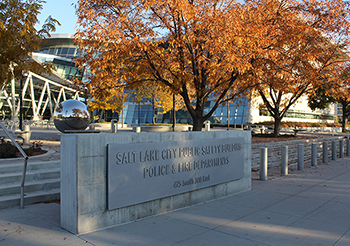
The Salt Lake City Public Safety Building houses the Salt Lake City Police Department’s refugee liaison and Citizens Academy.

SLCPD attends orientation sessions given by the International Rescue Committee for newly-arrived refugees. Natalie El-Deiry said the police department has become an advocate for refugees who are feeling unsafe in the community.

“There’s always room for improvement, but I think [SLCPD] is doing a really great job,” El-Deiry said.

However, Brad Parker feels refugees in the Salt Lake Valley still struggle to rely on law enforcement. His group, the Refugee Justice League — a coalition of lawyers formed to defend refugees’ rights — is now trying to bridge that gap.

“The Salt Lake City Police Department has done a great job in an outreach effort to build trust with refugees,” Parker said. “The fear is just deep-seated enough that it hasn’t completely worked.”

The league was formed after President Donald Trump was elected, as some refugees faced harassment and were concerned about the prospect of Trump following through with threats to build a Muslim registry. Attorneys who have since joined the organization wanted to help represent refugees who feel they are being discriminated against or are in trouble. All lawyers working with the league do so pro bono.

If a refugee is at the police station, Parker said, an attorney will go meet with the refugee. The attorney will communicate that everything the refugee says is confidential and that the attorney’s priority is to help. If the refugee has been accused of a crime, the Refugee Justice League will then secure a criminal attorney. If needed, the representative will help the refugee communicate with police.

“In those cases, it’s a win-win. It’s a win for refugees, and it’s a win for law enforcement,” Parker said.

To help refugees navigate encounters with the police, the Refugee Justice League has distributed personalized cards. Each card includes the refugee’s name, photo and preferred language. It says that the cardholder is represented by an attorney from the Refugee Justice League and gives the refugee instructions on how to comply with law enforcement while protecting the person’s rights.

“We did the cards to help the refugees become more fully-engaged participants in the legal system,” Parker said. “It gives us the chance, as we assist them, to model appropriate behavior when you’re dealing with police — that is a polite, cooperative behavior in many instances.”

In order to receive the card, refugees must complete a training that instructs them on when it is appropriate to show it. The Refugee Justice League tells them not to use the cards in incidents like traffic stops or domestic disputes. Refugees are also taught how they are expected to react to police.

Parker said the organization had three goals in creating the cards — to protect refugees’ rights, to reduce fear and build trust and to enhance communication between refugees and law enforcement. Because refugees are often not yet citizens, giving police a false statement out of fear or not following instructions can result in a withdrawal of their refugee status and deportation.

“A lot of times if refugees are questioned by the police, they just clam up,” Parker said. “Sometimes they’ll pretend that they don’t understand the language — and sometimes they don’t. They’re worried that they might get in trouble for something they say, so they say nothing.”

When the card was first proposed, Ungricht worried that the cards would destroy the trust SLCPD has worked to develop with refugees.

“I was like, ‘That’s going to create some major tension,’” Ungricht said. “It’s going to knock down a lot of bridges that we’ve built in the [refugee] community.”

Since the league announced the program, they have worked with numerous groups including SLCPD, the International Rescue Committee and the American Civil Liberties Union to make changes to the card. El-Deiry said that through these conversations, the cards can accommodate all parties.

“I think that there is potential for [the cards] to be helpful,” said El-Deiry. “I think that there are some concerns around the Justice League actually working with law enforcement themselves to make sure that there is a unified voice around that, and those are some discussions that we’ve had and they’re ongoing.”

The Refugee Justice League believes that through the combined effort of SLCPD and attorneys, refugees will feel safer in the Salt Lake Valley. As a result, the league hopes refugees will be more cooperative and further integrated into the justice system and society.

But first, Parker said, law enforcement must continue to build relationships with refugees on an individual level.

“A lot of them are scared of talking to the police,” Parker said. “These psychological scars that they have aren’t just easily set aside. It’s hard to say, ‘Oh, don’t worry anymore, now the police are your friends.’ You can preach that all you want, but until they’ve had an experience that helps them realize that, there’s sort of this deep-seated fear that comes from their past.”

Read a related story about the Refugee Justice League.

Ukrainians flee the iron fist

Story and photo by JACE BARRACLOUGH

“Me and my wife had to escape and almost got killed since we never supported Russia”


Protesters rally in the Maidan. Photo courtesy of Art Ira via Facebook.

The winter of 2013-14 changed the lives of Ukrainians forever. Thousands were displaced and forced to find shelter in either refugee camps located in more peaceful areas of Ukraine or across the border in Russia.

This happened when former Ukrainian President Yanukovych decided to back out of joining the European Union (EU), which would have allowed better trade with European countries and a step toward westernization.

Instead, Yanukovych rejoined with Russia. In the bitter cold, citizens took to the streets to protest the decision and demand the impeachment of their president.

Thousands of protesters filled the town square in Kiev, also known as the Maidan. Not even the Berkut (riot police) could force them out. A civil war erupted between the Berkut and protesters. It was then that President Yanukovych fled to Russia and gave the Russian military permission to take control of the situation.

As bombs shook some homes and demolished others, thousands of Ukrainians fled, only taking what they could fit inside the suitcases they would be carting around for months, potentially years.

According to the United Nations, there are over 2 million Ukrainians displaced and another 300,000 seeking asylum in neighboring countries.

Aden Batar, immigration and refugee resettlement director for Catholic Community Services, says that refugee camps are crowded and some of the tents may be filled to capacity, forcing people to make their own shelter using other resources.

Batar says one can receive refugee status for various reasons, but in the case of Alex Evgeniya — it was his political affiliation.

“We are refugees from Ukraine, but our status is still pending,” Alexey Evgeniya says.

Evgeniya and his wife are from Crimea, a peninsula that was part of Ukraine until Russia invaded in February 2014. Russia then decided to annex the peninsula making it its own.

“Me and my wife had to escape and almost got killed since we never supported Russia,” he says.

Along with their escape comes anonymity. They, as well as many other Ukrainian refugees, are reluctant to divulge information in fear of Russian intelligence intercepting any and all channels of communication, thus putting their own lives in danger.

Ukraine is no stranger to conflict. Ukraine fought for Germany in World War I. In World War II Ukrainians were divided. Some fought for Germany, others Russia and many for their own independence.

As a country pinned between the influences of the Soviet Union and Eastern Europe, it seems they’ve battled a constant game of tug-of-war being pulled in all different directions. It wasn’t until 1991 that Ukraine declared its independence from the USSR.

However, in 1994 Ukraine signed an agreement to be protected by the Russian military. Thus, allowing Russia to once again grab hold.

“I feel that refugees [are] afraid to talk about their stories,” says Oleh Kernytsky, mission facilitator  at St. Jude Maronite Catholic Church in Murray. “It is not only for security reason[s], but they don’t want [to] go again through all troubles they had in the past.”

Kernytsky says most refugees he associates with tend to focus more on life since their resettlement and choose to leave the past where they believe it belongs — in the past.

One of Kernytsky’s congregation members was a professional bobsledder who trained for the Nagano, Japan, Winter Olympics. Though she was the superior athlete, another candidate bribed the officials and made the team instead.

She was discouraged but decided to continue training for the Salt Lake City Winter Olympics. This time she made the team.

It was unclear as to what the “bribe” entailed. However, it would be one of the major factors as to why she didn’t dare go back to Ukraine following the 2002 Olympics after making and competing in the bobsledding event she was denied four years prior.

Seeking asylum, she stayed in Utah and graduated from the University of Utah with a Ph.D. in physical therapy. She is now married with children and works as a physical therapist in Salt Lake City.

Class at the University of Utah.

It’s likely tough to imagine something good on the horizon when you are engulfed in such hostile and tense situations. But tragedy often helps one to understand and appreciate the most important things.

Aden Batar helps us to recognize most of those things aren’t necessarily tangible.

He says, “Peace is something you cannot buy.”


Fresh starts and fiscal success: refugee businesses are booming in Salt Lake City

Story and graphics by DANNY O’MALLEY

Refugees are opening new businesses and bringing new solutions to Salt Lake City, thanks largely to the International Rescue Committee and other local organizations that coordinate resettlement.

“The refugee and immigrant community has a higher rate of entrepreneurship than natural-born citizens,” said Natalie El-Deiry, deputy director of development and strategic initiatives at the International Rescue Committee office in Salt Lake City.


Her eyes light up when talking about the growth she has seen. While no one may be able to quantify the exact figures, she estimates that dozens of businesses owned and operated by refugees have opened since 2012.  “They’re a thread that weaves through the community and brings us closer together,” she said.

Immigrant-owned businesses in Utah employed over 31,000 people in 2007, according to a report from the Partnership for a New American Economy. Another NAE report shows that refugees and immigrants brought an estimated $56.3 billion of spending power to the national economy in 2015. They paid $20.9 billion in taxes.

Such colossal numbers also serve as a bittersweet reminder of greater struggles.


The global number of forcibly displaced people is over 65 million, according to the United Nations Refugee Agency. Refugees comprise nearly one-third of that number. On average, Utah takes in around 1,200 refugees per year through the two primary resettlement organizations: the International Rescue Committee and Catholic Community Services.

Aden Batar, director of immigration and refugee resettlement at Catholic Community Services, reports that the final fiscal quarter of 2017 brought less than half of the people expected.

“We take a capacity survey every year, and report that we can handle a certain number of cases. We only got 20 [assigned] for September. It’s normally more than 50,” he said. Utah is unlikely to receive any more refugees in 2017, although the groups within the state could help resettle many dozens more. The current administration is apathetic, the New York Times reported, to fixing the global humanitarian crisis through open doors. That story pointed out that the economic contributions of refugees were apparently censored by White House officials. The released document excluded anything but the cost burden presented by initial resettlement and government assistance. The White House is ignoring billions of dollars of income tax, discretionary spending and wages paid to employees by refugee business owners.

Fewer refugees means that fewer opportunities for integration of new ideas — not to mention potential jobs and workers — will arrive in the near future.

Batar said that about 85 percent of the refugees CCS works with are self-sufficient within six months, and generally start contributing to the local economy immediately. A report from the National Bureau of Economic Research estimates that refugees have higher employment rates than native-born citizens once they have lived in the U.S. for several years.

But as much as refugees want to work, they must be welcomed into a community to do so.

Batar, a Somalian refugee himself, is unwavering about this global plight of humanity. “It is the hardest thing a human being can ever do,” he said, referring to the journeys undertaken by refugees. “When you don’t have a choice, it doesn’t matter where you’re going, as long as it’s a peaceful place,” he said, his voice firm and insistent.

“Someone may come with a myth in their mind of the United States providing everything,” he said, so instilling new concepts like paying bills and making rent on time can take some adjustment. Programs such as those offered by the International Rescue Committee, Catholic Community Services and their partners are crucial for stability, smooth transitions and the livelihood of the community overall. Thanks to local initiatives, volunteer outreach and business incubators, refugees can start to lay a foundation for future success.

The Spice Kitchen Incubator has provided a hands-on educational workspace since 2012 to launch food service businesses. Refugees and underprivileged people prepare and profit from their native cuisines in a new place. With over 30 businesses introduced to the greater Salt Lake City region, including a baker’s dozen just since 2016, the results are unmistakably successful.

Ze Min Xiao, director of the Office of New Americans in Salt Lake County, has hope that the successes outweigh the challenges for the refugee population and the groups serving them. “Utah is doing relatively well compared to other parts of the country when it comes to refugee integration, but the situation always has room for improvement,” she said in a phone interview. “We’ve recognized the need to ensure groundwork is laid down early for long-term opportunities,” including mentoring and business resources for immigrant and refugee entrepreneurs.

“Government agencies can’t do everything,” she said. “My office right now is just me and a temp. But we are convening outside stakeholders and bringing a vision together.” Those outside stakeholders include businesses employing or founded by many of the refugees in Salt Lake City. The chance to work with new arrivals every year demands big-picture thinking, as evidenced by the New Americans Task Force Welcoming Plan.

The community has a lot to give to refugees. But refugees have even more to give back, whether it’s tax dollars or cultural diversity. They just need a safe place like Salt Lake City to start.


anne b designs creates employment for Utah refugees and immigrants

Story and movie by MEGAN DOLLE

See the behind-the-scenes action in anne b design’s shop.


Maroufa Fnu sits at a sewing machine in an old pickle factory, stitching together leather and cotton fabric to create a variety of colorful designer bags.

Clutches, handbags, pouches and keepalls are only a few of the creations Fnu, 29, has in her repertoire. She had her own dressmaking business in Afghanistan before immigrating to the U.S. in 2012 to join her husband. She was familiar with sewing machines and retained some transferable skills, but admits that making bags is different than dresses.

Fnu appreciates the job and the ability to earn — and keep — her own money, something that wasn’t a possibility in Afghanistan due to cultural restrictions and norms affecting women. “I’m happier here,” she says about moving to the U.S.

Fnu works for Sarah Burroughs, owner of anne b designs, located in Salt Lake’s Granary Row. Fnu says she’s thrilled to be working for Burroughs, who designs and creates handbags that are sold online and at boutiques across the country, including Utah’s own Unhinged.

Burroughs initially decided she wanted to employ refugees and new immigrants after participating in a humanitarian trip with HELP International in summer 2013. She went to a village in Uganda and taught sewing techniques to the community.

“I came back, and I really liked teaching. I really liked how hard-working international makers were and that they were really skilled,” Burroughs says.

A friend of hers had worked with refugees in a similar industry. Burroughs reached out to her and soon got in contact with local refugee agencies like Catholic Community Services of Utah, Asian Association of Utah and International Rescue Committee in Salt Lake City.

Erica Wood, program specialist at the Department of Workforce Services within the Refugee Services Office, played an instrumental role in helping Burroughs find potential employees.

Wood and representatives from other refugee agencies held initial meetings with Burroughs to ensure she understood refugee culture. They also reassured her that an entire community of organizations was there to support her and her future employees.

Additional services provided by Wood and her team included screening and assessing applicants prior to interviewing, identifying reliable workers, providing job readiness orientation and employment counseling.

“It’s services that we would provide to any employer as long as they seek us out,” Wood says.

Impressed by her organization and passion, Wood was excited to work with Burroughs and help connect her business to the community.

More professional partnerships with refugees

Interestingly, Wood says she has noticed an increasing number of employers in Utah who want to hire refugees. And, she says placement numbers have risen over the past couple of years.

Why the growing interest in this part of Salt Lake City’s population?

It may be due to educational efforts. Wood works alongside refugee agencies in Salt Lake City to inform the community about refugee culture. Wood says she believes her refugee customers are hardworking, loyal and simply looking for an opportunity to be engaged in their new community and to support their families. She hopes to help the community understand that refugees are a great population to work with.

Wood also says it might be due to the labor market.

“Employers are looking to expand their pool of candidates. DWS, as a whole, is dedicated to helping employers increase their workforce while assisting people from all walks of life as they enter or reenter the job market,” Wood says in an email interview.

Utah is also unique in its ability to provide two years of case management. In nearly every other state, this service is only provided to refugees for six to eight months.

Refugees who are resettled in Utah receive support for their family and children in health, employment, success in school and overall cohesion with their community. This extra help can make refugees even more attractive for prospective employers.

“With every refugee who is recently resettled, there’s really a team of people that’s working together to support that refugee individual and the family and their employment search and just them in their communities as well,” Wood says.

Bridging the cross-cultural gap

This team of individuals may be necessary when employees and employers are working to bridge cross-cultural differences.

Since July 2014, Burroughs has trained and hired two other employees in addition to Fnu. Her first employee, a seamster from Afghanistan, simply didn’t come into the shop one day.

Left with impending Christmas orders, Burroughs quickly trained and employed a seamstress from Uganda. But, after months of back-and-forth miscommunication and unrealized expectations, Burroughs once again began searching for a new employee.

“There’s really unfortunate situations where it’s not a good fit, where I learned a lot as a business owner that I need to set these expectations. And so I have,” Burroughs says.

Burroughs has continually changed the way she assesses and evaluates her employees. She realized the need for clear training and employment expectations for all future employees, regardless of their culture. But she has also encountered some complex situations. For example, one employee, perhaps used to bartering in her culture, wanted to haggle over her pay. Another expected Burroughs to deliver supplies to her.

Despite the learning curve, Burroughs is determined to continue employing international seamstresses. “Because they’re great workers,” she says.

Bethany Hyatt, public information officer with the Department of Workforce Services, wants to reassure potential employers that there are individuals ready and willing to help in circumstances like those Burroughs experienced.

“The program is set so that there’s an open dialogue, so that if there’s ever a question an employer has about an employee and expectations … Erica and her team can help answer those questions as specific circumstances change over time,” Hyatt says.

Meeting Maroufa

In July 2014, around the same time Burroughs launched a crowdfunding campaign, she began the process of searching for employees to help fulfill incoming orders.

She heard about a couple of sisters from Afghanistan who resettled in Utah. Burroughs began training the women shortly thereafter, but it ended up being too difficult for her to work with them due to their full schedules.

Months later, after training and hiring two other employees, Burroughs started to realize the disconnect between her and her Ugandan seamstress. One of the sisters from Afghanistan messaged Burroughs on Facebook around this same time. She said her friend, Maroufa Fnu, was interested in a job. She asked for Burroughs’s phone number to give to Fnu.

Instead of waiting for Burroughs to reach out to her, Fnu called her right after receiving the contact information.

“She did a lot of being proactive,” Burroughs says.

Armed with her new skills and expectations, Burroughs was confident this professional relationship would be successful.

After training for three weeks under Burroughs’s direction, Fnu was promoted to a part-time seamstress position with anne b designs. She helps Burroughs fill online and boutique orders by working 20 hours a week.

Fnu is Burroughs’s only paid employee at the moment. She has so far shown herself to be a dedicated and hard worker.

Burroughs hopes to employ more refugees as she expands. She has been grateful for the assistance from Erica Wood and her team at the Department of Workforce Services within the Refugee Services Office. They both continue to be confident about the future of anne b designs and its partnership with local refugees.

“It’s been a success story for each individual, for personal mile markers, some big successes, some small successes,” Wood says. “And Sarah has been a big part of that.”


Editor’s Note: Since this story was published, anne b designs relocated to 17 E. 400 South and Maroufa Fnu moved to Denver, Colorado for family reasons.