Salt Lake City’s CHOICE Humanitarian, helping African communities

Story and slideshow by ALEXA WELLS

Visit Kenya with three women who volunteered for CHOICE Humanitarian.

CHOICE Humanitarian, The Center for Humanitarian Outreach and Inter-Cultural Exchange, is an organization that helps the countries of Kenya, Nepal, Bolivia, Guatemala and Mexico. According to the website, the goal is to “end extreme poverty and improve quality of life through a bottom-up, self developing village-centered approach.”

CHOICE Humanitarian was founded in 1982 by Dr. Tom Evans and Dr. James Mayfield. It is a registered nonprofit organization and takes pride in making every dollar count with solid management and low administrative costs. The headquarters are located in Salt Lake City.

CHOICE expeditions are open to the general public and all ages and different backgrounds. Each village has different projects depending on their unique needs. There are many different tasks that volunteers may end up working on such as: classroom construction, community water systems, bio-gas digesters, health clinics, personal hygiene workshops, pit latrines, micro-enterprise training and other village needs.

CHOICE Humanitarian focuses efforts on two of Africa’s highly impoverished areas, the Kwale and Kinango districts located in the Coast Province of Kenya and East Africa. According to worldhunger.org, in the Kwale area, 32 percent of the population has been reported to be classified as “food insecure” while 40 percent of the population is in absolute poverty. This district results in one of the highest infant mortality rates in the country.

According to the International Fund for Agricultural Development, about 79 percent of Kenya’s populations lives in rural areas and relies on agriculture for most of their income. Nearly half of the country’s 40 million people are poor, or unable to meet their daily nutritional requirements. In some places the conditions have improved since the early 80s, but the poverty rate has remained the same at 48 percent. Kenya has one of the world’s fastest population growth rates and in the last 30 years the population has more that tripled. This population growth causes the country to not have enough resources, resulting in extreme poverty.

Lisa Crossley lives in Layton, Utah,  and has participated in the Kenya expedition for the last three years with her neighbors, Tasia and Kimberly Jensen. Crossley and the mother-daughter team  first participated in the program in summer 2009, where they helped to build a school. In summer 2010, they returned to the same village and helped to teach the children in the school. And the following summer, after saving money from the previous year, they helped improve the water catchment systems in Kenya for two weeks.

“My whole outlook on life has changed since I started volunteering in this organization,” Crossley said. “You don’t realize how good your life is until you go somewhere like Kenya. The children of the school eat a cup of grains for lunch and are lucky to have a place to sleep at night. They are so grateful for the volunteers and the help that they bring to the village. I highly encourage anyone to come and experience this, because it is life changing to be able to make a difference.”

People who volunteer for these expeditions gain hands-on experience while working on the village projects that they are assigned. According to the CHOICE Humanitarian website, “They can learn how to combat poverty with new strategies, such as important hydro-electric installations now in the planning stages. With CHOICE Humanitiarian imput, these and other humanitarian organization projects will result in better economic conditions for tens of thousands of villagers.”

Tasia Jensen said, “I highly recommend for everyone to go on a humanitarian trip sometime in their life. It really makes you appreciate what you have, and you learn so much about the African culture. I spent most of my time hanging out with the children. I did art projects with them and helped teach some of them how to read and write. One of the art projects that was created by the students of Kwa Mulungu Primary School was auctioned off by CHOICE Humanitarian, and the proceeds were to benefit the villages in poverty around the world. They were so happy that I was there to help them, I loved seeing their smiling faces.”

All of the expeditions with CHOICE Humanitarian run one week long. Those who are interested in applying need to book their expedition three to six months in advance due to medical testing and travel assignments. Those who don’t have the time or money to go on expeditions with CHOICE Humanitarian also have the option to donate money to the foundation, get involved in Women’s Equity programs, volunteer at CHOICE headquarters, or create a fundraiser. For example, people can donate money to purchase school desks for the schools in these countries that need them.

“The best part of the expedition was the first day that we got there,” Kimberly Jensen said. “The villagers had a welcome celebration in our honor, and we danced around and sang to their music. It was an amazing experience. They were all so happy to have us there, it really touched my heart.”

Details about expedition costs and country-specific needs can be found on the CHOICE Humanitarian website. The price of the expeditions range from $1,995 to $2,195 per person, not including airfare. The fees include village lodging, food, ground transportation, project costs and materials, and two nights in a hotel. While working within these communities, volunteers are treated as a welcomed guest as they help with their daily life schedules.

“I would help them with their water supply and carry the water in giant buckets on my head. It was so heavy and the temperature there was so hot, I thought I was going to pass out. Then I thought, wow … this is what they do every single day, when all we have to do is turn on the water faucet,” Tasia Jensen said.

While the expeditions are only one week long, most volunteers stay extra days and book other adventures and things to do before or after. Things like sightseeing trips, safaris and hikes are all common outside of the CHOICE Humanitarian program.

“The first year that we went to Kenya we booked a week long African safari after our humanitarian excursion. I am so glad that we did that, it was a great experience to see all of the wild zebras, lions, cheetahs, elephants and so many more amazing animals,” Lisa Crossley said.

CHOICE Humanitarian continues to lift the spirits of thousands of villagers within the five countries where volunteers work. In Kenya, the major tool to fight against poverty is education.

“I will continue to volunteer for this organization because it has changed my life,” Kimberly Jensen said. “I do not regret a minute of my time I spent helping the villagers and children in Kenya. I will make sure that my kids get to experience what I have experienced, and I hope that more people will become involved in humanitarian projects.”

Is the LGBT equality movement the civil rights movement of the 21st century?

Story and slideshow by RENEE ESTRADA

Explore the Utah Pride Center and the Office for Equity and Diversity.

Throughout America’s history there have been movements toward equality. Americans who felt alienated or limited by the government protested, petitioned and fought for their rights.

The African-American civil rights movement followed after and spanned three decades, the 50s, 60s and 70s.

Currently, the LGBT equality movement is under way. The basis of the equality movement is to allow gay, lesbian and transgender couples the right to marry and all the rights that come with it, including, but not limited to health insurance benefits, tax benefits and estate filings.

According to David Frum of the Daily Beast, proponents of marriage equality have called it the “civil rights movement of our time.”

Not everybody is happy about this, including Frum and Jack Hunter, another conservative opinion columnist.

In Hunter’s article, “Why Gay Marriage isn’t the 60’s Civil Right’s Fight,” he argues, “There have been instances during the gay-rights movement that arguably could be compared to the black civil rights struggle, like the Stonewall riots of the 1960s or Matthew Shepard murder in 1998. … Still, with the possible exception of the mistreatment of Native Americans, there has been nothing quite like the systematic exploitation and institutional degradation experienced by earlier black Americans.”

Edward Buendía, an associate professor in the ethnic studies department at the University of Utah, disagrees with this notion.

“One of the arguments, against this movement as a civil rights movement, is that you don’t have lynching,” Buendía said in a phone interview. “Yes, there are not gay people being lynched, but we do have individuals that have lost their lives. Some people believe you have to be on the same level of scope to legitimize it and from my point of view, one life is too many to lose.”

In Frum’s article, “Let’s not call marriage equality the civil rights movement of our time,” he argues, “And while homosexuality has always had a large stigma attached to it, the number of gay people denied a job because of their sexuality just utterly pales in comparison to the number of black people denied jobs because of their skin color.”

Frum’s statement brings up another point. You can see when someone is African American. Meanwhile, you cannot see that someone is a homosexual.

The National Association for the Advancement of Colored People has endorsed same-sex marriage. According to a statement from the organization, “The NAACP Constitution affirmatively states our objective to ensure the ‘political, education, social and economic equality’ of all people. Therefore, the NAACP has opposed and will continue to oppose any national, state, local policy or legislative initiative that seeks to codify discrimination or hatred into the law or to remove the Constitutional rights of LGBT citizens.”

Regarding the endorsement, NAACP President and CEO Benjamin Todd Jealous said at a press conference, “Civil marriage is a civil right and a matter of civil law. The NAACP’s support for marriage equality is deeply rooted in the Fourteenth Amendment of the United States Constitution and equal protection of all people.”

In 2004, Utah residents voted to amend the state constitution to include a ban on same-sex marriage. In 2013, three couples challenged it. One of the couples is married in Iowa, but the marriage is not recognized in Utah.

Considering the Advocate, a national gay and lesbian news magazine, named Salt Lake City the gayest city in America in 2012, the statewide same-sex marriage ban is interesting. Granted some of the criteria were more humorous than serious, but the title still revealed Salt Lake City has a large, active, gay community.

“They [same-sex marriage bans] don’t make sense. They are restrictive and anti-people, because anytime the government says, you as a people, even though you didn’t do anything wrong, we are going to deem your existence illegal. That’s discrimination, and that’s wrong,” said Max Green, Equality Utah’s advocacy coordinator.

Green also offers another point. He believes the equality movement is taking an approach that is not seen very often. Supporters and advocates are tackling the most challenging aspect, and then moving on to more basic issues.

“This is the first time we’ve seen a sort of top down approach to an equality movement,” Green said. “In all other movements we’re seen bottom up. With the Civil rights movement, it was let’s start with something like desegregating the buses and desegregating schools, and then desegregating the military … so they went from the base up to the top. With the marriage equality movement it’s really starting at the top and going down, which is an interesting way to do things.”

Civil unions are offered as an alternative to same-sex marriage.

Thomas Allen Harris, who directed and produced a short documentary titled, “Marriage Equality,” disagrees with this alternative.

During an interview with NPR, Harris said that civil unions create a second-class label for gays and lesbian couples, making them less than heterosexual couples.

Some same-sex marriage advocates, including the three couples who are challenging Utah’s same-sex marriage ban, believe these bans are illegal, because of the decision affirmed by Loving v. Virginia.

The case Loving v. Virginia dealt with the legality of interracial marriage. According to a story in Slate, Mildred Loving and Richard Loving were sentenced to one year in prison for violating Virginia’s anti-miscegenation statute, the Racial Integrity Act of 1924. Eventually the Supreme Court ruled that the act violated the Due Process Clause and the Equal Protection Clause of the Fourteenth Amendment. It was clear in the decision of the court that the Justices found this to issue to be a civil rights issue.

In 2007, Mildred Loving issued a statement for her support of same-sex marriage.

“I believe all Americans, no matter their race, no matter their sex, no matter their sexual orientation, should have that same freedom to marry … said Loving. I am still not a political person, but I am proud that Richard’s and my name is on a court case that can help reinforce the love, the commitment, the fairness and the family that so many people, black or white, young or old, gay or straight, seek in life.”

Some say Loving v. Virginia has paved the way for Hollingsworth v. Perry, given their similarities.

Hollingsworth v. Perry is a case that was heard by the US Supreme Court on March 25, 2013. Plaintiffs argued Proposition 8, a voter-approved initiative to ban same-sex marriage in California, violated the Due Process and Equal Protection Clauses of the Fourteenth Amendment to the United States Constitution.

The decision of Hollingsworth v. Perry will not be out until June 2013. It seems until then Americans will have to see if the court deems same-sex marriage to be a civil rights issue.

Buendía sees the legal aspect is where the two movements intersect and share the most similarities. There were been many legal battles over segregation, and there are ongoing legal battles over LGBT rights, including housing and workplace rights.

While the movements bear some resemblances, it is clear there are distinct differences.

“We have to be careful of the significant difference for some people around race and color versus gender and sexual orientation,” Green said. “For some people those qualities don’t mix. We have to respect that and be aware not to rob someone of their identity.”

You don’t have to die alone from AIDS in Utah

Story and slideshow by SASCHA BLUME

Visit the Utah AIDS Foundation.

It was the day after Christmas, and it was 25 degrees outside with an abundance of snow on the ground. The building inside was bare, disorganized and in the middle of re-creating itself, the building was busy using the holiday weekend to install new paint and carpet.

The only room that was intact was the decorated memorial room.

The Utah AIDS Foundation was started in 1985 to battle the then AIDS epidemic and worldwide AIDS pandemic.

Today, the Utah AIDS Foundation, located at 1408 S. 1100 East in Salt Lake City, aims to prevent and eradicate AIDS.

In the 1980s and early 1990s there was a stigma around AIDS (Acquired Immunodeficiency Syndrome).

People thought they could get infected with HIV (Human Immunodeficiency Virus) by playing basketball with an HIV/AIDS-infected person.

People thought that if they shopped in a grocery store with an HIV-infected person they would get AIDS.

In response to the HIV/AIDS epidemic, the U.S. government provided funding for HIV/AIDS prevention and management for large cities/states.

The horrors of living with HIV/AIDS

The victims of AIDS vomit most of the day, they have continuous diarrhea, and develop purple blotch marks on their skin.

They lose their hair, their ability to eat and the function of their blood.

The intellectual and emotional damage a human who suffers from HIV/AIDS leads to self-isolation and a disproportionally high rate of suicide.

A plan was hatched

“No one talks about AIDS,” said Mario Duran, the MSM (Men who have Sex with Men) and HIV prevention coordinator for the Utah AIDS Foundation.

According to Duran, they want to end that stigma.

In response to the HIV/AIDS epidemic, The Utah AIDS Foundation created a five-point program that is designed to educate the general public and HIV-positive men about HIV/AIDS.

The Five-Point Program

(1)  Testing

At the Utah AIDS Foundation, the general public is welcome and encouraged to come in for a free HIV/AIDS test Monday through Thursday. People are also encouraged to get tested for all sexually transmitted diseases while they are at the foundation.

Brianne Glenn, the HIV/STI testing coordinator for the Utah AIDS Foundation, says everyone who tests gets an “anonymous number and they are referred to, as their number” while they receive HIV/STI testing.

“About 100 to 200 people come in a month for testing and one to two people a month test positive for HIV/AIDS,” Glenn said.

When a person has a preliminary positive test, they are immediately given a more comprehensive HIV/AIDS test. This procedure is called a confirmatory test.

The Utah AIDS Foundation’s free testing isn’t just for gay men. Straight males/females, swinger groups, and any other type of sexually at-risk person is encouraged to participate in the free testing program.

(2)  Gays and Geeks

According to Duran, the Gays and Geeks club was started because “there is so much stigma around gay masculinity and hyper sexuality.” The Gays and Geeks program is designed for HIV-positive men to come together in a safe environment for friendship and support.

The program is also designed to break down gay social stereotypes. For example, there is a common stereotype that gay men are only interested in working out, wearing high end fashion and having promiscuous sex with as many partners as possible.

The group meets once a month, usually at a movie, park or somewhere “geek orientated.” The Gays and Geeks meetings typically host five to 20 people per outing.

(3) 3-D Doctors

Duran said the Doctors, Dudes and Dinner program was an idea that was “borrowed directly from a Baha’i tradition.”

The Utah AIDS Foundation and two volunteers from the University of Utah spend a significant amount of time locating a doctor and venue that is willing to host the event. During this program a doctor will give an hour-long lecture on their specialty. The lecture is then followed by a free dinner.

The Utah AIDS Foundation set up this program as a response to the social stereotypes that gay men face. Many of these stereotypes include the idea that gay men are unhealthy and make irresponsible sexual decisions that heighten their risk for HIV/AIDS infection.

Because there is so much focus on gay men’s sexual health, the Utah AIDS Foundation felt there was a need for gay men to receive free health advice concerning other health issues that they might deal with.

According to the Utah AIDS Foundation’s website, “each 3-D event has a different intriguing health topic, (travel health, relationships, self-compassion, nutrition, skin care, etc.).”

The website also states, “3-D is a stepping stone to start the conversation on normalizing health in conversations about the gay community because of the unique way 3D is structured.”

(4) Outreach

Often on the weekend you will see Duran and a group of highly trained volunteers canvass the downtown Salt Lake bars and nightclubs handing out sex kits.

These sex kits include two condoms, one packet of silicone lubricant, and several promotional cards highlighting the work and contact information for the Utah AIDS Foundation. Workers distribute 75,000 kits annually.

We want to “talk about sex openly, we want to get a contact list and we try to get people in to test,” Duran, said.

That is the reason why they canvass.

The Utah AIDS Foundation is not interested in ending gay sexual relations, even if, having sexual relations means an HIV-positive man is involved.

(5) Case Management

Despite the dramatic decrease in HIV/AIDS infectious disease cases, people still get HIV/AIDS. When a person tests positive for HIV/AIDS, the Utah AIDS Foundation relies on a few staff members to help them rehabilitate their lives. One of these people is Zoe Lewis, a case manager for the Utah AIDS Foundation.

“This is a place that fights for people,” Lewis said. Because the Utah AIDS Foundation has been helping people battle the virus for almost 30 years, it’s much easier for people to receive great medical treatment when under the support system of the Utah AIDS Foundation. Lewis explained that many people often get very confused and lost when they try to get medical and insurance help on their own.

Lewis is one of several case managers who make sure the HIV-positive man gets complete encouragement to fight the battle against the virus. Case managers make sure every person is “teamed up with doctors and have a health provider.” They also make sure the individual is introduced to a wide and vast support system. This is why the programs Gays and Geeks and 3-D exist. The Utah AIDS Foundation wants to ensure that all HIV-positive men receive not only physical life management skills but, they also want these HIV-positive men to be emotionally happy and stable.

In Utah, AIDS is not a death sentence

“Most clients are afraid to have sex because they are afraid to pass it on. Abstinence is not necessary for an HIV/AIDS-infected person,” Lewis said. “It’s quite possible to have a good sex life.”

Part of the Utah AIDS Foundation’s objective is to adapt to modern HIV/AIDS medical research and prevention techniques.

“Our programs are always trying to accommodate all people’s needs – that’s why, you always see change,” Duran, said.

Part of this worldwide intellectual change is: gay men who are HIV/AIDS-positive can have safe sex.  The Utah AIDS Foundation has numerous suggestions for safe-sex practice for men who have sex with men. These techniques include wearing condoms, practicing oral sex instead of anal sex and many other techniques.

Despite the Utah AIDS Foundation’s best attempt at getting people to consistently practice safe sex, people in Utah still get HIV/AIDS. Regardless of the modern medical advancement of curtailing HIV/AIDS there still is no clinically proven cure for the virus.

This means people still frequently die from HIV/AIDS.

There is a reason why the memorial room stayed intact during the foundation’s Christmas remodeling. No human dies alone at the Utah AIDS Foundation.

How Mormonism shaped Salt Lake City gay activist Troy Williams

Story and slideshow by CONNOR WALLACE

See Troy Williams in action.

It is difficult to mention Troy Williams without bringing up his experiences with the Mormon Church and his activism in the gay community. But Williams, production and public affairs director at KRCL 90.9 FM, is better known for his role in the Salt Lake City Kiss-Ins.

Williams grew up in Eugene, Ore., where he was raised in the LDS church. Like others, he decided to go on a mission and was sent to England. Looking back, he says there were signs that he was gay.

“I pushed down my sexual desires in such a way that I channeled it into zealotry,” Williams said. “But it would creep out in interesting ways. I was on my mission from ’89 to ‘91, and I still broke the rules so that I could get the new Madonna CD that came out or the new Erasure CD, all this gay stuff, gay music. I remember teaching … and this family let us in to teach the first discussion. So here I am talking about Joseph Smith … and I see for the very first time on the television set the Madonna ‘Vogue’ video and all of the sudden I’m transfixed…. All I could do was watch.”

After returning home from his mission he was an intern with Utah’s chapter of the Eagle Forum. In Utah, The Eagle Forum is a religiously conservative anti-gay organization that focuses on affecting policy. Williams tried to deny his identity while there, but it kept bubbling to the surface. Since then he has maintained a cordial relationship with Gayle Ruzicka, the chapter’s president.

“I love Gayle Ruzicka and Gayle Ruzicka loves me, and she’ll tell anybody. Gayle always says ‘I have gay friends’ and ‘I’m not a homophobe’ … Well she’s talking about me and other people that she knows,” Williams said.

Although Williams cares for her, he acknowledges the negative impact she and former Utah State Senator Chris Buttars have had on equal rights. Both have succeeded in striking down legislation that would give the gay community more rights.

“Make no mistake, I don’t trivialize the damage that she’s done to LGBT families because it’s been horrific,” Williams said. “But on the flip side of that I think that Gayle and Chris Buttars and all these homophobic adversaries in Utah have really helped the LGBT community congeal to become stronger, to become more weathered. We’ve organized so much and a lot of it is due to the fierce opposition that we’ve had.”

Williams also points out that not only does this opposition help to make the community stronger, but it also helps each individual to feel more wanted.

“Salt Lake City is one of the easiest places to be a gay person,” Williams said. “It’s so easy to plug in to the community here. We just kind of take you in.”

After his time at the Eagle Forum, Williams reevaluated his life and became more entrenched in the gay community. He eventually landed at the local nonprofit indie-music radio station, KRCL, which debuted in 1979. It was one of the first to put gay people on air when it introduced “Concerning Gays and Lesbians” in the 1980s.

Williams has used KRCL as a type of conduit to help not only the gay community, but also the Salt Lake City public as well. “RadioActive” is a set of community features that explore the different issues concerning the Salt Lake Valley. “RadioActive” has moved from being a one-hour show on Sundays to a segment that is played each hour.

Vicki Mann is the general manager of KRCL, located at 1971 W. North Temple. She said Williams is vital to the station because he oversees the community connection features, fills in as a DJ when needed and is a hard worker.

“He really does whatever he needs to do,” Mann said. “He’s a roll-up-your-sleeves kind of guy.”

In 2009, Williams took the activism out of the radio booth and onto the doorstep of the Mormon Church. Two gay men were arrested for kissing on Temple Square. In response, Williams helped lead three Kiss-ins there. Although the events were in protest, one of the Kiss-ins ended up bringing him together with his current boyfriend.

“I had to lead the Kiss-ins but I didn’t have anybody to kiss until I scanned the crowd, and there was this adorable guy there. I actually just went down and grabbed him and pulled him up with me, and then the pictures were shot and then it ended up in the [Salt Lake] Tribune and then three and a half years later he’s been my boyfriend. When I go in and meet with [the Church of Jesus Christ of Latter-day Saints], I’m always like ‘I want to thank you guys for helping me to hook up with my boyfriend because if it wasn’t for you arresting those two boys on the plaza I never would have met Josh,’” Williams said. “It’s fun to tease them about that a bit.”

Williams was in the spotlight again soon after his role in the Kiss-ins. He received a part on the “Colbert Report,” a satirical news show. He was also in “Tabloid,” a documentary about a woman who tried to seduce a Mormon away from his religion, and even met another famous Utahn.

“That was like the craziest week for me because I went and and shot the Colbert piece, and then I went to L.A. and did the … film the next day, and the third day I met with Roseanne Barr in a coffee shop and developed this deep friendship that I still have to this day,” he said.

Brandie Balken, director of Equality Utah, was a former co-host of “RadioActive” with Williams. Equality Utah is a civil rights organization that focuses on improving LGBTQ people’s lives through political action and educating the public about issues facing this community. Balken points out that there are more similarities than differences between Mormons and LGBTQ people.

“We share families, we share workplaces, we share neighborhoods, our kids go to the same schools,” Balken said. “There’s a lot of interface between these supposedly separate communities.”

Williams agrees and points to the group, Mormons Building Bridges. Members of the organization marched in June 2012 with Williams and Dustin Lance Black, the Academy Award-winning writer of the movie “Milk,” in the Utah Pride Festival Parade.

“We marched at the front of the Pride Parade with 300 active Mormons who, in their Sunday clothes, were marching to show their support for the LGBT community. That’s unprecedented, and it sparked Mormons marching in 10 different Pride parades across the summer, across the country,” Williams said. “This is such an exciting time. You can actually see the nation shifting on an issue and it’s happening so rapidly.”

Troy Williams continues his advocacy on behalf of the LGBTQ community and his work to improve relations with the LDS Church.

“I think without folks like Troy,” Balken said, “we are more likely to leave people behind.”

Immigration and gay rights discussed at the University of Utah

Story and photos by CONNOR WALLACE

Immigration and gay rights are usually thought about as two separate topics. This becomes a problem when individuals are both immigrants and identify as being gay. A panel at the Hinckley Institute of Politics on Oct. 4, 2012, titled “Pride Has No Borders” discussed both immigrant and gay rights during the University of Utah’s Pride Week. The panel included immigration attorney Mark Alvarez; Utah AIDS Foundation Hispanic Outreach Coordinator Alex Moya; and Mariana Ramiro-Gomez, a staff member of the U’s LGBT Resource Center. The topics of gay and immigration rights are not only pressing in this state, but also on a federal level.

According to the organization Immigration Equality, in May 2012 Pres. Obama announced his support for same-sex marriage. His administration then created a “written guidance that will extend discretionary relief to lesbian, gay, bisexual and transgender (LGBT) immigrants with U.S. citizen spouses and partners.”

Even though important steps are being made toward immigration equality, it is still very unequal.

“Same sex couples are not able to apply for certain immigration benefits the way heterosexual couples would be able to,” Alvarez said at the panel discussion.

He said that even though the U.S. is a progressive country, other countries are farther ahead in gay rights.

“There’s sometimes a misimpression that Latinos are slow on LGBT issues. That’s not true. I lived in Spain,” Alvarez said. “Spain has marriage equality. Argentina has marriage equality. Colombia allows same-sex couples rights in immigrating.”

According to the Library of Congress, the Uniting American Families Act of 2011 hopes to “amend the Immigration and Nationality Act to include a ‘permanent partner’ within the scope of such Act. Defines a ‘permanent partner’ as an individual 18 or older who: (1) is in a committed, intimate relationship with another individual 18 or older in which both individuals intend a lifelong commitment; (2) is financially interdependent with the other individual; (3) is not married to, or in a permanent partnership with, anyone other than the individual; (4) is unable to contract with the other individual a marriage cognizable under this Act; and (5) is not a first, second, or third degree blood relation of the other individual.”  This act, if passed, would affect the lives of thousands of people in the U.S.

“There are 36,000 couples affected by the inability to apply for immigration benefits. This is according to the 2010 U.S. Census,” Alvarez said. “The Uniting American Families Act, which has been proposed before the Congress for a decade, would allow permanent partners to be sponsored for residence.”

Alex Moya’s main focus at the Utah AIDS Foundation is speaking with gay Spanish-speaking immigrant men about health promotion and HIV prevention. It is this kind of boundary crossing that shows the division between immigration rights and gay rights.

“I think in publications and the mainstream discourse we talk about straight immigration rights and in the gay movement we talk about white men who want marriage but we don’t talk about what happens in between,” Moya said at the panel.

In an interview with Moya, he said that gay marriage isn’t thought about the same way in the gay Hispanic immigrants as it is in the mainstream gay community.

Alex Moya sees a unique side of the gay marriage debate due to his work with gay Hispanic immigrants.

Alex Moya sees a unique side of the gay marriage debate due to his work with gay Hispanic immigrants.

“When mainstream citizens are talking about gay marriage as a right, sometimes that has a different meaning for the guys that I work with,” Moya said. “There’s the idea that yes we should care because if same-sex marriage is legal then there’s another way to gain the green card, but there are many that don’t want to get married to a citizen. So I think that the conversation about the rights of the LGBT people is sometimes a little bit different on what we’re looking for as immigrant Latino men.”

Moya, who graduated from the University of Utah, said information about the gay minority community is not taught in schools.

“I think education needs to change. I think I was here five years and most of the important learning about queer people of color I’ve done outside of this institution,” Moya said during the panel. “I think teachers who don’t decide to dedicate the last class to talk about queer issues or to talk about Latinos needs to happen. I don’t see why it is more important to teach about one culture or one race over the other. I think that it should be more balanced.”

Mariana Ramiro-Gomez works for the LGBT Resource Center at the U. She is originally from Mexico, and is a legal resident in the US. When she and her family applied for their green cards, she feared coming out to her parents would ruin her chances for legal residency.

“I didn’t know if [my mother] was going to kick me out or if she was going to disown me or if I would have a family, and ironically when I was coming out is when we were in the middle of the process of getting our green cards,” Ramiro-Gomez said. “I was afraid that they would not include me as part of the process and the paperwork to get my permanent residency.”

She hopes that laws will change to make gaining legal residency and moving from one country to another easier.

Mariana Ramiro-Gomez said that being gay and Hispanic means she has to censor her identities depending on which group she is with.

Mariana Ramiro-Gomez said that being gay and Hispanic means she has to censor her identities depending on which group she is with.

“Nature doesn’t stick to these arbitrary borders that we’ve placed upon it. So I do believe that anything and everything that’s living would freely transfer,” Ramiro-Gomez said. “Especially between Canada, US and Mexico there is NAFTA so all of our produce and all of our trade travels freely but our bodies cannot. Ideally, our bodies would be part of that transfer. Realistically, I would love to see some sort of legal path toward legalization where everyone who is here already who is undocumented would get access to a green card to at least be here temporarily, ideally permanently.”

Ramiro-Gomez said the fear of her partner being deported is ever present for her. She would have to choose between going back with her partner to Mexico, which would disqualify her from legal residency here, or she would have to stay here and hope that laws change to the point where her partner can come back to the US.

There is hope for change. The Uniting American Families Act is one such option that allows permanent partners to stay in the US. This, coupled with gay marriage being passed in nine states as well as the District of Columbia, shows signs of change coming sooner rather than later.

2012 election results give LGBT community hope

Story and photo by DAYLAN JONES

“To achieve change, it takes multiple approaches.”
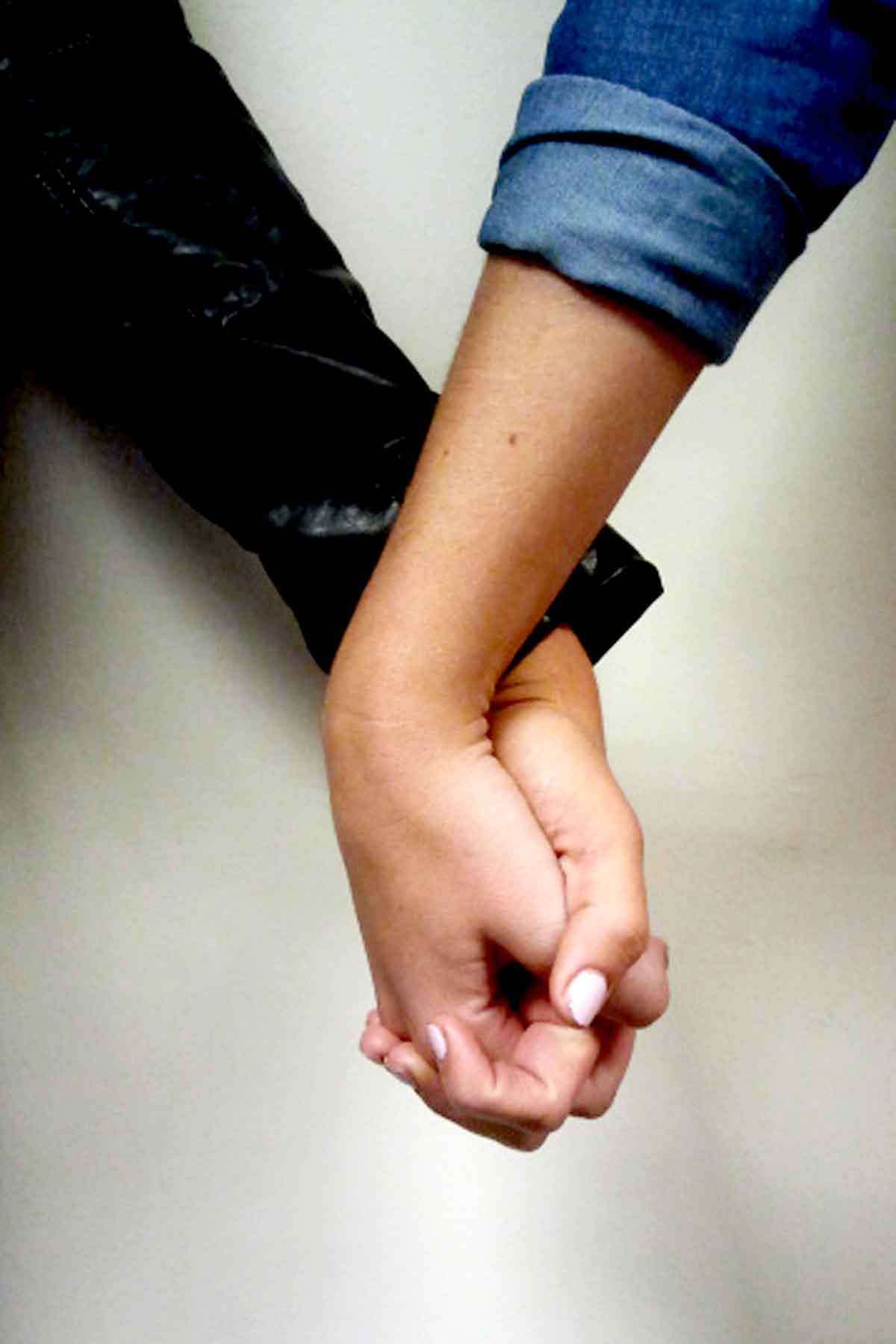
Two women hold hands to show strength and unity for a cause

“To achieve change, it takes multiple approaches,” explains Brandie Balken, executive director of Equality Utah.

Balken compares the inequality the LGBT community faces right now to the Civil Rights Movement. People were treated differently by others simply because of the way they were born. African-Americans eventually achieved equal rights and changed history.

Kari Ellingson, associate vice president for student affairs at the University of Utah, said, “There is a lot of unawareness. The more people become aware, the harder it is to discriminate…. Once you begin to recognize you know LGBT people and like them, the more you see them as people and that’s when legislation starts to change.”

Equality Utah is the state’s largest advocacy and policy organization for the lesbian, gay, bisexual and transgender (LGBT) community.

According to an Equality Utah email sent after Election Day, “YOU made this possible! … Thanks to you — our volunteers and supporters, we have accomplished so much to elect pro-equality candidates and build support for statewide nondiscrimination in employment and housing!”

The email also noted progress across the country for the LGBT community. Voters in Maryland, Maine and Minnesota passed same-sex marriage, the first openly gay senator was elected into office and the first president ever to endorse marriage equality was re-elected.

Equality Utah and the LGBT community have taken steps forward in Utah in recent years. According to the website, “In 2008 Equality Utah passed a bullying and hazing bill that created a statewide definition of bullying and hazing and outlines the minimum standards for bullying and hazing policies in local districts and charter schools. In 2010 Equality Utah added cyber bullying and verbal harassment to the list of prohibited behaviors.”

Most recently in 2012, in collaboration with the political election, Equality Utah released this statement: “‘It’s Utah’s time to lead!’ Last night we saw that the LGBT voice carries real power. Where are we headed next? The 2013 legislative session where we can, and we will, lead the nation by ending discrimination for LGBT Utahns and their families in workplace and housing.”

Equality Utah is constantly striving to look forward for a better tomorrow and has 21 “Equality”-endorsed Utah elected officials who it believes will join the organization in the fight for civil rights.

One of the  fights Equality Utah is winning is with bullying in schools. This is a major problem, one that parents can’t truly protect their child or children from. Balken said that when she was a child, bullying wasn’t as bad as it is today because she got to go home and escape it.

But these days, children can’t escape it because technology is everywhere. Cell phones and social media are constant for the younger generation. This makes the cyberbullying issue that much more crucial to stop in its tracks. Balken said the bullying and hazing bill that was passed will help make a difference in people’s lives; individuals want to live as normal of a life as possible while being treated equally.

“Equality means all of us” is the underlying theme that keeps her going. Balken said the LGBT community is facing more than just unequal marriage rights today. Some of the other obstacles include being unable to visit one’s partner in the hospital.

According to a 2011 poll of Utahns released by the Human Rights Campaign, “Seventy percent of respondents said they know someone who is gay or lesbian and 42 percent said their feelings about LGBT people have become more accepting over the last five to 10 years. (Seven percent said they have become less accepting.)”

Kari Ellingson said, “It’s important to recognize victories when you have victories, even if they seem small. The LGBT community made progress through this election nationwide. Here in Utah they received some hard knocks last session yet, they know it is important to keep standing up for things that matter.”

pinkdot events come to Utah, by way of Singapore

Story and slideshow  by CHAD MOBLEY

Experience the pinkdot events.

While locked out of her office and waiting on an uncomfortable orange couch for someone to let her in, Valerie Larabee, director of the Utah Pride Center, got started on another busy day by going through emails on her smart phone. Little did she know, she would soon open a message that could effectively spark a revolution for the lesbian, gay, bisexual and transgender community nationwide.

The email, from a man she had never met face to face, contained a YouTube video of an event that took place in Singapore in 2009. It was a powerful visual representation of an extravagant affair that encouraged people to gather in celebration of love — love between all people, regardless of sexual orientation. This celebration was the first of its kind worldwide.

The pinkdot events provide a venue for straight people to come out and publicly display their support of their friends, family members and complete strangers who identify as lesbian, gay, bisexual or transgender. It is a family-friendly celebration with live entertainment, celebrity appearances, refreshments and fun for all people. All races, sexual orientations, genders, religions and ages are invited to attend.

“I saw the video and I immediately knew that we had to do this,” Larabee said. “We had to start doing this here in the US. We particularly needed to start it here in Utah because our big challenge here is getting straight parents to understand that they too could have a gay kid. It’s very likely that they have a gay person in their lives and we would hope that the love that they have for them is enough for them to come out and be visible in their support of them.”

Larabee and her colleagues got to work that day in the fall of 2011.

They instantly envisioned a national phenomenon, so one of the initial steps was purchasing the web addresses for pinkdot in each state; PinkDotUtah.org was the first they acquired. Next they created a task force, called the Support Love Courage Council, whose only objective is planning the pinkdot Utah events. After that, they had to execute the project.

The first pinkdot Utah public celebration occurred in 2011 in Salt Lake City. Another was held in September 2012. Both had more than 2,000 participants.

The most recent event happened in St. George, Utah, on Nov. 3, 2012. It was the first pinkdot to be held outside of Salt Lake City since the celebrations were launched in the United States.

“We were the first permitted public gay event in St. George,” Larabee said. “Pinkdot got covered in their paper, which was amazing. That’s what we are striving for, is to come out and be visible.”

Ken Kimball is the man who sent Larabee the email that ignited the campaign. Since then, he has been at the helm of the Support Love Courage Council as the project lead.

“It’s amazing that it even got through her filter because she gets thousands of emails,” Kimball said. “I sent her the video and Valerie wrote back, ‘You wanna play?'”

Kimball grew up LDS in Utah, but moved away after graduating from Brigham Young University because, he said, he knew he was gay.  He spent the next 20 years living in cities across the country, including Los Angeles; Austin and Dallas, Texas; and Tampa and Miami, Fla. Fifteen of those years he spent with his husband, Miguel. As they prepared to move back to Utah, he said they were scared.

Kimball’s roots within the LDS faith go back to the foundation of the Mormon Church. His ancestors were among the first four Mormon families to come to Utah.

“There might be families that have as much time in the LDS church, but nobody has more heritage than me,” he said.

With that heritage comes a rift within his own family. Kimball is the third oldest of nine siblings.

“I have some siblings that are fully accepting, my parents are really accepting … and I have siblings that won’t let their kids interact with me,” Kimball said. “There’s nieces and nephews I don’t even know.”

In a state that is predominantly Mormon, Kimball and the rest of the 18-member Support Love Courage Council thought it was paramount to craft the pinkdot events in a way that could include all religions. Kimball said he thinks about his family’s inclusion with every decision he makes.

“We didn’t want it to be a political statement. We didn’t want it to be a statement about marriage equality. There were a lot of things we didn’t want pinkdot to be about,” Kimball said. “[Mormon] theology and what they talk about is being loving, being supportive and being caring for all people. So it’s a message of inclusion and celebration by those individuals.”

Events are family-friendly and alcohol-free in an effort to ensure that everyone feels comfortable and welcome.

Ann Clark, a straight ally on the board for the Support Love Courage Council, is one person helping to maximize inclusion in the pinkdot events.

“I’m a parent. I want to show my children that we’re all the same,” Clark said in a phone interview. “I think that’s something as well, that’s why we try to aim for family-friendly.”

Clark became an ally not because she has a gay family member, not because she has a lesbian friend, but because she said she doesn’t understand why people are separated by whom they choose to love. Before joining the Support Love Courage Council, Clark worked on planning the Utah Pride Festival and subsequently became a member of Parents, Families and Friends of Lesbians and Gays (PFLAG).

She understands the importance of holding pinkdot events in large metropolitan areas like Salt Lake City, but feels the events can have a bigger impact on smaller communities, like St. George.

“I think it’s almost more important than doing it here [in Salt Lake City],” Clark said. “I’m an ally and we have a really strong ally backing in Salt Lake City. It’s almost a necessity [in rural places] because there’s not as much acceptance and not as much outreach…. If you put it in communities where more people can join together and watch that acceptance, that’s an important thing.”

Spreading these events across the country has been a slow process, but it is gaining momentum. Kathy Godwin, Mountain West regional director of PFLAG, said in an email how her organization is helping spread the word.

“We use email, we distribute fliers, we get our members to each bring at least one friend,” Godwin said. “It is a simple as that to begin. Outside of Utah, PFLAG does try to report on Facebook, the national PFLAG blog, etc. This builds awareness of this event and the purpose outside of our community. The power of social media.”

The goal of the Support Love Courage Council is to generate awareness of pinkdot Utah events until every state holds its own celebration. It wants to see these events in major cities and smaller rural communities as well. Groups in Florida and New Mexico, among other states, have formally expressed interest in holding their own pinkdot events in the near future. However, Ken Kimball hopes to see a day that these events are no longer necessary.

“I hope that someday the whole pinkdot concept is irrelevant,” Kimball said. “The support, the love and the courage is to love people for who they are. Hopefully it will become something that we don’t need to talk about, that people just do, but we’re not there yet.”

The future of homeless LGBT youth in Salt Lake City

Story and slideshow by RACHEL JACKSON

See inside the Homeless Youth Resource Center.

It’s just another Monday for the Volunteers of America Utah outreach team. Members spread out so they can cover more ground and find their target — homeless youth. The team members hop on TRAX, because that is a common place to find them. The next place they look is under overpasses or in parks. They just want to tell them that they have somewhere safe to go.

Volunteers of America is a national nonprofit organization, which was established in 1896 by social reformers Ballington and Maud Booth. A chapter is located in Salt Lake City that has various human services programs, including homeless resources, detoxification services and housing assistance.

A  survey done by Volunteers of America showed that approximately 41 percent of the youth they served in 2010-2011 identified as LGBT.

Although that number has varied slightly since the summer months, Zach Bale, vice president of external relations for Volunteers of America, said that a little more than one-third of the youth he sees are LGBT. The number is disproportionate when compared to the general population of LGBT in the Salt Lake City community, which is 6 to 9 percent.

According to both the Utah Pride Center and Equality Utah, an advocacy organization for LGBT Utahns, there are two central causes to youth homelessness: a lack of recognition and acceptance on both the personal family level and by society in general.


Recognition

Recognizing that homeless youth exist, and realizing that there are specific reasons why they end up homeless, is a crucial step for initiating changes.

According to the 2012 Comprehensive Report on Homelessness in Utah, released Nov. 8 by the Housing and Community Development Division, there was no representation of the LGBT community in both the adult and the teen categories. The survey included race, gender and age, but omitted sexual orientation.

This is one main reason why the state doesn’t know how many homeless people identify as LGBT. Awareness of LGBT homeless people on the state level would enable places like Volunteers of America to receive more funding.

“Awareness is half the battle,” Bale said. The homeless youth center on 655 S. State St., sees about 60 to 70 youth per day. In 2011, more than 1,000 youth were served at the center with basic needs such as accessing laundry services, food and hygienic resources.

The Volunteers of America Homeless Youth Resource Center accepts a small portion of funding on the federal and state level, but the majority of funding comes from local and private donations.

In 2011, Volunteers of America joined advocacy work with Equality Utah. The advocacy work was for the emancipation bill, which allows teens who are 16 and older to make legal decisions for themselves. And for many homeless youth this is a necessity.


Acceptance 

Lack of acceptance is another reason why teens end up on the street.

“We see a high level of family rejection at TINT,” said Danielle Watters, director of community support and wellness services at the Utah Pride Center. “If they were accepted it wouldn’t be such a big issue.”

Utah Pride Center houses TINT, the other downtown youth resource center in Salt Lake City where youth can come to access basic needs.

Utah has the highest population of members of the Church of Jesus Christ of Latter-day Saints (LDS) in the nation — 62.2 percent of the total population.

In a January 2012 Pew Research study on Mormons in America, 65 percent of U.S. Mormons reported that being LGBT should be discouraged by society.

Eliana Birdsall, 20, said, “I have been homeless on and off for about 5 years. It was just easier to be homeless than to have to deal with all of it.”

Birdsall’s mother has been into heavy drug usage for most of her daughter’s childhood. Birdsall feels she has no one to turn to, because the rest of her family members are LDS. She is bisexual and is afraid to tell them. Her aunt came out to her family as a lesbian and they refused to speak with her for several months.

Birdsall uses the homeless youth center almost every day.

Brandie Balken, executive director of Equality Utah, said, “When we look at our homeless youth, they are almost 50 percent [LGBT]. There is an obvious misrepresentation of our LGBT kids who are in our homeless youth population.”

Balken said that one of the reasons why these kids end up on the street is because they do not fit in with their biological families due to a lack of acceptance. The kids then look for a place they can be acknowledged for who they are, and the sexual orientation they identify with. They are either placed with a foster family through the state or they end up roaming the streets in search of shelter.


What is being done?

Volunteers of America also has a homeless outreach program where staff and volunteers search for individuals and families experiencing homelessness. Outreach workers supply people with basic necessities such as food, clothing and other survival material.

“We hop on TRAX, and seek out youth,” Bale said. “The outreach workers find youth and let them know that they don’t need to stay on the street.”

Meals are prepared three times a day at the center, often by volunteers who have purchased the food.

To further help youth, Volunteers of America Utah has partnered with the Utah Pride Center. Each now refers clients to the other organization if staff feel people would be better served or feel more comfortable at the other facility.

Volunteers of America also works with the Fourth Street Clinic. Youth are referred to the clinic when they are in need of medical care. This clinic allows uninsured and homeless individuals the opportunity to become healthy so they can work toward getting back into secure housing.

“We’ve been seeing a lot of kids with kids lately,” Bale said. So the center has had to acquire supplies to help teen mothers in need. The Fourth Street Clinic gives homeless pregnant girls or women the prenatal care they need to give their baby a chance at a healthy life.


What still needs to be done? 

“In an ideal world we wouldn’t have anyone to help, but that’s not the case,” Bale said.

The Homeless Youth Resource Center is looking to expand. Bale said Volunteers of America is searching for a parcel of land that is big enough to construct a building from scratch and incorporate all of the plans for the future.

“We don’t provide shelter,” Bale said. “We want to be able to open an emergency shelter with about 30 beds for youth to sleep in.”

Bale and a group of other staff with Volunteers of America Utah went to various U.S. cities such as San Francisco and Seattle to study and learn from larger cities’ youth resource centers. They found that several cities offer homeless youth employment training and specific skills required to get a job.

Volunteers of America Utah hopes to offer something similar to help homeless youth get off the streets and transition into confident, self-sufficient adult lives.

Transitional housing is another project that Volunteers of America is currently working on. The existing building was scheduled to be remodeled, but on Sept. 16, 2012, an accidental electrical fire destroyed the roof and most of the top floor of the building located at 556 S. 500 East in Salt Lake City.

Two organizations, including the B. W. Bastian Foundation, have donated $50,000 each to support the project. Individuals will be able to live in the Transitional Home for Young Men until they get a job and are capable of supporting themselves.

Bastian said in a 2011 press release, “The fact that over 40% of the homeless youth are on the street because they are ‘not straight’ sickens me. I believe the LGBTQ community owes it to these kids to show them there is love for them. We also need to educate the parents and families of these kids to the truth so that fewer and fewer of these kids end up homeless.”

2013: LGBTQ equality in Utah? It has a fighting chance

Story and photo by SASCHA BLUME

With the 2013 Utah legislative sessions set to begin on Jan. 28, the lesbian, gay, bisexual, transgender and queer community is in a political quandary.

Max Green, advocacy coordinator for Equality Utah in Salt Lake City, said, “We’re not asking for special treatment, just the same protection that everyone is provided.”

Green said the national and state elections of 2012 have made an impact on the coming year’s legislative process.

“With so much turnover from the elections not every person is up to date and not every legislator is familiar with the legislative readings,” Green said.

This makes it particularly difficult to have a season-long dialogue about specific legislation, Green said.

In an attempt to bring equal rights and protection to the LGBTQ community, Equality Utah created the Common Ground Initiative in 2012. The nonprofit organization’s mission is: “To secure equal rights and protections for LGBTQ Utahns and their families.”

This proposed initiative was designed to positively impact four problem areas in Utah’s LGBTQ community:

(1) Fair housing and employment (SB 51). Currently, Utahns can be evicted from their house because of their sexual orientation.

(2) Expanding health care (HB 64). Currently, lesbian and gay individuals cannot visit a loved one in a hospital.

(3) Relationship Recognition (SB 126).

(4) Inheritance. LGBTQ individuals are unable to claim inheritance when their partner dies.

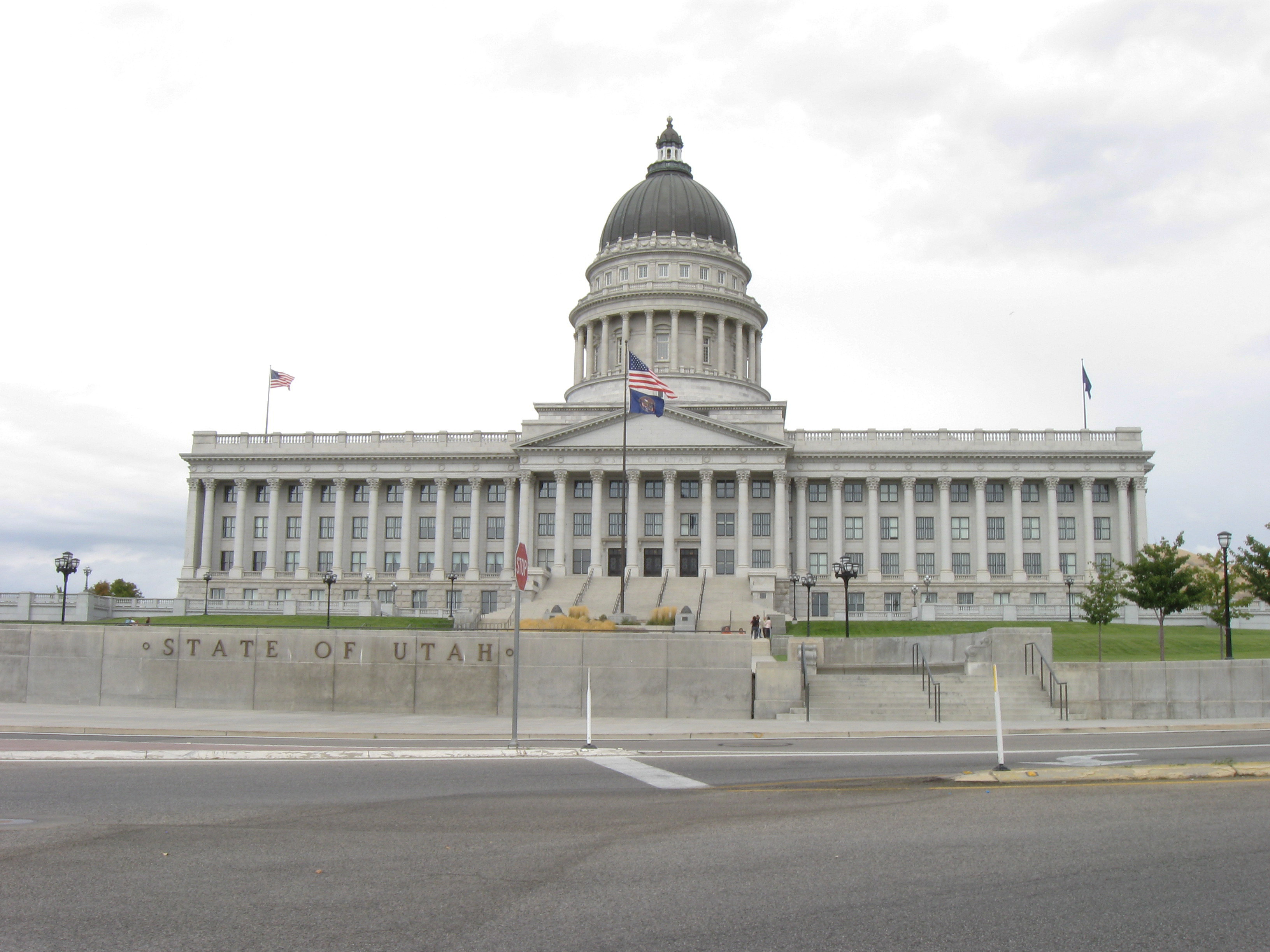
During the 2012 legislative sessions, Utah’s Sate Capitol Rotunda was the site of a rally organized by Human Dignity Utah. The purpose of the rally was to encourage Utah legislators to ratify the Common Ground Initiative.

The rally drew more than 100 people — some carried signs, others sang, but all were there to show solidarity in their quest for equality.

Five speakers addressed the audience and the dozens of lawmakers who watched from the third-floor balcony surrounded by armed Utah Highway Patrol officers.

Sister Dottie Dixon, a local art performer, told the audience, “By showing up here today we’re showing that we are fed up; we’re tired of being ignored, politely dismissed, relegated to second-class citizens.”

Kathy Godwin, president of the Salt Lake Chapter of Parents, Families and Friends of Lesbians and Gays (PFLAG), told the crowd that the majority of Utah citizens and businesses want equal protection for the LGBTQ community. She also said that approximately 70 percent of Utahns encourage state legislators to give civil rights to the LGBTQ community.

Isaac Higham, a keynote speaker with Human Dignity Utah, said after the rally, “I’m sick of the nonchalance of how easily they just dismiss our community and don’t even give us a true fair hearing.”

Higham said that Utah legislators are misinformed regarding what the people of Utah want. He said it’s the job of all Utahns to remind lawmakers that they are in office to work for the people, not just their agenda.

The Common Ground Initiative failed. All four bills went unheard and were effectively tabled.

Annual Gay-La and Silent Auction raise funds for the U’s LGBT Resource Center

001

Story and photos by SASCHA BLUME

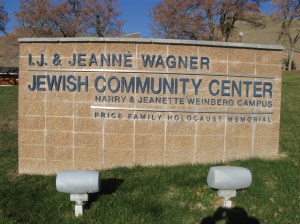
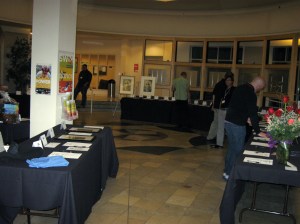
The culmination of Pride Week at the University of Utah was the Gay-La and Silent Auction at the Jewish Community Center.

Approximately 240 people attended the dinner and silent auction with all proceeds being donated to the LGBT Resource Center at the U.

The money earned at the event went to student scholarships and student emergency funds.

People who attended the event were able to silently bid on numerous items, including: a limited edition collection painting by Trevor Southey, Ballet West tickets and a two-night stay at Hotel Monaco located in downtown Salt Lake City.

The silent auction raised $2,800, with the highest auction item being Southey’s painting. It sold for $500.

gay la_silent auction

The Gay-La Silent Auction featured a wide variety of items.

Attendees enjoyed the meal and the silent auction, but every person who paid to participate in the Gay-La was there because Matthew Breen was the keynote speaker.

Breen, a U alumnus, is the chief editor of the nationwide LGBTQ news magazine, “The Advocate.”

He began his speech by thanking everyone in attendance for their time and kindness toward the U’s effort in championing LGBT equality in Utah.

Breen disscussed the hardships of growing up gay in Salt Lake City during the 1980s and 1990s, and said how thankful he was to be back at the U.

It was while he was at the U, that Breen grew to understand that on planet Earth, it is not easy to conduct one’s life with loving kindness, especially  when the community he grew up in was intolerant toward the LGBT community.

“A younger me would have benefited from Pride Week,” he said.

During the keynote speech, Breen said how important it is for gay and lesbian people to come out as soon as possible. He also encouraged parents and the community to support all people in this process.

It has been 15 years since Breen publicly stated that he is gay. However, this trip to Salt Lake City was the first time he has been openly gay in Utah.

gay la_jim dabakis

Approximately 240 people attended the Gay-La and Silent Auction at the JCC.

In his speech, he encouraged the audience to never forget the hard work and dedication of previous generations and their efforts to end discrimination against the LGBTQ community.

Breen’s speech, however, was not exclusively focused on how far the LGBTQ community has come. Rather, he focused on the idea that people should “take abject lessons to heart,” and that they should “unlearn that there are two sides to the story.” Breen said there is only one truth in a story and that is what people should focus on.

He then discussed the idea that the media and general public still are misinformed regarding what being gay or lesbian is.

Breen explained that in America most people still link pedophilia with gay men. He also said the media and general public still believe that children cannot thrive in a same-sex household. He stated categorically that there is zero evidence to support these myths. The audience responded with loud applause.

The Gay-La also recognized nine students who attend Brigham Young University for their courage and resilience for upholding its Honor Code despite the fact that they are gay. BYU forbids sexual contact between gay people and will expel students for having same-sex relationships.

IMG_0007

BYU students having dinner.

One of the students, Adam White, said, “It is scary to speak up for what you believe to be right, but I found that when I raise my voice to spread awareness and understanding, that it does make a positive difference on this campus.”