LGBT organizations continually work toward equality in Utah

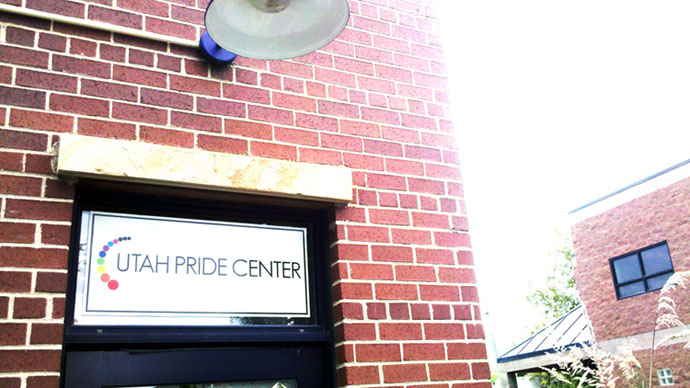
The Utah Pride Center, located at 361 N. 300 West, is an advocate for the LGBT community.

Story and photo by CHAD MOBLEY

Salt Lake City is seen through the eyes of the nation as a conservative and religiously centered metropolitan area whose dominant Mormon culture controls everything from lawmaking to media consumption. However, the population is ever changing and growing more diverse all the time. The lesbian, gay, bisexual and transgender community is one segment of the population with organizations in place to help balance the scales and promote equality among all citizens in Utah. Equality Utah and the Utah Pride Center went to bat for the LGBT community during a recent controversy and the leaders involved felt the outcome was positive.

In late August 2012, KSL refused to air the new NBC comedy, “The New Normal.” That decision caused a media firestorm and many in the LGBT community in Salt Lake City to take action. The issue was covered by news outlets across the country, including the Los Angeles Times, Huffington Post and CBS. When the story first broke, the Utah TV station was portrayed as regressive and bigoted.

Not only did this decision catch the attention of the national media, but enraged advocates for gay rights in America.

GLAAD President Hernon Graddick was quoted in a blog from the organization’s website: “Same-sex families are a beloved part of American television thanks to shows like ‘Modern Family,’ ‘Glee’ and ‘Grey’s Anatomy.’ While audiences, critics and advertisers have all supported LGBT stories, KSL is demonstrating how deeply out of touch it is with the rest of the country.”

Graddick continued, “We invite Jeff Simpson (CEO for Bonneville Media, KSL’s parent company) to sit down with GLAAD and local LGBT families. We know that if he would, he would see that not only are our families normal, but by citing ‘crude and rude’ content and refusing to affirm LGBT families, KSL and Mr. Simpson are sending a dangerous message to Utah. They should make that right.”

Five days after KSL’s decision not to air the program, the director of the Utah Pride Center, Valerie Larabee, along with Equality Utah director, Brandie Balken, her family and another same-sex family sat down for a roundtable discussion with KSL and Bonneville Media.

The organizations then released a joint statement on Aug. 29 regarding the decision to pull the show from the primetime lineup.

According to KSL, “It was helpful to talk together, to better understand issues, and to be able to discuss the reasons behind our decision to not air ‘The New Normal.’ This was not a decision we made lightly and it was not made because of any single issue including gay characters or LGBT families. … We care about and value all members of our community, including LGBT people and their families, and are grateful when there can be the type of cordial and respectful dialogue we have had today.”

Equality Utah and the Utah Pride Center added in the statement, “We had a great opportunity to talk about our families and our kids. We appreciated the opportunity to express our concerns, and to hear firsthand the reasons behind this decision. We accept their explanation that the decision to pull ‘The New Normal’ was not made lightly and it was not made because of any single issue including gay characters or LGBT families.”

After having seen the show, Balken and Larabee agreed with KSL’s decision.

“Having the LGBT presence in the show was important,” Balken said in a telephone interview. “However, more than or equally important to just being present is how we are portrayed. We want to be represented as who we really are.”

Larabee added, “Once we saw the first episode, we got it completely. I agreed with them. We think it is very poorly written.”

One member of the local LGBT community felt relief knowing that advocates are ready to fight for their rights.

“That really does show what they are doing and how effective they are,” said Shalise Mehew of Salt Lake City. “I totally agree, I wouldn’t want it on primetime either.”

After a heated controversy over what seemed to be an anti-gay decision, a simple dialogue  immediately alleviated concerns. A planned protest was cancelled, a joint statement was released and an understanding between two sides of the community was reached.

“It was the first step in helping to create trust between at least a segment of our community and the local media,” Larabee said.

The Utah Pride Center and Equality Utah continually monitor the media to correct any unfair reporting or disparaging portrayals of the LGBT community and its families. The two organizations maintain relationships with the media on a daily basis and they work with GLAAD when they have any major issues surrounding coverage or statements made by those in the media industry.

“Utah Pride Center and Equality Utah work tirelessly to promote tolerance and grow acceptance of LGBT people and families in Utah,” said Graddick of GLAAD on the website. “We are proud to be working with them.”

For the organizations, fighting for equality doesn’t stop with the media. One of their goals is to reach this same type of understanding between the LGBT community and the dominant religion.

“We are really invested in continuing conversations with LDS people,” Balken said. “We live in the same places, work in the same places and have kids in the same schools. Anytime people can and will sit down and really just be real with each other, it’s a great release and it’s positive.”

One World Café heightens the food expectations of the non-profit world

This slideshow requires JavaScript.

by Tricia Oliphant

Imagine a menu that offers so much variety it actually changes on a daily basis. You choose your portions and then pay what you are able or what you think your meal was worth. If you do not have money to buy a meal, you can volunteer an hour of your time and eat for free.  Those who serve your food are also the people who helped prepare it, allowing you to find an immediate answer to the age-old question “It looks good, but what’s in it?”

Sounds too good to be true, right?

Such is the organization of One World Café, a non-profit community café in downtown Salt Lake City.

Denise Cerreta founded One World Café in 2003. It is now part of several non-profit cafés nationwide that make up the One World Everybody Eats Foundation. The café provides delicious, healthy meals to all who desire to eat, regardless of their financial situation.

When I heard about this revolutionary idea of choosing my portions and what I wanted to pay for them, I was curious about how it worked. I decided to give it a try with a friend.

Upon entering the café, we immediately noticed the friendly atmosphere. We were greeted kindly by one of the cooks/servers who directed us to choose our plate size. Although we were only required to pay what we deemed fair, we did see price suggestions according to the size of plate written on a blackboard (small: $4 to $6, medium: $7 to $9, large: $10 to $12.)

Our server then described each of the dishes laid out in front of us, buffet style. The main dishes included sweet curry over brown rice, a unique asparagus quiche on a potato crust, and seasoned beef bursting with flavor.

An assortment of fresh salads complimented each of the main dishes, including a zesty marinated carrot and cucumber salad, and a wild rice salad with celery and tomato.

We tried a bit of everything. We also chose a drink from a selection of coffee, tea, soymilk, almond milk, or water.

The One World Café offers a cozy, “feel like you’re eating in your mother’s dining room” atmosphere.  Each of several dining rooms contains only a couple of dining tables to provide a sense of privacy. A patio in front allows for dining al fresco.
In addition to the warm, inviting atmosphere and the plethora of food and dining options, the food itself at One World Café was simply succulent and mouthwatering. The ingredients were clearly fresh. Most were organic.

“I believe in getting food as close to the source as possible,” One World Café manager David Spittler said.

Sunflower Farmers Market donates many of the ingredients used at One World Café.  The café also participates in Community Supported Agriculture (CSA), where a monthly fee is paid to a local farm for its fresh produce.

Spittler became an advocate of fresh, organic food while he worked on a peach farm after high school.  The peaches they shipped to places such as Wal-Mart, Spittler said, were picked while they were still green, thus robbing the produce of many vital nutrients.

Using several of their favorite cookbooks, Spittler and a group of regular volunteers decide how to use the fresh ingredients as they prepare a weekly menu — about a week in advance.

“We try to make the menu as friendly to everyone as possible,” he said.

“My favorite cold dish was the Cucumber and Carrot Zest,” said customer Lauren Snow on a recent visit. “The ingredients were so simple but it had so much flavor, and it’s something I can make at home.”

One other point in One World’s favor: very little food at the café goes to waste. Because customers choose their portion sizes, they eat most of their food.

Furthermore, the food that is left over at the end of the day, such as salads, can often be reused in another dish the following day. Although the hot dishes are not reheated, Spittler said, they are often reused in a soup. Any leftover waste is recycled as compost.

One World’s kitchen is small, but out in the open for all to see.  Customers can watch their meals being cooked. With only one six-burner stove in operation, something is always cooking.

“We can’t prepare large quantities [of food] at one time,” said volunteer Isaac Hoppe. “This is a good thing because it’s fresh.”

Whether you’re looking for a pleasant dining atmosphere, a delicious variety of well-prepared dishes, or would simply like to help feed the hungry of Salt Lake City, the One World Café has something for everyone.

One World Café

41 S 300 East, Salt Lake City, UT 84111

Hours: Wed -Sun, 8 a.m. -7 p.m.; Fri –Sat, 8 a.m. -9 p.m.

Phone: 801-519 – 2002519- 2002

###

https://docs.google.com/presentation/pub?id=1VmCCD4YaEfZgTKii2zE8Y05ysQrLDltQH62rw_XFxUk&start=false&loop=false&delayms=3000

Volunteers of America’s detox center helps men and women get back on two feet

Story and slideshow by LAURA SCHMITZ

As Volunteers of America celebrates its 25th anniversary in Utah in 2011, the program that started it all is still going strong.

A national, nonprofit organization, VOA has a presence in 44 states and employs a range of paid staff, who work to tackle issues such as homelessness and drug addiction.

The Adult Detoxification Center, its first project in Salt Lake City, now offers 56 beds with three separate dorms to men and women purging their systems of alcohol and drugs.

About 20 to 25 staff are employed by the center, including case managers, front line recovery assistants and management. Utilizing a social model, the center promotes relational development and peer motivation to encourage clients to sobriety.

“Being able to build trust and relationship with people is huge,” said Sue Ativalo, director of the center, located at 252 West Brooklyn Ave. in Salt Lake City. “Relationships are a big piece to help them want to recover.”

Client admittance to the detox center is voluntary, and no matter how many times a client has returned, “we never want to show any judgment,” Ativalo said.

Clients follow a structured schedule each day while at the center. Between the 5:30 a.m. wake-up and lights out at 10 p.m., clients attend educational and spiritual meetings during the day and are required to attend detox meetings — such as Alcoholics Anonymous — at night.

Eighty-five to 90 percent of clients are homeless, and though ages have ranged from 18 to 77, the average clients are from their late 30s to late 40s. As of 2011, the center has had more than 15,000 night stays by Salt Lake County residents and serves about 1,600 individuals per year.

“Not very many people have sympathy for our population,” Ativalo said. “But, they are amazing individuals, and we appreciate volunteers that come.”

Clients must have “used” in the past 72 hours to be eligible for services, so the first step the staff takes is to remove those substances from their bodies. Most clients are taken off of all substances “cold turkey,” often causing symptoms of withdrawal, Ativalo said.

Drugs generally take just a few days to clear the system, but effects can last for weeks.

The center has basic medications to lessen pain from the process and often administers a cocktail that combines Tylenol, chamomile and anti-diarrheal components to ease symptoms. Depending on the specific substance, they can include irritability, tremors, nausea, vomiting, diarrhea, fatigue, muscle aches and sometimes hallucinations.

Since the center is not a treatment facility but a detox facility, the staff will refer clients to partnering organizations, such as the Fourth Street Clinic, when they demonstrate need for additional medical treatment. That medical facility is specifically dedicated to homeless patients.

The center can also refer clients to long-term treatment centers such as St. Mary’s, Odyssey House, First Step House, The Haven and Valley Mental Health.

“The difficulty is the waiting list for [those] programs is really high,” Ativalo said. “There is a huge group, but no transitional place while waiting for treatment.”

Ativalo said some clients will instead return to drugs on a low dosage to prevent symptoms of withdrawal.

“A lot of chronic users will use to stay well rather than to get high,” she said.

Once clients are physically detoxed, they are offered assistance from the center’s case managers, who oversee their progress and counsel them through goal setting and a sustainable, full recovery.

One client returns to VOA after visiting the center when it first opened its doors in 1986, coming back to the center after more than 20 years.

“Originally I was in and out of here for two weeks at a time for about six different times,” said client Scott Barker. “Then they put me on the HUD program. I was here for 103 days on that, and I am on it now.”

The Housing and Urban Development program is an initiative to place clients into permanent housing, and the detox center reserves six beds specifically for those enrolled in the program. HUD participants have more freedom than regular clients and can get passes to leave, have cell phones and acquire more personal belongings.

“I was kind of a revolving door before I got on HUD,” Barker said, saying that the six members of the HUD program help create a sense of community and accountability.

Homeless since 2009, Barker said drugs and alcohol, as well as lack of stability and problems with the law, led to his circumstances.

“[The program] is good stability,” Barker said. “Here, you get some structure going. You have enough freedom that you can set up your own plan and work from it, but enough structure that you’re not just out there, running wild. It’s a good way to focus on things you need to accomplish.”

Barker is currently working with vocational rehabilitation and hopes to go back to school, ultimately wishing to return to truck driving.

“For the most part, I’m pretty happy here, but I’m always looking towards the future,” he said.

It is common for clients, such as Barker, to return several times to the detox center before achieving sobriety.

“We see a lot of people who will come again and again,” said Emily Bennett, who works with VOA’s Jail Diversion Program. “A lot of people say relapse is a part of recovery.”

The JDP reserves 10 beds at the detox center for Salt Lake City Police, West Valley City Police, UTA Police and the Salt Lake County Sheriff’s Department for individuals who are publicly intoxicated. The program serves as an alternative to jail time and is also cheaper for the county.

Bennett said jail is over-crowded, and “doesn’t address the problem.”

Some clients have received so many citations they are unable to afford that they have warrants for their arrest. For these cases and others, JDP staff will often send clients to Judge John Baxter of Utah’s third district court. Baxter founded and governs the Salt Lake City Justice Court Homeless Outreach Project, or the Homeless Court.

The court meets twice per month at the Bishop Weigand Homeless Day Center and is specifically for homeless defendants. Baxter handles infractions and misdemeanor cases only, often sentencing community service instead of fees.

“He’s a rock star,” Bennett said of Baxter. “He’s not what you’d expect from a judge. He has a lot of respect for the clients, calling them ‘sir’ or ‘ma’am.’”

Chris Allsop, 23, is another client who has returned to the center multiple times to regain his footing.

“This year alone I’ve been here more than 30 times,” Allsop said. “My average day out of detox is just back to smoking and drinking. So I always choose to come here, where I have no desire to use anymore.”

Allsop, who said he has taken “more drugs than he can count on his 10 fingers,” came to the center this time after taking a pain pill called Neurontin.

“That stuff is all chemicals – it’s all really bad,” Allsop said. “I’m about done with that stuff, because it makes my heart go too fast, and I don’t think before I start doing things when I’m on it.”

Allsop first came to the detox center after trying to get away from some members of his family.

“My uncle, he disowned me, so I came over here,” he said. “My family is mean to me — my cousin abused me.”

Falling into bad habits away from his family, he has now been ordered by the court to attend 130 AA meetings, which is a common nightly routine for clients.

“I really need to get a job, so I’m trying to clean up my act,” Allsop said. “I want to get to work – maybe part-time school.”

Allsop said the staff at the detox center has helped him to keep going.

“I specifically enjoy the staff and their participation in helping me,” he said. “If I start falling into only hanging out with the clients, they’re going to get me in trouble, and I’ll be back out there, using again.”

Barker also said the staff played a big role in his development.

“I know the staff quite well,” Barker said. “The staff is great here, they’ve helped me with a lot of things, and they’re easy to get along with, too.”

The detox center staff also works closely with other VOA programs in Salt Lake City, including the Homeless Youth Resource Center, Homeless Outreach Program and the Center for Women and Children.

“Collaboration is huge – we see a lot of the same clients,” director Ativalo said.

She said continued education and accurate awareness about the population is necessary to encourage the number of volunteers and to end the cycle of drug use.

Those interested in volunteering with the detox center or any of VOA’s programs must apply on its website. To donate, the detox center accepts financial contributions and in-kind donations. Current needs include towels, sweat pants, waterproof pillow covers, deodorant, current DVDs and men’s socks.

Nonprofits’ motivation brings ‘credibility’ to the community

by LAURA SCHMITZ

Nonprofits, by definition, must exist for public benefit and comply with a “non-distribution constraint,” mandating that net earnings not be directly distributed to owners.

For some, nonprofits are defined by much more.

The Utah Nonprofits Association exists solely to unite more than 600 nonprofit organizations in the state, supported by more than 20 community partners. A part of the National Council of Nonprofits, it also works at the national level, promoting the interests of its organizations to government officials.

An example of one of its collaborators is the national nonprofit, Boys & Girls Clubs of America. With five distinct sites in the Greater Salt Lake area, its Lied club is located at 464 South Concord (1235 West) in Salt Lake City, serving 80 to 100 kids per day.

“I think there is definitely a reputation, a belief system that goes with nonprofits,” said Tiffany Harris, club director for the Lied Boys & Girls Club, in a telephone interview. “They give you more credibility within the community, because your main motivation is your mission. I think when people see that’s your driving force as opposed to money, they are more likely to support you.”

The Boys & Girls Club reaches out to at risk youth, proving resources and a haven away from home. According to its website, after-school hours, between 3 and 6 p.m., are when children are most likely to try drugs and when most juvenile assaults occur.

“We definitely have core members that come,” Harris said. “Most of our kids we see every day. It’s part of their routine — a lot of them walk here after school.”

With 84 percent of its children coming from families considered to be low-income, Harris said the club works to provide them with unique opportunities that might not have been afforded to them.

“We’re starting an art program, having local artists come in,” Harris said. “It’s great, because they have that background and expertise that kids crave and really love. Classes are expensive, so we try to fill that gap that kids wouldn’t get otherwise.”

The Lied club has 10 paid staff members, including four who work with elementary age children and three dedicated to the teen center. The center is open primarily during the high-risk after-school hours, opening each day at 2 p.m.

While nonprofits can apply for 27 types of tax exceptions from the Internal Revenue Service, the Boys & Girls Club functions under the common 501(c)(3). It receives the majority of its funding through local and state grants, private foundations and donations.

“That’s what a healthy nonprofit will do,” Harris said. “You can’t rely on one major funding source, because if that source pulls, your funding is gone.”

However, these organizations are not devoid of any monetary gain, which is a common misconception, said Nancy Basinger, assistant director and service learning manager at the Lowell Bennion Community Service Center at the University of Utah who works extensively with nonprofit’s rights and bylaws.

“The [nonprofit] organization must make a profit, but must also be reinvestigating its own entity,” Basinger said. “The most in-demand nonprofits are those that assist in survival.”

Basinger said one common negative theme she sees within the nonprofit industry is that there are many individuals who are passionate about a cause but have little business experience.

“A lot of [nonprofit] leaders are doing this organization on top of other things,” she said. “They’re acting as social workers and nonprofit workers and have a family and kids.”

Basinger said the passion must be balanced with experience to have a successful impact in the community. She encouraged would-be entrepreneurs to first try partnering with an existing organization before building from the ground up.

“It’s not good to have a million nonprofits competing over the same dollars, rather than a few nonprofits working together under the same dollar,” she said.

Along with its hundreds of nonprofit organizations, Utah has 7.2 active charities for every 10,000 residents, who make up the largest charitable contributors in the United States, based on income. Those living in the Beehive state are also No. 2 in the nation for self-reported volunteering.

Mestizo Arts and Activism: a result of U, community collaboration

Story and slideshow by RYAN McDONALD

In a coffeehouse located at 631 WNorth Temple in Salt Lake City, a group of about 15 teenagers and young adults gathers twice a week to discuss issues that concern them, such as media misrepresentation and stereotypes. It is one link in a large chain of community projects that University Neighborhood Partners (UNP) at the University of Utah is involved in.

UNP (originally called West Side Initiative) was created in 2001. Bernie Machen, the president of the University of Utah at the time, was concerned that if a better effort wasn’t put into helping first-generation underrepresented youth graduate from high school and get into college, the U would not have the student body to be considered the flagship university in the state.

“Since west-side neighborhoods were so totally underrepresented at the U it was a clear geographically-defined place to start,” said Sarah Munro, who currently works as the associate director of UNP. “The charge was to set up collaborative partnerships between the university and west Salt Lake neighborhoods.”

Sarah Munro, associate director of University Neighborhood Partners.

Early in UNP’s existence, an assessment was conducted in seven west Salt Lake neighborhoods to determine what was needed in order for Machen’s concern to be eased. Munro said direct student recruitment was one way of accomplishing this, but that it was not the most effective.

“The vision for this was long-term engagement,” Munro said. “By being engaged in the community, that’s how you create access. You’re addressing barriers to access to higher education. Our charge was to look at those needs and priorities that came out of the neighborhoods and say, ‘What are the university resources that could be brought to this and then how do we bring them to work in a collaborative partnership with one or more organizations?’” Munro said.

By 2003, UNP had begun working with organizations, individuals and government to help west-side residents overcome challenges Munro referred to as “systemic barriers,” obstacles that take a long time to change. The staff of UNP does not participate directly in this work, but the organization serves as a bridge between the university and these entities to enable collaborative work.

“I think that people are more creative and more motivated when they work in teams and that’s what these partnership groups really are,” Munro said.

She referenced changes that have been made in the Salt Lake City School District to respond to the growing Latino and refugee populations, in part due to collaborative work. As an example, she indicated that in-home visits are made to parents who might not otherwise be able to attend a traditional parent-teacher conference.

Members of MAA meet twice a week at Mestizo Coffeehouse.

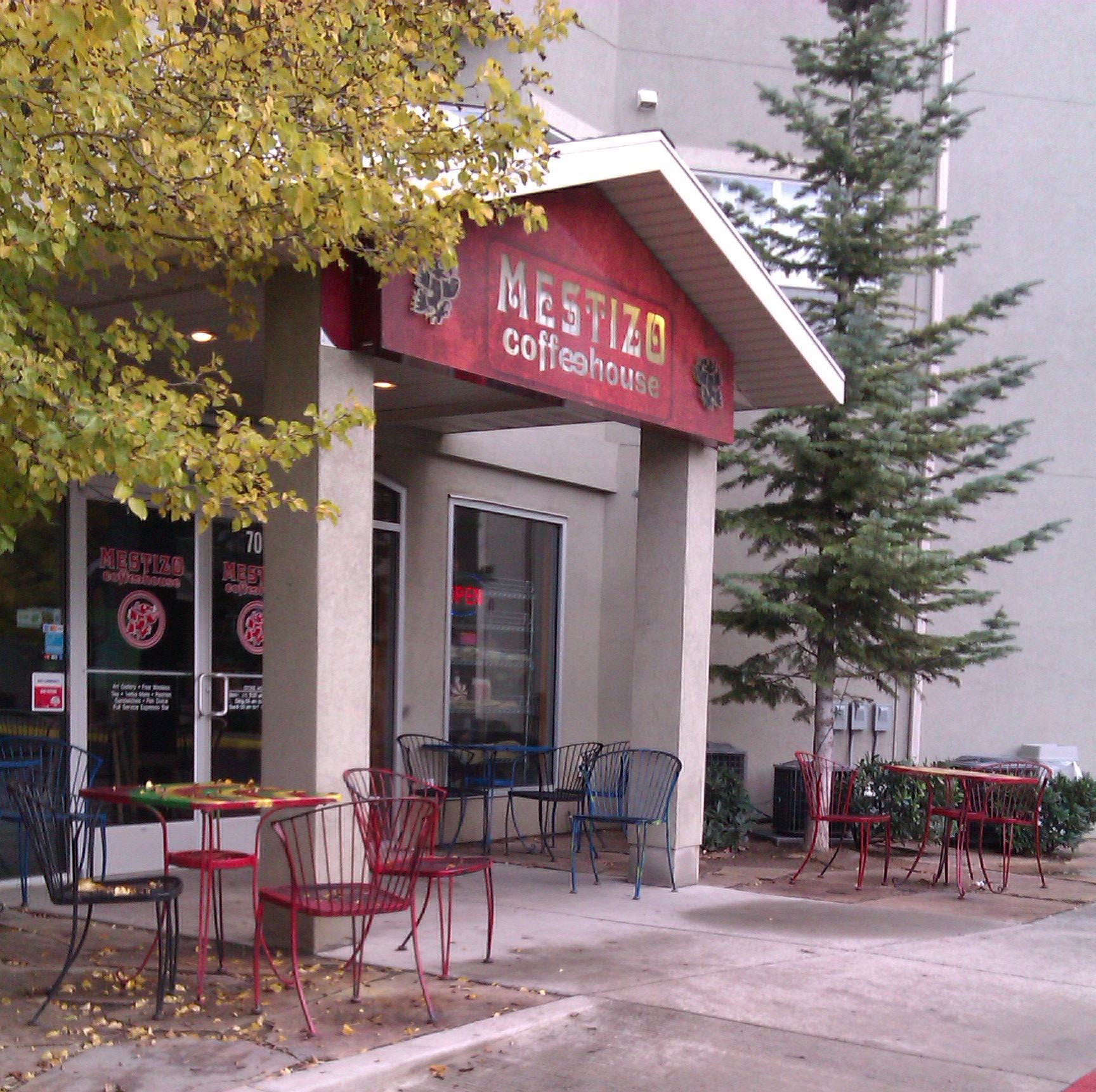
Munro’s philosophy of teamwork is evidenced by Mestizo Arts and Activism (MAA), which meets each Monday and Wednesday afternoon at the Mestizo Coffeehouse. MAA is a partnership between the U and Mestizo Institute for Culture and Arts (MICA).

Having finished a project working with youth on community issues about five years ago, Matt Bradley, an adjunct professor in the Honors College  at the U, wanted to do more. He got in contact with the directors of MICA to explain that he wanted to do a similar project. With MICA’s support, MAA began. The Honors College is the entity that represents the U in the partnership.

MICA’s mission is, “To strengthen and build community through arts, civic engagement, and dialogue. Provide space to those who engage community through their work, are from underrepresented communities, or use art as a tool for social change.”

In that spirit, MAA brings students, primarily from West High School, together to talk about issues related to remembering and preserving their native culture. An ultimate goal is to “create the ability and potential for civic participation,” Bradley said.

During a recent meeting, students discussed the portrayal of Latinos in the media.

“I saw an episode and I got pissed,” said one teen in reference to a time he watched “Family Guy.” “It was a whole attack on Mexicans.”

Sujey, a student at West High School, said she is involved in MAA because it gives her a chance to remember a big part of who she is.

“I feel like all of us are forgetting our roots,” she said. “A lot of people at school are just trying to fit in. Over here you can just come and talk about your culture. You remember who you are and you remember where you came from. It’s a place where you can just come and talk about and relate to things with everyone. You can’t be doing that at school.”

Kania is another student from West who is involved in MAA.

“Your name, your family came from somewhere,” she said. “It began somewhere. Everybody has a different story. The people before you lived a whole different life. Everything that you’re learning, you’re learning from the mistakes that they made. Keeping our culture alive is a way of honoring them for the lessons that they are giving us.”

Another student named Israel discussed a cultural challenge he feels many of those at MAA experience.

“I just feel that mixing two cultures is a lot more difficult than you might think,” Israel said. “I feel like we have to be more Mexican than the Mexicans because not even Mexicans accept us. You have to be more American than the Americans because not even the Americans accept us. We’re just kind of in the middle sitting there wondering which way to go. It’s a big culture clash that we can’t get into. I’m glad I am (involved in MAA) because I’m able to bring two cultures together.”

Although the students discuss serious topics, fun is a core element of the activities at MAA. From having a chance to reflect on Disney movies they watched as kids to playing group games, the students are able to form close friendships through the things they do there together.

José Hernandez, left, and Alonso Reyna, at Mestizo Coffeehouse, 631 W. North Temple.

“We build a sense of family here and that has been incredible,” said Alonso Reyna, a student at the U majoring in sociology who volunteers at MAA.

José Hernandez, another mentor, began his involvement at MAA in 2008, his senior year of high school. He is now majoring in gender studies at the U and plans to become a teacher.

“I didn’t go to college just for myself, but for my family and I wanted to help my community,” he said. “Mestizo allows me to apply what I learn at the U and even learn more than I would normally learn.”

The opportunities that MAA provides these students to explore their culture is only part of its story, however. Part of UNP’s mission is to provide faculty and students at the University of Utah the chance to conduct community-based research through the work its partners are doing.

Ashley Edgette is an undergraduate student who is helping to teach students at MAA how to be community researchers and organizers. She is majoring in political science and environmental studies and minoring in French. Upon graduation she plans to attend graduate school to study city and metropolitan planning and community development. She is currently researching how best to involve people in the creation and maintenance of a community garden.

“Working with these students makes it a more involved community project,” she said. “I think this is the only way to do this kind of research. I think our students (at MAA) get a perspective that you don’t get otherwise.”

U student Ashley Edgette is researching ways to involve people in the creation of community gardens.

Edgette feels this research model helps the students at MAA and the surrounding neighborhoods. She also said it helps the U become more involved in the city.

“It’s not only beneficial for the U to be connected to high school students and community members, but I think it’s also really beneficial to do these kinds of studies that are based on community knowledge and based on student participation, because it shifts the way the U interacts with communities,” she said. “It makes it a relationship where they’re (the U) invested and have responsibility and are expected to participate in the action with these communities. It’s been really beneficial for my education.”

Hernandez, the volunteer who wants to one day be a teacher, said the things happening at Mestizo Coffeehouse exemplify why UNP exists. Its goal is to build bridges between the U and the community and he feels that this is beneficial for MAA. Participants get to discuss community issues and learn about the university.

“It really represents what community and higher education can be together,” he said.

The Road Home helps give Christmas to everyone

by JOHANNA WISCHMANN

During the holiday season in Salt Lake City, many families and people find themselves with nowhere to turn. To help those in need of shelter and other necessities for livelihood, The Road Home helps accommodate those who may not have the resources to live a somewhat comfortable life.

“I think people are shocked to learn that both locally and nationally, families are the fastest growing segment of the homeless population,” said Celeste Eggert, the director of development. Between 2007-2009 the number of families in homeless shelters jumped 124 percent, Eggert said.

“Our goal is to help these families return to housing as quickly as possible,” Eggert said.

There are a few things the Road Home, located at 210 S. Rio Grande St., does during the winter season to help those in the shelters.

On the first of October, the Road Home opens a Community Winter Shelter. The Winter Shelter serves as an overflow shelter so that the Road Home does not need to turn anybody away during the cold months of the year.

Every December, the Road Home creates a holiday store, called the Candy Cane Corner Store; usually it occupies an empty or vacant building.

This year the Candy Cane Corner Store is located at 502 West 300 South in Salt Lake City. It is open Mondays through Fridays from noon to 7 p.m. and Saturdays and Sundays from noon to 5 p.m.

The store is made up of new or donated things gathered from the community, like rattles, shoes, hats and gloves.

The Candy Cane Corner Store provides a “wish list” every year supplying information for things they need to fill the store.

On the 2011 Wish List, there are different sections that need to be filled for newborns to fathers and mothers. In each section there are items that people in the Road Home need or want for the holidays, like sweaters, socks and shoes.

The Road Home also gives the men and women in the shelter gift bags. Every person gets something for the holidays, Eggert said.

The Road Home supplies a “needs list” that asks for donations for the gift bags. The men’s gift bag list this year has things like shampoo, razors and deodorant.

Donations for the gift bags are to be delivered by Dec. 14. Donations can be brought to the donation drop-off area located at the south of the Road Home building. For all the donations, the Road Home gives out tax receipts.

The week before Christmas, volunteers put the items into pillowcases and hand them out on Christmas Eve.

About 700 Christmas bags are handed out each year.

“All the parents in our programs get to come over to the store with their case managers and hand select clothing and toys for their children,” Eggert said. “Last year we served over 2,000 people, most of which were children.”

Children aren’t allowed to come in the store because the store is designed for parents to surprise their children on Christmas.

The case managers help the client pick a few items for their family members. Usually every child and adult gets a new outfit and children get a toy and a book.

Additionally, families get a household item like towels or an alarm clock, which will help them with everyday life.

Once all the presents are chosen, families get to wrap their gifts and store them until Christmas, when the families can give out the gifts.

“Last year, we helped more than 400 households move into a variety of housing settings,” Eggert said. During 2010, 88 percent of the people who were placed into housing did not have to return to the Road Home shelter after only about a year in the Housing Program.

The Housing Program has many different services and uses “traditional transitional units for the families with significant housing barriers,” Eggert said. There are also “many other options including Tenant Based Rental Assistance in partnership with three local Housing Authorities, Shelter Plus Care vouchers in partnership with two local housing authorities, Rapid Rehousing subsidies, and Permanent Supportive Housing,” Eggert said.

For chronically homeless men and women there are many community projects that provide permanent housing for them.

The Road Home provides financial information and fiscal year data for the public to access and has contact information for emergency purposes.

During the holidays, the Road Home has a radio broadcast that is held on Dec. 20, 21 and 22 at the Road Home Homeless Shelter. There are 10 local radio stations that will broadcast live from the shelter.

The radio broadcasts encourage radio listeners to donate financially or donate items. All the items donated will directly go to the homeless men, women and families with children.

During the radio broadcast, the Road Home is in need of volunteers to collect and sort through the donations. To volunteer during the radio broadcast contact Josh Stovall.

The Road Home is always in need for help from volunteers.

Currently, the Road Home is looking for volunteers to help at the Candy Cane Corner holiday store throughout the whole month of December. The store provides history and backgroundinformation about the store when you sign up to help to volunteer.

To volunteer for the Candy Cane Corner holiday store you can sign up online. For any more questions about donating or volunteering contact Becca Dupaix.

A closer look at Salt Lake City’s Discovery Gateway children’s museum

Story and slideshow by BROOKE MANGUM

See the world through the eyes of a child at Discovery Gateway

Imagine a place where children’s minds can run free. Imagine a place where children can be whatever they want to be. Imagine a place where play is celebrated. What if this place encouraged and facilitated education and learning as well.

Does that sound too good to be true? This is what Discovery Gateway offers the community.

“Discovery Gateway, and organizations like it, are so important and different from other museums because they inspire children to learn via play,” said Steven Suite, chairman of Discovery Gateway board of directors.

Formally known as the Children’s Museum of Utah, the west-side nonprofit Discovery Gateway is located at 444 W. 100 South. The museum relocated to this 60,000-square-foot building in 2006 and is filled with exhibits of hands-on educational fun.

The museum was founded in 1978 by a group of parents and educators who believed children learned best by “doing.” The museum aims to be one of the most trusted and preferred family discovery centers and child educational resources in the Intermountain West.

The exhibits in Discovery Gateway are designed to address the multiple ways that children learn. All of the exhibits are interactive and inspire learning through creative play. The museum is divided into six zones, each having various hands-on learning experiences. Each section appeals to different age groups and children’s interests.

“What is so cool about our exhibits is that they not only teach children but they get them thinking about possible future fields,” said Lindsie Smith, Discovery Gateway development and marketing director in an email interview. “Each exhibit that we have focuses on a different career field. We have science exhibits, medical exhibits, activities in the theatre and arts, journalism, the possibilities are endless.”

Discovery Gateway is divided into six main zones: the Garden, Kids Eye View, Story Factory, Media Zone, the Studio and the Terrace.

The Garden is a 30-foot beehive that serves as the main entryway to the museum. This exhibit is designed to teach cause and effect. Children and adults work together to keep the hive functioning by performing various mechanical tasks. For example, one child is in charge of feeding plastic balls into a machine while another uses a hand crank to power a fan that moves the balls along the path to the next station. In another part of the hive a child uses foot pedals to activate a vacuum tube that propels the balls back to the beginning. When all the stations and children are working together and doing their job the hive comes alive.

Kids Eye View is dedicated to the museum’s youngest visitors. This zone is divided into multiple mini exhibits designed for tiny hands and budding motor skills. The exhibits within the Kids Eye View capture toddlers’ imaginations by exposing them to life on the farm, construction zones, a life-sized playhouse and every little one’s favorite, the rushing water exhibit.

The Story Factory offers visitors an opportunity to explore the many ways to tell a story. This is the journalism zone that is designed to inspire young future writers to discover the fun in writing and storytelling. The exhibit has something for all levels of writers, from those who are just beginning to craft sentences to those who are more experienced   with using words and modern multimedia.

Media Zone is sponsored in part by KSL 5 news. In this zone children are able to try out any and all media jobs and try their hands at TV and music production. Children can see what it is like to anchor the news, do a weather report and work as a camera operator. This section also has music mixing tables and recording devices where children can learn to make, record and produce their own music.

“My favorite is the news station,” said Gabriel Rosse, 10, a regular museum visitor. “It is so cool! I feel like I am doing the news for real.”

The Studio is a place for little scientists, artists and engineers to let their imaginations run wild. This is a hands-on creative space where children can learn about such things as physics, earth sciences, biology, mathematics and forms of art and architecture. The children are able to build their own mini structures and test their earthquake durability on the vibration tables. They also can conduct their own experiments with vacuum tubes.

The Terrace is home to one of the museum’s most beloved and recognizable exhibits, the Life Flight Helicopter, donated by Intermountain Healthcare. In this area children are able to learn about medical professions as well as search and rescue occupations. The once fully functional helicopter is now a kid friendly version that allows children to experience the thrill of flight using sounds and vibrations. The chopper lights up and makes all of the sounds of real flight such as the hum of the engine, the wind blowing on the tarmac and voices on the radio reciever.

“I love the helicopter,” said Max Smith, 6. Max lives in Salt Lake City and attends Reid School. “It is loud and makes me feel like I am flying fast.”

The museum also hosts traveling exhibits that are featured at Discovery Gateway for a limited time. The most recent exhibit was called PLAY. An exhibit called “Tinker Toys” is expected to début in 2012.

“The exhibits are fantastic,” said Anne Godfrey, a Salt Lake City mother who often brings her children to the museum. “I really feel good about taking my kids here. Not only do the kids love it, but I feel good knowing they are improving their education.”

The people at Discovery Gateway consider their crowning achievement to be the Junior Achievement City (JA City), located on the fourth floor. They are so excited about this exhibit because in their eyes it is the ultimate example of hands-on learning. JA City is in partnership with Junior Achievement of Utah and offers a hands-on learning environment for fifth-graders to gain “real-life” business experience. It is also a place for eighth-graders to learn how to manage their personal finances.

In JA City children run their own mock fully functional city. Using the knowledge they have acquired in the classroom they are able to bring this information to life. The children hold their own elections for mayor and hold different occupations and positions in the community.

Some youth are bankers, others grocery store workers. If it exists in real life it is highly likely that it is represented at JA City. The children involved in the program assume different positions in the mock community and learn valuable lessons about different occupations and the work that goes in to make society function.

“This exercise gives a huge opportunity for youth,” said board chairman Steve Suite. ”The kids have to work together or things don’t run smoothly. It is a lot like our Garden in the lower level but on a whole new scale where they make their own laws and essentially their utopia.”

Suite says Discovery Gateway is a magical place where kids can be kids, but they also learn and have the opportunity to think about their futures.

Utah Partners for Health offers community health services with its mobile clinics

Story and multimedia by SHELLY GUILLORY

Volunteer Laura Pexton recounts a story of a mother who arrived at a mobile health clinic with her two young sons, both of whom had fevers, runny noses and coughs. The 20-year-old mother told Pexton, a family nurse practitioner who volunteers with the mobile clinics one to two times per week, that she suffered from asthma and also felt sick. When Pexton placed her stethoscope on the woman’s chest, she noticed the mother moved almost no air in her lungs.

Pexton grabbed a peak flow meter — a device that tests lung capacity and is used to monitor asthma. The meter barely budged when Pexton tested the woman, indicating that her asthma had progressed to a dangerous level. After two nebulizer treatments at the clinic, the woman’s lungs sounded better. Pexton sent the mother home with prescriptions for medications to better control her asthma.

“She would have been someone who ended up in the emergency room and would have ended up hospitalized to get her asthma stable and under control,” Pexton said.  “She was able to come in, we offered her services and kept her out of the emergency room.”

The Utah Partners for Health, started in 2003 and based out of Magna, works within 17 clinics in Salt Lake County, all of which are “for-profit.” Healthcare professionals donate charity care to offer services for those who need treatment.

At these “for-profit” clinics, patients pay a small portion of the services rendered, which include acute care services, dental care, chronic illness management and mental health services. Patients can also receive preventative care, such as well child checks, breast exams and tobacco cessation counseling.

Since 2007, UPFH has also provided access to free health services with its mobile clinics, held three times a week. These mobile clinics are reserved for patients who cannot afford to pay the small fee at the “for-profit” clinics. The mobile clinics rotate locations throughout the Valley and serve residents in Salt Lake, including Glendale and other west-side neighborhoods, who do not have access to healthcare due to cultural or language barriers and lack of insurance or low income.

The mobile clinics operate out of rooms in community-based organizations, such as Horizonte Instruction and Training Center, Mountain View Elementary School, Hser Ner Moo Community Learning Center and Guadalupe Schools.

Executive Director Kurt Micka said mobile clinics save Utah’s healthcare system hundreds of thousands of dollars each year.

“Most of the patients we see wouldn’t see a doctor at all, or [they would] go to an expensive emergency room when conditions have worsened,” he said. “Our cost last year was $18.23 per patient visit, compared to $1,200 for a typical non-critical emergency room visit.”

Micka said the mobile clinics offer most primary care services found in doctor’s offices and have recently started offering eye examinations. Free influenza vaccinations are also available one or two times a year. Patients who want to be seen for primary care services can either walk in or make an appointment. But because of demand, appointments must be made in advance for eye examinations.

At a recent clinic in the Horizonte Instruction and Training Center, 1234 S. Main St., five healthcare professionals treated 71 patients out of two rooms in the fourth-floor library. Unlike Pexton, who volunteers her time, Micka said many of the healthcare professionals who work at mobile clinics are paid.

“The model works best when providers are paid,” he said. “In that way, they consider it a job and always show up. They don’t get distracted with other options with their time.”

UPFH receives funding from grants and mobile clinic supporters, including United Way, American Express, Regence Foundation, UBS Bank and Walmart.

UPFH Associate Executive Director Amy Reed Trebella said many patients who visit the mobile clinics do not understand how the healthcare system in Utah works. She said if the mobile clinics didn’t exist, many people would resort to using expensive resources.

“They go to the emergency room, especially with [the refugee population],” she said. “We find that there are certain communities that come to rely on the ER, which we are trying to alleviate.”

Patients who are treated may be sent home with prescriptions, which can often cost hundreds of dollars without insurance. But Trebella said the clinic has several options for people who need prescription medications.

“We have the Partnership for Prescription Assistance  we can refer people to,” she said. “But for the most part our providers try to write generic prescriptions because they are more affordable. Walmart has a $4 program.  So do Smith’s and other pharmacies. That tends to work very well.”

Trebella also said that although mobile clinics are not set up to follow patients long-term, many people show up every few months and treat the mobile clinics as their primary care physicians.

In addition to her story about the young mother with asthma, Pexton recalls a man who  was diagnosed with diabetes at a clinic. Doctors gave him a glucose meter to check his blood sugar. He also received education about how to manage his diabetes. Two months later he showed up to the mobile clinic with a record book that contained daily blood pressure and blood sugar readings he had tracked since his diagnosis. His blood pressure and blood sugar were normal and he weighed 15 pounds less. He told Pexton he changed his diet and quit drinking soda to help manage his illness.

“It was wonderful to see someone take the information and make changes,” Pexton said. “In that case he was given a prescription for refills on his medication and told to follow-up in three months.”

Boys and Girls Clubs, dealing with stereotypes and challenges

Story and slideshow by COLLIN McLACHLAN

Take a look at the Lied Boys and Girls Club

“Is it this one teacher?”

“No, not that one. Can you find it? Does anybody know what the answer is?”

“Is it this one?”

“Yep, that’s it. Good job, José. It’s true that most kids are not drug users.”

If this sounds like the dialogue of a normal classroom, that’s because it is. The students in this classroom are trying to answer a question from the teacher by finding the answer card that has been hidden in the room.

This typical classroom situation was one that happened at the Lied Boys and Girls Club, which is located deep in the west side of Salt Lake City. People who have stereotypes about this area might like to learn that the kids who were part of this conversation were all Latino or African American. These kids face challenges in their life, just like everybody else. Some are not unusual, while others are totally unique to their generation and circumstance. That’s what the Boys and Girls Club tries to help with.

The Boys and Girls Club of America is a non profit organization that provides after-school activities for children and teens. Founded in 1860, the B&GC of America is devoted to being “a safe place to learn and grow – all while having fun. It is the place where great futures are started each and everyday.”

According to the club’s mission statement, the organization aims to provide its members with “a safe place to learn and grow, ongoing relationships with caring adult professionals, life enhancing programs and character development experiences.”

The B&GC of America is a national organization with branches all over the country. There are two B&GC houses on the west side of Salt Lake, the Lied and the Capitol West. Like all B&GCs, the Lied Club, which is located at 460 S. Concord St. (1235 West), works with kids ages 6 – 18. The kids are divided into two age groups: the Juniors – who range from 6 – 12, and the Teens – who range from 12 – 18.

For the first hour or so kids get to “decompress” by just playing games and hanging out. Most clubs have pool tables, ping-pong tables, full gym and a food court. The club then tries to feed the students a meal every Monday, Wednesday and Friday, with small snacks given out every day. Staff and volunteers will then do an activity with small groups of kids that is centered on learning.

A lot of kids attend the B&GC’s for many reasons. “I like that they help me with my homework and stuff,” said Casandra Darca, 14, in an interview. She has been attending the B&GCs since she was in third grade. “I get to have fun with my friends.”

Darca, like many members at the B&GC, comes from an underprivileged home. Her parents aren’t home during after-school hours so she has nowhere else to go. Her mom signed her up for the club because she used to be a member when she was little. “She liked it when she went here, so she wanted me to try it out,” Darca said.

Many Utah residents often have a stereotype about people on the west side of Salt Lake City. Lied Boys and Girls Club Director Tiffany Harris, 30, in an interview said that some people even start to form stereotypes about the kids she works with. “I’ve encountered a few people, thankfully not many, that will assume that all these kids are bad,” Harris said. “There’re not bad, they’re just kids.”

The kids themselves aren’t bad, but the situation they’re in might be. According to the Utah Refugee Coalition, the state is home to more than 25,000 refugees who come from all over the world.  A lot of refugee housing is located on the west side, so the B&GC works with a lot of refugee children.

Harris says that some of the challenges that these kids face really are unique. “I think there’s a stereotype that assumes that since they’re a refugee, that they’re all suffering from PTSD. That they’re all victims.” She states how sometimes a refugee’s current circumstance is what’s hard, not just their past. “Just coming to a new culture and trying to adapt and acculturate, that takes a lot of internal strength and courage, both from the parents and from the kids,” Harris said.

This does not mean, however, that what lays in these kids’ past aren’t causing problems for them. “We’ve had kids that have drawn pictures of men with AK-47s, and people who have their arms cut off by machetes, because they’ve seen that. They’ve had family members that have been killed,” Harris said.

Harris points out that many B&GC’s are intentionally placed in underprivileged neighborhoods to help improve those communities. She also says that they don’t discriminate against anybody coming. “If you can get here, you’re welcome to come,” Harris said.

It’s this underprivileged circumstance that a lot of B&GC kids are in that can cause more problems. “They’re expecting and wanting cell phones at a young age, because that’s what’s out there,” Harris said.

Kelly Gudall, 18, a volunteer at the Lied Boys and Girls Club, feels that having technology can also be a problem. “I feel like a challenge for them is just going outside,” Gudall said. “I mean they do, but I feel like it’s not as their first choice.”

Society’s increasing dependence on technology, and these kids’ inability to use or purchase technology, causes a very unique challenge for them that has not been seen in previous generations. “In school, they might be required to do some Internet research or type something up,” Harris said. “They don’t have a computer at home, and it can be difficult to find transportation to the library.” Harris points out that these kids have to wait for mom or dad to get home and take them before the library closes at 9 p.m. “That is a challenge that I never had to deal with when I was a child,” Harris said.

Despite helping its kids overcome all these challenges, the B&GC is making a substantial difference in children’s lives. A focus for the club is building relationships with the kids. Gudall says that this is one of her favorite parts of volunteering. She explains that like any classroom there are shy kids and outgoing kids. What she tries to do is get the shy kids to open up to her. “It feels like an accomplishment when a kid warms up to you,” Gudall said. “I like that.”

Harris told a story of a girl who had once shared a secret with her. Her secret was that someone had been hurting her. The club was able to take the appropriate action to help this girl. Harris realizes that it was the relationship between the staff and this girl that allowed her to open up and tell someone. “Right then I felt as though we’re doing what we need to,” Harris said.

The kids at the B&GC have a great way of changing people’s stereotypes, not only about them, but about the west side of Salt Lake itself. When Gudall first started volunteering, she said that she had an expectation of what it was going to be like. “I hate to say, but it was the stereotypical thing. But after the first time I came down here, it was so much fun.”

Gudall also says that her expectation of the west side of Salt Lake has changed. “They all seem really, really nice and really friendly. I’m not scared to come down here at all,” Gudall said.

Utah Dream Center: providing much needed education

Story and slideshow by COLLIN McLACHLAN

Last time you were around Thanksgiving dinner and you had to go around the table and say what you’re thankful for, did you say “a chance to go to school and get an education”? If you did say that, did you really mean it?

For refugees who attend the Utah Dream Center’s Open Door reading classes, anyone can see that they mean it.

The Utah Dream Center is a nonprofit organization that operates on the west side of Salt Lake City, near an area of refugee housing. According to the Center’s website, its students are devoted to “transforming their neighborhood into a thriving community.” The Utah Dream Center “holistically provides physical, educational and Christian programming to strategic neighborhoods throughout the state of Utah.”

The Center has a number of different programs that are designed for the benefit of people who are living on the west side of Salt Lake. Some of these programs are: Open Door, an after-school reading tutor program; SierraAlta Bible College; Arts Academy; Urban Flow, a multicultural dance class; and a clothing outreach program. Most of the programs that are offered at the Dream Center are free and open to the public.

The Dream Center works with refugees who come from all over the world. Volunteers from the Dream Center will go recruiting by knocking on doors of the apartments near the Center and inviting residents to participate in the activities.

“One of my favorite things is when we do the reading part of the program,” said Susanna Metzger, 27, director of the Open Door after-school reading program, in an interview. “Just reading books with the kids, I can see them learning and improving. I think that’s really awesome.”

The Dream Center focuses on a faith in Christ to effect change in the community. Its website states, “Jesus Christ’s transforming power compels us to emphasize compassion, hope and restoration in each of our programs.” The Dream Center, however, deals with immigrants from all over the world, some from areas with state religions.

“We do not try to force a religion on them,” Metzger said. “Once parents realize that we’re here to just help with their education, or feed them dinner, then I think they start to be more at ease with us.”

Metzger directs the Open Door program. It meets every Monday for reading or math tutoring. Metzger says anyone is allowed to come and receive free tutoring. A Dream Center volunteer will either help a child with their math or reading homework, or will read a book with them.

“It’s loosely structured at the beginning,” Metzger said. “So when the kids show up we’ll play with them and hang out, build relationships.” After the building relationships portion, the students will split up into two groups according to their age. These groups will rotate between reading or homework and doing crafts.

Metzger has been a part of the Open Door program for about four years. Being the director of the program, she leads the 12 to 15 regular volunteers the Dream Center has in personally tutoring the 40 to 50 kids who come in every Monday, which she says is a challenge. She says that what she loves most is seeing a student learn something. “A concept will catch in their heads and it’s one of those ‘ah-ha’ moments,” Metzger said. “I get to experience that with them. I love it.”

Shalom Boutwell, 20, has been volunteering at the Dream Center for nearly a year. In an interview, she talked about why a lot of kids love the Center. “It’s easy for a student to become comfortable because all the other students are ones they go to school with,” Boutwell said. “They’re growing up together and learning together at the same time.”

Boutwell says that her favorite thing to see is when students are excited for the opportunity to learn. “They look forward to it every week, they run to our cars as we pull up, they’re sitting on their porches waiting for us to come knocking,” Boutwell said with a smile. “They love it, and I love building those relationships, to have the students remember your name every time you come, best feeling in the world.”

Marien Niwenshupi, 13, has been a student at the Dream Center for about two years.“My favorite thing is coming and talking to the ladies,” Niwenshupi said. “They really help a lot with your homework. That’s what I really like.”

Volunteers for the Open Door program found Niwenshupi by knocking on her door. She is from Zambia, and is very grateful for the opportunity she now has to attend school.

Niwenshupi said that in Zambia, “it’s really hard because your parents have to pay money, and in Africa, that is hard because they don’t have jobs. Sometimes it’s hard for parents to pay for their students.” If parents, like hers, can’t afford to send their kids to school, they are never able to go.

“But here, it’s really nice. They pay for your school,” Niwenshupi said, with optimism in her eyes. “I wish I was there right now, because I would say ‘Yeah, I’m going to school!’”

Niwenshupi said the Center offers a lot of fun activities. “It’s a good place to be on Mondays,” she said.

This slideshow requires JavaScript.