Utah advocates to stop domestic violence among Pacific Islanders

Story and photos by WOO SANG KIM

Statistics on domestic violence are appallingly high among Pacific Islanders. But a Utah nonprofit is offering seminars to educate men and women about domestic violence and provide information for disrupting the cycle.

According to a 2017 study, “Domestic Violence and Sexual Assault in the Pacific Islander Community,” “With regard to domestic violence and sexual assault, UN Women estimates that 60-80 percent of Pacific Islander women and girls experience physical or sexual violence by a partner or other in their lifetimes. The rate is higher than any other region in the world. Few countries in the Pacific Islands have laws against violence against women.”

What is the cause? Erin Thomas, a researcher at American University and author of the study, wrote, “The effects of climate change often emphasize gender disparities and result in greater violence against women. Additionally, political turmoil, violence, and poverty in many areas of the Pacific Islands increase the prevalence of gender-based violence.”

Oreta Tupola, community health specialist at the Utah Public Health Association, said, “The culture also prevents women from taking action.” Most Pacific Islander women take care of the household while the men earn income. She said women rely on men for financial support. Victims’ relatives do not meddle in the family business and let the family resolve the issue. The religious orthodoxy does not encourage people to challenge traditional family roles. In short, Tupola said women are left helpless and uneducated on how to stop the abuse.
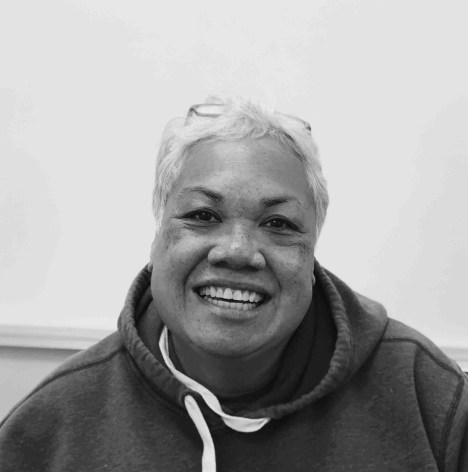
Tupola 1
Tupola serves as an advocate assisting and advising women in danger to avert domestic violence.

Pacific Island Knowledge 2 Action Resources (PIK2AR), founded in 2015 by Susi Feltch-Malohifo’ou, Simi Poteki and Cencira Te’o, is a group of activists who speak up to inform the community about the domestic violence, cultural preservation, and economic impact. The mission of the organization is to provide resources, opportunities and services to Utah’s Pacific Islanders by bridging communities.

PIK2AR’s domestic violence program focuses on unique messages for men and women. The Pacific Island Women’s Empowerment (PIWE), seminar featuring workshops and group discussions created by PIK2AR for women, hosts two weekly sessions for both Pacific Islanders and non-Pacific Islanders at the Sorenson Unity Center at 1383 S. 900 West in Salt Lake City. The seminar lasts about 90 minutes and has about 17 participants.

Feltch-Malohifo’ou, PIK2AR’s executive director, said, “We teach how to pay the bill, raise the credit score, and what domestic violence is by definition, which starts way before the first punch.”
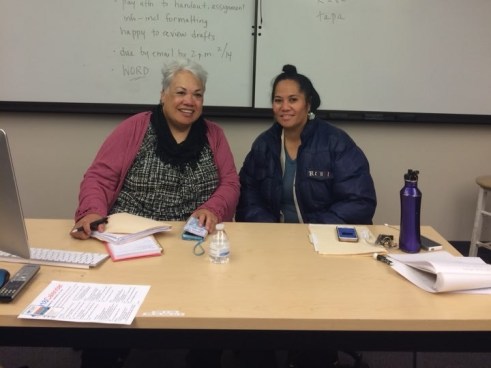
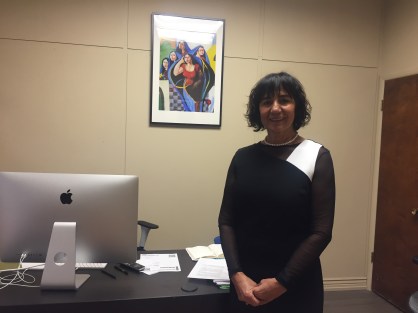
Susi 1
Feltch-Malohifo’ou (left) is executive director of PIK2AR,  which provides safe passageways for women who are victims of domestic violence to liberate from their husbands.

Tupola said the PIWE offers a curriculum that gives therapy, group sessions on empowerment and strength, how to remove children safely, where to find shelter, how to have a safety plan, how to detach emotionally from a spouse, and how to prepare for separation. The PIWE also rotates speakers specialized in social work and behavioral psychology weekly, too. Every seminar, the speaker prepares different topics as requested by the guests and answers questions that are taboo in the Pacific Islander culture. Tupola said such are sex, drugs, and personal lifestyle.

Women at the varying stages of victimization are aided. “They don’t just come because they are just trying to run away. They have not decided if they want to leave but come in for therapies and advices,” said Matapuna Levenson, lead guide at the Salt Lake Area Family Justice Center. “We have a wide range of stages. They generally come to get a civil protective order. The protective order forbids abusers from contacting victims. Upon contact, police arrests them (abusers). Victims are surprised by the vast resources and helps out there,” Levenson said.
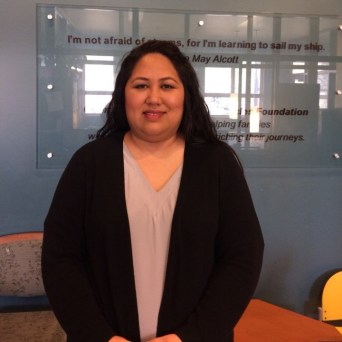
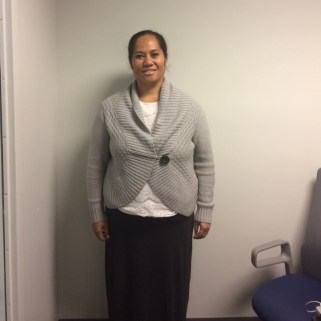
Levenson 1
Matapna Levenson provides resources, connections and advice for women who seek aid.

Although the door is always open for all victims, the aim of the PIWE is to teach women to be independent. “We don’t want people keep coming back to us for help,” Feltch-Malohifo’ou said. “We want to empower and teach so that they can help themselves.”

Levenson said, “Those able to sustain themselves and prevent themselves from abuse become advocates in issuing protective order, supporting other victims in healing, and speaking in domestic violence conferences.”

The PIWE shapes women to liberate and take actions from their husbands, Tupola said.

PIK2AR also offers a seminar, Kommitment Against Violence Altogether (KAVA) Talks, for men. The monthly seminar is held at the Oish Barber Shop in 4330 3500 South in West Valley City. It also lasts for 90 minutes and has about 13 participants.

Tupola said men are taught that “everyone has a right to be free of harm, domestic violence is against the law, respecting personal boundary is crucial, and that violence is not a discipline.”

She also said men were often unaware of this country’s culture and laws, and that their actions could result in deportation. Many have family history of domestic violence and have accepted it as a norm.

This upbringing combined with stressors of living in a new environment, not finding a job, comparing their wife to other wives, and not having enough money prompts men to perpetuate the crime,” Tupola said. “The Western influence of spanking to discipline also reshaped men, too.”

What can we do? “Appealing to priests, bishops, and governors, becoming allies, and maximizing faith and family relationships is key to connecting the Pacific Islander community. Violence has nothing to do with culture and race. It crosses socioeconomic groups,” Levenson said.


From confusion to confidence: Search for self-acceptance as a transracial adoptee

Story and photo by MARISSA SITTLER

Through childhood, adolescent and adult memories, the first transracial adoptee from Tonga recalls the feeling of never being able to fit in within her Tongan heritage, or the white culture that she was raised in. And, how she was able to turn this insecurity into one of her greatest strengths.  

Susi Feltch-Malohifo’ou turns 55 in 2018. But she was 3 years old when a white couple legally adopted her. She left the staff quarters where she lived with her biological mother and moved into the main house on the plantation estate.

It was the first day that Feltch-Malohifo’ou started living with her adoptive parents that her Tongan grandfather said to her, “So from here on out you don’t speak Tongan. I don’t ever want to hear you speak Tongan again before I cut your tongue out.” Feltch-Malohifo’ou is able to speak a little Tongan, but cites her grandfather’s admonishment as a reason why she has never truly been able to pick up the language.

Before moving to America when she was 12, Feltch-Malohifo’ou lived where there was lots of diversity and was never taught to be aware of skin color. She adds that she never heard the terminology “black” before, or that people had to be different skin colors, or be labeled at all.

Feltch-Malohifo’ou first experienced racial tension in Vernal, a town about 170 miles from Salt Lake City that she described as predominantly white and Mormon. She recalls, “I remember kids said, ‘Where are your parents?’ and I would say, ‘Right there.’ The kids would say, ‘You’re black, and they’re white.’ And I’d be like, ‘I’m black?’”

In high school, Feltch-Malohifo’ou remembers how she never dated, because of the way that the boys at her high school viewed her: as a brown girl. She says, “I was best friends with guys that I played sports with, but I wasn’t someone that they dared asked out, even though I knew they wanted to.” This feeling of being romantically undesired is one of the ways that her self-confidence was negatively impacted.

She also recalls, “I was really a follower. I just wanted to be accepted.” She says she never really felt part of the majority in her high school, partially because she was never able to fit into the same clothes or shoes as other girls in school. She felt “different.”

Growing up with her adoptive white family, Feltch-Malohifo’ou remembers that her brothers and sisters never recognized that she looked differently than they did, other than the variation of their hair colors. She says, “But [my family] never talked about skin color. So I didn’t recognize that I was a different color. I had never thought about being different, because in my family I was the same as my siblings.”

Angela Tucker, a transracial adoptee, creator of the website The Adopted Life and advocate for adoptee rights, believes in the importance of parents talking comfortably to their transracially adopted children about some topics that may be uncomfortable to discuss, such as racism. Tucker said in a phone interview, “It’s hard for a transracial adoptee to have a high intact self-esteem if the parents aren’t able to talk about racism.”

Kathy Searle, Utah director of program for the Adoption Exchange and parent of transracial adoptees, also believes that how parents choose to be involved in resources for their transracially adopted children can further strengthen the relationship between parent and child.

In an email interview, Searle said, “I also think that it’s important for adoptive parents to join communities that are the same race as their children. They need to cultivate relationships that can help them to better understand what their children face.”

It was when Feltch-Malohifo’ou played volleyball at a Northern California community college that she was around a lot of Pacific Islanders for the first time. She says, “My world was so different. So I did a lot of observing, I did a lot of watching, and trying to fit in.” She went from wanting to be accepted in “this white world,” to wanting to be accepted by the people who looked like her. It was only when she attended college that she discovered what the word racism meant.

Despite her desire to belong, she still was not accepted. “I was still different. I didn’t fit here, I didn’t fit there,” she says. Feltch-Malohifo’ou believes it was her upbringing in a white household that truly set her apart from her similarly looking peers.

In a clear moment of self-reflection, Feltch-Malohifo’ou says, “I’ve had problems just, like, figuring out where do I fit in this world. And so I went way this way, way that way, just trying to figure out where it is that I actually I fit in. Till I just started finding my own voice and realizing that everybody has value, everybody has privilege.”

While Feltch-Malohifo’ou says it has taken her many years to be comfortable and confident in herself, she has learned to love her unique “hybrid” background. Her perspective and understanding of white and Pacific Islander culture allows her to successfully be the executive director of Pacific Island Knowledge 2 Action Resources (PIK2AR), a community resource group.

PIK2AR’s mission “is to help Utah’s Pacific Islander communities flourish through providing culturally-relevant resources, opportunities and services to help build alliances, bridge communities, and provide opportunities.”

Feltch-Malohifo’ou believes she has finally found her place with PIK2AR. Before, she felt like an outsider, but “now I have a whole group of people who have been struggling like me trying to figure it out.” She hopes that her work with PIK2AR will be able to create a space for the generations of Pacific Islanders that follow, without facing similar struggles that Feltch-Malohifo’ou did herself.

Processed with VSCO with b1 preset

Susi Feltch-Malohifo’ou before meeting with a women’s resource group that is organized by PIK2AR.

Refugee Services Office, Catholic Community Services support integration of refugees in Utah

Story and slideshow by BLAKE LANCASTER

When a refugee resettles in a new country, oftentimes they are in a new community with new rules, a new language and a new culture. How do they approach this challenging situation and become integrated members of American society? Organizations such as Utah’s Refugee Services Office can help with the transition.

Gerald Brown is currently an assistant director and state refugee coordinator at the Refugee Services Office, which is one of these organizations. The Refugee Services Office help refugees learn English, find and gain skills for employment and build connections with locals who can help show them the way things work in their new community.

Brown became interested in working with refugees during a year-long trip to Egypt with the YMCA where he experienced a culture with hardship unlike what we know in America. This sparked his passion for social justice. He went on the service trip expecting to help people, but when he finished he realized he learned the most.

Since his eye-opening service trip, Brown has worked in refugee agencies from Houston to New York to Cuba before becoming one of the godfathers of major Utah refugee programs.

For several years, Utah held monthly town hall meetings to discuss the state of refugee resettlement programs in Utah. In 2008, Gov. Jon Huntsman Jr. approved the addition of refugee services and Brown was appointed to direct and lead the new program toward success.

Brown hasn’t stopped serving refugees since then and can be credited with the efficient success the Refugee Services Offices is able to accomplish when it comes to the integration process.

“If you can accomplish integration, then you have the strongest community possible,” Brown said.

From all of his experiences, one of the things Brown has learned that he stresses is understanding the important distinction between integration and assimilation.

Integration can be defined as incorporating individuals from different groups into a society as equals. Though similar, assimilation means to adopt the ways of the new culture and fully become part of it resulting in an immense loss of cultural identity.

Danielle Stamos, public relations and marketing director for Catholic Community Services, said it is important we make it acceptable and comfortable for refugees to continue their traditions and maintain their culture.

“Not only do they preserve their culture, but they also share their culture with the community in Utah,” Stamos said. “I love when we see refugee communities creating their own events taking some of their traditions from their own countries and implementing them here.”

Catholic Community Services is another organization with programs in place to help refugees integrate into Utah. Catholic Community Services provides case managers to refugees as they are resettled in Utah who help them get on their feet. They provide them with housing, teach them the way the American system works when it comes to everyday life, help them learn the language, find them jobs, and much more.

One way Stamos suggested the everyday community member could help with integration is approaching refugees and being welcoming and friendly. If, however, you’re really feeling ambitious and eager to get involved, finding an organization that helps refugees and interests you to volunteer with can be rewarding to all parties involved.

“Once you work one-on-one with a refugee you can see daily how easy it can be to help support them in their goals and support them in maintaining their culture,” Stamos said. “There will always be a lot of fear out there of change and things that are different, but if we instead embrace it we can see how much more strong and beautiful our community and relationships can be if we share and work together.”

Nirmala Kattel provides a unique understanding of assisting the integration process of refugees as she is a refugee herself as well as an employee at the Refugee Education and Training Center.

The Refugee Education and Training Center is located at the Meadowbrook campus of Salt Lake Community College where Kattel also attends as a student. Kattel said one of the center’s most popular services utilized by refugees is help with jobs similar to Catholic Community Services, but the Education and Training Center is there to help after refugees no longer have their initial case manager.

Another popular service at the center that Kattel has noticed are the English classes. Some refugees come with very limited knowledge of the English language, which is a key hurdle for refugees to clear as once they can surpass the language barrier, it makes the rest of the steps in the integration process a little easier.

Kattel came to Utah as a refugee from Nepal in 2009 and quickly learned that isolation is another of the bigger barriers refugees face upon arrival for her and other refugees alike. She had to wait six years before the rest of her family was able to resettle in America.

“Refugees who come alone feel isolated and depressed missing their families and their past lives, so involvement and engagement in outside activities can help them through these feelings,” Kattel said.

Kattel said the elderly refugees can especially struggle with the isolation and loneliness. Since they don’t have a job or school to go to, it confines their reasons to leave their home. This seclusion can lead to difficulties with learning English and understanding the system of our community as a whole.

“The system is hard to understand at first. Refugees from almost everywhere come from somewhere with a totally different system in their countries or the refugee camps they waited in before coming here,” Kattel said.

Showing interest in refugees as a person and who they are culturally can help them with almost all of their integration barriers. Additionally, it can make them feel more comfortable in sharing their culture with their new community. Kattel said a friend with experience in the community always proves to be a valuable asset to refugees trying to make sense of their new home and sharing their cultural values.

This slideshow requires JavaScript.

What happens to refugees who come to Utah?

Story and photo by BLAKE HANSEN

The trek out of danger is only the first step for refugees. Once they arrive in the U.S. it becomes difficult to navigate a new culture, utilize assets and stay afloat. Doctors and lawyers who were once able to comfortably use their education and expertise to take care of their families are left to work minimum wage and start completely over.

ResistanceColombianRefugee

A Colombian refugee living in Salt Lake City.

According to the UN Refugee Agency (UNHCR), “The total number is slightly greater than 1.2 million which is above 2017 levels and reflects needs from 63 countries of asylum, from both protracted and more recent refugee situations.”

While some suffering and fear for life may stop upon arrival to the U.S., refugees are faced with a new and unique set of challenges. Some have come with families to provide for, some have come alone, but one thing is always common and it is that these refugees are in a unique, new place with a new set of survival tasks. No longer can they put together tin huts, wait for UN resources to keep them alive, and exist with so many other people in their same situation.

For many refugees who haven’t had much time with the language or culture, they can sometimes find it difficult to look for employment here. Their skills, degrees, and certificates, most of the time, are invalid in the U.S. as well. It is very possible for more refugees to make it here and to flourish but without local help from individual mentorship and entity funding, it is near very difficult.

Jadee Talbot, director of refugee programs at the Granite School District on the southwest end of Salt Lake City, said, “We have had a lot of success with different programs we run here for the refugee community.” The school district manages an app called “Serve Refugees”, which provides information for after-school programs as well as other programs around the community that help refugees integrate. The district has five main community centers, one at each school, and they offer different types of classes for kids, parents and refugees in general, teaching things like computer literacy and different ESL courses as well, all free of charge.

At the Refugee Services office in Salt Lake City, many refugees are receiving help finding housing, jobs and transportation. The department and other organizations like it are helping refugees to get help with some of the essential parts of living in the U.S. but there is still much more needed to help these people integrate fully into society.

Gerald Brown is the state refugee coordinator for the Refugee Services office and he says jobs are slowly getting easier to find. But this isn’t happening without a lot of hard work from programs like the one that Brown runs which help provide refugees with employment in hotels and restaurants doing things like cleaning.

Brown went on to explain that the work they do is meant to teach the refugees how to become self reliant. Refugees are usually supported for about six to eight months before they have to be cut off from funding and assume responsibility for themselves. This time is crucial for both program administrators like Brown and the refugees receiving support to learn and develop the skills needed to prosper in the U.S.

They start to learn English if they don’t already know it, they learn about how to transport themselves, where things are, how to shop, as well as what kinds of skills they have and where they can be utilized for employment locally.

“Programs like this don’t typically do enough for the refugees, simply because the resources can only go so far. At the end of the day, a doctor from Somalia cannot practice here in the U.S. Some refugees come from such starkly different backgrounds and cultures that they don’t know how to get anywhere once they leave their apartments other than by walking. They almost always cannot make enough money to support themselves, let alone families.” Brown said.

Community members also can help refugees integrate into the Salt Lake Valley by volunteering with organizations such as the Refugee Services office. They are always looking for volunteers as well as donations of different types. Many people who cannot volunteer due to varying circumstances, who would otherwise enjoy volunteering can always donate to any of the agencies in town who help refugees to settle in and get to living a normal life and those donations are always greatly appreciated.


University of Utah launches Doctors Without Borders student chapter

Story and image by ANNA STUMP

Médecins Sans Frontières (MSF), also known as Doctors Without Borders, is an international humanitarian organization whose mission is to expand accessibility of medical care for those affected by conflict, epidemics, disasters, or exclusion from health care. These efforts include providing doctors, nurses, logistical experts, water and sanitation engineers and administrators to over 70 war-torn regions and developing countries across the globe.

Doctors Without Borders emphasizes “independence and impartiality.” The organization provides support to those in need regardless of political, religious and economic factors. Working as a private entity allows MSF to follow its own moral code and operate in any way it sees fit. Because MSF is a non-governmental organization, all of the services and operations are driven by the selfless work of volunteers.

Two of these volunteers are Julia Case and Kelsie Lee. The freshman roommates at the University of Utah are working toward bringing a student chapter to life on campus. Both women were exposed to the organization’s work at an exhibition that left them hungry to help in any way possible.

They attended MSF’s exhibition “Forced from Home,” which took place at the Salt Lake City Public Library in late September 2017. The interactive experience was designed to expose the realities of the global refugee crisis to those who attended. While walking through the exhibit, participants gained a closer look at some of the disturbing challenges faced by the 65 million asylum seekers displaced from their homes due to war and persecution.

FORCED FROM HOME

A tour guide leads participants through the exhibition and shares the hardships of traveling through the Mediterranean Sea.

During the tour, participants experienced what it would be like to gather essential belongings with dire urgency. The group had a 20-second time limit to determine which five items they would take with them on their arduous journey into the unknown. Constrained to only five items, participants were forced to decide which necessities were more crucial. For example, debating between a blanket and water or food and money. This activity gave participants a taste of what a refugee experiences while scrambling for necessities during a time of emergency.

Motivated to act

The exhibition emotionally impacted Case and Lee to the point of seeking ways they could lend their hands to MSF, despite neither of them having any medical knowledge.

“When our guide finished taking us through the exhibit, Julia and I were really eager to do something,” Lee said in an email interview. From here it gets a little blurry, but all I remember was spontaneously writing down that we wanted to start an MSF chapter at the U, and next thing I know we’re here, with the chapter expected here on campus at the beginning of next semester.” The student chapter should begin in the Spring of 2018.

MSF currently has student chapters on campuses across the country that work closely with the organization to unite students who are passionate about MSF’s mission to provide lifesaving care to those who need it most. MSF collaborates with each chapter, and provides the resources needed to plan memorable events such as fundraisers, map-a-thons, film screenings and Doctors Without Borders field staff presentations on campus.

Future goals

Both Case and Lee are hoping to hold up to four events in Spring 2018 semester. One event in particular is a “Walk 4 Water.” During this event, students will walk to raise awareness of the demand for clean drinking water in countries with limited access and help raise money to provide sterile water and drinking wells to developing countries in need.

For Kelsie Lee, fundraising walks are no foreign activity. She herself has participated in a Walk 4 Water and has helped organize a community-wide walk for charity. At the age of 10, Lee went on her first service trip to Uganda. On this trip, she witnessed the hardships faced by those who walk miles for water, struggle to find food and are exposed to sometimes fatal diseases such as malaria.

“Walking for water specifically is such a cool concept because it really puts into perspective the fact that women, men, and kids all around the world walk miles upon miles upon miles for water every day, and sometimes it’s not even clean water. When people come out and get involved in these walks, they are walking for those people,” Lee said.

The freshmen are also working toward having a field worker from MSF visit campus. The volunteer will speak with students and faculty about the organization’s current projects and share the various ways one can support refugees from home. Case is thankful for the opportunity the student chapter will present to students who want to help but have no idea where to start. “This club offers a unique experience of being part of a global organization, and we as students can help with pressing issues on the other side of the globe right from our own campus,” she said.

Both women are eager to further the reach of the MSF program through their projects at the U.

“Doctors Without Borders has been very open to allowing us to not only plan out our own ideas for fundraisers, but also giving us choices as to where the money goes. It could go anywhere from helping the refugee crisis, to medical needs, to water. The options are endless, which is why I’m so proud to get to be a part of something so awesome, that really just wants to help in any way possible,” Lee said.


Catholic Community Services remains a helping hand for those in need in Salt Lake City

Story and slideshow by HAYDEN S. MITCHELL

“All we want to do [as an organization] is help folks in our community,” said Aden Batar, immigration and refugee resettlement director at Catholic Community Services, located at 745 E. 300 South in Salt Lake City.

The primary goals of CCS are to help those in need and create hope for people who have none. According to its pledge, “Catholic Community Services of Utah has been empowering people in need to reach self-sufficiency.” CCS does this by lifting up those in the community, regardless of gender, race or religion.

In 1945, the Rev. Duane G. Hunt of the Catholic Diocese of Salt Lake City saw there were many people in need of assistance. These folks were poor and no help was coming their way. So, with that, Hunt started an organization to contribute to his community. According to the CCS website, this organization started by creating adoption centers, poverty assistance, foster care, counseling and transit programs.

“There have always been people in need … that is way we must help if we are able to,” Batar said. “Not everyone can do it themselves, which is why organizations like this are around.”

Following 1945, Hunt’s organization continued to expand, beyond his death in 1960. It grew from a single office to four different sites and buildings that deliver social services to folks in need of help in Utah, specifically Northern Utah and the Wasatch Front. As the organization grew it strove to help more and more people in need of assistance. The Rev. Hunt’s organization joined the United Way Agency in 1951, allowing them to help more people, according to the CCS website.

The St. Vincent de Paul Thrift Shop and Soup Kitchen were opened in 1967, as an extension of the Rev. Hunt’s organization. It began providing food and clothes for the homeless, which continues to this day. Over 1,000 meals a day are served to needy Utahns at the St. Vincent de Paul Dining Hall located in 437 W. 200 South in Salt Lake City. It is a mid-day and evening meal service, according to the Society of St. Vincent de Paul,

Ethan Lane, a local high school student who has volunteered at the soup kitchen over the last couple of years, spoke very highly of the work they do, saying, “Having a reliable place to go get a nice meal is important.” Lane added, “Without this place providing the service they do, there would be a lot more hungry people here in Utah.”

That is why it is important for community organizations to continue their work by maintaining the places like the soup kitchen and increasing their reach. Poverty and hunger continue to be an issue in Utah. According to the U.S. Census, more than 10 percent of the population is living below the poverty line. That is one in every 10 people living in Utah. Add to that, Utah is ranked fourth in the United States for the highest rate of very low food security.

Not only has Hunt’s organization made efforts to help the hungry and homeless in our community but they also strive to help others in need like immigrant and refugees, says Batar. The Rev. Terence M. Moore added the refugee resettlement program to Hunt’s organization in 1974. The refugee foster care program was established the next year to assist unaccompanied minor refugees.

Shortly after the organization began assisting with refugees it added immigration services in 1981. Included in those services was aid to the disabled and the Utah Immigration Project. Both immigrants and refugees are facing a new environment but they are coming from vastly different situations. Immigrants are choosing to resettle in a new location whereas refugees are being forced to leave their homes and find a new one, according to cnn.com. Although they don’t all come from the same situations they need some of the same assistance.

“Refugees and immigrants have the same difficulties adapting … they have a hard time with the language, the weather and the feeling of being home takes a while,” Batar said. “It is important for them to understand that they have help and they are not alone in a difficult time.”

Soon after the additions of the refugee and immigration services, the organization changed its name to Catholic Community Services of Utah but the mission remained the same. According to the CCS website, that mission is “to practice gospel values of love, compassion and hope through service, support and collaboration.”

“We are a medium-sized non-profit organization that provides some great help to our community,” said Danielle Stamos, public relations and marketing director at CCS. “We will continue to expand our efforts to help in all aspects of our organization … making people’s lives easier is what we try to do.”

Stamos said CCS will continue to contribute to the needs of others by helping those weakest become strong and functioning members of the community. “Hopefully, in the future we will be able to help more people, knocking down the number of people in need,” Stamos said. That may be a harder challenge for the CCS refugee services compared to the organizations other programs. The problems come from political controversies and new policies centered on refugees. With threats of policy change and residents angry about potential safety concerns, the number of refugees getting help may be reduced.

Bradford Drake, executive director of CCS, said in a newsletter, “Even in the wake of this uncertainty, CCS continues to do what we have always done — provide help and hope to those most in need.”

Drake wanted to reassure the staff, volunteers and those who receive assistance from CCS, that the organization will continue to help refugees transition into a new country, culture and lifestyle.

Of course, any organization is only as good as their volunteers, Stamos said. Without volunteers CCS would never be able to reach its full potential. So, if you want to get involved with some volunteer work, the website lists multiple opportunities. One can volunteer to assist refugees, or monetary donations are always welcome.

With all the challenges facing people today, it’s nice for people to know a resource like Catholic Community services is available to assist them.


This slideshow requires JavaScript.

How the Refugee Services Office fights discrimination and empowers refugee women

Story and gallery by ALAYNIA WINTER

Approximately 60,000 refugees from all over the world live here in Utah. Unlike other traditionally red states, Republican Gov. Gary Herbert has openly pledged to keep Utah’s doors open to refugees. The UN Refugee Agency (UNHCR) reports at least 50 percent of refugee populations are women and girls. This means there are somewhere around 30,000 resettled women and girls attempting to pick up their lives and integrate into Utah’s society.

Women are especially vulnerable to violence when displaced or during times of war during the process of migration. According to a report by Amnesty International, women in refugee camps are raped every day while collecting water. This is just one example of the incredible hardships women face during the resettlement process. Gerald Brown, assistant director for the Refugee Services Office, said, “Five to six years ago, we realized women needed more resources. Just more.”

The Refugee Services Office (RSO), a division of Utah’s Department of Workforce Services, is a government organization filled with individuals working hard to improve the lives of refugees by assisting in finding employment, providing mental health services, and much more.

As a government organization, Refugee Services Office can’t have a volunteer program. Programs are primarily supported through the Know Your Neighbor program through the city mayor’s office. This program is very supportive, said Halima Hussein, a Somalian refugee herself and women’s refugee coordinator for RSO.

“There is always a need for more programming,” Brown said. Whether it’s funding for more women’s programs, or daily and after-school programs, help from the community is always appreciated. RSO has workshops available such as: family planning, domestic violence and sewing classes. Anyone is welcome to participate.

Issues facing women are often serious, ranging from domestic violence to public harassment stemming from antipathy to facial coverings. “If they go to the bathroom, or try to get on TRAX and someone is yelling at them — and it happens in any of those public spaces — we have [a safety escort] specifically assigned who walks with the refugee community,” said Hussein, referring to resources RSO offers to refugees when faced with abuse or harassment. She puts her hand down on the table with conviction. “But for Utah, I think compared to any other place it’s been better. I think it’s been better for our community. The community around us has been extremely supportive, including the LDS church.”

Despite the occasional incident, Hussein maintains Utah is a welcoming community. She warmly shares a story of a Utah family and a Somalian family who have become dear friends through the Know Your Neighbor Program.

There are a variety of resources available to refugees who experience discrimination or abuse. “We have a lot of mental health patients in the community, because of the trauma. And some people cope better than others,” Hussein said. “We are very big on therapy and medication — that kind of thing. We have social workers and therapists in the office who work very closely with domestic violence, sexual abuse, discrimination and gender identity issues.”

Hussein is highly respected, Brown said, and many women feel comfortable speaking to either her or Asha Parekh, the organization’s director. However, the caseload is large and Hussein is often stretched thin. “Halima is one of the few resources we have for these women,” Brown said.

In addition to struggling with roadblocks such as language and cultural barriers or not having a car, female refugees also face additional hindrances stemming from lack of equal opportunities and sociocultural factors. Such opposition can substantially hinder establishing friendships and support systems, which can lead to unhealthy alienation, depression and loneliness.

Due to a lack of trusted confidants and support systems, women refugees often struggle with having limited resources in talking about certain sensitive, yet vital topics. Brown said, women are often not comfortable discussing complex family issues, physical or sexual abuse, or hygiene issues in front of men and the organization needs Utah women to be involved.

The Refugee Services Office is committed to empowering women by also strengthening their families. Alexx Goeller, youth services coordinator for RSO, works directly with Utah school districts to help refugee families to know their rights and facilitate success in refugee children’s education.

Refugee women frequently struggle to communicate with their children and with the education system after resettling here in Utah. Goeller said, “Often families will know a kid is acting out and don’t know why and when we hear about things like this, we will facilitate a meeting with a translator.” Schools are legally mandated to communicate with parents in their native language, she said. RSO works diligently to partner with translation services and companies. Sending home letters to parents in their native languages is the school’s responsibility.

“It is costly for school and some schools are better than others,” Goeller said. “It’s important that schools are cognizant that New American families have different needs. It’s not that they don’t want to be involved, often they just don’t have the resources to now how.”

In many instances, refugee children’s parents aren’t able to communicate with the teachers, Halima said. The language barrier is much easier to overcome for children than for adults.

“For women to have stronger families, we really need to work with their kids especially because school is so hard for them” Hussein said. “Some will drop out and go to wrong places. The school system here is according to age and you cannot put a child who studies from kindergarten here and has had all the privileges from the school system in the same level.”

The Utah State Board of Education has been a huge support as far as letting families know their rights when it comes to education, said Goeller. The Utah Education Network (UEN) has a website that is designed for supporting refugees and Utahns in finding resources for education.  There are also parent resources specifically for refugee parents, such as translations in 30 languages.

“We see a lot of kids that get really discouraged because they can’t catch up in school or can’t learn English fast enough. We see these kids getting involved in gangs, or substance abuse,” Goeller said. “When we hear about these situations we have social workers visit the families and become involved.”

Despite the many barriers and setbacks refugees face, Hussein firmly believes in the perseverance and resilience of refugees. She has seen many positive changes and is hopeful for the future.

Looking forward, Halima hopes to see thriving, self-sufficient communities. She believes a more personalized and collaborative approach would empower communities to better serve members who are struggling.

“There are 17 communities, each with a woman leader. … So, my dream is to see each community apply for grants and do their own thing,” Hussein said. “And each community can work on something they need specifically. Maybe one community needs to focus on health issues. They can start their own programs — community-based programs. That’s my dream.”

Hussein encourages Utahns to dig deeper and to build friendships with communities that may be different from the mainstream population. “Some people see refugees, but don’t really know them. Many people are surprised by what they find.”

To get involved, read about opportunities to work with refugees in Salt Lake City.


No escape from danger: LGBT refugees fled to Kakuma Camp for their lives, only to be greeted with hostility

Story by KAYA DANAE

Photos by MBAZIRA MOSES and KAYA DANAE

Homophobia is pervasive in Kenya, and some LGBT refugees at Kakuma Camp say they have faced discrimination from fellow refugees and United Nations High Commissioner for Refugees (UNHCR) workers that has exacerbated living conditions in the overcrowded facility.

Mbazira Moses, a gay refugee currently living at the Kakuma Camp, said in an email interview, “I have been exposed to persecution and hostility ever since the time I arrived in Kakuma.”

Moses was assaulted and stabbed by a fellow refugee on Oct. 11, 2017. After reporting the incident to the police, Moses said nothing was done.

He claims he has been assaulted several times, but said police have never investigated. Instead of receiving help, Moses was jailed along with 18 other LGBT refugees who had peacefully protested their unfair treatment at UNHCR headquarters in Nairobi.

LGBT refugees peacefully protest at the UNHCR Headquarters in Nairobi.

After speaking with a lawyer, Moses was told to accept whatever charges were filed against him, as this was the only way he could expect assistance from UNHCR.

Established in 1992, Kakuma Camp is located in the northwestern region of Kenya. Ethiopian, Sudanese and Somali refugees fled their war-torn countries and came to Kakuma refugee camp, which is divided into four zones.

With an influx of new arrivals in 2014, Kakuma surpassed its capacity by over 58,000 individuals. The camp has expanded and currently holds 77,092 refugees, according to the UNHCR Kakuma informational pamphlet.

Moses said many of the staff at Kakuma Camp are homophobic and view the LGBT community as cursed. Individuals are not given the same opportunities as other refugees. They are not employable because of their sexual orientation and are not given proper medical treatment. Many medical centers refuse to serve them at all, he said, and if they are treated, they are often refused medication and treatment for HIV.

Moses Mbazira holds the LGBT flag in his tent at Kakuma Camp.

According to Moses and many other LGBT refugees living at Kakuma Camp, they face eviction due to homophobic neighbors, leaving them homeless in the camp. UNHCR has placed the LGBT community in a housing section next to the river, where they face flooding and mosquitoes. Many of the refugees have malaria and are not given the treatment they need. The homes themselves are just tents, not properly covered to protect from the rain.

Thirteen UNHCR employees stationed at Kakuma Camp were contacted about Moses’ allegations of mistreatment toward LGBT refugees in the camp. Only four responded, and they said they could not comment.

“Agony has brought action,” Moses said. “Many of the LGBT members who have been granted asylum and refugee status under UNHCR within Kenya, receive consistent persecutions and grief by the host community and other members living within the camp. We (LGBT Community) have articulated our concerns to UNHCR but have been overlooked. This has caused a need to call on UNHCR to permit us a convention letter that will grant us a fair free movement to seek asylum in a country where we reserve the same rights as other refugees regardless of our sexual orientation.”

Barnabas Wobilaya, 36, is a gay Ugandan refugee and HIV/AIDS activist who was resettled in Salt Lake City. He fled Uganda and arrived in Nairobi, Kenya, in January 2015. Wobilaya became an HIV/AIDS activist in Uganda because he had two siblings who lost their lives to HIV. Because of his activism, he was exposed as a gay man in the newspapers, lost his job, and had to move around a lot for his own safety.

“When you get to Kakuma, there is no housing. You arrive at the camp, and they give you land. You build your own house. They give you poles and a tent to put up yourself, some people use iron sheets for their roof,” Wobilaya said.

“The LGBT people are always the last people to get the services they need, always,” he said.

“Their cases are not being worked on. They have been there for years. Three years, five years. Cases of LGBT refugees are supposed to be fast because their need is so immediate. We suffer. I know people that have been in Kakuma since I arrived in Kenya that have still never seen their files. They don’t know what’s going on. Nothing happens.”

The resettlement process is in the hands of the Government of Kenya. Because Kenya still maintains largely homophobic outlooks  and policies, many LGBT folk are treated as criminals rather than asylum seekers and refugees.

“When I was in Kenya, I could not find a job,” Wobilaya said. “Kenyans know that many refugees from Uganda are gay. They are very homophobic. You go to the store to buy something, and they say ‘Uganda?’ and then they kick you out. You cannot buy things, if you can’t speak Swahili they will not give you service. They then say ‘these are gays’ in Swahili and you know to leave or else you will be beaten.”

LGBT refugees attempt to drain the water from the river that flooded their tent in Kakuma Camp.

Wobilaya was evicted from homes three times because his landlords discovered his sexual orientation. Many LGBT people are forced to live in Kakuma because landlords refuse to rent to them in Nairobi.

The UNHCR used to give refugees a stipend of 6,000 Kenyan shillings, which is about $60 U.S. per month. With that, they were supposed to pay their rent, medical bills, transportation cost and phone bill.

“Today they give them $45, but you have to pass an assessment that your living conditions are horrible, many people have to live in one room, a lot end up on the streets as sex workers so they can afford to live,” Wobilaya said.

“Now that I am in the States it is difficult to find ways to help. They tell me ‘we are dying’ and I can’t do much. After I pay my rent and bills I send my leftover money to my LGBT friends in Kenya. So I ask, let us help these people. Let’s fundraise. Help them to buy food,” Wobilaya said.

At Kakuma camp, World Food Program ( WFP) in partnership with UNHCR provides food distribution (maize, peas, flour, cooking oil, soap, salt, porridge) and some essential items like soap and toothpaste to every refugee within the camp.

However, the food supply has been continually decreasing, Wobilaya said, leaving LGBT refugees at a disadvantage since they are unable to find work and buy their own food. UNHCR has not created a system to notify LGBT members about their case progress levels, and they feel they cannot turn anywhere for support.

Wobilaya encourages the  LGBTQ community in Utah to help. “We in the LGBT community are one big family, so advocate for your brothers and sisters; that’s the only thing I ask.”

You can contact Tayyar Sukru Cansizoglu, the UNHCR head of sub-office in Kakuma, at cansizog@unhcr.org and you can donate to the LGBT Kakuma refugee community through a fundraiser established by a Salt Lake City LGBT activist.


Volunteer programs aiding not only refugees, but volunteers as well

Story and slideshow by SCOTT FUNK

Do you know what a refugee is? Do members of society take the time to know who these people are, or do they simply walk past and question why they are here? What if you knew? What if you understood their story and why they are here? If you did, would it make a difference?

Gerald Brown, the Utah state refugee coordinator and assistant director of the Refugee Services Office, said in an interview that refugees “don’t have any American friends. Being nice to people is most important to them. Even just a smile at them. Many refugees have said that just a smile from the mainstream is meaningful.”

Why would a smile be so meaningful? To understand that, it’s important to understand what a refugee is. Brown said a refugee is someone who has been forced to flee their country because of persecution, war or violence. Persecution must come from one of five scenarios: race, religion, nationality, political opinion or membership within a particular social group.

“Leaving their country is difficult and traumatic,” Brown said. “The resettlement process is just as difficult and often traumatic. They are so inspiring. You can’t believe what they’ve gone through, and what they’ve done.”

So why would a smile be so significant? Because of the trials refugees face to get here. A smile can signify happiness to them — something that some have been lacking for a long time.

There are many ways to share your happiness with refugees in Utah. One of these ways is by joining a volunteer program in Salt Lake City called Know Your Neighbor (KYN).

KYN is a volunteer program that offers over 20 different opportunities to volunteer with local refugees. Some of these opportunities include: helping a refugee prepare to take the citizenship test; helping refugees learn a new language; helping teach life skills such as sewing; becoming a tutor to help learn English, math or even to learn to drive; teaching technology skills such as typing or how to use programs; presenting and leading class on a topic of your choice; and becoming a family friend.

Rachel Appel, the program coordinator for KYN, said there are roughly 200 active volunteers helping over 350 refugees who have enlisted in KYN. The opportunity that has had the most success, and the one that Appel believes is the most beneficial, is the family friend.

A flyer provided by KYN describes a family friend as an individual, family, or small group, who will develop a friendship with a refugee family through weekly gatherings on their own schedule.

One volunteer who participates in this is Kim Watson.

Watson has a family of her own and is just as busy as everyone else, but one day she decided she wanted to volunteer. She has been involved with KYN for over a year, and she loves it. In an interview at an orientation, she described what it is like being a family friend.

Watson said there is no such thing as a typical visit, because each one is different. But what she has found to be the most beneficial to the individual whom she works with, is just being in their home to talk. Watson said that some days she’ll go over and ask what they want to do, and occasionally all they’ll say is just talk; talk about anything and everything in life. (Families can not be identified due to confidentiality guidelines.)

Sometimes, with the permission of the family, she’ll even bring her kids so that they can play with the kids of the refugee she is visiting. Watson made it clear that there is in no way any form of financial aid going on. She said that if she has some extra veggies from her garden she will take them, or if she is going to donate items to the Deseret Industries, she’ll take them to her refugee family first to see if they want them. Watson says her purpose of being there is to be a friend and to develop a relationship.

At the orientation, Watson shared that at her own home, her house is filled and yet she still thinks she needs things. One day, when she was visiting with her refugee friend, they were sitting and talking outside on a curb and her friend told Watson that she believed she had everything. Watson went on to explain that in her friend’s home, there was barely anything, especially compared to her own home. And yet, with barely anything, her friend said that she had everything.

“I could listen to NPR for 100 years and never have the same experience as I did than when I was with my friend on a curb,” Watson said. “I now have a sign in my home that says ‘I have too much here’ and it’s a constant reminder to me of what I have, and what others don’t have.”

Appel, the program coordinator for KYN, said making friends and developing relationships, like the one that Watson has made, is the goal.

“It’s bigger than just matching families together,” Appel said. “It’s for refugees to have the opportunity to participate in social activities. So they can have an American friend to break down barriers and to ultimately have a unified community in Salt Lake.”

To become a volunteer and a family friend, there is a process that one must go through. The first thing to do is get in contact via email with Rachel Appel (Rachel.Appel@slcgov.com). Second is filling out a volunteer application and attending one of the monthly orientation meetings — Appel will have that information —  held at the City and County Building in downtown Salt Lake City.

At these orientation meetings, potential volunteers will introduce themselves to each other and then they will receive a “Refugee 101” from Gerald Brown, the assistant director of the Refugee Services Office, where they will learn more of what a refugee is. They will then learn the volunteer opportunities, role-play volunteer situations and also have the opportunity to hear from a current volunteer and hear their story. At the end, there is an opportunity to ask any questions that may have not been answered.

Once they have completed the orientation, the next step is to schedule an interview with Brown. This interview also consists of a background check, and will help determine which opportunities are best for the volunteer as an individual and which refugee family they would pair with the best if they chose to be a family friend. Once that is completed, they may begin to volunteer based upon their availability.

“We want a good community,” said Brown at a November 2017 orientation. “We have to help refugees integrate. These people have gone through things I can’t imagine. They are so inspiring. And if we make them feel like they belong here, it will add value to them.”

Women of the World: a safe haven for Salt Lake City’s refugee and immigrant women.

Story, photos and slideshow by DEVON ALEXANDER BROWN

Thanks to the steadily rising influx of technology companies, the Salt Lake City metropolitan area is becoming affectionately known as Silicon Slopes, a burgeoning parallel to California’s Silicon Valley.

But it wasn’t career advancement opportunities that brought Samira Harnish, a former semiconductor engineer for Micron Technology Inc., back to Utah. It was the chance to make a difference and fill a necessary void.

IMG_5587

Samira Harnish standing in her office at Women of the World, located at 3347 S. Main St.

Harnish immigrated to the United States from Baghdad, Iraq, in the late 1970s. She studied engineering at Utah State University, but frequently suffered discrimination due to her race and gender. She also endured depression because she felt isolated in her new community and found it difficult to express her feelings. The need for female advocacy and empowerment drove her to establish Women of the World, a nonprofit organization based in Salt Lake City, in 2010.

Harnish knew from an early age that she wanted to help others. As a result she’s amassed over two decades of volunteer experience and before founding Women of the World, she served as a medical interpreter for local organizations like Catholic Community Services, the International Rescue Committee, the Huntsman Cancer Institute and the Refugee and Immigrant Center – Asian Association of Utah.

But it wasn’t until her stint as an interpreter that she came to realize the true wants and desires of refugee and immigrant women.

“I actually listened to them to know what they want,” Harnish said. “They say, ‘I wish we had a woman that could hear us and guide us.’ When you are foreign in a country you don’t know anything. You need someone to guide you and to give you advice.”

And as she listened to the desires of refugee women from disparate cultural backgrounds, Harnish said they came to the same conclusion: they wanted a space of their own. Where they could freely share their concerns, interests and dreams without being overshadowed by the men in their lives.

Although Harnish stepped up to meet their needs, for a while she was alone in her efforts. For five years she operated without an office or case managers, simply visiting refugee homes, gathering contacts and securing much needed donations.

Salt Lake City is the nation’s second largest resettlement site for refugee women. It also has the largest proportion of single mothers and women-at-risk of any resettlement community. Four out of five refugees are women and many are survivors of teen marriage, domestic violence and rape. Once resettled they must juggle the effects of these traumas with unique economic and social challenges.

Yet, until Harnish founded Women of the World, there was no local organization dedicated to assisting such a notable demographic. And the women are grateful.

IMG_5598

Thank you letters displayed in the Women of the World office.

Apiel Kuot, a refugee from South Sudan, is one of these women. She said she was stressed and scared when arriving in Utah in the fall of 2016, but Women of the World helped her with winter clothing, a television and other essential household goods. She also learned to start thinking positively.

“I can’t count the things they’ve helped me with because there are so many things I have received from them,” Kuot said in a telephone interview. “And they give me encouragement which is much better than anything else someone can give.”

Now a year later, she is confident and self-reliant and is planning to earn a social work degree.

“There are some women who are at a camp that will soon be in this place, but they don’t know where to go with their issues,” Kuot said.  “I trust Samira and Women of the World and I will tell them because they (WoW) always give me positive things, not negative things.”

The Women of the World office, located at 3347 S. Main St., is considered a second home by women like Kuot. Women hailing from countries like Iraq, Nepal, Myanmar, Iran, Rwanda, Somalia and Uganda come there for help navigating community resources and often engage with one another over hot tea and desserts, sharpening their conversational English skills in a pressure-free setting. Most of the women learn of Women of the World through word of mouth.

“We love to warm everybody’s heart,” Harnish said, while preparing a cup of hibiscus tea. “I love the way everybody comes in here and feels comfortable. Some of them that wear hijab, they take it off because they know the windows are tinted and there are no men so they feel very secure.”

Women of the World seeks to empower women by promoting self-reliance through service, education and economic development programs. As a nonprofit, Women of the World operates without government funding, instead relying on charitable donations and an annual fundraiser held the day after International Women’s Day. Harnish says she prefers to operate without federal assistance because it allows her to tailor Women of the World’s services without worry of a pushed agenda.

“When the government gives you the money, they always tell you to go that way or this way, you know, their way,” Harnish said. “I’m here to listen to them (the women) and do whatever they ask.”

Harnish and the case managers she employs work to help women create resumes, tighten interviewing and job skills, plan for entrepreneurship and acquire mental health and legal assistance. More importantly, they help instill in participants a deeply rooted sense of self-confidence through their practical English program. Launched as a two-month pilot program for six women with no English skills, by its conclusion all six women were able to gain employment.

When discussing self-reliance, terms like education and employment tend to rank paramount. While earning potential is indubitably connected to the ability to provide for oneself and family, Women of the World knows it is only one aspect and it differs by individual.

McKenzie Cantlon, a case manager at Women of the World, worked with refugees in Buffalo, New York, and the United Kingdom before relocating to the Salt Lake Valley. She says the economic and social support refugees receive has been phenomenal in all areas, but she’s noticed a problematic pattern: proximity to services.

In Utah, voluntary agency affiliates like Catholic Community Services and the International Rescue Committee are based in Salt Lake City. That means refugees located farther north or south do not have the same access to essential resources. For this reason, Women of the World stresses self-reliance above all else.

“For some women self-reliance might be having the courage to leave the house and go grocery shopping or taking their children to the park,” Cantlon said in an email interview. “For other women this might mean going to school, getting a job and supporting their children without the help of others. Women of the World works to promote every kind of self-reliance.”

Courtney Bullard began working as a case manager for Women of the World in the summer of 2016. She lived in the Middle East for five years and attended graduate school in London. Bullard said she’s seen tremendous success from refugees working with Women of the World, but true economic independence isn’t always an option. Regardless, self-confidence is the first step to its path.

“There are a lot of barriers that refugees face upon coming to the USA because of how the resettlement process is set up,” Bullard said in an email interview. “We have women who might always rely on government assistance because of their various situations, however, when they advocate for themselves whether it might be asking for higher pay at work or looking the cashier at the grocery store in the eye at the store — I consider them on their way to self reliance.”

Regardless of definition self-reliance does not manifest overnight. Rather, it’s often an arduous journey that requires discipline and dedication. For Kaltum Mohamed, a Sudanese refugee, it’s taken four years to reach her dream of opening a restaurant.

IMG_5611

Kaltum Mohamed standing in front of her food truck “Mother of All.”

Mohamed was resettled in 2013 after years of moving between refugee camps. After receiving assistance from the IRC for 10 months, she met Samira Harnish. Through their shared Arabic language, they quickly formed a powerful friendship.

Harnish said Mohamed approached her early on with the desire to open a restaurant — refusing to allow any obstacles to deter her confidence. However, after attending a few practical English classes she stopped showing up.

“The last day she got really upset and said she just wants to find someone to give her a loan,” Harnish said. “I told her, ‘No one is going to give you a loan unless you finish that program. You go in there and finish.’”

So Mohamed persisted. She now operates Mother of All, a food truck that can be found at The Black Diamond Store and The Front Climbing Club in Salt Lake City.

“They (WoW) help me too much,” Mohamed said reflectively in her South Salt Lake apartment. “And I always tell everyone, don’t give up on the things you need. Continue doing it and face everything with confidence.”

To commemorate the successes of refugee women like Mohamed, Women of the World holds an awards banquet and social mixer at the end of every year. In addition to inspirational stories, small ethnic meals are brought and shared by members of the community and musical entertainment is provided.

This year’s event will be held Dec. 9, 2017, from 2-5 p.m. at the Salt Lake County South Building Atrium on 2100 S. State St. It is Women of the World’s 7th Annual Celebration for women who achieve their goals and is free and open to the public.


This slideshow requires JavaScript.