Educated and underemployed: refugee student seeks second degree

Story and photos by DEVON ALEXANDER BROWN

Over 60,000 refugees have been resettled in Utah since the 1970s. Prior to the Trump administration, Utah’s designated voluntary agency affiliatesCatholic Community Services and the International Rescue Committee — were resettling roughly 1,200 refugees a year. While agencies do what they can with the resources they have, many refugees find the adage “it’s not what you know, but who you know,” continues ringing true.

Firas, a refugee from Iraq, has personal testimony of the value of networking. He resettled in Salt Lake in March 2014 by way of the IRC, but he has an uncle whom he lived with after resettling, and who continues to offer emotional and financial support.

Firas, who asked to have his surname withheld, holds a degree in civil engineering from a university in his native Iraq, but was dismayed when he found that using his professional training in the U.S would be difficult. The IRC helped him secure an entry-level position in the customer service sector a few months after arrival, but he felt unmotivated and underutilized by the position because of a desire to continue his profession.

“They [the IRC] will explain that it’s not going to be easy to go back to your job,” Firas said. “This is the general talk about this topic … it’s not going to be easy. Because you’re going to face different stuff, regardless of the language challenge.”

But after some time in Salt Lake, and while living with his uncle, Firas stumbled upon good fortune.

“My uncle is here so we met at the mosque and fortunately I met one of the refugees who came through the same process,” Firas said. “That guy actually was part of the NAAN program [New Academic American Network] … he was asking me what was my major, what did I do in my undergrad. He told me he just finished his master’s at the university which is how I learned ‘OK you actually can go back.’”

up

The UNP main office. University Neighborhood Partners was created in 2001 to empower SLC’s westside residents. Many refugees are resettled on the west side of Salt Lake.

The New American Academic Network is a partnership facilitated by University Neighborhood Partners in conjunction with the University of Utah, the University of Utah International Center and the Department of Workforce Services. Because many refugees arrive without the means and proper credentials to work in their respective fields, the goal of the program is to empower refugees and immigrants through access to higher education. In Firas’ case he is working toward a master’s degree in structural design.

P

The UNP Partnership Center opened in 2004 and brings together over 30 university partnerships and 20 local nonprofits.

Although he was able to enroll at the U through the network, he was forced to initially enroll as a non-matriculated student because he did not meet university requirements. Firas, like local students attending graduate school, was required to pass the Graduate Record Examination, but because his native language isn’t English he also had to pass the Test of English as a Foreign Language exam. Although challenging, Firas passed both exams on his second attempt. He credits his time in customer service with accelerating his English fluency.

Partnerships like the New American Academic Network are essential for educated refugees looking to move beyond underemployment. The Academy of Hope, a fellow partnership facilitated through the U, offers no-cost certificates in professional management, web design and human resources management.

Claire Taylor, director of the Academy of Hope, says language, though a primary challenge, is but one of many obstacles refugees face on their path to higher education.

“A common challenge is not being able to afford the cost of certificate classes,” Taylor said in an email interview. “Another common challenge is carving out the time in their schedules to be able attend all of the classes.”

A relatively new program, the Academy of Hope saw one student enrolled in 2016, but Taylor says the 2017 Spring semester provided a cohort of students. So far seven participants have been refugees.

Thanks to the New American Academic Network, Firas is able to finish his master’s degree. Yet even with tuition assistance, he says it is not easy to support himself and complete his program and the engineering internship he is currently involved with.

“Fortunately my uncle is here and he supports me until now,” Firas said. “I was living with him at the beginning and he and his family helped me a lot. It’s difficult to have a place in a different culture, different society.”

Firas understands that case workers in the IRC are limited in their reach and ability to assist refugees on an extended individual basis. But he also thinks a more thorough and personalized approach in the early stages of resettlement would be beneficial — especially for refugees who are professionally trained.

Gerald Brown, assistant director of refugee services for the Utah Department of Workforce Services, is in agreement. He says his experience with refugees reflects a need for lengthier case management.

“Every new refugee needs case management for at least two years and I would argue for longer than that for many of them,” Brown said in a telephone interview. “It just to me makes common sense. A case manager helps a refugee kind of come up with a plan to meet their needs, to thrive in this community and then sort of follows the plan, helps them adjust over time, [and] gives them information when they need it.”

Although Firas hasn’t obtained his master’s degree yet, he is close and hopeful. And because of his personal good fortunes, Firas says he makes every effort to inform other refugees about lesser known resources that can help them get back on their professional footing.

“I’m still referring anybody who came as a refugee — who has a graduate or even non-graduate [degree],” Firas said. “Either go into community college or to the university … this is the option you have and how to go back to what you like.”

Refugee programs and Utah: How effective are federal grants?

Story and photos by ALAYNIA WINTER

What is the largest problem refugee organizations face?

Short Answer: It’s funding.

Temporary Assistance for Needy Families (TANF) is a federally funded and state administered financial assistance program for low-income families with dependent children and pregnant women during their last three months of pregnancy. TANF provides short term financial assistance and aids recipients in finding jobs that will allow them to support themselves.

In 1996, TANF replaced older welfare programs. Today, TANF provides annual grants to all U.S. states. The funds are used to pay for benefits and services distributed by the states.

According to The Department of Workforce Services 2016 report, the majority of refugee services are federally funded through the U.S. Office of Refugee Resettlement (ORR) and the TANF program (with the exception of $200,000 provided by the State of Utah).

Ref_Office

The Refugee Education and Training Center for the Refugee Services Office is located at 250 W. 3900 South in Salt Lake City.

Currently, Utah’s Refugee Services Office administers approximately $4.3 million from TANF and $8.9 million from ORR for refugee services in Utah. Health services receives over $3 million and case management is allocated over $2 million. Skills and employment training and youth services respectively receive approximately $3 million.

Many critics of welfare programs speculate there are better ways to spend and distribute the federal assistance money.

The 1996 welfare reform act, known as the Personal Responsibility and Work Opportunity Act, completely changed the concept of welfare. States have control over how and where TANF money is spent.

According to The Center on Budget and Policy Priorities (CPBB), this money has not been used well. A 2015 fiscal study on TANF funds reported “34% of funds were going to causes not related to family and youth assistance.” The 34% of funding was labeled “other programs.”

In some instances, TANF money can go to a free and public workshop on improving marriages, or a health profession education grant for low-income students at a public high school. One doesn’t necessarily have to be financially “needy” to participate in public welfare programs such as these. The long-term societal benefits and changes can be difficult to measure; however, the money does seem to be going toward refugee programming and public programming in the “other programs” category.

Ref_office2

An “I Am A Refugee” banner in front of the Refugee Services Office building.

Regarding how refugee TANF money is spent, “The caseload has grown. So, the bigger the load, the more time you spend putting out fires,” said Gerald Brown, Utah state refugee coordinator and assistant director for the Refugee Services Office.

The current administration’s decision to cut funding and the looming uncertainty of the future for many refugee organizations in a time with a historically high number of refugees spurs much debate.

According to the Bureau of Population, Refugees, and Migration, the U.S. government plans to cap the number of refugees from around the world at 45,000 in FY 2018. That is the lowest level since 1980.

Refugee resettlement organizations in the U.S. are worried about this drastic reduction. This news brings an inevitable slash in budget as well. Refugee organizations had been pushing the Trump administration to set next year’s refugee cap to at least 75,000, and said this diminution would force many to close their doors or lose valuable programs.

As Utah philanthropist Pamela J. Atkinson, of the Pamela J. Atkinson Foundation said, “Refugees are people who, rather than give up or give in, have chosen to take the higher and harder road and are grateful for the generosity of strangers who reached out with a willing and helping hand.”

The refugee experience: Integrating into American society

Story and photo by BLAKE HANSEN

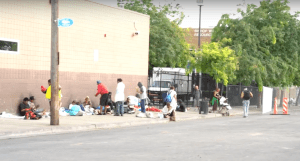
Outside the Catholic Community Services building, refugees and others sit, waiting for help.

The UN High Commissioner for Refugees (UNHCR) has reported in its “Projected Global Resettlement Needs 2017” that the number of people in need of resettlement for the calendar year will surpass 1.19 million. This number is the equivalent of the number of residents inside of Salt Lake, Davis and Weber counties. The number of refugees in desperate need of relocation equals the same number of people who reside from Draper all the way through Ogden, a distance of about 60 miles.

Many refugees who have been granted relocation to America, specifically to Utah, have a hard time integrating into a vastly different society. But with help of local organizations it is possible to successfully integrate.

The trek out of danger is only the first step for refugees, though. According to various statements made by refugees in an article by The Independent, they arrive in these safe zones. Some are injured, starved, alone, scared and all have suffered extreme loss. They settle in refugee camps where conditions are horrible.

The process to get resettled somewhere can take years, according to the UNHCR. Some people spend the rest of their lives in refugee camps because the lengthy and intense resettlement process can’t even handle the amount of people left without a country to call home. Kids who grow up in these refugee camps have little to no access to education. Doctors and lawyers who were once able to comfortably use their education and expertise to take care of their families are left building their families tin huts just to stay dry. Also, 51 percent of refugees are under 18. Many have narrowly escaped, and are without parents or siblings.

Aden Batar left Somalia with a law degree and with two of his brothers in the late 1980s. At a time when civil war took over the country, Batar and his brothers had no choice but to leave. They had to lie and disguise themselves as members of other tribes and factions just to make it past checkpoints where people were being shot and killed for trying to flee. Batar made it to Kenya alone after one of his brothers was killed for being found at a checkpoint and the other died from a sickness he got during their trek.

“Looking back, I don’t know how I did it,” he said. Batar lived in a refugee camp in Kenya and met his future wife there before finally making it to Utah in 1994. He was lucky enough to have a brother in Logan who helped with his resettlement. Batar is now the director of immigration and refugee resettlement at Catholic Community Services in Salt Lake City where refugees are helped and given the tools they need to integrate.

Atem Aleu escaped from Sudan in 1987. Similarly to Batar, Aleu also fled his country with two brothers. After a lengthy trek between multiple countries, Aleu eventually ended up in Kenya in 1992 with one brother after the other died during their trek. Aleu was 8 years old. Eventually though, after years of suffering through surviving with little food and water, none at times, Aleu made it to the U.S.

“We need to put ourselves in someone else’s shoes. Judgement happens a lot here, people think that because you’re a refugee, you’re some sort of lower person,” Aleu said. He said his organization, which he declined to name, .helps refugees locally in Utah. “Without these organizations in place there is no one to talk to and nowhere to go for help finding jobs, transportation, appropriate housing, etc.,” he said.

Integration is a difficult and lengthy process for refugees after they have already gone through so much just to get here to the U.S. The local organizations in Utah are always looking for volunteers to help in a variety of ways. Some options include mentorship and job placement. Batar also stressed the importance of overall friendly interactions to show a welcome, safe environment where refugees are able to flourish in a new place with opportunity.


Catholic Community Services assisting Utah refugees

Story and photo by BLAKE LANCASTER

Over 60,000 refugees have been resettled in Utah. Integrating into a new community can prove to be just as difficult as getting there, but several organizations — and volunteers — in Salt Lake City help with resettlement.

One such organization is the Catholic Community Services of Utah, whose Refugee Resettlement Program helps individuals reach a point of self-sufficiency by providing them with necessary tools and assistance.

For over 21 years, Aden Batar has been a part of immigration and refugee resettlement at Utah’s Catholic Community Services. Batar himself is a refugee from Somalia who came to Utah with his family in 1996. That same year he got involved with the Catholic Community Services and five years later he became the director of the program.

Now Batar and his organization help refugees from around the world arriving in Utah with housing, financial aid, acquiring jobs, learning the language and much more.

Concepts that seem simple to those who have lived here their whole lives can be brand new to a refugee who has lived a completely different lifestyle in their home country.

For example, a lot of these people have never seen what we would consider everyday appliances like microwaves or refrigerators. Batar and the staff and volunteers from the Refugee Resettlement Program teach them how to adjust to a new way of life. But they can’t do it all.

One of the major obstacles these refugees face is simply learning how to interact with their new community. Batar said volunteers can help new Americans overcome this obstacle by interacting and welcoming refugees to their new home.

“Volunteering can go a long way,” Batar said, “It can teach new refugees a lot of things.”

Volunteers for the resettlement program help in the best of two worlds by assisting with the resettlement process as well as helping teach refugees how their new world works. They assist with tasks including grocery shopping, tutoring school-age refugees and teaching them the English language. The organization understands that not everyone can be a volunteer, but that doesn’t mean you can’t help out in your everyday life.

“It almost feels like people are even scared to have any sort of interaction with refugees around here,” said Robert Dean, a student at Salt Lake Community College. “Locals act like refugees aren’t equal because they aren’t the exact same as the rest of us.”

Dean has a unique perspective on refugees. His mother was a counselor at the school he went to at a young age where a couple of refugee families also had their children attend. To help with these children’s integration into their new lifestyle and school, Dean’s mother helped them make friends by setting up play dates with other students including Dean and his siblings.

He’s maintained his relationships with several of these refugee students, and through them has developed friendships with other New Americans. Dean said that being introduced to refugees at age 7 made it easy to look past the kids being any different than him. He attributed this to his still budding concept of the world as he recalled a memory of his friend Emmanuel, a refugee, who had never seen video games before visiting Dean’s house.

“I can’t even imagine going on the crazy journey all these guys have,” Dean said, referencing his friends. “Making it a little easier can go a long way for them and it only takes a little from us.”

Alyssa Williams, an attorney and coordinator of Utah’s Catholic Community Services Immigration Program, said that no matter what sort of life refugees led in their home country, starting a new beginning and integrating into a brand new culture is one of the toughest parts of what refugees have to go through. It has become clear that help and personal interaction from the community add to a smooth transition to their new lives. But Williams also said that while we need to do our part as a community to help, refugees also help us.

The mural above the Catholic Community Services building by Ruby Chacon depicts the organization and the city’s ability to bridge cultural divides.

“Refugees provide a tremendous value both economically and through rich and diverse cultural experiences to our community,” Williams said. “As a community we need to make them understand the importance they bring as an addition to Utah.”

This becomes more relevant as the Trump administration focuses on allowing fewer refugees into the country.

Williams and the Catholic Community Services want those in charge see that they are politicizing this global issue and affecting lives.

Aden Batar said the month of September, which ends the organization’s fiscal year, is usually the busiest time for CCS. However, 2017 was a different story due to a drastic reduction in the number of refugees coming to the U.S.

Catholic Community Services encourages people to contact their representatives and let them know that they do not support the administration’s policies regarding refugee resettlement.

Syrian refugees being forced from home go through intensive resettlement process

Story and photo by KATIE UNDESSER

Refugees are being forced out of their homeland at an alarming rate since the Syrian war broke out in March 2011. The process to resettle them in a third country can take years to complete.

According to the Catholic Community Services of Utah (CCS), a refugee is someone who has been forced to flee their country because of past persecution or a well-founded fear of persecution on account of race, religion, nationality, or because they are a member in a particular social group or hold a political opinion that may diverge from their government’s position.

Humanitarian aid organizations, such as the CCS, have dedicated time toward the help of those refugees in need who decide to apply for third-country resettlement.

Aden Batar, the director of immigration and refugee resettlement at CCS, has committed his life to resettling refugee families who come to Utah by helping them from the moment they arrive to the moment they become self-sufficient.

Batar himself is a refugee from Somalia. He knows firsthand how hard it can be on those who are forced out of their home country. The journey alone tears family members apart.

“When you’re in your country, you either face the hard condition of leaving, or you die. Looking back, I don’t know how I did, but when you don’t have a choice, you just want a new place to survive,” he said.

Most choose life when having to make the decision between living and dying. The journey to a new land takes courage and knowledge. There are two ways to reach safety: by boat or foot.

“If they are going to die staying, a lot are willing to take the risk of surviving a boat ride across the ocean,” Batar said.

When Syrian refugees cross the Mediterranean Sea from Turkey to Greece, there are several obstacles that may arise: starvation, dehydration and suffocation. According to The Independent, the Mediterranean Sea has become the deadliest sea crossing in the world since the start of the refugee crisis.

Even walking on foot from one place to another is not as simple as it sounds, Batar said.

Utah Refugee Education and Training Center, located at 250 W. 3900 South in Salt Lake City, provides opportunities for refugees to access higher education and training programs.

Gerald Brown, state refugee coordinator and assistant director of the Refugee Services Office, spoke about the abrupt travel of a friend who came from Burma.

“It was the middle of the night when he woke up realizing that his house was on fire. He gathered his family and they ran into the nearby jungle. After three days of running, they reached the border,” Brown said.

Many times, the surrounding tribes around a homeland may be the reason a refugee is leaving. Sometimes, a traveling refugee would need to be able to know what language the following tribe spoke in order to save their lives.

Along the expedition, various refugee camps have been set up in order to help the traveling families. Within these camps, refugees have few rights, have no control over their lives and have no future for themselves or their children.

The other pathways for refugees after fleeing their country could be living in cities after registering with the United Nations High Commissioner for Refugees (UNHCR) and receiving food vouchers from an organization or hiding out in cities or jungles as they are subject to arrest and deportation, Brown said.

There are approximately 65.6 million forcibly displaced people worldwide. Of that number, only 189,300 refugees resettle in a third country. That is roughly only 1 percent of the total number, according to the UNHCR.

Throughout the security screening, refugees are required to pass all levels of the steps. In the meantime, refugees are required to remain where they are, whether that is a refugee camp or city.

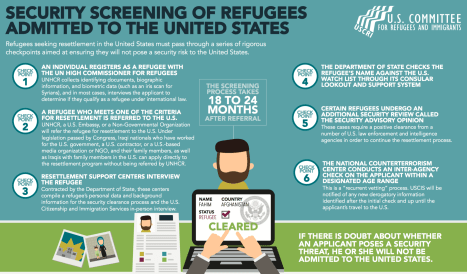
The six-step screening process as defined by the U.S. Committee for Refugees and Immigrants. Graphic provided by Gerald Brown.

The first step in the security screening, Brown said, is the refugee making the decision to apply for refugee status. From there the UNHCR interviews the refugees and then refers the ones who meet the criteria to one of the nine national resettlement agencies.

During this task, there are bars that are set for the refugees coming into the country, Brown. These bars are certain standards that need to be met in order for the refugees to be even considered to resettle in a third country such as the United States.

“If they persecuted someone themselves then they did not pass the bar and cannot become a refugee in our country,” Brown said.

If there is any reason to believe that a person has done something illegal or unjust in their country, then they will automatically get declined resettlement and will not be able to reapply.

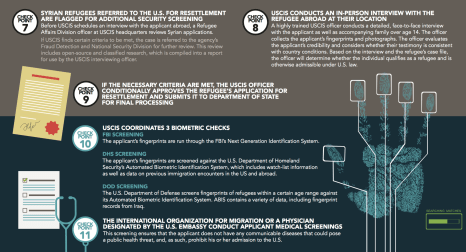
Steps 7-11 of the security screening process as defined by the U.S. Committee for Refugees and Immigrants. Graphic provided by Gerald Brown.

The next step is the security screening. The screening process is aimed at ensuring the refugees will not pose a security risk to the United States. These background checks can take anywhere from 18 to 24 months after referral, according to the U.S Committee for Refugees and Immigrants. During this entire process, the refugees are continuing to stay in the camps.

The final steps include a health screening and eligibility based on the current cap the U.S. has established for incoming refugees. Then, the Department of State works with the nine national resettlement organizations that have affiliate offices that resettle refugees.


No safe space; how one Salt Lake City resident has welcomed LGBT refugees

Connell O’Donovan at the annual Salt Lake City Utah Pride festival. Photo taken by David Newkirk.

Story by KAYA DANAE

Apollo Kann, a gay Ugandan refugee and HIV/AIDS education activist, landed in Salt Lake City after spending two years in Nairobi, Kenya, waiting to be resettled into the U.S. The first local contact he made was Connell O’Donovan, a genealogist and well known activist for LGBT rights.

The next day Barnabas Wobilaya, Kann’s friend and fellow HIV/AIDS education activist, arrived in Salt Lake City from Nairobi. “I’m professional friends with them,” O’Donovan said with a laugh. “It started out totally informally. Apollo sent me a friend request on Facebook and for whatever reason, I accepted his request!”

After offering his help, O’Donovan arrived at the apartment that Kann, Wobilaya and two other Ugandan refugees had been placed in by the International Rescue Committee. O’Donovan immediately noticed that their apartment was sparsely furnished.

“The IRC had provided very minimal furniture, a table, two chairs, two beds, linens, basic soap, toothpaste, and toothbrushes. They showed up with a literal knapsack each, that was it,” O’Donovan said.

O’Donovan reached out to his social circle and explained the situation, saying, “They need everything, what can you give?” Within 24 hours a truck was filled with everything they could possibly need, including a La-Z-Boy chair and new TV.

“I’ve just been a contact point with my circle of friends and the LGBT Community at large, anything that they need, they contact me. And I reach out and try to find it for them,” O’Donovan said.

He brought Kann and Wobilaya to the Utah Pride Center, where they were introduced to the Executive Director Carol Gnade.

The Utah Pride Center had begun to establish a refugee subcommittee called The Heart and Home Project in November 2016, but plans were changed when Donald Trump became president.

“We had been told by IRC that there would be 25 other LGBT refugees that would be coming from Uganda in June,” Gnade said in a phone interview. “We started scrambling to get a program together for all of these people, but they never came.”

The Heart and Home Project proposed to distribute a pamphlet to resettlement agencies like the International Rescue Committee and Catholic Community Services. These pamphlets would help teach refugees about the LGBT culture and resources in Salt Lake City. The project has been put on hold until more LGBT refugees are resettled into Utah.

The Pride Center currently offers free counseling for LGBT folk and happily welcomes refugees who identify as LGBT. Several refugee resettlement agencies also offer counseling for refugees experiencing PTSD. But LGBT refugees are often hesitant to use the services in fear of being exposed and mistreated.

Aden Batar, the immigration and refugee resettlement director for Catholic Community Services and the first Somalian refugee to step foot in Utah, stressed the importance of befriending refugees. “They (refugees) are leaving their homes, friends and families behind. It is very easy to become isolated. The connections and friendships that are made through our volunteer programs can completely change their lives.”

O’Donovan grew emotional when he began explaining that Uganda is one of the worst countries to live in for the LGBT community.

“You would not believe the circumstances these (LGBT) refugees are coming from,” he said.

In 2014, Uganda passed the Anti-Homosexuality Bill, in which being gay was punishable by death. It has since been updated and the penalty is now a lifetime prison sentence. It is not uncommon for the death penalty to be carried out in more rural areas.

Even if an LGBT Ugandan is placed in a refugee camp, conditions are not much better.

A United Nations Refugee Camp in Kakuma, Kenya, has been known to treat its LGBT enclave especially inhumanely. “There are about 250 (LGBT) refugees that are placed next to the shores of the river. When there is rain, they get flooded out, they’re constantly surrounded by mosquitos. Several of them have malaria, but they’re not getting medicine because they are not a priority. They are given ridiculous charges and sent to jail. The camp security will come by and beat the hell out of them,” said O’Donovan, who has been in contact with LGBT refugees staying at the camp.

Only five gay refugee men are known to be living in Salt Lake City, but two have not publicly come out in fear of being isolated from their own families and friends. Many LGBT refugees live their lives in hiding and secrecy. Even outing themselves in order to be granted asylum can be too dangerous. As openly gay men and HIV/AIDS education activists, Kann and Wobilaya have said they faced discrimination from fellow refugees here in Salt Lake City.

Catholic Community Services and International Rescue Committee have typically resettled approximately 1,200 refugees in Utah each year. Globally, 53 percent of all refugees are from Afghanistan, Somalia and Syria, all of which outlaw (some punishable by death) being an active LGBT citizen. Organizations like these are essential in helping refugees resettle into Salt Lake City, but Connell O’Donovan said that it is our responsibility as citizens to help our refugee neighbors feel welcome, especially those who may feel isolated in their own homes.

Refugees planting new roots in Utah

Story by SCOTT FUNK

War. Persecution. Death. Three things that many people in other countries across the world have to face on a daily basis. They go through life living in their homeland in fear. They’re left with two options: Stay in the country and risk death, or flee for survival. Many choose to stay, but many choose to become refugees.

Aden Batar, director of immigration and refugee resettlement for Catholic Community Services and a Somali refugee himself, said, “Becoming a refugee is the most difficult process a human being can go through. When you’re in your country, you either face the hard condition of leaving, or you die. Looking back, I don’t know how I did it, but when you don’t have a choice, you just want a new place to survive.”

According to a letter to Gov. Gary Herbert included in the Utah Refugee Services Office 2016 report, 1,200 refugees have been resettled in Utah annually by the CCS and International Rescue Committee.

The refugees who are resettled in Utah can choose from different programs to help them adapt to a new culture. One option is the New Roots Program, organized and managed by the IRC.

The New Roots program has the moto: “The food is local. The story is global.” Its purpose, according to the website, is to “enable refugees to celebrate their heritage and nourish themselves and their neighbors by planting strong roots – literally – in their new communities.”

The program consists of three parts: Community Gardening, Micro-Training Farm Program and the Sunnyvale Farmers Market.

Community Gardening Program

This program is designed to help the emotional well-being of the refugees as they try to adjust to a new country, culture and way of life.

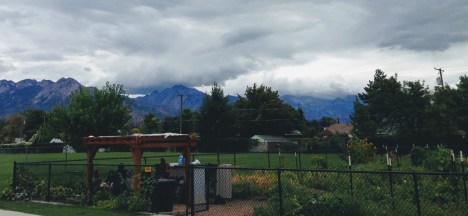
Central Park 1. Photo credit New Roots SLC

In this program, plots of land (approximately 14 feet by 20 feet for 100 total square feet) are reserved for local refugees and their families throughout the Salt Lake community to grow crops from their home country and to come together as a community. Alex Haas, community garden program coordinator, said it is their opportunity to not only work, but also to provide for their family while connecting with others who may come from the same circumstance. There are 15 different gardens throughout the valley that refugees have access to.

Also within this program, Haas said, is the opportunity to meet as a group to develop skills and become accustomed to the new society they are in. Within these adjustment groups refugees can discuss their feelings, learn skills such as how to deal with anger, stress, depression and ultimately become self-sustained as they build a new home.

“The purpose of our community gardening program and adjustment groups is to help refugees become self-sustaining moving forward,” Haas said.

He also said in a phone interview that the gardens are a way to remind refugees of home and that they give them “a sense of comfort, while they enjoy cultural foods, and while they build a community of wellness.”

Micro-Training Farm Program

The next step in the New Roots program is the farming aspect. After resettled refugees have participated in the community gardens for a year, they have an opportunity to work on larger plots of lands at the Redwood Road Micro-Training Farm, located at 3060 S. Lester St. in West Valley City, to continue their farming.

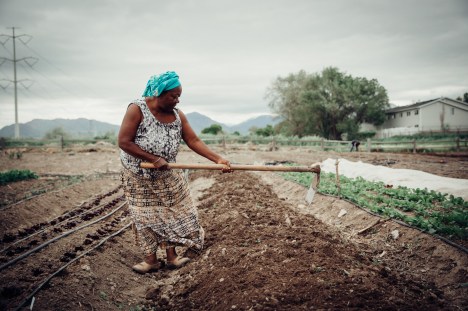
Local refugee farming at the Redwood Farm. Photo credit New Roots SLC

Jordan Bryant, manager of the IRC’s New Roots program, said in a phone interview that the farm is maintained by generous grants and donations. The farmers pay different amounts for seeds and plants from their heritage, and tools to grow them to bring their home to Utah.

Currently, Bryant said, there are about 33 farmers who are there on a constant basis. These farmers, each of whom were once strangers, develop a community with one another as they work together to grow and sell their crops at local farmer’s market.

Although it is not the main source of income for their families, the refugees rely on the farming as a source of income for their families. At the same time, they continue to develop relationships and friendships with the other refugees around them.

“It’s more than just a job,” Bryant said. “It’s that they gain access to their home and people to socialize with.”

Sunnyvale Farmers Market

Local refugees buying produce at the Sunnyvale Farmers Market. Photo credit New Roots SLC

The Sunnyvale Farmers Market, located at 4013 S. 700 West in Salt Lake City, gives the refugee farmers the opportunity to provide for their family by taking the food they grow and selling it.  It is also an opportunity to bring food from cultures around the world to the refugee community.

“The farmers market is a great opportunity for income,” Bryant said. “Although it’s not their main source of income, for some it does provide a substantial amount for their family. It also is a community benefit by providing food from the countries of the refugees that are in the community.”

Escaping persecution is a long journey. But after choosing to leave their home to survive, the New Roots program has given refugees the opportuntiy to bring a piece of their culture to Utah.


Beyond mental health: welcoming refugees to Utah

Story and photos by ALAYNIA WINTER

“Everything.”

That was the resounding answer from the three refugee panelists who spoke on Sept. 23, 2017, following a documentary movie screening held at The Leonardo museum in Salt Lake City. Each was asked the question: “What were the most difficult aspects of transitioning to living in Utah?”

Everything is different. The weather. The food. The language. The culture and customs. The ethnicity.

Visitor information is posted on the front door of the IRC located at 221 S. 400 West in Salt Lake City.

One of the panelists, Kamal Bewar, came to the U.S. as a refugee from Iraqi Kurdistan during the Iraqi Kurdish Civil War at 22 years old. Since then he has made Utah his home.

“I have been fortunate to have had people who made a difference and made me feel welcome. It has been the individuals who have made the difference in my life,” said Bewar during the event.

He is an example of a political refugee who has successfully created a new life after arriving with close to nothing. Bewar graduated with a Ph.D. from Argosy University in higher educational leadership. He now has a flourishing career working at Salt Lake Community College. He also is president of the Kurdish Community of Utah.

So, what happens when refugees arrive in Utah? First, they are welcomed by International Rescue Committee or another resettlement organization. After they have food and shelter and immediate safety, they are given English classes and tasked with adapting to the new environment.

What is the western answer to this often traumatic experience? IRC, Department of Child and Family Services (DCFS) and many other organizations offer therapy, medication and mental health programs. These programs are beneficial. However, the clinical concept of mental health may be foreign to some New Americans.

Hannah Fox, who was an intern at IRC before accepting a position as a social worker with DCFS said a problem many healthcare workers, social workers and others are seeing, is a systemic disconnect in the way we, as Americans, understand other cultures — and vice versa.

The IRC is nestled between The Rose Establishment and the historic W. S. Henderson Building.

“Our programs take mental health from a very western perspective,” Fox said, “versus where many of them [refugees] come from, they likely do not. So, while we might diagnose and medicate, they might believe in a spiritual or traditional folk remedy.” Visibly exasperated, Fox added, “So when they go to health care workers, and they give them a western experience of mental health care, it really f**** with them. It discourages them from trying again.”

What is found to be actually helpful, said Fatima Dirie, refugee coordinator for the University of Utah, is making a community. Once the programs are over, it’s the relationships and friendships made that create lasting change and true integration.

“As a community, we are not there yet,” Dirie said. “To truly feel welcomed you have to understand each other.”

Fox added, “With refugees that is their ‘therapy.’ It’s home and it’s talking about their culture. It’s sharing their experiences on their terms — not just some white person who has a degree behind a desk.”

Utahns can help make people feel welcome by saying hello, simply smiling, or inviting someone over for dinner. If interested, sign up for a Family Mentor Program, or complete a volunteer orientation at IRC.

Fostering meaningful relationships is what truly matters.


Refugee Justice League, SLCPD work to help refugees feel comfortable with justice system

Story and photos by EMILY ANDERSON

When then 17-year-old Abdullahi “Abdi” Mohamed was shot by police in downtown Salt Lake City in 2016, a wave of shock washed over the community.

According to reports from The Salt Lake Tribune, police said Mohamed was involved in an altercation and armed with a metal broomstick. When police ordered him to drop the weapon, Mohamed appeared to attempt to hit the man he was fighting, so officers fired at him. Mohamed’s family later disputed these claims.

Hundreds mobilized in support of the Somali refugee and rallied against police brutality toward people of color. Meanwhile, many refugees living in the Salt Lake Valley were paralyzed with terror.

“Anytime there is a publicized law enforcement-refugee conflict, it reinforces the fear [of law enforcement],” said Brad Parker, one of the founders of the Refugee Justice League, in a telephone interview.

IMG_7098s

Abdi Mohamed was shot by Salt Lake City Police at 200 S. Rio Grande St.

Refugees frequently have negative memories of police in their home countries, according to Natalie El-Deiry, the deputy director of the International Rescue Committee (IRC) — one of the agencies that resettles refugees in Salt Lake City. Along with the military, law enforcement is commonly used to silence those who speak out against an oppressive government.

“One thing that is often the case with people who have fled persecution from another country is that they often didn’t have the protection of law enforcement when they fled,” El-Deiry said in a telephone interview. “So when people first arrive, there is definitely a skepticism or uncertainty around whether law enforcement is really there to protect you.”

Police officers frequently participate in behaviors considered war crimes by international organizations like Human Rights Watch. For example, Kenyan police officers repeatedly target Somali refugees with rape, arbitrary arrests and unlawful deportations.

Jodi Larson-Farrow of the Boise Agency for New Americans, which helps resettle refugees in Boise, Idaho, has interviewed recent refugees about their feelings toward police. Her research was included in a report on law enforcement relations with refugees released by the Police Executive Research Forum in May 2017. The words and phrases refugees most commonly associate with police, she found, are “fear, rapist, power, corruption, intimidation, no trust, they will beat you, they will take your life and run from them.”

“In addition to the language and cultural barriers that separate refugees and police in many U.S. localities, there is a deeper source of distrust that can hamper engagement from the outset,” read the report. “To fully understand the barriers that may stand in the way of building trust, U.S. police must be educated about the historical experiences of refugee communities with their native police forces.”

Refugees’ understanding of the U.S. justice system also tends to be influenced by the way criminal cases are handled in their country of origin. The Police Executive Research Forum’s report said that refugees’ home countries generally convict people of crimes more quickly than in the U.S. These experiences, the forum believes, led to confusion after Abdi Mohamed was shot.

“The Salt Lake City Police Department [SLCPD] discovered in the aftermath of a police-involved shooting of a refugee that members of the refugee community assumed there would be no consequences for the officer, simply because the investigation was still pending and they had not been aware of the process,” the report said. “As a result of this incident, the department recognized the need to expand their educational efforts to avoid confusion surrounding such issues in the future.”

After Abdi Mohamed was shot, SLCPD held town halls to assuage the fears of the refugee community and hosted Citizens Academy, which allows refugees and other Salt Lake City residents to learn how the department functions. SLCPD also has a refugee liaison, Detective Robert Ungricht, who attends community events in an effort to get to know refugees.

Ungricht said in a telephone interview that the department is working to bring refugees onto the force, but are running into problems because many refugees aren’t citizens. This is an issue that the Utah State Legislature, or even Congress, he said, would have to address.

“We’re trying our hardest,” Ungricht said. “We get told a lot that the refugee community sees that we’re really doing a lot more than some agencies. I’m happy to hear that they’re happy that we’re trying to fight for them and fight for their rights and give them these opportunities.”

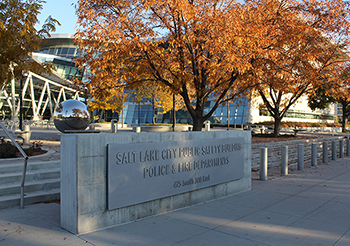
The Salt Lake City Public Safety Building houses the Salt Lake City Police Department’s refugee liaison and Citizens Academy.

SLCPD attends orientation sessions given by the International Rescue Committee for newly-arrived refugees. Natalie El-Deiry said the police department has become an advocate for refugees who are feeling unsafe in the community.

“There’s always room for improvement, but I think [SLCPD] is doing a really great job,” El-Deiry said.

However, Brad Parker feels refugees in the Salt Lake Valley still struggle to rely on law enforcement. His group, the Refugee Justice League — a coalition of lawyers formed to defend refugees’ rights — is now trying to bridge that gap.

“The Salt Lake City Police Department has done a great job in an outreach effort to build trust with refugees,” Parker said. “The fear is just deep-seated enough that it hasn’t completely worked.”

The league was formed after President Donald Trump was elected, as some refugees faced harassment and were concerned about the prospect of Trump following through with threats to build a Muslim registry. Attorneys who have since joined the organization wanted to help represent refugees who feel they are being discriminated against or are in trouble. All lawyers working with the league do so pro bono.

If a refugee is at the police station, Parker said, an attorney will go meet with the refugee. The attorney will communicate that everything the refugee says is confidential and that the attorney’s priority is to help. If the refugee has been accused of a crime, the Refugee Justice League will then secure a criminal attorney. If needed, the representative will help the refugee communicate with police.

“In those cases, it’s a win-win. It’s a win for refugees, and it’s a win for law enforcement,” Parker said.

To help refugees navigate encounters with the police, the Refugee Justice League has distributed personalized cards. Each card includes the refugee’s name, photo and preferred language. It says that the cardholder is represented by an attorney from the Refugee Justice League and gives the refugee instructions on how to comply with law enforcement while protecting the person’s rights.

“We did the cards to help the refugees become more fully-engaged participants in the legal system,” Parker said. “It gives us the chance, as we assist them, to model appropriate behavior when you’re dealing with police — that is a polite, cooperative behavior in many instances.”

In order to receive the card, refugees must complete a training that instructs them on when it is appropriate to show it. The Refugee Justice League tells them not to use the cards in incidents like traffic stops or domestic disputes. Refugees are also taught how they are expected to react to police.

Parker said the organization had three goals in creating the cards — to protect refugees’ rights, to reduce fear and build trust and to enhance communication between refugees and law enforcement. Because refugees are often not yet citizens, giving police a false statement out of fear or not following instructions can result in a withdrawal of their refugee status and deportation.

“A lot of times if refugees are questioned by the police, they just clam up,” Parker said. “Sometimes they’ll pretend that they don’t understand the language — and sometimes they don’t. They’re worried that they might get in trouble for something they say, so they say nothing.”

When the card was first proposed, Ungricht worried that the cards would destroy the trust SLCPD has worked to develop with refugees.

“I was like, ‘That’s going to create some major tension,’” Ungricht said. “It’s going to knock down a lot of bridges that we’ve built in the [refugee] community.”

Since the league announced the program, they have worked with numerous groups including SLCPD, the International Rescue Committee and the American Civil Liberties Union to make changes to the card. El-Deiry said that through these conversations, the cards can accommodate all parties.

“I think that there is potential for [the cards] to be helpful,” said El-Deiry. “I think that there are some concerns around the Justice League actually working with law enforcement themselves to make sure that there is a unified voice around that, and those are some discussions that we’ve had and they’re ongoing.”

The Refugee Justice League believes that through the combined effort of SLCPD and attorneys, refugees will feel safer in the Salt Lake Valley. As a result, the league hopes refugees will be more cooperative and further integrated into the justice system and society.

But first, Parker said, law enforcement must continue to build relationships with refugees on an individual level.

“A lot of them are scared of talking to the police,” Parker said. “These psychological scars that they have aren’t just easily set aside. It’s hard to say, ‘Oh, don’t worry anymore, now the police are your friends.’ You can preach that all you want, but until they’ve had an experience that helps them realize that, there’s sort of this deep-seated fear that comes from their past.”

Read a related story about the Refugee Justice League.

Salt Lake City’s farmers markets draw loyal consumers

Story and slideshow by JOSH SOUTAS

Experience all that the Winter Market has to offer.


“We never miss a market,” said Salt Lake City local Paula Butler. Her friend, Lori Martin, added, “We come every time.” Butler and Martin are just two of the many consumers who wander around the Winter Market at 10 a.m. every other Saturday from November until April looking for locally grown produce.

The two said the combination of fresh produce, and the get-together that the Winter Market has become, is what keeps them coming back.

“It’s now as much of a social event as it is a grocery shopping event for us,” said Butler, who is also a regular at the summer Saturday Market. “Not only do you know what you are buying is healthy and good for you, but it is fun to come and meet the farmers who grow and are selling their own local products.”

In its third year, the Winter Market is held in the historical Rio Grande Depot. The train station’s tracks were first used in 1910, according to Utah Communication History Encyclopedia writer Kelsie Haymond. The old train station is transformed into a paradise for consumers who are looking for locally grown produce during the winter months. Vendors, who set up shop where passengers used to load onto trains, give the landmark building a lively atmosphere again.

The market entrance runs through the Rio Gallery, located in the Grand Lobby of the Rio Grande Depot. Shoppers on the second floor get an overhead view of the artwork in the free gallery.

Alison Einerson, market manager of the Salt Lake City Farmers Markets, said in a phone interview that the Winter Market almost exclusively features food vendors who cater to local eaters.

The Winter Market occurs when many vegetables and fruits are out of season. Einerson said that challenge was not difficult to overcome.

“It’s really eye opening to see that there are still so many locally grown fresh fruits and vegetables available, even though it is December and snowing, or February and bitter cold outside,” Einerson said. “There [are] beets, asparagus, parsley, onions, potatoes, and in my opinion our market is home to the best local baked goods.”

Einerson also agreed with market regulars Butler and Martin that many people attend the market not only for the produce, but also for the social occasion that it has become.

It is not surprising to see the Winter Market be successful even though it has not been around as long as the established Saturday Market. Farmers markets have risen in popularity with more than 8,200 nationwide, a 76 percent increase since 2008, according to the USDA.

Steven Mountford is a honey farmer with White Lake Farms. The Genola, Utah, farm has been a vendor with the Winter Market since its opening. It also takes part in the Saturday Market during the summer.

Mountford said he understands why farmers markets have been growing in popularity and size, especially in the last few years.

His explanation? He said people are starting to be curious and are caring where their food is coming from.

“It is important to expose people to the reality of where their food is coming from,” Mountford said. “People are now questioning how their food is getting to them and if it is good for them.”

Mountford isn’t wrong, according to a 2011 food dialogues survey. The survey focused on opinions, attitudes and questions that consumers and farmers had about the state of how food is raised in the U.S. The study found that “consumers think about food production constantly, yet know very little about how food is brought to the dinner table.”

Mountford believes that consumers asking questions about their food and caring where it is coming from is making a difference.

“You get customers asking restaurant owners, ‘Where did this chicken come from?’ or ‘Where did these vegetables come from?’ People didn’t used to ask these questions. And it helps motivate restaurant owners to buy locally,” he said.

Salsa Del Diablo, a Salt Lake City company, has participated in the Winters Market for two years. It also took part in the Saturday Market for the first time in 2015, one of the four Utah summer markets it participated in last year.

The company carries eight different salsa flavors in the summer, and four in the winter. Salsa Del Diablo motivates customers to buy its products by donating 1 percent of profit to adaptive sports in Utah.

Employee Jennifer Lehmbuck said the local markets are what helped the company break through into grocery stores in 2015.

“Farmers Markets open doors for local companies like Salsa Del Diablo,” Lehmbuck said.

Besides the exposure that the market has provided, Lehmbuck said she has seen other benefits of participating in markets.

“These local farmers markets build community. It helps get people connected with their food and lets them get to know where and whom their food is coming from,” Lehmbuck said. Salsa Del Diablo sources the majority of its salsa ingredients from Bangerter Farms, located in Bountiful, Utah.

Michael Pollan, author of “Cooked: A Natural History of Transformation” and creator of the Netflix documentary series “Cooked,” told “Nourish” that “a farmers market is kind of like a public square, and there is a nice social energy. At the farmers market, city meets country. People learn about where their food comes from and the people who grew it.”

Market Manager Einerson said this growth in community is one of the main benefits of a farmers market. It supports the local farmers and vendors.

Winter Market Transitioning to Summer Saturday Market

 The Winter Market at Rio Grande closes for the season on April 23, 2016. But Einerson and vendors are looking ahead to the Saturday Market, which will be taking place for the 25th time this year. “It has been a staple of the community here in Salt Lake City,” Einerson said.

Many of the Winter Market vendors, including Salsa Del Diablo and White Lake Farms, will return for the weekly Saturday Farmers Market. They will be joined by dozens more who did not participate in the seasonal event.

Einerson said the time off in between the markets seems seamless to staff as they work throughout May to approve applications, finalize vendor lists and assign locations in Pioneer Park.

The summer Saturday Farmers Market, along with the Arts and Crafts Market, run June 11 through October 22, 2016, from 8 a.m. until 2 p.m.

“It doesn’t seem like a long break to us because we don’t stop working. But I am sure the public miss it,” Einerson said.

Indeed, for locals like Paula Butler and the Lori Martin who “never miss a market,” the month and a half without a farmers market is too long.

Interested in finding a local farmers market near you? Visit The Salt Lake Tribune for a list of farmers markets near you.