Inequality for same-sex couples in Utah’s laws

Story and photo by ADRIENNE PURDY

“It sucks. It’s just really, really sucky,” Brandie Balken says.

Balken is the executive director of Equality Utah and she has something to say about the lack of fairness of laws in Utah.

For instance, lesbian, gay, bisexual and transgender individuals can be evicted or fired because of their sexual orientation or gender identity. Access to healthcare for LGBT couples is limited and adoption in Utah as a same-sex couples is impossible.

It is legal to fire or evict LGBT people in Utah today. It is legal to discriminate against someone because they are or are perceived as LGBT.

Equality Utah Foundation, based in Salt Lake City, is an organization that aims to educate the general public and the LGBT community alike about issues impacting the LGBT community. It also works at passing legislation and raising awareness.

According to the American Civil Liberties Union, Utah’s laws make it illegal to discriminate based on sexual orientation in public employment, which means it is legal to discriminate based on gender identity in public employment, and to discriminate based on gender identity and sexual orientation in non-public employment.

The Utah legislative session is scheduled to begin Jan. 28, 2013.

Utah’s laws are way behind the 17 other states whose laws prohibit discrimination based on sexual orientation and gender identity in any form in employment.

The Employment Non-Discrimination Act (ENDA) is a pending federal legislation that would protect individuals from discrimination in employment based on an individual’s sexual orientation.

While some states are forward thinking in having equality among all Americans, some states and some national legislation have yet to catch up. This same problem is happening with adoption by same-sex couples in Utah.

According to the Human Rights Campaign second-parent adoption, or adopting the child of a partner, is a legal option in 18 states, a petition option in eight and a possibility in others.

But not in Utah.

A joint adoption, where the couple adopts a child from the biological parents or a child in the custody of the state is a legal option in 18 states, a petition option in two and a possibility in others.

But not in Utah.

Utah is one of two states that prohibit adoption by gay and lesbian couples. The legislation bans any unmarried couple from adopting and since same-sex marriage is not legal in Utah this law extends to the LGBT community.

As Balken says, it is possible to help raise a child for years and still be a legal stranger to that child. Although adoption by same-sex couples is not legal in Utah, it is recognized if completed outside of Utah.

Rocky Dustin, a freelance court reporter, says he does not come across many cases involving same-sex adoptions in part because it’s very uncommon in Utah and adoption legislation has a long way to go.

While Utah may be behind in the adoption aspect, it is much more represented in the case of healthcare.

The Healthcare Equality Index is an annual healthcare survey that rates respondents on their policies related to LGBT patients. Hospitals and clinics are rated based on non-discrimination, visitation and employment non-discrimination policies and training on LGBT care.

The University of Utah Hospitals and Clinics system was a respondent in the poll and qualified in two of the four requirements. This illustrates that as a major health provider in Utah, it is taking steps to improve availability and patient care to all Utahns.

The healthcare system did not, however, meet the requirement for the visitation policy, which “grants same-sex couples the same access as different sex couples.” This includes access to one’s partner as well as children under 18. Until Utah state laws catch up, the Healthcare Equality Index score will remain unchanged.

In 2011 the Salt Lake City School District added medical coverage for domestic partners of district employees. This is the first school district in the state of Utah to do so.

In addition to medical insurance, medical power of attorney is a critical aspect of equality in Utah. For a gay or lesbian couple to be able to have medical power of attorney for their partner, it requires a very expensive process of having multiple documents drawn up to prove that they are indeed able to make those medical decisions. Different-sex couples do not have this problem.

In a phone interview, Peter Asplund, an associate general counsel for the Office of Legislative Research and General Counsel, said, “There are automatic rights with marriage and medical power of attorney is one of them, except in the case of same-sex couples,” he said.

Although laws in Utah regarding equality may be lacking, the overall climate of attitudes toward the LGBT community is changing.

”Forty-two percent said that they have become more accepting,” Balken said, referencing a poll commissioned by the Human Rights Campaign in 2011. “And more than three-fourths now support anti-discrimination laws.”

Equality across the nation and in Utah has been a long time coming and still has a ways to go. But Balken is confident it will happen.

“We saw it first with gender and then race,” Balken said. “This is the next human rights movement.”

Fighting for Utah LGBT rights involves more than just marriage

Brandie Balken, executive director of Equality Utah, works in her office October of 2012 in downtown Salt Lake City.

Story and photo by JAKE GORDON

Fighting for equal rights in behalf of the lesbian, gay, bisexual and transgender community isn’t just about marriage — it is much more complex than that.

Brandie Balken, executive director for Equality Utah, expressed frustration that the public views gay marriage as the main issue.

“When we look at what the equality movement is and what our role in the equality movement is, we are really looking at the beginning of a person’s life all the way through the end of a person’s life,” Balken said in a talk to reporting students at the University of Utah on Sept. 13, 2012. “And I mention that because I think in the popular dialogue today, all we hear about is marriage and I have to tell you that there is so much more that needs to be done.”

The LGBT community has to fight hard for the same human rights that straight people generally take for granted. Rights like visiting loved ones in the hospital, transferring health and retirement benefits to a partner and being recognized as a non-biological parent are some things that Balken has had to fight for with the costly help of a lawyer.

“To secure access to your partner (in a hospital), even if you have been married in another state, you have to get a designated beneficiary contract and you need to establish a will and a trust if property is included,” Balken said. “My partner and I have spent literally almost $10,000 with our attorney preparing contracts to protect our home, to protect our life insurance investments and to protect as best we can our child to make sure that she is cared for.”

Tooele County Justice Court Judge John Mack Dow, who practiced law for 21 years prior to being named judge, talked about the differences between rights for straight and gay relationships.

“If there is a husband and a wife then the rights are transferred automatically in the relationship,” Dow said. “But if it is a homosexual partnership then they have to get the necessary paperwork and even that paperwork can be challenged in court by other family members.”

Balken has forked over the money to work with lawyers to become the medical decision-maker for her partner. When going on trips, Balken makes sure that she packs her paperwork and legal documents, just in case something does happen.

Niki Corpron, a registered nurse at Intermountain Healthcare hospital in Murray, said the hospital has strict policies regarding who can or can’t visit during an emergency.

“If someone is brought in by an ambulance and they have a homosexual partner then they aren’t allowed in to visit without the appropriate paperwork,” Corpron said. “If the partner doesn’t have their papers then they have to contact the family and receive permission from them.”

Balken is not only fighting for herself and her own family, but as executive director for Equality Utah she also is working for equitable rights for all in the state. Balken said Equality Utah was founded in 2001 as a political action committee, or PAC. The purpose of a PAC is to help people get elected into office. Equality Utah also fights legislation that seeks to disallow equal rights to gays.

She said that in the nation marriage is basically a state-by-state determination. Some states allow marriage, some states allow civil unions and some states, like Utah for one, prohibits any or all marriages or civil unions. Therefore, in Utah, equal rights are an uphill battle for Equality Utah and the LGBT community.

One piece of legislation Balken mentioned was a constitutional amendment that passed in 2004 penned by Rep. LaVar Christensen (R-Draper), which was called Amendment 3.

“This amendment to the constitution basically says marriage equality is prohibited, civil unions are prohibited, and any other contractual agreements with substantially equivalent benefits are prohibited,” Balken said. “That went before our legislature, was signed by our governor and put to the ballot in 2004 and more than two-thirds of the population of Utah approved that measure. So, currently in the state of Utah, marriage equality is banned in the constitution as are civil unions.”

Balken also knows that it takes multiple approaches to educate the public about equal rights.

“You have to educate the population about the issues, about the language, and about the implications of unequal policy,” she said. “You have to work with elected officials who are seated to understand the importance of equitable policy and to work with them to change that policy.”

Equality Utah works to get more fair-minded people in office, from the school board all the way up to the state house, to sustain achievable cultural change.

Although it is a long road to travel for equal rights, Equality Utah has had some success in passing some legislation. Balken said the organization passed in 2007 a bullying and hazing statute and a hate crimes prevention law.

“Those may seem like small things,” she said, “but . . . prevention of hate crimes or at least acknowledgement of hate crimes as well as prevention of bullying and hazing behaviors is crucially important.”

LGBT community pushes legislation for equal rights in Salt Lake City

Story and photo by MATT ELLIS

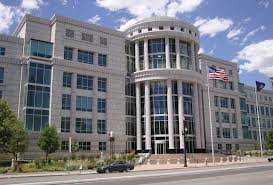
The Scott M. Matheson Courthouse is where the Utah Supreme Court meets.

It is no secret that people who are in the lesbian/gay/bisexual/transgender (LGBT) community may find life to be a lot more difficult on a day-to-day basis than those who are not. There are currently no laws against discrimination in the workplace and where they live. There is also a constant political battle as people who identify with the LGBT community fight for rights and protections many feel should be afforded to them as American citizens.

Though there seems to be growing support among the general public through most of Salt Lake City, people in the LGBT community are fighting an uphill battle in the court systems as they try to secure their liberties, such as the right to marry, the right to adopt children, and the right to be free of discrimination in the workplace.

Several organizations are involved in politics on behalf of the LGBT community, but little progress has been made relative to other, more progressive cities around the U.S. – such as San Francisco, where gender-reassignment surgery can be subsidized by the government.

So if the public opinion is shifting, why is it so hard to gain support in the political arena? Kai Medina-Martínez, director of the LGBT Resource Center at the University of Utah, summed it up simply.

“Gay, in our country, is not a good thing,” Medina-Martínez said. “It’s something to be ashamed of and be treated badly for.”

But in a study released in August 2012 by the Huffington Post and the Campus Pride Index, the U was declared to be one of the top-25 LGBT-friendly campuses in the nation. It seems, then, that the lack of widespread support for putting the LGBT community on an equal playing field probably goes deeper than just being gay or transgender.

“I think one of the first major obstacles is that any time you talk about protection and rights for LGBT it automatically means marriage,” said Brandie Balken, executive director of Equality Utah, in a phone interview. “There is not a lot of support for [gay] marriage in Utah among the population at large.”

That is due in large part to the presence of religious organizations, none more significant than the Church of Jesus Christ of Latter-day Saints. The LDS church holds firm that marriage should be between a man and a woman only. Given that many Christian sects share this belief and that America was founded on Christianity, this may help to explain why people are hesitant to show public displays of support.

Chad Christopher, a sophomore studying mass communication at the U and an openly gay student, said he supports legalizing gay marriage but he doesn’t think that it is totally necessary.

“It’s more about the benefits rather than the actual title of being married,” he said. “It’s about health benefits and just being able to really function as a family. If we can have all that, we don’t need the title.”

He said that unless things change over the next couple of years, he plans to leave Utah after graduation and settle in a place where he would be able to start a family, though he doesn’t know where yet.

But the struggle to legalize same-sex marriage is not the only legal battle the LGBT community is fighting. Every day, gay or transgender people are evicted from their homes or fired from their jobs simply because of the fact that they do not identify as a heterosexual male or female. Drew Call, a Salt Lake City man who worked for the LDS church, said in an interview with Salt Lake City Weekly that he is gay, but said he has never been sexually active with a man. In spite of that, he was fired from his job because of his friendship with other gay men.

Balken and Equality Utah, along with many other pro-LGBT organizations, hope that they can help our society progress to a point where things like gay friendships won’t matter.

Equality Utah is an organization that works to educate the public about the LGBT community and the issues it faces, as well as back political candidates who support the expansion of rights afforded to LGBT people.

“We’ve passed 25 pro-LGBT ordinances,” Balken said of EU’s work with local legislators. They include “fifteen [that] have to do with gender identity in housing and the workplace, four are to prevent bullying, and four others that are statewide statutes including a hate crime statute.”

She said Equality Utah plans to keep focusing on schools because bullies are targeting LGBT students. With students’ expanded use of social media websites such as Facebook and Twitter, Balken said it is much harder for students to escape the abuse and that her organization seeks to find a way to address that through legislation. Equality Utah was also able to pass a gatekeeper bill in March 2012, which mandates that teachers receive training on recognizing suicidal behavior in students and how to act accordingly.

Though she knows the road is not easy, Balken still has big plans for future legislative battles.

“Right now we are working on statewide legislation for housing and employment protection,” she said. “Further down the road we are looking at some sort of a contract package to make it easier [for LGBT people] to protect their homes, kind of like a will or trust.”

Such a package would allow unmarried same-sex couples to take advantage of many freedoms that are afforded to married couples, such as the ability to pass property on to their partner or make medical decisions on their behalf.

Balken said it might help the cause if there was a way to rally public support and try to get rid of the disconnect between popular opinion and that of the lawmakers, but she is not sure how that can be done.

“I would have addressed it by now,” Balken said, “I honestly don’t know.”

LGBT organizations continually work toward equality in Utah

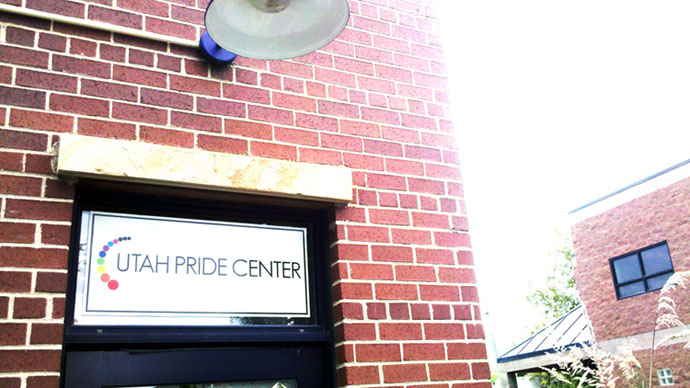
The Utah Pride Center, located at 361 N. 300 West, is an advocate for the LGBT community.

Story and photo by CHAD MOBLEY

Salt Lake City is seen through the eyes of the nation as a conservative and religiously centered metropolitan area whose dominant Mormon culture controls everything from lawmaking to media consumption. However, the population is ever changing and growing more diverse all the time. The lesbian, gay, bisexual and transgender community is one segment of the population with organizations in place to help balance the scales and promote equality among all citizens in Utah. Equality Utah and the Utah Pride Center went to bat for the LGBT community during a recent controversy and the leaders involved felt the outcome was positive.

In late August 2012, KSL refused to air the new NBC comedy, “The New Normal.” That decision caused a media firestorm and many in the LGBT community in Salt Lake City to take action. The issue was covered by news outlets across the country, including the Los Angeles Times, Huffington Post and CBS. When the story first broke, the Utah TV station was portrayed as regressive and bigoted.

Not only did this decision catch the attention of the national media, but enraged advocates for gay rights in America.

GLAAD President Hernon Graddick was quoted in a blog from the organization’s website: “Same-sex families are a beloved part of American television thanks to shows like ‘Modern Family,’ ‘Glee’ and ‘Grey’s Anatomy.’ While audiences, critics and advertisers have all supported LGBT stories, KSL is demonstrating how deeply out of touch it is with the rest of the country.”

Graddick continued, “We invite Jeff Simpson (CEO for Bonneville Media, KSL’s parent company) to sit down with GLAAD and local LGBT families. We know that if he would, he would see that not only are our families normal, but by citing ‘crude and rude’ content and refusing to affirm LGBT families, KSL and Mr. Simpson are sending a dangerous message to Utah. They should make that right.”

Five days after KSL’s decision not to air the program, the director of the Utah Pride Center, Valerie Larabee, along with Equality Utah director, Brandie Balken, her family and another same-sex family sat down for a roundtable discussion with KSL and Bonneville Media.

The organizations then released a joint statement on Aug. 29 regarding the decision to pull the show from the primetime lineup.

According to KSL, “It was helpful to talk together, to better understand issues, and to be able to discuss the reasons behind our decision to not air ‘The New Normal.’ This was not a decision we made lightly and it was not made because of any single issue including gay characters or LGBT families. … We care about and value all members of our community, including LGBT people and their families, and are grateful when there can be the type of cordial and respectful dialogue we have had today.”

Equality Utah and the Utah Pride Center added in the statement, “We had a great opportunity to talk about our families and our kids. We appreciated the opportunity to express our concerns, and to hear firsthand the reasons behind this decision. We accept their explanation that the decision to pull ‘The New Normal’ was not made lightly and it was not made because of any single issue including gay characters or LGBT families.”

After having seen the show, Balken and Larabee agreed with KSL’s decision.

“Having the LGBT presence in the show was important,” Balken said in a telephone interview. “However, more than or equally important to just being present is how we are portrayed. We want to be represented as who we really are.”

Larabee added, “Once we saw the first episode, we got it completely. I agreed with them. We think it is very poorly written.”

One member of the local LGBT community felt relief knowing that advocates are ready to fight for their rights.

“That really does show what they are doing and how effective they are,” said Shalise Mehew of Salt Lake City. “I totally agree, I wouldn’t want it on primetime either.”

After a heated controversy over what seemed to be an anti-gay decision, a simple dialogue  immediately alleviated concerns. A planned protest was cancelled, a joint statement was released and an understanding between two sides of the community was reached.

“It was the first step in helping to create trust between at least a segment of our community and the local media,” Larabee said.

The Utah Pride Center and Equality Utah continually monitor the media to correct any unfair reporting or disparaging portrayals of the LGBT community and its families. The two organizations maintain relationships with the media on a daily basis and they work with GLAAD when they have any major issues surrounding coverage or statements made by those in the media industry.

“Utah Pride Center and Equality Utah work tirelessly to promote tolerance and grow acceptance of LGBT people and families in Utah,” said Graddick of GLAAD on the website. “We are proud to be working with them.”

For the organizations, fighting for equality doesn’t stop with the media. One of their goals is to reach this same type of understanding between the LGBT community and the dominant religion.

“We are really invested in continuing conversations with LDS people,” Balken said. “We live in the same places, work in the same places and have kids in the same schools. Anytime people can and will sit down and really just be real with each other, it’s a great release and it’s positive.”

Salt Lake County District Attorney Sim Gill, mental health court, address criminal recidivism in Utah

by JAVAN RIVERA

Taking action to solve Utah’s homeless problem could save Salt Lake City taxpayers thousands of dollars.

Homeless men and women wander the streets of downtown Salt Lake City every day. Many avoid the homeless, brush off their panhandling and go about their daily business. They never stop to think about how these people ended up in their current situation, much less how the growing problem of the mentally ill homeless population might cost far more in taxes than a handful of quarters to a panhandler ever will.

Since 2001, the Salt Lake County mental health court has been helping to reduce the rate of criminal recidivism among Salt Lake City’s mentally ill. Through a system of what Salt Lake County District Attorney Sim Gill likes to call “restorative justice,” the mental health court has reduced repeat offenses through weekly court dates and proper medication. This therapeutic take on justice is what Gill believes will not only help with Salt Lake City’s homeless criminal offense problem, but also save taxpayers a lot of money.

“We are bankrupting ourselves into oblivion,” Gill said of the current system of “zero tolerance” enacted by most of U.S. law and justice systems. “We need to seek out alternatives to incarceration; we need to focus on therapeutic justice, and we need to focus on locking up those we are afraid of, not those who we don’t like.”

Salt Lake County’s mental health court works on what Gill calls a “system approach,” something he thinks of as simple problem-solving. He believes that all too often, the legal system relies on “crisis management” rather than proactively preventing repeat offenses by taking active measures right away. This is the core of mental health court.

“The neat thing about the people we serve in mental health court is that simple medication is often enough to reduce recidivism,” said Jeannie Edens, supervisor of the Day Reporting Center of Criminal Justice Services (DRC).

Edens’ work at DRC allows her to see the benefits of mental health court both for the participants who are sent to the program as well as the taxpayers whose money is being put to more efficient use. She feels that the work being done at DRC is important to a fair judicial system.

DRC provides an alternative to jail time by allowing criminals to participate in intensive case management that includes treatment, educational and employment opportunities to prevent criminal recidivism. DRC  works regularly with Salt Lake County’s mental health court.

“In a regular court setting a judge may not know that a person has mental health problems,” Edens said. “They think it’s just another substance abuse problem and could sentence them to longer and harsher punishments.”

It’s those longer sentences that usually end up costing Utah taxpayers. According to Gill, conservatively, the average cost of detaining, treating and processing a mentally ill criminal offender is often in the range of thousands of dollars. That includes the cost of police dispatch, ambulance, medical treatment, court processing, and jail time—all of which, Gill said, is coming out of the taxpayer’s wallet.

“So it’s not just a good progressive idea that I’m talking about,” Gill said. “It’s become a fiscal reality as well.”

For Gill, however, mental health court provides more than just an opportunity to reduce repeat offenses and increase fiscal efficiency in Salt Lake County’s criminal justice system. It also allows the criminal justice system to treat these mentally ill offenders in a manner that denotes respect and dignity, despite their current situation.

“The worst thing you can do to a person is make them insignificant,  to disrespect them,” Gill said. “This program [mental health court] respects them.”

It’s that respect that Gill believes has helped to bring about the success of mental health court in Salt Lake County. Through the program, officials have seen a decrease of recidivism from 68 percent to between 17 to 19 percent among participants, Gill said. Additionally, the number of “event failures,” the amount of time between significant lapses of criminal behavior, have increased from an average of 230 days to more than 1,300 days.

“Is this a perfect model? Absolutely not,” Gill said. “Is it a better one? Damn straight.”

Volunteers of America’s detox center helps men and women get back on two feet

Story and slideshow by LAURA SCHMITZ

As Volunteers of America celebrates its 25th anniversary in Utah in 2011, the program that started it all is still going strong.

A national, nonprofit organization, VOA has a presence in 44 states and employs a range of paid staff, who work to tackle issues such as homelessness and drug addiction.

The Adult Detoxification Center, its first project in Salt Lake City, now offers 56 beds with three separate dorms to men and women purging their systems of alcohol and drugs.

About 20 to 25 staff are employed by the center, including case managers, front line recovery assistants and management. Utilizing a social model, the center promotes relational development and peer motivation to encourage clients to sobriety.

“Being able to build trust and relationship with people is huge,” said Sue Ativalo, director of the center, located at 252 West Brooklyn Ave. in Salt Lake City. “Relationships are a big piece to help them want to recover.”

Client admittance to the detox center is voluntary, and no matter how many times a client has returned, “we never want to show any judgment,” Ativalo said.

Clients follow a structured schedule each day while at the center. Between the 5:30 a.m. wake-up and lights out at 10 p.m., clients attend educational and spiritual meetings during the day and are required to attend detox meetings — such as Alcoholics Anonymous — at night.

Eighty-five to 90 percent of clients are homeless, and though ages have ranged from 18 to 77, the average clients are from their late 30s to late 40s. As of 2011, the center has had more than 15,000 night stays by Salt Lake County residents and serves about 1,600 individuals per year.

“Not very many people have sympathy for our population,” Ativalo said. “But, they are amazing individuals, and we appreciate volunteers that come.”

Clients must have “used” in the past 72 hours to be eligible for services, so the first step the staff takes is to remove those substances from their bodies. Most clients are taken off of all substances “cold turkey,” often causing symptoms of withdrawal, Ativalo said.

Drugs generally take just a few days to clear the system, but effects can last for weeks.

The center has basic medications to lessen pain from the process and often administers a cocktail that combines Tylenol, chamomile and anti-diarrheal components to ease symptoms. Depending on the specific substance, they can include irritability, tremors, nausea, vomiting, diarrhea, fatigue, muscle aches and sometimes hallucinations.

Since the center is not a treatment facility but a detox facility, the staff will refer clients to partnering organizations, such as the Fourth Street Clinic, when they demonstrate need for additional medical treatment. That medical facility is specifically dedicated to homeless patients.

The center can also refer clients to long-term treatment centers such as St. Mary’s, Odyssey House, First Step House, The Haven and Valley Mental Health.

“The difficulty is the waiting list for [those] programs is really high,” Ativalo said. “There is a huge group, but no transitional place while waiting for treatment.”

Ativalo said some clients will instead return to drugs on a low dosage to prevent symptoms of withdrawal.

“A lot of chronic users will use to stay well rather than to get high,” she said.

Once clients are physically detoxed, they are offered assistance from the center’s case managers, who oversee their progress and counsel them through goal setting and a sustainable, full recovery.

One client returns to VOA after visiting the center when it first opened its doors in 1986, coming back to the center after more than 20 years.

“Originally I was in and out of here for two weeks at a time for about six different times,” said client Scott Barker. “Then they put me on the HUD program. I was here for 103 days on that, and I am on it now.”

The Housing and Urban Development program is an initiative to place clients into permanent housing, and the detox center reserves six beds specifically for those enrolled in the program. HUD participants have more freedom than regular clients and can get passes to leave, have cell phones and acquire more personal belongings.

“I was kind of a revolving door before I got on HUD,” Barker said, saying that the six members of the HUD program help create a sense of community and accountability.

Homeless since 2009, Barker said drugs and alcohol, as well as lack of stability and problems with the law, led to his circumstances.

“[The program] is good stability,” Barker said. “Here, you get some structure going. You have enough freedom that you can set up your own plan and work from it, but enough structure that you’re not just out there, running wild. It’s a good way to focus on things you need to accomplish.”

Barker is currently working with vocational rehabilitation and hopes to go back to school, ultimately wishing to return to truck driving.

“For the most part, I’m pretty happy here, but I’m always looking towards the future,” he said.

It is common for clients, such as Barker, to return several times to the detox center before achieving sobriety.

“We see a lot of people who will come again and again,” said Emily Bennett, who works with VOA’s Jail Diversion Program. “A lot of people say relapse is a part of recovery.”

The JDP reserves 10 beds at the detox center for Salt Lake City Police, West Valley City Police, UTA Police and the Salt Lake County Sheriff’s Department for individuals who are publicly intoxicated. The program serves as an alternative to jail time and is also cheaper for the county.

Bennett said jail is over-crowded, and “doesn’t address the problem.”

Some clients have received so many citations they are unable to afford that they have warrants for their arrest. For these cases and others, JDP staff will often send clients to Judge John Baxter of Utah’s third district court. Baxter founded and governs the Salt Lake City Justice Court Homeless Outreach Project, or the Homeless Court.

The court meets twice per month at the Bishop Weigand Homeless Day Center and is specifically for homeless defendants. Baxter handles infractions and misdemeanor cases only, often sentencing community service instead of fees.

“He’s a rock star,” Bennett said of Baxter. “He’s not what you’d expect from a judge. He has a lot of respect for the clients, calling them ‘sir’ or ‘ma’am.’”

Chris Allsop, 23, is another client who has returned to the center multiple times to regain his footing.

“This year alone I’ve been here more than 30 times,” Allsop said. “My average day out of detox is just back to smoking and drinking. So I always choose to come here, where I have no desire to use anymore.”

Allsop, who said he has taken “more drugs than he can count on his 10 fingers,” came to the center this time after taking a pain pill called Neurontin.

“That stuff is all chemicals – it’s all really bad,” Allsop said. “I’m about done with that stuff, because it makes my heart go too fast, and I don’t think before I start doing things when I’m on it.”

Allsop first came to the detox center after trying to get away from some members of his family.

“My uncle, he disowned me, so I came over here,” he said. “My family is mean to me — my cousin abused me.”

Falling into bad habits away from his family, he has now been ordered by the court to attend 130 AA meetings, which is a common nightly routine for clients.

“I really need to get a job, so I’m trying to clean up my act,” Allsop said. “I want to get to work – maybe part-time school.”

Allsop said the staff at the detox center has helped him to keep going.

“I specifically enjoy the staff and their participation in helping me,” he said. “If I start falling into only hanging out with the clients, they’re going to get me in trouble, and I’ll be back out there, using again.”

Barker also said the staff played a big role in his development.

“I know the staff quite well,” Barker said. “The staff is great here, they’ve helped me with a lot of things, and they’re easy to get along with, too.”

The detox center staff also works closely with other VOA programs in Salt Lake City, including the Homeless Youth Resource Center, Homeless Outreach Program and the Center for Women and Children.

“Collaboration is huge – we see a lot of the same clients,” director Ativalo said.

She said continued education and accurate awareness about the population is necessary to encourage the number of volunteers and to end the cycle of drug use.

Those interested in volunteering with the detox center or any of VOA’s programs must apply on its website. To donate, the detox center accepts financial contributions and in-kind donations. Current needs include towels, sweat pants, waterproof pillow covers, deodorant, current DVDs and men’s socks.

Nonprofits’ motivation brings ‘credibility’ to the community

by LAURA SCHMITZ

Nonprofits, by definition, must exist for public benefit and comply with a “non-distribution constraint,” mandating that net earnings not be directly distributed to owners.

For some, nonprofits are defined by much more.

The Utah Nonprofits Association exists solely to unite more than 600 nonprofit organizations in the state, supported by more than 20 community partners. A part of the National Council of Nonprofits, it also works at the national level, promoting the interests of its organizations to government officials.

An example of one of its collaborators is the national nonprofit, Boys & Girls Clubs of America. With five distinct sites in the Greater Salt Lake area, its Lied club is located at 464 South Concord (1235 West) in Salt Lake City, serving 80 to 100 kids per day.

“I think there is definitely a reputation, a belief system that goes with nonprofits,” said Tiffany Harris, club director for the Lied Boys & Girls Club, in a telephone interview. “They give you more credibility within the community, because your main motivation is your mission. I think when people see that’s your driving force as opposed to money, they are more likely to support you.”

The Boys & Girls Club reaches out to at risk youth, proving resources and a haven away from home. According to its website, after-school hours, between 3 and 6 p.m., are when children are most likely to try drugs and when most juvenile assaults occur.

“We definitely have core members that come,” Harris said. “Most of our kids we see every day. It’s part of their routine — a lot of them walk here after school.”

With 84 percent of its children coming from families considered to be low-income, Harris said the club works to provide them with unique opportunities that might not have been afforded to them.

“We’re starting an art program, having local artists come in,” Harris said. “It’s great, because they have that background and expertise that kids crave and really love. Classes are expensive, so we try to fill that gap that kids wouldn’t get otherwise.”

The Lied club has 10 paid staff members, including four who work with elementary age children and three dedicated to the teen center. The center is open primarily during the high-risk after-school hours, opening each day at 2 p.m.

While nonprofits can apply for 27 types of tax exceptions from the Internal Revenue Service, the Boys & Girls Club functions under the common 501(c)(3). It receives the majority of its funding through local and state grants, private foundations and donations.

“That’s what a healthy nonprofit will do,” Harris said. “You can’t rely on one major funding source, because if that source pulls, your funding is gone.”

However, these organizations are not devoid of any monetary gain, which is a common misconception, said Nancy Basinger, assistant director and service learning manager at the Lowell Bennion Community Service Center at the University of Utah who works extensively with nonprofit’s rights and bylaws.

“The [nonprofit] organization must make a profit, but must also be reinvestigating its own entity,” Basinger said. “The most in-demand nonprofits are those that assist in survival.”

Basinger said one common negative theme she sees within the nonprofit industry is that there are many individuals who are passionate about a cause but have little business experience.

“A lot of [nonprofit] leaders are doing this organization on top of other things,” she said. “They’re acting as social workers and nonprofit workers and have a family and kids.”

Basinger said the passion must be balanced with experience to have a successful impact in the community. She encouraged would-be entrepreneurs to first try partnering with an existing organization before building from the ground up.

“It’s not good to have a million nonprofits competing over the same dollars, rather than a few nonprofits working together under the same dollar,” she said.

Along with its hundreds of nonprofit organizations, Utah has 7.2 active charities for every 10,000 residents, who make up the largest charitable contributors in the United States, based on income. Those living in the Beehive state are also No. 2 in the nation for self-reported volunteering.

The Road Home helps give Christmas to everyone

by JOHANNA WISCHMANN

During the holiday season in Salt Lake City, many families and people find themselves with nowhere to turn. To help those in need of shelter and other necessities for livelihood, The Road Home helps accommodate those who may not have the resources to live a somewhat comfortable life.

“I think people are shocked to learn that both locally and nationally, families are the fastest growing segment of the homeless population,” said Celeste Eggert, the director of development. Between 2007-2009 the number of families in homeless shelters jumped 124 percent, Eggert said.

“Our goal is to help these families return to housing as quickly as possible,” Eggert said.

There are a few things the Road Home, located at 210 S. Rio Grande St., does during the winter season to help those in the shelters.

On the first of October, the Road Home opens a Community Winter Shelter. The Winter Shelter serves as an overflow shelter so that the Road Home does not need to turn anybody away during the cold months of the year.

Every December, the Road Home creates a holiday store, called the Candy Cane Corner Store; usually it occupies an empty or vacant building.

This year the Candy Cane Corner Store is located at 502 West 300 South in Salt Lake City. It is open Mondays through Fridays from noon to 7 p.m. and Saturdays and Sundays from noon to 5 p.m.

The store is made up of new or donated things gathered from the community, like rattles, shoes, hats and gloves.

The Candy Cane Corner Store provides a “wish list” every year supplying information for things they need to fill the store.

On the 2011 Wish List, there are different sections that need to be filled for newborns to fathers and mothers. In each section there are items that people in the Road Home need or want for the holidays, like sweaters, socks and shoes.

The Road Home also gives the men and women in the shelter gift bags. Every person gets something for the holidays, Eggert said.

The Road Home supplies a “needs list” that asks for donations for the gift bags. The men’s gift bag list this year has things like shampoo, razors and deodorant.

Donations for the gift bags are to be delivered by Dec. 14. Donations can be brought to the donation drop-off area located at the south of the Road Home building. For all the donations, the Road Home gives out tax receipts.

The week before Christmas, volunteers put the items into pillowcases and hand them out on Christmas Eve.

About 700 Christmas bags are handed out each year.

“All the parents in our programs get to come over to the store with their case managers and hand select clothing and toys for their children,” Eggert said. “Last year we served over 2,000 people, most of which were children.”

Children aren’t allowed to come in the store because the store is designed for parents to surprise their children on Christmas.

The case managers help the client pick a few items for their family members. Usually every child and adult gets a new outfit and children get a toy and a book.

Additionally, families get a household item like towels or an alarm clock, which will help them with everyday life.

Once all the presents are chosen, families get to wrap their gifts and store them until Christmas, when the families can give out the gifts.

“Last year, we helped more than 400 households move into a variety of housing settings,” Eggert said. During 2010, 88 percent of the people who were placed into housing did not have to return to the Road Home shelter after only about a year in the Housing Program.

The Housing Program has many different services and uses “traditional transitional units for the families with significant housing barriers,” Eggert said. There are also “many other options including Tenant Based Rental Assistance in partnership with three local Housing Authorities, Shelter Plus Care vouchers in partnership with two local housing authorities, Rapid Rehousing subsidies, and Permanent Supportive Housing,” Eggert said.

For chronically homeless men and women there are many community projects that provide permanent housing for them.

The Road Home provides financial information and fiscal year data for the public to access and has contact information for emergency purposes.

During the holidays, the Road Home has a radio broadcast that is held on Dec. 20, 21 and 22 at the Road Home Homeless Shelter. There are 10 local radio stations that will broadcast live from the shelter.

The radio broadcasts encourage radio listeners to donate financially or donate items. All the items donated will directly go to the homeless men, women and families with children.

During the radio broadcast, the Road Home is in need of volunteers to collect and sort through the donations. To volunteer during the radio broadcast contact Josh Stovall.

The Road Home is always in need for help from volunteers.

Currently, the Road Home is looking for volunteers to help at the Candy Cane Corner holiday store throughout the whole month of December. The store provides history and backgroundinformation about the store when you sign up to help to volunteer.

To volunteer for the Candy Cane Corner holiday store you can sign up online. For any more questions about donating or volunteering contact Becca Dupaix.

A closer look at Salt Lake City’s Discovery Gateway children’s museum

Story and slideshow by BROOKE MANGUM

See the world through the eyes of a child at Discovery Gateway

Imagine a place where children’s minds can run free. Imagine a place where children can be whatever they want to be. Imagine a place where play is celebrated. What if this place encouraged and facilitated education and learning as well.

Does that sound too good to be true? This is what Discovery Gateway offers the community.

“Discovery Gateway, and organizations like it, are so important and different from other museums because they inspire children to learn via play,” said Steven Suite, chairman of Discovery Gateway board of directors.

Formally known as the Children’s Museum of Utah, the west-side nonprofit Discovery Gateway is located at 444 W. 100 South. The museum relocated to this 60,000-square-foot building in 2006 and is filled with exhibits of hands-on educational fun.

The museum was founded in 1978 by a group of parents and educators who believed children learned best by “doing.” The museum aims to be one of the most trusted and preferred family discovery centers and child educational resources in the Intermountain West.

The exhibits in Discovery Gateway are designed to address the multiple ways that children learn. All of the exhibits are interactive and inspire learning through creative play. The museum is divided into six zones, each having various hands-on learning experiences. Each section appeals to different age groups and children’s interests.

“What is so cool about our exhibits is that they not only teach children but they get them thinking about possible future fields,” said Lindsie Smith, Discovery Gateway development and marketing director in an email interview. “Each exhibit that we have focuses on a different career field. We have science exhibits, medical exhibits, activities in the theatre and arts, journalism, the possibilities are endless.”

Discovery Gateway is divided into six main zones: the Garden, Kids Eye View, Story Factory, Media Zone, the Studio and the Terrace.

The Garden is a 30-foot beehive that serves as the main entryway to the museum. This exhibit is designed to teach cause and effect. Children and adults work together to keep the hive functioning by performing various mechanical tasks. For example, one child is in charge of feeding plastic balls into a machine while another uses a hand crank to power a fan that moves the balls along the path to the next station. In another part of the hive a child uses foot pedals to activate a vacuum tube that propels the balls back to the beginning. When all the stations and children are working together and doing their job the hive comes alive.

Kids Eye View is dedicated to the museum’s youngest visitors. This zone is divided into multiple mini exhibits designed for tiny hands and budding motor skills. The exhibits within the Kids Eye View capture toddlers’ imaginations by exposing them to life on the farm, construction zones, a life-sized playhouse and every little one’s favorite, the rushing water exhibit.

The Story Factory offers visitors an opportunity to explore the many ways to tell a story. This is the journalism zone that is designed to inspire young future writers to discover the fun in writing and storytelling. The exhibit has something for all levels of writers, from those who are just beginning to craft sentences to those who are more experienced   with using words and modern multimedia.

Media Zone is sponsored in part by KSL 5 news. In this zone children are able to try out any and all media jobs and try their hands at TV and music production. Children can see what it is like to anchor the news, do a weather report and work as a camera operator. This section also has music mixing tables and recording devices where children can learn to make, record and produce their own music.

“My favorite is the news station,” said Gabriel Rosse, 10, a regular museum visitor. “It is so cool! I feel like I am doing the news for real.”

The Studio is a place for little scientists, artists and engineers to let their imaginations run wild. This is a hands-on creative space where children can learn about such things as physics, earth sciences, biology, mathematics and forms of art and architecture. The children are able to build their own mini structures and test their earthquake durability on the vibration tables. They also can conduct their own experiments with vacuum tubes.

The Terrace is home to one of the museum’s most beloved and recognizable exhibits, the Life Flight Helicopter, donated by Intermountain Healthcare. In this area children are able to learn about medical professions as well as search and rescue occupations. The once fully functional helicopter is now a kid friendly version that allows children to experience the thrill of flight using sounds and vibrations. The chopper lights up and makes all of the sounds of real flight such as the hum of the engine, the wind blowing on the tarmac and voices on the radio reciever.

“I love the helicopter,” said Max Smith, 6. Max lives in Salt Lake City and attends Reid School. “It is loud and makes me feel like I am flying fast.”

The museum also hosts traveling exhibits that are featured at Discovery Gateway for a limited time. The most recent exhibit was called PLAY. An exhibit called “Tinker Toys” is expected to début in 2012.

“The exhibits are fantastic,” said Anne Godfrey, a Salt Lake City mother who often brings her children to the museum. “I really feel good about taking my kids here. Not only do the kids love it, but I feel good knowing they are improving their education.”

The people at Discovery Gateway consider their crowning achievement to be the Junior Achievement City (JA City), located on the fourth floor. They are so excited about this exhibit because in their eyes it is the ultimate example of hands-on learning. JA City is in partnership with Junior Achievement of Utah and offers a hands-on learning environment for fifth-graders to gain “real-life” business experience. It is also a place for eighth-graders to learn how to manage their personal finances.

In JA City children run their own mock fully functional city. Using the knowledge they have acquired in the classroom they are able to bring this information to life. The children hold their own elections for mayor and hold different occupations and positions in the community.

Some youth are bankers, others grocery store workers. If it exists in real life it is highly likely that it is represented at JA City. The children involved in the program assume different positions in the mock community and learn valuable lessons about different occupations and the work that goes in to make society function.

“This exercise gives a huge opportunity for youth,” said board chairman Steve Suite. ”The kids have to work together or things don’t run smoothly. It is a lot like our Garden in the lower level but on a whole new scale where they make their own laws and essentially their utopia.”

Suite says Discovery Gateway is a magical place where kids can be kids, but they also learn and have the opportunity to think about their futures.

Utah Partners for Health offers community health services with its mobile clinics

Story and multimedia by SHELLY GUILLORY

Volunteer Laura Pexton recounts a story of a mother who arrived at a mobile health clinic with her two young sons, both of whom had fevers, runny noses and coughs. The 20-year-old mother told Pexton, a family nurse practitioner who volunteers with the mobile clinics one to two times per week, that she suffered from asthma and also felt sick. When Pexton placed her stethoscope on the woman’s chest, she noticed the mother moved almost no air in her lungs.

Pexton grabbed a peak flow meter — a device that tests lung capacity and is used to monitor asthma. The meter barely budged when Pexton tested the woman, indicating that her asthma had progressed to a dangerous level. After two nebulizer treatments at the clinic, the woman’s lungs sounded better. Pexton sent the mother home with prescriptions for medications to better control her asthma.

“She would have been someone who ended up in the emergency room and would have ended up hospitalized to get her asthma stable and under control,” Pexton said.  “She was able to come in, we offered her services and kept her out of the emergency room.”

The Utah Partners for Health, started in 2003 and based out of Magna, works within 17 clinics in Salt Lake County, all of which are “for-profit.” Healthcare professionals donate charity care to offer services for those who need treatment.

At these “for-profit” clinics, patients pay a small portion of the services rendered, which include acute care services, dental care, chronic illness management and mental health services. Patients can also receive preventative care, such as well child checks, breast exams and tobacco cessation counseling.

Since 2007, UPFH has also provided access to free health services with its mobile clinics, held three times a week. These mobile clinics are reserved for patients who cannot afford to pay the small fee at the “for-profit” clinics. The mobile clinics rotate locations throughout the Valley and serve residents in Salt Lake, including Glendale and other west-side neighborhoods, who do not have access to healthcare due to cultural or language barriers and lack of insurance or low income.

The mobile clinics operate out of rooms in community-based organizations, such as Horizonte Instruction and Training Center, Mountain View Elementary School, Hser Ner Moo Community Learning Center and Guadalupe Schools.

Executive Director Kurt Micka said mobile clinics save Utah’s healthcare system hundreds of thousands of dollars each year.

“Most of the patients we see wouldn’t see a doctor at all, or [they would] go to an expensive emergency room when conditions have worsened,” he said. “Our cost last year was $18.23 per patient visit, compared to $1,200 for a typical non-critical emergency room visit.”

Micka said the mobile clinics offer most primary care services found in doctor’s offices and have recently started offering eye examinations. Free influenza vaccinations are also available one or two times a year. Patients who want to be seen for primary care services can either walk in or make an appointment. But because of demand, appointments must be made in advance for eye examinations.

At a recent clinic in the Horizonte Instruction and Training Center, 1234 S. Main St., five healthcare professionals treated 71 patients out of two rooms in the fourth-floor library. Unlike Pexton, who volunteers her time, Micka said many of the healthcare professionals who work at mobile clinics are paid.

“The model works best when providers are paid,” he said. “In that way, they consider it a job and always show up. They don’t get distracted with other options with their time.”

UPFH receives funding from grants and mobile clinic supporters, including United Way, American Express, Regence Foundation, UBS Bank and Walmart.

UPFH Associate Executive Director Amy Reed Trebella said many patients who visit the mobile clinics do not understand how the healthcare system in Utah works. She said if the mobile clinics didn’t exist, many people would resort to using expensive resources.

“They go to the emergency room, especially with [the refugee population],” she said. “We find that there are certain communities that come to rely on the ER, which we are trying to alleviate.”

Patients who are treated may be sent home with prescriptions, which can often cost hundreds of dollars without insurance. But Trebella said the clinic has several options for people who need prescription medications.

“We have the Partnership for Prescription Assistance  we can refer people to,” she said. “But for the most part our providers try to write generic prescriptions because they are more affordable. Walmart has a $4 program.  So do Smith’s and other pharmacies. That tends to work very well.”

Trebella also said that although mobile clinics are not set up to follow patients long-term, many people show up every few months and treat the mobile clinics as their primary care physicians.

In addition to her story about the young mother with asthma, Pexton recalls a man who  was diagnosed with diabetes at a clinic. Doctors gave him a glucose meter to check his blood sugar. He also received education about how to manage his diabetes. Two months later he showed up to the mobile clinic with a record book that contained daily blood pressure and blood sugar readings he had tracked since his diagnosis. His blood pressure and blood sugar were normal and he weighed 15 pounds less. He told Pexton he changed his diet and quit drinking soda to help manage his illness.

“It was wonderful to see someone take the information and make changes,” Pexton said. “In that case he was given a prescription for refills on his medication and told to follow-up in three months.”