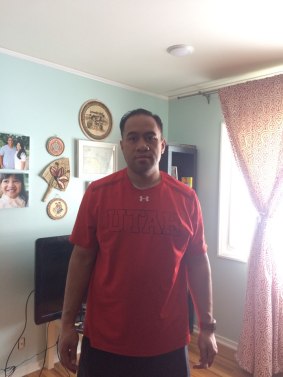
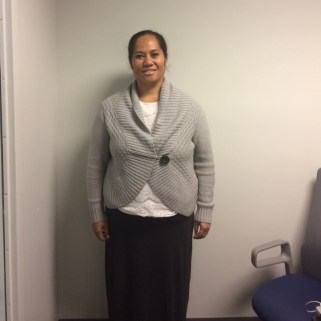
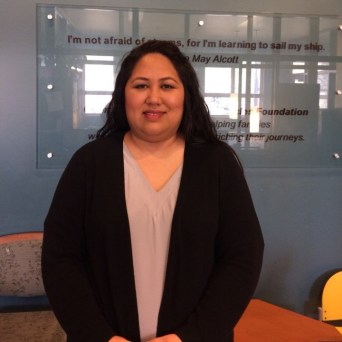
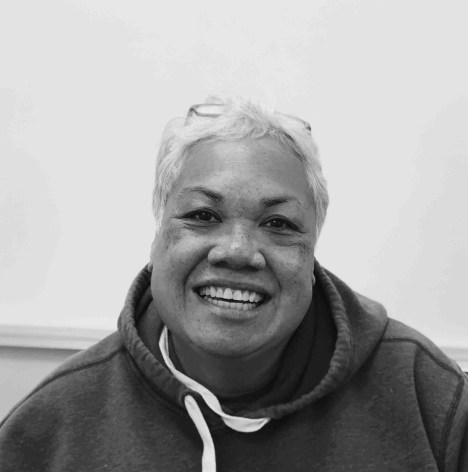
Bev Uipi, Marc Roberts, Jake Fitisemanu Jr. — Pacific Islanders in Utah politics

“If we truly believe in government that is by, for, and of the people,” Jake Fitisemanu Jr. said, “then by definition our governmental bodies should represent the makeup of our communities.”

Story by DIEGO ROMO

In the current social climate of the United States, even a half-mention of the word politics sends many fleeing. The word conjures feelings of distrust, misuse and abuse. But, in Utah’s Pacific Islander community, there is a different story to be told — a story of values, community and customs.

Bev Uipi, Marc Roberts and Jake Fitisemanu Jr. are three Utahns of Pacific Islander descent who are serving their communities in various governmental and political roles across the Wasatch Front. Their backgrounds and stories are unique and diverse, but the culture of community that has always run through the veins of Pacific Islander history connects them all and drives their political outlooks. This trait seems at odds with the current culture of American politics.

For Millcreek City Councilwoman Bev Uipi, politics is no unfamiliar game. The daughter of the only Tongan, and first Pacific Islander, to be elected to the Utah State Legislature, Uipi knows what it means to be truly at the service of her community. And through this firsthand experience of her father’s tenure as a Utah state legislator, she figured she would never put her name on the ballot.

“When he ran, I thought I would never do this,” Uipi said.

But all of that changed when Uipi was studying for a master’s degree in public administration at the University of Utah. It was there that she found a new interest in city management, which sparked the idea to run for office.

Uipi found herself conflicted as she was faced with the decision to pursue a path she never thought she would be traveling.

“For all of that pushback you’d think I wouldn’t want to run, but I did,” added Uipi.

And in 2016 Bev Uipi put her name in the hat for the office of Millcreek city councilmember for District 4 and won by a landslide. Uipi credits the win to the fact that her campaign had far more resources than all of the other campaigns.

“We raised and spent more money than all other campaigns combined,” Uipi said. “I learned a lot of strategies from Dad.”

When she was a young girl, her father told her “Don’t think outside the box, live outside the box.” Phil Uipi also spent time teaching his children about their Tongan heritage and about the epic stories of transoceanic voyages that their ancestors undertook. He shared, too, their keen ability to adapt to new situations and places because they were frequently on the move.

“We were given the skills to survive this far,” Phil Uipi would say, encouraging his children to pursue their dreams.

Uipi credits these lessons with her ability to navigate the very white, very male world of Utah politics.

“Water moves, so does politics,” Uipi said, commenting on her ability to adapt fluidly in this strange environment.

Marc Roberts, state representative for Utah’s 67th district, also never saw himself running for office. But, in 2012, he found himself in a new district after the 2010 census called for redistricting within the state. This change led him to become a more active member of his community, and eventually to office.

Roberts’ fellow community members noticed his newfound passion and encouraged him to run for a leadership position within his community.

“I was looking at people like, you’re crazy, I don’t want to do that,” Roberts said in a telephone interview. “But, push came to shove.”

Roberts ran against four longtime and well respected residents in his community and beat them in the caucus.

“I still remember going to vote. Sitting there standing in line realizing that everyone there is going to vote for me,” Roberts added. “And here I am in jeans and a hoodie looking like a regular guy.”

Roberts grew up in a very large family: nine siblings to be exact. And although he was reared in a household that taught him the core values that are prevalent in many Pacific Islander families, he was not raised in a home where Polynesian culture was at the forefront.

“I’m one foot in, one foot out when it comes to the Pacific Islander community,” he said.

But to Roberts, like many Pacific Islanders, family has always come first.

“To me family is the first level of government,” Roberts said. And that is how he views his role as a political leader in his community. “The stronger the family, the stronger the community.”

Jake Fitisemanu Jr., the current West Valley City councilman for District 4, grew up in both Hawaii and Utah. He never saw himself running for office, either. But during his time in college, Fitisemanu came to find himself elected to student senate on somewhat of a whim.

“I didn’t really campaign in any formal way, I just put my name on the ballot and hoped for the best,” Fitisemanu said in an email interview. “To be completely honest, at that stage in my life, I felt that getting involved would be great for my resumé. It wasn’t really out of a sense of civic duty, but more like an experiential challenge.”

Fast forward a few years and the experience that he thought would only be a footnote on his resumé became a full-time responsibility as the new councilman for West Valley City’s District 4.

In this new position, he hoped to connect his community to policies and resources that would impact their lives in a positive way.

“I feel like local government is the closest access point for everyday people to connect with the policies that impact our daily lives. I wanted to help improve the community where I live and I knew that representing my neighbors on the city council would be an effective and meaningful way to do that,” Fitisemanu said.

Regardless of their background, it seems that for most Pacific Islanders, it all comes back to the family and to the community, which makes them great candidates for leadership positions in their communities. Unfortunately, there are not enough role models in the community.

According to a 2016 article in “@ the U,” Representative Marc Roberts was one of four Pacific Islanders who were elected and had served in some form of Utah politics. That is only four out of about 37,000 Native Hawaiians and Pacific Islanders who reside in Utah, according to 2010 census data. Millcreek City Councilwoman Bev Uipi credits these staggeringly low numbers to representative bureaucracy.

Something has to change.

“If we truly believe in government that is by, for, and of the people,” Fitisemanu said, “then by definition our governmental bodies should represent the makeup of our communities.”

Teaching Pacific Islander Art Past and Present With Pasifika Enriching Arts Of Utah (PEAU)

Story and photos by ADAM FONDREN

My heritage is who I am

It is where I come from

It is where I’ve learned

That I represent my aiga

And we represent Samoa

Oreta-Tupola-for-Web

Oreta Tupola sits listening to a presentation on Pacific Island Knowledge 2 Action Resources (PIK2AR) at the University of Utah in Salt Lake City.

In this poem titled “My Heritage,” Oreta Tupola, a Samoan artist and member of Pacific Island Knowledge 2 Action Resources (PIK2AR), writes of family (aiga means family in her native language) and standing up for her cultural preservation. For Tupola, this is representative of what being Samoan is and this is what Pacific Islander art is about: being a protector of the past and educator of the future through art.

Pasifika Enriching Arts of Utah (PEAU) is an organization that falls under the umbrella organization of PIK2AR and aims to do the very same thing: help the Utah Pacific Islander culture with its self-identity and provide outlets and options for self-improvement.

PEAU describes itself as “a Pacific Island community-based group of artists, creators, and patrons of the arts bridging across all art communities to preserve, perpetuate, empower, support, educate and promote artists and creators of Pacific Island descent and of ethnic and underserved communities, to increase income into households through the arts.”

PEAU was founded in 2014 by Alisi Maka’afi, a visual artist of Tongan and Māori heritage. She has since moved back to New Zealand and has formed PEAU New Zealand. PEAU here in Utah has grown and changed slightly to become a large part of what PIK2AR does and how it does it. The organization has about 10 full-time members covering a range of arts from visual to dance and photography along with a number of rotating artists and contributors who contribute as their time allows.

PEAU introduces the cultural storytelling aspect of its goal by holding monthly artist and creator meetups where working artists team with aspiring artists to make art and discuss art. Annual exhibits are held at the Salt Lake County Libraries and at the Sorensen Unity Center. During the annual Utah Pacific Islander Meritage Month, PEAU holds an exhibit, and also take part in the annual People of the Pacific High School Conference (POP) held at Utah Valley University.

Bill-Louis-for-web

Bill Louis gives a presentation on street art at the People of the Pacific (POP) High School Conference at Utah Valley University in Orem, Utah.

According to Bill Louis, a Tongan street artist and the public art coordinator for PEAU, the organization is open to all Pacific Islanders. But much of PEAU’s efforts are directed toward underprivileged youth, leading to PEAU’s involvement with POP. POP provides an opportunity for PEAU to share its message and introduce the organization to high school age youths.

At the 2018 POP Conference, held in February, several different types of Pacific Islander art were explored. Nephi Prime, a Māori, presented on the haka or Māori traditional war dance. Bill Louis, a Tongan street artist, presented on contemporary graffiti. And Havier Tuitama, a Samoan who hosts a radio program on KRCL, taught a class on traditional dance and spoken word.

PEAU’s goal is to provide as many young Pacific Islanders as possible with an option in their life that they either haven’t considered or haven’t had the resources to explore. The resident artists and presenters from PEAU share the possibility of pursuing art as a career and not just a hobby. And members teach the continuation of the Pacific Islander narrative to remind youth of their place in the world and their ancestry.

The Pacific Islander history is rooted in exploration. Tupola spoke of how the early Pacific Islanders set out to explore the Pacific in small canoes. They couldn’t bring much in the way of possessions. As such, much of their cultural heritage is preserved in art, songs, dances, spoken anthologies, tattoo, and in how their ships were decorated. Art preserves their history. So, ensuring that the tradition of storytelling through art continues to be passed down through generations is imperative to the preservation of their culture.

The largest reason to focus on Pacific Islander youth is they need PEAU more than most to help them escape preconceived notions and the western stigma of Pacific Islander culture. They need additional avenues and experiences in their lives.

“There is more than just football and music out there,” said Louis, the Tongan street artist and PEAU Board member. Through his mentoring, he hopes to be able to influence youth and show that there is more out there, that art is a legitimate possibility in their future.

One of the main problems PEAU faces is a lack of a permanent space. Louis spoke of the efforts of PEAU to utilize everything from the Utah Museum of Fine Arts to county libraries to host exhibits and events. All of this costs money and much of the organization’s financial resources are obtained either through government grants secured through PIK2AR or through the artists themselves.

“I fund my own materials if I need to pay for something for an exhibit,” Louis said when asked about how he goes about getting studio space and materials for presentations.

PEAU has a goal and is working toward it. So far, it has been successful at finding and securing what it needs to continue. The aim is to continue to grow and expand the reach with more art, more shows and more mentoring. As Louis explained, PEAU’s hope is to introduce not only Pacific Islander youth but all Pacific Islanders to their history and their future with art.


Strong spirited Islanders strive for freedom in the “land of the free”

Story and photos by HANNAH CHRISTENSEN

Pacific Islanders who leave their homes and villages in search of a better life in Utah often experience culture shock and feel “stuck,” with no idea of what to do next.

merediths

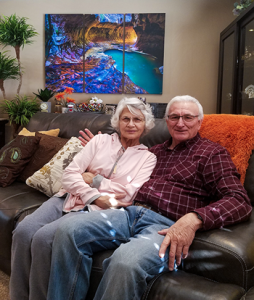
Martha and Mike Meredith at their home in Millcreek, Utah.

Mike and Martha Meredith are Pacific Islanders who have overcome many social barriers in order to be living comfortably in Millcreek, Utah. Martha vividly remembers her father cutting down and cracking coconuts in Tonga and then watching her mother clean them out. Martha was 10 when her family left Tonga and moved to New Zealand.

That’s where she met Mike. Mike was born in American Samoa but grew up in European Samoa until his family moved to New Zealand when he was 13. Martha recalled, “My family went through several migrations, first among the islands, then in New Zealand, and finally to America. My sister came first, then my parents. Mike and I were married and we had two little children and a third on the way when we came. We had no idea what on earth we were getting into.”

These migrations seemed so natural for their families, Martha explained, but when they got to America and it was so vastly different, they felt isolated and trapped. They weren’t sure how to assimilate while remaining true to their cultural practices.

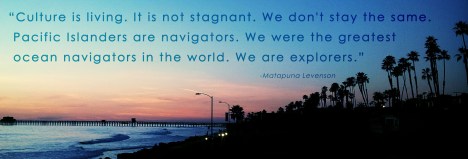
Matapuna Levenson, a lead advocate at the Salt Lake Area Family Justice Center, said, “Culture is living. It is not stagnant. We don’t stay the same. Pacific Islanders are navigators. We were the greatest ocean navigators in the world. We are explorers. So the idea of just staying the same, staying in one place, staying in one mindset, is so contradictory to the values that our culture is perpetuating and encouraging, what our ancestors were hoping for us.”

And now that these navigators are here, pursuing the American dream, what can they do? Where can they turn for help?

Jake Fitisemanu Jr., a clinical manager with Health Clinics of Utah, Utah Department of Health, said it is difficult for Pacific Islanders to navigate a social system that has completely different values because they aren’t sure how to do their part. In a village, everyone has their role and every role contributes to the overall wellness of the village.

According to the Utah Department of Health, “the overall proportion of NHPIs (Native Hawaiian Pacific Islanders) in Salt Lake City is greater than [in] any other city in the continental U.S.” One would assume that having a larger population would mean people have a community, a place to go, individuals who want to help. But what happens when those who came before you still feel adrift and disillusioned?

Fitisemanu wants to empower people who feel misplaced or lost. “I’m interested in mobilizing communities for political power, because this is the United States, that’s how it works here.” Fitisemanu sees the bigger picture after working for the government in the health department and as a city councilman for West Valley City. If the goal is getting Pacific Islanders to feel comfortable utilizing resources, then including them in the governing structure is one good way to do that.

Mike Meredith is another advocate for Pacific Islanders. He served on an advisory board for the Pacific Island community in Utah that focused on ways to improve education and resources for their communities. Because of his service on the board, Mike knows the issues that make it difficult for Pacific Islanders to start looking for resources, even if they are available.

“Especially in Utah, there’s a vast window that is open for them,” Mike said. “But one of the fears is picking up the phone, calling and setting up an appointment or approaching where there is help and seeking that. But it’s not really fear, it’s just something that’s in them, because they’ve lived in villages. You can go from home to the beach and throw in a fishing rod. Where here it’s wide open. They don’t know where to go or who to talk to.”

While it is true that the Pacific Islander population creates a place for tribal identification and emotional resources, Mike said there is confusion about how the American educational system applies. “The old tradition comes into this country and it’s difficult. Folks come in and think ‘you should have your kids finish school and then send them to work.’ That’s what we did back home. But that’s not the case that’s required here. To grow and progress you need education.”

Mike added that Pacific Islander parents lack the understanding of the benefits of graduating from college and entering the professional workforce. The family culture creates alternatives to college graduation and training required for high-level jobs, resulting in economic instability. The impact on families without sufficient financial stability affects all aspects of life — housing, medical care, food security — not to mention future school and work opportunities.

The Merediths are an exception because Mike was able to graduate with a degree in engineering and have a prosperous career. But he says this ethos was not easy to pass along even to his own children. And it is much more difficult for parents who feel at sea here in the high desert of Utah. Yet he still believes that Pacific Islanders can have it both ways — in his case American prosperity, along with a strong commitment to the values, mythologies, rituals and symbols at the heart of his Samoan-Maori culture and Martha’s Tongan culture.

Activists like the Merediths, Levenson, and Fitisemanu lead the way by empowering and educating Pacific Islanders. Fitisemanu said it is important to continue tradition while also moving forward. “We’re walking into the future backwards,” he said. “That’s how Polynesians see time. This is how we stay connected. Even though we’re moving in distance and in time into the future, we’re always facing the past.” Maintaining this connectedness while moving forward propels Pacific Islanders toward their dreams.

Levenson Quote

A quote from Matapuna Levenson, lead advocate at the Salt Lake Area Family & Justice Center.

Utah restaurants provide traditional Hawaiian food

Story and photos by SHAELYN BARBER

The traditional Hawaiian plate lunch is a rich fusion of foods from many countries. When Hawaii’s pineapple and sugarcane industry began people came from all over the world to work on the farms, and they brought a variety of cultural foods with them. When workers took their lunch break they shared their food with each other, and the Hawaiian plate was born.

Keni Aikau, the owner of The Hungry Hawaiian, and Masa Tukuafu, the owner of Moki’s Hawaiian Grill, are two men who brought this tradition to Utah with their restaurants.

The Hungry Hawaiian


The Hungry Hawaiian is a hidden gem. Tucked away in an unassuming strip mall at 1492 S. 800 West in Woods Cross, the tiny restaurant packs a punch with its full-flavored meat plate.

“For us, food is the other emotion, you know? You’ve got happy, sad, food,” Aikau says.
He was born in Hawaii and raised in Utah, and his childhood was filled with food.

“At a very young age we started learning and we just cooked. Everything we did was based around food,” Aikau says. He began learning at family luaus and celebrations. The young children in the family would carry out simple tasks, and as they got older they became more involved in the process of making food.

In 1978, Aikau’s father opened the original Hungry Hawaiian restaurant in Provo, Utah. It didn’t last long. Despite the popularity of the restaurant, it ran into financial difficulty and was forced to go out of business. He was never able to re-open his beloved restaurant.

But Aikau’s love for food led him to pursue a culinary education at Western Culinary Institute, now called Le Cordon Bleu, in Portland, Oregon. He brought his traditional food with him.

“You can’t tell me that Spam isn’t a meat!” Aikau exclaimed. Spam, though popular in Hawaiian cuisine, comes with a negative stigma on the mainland. His colleagues at Western Culinary Institute scoffed at the canned meat. That is, until Aikau gave his classmate a Spam and egg sandwich for breakfast. He ate the whole thing, and part of Aikau’s as well.

After his father’s death in 2010, Aikau returned to carry out his father’s dream himself. He modified his father’s original recipes and on June 23, 2017, the restaurant opened once again — this time in Woods Cross, north of Salt Lake City.

His goal was to keep the menu as simple as possible. Each plate comes with two scoops of white rice, a scoop of macaroni salad, and a choice of beef, chicken or pork.

“We just keep hearing how good it is from everyone around us,” Michelle Benedict says. She was drawn to the restaurant for the first time after hearing about the food from her neighbors.

“I just adore Hawaiian food,” Kristin Yee says with a laugh. “I know it’s rich so I have to be careful how much I come.” She has been a regular at the restaurant since its beginning. She was initially interested when she noticed Aikau’s children on the corner holding signs during the first week they were open.

Yee loves local food places but says, “It’s not just support, it’s really good. So, you’re getting the benefit too.”

Moki’s Hawaiian Grill


From the minute you step into Moki’s Hawaiian Grill, the warm smell of Hawaiian barbeque greets your nose. Mellow ukulele music hovers underneath the friendly chatter of customers, and the staff greet you with a smile from behind the counter.

“Food is what brings people together,” Masa Tukuafu says. He started Moki’s in 2002 and now owns two restaurants: one in Mesa, Arizona, and one located at 4836 S. Redwood Road in Taylorsville.

“In the beginning I just wanted to burn the place down,” Tukuafu says. “And, as time goes, you figure things out. So, you learn from your trials and you just keep going at it.”
Despite his trials, Tukuafu says the biggest benefit of owning Moki’s Hawaiian Grill is being able to provide for his children and his family.

“Being a first-generation here and struggling all the way through school and graduating from the University [of Utah], it was a challenge, and I didn’t want my kids to do that,” Tukuafu says.

Tukuafu is half Tongan and half Samoan. Traditional Polynesian food is costly to make, so he chose to run a Hawaiian restaurant instead. The ingredients for that cuisine are much easier and cheaper to find, and far more accessible than those required for Polynesian food.

“We wanted to provide something that was more for the majority instead of the minority,” Tukuafu says. He places an emphasis on health at his restaurant, altering traditional cooking methods to reduce fat and grease by using an open broiler for the restaurant’s meat.

“I heard about Moki’s because they’re one of the only places that sells musubi and I love musubi,” says customer Faitele Afamasaga. Spam musubi consists of a hunk of grilled spam and a block of rice wrapped in seaweed.

Afamasaga is a frequent visitor and usually comes for a cone of Moki’s ever-popular Dole whip ice cream.

“We like the cultural food from Hawai’i,” says Jennifer Selvidge, a first-time customer with her husband. She drives past Moki’s almost every day for work and wanted to try it.
“Everyone that’s had Moki’s or the style seemed to enjoy it and go back,” Selvidge says.

Pacific Islanders coalesce to preserve their culture

Story and photos by WOO SANG KIM

The Sixth Utah Pacific Island Heritage Month — an annual celebration held to increase the profile of the Pacific Islander communities and raise awareness of the different Pacific Islands — will be held July 28, 2018, from 6-11 p.m. at Sorenson Multicultural Center & Unity Fitness Center at 855 W. California Ave. in Salt Lake City.

Susie Feltch-Malohifo’ou, executive director of Pacific Island Knowledge 2 Action Resources, proposed the observance in 2013 and Gov. Gary J. Herbert declared August as Utah Pacific Island Heritage Month.

Will Unga, career adviser at Salt Lake Community College, has assisted with hosting the annual celebration at the Sorenson center. “The event is like Hawaii. We offer different types of foods and teas. Some people love it. Some people find it interesting. Some of the dishes are lu sipi, palusami, ika, taro and cape. We also have dances like haka, mari, sipi tau and siva tau and arts like tattoos, drawings, ta moko and tatau,” he said.

“We prepare yearlong, working to offer tables for vendors or to let them perform. We want to get to a level of having an application process to elevate the level of quality,” Unga added.

He said the event is extremely short-staffed. Volunteers’ time is limited. More money is needed to hire an overseer. Yet, Feltch-Malohifo’ou’s drive and determination have helped the event to expand exponentially each year.

“The first celebration was a test, the second was going somewhere and the third was phenomenal. The first gathered about 100 people, mostly the families and friends of the event associates. The second had 300 people and the fourth had 600 people,” Unga said.

Micronesia Cultural Booth participated as a vendor at the past celebration. Melsihna Folau, a third-grade teacher at Pacific Heritage Academy who volunteered for the booth, said, “We aim to raise awareness of the current problems of the Micronesian region and educate people about the culture of Caroline Islands, Mariana Islands, Marshall Islands and Kiribati Islands.”

2

Folau helped in hosting the Micronesia Cultural Booth.

Folau said the staff offered food and clothing as samples. Pilolo, tapioca mixed with banana and coconuts, and kemalis, rice mixed with coconuts, are given. The staff also answered questions about the Micronesian region. Most inquired about global warming and what the inhabitants are doing to slow the heating, Folau said.

“It took us six months to prepare. We had to get approved from the Marshallese government, connect to friends in Kiribati Islands, write to tourism management companies and talk to visitors from Guam. Getting the approval was the hard part,” Folau said.

The vendor also increased in size and had to divide. “The Marshallese wanted to have their own things, so they separated last year. They were excited to show their crafts and share things that they were shy about before,” Folau said.

“We are all part of the one history with different perspectives. I was excited to learn from experiences and network with people. I am just happy that I have been a part since the beginning,” Folau said.

The Queen Center, a Pacific Islander nonprofit promoting healthier lifestyles by providing cultural resources, tobacco prevention and advocacy and education, also has participated in the heritage celebration. Tufui Taukeiaho, a health sciences instructor at Granite Technical Institute who served as a committee member to the nonprofit, said, “We helped out by starting a 5K run.”

Taukeiaho said the Queen Center has hosted the run since the first celebration. The 5K started with 80-100 runners but the number surged each year. The funding from the run was given to two families. The husband of one family had a kidney failure and the other family had a 4-year-old boy who had cyclin-dependent kinase-like 5 (CDKL5) disorder — a rare X-linked genetic disorder that results in difficulty controlling seizures and severe neurodevelopmental impairment. Each family received a check of $6,000.

3

Taukeiaho assisted families in need by helping coordinate the 5K run.

“Helping out to host the 5K run as a committee member and handing out the checks to the families was very rewarding to me,” Taukeiaho said.

The celebration increased the cultural awareness even among Pacific Islanders. According to a Salt Lake Tribune article, “One of every four Tongans in the U.S. calls Utah home,” Utah boasts the second largest Tongan population and fourth largest Samoan population in this country. Yet, Unga said, “Second-generation Pacific Islanders have never been home (Pacific Islands). They don’t get any more of the culture, food, and language.”

Second-generation Pacific Islanders responded very positively to the past celebrations. “They can’t get enough. They want more. After the taste, they save up money to go back to the Pacific Islands and see more, especially the language,” Unga said.

They also garnered an opportunity to network with other community members. “I advise and connect students to other Pacific Islanders. I help them get internships and jobs, and refer them to other business contacts,” Unga said. “I help no less than 50 students a year.”

Some students even took part in the fourth celebration by screening a film. Unga said students from Salt Lake Community College made the film incorporating the Pacific Island videotaping techniques learned from the New Zealand filmmakers.

Participants gained novel experiences, too. “When you work with people, you have to learn to compromise. Keeping mind and heart in the right spot answered my question of what I want to accomplish at the UPIHM. Past years have been that way,” Unga said.

“Pacific Islanders are a very small group of minorities,” he said said. “We have challenges because of that, and we have one common goal: To live a happy life. We just want everyone to be successful and try to be good members of the society.”


Utah advocates to stop domestic violence among Pacific Islanders

Story and photos by WOO SANG KIM

Statistics on domestic violence are appallingly high among Pacific Islanders. But a Utah nonprofit is offering seminars to educate men and women about domestic violence and provide information for disrupting the cycle.

According to a 2017 study, “Domestic Violence and Sexual Assault in the Pacific Islander Community,” “With regard to domestic violence and sexual assault, UN Women estimates that 60-80 percent of Pacific Islander women and girls experience physical or sexual violence by a partner or other in their lifetimes. The rate is higher than any other region in the world. Few countries in the Pacific Islands have laws against violence against women.”

What is the cause? Erin Thomas, a researcher at American University and author of the study, wrote, “The effects of climate change often emphasize gender disparities and result in greater violence against women. Additionally, political turmoil, violence, and poverty in many areas of the Pacific Islands increase the prevalence of gender-based violence.”

Oreta Tupola, community health specialist at the Utah Public Health Association, said, “The culture also prevents women from taking action.” Most Pacific Islander women take care of the household while the men earn income. She said women rely on men for financial support. Victims’ relatives do not meddle in the family business and let the family resolve the issue. The religious orthodoxy does not encourage people to challenge traditional family roles. In short, Tupola said women are left helpless and uneducated on how to stop the abuse.

Tupola 1
Tupola serves as an advocate assisting and advising women in danger to avert domestic violence.

Pacific Island Knowledge 2 Action Resources (PIK2AR), founded in 2015 by Susi Feltch-Malohifo’ou, Simi Poteki and Cencira Te’o, is a group of activists who speak up to inform the community about the domestic violence, cultural preservation, and economic impact. The mission of the organization is to provide resources, opportunities and services to Utah’s Pacific Islanders by bridging communities.

PIK2AR’s domestic violence program focuses on unique messages for men and women. The Pacific Island Women’s Empowerment (PIWE), seminar featuring workshops and group discussions created by PIK2AR for women, hosts two weekly sessions for both Pacific Islanders and non-Pacific Islanders at the Sorenson Unity Center at 1383 S. 900 West in Salt Lake City. The seminar lasts about 90 minutes and has about 17 participants.

Feltch-Malohifo’ou, PIK2AR’s executive director, said, “We teach how to pay the bill, raise the credit score, and what domestic violence is by definition, which starts way before the first punch.”

Susi 1
Feltch-Malohifo’ou (left) is executive director of PIK2AR,  which provides safe passageways for women who are victims of domestic violence to liberate from their husbands.

Tupola said the PIWE offers a curriculum that gives therapy, group sessions on empowerment and strength, how to remove children safely, where to find shelter, how to have a safety plan, how to detach emotionally from a spouse, and how to prepare for separation. The PIWE also rotates speakers specialized in social work and behavioral psychology weekly, too. Every seminar, the speaker prepares different topics as requested by the guests and answers questions that are taboo in the Pacific Islander culture. Tupola said such are sex, drugs, and personal lifestyle.

Women at the varying stages of victimization are aided. “They don’t just come because they are just trying to run away. They have not decided if they want to leave but come in for therapies and advices,” said Matapuna Levenson, lead guide at the Salt Lake Area Family Justice Center. “We have a wide range of stages. They generally come to get a civil protective order. The protective order forbids abusers from contacting victims. Upon contact, police arrests them (abusers). Victims are surprised by the vast resources and helps out there,” Levenson said.

Levenson 1
Matapna Levenson provides resources, connections and advice for women who seek aid.

Although the door is always open for all victims, the aim of the PIWE is to teach women to be independent. “We don’t want people keep coming back to us for help,” Feltch-Malohifo’ou said. “We want to empower and teach so that they can help themselves.”

Levenson said, “Those able to sustain themselves and prevent themselves from abuse become advocates in issuing protective order, supporting other victims in healing, and speaking in domestic violence conferences.”

The PIWE shapes women to liberate and take actions from their husbands, Tupola said.

PIK2AR also offers a seminar, Kommitment Against Violence Altogether (KAVA) Talks, for men. The monthly seminar is held at the Oish Barber Shop in 4330 3500 South in West Valley City. It also lasts for 90 minutes and has about 13 participants.

Tupola said men are taught that “everyone has a right to be free of harm, domestic violence is against the law, respecting personal boundary is crucial, and that violence is not a discipline.”

She also said men were often unaware of this country’s culture and laws, and that their actions could result in deportation. Many have family history of domestic violence and have accepted it as a norm.

This upbringing combined with stressors of living in a new environment, not finding a job, comparing their wife to other wives, and not having enough money prompts men to perpetuate the crime,” Tupola said. “The Western influence of spanking to discipline also reshaped men, too.”

What can we do? “Appealing to priests, bishops, and governors, becoming allies, and maximizing faith and family relationships is key to connecting the Pacific Islander community. Violence has nothing to do with culture and race. It crosses socioeconomic groups,” Levenson said.


From confusion to confidence: Search for self-acceptance as a transracial adoptee

Story and photo by MARISSA SITTLER

Through childhood, adolescent and adult memories, the first transracial adoptee from Tonga recalls the feeling of never being able to fit in within her Tongan heritage, or the white culture that she was raised in. And, how she was able to turn this insecurity into one of her greatest strengths.  

Susi Feltch-Malohifo’ou turns 55 in 2018. But she was 3 years old when a white couple legally adopted her. She left the staff quarters where she lived with her biological mother and moved into the main house on the plantation estate.

It was the first day that Feltch-Malohifo’ou started living with her adoptive parents that her Tongan grandfather said to her, “So from here on out you don’t speak Tongan. I don’t ever want to hear you speak Tongan again before I cut your tongue out.” Feltch-Malohifo’ou is able to speak a little Tongan, but cites her grandfather’s admonishment as a reason why she has never truly been able to pick up the language.

Before moving to America when she was 12, Feltch-Malohifo’ou lived where there was lots of diversity and was never taught to be aware of skin color. She adds that she never heard the terminology “black” before, or that people had to be different skin colors, or be labeled at all.

Feltch-Malohifo’ou first experienced racial tension in Vernal, a town about 170 miles from Salt Lake City that she described as predominantly white and Mormon. She recalls, “I remember kids said, ‘Where are your parents?’ and I would say, ‘Right there.’ The kids would say, ‘You’re black, and they’re white.’ And I’d be like, ‘I’m black?’”

In high school, Feltch-Malohifo’ou remembers how she never dated, because of the way that the boys at her high school viewed her: as a brown girl. She says, “I was best friends with guys that I played sports with, but I wasn’t someone that they dared asked out, even though I knew they wanted to.” This feeling of being romantically undesired is one of the ways that her self-confidence was negatively impacted.

She also recalls, “I was really a follower. I just wanted to be accepted.” She says she never really felt part of the majority in her high school, partially because she was never able to fit into the same clothes or shoes as other girls in school. She felt “different.”

Growing up with her adoptive white family, Feltch-Malohifo’ou remembers that her brothers and sisters never recognized that she looked differently than they did, other than the variation of their hair colors. She says, “But [my family] never talked about skin color. So I didn’t recognize that I was a different color. I had never thought about being different, because in my family I was the same as my siblings.”

Angela Tucker, a transracial adoptee, creator of the website The Adopted Life and advocate for adoptee rights, believes in the importance of parents talking comfortably to their transracially adopted children about some topics that may be uncomfortable to discuss, such as racism. Tucker said in a phone interview, “It’s hard for a transracial adoptee to have a high intact self-esteem if the parents aren’t able to talk about racism.”

Kathy Searle, Utah director of program for the Adoption Exchange and parent of transracial adoptees, also believes that how parents choose to be involved in resources for their transracially adopted children can further strengthen the relationship between parent and child.

In an email interview, Searle said, “I also think that it’s important for adoptive parents to join communities that are the same race as their children. They need to cultivate relationships that can help them to better understand what their children face.”

It was when Feltch-Malohifo’ou played volleyball at a Northern California community college that she was around a lot of Pacific Islanders for the first time. She says, “My world was so different. So I did a lot of observing, I did a lot of watching, and trying to fit in.” She went from wanting to be accepted in “this white world,” to wanting to be accepted by the people who looked like her. It was only when she attended college that she discovered what the word racism meant.

Despite her desire to belong, she still was not accepted. “I was still different. I didn’t fit here, I didn’t fit there,” she says. Feltch-Malohifo’ou believes it was her upbringing in a white household that truly set her apart from her similarly looking peers.

In a clear moment of self-reflection, Feltch-Malohifo’ou says, “I’ve had problems just, like, figuring out where do I fit in this world. And so I went way this way, way that way, just trying to figure out where it is that I actually I fit in. Till I just started finding my own voice and realizing that everybody has value, everybody has privilege.”

While Feltch-Malohifo’ou says it has taken her many years to be comfortable and confident in herself, she has learned to love her unique “hybrid” background. Her perspective and understanding of white and Pacific Islander culture allows her to successfully be the executive director of Pacific Island Knowledge 2 Action Resources (PIK2AR), a community resource group.

PIK2AR’s mission “is to help Utah’s Pacific Islander communities flourish through providing culturally-relevant resources, opportunities and services to help build alliances, bridge communities, and provide opportunities.”

Feltch-Malohifo’ou believes she has finally found her place with PIK2AR. Before, she felt like an outsider, but “now I have a whole group of people who have been struggling like me trying to figure it out.” She hopes that her work with PIK2AR will be able to create a space for the generations of Pacific Islanders that follow, without facing similar struggles that Feltch-Malohifo’ou did herself.

Processed with VSCO with b1 preset

Susi Feltch-Malohifo’ou before meeting with a women’s resource group that is organized by PIK2AR.

Catholic Community Services remains a helping hand for those in need in Salt Lake City

Story and slideshow by HAYDEN S. MITCHELL

“All we want to do [as an organization] is help folks in our community,” said Aden Batar, immigration and refugee resettlement director at Catholic Community Services, located at 745 E. 300 South in Salt Lake City.

The primary goals of CCS are to help those in need and create hope for people who have none. According to its pledge, “Catholic Community Services of Utah has been empowering people in need to reach self-sufficiency.” CCS does this by lifting up those in the community, regardless of gender, race or religion.

In 1945, the Rev. Duane G. Hunt of the Catholic Diocese of Salt Lake City saw there were many people in need of assistance. These folks were poor and no help was coming their way. So, with that, Hunt started an organization to contribute to his community. According to the CCS website, this organization started by creating adoption centers, poverty assistance, foster care, counseling and transit programs.

“There have always been people in need … that is way we must help if we are able to,” Batar said. “Not everyone can do it themselves, which is why organizations like this are around.”

Following 1945, Hunt’s organization continued to expand, beyond his death in 1960. It grew from a single office to four different sites and buildings that deliver social services to folks in need of help in Utah, specifically Northern Utah and the Wasatch Front. As the organization grew it strove to help more and more people in need of assistance. The Rev. Hunt’s organization joined the United Way Agency in 1951, allowing them to help more people, according to the CCS website.

The St. Vincent de Paul Thrift Shop and Soup Kitchen were opened in 1967, as an extension of the Rev. Hunt’s organization. It began providing food and clothes for the homeless, which continues to this day. Over 1,000 meals a day are served to needy Utahns at the St. Vincent de Paul Dining Hall located in 437 W. 200 South in Salt Lake City. It is a mid-day and evening meal service, according to the Society of St. Vincent de Paul,

Ethan Lane, a local high school student who has volunteered at the soup kitchen over the last couple of years, spoke very highly of the work they do, saying, “Having a reliable place to go get a nice meal is important.” Lane added, “Without this place providing the service they do, there would be a lot more hungry people here in Utah.”

That is why it is important for community organizations to continue their work by maintaining the places like the soup kitchen and increasing their reach. Poverty and hunger continue to be an issue in Utah. According to the U.S. Census, more than 10 percent of the population is living below the poverty line. That is one in every 10 people living in Utah. Add to that, Utah is ranked fourth in the United States for the highest rate of very low food security.

Not only has Hunt’s organization made efforts to help the hungry and homeless in our community but they also strive to help others in need like immigrant and refugees, says Batar. The Rev. Terence M. Moore added the refugee resettlement program to Hunt’s organization in 1974. The refugee foster care program was established the next year to assist unaccompanied minor refugees.

Shortly after the organization began assisting with refugees it added immigration services in 1981. Included in those services was aid to the disabled and the Utah Immigration Project. Both immigrants and refugees are facing a new environment but they are coming from vastly different situations. Immigrants are choosing to resettle in a new location whereas refugees are being forced to leave their homes and find a new one, according to cnn.com. Although they don’t all come from the same situations they need some of the same assistance.

“Refugees and immigrants have the same difficulties adapting … they have a hard time with the language, the weather and the feeling of being home takes a while,” Batar said. “It is important for them to understand that they have help and they are not alone in a difficult time.”

Soon after the additions of the refugee and immigration services, the organization changed its name to Catholic Community Services of Utah but the mission remained the same. According to the CCS website, that mission is “to practice gospel values of love, compassion and hope through service, support and collaboration.”

“We are a medium-sized non-profit organization that provides some great help to our community,” said Danielle Stamos, public relations and marketing director at CCS. “We will continue to expand our efforts to help in all aspects of our organization … making people’s lives easier is what we try to do.”

Stamos said CCS will continue to contribute to the needs of others by helping those weakest become strong and functioning members of the community. “Hopefully, in the future we will be able to help more people, knocking down the number of people in need,” Stamos said. That may be a harder challenge for the CCS refugee services compared to the organizations other programs. The problems come from political controversies and new policies centered on refugees. With threats of policy change and residents angry about potential safety concerns, the number of refugees getting help may be reduced.

Bradford Drake, executive director of CCS, said in a newsletter, “Even in the wake of this uncertainty, CCS continues to do what we have always done — provide help and hope to those most in need.”

Drake wanted to reassure the staff, volunteers and those who receive assistance from CCS, that the organization will continue to help refugees transition into a new country, culture and lifestyle.

Of course, any organization is only as good as their volunteers, Stamos said. Without volunteers CCS would never be able to reach its full potential. So, if you want to get involved with some volunteer work, the website lists multiple opportunities. One can volunteer to assist refugees, or monetary donations are always welcome.

With all the challenges facing people today, it’s nice for people to know a resource like Catholic Community services is available to assist them.


This slideshow requires JavaScript.

A day in the life of a refugee

Story and photos by WESLEY RYAN

Refugees, within the past year, have had to deal with a gargantuan amount of resistance. However, there are two refugee students who attend Salt Lake Community College who proudly live an American life and have aspirations they want to achieve.

Jemima Singoma

Walking across Salt Lake Community College (SLCC) with a beaming smile and a confident stride, you’ll see Jemima Singoma heading to her weekly meeting at the Refugee Club. There, she meets and enjoys the company of other refugees with similar stories to hers.

“When we first got here they immediately took us. They took us and separated us from our parents,” Singoma says, remembering the day she arrived in the United States at 13 years old. “We didn’t speak any English and they tried to put us in foster care.”

To this day, Singoma still doesn’t know why she and her brothers were temporarily separated from her family. All she knows is the United States government approached her and her family and tried creating more fear in their life. Possibly never seeing her family again, Singoma was forced into the care of strangers who didn’t speak the same language as her and her siblings. Singoma was eventually reunited with her family, but it won’t change what had happened.

Although Singoma recalls this moment being petrifying, she recounted the story through a smile and laughter, never showing a sign of resentment toward the American government. As a matter of fact, she plans on working within the American justice system in the future. Studying political science, she hopes to one day become a divorce judge, whether that’s in America or in her native Congo is a different story.

“I’d prefer to live back home, in Africa. Anywhere in Africa, or Nigeria,” Singoma says. “It’s just so beautiful all over.”

It’s not as simple as buying a plane ticket and flying over to Nigeria for the weekend. Working two jobs, going to school and caring for a child can prevent a lot of travel. However, Singoma is determined to give her daughter the life she deserves.

Only recently did Singoma pick up the second job at the Sephora warehouse in West Valley City, Utah. Although, Singoma says she prefers her job as an after-school teacher, mainly because of her love for kids. There, she teaches the kids the importance of being curious, math and proper grammar. Five days a week she will devote her time to school and work, but the weekends are when she relaxes.

On the weekends, you will see her in various dancing spots with a group of her friends she went with or met that night. Never breaking a smile and answering questions with a slight laugh, it’s quick to see why she’s so good at making friends.

Singoma is no different than most people in their 20s: going out with friends, exercising, dancing and meeting people. Nevertheless, she also has responsibilities and goals she needs to accomplish: finishing college, becoming a marriage counselor, raising a child and, finally, becoming a divorce judge. Singoma is your everyday person, the only difference is she has a different history.

Peter Muvunyi

Entering the international room you immediately see Peter Muvunyi helping another student with her math homework. Wearing a striped polo and innovative “toe shoes,” Muvunyi guides this student to the answer.

Muvunyi is a first-year student at SLCC, trying to get his surgical technician certificate. While he doesn’t particularly find the medical aspect interesting, he finds the life of a surgical technician enthralling. The main reason being its ability to lead to a better and easier life. Meanwhile, his work as the communication director for his church allows him to harness his other skills.

“I’m in charge of the communication and without me it’s pretty much chaos,” Muvunyi says. Every Saturday, Muvunyi goes to his church to set up and work the sound for the service. He makes sure the music is playing properly and all the microphones are set up correctly. Yet, the work he is doing and the courses he studies doesn’t relate to his dream.

“My dream goal is to own a school, it’s going to be high-tech though,” Muvunyi says. “Like, a fun, superhero kind of school. Have talented people come [work].” He’s already designed his future school in a program created by the architecture department. The architecture isn’t what interests him though, it’s the software and development aspects. Muvunyi doesn’t see his school being outstanding because of the way it was designed. He sees his dream school as being the best because of the softwares and programs being used to enhance the student’s learning, not their surroundings.

When it comes to Muvunyi’s dream, he will gladly admit it’s unlikely this will happen. It doesn’t stop him from continuing this interest of his; that’s what makes it a dream for him. Muvunyi has vastly different goals in mind compared to his dream though.

“My main goal is to just get a diploma that I can give to my mom, and then pursue my own interests,” Muvunyi says. He admits he could do both but his family wants him to follow societal norms. Muvunyi is no different than millions of Americans in this design. Conforming to certain ideals not only because it’s the societal ideology, but because it’s what his family believes. Nevertheless, like most people, he swerves from the road.

To rebel against his family’s ideals he will use bitcoin. His family doesn’t see the worth or understand the point of bitcoin. For them, bitcoin is a game where you waste your money. It’s not a realistic approach to life, which is why his mom still has some control over his rebellion. For example, whenever he wants to acquire more bitcoin he can only use so much of his own money or else his mom will put a stop to it. Muvunyi can understand his mom’s resistance to let him pursue this, considering he knows her and his brother are “straightforward people.” Being what Muvunyi considers a “city boy” or a “privileged refugee” is why he is able to experiment with these technologies.

“The thing is, there are different types of refugees. There are refugees who have fled and are in camps. Other refugees who have settled in a country and are able to provide themselves with the basic necessities. Then there are the refugees who have those things but live in camps,” Muvunyi says. “I am one of the refugees — my parents were financially stable, my mom was financially stable.”

Muvunyi’s hardships aren’t diluted by the fact he is considered a privileged refugee. Talking about the long arduous process of trying to acquire asylum, traveling for a year from Zambia, to Rwanda, to the United Kingdom and then, finally, the United States of America.

This isn’t out of the ordinary for his family, though. Watching his parents constantly try to find a place they can call their own, he saw what he wanted to change for himself. It was only natural Muvunyi would learn from his parents and adapt to a life he perceives as better.

Being a refugee since 2000, Muvunyi has had to acclimate to American culture and is still in the process of it. He knows it’s not an easy path, but he will make sure it is the best one he can create.

American Life

Singoma and Muvunyi are no different than Barbara working at Jamba Juice or Miguel, the personal trainer. However, with the sentiments being thrown around regarding refugees it’s hard for many people to understand refugees are just normal people with dreams like anyone else.

“Have various cultures side-by-side; show and highlight the differences. Celebrations and activities help the most,” said Jason Roberts, the advisor and founder of the Refugee Club at Salt Lake Community College. Going to a festival celebrating the culture or visiting a restaurant specializing in the food of a country with a high refugee population are simple ways to immerse oneself in these differences.

“There’s a war with good and bad. Refugees are just people,” Roberts says.

This slideshow requires JavaScript.

The Refugee Club at Salt Lake Community College

Story and photo by WESLEY RYAN

Starting college is a wonderful time in people’s lives. However, it can also create moments of terrible stress. Being a refugee student intensifies many of those problems, but the Refugee Club at Salt Lake Community College (SLCC) plans on helping refugee students overcome them.

“On paper, they, the refugees, look like a resident. There was no way to distinguish them apart,” said Jason Roberts, one of the founders of the Refugee Club and a current advisor for the group.

Roberts said many organizations throughout campus noticed there wasn’t a direct source helping refugee students reach excellence. To resolve this issue the school created the Refugee Club in the fall of 2013 to act as a safe space for refugees. At the Refugee Club, members can share their stories and meet people with similar stories.

While Roberts isn’t a refugee himself he understands some of the challenges affecting refugees on a daily basis. Before Roberts, an English professor at SLCC, began working with the Refugee Club he was employed by the Granite School District, teaching English as a second language to students.

“American culture is different from others,” Roberts said. In Syria and the African countries where club members are from, there is a distrust toward authority out of fear of being wrongfully punished. For many of these refugees this mindset is ingrained into them. This leads students to not ask questions, even if they aren’t completely understanding the literature being taught to them. This frame of mind can devastate their academic career and can dissuade them from pursuing what they are passionate about.

“Teaching them how to support themselves and to teach them to ask questions,” Roberts said. Creating an environment where these refugees can feel comfortable enough to ask questions. Roberts believes that this cultural shift from fear and submission to empowerment and individualism is important to the advancement of refugees’ understanding of survival here in the U.S.

Keeping track of how many members the club regularly helps has been a challenge for Roberts and the president. Roberts has said the number fluctuates between six and 10.

The welcome sign to the international department, where the Refugee Club regularly meets.

“What I care [about] is you come sometimes, and get some help,” Roberts said. As an educator, he emphasized his desire to educate and help people. Roberts doesn’t want to force club members to come to the meetings, saying that a forced education will only create problems further down the road. That could be the reason for the fluctuating attendance.

The club meets every Wednesday from noon to 1 p.m. The first half of the meeting is dedicated to learning a new skill such as writing with commas, giving a proper presentation or learning more about American culture. They will then spend the next half of the meeting discussing relevant topics in the news or things from their everyday life. They treat these meetings as a safe place for everyone to communicate about their troubles and for the group to give positive advice toward fixing the problem presented.

Even though the club is called the Refugee Club, Peter Muvunyi, the acting chair and president of the club, wants it to be a place where everyone can come.

“So, if I say Refugee Club the first thing that should come to mind is everybody; it’s more inclusive,” Muvunyi said. As a refugee from Zambia, he decided to join this group because he wanted to meet other refugees. He wanted to share his story with others. It’s the same reason he visits the Black Student Union (BSU).

Muvunyi and the club teamed up with the BSU and the American Indian Club in late November 2017 for a cultural potluck. They’re also planning, at the beginning of March 2018 to go to schools in Cottonwood and assist these other refugee students with their applications.

This desire to help refugees receive a higher education is an important belief for many of these people. Aden Batar, the director of immigration and refugee resettlement for the Catholic Commuter Services, has said that “very few actually do” go to college.

“Many of them are illiterate and it can take years for them to fully understand the language,” Batar said. He and Roberts have found that language is a huge challenge for refugees. This could be another reason why they don’t further their knowledge.

The purpose of the Refugee Club is to help refugees find these resources to further their education and their life here in the U.S. However, when it comes to helping refugees, Roberts said “we’re definitely not doing enough.” This desire to continuously do more for refugees could be for a multitude of reasons but each person answered the same way, refugees are human beings who deserve equal treatment.