A journey of faith: overcoming racial restrictions in the Mormon Church

Story and photo by CHRISTIE TAYLOR

The Genesis Group was formed as an auxiliary unit of the Church of Jesus Christ of Latter-day Saints on Oct. 19, 1971, to support the needs of its African-American members.

It was founded by six men — including three church Apostles, a term given to the governing bodies in the church hierarchy, and three African-American church converts.

According to the website, the idea was to develop and support new member growth among black members as well as bring some of the members, who had left the church because of racial restrictions, back into the faith.

The group’s presence was important, because prior to 1978 the Mormon Church restricted African-Americans from holding a high-ranking church position — termed the priesthood — serving Mormon missions and participating in certain temple practices.

Jerri A. Harwell, a Genesis member, isn’t sure why the group was formed then, but said, “Perhaps black members asked the church and started getting some answers.”

Perhaps she was right.

The LDS Church on 6710 S. 1300 East, where the Genesis Group meets from 7 p.m. to 8:30 p.m. on the first Sunday of every month.

The LDS Church on 6710 S. 1300 East, where the Genesis Group meets from 7 p.m. to 8:30 p.m. on the first Sunday of every month.

Harwell, whose husband, Don, is the current president of the Utah Genesis Group, said her interest in the Mormon religion came while she was watching a church-produced show.

“I was a huge fan of the Osmonds,” Harwell said in a phone interview. She tuned into the show because she heard they would be performing.

They weren’t scheduled to perform until the end of the program. While Harwell waited, the church provided a phone number to call to receive information on Mormon principles.

Harwell, who has written a book about her conversion, titled “Leaning on Prayer: A Story of Faith, Perseverance, and Conversion,” was a freshman at Oakland University in Michigan at the time and thought it would be great to get some mail.

The church sent her a brochure on the teachings of the religion. She tossed it in a drawer without looking at it. She said she happened upon it again a few weeks later while she was cleaning out the drawer.

While looking through the brochure, she found a prepaid postcard to get more information on the church. She said she filled it out and mailed it in.

Two LDS missionaries soon contacted her to set up a meeting. Harwell said when they met at her college dormitory, they were surprised to discover she is African-American. Knowing the church’s restrictions, they asked her if she was “really” interested in learning about the faith.

She said she didn’t believe in God then, but was interested in what the missionaries had to say. They gave her a first lesson on the Mormon religion and asked her if she would like to continue meeting with them. She did.

Harwell was baptized a member of the Mormon church in 1977.

While in her sophomore year of college, Harwell decided to get more involved in the church and asked to serve a mission. Her request was denied, because of her race.

The denial tested her faith in the church and she prayed about it. The answer came. “It was a burning that this was where I was supposed to be,” she said.

That steadfast faith in the church teachings pushed her to continue on. But Harwell wasn’t the only one struggling with the racial restrictions.

Nkoyo Iyamba, a KSL 5 TV reporter and member of the Mormon Church, was living in Nigeria when her family first heard about the faith.

In a phone interview, she recalled a story about Anthony Obinna, the first convert to the LDS Church in Nigeria. An article in the Ensign, titled “Voice from Nigeria,” stated Obinna had three dreams at different times of rooms in a beautiful building, shown to him by a man with a walking stick.

A picture he saw of the Salt Lake City Temple in Reader’s Digest resembled the building he was seeing. He wrote to the Salt Lake City church headquarters in 1971 and requested more information, according to the article in the church-owned magazine.

The article said he was sent the information, but was informed the church would not be sending missionaries to Nigeria.

Iyamba said he wanted to baptize his people, but didn’t have the authority because he was black. Obinna organized and baptized his people anyway, she said.

“The true heroes are those who continued to go to church and live the gospel faithfully, despite being discriminated against,” Iyamba said.

While Obinna was forming an unofficial Mormon congregation in Nigeria, Ruffin Bridgeforth, Darius Gray and Eugene Orr, the three founding African-American church converts, were developing the Genesis Group back in the U.S.

Bridgeforth was president of the group, Gray served as his first counselor and Orr served as his second counselor.

Margaret Blair Young, an adjunct professor who teaches creative writing at Brigham Young University, has co-authored three historical novels on black Mormons with Gray. They also co-created the documentary, “Nobody Knows: The Untold Story of Black Mormons.

During a phone interview, Young said white male members were being ordained at 12 years old. But black male members of the same age had nothing to look forward to. So, one of Gray’s efforts to improve church membership among young black men was to organize a team to compete in a regional church basketball game.

The game was originally set up for active members only, she said.

Most of the boys recruited to the team were inactive in the church, but Gray made arrangements for them to be able to compete anyway. Being a KSL 5 TV reporter at the time, he also made an agreement with a co-worker to put the boys on TV during a sports segment, if they won.

Young said that partway through the intense game, Gray was informed the boys weren’t qualified to compete because they weren’t active members of the church. Because the church leaders who had made the exception were unavailable during the game, he couldn’t do anything to change the decision.

“We lost all the boys after that,” Young said, referring to their interest in the church. It was a huge disappointment for the Genesis Group and for Darius Gray, personally.

Young said Gray became inactive after the incident. Nevertheless, he continued a close friendship with Genesis President Ruffin Bridgeforth and cared for him during his struggle with diabetes. Bridgeforth continually tried to bring Gray back into the faith, Young said.

All the persistence of faith by Africans, African-Americans and the Genesis group may have finally made a significant difference within the church in 1978.

During the 148th Semiannual General Conference on Sept. 30, 1978, a revelation by the first presidency of the Mormon Church was announced.

The revelation, named the Official Declaration—2, granted “every worthy member of the Church all of the privileges and blessings which the gospel affords,” regardless of race or color.

This revelation allowed Harwell the opportunity to become one of the first African-American female missionaries for the church. She served in Houston in 1980.

After her mission, she attended Brigham Young University in the fall of 1983 and met her husband, Don, through the Genesis Group, according to her book.

Darius Gray eventually returned to the church as an active member and became president of the Genesis Group after Bridgeforth’s death in 1997. Don Harwell took his place as president in 2003.

Harwell and Gray weren’t the only ones making history after the racial restrictions were lifted.

According to the Ensign article, Anthony Obinna and several converts living in Nigeria were officially baptized by LDS missionaries shortly after the 1978 church revelation.

Obinna was ordained and appointed to branch president in Nigeria, an honor that made him the first black man to serve a high-ranking church position in Africa, according to the article. Obinna was also able to baptize his wife, Fidelia.

Nkoyo Iyamba said she immigrated to Utah in 1977 and was baptized a member of the Mormon Church in 1983. She currently sings in the Mormon Tabernacle Choir.

The Genesis Group has continued to grow since its humble beginnings. Young said black membership has grown from 300 to 400 African and African-American members to about 1 million today. Even though the church does not keep official records of membership by race, Young said through demographics, estimates can be made.

Young attributes some of the local growth to the dedication of a monument in the Salt Lake Cemetery to black pioneer Jane Manning James, and a play that Young wrote based on James’ life, titled ”I am Jane.

Harwell said visitors come to each monthly meeting. “People come from out-of-state to attend our events,” she said. Consequently, they are becoming more diverse.

Harwell, who doesn’t think in terms of being a black member of the Mormon Church, said, “I think in terms of being a member of the Church of Jesus Christ of Latter-day Saints. The Lord does not see color, He does not see race.”

You don’t have to die alone from AIDS in Utah

Story and slideshow by SASCHA BLUME

Visit the Utah AIDS Foundation.

It was the day after Christmas, and it was 25 degrees outside with an abundance of snow on the ground. The building inside was bare, disorganized and in the middle of re-creating itself, the building was busy using the holiday weekend to install new paint and carpet.

The only room that was intact was the decorated memorial room.

The Utah AIDS Foundation was started in 1985 to battle the then AIDS epidemic and worldwide AIDS pandemic.

Today, the Utah AIDS Foundation, located at 1408 S. 1100 East in Salt Lake City, aims to prevent and eradicate AIDS.

In the 1980s and early 1990s there was a stigma around AIDS (Acquired Immunodeficiency Syndrome).

People thought they could get infected with HIV (Human Immunodeficiency Virus) by playing basketball with an HIV/AIDS-infected person.

People thought that if they shopped in a grocery store with an HIV-infected person they would get AIDS.

In response to the HIV/AIDS epidemic, the U.S. government provided funding for HIV/AIDS prevention and management for large cities/states.

The horrors of living with HIV/AIDS

The victims of AIDS vomit most of the day, they have continuous diarrhea, and develop purple blotch marks on their skin.

They lose their hair, their ability to eat and the function of their blood.

The intellectual and emotional damage a human who suffers from HIV/AIDS leads to self-isolation and a disproportionally high rate of suicide.

A plan was hatched

“No one talks about AIDS,” said Mario Duran, the MSM (Men who have Sex with Men) and HIV prevention coordinator for the Utah AIDS Foundation.

According to Duran, they want to end that stigma.

In response to the HIV/AIDS epidemic, The Utah AIDS Foundation created a five-point program that is designed to educate the general public and HIV-positive men about HIV/AIDS.

The Five-Point Program

(1)  Testing

At the Utah AIDS Foundation, the general public is welcome and encouraged to come in for a free HIV/AIDS test Monday through Thursday. People are also encouraged to get tested for all sexually transmitted diseases while they are at the foundation.

Brianne Glenn, the HIV/STI testing coordinator for the Utah AIDS Foundation, says everyone who tests gets an “anonymous number and they are referred to, as their number” while they receive HIV/STI testing.

“About 100 to 200 people come in a month for testing and one to two people a month test positive for HIV/AIDS,” Glenn said.

When a person has a preliminary positive test, they are immediately given a more comprehensive HIV/AIDS test. This procedure is called a confirmatory test.

The Utah AIDS Foundation’s free testing isn’t just for gay men. Straight males/females, swinger groups, and any other type of sexually at-risk person is encouraged to participate in the free testing program.

(2)  Gays and Geeks

According to Duran, the Gays and Geeks club was started because “there is so much stigma around gay masculinity and hyper sexuality.” The Gays and Geeks program is designed for HIV-positive men to come together in a safe environment for friendship and support.

The program is also designed to break down gay social stereotypes. For example, there is a common stereotype that gay men are only interested in working out, wearing high end fashion and having promiscuous sex with as many partners as possible.

The group meets once a month, usually at a movie, park or somewhere “geek orientated.” The Gays and Geeks meetings typically host five to 20 people per outing.

(3) 3-D Doctors

Duran said the Doctors, Dudes and Dinner program was an idea that was “borrowed directly from a Baha’i tradition.”

The Utah AIDS Foundation and two volunteers from the University of Utah spend a significant amount of time locating a doctor and venue that is willing to host the event. During this program a doctor will give an hour-long lecture on their specialty. The lecture is then followed by a free dinner.

The Utah AIDS Foundation set up this program as a response to the social stereotypes that gay men face. Many of these stereotypes include the idea that gay men are unhealthy and make irresponsible sexual decisions that heighten their risk for HIV/AIDS infection.

Because there is so much focus on gay men’s sexual health, the Utah AIDS Foundation felt there was a need for gay men to receive free health advice concerning other health issues that they might deal with.

According to the Utah AIDS Foundation’s website, “each 3-D event has a different intriguing health topic, (travel health, relationships, self-compassion, nutrition, skin care, etc.).”

The website also states, “3-D is a stepping stone to start the conversation on normalizing health in conversations about the gay community because of the unique way 3D is structured.”

(4) Outreach

Often on the weekend you will see Duran and a group of highly trained volunteers canvass the downtown Salt Lake bars and nightclubs handing out sex kits.

These sex kits include two condoms, one packet of silicone lubricant, and several promotional cards highlighting the work and contact information for the Utah AIDS Foundation. Workers distribute 75,000 kits annually.

We want to “talk about sex openly, we want to get a contact list and we try to get people in to test,” Duran, said.

That is the reason why they canvass.

The Utah AIDS Foundation is not interested in ending gay sexual relations, even if, having sexual relations means an HIV-positive man is involved.

(5) Case Management

Despite the dramatic decrease in HIV/AIDS infectious disease cases, people still get HIV/AIDS. When a person tests positive for HIV/AIDS, the Utah AIDS Foundation relies on a few staff members to help them rehabilitate their lives. One of these people is Zoe Lewis, a case manager for the Utah AIDS Foundation.

“This is a place that fights for people,” Lewis said. Because the Utah AIDS Foundation has been helping people battle the virus for almost 30 years, it’s much easier for people to receive great medical treatment when under the support system of the Utah AIDS Foundation. Lewis explained that many people often get very confused and lost when they try to get medical and insurance help on their own.

Lewis is one of several case managers who make sure the HIV-positive man gets complete encouragement to fight the battle against the virus. Case managers make sure every person is “teamed up with doctors and have a health provider.” They also make sure the individual is introduced to a wide and vast support system. This is why the programs Gays and Geeks and 3-D exist. The Utah AIDS Foundation wants to ensure that all HIV-positive men receive not only physical life management skills but, they also want these HIV-positive men to be emotionally happy and stable.

In Utah, AIDS is not a death sentence

“Most clients are afraid to have sex because they are afraid to pass it on. Abstinence is not necessary for an HIV/AIDS-infected person,” Lewis said. “It’s quite possible to have a good sex life.”

Part of the Utah AIDS Foundation’s objective is to adapt to modern HIV/AIDS medical research and prevention techniques.

“Our programs are always trying to accommodate all people’s needs – that’s why, you always see change,” Duran, said.

Part of this worldwide intellectual change is: gay men who are HIV/AIDS-positive can have safe sex.  The Utah AIDS Foundation has numerous suggestions for safe-sex practice for men who have sex with men. These techniques include wearing condoms, practicing oral sex instead of anal sex and many other techniques.

Despite the Utah AIDS Foundation’s best attempt at getting people to consistently practice safe sex, people in Utah still get HIV/AIDS. Regardless of the modern medical advancement of curtailing HIV/AIDS there still is no clinically proven cure for the virus.

This means people still frequently die from HIV/AIDS.

There is a reason why the memorial room stayed intact during the foundation’s Christmas remodeling. No human dies alone at the Utah AIDS Foundation.

How Mormonism shaped Salt Lake City gay activist Troy Williams

Story and slideshow by CONNOR WALLACE

See Troy Williams in action.

It is difficult to mention Troy Williams without bringing up his experiences with the Mormon Church and his activism in the gay community. But Williams, production and public affairs director at KRCL 90.9 FM, is better known for his role in the Salt Lake City Kiss-Ins.

Williams grew up in Eugene, Ore., where he was raised in the LDS church. Like others, he decided to go on a mission and was sent to England. Looking back, he says there were signs that he was gay.

“I pushed down my sexual desires in such a way that I channeled it into zealotry,” Williams said. “But it would creep out in interesting ways. I was on my mission from ’89 to ‘91, and I still broke the rules so that I could get the new Madonna CD that came out or the new Erasure CD, all this gay stuff, gay music. I remember teaching … and this family let us in to teach the first discussion. So here I am talking about Joseph Smith … and I see for the very first time on the television set the Madonna ‘Vogue’ video and all of the sudden I’m transfixed…. All I could do was watch.”

After returning home from his mission he was an intern with Utah’s chapter of the Eagle Forum. In Utah, The Eagle Forum is a religiously conservative anti-gay organization that focuses on affecting policy. Williams tried to deny his identity while there, but it kept bubbling to the surface. Since then he has maintained a cordial relationship with Gayle Ruzicka, the chapter’s president.

“I love Gayle Ruzicka and Gayle Ruzicka loves me, and she’ll tell anybody. Gayle always says ‘I have gay friends’ and ‘I’m not a homophobe’ … Well she’s talking about me and other people that she knows,” Williams said.

Although Williams cares for her, he acknowledges the negative impact she and former Utah State Senator Chris Buttars have had on equal rights. Both have succeeded in striking down legislation that would give the gay community more rights.

“Make no mistake, I don’t trivialize the damage that she’s done to LGBT families because it’s been horrific,” Williams said. “But on the flip side of that I think that Gayle and Chris Buttars and all these homophobic adversaries in Utah have really helped the LGBT community congeal to become stronger, to become more weathered. We’ve organized so much and a lot of it is due to the fierce opposition that we’ve had.”

Williams also points out that not only does this opposition help to make the community stronger, but it also helps each individual to feel more wanted.

“Salt Lake City is one of the easiest places to be a gay person,” Williams said. “It’s so easy to plug in to the community here. We just kind of take you in.”

After his time at the Eagle Forum, Williams reevaluated his life and became more entrenched in the gay community. He eventually landed at the local nonprofit indie-music radio station, KRCL, which debuted in 1979. It was one of the first to put gay people on air when it introduced “Concerning Gays and Lesbians” in the 1980s.

Williams has used KRCL as a type of conduit to help not only the gay community, but also the Salt Lake City public as well. “RadioActive” is a set of community features that explore the different issues concerning the Salt Lake Valley. “RadioActive” has moved from being a one-hour show on Sundays to a segment that is played each hour.

Vicki Mann is the general manager of KRCL, located at 1971 W. North Temple. She said Williams is vital to the station because he oversees the community connection features, fills in as a DJ when needed and is a hard worker.

“He really does whatever he needs to do,” Mann said. “He’s a roll-up-your-sleeves kind of guy.”

In 2009, Williams took the activism out of the radio booth and onto the doorstep of the Mormon Church. Two gay men were arrested for kissing on Temple Square. In response, Williams helped lead three Kiss-ins there. Although the events were in protest, one of the Kiss-ins ended up bringing him together with his current boyfriend.

“I had to lead the Kiss-ins but I didn’t have anybody to kiss until I scanned the crowd, and there was this adorable guy there. I actually just went down and grabbed him and pulled him up with me, and then the pictures were shot and then it ended up in the [Salt Lake] Tribune and then three and a half years later he’s been my boyfriend. When I go in and meet with [the Church of Jesus Christ of Latter-day Saints], I’m always like ‘I want to thank you guys for helping me to hook up with my boyfriend because if it wasn’t for you arresting those two boys on the plaza I never would have met Josh,’” Williams said. “It’s fun to tease them about that a bit.”

Williams was in the spotlight again soon after his role in the Kiss-ins. He received a part on the “Colbert Report,” a satirical news show. He was also in “Tabloid,” a documentary about a woman who tried to seduce a Mormon away from his religion, and even met another famous Utahn.

“That was like the craziest week for me because I went and and shot the Colbert piece, and then I went to L.A. and did the … film the next day, and the third day I met with Roseanne Barr in a coffee shop and developed this deep friendship that I still have to this day,” he said.

Brandie Balken, director of Equality Utah, was a former co-host of “RadioActive” with Williams. Equality Utah is a civil rights organization that focuses on improving LGBTQ people’s lives through political action and educating the public about issues facing this community. Balken points out that there are more similarities than differences between Mormons and LGBTQ people.

“We share families, we share workplaces, we share neighborhoods, our kids go to the same schools,” Balken said. “There’s a lot of interface between these supposedly separate communities.”

Williams agrees and points to the group, Mormons Building Bridges. Members of the organization marched in June 2012 with Williams and Dustin Lance Black, the Academy Award-winning writer of the movie “Milk,” in the Utah Pride Festival Parade.

“We marched at the front of the Pride Parade with 300 active Mormons who, in their Sunday clothes, were marching to show their support for the LGBT community. That’s unprecedented, and it sparked Mormons marching in 10 different Pride parades across the summer, across the country,” Williams said. “This is such an exciting time. You can actually see the nation shifting on an issue and it’s happening so rapidly.”

Troy Williams continues his advocacy on behalf of the LGBTQ community and his work to improve relations with the LDS Church.

“I think without folks like Troy,” Balken said, “we are more likely to leave people behind.”

Affirmation helps gay and lesbian Mormons reconcile faith and attractions

Story and slideshow by JAKE GORDON

Take a photographic tour of this story!

In many opinions, society as a whole is slowly becoming more accepting of the lesbian, gay, bisexual and transgender community. Organized religion, however, is almost the complete opposite. Most religions do not accept gays and lesbians, and often opposes them in many of their actions.

The problem is, many inside the LGBT community still hold on to their religion beliefs that they grew up with. Affirmation is a national not-for-profit organization with a chapter in Salt Lake City that helps provide much-needed support and belonging for gay and lesbian Mormons.

Affirmation President Joshua Howard Behn expresses the importance of having the group for gays and lesbians who still feel the need for their spiritual side.

“Affirmation essentially is a group that provides a safe place for those that are trying to reconcile their faith with their orientation and that is within the context of the LDS Mormon faith or heritage,” Behn said while sitting down for an interview in front of Café Marmalade in Salt Lake City. “For those who are just coming out, it gives them a place to talk to people who have been there and done that. It also gives them a safe environment where they can ask questions and not have to worry about the faith itself, because that can come later.”

Behn said there are other resources for the gay and lesbian community in Salt Lake City, but they are broader in scope. Affirmation specifically helps gay and lesbian Mormons with the spiritual aspect.

“We understand our people and we can speak the language,” Behn said. “When you are talking to somebody that is having a very difficult time, it helps to hear from somebody who relates to you directly and knows your story.”

The history of Affirmation goes as far back as 1977, when a group of gay Mormons quietly met at Brigham Young University in Provo, Utah, talk about faith and their same-sex attractions. Matthew Price was at those first meetings and became enthused at the idea of a national organization of gay LDS people. Although it hit its fair share of speed bumps of not being able to meet regularly, the meeting in December 1979 marked the real beginning of Affirmation as a national organization.

Currently, 11 regional chapters of Affirmation exist in the United States and the first official chapters started in Los Angeles and San Francisco.

As the president of Affirmation for 2012, Behn admits that the group has hit a crossroads after nearly 35 years of existence.

“Historically, we have tried to have a big tent model where we don’t care if you are in the church, we try to maintain everybody,” Behn said. “But now, there are needs that really aren’t being met because things are changing. The church is becoming more open.”

The crossroads of the organization is its struggle to define itself.

“There are those in the group that still want their faith very much and so it comes down to whether to define for those that want their faith or do we define it for all,” Behn said. “Personally, I don’t think that we can’t be everything to everybody as a group because we don’t have the resources for that.”

Chapter members range in age from 18 to 60-plus.

The group informally gets together as a chapter, but Affirmation also has national parties and events that all members are encouraged to attend.

Behn has noticed that church membership is changing more toward acceptance far more drastically than the leadership is. Those living in a ward would be hard-pressed not to find a family that currently doesn’t have a member that is either gay, lesbian, bisexual or transgender, he said. A ward is a neighborhood of church members who meet together for worship.

Mark Packer, who has been a member of Affirmation since he came out in 1991, has found comfort in the group. He was introduced to Affirmation that year by his partner. Packer at first was admittedly scared out of his mind to socialize with a group of gay and lesbian Mormons.

“I have a lot of friends in Affirmation,” Packer said during an interview at the Salt Lake City Library. “Early on, it was critical for me because I was early in my coming-out stages. To hear other peoples stories and to hear what they have gone through and what they are going through helped me to be able to survive at the time.”

Packer admitted that he thought occasionally about suicide during the coming-out process. He said it is also helpful to tell his story to fellow members, and he likes to be there for others who are coming out and need the same support that he received.

“It’s the old thing where I had a position in the church,” Packer said. “I had a wife and I had kids and at first I was scared to be found out. I was just scared of other gay guys.”

Before coming out, Packer was heavily involved in The Church of Jesus Christ of Latter-day Saints and even held callings of elder’s quorum president and ward executive secretary, both of which are responsible leadership positions.

“Looking back now I chuckle because it was complete chaos for a while and very unpleasant,” Packer said about his active life in the church.

Packer said he hasn’t attended church services since 2010, but he hasn’t really left the church.

“I was excommunicated (stripped of membership) in 1999,” Packer said. “The way I look at it is the church left me because that was not something I was looking to do.”

One of the last times Packer attended church was in November 2010, when he came out in front of his ward in fast and testimony meeting, where members share their spiritual feelings.

“I didn’t think it would cause trouble but it did,” Packer said. “I just felt like I needed to do it. It caused trouble with the leadership, not with the ward members.”

Like Behn, Packer has noted more willingness among younger Mormons to accept gays and lesbians. However, the church leadership is much slower when it comes to accepting gays and lesbians.

The Church of Jesus Christ of Latter-day Saints has been firm on its position of what marriage is and who is supposed to get married. As part of a message given in the General Relief Society Meeting in September 1995 titled, “Family, A Proclamation to the World,” Gordon B. Hinckley, who was president of the church, said, “The Family is ordained of God. Marriage between man and woman is essential to His eternal plan. Children are entitled to birth within the bonds of matrimony, and to be reared by a father and a mother who honor marital vows with complete fidelity.”

Utah voters mirrored this sentiment in 2004 with the passing of Amendment 3, a same-sex marriage ban.

Two years later, Dallin H. Oaks, a member of the Quorum of the 12 Apostles, shared his thoughts of the homosexual lifestyle in a press release.

“This is much bigger than just a question of whether or not society should be more tolerant of the homosexual lifestyle,” Oaks said. “This is more than a social issue – ultimately it may be a test of our most basic religious freedoms to teach what we know our Father in Heaven wants us to teach.”

Scott Trotter, media spokesman for The Church of Jesus Christ of Latter-day Saints, declined an interview request for this story.

Behn and Packer do hope for change in the church, but both men know that change won’t come swiftly.

Affirmation President Behn knows that members in the church hold a lot of power for change inside and outside the church as well.

“Once the membership is ready for it to change on a massive scale, then the leadership will be ready,” Behn said.

Utah Dream Center: providing much needed education

Story and slideshow by COLLIN McLACHLAN

Last time you were around Thanksgiving dinner and you had to go around the table and say what you’re thankful for, did you say “a chance to go to school and get an education”? If you did say that, did you really mean it?

For refugees who attend the Utah Dream Center’s Open Door reading classes, anyone can see that they mean it.

The Utah Dream Center is a nonprofit organization that operates on the west side of Salt Lake City, near an area of refugee housing. According to the Center’s website, its students are devoted to “transforming their neighborhood into a thriving community.” The Utah Dream Center “holistically provides physical, educational and Christian programming to strategic neighborhoods throughout the state of Utah.”

The Center has a number of different programs that are designed for the benefit of people who are living on the west side of Salt Lake. Some of these programs are: Open Door, an after-school reading tutor program; SierraAlta Bible College; Arts Academy; Urban Flow, a multicultural dance class; and a clothing outreach program. Most of the programs that are offered at the Dream Center are free and open to the public.

The Dream Center works with refugees who come from all over the world. Volunteers from the Dream Center will go recruiting by knocking on doors of the apartments near the Center and inviting residents to participate in the activities.

“One of my favorite things is when we do the reading part of the program,” said Susanna Metzger, 27, director of the Open Door after-school reading program, in an interview. “Just reading books with the kids, I can see them learning and improving. I think that’s really awesome.”

The Dream Center focuses on a faith in Christ to effect change in the community. Its website states, “Jesus Christ’s transforming power compels us to emphasize compassion, hope and restoration in each of our programs.” The Dream Center, however, deals with immigrants from all over the world, some from areas with state religions.

“We do not try to force a religion on them,” Metzger said. “Once parents realize that we’re here to just help with their education, or feed them dinner, then I think they start to be more at ease with us.”

Metzger directs the Open Door program. It meets every Monday for reading or math tutoring. Metzger says anyone is allowed to come and receive free tutoring. A Dream Center volunteer will either help a child with their math or reading homework, or will read a book with them.

“It’s loosely structured at the beginning,” Metzger said. “So when the kids show up we’ll play with them and hang out, build relationships.” After the building relationships portion, the students will split up into two groups according to their age. These groups will rotate between reading or homework and doing crafts.

Metzger has been a part of the Open Door program for about four years. Being the director of the program, she leads the 12 to 15 regular volunteers the Dream Center has in personally tutoring the 40 to 50 kids who come in every Monday, which she says is a challenge. She says that what she loves most is seeing a student learn something. “A concept will catch in their heads and it’s one of those ‘ah-ha’ moments,” Metzger said. “I get to experience that with them. I love it.”

Shalom Boutwell, 20, has been volunteering at the Dream Center for nearly a year. In an interview, she talked about why a lot of kids love the Center. “It’s easy for a student to become comfortable because all the other students are ones they go to school with,” Boutwell said. “They’re growing up together and learning together at the same time.”

Boutwell says that her favorite thing to see is when students are excited for the opportunity to learn. “They look forward to it every week, they run to our cars as we pull up, they’re sitting on their porches waiting for us to come knocking,” Boutwell said with a smile. “They love it, and I love building those relationships, to have the students remember your name every time you come, best feeling in the world.”

Marien Niwenshupi, 13, has been a student at the Dream Center for about two years.“My favorite thing is coming and talking to the ladies,” Niwenshupi said. “They really help a lot with your homework. That’s what I really like.”

Volunteers for the Open Door program found Niwenshupi by knocking on her door. She is from Zambia, and is very grateful for the opportunity she now has to attend school.

Niwenshupi said that in Zambia, “it’s really hard because your parents have to pay money, and in Africa, that is hard because they don’t have jobs. Sometimes it’s hard for parents to pay for their students.” If parents, like hers, can’t afford to send their kids to school, they are never able to go.

“But here, it’s really nice. They pay for your school,” Niwenshupi said, with optimism in her eyes. “I wish I was there right now, because I would say ‘Yeah, I’m going to school!’”

Niwenshupi said the Center offers a lot of fun activities. “It’s a good place to be on Mondays,” she said.

This slideshow requires JavaScript.

Welfare Square: the LDS Church helps people help themselves

Story and slideshow by CECELIA FENNELL

Take a tour of Welfare Square.

Upon entering the visitor’s center, guests were kindly ushered into a theater-like room by a missionary. When everyone was seated, the woman introduced herself as a volunteer worker for the Church of Jesus Christ of Latter-day Saints and started a 15-minute video on the history of Welfare Square. The tour began.

Operated by the LDS church, Welfare Square, located at 780 West and 800 South, serves people all over the world as well as locally. It is composed of seven entities: a granary, milk processing operation, bakery, cannery, storehouse, thrift store and an employment center. According to its website, each is designed to help people help themselves through the service and work organized here.

According to the short film, Welfare Square began during the Great Depression and led to the establishment of the church’s welfare program in Salt Lake City. The idea was to build on a tradition of compassion and charity as shown by Jesus Christ whom members of the LDS church and other Christian faiths look to as their savior and redeemer. Here, the church works to follow the example of Christ by providing care for the poor and helping them to become self-reliant.

Rachel Matautia, 22, from Australia, and her companion, Karly Nelson, 22, of California, are missionaries for the LDS church. The women conduct tours at Welfare Square and answer questions visitors may have about the church or its welfare program.

Following the video, they led visitors to the Bishops’ Storehouse. Members of the church as well as nonmembers come here to fill food and clothing orders for people in need.

“All the food here is grown and canned by the church. The products even have their own Deseret labels,” Matautia said.

Members of the church who are in need of food speak with their bishop, who is the presiding leader in a designated area. The bishop then takes these orders to the bishops’ storehouse and fills the orders with the help of other member volunteers. Recipients of food and services are asked to donate some time volunteering to help others in need.

“For everyone that comes in and has orders filled, we ask that they do four to five hours of service here,” said Jim Goodrich, manager of Welfare Square. “It’s not required, but it helps them to build their independence. People who receive goods for free tend to become dependent and the goal is to help people help themselves,” he said.

For people who don’t have bishops and aren’t members of the church, orders are filled for them as well. Offering service in return is suggested, but optional.

“We have over 30 transients come in each day. One thing many people don’t know is that we will serve everyone in need — no matter their background,” Goodrich said.

Funds to assist with maintenance costs come from “fast offerings” by church members. On the first Sunday of every month, church members skip meals and donate what they would have spent on those meals to the church. One hundred percent of fast offerings go toward helping the poor and needy. Members are not required to donate, though most do.

Many of the individuals receiving help through the bishop’s storehouse are unemployed. The LDS church offers help and work options to such individuals through its employment center.

“People who are in need of work or better work can come here to find employment,” Matautia said. “Employees and volunteers work with people to help them prepare for interviews, write better resumes and assist with needed educational training,” she said.

People in need of jobs can sign up for free classes that provide help with training for specific jobs, as well as English classes to help with the language barrier.

Next, visitors were led to a tall, white, grain elevator. The guides asked the tour group how long they estimated the granary building took to build.

“The granary is 178 feet tall and was built in just eight days because it had to be built through a continuous pouring of cement,” said Karly Nelson, the other tour guide.

The Granary stores wheat grown by the church. It is used in the bakery and to create emergency food supply packs called Atmit. The porridge-like substance, the guides explained, originated in Ethiopia; the LDS church perfected the powder and made it available in bulk. The church has served thousands of malnourished people in Ethiopia as well as other developing countries.

Milk and dairy products are also distributed and processed by the church. Cows owned by the church in Elberta, south of Utah Lake, produce the milk.

“The milk and cheese made at the Milk Processing Center is so fresh, the process of the milk going from the cows to Welfare Square is so quick that the milk hardly touches air,” Matautia said.

Before leaving the creamery, visitors sampled chocolate milk, cheese and bread, all produced by the church.

“Everything made is tested with products sold in the stores to ensure good quality. For example, the peanut butter made here is compared to Jif and Skippy to make sure it is the same quality,” Nelson said.

The tour came to an end as visitors made their way to the familiar Deseret Industries. The church-owned thrift store collects second-hand items. People around Utah donate unwanted items and the DI sells them again at a low cost.

“Not everything is second-hand. Many cabinets are made and sold by the church and they’re brand new,” Nelson said.

Many items donated to the DI also go to the church’s Humanitarian Center and are distributed to the poor and needy.

“Deseret Industries is more than just a thrift store,” said Randy Foote, assistant manager of Deseret Industries. “The DI also offers a community voucher program at no cost. Forty-six DIs participate in this program in Utah, but the need is across the board. People use the vouchers to purchase what they need at the DI,” he said.

The LDS church partners with local nonprofits that provide service. Jim Goodrich, manager of Welfare Square, says all excess food, clothing and goods produced at Welfare Square are donated to other local service organizations, like the Utah Food Bank.

“There seems to be a greater need for food and clothing here because of our location,” Foot said. “We often serve people living on the west side because we are on the west side. People need help everywhere though,” he said.

Becky French is a job coach trainer at the DI and works with all types of people. French decided to work here after moving to Utah from Pennsylvania. She said she was praying for work and found the job through LDS Employment Services.

“One of the things I love most is that they help anyone, it doesn’t matter where they came from. We help them to be self-reliant,” French said. She then shared a story of a woman she worked with who came from the west side of Salt Lake. “She was very capable, but she didn’t have any confidence because she had been abused. I challenged her to higher responsibilities and she was always worried at first but she eventually became a department leader and she’s done well,” she said.

French can recount each individual she has worked with and says they may look intimidating on the outside, but once she got to know them she grew to love them.

“I used to see rough-looking people on the street and feel nervous about working with them,” French said. “After spending some time with these people, it doesn’t matter their past. We’re all people with the same needs and we all want to be able to take care of ourselves and our children. When you give someone a chance, you can see the difference.”

Physical, emotional hope provided to west-side residents by The Salvation Army

Story and photos by TOM BETAR

In more than 37 years working for The Salvation Army, a small girl hugging and loving a simple doll at Christmas is still one of the most memorable images for Major Richard Greene.

The Salvation Army, 438 S. 900 West, provides west-side residents with food, clothing, toys and perhaps most importantly, hope.

With the holidays fast approaching and the temperature taking a nosedive, service and charity of all kinds begin to be in higher demand. The Salvation Army Salt Lake City Corps, or simply The Salvation Army, is a religious-oriented nonprofit organization that aims to help needy families and children with everything from food and clothing to toys and spiritual support. The organization, located at 438 S. 900 West, does substantial work for neighborhoods on the west side of Salt Lake City, such as Rose Park and Glendale.

The west side roughly extends from 21st South up to the Davis County line and from Interstate 15 west to the railroad tracks near Redwood road before the industrial section begins. This area historically harbors much diversity and has accrued some negative stereotypes over the years, such as being a poor or undereducated, working-class area. These factors make the west side a focal point for many nonprofit and other charitable organizations that want to help these families and their children lead happier and more productive lives.

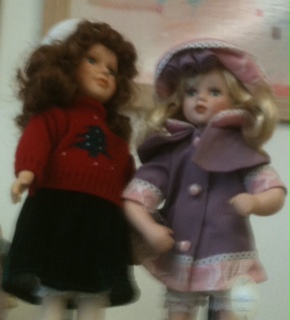
Even small items such as Christmas dolls can make a big difference for children of needy families.

Greene, the Salt Lake Basin coordinator, facilitates all the work of The Salvation Army north of Provo up to the northern Utah and Idaho border by handling much of the business aspects of the organization and coordinating finances and programs. He is looking at retirement in a few years, but his long tenure with the organization has left him with some lasting memories. In addition to seeing a small child become so elated over a Christmas doll, Greene mentioned a few other noteworthy experiences in his career in an email interview: “Seeing a grown man go back to school and receive his GED (certificate) in part because of our encouragement and seeing individuals come to a new joy and peace in their lives as they accept Jesus and start to live a new free life with Him.”

In terms of service to west-side residents specifically in the Glendale and Rose Park areas, Greene said his organization provides many options. He said there is a food bank where families can get dry food and perishables once a month and also vouchers are provided so that the families can receive clothing from thrift stores. There is even a community garden that residents can weed, plant and harvest, with The Salvation Army providing the water.

The Salvation Army is a nonprofit organization, which means that it must exist for the public benefit and it is constrained in that earnings cannot be distributed to owners. All profit must be put back in circulation within the organization. Funds come mainly through donations, government grants, private donors and charitable programs such as the Red Kettle and the bell ringers. There are also programs such as Angel Tree and Toys 4 Tots that provide gifts and toys to children at Christmastime. Greene said thousands of children throughout Salt Lake City receive toys through these similar programs.

Although there may be preconceived notions about what the Salvation Army is all about, Greene said these are not always accurate.

“Most people think of the Salvation Army as a thrift store or the Christmas bell ringers,” Greene said. “We are in fact a church that preaches Jesus Christ as the savior of the world. We serve the public because we know that is what Jesus would have us do, (but) we provide service to anyone without a need for a commitment or lifestyle change.”

Matthew Nish, 32, is the family services manager for The Salvation Army  and has been working there since 2008.

Nish said The Salvation Army is more than 120 years old and was originated in England by a Methodist preacher who started a church called the Christian Mission that was later renamed The Salvation Army. He said the organization then moved to Canada and eventually the United States.

“One of their first mottoes was soup, soap, and salvation,” Nish said. “They would walk down the street singing songs and playing music and they received a lot of persecution at first, but from then to now the Salvation Army has become a worldwide organization and our mission statement is to preach the gospel in the name of Jesus.”

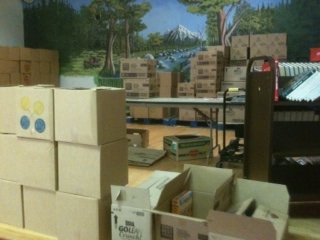
The Salvation Army receives boxes of food and other necessities that are delivered to and collected by struggling residents.

The family services branch works to provide services such as emergency food boxes, clothing vouchers, spiritual support, counseling and referrals to residents. Nish said there have been some changes due to the economy. Most aspects of the drug treatment program, as well as space for the community dining hall, have been dropped due to lack of funding. However, The Salvation Army is now working on a mobile operation to take food to low-income housing units.

In order to be eligible for all these services, certain criteria must be met. The resident must have photo identification for all adults in the household, as well as identification for children. The resident must also have proof of address and income.

Nish said there are some unique aspects to working on the west side, but the goal is to try to help any and all residents.

“This is a tougher part of town and it’s largely Hispanic,” Nish said. “There are some different variables here. But it’s cool to see that since we’ve been over here the past two years we’ve been able to see God move and more people coming to our church. There is a lot of versatility here but all individuals and their families need help so we’re here to do that.”

Nish knows firsthand the powerful changes that The Salvation Army can create.  His first association with the organization was through the drug treatment program in 2007.

“I came empty handed and I didn’t have anything really,” Nish said. “They gave me hope, they gave me food, they gave me somewhere to stay, they gave me some friends and they also introduced me to my savior, Jesus. It’s through that venue of the drug treatment program that I got my life back.”

Nish is now more than four years sober and since becoming employed by The Salvation Army, he works to help others in the way he was helped years ago.

“It’s been a life-changing experience,” Nish said. “I used to wander around aimlessly in life and now I have direction. I have love for my fellow man and I have love for God and I have love for myself. Call me a rehabilitated man.”

Call The Salvation Army the catalyst.

Being Muslim in Utah

Story and multimedia by DANA IGO

Take a tour of the Khadeeja Islamic Center

The terrorists who brought the World Trade Center down on Sept. 11, 2001, had been Muslim extremists. Because of this, Muslims were thrust to the forefront of American society and found themselves at the receiving end of hatred and intolerance. As a minority group in the United States, Muslims weren’t well understood, nor would they be for the next nine years.

In her book, “Mecca and Main Street: Muslim life in America after 9/11,” Geneive Abdo wrote about campaigning door-to-door in 2003 with Maad Abu Ghazalah, who was then running for U.S. Congress in San Francisco. Though he was politically liberal, the reactions he received were lukewarm at best. Without considering his political stance, one man said to Ghazalah, “With this name, I would say this guy doesn’t have a chance.”

If people in one of the most liberal cities in the United States can’t see past religion and ethnicity, what hope would there be for Muslim-Americans in a conservative area like the Salt Lake valley?

Roni Choudhury, a doctoral student in computer science at the University of Utah, said he hasn’t faced discrimination for his beliefs. Choudhury, 29, was born in Boston, the son of Bangladeshi immigrants who had come to the U.S. to pursue the American dream.

Roni Choudhury on campus at the University of Utah

According to Choudhury, his parents have assimilated into American culture, especially as their children have grown. They are involved in his 13-year-old brother’s schooling through the PTA and although they were apprehensive to let Choudhury attend sleepovers as a child, they’ve relaxed and let his brother stay with friends.

When the Sept. 11 attacks occurred, Choudhury’s family reacted as any other American family did. “After 30 years in the country they feel like this is their home,” he said. “My mom was devastated seeing the images of the towers coming down.”

Yet, public opinion of Muslims has only gotten worse since the attacks. A poll conducted in August 2010 by the Pew Forum on Religion and Public Life found that favorable opinion of Muslims has fallen from 41 to 30 percent since 2005.

Choudhury’s parents have worked to defend their faith against the negative perceptions that have come from Muslim terrorist attacks. His mother had a co-worker from Bosnia, a country that experienced a lot of Muslim infighting in the mid-1990s. His mother explained that while there are some violent Muslims in the world, most aren’t.

Choudhury says his religion was never a point of contention with people he knew in Boston, nor in Chicago where he went to college for a bachelor’s degree. He said Salt Lake City is no different. “I’ve been impressed by how nice and polite people are here,” he said. “I haven’t been harassed. I’ve had a good time in Utah.”

Choudhury thinks it’s harder to be a Muslim in the Middle East than to be one in the United States. Muslims in the U.S. don’t have to worry about being Sunni or Shiite. In Iraq and many other parts of the world it’s a different story. “I think you’re in far more danger in certain parts of the Middle East being the wrong kind of Muslim, than you are being any kind of Muslim in America,” he said.

His ethnicity, rather than his religion, has been more of a problem. People tend to assume things about him based on the way he looks. “When you see someone who looks like me you don’t assume they’re from Bangladesh, you assume they’re from India,” he said. He’s had people greet him with “Namaste,” a Hindi greeting used mainly in India and Nepal.

People also assume he’s foreign based on his looks. “Why not just listen to my voice and assume that I’m from around here?” he said. At the grocery store a woman told him how nice it was that he could immigrate to study in the United States.

Salman Masud, an anesthesiologist at Shriner’s Hospital in Salt Lake City, has experienced a more extreme kind of racial and religious profiling.

Salman Masud (photo courtesy of the Masud family)

Two years ago Masud, 55, was put on the Transport Security Administration’s (TSA) “No Fly List,” which was created to prevent terrorists from boarding airplanes. Though the TSA has not publicly announced the figure, the ACLU claims tens of thousands of names are currently on the list, which prompts Masud to wonder how effective it is. “It just upsets people. It’s against their constitutional rights,” he said.

“I’m a U.S. citizen but my place of birth is written and immediately I’m singled out for an extra pat-down,” Masud said. Once a TSA agent spotted Masud’s birthplace on his passport and drew his supervisor’s attention by shouting, “Born in Pakistan, born in Pakistan.”

He can’t do an electronic check-in because he has to get special clearance to fly. He hasn’t missed a flight yet, but he’s come close. He said this happens every time he goes to the airport.

He’s spoken with both the TSA and the FBI about his inclusion on the list, but has not received any word on whether flying will become easier for him in the future.

Although Masud has had trouble flying, he hasn’t faced discrimination in his home or work life. He’s very open about being a Muslim. “People generally are inquisitive because they have not come across a Muslim,” he said. “They ask a lot of questions, which I enjoy answering. Diversity strengthens a society.”

The people whom Masud works with are accepting of who he is. One of Masud’s co-workers even attended a prayer service at the Khadeeja Islamic Center to learn more about Masud’s religion.

He wants to tell them about the positive aspects of his culture and religion, because he says people often have negative perceptions.

In France, a new law has gone into effect banning religious clothing in public — including the headscarf, or hijab, worn by some Muslim women, because of fears that it made them subservient. Masud’s daughters only wear the hijab during prayer, but he says the hijab is a symbol of modesty and respect, not one of oppression. “Modesty is in the person, the clothes are an outer expression of that,” he said.

Both Masud and Choudhury are happy to live in Utah and haven’t experienced any contention between neighbors or friends. Being Muslim doesn’t make them less American; in fact, it embodies what this country is about. In a nation of immigrants and varied faiths, Masud and Choudhury fit right in.

“You can be from anywhere in the world — all you have to do is adopt the American way of life,” Choudhury said, “which includes a lot of freedoms to do things your own way.”

Salt Lake Buddhist Temple – more than just a building

Story and slideshow by RICH FAHEY

Visit the Salt Lake Buddhist Temple

At first sight the building looks modest with its tan, brick walls and gray, shingled roof. Nestled between the Salt Palace Convention Center and Energy Solutions Arena, it is hardly the largest structure on the block. However, upon entering it is easy to see that the Salt Lake Buddhist Temple is a very powerful and meaningful place.

The temple is designed to be the center of the Japanese-American community. Attached to the temple are classrooms, a kitchen and a gymnasium to host events. Everything from a Japanese Food Bazaar to a Holiday Boutique are held in the gym. While the temple hosts events, its main purpose is a place of worship for Jodo Shinshu Buddhism.

At the root of Buddhism is Shakyamuni Buddha, who lived more than 2,500 years ago. According to the temple Web site, he achieved perfect “human-ness” and is revered as the Buddha. Since his time, there have been others who have followed in his footsteps and achieved a similar perfect “human-ness,” thus giving way to different types of Buddhism.

Like Christianity, the Buddhist religion contains multiple sects with different beliefs. The Salt Lake Buddhist Temple practices Jodo Shinshu, or true pure land teaching, and puts Amida Buddha as the central object of reverence. Dot Richeda, president of the temple, said Jodo Shinshu Buddhism is for the layperson and open to everyone, whereas some of the other sects are specific for particular groups of people.

According to the temple Web site, “Jodo Shinshu Buddhism has much to offer in teaching us about living a spiritually awakened life, in the midst of ordinary circumstances.”

Masami Hayashi, the minister’s assistant, said Jodo Shinshu started in Utah in 1912 when Japanese immigrants came here for work. It was not until 1962 that the Salt Lake Temple was built. Before that, meetings and services were held in apartments and homes. The temple still has much of the original artwork and religious statues.

The temple features beautiful, ornate décor that is symbolic to the teachings of Jodo Shinshu. On the altar are several four-post statues. The four posts represent the Four Noble Truths or beliefs of Jodo Shinshu. The statues, all of which were crafted in Japan, are made of wood with a gold-leafed shell. They took nine months to complete and had to be specially conditioned for the arid Utah climate. Lamps hang from the ceiling and represent the lamps that Shakyamuni Buddha carried to avoid stepping on insects. Treats, candy and fruit are scattered around the altar to symbolize gratitude. Flower arrangements are a symbol of impermanence.

“Today they’re beautiful and tomorrow they’re gone,” Hayashi said.

The temple holds a meditation service each Sunday at 9 a.m., followed by a general service at 10 a.m. Most services last about 40 minutes. Like most religions, specific traditions and rituals are done before, during and after each service.

Upon entering the area of the temple where the service is held, it is customary to bow toward the altar. From there, worshippers walk to the base of the altar for oshoko, or the burning of incense. This ritual involves picking up granulated incense with one’s right hand and dropping it into the burning incense bowl. Next, visitors take a few steps back and gassho. Gassho is the act of putting one’s hands together in front of the chin and bowing toward the altar. This ritual is done to cleanse and purify oneself for the upcoming service.

Similar to many church services, a leader guides the rest of the congregation through singing, chanting and prayer. In Buddhism, the leader is known as the Sensei, and the rest of the audience is the Sangha.

The song and prayer books are written in both English and Japanese, making it easier for guests to follow along with the service. The service starts with the ringing of loud, low-pitched bells with several seconds of silence between each ring. The incense from the oshoko fills the air with a strong aroma that can be smelled from outside the temple. After the ringing of the bells, the Sangha chants an introductory sutra, followed by the Golden Chain prayer.

“I am a link in Amida Buddha’s golden chain of love that stretches around the world,” the Sangha said in unison. “In gratitude may I keep my link bright and strong.”

Following the Golden Chain prayer is another sutra. For most services the Sangha chants the Shoshinge sutra. This song only involves the Sangha and a gong, with no other musical accompaniment. After the Shoshinge, the Sensei gives a Dharma talk. This talk is similar to a sermon in other religions, generally lasting around eight minutes.

Church announcements and a final song follow the Dharma. Then the Sangha is encouraged to give offerings. According to the Web site, fundraising is one of three goals of the temple’s board of directors. Donations and contributions to the building fund will help pay for construction of a new temple to accommodate the growing membership.

The service, with its unique smells, artwork, statues, chants and songs, provides a unique opportunity for Salt Lake City residents to experience a religious ceremony they may be unfamiliar with.

“Our temple provides a viable alternative to those who may have a differing view of the world,” notes the temple Web site. “Our Temple will continue to serve the entire Salt Lake community as a hope to serve as a Religious and Cultural Bridge for understanding.”

The bridge between authority and leadership

by SHAANTAI LEARY

Linda Oda, director of  Asian Affairs, is a petite Japanese-American woman who feels strongly about authority. As a sign of respect she has a sense to bow every time she meets someone older than she. (Oda did not want to disclose her age, but said she is “29 and holding.”) Bowing has been instilled within her as part of her culture. Custom also dictates that one’s elders should be respected; the phrase “children should be seen and not heard,” is a sign of this.

In addition to her role in the Utah State Office of Ethnic Affairs, she served as a moderator for the “Day of Remembrance,” which was held on Ogden’s 25th Street, also known as Japantown, Feb. 16-18, 2007.

She was raised on Ogden’s 25th Street. Oda’s first job was at the age of 3. Her family lived above the grocery store they owned and operated; her job in the store was to watch for “dorobo,” or shoplifters. She recalled a man asking her if she thought he was going to steal. As she described this confrontation, she put her hands on her hips just as she did when she was a child, and looked up. In a very stern voice she said, “yes.”

When Oda was about 10, her job in the small store was to trim the lettuce and pull off outer leaves so the greens displayed well. One day, a man walked into the store, pressed a knife to her stomach and said, “I could kill you.” Oda did not flinch. She took the knife she had been using on the heads of lettuce, placed it against the man’s stomach, and said, “I could kill you, too.”

She was raised to fight for her life; every day was a battle for her and her family. In fact, her father was murdered on 25th Street for less than $100.

Despite her difficult childhood, Oda went on to become a principal at Taylor Elementary School in Ogden. There, she worked to break the cycle of bullying by attempting to instill respect within her students.

Chase Dunn, 21, is majoring in Middle Eastern studies at the University of Utah. He is well-versed in his studies of culture and religions ranging from Islam to Catholicism. “Bowing is a sign of cultural respect,” he said in a text message. “Bow back. When it comes to authority I tend to think everyone should be met with skepticism. Sure they are older, but they are humans and humans make mistakes and have their own interests [in mind].”

Dunn, who is white, is currently working in Washington, D.C., as an intern for Frances D. Cook, the former ambassador to the Sultanate of Oman. Dunn also has completed study-abroad classes in Cairo and Beirut over the past few years.

”Power and authority should be challenged and unless they can justify themselves, then they should be dismantled,” Dunn wrote. “Remember authority figures and institutions are humans and human built and therefore can be changed.”

For Oda, authority is a compicated issue. She said that one’s “authority, stature and expertise can be diminished” simply because one is “an ethnic minority.” So, people feel as if they have to prove themselves. Oda said she is assertive, not aggressive. “I win and you win, both of us win. To me, that’s an Asian way.”