Through the course of this semester I have gained a deeper appreciation for news reporting and writing. I am realizing that all the aspects I have been taught during my schooling here at the University of Utah come together to create the perfect storm. I wasn’t so sure as to why I was learning certain styles or techniques until now. Ahha! It all just clicked! I have gained a stronger sense of confidence regarding my ability to write. At the same time, I continue to be challenged and humbled as I read and learn from the professionals in the field.
Reflecting upon the topics we wrote on this semester, they were all new to me. This sparked new interest and knowledge in the fact that I can write about topics even if I haven’t covered them before. It has been extremely beneficial for me to have to write about something I originally knew nothing about. I learned how to research without becoming biased to one side or another, and to take the research and turn it into an avenue for questions and further learning. We were lucky to hear from Salt Lake County District Attorney Sim Gill. We also heard from Salt Lake City Police Chief Chris Burbank. I had no previous knowledge regarding these two individuals or what exactly their jobs entailed. I was able to listen to them and be inspired to write.
It is fascinating what progress can be made while being stretched in new directions. Journalism is far from a “comfortable” career. With new topics, fast paces, and technological advancements the journalism career is not one to stand still in. I have learned and relearned the inevitable, that what you put into your work is what you get out of it. The success is absolutely affected by the amount of work put in. I am excited and anxious to continue writing and see where it takes me.
ABOUT ME:
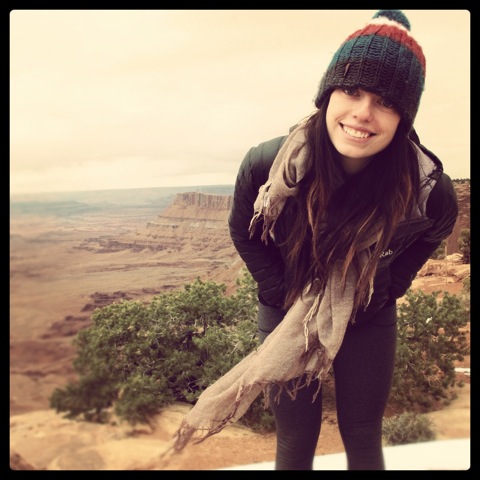
My name is Blakely Bowers. I am 24 years old. I am majoring in journalism at the University of Utah. I was born and raised in Salt Lake City, Utah. I have been married for about three years. We have lived in Washington D.C.,and spent the last year in New York City, where I have been interning for an entertainment company while simultaneously on a self-guided “foodie’s tour of the city.” I enjoy putting the many thoughts racing through my brain into writing. Journalism is my creative outlet. I hope to influence those who read my stories. Whether it simply be the awareness of the topics, or the writing itself, I hope others can take something away from my stories.
Cell phones have become the norm for people across the world. A 2011 study by the Pew Research Center in 2011, determined 83 percent of American adults own some version of a cell phone, and 94 percent of young adults ages 18 to 29 own cell phones. The numbers have been steadily increasing for the past decade. Pew Research
Cell phones have an enormous impact on all aspects of daily life. Some are good and some are bad. But constant use of cell phones seems to beg the question: Are we addicted to these handy little devices?
Cell phone owners are becoming younger and younger. Middle school and even elementary school students now carry cell phones. “ Everyone at my school has a cell phone. Duh. Most of us have had them for a few years now,” said Anne Earl, a seventh grader at Evergreen Junior High in Salt Lake County. When asked what she most uses the phone for, she replied, “Well usually just texting my friends and taking pictures, but my mom calls me and I call her to check in and stuff.”
At such a young age these children have access to practically anything, right at their fingertips. They can surf the Web on mobile devices, take photos and send text messages to their friends. A Utah company, Net Nanny, provides a customizable content filter that can be easily installed on a mobile device. Net Nanny
Parents, who frequently fret about the power their kids have with cell phones, can select what can and cannot be accessed from the specific mobile device. Access to specific photos, sites, or just plain old Web surfing during school hours, can be blocked from children.
Teachers now have rules regarding cell phones use during class time, but how easy is it to enforce them? “ I can tell when students are using their phones because they are obviously looking down at their crotch. These phones are preventing them from learning and really paying attention in class. How do you talk to someone who’s writing a message at the same time? You don’t,” said Linda Clapir, a resource teacher at Salt Lake County’s Skyline High School.
Cell phones affect the way we learn and the way we live. The ability to communicate with those far or near within a matter of seconds is convenient. We have the ability to share videos, pictures and text messages, all while sitting in a meeting or even inside a quiet library. The timeliness is convenient for business people.
Cell phones have played major roles in crisis or emergency situations. When stranded on a road with car trouble, a cell phone is more than helpful. In some cases, experts have said it is even a deterrent to would-be attackers if a woman just pretends to be on her phone.
But is it possible the phones offer too much of a good thing?
Seniors have some differing opinions on this topic.
“There are times when cell phones are OK, and then there are times when they aren’t. These young people need to learn respect for one another. It’s ruining our society when we don’t have to communicate face to face. We shut each other out and become clueless to existing humans,” said Mary Milliner, 80, of Salt Lake City.
“I have a new smart phone and I am learning how to use it,” said Mary’s husband, Shirm Milliner, 79. “I am enjoying learning something new and having to get involved in this new day and age. I do not use this phone when I should be interacting with other people.”
Shirm is learning how to e-mail and read numerous different news sites from his Android phone. This keeps him in touch with the up and coming, which he views as important to keep his brain functioning in the aging process.
Cell phones have a huge impact on our safety on the roads. “Distracted driving due to cell phone use is much more prevalent than anyone realizes,” said Cottonwood Heights Police Sgt. Scott Peck. Peck has been a police officer for more than 30 years, and has witnessed the transition from simply driving– to driving while distracted by cell phone use.
“The biggest mistake people make is believing they can text and drive at the same time. It is the worst form of distracted driving because you are not even looking up. Your head is literally down, leaving no view. I could give 20 to 25 tickets per day just for distracted driving” Peck said.
Peck reserves his major criticism for mothers who talk, text and drive. “Moms have a million things going on in their head, while trying to keep track of kids, schedules, etc., feeling like they need to talk and get things done at that exact moment, even if they are driving.”
Utah laws regarding phone use while driving are fairly vague and pale in comparison to some other states. Utah drivers have it easy compared to California, for instance. Talking or texting while driving can result in a $299 ticket. Hands-free devices are permitted.
So, are we addicted?
The way we socialize has changed immensely since the boom in cell phones. We no longer have to communicate face to face. Regardless, research shows that 13 percent of cell phone owners pretended to be using their phone in order to avoid interacting with the people around them. Pew Research
This impacts the way we learn to communicate with others, giving an easy way out of uncomfortable or challenging social situations.
Text messaging and picture taking are the top ways Americans use their cell phones. More than 73 percent of owners use their phones these ways, which helps to account for the rise in text messaging taking over actual conversation. Some people feel this type of electronic talk is more efficient. Some people feel we are simply growing more anti-social. So, are we addicted?
Utes Baseball Overmatched Midway Through Season
Story and Photos by Jason Nowa
The inaugural year in the Pacific-12 Conference (Voices of Utah) for the University of Utah athletics has been one of transition and struggle.
When the university switched athletic leagues last year, the big story was all about difficulty– how challenging the change would be, and how tough it would be for the Utes to switch to new surroundings, higher pressures and a notch up in the quality of competition.
Critics and fans alike suggested the sport to take the biggest hit would be baseball. The baseball program was thrown into one of the best conferences in the country.
Warm climate states, including California and Arizona, have six Pac-12 member teams, and that warm weather certainly helps, giving teams a chance to play year-round.
The Baseball America preseason Top 25 rankings had five Pac-12 teams ranked to being the year. All five of those preseason ranked teams are currently still ranked in the Top 25 midway through the season.
One new addition from the Pac-12 to those rankings is the University of Oregon, currently ranked at 22 in the nation.
The others are University of Arizona at number four, UCLA number five, Stanford number six, Oregon State number 20, and Arizona State number 24.
A historic win for the Utes came when they swept a doubleheader on March 16 against USC for its first Pac-12 victories.
Their worst loss of the season so far came on March 30 at home against UCLA 16-0. The Utes have had two separate six-game losing streaks through the season and have won more than one game only once.
“This first half of our season hasn’t gone as we wanted, but we can only move forward and plan for the next game. The past is the past,” junior catcher Parker Morin said.
The team had only one home game through the first 22 games to start the season. They went 1-8 through their last home stand.
The team heads back on the road playing at California-Berkley before returning to Salt Lake City for a quick home stand starting on April 24.
The Utes are currently the only Pac-12 team with an overall losing record halfway through the season.
Pitching has been a problem this year. The team has only two starting pitchers who have thrown over 17 innings. Juniors Joe Pond and Brock Duke are the most consistent starters.
Pond is 2-5 in eight starts with an ERA of 5.62 in 40 innings. Duke is 2-1 in six starts while posting a 3.35 era in 40.1 innings. Duke has 25 strikeouts to 14 walks while Pond leads the team with 32 strikeouts and has 20 walks.
The team’s most reliable relief pitcher has been Mitch Watrous, who has pitched 24 innings posting a 2.25 ERA, lowest on the team with the most appearances.
Closer Tyler Wagner has been very shaky through the first half of the year. He has pitched 20 innings with a 4.87 ERA. Wagner on April 3 gave up five earned runs in the 9th inning of a devastating 9-6 loss to rival BYU.
“Our team needs better quality starts from myself along with our other pitchers so that our offense doesn’t have such big deficits to try and overcome,” said Junior starting pitcher Joe Pond.
The most valuable player through the first half of the season has been catcher Morin. Morin leads the team with a .347 batting average, 41 hits, and 22 RBIs. Morin as a catcher also has the duty of controlling the pitchers and knowing their strengths.
Short stop James Brooks, who is a returning starting senior from Melbourne, Australia, has been equally as consistent as Morin to help lead the offense. Brooks is batting .301 with six home runs and 18 RBIs in 37 hits. These two have held the team afloat offensively.
The two biggest disappointments offensively have been sophomore third baseman Trey Nielsen, and senior outfielder Shaun Cooper. Nielsen dominated Mountain West Conference pitching last year as he was honored as a Louisville Freshman All-American. Nielsen was one of the big threats in the lineup as he had nine home runs with 41 RBIs on the year. Nielsen’s production has tailed off considerably this year with a .233 batting average, no home runs, and only eight RBIs through 30 games that he has started.
When asked how the transition has been for the team to the Pac-12 conference Nielsen said, “It’s been a struggle. We are facing multiple future major league players on each team now as opposed to maybe one or none from any team we faced in the Mountain West last year. This Pac-12 league is the best in America.”
Cooper was picked as a preseason Louisville All-American slugger after the fabulous season he had last year with a .332 batting average, eight home runs, 43 RBIs in 67 hits. This year Cooper is only batting .205 with four home runs and 15 RBIs in 24 hits.
All the lost production from a potent offense a year ago could stem from the loss of two-time All-American first baseman C.J. Cron (Voices of Utah) to the major leagues. Cron became Utah’s first-ever, first-round draftee when he was selected 17th overall in the 2011 MLB Draft by the Los Angeles Angels of Anaheim. Opposing pitchers feared Cron, and often walked him.
The Utes finished in second place in the Mountain West conference last year with an overall record of 28-19.
The competition from switching leagues is a dramatic increase but it makes a team much different after losing two players to the major leagues in the same year.
Pitcher Rick Anton also was drafted a year ago. Anton was selected in the eighth round of the 2011 MLB Draft by the Los Angeles Dodgers.
“Being on the team last year was awesome; we were so good with C.J. and Rick. And they made everyone else better on the team. It’s tough without them. We’ve had to find new leaders to look to and find that one guy to rally around,” said shortstop Brooks.
The Ute baseball (Voices of Utah) team is currently sitting in 10th place out of 11 participating schools, with only University of Colorado not having a baseball team.
Overall the Utes are 10-25, while 4-8 in conference play as of April 10. They are 1-9 at home, 7-13 on the road, and 2-3 at neural field sites. There are 21 games left in the season to try and improve their record.
At age five, fearless in the places where most people outside of gymnastics would crumble like a game of Jenga gone wrong, stood Stephanie McAllister. Today with a full-ride gymnastics scholarship to the University of Utah, she is competing against some of the greatest gymnasts in the nation outside of the Olympics.
When McAllister was younger, she was involved in soccer, cheer, dance, pewee baseball, and figure skating, but gymnastics wasn’t always a sure route for her. “Once I got into gymnastics I was good at it but I wasn’t sure if that’s what I wanted to do,” McAllister said.
As McAllister got older her coaches reassured her that she had talent, but going further in her sport it would require her commitment to hard work and attention to certain skills. With the passion and desire to be great, and only at the age of five most would be impressed by the goals she had set for herself. “Stephanie was always the child that wanted to try new things, or planned do things,” said Jenny McAllister, Stephanie’s mother. “As I got into gym I had goals of working my way up through the levels as fast as I could,” McAllister said.
In gymnastics, the levels range from one to 10, but once you get to level 10 most of the competitors are home-schooled and their lives are basically living at the gym, but you would think a teenager would love to be out playing with their friends, this isn’t the case if these athletes choose this route. Now at the age 21, McAllister, the Indiana native has found a comfort in Utah where she has spent the last four years of her life.
Knowing she wanted to go to college, McAllister worked her way up through the levels quickly, limiting herself to level 10, being the highest before becoming elite and being eligible to compete for the Olympics. Like Nastia Liukin, McAllister did not want to become a professional and miss out on the opportunity to become a part of an institution where she would make great friends and form relationships with people she would always remember. “ I always take pictures and my friends make fun of me because every opportunity I have I get my camera out,” McAllister said.
“I didn’t want to exceed level 10 because I didn’t want to give up my life like some other girls,” McAllister said. “Most girls give up the most important times of their lives just to end up in the same place as I am today.” She added that most coaches like the gymnast coming out of level 10 because they are not as burnt out as others and they didn’t give up everything just to train. Only six people get chosen to compete in the U.S. Olympics, so is it really worth giving up and missing out on things in your teenage years just to end up in the same predicament as the rest of your competition?
Today Stephanie McAllister has perfected a gymnastics move on the uneven bars, which is her biggest strength named after herself, “the McAllister.” She performs the move by doing a reverse gripped hand-stand on the high bar into a front spin and back to a hand-stand flipping her grip and down into a hanging position. “To be able to have a move named after you, you need to perform it at a national meet with it never being done before,” she said.
“ I am exceptionally proud of my daughter and where she is in life right now, enjoying every moment, and must I add– a soon to be college graduate,” said Jenny McAllister.
Many people have looked up to McAllister over her years spent at the University, one being freshman Kailah Delaney. “Stephanie has taught me a lot about being a college athlete and juggling my studies,” Delaney said. Many times student-athletes think sports are the reasons they ended up where they are but that isn’t the foundation of what your future is made of. “ It is good to have someone to look up to when your young because not everyone knows the right things to do, but she has helped me a lot,” Delaney said.
Over the past four years the University of Utah is proud to have gained such a talented, caring person to help their team make its 37th consecutive National Championship appearance possible, she will be missed when the Red Rocks take the Huntsman Arena next year.
Photo credits: Left to right- By:Lewis Walker, By:Lewis Walker,By:Taner Pasamehmetoglu (The Daily Utah Chronicle)
Some bands come up with a name by random selection, devise it through drunken epiphany, or select it based on the way the names sounds. Not The Last Look. Their name was inspired by a turning point in world history when Caeser and his men crossed the Rubicon River. Before the crossing, Caeser told his men, “Take one last look at home because after this it will never be the same,” which is how three of the members of The Last Lok felt when they left behind their older project for a new venture. Lead singer Godbout further explains, “The idea of being willing to take a risk that might change the world and the dramatic image of taking the last look at the world as you know it resonated with me and has since become a theme for my life, not just our music. So to me we had no choice but to name the band The Last Look.”
The pop-rock band got their start like many other bands two years ago when Paulie Godbout (guitar and vocals), Dago Marino (bass), and Josh Tomlin (drums) played in a band called Secret Sobriety. All of them decided after a number of years together that they wanted to go in a different musical direction and start something more creative and new. The band went through another guitarist (William T.) before they decided that that vision should include more piano and synth elements. Their friend Hayden Henderson filled in on keys before they finally settled on keyboardist Allison Martin in 2011. Marino said of Martin, “Allison has been a great addition to the band and really adds so much of her artistic presence to the music and visual aspects of The Last Look.”
Although Martin and Tomlin are the only ones with formal training (Martin started learning classical piano at age four, and Tomlin had guitar lessons), every member of The Last Look has been playing in bands for at least ten years. Ironically enough Godbout and Marino were in their first band together. Godbout remembers that they both showed up with the intention of playing bass. In the end they flipped a coin and that’s how he ended up playing guitar, “Then a few years went by and after we fired our singer I filled in until we found a replacement; we’re still looking for that replacement, ha!”
Instead of defining the band as a particular genre, Martin, Tomlin, and Marino describe the band’s sound simply as ‘good rock ‘n roll’. It’s Godabout who delves into the nitty gritty of their sound, describing it as something inspirational, electro, and Dub-Gaze-Core. “If The Replacements met U2 at a bar, wrote a bunch of ideas on a cocktail napkin, then borrowed Pearl Jam’s gear to try out what they’ve come up with, you’d have The Last Look,” he further elaborates.
As far as influences go for the project, all three band members mentioned—in no particular order—Ryan Adams, Michael Jackson, DGeneration, Pearl Jam, and The Replacements. Godabout claims that what sets them apart from their influences is that every member equally makes his or her own artistic contribution to the music. Godabout writes the lyrics, Marino keeps the rhythm going, Martin adds keys and estrogen, and Tomlin helps maintain a precise beat they can all play to. However, what Marino claims really makes the band unique is, “We really do strive to approach matters with a deal of depth. Whether a love song, a narrative about some aspect of life, or an anthem of emotion, we try to attack the subjects sonically and lyrically with something more than surface explanation or examination.”
The Last Look’s new EP, Sehnsucht, is all about life’s diverse depths and emotions. It was recorded in Rigby Road Studios with Joel Pack, who was able to capture and conceptualize all of the band’s crazy and beautiful ideas and concoct them into a finished, cohesive product.
Pack explains what he thinks of the album and the band, “I know the word ‘epic’ gets thrown around a lot, but after listening to their songs over and over again, it’s obvious that they write their songs to sound big, and, well…epic! If you’re into bands like U2 or Angels and Airwaves, I think you’d like them. They can get kind of Police-y too.”
“Breath” and “Pops” are two outstanding songs on the EP. Godabout describes “Breathe” as a sexy and cacophonous song made up of random noises like running power tools, crushing cans, and lighting matches and “ Pops” as a passionate song about breaking stereotypes and molds. Godabout reveals about “Pops”, “I wanted the song to feel like I busted into a church and screamed at the congregation and God and told them exactly how I felt. Joel helped us create an intro that sets that tone for the entire song which is a tribute to my dad who never stops crossing Rubicons.”
Sehnsucht is available for free download at bandcamp and their first EP is available at any Graywhale location near you. Both EPs can be also be purchased at every show, as well as some additional acoustic tracks, available for an appealing trade. Godbout declares, “Josh and I have tons of acoustic tracks that we’d be willing to give you if you bought us a few beers.”
As summer approaches blockbuster movies are hitting the big screen. Over the past month many filmgoers have seen the highest grossing movies of the year—not to mention one of the most famous disaster movies of all time return to the big screen.
“21 Jump Street”, “The Hunger Games”, and “Titanic (in 3D)” are three movies that either opened in the number one spot this year or opened in the number one spot in their original release date.
“21 Jump Street” started the movie extravaganza. Although the movie was clearly pegged as a comedy, there was still anticipation for everything else it might offer and any surprises it had in store.
Jonah Hill and Channing Tatum play bad police officers who are sent back to high school as undercover students because of their immaturity. A new drug is making the rounds at school. The cops are assigned to stop the drug from spreading out the school walls, and to find out who is making and distributing it.
Above and beyond everything else this movie is a comedy. The goal of the film was to make whoever was watching it laugh however I was surprised to find that there was a wide range of action and a small love story that developed on screen.
One particular scene that had the entire theater laughing had the gym teacher confronting Hill and Tatum in the school hall. The gym teacher asks for their hall passes but does not know that Hill and Tatum had just been forced to do a new drug to prove they were legit students.
The key to this movie’s success lies in the acting. Hill was cast as the slightly overweight nerd and Tatum was cast as the athletic and attractive jock. While the movie plays certain angles to mix their roles up, the true comedy of the movie is a result of what actors played what parts.
Kyle Copier, a freshman at the University of Utah, attended the movie. “Every time Jonah Hill is in a movie I can bank on it being funny,” he said. “This movie did not disappoint and although it was not the funniest movie I have ever seen him do, it had other aspects to it that brought the movie to the same level.”
Although “21 Jump Street” was probably the best comedy of the year so far, “The Hunger Games” had to be the most anticipated film of 2012.
Among popular adaptations of young adult novels to film, such as the “Harry Potter” and “Twilight” series, “The Hunger Games” is the newest in the genre and targeted mainly to females, ages 13 to 18. Still, the film has found a way to make a place in the adult market.
In the first three weeks of its run, the movie has made $302 million worldwide and has maintained its top box office ranking the entire time.
The movie has newcomer Jennifer Lawrence take over the lead role of Katniss Everdeen, a poor girl struggling to take care of her mother and younger sister. Lawrence is the highlight of an already bright film.
“The Hunger Games” world takes place in the near future as the country has been divided into 12 districts.
Once a year the country hosts “The Hunger Games,” a competition where a boy and a girl from each district are chosen to compete in a competition in a simulated world with only one way to get out: Fight to the death.
The last person standing gets out and the rewards are plentiful. Apart from Lawrence’s performance as Everdeen, the movie benefits from its unique pacing.
A film with a violent and action-packed theme, “The Hunger Games” waits until about half way to even start the competition. This may sound like a poor plan, but it is perfectly executed.
Heather Reynolds, a junior at Westminster College, thoroughly enjoyed the film.
“If anybody has read the book then they know the movie is a must-see. They nailed most of what the book said, and although they left a few details out, the whole story was still told very well,” Reynolds said.
This was a strong surprise in the box office and one that leaves people wondering about future adaptations.
The most recent release of the three movies is “Titanic (in 3D).” It is a big screen rerelease of the highly touted 1997 movie “Titanic.”
The movie won 11 academy awards and until “Avatar’s” release in 2010, was the highest-grossing movie of all time. The special effects were well beyond the movies years and many were anticipating the chance to see the movie again at the movie theater.
If you hesitant at seeing the film again, or shudder at the length of this movie (195 minutes) then please stop now. If you need a good meal or a nice walk around the park to clear your ones head then please take the necessary steps towards doing that.
This is the same classic that people fell in love with in 1997. Jordana Kahn, a freshman at the University of Utah said, “The movie packs every possible emotion into one package and leaves you wanting to cry and never let go of your loved one at the end of the movie.”
The ship was called by many at the time as “The unsinkable ship” and its design showed why. The boat was large and as luxurious as anybody could imagine.
The one big fault of the ship was that there were only enough life rafts for about half of the ship. The ship ended up hitting an iceberg two days into its voyage and sinking.
The end result was that 2,223 passengers were on the ship and 1,517 died.
Directed by James Cameron, the movie goes builds toward the tragic end for the ship while weaving a love story throughout. Leonardo DiCaprio and Kate Winslet star as the two people on the ship who always find a way towards each other.
DiCaprio plays -Jack Dawson-, a poor American that won his way onto the ship in a game of poker. Winslet plays -Rose DeWitt Bukater-, an English woman unhappily engaged to a wealthy man.
The two could not be more opposite in appearance and demeanor, but the most important aspect to this movie’s success is how DiCaprio and Winslet connect on the screen.
The on-screen chemistry is unmatched and the reason people do not get bored or annoyed with the movie’s extreme length.
As a critic, I have a unique power to potentially influence people’s opinion on seeing a movie. And if anybody questions my validity on these reviews let me leave you with this:
While watching “Titanic (In 3D)” I got a little emotional during one scene. One tear fell from my eye. And since this movie is so great. I’m not ashamed at all.
I remember when it started, when I began to fall in love with journalism.
I was 18. I was sitting on the brown leather sofa in my living room, holding open a crisp copy of The Salt Lake Tribune. It was like any other day:I woke up, brushed my teeth, went to the living room and picked up the paper off of the coffee table. Except that on this day, when I sat down on the couch and turned to the Utah section, I found myself staring at a photograph of me.
It was one of those let-me-perform-the-most-awkward-smile-and-pose-for-you-nervously photographs that you like to forget exists. There I was in all my glory: sitting in the newspaper room at my high school, wearing thick-rimmed glasses, holding the last edition of The Bulldog Press that I’d be a part of, and staring into the camera with wide eyes and a raised brow.
At 18, I’m not sure you can be “super” at much, except maybe telling wisecracks at inappropriate moments or walking around thinking you’re cooler than everyone else.
But I was most certainly not a Super Journalist, I thought. I was not deserving of the capital S or the capital J. I just liked to write. And there was nothing Super about that.
I began reading the article, skimming the words that I had said to a reporter a week before.
“I just think [journalism is] a good way to help people who don’t have a strong voice,” Katie said. “I feel like I can be a voice for them. Also, journalism is a really good way to spark change or spark a movement toward something.”
A strong voice. Sparking change. Reading those words quickly brought me back to several months prior.
I sat in a dark living room in an obscure Salt Lake City suburb that I wasn’t aware existed. Across from me sat a college-aged kid, shoulders slumping, eyes gazing at the floor. His mother sat next to him, her hand on his knee, as if to say, “I’m here for you sweetie.” His foot was tapping on the floor nervously. I felt nervous, too. Extremely nervous. But ready.
“So, tell me about your accident,” I said.
He didn’t speak much. His mother mostly spoke for him, explaining the fateful night when her son ran a red light — allegedly text messaging — and crashed into another car. That car was carrying a 16-year-old girl named Lauren Mulkey — known for her beauty and vivaciousness — who did not survive the crash.
The only words he muttered clearly during the interview were “I think about her every day,” though even those ones were spoken faintly.
It was apparent that he felt ashamed. But it was also apparent that he wanted to say something. Loudly. Proudly. Without his mother. But he couldn’t. It hurt too much.
If only he could say something loud enough for someone to hear:
Stop being distracted. Stop multi-tasking while you drive. Your life can be altered, shattered, destroyed in a single moment.
It became apparent to me during that interview that I was the person who could say those things loud enough for people to hear. Loud enough for people to acknowledge, to accept.
Looking back at that interview, and at the work I have done in this class, I am constantly reminded why I fell in love with journalism.
I am a voice for those who don’t have one. I am a seeker of voices that would never be heard if it weren’t for my endless desire to make sure that they are.
Throughout this class, I have sought out voices. Voices that had something to say. Voices that were worth hearing. Voices that spoke about law and justice. Voices that spoke about what it means to be creative and happy and human.
This class has given me tools to better find those voices, to have them heard more concisely and eloquently. But most importantly, this class has reminded me why journalism is loved by so many. It’s a profession that focuses on people.
Meeting people. Speaking to people. Influencing people and being influenced by them. The more I write, the more interested in people I become, the more I want to know.
I still believe there is nothing I have done that is all that deserving of that capital S and that capital J once printed in the Salt Lake Tribune. But perhaps I’ve come to realize that what can be defined as “Super” are the thousands of people who make the pages of newspapers worth reading.
They are — and always will be — something Spectacular.
ABOUT ME:
I am studying print journalism at the University of Utah. I’m drawn to journalism because it gives me an opportunity to instill a voice in people who are too afraid to use their own. I have the desire to constantly improve the human condition through my writing.
The Wasatch Mountains have kept me enthralled for 21 years and counting. I was born and raised in Salt Lake City and I am only beginning to discover the wonders that this place has to offer. I live to ski, rock climb, travel, camp, and eat delicious food. I am learning Spanish and attempting to become a self-proclaimed Italian food connoisseur. I want to see the world and experience the cultures that reside within it.
I had a moment of clarity when I was working on an assignment. It was something that caught me by surprise.
As I was wrapping up my day at the Gallivan Center, where I spent a few hours shooting photos and interviewing patrons of the Chow Truck, when it just struck me. I genuinely enjoyed the work I was doing. It is definitely something I could see myself doing for the rest of my life, I thought.
I love talking. I often say it’s one of my favorite things to do. But I also love hearing stories. And I firmly believe that everyone has a story to tell.
Which other profession allows me to walk around, meet interesting people and tell their tales?
Even though every journalism teacher I have had at the University of Utah has told me journalism is a dying profession, I personally believe there will always be a place for proper journalists.
Being a journalist means going out and getting the story — finding sources, hitting the beat. This is what sets professional journalists apart from basement bloggers.
My class had a guest speaker that I found particularly inspiring and encouraging. Kevin Pang, a features writer at the Chicago Tribune, spent time talking to the class about his career and gave us tips about writing.
There was one thing Pang said that really stuck with me. There will always be jobs for people who can write well, he said.
I was lucky enough to secure a one-on-one meeting with Pang and he agreed to read a couple of articles I wrote for The Daily Utah Chronicle and critique them. When I showed up to the meeting, I was shocked to hear that he enjoyed my work.
Pang told me I am a good writer but there is room for improvement. He then went on to give me tips on how I could make my writing really pop and even introduced me to internships and career building programs at the Los Angeles Times and Chicago Tribune.
The experiences I’ve had this semester were real confidence boosters. While I’ve been told numerous times throughout my schooling that journalism is dying, I am optimistic that there will be a future for me in my dream career.
ABOUT ME:
I’m a journalism major at the University of Utah. It’s my junior year and if everything goes according to plan, I will graduate next spring.
What draws me to a career in journalism is the prospect of exploring the world, hearing interesting stories and retelling them.
As an aspiring world traveler and fledgling foodie, I hope to become a travel writer. I imagine a life of jet setting to stunning locations across the world, eating at the best restaurants and writing about my experiences — basically, getting paid to go on vacation.
“I want to do that.” “That’s what I was meant to do.” “That will be me someday.” These are all phrases that go through my head when I watch any sports analysts on ESPN. For a guy in Salt Lake City, Utah, that is a bold statement but one that I also fully believe in.
My intermediate reporting class this semester has eliminated most of my fear in going for that goal. It sounds slightly pathetic and timid but my biggest weakness has always been the initial approach. Approaching somebody I have never seen or met and asking them questions goes against what we are all taught as kids, “don’t talk to strangers.” I did not know I would have to dive in so deep with this class, but I learned quickly.
My background is in sports and I would equate the fear I had with approaching random people to the fear I had on the basketball court. I always had a unique confidence in myself when I played basketball but that came with the fear of somebody being better than me and them beating me. I would tell myself, “no fear,” and repeat it to myself all the time. I ended up taking this approach with my stories in intermediate reporting. If I didn’t have fear then I would succeed. This turned out to be the case.
I have a long way to go, and am happy to have another year of school to work on getting better. I know I can improve in a number of areas, talking to people being one, but the improvement I have made in the past four months shows me I can definitely make that happen.
ABOUT ME:
I am a junior majoring in journalism at the University of Utah. I am 20 years old and was born and raised in Salt Lake City, Utah. However, I lived on Andrews Air Force Base for three years when I was younger. I am hoping to graduate within the next year and want to jump right into a journalism career.
My ultimate goal is to become a sports anchor on ESPN, but I know that will take time. I know if I want to reach that goal then I have to be committed to pushing myself when it comes to my career. I currently host my own sports radio show called “The Redone” at the University of Utah on Mondays, Wednesdays, and Fridays. The show can be found on kuteradio.org. I know this experience will help me get a strong understanding of the different steps that I should take in order for me to succeed.
Like everyone else I had a few things that I struggled with in this class. Writing about beats that I’m not very familiar with was a little challenging, but I learned that even if the subject is not especially to your liking you can always find a way to make it interesting and put your spin on it.
I have a problem with authority so when we did our Chief Burbank assignment I was especially worried, but I found a side of it that was personally interesting and was able to get over that fear.
Many of our guest speakers like Kevin Pang, and Ben Winslow emphasized how important it is to not only know how to incorporate and use different mixed and multimedia, but to be willing to write about a broad spectrum of subjects. I found that to be very true and helpful.
Learning about and how to operate the various popular websites like Twitter and LinkedIn was also and still is difficult for me, but I know because of this class have the knowledge and the tools to continue that if I wish to. I think the more time passes the more each generation realizes how important sites like these will become.
ABOUT ME: My name is Julianna Clay. My dad is a retired officer of the Air Force. I was born three of five daughters to Barrett and Sindy Clay in Ohio, but was raised primarily in Europe. I spent my elementary days in Ramstein, Germany and Aviano, Italy. I graduated high school at a DODDs school in Vicenza, Italy.
I initially moved to Utah to live with my elder sister, but stayed on after she got married and moved overseas because I wanted to go to school here. I was unsure of what course I wanted to pursue so I attended the community college first to get my generals out of the way.
One of the general education requirements was a writing class. In that course we were supposed to get a few assignments published in the community college paper. I got multiple stories published. It was exciting and revitalizing to see my name in print. I decided that I had finally found my passion and my niche. I had gotten bitten by the journalism bug and there was no turning back.
I became a staff reporter for Salt Lake Community College’s newspaper and I after I did that for a semester or two I transferred to the University of Utah. During my first semester at the University of Utah I started an internship with City Weekly. After I ended my internship I became a freelancer for CityWeekly and SLUG.
I’m two semesters away from graduating with a degree in journalism and I most recently got a weekly freelancing gig with Now in Salt Lake to write about fashion. Although music writing is primarily what I’m used to, I look forward to the challenge of writing about where to go to get the newest trends. Like any girly-girl I am very passionate about shopping and clothing!





 voices-of-utah.com