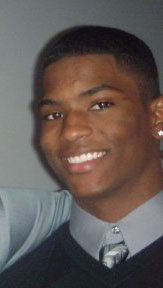
Javan Rivera

MY STORIES:

MY BLOG: Enlightening the law

What is law and justice really?

I’ve written on a variety of subjects in the past, from the opening of new art exhibits, to after-school programs on Salt Lake City’s West side. However, Voices of Utah represents my first foray into the realm of law and justice.

It’s been an enlightening experience.

Suffice to say that before these stories, I hadn’t taken any time to really look at the American justice system. It was always just there; that big system that’s designed to keep our streets safe and our citizens happy.

But what about the people who make that system run? The people it serves? The people it protects?

The people.

That’s what it all really comes down to when you start digging. It’s much more personal and individually engaging than I think most people realize. Certainly more so than I had ever imagined.

When the words law and justice are mentioned, most people tend to think about silent courtrooms and stone-faced judges.

But what about the homeless man who is huddled in the cold? His mind is lost to a combination of mental illness and self-medication. The crimes he commits usually aren’t of the violent variety, but rather misdemeanors that are a side effect of his mental illness.

What about the passionate men and women who stand up for these people? People like Salt Lake City DA Sim Gill, who helped to pioneer the mental illness court in Salt Lake City. People like him work every day to, not only keep the truly dangerous criminals off the street, but also to help those severely in need of their aid.

What about the police officers who not only choose to put their lives on the line in the name of public safety, but attempt to do so in a manner that always puts the non-violent approach ahead of their own well-being? People like Salt Lake City Police Chief Chris Burbank, whose peaceful approach to the Occupy Salt Lake Movement gained him nods of professional appreciation from around the nation.

Make no mistake. The people who serve in Utah’s justice system are professional to the bone. That being said, Law and justice isn’t some dispassionate, detached part of our society. It is made up of men and women who actively seek to make our city and our nation a better place.

Much of what I’ve discovered as part of my experience with Voices of Utah, revolves around the law and justice writing I’ve done. While I can easily say I’m pretty comfortable branching out to cover whatever catches my interest, law and justice is an area I never imagined I would be covering–outside of the crime reporting it seems most everyone ends up doing when they try and break into the field.

This portion of my experience has been both eye opening and good for me. It’s taught me that, no matter what you’re covering, there are always interesting people to meet, new nuggets of truth to be unearthed, and above all else, new stories to be told.

ABOUT ME:

Writing is more than just a career path to me—it’s my passion. I once had a friend give me some very sage advice.

“If you want to be a writer, then write. And when you think you’re done. When you think you can’t possibly write any more. Then keep on writing. Write until your fingers ache, until your mind has gone numb from the sheer amount of words that pour forth from your well of creativity. Then, and only then, will you be more than a writer. You’ll be a crafter of words.”

That’s advice I’ve taken to heart and genuinely tried to put into practice over the years. As a child, and into my adulthood I’ve always been an active reader and writer. It’s a part of who I am, and more than anything, it’s a part of who I want to be.

Having grown up the son of home missionaries, I traveled across the United States numerous times as a child. By the age of 12 I had likely traveled more miles than the majority of people would in their entire lifetimes. I honestly believe those experiences helped to mold me into the person I am today.

I’m currently in the latter half of my junior year at the University of Utah. Majoring in mass communication with an emphasis in journalism was a no-brainer for me. As someone who has always pursued literature and word crafting as a hobby, I can’t imagine a greater career than being able to convey the stories of others on a daily basis.

My time at the University of Utah has allowed me to pursue numerous journalistic endeavors. From writing for my school paper to getting my first article published in a local paper, it’s been a journey in learning and excitement.

At 20, I look to my future in anticipation. Opportunities such as Voices of Utah are wonderful due to the fact that they give me a chance to not only practice my greatest obsession, but also an opportunity to cultivate that passion into something I can use as a career.

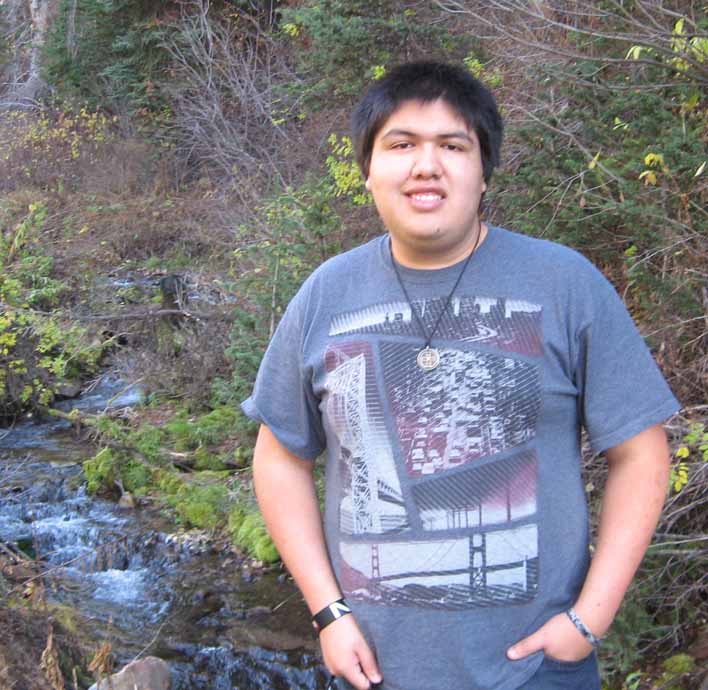
TODD PATTON

MY STORIES:

MY BLOG: Toughen Up

Our professor slowly paced the front of the classroom and proclaimed “this business isn’t for pansies” (family-friendly version) as we prepared to embark on journeys to find additional sources.  A phrase that I will probably never forget as I aspire to make my career as a journalist.

This statement not only added to what I’ve learned in this classroom, but rather, defined it. No other time in my life would I approach an Eastern European restaurant owner and ask him if I could interview him, only to be rejected three times. I would never find myself talking to complete strangers at a rally at the Capitol Building, trying to find a poignant that I could add to my story. Hell, I even found myself talking to a few complete strangers while picking up food for work.

Who was I becoming? My dad? The man who has been calculated to speak to 90 percent of strangers on an airplane, while myself and older brother have a rate of 20 percent. Maybe. I’d like to think I was just simply becoming a journalist.

I’ve come a long way from the kid who could hardly stomach telling a waiter that my order was wrong. Or that calling to set up an appointment for a haircut was almost too intimidating. I never liked talking to strangers before I became a journalism student. And no other class has taught me to put myself out there quite like Holly’s.

Again, I couldn’t believe I was emailing legislators, even talking to them on the phone. As I worked for the Daily Utah Chronicle I wrote columns and sat idly in Real Salt Lake press conferences. Sure, sometimes I would man up, like when I marched onto the swim deck for a last-minute, deadline-saving, interview with the swim coach.  But I always felt uncomfortable.

As I prepare myself for graduation in the first week of May, I can honestly say this lesson may be the one I carry out of this university. Whether it’s finding a job or finding a source, I think the phrase “this business isn’t for pansies” can be used in almost any situation.

It has helped me realize that if you don’t put yourself out there to succeed, you won’t.

ABOUT ME:

Hailing from ever-cultured Utah County, I’ve transitioned myself to Salt Lake City and am slowly attempting to become a journalist while at the University of Utah. Sports is an undying passion of mine and the reasoning behind my endeavor to work with sports in any way possible.  Whether it’s writing or producing, working with sports is not just something I want to do, but have to do.  While it may seem that I’m one-dimensional when it comes to my interests: music, food and social concerns are some other aspects of life that take up my time. And yes, I’m being sarcastic about a cultured Utah County.

The convenience of college obesity

Story and photos by Blakely Bowers

The United States has the highest obesity rate in the world. Obesity is an issue that reaches far beyond the way someone looks. Medical experts have linked excess weight to everything from heart disease and diabetes to chronic back, hip and knee pain.

According to the U.S. Surgeon General, 74.6 percent of Americans are overweight or obese. For the past decade the rates have risen steadily for Americans of all ages and population groups. The difference between being overweight and obese is determined by a person’s body mass index (BMI). Adults with a BMI between 25 and 29.9 are considered overweight. Adults with a BMI of 30 or higher are considered to be obese. Try calculating your own BMI

Studies performed by the Centers for Disease Control and Prevention show that one in every 50 Americans is obese. This number is significantly higher than it was even five years ago. As the number rises, so do the costs. Chronic obesity costs the individual, but the problem has its impact on others fiscally, as well. “Obesity not only costs the patient a whole lot of extra money, but it costs us as doctors. We spend more time with patients who are overweight. The health issue creates many other issues in which rises the rate of diseases and disorders, which in turn impacts us,” said Dr. Cassandra Quigley.

As the obesity rate increases, so do the rates of obesity-related medical problems. Medical problems such as cardiovascular disease, diabetes, and hypertension affect the cost and availability of insurance benefits, which increase the cost for the average person. The rates also cause government programs to pay enormous amounts for those benefiting from the programs.

The Surgeon General estimates the annual medical costs of obesity are as high as $147 billion. On average, obese people have medical costs that are $1,429 more than medical costs of people of healthy weight. More information regarding the dollar amounts of these medical costs can be found at http://www.cdc.gov/obesity/causes/economics.html

“The increasing amount of obese patients I see, is really getting terrifying,” Quigley said.

“I am learning more details of the personal causes behind this disorder, said Laura Welch, a certified nutritionist and health fitness coach. She graduated from BYU with a degree in nutrition, and has been studying it ever since.

“Most of my clients admit that their issue comes from within. They slowly start feeling bad about themselves and overeating and not exercising is their way of coping. The other major problem underlying obesity is accessibility and convenience to fast food and treats that help pack on the extra pounds.”

We can get online, make an order and wait 15 minutes for our meal to show up at our door. We can drive through the local McDonald’s and have our food within seconds. We have instant macaroni and cheese, instant brownies, instant everything. It has become about convenience and price. Fast foods are always the least healthy, but the least expensive option.

The number of overweight college students has also significantly increased in the past decade. In order to understand the increase, I decided to observe and research the habits of students. College lifestyles have a major influence on obesity. We’ve all heard about the “freshman 15,”, a familiar reference to the standard weight gain new college students typically pack on. Studies have shown that three-quarters of students gain weight their freshman year of college. These students can easily form a habit of overeating and overlooking regular exercise. These habits continue to impact their weight for years to come. Research by science daily.

Some University of Utah students say that “convenience” is the main reason for their unhealthy eating habits. It is hard for students to find the right balance while attending college. In a study performed by researchers at the Mayo Clinic in 2009, researchers found that lack of sleep and skipping breakfast are prominent promoters of obesity among students. A jam-packed school schedule, late nights, early morning lectures and exam cramming leave little room for healthy eating habits. Students often reach for the quickest and cheapest options—fast foods low in nutrients but high in calories, fat, and sugar.

“ I go for whatever is cheapest and fastest during my school breaks. I have all the intentions of eating healthier, but when the time comes I don’t want to spend the extra money, or take the time out of my crazy studying and work schedule to make a healthy option.” Mary Earl, a U freshman said.

Sleep is another factor that affects obesity in college students. When the proper amount of sleep gets cut in half, along with a scattered diet, a body has a hard time sufficiently metabolizing. Students are at the most vulnerable state, and the habits are not a top priority. More sleep and obesity related studies can be found here.

“When healthy food becomes more convenient to pick up and cheaper, that’s when I will start eating healthier during this time in my life. It sounds lazy, but it’s true. Convenience and cost are just the factors that play into these habits for me,” Earl said.

obesity(1)

Standing against Utah’s conservativism, a few fight against HB 497

by TODD PATTON

In 2011, the Utah Legislature passed a controversial bill pertaining to illegal immigration throughout the state.  In subsequent months, outcry from the Latino community and leaders around Salt Lake City, led to a court challenge against House Bill 497.

HB 497, would allow police officers to check the immigration status of most individuals they encounter, making it necessary for those of Latino background to carry their documents with them wherever they go.

And in May 2011, just after Utah Gov. Gary Herbert signed HB 497, the American Civil Liberties Union (ACLU) sued the state of Utah. That action suspended the bill, and Judge Clark Waddoups of U.S. District Court for the District of Utah, recently postponed the case, citing that he will wait until the U.S. Supreme Court decides on a similar bill from Arizona.

While the courts will ultimately decide the fate of HB 497, Salt Lake City Police Chief Chris Burbank and other opponents have urged the courts to consider the problems a bill of this nature could create for officers.

“I should not take into account who [citizens] they are, what language they speak, the color of their skin, where they might be from, and all those other things.” Burbank said.  “We all have these biases built into us. But does that hold true? Absolutely not.  And if officers start using that [biases] as a basis to make enforcement decisions, that is wrong.”

Burbank also let his thoughts be known in a Feb. 16th op-ed column in The Salt Lake Tribune, the day before Waddoups moved to suspend the bill.  Headlined “ ‘Papers-please’ law would harm all Utahns,” Burbank pleaded for the judicial system to block HB 497.

As Burbank—2011 recipient of the Tribune’s “Person on the Year” honor, spoke the same day his column was printed, he reiterated the overriding sentiments toward  the issue. And more specifically, he addressed the influence HB 497 would have on the growing Latino community in the state of Utah.

“In Salt Lake City, last year’s census had 22.5 percent of the population being documented as being Hispanic or Latino,” Burbank said. “The school census, when you look at the enrolled children in school, that number is about 31 percent of the population.  And to alienate one-third of the population is ridiculous.”

Passing by 59-15 in the Utah House and 22-5 in the Utah Senate it was clear that lawmakers overwhelmingly supported HB 497. However– like Burbank–not all Utah leaders were on board with the controversial bill.  Rep. David Litvack D-Salt Lake City, agrees that HB 497 would only create unnecessary issues for police officers and citizens alike.

“I think it does a disservice to the entire community,” Litvack said. “You can’t resolve immigration issues through enforcement only, it’s misleading.  And as far as law enforcement, as well as the immigrant community, it puts them in a very compromising position. Law enforcement relies on a good relationship with the entire community, including the undocumented community.”

Being one of the 15 House opponents to the bill last legislative session, Litvack adamantly defended his decision to vote against a bill that many supported.

“My big concern for witnesses of crime, is how willing they will be cooperate, to speak with law enforcement if their big fear is that they’re going to be arrested or deported,” Litvack said.

And while HB 497 has clearly been met with resistance from some, in the end, the law must really be about guaranteeing the safety and rights for all those who live in the state of Utah, Burbank wrote in his guest column.

“In order to perform our job effectively, all people – including those who lack authorization to be in this country – should feel confident approaching police officers and coming forward as victims of or witnesses to crime without fear this interaction may lead to an investigation of their immigration status.”

LEWIS WALKER

MY STORIES:

MY BLOG:

Over the past three months I have sat in an intermediate reporting class, listening, observing and accepting plenty of tools that may help me become a much better writer. Some of the things that have been offered from classmates as well as some of the things I had on my mind were made clear by our instructor, Holly Mullen, as we expressed our difficulties we stumble upon when we are writing. Despite all of the sharing and learning that has gone on in this semester, it has seemed to fly by in a blink of an eye. A lot of joking and laughter has been expressed throughout the four walls surrounding us in this enclosed box in the LNCO building here at the University of Utah.

As our class first began, we set out on an expedition to write about Law & Justice. But the process of writing kicked in, our theme being edited and stripped down to its final details to make readers become attached to the stories we wrote is the journey this class went on. Straying away from Law & Justice later in the semester, we were able to seek out things we were interested in, stories we felt attached to as well as something we at least knew a little about. The road wasn’t easy but it sure was a great learning experience along the way. With only a dozen student/classmates the class seemed as if it had begun to mold into an authentic friendship. There has been a great change from the first month of class to now, as we approach our final destination to the semester’s end. We all feel comfortable asking the person to our left for help with a critique on our stories, because as we learned from guest speakers, that intimidation of peer editing is something every writer needs to overcome, because every good writer needs a great editor.

The process of writing can sometimes  intimidate me, due to the fact of having to go seek out strangers, sit them down and talk face to face asking personal questions at times. But like any fear, we cant let them stop us from doing what it is we want to do as well as become great at it. When you take these kinds of risks you find you learn a lot not only about yourself but others around you.  This might be someone you would never have chosen to speak to. You begin to build a relationship with someone in such a short period of time, and it seems real.

An experience I encountered while doing our enterprise stories was something that stands out in my mind till this very day. I went to the Rescue Mission of Salt Lake to visit and chat with some of the homeless people there. I saw a lot of intimidating human beings, (or was it because they didn’t have the same privileges as myself) but I caught my eye on one guy in particular, a 72-year old man by the name of Herbert Smith. A recovering drug addict who has lived in so many places in those years, he doesn’t feel comfortable enough to call anyplace home. As he shared his story with me I felt some sort of connection in an entirely different way. My mind had been made up before I ever walked into the Rescue Mission about what I would find there. This has been the experience I have gained this whole semester, going into things with an open mind. Walking into something blind can be a bit scary, but with the right game plan, everything can turn out the way you wanted it to.

The way we ended this class has been sweet, literally, sweet. We gathered one last time for cups of lemonade and cookies, our sweet tooth’s were calling for something to make us all jump out of our seats. Although everyone was hesitant for a bit, we all made our way up to the front of the class to partake in some last minute refreshments.

ABOUT ME:

My name is Lewis Walker, 22. I am a student at the University of Utah studying journalism as well as a part of the athletics program. Born in a small town in California named Lancaster, then moving to Utah in high school, where I have seen a whole different side of culture. The reasons as to why I aspire to become a journalist are simple: I love to write and share things with others, writing can change many views of people when they see a different angle on a subject, and writing is a medicine to the mind. It allows you to clear your head and just let things out.

If, one day, all my dreams were to come true outside of sports, I would love to travel the world and take photographs that force people to look deeper into the images sitting in front of them, allowing the mind to become creative and free.

Frances Moody

MY STORIES: 

MY BLOG: Less is more

Before, the cliché, less is more, had no real meaning to me. To me, more dessert was better than less dessert, more coffee was was better than less coffee, and, at times, more alcohol was better than less alcohol. But my goal to become a news writer proved the common cliché to be accurate in every way.

When I eat too much dessert, I get too full. When I drink copious amounts of coffee, I can’t fall asleep. When I consume bottles of alcohol, I get very intoxicated. Lastly, when I add too much description into a story, I make the readers and myself confused.

When reflecting on my writing style in the past and present, I have noticed a great change in syntax, organization, and choice of words. All changes are due to the motto, “less is more!”

The example of less being more can be found in my last story, “You’re Born Naked and Everything Else Is Drag.” While researching for this story, I discovered the rich history of drag queen life. Before, I would have become overwhelmed and would have felt the urge to include all my research. But with the idea of less is more in mind, I took a straight angle and included the story of two drag queens’ journeys.

On my quest to become a news writer and journalist, I discovered that clichés, though overused, have the power to teach useful lessons.

ABOUT ME: Bonjour mes amis! I would very much love to introduce myself and offer the credentials I will carry into the world of journalism. My name is Frances Moody and I am a student at the University of Utah studying International Studies and Mass Communication. I love anything and everything French. With that being said, I am also minoring in French. Parlez-vous français? At only 22 years of age, I have the whole world ahead of me. Coming from the small town of Mt. Pleasant, Utah, I am ready to experience more than the local Dairy Queen and drive-in theater. In summary, I want to travel the world and get the most out of my young life. Hopefully, my passion for new experiences and yearning to live among different cultures will allow me to become a phenomenal writer and journalist.


McKenzie Dean

MY STORIES:

MY BLOG:

Coming into intermediate reporting at first, I honestly thought it was going to be a repetition of what I have already learned out in the “real world,” through the several internships that I have done.

I have done a vast amount of work with the Utah Jazz and the University of Utah Athletics program, focusing largely on football. Throughout working with these different sports teams, I have and continue to receive multiple opportunities to interview others.

Throughout the course of the semester, I have come to realize how much my experiences in this class have strengthened my writing towards my undergraduate education. It has proven how grateful I am for the opportunity to take this class with Holly Mullen.

Holly has been the utmost help and a very beneficial teacher when it comes to improving my writing and becoming successful in my future career path, wherever it may take me.

This class has provided me the opportunity to strengthen my work, provides amazing clips to add to my portfolio and established a more crisp and clearer path for my life after graduation.

Intermediate reporting has been one of the many classes that have been truly beneficial and provided challenges and accomplishment towards my success as a student and future professional. Without classes like intermediate reporting, I wouldn’t be the step ahead of other students fighting for similar career positions.

Through this class, I have been able to learn more about what is going on in the Salt Lake area, the state of Utah and even pertaining to the nation. It has allowed me to become more updated and aware of what is going on in such a fast-paced world.

I’m excited to implement all I have learned in this class to my work, whether it is through interviewing, writing and going about my different projects I am assigned to. I am anxious to see where my life will lead and know that this class will help get me to where my dreams, since a young girl, will take me.

ABOUT ME:

Growing up in a house full of boys with a dad as a football and basketball coach in Southern Nevada,  it’s been my goal since a young girl to pursue a career in sports media. Currently a junior at the University of Utah, I study in mass communication and continue to reach my goal of becoming a sideline reporter. Whether it is through covering Utah Ute athletics to the Utah Jazz, my experiences working here in the Salt Lake media industry have helped my passion for sports and journalism grow tremendously.

‘Do For Yourself’ vs. Record Labels

Bands debate whether a label will help or hinder their fate

By JULIANNA CLAY

Many national and local bands are faced with whether signing a label is synonymous with success or if there are other alternatives. Quite a number of local bands have discovered that their goals can be accomplished independently.
Many in the music industry feel that what once was provided by a label can now be provided by themselves. However, even though the divide between signed and unsigned bands essentially no longer exists, many musicians are still undecided.
Do publishers, booking agents, management, sound engineers, producers and labels determine an artist’s success? According to Matt Winegar, a sound engineer, owner and producer of his own local studio in Salt Lake, Secret Sidewalk Recording Studio, labels are slowly on the verge of extinction.
He elaborated by saying that the rules have simply changed and aren’t what they once were. Local and unsigned bands have access to the same resources as larger, signed bands. They can fund and produce the same quality of an album that previously only labels could. They utilize smaller budgets and find new ways to create revenue, which is a concept lost on big labels.
“These days the lure of a label deal is not what it once was. In fact, many artists have figured out how these deals heavily favor the label and at times are detrimental to the natural arc of a bands career,”Winegar states.
Winegar has been in the business for years and has worked with big names like Primus, Coheed and Cambria and local superstar, Royal Bliss who has been on and is currently off of a major label.
Royal Bliss who started in 1998, has experienced firsthand how flawed the label system really is, but also how local bands can have a fairytale ending. They recently independently released, Waiting Out the Storm and cracked iTunes top ten on the rock charts.
After signing with Capitol in 2005, Royal Bliss members spent six months unaware they’d been dropped when the company merged with Virgin in 2008. Disappointed and dissatisfied they chose a smaller label, Merovingian records, in 2010, believing that they would be more personally invested. Unfortunately, they found that in spite of their preferences both the management and the recording company wanted to control the musical direction of the group.
“They wanted us to sound more like Nickelback or Papa Roach. We would write and send the material in and they would say they didn’t like it. They wanted someone else to write for us. All any of the labels did was give us money to cut an album and then put an official stamp on our work,” Richards said.
Royal Bliss divorced its label and management, resulting in lawsuits. In the end, Royal Bliss was able to completely sever ties. The band still owns the rights to all of its music, created its own record label, Air Castle Records, acquired new management, a booking agent and most recently a publisher.
Richards describes Royal Bliss’s experience as disillusioning, “A label should technically work with a band like a well-oiled machine. One band they actually work with will make it big. However, what about the other 20 bands you never hear of that were signed and have nothing to show for it? It’s because of that, that labels either have the ability to take your career and run with it or ruin it.”
The Suicycles and King Niko, are examples of local unsigned bands, that share similar experiences and sentiments.
The Suicycles, have only been around for over a year, but have already toured out of state and played some of Utah’s premier shows like, X96’s Big Ass Show, Utah Arts Fest, and Blue Harvest Moon Festival in Ogden. They have also released two EPs, and a full-length album, with another in the works. Producer, sound engineer and owner of Kitefishing Studios, Camden Chamberlain is their lead singer and front-man.
“I’ve always liked tracking all of it myself. I essentially consider myself a label. Plus building the studio was to make sure that I never had to rely on a label to go record. Everything a label can do or provide we provide for ourselves.”
Chamberlain employs what he calls the, “do for yourself” method. “Yes, it’s a new and scary concept and the chances of success are a bit lower, but it’s definitely a lot more rewarding. Why rely on other people in life in general if you can help it?” Chamberlain asks.
Winner of last year’s City Weekly Music Awards King Niko, also has no management, publisher, booking agent, or label. Front-man Ransom Wydner believes that the music industry is changing, but aren’t quite there yet. He indicates that bands like Radiohead and Royal Bliss had time with major labels to build their brands first.
Wydner talks about King Nikos experience with labels, “Warner Brothers is the label we have spent the most time with, but they’re not interested in what labels call ‘Artist Development.’ They want a pre-packaged hit album and a band to go with it.”
All three bands and Winegar agree that record labels are first and foremost a business whose main focus is to make money. Of course, like all investments the money comes with strings attached. Wydner puts it best when he says, “They don’t have anyone’s best interests at heart. They’re a heartless machine of capitalism. That’s not a good or a bad thing it’s just the way it is. The main point I’m trying to make is that even though the major labels are bureaucratic vestiges they still have a role to play in the industry and we still need them as musicians. There are a few exceptions and yes I would love to see something come up and replace them, but that hasn’t happened yet.”
Labels, particularly major labels, are still the biggest bully on the playground, but smaller bands are starting to think for themselves.  Perhaps the right formula for success is using a label to build a fan base before going independent.
A trend has been started. With CD sales diminishing worldwide, major labels are losing their appeal and death grip on artists’ creativity and freedoms. Where one has succeeded there will be more, if bands like Royal Bliss continue to pave the way. The ‘do for yourself’ music revolution is just beginning.

Tricia Oliphant

Photo by Thomas Oliphant

My Stories:

My Blog:

Six years ago I moved to Salt Lake City to go to school. Every aspect of my life was focused around being a university student and, although I resided in Salt Lake City, I didn’t really live in Salt Lake City. I found myself caught up in day-to-day student life and ignorant of the world around me. Upon enrolling in this class, I decided I wanted to broaden my horizons and discover the city in which I had been living for years.

As I began to plan and report for my first stories, I quickly realized that the only way to discover a city is to talk to its people–to connect on a personal level with those who make up the community. As I have  interacted with the Salt Lake community in reporting for each of my stories, I have realized that Salt Lake City is rich with history, diversity and culture.

For my first story I visited the mental health court in Utah’s Third District Court. I admit I was nervous to go to mental health court for several reasons. I felt very ignorant of and inexperienced with the mentally ill.  Furthermore, prior to that experience, I had never been to any kind of court and therefore did not know what to expect. In spite of these fears, I attended and had an eye-opening experience.

At mental health court, I saw the mentally ill as normal, everyday people seeking help to regain control of themselves and their lives. I witnessed a judge who showed concern and compassion for each individual standing if front of her. What impacted me most was a mother who pleaded for her bipolar son. Attending mental health court helped knock down the “me and them” barrier that existed before when I thought of the mentally ill. I was able to better connect and even relate to those attending as we all have our personal struggles. Furthermore, I was able to witness Salt Lake City caring for its mentally ill.

The next couple of stories I wrote were about the Occupy Salt Lake movement and One World Cafe. Reporting for both of these stories allowed me to interact with several of the poorer, homeless citizens of Salt Lake who are trying to make a difference. I was inspired by their selfless vision of taking care of one another (including the homeless) and changing Salt Lake City. I was humbled by their kindness and enjoyed speaking with them and hearing their side of things. I will never forget the people I spoke with and the lessons they taught me while reporting for these stories.

My last story focused on the opening of the City Creek Center. I was intrigued by the City Creek Center and wanted to write a story on it because I felt that the center would change downtown Salt Lake City forever. I enjoyed talking with people about their opinions and views of the center and enjoyed experiencing it for myself.

Reporting for each of my stories has allowed me to see different sides of Salt Lake City. I am grateful to the people who opened up and allowed me to hear their stories.

About Me:

 My name is Tricia Oliphant and I am a senior at the University of Utah. I am studying Atmospheric Sciences with aspirations of becoming a broadcast meteorologist. I graduated from George Washington High School in Charleston, W. Va., in 2006.  Since high school, I have lived in Utah except for an 18-month period when I lived in Spain as a full-time missionary.

I am fascinated by planes and weather.  I interned at NASA Dryden Flight Research Center in Edwards, Calif., during the summers of 2007 and 2008 where my fascination was amplified.

I am currently enrolled in a journalism class at the U in order to help me as a broadcast meteorologist.  I have been told by other broadcast meteorologists that it is important to have good reporting skills when working in any position in the broadcast industry.  I hope that the stories I write for this journalism class will help the residents of Salt Lake City become more aware of their community.

Field of dreams: Sometimes a triple is a great shot

by LEWIS WALKER

What if you got paid to do what you love and have grown up doing your whole life? This is the life of Keenyn Walker, who by the age of 20 was drafted twice before signing a contract to play professionally in major league baseball.

“I thought he was crazy not to leave once he was selected out of high school. Not many people are that blessed,” said Jeff Myaer, head baseball coach at Judge Memorial High School in Salt Lake City.

Of all the odds and breaks in life, Walker has been blessed with his share.

Walker who is currently a part of the Chicago White Sox farm league in the Single-A organization is stationed in Kannapolis, N.C. playing for the Intimidators. His journey before making it there may have been a whirlwind to most folks.

As a senior at Judge Memorial, Walker was drafted by the Chicago Cubs, but he turned down that deal and moved on, choosing instead to attend Central Arizona College( CAC) in Coolidge, Ariz., one of the powerhouses for college baseball. After his freshman year at CAC, Walker was drafted again, this time by the Phillies. “It was crazy when I was in high school and got drafted, but then again just a year later is humbling,” Walker said.

Denying the offers from the big league left Walker, a center fielder, wondering if he would get another chance. “After my freshman year of college was over and I turned down another chance to play baseball, my dreams kind of became a blur,” he said. “I didn’t think anyone else would draft me again because I had turned down two teams already.”

Some doubted Walker might get another chance at his dream. “I was drafted when I was in college. I know how hard it is to have that opportunity come your way, but three times is out of this world,” Myaer said.

With many people watching from the outside, few stood strong in his corner, Walker said. Except for one. “My mom has been a huge part in this whole journey,” he said. “When I doubted myself she had the right words to put me back on track to complete what I had set out to do a long time ago.”

“Keenyn is someone who just loves to play baseball,” said his mother, Lori Walker, of Salt Lake City. “In baseball you have ups and downs that come easily and it can transfer over to life as well.”

June 6, 2011 is a day Walker will always remember. “That day I was just at home with my family watching the draft,” he said. “Teams just kept calling me and saying they may take me at this pick,” he said. Nervously walking around waiting for his name to be announced, Walker continuously ate snacks to calm his nerves, as well as talking and joking with the few family members who were present.

“It was a family thing,” Walker said.

After all the hoping and waiting, Walker’s blurry dreams have finally become a reality. Now 21, he was selected as the first overall pick in the 2011 MLB draft for the Chicago White Sox.

“I wake up and I feel like it’s a dream,” Walker said over the phone while training in Phoenix. Being a professional athlete comes with a lot of responsibility, as well as temptations.  “I have more money than my mother does now,” said Walker, laughing. But his mother thinks he’s doing just fine.

“I am proud of the decisions he made. Even though they were hard to make, he made the correct ones,” said Lori Walker. “It is crazy seeing my son become something he has wanted to become his whole life.”

“My schedule has been hectic, kind of,” Walker said. He wakes at 8 a.m., goes for a run and then heads to batting practice. He does interviews between ball games. There seems to be an endless number of items to autograph, such as rookie cards, helmets and photos. “Each day I sign about 500 items for people I don’t even know,” Walker said.

“I am so fortunate and blessed to be where I am right now,” Walker said. “This is so crazy. It still hasn’t hit me yet, even though I have already played six minor league games, moved my way up to the single A organization, and now in spring training.”

Although the process to the big leagues is a long bumpy road, things seem to be falling in place for Walker. “I guess the third time is a luck charm,” he said.

Photo credits: Clockwise from top left, Megan Wallo: Keenyn Walker: Central Arizona College, Athletics: Jim Shipman.