“Food is love” at the Pacific Seas Restaurant and Market in Salt Lake City

Story and photos by SHEHERAZADA HAMEED

IMG_1613V2

The entrance of the Pacific Seas Restaurant and Market, facing Redwood Road.

According to eua-island-tonga.com, living on the island of Tonga doesn’t mean all the food comes from the sea. The traditional cuisine of the beautiful tropical island consists of two main categories — “food from the sea” and “food from the land.”

The Pacific Seas Restaurant and Market makes it possible to experience Tongan flavors here in Utah. The restaurant is located at 1151 S Redwood Road in Glendale, a neighborhood not far from downtown Salt Lake City.

Family owned and operated for more than 28 years, the restaurant is a popular location for Tongans and other Polynesians to dine. The atmosphere is casual and friendly and pays a large tribute to Tongan athletes. Framed photos of football and rugby players line the walls of the dining room.

The aromas of cooking meat and chicken curry awaken a hunger in the shoppers who come to the market to purchase items such as canned coconut cream, long rice, mackerel fish and corned beef. People often complete their shopping and stay for a meal or a take out.

The kitchen and the counter are run by the family members and overseen by David Lavulo. He is recognizable from the framed newspaper articles that hang on the wall. In one of the articles, David and Leti Lavulo are pictured wearing Mormon missionary badges. In another picture, Lavulo is next to Kalani Sitake, the head coach of Brigham Young University’s football team.

Lavulo left Tonga in 1968 to study in Fiji. A year later he moved to the United States and settled in San Francisco, where he married his wife Leti Lavulo. After five years, they moved to Utah. He said they moved to Salt Lake City because they liked the slower paced lifestyle.

After working in construction and other jobs, he decided it was time to start his own business as a way to serve the local Pacific Islander community.

Lavulo said the restaurant serves almost the same food as in the American cuisine, especially the types of meats. Pork chops, sausage, lamb ribs, chicken curry, fried fish and raw fish are among the menu items. The one thing that distinguishes them is the use of different vegetables.

IMG_1610v2

Lavulo’s open kitchen at the restaurant.

The favorable climate, soil, rainfall and sunshine contributes to the growth of many fruits and vegetables, typical for the Pacific Islands, according to eua-island-tonga.com. 

Taro is a vegetable that grows under the ground. While it is growing, the leaves can be cut and used as greens. Lavulo said they are used instead of spinach.

Another typical root vegetable for the Pacific Islanders is the sweet potato, also called kumara. There are 77 different varieties. “I think you have seen some of those sweet potatoes … not the very soft ones, not the orange ones, but we have kind of white and almost green,” he said.

Another significant item on the menu is the green banana. “It is the remedy to the people in the Pacific that have diabetes,” he said.

IMG_1596v2

David Lavulo shows the green bananas out of his refrigerated walk-in storage.

The animal protein on the menu comes from the variety of fish, chicken, lamb, pork and beef. Although these are relatively lean options, Lavulo reduces calories by healthy cooking. He wraps meats in taro leaves, adds coconut milk and seasoning, then steams the dish. “It is really tasty,” he said.

The signature dish, which is Lavulo’s favorite, is the Rainbow Sushi. It is similar to the Japanese sushi and is prepared with tuna, mahi-mahi, snapper, mixed with coconut milk, tomatoes, onions and cucumber. “All the Polynesian likes to eat fish,” he said, smiling. He opened the walk-in refrigerator and showed boxes of fish from Taiwan.

Lavulo said they cook everything from scratch daily. He took a visitor on a tour of his kitchen. Everything from the ceiling to the floor is spotless. Containers are labeled and vegetables are fresh. He imports his produce (taro, green bananas and yams) from Costa Rica.

“The flavors of the yams from there are different,” he said. He buys his lamb from New Zealand. “We don’t eat the lamb over here, it is not tasty. We also import the taro leaves from Hawaii,” Lavulo added.

To the right of the open kitchen are chafing dishes with steaming side options of taro, yams, yuca and green bananas. The Pacific Seas Restaurant and Market kitchen staff are dedicated to serving fresh meals. The restaurant is open from 11 a.m. to 7 p.m., but at 5 p.m. they stop cooking. “We don’t want the leftovers,” Lavulo said.

Unique beverage options are available. Otai is a beverage made of mango, coconut and sugar; it is a traditional drink made fresh daily at the restaurant.

Lavulo recently visited Tonga and said he was amazed by how much the island has been developed since the last time he was there, 11 years ago. When he first left his homeland, there were still houses made of coconut fronds and today there are modern multistory buildings. ”The [Mormon] Temple was the most beautiful building,” he said.

While Lavulo shares his memories of his trip to Tonga, four family members cook and serve to customers who wait in line to purchase lunch.

On the north wall, there are frames of Tongan beauties and pageant queens. One of Lavulo’s five daughters, Anamarie Lavulo Havea, discussed the female beauty standards in Tonga. The heavier-set women are found to be beautiful. Thin women are considered unattractive. But, she said, when women move to the U.S. they consume a lot of junk food and become even heavier.

Tongan food, however, is particularly wholesome and healthy, because the main ingredients are fruit, vegetables and lean proteins.

Havea is the youngest of Lavulo’s five daughters. She is married and already has children of her own. She has worked in the family business since she was very young. She and her siblings ran the restaurant while their parents served an LDS mission in Papua New Guinea in 2014. Now Havea cooks. On a typical day, she said, 100 to 150 patrons dine at the restaurant. As many as 250 meals are served on a busy day.

IMG_1609v2

Anamarie Lavulo Havea and her nephews work behind the counter, while David Lavulo is overseeing the restaurant.

There is a large poster with an autograph from Will Tukuafu, a Tongan player, from Salt Lake City, who played for the Seattle Seahawks with number 46. His message is “To Pacific Seas, thank you for the great food and continued support for the community.”

Havea added, “This is that food, that you would find in the South Pacific and is what a lot of our NFL players eat.”

According to Susi Feltch-Malohifo’ou, the executive director of Pacific Islanders Knowledge 2 Action Resources (PIK2AR), food in the Pacific Island is related to family prestige and prosperity. She said, “People with more weight, and why we are overweight, signifies that your family has money to feed you. If you are thin that means your family is poor, and there is no food to feed you.”

The Pacific Seas Restaurant and Market is where Pacific Islanders meet for an authentically cooked food and mutual support. Customers seem to be regulars because they know each other and the Lavulo family. The sound from the football game on TV is mixed with lively conversations in the native language. The large pots of steaming taro leaves and cooking meat fill in the dining room with aromas.

For them, the peaceful islanders, Feltch-Malohifo’ou, said, “Food is love in the Pacific Islands culture, and it shows everything with food and service.”


Women of the World: a safe haven for Salt Lake City’s refugee and immigrant women.

Story, photos and slideshow by DEVON ALEXANDER BROWN

Thanks to the steadily rising influx of technology companies, the Salt Lake City metropolitan area is becoming affectionately known as Silicon Slopes, a burgeoning parallel to California’s Silicon Valley.

But it wasn’t career advancement opportunities that brought Samira Harnish, a former semiconductor engineer for Micron Technology Inc., back to Utah. It was the chance to make a difference and fill a necessary void.

IMG_5587

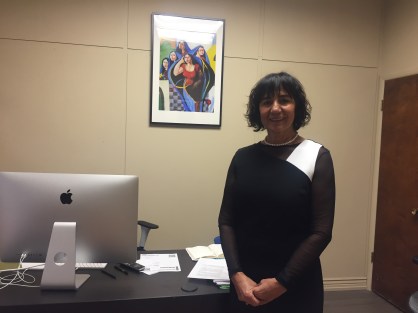
Samira Harnish standing in her office at Women of the World, located at 3347 S. Main St.

Harnish immigrated to the United States from Baghdad, Iraq, in the late 1970s. She studied engineering at Utah State University, but frequently suffered discrimination due to her race and gender. She also endured depression because she felt isolated in her new community and found it difficult to express her feelings. The need for female advocacy and empowerment drove her to establish Women of the World, a nonprofit organization based in Salt Lake City, in 2010.

Harnish knew from an early age that she wanted to help others. As a result she’s amassed over two decades of volunteer experience and before founding Women of the World, she served as a medical interpreter for local organizations like Catholic Community Services, the International Rescue Committee, the Huntsman Cancer Institute and the Refugee and Immigrant Center – Asian Association of Utah.

But it wasn’t until her stint as an interpreter that she came to realize the true wants and desires of refugee and immigrant women.

“I actually listened to them to know what they want,” Harnish said. “They say, ‘I wish we had a woman that could hear us and guide us.’ When you are foreign in a country you don’t know anything. You need someone to guide you and to give you advice.”

And as she listened to the desires of refugee women from disparate cultural backgrounds, Harnish said they came to the same conclusion: they wanted a space of their own. Where they could freely share their concerns, interests and dreams without being overshadowed by the men in their lives.

Although Harnish stepped up to meet their needs, for a while she was alone in her efforts. For five years she operated without an office or case managers, simply visiting refugee homes, gathering contacts and securing much needed donations.

Salt Lake City is the nation’s second largest resettlement site for refugee women. It also has the largest proportion of single mothers and women-at-risk of any resettlement community. Four out of five refugees are women and many are survivors of teen marriage, domestic violence and rape. Once resettled they must juggle the effects of these traumas with unique economic and social challenges.

Yet, until Harnish founded Women of the World, there was no local organization dedicated to assisting such a notable demographic. And the women are grateful.

IMG_5598

Thank you letters displayed in the Women of the World office.

Apiel Kuot, a refugee from South Sudan, is one of these women. She said she was stressed and scared when arriving in Utah in the fall of 2016, but Women of the World helped her with winter clothing, a television and other essential household goods. She also learned to start thinking positively.

“I can’t count the things they’ve helped me with because there are so many things I have received from them,” Kuot said in a telephone interview. “And they give me encouragement which is much better than anything else someone can give.”

Now a year later, she is confident and self-reliant and is planning to earn a social work degree.

“There are some women who are at a camp that will soon be in this place, but they don’t know where to go with their issues,” Kuot said.  “I trust Samira and Women of the World and I will tell them because they (WoW) always give me positive things, not negative things.”

The Women of the World office, located at 3347 S. Main St., is considered a second home by women like Kuot. Women hailing from countries like Iraq, Nepal, Myanmar, Iran, Rwanda, Somalia and Uganda come there for help navigating community resources and often engage with one another over hot tea and desserts, sharpening their conversational English skills in a pressure-free setting. Most of the women learn of Women of the World through word of mouth.

“We love to warm everybody’s heart,” Harnish said, while preparing a cup of hibiscus tea. “I love the way everybody comes in here and feels comfortable. Some of them that wear hijab, they take it off because they know the windows are tinted and there are no men so they feel very secure.”

Women of the World seeks to empower women by promoting self-reliance through service, education and economic development programs. As a nonprofit, Women of the World operates without government funding, instead relying on charitable donations and an annual fundraiser held the day after International Women’s Day. Harnish says she prefers to operate without federal assistance because it allows her to tailor Women of the World’s services without worry of a pushed agenda.

“When the government gives you the money, they always tell you to go that way or this way, you know, their way,” Harnish said. “I’m here to listen to them (the women) and do whatever they ask.”

Harnish and the case managers she employs work to help women create resumes, tighten interviewing and job skills, plan for entrepreneurship and acquire mental health and legal assistance. More importantly, they help instill in participants a deeply rooted sense of self-confidence through their practical English program. Launched as a two-month pilot program for six women with no English skills, by its conclusion all six women were able to gain employment.

When discussing self-reliance, terms like education and employment tend to rank paramount. While earning potential is indubitably connected to the ability to provide for oneself and family, Women of the World knows it is only one aspect and it differs by individual.

McKenzie Cantlon, a case manager at Women of the World, worked with refugees in Buffalo, New York, and the United Kingdom before relocating to the Salt Lake Valley. She says the economic and social support refugees receive has been phenomenal in all areas, but she’s noticed a problematic pattern: proximity to services.

In Utah, voluntary agency affiliates like Catholic Community Services and the International Rescue Committee are based in Salt Lake City. That means refugees located farther north or south do not have the same access to essential resources. For this reason, Women of the World stresses self-reliance above all else.

“For some women self-reliance might be having the courage to leave the house and go grocery shopping or taking their children to the park,” Cantlon said in an email interview. “For other women this might mean going to school, getting a job and supporting their children without the help of others. Women of the World works to promote every kind of self-reliance.”

Courtney Bullard began working as a case manager for Women of the World in the summer of 2016. She lived in the Middle East for five years and attended graduate school in London. Bullard said she’s seen tremendous success from refugees working with Women of the World, but true economic independence isn’t always an option. Regardless, self-confidence is the first step to its path.

“There are a lot of barriers that refugees face upon coming to the USA because of how the resettlement process is set up,” Bullard said in an email interview. “We have women who might always rely on government assistance because of their various situations, however, when they advocate for themselves whether it might be asking for higher pay at work or looking the cashier at the grocery store in the eye at the store — I consider them on their way to self reliance.”

Regardless of definition self-reliance does not manifest overnight. Rather, it’s often an arduous journey that requires discipline and dedication. For Kaltum Mohamed, a Sudanese refugee, it’s taken four years to reach her dream of opening a restaurant.

IMG_5611

Kaltum Mohamed standing in front of her food truck “Mother of All.”

Mohamed was resettled in 2013 after years of moving between refugee camps. After receiving assistance from the IRC for 10 months, she met Samira Harnish. Through their shared Arabic language, they quickly formed a powerful friendship.

Harnish said Mohamed approached her early on with the desire to open a restaurant — refusing to allow any obstacles to deter her confidence. However, after attending a few practical English classes she stopped showing up.

“The last day she got really upset and said she just wants to find someone to give her a loan,” Harnish said. “I told her, ‘No one is going to give you a loan unless you finish that program. You go in there and finish.’”

So Mohamed persisted. She now operates Mother of All, a food truck that can be found at The Black Diamond Store and The Front Climbing Club in Salt Lake City.

“They (WoW) help me too much,” Mohamed said reflectively in her South Salt Lake apartment. “And I always tell everyone, don’t give up on the things you need. Continue doing it and face everything with confidence.”

To commemorate the successes of refugee women like Mohamed, Women of the World holds an awards banquet and social mixer at the end of every year. In addition to inspirational stories, small ethnic meals are brought and shared by members of the community and musical entertainment is provided.

This year’s event will be held Dec. 9, 2017, from 2-5 p.m. at the Salt Lake County South Building Atrium on 2100 S. State St. It is Women of the World’s 7th Annual Celebration for women who achieve their goals and is free and open to the public.


This slideshow requires JavaScript.

Flying into mountains: A refugee’s point of view

Flying into mountains: A refugee’s point of view

Story and photo by JACE BARRACLOUGH

“Say what you will about America, there’s definitely a lot more opportunities here.”

Dario Jokic is a student at the University of Utah. He’s also an aspiring film director and a Fox 13 studio technician. He has spent most of his life in Utah and has no problem integrating himself into different social circles. With no accent or visible cultural differences, people are shocked to find out he’s a Bosnian refugee.

IMG_4453 copy

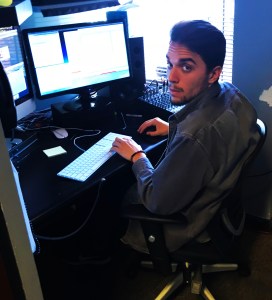
Dario Jokic edits news at Fox 13 Utah.

Jokic came to Salt Lake City when he was in the first grade. His family’s case worker told them Utah was a mountainous desert with people who practice polygamy.

“We thought we were literally going to fly into mountains … and the first thing that was going to welcome us there was one man with six women,” Jokic says.

The Jokic family was grateful for the welcoming they received from their new friend. They were also a bit relieved.

“She was a really sweet and energetic lady who spoke our language,” Jokic says.

He says the hardest part about his resettlement and integration was learning English.

“I hated English,” he says. “I remember my first time in ESL (English as a Second Language) class, they put me with the wrong teacher who was teaching English in Spanish.”


Gerald Brown, Utah’s state coordinator for refugee resettlement, says ESL is the state’s most costly of all the services offered to refugees who resettle to Utah. However, he says it’s still not enough.

“That funding is very, very limited. You cannot do a decent job with that funding alone,” he says.

Though Brown says there is some help from the private sector, the majority of the funding comes from the federally funded U.S. Office of Refugee Resettlement.

Brown also doesn’t see it getting any better due to recent decisions made by the government. According to the 2016 Refugee Services Office’s Report to the Governor, the State of Utah spent $171,000 on the program. However, Brown predicts that number will drop, which is bad news for non-English speaking refugees like Jokic was.

“The current [presidential] administration has different priorities,” Brown says. “It’s becoming less every year and this year we’re really worried what the budget is going to look like.”

Utah’s Gov. Gary Herbert said in a January 2017 press conference that Utah is still a pro immigration and refugee state, but made it clear those types of issues are strictly handled at the federal level. He also said Utah tried to intervene in the past but was issued a lawsuit as a result.

Gerald Brown speaks highly of the Church of Jesus Christ of Latter-day Saints’ (LDS Church) influence on the state regarding refugee resettlement. Unlike Jokic’s experience with publicly funded ESL classes, the LDS Church funds its own classes to help struggling refugees be successful.

“One of the reasons Salt Lake City and this area is a good place is because of the LDS Church,” Brown says. “They’ve put a tremendous amount of resources into helping refugees.”

While resettlers are learning English in hopes of finding better jobs, they can utilize programs like the refugee table at the Jenibee Market hosted by Jeni Gochnour.

“We provide the table and give 100 percent of their sales back to them,” Gochnour says. “They sold around $300 [at the fall event]!”

Ann Howden, of the group Serve Refugees, donates her time by teaching refugees how to sew. They make bags, pillows, blankets and other items to sell at the refugee table in order to help their families financially.

The Jokic family, themselves, know all too well the sting of trying to make ends meet without proficiency in the English language. Jokic’s father, formerly an economics professor in Sarajevo, had to take a job at a glass factory soon after arriving in Utah. Since he didn’t speak English, and his degree was from another country, it made it impossible to continue his teaching career in the U.S.

Jokic’s mother, however, did speak English and was able to find a job as a counselor for the Department of Workforce Services. She also acquired jobs as a translator for various medical facilities.

Even though there were difficulties, Jokic expresses his gratitude for the change.

“I’m very privileged to be here,” he says. “I know there’s a lot of negative things being spread about the United States, but my life would be totally different if I wasn’t living here.”

He continues, “If I was [in Bosnia] I wouldn’t be going to college. … Say what you will about America, there’s definitely a lot more opportunities here.”

Jokic gives advice to refugees dealing with the trials that come with resettlement.

He says, “Don’t be afraid to ask for help [and] look for people that will care about you.”

IMG_3667

Big Budah, Dario Jokic and Jace Barraclough preparing for Fox 13’s “The Place.” Photo courtesy of Big Budah.

Educated and underemployed: refugee student seeks second degree

Story and photos by DEVON ALEXANDER BROWN

Over 60,000 refugees have been resettled in Utah since the 1970s. Prior to the Trump administration, Utah’s designated voluntary agency affiliatesCatholic Community Services and the International Rescue Committee — were resettling roughly 1,200 refugees a year. While agencies do what they can with the resources they have, many refugees find the adage “it’s not what you know, but who you know,” continues ringing true.

Firas, a refugee from Iraq, has personal testimony of the value of networking. He resettled in Salt Lake in March 2014 by way of the IRC, but he has an uncle whom he lived with after resettling, and who continues to offer emotional and financial support.

Firas, who asked to have his surname withheld, holds a degree in civil engineering from a university in his native Iraq, but was dismayed when he found that using his professional training in the U.S would be difficult. The IRC helped him secure an entry-level position in the customer service sector a few months after arrival, but he felt unmotivated and underutilized by the position because of a desire to continue his profession.

“They [the IRC] will explain that it’s not going to be easy to go back to your job,” Firas said. “This is the general talk about this topic … it’s not going to be easy. Because you’re going to face different stuff, regardless of the language challenge.”

But after some time in Salt Lake, and while living with his uncle, Firas stumbled upon good fortune.

“My uncle is here so we met at the mosque and fortunately I met one of the refugees who came through the same process,” Firas said. “That guy actually was part of the NAAN program [New Academic American Network] … he was asking me what was my major, what did I do in my undergrad. He told me he just finished his master’s at the university which is how I learned ‘OK you actually can go back.’”

up

The UNP main office. University Neighborhood Partners was created in 2001 to empower SLC’s westside residents. Many refugees are resettled on the west side of Salt Lake.

The New American Academic Network is a partnership facilitated by University Neighborhood Partners in conjunction with the University of Utah, the University of Utah International Center and the Department of Workforce Services. Because many refugees arrive without the means and proper credentials to work in their respective fields, the goal of the program is to empower refugees and immigrants through access to higher education. In Firas’ case he is working toward a master’s degree in structural design.

P

The UNP Partnership Center opened in 2004 and brings together over 30 university partnerships and 20 local nonprofits.

Although he was able to enroll at the U through the network, he was forced to initially enroll as a non-matriculated student because he did not meet university requirements. Firas, like local students attending graduate school, was required to pass the Graduate Record Examination, but because his native language isn’t English he also had to pass the Test of English as a Foreign Language exam. Although challenging, Firas passed both exams on his second attempt. He credits his time in customer service with accelerating his English fluency.

Partnerships like the New American Academic Network are essential for educated refugees looking to move beyond underemployment. The Academy of Hope, a fellow partnership facilitated through the U, offers no-cost certificates in professional management, web design and human resources management.

Claire Taylor, director of the Academy of Hope, says language, though a primary challenge, is but one of many obstacles refugees face on their path to higher education.

“A common challenge is not being able to afford the cost of certificate classes,” Taylor said in an email interview. “Another common challenge is carving out the time in their schedules to be able attend all of the classes.”

A relatively new program, the Academy of Hope saw one student enrolled in 2016, but Taylor says the 2017 Spring semester provided a cohort of students. So far seven participants have been refugees.

Thanks to the New American Academic Network, Firas is able to finish his master’s degree. Yet even with tuition assistance, he says it is not easy to support himself and complete his program and the engineering internship he is currently involved with.

“Fortunately my uncle is here and he supports me until now,” Firas said. “I was living with him at the beginning and he and his family helped me a lot. It’s difficult to have a place in a different culture, different society.”

Firas understands that case workers in the IRC are limited in their reach and ability to assist refugees on an extended individual basis. But he also thinks a more thorough and personalized approach in the early stages of resettlement would be beneficial — especially for refugees who are professionally trained.

Gerald Brown, assistant director of refugee services for the Utah Department of Workforce Services, is in agreement. He says his experience with refugees reflects a need for lengthier case management.

“Every new refugee needs case management for at least two years and I would argue for longer than that for many of them,” Brown said in a telephone interview. “It just to me makes common sense. A case manager helps a refugee kind of come up with a plan to meet their needs, to thrive in this community and then sort of follows the plan, helps them adjust over time, [and] gives them information when they need it.”

Although Firas hasn’t obtained his master’s degree yet, he is close and hopeful. And because of his personal good fortunes, Firas says he makes every effort to inform other refugees about lesser known resources that can help them get back on their professional footing.

“I’m still referring anybody who came as a refugee — who has a graduate or even non-graduate [degree],” Firas said. “Either go into community college or to the university … this is the option you have and how to go back to what you like.”

Refugee programs and Utah: How effective are federal grants?

Story and photos by ALAYNIA WINTER

What is the largest problem refugee organizations face?

Short Answer: It’s funding.

Temporary Assistance for Needy Families (TANF) is a federally funded and state administered financial assistance program for low-income families with dependent children and pregnant women during their last three months of pregnancy. TANF provides short term financial assistance and aids recipients in finding jobs that will allow them to support themselves.

In 1996, TANF replaced older welfare programs. Today, TANF provides annual grants to all U.S. states. The funds are used to pay for benefits and services distributed by the states.

According to The Department of Workforce Services 2016 report, the majority of refugee services are federally funded through the U.S. Office of Refugee Resettlement (ORR) and the TANF program (with the exception of $200,000 provided by the State of Utah).

Ref_Office

The Refugee Education and Training Center for the Refugee Services Office is located at 250 W. 3900 South in Salt Lake City.

Currently, Utah’s Refugee Services Office administers approximately $4.3 million from TANF and $8.9 million from ORR for refugee services in Utah. Health services receives over $3 million and case management is allocated over $2 million. Skills and employment training and youth services respectively receive approximately $3 million.

Many critics of welfare programs speculate there are better ways to spend and distribute the federal assistance money.

The 1996 welfare reform act, known as the Personal Responsibility and Work Opportunity Act, completely changed the concept of welfare. States have control over how and where TANF money is spent.

According to The Center on Budget and Policy Priorities (CPBB), this money has not been used well. A 2015 fiscal study on TANF funds reported “34% of funds were going to causes not related to family and youth assistance.” The 34% of funding was labeled “other programs.”

In some instances, TANF money can go to a free and public workshop on improving marriages, or a health profession education grant for low-income students at a public high school. One doesn’t necessarily have to be financially “needy” to participate in public welfare programs such as these. The long-term societal benefits and changes can be difficult to measure; however, the money does seem to be going toward refugee programming and public programming in the “other programs” category.

Ref_office2

An “I Am A Refugee” banner in front of the Refugee Services Office building.

Regarding how refugee TANF money is spent, “The caseload has grown. So, the bigger the load, the more time you spend putting out fires,” said Gerald Brown, Utah state refugee coordinator and assistant director for the Refugee Services Office.

The current administration’s decision to cut funding and the looming uncertainty of the future for many refugee organizations in a time with a historically high number of refugees spurs much debate.

According to the Bureau of Population, Refugees, and Migration, the U.S. government plans to cap the number of refugees from around the world at 45,000 in FY 2018. That is the lowest level since 1980.

Refugee resettlement organizations in the U.S. are worried about this drastic reduction. This news brings an inevitable slash in budget as well. Refugee organizations had been pushing the Trump administration to set next year’s refugee cap to at least 75,000, and said this diminution would force many to close their doors or lose valuable programs.

As Utah philanthropist Pamela J. Atkinson, of the Pamela J. Atkinson Foundation said, “Refugees are people who, rather than give up or give in, have chosen to take the higher and harder road and are grateful for the generosity of strangers who reached out with a willing and helping hand.”

Fresh starts and fiscal success: refugee businesses are booming in Salt Lake City

Story and graphics by DANNY O’MALLEY

Refugees are opening new businesses and bringing new solutions to Salt Lake City, thanks largely to the International Rescue Committee and other local organizations that coordinate resettlement.

“The refugee and immigrant community has a higher rate of entrepreneurship than natural-born citizens,” said Natalie El-Deiry, deputy director of development and strategic initiatives at the International Rescue Committee office in Salt Lake City.


Her eyes light up when talking about the growth she has seen. While no one may be able to quantify the exact figures, she estimates that dozens of businesses owned and operated by refugees have opened since 2012.  “They’re a thread that weaves through the community and brings us closer together,” she said.

Immigrant-owned businesses in Utah employed over 31,000 people in 2007, according to a report from the Partnership for a New American Economy. Another NAE report shows that refugees and immigrants brought an estimated $56.3 billion of spending power to the national economy in 2015. They paid $20.9 billion in taxes.

Such colossal numbers also serve as a bittersweet reminder of greater struggles.


The global number of forcibly displaced people is over 65 million, according to the United Nations Refugee Agency. Refugees comprise nearly one-third of that number. On average, Utah takes in around 1,200 refugees per year through the two primary resettlement organizations: the International Rescue Committee and Catholic Community Services.

Aden Batar, director of immigration and refugee resettlement at Catholic Community Services, reports that the final fiscal quarter of 2017 brought less than half of the people expected.

“We take a capacity survey every year, and report that we can handle a certain number of cases. We only got 20 [assigned] for September. It’s normally more than 50,” he said. Utah is unlikely to receive any more refugees in 2017, although the groups within the state could help resettle many dozens more. The current administration is apathetic, the New York Times reported, to fixing the global humanitarian crisis through open doors. That story pointed out that the economic contributions of refugees were apparently censored by White House officials. The released document excluded anything but the cost burden presented by initial resettlement and government assistance. The White House is ignoring billions of dollars of income tax, discretionary spending and wages paid to employees by refugee business owners.

Fewer refugees means that fewer opportunities for integration of new ideas — not to mention potential jobs and workers — will arrive in the near future.

Batar said that about 85 percent of the refugees CCS works with are self-sufficient within six months, and generally start contributing to the local economy immediately. A report from the National Bureau of Economic Research estimates that refugees have higher employment rates than native-born citizens once they have lived in the U.S. for several years.

But as much as refugees want to work, they must be welcomed into a community to do so.

Batar, a Somalian refugee himself, is unwavering about this global plight of humanity. “It is the hardest thing a human being can ever do,” he said, referring to the journeys undertaken by refugees. “When you don’t have a choice, it doesn’t matter where you’re going, as long as it’s a peaceful place,” he said, his voice firm and insistent.

“Someone may come with a myth in their mind of the United States providing everything,” he said, so instilling new concepts like paying bills and making rent on time can take some adjustment. Programs such as those offered by the International Rescue Committee, Catholic Community Services and their partners are crucial for stability, smooth transitions and the livelihood of the community overall. Thanks to local initiatives, volunteer outreach and business incubators, refugees can start to lay a foundation for future success.

The Spice Kitchen Incubator has provided a hands-on educational workspace since 2012 to launch food service businesses. Refugees and underprivileged people prepare and profit from their native cuisines in a new place. With over 30 businesses introduced to the greater Salt Lake City region, including a baker’s dozen just since 2016, the results are unmistakably successful.

Ze Min Xiao, director of the Office of New Americans in Salt Lake County, has hope that the successes outweigh the challenges for the refugee population and the groups serving them. “Utah is doing relatively well compared to other parts of the country when it comes to refugee integration, but the situation always has room for improvement,” she said in a phone interview. “We’ve recognized the need to ensure groundwork is laid down early for long-term opportunities,” including mentoring and business resources for immigrant and refugee entrepreneurs.

“Government agencies can’t do everything,” she said. “My office right now is just me and a temp. But we are convening outside stakeholders and bringing a vision together.” Those outside stakeholders include businesses employing or founded by many of the refugees in Salt Lake City. The chance to work with new arrivals every year demands big-picture thinking, as evidenced by the New Americans Task Force Welcoming Plan.

The community has a lot to give to refugees. But refugees have even more to give back, whether it’s tax dollars or cultural diversity. They just need a safe place like Salt Lake City to start.


Salt Lake City’s farmers markets draw loyal consumers

Story and slideshow by JOSH SOUTAS

Experience all that the Winter Market has to offer.


“We never miss a market,” said Salt Lake City local Paula Butler. Her friend, Lori Martin, added, “We come every time.” Butler and Martin are just two of the many consumers who wander around the Winter Market at 10 a.m. every other Saturday from November until April looking for locally grown produce.

The two said the combination of fresh produce, and the get-together that the Winter Market has become, is what keeps them coming back.

“It’s now as much of a social event as it is a grocery shopping event for us,” said Butler, who is also a regular at the summer Saturday Market. “Not only do you know what you are buying is healthy and good for you, but it is fun to come and meet the farmers who grow and are selling their own local products.”

In its third year, the Winter Market is held in the historical Rio Grande Depot. The train station’s tracks were first used in 1910, according to Utah Communication History Encyclopedia writer Kelsie Haymond. The old train station is transformed into a paradise for consumers who are looking for locally grown produce during the winter months. Vendors, who set up shop where passengers used to load onto trains, give the landmark building a lively atmosphere again.

The market entrance runs through the Rio Gallery, located in the Grand Lobby of the Rio Grande Depot. Shoppers on the second floor get an overhead view of the artwork in the free gallery.

Alison Einerson, market manager of the Salt Lake City Farmers Markets, said in a phone interview that the Winter Market almost exclusively features food vendors who cater to local eaters.

The Winter Market occurs when many vegetables and fruits are out of season. Einerson said that challenge was not difficult to overcome.

“It’s really eye opening to see that there are still so many locally grown fresh fruits and vegetables available, even though it is December and snowing, or February and bitter cold outside,” Einerson said. “There [are] beets, asparagus, parsley, onions, potatoes, and in my opinion our market is home to the best local baked goods.”

Einerson also agreed with market regulars Butler and Martin that many people attend the market not only for the produce, but also for the social occasion that it has become.

It is not surprising to see the Winter Market be successful even though it has not been around as long as the established Saturday Market. Farmers markets have risen in popularity with more than 8,200 nationwide, a 76 percent increase since 2008, according to the USDA.

Steven Mountford is a honey farmer with White Lake Farms. The Genola, Utah, farm has been a vendor with the Winter Market since its opening. It also takes part in the Saturday Market during the summer.

Mountford said he understands why farmers markets have been growing in popularity and size, especially in the last few years.

His explanation? He said people are starting to be curious and are caring where their food is coming from.

“It is important to expose people to the reality of where their food is coming from,” Mountford said. “People are now questioning how their food is getting to them and if it is good for them.”

Mountford isn’t wrong, according to a 2011 food dialogues survey. The survey focused on opinions, attitudes and questions that consumers and farmers had about the state of how food is raised in the U.S. The study found that “consumers think about food production constantly, yet know very little about how food is brought to the dinner table.”

Mountford believes that consumers asking questions about their food and caring where it is coming from is making a difference.

“You get customers asking restaurant owners, ‘Where did this chicken come from?’ or ‘Where did these vegetables come from?’ People didn’t used to ask these questions. And it helps motivate restaurant owners to buy locally,” he said.

Salsa Del Diablo, a Salt Lake City company, has participated in the Winters Market for two years. It also took part in the Saturday Market for the first time in 2015, one of the four Utah summer markets it participated in last year.

The company carries eight different salsa flavors in the summer, and four in the winter. Salsa Del Diablo motivates customers to buy its products by donating 1 percent of profit to adaptive sports in Utah.

Employee Jennifer Lehmbuck said the local markets are what helped the company break through into grocery stores in 2015.

“Farmers Markets open doors for local companies like Salsa Del Diablo,” Lehmbuck said.

Besides the exposure that the market has provided, Lehmbuck said she has seen other benefits of participating in markets.

“These local farmers markets build community. It helps get people connected with their food and lets them get to know where and whom their food is coming from,” Lehmbuck said. Salsa Del Diablo sources the majority of its salsa ingredients from Bangerter Farms, located in Bountiful, Utah.

Michael Pollan, author of “Cooked: A Natural History of Transformation” and creator of the Netflix documentary series “Cooked,” told “Nourish” that “a farmers market is kind of like a public square, and there is a nice social energy. At the farmers market, city meets country. People learn about where their food comes from and the people who grew it.”

Market Manager Einerson said this growth in community is one of the main benefits of a farmers market. It supports the local farmers and vendors.

Winter Market Transitioning to Summer Saturday Market

 The Winter Market at Rio Grande closes for the season on April 23, 2016. But Einerson and vendors are looking ahead to the Saturday Market, which will be taking place for the 25th time this year. “It has been a staple of the community here in Salt Lake City,” Einerson said.

Many of the Winter Market vendors, including Salsa Del Diablo and White Lake Farms, will return for the weekly Saturday Farmers Market. They will be joined by dozens more who did not participate in the seasonal event.

Einerson said the time off in between the markets seems seamless to staff as they work throughout May to approve applications, finalize vendor lists and assign locations in Pioneer Park.

The summer Saturday Farmers Market, along with the Arts and Crafts Market, run June 11 through October 22, 2016, from 8 a.m. until 2 p.m.

“It doesn’t seem like a long break to us because we don’t stop working. But I am sure the public miss it,” Einerson said.

Indeed, for locals like Paula Butler and the Lori Martin who “never miss a market,” the month and a half without a farmers market is too long.

Interested in finding a local farmers market near you? Visit The Salt Lake Tribune for a list of farmers markets near you.


Zest Kitchen and Bar provides organic dining in Salt Lake City

Story and slideshow by RYAN CARRILLO

Visit Zest Kitchen and Bar and see some of the amazing organic dishes.


Nestled between some of the biggest chain restaurants in Salt Lake City, Zest Kitchen and Bar provides a dining experience that no one else can.

The restaurant, located at 275 S. 200 West, is reinventing healthy eating by providing a menu free of processed foods that tastes incredible. Everything the restaurant serves is also 100 percent organic.

“Everything’s fresh, and that’s really what I wanted is fresh and organic real food that came from whole foods and not from a box,” said Casey Staker, the restaurant owner. He opened the bar and restaurant nearly 2 and 1/2 years ago.

Staker has crafted a menu of 35 unique items between brunch, lunch, dinner and dessert. The restaurant offers an eclectic fusion of ethnic tastes and American favorites while using healthier ingredients than nearly anywhere else. It also offers a more “grown-up” environment, being for individuals 21 years old and older.

The brunch menu, available on Fridays and Saturdays (11 a.m. to 3 p.m.) features perfectly sculpted buckwheat pancakes or a fresh southwest skillet with quinoa, cheese, black beans and fresh pico de gallo, among other entrees. The brunch menu also includes the “best mimosas in town” for just $5, which come in a variety of flavors.

Zest’s lunch menu provides options that are hard to find anywhere else. Selections range from fresh fruit smoothies and small plate items like cheesey Brazilian bread bites to a fresh kale salad and larger entrée items like coconut curry forbidden rice. For people looking for less-healthy health food there is “barely buzzed beehive” grilled cheese, which puts a fresh spin on an American favorite by pairing it with the soup of the day, pesto and seasonal fruit.

The dinner menu mixes things up by offering mostly shared plates or larger entrees, while still featuring fresh salads and perfectly blended juices. This particular menu is home to beet and walnut dip served with fresh veggies, baked mushrooms with cashew cheese and a tomato and eggplant ratatouille that comes with spinach quinoa.

Perhaps the best part of the menu comes after the entrées, soups and salads have been cleared away: dessert. Staker takes the same approach from his entrees and appetizers and applies it toward dessert staples, creating sweet, succulent cakes and tortes. One of these masterpieces is a carrot cake topped with rich cream cheese, shaved carrot and orange peel.

Tim Hurty, a local resident, has visited Zest Kitchen and Bar on multiple occasions. He is fond of the black bean chia patties served on a multigrain bun. Being a dedicated vegan, he was drawn to the restaurant because of its ability to accommodate his dietary needs. At Zest he is able to enjoy a delicious meal without fear of cross-contamination, which occurs when animal byproducts come in contact with any of the ingredients used in the meal.

Being a vegetarian himself, Staker’s menu is completely free of meat. Many of the dishes are also vegan and the staff is currently working to provide vegan accommodations for all their menu items. Not only that, all the dishes are gluten-free as well.

“Naturally by design vegetarian food or [rather] healthy vegetarian food is almost always gluten-free,” Staker said. As a restaurant owner, the needs of his customers seem to be a driving force behind the menu selection.

Billy McMichael is the head chef at the restaurant. Having worked in vegetarian restaurants for 10 years he understands the importance of these dietary restrictions in the lives of his customers.

“The Zest mission is to be inclusive,” McMichael said. “So almost any allergy you have, you can come here and get a good meal anyway.”

McMichael personally likes the challenge that comes with providing healthy food without sacrificing the taste. It forces him to be creative and innovative with the dishes he and the other staff members prepare.

“It’s been nice to come here where it is less about copying meat style dishes,” he said. “[It’s] more about charting your own path, making things that people haven’t done before, working with more ethnic variety, more variety of produce. I can’t just cheat and flavor up a big piece of tofu and put it with some mashed potatoes and say ‘here’s dinner.’”

The restaurant is also nearly free of soy and doesn’t use any peanuts. For individuals with any of these dietary restrictions, whether forced or voluntary, a restaurant with Zest’s knowledge and dedication is heaven-sent.

For vegans it can be difficult to find a restaurant that fully understands the difference between their needs and vegetarians. Vegetarians limit their diet to not eat any killed animals while vegans take it a step further by not eating anything from an animal. This eliminates things like eggs, milk and cheeses. While there are several restaurants in the Salt Lake Valley that can accommodate  the needs of both groups, there are few, if any, that also match Zest’s focus to overall health.

Zest Kitchen and Bar is also the only dedicated gluten-free restaurant in the city, which may come as a surprise as the gluten-free trend continues to grow and has created a multibillion dollar industry. Chain and local restaurants alike are expanding gluten-free menu items, but none have entirely abandoned the ingredient. Salt Lake is home to several bakeries that are dedicated gluten-free but that’s where it stops.

For individuals with Celiac Disease, a severe autoimmune disease that is triggered by gluten, Zest’s commitment offers them a hidden benefit that most people don’t see. The symptoms of the disease can be unleashed with the slightest trace of gluten in someone’s food. That means that even eating a gluten-free meal, if prepared in a standard restaurant kitchen where gluten is also used, can potentially cause symptoms to flare-up since the food may come into contact with gluten in a variety of ways. Since Zest’s kitchen is dedicated gluten-free there is zero chance for cross contamination. No one else in the area can offer that.

What may be most surprising is why Staker and his staff run the restaurant this way.

“I didn’t do this restaurant because I was sick,” said the owner. “I did it because I wanted a healthy place to eat.”

Zest is also “healthy” for the economy. The restaurant tries to buy as much local product as possible, supporting local merchants throughout the year. Since the menu is dependent on fresh fruits and vegetables this can become difficult as the seasons change.

“In the summer we do as much local [shopping] as we can. We still get our greens from a local greenhouse,” Staker said. “We have a special salad that’s always local. [The selection of produce] gets better and better when it gets warmer. Spring, summer, fall we have a lot of local stuff. During winter we have to outsource. Our goal is to support local.”

That commitment to the local community doesn’t stop just in the restaurant’s shopping practices. The staff is active in the community, exposing new people to their food on a regular basis and helping them make better dietary decisions.

During the summer of 2014, Zest operated a booth at the summer farmers market at Pioneer Park, 350 S. 300 West. In 2015, the restaurant is ditching the booth for a more mobile option.

Soon Zest Kitchen and Bar will be unveiling Utah’s first health food truck. The truck will be featured at health conventions like the gluten-free and healthy living expos. Staker is excited for the opportunities the truck will give the restaurant.

He says that public response has been great whenever Zest has had a booth at these types of events, so the food truck response should be even better.

“When we go to the gluten-free expo people say ‘oh my gosh you guys actually have real food. You guys are serving heathy vegetables and dips and stuff,’” he said. “At the gluten-free expo it’s cakes and cookies and packaged stuff.”

The restaurant’s truck is scheduled to debut at the end of April 2015 once preparations are finalized; an exact date has not been set yet.

Roy City gets “facelift” in hope of growth

Story and slideshow by BRITTNI STRICKLAND

Visit the city of Roy and meet some local business owners.

Roy City, populated with 37,733 individuals, is commonly known for its strong community and hometown feel, which can be especially found in local businesses in the area. However, popular chain businesses like CVS Pharmacy, Walgreens and WinCo Foods have begun to take the focus off of local businesses and in a different direction.

At the recent city council meetings at the Roy City Office courtroom and in speaking with city council member John Cordova, it is apparent that the council would like larger corporations moving into the town of Roy.

“You never want to chase away the small guys because the small guys are huge,” Cordova said. “They’re local and they’re loyal. But on the other hand any homeowner in Roy, if we don’t continue to bring in big businesses, then supporting the city ends up on the resident’s back and that’s not good.”

While sitting at the kitchen table in his Roy home, Roy City Mayor Willard Cragun said the city started a “facelift” in April 2015 on 1900 West in Roy to help take some of the pressure of supporting the city off of the residents’ shoulders.

“What I have planned for Roy City is re-establishing Roy City’s business community, so that we can provide local services to the residents of Roy. So, if you want to buy a pair of shoes, you can buy a pair of shoes in Roy City, or a dress, or pair of pants, you should have a shop you can go to in Roy,” he said.

Cragun noticed in 2000 that the majority of local businesses were moving out of town as developers moved in. “Over the years those ma and pa businesses have left Roy City. It’s been very, very hard to get them to re-establish in Roy,” he said. Once the developers established in Roy, the 25-year leases through the Redevelopment Agency expired and prices skyrocketed, making it hard for locals to afford rental rates. Another problem the town faces with bringing locals back, is the city does not have open ground for locals to build on. Consequently, they must purchase buildings from developers, tear them down and rebuild, all of which is an expensive process.

The city has no control over the developers and what type of businesses they choose to lease to. “The developers have all the rights and the city has no say,” Cragun said. Roy City only has control of business when the City Council approves business licenses.

Councilman Cordova said, “A lot of spots in our town need fixing, everyone sees it.” The council has approached merchants on 1900 West and heard outpouring support for a plan to clean up the downtown area in a mission to attract larger markets to Roy City.

Cordova and Councilman Brad Hilton are currently working on economic development of the city and plan to visit Las Vegas in May 2015 to meet with economic planners to get ideas for the facelift. Cordova mentioned the idea of the city approaching the local Harmons to get its help in spurring the development of the entire city. He mentioned how Harmons has helped spark growth at Farmington Station and in downtown Salt Lake City.

The council has been approached and has begun focusing on plans to have a movie theater come into town where Albertsons store was located on the corner of 5600 S. 1900 West in Roy. The building has been vacant for almost 13 years, Cragun said. Traffic from adjacent towns like West Point, Hooper, Clearfield and from the freeway would be brought into the city benefitting everyone. Cragun said the city needs something to draw people to Roy and hopes that a movie theater would do just that similarly like it did for the city of Ogden when Megaplex 13 was built.

The thought of having larger corporations come into the city of Roy has caused mixed reviews from local businesses including Jessie Jean’s Coffee Bean’s Homestyle Café, Sacco’s Produce and Roy Winegars pharmacy.

Lloyd Thomas is the owner of the pharmacy in Winegars that has been located at 3444 W. 4800 South in Roy for 20 years. He said that when CVS Pharmacy opened last year on 1900 West he was nervous about what that might do to his business. But, he has yet to see a change. “It’s just a way of the economy, there are chain stores everywhere,” Thomas said.

“I’ve always felt that Roy City has been really supportive of us,” Thomas said. The city supports the pharmacy at the annual Roy Days Parade and carnival as well as in the local newsletter.

Jessie Jean’s Coffee Beans Homestyle Café in Roy has experienced struggles keeping the business alive while in the city. Anna Whitnack, owner of Jessie Jean’s for 15 year, said “it’s been hell” while being in the city. Owning a business on 1900 West has been difficult due to a neglected main street and continuous problems with a nearby store, Whitnack said.

Whitnack is working hard to move her coffee shop to a new town in hopes of better business and more support from the city. “We went to talk to Ogden City and they had open arms,” Whitnack said. There is no confirmed date as to when Jessie Jean’s Coffee Bean’s Homestyle Café will move out of town.

Sacco’s Produce has been in the same spot in Roy since 1969. Dominic Sacco said Roy City has always been a local type of city, but he wouldn’t necessarily mind other business in town.

Sacco’s Produce, at 6050 S. 1900 West, has frequenters from Idaho and all over the state of Utah during the summer months. Locals patronize it during the winter months. But with larger markets coming into the town, he said the biggest struggle for Sacco’s Produce has been competing with those “box stores” like Winco and Wal Mart.

“People think they’re going to get a better deal, which pricewise they may. But they may not get the quality. We’re more about selling local products grown here,” Sacco said.

Even with the struggles of keeping up with larger market stores, Sacco believes it’s a good idea to continue to move them into the city. “It’s good to have businesses around each other, it brings everybody to the same location,” Sacco said.

Mayor Cragun clarified that larger corporate markets would help the city of Roy. But, he still wants to keep that local hometown feel that Roy City is known best for. “I’m looking forward to more of the locally-owned businesses in Roy,” Cragun said. He added that he hopes that the beautification of downtown Roy on 1900 West will bring in larger markets as well as local shops while helping the city of Roy and the residents within the city.


The Women’s Business Center: A support in the entrepreneurial journey

Story and photos by LIZ G. ROJAS

One of Utah’s best-kept secrets for aspiring entrepreneurs is the Women’s Business Center, located in downtown Salt Lake City within the Chamber offices.

The WBC is a nonprofit organization that is partially funded by the federal government through the Salt Lake City Chamber. Because the center is a 501(c)(3), it is expected to match the funding it receives through fundraising or sponsors.

The Women’s Business Center’s goal and purpose is to help increase the number of women-owned businesses in the state of Utah through consulting, training and networking opportunities.

The center has been operational for 17 years and has a consultant who provides a variety of different services. Services are free to the public and range from helping with business plans and cash flow projections to government consulting.

Former day-care owner Lorena Sierra missed the opportunity to work with the Women’s Business Center.

Lorena Sierra

Lorena Sierra

“I know a lot of times I needed help with grants and I wasn’t able to apply because I had no idea how,” Sierra said. “I wish I would have known of an organization like that [WBC].”

Sierra owned a day-care center in Utah County alongside her business partner for 17 years. In 2012, after her partner sold her half, Sierra ran out of funding options and chose to sell her business.

According to American Express, her center was 1 of 73,000 businesses in Utah that are women-owned, compared to the 9.1 million nationally that are owned by women.

The Small Business Administration defines a woman-owned business as one that is owned at least 51 percent by a woman. In addition, the woman can make independent decisions regarding the business without being undermined by anyone and is responsible for planning the short- and long-term activities.

Ann Marie Thompson- Program Director for the Women's Business Center

Ann Marie Thompson

Ann Marie Thompson, program director for the Women’s Business Center, says there is demand for a woman-oriented organization because there are different stresses for women than there are for men.

Most women are trying to start a business from home or as an addition to full-time responsibilities. They’re driven by flexibility because their first obligation is to their family. The majority of clients who meet with the WBC have these similar backgrounds and priorities.

Evette Alldredge, a local business owner, was guided by the Women’s Business Center and benefited from its services.

In a phone interview, Alldredge said that she arrived at the center with a partial business plan and high hopes. She met once a week for approximately five months with the center to create a business plan and explore all aspects of the planning.

Alldredge was able to present in front of Utah’s Microenterprise Loan Fund and received funding from the nonprofit for her business.

In April 2014, Evette Alldredge’s business, Super Gym Gymnastics, opened its doors.

However, even though the business center does direct its organization toward women, its services are for everyone. Thompson said that 20 percent of the WBC’s clientele are, in fact, men. She said, “We consult with anyone who wants to come.”

The Women’s Business Center has a broad range of connections and partnerships. Some of the partners are the National Association of Women Business Owners, the Utah Microenterprise Loan Fund and the Utah Governor’s Office of Economic Development.

The center also works with the Salt Lake City World Trade Center and Salt Lake Magazine. The WBC refers clients to the World Trade Center if they need help learning how to import and export.

Salt Lake Magazine features the Women in Business section in the September/October issue. The WBC is highlighted in that issue.

Although the center is associated with the Salt Lake City Chamber it is not confined to the Wasatch Front. Thompson said Google Hangout and Skype are frequently used to communicate with clients throughout the state.

According to the Small Business Administration, twice as many women-owned businesses are opened every day, compared to three years ago. However, there are still barriers that haven’t been overcome by women business owners.

One of the barriers is the compensation gap. Even if a woman is the owner of a business, her salary is lower compared to others in her same position.

“Women choose to pay themselves less, not knowing what others are paying themselves,” Thompson said. “Women are also choosing jobs that pay less. ”

American Express reported in 2014 that the goal shouldn’t be to motivate more women to open businesses, but instead to financially support those who are already established and help them expand.

Regardless, the need for the Women’s Business Center in Utah is crucial. As Lorena Sierra said, “We do need a lot of support. We have the desire to have our own businesses but we don’t have a guide.”

The WBC is one of Utah’s best-kept secret support systems for aspiring business owners.

“If it weren’t for the Women’s Business Center I would not be where I am today,” said Evette Alldredge, owner of Super Gym Gymnastics, who continues to work with the center for a business expansion loan. “I am the most happy, successful entrepreneur.”