University of Utah Pacific Islander Medical Student Association

Story by ALEXANDRA OGILVIE

Julius Ulugia is a Samoan American in his second year at the University of Utah School of Medicine. He helps to operate the University of Utah Pacific Islander Medical Student Association (PIMSA). According to their currently cached University of Utah club website, the mission is, “To provide students and mentors with a venue to network, increase awareness, promote and advocate, serve our Pacific Islander communities, and prepare for careers in medicine, healthcare, and administration. PIMSA provides peer mentors and role models for students seeking to enter academic and clinical healthcare fields.”

PIMSA was started in 2008 by Jake Fitisemanu Jr. and Kawehi Au. But, “it essentially became dormant when those who started either sought other careers or graduated and went off to residency,” Ulugia said. Currently, Ulugia is the only Pacific Islander in his medical school class of around 130, according to the school.

“Many people, Pacific Islanders and non-Pacific Islanders alike, see us as great athletes. That is literally what I got from my own family and non-Pacific Islanders. Many of us don’t see ourselves as intellectually equal to other people. This is magnified in health care, where we are unable to sufficiently care for our own,” Ulugia said in an email interview.

Fitisemanu wears many hats in the Utah Pacific Islander community. Among other things, he works at the Utah Health Department, he chairs the Utah Pacific Islander Health Coalition, and he is an elected representative for West Valley City. “PIMSA was a great opportunity for medical students to get involved in our own ethnic communities and expose other youth to possibilities in health science careers,” he said in an email interview.

“PIMSA has helped at least eight Pacific Islander pre-meds who have been accepted to med schools, and at least that many who have prepped for the MCAT and applied to medical school,” Fitisemanu said. Although it started off for MD students, it has branched to include other health sciences fields like nursing, physician assisting, dental, and pharmacy. Since there is only one Pacific Islander MD student in the state (Ulugia), the focus has shifted to undergrads rather than graduate students.”

Vainu’upo Jessop, a Samoan American anesthesiologist attendant, helped to found PIMSA when he was an undergraduate student at the University of Utah. He went on to complete medical school at the University of Utah. He was only one of four Pacific Islanders in his class and the first Samoan American to graduate.

PIMSA’s current focus is on Pacific Islander high school and undergraduate students. One way they excite high school students is to bring them to health conferences held at the University of Utah and Salt Lake Community College, to show them cow heart dissections and other exciting demonstrations. PIMSA also works on a one on one basis to help students navigate the college process.

“A lot of the [Pacific Islander] college students are first-generation students, and we would help them with the logistics of how to set up their schedule in order to optimize their chances for success at the undergraduate level.  We would also get these people more involved in increasing awareness in the [Pacific Islander] community by having them run booths at health fairs, participating in after-school programs to promote healthy lifestyles, etc,” Jessop said in an email interview.

Jessop left town to do his residency at the University of Massachusetts in Worcester, Massachusetts, from 2012-2016 and completed a fellowship in critical care from 2016-2017. He returned home to Utah soon thereafter.

“Since I’ve moved back, I’ve had many [Pacific Islander] patients who are shocked to find out I’m a doctor. They ask me if I’m Polynesian, and when they find out I am, they usually say, ‘Wow! I didn’t know that there were any Polynesian doctors!’ I hope to be an example to other [Pacific Islanders] and show them, that we can make it,” he said.

Jessop believes that getting more Pacific Islanders into medical professions would increase the health of Pacific Islanders in the state. Currently, Pacific Islanders lead the state in incidents of diabetes, cardiovascular disease, and obesity, according to the Utah Department of Health.

“A lot of the older [Pacific Islanders] either don’t feel the need to see a medical provider, they don’t understand what a provider is telling them, or they flat out don’t trust people in the medical establishment. I think the more [Pacific Islander] providers there are in the community, the easier it will be to increase health awareness in the community,” he said.

Alyssa Lolofie, a Samoan American PIMSA member who is about to start medical school at Rocky Vista University College of Osteopathic Medicine, agrees. “It’s important to get more [Pacific Islanders] interested in medicine (medical school, physician’s assistant programs, nursing, etc.) to increase representation and education on Western or mainland medicine for these [Pacific Islander] communities. Many patients with diverse backgrounds or from underserved communities are less likely to see a medical provider because of an assumed lack of understanding of the traditions and ways of life of these communities,” she said in an email interview.

Jessop added, “Overall, as more [Pacific Islanders] we can get into college and get professional degrees, there will be an overall increase in awareness in the community. I believe the benefits are twofold: the overall health of the [Pacific Islander] community will improve, and the younger PIs will see this and want to contribute.”

Two other organizations could potentially be helpful: the Asian Pacific American Medical Students Association and the Health Sciences Multicultural Student Association of Utah.

Misrepresentations of Pacific Islands culture in Disney movies

Story by DAYNA BAE

Cultural delineation in media frequently involves praises and criticisms at the same time. The Pacific Islands culture could not avoid such portrayal.

The Walt Disney Company Co., one of the major entertainment companies in the world, has depicted various cultures through its film productions.

As a result, Disney’s animated films gained large popularity and reputation for their diverse cultural representations. Up to the present, Disney has released numerous films including “Aladdin,” “Mulan” and “Pocahontas” based on different cultural backgrounds around the world.

With success of prior films, Disney released two animated films “Lilo and Stitch” and “Moana,” both of which describe Pacific Islands culture.

Two films depicted culture and stories of indigenous people in the Pacific Islands. The films starred a number of actual artists and professionals with Pacific Islands background.

Jacob Fitisemanu Jr., a clinical manager with Health Clinics of Utah and an associate instructor of ethnic studies at the University of Utah, said in an email interview, “Lots of Pacific Islander artists got into the production of the films and movies, and it became a good opportunity for them.”

The production and release of movies about the Pacific Islands not only aroused public attention about its mysterious and veiled culture, but also provided a good opportunity for Pacific Islanders working in the field of animation production.

“The major positive aspect of those films is the showcasing of the incredible potential and abilities of the Pacific Islander artists who lent their expertise and talents to the films,” Fitisemanu said.

According to the Guardian, the writer-director team of Disney’s “Moana” conducted a five-year research trip to Polynesia to interview elders and people living in Samoa, Tahiti and Fiji to have a better understanding about Pacific Islands cultures.

Despite the efforts of the research team, the public reactions to “Moana” varied. Some people showed optimism about the movie for displaying unique features of a minority culture, while others, reported the Guardian, criticized the movie for misrepresenting the culture and history of Pacific Islands.

Fitisemanu said, “Some people are very upset about Maui’s depiction and the way his legendary exploits are shown in the animation.” Maui is a main character who is a demigod in the movie. He also said that some people are uncomfortable with the fact that Maui is not put into context. According to Fitisemanu, Pacific Islands legends are in fact metaphors of actual historical events, unlike how the movie portrays them as mythological and fantastical ones.

Dr. Malie Arvin, an assistant professor of history and gender studies at the University of Utah, said, “The movie was not making sense to me, because Maui was described as a braggart, comical, and arrogant person in the movie.” She said that Pacific Islanders criticize the movie because many of the legendary stories of Maui’s are missing. “Maui has lots of stories such as slowing down the sun and fishing up islands,” Arvin said.

Another criticism of “Moana” deals with tourism. According to the Guardian, “Moana” caused a flurry of travel articles about the Pacific Islands triggered by the movie’s depiction of vibrant landscapes. Disney partnered with Hawaiian Airlines to promote the film and tourism catalyzed by “Moana” led to more ecological destruction of the Pacific Islands. The Guardian reported that the problem is due to the “merchandise and tourism machine [which] operates in direct opposition to the morals of Moana, a young girl who cares fiercely for her people and her island.”

According to the Huffington Post, one of the major flaws of the movie is its failure to mention Hina, a companion goddess of the god Maui. “In Polynesian lore, a goddess with a god creates symmetry that gives harmony and beauty to the story.” In this regard, “Moana” lacks a critical concept of “symmetry” in the story.

However, this is not Disney’s first time to be criticized for its misrepresentation of indigenous cultures. “Lilo and Stitch,” an animated film released in 2006, was also blamed for using inappropriate lyrics for a Hawaiian traditional song.

According to Arvin, “There is an aboriginal song about King Kalākaua, who was the last monarch of the Hawaiian kingdom before he was overthrown by the U.S. government.” The lyrics are a dedication to his honor, which is very respectful about his legacy. “However, ‘Lilo and Stitch’ just took that song and replaced his name with Lilo’s name. It was disrespectful and painful to see,” Arvin said. “And that was really depreciative of the history of Hawaii,” she added.

Although there are fierce criticisms toward Disney’s films about Pacific Islands culture, there are still positive voices that compliment the works for their valiant efforts and attempts.

Fitisemanu said, “If the Disney movie inspired Pacific Islanders to learn more by doing their own research, opening dialogue with family elders and cultural custodians, and increasing the sharing of our own stories with the next generation, then I think that is a good thing.”

To prevent and correct cultural misconceptions created by major film production and entertainment industry, Arvin said that there should be more Pacific Islands directors. “One of the most famous Pacific Islander directors is Taika Waititi. He is a Maori film director who directed Marvel’s ‘Thor: Ragnarok’,” Arvin said.


Ngahauoma radio show supports its community

Story and slideshow by JANICE ARCALAS

“We are more than tattoos and music. We’re more than violence. We’re more than health problems. We are valid and we’re American, just like everyone else,” said Havier Hafoka, cohost of the radio show “Ngahauoma.”

“Ngahauoma” is a radio show that goes on air every Sunday from 10 to 11 p.m. It is run by the National Tongan-American Society, at the KRCL radio station located at 1971 W. North Temple. “Ngahauoma” is under the “Talakoula” radio show. The radio show covers Polynesian events, people, programs and musical artists.

Even though the “Talakoula” radio show has been running for over 20 years, “Ngahauoma” is a fairly new radio show. It is currently in its third month. Hafoka doesn’t remember the exact number of listeners, but said he was told the average number is over 1,000 people. White also said that the show has been receiving high ratings.

The show works with various musical Polynesian artists. “Music is inherent in the Polynesian culture,” Hafoka said. “Most Polynesians are connected with music.”

The “Ngahauoma” is not just a Polynesian music radio show. It is all about helping its Pacific Islander community.

One of the program’s goals is to get more Pacific Islanders to register to vote. Its target is the millennial generation. There has been a decrease in the Pacific Islanders who are registered to vote, said Penina White, cohost of “Ngahauoma” and NTAS civic engagement director. This is because the millennial generation is not registering to vote.

“If more Pacific Islanders were to register to vote, they would have a say in what goes on in their community,” White said.

Another goal that the radio show is trying to reach is getting Pacific Islanders to become U.S. citizens. “There are Pacific Islanders that are green card holders,” White said, “but are not sure how to file citizenship.”

Citizenship will enable them to get specific benefits, White said. “It will also give them a seat at the table in the government office. We want to be able to have a say on what happens in our community.”

Maryan Logisiola Savini works at KRCL, Havier Hafoka works with youth corrections and is a musician and Penina White is the civic engagement director for the NTAS. “We all bring different aspects to the show but they work well as a team to host the show together,” White said. The hosts of the radio show not only highlight the good, but also talk about sensitive topics in their community.

The show hosts want to make sure that they are reaching their target audience, even if that means one person.

“Usually issues that happen don’t leave the home,” White said. “There are other avenues outside the home, other resources and help.”

“Ngahauoma” pushes for education in the Pacific Islander community. “Most are expected to work and help provide for their families after they graduate from high school,” White said. “We found that by getting an education, it helps the Pacific Islander community.”

The next segment happening in May on the radio show is suicide. “The suicide rate in our high school students is at the highest it’s ever been,” White said. “It is a sensitive topic but an issue we have to touch up on.”

The show’s main message not only is to touch the community but to anyone who listens. Anyone in northern Utah has access to the “Ngahauoma” radio show. The radio show also has listeners from California and people who are incarcerated are able to listen.

One of the next steps of the “Ngahauoma” is to get a two-hour time slot. The hosts want to be able to have time to talk about sensitive topics. “The one hour goes by so fast,” White said.

“Ngahauoma” is a radio show all about focusing on its community. “The Pacific Islander community is family orientated and all about giving back to the community,” White said. “The show recognizes that.”

Hafoka enjoys connecting with listeners. “My favorite part about the radio show is being able to have an outlet to help bring awareness and to talk about what’s going on with the community,” Hafoka said. “Our show helps more than just Polynesians. We are a community radio. We help everyone in the community.”


This slideshow requires JavaScript.

Redefining service in a spirit of kindness and empowerment

Story and slideshow by HANNAH CHRISTENSEN

Pacific Islanders (PI) believe that what is best for the village is best for the individual. This value system instills a spirit of empathy, generosity and kindness. This is particularly evident in the types of service we see from local members of the PI community. These individuals redefine service through the work that they do as a way of life.

Puna Fatanitavake is a former teacher at Mana Academy Charter School, where she enjoyed teaching second graders. Previously she taught at Liahona High School in Tonga. Fatanitavake moved to Utah in 2015 with two young children and a third on the way to be closer to her mother and pursue more education.

Because of her service to her students, religion and family, Fatanitavake feels that her life is blessed. “Serving helps me be the strong woman I am right now. The love I had for these kids and the good I could do for them, I didn’t expect anything in return because I knew that God would bless me,” she said.

Fatanitavake also explained how every decision she has ever made was for others — the people in her Tongan village, her children, her mother, her former students and current community. She participates in local service through her religion which allows her to serve while also educating and empowering children on how they can be successful and follow their dreams like she is currently doing by attending LDS Business College.

Ulysses Tongaonevai has also dedicated his career to serving youth in his community. Tongaonevai is a conduct hearing officer for The Office of the Dean of Students at the University of Utah where he also instructs courses for PI students as an adjunct professor. Before working at the university, Tongaonevai worked for local government with youth from at-risk homes.

“I’m here to advocate for these individuals or groups,” he explained. “I’ve done things in the community from cultural awareness, higher ed awareness, I’ve created programs to help young people graduate high school and connect with resources.”

Tongaonevai grew up in the inland empire of Southern California in a single-parent household and did not always know where to turn for help. “Because of where I’ve been and what I’ve experienced, I feel like I need to give back because I’ve been given much,” he said.

One of these programs that Tongaonevai created with his wife, Kalo, is called Teine Malohi, a competitive fast pitch softball program for PI girls. They chose this name because “Teine” is Samoan for “girl” and “Malohi” is Tongan for “strong.”

This girl power program was founded in 2016 and has been sponsored by Royal Outreach, West High School Softball, Uplift Foundation Inc. and the University of Utah Neighborhood Partners. They practice and hold events for the teams at The Sorenson Unity Center in Salt Lake City.

Teine Malohi softball has participants from all over the Salt Lake Valley, including: West Valley, Glendale, Poplar Grove, Rose Park, Herriman, West Jordan, South Jordan, Murray, Taylorsville, Salt Lake City, Bountiful, North Salt Lake and Centerville. There are 53 girls total who participate in three separate age-grouped teams ranging from age 8-14.

Teine Malohi provides an opportunity to be physically active while interacting with the community. It also focuses on affordability (scholarships and equipment), player development, academics, culture, empowerment, student-athlete experiences and college prep.

“We also include a community aspect, not only just within the Pacific islander community, but we encourage the players to do some type of voluntary service in the neighborhoods that they live in, and for them to also connect to their legislative representatives,” Tongaonevai said.

With the goal of empowering young women, the Tongaonevais have been able to create this thriving program that teaches young women from all over the Salt Lake Valley how they can serve their communities. “When I first went to school, I didn’t have the understanding of those resources or how to look for them, I didn’t know they existed,” Tongaonevai recalled. As a result, he has spent his entire adulthood advocating for youth and connecting them to resources.

The PI view is that we are all connected and so it’s important that everyone helps each other to find happiness and success. Community activist Susi Feltch-Malohifo’ou co-founded an organization called Pacific Island Knowledge 2 Action Resources (PIK2AR). “All of our goals encompass helping, educating and empowering,” Feltch-Malohifo’ou said. PIK2AR focuses on economics, cultural preservation and domestic violence.

Feltch-Malohifo’ou seeks to provide services for people of PI background because of her childhood, where she felt disconnected from her roots. By providing knowledge, connection and empowerment to the community, Feltch-Malohifo’ou is able to help orchestrate support groups, a business alliance and cultural community events.

Fatanitavake, Tongaonevai and Feltch-Malohifo’ou each described service as part of everyday life. They don’t separate service into a task to accomplish, or some way to balance the scales. Service is organic, it is a way of life.

These Utahn Pacific Islander leaders each seek not only to serve, but to empower others. Empowering others teaches them to take control of their lives, enabling them to be their best selves. This is the Pacific Island way, believing that we are all in this journey together and the success of one, is the success of all.


This slideshow requires JavaScript.

Local groups aim to ease Pacific Islander alienation through cultural identity

Story by ADAM FONDREN

Kautoke Tangitau, 30, was shot to death at Club Suede in Kimball Junction near Park City, Utah, on Oct. 14, 2003.

The Deseret News reported on Oct. 16, 2003, that the club, now closed, was hosting the reggae performer Lucky Dube when a fight broke out and Tangitau was assaulted and shot in the chest. Police and paramedics were called but were unable to resuscitate Tangitau. He died shortly after.

The Deseret News also described how Tangitau had a bench warrant for his arrest at the time of his death for failing to appear in court after being arrested and posting bail in July 2002. Charges included: purchase/possession of a dangerous weapon, obstruction of justice, assault on a police officer and carrying a concealed/dangerous weapon.

At the time of the murder, the then Summit County Sheriff Dave Edmunds stated to the Deseret News that he defined the shooting as a gang shooting involving Polynesian gangs.

Lavinia Taumoepeau-Latu, Tangitau’s girlfriend at the time, disputes this claim. She said in a phone interview that the fight was “just a bunch of boys” who jumped him and not a larger example of Pacific Islander gang violence as portrayed in the media. She said the only people in their party at the club were Tangitau, Taumoepeau-Latu and her sister, not an entire gang.

KSL reported on Oct. 13, 2003, that two men, Telefoni Palu and Viliamie Tukafu, were arrested in connection with Tangitau’s murder. At the time, neither was suspected of being the shooter nor was either charged with the murder.

KSL reported on March 10, 2009, that Finau Tukuafu was arrested and charged with the murder. Tukuafu pleaded guilty to third-degree felony homicide of Tangitau and was sentenced to five years in prison. Unable to find witnesses willing to testify against him, prosecutors were unable to convict Tangitau of first-degree murder. As a result, he served his five-year sentence and was released in January 2009. Tangitau is now a free man. His whereabouts are unknown.

“We’ve lost the duty to each other,” Taumoepeau-Latu said, referring to the way in which the Pacific Islander community has lost its way and forgotten its past on the mainland. According to Taumoepeau-Latu, who now lives in Tonga, this loss is due to two main factors: the lack of interaction within the community, and the desire to assimilate into the predominant culture after immigration caused a loss of traditional Pacific Islander cultural ways.

Concerning the participation of young Pacific Islanders in gangs Taumoepeau-Latu said, “They don’t have a sense of who they really are as Pacific Islanders, they don’t know what their responsibilities are to each other.” She continued, “If they did then I guarantee they wouldn’t fight amongst each other.”

Taumoepeau-Latu felt abandoned by her Pacific Islander community when this was all happening. She felt that not only was the portrayal of the Pacific Islander community in the media biased against her, but that her own community was biased and unhelpful toward her.

“This experience taught me a lot about what we’re working against, the disadvantage for the Pacific Islander youth,” Taumoepeau-Latu said when asked about what she felt what were the problems that led to Tangitau’s murder.

Susi Feltch-Malohifo’ou said images of the athlete or the gangster are the primary examples provided to young men of Pacific Islander heritage here in the mainland. Feltch-Malohifo’ou is the executive director of Pacific Island Knowledge 2 Action Resources (PIK2AR), a community outreach program aimed at the Pacific Islander community that provides opportunities for advancement they might not otherwise have. These include business opportunities, opportunities to explore their heritage, to express themselves through art, dance and the spoken word and perhaps most importantly, the opportunity to be surrounded by people of their own community.

Feltch-Malohifo’ou, her organization and its constituent entities have undertaken a concerted effort to reach disenfranchised Pacific Islanders. They have developed programs such as Pasifika Enriching Art of Utah (PEAU), headed by Bill Louis, that uses art to reach out, teach cultural history and provide outlets to the Pacific Islander youth of Utah. Another organization, Kommitment Against Violence Altogether (KAVA Talks), headed by Simi Poteki, uses roundtable discussion among Pacific Islander men to address the issue of domestic violence.

Lastly an event hosted by PIK2AR that specifically addresses the Pacific Islander youth is the People of the Pacific Conference, held on Feb. 22, 2018, at Utah Valley University (UVU). The conference is aimed specifically at Utah high schoolers of Pacific Island heritage with the aim of exposing them to aspects of their cultural heritage. This exposure is done with art, dance, talks and lessons. Most importantly — and in keeping with the general purpose of PIK2AR —  the event gives them a community to belong to and a sense of what it is to be of Pacific Islander heritage.

Through the efforts of PIK2AR, PEAU and KAVA Talks, the feelings of disenfranchisement that some Pacific Islanders experience in society and within their own community will hopefully be reduced. These groups aim to connect their cultural history and possible futures by giving them an inclusive community to exist within.

Bring the fire, bring the energy: The Nu Tribe

Story and slideshow by MCKENZIE YCMAT

At the edge of Salt Lake City in a small quiet neighborhood, a grocery store is closing for the night as the rest of the town gets ready for bed. It’s 10:00, the streets are dark and the parking lot is empty, except for a glowing light at the far end of the building. Music is blasting, laughs can be heard from the street, it sounds like a party. This is where the Nu Tribe gets together every Thursday night.

The energy in the Just Dance studio at 8087 W. 3500 South in Magna is contagious. The air is hot, the energy is high, everyone laughs but focuses on the teacher for the day when it’s time to dance. On that late night in early March, the teacher was a sassy but passionate man named Nate with a confident 9-year-old sidekick named Susie. The song of choice was “Oh” by Ciara.

Susie is the DJ and quickly runs back and forth between the plugged in iPhone and the front of the dance floor. The students yell and laugh when the music starts and follow the dance moves Nate taught them earlier in the night, with a mix of their own style.

“It’s the only time and place that we can practice for cheap,” Ofa Vahe said. “But we don’t mind. We’re just happy we get to teach dance.”

Vahe is one of the original founders of the Nu Tribe, alongside other dancers Moana Aiono and Teresa Kuma. The Nu Tribe is a Utah-based dance crew consisting of only Polynesian dancers who travel all over the state to teach others about their heritage. They also provide the younger generation of Polynesians a safe place to dance.

Each week a member of the Nu Tribe teaches a class of about 20 students, usually members of the Polynesian community, for an hour. The dance styles change every week so that the students learn different traditional dance routines.

“Our rule is that no matter what style the teacher brings that week, you have to fully submerge yourself in that style,” Vahe said. “It doesn’t matter if it’s hip hop, ballet, contemporary, or anything else the teacher wants to do that day, you have to do it.”

The Nu Tribe teachers mix up their styles of dance to teach the students about different forms of expressing themselves and getting that sense of love and family that the Polynesian community teaches.

Polynesian dancing started as a way of communication for most of the islands in the Pacific, including Tahiti, Tonga, Samoa, Fiji and Hawaii. Traditional Polynesian dancing was used to tell a story and to convey a literal meaning that they carry with them after they leave.

After the first hour, the second teacher steps up to teach her choice of dance for the day. She’s a quiet, petite woman who quietly steps up to the front of the class. But once the music starts she becomes a confident and sexy hip-hop dancer.

“That’s Hannah Gagon,” Vahe said. “Growing up, she was always extremely shy and reserved but once she was introduced to the Nu Tribe, we realized she was this insanely talented dancer. Now she teaches her own classes throughout the week.”

The Nu Tribe brings together those in the Polynesian community and gets them to step outside of their comfort zones and enjoy the art of dance expression. Just like traditional Polynesian dances, they aim to tell a story.

Once everyone has learned the two different dances for the night, the teacher splits the class up by groups and has the students dance together. After that, they separate everyone one by one and eventually, a student will find themselves dancing alone.

This technique allows a student who stepped into the class for the first time, shy and hidden in the back of the room, to suddenly show confidence on their own as other members of the class cheer them on, chant their name, and even record them on their phones to share on social media so they can share the love with others not there.

“After I broke up with my fiancé, I was depressed and needed friends,” said Dook Kelsall, a member of the Nu Tribe. “I found the Nu Tribe through my friend Ofa and now we’re like family. He gave me a safe place to express myself and helped me through that tough time.”

By now, it’s midnight and it’s the end of the second hour. Everyone gathers around in a circle to share positivity and any news they have involving the class or news within the Polynesian community. They hold hands, introduce new people to the class, and say a prayer.

“Thank you for the gift of dance, amen,” says a member of the Nu Tribe giving the prayer after they all bow their heads and close their eyes.

Once the prayer is over, they gather closer together in a type of group hug and share more positive words and love with each other. Vahe proclaims, “Bring the fire, bring the energy!” and the entire group yells “Nu Tribe!” They give hugs and high fives and gather their things. Some even still dance around and laugh. It’s late at night and many of the students have to wake up early the next day for school, but they don’t care. They’re with family and they’re just there to have fun, learn and feel loved.

This slideshow requires JavaScript.

Teaching Pacific Islander Art Past and Present With Pasifika Enriching Arts Of Utah (PEAU)

Story and photos by ADAM FONDREN

My heritage is who I am

It is where I come from

It is where I’ve learned

That I represent my aiga

And we represent Samoa

Oreta-Tupola-for-Web

Oreta Tupola sits listening to a presentation on Pacific Island Knowledge 2 Action Resources (PIK2AR) at the University of Utah in Salt Lake City.

In this poem titled “My Heritage,” Oreta Tupola, a Samoan artist and member of Pacific Island Knowledge 2 Action Resources (PIK2AR), writes of family (aiga means family in her native language) and standing up for her cultural preservation. For Tupola, this is representative of what being Samoan is and this is what Pacific Islander art is about: being a protector of the past and educator of the future through art.

Pasifika Enriching Arts of Utah (PEAU) is an organization that falls under the umbrella organization of PIK2AR and aims to do the very same thing: help the Utah Pacific Islander culture with its self-identity and provide outlets and options for self-improvement.

PEAU describes itself as “a Pacific Island community-based group of artists, creators, and patrons of the arts bridging across all art communities to preserve, perpetuate, empower, support, educate and promote artists and creators of Pacific Island descent and of ethnic and underserved communities, to increase income into households through the arts.”

PEAU was founded in 2014 by Alisi Maka’afi, a visual artist of Tongan and Māori heritage. She has since moved back to New Zealand and has formed PEAU New Zealand. PEAU here in Utah has grown and changed slightly to become a large part of what PIK2AR does and how it does it. The organization has about 10 full-time members covering a range of arts from visual to dance and photography along with a number of rotating artists and contributors who contribute as their time allows.

PEAU introduces the cultural storytelling aspect of its goal by holding monthly artist and creator meetups where working artists team with aspiring artists to make art and discuss art. Annual exhibits are held at the Salt Lake County Libraries and at the Sorensen Unity Center. During the annual Utah Pacific Islander Meritage Month, PEAU holds an exhibit, and also take part in the annual People of the Pacific High School Conference (POP) held at Utah Valley University.

Bill-Louis-for-web

Bill Louis gives a presentation on street art at the People of the Pacific (POP) High School Conference at Utah Valley University in Orem, Utah.

According to Bill Louis, a Tongan street artist and the public art coordinator for PEAU, the organization is open to all Pacific Islanders. But much of PEAU’s efforts are directed toward underprivileged youth, leading to PEAU’s involvement with POP. POP provides an opportunity for PEAU to share its message and introduce the organization to high school age youths.

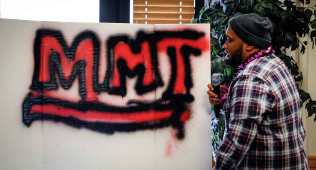
At the 2018 POP Conference, held in February, several different types of Pacific Islander art were explored. Nephi Prime, a Māori, presented on the haka or Māori traditional war dance. Bill Louis, a Tongan street artist, presented on contemporary graffiti. And Havier Tuitama, a Samoan who hosts a radio program on KRCL, taught a class on traditional dance and spoken word.

PEAU’s goal is to provide as many young Pacific Islanders as possible with an option in their life that they either haven’t considered or haven’t had the resources to explore. The resident artists and presenters from PEAU share the possibility of pursuing art as a career and not just a hobby. And members teach the continuation of the Pacific Islander narrative to remind youth of their place in the world and their ancestry.

The Pacific Islander history is rooted in exploration. Tupola spoke of how the early Pacific Islanders set out to explore the Pacific in small canoes. They couldn’t bring much in the way of possessions. As such, much of their cultural heritage is preserved in art, songs, dances, spoken anthologies, tattoo, and in how their ships were decorated. Art preserves their history. So, ensuring that the tradition of storytelling through art continues to be passed down through generations is imperative to the preservation of their culture.

The largest reason to focus on Pacific Islander youth is they need PEAU more than most to help them escape preconceived notions and the western stigma of Pacific Islander culture. They need additional avenues and experiences in their lives.

“There is more than just football and music out there,” said Louis, the Tongan street artist and PEAU Board member. Through his mentoring, he hopes to be able to influence youth and show that there is more out there, that art is a legitimate possibility in their future.

One of the main problems PEAU faces is a lack of a permanent space. Louis spoke of the efforts of PEAU to utilize everything from the Utah Museum of Fine Arts to county libraries to host exhibits and events. All of this costs money and much of the organization’s financial resources are obtained either through government grants secured through PIK2AR or through the artists themselves.

“I fund my own materials if I need to pay for something for an exhibit,” Louis said when asked about how he goes about getting studio space and materials for presentations.

PEAU has a goal and is working toward it. So far, it has been successful at finding and securing what it needs to continue. The aim is to continue to grow and expand the reach with more art, more shows and more mentoring. As Louis explained, PEAU’s hope is to introduce not only Pacific Islander youth but all Pacific Islanders to their history and their future with art.


Utah cemetery unites Islanders for Memorial Day

Story and photos by SHEHERAZADA HAMEED

On a sunny March morning, William AhQuin and his son Job AhQuin are leaving their Salt Lake City home. They are going to visit the cemetery where Mabel Lani Poepoe AhQuin is buried. She is William’s wife and Job’s mother. They haven’t visited since May 2017. Job said winter has been cold and the drive is too long.

IMG_0054

William, right, and Job AhQuin in front of their home in Salt Lake City.

Ready to depart Job remembered he forgot something and went back to the house. He grabbed bug spray. He said, “It is still cold for bugs but just in case.”

William is sitting in the passenger seat and is giving directions to a reporter he invited to go with them. He knows every turn and exit along the way to the cemetery. William seems to have taken that ride so many times.

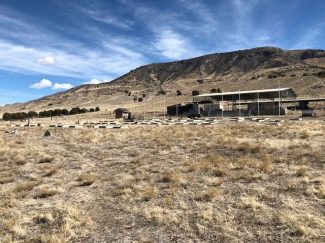
They drive west on Interstate 80. Along the way is the Morton’s Salt Factory and the Great Salt Lake is to the north. William said, “You need to take exit 77 and drive south about 15 miles.” On the deserted road, just off I-80, the Stansbury Mountains are to the left. There is no single car in both directions. Suddenly William said to slow down at a sign that says “Aloha.” A dirt road up the hill takes them to the cemetery of Iosepa. The only monument left behind of the Hawaiians who once lived here in the Skull Valley Desert.

IMG_0029 v2

Today the cemetery is a Utah Historic Site.

According to Benjamin Pykles, historical archaeologist, Iosepa was a thriving town, where Hawaiians worked hard to turn the desert into a paradise. The first settlers came in 1889. They were given those lands by The Church of Jesus Christ of Latter-day Saints (LDS church). They put the foundations of Iosepa.

The town was called Iosepa after Joseph F. Smith. He was a Mormon missionary in Hawaii. Later he became the LDS church president. William said Smith was only 15 years old when he was sent to Hawaii by his aunt and uncle. He was able to learn the language and culture of Hawaiians very quickly. Later he was recognized by the Islanders to be the miracle worker who brought them to Utah so they could be close to their faith and the temple.

William explained that at this time the Salt Lake City temple wasn’t complete so the believers had to walk about 50 miles to the city of Layton where there was located the nearest Mormon temple.

William said that if the Islanders wanted to live in the city at this time, they had to have a skill to survive. He said, “Hawaiians are children of the land and they live off the earth.” They mainly knew how to grow crops and breed animals. They had 1,900 acres of the land in Tooele County, about 75 miles southwest of Salt Lake City, and were given the opportunity to survive in the harsh conditions of the desert.

William said, “The first winter was hard.” He pointed out the numerous graves of children in the cemetery. Children were the most vulnerable to the cold winter and diseases.

The hard work of the people paid off. William said that the Islanders managed to build water canal systems to bring water from the Stansbury Mountains. That’s how they were able to successfully irrigate the soil, grow crops and raise animals.

William said that in 1911 Iosepa was voted to be the most progressive town in Utah. Nearly 230 people lived there, mostly Hawaiians but also some Samoan families moved. They built homes, streets, a school and stores. Then, when the first person died in Iosepa the Islanders needed to organize a cemetery park.

In 1915, the LDS church announced plans to build a temple in the Hawaiian island of Oahu at Laie. The news drove back the Islanders who wanted to help build the new temple in their native, rich and fertile land. The theory of Benjamin Pykles and the LDS Church is that Hawaiians left because there was no longer a reason to be in Utah.

As the years have passed, the houses, streets, school and store have disappeared with the people. Today the wilderness has taken over. There is no sign that once there was a town and nearly 230 people living here.

Only the cemetery reminds of the Hawaiian pioneers

Arriving at the cemetery, William recalls about the area, “Anything that was left was demolished just a few years ago.”

The only memory, left behind by the Hawaiians, is the gate to the cemetery. There is a green aluminum turtle, somehow out of place in the desert, reminding of the Pacific Seas’ lost paradise.

IMG_0013 v2

The graves are lining up in front of the only structure standing.

William wants to demonstrate his gratitude to the LDS church by telling his story.

When he left Hawaii in 1978 and arrived in Utah with his wife and nine children, they hoped for better opportunities. Work, good schools for the children and safer environment to grow a family was the reasons they came. Life goes and after years of hard work and trying to accomplish the American dream, the family lost their house in West Valley City. William explained the family was big. The children who still lived with them promised they will each make contributions to the mortgage payments. Later they were not able to pay any longer. Out of their home, William and Mabel had to find a place to live.

They went to Iosepa with two of their children. At this time some of the abandoned homes were still standing and William was able to survive for a year in a metal home with no running water or electricity. They used a lantern. He said they had a generator, but they avoided using because it was an emergency resource.

William felt it was his duty to clean and maintain the cemetery in honor of his grandfather, who actually was one of the first Hawaiians who came to Utah. William’s grandfather spent only one winter in Iosepa and left; he found the place cold and unwelcoming.

William cleaned the graves and took care of the cemetery. He said the graves were unrecognizable and they had to guess who is buried where. The graves looked like stacks of dirt above ground. To mark them and fence them they had to bring stones from the mountain.

Father and son arrive at the cemetery

William regrets he didn’t take his walker; only his cane. He took a break next to a stone that looked like a bench. He said this is a Hawaiian chess game. It was made by his cousin, who is also buried here. He pointed toward the grave with his cane. William said the game is called konane and is played by two people by placing black and white stones in the indentations of the board game.

IMG_0003 v2

William in front of the konane that was made by his cousin.

Job came back and said, “There are no snakes, you know sometimes the rattlesnakes sleep in the graves, but it is still too cold.”

Slowly William walked toward his wife’s grave. It is decorated with silk flowers and a plastic lighthouse. “I bought this from Walmart. It is plastic, but if it was real, it was going to be destroyed by the weather.” He explained that Mabel loved lighthouses. “Do you know, the oldest lighthouses are in Hawaii,” he said smiling.IMG_0005 v2

William said that not even a year before his wife died in 2005, the AhQuin family was camping here for the Memorial Day weekend. Mabel was already sick and weak. She saw the cemetery out in the wilderness and decided to be buried there. She chose the spot, near the fence so when the family comes to visit, her grave will be the first to be seen from the road. The grave space left between the fence and Mabel’s grave is marked with a bench. William said that for the years of marriage Mabel liked to sleep on the inside of the bed, not near the door.


IMG_00010 v2

William at his wife’s grave sitting on the bench that marks where he will be buried when he dies.

One day William will be buried here so he can be between his wife and the fence, to protect her.Today, Mabel’s grave has a headstone with her name and birth and death dates but some of the graves are still unrecognizable. The markers have weathered and are unreadable. William said there was an idea to construct a wall where they can put gravestones with the names of all the people buried in the cemetery. When the plan failed, they lined them on the ground by the gate of the cemetery.

IMG_0008 v2William said the state limited burial in the cemetery only to people who were born in Iosepa. Members of the community discussed with the Tooele City Council and now the cemetery is opened to anyone who wants to be buried here.
Today the cemetery stands as a historical monument. It represents the willingness of people to relocate in the name of faith and belief.

During Memorial Day weekend the cemetery brings back between 800 and 1,000 people from all over the world to pay respect to the first Island pioneers. The tradition started about 30 years ago and William is one of the first people who initiated it.

IMG_0046 v2

The large pavilion with a stage where Islanders will gather to celebrate during Memorial Day weekend.

He said they used to come on that weekend to clean and decorate the graves. Over the years it grew into a celebration. They camp, share food and different performing groups entertain the visitors.

William said the event is open to other communities and everybody can come. He reminded to bring food to share and camping equipment if you decide to stay overnight.

On the drive back to Salt Lake City, William promised to meet the reporter again during Memorial Day weekend.

William, besides the difficult life, is looking forward, making sure the heritage of the first Hawaiian pioneers in Utah is not forgotten.

Iosepa might appear as a ghost town on the map of Utah but is a memory and history for many families that will come to celebrate their departed ancestors this Memorial Day weekend.


Nā HALE: A home for Pacific Islander well-being

Story and slideshow by MARISSA SITTLER

In Hawaiian, nā hale means “the houses,” a word that embodies the sense of traditional Hawaiian community. This word is the driving force behind the newly formed umbrella organization for Pacific Islander wellness and resources. HALE is an acronym for Health, Advocacy, Leadership and Education.

Some of the strongest leaders of Utah’s Pacific Islander community came together to hatch the idea of Nā HALE. The idea was devised by members of the Utah Pacific Islander Health Coalition, the University of Utah Pacific Islander Studies Initiative, Margarita Satini from Utah Pacific Islander Civic Engagement Coalition and Charlene Lui from Hui Hawai’i O Utah Hawaiian Civic Club.

The first formal meeting took place in January 2016. During that meeting, an exploratory committee was formed “to research different collaboration models, bylaws and articles of incorporation, and membership structures of existing organizations in other states,” said Jake Fitisemanu Jr. in an email interview. He is the acting chair of the steering committee that is tasked with preparing Nā HALE to become a more formal entity. He is also the council member for District 4 in West Valley City, Utah. 

In April 2016, the Utah Pacific Islander Health Coalition unanimously supported the proposal to create a statewide umbrella group. It was one month later that the name Nā HALE was chosen.

Pacific Islanders have a strong sense of family and community, so it is only natural that many of the already formed Pacific Islander resource groups are some of the main collaborators for this project. In addition to the founding organizations, Fitisemanu said local groups including Queen Center, National Tongan American Society, Beyond Culture, Utah Pacific Islander Behavioral Health Association, Samoana Integrated Language Initiative, Southern Utah Pacific Islander Coalition, Pacific Island Knowledge 2 Action Resource and PEAU Artists Collective are all main members of Nā HALE.

Charlene Lui, director of educational equity for Granite School Districts, is native Hawaiian and has lived in Utah since the 1970s. She and her husband, who is Tongan, have been very involved in the Pacific Islander community in Utah through various groups, such as Hui Hawaiʻi O Utah and the National Tongan American Society.

Lui said in a phone interview that collectively, they have always wanted to strengthen the Pacific Islander community by organizing a group somehow. She sees Nā HALE as “trying to bring everybody together under one umbrella and to strengthen and maximize what every group group does, to collectively share our resources.”

Dr. Kalani Raphael, who is a kidney, electrolytes and high blood pressure specialist at the University of Utah School of Medicine and one of the key members of Nā HALE’s formation, said in a phone interview that the importance of Nā HALE “boils down to recognizing that there’s a lot of disparities in health, economics and incarceration in the Pacific Islander community.” He adds, “We can and should be doing better.”

Fitisemanu sees Nā HALE as a way to strengthen each individual organization’s capacity and reach. “This kind of network can facilitate resource pooling as well as information sharing; for example, a program that has been successful in the Samoan community might be more readily adopted as a best practice among the Tongan community. It also creates opportunity for more impactful civic engagement, when communities can band together and promote policies that are in the best interest of underrepresented communities,” he said.

While Nā HALE is a solidified concept, it is still just that — a concept. The individuals who are working on this project also have full-time careers, which can make it difficult to dedicate extra time to Nā HALE’s formal creation. Despite this, the umbrella organization already has a strong presence in the Pacific Islander community. It was featured as a community-based initiative during the American Public Health Association conference in October 2016 in Denver and was introduced to national partners across the United States and the Pacific territories in May 2017 during a webinar hosted by the Native Hawaiian & Pacific Islander National Network in Los Angeles.

This slideshow requires JavaScript.


Defining Pacific Islander masculinity

Story and photos by ADAM FONDREN

“You provide for your family, raise your kids in the right way,” Simi Poteki said when asked what a man is.

Simi_Poteki-for-web

Simi Poteki laughs during a Pacific Island Knowledge 2 Action Resources event in Salt Lake City.

Poteki, a co-founder of PIK2AR or Pacific Island Knowledge 2 Action Resources an organization aimed at empowerment for members of the Pacific Island community in Utah, he is also the director of KAVA Talks or Kommitment Against Violence Altogether an advocacy group aimed at Pacific Islander men to help raise awareness about domestic violence.

Poteki was born and raised in Tonga and played rugby on the national team in the early 1970s, he emigrated to the United States as an adult. His feelings about family guide his definition of masculinity. He is an obviously physically strong man, with huge forearms covered in aging tattoos and a rim of a grey beard outlining his smiling face.

“The main thing is that you work hard,” Poteki goes on, “by keeping them (your family) safe…that is what a man is supposed to be.”

Family is everything to Poteki. His wife Susi Feltch-Malohifo’ou the other co-founder of PIK2AR smiles, reveling in the fact that she is included in this passion for family as he speaks of family and its central position in his definition of masculinity. Having been married several times Susi feels she got it right with Simi. At the core of his belief in providing for his family and raising his children and loving his wife is work.

Poteki and Feltch-Malohifo’ou founded PIK2AR in 2015 to give the Pacific Islander Community in Utah an avenue to gain insight into and to help the community pursue the American dream. From there the organization with Poteki leading the way began to branch out into helping men talk about domestic violence and giving them a space to voice their concerns not only about domestic violence, but what it is like to be a Pacific Islander man in America.

Western masculinity and machismo are difficult to attribute to Poteki. He has no problem holding hands with other men, he wears his wife’s earrings on a regular basis. This is not uncommon for Pacific Islander me, however. As he writes in his essay “Patriotic Games, Boundaries and Masculinity in New Zealand Sport” Phillip Borell, who studies Māori Knowledge and Development at the University of Canterbury in New Zealand writes, “…Masculinity was/is very much a Western construct….” Western views on masculinity center around physical prowess strength and violence. So, viewing Poteki through western eyes is a disservice to not only him but to all Pacific Islanders.

Borell goes on to explain how originally Māori maleness in particular, but that it can be understood as to relate to the Pacific Islander culture as a whole, was rooted in their ability to provide for their families, how farming and education were primary ways in which masculinity was defined.

Nephi_Prime-for-web

Nephi Prime gives a Māori greeting during the Pacific Islander Film Festival in Salt Lake City.

Nephi Prime, a Māori elder who worked in the Criminal Justice system in New Zealand, talked at the Utah Pacific Islander Film Series at the Sorensen Unity Center about Māori being protectors of the Earth Mother as a huge part of their original faith structure and that is has persisted with the application of Christianity to indigenous Māori and Pacific Islanders. This notion of protecting the land nurturing its fertility and using it to provide for your family has become an idea expressed toward women in general in Pacific Islander.

This female-centric, life providing, view of the world while unusual and viewed as un-masculine in Western Society is completely in line with and the Pacific Islander worldview and its view of masculinity.

Women are revered and at the center of Pacific Islander society. Sunni Penetani, who works for the Utah Division of Juvenile Justice Services and like Poteki was raised on the island and came to the United States as an adult, remarks how as a child when he would get into fights the only thing that could stop his fighting would be his older sister. Her mere presence would stop the fight almost immediately. This reverence for women is at the heart of Tongan and Pacific Islander masculinity and culture. It is necessary to define one’s self as a man.

This difference, in respect to Western ideals of masculinity, the humility and reverence towards women at the center and the family as the expression of masculinity represent large parts of the strength of Pacific Islander culture. Where the problems lay is in expression and modeling. Much of Pacific Islander identity in the western world is attributed to two notions.

“The football player or the thug” as Feltch-Malohifo’ou said. Here again, Borell further explains how the western ideas of masculinity were inculcated into the Māori through sport, and in particular rugby, the western notion of physical strength and violence being the core of masculinity. Rugby was used as an outlet and a training ground to westernize Māori. Māori culture and Pacific Islanders, in general, have been reduced to two masculine options the athlete or the criminal.

No culture is binary, and Pacific Islander culture is no different. What needs to happen within the culture according to John Tautau, a Tongan raised in California to a Tongan father and a white mother, is that a conversation about where Pacific Islander men are going where they have come from. This conversation needs to be an ongoing and continual part of their lives. Because without proper expression and cultural understanding of their masculinity will be lost.